

#internetcomputer
internetcomputer
1.3M views
1,884 Discussing
Hot
Latest

📊 $ICP
{spot}(ICPUSDT)
Price Update: Recovery Ahead?
Internet Computer ($ICP ) is facing mixed sentiment, with some traders worried while others expect a rebound.
📈 Key Levels:
Support: $2.34
Resistance: $3.40–$3.60
Breakout Target: $4.81
Holding support could help ICP recover, while a break below $2.34 may bring further downside.
💡 $ICP 's network activity is gaining attention, but price recovery depends on market demand. Always manage risk and DYOR.
Can ICP bounce back? 🚀
#ICP #InternetComputer #CryptoNews #BinanceSquare
📊 $ICP
Price Update: Recovery Ahead?
Internet Computer ($ICP ) is facing mixed sentiment, with some traders worried while others expect a rebound.
📈 Key Levels:
Support: $2.34
Resistance: $3.40–$3.60
Breakout Target: $4.81
Holding support could help ICP recover, while a break below $2.34 may bring further downside.
💡 $ICP 's network activity is gaining attention, but price recovery depends on market demand. Always manage risk and DYOR.
Can ICP bounce back? 🚀
#ICP #InternetComputer #CryptoNews #BinanceSquare
Price Update: Recovery Ahead?
Internet Computer ($ICP ) is facing mixed sentiment, with some traders worried while others expect a rebound.
📈 Key Levels:
Support: $2.34
Resistance: $3.40–$3.60
Breakout Target: $4.81
Holding support could help ICP recover, while a break below $2.34 may bring further downside.
💡 $ICP 's network activity is gaining attention, but price recovery depends on market demand. Always manage risk and DYOR.
Can ICP bounce back? 🚀
#ICP #InternetComputer #CryptoNews #BinanceSquare
1
477


30D trade $ICP 91.9 USDT
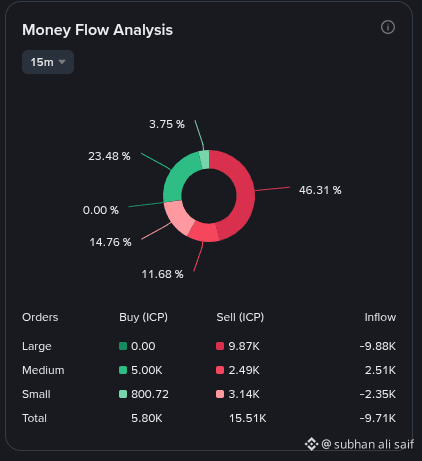
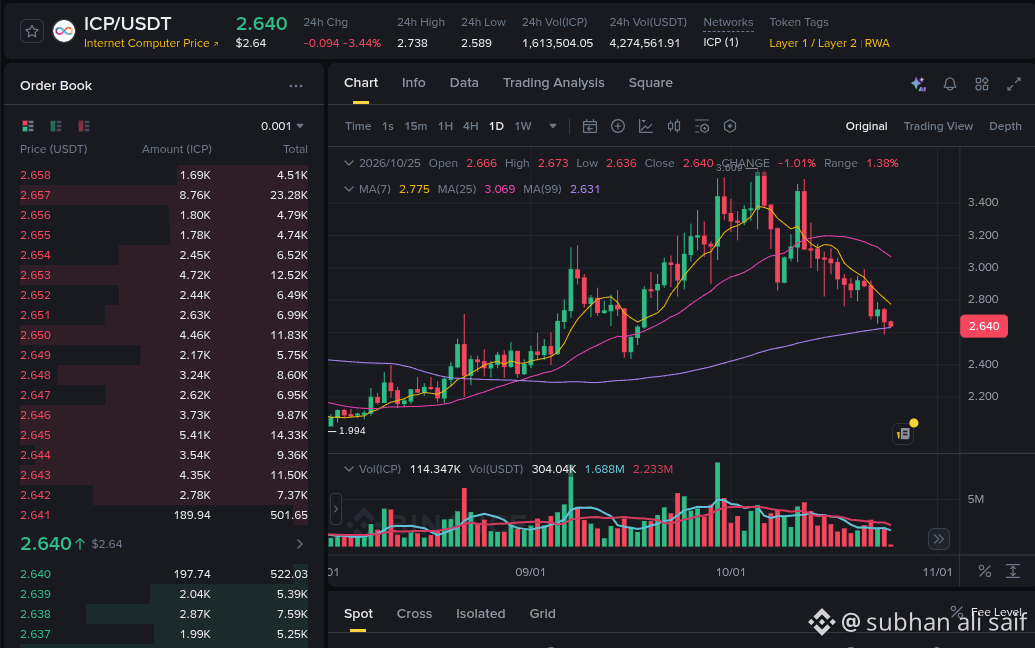
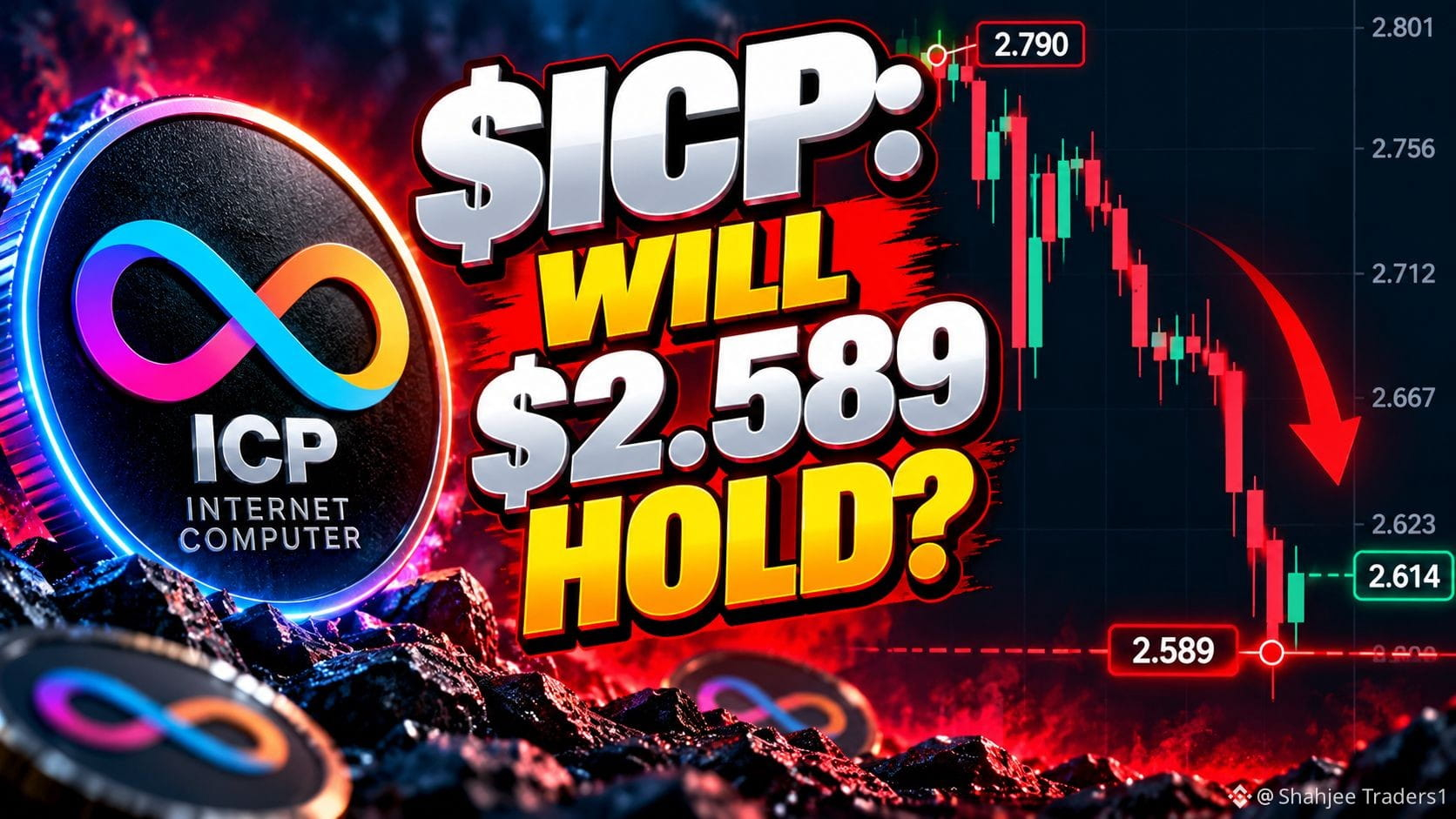
$ICP is struggling to find its footing. The price is around $2.614, down 3.08% in 24 hours, and the 1-hour chart still shows a clear downward trend.
There was a bounce after the price touched $2.589, but sellers pushed it lower again. I'm not calling a reversal yet; buyers need to show more strength first.
Will $2.589 hold as a short-term floor, or could $ICP slip lower?
NFA. Manage risk.
#ICP #InternetComputer #cryptotrading $JCT
{future}(ICPUSDT)
{future}(JCTUSDT)
$ICP is struggling to find its footing. The price is around $2.614, down 3.08% in 24 hours, and the 1-hour chart still shows a clear downward trend.
There was a bounce after the price touched $2.589, but sellers pushed it lower again. I'm not calling a reversal yet; buyers need to show more strength first.
Will $2.589 hold as a short-term floor, or could $ICP slip lower?
NFA. Manage risk.
#ICP #InternetComputer #cryptotrading $JCT
There was a bounce after the price touched $2.589, but sellers pushed it lower again. I'm not calling a reversal yet; buyers need to show more strength first.
Will $2.589 hold as a short-term floor, or could $ICP slip lower?
NFA. Manage risk.
#ICP #InternetComputer #cryptotrading $JCT
137

·
--
Verified
⚡️ Blockchain race: the “quiet one,” ICP, overtakes Solana
There’s an unofficial speed champion in crypto. It’s Solana, long called the “race car” of blockchains. But this week, it was knocked off its perch.
Internet Computer (ICP), developed by the DFINITY team, averaged 2,323 transactions per second. Solana managed 1,896. For comparison: in the time it takes you to read this post, ICP has processed tens of thousands of operations.
🏁 The gap is small, about the difference between two sports cars on a track. But ICP took first place in this week’s Chainspect rankings.
🔥 On one day, ICP even hit 256.5 million transactions in 24 hours—its busiest day of the quarter.
🤔 There’s a catch, though. Speed doesn’t equal money: the ICP token is still losing value, and Solana could reclaim the top spot as soon as next week. Still, this is a great opportunity to take a look at crypto’s “dark horse.”
This is not investment advice.
$ICP
{future}(ICPUSDT)
$SOL
{future}(SOLUSDT)
#icp #sol #InternetComputer #solana
⚡️ Blockchain race: the “quiet one,” ICP, overtakes Solana
There’s an unofficial speed champion in crypto. It’s Solana, long called the “race car” of blockchains. But this week, it was knocked off its perch.
Internet Computer (ICP), developed by the DFINITY team, averaged 2,323 transactions per second. Solana managed 1,896. For comparison: in the time it takes you to read this post, ICP has processed tens of thousands of operations.
🏁 The gap is small, about the difference between two sports cars on a track. But ICP took first place in this week’s Chainspect rankings.
🔥 On one day, ICP even hit 256.5 million transactions in 24 hours—its busiest day of the quarter.
🤔 There’s a catch, though. Speed doesn’t equal money: the ICP token is still losing value, and Solana could reclaim the top spot as soon as next week. Still, this is a great opportunity to take a look at crypto’s “dark horse.”
This is not investment advice.
$ICP
$SOL
#icp #sol #InternetComputer #solana
There’s an unofficial speed champion in crypto. It’s Solana, long called the “race car” of blockchains. But this week, it was knocked off its perch.
Internet Computer (ICP), developed by the DFINITY team, averaged 2,323 transactions per second. Solana managed 1,896. For comparison: in the time it takes you to read this post, ICP has processed tens of thousands of operations.
🏁 The gap is small, about the difference between two sports cars on a track. But ICP took first place in this week’s Chainspect rankings.
🔥 On one day, ICP even hit 256.5 million transactions in 24 hours—its busiest day of the quarter.
🤔 There’s a catch, though. Speed doesn’t equal money: the ICP token is still losing value, and Solana could reclaim the top spot as soon as next week. Still, this is a great opportunity to take a look at crypto’s “dark horse.”
This is not investment advice.
$ICP
$SOL
#icp #sol #InternetComputer #solana

5
978

·
--
🧠💙 $ICP IS LIVING RENT-FREE IN MY HEAD — 24/7! 🚀🌐
Wake up? Thinking about $ICP.
Go to sleep? Still thinking about $ICP. 😅🔥
Internet Computer isn’t just another crypto coin on my watchlist… 👀💎 It's a vision of a decentralized internet that keeps me watching, believing, and dreaming BIG! 🌍⚡
💭 24/7 in my mind.
🔥 100% focused on the vision.
🚀 Waiting to see what the future holds for $ICP!
Who else has $ICP on their mind all day? 🙋♂️💙
ICP ARMY, WHERE ARE YOU? 👇🌐
#ICP #InternetComputer #Crypto #Altcoins #CryptoCommunity #Bullish
🧠💙 $ICP IS LIVING RENT-FREE IN MY HEAD — 24/7! 🚀🌐
Wake up? Thinking about $ICP.
Go to sleep? Still thinking about $ICP. 😅🔥
Internet Computer isn’t just another crypto coin on my watchlist… 👀💎 It's a vision of a decentralized internet that keeps me watching, believing, and dreaming BIG! 🌍⚡
💭 24/7 in my mind.
🔥 100% focused on the vision.
🚀 Waiting to see what the future holds for $ICP!
Who else has $ICP on their mind all day? 🙋♂️💙
ICP ARMY, WHERE ARE YOU? 👇🌐
#ICP #InternetComputer #Crypto #Altcoins #CryptoCommunity #Bullish
Wake up? Thinking about $ICP.
Go to sleep? Still thinking about $ICP. 😅🔥
Internet Computer isn’t just another crypto coin on my watchlist… 👀💎 It's a vision of a decentralized internet that keeps me watching, believing, and dreaming BIG! 🌍⚡
💭 24/7 in my mind.
🔥 100% focused on the vision.
🚀 Waiting to see what the future holds for $ICP!
Who else has $ICP on their mind all day? 🙋♂️💙
ICP ARMY, WHERE ARE YOU? 👇🌐
#ICP #InternetComputer #Crypto #Altcoins #CryptoCommunity #Bullish

1
90

·
--
Partly True
🚨 ICP Is Making Its Network Activity More Visible!
On October 23, the Internet Computer Dashboard added a million instructions per second (MIPS) metric to its homepage and network page.
Why it matters: Better performance tracking helps users monitor network activity—but higher processing capacity alone doesn’t guarantee more adoption or a higher ICP price.
The big question: Can ICP turn its technology into stronger real-world demand?
Click the $ICP widget below and check the latest developments.
$ICP
{future}(ICPUSDT)
.
.
#InternetComputer #crypto #write2earn
Not financial advice. DYOR.
🚨 ICP Is Making Its Network Activity More Visible!
On October 23, the Internet Computer Dashboard added a million instructions per second (MIPS) metric to its homepage and network page.
Why it matters: Better performance tracking helps users monitor network activity—but higher processing capacity alone doesn’t guarantee more adoption or a higher ICP price.
The big question: Can ICP turn its technology into stronger real-world demand?
Click the $ICP widget below and check the latest developments.
$ICP
.
.
#InternetComputer #crypto #write2earn
Not financial advice. DYOR.
On October 23, the Internet Computer Dashboard added a million instructions per second (MIPS) metric to its homepage and network page.
Why it matters: Better performance tracking helps users monitor network activity—but higher processing capacity alone doesn’t guarantee more adoption or a higher ICP price.
The big question: Can ICP turn its technology into stronger real-world demand?
Click the $ICP widget below and check the latest developments.
$ICP
.
.
#InternetComputer #crypto #write2earn
Not financial advice. DYOR.

mivallecitoquerido:
computación en la nube . si no sabe no opine
1
3
1.3k
·
--
Verified

Article
😅 “I’m not angry, I’m just publicly disappointed”: ICP vs. NEAR drama🍿 Crypto drama of the week: “Hey, that’s our formula!”
What happened. Dominic Williams, founder of DFINITY (the team behind Internet Computer, aka ICP), accused NEAR Protocol of building the core of its cross-chain products Chain Signatures and NEAR Intents on cryptographic research that DFINITY licenses exclusively for ICP.
😅 “I’m not angry, I’m just publicly disappointed”: ICP vs. NEAR drama
🍿 Crypto drama of the week: “Hey, that’s our formula!”
What happened. Dominic Williams, founder of DFINITY (the team behind Internet Computer, aka ICP), accused NEAR Protocol of building the core of its cross-chain products Chain Signatures and NEAR Intents on cryptographic research that DFINITY licenses exclusively for ICP.
What happened. Dominic Williams, founder of DFINITY (the team behind Internet Computer, aka ICP), accused NEAR Protocol of building the core of its cross-chain products Chain Signatures and NEAR Intents on cryptographic research that DFINITY licenses exclusively for ICP.
николаич:
не переживайте вся крипта одинаковая
4
3
4.2k

·
--
📡 $ICP: the network grows 45% and the price doesn’t — I’m buying the divergence
Santiment: new ICP addresses are up +45% (710 per day) and active addresses are up +35% vs. summer. The price: -10% this week.
→ top traders are 79.3% long by position: the whales are already in
→ takers have been selling for 1h (35.8% buys): retail is letting go of what the whales are picking up
→ the order book at ±2% is balanced ($1.22M vs. $1.16M): no one is giving in, no one is backing down
→ DEXs are moving $7.87B (-11.3%, DefiLlama): rotation is on pause, not dead
With the whales in and the network growing, this is where the divergence pays off.
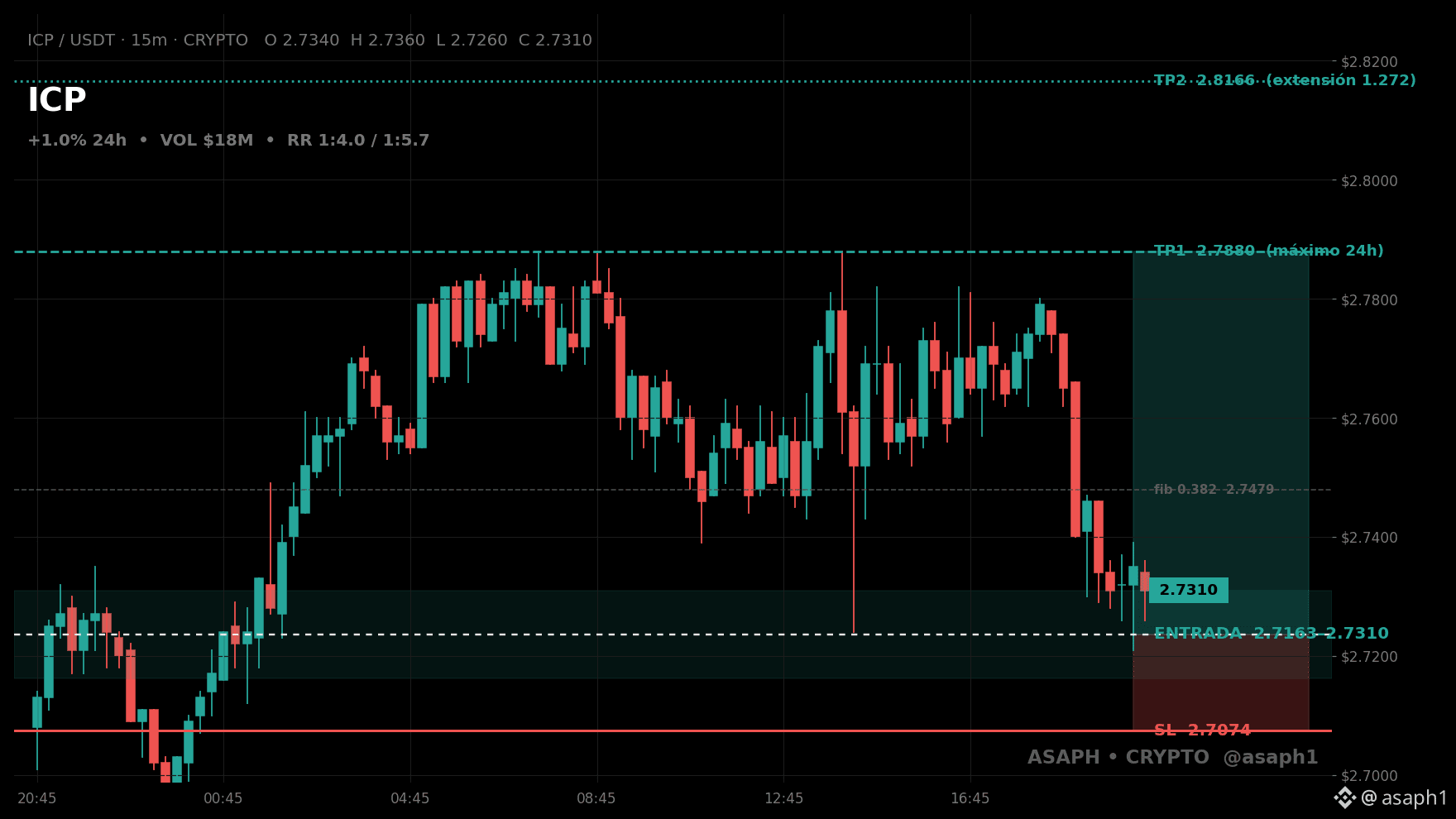
📊 ICP LONG signal
| Level | Price |
|---|---|
| 📍 Price now | $2.731 |
| 🎯 Zone | $2.71625–$2.73100 (dist. 0.0%) |
| Entry | Limit order: 50% at $2.72363 and 50% at $2.71625 |
| 🛑 Stop | $2.70740 (-0.60%), confirmed BEFORE entering |
| ✅ TP1 | $2.78800 — take profit on 50% and move stop to break-even |
| 🏁 TP2 | $2.81656 — 1.272 extension, the next leg if $2.788 gives way |
| R/R | 1:3.97 · 1:5.73 — Risk per trade: 2% of capital |
| ⏳ Valid | next 8h or as long as $2.7074 holds |
Will ICP break $2.788, or will selling takers push it back into the zone?
Check the chart: live price here 👇 ICP
ICP #ICP #InternetComputer #Trading
This is a plan, not financial advice.
📡 $ICP : the network grows 45% and the price doesn’t — I’m buying the divergence
Santiment: new ICP addresses are up +45% (710 per day) and active addresses are up +35% vs. summer. The price: -10% this week.
→ top traders are 79.3% long by position: the whales are already in
→ takers have been selling for 1h (35.8% buys): retail is letting go of what the whales are picking up
→ the order book at ±2% is balanced ($1.22M vs. $1.16M): no one is giving in, no one is backing down
→ DEXs are moving $7.87B (-11.3%, DefiLlama): rotation is on pause, not dead
With the whales in and the network growing, this is where the divergence pays off.
📊 ICP LONG signal
| Level | Price |
|---|---|
| 📍 Price now | $2.731 |
| 🎯 Zone | $2.71625–$2.73100 (dist. 0.0%) |
| Entry | Limit order: 50% at $2.72363 and 50% at $2.71625 |
| 🛑 Stop | $2.70740 (-0.60%), confirmed BEFORE entering |
| ✅ TP1 | $2.78800 — take profit on 50% and move stop to break-even |
| 🏁 TP2 | $2.81656 — 1.272 extension, the next leg if $2.788 gives way |
| R/R | 1:3.97 · 1:5.73 — Risk per trade: 2% of capital |
| ⏳ Valid | next 8h or as long as $2.7074 holds |
Will ICP break $2.788, or will selling takers push it back into the zone?
Check the chart: live price here 👇 ICP
ICP #ICP #InternetComputer #Trading
This is a plan, not financial advice.
Santiment: new ICP addresses are up +45% (710 per day) and active addresses are up +35% vs. summer. The price: -10% this week.
→ top traders are 79.3% long by position: the whales are already in
→ takers have been selling for 1h (35.8% buys): retail is letting go of what the whales are picking up
→ the order book at ±2% is balanced ($1.22M vs. $1.16M): no one is giving in, no one is backing down
→ DEXs are moving $7.87B (-11.3%, DefiLlama): rotation is on pause, not dead
With the whales in and the network growing, this is where the divergence pays off.
📊 ICP LONG signal
| Level | Price |
|---|---|
| 📍 Price now | $2.731 |
| 🎯 Zone | $2.71625–$2.73100 (dist. 0.0%) |
| Entry | Limit order: 50% at $2.72363 and 50% at $2.71625 |
| 🛑 Stop | $2.70740 (-0.60%), confirmed BEFORE entering |
| ✅ TP1 | $2.78800 — take profit on 50% and move stop to break-even |
| 🏁 TP2 | $2.81656 — 1.272 extension, the next leg if $2.788 gives way |
| R/R | 1:3.97 · 1:5.73 — Risk per trade: 2% of capital |
| ⏳ Valid | next 8h or as long as $2.7074 holds |
Will ICP break $2.788, or will selling takers push it back into the zone?
Check the chart: live price here 👇 ICP
ICP #ICP #InternetComputer #Trading
This is a plan, not financial advice.
89
·
--
ICP Just Connected Solana Assets Without Traditional Bridges — Is This a Major Catalyst? ⚡
Internet Computer is expanding its cross-chain capabilities, aiming to let applications interact with other blockchains without relying on conventional third-party bridges.
CONFIRMED: On October 16, 2026, ICP’s ckSOL launched, introducing a SOL-backed chain-key token designed to connect Solana assets with Internet Computer applications.
WHY IT MATTERS:
- ckSOL is designed to be backed 1:1 by SOL.
- ICP applications can interact with Solana through chain-key infrastructure.
- This could expand DeFi opportunities and cross-chain application development.
ANOTHER DEVELOPMENT: ICP’s native canister timers and AI-agent integrations are also expanding its developer toolkit.
IMPORTANT: A successful launch does not guarantee significant adoption or higher ICP demand. Liquidity, security, and real user activity are the metrics to watch.
Click the $ICP widget below and check the latest developments.
$ICP
{future}(ICPUSDT)
.
.
.
.
#InternetComputer r #crypto #write2earn
Not financial advice. DYOR.
ICP Just Connected Solana Assets Without Traditional Bridges — Is This a Major Catalyst? ⚡
Internet Computer is expanding its cross-chain capabilities, aiming to let applications interact with other blockchains without relying on conventional third-party bridges.
CONFIRMED: On October 16, 2026, ICP’s ckSOL launched, introducing a SOL-backed chain-key token designed to connect Solana assets with Internet Computer applications.
WHY IT MATTERS:
- ckSOL is designed to be backed 1:1 by SOL.
- ICP applications can interact with Solana through chain-key infrastructure.
- This could expand DeFi opportunities and cross-chain application development.
ANOTHER DEVELOPMENT: ICP’s native canister timers and AI-agent integrations are also expanding its developer toolkit.
IMPORTANT: A successful launch does not guarantee significant adoption or higher ICP demand. Liquidity, security, and real user activity are the metrics to watch.
Click the $ICP widget below and check the latest developments.
$ICP
.
.
.
.
#InternetComputer r #crypto #write2earn
Not financial advice. DYOR.
Internet Computer is expanding its cross-chain capabilities, aiming to let applications interact with other blockchains without relying on conventional third-party bridges.
CONFIRMED: On October 16, 2026, ICP’s ckSOL launched, introducing a SOL-backed chain-key token designed to connect Solana assets with Internet Computer applications.
WHY IT MATTERS:
- ckSOL is designed to be backed 1:1 by SOL.
- ICP applications can interact with Solana through chain-key infrastructure.
- This could expand DeFi opportunities and cross-chain application development.
ANOTHER DEVELOPMENT: ICP’s native canister timers and AI-agent integrations are also expanding its developer toolkit.
IMPORTANT: A successful launch does not guarantee significant adoption or higher ICP demand. Liquidity, security, and real user activity are the metrics to watch.
Click the $ICP widget below and check the latest developments.
$ICP
.
.
.
.
#InternetComputer r #crypto #write2earn
Not financial advice. DYOR.

Nimsara nanayakkara :
so it's going bounce here and break big trend line and us rate hold can do 5$6$ dollar
1
421
·
--
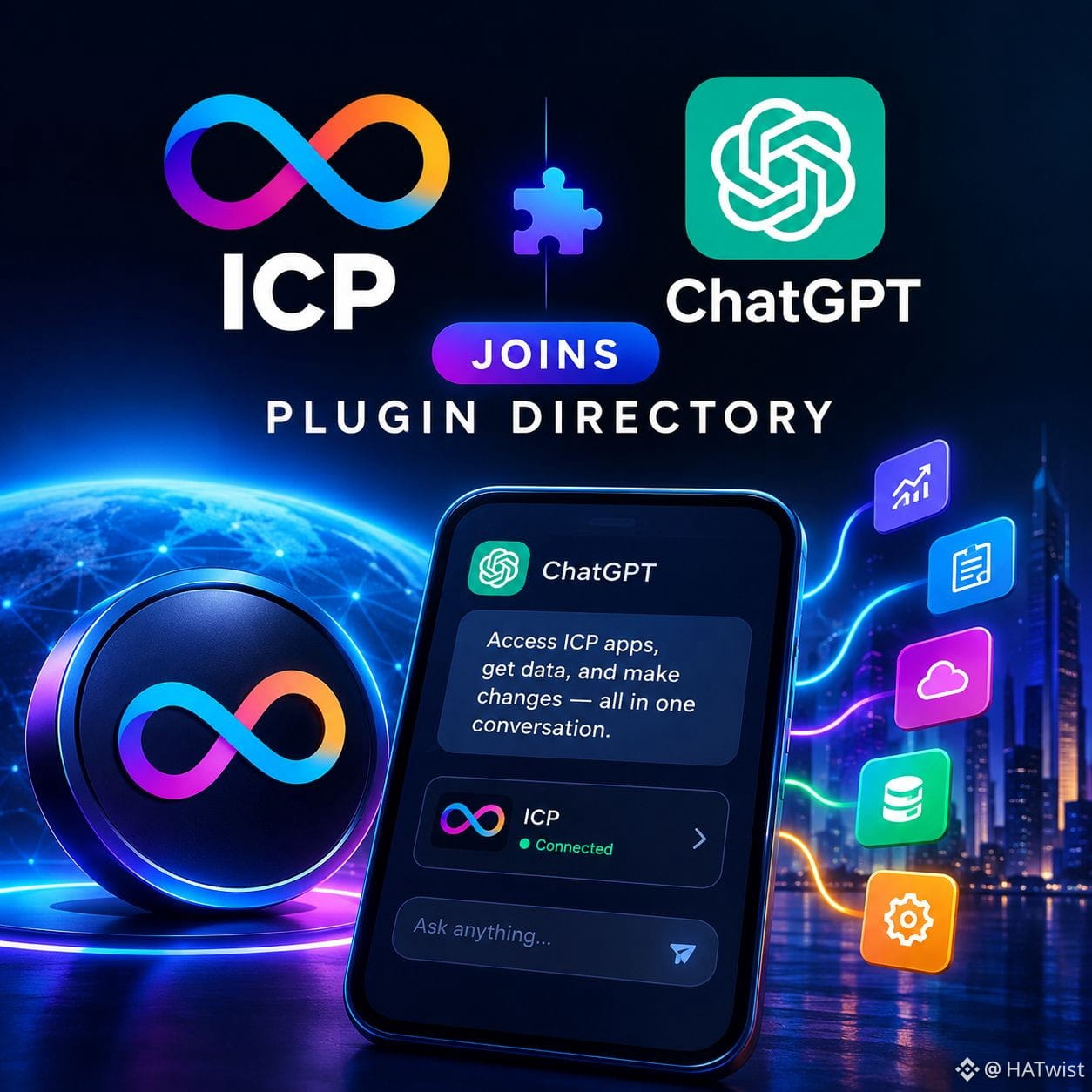
🚨 JUST IN: Internet Computer ($ICP) joins ChatGPT’s plugin directory!
🔥 The $ICP ecosystem now enables ChatGPT to access data and perform actions across multiple ICP-powered apps—all within a single conversation.
The project also cites an $852 BILLION valuation following a reported $122 BILLION funding round. 👀🚀
Is $ICP entering a new era of AI-powered adoption?
#ICP #InternetComputer #AI #Crypto
🚨 JUST IN: Internet Computer ($ICP ) joins ChatGPT’s plugin directory!
🔥 The $ICP ecosystem now enables ChatGPT to access data and perform actions across multiple ICP-powered apps—all within a single conversation.
The project also cites an $852 BILLION valuation following a reported $122 BILLION funding round. 👀🚀
Is $ICP entering a new era of AI-powered adoption?
#ICP #InternetComputer #AI #Crypto
🔥 The $ICP ecosystem now enables ChatGPT to access data and perform actions across multiple ICP-powered apps—all within a single conversation.
The project also cites an $852 BILLION valuation following a reported $122 BILLION funding round. 👀🚀
Is $ICP entering a new era of AI-powered adoption?
#ICP #InternetComputer #AI #Crypto
4
3
382

·
--
🧠 $ICP
{spot}(ICPUSDT)
'S TECHNOLOGY STORY NEEDS TO SHOW UP IN REAL ADOPTION. Internet Computer aims to support applications running on decentralized infrastructure. Monitor developer activity, application usage, and ecosystem expansion. Technical innovation matters when users have a reason to stay. Short-term price direction still depends on market liquidity. Check recent support, resistance, and daily candle closes. Improving volume could help confirm a change in momentum. A breakdown would suggest buyers have not regained control. Separate technological potential from near-term market performance. #ICP #InternetComputer #Web3
🧠 $ICP
'S TECHNOLOGY STORY NEEDS TO SHOW UP IN REAL ADOPTION. Internet Computer aims to support applications running on decentralized infrastructure. Monitor developer activity, application usage, and ecosystem expansion. Technical innovation matters when users have a reason to stay. Short-term price direction still depends on market liquidity. Check recent support, resistance, and daily candle closes. Improving volume could help confirm a change in momentum. A breakdown would suggest buyers have not regained control. Separate technological potential from near-term market performance. #ICP #InternetComputer #Web3
'S TECHNOLOGY STORY NEEDS TO SHOW UP IN REAL ADOPTION. Internet Computer aims to support applications running on decentralized infrastructure. Monitor developer activity, application usage, and ecosystem expansion. Technical innovation matters when users have a reason to stay. Short-term price direction still depends on market liquidity. Check recent support, resistance, and daily candle closes. Improving volume could help confirm a change in momentum. A breakdown would suggest buyers have not regained control. Separate technological potential from near-term market performance. #ICP #InternetComputer #Web3
1
20
·
--
ICP Is Bringing Blockchain Apps Into ChatGPT — Could This Change How Users Access Web3? 🤖
Internet Computer is pushing toward a future where AI assistants can interact with blockchain-powered applications.
CONFIRMED: Recent ICP ecosystem updates describe an MCP integration that lets AI assistants discover compatible Internet Computer apps and, with user authorization, interact with them.
Why it matters: Users could access supported blockchain services through conversational AI instead of navigating every app manually.
The key detail: This capability depends on app compatibility and user authorization. It does not mean ChatGPT can automatically access every ICP app, and wider adoption is still uncertain.
The next thing to watch is whether more developers build applications for AI-assisted use.
Click the $ICP widget below and check the latest developments.
$ICP
{future}(ICPUSDT)
.
.
.
.
#InternetComputer #crypto #write2earn
Not financial advice. DYOR.
ICP Is Bringing Blockchain Apps Into ChatGPT — Could This Change How Users Access Web3? 🤖
Internet Computer is pushing toward a future where AI assistants can interact with blockchain-powered applications.
CONFIRMED: Recent ICP ecosystem updates describe an MCP integration that lets AI assistants discover compatible Internet Computer apps and, with user authorization, interact with them.
Why it matters: Users could access supported blockchain services through conversational AI instead of navigating every app manually.
The key detail: This capability depends on app compatibility and user authorization. It does not mean ChatGPT can automatically access every ICP app, and wider adoption is still uncertain.
The next thing to watch is whether more developers build applications for AI-assisted use.
Click the $ICP widget below and check the latest developments.
$ICP
.
.
.
.
#InternetComputer #crypto #write2earn
Not financial advice. DYOR.
Internet Computer is pushing toward a future where AI assistants can interact with blockchain-powered applications.
CONFIRMED: Recent ICP ecosystem updates describe an MCP integration that lets AI assistants discover compatible Internet Computer apps and, with user authorization, interact with them.
Why it matters: Users could access supported blockchain services through conversational AI instead of navigating every app manually.
The key detail: This capability depends on app compatibility and user authorization. It does not mean ChatGPT can automatically access every ICP app, and wider adoption is still uncertain.
The next thing to watch is whether more developers build applications for AI-assisted use.
Click the $ICP widget below and check the latest developments.
$ICP
.
.
.
.
#InternetComputer #crypto #write2earn
Not financial advice. DYOR.

2
363
·
--
🚨 ICP JUST CONNECTED TO SOLANA — HERE’S WHY IT MATTERS
Internet Computer is expanding its cross-chain capabilities with a new Solana integration, bringing the two ecosystems closer together.
According to reports published October 14, the integration enables ICP applications to interact directly with Solana. One key development is ckSOL, a 1:1 SOL-backed token designed to work within ICP’s chain-key ecosystem without relying on a separate bridge operator.
Why does this matter?
Cross-chain applications can make digital assets more useful across different blockchain ecosystems. If developers build on this integration, ICP could gain more opportunities to connect with Solana-based DeFi and applications.
Important: An integration creates new technical possibilities, but it does not guarantee adoption or an increase in ICP’s price.
The real milestone to watch is whether developers and users begin using it.
$ICP
{future}(ICPUSDT)
.
.
.
.
#InternetComputer #solana #Write2Earn
Not financial advice. DYOR.
🚨 ICP JUST CONNECTED TO SOLANA — HERE’S WHY IT MATTERS
Internet Computer is expanding its cross-chain capabilities with a new Solana integration, bringing the two ecosystems closer together.
According to reports published October 14, the integration enables ICP applications to interact directly with Solana. One key development is ckSOL, a 1:1 SOL-backed token designed to work within ICP’s chain-key ecosystem without relying on a separate bridge operator.
Why does this matter?
Cross-chain applications can make digital assets more useful across different blockchain ecosystems. If developers build on this integration, ICP could gain more opportunities to connect with Solana-based DeFi and applications.
Important: An integration creates new technical possibilities, but it does not guarantee adoption or an increase in ICP’s price.
The real milestone to watch is whether developers and users begin using it.
$ICP
.
.
.
.
#InternetComputer #solana #Write2Earn
Not financial advice. DYOR.
Internet Computer is expanding its cross-chain capabilities with a new Solana integration, bringing the two ecosystems closer together.
According to reports published October 14, the integration enables ICP applications to interact directly with Solana. One key development is ckSOL, a 1:1 SOL-backed token designed to work within ICP’s chain-key ecosystem without relying on a separate bridge operator.
Why does this matter?
Cross-chain applications can make digital assets more useful across different blockchain ecosystems. If developers build on this integration, ICP could gain more opportunities to connect with Solana-based DeFi and applications.
Important: An integration creates new technical possibilities, but it does not guarantee adoption or an increase in ICP’s price.
The real milestone to watch is whether developers and users begin using it.
$ICP
.
.
.
.
#InternetComputer #solana #Write2Earn
Not financial advice. DYOR.

1
512

·
--
ICP Connects With Solana — Could This Expand Its Cross-Chain Reach? 🔗
Internet Computer is making it easier for blockchain applications to interact across networks.
CONFIRMED: Recent ecosystem updates show Solana integration work on ICP, allowing smart contracts to interact with Solana without relying on traditional third-party bridges.
Why it matters: Better cross-chain connectivity could open new possibilities for DeFi and blockchain applications.
The key detail: Integration alone does not guarantee widespread adoption or higher ICP demand. Real usage will determine its long-term impact.
Click the $ICP widget below and check the latest developments.
$ICP
{future}(ICPUSDT)
.
.
.
.
#InternetComputer #crypto #Write2Earn
Not financial advice. DYOR.
ICP Connects With Solana — Could This Expand Its Cross-Chain Reach? 🔗
Internet Computer is making it easier for blockchain applications to interact across networks.
CONFIRMED: Recent ecosystem updates show Solana integration work on ICP, allowing smart contracts to interact with Solana without relying on traditional third-party bridges.
Why it matters: Better cross-chain connectivity could open new possibilities for DeFi and blockchain applications.
The key detail: Integration alone does not guarantee widespread adoption or higher ICP demand. Real usage will determine its long-term impact.
Click the $ICP widget below and check the latest developments.
$ICP
.
.
.
.
#InternetComputer #crypto #Write2Earn
Not financial advice. DYOR.
Internet Computer is making it easier for blockchain applications to interact across networks.
CONFIRMED: Recent ecosystem updates show Solana integration work on ICP, allowing smart contracts to interact with Solana without relying on traditional third-party bridges.
Why it matters: Better cross-chain connectivity could open new possibilities for DeFi and blockchain applications.
The key detail: Integration alone does not guarantee widespread adoption or higher ICP demand. Real usage will determine its long-term impact.
Click the $ICP widget below and check the latest developments.
$ICP
.
.
.
.
#InternetComputer #crypto #Write2Earn
Not financial advice. DYOR.
237

·
--
Is $ICP one of the most misunderstood projects in crypto? 👀
Internet Computer has a pretty ambitious idea: running applications and digital services directly on a decentralized network.
The technology is interesting, but I think the real challenge is getting more developers and users to actually build on it.
A strong vision is one thing. Real adoption is another.
That’s what I’d be watching with ICP.
Be honest — do you see a future for decentralized internet infrastructure, or is the idea still too early?
I’m curious to hear different opinions. 👇
#ICP #InternetComputer #Crypto #Web3 #BinanceSquare
Is $ICP one of the most misunderstood projects in crypto? 👀
Internet Computer has a pretty ambitious idea: running applications and digital services directly on a decentralized network.
The technology is interesting, but I think the real challenge is getting more developers and users to actually build on it.
A strong vision is one thing. Real adoption is another.
That’s what I’d be watching with ICP.
Be honest — do you see a future for decentralized internet infrastructure, or is the idea still too early?
I’m curious to hear different opinions. 👇
#ICP #InternetComputer #Crypto #Web3 #BinanceSquare
Internet Computer has a pretty ambitious idea: running applications and digital services directly on a decentralized network.
The technology is interesting, but I think the real challenge is getting more developers and users to actually build on it.
A strong vision is one thing. Real adoption is another.
That’s what I’d be watching with ICP.
Be honest — do you see a future for decentralized internet infrastructure, or is the idea still too early?
I’m curious to hear different opinions. 👇
#ICP #InternetComputer #Crypto #Web3 #BinanceSquare
2
520

·
--
🚨 IS $ICP PREPARING FOR AN UNTHINKABLE MOVE BACK TOWARD $2,800? 💥
📌 Looking back at historical charts, $ICP once commanded valuations near $2,800 during its launch phase, leaving a long-term psychological footprint on the chart. 📊 While circulating supply and market structure have evolved significantly, traders continually monitor macro reclaims and volume spikes for hints of long-term trend shifts.
⚡ For a trajectory toward such extreme levels to unfold, order flow would require persistent high-timeframe accumulation and structural breakouts. 💬 Do you see $ICP building toward a historic long-term comeback, or is $2,800 strictly a memory from the past? 👇
⚠️ Not financial advice. Always manage your risk. 🛡️
🏷️ #ICP #InternetComputer #Crypto #Altcoins
⚡ 🎯
🚨 IS $ICP PREPARING FOR AN UNTHINKABLE MOVE BACK TOWARD $2,800? 💥
📌 Looking back at historical charts, $ICP once commanded valuations near $2,800 during its launch phase, leaving a long-term psychological footprint on the chart. 📊 While circulating supply and market structure have evolved significantly, traders continually monitor macro reclaims and volume spikes for hints of long-term trend shifts.
⚡ For a trajectory toward such extreme levels to unfold, order flow would require persistent high-timeframe accumulation and structural breakouts. 💬 Do you see $ICP building toward a historic long-term comeback, or is $2,800 strictly a memory from the past? 👇
⚠️ Not financial advice. Always manage your risk. 🛡️
🏷️ #ICP #InternetComputer #Crypto #Altcoins
⚡ 🎯
📌 Looking back at historical charts, $ICP once commanded valuations near $2,800 during its launch phase, leaving a long-term psychological footprint on the chart. 📊 While circulating supply and market structure have evolved significantly, traders continually monitor macro reclaims and volume spikes for hints of long-term trend shifts.
⚡ For a trajectory toward such extreme levels to unfold, order flow would require persistent high-timeframe accumulation and structural breakouts. 💬 Do you see $ICP building toward a historic long-term comeback, or is $2,800 strictly a memory from the past? 👇
⚠️ Not financial advice. Always manage your risk. 🛡️
🏷️ #ICP #InternetComputer #Crypto #Altcoins
⚡ 🎯
19
·
--
Partly True
🚨 What do native Solana integration and ICANN’s .icp approval mean for $ICP?
Internet Computer ($ICP) recorded major ecosystem expansions between October 7 and October 14, 2026, bridging multi-chain liquidity and advancing Web3 infrastructure.
WHAT CHANGED:
1. Native Solana Integration & ckSOL: DFINITY officially launched ICP’s direct Solana integration on October 14. Canisters on ICP can now natively read from and write to the Solana blockchain without bridges, introducing 1:1 backed ckSOL across ICP DeFi dApps like ICPSwap and Liquidium.
2. ICANN Domain Approval: ICANN granted initial approval for the `.icp` top-level domain (TLD) on October 7, creating a standardized DNS pathway for canister smart contracts to serve decentralized web applications natively.
WHO CONFIRMED IT:
Official DFINITY Foundation developer logs, Solana ecosystem cross-announcements, and ICANN regulatory status updates verified both developments.
WHY IT MATTERS:
- Bridgeless Cross-Chain DeFi: Direct read/write access enables ICP smart contracts to execute transactions on Solana natively, unlocking cross-chain liquidity pools while eliminating traditional bridge exploit vulnerabilities.
- Native Web3 Domain Infrastructure: Securing initial ICANN approval for `.icp` provides decentralized hosting with human-readable web domains, positioning ICP as an alternative to centralized cloud DNS providers.
WHAT HAPPENS NEXT:
DeFi platforms including MULTI/DEX and ICPSwap are deploying ckSOL trading pairs, while developers test cross-chain intent routing between ICP canisters and Solana programs.
The key distinction is: Solana integration and ckSOL minting are live on mainnet today, while the `.icp` TLD remains in initial ICANN administrative approval stages.
Click the $ICP widget below and check the latest developments.
$ICP
{future}(ICPUSDT)
.
.
.
.
#InternetComputer #Solana #defi #Crypto #write2earn
Not financial advice. DYOR.
🚨 What do native Solana integration and ICANN’s .icp approval mean for $ICP ?
Internet Computer ($ICP ) recorded major ecosystem expansions between October 7 and October 14, 2026, bridging multi-chain liquidity and advancing Web3 infrastructure.
WHAT CHANGED:
1. Native Solana Integration & ckSOL: DFINITY officially launched ICP’s direct Solana integration on October 14. Canisters on ICP can now natively read from and write to the Solana blockchain without bridges, introducing 1:1 backed ckSOL across ICP DeFi dApps like ICPSwap and Liquidium.
2. ICANN Domain Approval: ICANN granted initial approval for the `.icp` top-level domain (TLD) on October 7, creating a standardized DNS pathway for canister smart contracts to serve decentralized web applications natively.
WHO CONFIRMED IT:
Official DFINITY Foundation developer logs, Solana ecosystem cross-announcements, and ICANN regulatory status updates verified both developments.
WHY IT MATTERS:
- Bridgeless Cross-Chain DeFi: Direct read/write access enables ICP smart contracts to execute transactions on Solana natively, unlocking cross-chain liquidity pools while eliminating traditional bridge exploit vulnerabilities.
- Native Web3 Domain Infrastructure: Securing initial ICANN approval for `.icp` provides decentralized hosting with human-readable web domains, positioning ICP as an alternative to centralized cloud DNS providers.
WHAT HAPPENS NEXT:
DeFi platforms including MULTI/DEX and ICPSwap are deploying ckSOL trading pairs, while developers test cross-chain intent routing between ICP canisters and Solana programs.
The key distinction is: Solana integration and ckSOL minting are live on mainnet today, while the `.icp` TLD remains in initial ICANN administrative approval stages.
Click the $ICP widget below and check the latest developments.
$ICP
.
.
.
.
#InternetComputer #Solana #defi #Crypto #write2earn
Not financial advice. DYOR.
Internet Computer ($ICP ) recorded major ecosystem expansions between October 7 and October 14, 2026, bridging multi-chain liquidity and advancing Web3 infrastructure.
WHAT CHANGED:
1. Native Solana Integration & ckSOL: DFINITY officially launched ICP’s direct Solana integration on October 14. Canisters on ICP can now natively read from and write to the Solana blockchain without bridges, introducing 1:1 backed ckSOL across ICP DeFi dApps like ICPSwap and Liquidium.
2. ICANN Domain Approval: ICANN granted initial approval for the `.icp` top-level domain (TLD) on October 7, creating a standardized DNS pathway for canister smart contracts to serve decentralized web applications natively.
WHO CONFIRMED IT:
Official DFINITY Foundation developer logs, Solana ecosystem cross-announcements, and ICANN regulatory status updates verified both developments.
WHY IT MATTERS:
- Bridgeless Cross-Chain DeFi: Direct read/write access enables ICP smart contracts to execute transactions on Solana natively, unlocking cross-chain liquidity pools while eliminating traditional bridge exploit vulnerabilities.
- Native Web3 Domain Infrastructure: Securing initial ICANN approval for `.icp` provides decentralized hosting with human-readable web domains, positioning ICP as an alternative to centralized cloud DNS providers.
WHAT HAPPENS NEXT:
DeFi platforms including MULTI/DEX and ICPSwap are deploying ckSOL trading pairs, while developers test cross-chain intent routing between ICP canisters and Solana programs.
The key distinction is: Solana integration and ckSOL minting are live on mainnet today, while the `.icp` TLD remains in initial ICANN administrative approval stages.
Click the $ICP widget below and check the latest developments.
$ICP
.
.
.
.
#InternetComputer #Solana #defi #Crypto #write2earn
Not financial advice. DYOR.
1
1.2k

·
--
$ICP forming a textbook double top pattern 👀📉
Sellers are defending the $3.50–$3.60 resistance zone, and price is now testing critical support near $2.85–$2.90. Bears are gaining momentum as buyers struggle to hold the neckline.
A breakdown below $2.85 could open the door toward $2.00 🔥 Bulls need to reclaim $3.10+ to show signs of recovery.
Market sentiment: Bearish pressure building — support is the key level to watch!
#ICP #InternetComputer #Crypto #Altcoins
{future}(ICPUSDT)
$ICP forming a textbook double top pattern 👀📉
Sellers are defending the $3.50–$3.60 resistance zone, and price is now testing critical support near $2.85–$2.90. Bears are gaining momentum as buyers struggle to hold the neckline.
A breakdown below $2.85 could open the door toward $2.00 🔥 Bulls need to reclaim $3.10+ to show signs of recovery.
Market sentiment: Bearish pressure building — support is the key level to watch!
#ICP #InternetComputer #Crypto #Altcoins
Sellers are defending the $3.50–$3.60 resistance zone, and price is now testing critical support near $2.85–$2.90. Bears are gaining momentum as buyers struggle to hold the neckline.
A breakdown below $2.85 could open the door toward $2.00 🔥 Bulls need to reclaim $3.10+ to show signs of recovery.
Market sentiment: Bearish pressure building — support is the key level to watch!
#ICP #InternetComputer #Crypto #Altcoins
1
87
·
--
Verified
🚨 ICP HAS A NEW STORY: AI + DECENTRALIZED STORAGE
The Internet Computer ecosystem is pushing deeper into AI-powered apps and decentralized infrastructure — and two fresh developer discussions are worth watching.
1. Protium is exploring ICP Blob Storage. A new developer-forum thread published October 14 discusses its status and opportunities for community contributions. The goal is to explore storage infrastructure within the ICP ecosystem.
2. Developers are building around AI agents. Another new discussion explores scoped agent access and attribution through ICP’s MCP tooling, which connects AI assistants with applications on the Internet Computer.
Why does this matter? If these tools mature, they could help developers build applications where AI agents interact with decentralized services.
Important: These are development discussions, not proof of a major product launch or guaranteed token demand.
For ICP, the real question is whether new infrastructure turns into useful applications and sustained network activity.
$ICP
{future}(ICPUSDT)
.
.
.
.
#InternetComputer #DeAI #Write2Earn
Not financial advice. DYOR.
🚨 ICP HAS A NEW STORY: AI + DECENTRALIZED STORAGE
The Internet Computer ecosystem is pushing deeper into AI-powered apps and decentralized infrastructure — and two fresh developer discussions are worth watching.
1. Protium is exploring ICP Blob Storage. A new developer-forum thread published October 14 discusses its status and opportunities for community contributions. The goal is to explore storage infrastructure within the ICP ecosystem.
2. Developers are building around AI agents. Another new discussion explores scoped agent access and attribution through ICP’s MCP tooling, which connects AI assistants with applications on the Internet Computer.
Why does this matter? If these tools mature, they could help developers build applications where AI agents interact with decentralized services.
Important: These are development discussions, not proof of a major product launch or guaranteed token demand.
For ICP, the real question is whether new infrastructure turns into useful applications and sustained network activity.
$ICP
.
.
.
.
#InternetComputer #DeAI #Write2Earn
Not financial advice. DYOR.
The Internet Computer ecosystem is pushing deeper into AI-powered apps and decentralized infrastructure — and two fresh developer discussions are worth watching.
1. Protium is exploring ICP Blob Storage. A new developer-forum thread published October 14 discusses its status and opportunities for community contributions. The goal is to explore storage infrastructure within the ICP ecosystem.
2. Developers are building around AI agents. Another new discussion explores scoped agent access and attribution through ICP’s MCP tooling, which connects AI assistants with applications on the Internet Computer.
Why does this matter? If these tools mature, they could help developers build applications where AI agents interact with decentralized services.
Important: These are development discussions, not proof of a major product launch or guaranteed token demand.
For ICP, the real question is whether new infrastructure turns into useful applications and sustained network activity.
$ICP
.
.
.
.
#InternetComputer #DeAI #Write2Earn
Not financial advice. DYOR.

831
·
--
🚨 ICP’s Cloud Engines Plan Could Link Enterprise Revenue to Token Burns
DFINITY’s Cloud Engines initiative lets businesses create private subnets on the Internet Computer, selecting node providers, locations, hardware, and replica counts. The proposal would direct 20% of enterprise cloud revenue toward buying and burning ICP, while node providers retain 80%. [2041]
The catch: Cloud Engines is in early access, and large-scale adoption plus measurable burn data remain unproven. Its burn impact depends on real enterprise revenue—not just the plan itself. [2041]
The takeaway: ICP has a potential demand-and-burn mechanism, but its effect on supply depends on whether enterprises actually adopt Cloud Engines at scale.
$ICP
{future}(ICPUSDT)
.
.
#InternetComputer #Crypto
Not financial advice. DYOR.
🚨 ICP’s Cloud Engines Plan Could Link Enterprise Revenue to Token Burns
DFINITY’s Cloud Engines initiative lets businesses create private subnets on the Internet Computer, selecting node providers, locations, hardware, and replica counts. The proposal would direct 20% of enterprise cloud revenue toward buying and burning ICP, while node providers retain 80%. [2041]
The catch: Cloud Engines is in early access, and large-scale adoption plus measurable burn data remain unproven. Its burn impact depends on real enterprise revenue—not just the plan itself. [2041]
The takeaway: ICP has a potential demand-and-burn mechanism, but its effect on supply depends on whether enterprises actually adopt Cloud Engines at scale.
$ICP
.
.
#InternetComputer #Crypto
Not financial advice. DYOR.
DFINITY’s Cloud Engines initiative lets businesses create private subnets on the Internet Computer, selecting node providers, locations, hardware, and replica counts. The proposal would direct 20% of enterprise cloud revenue toward buying and burning ICP, while node providers retain 80%. [2041]
The catch: Cloud Engines is in early access, and large-scale adoption plus measurable burn data remain unproven. Its burn impact depends on real enterprise revenue—not just the plan itself. [2041]
The takeaway: ICP has a potential demand-and-burn mechanism, but its effect on supply depends on whether enterprises actually adopt Cloud Engines at scale.
$ICP
.
.
#InternetComputer #Crypto
Not financial advice. DYOR.
1
431
$ICP
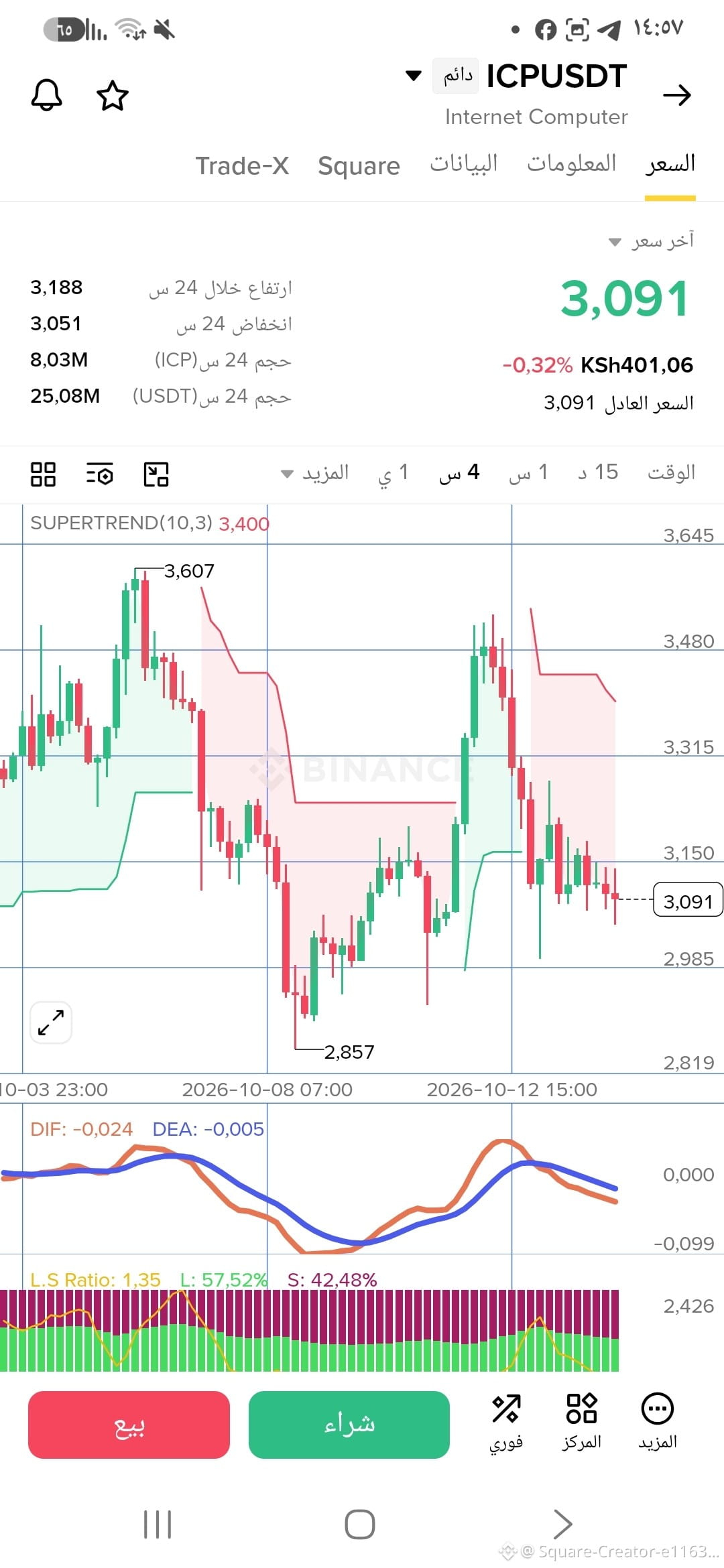
⚠️ $ICP Caution: Long Position Alert!
ICPUSDT is currently around 3.091. The market has been highly volatile recently, with rapid price rises and pullbacks. Traders should avoid rushing to chase gains and are advised to wait patiently for confirmation signals before entering. 📊
🟢 Reference entry: 3.091
🎯 TP1: 3.180
🚀 TP2: 3.280
🛑 Stop loss: 2.980
If the price can hold above 3.10 and buying volume increases, there may be an opportunity for further upside in the short term to test the target levels. $ICP
⚠️ Market risk is currently high. Consider using a small position and setting a strict stop loss, and wait patiently for the best entry point. Don’t blindly chase trades because of short-term price fluctuations!
#ICP. #ICPUSDT #InternetComputer #交易信号服务 #Long #谨慎交易 #CPIWatch
$ICP
⚠️ $ICP Caution: Long Position Alert!
ICPUSDT is currently around 3.091. The market has been highly volatile recently, with rapid price rises and pullbacks. Traders should avoid rushing to chase gains and are advised to wait patiently for confirmation signals before entering. 📊
🟢 Reference entry: 3.091
🎯 TP1: 3.180
🚀 TP2: 3.280
🛑 Stop loss: 2.980
If the price can hold above 3.10 and buying volume increases, there may be an opportunity for further upside in the short term to test the target levels. $ICP
⚠️ Market risk is currently high. Consider using a small position and setting a strict stop loss, and wait patiently for the best entry point. Don’t blindly chase trades because of short-term price fluctuations!
#ICP. #ICPUSDT #InternetComputer #交易信号服务 #Long #谨慎交易 #CPIWatch
⚠️ $ICP Caution: Long Position Alert!
ICPUSDT is currently around 3.091. The market has been highly volatile recently, with rapid price rises and pullbacks. Traders should avoid rushing to chase gains and are advised to wait patiently for confirmation signals before entering. 📊
🟢 Reference entry: 3.091
🎯 TP1: 3.180
🚀 TP2: 3.280
🛑 Stop loss: 2.980
If the price can hold above 3.10 and buying volume increases, there may be an opportunity for further upside in the short term to test the target levels. $ICP
⚠️ Market risk is currently high. Consider using a small position and setting a strict stop loss, and wait patiently for the best entry point. Don’t blindly chase trades because of short-term price fluctuations!
#ICP. #ICPUSDT #InternetComputer #交易信号服务 #Long #谨慎交易 #CPIWatch
1
39
Log in to explore more content
Join global crypto users on Binance Square
⚡️ Get latest and useful information about crypto.
💬 Trusted by the world’s largest crypto exchange.
👍 Discover real insights from verified creators.
Email / Phone number
Trending Topics
1
#BinancePick
2.9M views
149,233 Discussing
2
#EarningsSeason
5.2M views
25,482 Discussing
3
#AnthropicTTMRevenueGrewAbout1200%
7,725 views
218 Discussing
4
#AnthropicS1ExpectedToday
11,068 views
209 Discussing
5
#SouthKoreaReportedlyWeighsFourthCryptoTaxDelay
19,230 views
347 Discussing
6
#FranklinTempletonFilesForTwoDividendToBitcoinETFs
26,176 views
454 Discussing
7
#StrategyMSTRSurpassesNasdaqInMarketCap
20,051 views
337 Discussing
8
#CanadaProposesStablecoinRedemptionWithin3BusinessDays
920 views
33 Discussing
9
#ElectrumWalletBugLetRogueServersStealFunds
23,465 views
424 Discussing
10
#ArgentineCourtDismissesLIBRACaseAgainstMilei
35,444 views
521 Discussing