
#glosariocripto
glosariocripto
6,834 views
54 Discussing
Hot
Latest

·
--
Article
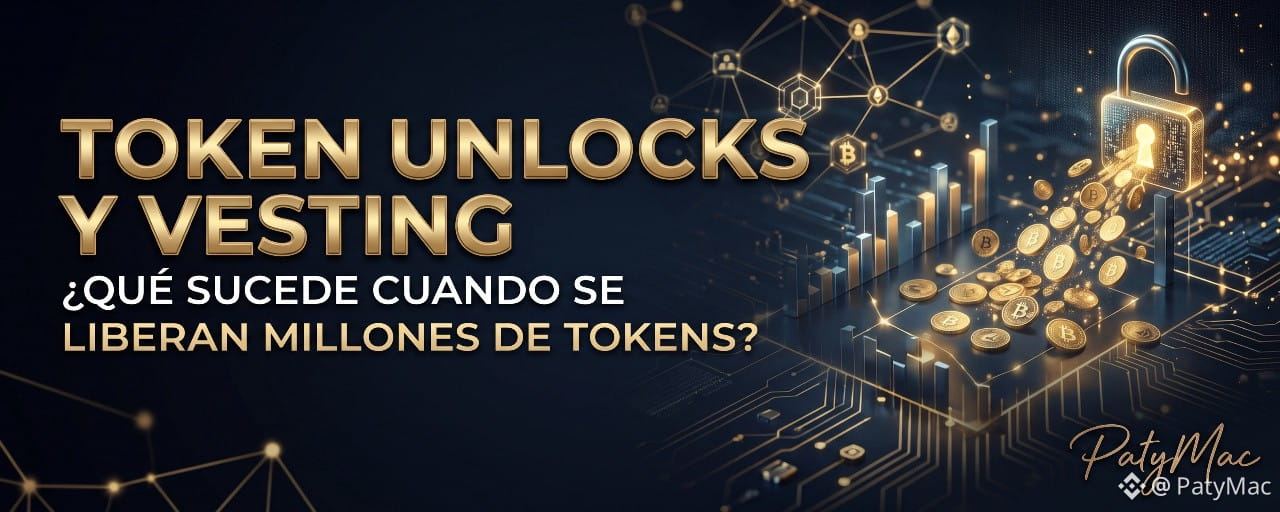
TOKEN UNLOCKS AND VESTING: WHAT HAPPENS WHEN MILLIONS OF TOKENS ARE RELEASED?CRYPTO GLOSSARY #26 | Unlocks and Market Risks
Imagine a token is rising in price and everything seems to indicate that its project has a promising future.
But there is one fact that many investors don't know:
In just a few days, millions of tokens that were locked will be able to start circulating.
Could this affect their price?
Yes, although not necessarily in the way you might imagine.
To understand this, we need to know two concepts: vesting and token unlocks.
What is vesting?
It is a mechanism for gradually acquiring rights or releasing tokens according to a schedule over a set period of time.
TOKEN UNLOCKS AND VESTING: WHAT HAPPENS WHEN MILLIONS OF TOKENS ARE RELEASED?
CRYPTO GLOSSARY #26 | Unlocks and Market Risks
Imagine a token is rising in price and everything seems to indicate that its project has a promising future.
But there is one fact that many investors don't know:
In just a few days, millions of tokens that were locked will be able to start circulating.
Could this affect their price?
Yes, although not necessarily in the way you might imagine.
To understand this, we need to know two concepts: vesting and token unlocks.
What is vesting?
It is a mechanism for gradually acquiring rights or releasing tokens according to a schedule over a set period of time.
2
133
·
--
Article
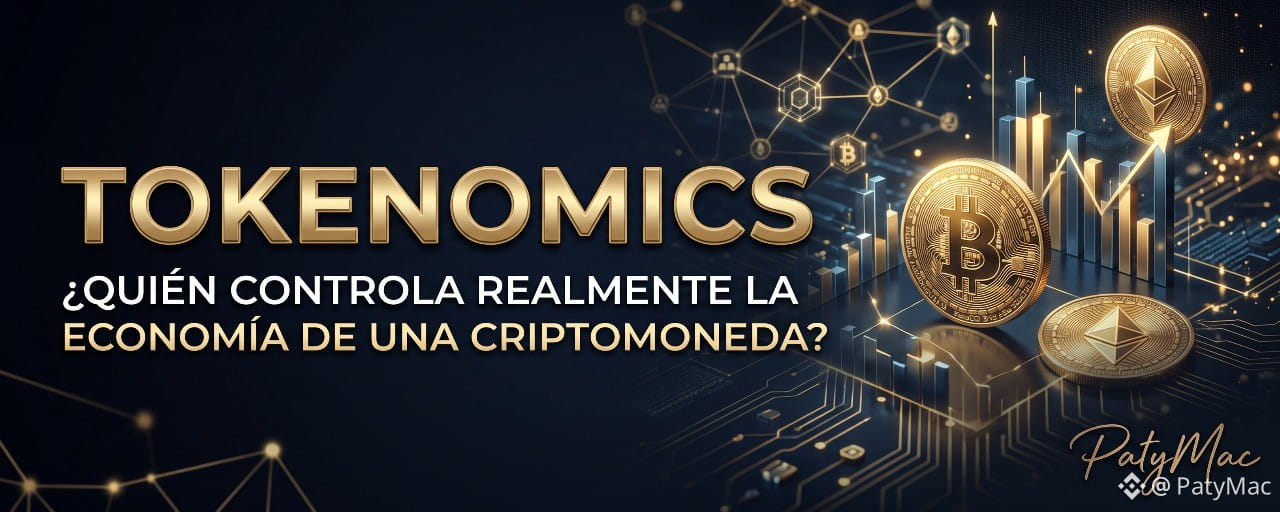
TOKENOMICS: WHO REALLY CONTROLS THE ECONOMY OF A CRYPTOCURRENCY?CRYPTO GLOSSARY #25 | The economy of digital assets
Imagine discovering a project that promises to revolutionize the market.
Its token costs just $0.05, and many claim it could multiply in value.
But there's a question few people ask:
How many tokens exist, who controls them, and how many could enter the market?
This is where a fundamental concept comes in: Tokenomics.
What does Tokenomics mean?
It's a combination of the words Token and Economics.
It refers to a token's economic design: how its supply is created, distributed, used, and managed.
TOKENOMICS: WHO REALLY CONTROLS THE ECONOMY OF A CRYPTOCURRENCY?
CRYPTO GLOSSARY #25 | The economy of digital assets
Imagine discovering a project that promises to revolutionize the market.
Its token costs just $0.05, and many claim it could multiply in value.
But there's a question few people ask:
How many tokens exist, who controls them, and how many could enter the market?
This is where a fundamental concept comes in: Tokenomics.
What does Tokenomics mean?
It's a combination of the words Token and Economics.
It refers to a token's economic design: how its supply is created, distributed, used, and managed.
164
·
--
Article
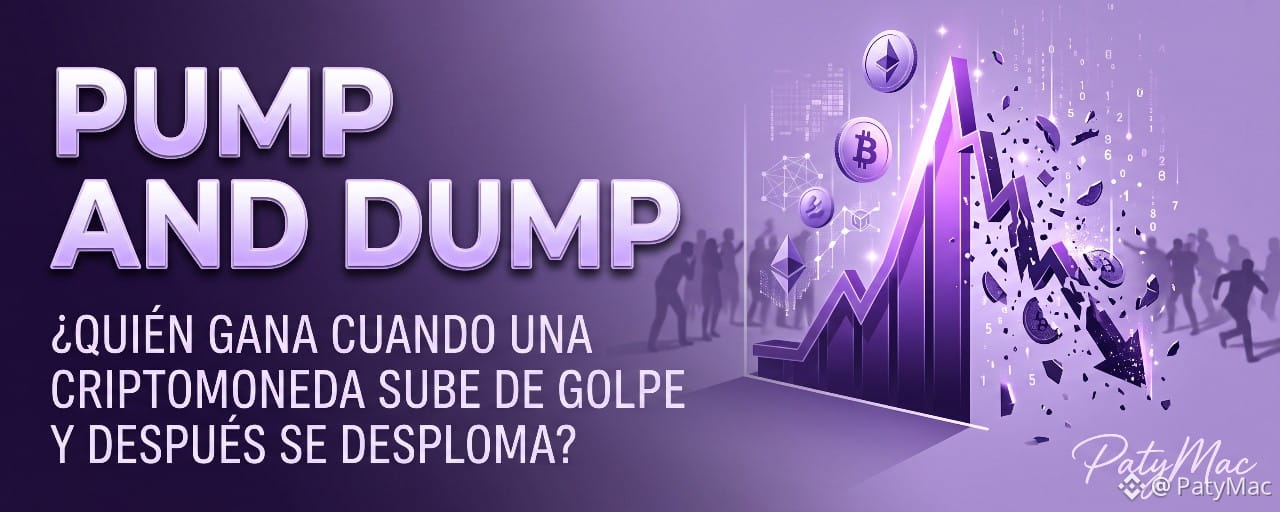
PUMP AND DUMP: WHO PROFITS WHEN A CRYPTOCURRENCY SUDDENLY SOARS AND THEN CRASHES?CRYPTO GLOSSARY #24 | Market Manipulation
An unknown token starts rising rapidly.
Messages like these appear on social media:
“It’s going to multiply a hundredfold!”
“Buy before it’s too late!”
Thousands of people enter the market, swept up in the excitement.
But shortly afterward, the price crashes.
Was it simply a correction?
Or did someone artificially drive up the price?
This is where a practice known as Pump and Dump comes in.
🔎 What does Pump and Dump mean?
PUMP AND DUMP: WHO PROFITS WHEN A CRYPTOCURRENCY SUDDENLY SOARS AND THEN CRASHES?
CRYPTO GLOSSARY #24 | Market Manipulation
An unknown token starts rising rapidly.
Messages like these appear on social media:
“It’s going to multiply a hundredfold!”
“Buy before it’s too late!”
Thousands of people enter the market, swept up in the excitement.
But shortly afterward, the price crashes.
Was it simply a correction?
Or did someone artificially drive up the price?
This is where a practice known as Pump and Dump comes in.
🔎 What does Pump and Dump mean?
129
·
--
Article
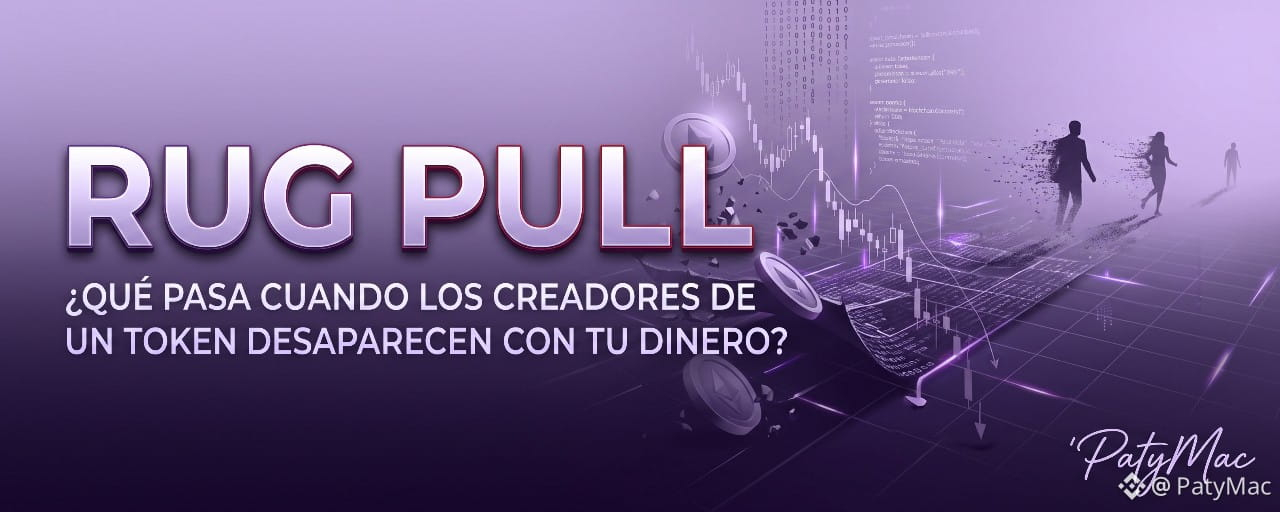
RUG PULL: WHAT HAPPENS WHEN A TOKEN’S CREATORS DISAPPEAR WITH YOUR MONEY?CRYPTO GLOSSARY #23 | Scams and financial security
Imagine discovering a new cryptocurrency project that promises to revolutionize the market.
It has an attractive website, thousands of followers, influencers promoting it, and a token whose price just keeps rising.
Decides to invest.
But suddenly, liquidity disappears, the price crashes, and the people behind the project stop responding.
What seemed like a great opportunity may have been a Rug Pull.
🔎 What is a Rug Pull?
In English, it literally means “pulling the rug.”
RUG PULL: WHAT HAPPENS WHEN A TOKEN’S CREATORS DISAPPEAR WITH YOUR MONEY?
CRYPTO GLOSSARY #23 | Scams and financial security
Imagine discovering a new cryptocurrency project that promises to revolutionize the market.
It has an attractive website, thousands of followers, influencers promoting it, and a token whose price just keeps rising.
Decides to invest.
But suddenly, liquidity disappears, the price crashes, and the people behind the project stop responding.
What seemed like a great opportunity may have been a Rug Pull.
🔎 What is a Rug Pull?
In English, it literally means “pulling the rug.”
149
·
--

Article
LEVERAGE AND LIQUIDATION: HOW CAN A SMALL DROP MAKE YOU LOSE YOUR CAPITAL?CRYPTO GLOSSARY #22 | Futures and risk management
Imagine you have 100 dollars to trade Bitcoin.
But a platform lets you open a position worth 1,000 dollars.
It sounds like an opportunity: participate in the market with ten times more exposure than your capital.
However, there’s one fundamental detail:
losses are amplified too.
🔎 What is leverage?
It’s a mechanism that allows you to take on financial exposure greater than the capital used as collateral.
For example:
LEVERAGE AND LIQUIDATION: HOW CAN A SMALL DROP MAKE YOU LOSE YOUR CAPITAL?
CRYPTO GLOSSARY #22 | Futures and risk management
Imagine you have 100 dollars to trade Bitcoin.
But a platform lets you open a position worth 1,000 dollars.
It sounds like an opportunity: participate in the market with ten times more exposure than your capital.
However, there’s one fundamental detail:
losses are amplified too.
🔎 What is leverage?
It’s a mechanism that allows you to take on financial exposure greater than the capital used as collateral.
For example:
64
·
--

Article
FOMO AND FUD: ARE YOU INVESTING, OR ARE YOUR EMOTIONS BEING MANIPULATED?CRYPTO GLOSSARY #21 | Investor Psychology
Bitcoin starts rising. Social media fills with people showing off extraordinary gains.
Someone posts: “Last chance to buy!”
You feel that if you don’t get in right away, you’ll miss out on the investment of a lifetime.
But a few hours later, the market drops.
What happened?
You may have made a decision influenced by FOMO.
🔎 What is FOMO?
Fear of Missing Out means being afraid of missing an opportunity.
In financial markets, this happens when someone buys impulsively after seeing others make a profit.
FOMO AND FUD: ARE YOU INVESTING, OR ARE YOUR EMOTIONS BEING MANIPULATED?
CRYPTO GLOSSARY #21 | Investor Psychology
Bitcoin starts rising. Social media fills with people showing off extraordinary gains.
Someone posts: “Last chance to buy!”
You feel that if you don’t get in right away, you’ll miss out on the investment of a lifetime.
But a few hours later, the market drops.
What happened?
You may have made a decision influenced by FOMO.
🔎 What is FOMO?
Fear of Missing Out means being afraid of missing an opportunity.
In financial markets, this happens when someone buys impulsively after seeing others make a profit.
49
·
--
Article
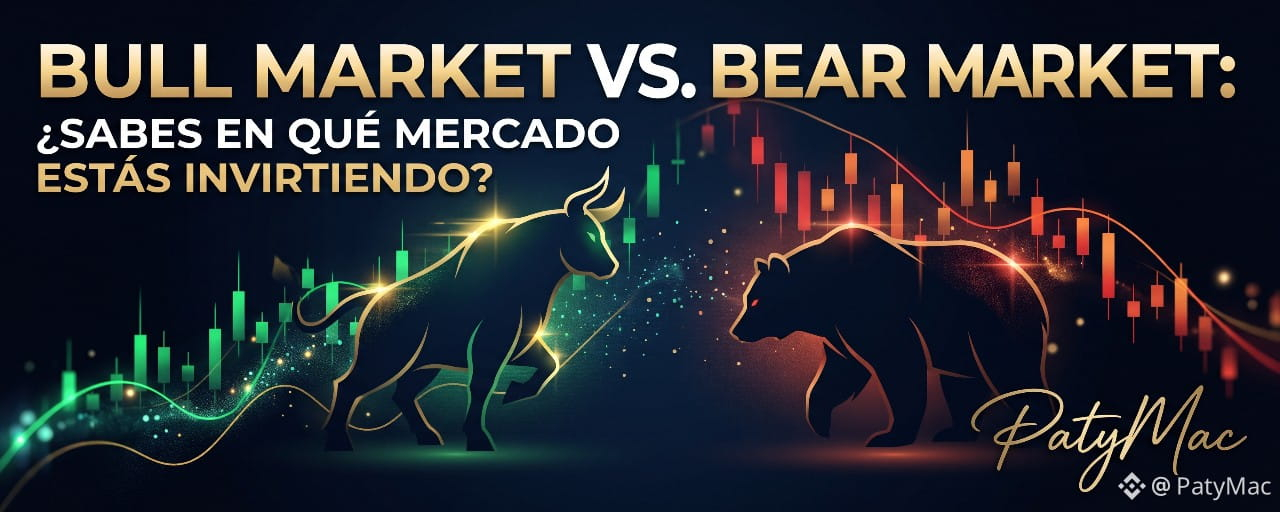
BULL MARKET VS. BEAR MARKET: DO YOU KNOW WHICH MARKET YOU’RE INVESTING IN?CRYPTO GLOSSARY #20 | Market Cycles
When Bitcoin rises for weeks, optimistic headlines, new investors, and increasingly higher price predictions emerge.
But when prices start to fall, enthusiasm can quickly turn into fear.
In financial markets, there are two terms used to describe these situations:
Bull Market and Bear Market.
🐂 What is a Bull Market?
It is a period with a predominantly upward trend, often accompanied by positive expectations.
BULL MARKET VS. BEAR MARKET: DO YOU KNOW WHICH MARKET YOU’RE INVESTING IN?
CRYPTO GLOSSARY #20 | Market Cycles
When Bitcoin rises for weeks, optimistic headlines, new investors, and increasingly higher price predictions emerge.
But when prices start to fall, enthusiasm can quickly turn into fear.
In financial markets, there are two terms used to describe these situations:
Bull Market and Bear Market.
🐂 What is a Bull Market?
It is a period with a predominantly upward trend, often accompanied by positive expectations.
103
·
--
Article
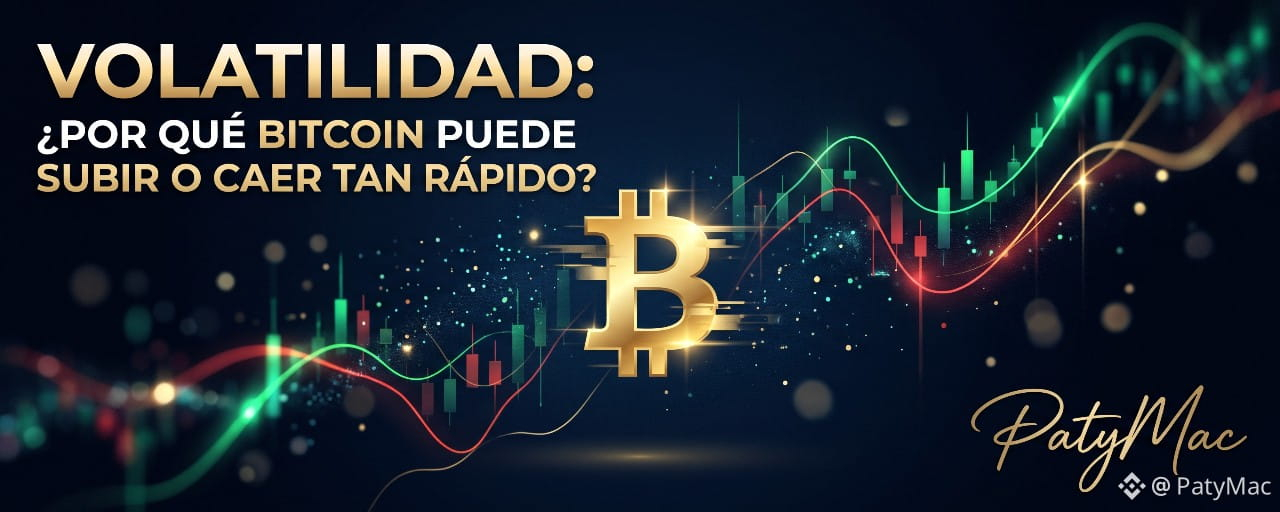
VOLATILITY: WHY CAN BITCOIN RISE OR FALL SO FAST?CRYPTO GLOSSARY #19 | Financial education
Imagine buying Bitcoin for $60,000 and discovering that just a few days later, its price had dropped to $54,000.
You lost 10% of its market value in a very short time.
But what happened? Did Bitcoin stop working? Did something go wrong with the blockchain?
Not necessarily.
What you're seeing may be a manifestation of volatility, a fundamental characteristic of financial markets.
🔎 What is volatility?
It measures how much an asset's price changes over a given period.
VOLATILITY: WHY CAN BITCOIN RISE OR FALL SO FAST?
CRYPTO GLOSSARY #19 | Financial education
Imagine buying Bitcoin for $60,000 and discovering that just a few days later, its price had dropped to $54,000.
You lost 10% of its market value in a very short time.
But what happened? Did Bitcoin stop working? Did something go wrong with the blockchain?
Not necessarily.
What you're seeing may be a manifestation of volatility, a fundamental characteristic of financial markets.
🔎 What is volatility?
It measures how much an asset's price changes over a given period.
120

·
--
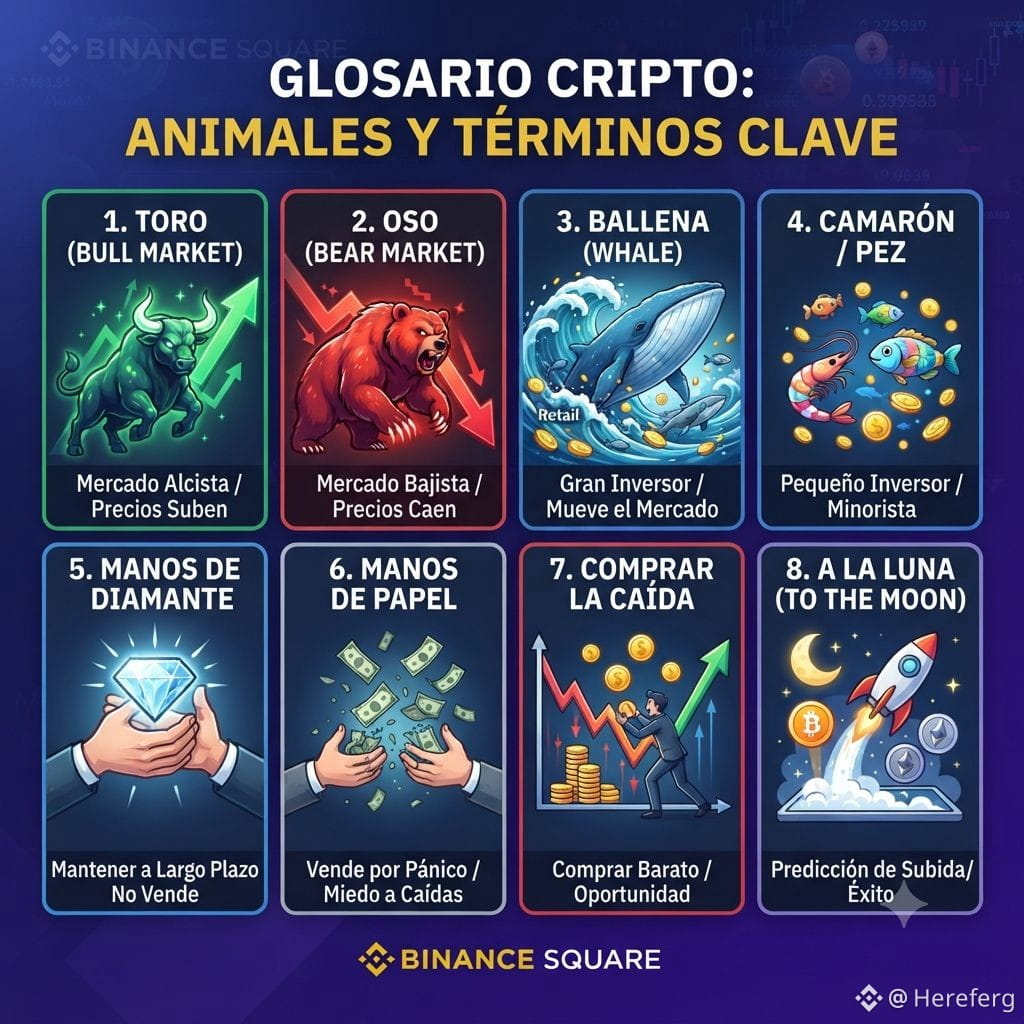
Crypto Little Great Glossary: What animal are you in the market?
New to the crypto world and confused when they talk about bears, whales, or diamond hands?
Don’t worry! Save this post 📌 and share it with that friend who is just starting on Binance.
1. 🐂 Bull Market (Bull Market / Toro)
A period where prices rise steadily and optimism floods the market. It’s called a "bull" because this animal charges by thrusting its horns upward.
2. 🐻 Bear Market (Bear Market / Oso)
The opposite of the above. Prices fall and pessimism takes over the atmosphere. It’s called a "bear" because this animal attacks by striking downward with its claws.
3. 🐋 Whale
Investors, institutions, or funds that hold a massive amount of a cryptocurrency (like BTC or Ethereum). They have so much capital that when they buy or sell, they can move the market price entirely, creating big waves.
4. 🦐 Shrimp / Fish
Small retail investors. They buy modest amounts of cryptocurrencies. Together they form the foundation of the community, but individually they don’t move the price.
5. 🤲💎 Diamond Hands
Traders or investors who never sell, no matter how hard the market drops. They withstand the pressure in order to hold their assets long-term.
6. 🫱🏻📜 Paper Hands
Investors who get scared easily at the first correction or market drop and sell at a loss out of fear of losing everything.
7. 🛍️ Buy the Dip
Take advantage when the price of an asset temporarily falls to buy more cheaply, expecting it to rise again.
8. 🚀 To the Moon
A very popular phrase in the community to express or predict that the price of a cryptocurrency will rise astronomically.
💬 What term do you identify with today? Are you a cautious bear, an optimistic bull, or do you have diamond hands? I’m reading your comments!
#Binance #CryptoEducation #Glosariocripto #Bitcoin
126
·
--

Article
WHAT ARE YOU AUTHORIZING WHEN YOU “SIGN” A TRANSACTION?There’s a phrase you’ve probably seen many times:
“Connect your wallet.”
Then another one appears:
“Sign message.”
Or:
“Approve.”
And finally:
“Confirm transaction.”
Many users simply click.
But behind that click, there can be a huge difference.
Because in Web3:
“Sign” doesn’t always mean the same thing.
And understanding what we’re authorizing can be as important as protecting our password.
🔐 What does “SIGN” mean in crypto?
When a wallet digitally signs an operation, it uses a cryptographic key to prove that whoever controls that key is authorizing certain data.
WHAT ARE YOU AUTHORIZING WHEN YOU “SIGN” A TRANSACTION?
There’s a phrase you’ve probably seen many times:
“Connect your wallet.”
Then another one appears:
“Sign message.”
Or:
“Approve.”
And finally:
“Confirm transaction.”
Many users simply click.
But behind that click, there can be a huge difference.
Because in Web3:
“Sign” doesn’t always mean the same thing.
And understanding what we’re authorizing can be as important as protecting our password.
🔐 What does “SIGN” mean in crypto?
When a wallet digitally signs an operation, it uses a cryptographic key to prove that whoever controls that key is authorizing certain data.
1
298
·
--

Article
PUBLIC ADDRESS: WHAT CAN YOU SHARE AND WHAT MUST YOU PROTECT?So far we’ve covered four concepts:
Wallet → Hot/Cold Wallet → Private key → Seed phrase.
And now a fundamental question comes up:
If I can’t share my private key or my seed phrase… how do I make it so someone can send me cryptocurrency?
The answer is:
📍 YOUR PUBLIC ADDRESS
It’s one of the pieces of information you’re going to use the most when you start trading with cryptocurrencies.
But it’s also one of the ones that gets confused with the private key the most.
And that confusion can be dangerous.
🟢 WHAT IS A PUBLIC ADDRESS?
PUBLIC ADDRESS: WHAT CAN YOU SHARE AND WHAT MUST YOU PROTECT?
So far we’ve covered four concepts:
Wallet → Hot/Cold Wallet → Private key → Seed phrase.
And now a fundamental question comes up:
If I can’t share my private key or my seed phrase… how do I make it so someone can send me cryptocurrency?
The answer is:
📍 YOUR PUBLIC ADDRESS
It’s one of the pieces of information you’re going to use the most when you start trading with cryptocurrencies.
But it’s also one of the ones that gets confused with the private key the most.
And that confusion can be dangerous.
🟢 WHAT IS A PUBLIC ADDRESS?
1
225
·
--
Article
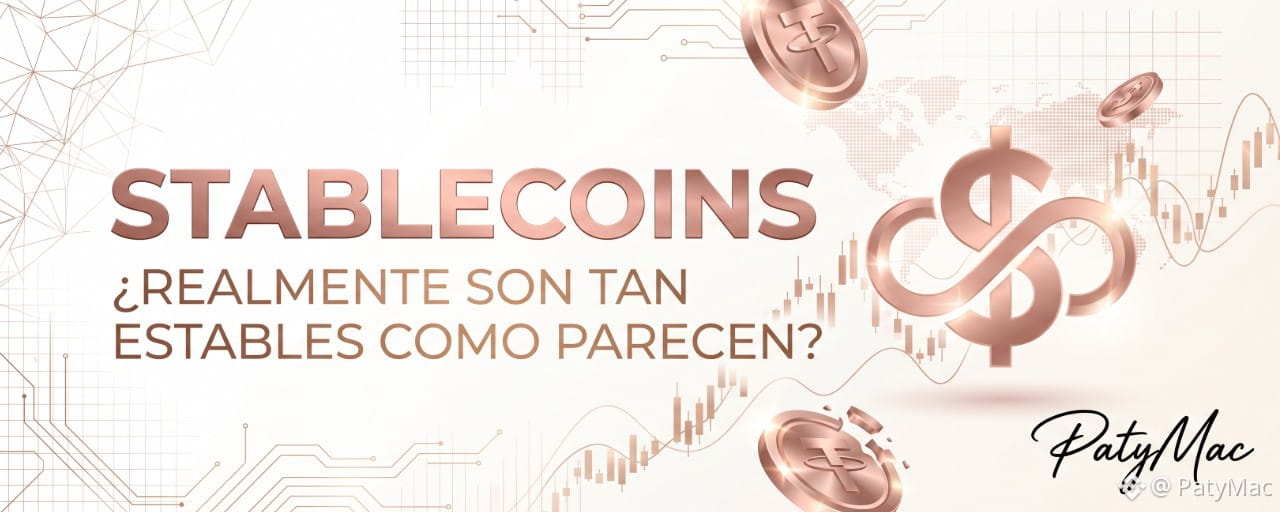
STABLECOINS: ARE THEY REALLY AS STABLE AS THEY SEEM?CRYPTO GLOSSARY #15 | Financial Education and Blockchain
Imagine owning a digital asset that aims to maintain the value of one dollar, but that you can transfer via blockchain, even to people living in other countries.
That is one of the main features of stablecoins, also known as stable currencies.
But an important question arises: Is owning a stablecoin equivalent to having dollars in a bank account?
The answer is NO.
🔎 What is a stablecoin?
It is a crypto asset designed to maintain a relatively stable value in relation to a benchmark, such as the US dollar, the euro, or another asset.
STABLECOINS: ARE THEY REALLY AS STABLE AS THEY SEEM?
CRYPTO GLOSSARY #15 | Financial Education and Blockchain
Imagine owning a digital asset that aims to maintain the value of one dollar, but that you can transfer via blockchain, even to people living in other countries.
That is one of the main features of stablecoins, also known as stable currencies.
But an important question arises: Is owning a stablecoin equivalent to having dollars in a bank account?
The answer is NO.
🔎 What is a stablecoin?
It is a crypto asset designed to maintain a relatively stable value in relation to a benchmark, such as the US dollar, the euro, or another asset.
144
·
--
Article
TOKEN: WHAT IS IT AND WHAT DOES IT REALLY REPRESENT?In the crypto world, we constantly hear the word “token,” but not all tokens represent the same thing.
A token is a digital asset or unit that operates within a blockchain infrastructure. It can represent value, utility, rights, or access to certain platform features.
🔹 Are all tokens the same?
No. Some examples are:
Utility tokens: provide access to certain features or services.
Governance tokens: may grant the right to participate in protocol decisions.
TOKEN: WHAT IS IT AND WHAT DOES IT REALLY REPRESENT?
In the crypto world, we constantly hear the word “token,” but not all tokens represent the same thing.
A token is a digital asset or unit that operates within a blockchain infrastructure. It can represent value, utility, rights, or access to certain platform features.
🔹 Are all tokens the same?
No. Some examples are:
Utility tokens: provide access to certain features or services.
Governance tokens: may grant the right to participate in protocol decisions.
1
158
·
--
Article
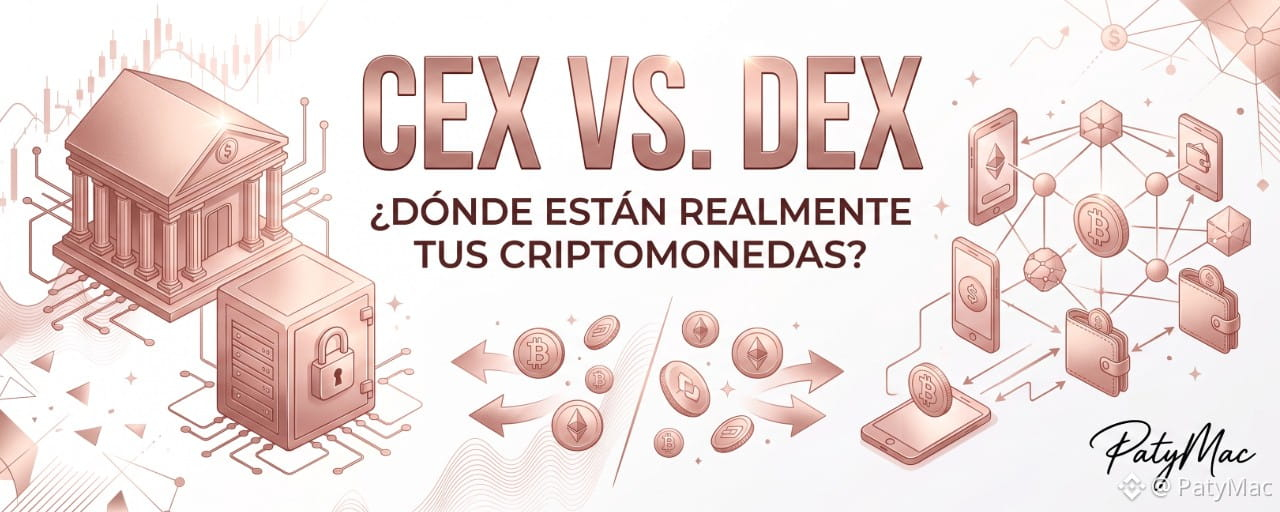
CEX VS. DEX: WHERE ARE YOUR CRYPTOCURRENCIES REALLY?CRYPTO GLOSSARY #16 | Exchanges and Control of Digital Assets
When you buy Bitcoin or exchange USDT, you’re probably using a platform.
But not all platforms work the same way.
Some manage their users’ assets. Others let users trade directly through wallets and smart contracts.
This is where a fundamental difference comes in:
CEX vs. DEX.
🔎 What is a CEX?
CEX stands for Centralized Exchange.
It’s a platform run by a company or organization that facilitates the buying and selling of crypto assets.
CEX VS. DEX: WHERE ARE YOUR CRYPTOCURRENCIES REALLY?
CRYPTO GLOSSARY #16 | Exchanges and Control of Digital Assets
When you buy Bitcoin or exchange USDT, you’re probably using a platform.
But not all platforms work the same way.
Some manage their users’ assets. Others let users trade directly through wallets and smart contracts.
This is where a fundamental difference comes in:
CEX vs. DEX.
🔎 What is a CEX?
CEX stands for Centralized Exchange.
It’s a platform run by a company or organization that facilitates the buying and selling of crypto assets.
107
·
--
Article
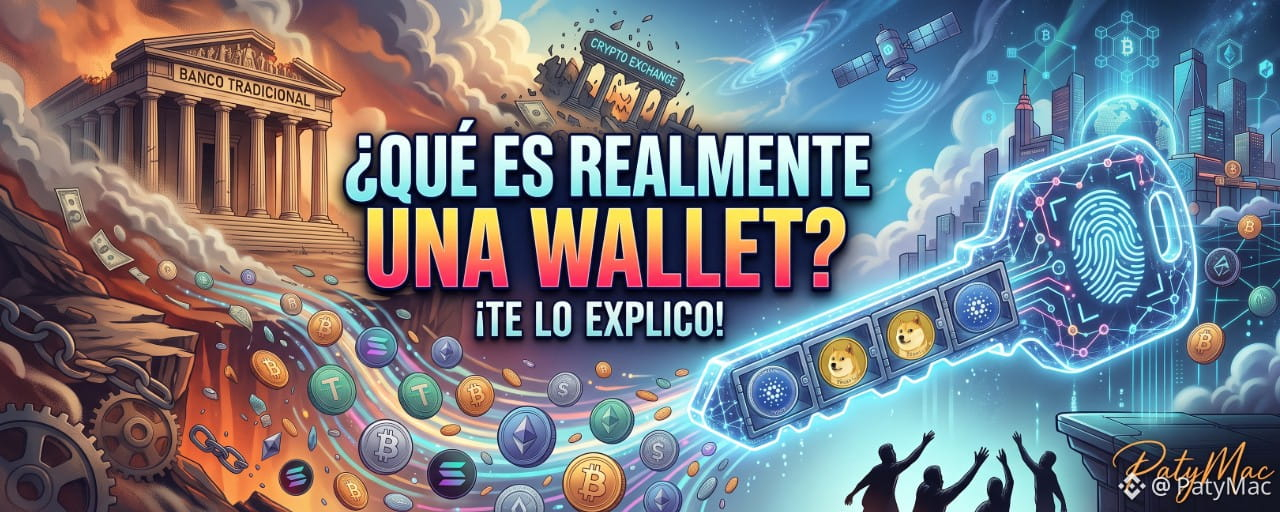
WHAT A WALLET REALLY ISWhen someone starts with cryptocurrencies, one of the first things they hear is:
“You need a wallet.”
And then a seemingly simple question appears:
What is a wallet and where are my cryptocurrencies really?
The answer may surprise you:
👉 A wallet doesn’t work like a traditional wallet.
It’s not a digital box where your Bitcoins, your USDT, or your Ethereum are stored.
A wallet, in simple terms, is a tool that allows you to manage your keys and authorize movements of assets recorded on a blockchain.
WHAT A WALLET REALLY IS
When someone starts with cryptocurrencies, one of the first things they hear is:
“You need a wallet.”
And then a seemingly simple question appears:
What is a wallet and where are my cryptocurrencies really?
The answer may surprise you:
👉 A wallet doesn’t work like a traditional wallet.
It’s not a digital box where your Bitcoins, your USDT, or your Ethereum are stored.
A wallet, in simple terms, is a tool that allows you to manage your keys and authorize movements of assets recorded on a blockchain.
167
·
--

Article
PRIVATE KEY: THE “KEY” YOU SHOULD NEVER GIVE TO ANYONEIn the first two episodes, we talked about wallets and the difference between hot wallets and cold wallets.
Now we come to one of the most important concepts in the entire crypto world:
What is a private key?
If you’re getting into cryptocurrencies, you’ve probably heard phrases like:
“Not your keys, not your coins”.
But what does it really mean?
The answer starts with something you can’t see at first glance:
🔐 The private key.
WHAT IS A PRIVATE KEY?
A private key is a piece of cryptographic data generated to enable authorization for certain operations on assets controlled through a blockchain.
PRIVATE KEY: THE “KEY” YOU SHOULD NEVER GIVE TO ANYONE
In the first two episodes, we talked about wallets and the difference between hot wallets and cold wallets.
Now we come to one of the most important concepts in the entire crypto world:
What is a private key?
If you’re getting into cryptocurrencies, you’ve probably heard phrases like:
“Not your keys, not your coins”.
But what does it really mean?
The answer starts with something you can’t see at first glance:
🔐 The private key.
WHAT IS A PRIVATE KEY?
A private key is a piece of cryptographic data generated to enable authorization for certain operations on assets controlled through a blockchain.
1
244
·
--
Article
MARKET CAP: CAN A $0.001 CRYPTOCURRENCY MAKE YOU A MILLIONAIRE?CRYPTO GLOSSARY #18 | Market Capitalization
One cryptocurrency costs $0.001.
Another costs $50,000.
Which has greater growth potential?
Many beginner investors would choose the first one, thinking it’s cheaper and has more room to rise.
But there’s a flaw in that reasoning.
The price of a single unit alone doesn’t determine a project’s total value.
🔎 What is Market Cap?
Market capitalization, or market cap, is a measure of a crypto asset’s market value.
MARKET CAP: CAN A $0.001 CRYPTOCURRENCY MAKE YOU A MILLIONAIRE?
CRYPTO GLOSSARY #18 | Market Capitalization
One cryptocurrency costs $0.001.
Another costs $50,000.
Which has greater growth potential?
Many beginner investors would choose the first one, thinking it’s cheaper and has more room to rise.
But there’s a flaw in that reasoning.
The price of a single unit alone doesn’t determine a project’s total value.
🔎 What is Market Cap?
Market capitalization, or market cap, is a measure of a crypto asset’s market value.
8
1.5k
·
--
Article
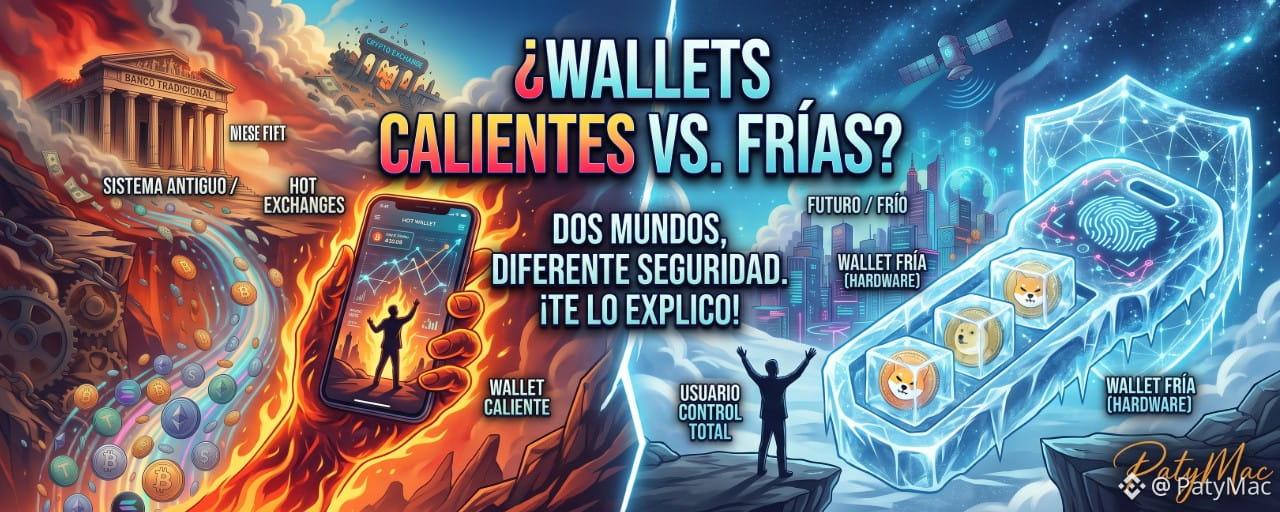
HOT WALLET VS. COLD WALLETWhat’s the difference, and what really changes for your security?
If you already understand what a wallet is, now comes one of the first important decisions in crypto:
Do I keep my assets in a wallet connected to the Internet, or do I use a cold wallet?
The answer isn’t simply:
“Cold = good, hot = bad”.
The reality is much more interesting.
🔥 WHAT IS A HOT WALLET?
A hot wallet, or hot wallet, is a wallet whose keys are managed in an environment that is connected or designed to regularly interact with the Internet.
HOT WALLET VS. COLD WALLET
What’s the difference, and what really changes for your security?
If you already understand what a wallet is, now comes one of the first important decisions in crypto:
Do I keep my assets in a wallet connected to the Internet, or do I use a cold wallet?
The answer isn’t simply:
“Cold = good, hot = bad”.
The reality is much more interesting.
🔥 WHAT IS A HOT WALLET?
A hot wallet, or hot wallet, is a wallet whose keys are managed in an environment that is connected or designed to regularly interact with the Internet.
2
1k
·
--
Article
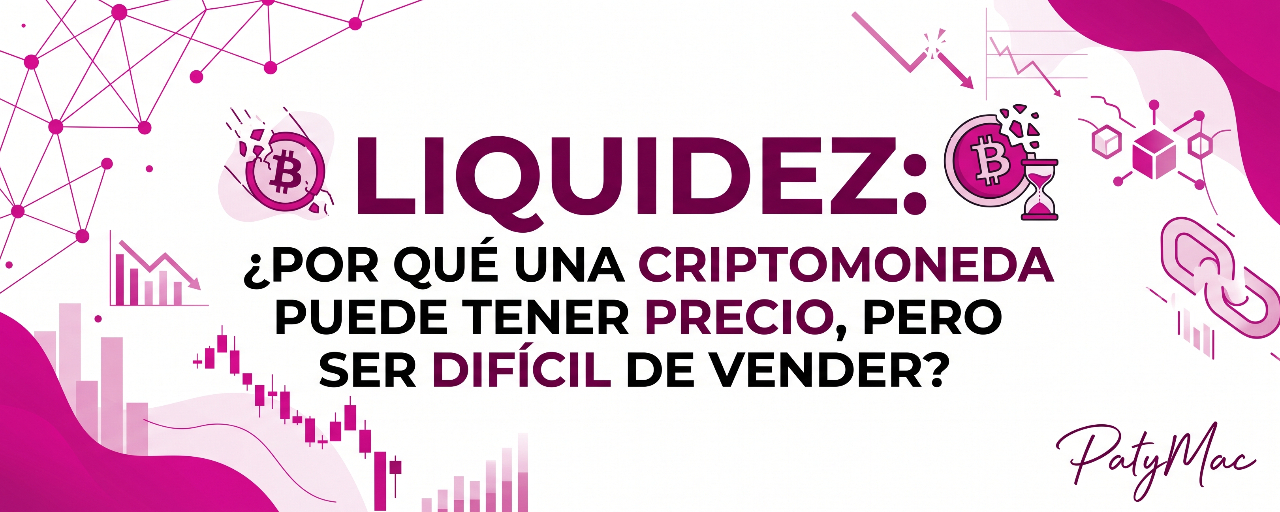
LIQUIDITY: WHY CAN A CRYPTOCURRENCY HAVE A PRICE BUT BE DIFFICULT TO SELL?CRYPTO GLOSSARY #17 | Financial education
Imagine you buy a cryptocurrency for 100 dollars. A few days later, its price appears on your screen as 150 dollars.
A 50% gain!
But when you try to sell it, you discover that practically nobody wants to buy it at that price.
This brings us to a fundamental concept: liquidity.
🔎 What is liquidity?
It is how easily an asset can be bought or sold without causing significant changes in its price.
A market with good liquidity usually has enough buyers and sellers to execute trades relatively easily.
LIQUIDITY: WHY CAN A CRYPTOCURRENCY HAVE A PRICE BUT BE DIFFICULT TO SELL?
CRYPTO GLOSSARY #17 | Financial education
Imagine you buy a cryptocurrency for 100 dollars. A few days later, its price appears on your screen as 150 dollars.
A 50% gain!
But when you try to sell it, you discover that practically nobody wants to buy it at that price.
This brings us to a fundamental concept: liquidity.
🔎 What is liquidity?
It is how easily an asset can be bought or sold without causing significant changes in its price.
A market with good liquidity usually has enough buyers and sellers to execute trades relatively easily.
87
·
--
Article
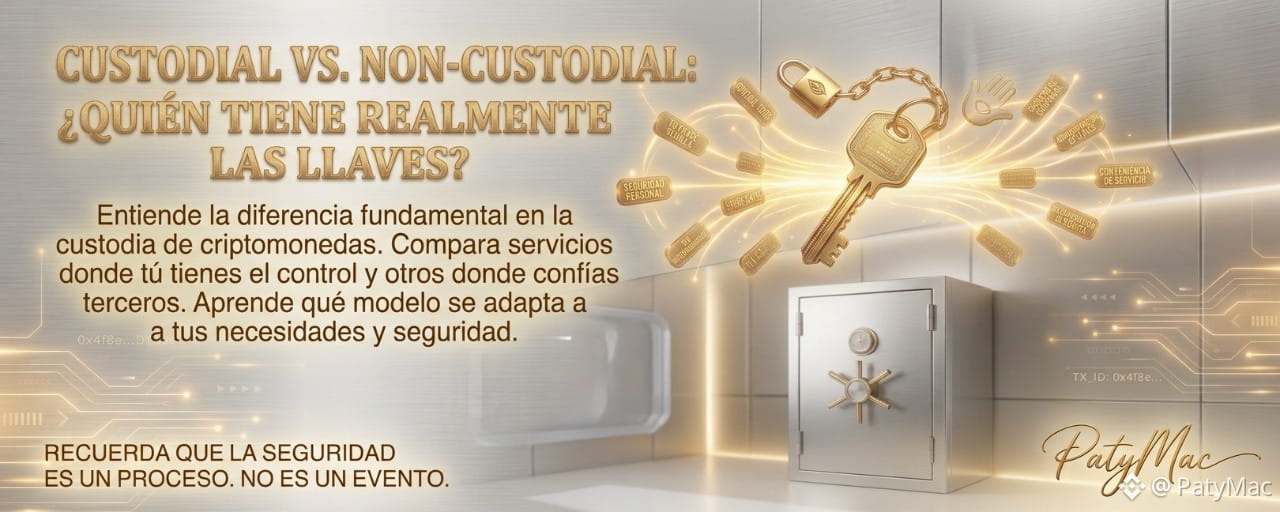
CUSTODIAL VS. NON-CUSTODIAL: WHO REALLY HAS THE KEYS?We reach one of the most important concepts of our series.
We already know:
🔐 what is a private key;
🧩 what is a seed phrase;
📍 what is a public address;
🔥 what is a hot wallet;
❄️ and what is a cold wallet.
Now we can ask the question that connects everything:
WHO CONTROLS THE KEYS?
The answer takes us to two concepts:
CUSTODIAL
and
NON-CUSTODIAL.
🏦 WHAT DOES CUSTODIAL MEAN?
Custodial means that a third party participates in the custody and control of the keys or assets on behalf of the user.
CUSTODIAL VS. NON-CUSTODIAL: WHO REALLY HAS THE KEYS?
We reach one of the most important concepts of our series.
We already know:
🔐 what is a private key;
🧩 what is a seed phrase;
📍 what is a public address;
🔥 what is a hot wallet;
❄️ and what is a cold wallet.
Now we can ask the question that connects everything:
WHO CONTROLS THE KEYS?
The answer takes us to two concepts:
CUSTODIAL
and
NON-CUSTODIAL.
🏦 WHAT DOES CUSTODIAL MEAN?
Custodial means that a third party participates in the custody and control of the keys or assets on behalf of the user.
1
401
Log in to explore more content
Join global crypto users on Binance Square
⚡️ Get latest and useful information about crypto.
💬 Trusted by the world’s largest crypto exchange.
👍 Discover real insights from verified creators.
Email / Phone number
Trending Topics
1
#CanMarketsReboundAfterThanksgiving?
6,971 views
180 Discussing
2
#CouldSpaceX’sOrbitalDataCentersBoostAIChipDemand?
5,201 views
126 Discussing
3
#EvolveAtBinanceBlockchainWeek
639,227 views
6,608 Discussing
4
#CorePCEBeatLiftsFedHikeOdds
149,000 views
1,200 Discussing
5
#BitcoinAndStocksSlipAgainAmidTrump’sTariffPlans
204,397 views
2,001 Discussing
6
#JensenHuangSaysNvidiaDoesn’tNeedASuccessionPlan
98,217 views
1,211 Discussing
7
#NasdaqFuturesSlideMoreThan3%
38,683 views
358 Discussing
8
#USOctoberPCEPriceIndexAt0.3%MoM
44,508 views
364 Discussing
9
#BitcoinETFsPostRecord$4.94BNovemberOutflows
8,381 views
48 Discussing
10
#TetherInvestsInArgentinasLemon
16,924 views
206 Discussing