
unique53
5 Beiträge

unique53
Melden
Nutzer blockieren
Learning crypto step by step. Exploring Bitcoin, blockchain and wallet safety. Sharing what I learn from trusted sources. Not financial advice.
3 Following
0 Follower
5 Like gegeben
Beiträge
·
--
Übersetzung ansehen
🚨 Your Wallet Can Be Tricked Without Being Hacked!
I'm learning that not every crypto scam involves stealing passwords or private keys.
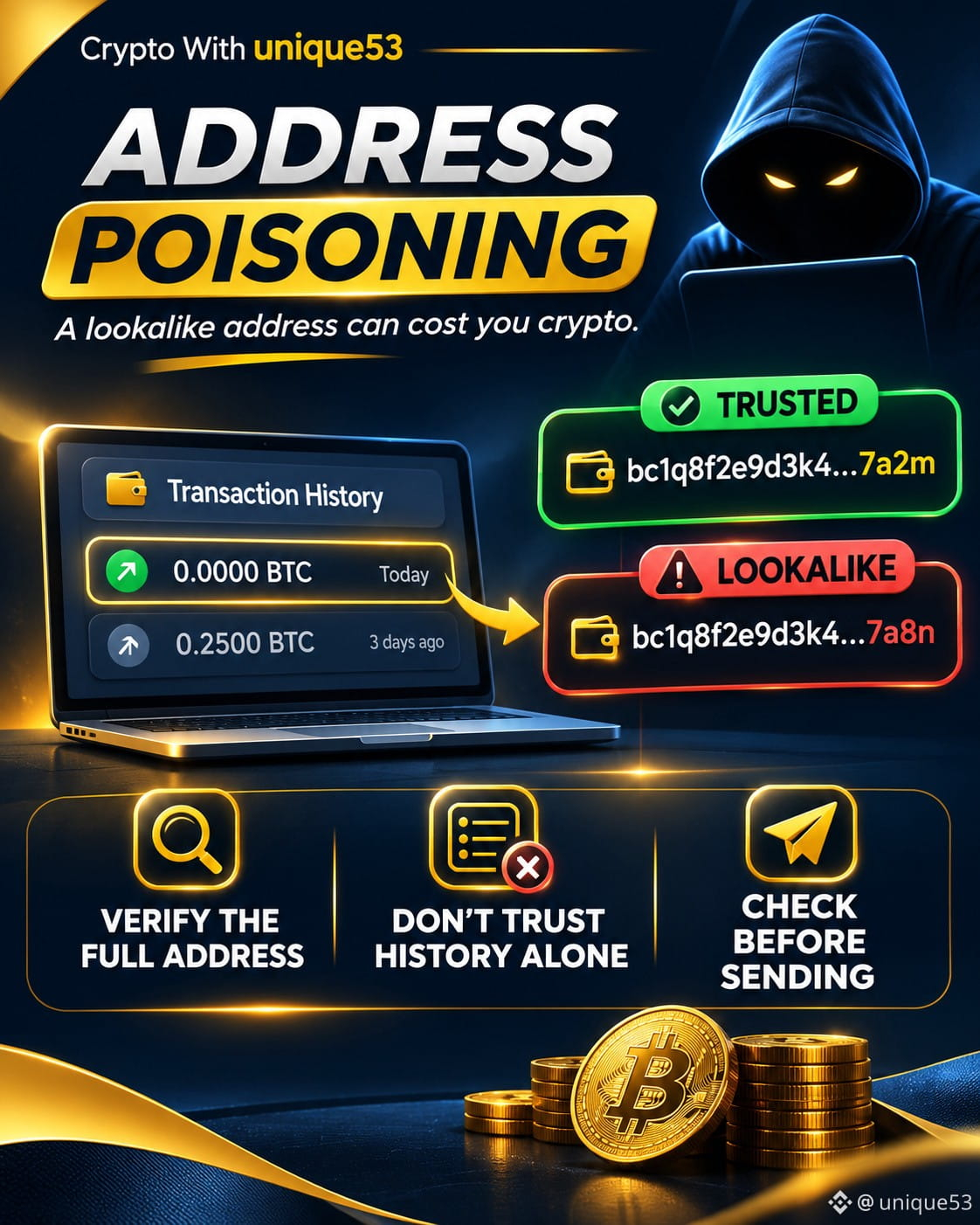
One trick I recently discovered is called Address Poisoning.
Here's how it works:
🔹 The Lookalike: Scammers create a wallet address that resembles one you've used before.
🔹 The Trap: They send a tiny or zero-value transaction so their address appears in your transaction history.
🔹 The Mistake: If you later copy that address without checking it, you could send your crypto to the scammer.
⚠️ The scary part? Your wallet doesn't necessarily need to be hacked for this to happen.
3 safety habits I'm learning:
✅ Verify the entire destination address using a trusted source.
✅ Don't blindly copy addresses from transaction history.
✅ Consider using a verified address book and a small test transfer when appropriate.
💡 My takeaway: A familiar-looking address isn't necessarily a safe address.
I'm learning that protecting crypto starts with understanding how scams work.
❓ Have you ever noticed a suspicious transaction in your wallet history?
#CryptoSecurity #AddressPoisoning #CryptoEducation #CryptoBeginners
1
85
·
--
Übersetzung ansehen
🔍 Proof of Reserves: Can You Really Verify an Exchange’s Crypto?
I’m learning that trusting a crypto exchange shouldn’t depend only on its reputation.
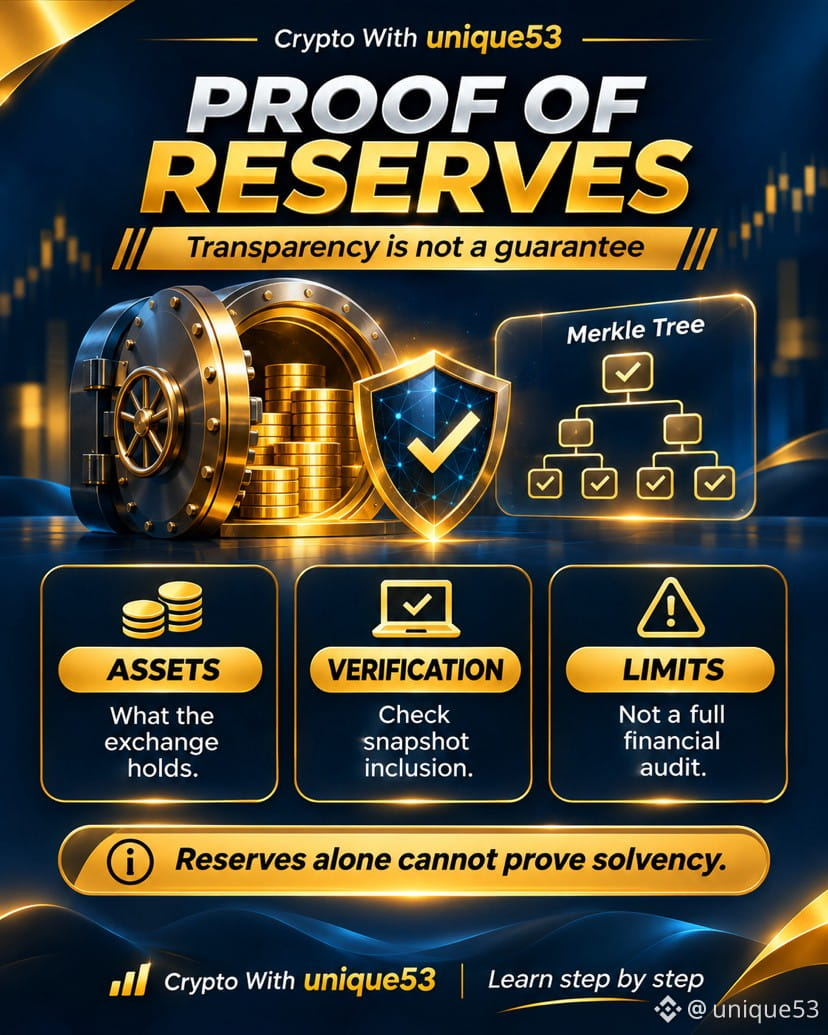
One concept I discovered is Proof of Reserves (PoR).
Here’s what I’ve learned:
🔹 What is PoR?
It’s a verification method that helps exchanges demonstrate they hold assets backing customer balances.
🔹 How does it work?
Cryptographic tools, including Merkle trees, can help users verify that their balances were included in a reserve snapshot.
🔹 Why does it matter?
It provides an additional layer of transparency instead of relying entirely on an exchange’s claims.
⚠️ But here’s the important part:
Proof of Reserves isn’t a complete financial audit. A reserve snapshot alone doesn’t prove that an exchange has no hidden liabilities or financial risks.
💡 My takeaway:
Transparency is valuable, but understanding its limitations matters just as much.
I’m learning crypto step by step, and this is another concept worth understanding.
❓ Before today, had you heard of Proof of Reserves?
#ProofOfReserves #CryptoEducation #Blockchain #CryptoSecurity
1
66
·
--
Übersetzung ansehen
🪙 Stablecoins: Does “Stable” Mean Risk-Free?
One thing I'm learning about crypto is that a stable price doesn't automatically mean a safe asset.
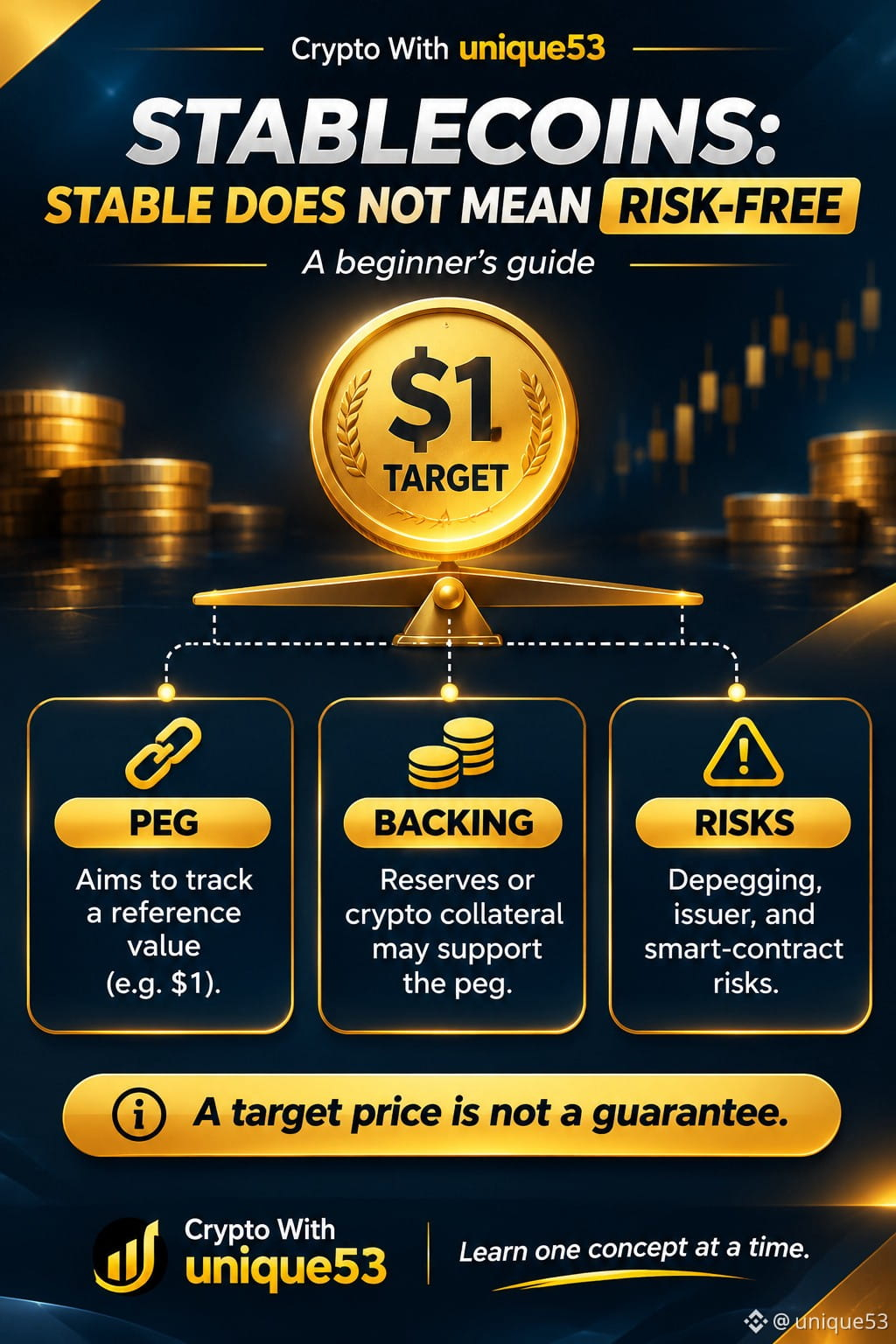
Stablecoins are cryptocurrencies designed to maintain a value linked to another asset, often the US dollar.
Here's what I've learned so far:
🔹 The Peg: A dollar-pegged stablecoin generally aims to maintain a value close to $1.
🔹 The Backing: Some stablecoins rely on financial reserves, while others use crypto collateral or different mechanisms.
🔹 The Risks: Stablecoins can lose their peg. Issuer problems, insufficient reserves, smart-contract vulnerabilities, and market conditions can create additional risks.
💡 My takeaway:
A $1 target is not a $1 guarantee.
Before trusting any stablecoin, it's worth understanding how it maintains its value and what could cause that mechanism to fail.
I'm still learning, and this is another important lesson in understanding crypto beyond price charts.
❓ Did you know stablecoins could lose their peg?
#Stablecoins #CryptoEducation #Blockchain #CryptoBeginners
1
49
·
--
Übersetzung ansehen
$BTC 💧 Why Can a Crypto Trade Cost More Than Expected?
I'm learning that the price we see isn't always the price we get when trading crypto.
Two important concepts explain why:
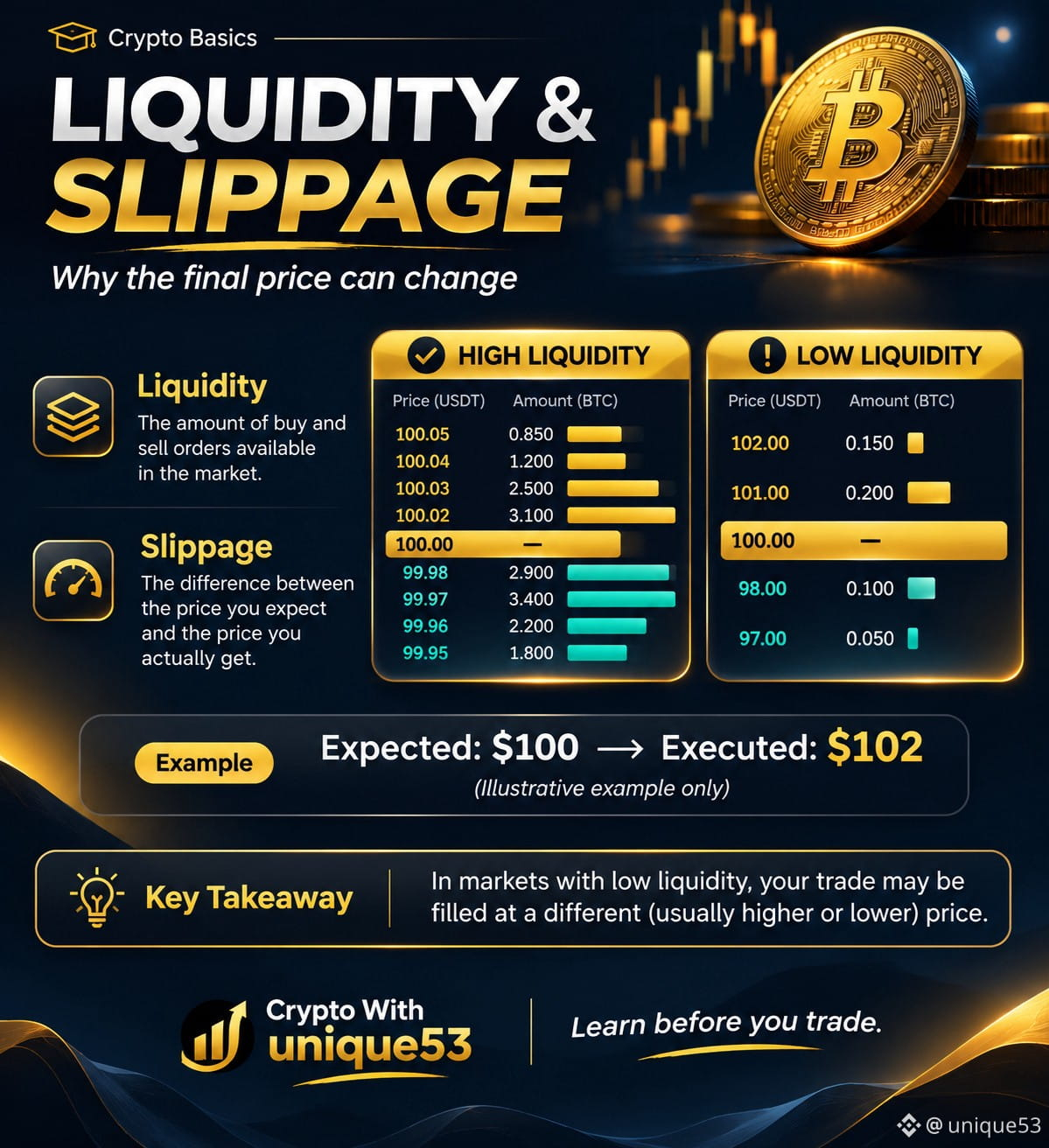
🔹 Liquidity: How easily an asset can be bought or sold without significantly affecting its price.
🔹 Slippage: The difference between the price you expect and the price at which your trade actually executes.
📊 Simple example:
Expected price: $100
Execution price: $102
Slippage: 2% (unfavorable)
This is just an illustration, not a real market price.
Low liquidity and rapid market movements can increase slippage. Sometimes, slippage can even work in your favor.
💡 My takeaway: Understanding liquidity matters just as much as watching prices.
I'm learning crypto one concept at a time.
❓ Did you know about slippage before today?
#CryptoEducation #Liquidity #Slippage #CryptoBeginners
1
170
·
--
Übersetzung ansehen
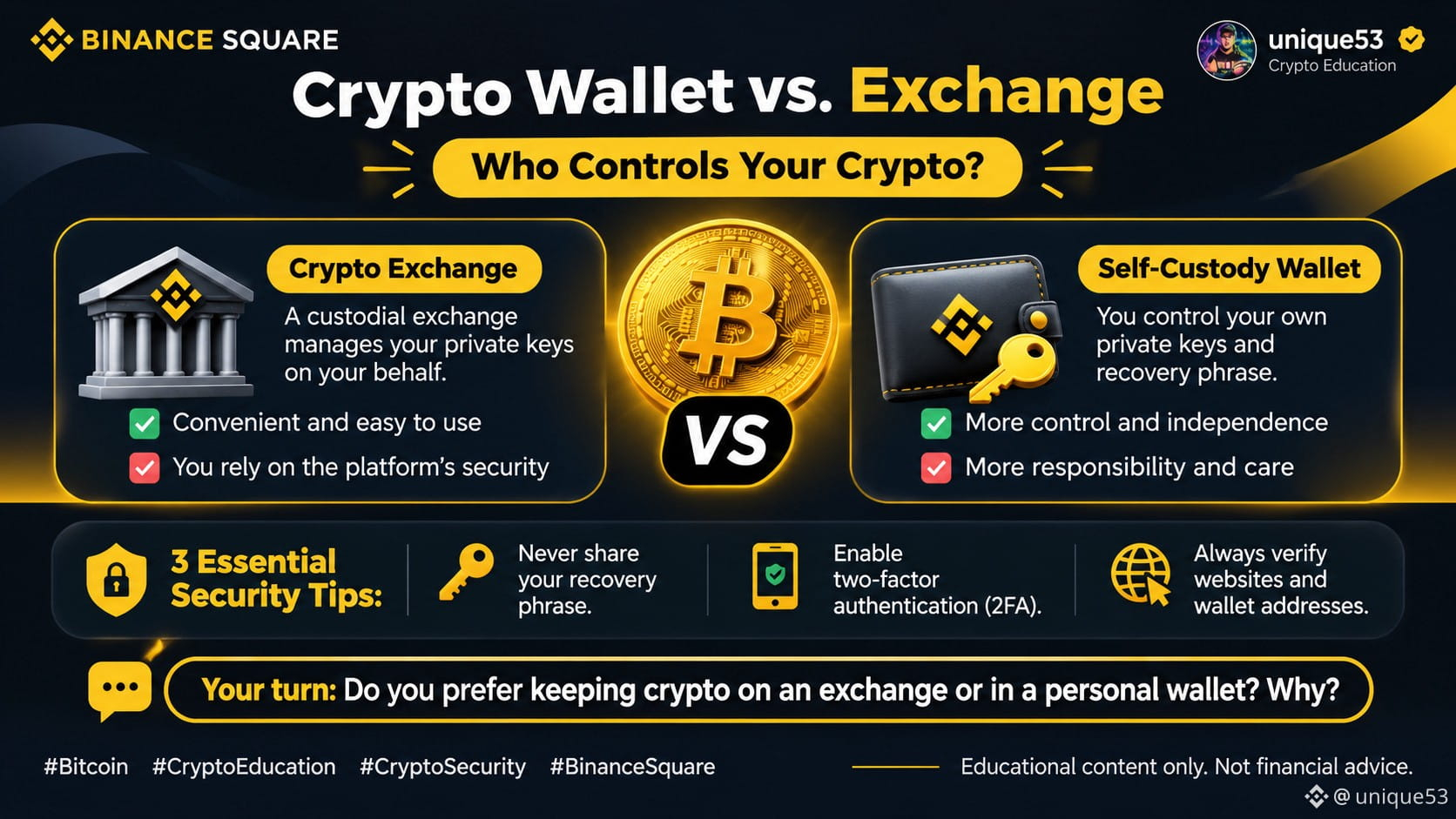
$BTC 🔐 Crypto Wallet vs. Exchange: Who Really Controls Your Crypto?
If you own $BTC, do you know who controls the keys that protect it?
🏦 Crypto Exchange
A custodial exchange manages your private keys on your behalf. It's convenient, but you rely on the platform's security.
🔑 Self-Custody Wallet
You control your own private keys and recovery phrase. More control also means more responsibility.
⚠️ 3 Essential Security Tips:$
✅ Never share your recovery phrase.
✅ Enable two-factor authentication (2FA) wherever available.
✅ Always verify websites and wallet addresses.
💡 Remember: Owning crypto and controlling its private keys are not always the same thing.
💬 Your turn: Do you prefer keeping crypto on an exchange or in a personal wallet? Why?
#Bitcoin #CryptoEducation #CryptoSecurity #BinanceSquare
📚 Educational content only. Not financial advice.
$BTC 🔐 Crypto Wallet vs. Exchange: Who Really Controls Your Crypto?
If you own $BTC , do you know who controls the keys that protect it?
🏦 Crypto Exchange
A custodial exchange manages your private keys on your behalf. It's convenient, but you rely on the platform's security.
🔑 Self-Custody Wallet
You control your own private keys and recovery phrase. More control also means more responsibility.
⚠️ 3 Essential Security Tips:$
✅ Never share your recovery phrase.
✅ Enable two-factor authentication (2FA) wherever available.
✅ Always verify websites and wallet addresses.
💡 Remember: Owning crypto and controlling its private keys are not always the same thing.
💬 Your turn: Do you prefer keeping crypto on an exchange or in a personal wallet? Why?
#Bitcoin #CryptoEducation #CryptoSecurity #BinanceSquare
📚 Educational content only. Not financial advice.
1
104
Anmelden und weiter Inhalte entdecken
Krypto-Nutzer weltweit auf Binance Square kennenlernen
⚡️ Bleib in Sachen Krypto stets am Puls.
💬 Die weltgrößte Kryptobörse vertraut darauf.
👍 Erhalte verlässliche Einblicke von verifizierten Creators.
E-Mail-Adresse/Telefonnummer
Trendthemen
NvidiaInvestigatesAfterHuang’sAffairApology
209,904 Aufrufe
1,696 Kommentare
Nvidia-Vorstand untersucht, ob Huang Ziel einer ausländischen Geheimdienstoperation war
Binance News
·21 Likes
·55.1k Aufrufe
CPITestsDecemberRateOutlook
657,980 Aufrufe
2,792 Kommentare
AnthropicRejectsIPODelayValuationinQuestion
38,915 Aufrufe
400 Kommentare