

Nathan Cole
8k Beiträge
Nathan Cole
Melden
Nutzer blockieren
Crypto Enthusiast, Investor, KOL & Gem Holder Long term Holder of Memecoin
14 Following
15.4K+ Follower
4.7K+ Like gegeben
Beiträge
Alle
Zitierungen
Live
PINNED
·
--
Artikel
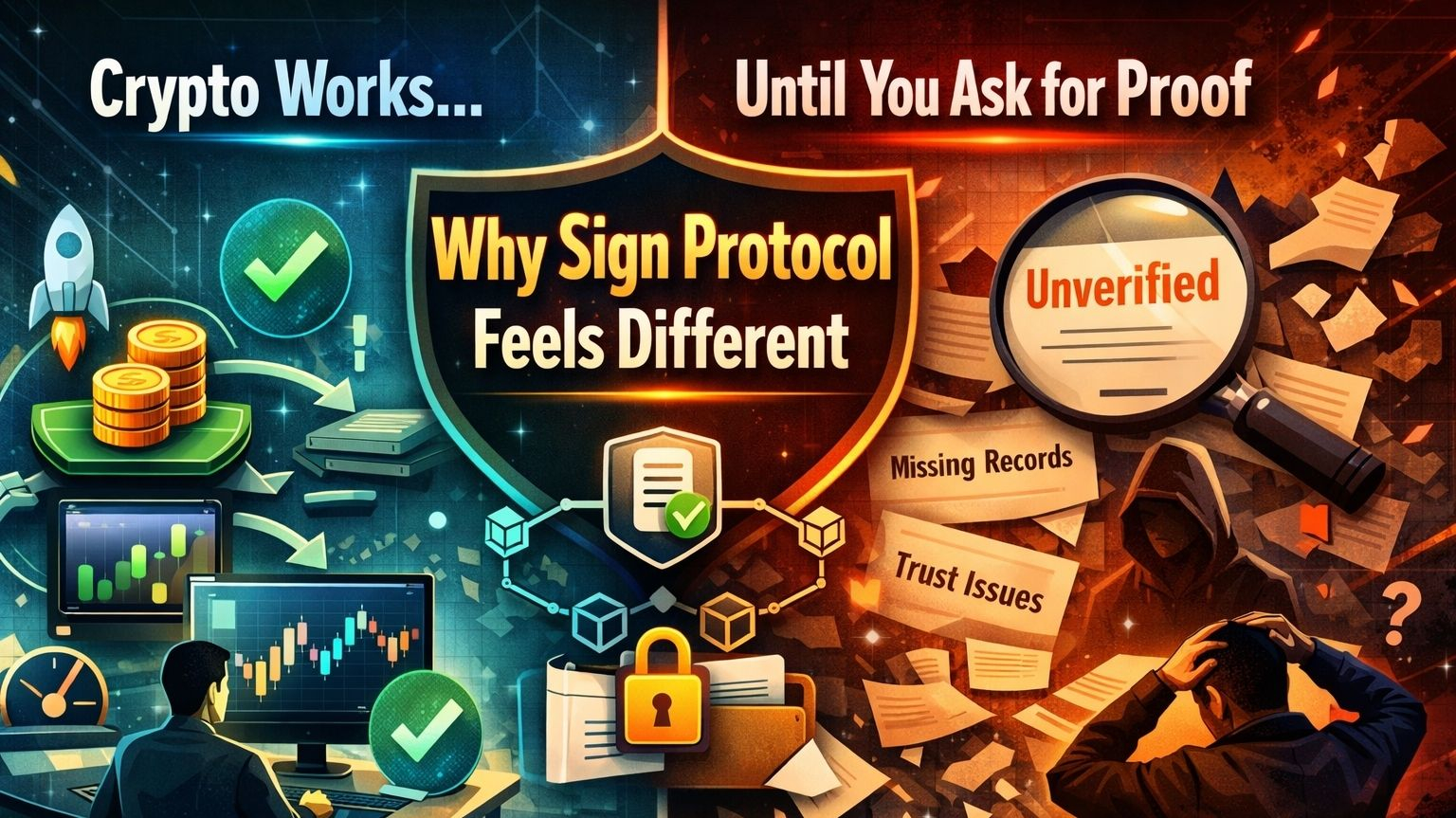
Krypto funktioniert… bis du nach Beweisen fragst: Warum sich das Sign Protocol anders anfühltEs gibt etwas am Sign Protocol, das nicht versucht, dich sofort zu überzeugen. Es kommt nicht in einer einfachen Präsentation oder einem klaren Einzeiler, den du ohne Nachdenken wiederholen kannst. Wenn überhaupt, ist der erste Eindruck das Gegenteil – es fühlt sich dicht an, vielleicht sogar ein wenig überwältigend. Und normalerweise wäre das genug, um wegzugehen. Krypto ist voll von Projekten, die schwache Ideen hinter unnötiger Komplexität verstecken.
Aber das fühlt sich nicht so an.
Je mehr du dich damit beschäftigst, desto mehr beginnt es zu wirken, als wäre diese Komplexität tatsächlich mit etwas Reellem verbunden. Nicht künstlich, nicht dekorativ – sondern nur ein Spiegelbild eines Problems, das schwer zu lösen ist. Und dieses Problem ist Vertrauen. Nicht die oberflächliche Art, sondern die tiefere Frage, ob etwas später noch bewiesen werden kann, wenn es wirklich wichtig ist.
Krypto funktioniert… bis du nach Beweisen fragst: Warum sich das Sign Protocol anders anfühlt
Es gibt etwas am Sign Protocol, das nicht versucht, dich sofort zu überzeugen. Es kommt nicht in einer einfachen Präsentation oder einem klaren Einzeiler, den du ohne Nachdenken wiederholen kannst. Wenn überhaupt, ist der erste Eindruck das Gegenteil – es fühlt sich dicht an, vielleicht sogar ein wenig überwältigend. Und normalerweise wäre das genug, um wegzugehen. Krypto ist voll von Projekten, die schwache Ideen hinter unnötiger Komplexität verstecken.
Aber das fühlt sich nicht so an.
Je mehr du dich damit beschäftigst, desto mehr beginnt es zu wirken, als wäre diese Komplexität tatsächlich mit etwas Reellem verbunden. Nicht künstlich, nicht dekorativ – sondern nur ein Spiegelbild eines Problems, das schwer zu lösen ist. Und dieses Problem ist Vertrauen. Nicht die oberflächliche Art, sondern die tiefere Frage, ob etwas später noch bewiesen werden kann, wenn es wirklich wichtig ist.
Aber das fühlt sich nicht so an.
Je mehr du dich damit beschäftigst, desto mehr beginnt es zu wirken, als wäre diese Komplexität tatsächlich mit etwas Reellem verbunden. Nicht künstlich, nicht dekorativ – sondern nur ein Spiegelbild eines Problems, das schwer zu lösen ist. Und dieses Problem ist Vertrauen. Nicht die oberflächliche Art, sondern die tiefere Frage, ob etwas später noch bewiesen werden kann, wenn es wirklich wichtig ist.
96
8
158
80.2k
·
--
Bullisch
Verifiziert
Jedes Mal, wenn der CPI ansteht, bemerke ich dasselbe. Eine Zahl erscheint auf dem Bildschirm – und plötzlich weiß plötzlich jeder ganz genau, was die Fed als Nächstes tun wird.
Ich habe das schon einmal gesehen, daher versuche ich, mich nicht von der Schlagzeile einfangen zu lassen.
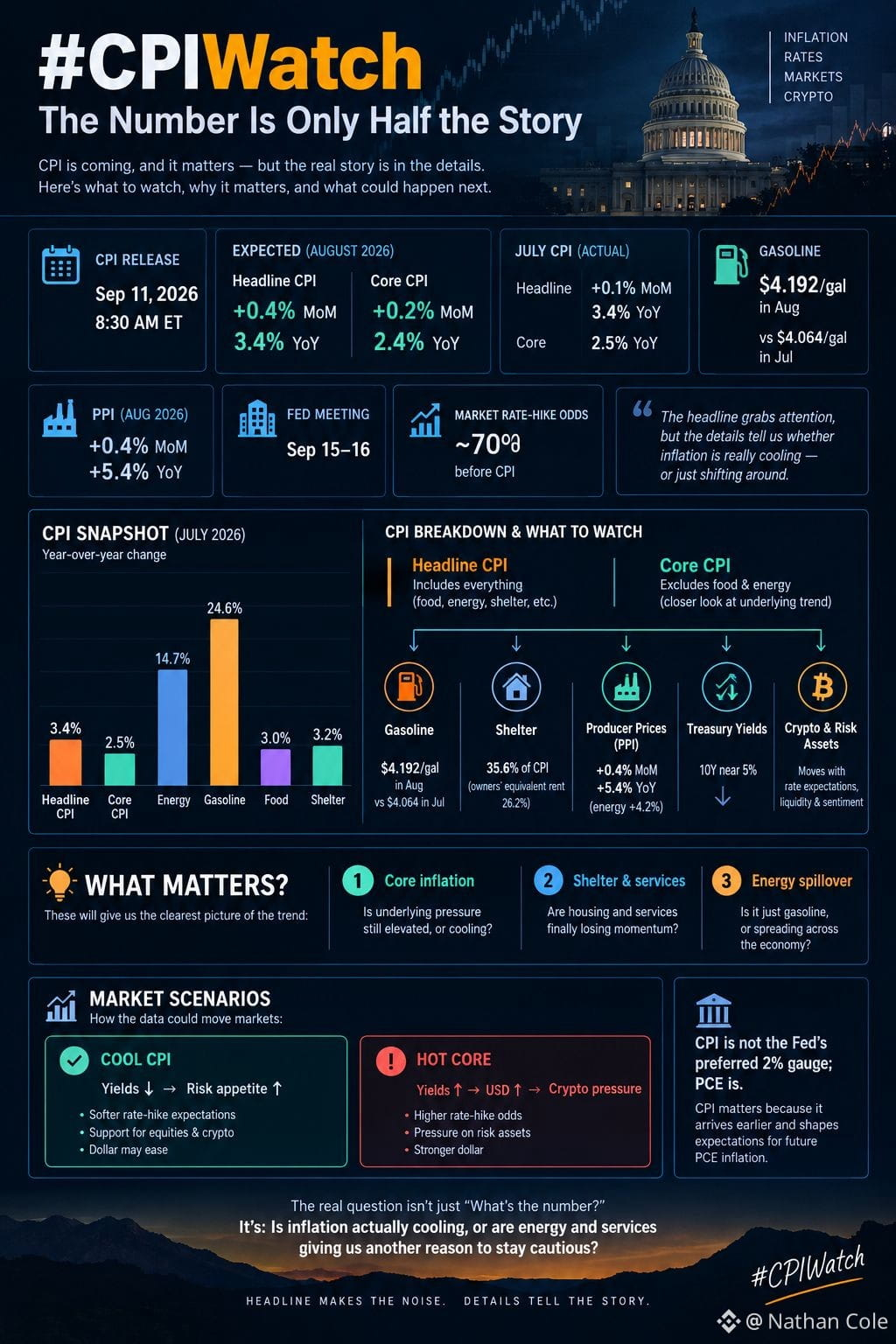
Der US-CPI-Bericht für August kommt nur wenige Tage vor dem September-Treffen der Fed – daher ist dieser Fall ungewöhnlich interessant. Die zuletzt bestätigte Entwicklung zeigte im Juli eine headline-Inflation von 3,4% im Jahresvergleich, während der core CPI bei 2,5% lag. Energie wurde bereits zum Problem, weil die Benzinpreise stark gestiegen waren.
Nun ist die Energie sogar noch weiter nach oben gegangen. Der aktuelle Nowcast der Cleveland Fed deutete für August auf ein Plus von rund 0,36% beim monatlichen headline CPI sowie 0,20% bei der core-Komponente hin.
Dieser Unterschied ist wichtig.
Wenn die headline-Inflation vor allem deshalb steigt, weil Benzin teuer ist, lese ich das nicht genauso wie eine breite Beschleunigung bei Dienstleistungen, Wohnen und anderen Preisen.
Darum schaue ich bei core CPI und beim Bereich Wohnen genauer hin als auf die erste Zahl, die alle posten.
Wohnen bleibt ein wesentlicher Bestandteil des CPI-Warenkorbs, während die Erzeugerpreise ebenfalls weiter gestiegen sind. Der August-PPI legte um 0,4% im Monatsvergleich und um 5,4% im Jahresvergleich zu – wobei Energiepreise zusätzlichen Druck erzeugten.
Unterdessen befasst sich die Fed weiterhin mit einer Inflation, die über ihrem 2%-Ziel liegt. Beim Treffen im Juli hielt sie die Zinsen bei 3,50%–3,75% und drei Amtsträger bevorzugten sogar einen Zinsschritt um 25 Basispunkte.
Daher gehe ich nicht davon aus, dass der nächste CPI-Print automatisch bullish oder bearish ist.
Eine schwache core-Zahl könnte die Zinssorgen beruhigen und Risikoanlagen helfen.
Eine starke core-Zahl könnte Renditen und den Dollar nach oben drücken und zusätzlichen Druck auf Krypto ausüben.
Aber der erste Schritt ist vielleicht nicht der letzte. Ich habe gesehen, wie Märkte zunächst die Schlagzeilen verkauften und sich dann drehten, sobald Trader die Details tatsächlich gelesen hatten.
Für mich ist die eigentliche Frage ganz einfach:
Kühlt die Inflation wirklich ab – oder liefern Energie und Dienstleistungen uns einen weiteren Grund, vorsichtig zu bleiben?
Die Schlagzeile wird das Geräusch machen.
Die Details werden die Geschichte erzählen.
#CPIWatch #Inflation #Bitcoin #Macro
$BTC
{spot}(BTCUSDT)
$SOL
{spot}(SOLUSDT)
$ETH
{spot}(ETHUSDT)
Jedes Mal, wenn der CPI ansteht, bemerke ich dasselbe. Eine Zahl erscheint auf dem Bildschirm – und plötzlich weiß plötzlich jeder ganz genau, was die Fed als Nächstes tun wird.
Ich habe das schon einmal gesehen, daher versuche ich, mich nicht von der Schlagzeile einfangen zu lassen.
Der US-CPI-Bericht für August kommt nur wenige Tage vor dem September-Treffen der Fed – daher ist dieser Fall ungewöhnlich interessant. Die zuletzt bestätigte Entwicklung zeigte im Juli eine headline-Inflation von 3,4% im Jahresvergleich, während der core CPI bei 2,5% lag. Energie wurde bereits zum Problem, weil die Benzinpreise stark gestiegen waren.
Nun ist die Energie sogar noch weiter nach oben gegangen. Der aktuelle Nowcast der Cleveland Fed deutete für August auf ein Plus von rund 0,36% beim monatlichen headline CPI sowie 0,20% bei der core-Komponente hin.
Dieser Unterschied ist wichtig.
Wenn die headline-Inflation vor allem deshalb steigt, weil Benzin teuer ist, lese ich das nicht genauso wie eine breite Beschleunigung bei Dienstleistungen, Wohnen und anderen Preisen.
Darum schaue ich bei core CPI und beim Bereich Wohnen genauer hin als auf die erste Zahl, die alle posten.
Wohnen bleibt ein wesentlicher Bestandteil des CPI-Warenkorbs, während die Erzeugerpreise ebenfalls weiter gestiegen sind. Der August-PPI legte um 0,4% im Monatsvergleich und um 5,4% im Jahresvergleich zu – wobei Energiepreise zusätzlichen Druck erzeugten.
Unterdessen befasst sich die Fed weiterhin mit einer Inflation, die über ihrem 2%-Ziel liegt. Beim Treffen im Juli hielt sie die Zinsen bei 3,50%–3,75% und drei Amtsträger bevorzugten sogar einen Zinsschritt um 25 Basispunkte.
Daher gehe ich nicht davon aus, dass der nächste CPI-Print automatisch bullish oder bearish ist.
Eine schwache core-Zahl könnte die Zinssorgen beruhigen und Risikoanlagen helfen.
Eine starke core-Zahl könnte Renditen und den Dollar nach oben drücken und zusätzlichen Druck auf Krypto ausüben.
Aber der erste Schritt ist vielleicht nicht der letzte. Ich habe gesehen, wie Märkte zunächst die Schlagzeilen verkauften und sich dann drehten, sobald Trader die Details tatsächlich gelesen hatten.
Für mich ist die eigentliche Frage ganz einfach:
Kühlt die Inflation wirklich ab – oder liefern Energie und Dienstleistungen uns einen weiteren Grund, vorsichtig zu bleiben?
Die Schlagzeile wird das Geräusch machen.
Die Details werden die Geschichte erzählen.
#CPIWatch #Inflation #Bitcoin #Macro
$BTC
$SOL
$ETH
Ich habe das schon einmal gesehen, daher versuche ich, mich nicht von der Schlagzeile einfangen zu lassen.
Der US-CPI-Bericht für August kommt nur wenige Tage vor dem September-Treffen der Fed – daher ist dieser Fall ungewöhnlich interessant. Die zuletzt bestätigte Entwicklung zeigte im Juli eine headline-Inflation von 3,4% im Jahresvergleich, während der core CPI bei 2,5% lag. Energie wurde bereits zum Problem, weil die Benzinpreise stark gestiegen waren.
Nun ist die Energie sogar noch weiter nach oben gegangen. Der aktuelle Nowcast der Cleveland Fed deutete für August auf ein Plus von rund 0,36% beim monatlichen headline CPI sowie 0,20% bei der core-Komponente hin.
Dieser Unterschied ist wichtig.
Wenn die headline-Inflation vor allem deshalb steigt, weil Benzin teuer ist, lese ich das nicht genauso wie eine breite Beschleunigung bei Dienstleistungen, Wohnen und anderen Preisen.
Darum schaue ich bei core CPI und beim Bereich Wohnen genauer hin als auf die erste Zahl, die alle posten.
Wohnen bleibt ein wesentlicher Bestandteil des CPI-Warenkorbs, während die Erzeugerpreise ebenfalls weiter gestiegen sind. Der August-PPI legte um 0,4% im Monatsvergleich und um 5,4% im Jahresvergleich zu – wobei Energiepreise zusätzlichen Druck erzeugten.
Unterdessen befasst sich die Fed weiterhin mit einer Inflation, die über ihrem 2%-Ziel liegt. Beim Treffen im Juli hielt sie die Zinsen bei 3,50%–3,75% und drei Amtsträger bevorzugten sogar einen Zinsschritt um 25 Basispunkte.
Daher gehe ich nicht davon aus, dass der nächste CPI-Print automatisch bullish oder bearish ist.
Eine schwache core-Zahl könnte die Zinssorgen beruhigen und Risikoanlagen helfen.
Eine starke core-Zahl könnte Renditen und den Dollar nach oben drücken und zusätzlichen Druck auf Krypto ausüben.
Aber der erste Schritt ist vielleicht nicht der letzte. Ich habe gesehen, wie Märkte zunächst die Schlagzeilen verkauften und sich dann drehten, sobald Trader die Details tatsächlich gelesen hatten.
Für mich ist die eigentliche Frage ganz einfach:
Kühlt die Inflation wirklich ab – oder liefern Energie und Dienstleistungen uns einen weiteren Grund, vorsichtig zu bleiben?
Die Schlagzeile wird das Geräusch machen.
Die Details werden die Geschichte erzählen.
#CPIWatch #Inflation #Bitcoin #Macro
$BTC
$SOL
$ETH
32
18
962
·
--
Bullisch
#dusk $DUSK @Dusk_Foundation
Öffentliche Blockchains lösten Transparenz. Institutionen brauchen etwas Schwierigeres: Privatsphäre ohne den Verlust der Nachvollziehbarkeit.
Genau dort setzt @Dusk an, um einen anderen Weg einzuschlagen.
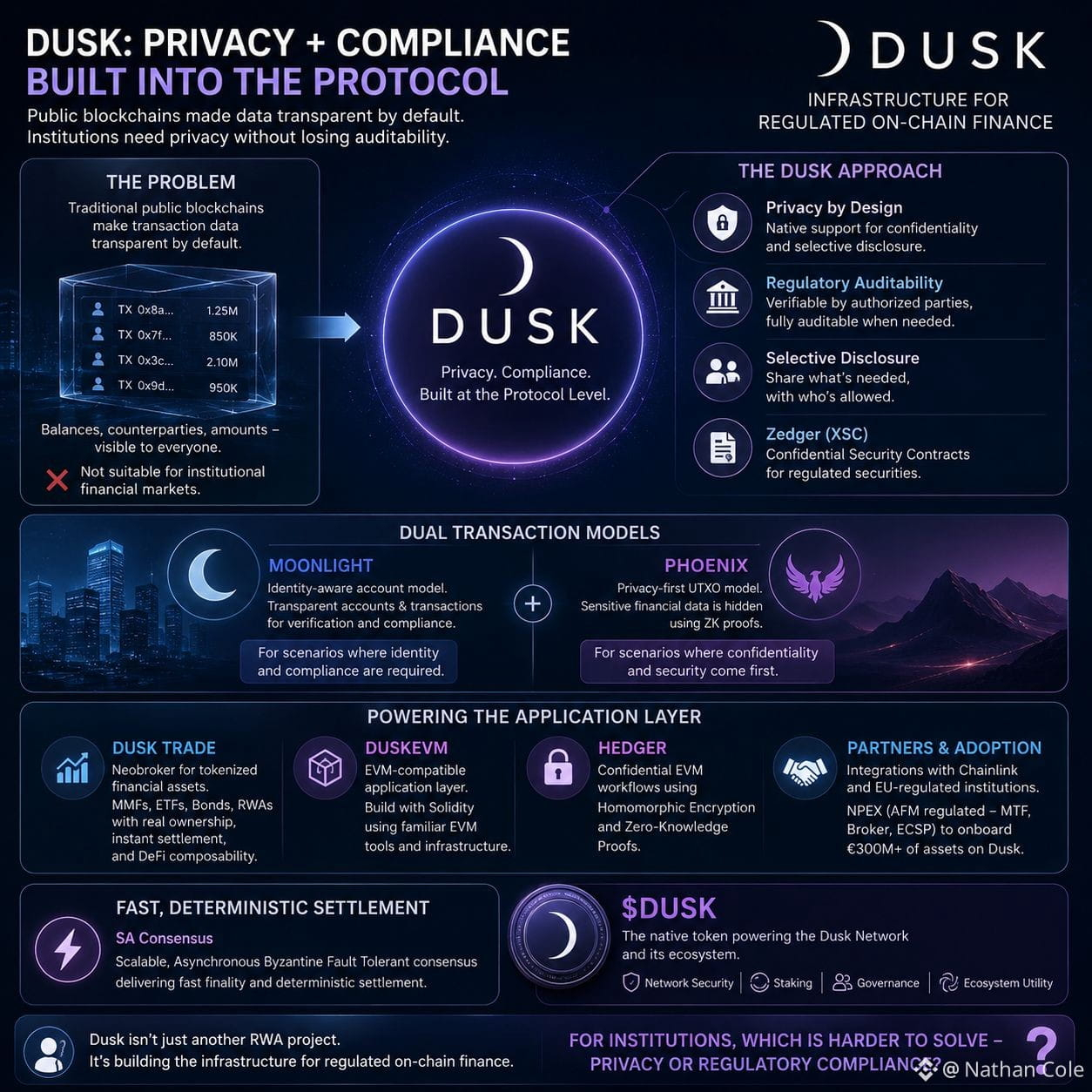
Anstatt Compliance außen „dranzuhängen“, baut Dusk sie in das Protokoll ein: Moonlight für identitätsbewusste Transaktionen, Phoenix für vertrauliche Überweisungen, selektive Offenlegung, wenn Regulierer oder autorisierte Parteien Einblick benötigen, und Zedger/XSC für regulierte Wertpapiere.
Dann erweitert sich der Stack nach oben: DuskEVM bringt vertrautes Solidity-Tooling, Hedger ermöglicht vertrauliche EVM-Workflows, Dusk Trade zielt auf tokenisierte Anleihen, MMFs, ETFs und RWAs, während SA-Konsens auf schnelles, deterministisches Settlement ausgelegt ist.
Ich habe schon viele „RWA“-Narrative gesehen. Das Spannende hier ist: Dusk versucht, zur Infrastruktur zu werden, die reguliertes On-Chain-Finanzwesen unterlegt – nicht nur eine weitere Tokenisierungs-App.
Die entscheidende Frage: Für Institutionen – wird es schwerer sein, Privatsphäre zu lösen oder regulatorische Compliance?
#Dusk $DUSK
{spot}(DUSKUSDT)
#dusk $DUSK @Dusk
Öffentliche Blockchains lösten Transparenz. Institutionen brauchen etwas Schwierigeres: Privatsphäre ohne den Verlust der Nachvollziehbarkeit.
Genau dort setzt @Dusk an, um einen anderen Weg einzuschlagen.
Anstatt Compliance außen „dranzuhängen“, baut Dusk sie in das Protokoll ein: Moonlight für identitätsbewusste Transaktionen, Phoenix für vertrauliche Überweisungen, selektive Offenlegung, wenn Regulierer oder autorisierte Parteien Einblick benötigen, und Zedger/XSC für regulierte Wertpapiere.
Dann erweitert sich der Stack nach oben: DuskEVM bringt vertrautes Solidity-Tooling, Hedger ermöglicht vertrauliche EVM-Workflows, Dusk Trade zielt auf tokenisierte Anleihen, MMFs, ETFs und RWAs, während SA-Konsens auf schnelles, deterministisches Settlement ausgelegt ist.
Ich habe schon viele „RWA“-Narrative gesehen. Das Spannende hier ist: Dusk versucht, zur Infrastruktur zu werden, die reguliertes On-Chain-Finanzwesen unterlegt – nicht nur eine weitere Tokenisierungs-App.
Die entscheidende Frage: Für Institutionen – wird es schwerer sein, Privatsphäre zu lösen oder regulatorische Compliance?
#Dusk $DUSK
Öffentliche Blockchains lösten Transparenz. Institutionen brauchen etwas Schwierigeres: Privatsphäre ohne den Verlust der Nachvollziehbarkeit.
Genau dort setzt @Dusk an, um einen anderen Weg einzuschlagen.
Anstatt Compliance außen „dranzuhängen“, baut Dusk sie in das Protokoll ein: Moonlight für identitätsbewusste Transaktionen, Phoenix für vertrauliche Überweisungen, selektive Offenlegung, wenn Regulierer oder autorisierte Parteien Einblick benötigen, und Zedger/XSC für regulierte Wertpapiere.
Dann erweitert sich der Stack nach oben: DuskEVM bringt vertrautes Solidity-Tooling, Hedger ermöglicht vertrauliche EVM-Workflows, Dusk Trade zielt auf tokenisierte Anleihen, MMFs, ETFs und RWAs, während SA-Konsens auf schnelles, deterministisches Settlement ausgelegt ist.
Ich habe schon viele „RWA“-Narrative gesehen. Das Spannende hier ist: Dusk versucht, zur Infrastruktur zu werden, die reguliertes On-Chain-Finanzwesen unterlegt – nicht nur eine weitere Tokenisierungs-App.
Die entscheidende Frage: Für Institutionen – wird es schwerer sein, Privatsphäre zu lösen oder regulatorische Compliance?
#Dusk $DUSK
126
·
--
Bullisch
#dusk $DUSK @Dusk_Foundation
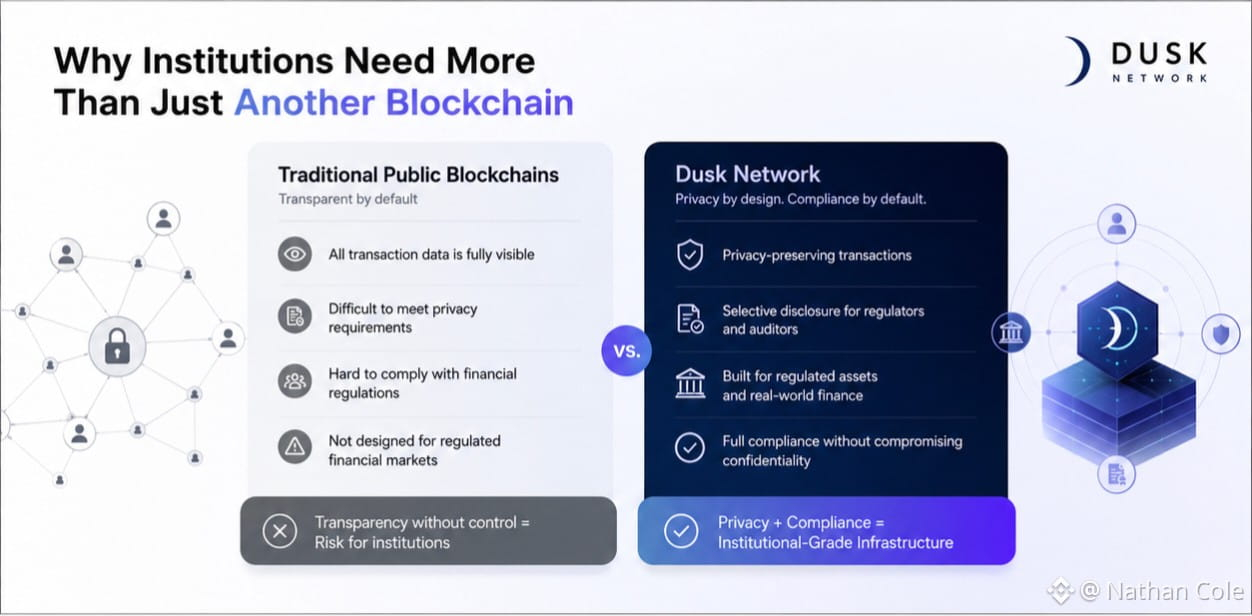
Die meisten Blockchains haben Transparenz zur Standardeinstellung gemacht. Das funktioniert für Krypto. Es wird kompliziert, wenn das Asset eine regulierte Wertpapierklassifizierung ist.
Institutionen brauchen das Gegenteil: Transaktions-Privatsphäre, aber dennoch genug Sichtbarkeit für Regulierer und Auditoren.
Genau dort geht @Dusk mit $DUSK einen anderen Weg.
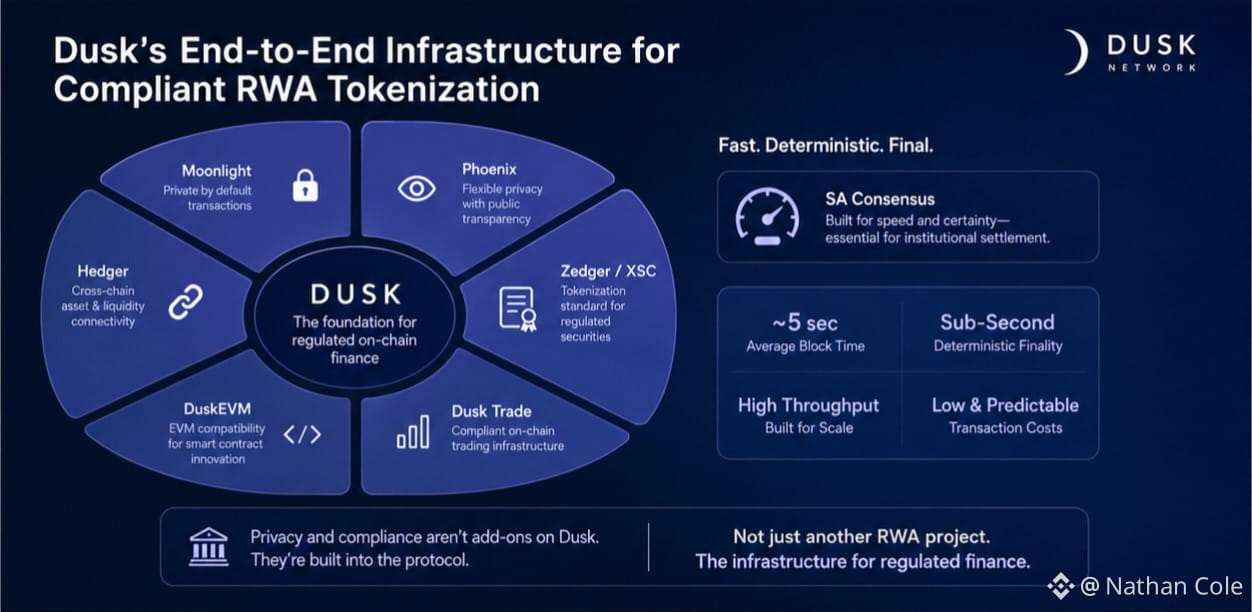
Anstatt später Privatsphäre und Compliance an eine öffentliche Chain nachzurüsten, entwirft Dusk sie von Anfang an direkt in das Protokoll. Moonlight und Phoenix unterstützen unterschiedliche Anforderungen an Transaktionen/Privatsphäre, während selektive Offenlegung es autorisierten Parteien ermöglicht, das Relevante offenzulegen, ohne alles preiszugeben.
Dann wird der Stack noch spannender: Zedger und XSC zielen auf regulierte Wertpapiere, Dusk Trade ist auf konforme On-Chain-Märkte ausgelegt, DuskEVM eröffnet vertraute Smart-Contract-Tools, und Hedger hilft dabei, Assets und Liquidität über das gesamte Ökosystem hinweg zu verbinden.
Der Teil, den ich besonders im Blick habe, ist die Abwicklung. Dusk’s SA-Konsens ist für schnelle, deterministische Finalität ausgelegt — ein Detail, das viel stärker ins Gewicht fällt, wenn man über echte Finanzinfrastruktur spricht, statt über einen weiteren spekulativen Token.
Ich bin weiterhin skeptisch gegenüber den meisten „RWA“-Narrativen. Zu viele sind nur Hüllen um öffentliche Chains, die nie für institutionelle Rahmenbedingungen entwickelt wurden.
Dusk wirkt, als wolle es stattdessen das eigentliche Problem lösen: Privatsphäre und Compliance auf Protokollebene.
Die schwierigere Frage ist: Für Institutionen — ist die größere Hürde tatsächlich Privatsphäre oder regulatorische Compliance?
#Dusk @Dusk_Foundation $DUSK
{spot}(DUSKUSDT)
#dusk $DUSK @Dusk
Die meisten Blockchains haben Transparenz zur Standardeinstellung gemacht. Das funktioniert für Krypto. Es wird kompliziert, wenn das Asset eine regulierte Wertpapierklassifizierung ist.
Institutionen brauchen das Gegenteil: Transaktions-Privatsphäre, aber dennoch genug Sichtbarkeit für Regulierer und Auditoren.
Genau dort geht @Dusk mit $DUSK einen anderen Weg.
Anstatt später Privatsphäre und Compliance an eine öffentliche Chain nachzurüsten, entwirft Dusk sie von Anfang an direkt in das Protokoll. Moonlight und Phoenix unterstützen unterschiedliche Anforderungen an Transaktionen/Privatsphäre, während selektive Offenlegung es autorisierten Parteien ermöglicht, das Relevante offenzulegen, ohne alles preiszugeben.
Dann wird der Stack noch spannender: Zedger und XSC zielen auf regulierte Wertpapiere, Dusk Trade ist auf konforme On-Chain-Märkte ausgelegt, DuskEVM eröffnet vertraute Smart-Contract-Tools, und Hedger hilft dabei, Assets und Liquidität über das gesamte Ökosystem hinweg zu verbinden.
Der Teil, den ich besonders im Blick habe, ist die Abwicklung. Dusk’s SA-Konsens ist für schnelle, deterministische Finalität ausgelegt — ein Detail, das viel stärker ins Gewicht fällt, wenn man über echte Finanzinfrastruktur spricht, statt über einen weiteren spekulativen Token.
Ich bin weiterhin skeptisch gegenüber den meisten „RWA“-Narrativen. Zu viele sind nur Hüllen um öffentliche Chains, die nie für institutionelle Rahmenbedingungen entwickelt wurden.
Dusk wirkt, als wolle es stattdessen das eigentliche Problem lösen: Privatsphäre und Compliance auf Protokollebene.
Die schwierigere Frage ist: Für Institutionen — ist die größere Hürde tatsächlich Privatsphäre oder regulatorische Compliance?
#Dusk @Dusk $DUSK
Die meisten Blockchains haben Transparenz zur Standardeinstellung gemacht. Das funktioniert für Krypto. Es wird kompliziert, wenn das Asset eine regulierte Wertpapierklassifizierung ist.
Institutionen brauchen das Gegenteil: Transaktions-Privatsphäre, aber dennoch genug Sichtbarkeit für Regulierer und Auditoren.
Genau dort geht @Dusk mit $DUSK einen anderen Weg.
Anstatt später Privatsphäre und Compliance an eine öffentliche Chain nachzurüsten, entwirft Dusk sie von Anfang an direkt in das Protokoll. Moonlight und Phoenix unterstützen unterschiedliche Anforderungen an Transaktionen/Privatsphäre, während selektive Offenlegung es autorisierten Parteien ermöglicht, das Relevante offenzulegen, ohne alles preiszugeben.
Dann wird der Stack noch spannender: Zedger und XSC zielen auf regulierte Wertpapiere, Dusk Trade ist auf konforme On-Chain-Märkte ausgelegt, DuskEVM eröffnet vertraute Smart-Contract-Tools, und Hedger hilft dabei, Assets und Liquidität über das gesamte Ökosystem hinweg zu verbinden.
Der Teil, den ich besonders im Blick habe, ist die Abwicklung. Dusk’s SA-Konsens ist für schnelle, deterministische Finalität ausgelegt — ein Detail, das viel stärker ins Gewicht fällt, wenn man über echte Finanzinfrastruktur spricht, statt über einen weiteren spekulativen Token.
Ich bin weiterhin skeptisch gegenüber den meisten „RWA“-Narrativen. Zu viele sind nur Hüllen um öffentliche Chains, die nie für institutionelle Rahmenbedingungen entwickelt wurden.
Dusk wirkt, als wolle es stattdessen das eigentliche Problem lösen: Privatsphäre und Compliance auf Protokollebene.
Die schwierigere Frage ist: Für Institutionen — ist die größere Hürde tatsächlich Privatsphäre oder regulatorische Compliance?
#Dusk @Dusk $DUSK
113
·
--
Bullisch
Verifiziert
#dusk $DUSK @Dusk_Foundation
Wenn institutionelles Geld on-chain bewegt wird, kann Transparenz zum Problem werden.
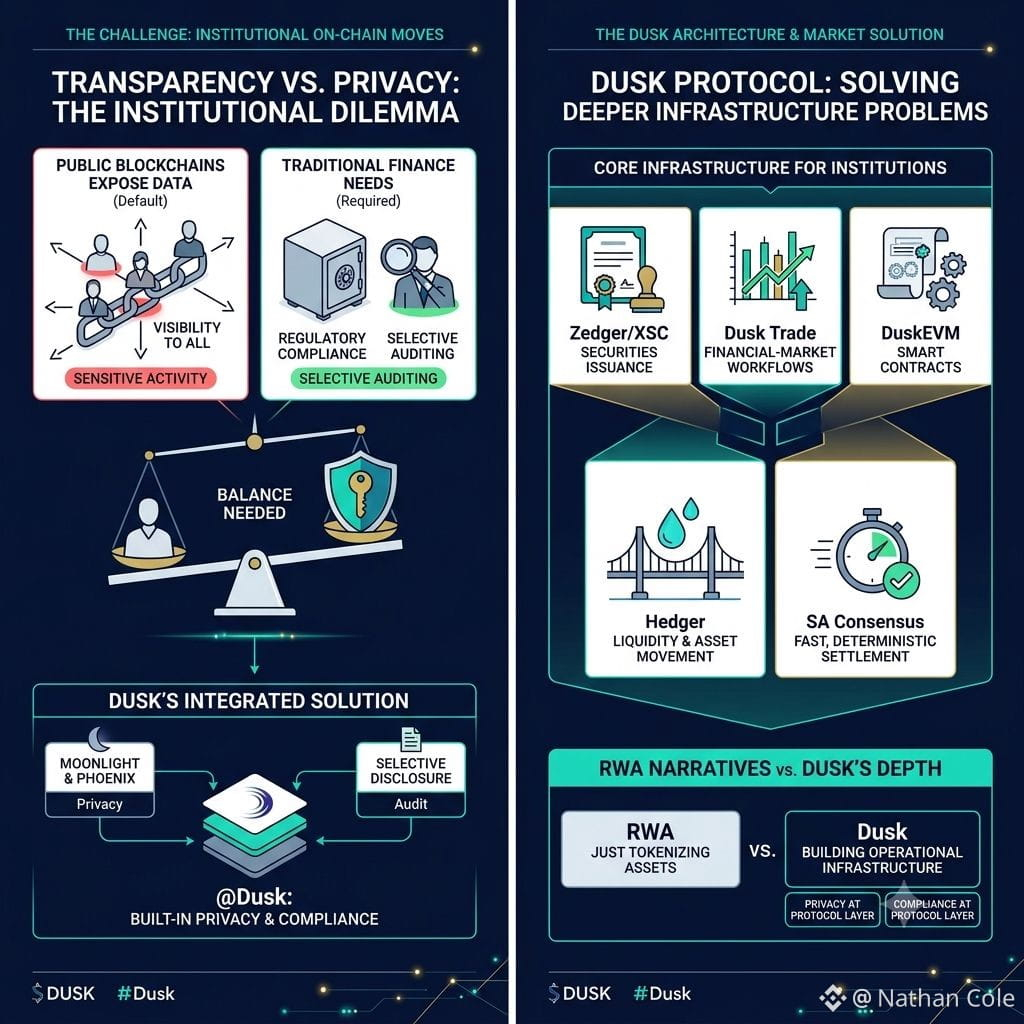
Öffentliche Blockchains legen Transaktionsdaten standardmäßig offen. Traditionelles Finanzwesen braucht das Gegenteil: Privatsphäre für sensible Aktivitäten, aber genug Einblick für Regulierungsbehörden, um sie prüfen zu können.
Das ist der spannende Teil von @Dusk.
Anstatt Privatsphäre und Compliance nachträglich an eine bestehende Chain anzubauen, entwickelt Dusk sie direkt im Protokoll. Seine privatsphärenfokussierte Architektur kombiniert die Transaktionsmodelle Moonlight und Phoenix mit selektiver Offenlegung, während Zedger/XSC auf regulierte Wertpapiere abzielt und Dusk Trade Finanzmarkt-Workflows on-chain bringt.
Dann gibt es DuskEVM für Smart Contracts, Hedger für Liquidität und Asset-Transfers sowie SA-Konsens für schnelle, deterministische Abwicklung.
Ich habe schon viele „RWA“-Erzählungen kommen und gehen sehen. Die schwierigere Frage ist nicht, einen Vermögenswert zu tokenisieren—sondern Infrastruktur zu bauen, die Institutionen tatsächlich betreiben können.
Deshalb sehe ich Dusk nicht einfach als ein weiteres RWA-Projekt. Es versucht, das tieferliegende Infrastrukturproblem zu lösen: Privatsphäre und Compliance auf der Protokoll-Ebene.
Welche Anforderung wird sich für die institutionelle Einführung als schwieriger erweisen: Privatsphäre oder regulatorische Compliance?
#Dusk $DUSK
{spot}(DUSKUSDT)
#dusk $DUSK @Dusk
Wenn institutionelles Geld on-chain bewegt wird, kann Transparenz zum Problem werden.
Öffentliche Blockchains legen Transaktionsdaten standardmäßig offen. Traditionelles Finanzwesen braucht das Gegenteil: Privatsphäre für sensible Aktivitäten, aber genug Einblick für Regulierungsbehörden, um sie prüfen zu können.
Das ist der spannende Teil von @Dusk.
Anstatt Privatsphäre und Compliance nachträglich an eine bestehende Chain anzubauen, entwickelt Dusk sie direkt im Protokoll. Seine privatsphärenfokussierte Architektur kombiniert die Transaktionsmodelle Moonlight und Phoenix mit selektiver Offenlegung, während Zedger/XSC auf regulierte Wertpapiere abzielt und Dusk Trade Finanzmarkt-Workflows on-chain bringt.
Dann gibt es DuskEVM für Smart Contracts, Hedger für Liquidität und Asset-Transfers sowie SA-Konsens für schnelle, deterministische Abwicklung.
Ich habe schon viele „RWA“-Erzählungen kommen und gehen sehen. Die schwierigere Frage ist nicht, einen Vermögenswert zu tokenisieren—sondern Infrastruktur zu bauen, die Institutionen tatsächlich betreiben können.
Deshalb sehe ich Dusk nicht einfach als ein weiteres RWA-Projekt. Es versucht, das tieferliegende Infrastrukturproblem zu lösen: Privatsphäre und Compliance auf der Protokoll-Ebene.
Welche Anforderung wird sich für die institutionelle Einführung als schwieriger erweisen: Privatsphäre oder regulatorische Compliance?
#Dusk $DUSK
Wenn institutionelles Geld on-chain bewegt wird, kann Transparenz zum Problem werden.
Öffentliche Blockchains legen Transaktionsdaten standardmäßig offen. Traditionelles Finanzwesen braucht das Gegenteil: Privatsphäre für sensible Aktivitäten, aber genug Einblick für Regulierungsbehörden, um sie prüfen zu können.
Das ist der spannende Teil von @Dusk.
Anstatt Privatsphäre und Compliance nachträglich an eine bestehende Chain anzubauen, entwickelt Dusk sie direkt im Protokoll. Seine privatsphärenfokussierte Architektur kombiniert die Transaktionsmodelle Moonlight und Phoenix mit selektiver Offenlegung, während Zedger/XSC auf regulierte Wertpapiere abzielt und Dusk Trade Finanzmarkt-Workflows on-chain bringt.
Dann gibt es DuskEVM für Smart Contracts, Hedger für Liquidität und Asset-Transfers sowie SA-Konsens für schnelle, deterministische Abwicklung.
Ich habe schon viele „RWA“-Erzählungen kommen und gehen sehen. Die schwierigere Frage ist nicht, einen Vermögenswert zu tokenisieren—sondern Infrastruktur zu bauen, die Institutionen tatsächlich betreiben können.
Deshalb sehe ich Dusk nicht einfach als ein weiteres RWA-Projekt. Es versucht, das tieferliegende Infrastrukturproblem zu lösen: Privatsphäre und Compliance auf der Protokoll-Ebene.
Welche Anforderung wird sich für die institutionelle Einführung als schwieriger erweisen: Privatsphäre oder regulatorische Compliance?
#Dusk $DUSK
2
1.1k
·
--
Bullisch
#termmax @termmax
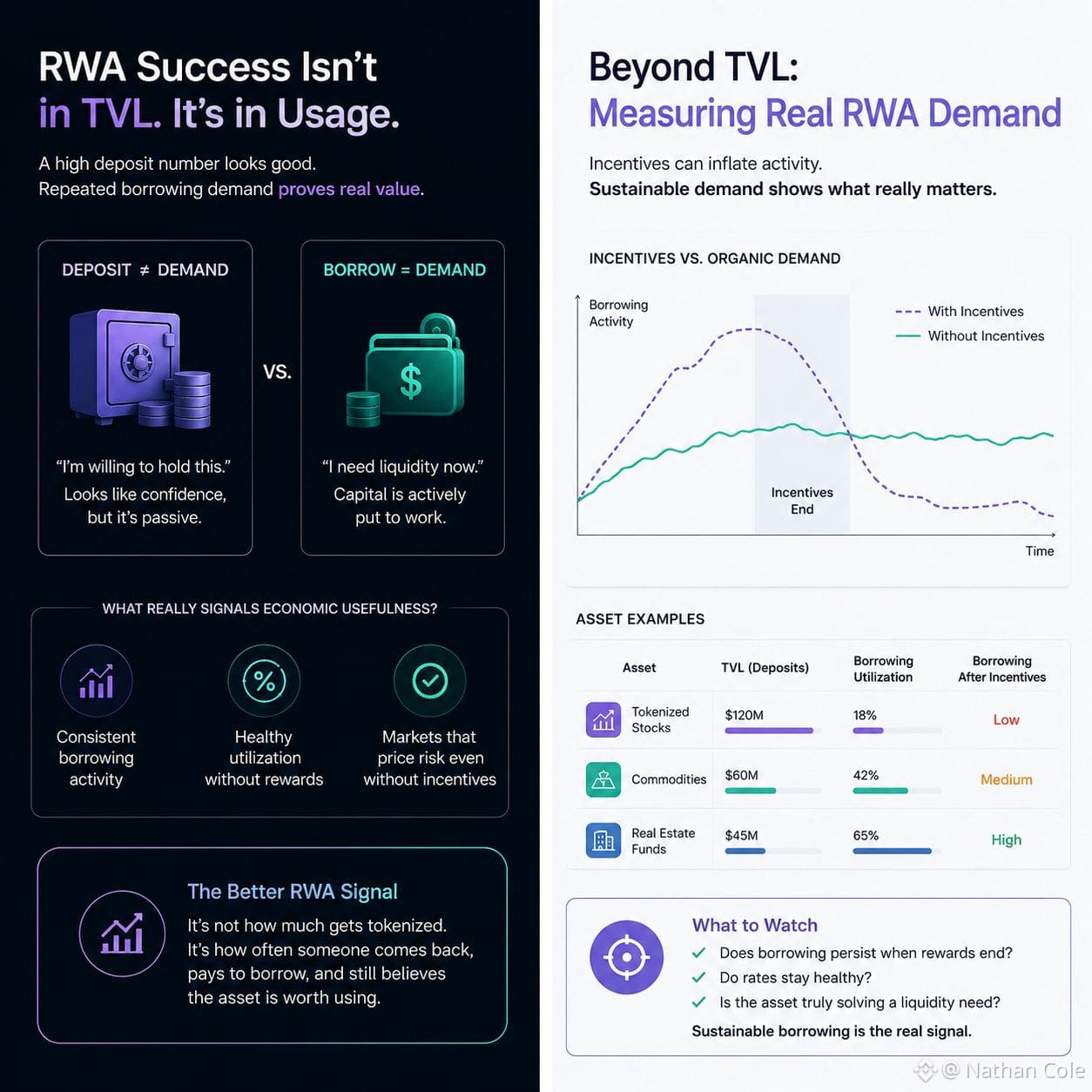
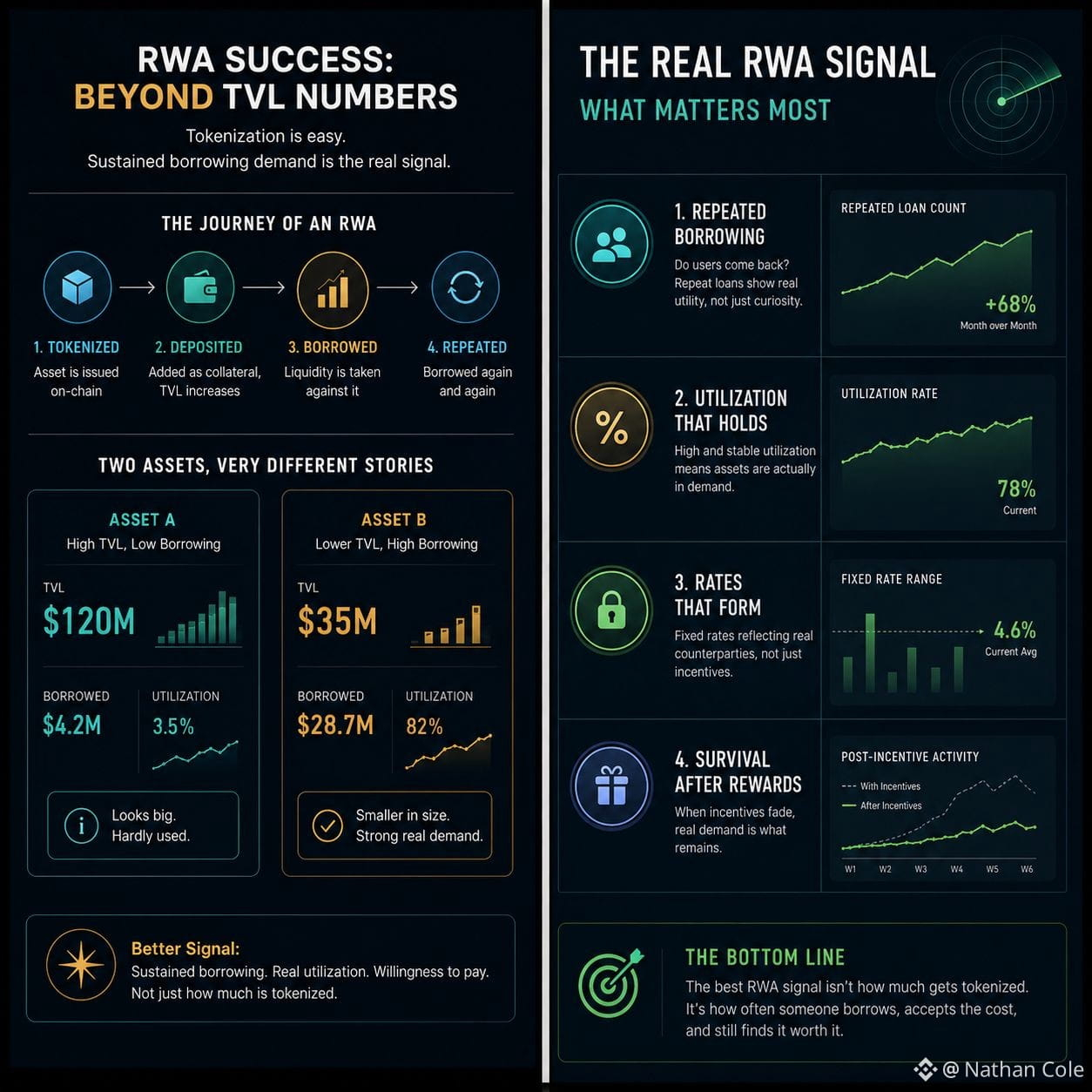
Ich bemerke immer wieder, wie schnell Krypto einen RWA „als erfolgreich“ bezeichnet, sobald er tokenisiert, irgendwo hinterlegt wird und anfängt, zum TVL beizutragen. Das habe ich schon öfter gesehen. Eine große Zahl taucht auf einem Dashboard auf, alle behandeln sie wie einen Beweis, und später merkt man, dass kaum jemand das Asset wirklich gebraucht hat.
Darum beobachte ich die Kreditaufnahme-Seite mit TermMax. Tokenisierte Aktien, Rohstoffe und andere RWAs können dort als Sicherheiten liegen, aber der interessante Teil beginnt, wenn jemand wirklich dringend Liquidität braucht und bereit ist, dagegen zu einem festen Preis zu borgen.
Eine Einzahlung sagt im Grunde: „Ich bin bereit, das zu halten.“ Ein wiederholtes Darlehen sagt etwas näher an: „Ich finde das nützlich genug, um Kapital dafür einzusetzen.“
Ein Asset kann sehr große Einzahlungen anziehen und kaum Nachfrage nach Krediten erzeugen. Ein anderes hat vielleicht viel kleineres TVL, bringt aber trotzdem weiterhin Kredite in Gang – zu Zinssätzen, die echte Gegenparteien akzeptieren würden. Für mich sagt das viel mehr über die tatsächliche wirtschaftliche Nützlichkeit als ein anderes TVL-Screenshot.
Und Anreize machen das schwerer zu lesen. Wenn Leute dafür bezahlt werden, zu borgen, kann die Aktivität gesund wirken, auch wenn die zugrunde liegende Nachfrage eigentlich nicht wirklich da ist.
Darum würde ich schauen, was übrig bleibt, nachdem die Belohnungen verschwinden. Werden dieselben Assets weiter ausgeliehen? Bleibt die Auslastung stabil? Entstehen weiterhin feste Zinssätze, wenn die Anreize nicht mehr die Hauptarbeit leisten?
Vielleicht ist das bessere RWA-Signal nicht, wie viel tokenisiert wird. Vielleicht ist es, wie oft jemand zurückkommt, einen Kreditaufwand akzeptiert und immer noch denkt, dass dieses Asset es wert ist, als Sicherheit genutzt zu werden.
#termmax @TermMax
Ich bemerke immer wieder, wie schnell Krypto einen RWA „als erfolgreich“ bezeichnet, sobald er tokenisiert, irgendwo hinterlegt wird und anfängt, zum TVL beizutragen. Das habe ich schon öfter gesehen. Eine große Zahl taucht auf einem Dashboard auf, alle behandeln sie wie einen Beweis, und später merkt man, dass kaum jemand das Asset wirklich gebraucht hat.
Darum beobachte ich die Kreditaufnahme-Seite mit TermMax. Tokenisierte Aktien, Rohstoffe und andere RWAs können dort als Sicherheiten liegen, aber der interessante Teil beginnt, wenn jemand wirklich dringend Liquidität braucht und bereit ist, dagegen zu einem festen Preis zu borgen.
Eine Einzahlung sagt im Grunde: „Ich bin bereit, das zu halten.“ Ein wiederholtes Darlehen sagt etwas näher an: „Ich finde das nützlich genug, um Kapital dafür einzusetzen.“
Ein Asset kann sehr große Einzahlungen anziehen und kaum Nachfrage nach Krediten erzeugen. Ein anderes hat vielleicht viel kleineres TVL, bringt aber trotzdem weiterhin Kredite in Gang – zu Zinssätzen, die echte Gegenparteien akzeptieren würden. Für mich sagt das viel mehr über die tatsächliche wirtschaftliche Nützlichkeit als ein anderes TVL-Screenshot.
Und Anreize machen das schwerer zu lesen. Wenn Leute dafür bezahlt werden, zu borgen, kann die Aktivität gesund wirken, auch wenn die zugrunde liegende Nachfrage eigentlich nicht wirklich da ist.
Darum würde ich schauen, was übrig bleibt, nachdem die Belohnungen verschwinden. Werden dieselben Assets weiter ausgeliehen? Bleibt die Auslastung stabil? Entstehen weiterhin feste Zinssätze, wenn die Anreize nicht mehr die Hauptarbeit leisten?
Vielleicht ist das bessere RWA-Signal nicht, wie viel tokenisiert wird. Vielleicht ist es, wie oft jemand zurückkommt, einen Kreditaufwand akzeptiert und immer noch denkt, dass dieses Asset es wert ist, als Sicherheit genutzt zu werden.
Ich bemerke immer wieder, wie schnell Krypto einen RWA „als erfolgreich“ bezeichnet, sobald er tokenisiert, irgendwo hinterlegt wird und anfängt, zum TVL beizutragen. Das habe ich schon öfter gesehen. Eine große Zahl taucht auf einem Dashboard auf, alle behandeln sie wie einen Beweis, und später merkt man, dass kaum jemand das Asset wirklich gebraucht hat.
Darum beobachte ich die Kreditaufnahme-Seite mit TermMax. Tokenisierte Aktien, Rohstoffe und andere RWAs können dort als Sicherheiten liegen, aber der interessante Teil beginnt, wenn jemand wirklich dringend Liquidität braucht und bereit ist, dagegen zu einem festen Preis zu borgen.
Eine Einzahlung sagt im Grunde: „Ich bin bereit, das zu halten.“ Ein wiederholtes Darlehen sagt etwas näher an: „Ich finde das nützlich genug, um Kapital dafür einzusetzen.“
Ein Asset kann sehr große Einzahlungen anziehen und kaum Nachfrage nach Krediten erzeugen. Ein anderes hat vielleicht viel kleineres TVL, bringt aber trotzdem weiterhin Kredite in Gang – zu Zinssätzen, die echte Gegenparteien akzeptieren würden. Für mich sagt das viel mehr über die tatsächliche wirtschaftliche Nützlichkeit als ein anderes TVL-Screenshot.
Und Anreize machen das schwerer zu lesen. Wenn Leute dafür bezahlt werden, zu borgen, kann die Aktivität gesund wirken, auch wenn die zugrunde liegende Nachfrage eigentlich nicht wirklich da ist.
Darum würde ich schauen, was übrig bleibt, nachdem die Belohnungen verschwinden. Werden dieselben Assets weiter ausgeliehen? Bleibt die Auslastung stabil? Entstehen weiterhin feste Zinssätze, wenn die Anreize nicht mehr die Hauptarbeit leisten?
Vielleicht ist das bessere RWA-Signal nicht, wie viel tokenisiert wird. Vielleicht ist es, wie oft jemand zurückkommt, einen Kreditaufwand akzeptiert und immer noch denkt, dass dieses Asset es wert ist, als Sicherheit genutzt zu werden.
2
1.2k
·
--
Bullisch
#termmax @termmax
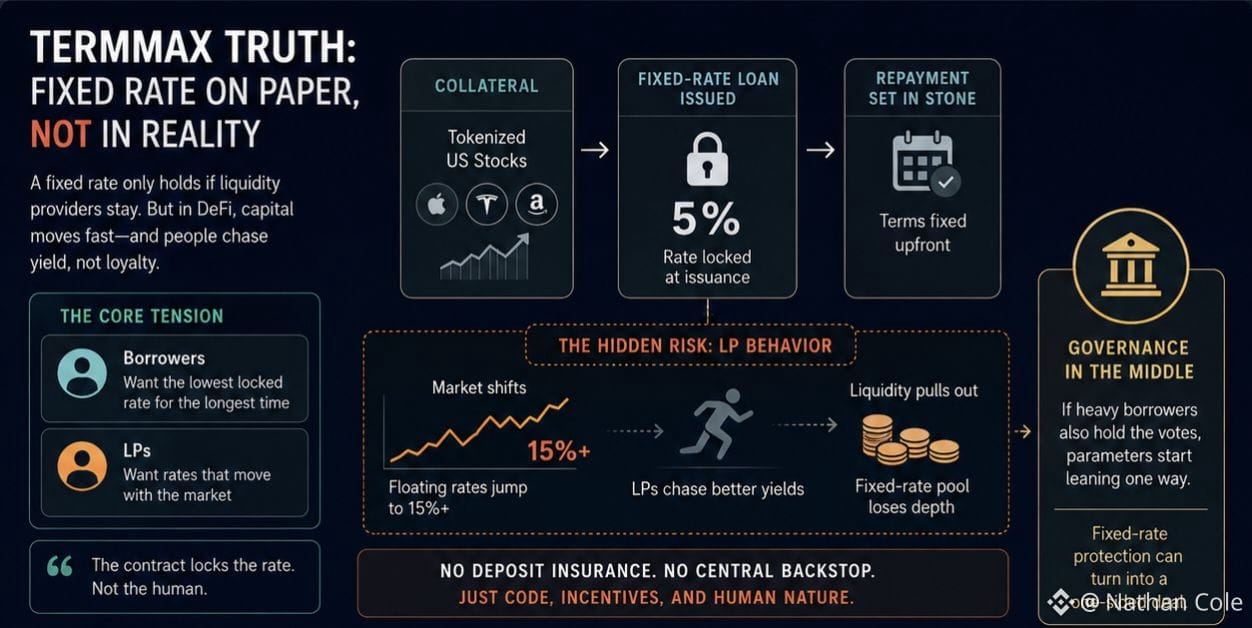
Ich habe heute Nacht wieder bei diesen TermMax-Dokumenten auf genau diese Stelle gestarrt. Du hinterlegst tokenisierte US-Aktien als Sicherheit, legst im Moment der Ausgabe einen Darlehenszinssatz von 5% fest—die Rückzahlung ist bereits wie in Stein gemeißelt. Auf dem Papier wirkt das sauber. Aber dieses „fix“ gilt nur, wenn die andere Seite auch wirklich bereit ist, bei genau diesem Satz stillzuhalten.
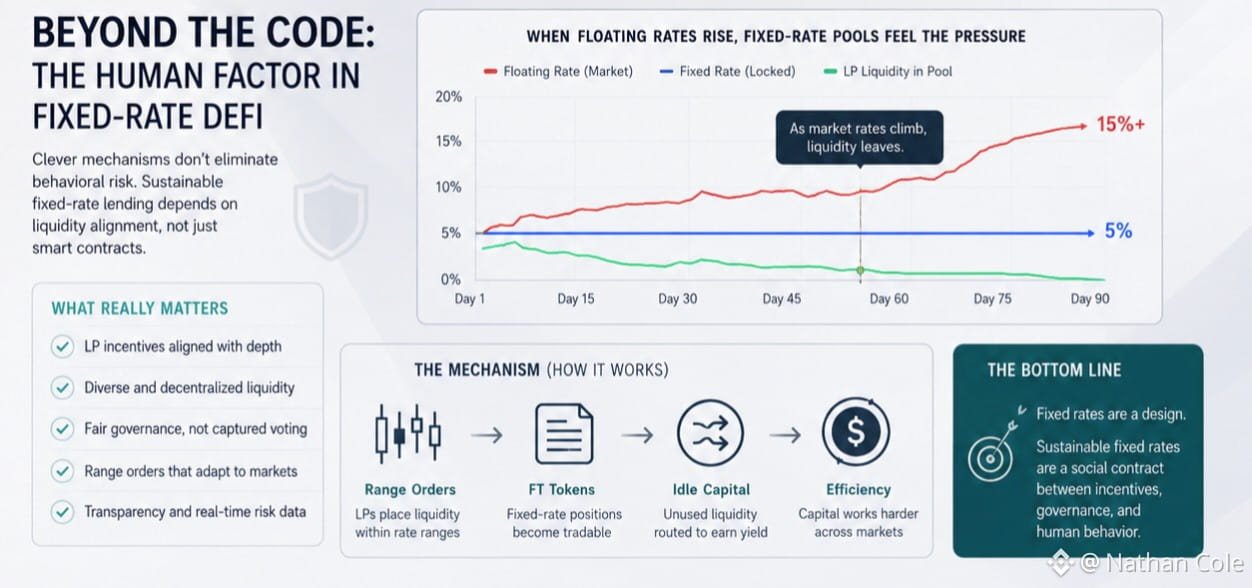
Ich kenne dieses Kino. LPs in DeFi sitzen nicht einfach still. Ihr Geld ist immer auf der Suche nach der nächsten besseren Zahl. Wenn die Kreditnachfrage anspringt und variable Zinsen auf 15% hochschnellen, beginnt derjenige, der auf 5% festgenagelt ist, auszurechnen, wie schnell er seine Liquidität abziehen kann. Der Vertrag fixiert den Zinssatz, nicht den Menschen. Keine Einlagenversicherung, kein Backstop der Zentralbank—nur ein Smart Contract und die stille Hoffnung, dass sich die Leute wie Einlagenzahler bei Banken verhalten, statt wie die Yield-Jäger, die sie tatsächlich sind.
Die Governance sitzt genau in der Mitte dieser Spannung. Kreditnehmer wollen den niedrigsten fixierten Zinssatz für die längste Zeit. LPs wollen, dass sich die Kurve bewegt, wenn sich der Markt bewegt. Wenn dieselben Wallets, die den Großteil der Kreditaufnahme stemmen, auch die Stimmen halten, beginnen die Parameter in eine Richtung zu kippen. Der Festzinssatz fühlt sich dann nicht mehr wie Schutz an und sieht zunehmend mehr nach einem einseitigen Deal aus.
Das Mechanismus-Design selbst ist clever—Range Orders, FT-Tokens, inaktive Mittel, die zu Floating-Protokollen umgeleitet werden. Ich habe genug Zyklen gesehen, um zu wissen: Ein cleveres Design preist nicht automatisch ein, wie die Menschen darin sich tatsächlich verhalten. Die Doku schreibt den Fixzins, als sei er längst entschieden. Ich bin mir immer noch nicht sicher, ob die Liquiditätsseite dem wirklich vollständig zugestimmt hat.
#termmax @TermMax
Ich habe heute Nacht wieder bei diesen TermMax-Dokumenten auf genau diese Stelle gestarrt. Du hinterlegst tokenisierte US-Aktien als Sicherheit, legst im Moment der Ausgabe einen Darlehenszinssatz von 5% fest—die Rückzahlung ist bereits wie in Stein gemeißelt. Auf dem Papier wirkt das sauber. Aber dieses „fix“ gilt nur, wenn die andere Seite auch wirklich bereit ist, bei genau diesem Satz stillzuhalten.
Ich kenne dieses Kino. LPs in DeFi sitzen nicht einfach still. Ihr Geld ist immer auf der Suche nach der nächsten besseren Zahl. Wenn die Kreditnachfrage anspringt und variable Zinsen auf 15% hochschnellen, beginnt derjenige, der auf 5% festgenagelt ist, auszurechnen, wie schnell er seine Liquidität abziehen kann. Der Vertrag fixiert den Zinssatz, nicht den Menschen. Keine Einlagenversicherung, kein Backstop der Zentralbank—nur ein Smart Contract und die stille Hoffnung, dass sich die Leute wie Einlagenzahler bei Banken verhalten, statt wie die Yield-Jäger, die sie tatsächlich sind.
Die Governance sitzt genau in der Mitte dieser Spannung. Kreditnehmer wollen den niedrigsten fixierten Zinssatz für die längste Zeit. LPs wollen, dass sich die Kurve bewegt, wenn sich der Markt bewegt. Wenn dieselben Wallets, die den Großteil der Kreditaufnahme stemmen, auch die Stimmen halten, beginnen die Parameter in eine Richtung zu kippen. Der Festzinssatz fühlt sich dann nicht mehr wie Schutz an und sieht zunehmend mehr nach einem einseitigen Deal aus.
Das Mechanismus-Design selbst ist clever—Range Orders, FT-Tokens, inaktive Mittel, die zu Floating-Protokollen umgeleitet werden. Ich habe genug Zyklen gesehen, um zu wissen: Ein cleveres Design preist nicht automatisch ein, wie die Menschen darin sich tatsächlich verhalten. Die Doku schreibt den Fixzins, als sei er längst entschieden. Ich bin mir immer noch nicht sicher, ob die Liquiditätsseite dem wirklich vollständig zugestimmt hat.
Ich habe heute Nacht wieder bei diesen TermMax-Dokumenten auf genau diese Stelle gestarrt. Du hinterlegst tokenisierte US-Aktien als Sicherheit, legst im Moment der Ausgabe einen Darlehenszinssatz von 5% fest—die Rückzahlung ist bereits wie in Stein gemeißelt. Auf dem Papier wirkt das sauber. Aber dieses „fix“ gilt nur, wenn die andere Seite auch wirklich bereit ist, bei genau diesem Satz stillzuhalten.
Ich kenne dieses Kino. LPs in DeFi sitzen nicht einfach still. Ihr Geld ist immer auf der Suche nach der nächsten besseren Zahl. Wenn die Kreditnachfrage anspringt und variable Zinsen auf 15% hochschnellen, beginnt derjenige, der auf 5% festgenagelt ist, auszurechnen, wie schnell er seine Liquidität abziehen kann. Der Vertrag fixiert den Zinssatz, nicht den Menschen. Keine Einlagenversicherung, kein Backstop der Zentralbank—nur ein Smart Contract und die stille Hoffnung, dass sich die Leute wie Einlagenzahler bei Banken verhalten, statt wie die Yield-Jäger, die sie tatsächlich sind.
Die Governance sitzt genau in der Mitte dieser Spannung. Kreditnehmer wollen den niedrigsten fixierten Zinssatz für die längste Zeit. LPs wollen, dass sich die Kurve bewegt, wenn sich der Markt bewegt. Wenn dieselben Wallets, die den Großteil der Kreditaufnahme stemmen, auch die Stimmen halten, beginnen die Parameter in eine Richtung zu kippen. Der Festzinssatz fühlt sich dann nicht mehr wie Schutz an und sieht zunehmend mehr nach einem einseitigen Deal aus.
Das Mechanismus-Design selbst ist clever—Range Orders, FT-Tokens, inaktive Mittel, die zu Floating-Protokollen umgeleitet werden. Ich habe genug Zyklen gesehen, um zu wissen: Ein cleveres Design preist nicht automatisch ein, wie die Menschen darin sich tatsächlich verhalten. Die Doku schreibt den Fixzins, als sei er längst entschieden. Ich bin mir immer noch nicht sicher, ob die Liquiditätsseite dem wirklich vollständig zugestimmt hat.
2
1.7k
·
--
Bullisch
#dusk $DUSK @Dusk_Foundation
Dusk Network und die wahre Bedeutung von Datenschutz für Finanz-Blockchains
Ich bin lange genug im Krypto-Bereich, um das Wort „Datenschutz“ an fast alles geknüpft zu hören. Die meiste Zeit klingt es gut, bis man anfängt zu fragen, was Datenschutz eigentlich bedeutet, wenn echte finanzielle Aktivitäten im Spiel sind.
Denn ehrlich gesagt glaube ich nicht, dass die Leute alles vollständig verborgen haben wollen.
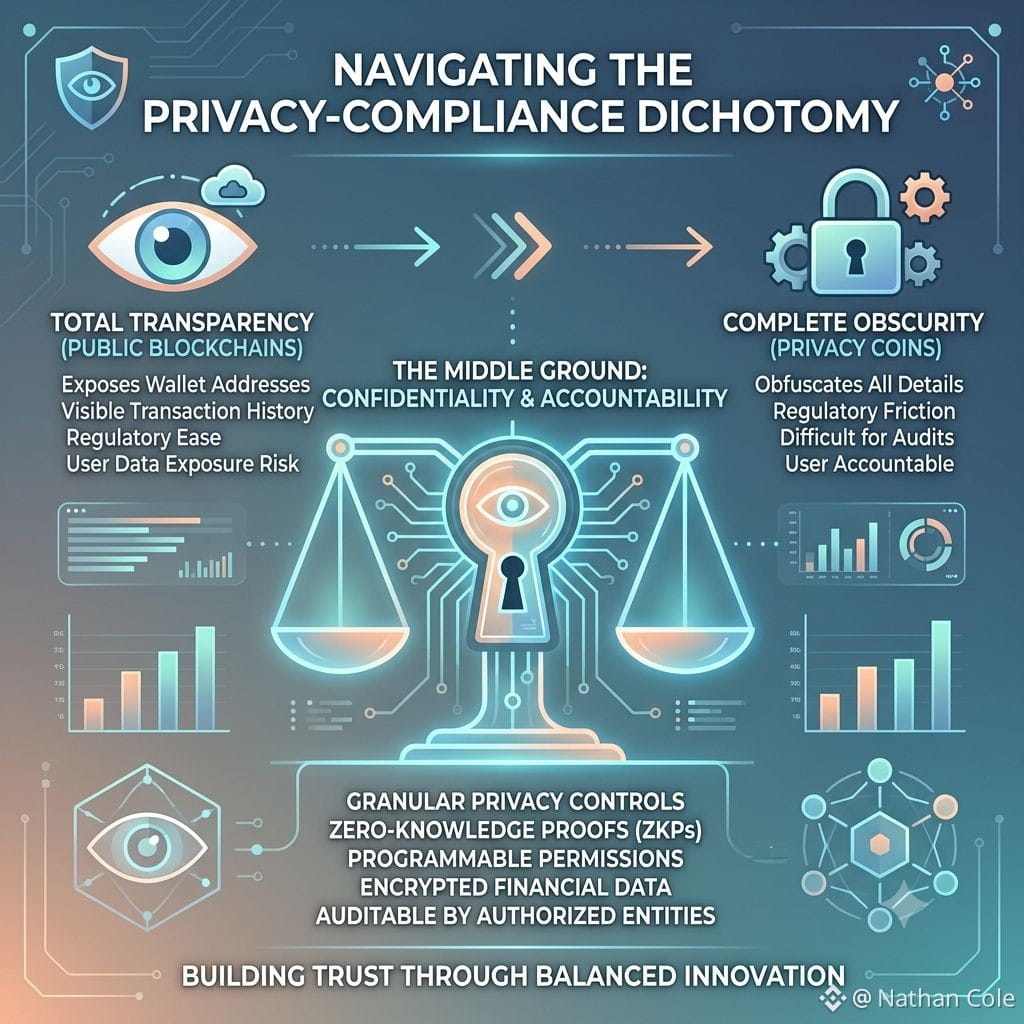
Ein Unternehmen möchte vielleicht seine Transaktionen vor den Augen der Öffentlichkeit verbergen, während ein Regulierer dennoch etwas überprüfen muss. Ein Nutzer möchte möglicherweise finanzielle Details privat halten, braucht aber gleichzeitig eine Möglichkeit, Eigentum oder Legitimität nachzuweisen. Genau in dieser „Mitte“ wird es kompliziert.
Das macht Dusk Network für mich interessant. Der Fokus auf Finanzanwendungen, vertrauliche Smart Contracts und der XSC-Standard wirkt mit einem Problem verbunden, das deutlich praktischer ist als die übliche Krypto-Datenschutz-Erzählung.
Aber ich bin immer noch vorsichtig.
Ich habe schon viele Projekte gesehen, die auf dem Papier beeindruckend wirken und dann Schwierigkeiten haben, sobald sie auf echte Nutzer, Regulierungen, Liquidität und all die langweiligen Dinge treffen, über die bei einem Launch niemand spricht.
Datenschutz allein reicht nicht. Wenn das Verbergen von Informationen zu viel Reibung erzeugt, werden die Leute es nicht nutzen. Wenn alles transparent ist, wird finanzielle Aktivität unangenehm—manchmal sogar gefährlich. Es muss also ein Gleichgewicht geben.
Ich bin noch nicht sicher, ob Dusk Network dieses Gleichgewicht gefunden hat. Vielleicht hat es das, vielleicht auch nicht.
Was ich jedoch interessant finde, ist die Frage dahinter: Können Finanzsysteme den Menschen echten Vertraulichkeitsschutz geben, ohne dabei vollständig die Verantwortlichkeit aufzugeben?
Das fühlt sich wie ein viel schwierigeres Problem an, als einfach nur eine weitere Blockchain zu bauen.
{spot}(DUSKUSDT)
#dusk $DUSK @Dusk
Dusk Network und die wahre Bedeutung von Datenschutz für Finanz-Blockchains
Ich bin lange genug im Krypto-Bereich, um das Wort „Datenschutz“ an fast alles geknüpft zu hören. Die meiste Zeit klingt es gut, bis man anfängt zu fragen, was Datenschutz eigentlich bedeutet, wenn echte finanzielle Aktivitäten im Spiel sind.
Denn ehrlich gesagt glaube ich nicht, dass die Leute alles vollständig verborgen haben wollen.
Ein Unternehmen möchte vielleicht seine Transaktionen vor den Augen der Öffentlichkeit verbergen, während ein Regulierer dennoch etwas überprüfen muss. Ein Nutzer möchte möglicherweise finanzielle Details privat halten, braucht aber gleichzeitig eine Möglichkeit, Eigentum oder Legitimität nachzuweisen. Genau in dieser „Mitte“ wird es kompliziert.
Das macht Dusk Network für mich interessant. Der Fokus auf Finanzanwendungen, vertrauliche Smart Contracts und der XSC-Standard wirkt mit einem Problem verbunden, das deutlich praktischer ist als die übliche Krypto-Datenschutz-Erzählung.
Aber ich bin immer noch vorsichtig.
Ich habe schon viele Projekte gesehen, die auf dem Papier beeindruckend wirken und dann Schwierigkeiten haben, sobald sie auf echte Nutzer, Regulierungen, Liquidität und all die langweiligen Dinge treffen, über die bei einem Launch niemand spricht.
Datenschutz allein reicht nicht. Wenn das Verbergen von Informationen zu viel Reibung erzeugt, werden die Leute es nicht nutzen. Wenn alles transparent ist, wird finanzielle Aktivität unangenehm—manchmal sogar gefährlich. Es muss also ein Gleichgewicht geben.
Ich bin noch nicht sicher, ob Dusk Network dieses Gleichgewicht gefunden hat. Vielleicht hat es das, vielleicht auch nicht.
Was ich jedoch interessant finde, ist die Frage dahinter: Können Finanzsysteme den Menschen echten Vertraulichkeitsschutz geben, ohne dabei vollständig die Verantwortlichkeit aufzugeben?
Das fühlt sich wie ein viel schwierigeres Problem an, als einfach nur eine weitere Blockchain zu bauen.
Dusk Network und die wahre Bedeutung von Datenschutz für Finanz-Blockchains
Ich bin lange genug im Krypto-Bereich, um das Wort „Datenschutz“ an fast alles geknüpft zu hören. Die meiste Zeit klingt es gut, bis man anfängt zu fragen, was Datenschutz eigentlich bedeutet, wenn echte finanzielle Aktivitäten im Spiel sind.
Denn ehrlich gesagt glaube ich nicht, dass die Leute alles vollständig verborgen haben wollen.
Ein Unternehmen möchte vielleicht seine Transaktionen vor den Augen der Öffentlichkeit verbergen, während ein Regulierer dennoch etwas überprüfen muss. Ein Nutzer möchte möglicherweise finanzielle Details privat halten, braucht aber gleichzeitig eine Möglichkeit, Eigentum oder Legitimität nachzuweisen. Genau in dieser „Mitte“ wird es kompliziert.
Das macht Dusk Network für mich interessant. Der Fokus auf Finanzanwendungen, vertrauliche Smart Contracts und der XSC-Standard wirkt mit einem Problem verbunden, das deutlich praktischer ist als die übliche Krypto-Datenschutz-Erzählung.
Aber ich bin immer noch vorsichtig.
Ich habe schon viele Projekte gesehen, die auf dem Papier beeindruckend wirken und dann Schwierigkeiten haben, sobald sie auf echte Nutzer, Regulierungen, Liquidität und all die langweiligen Dinge treffen, über die bei einem Launch niemand spricht.
Datenschutz allein reicht nicht. Wenn das Verbergen von Informationen zu viel Reibung erzeugt, werden die Leute es nicht nutzen. Wenn alles transparent ist, wird finanzielle Aktivität unangenehm—manchmal sogar gefährlich. Es muss also ein Gleichgewicht geben.
Ich bin noch nicht sicher, ob Dusk Network dieses Gleichgewicht gefunden hat. Vielleicht hat es das, vielleicht auch nicht.
Was ich jedoch interessant finde, ist die Frage dahinter: Können Finanzsysteme den Menschen echten Vertraulichkeitsschutz geben, ohne dabei vollständig die Verantwortlichkeit aufzugeben?
Das fühlt sich wie ein viel schwierigeres Problem an, als einfach nur eine weitere Blockchain zu bauen.
2
4
1.9k
·
--
Bullisch
#termmax @termmax
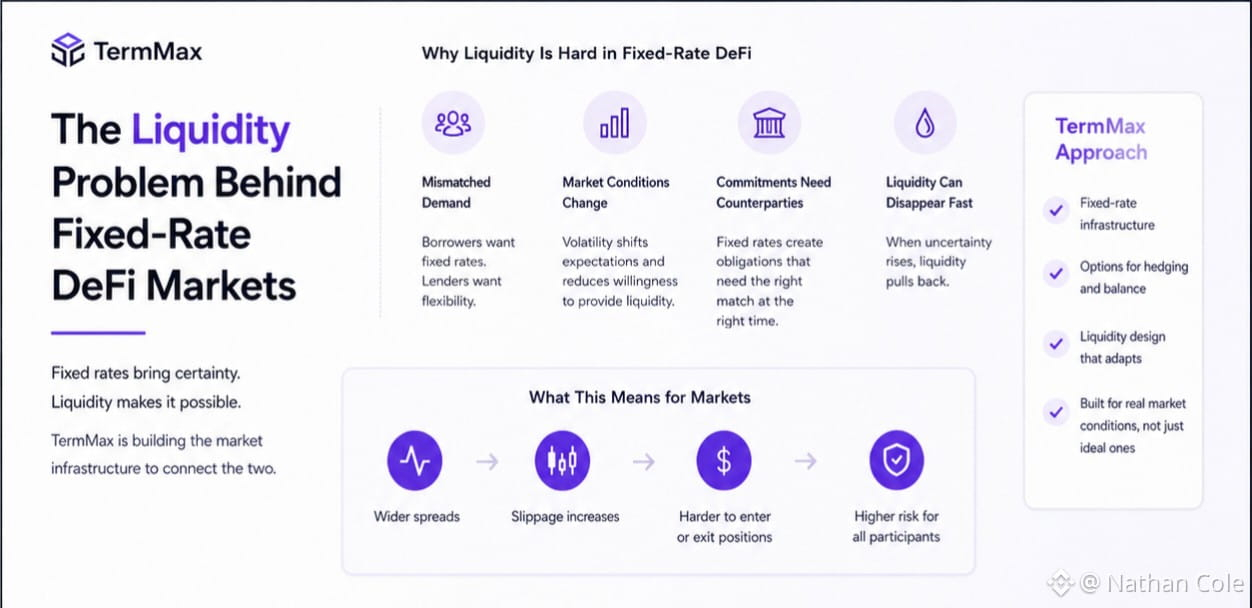
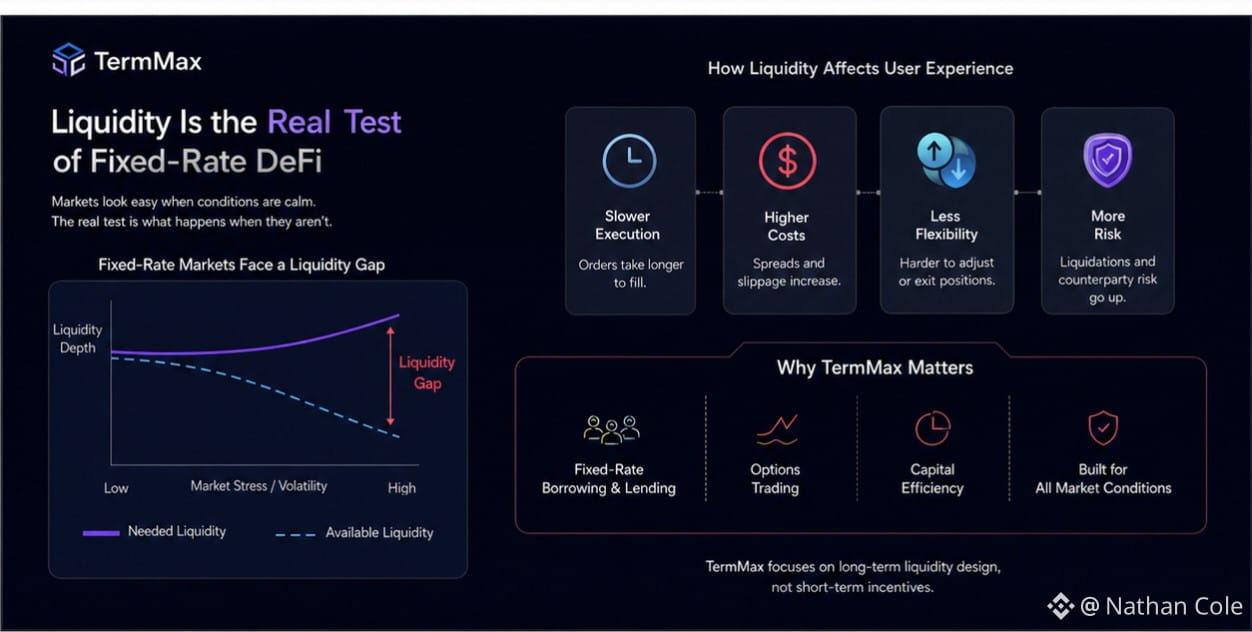
TermMax und das Liquidity-Problem hinter Fixed-Rate DeFi-Märkten
Ich kenne Krypto schon lange genug, um zu wissen, dass sich eine gut aussehende Idee völlig anders anfühlen kann, sobald die Leute sie wirklich nutzen.
Fixed-Rate DeFi klingt in der Theorie großartig. Du weißt, was du zahlst, du weißt, was du verdienst, und du musst nicht aufwachen und dich fragen, wohin sich der Lending-Zins über Nacht bewegt hat. Aber dann denke ich an Liquidität, und das Ganze wird weniger einfach.
Genau an diesen Punkt bei TermMax denke ich immer wieder.
Eines ist es, ein Protokoll für Fixed-Rate-Kredite, -Anlagen und -Optionen zu bauen. Etwas anderes ist es, diese Märkte liquide zu halten, wenn die Leute nicht alle gleichzeitig dasselbe wollen.
Dieses Muster habe ich schon viel zu oft gesehen. Wenn die Märkte ruhig sind, wirkt die Liquidität gesund. Alle sind entspannt. Spreads fühlen sich nicht schmerzhaft an. Dann taucht aber Volatilität auf, die Stimmung kippt, und plötzlich stellt sich heraus, dass die Liquidität, die wie selbstverständlich stabil wirkte, in Wahrheit sehr davon abhängt.
Das ist meine Skepsis gegenüber Fixed-Rate-Märkten im Allgemeinen. Die Planbarkeit ist zwar nützlich, aber jemand muss immer noch die andere Seite dieser Planbarkeit bereitstellen. Wenn Kreditnehmer langfristige feste Zinssätze wollen, während Anleger Flexibilität bevorzugen, verschwindet die Lücke zwischen diesen beiden Präferenzen nicht einfach, nur weil ein Smart Contract die Abwicklung übernimmt.
Ich sage nicht, dass TermMax das nicht teilweise lösen kann. Ich bin nur noch nicht überzeugt.
Für mich ist die spannende Frage nicht, ob Fixed-Rate DeFi funktioniert, wenn alles gut läuft. Dann sieht fast alles gut aus.
Ich möchte sehen, was passiert, wenn die Liquidität dünn wird, die Volatilität anzieht und plötzlich alle gleichzeitig raus wollen.
Da beginnt normalerweise erst das echte Design sichtbar zu werden.
#termmax @TermMax
TermMax und das Liquidity-Problem hinter Fixed-Rate DeFi-Märkten
Ich kenne Krypto schon lange genug, um zu wissen, dass sich eine gut aussehende Idee völlig anders anfühlen kann, sobald die Leute sie wirklich nutzen.
Fixed-Rate DeFi klingt in der Theorie großartig. Du weißt, was du zahlst, du weißt, was du verdienst, und du musst nicht aufwachen und dich fragen, wohin sich der Lending-Zins über Nacht bewegt hat. Aber dann denke ich an Liquidität, und das Ganze wird weniger einfach.
Genau an diesen Punkt bei TermMax denke ich immer wieder.
Eines ist es, ein Protokoll für Fixed-Rate-Kredite, -Anlagen und -Optionen zu bauen. Etwas anderes ist es, diese Märkte liquide zu halten, wenn die Leute nicht alle gleichzeitig dasselbe wollen.
Dieses Muster habe ich schon viel zu oft gesehen. Wenn die Märkte ruhig sind, wirkt die Liquidität gesund. Alle sind entspannt. Spreads fühlen sich nicht schmerzhaft an. Dann taucht aber Volatilität auf, die Stimmung kippt, und plötzlich stellt sich heraus, dass die Liquidität, die wie selbstverständlich stabil wirkte, in Wahrheit sehr davon abhängt.
Das ist meine Skepsis gegenüber Fixed-Rate-Märkten im Allgemeinen. Die Planbarkeit ist zwar nützlich, aber jemand muss immer noch die andere Seite dieser Planbarkeit bereitstellen. Wenn Kreditnehmer langfristige feste Zinssätze wollen, während Anleger Flexibilität bevorzugen, verschwindet die Lücke zwischen diesen beiden Präferenzen nicht einfach, nur weil ein Smart Contract die Abwicklung übernimmt.
Ich sage nicht, dass TermMax das nicht teilweise lösen kann. Ich bin nur noch nicht überzeugt.
Für mich ist die spannende Frage nicht, ob Fixed-Rate DeFi funktioniert, wenn alles gut läuft. Dann sieht fast alles gut aus.
Ich möchte sehen, was passiert, wenn die Liquidität dünn wird, die Volatilität anzieht und plötzlich alle gleichzeitig raus wollen.
Da beginnt normalerweise erst das echte Design sichtbar zu werden.
TermMax und das Liquidity-Problem hinter Fixed-Rate DeFi-Märkten
Ich kenne Krypto schon lange genug, um zu wissen, dass sich eine gut aussehende Idee völlig anders anfühlen kann, sobald die Leute sie wirklich nutzen.
Fixed-Rate DeFi klingt in der Theorie großartig. Du weißt, was du zahlst, du weißt, was du verdienst, und du musst nicht aufwachen und dich fragen, wohin sich der Lending-Zins über Nacht bewegt hat. Aber dann denke ich an Liquidität, und das Ganze wird weniger einfach.
Genau an diesen Punkt bei TermMax denke ich immer wieder.
Eines ist es, ein Protokoll für Fixed-Rate-Kredite, -Anlagen und -Optionen zu bauen. Etwas anderes ist es, diese Märkte liquide zu halten, wenn die Leute nicht alle gleichzeitig dasselbe wollen.
Dieses Muster habe ich schon viel zu oft gesehen. Wenn die Märkte ruhig sind, wirkt die Liquidität gesund. Alle sind entspannt. Spreads fühlen sich nicht schmerzhaft an. Dann taucht aber Volatilität auf, die Stimmung kippt, und plötzlich stellt sich heraus, dass die Liquidität, die wie selbstverständlich stabil wirkte, in Wahrheit sehr davon abhängt.
Das ist meine Skepsis gegenüber Fixed-Rate-Märkten im Allgemeinen. Die Planbarkeit ist zwar nützlich, aber jemand muss immer noch die andere Seite dieser Planbarkeit bereitstellen. Wenn Kreditnehmer langfristige feste Zinssätze wollen, während Anleger Flexibilität bevorzugen, verschwindet die Lücke zwischen diesen beiden Präferenzen nicht einfach, nur weil ein Smart Contract die Abwicklung übernimmt.
Ich sage nicht, dass TermMax das nicht teilweise lösen kann. Ich bin nur noch nicht überzeugt.
Für mich ist die spannende Frage nicht, ob Fixed-Rate DeFi funktioniert, wenn alles gut läuft. Dann sieht fast alles gut aus.
Ich möchte sehen, was passiert, wenn die Liquidität dünn wird, die Volatilität anzieht und plötzlich alle gleichzeitig raus wollen.
Da beginnt normalerweise erst das echte Design sichtbar zu werden.
9
6
1.6k
·
--
Bullisch
#termmax @termmax
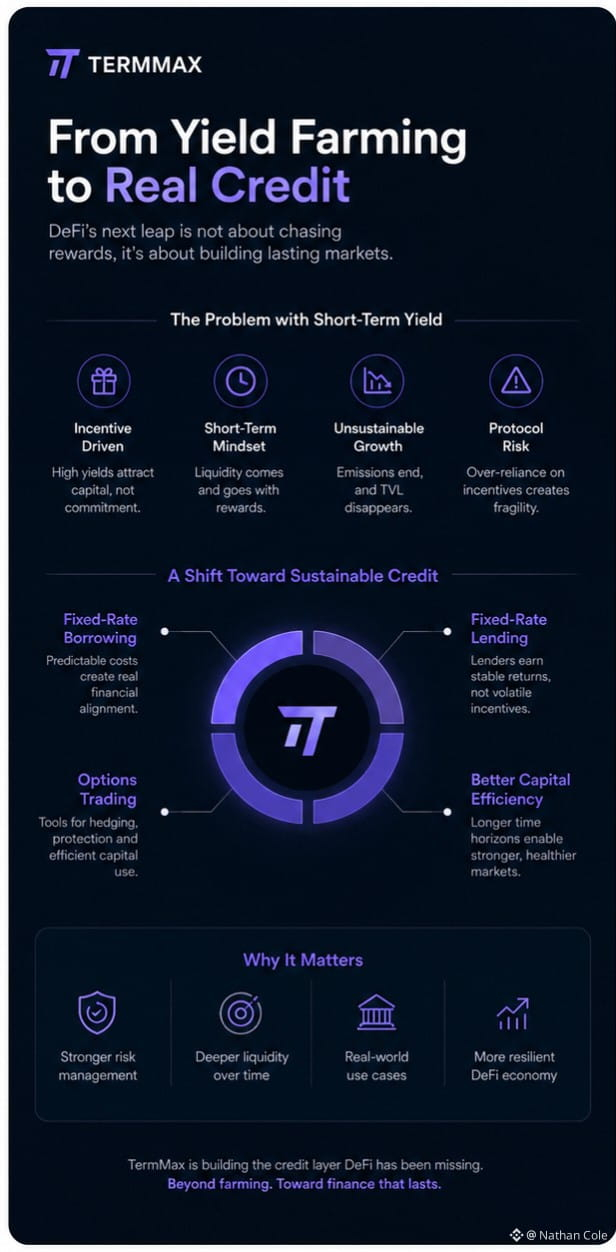
Ich bin lange genug bei DeFi dabei, um ein wenig müde zu werden, sobald jemand anfängt, über „nachhaltige Rendite“ zu sprechen.
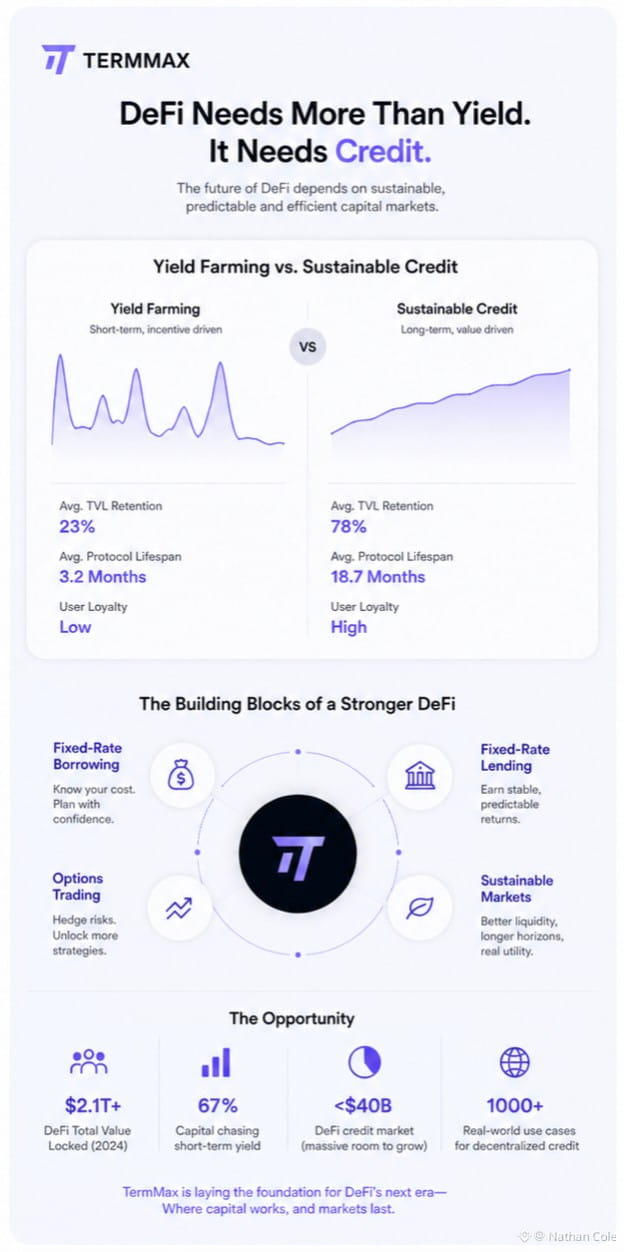
Diese Geschichte haben wir schon gehört. Ein neues Farm-Projekt öffnet, die Zahlen sehen beeindruckend aus, die Liquidität strömt herein, alle fühlen sich früh dabei – und dann versiegen die Anreize. Ich habe diesen Zyklus so oft gesehen, dass ich ihn nicht mehr zählen kann. Was wie echtes Wachstum aussah, war oft nur Kapital, das den Belohnungen folgte.
Deshalb finde ich TermMax interessant, auch wenn ich weiterhin vorsichtig bin.
Kreditaufnahme und -vergabe mit festen Zinssätzen wirkt wie eine weniger glamouröse Idee, aber vielleicht ist das genau der Punkt. Echte Kreditwürdigkeit wird nicht um ständig wechselnde Belohnungen herum aufgebaut. Du willst wissen, was Geld kostet, was du schuldest und was du dir tatsächlich auflädst.
Natürlich lässt das die zugrunde liegenden Probleme nicht einfach verschwinden. Liquidität kann verschwinden. Sicherheiten können fallen. Die Preisbildung kann unübersichtlich werden. Und Optionen können in angespannten Märkten noch eine zusätzliche Komplexitätsebene hinzufügen. DeFi hat die Angewohnheit, bis zu dem Moment einfach auszusehen, in dem etwas schiefgeht.
Ich bin mir nicht sicher, ob TermMax DeFi wirklich über kurzfristiges Yield Farming hinausbringen kann. Das kann im Moment wohl noch niemand wissen.
Aber ich komme immer wieder auf dieselbe Idee zurück.
Vielleicht besteht die nächste sinnvolle Phase von DeFi nicht darin, noch einen weiteren Ort zum Farmen zu finden. Vielleicht geht es darum, Märkte aufzubauen, in denen Kapital tatsächlich ausgeliehen, bepreist und mit einem gewissen Maß an Beständigkeit verwaltet werden kann.
Das klingt für mich interessanter als ein weiterer APY-Wettlauf.
#termmax @TermMax
Ich bin lange genug bei DeFi dabei, um ein wenig müde zu werden, sobald jemand anfängt, über „nachhaltige Rendite“ zu sprechen.
Diese Geschichte haben wir schon gehört. Ein neues Farm-Projekt öffnet, die Zahlen sehen beeindruckend aus, die Liquidität strömt herein, alle fühlen sich früh dabei – und dann versiegen die Anreize. Ich habe diesen Zyklus so oft gesehen, dass ich ihn nicht mehr zählen kann. Was wie echtes Wachstum aussah, war oft nur Kapital, das den Belohnungen folgte.
Deshalb finde ich TermMax interessant, auch wenn ich weiterhin vorsichtig bin.
Kreditaufnahme und -vergabe mit festen Zinssätzen wirkt wie eine weniger glamouröse Idee, aber vielleicht ist das genau der Punkt. Echte Kreditwürdigkeit wird nicht um ständig wechselnde Belohnungen herum aufgebaut. Du willst wissen, was Geld kostet, was du schuldest und was du dir tatsächlich auflädst.
Natürlich lässt das die zugrunde liegenden Probleme nicht einfach verschwinden. Liquidität kann verschwinden. Sicherheiten können fallen. Die Preisbildung kann unübersichtlich werden. Und Optionen können in angespannten Märkten noch eine zusätzliche Komplexitätsebene hinzufügen. DeFi hat die Angewohnheit, bis zu dem Moment einfach auszusehen, in dem etwas schiefgeht.
Ich bin mir nicht sicher, ob TermMax DeFi wirklich über kurzfristiges Yield Farming hinausbringen kann. Das kann im Moment wohl noch niemand wissen.
Aber ich komme immer wieder auf dieselbe Idee zurück.
Vielleicht besteht die nächste sinnvolle Phase von DeFi nicht darin, noch einen weiteren Ort zum Farmen zu finden. Vielleicht geht es darum, Märkte aufzubauen, in denen Kapital tatsächlich ausgeliehen, bepreist und mit einem gewissen Maß an Beständigkeit verwaltet werden kann.
Das klingt für mich interessanter als ein weiterer APY-Wettlauf.
Ich bin lange genug bei DeFi dabei, um ein wenig müde zu werden, sobald jemand anfängt, über „nachhaltige Rendite“ zu sprechen.
Diese Geschichte haben wir schon gehört. Ein neues Farm-Projekt öffnet, die Zahlen sehen beeindruckend aus, die Liquidität strömt herein, alle fühlen sich früh dabei – und dann versiegen die Anreize. Ich habe diesen Zyklus so oft gesehen, dass ich ihn nicht mehr zählen kann. Was wie echtes Wachstum aussah, war oft nur Kapital, das den Belohnungen folgte.
Deshalb finde ich TermMax interessant, auch wenn ich weiterhin vorsichtig bin.
Kreditaufnahme und -vergabe mit festen Zinssätzen wirkt wie eine weniger glamouröse Idee, aber vielleicht ist das genau der Punkt. Echte Kreditwürdigkeit wird nicht um ständig wechselnde Belohnungen herum aufgebaut. Du willst wissen, was Geld kostet, was du schuldest und was du dir tatsächlich auflädst.
Natürlich lässt das die zugrunde liegenden Probleme nicht einfach verschwinden. Liquidität kann verschwinden. Sicherheiten können fallen. Die Preisbildung kann unübersichtlich werden. Und Optionen können in angespannten Märkten noch eine zusätzliche Komplexitätsebene hinzufügen. DeFi hat die Angewohnheit, bis zu dem Moment einfach auszusehen, in dem etwas schiefgeht.
Ich bin mir nicht sicher, ob TermMax DeFi wirklich über kurzfristiges Yield Farming hinausbringen kann. Das kann im Moment wohl noch niemand wissen.
Aber ich komme immer wieder auf dieselbe Idee zurück.
Vielleicht besteht die nächste sinnvolle Phase von DeFi nicht darin, noch einen weiteren Ort zum Farmen zu finden. Vielleicht geht es darum, Märkte aufzubauen, in denen Kapital tatsächlich ausgeliehen, bepreist und mit einem gewissen Maß an Beständigkeit verwaltet werden kann.
Das klingt für mich interessanter als ein weiterer APY-Wettlauf.
38
17
2.3k
·
--
Bullisch
#dusk $DUSK @Dusk_Foundation
Ich bin lange genug in der Krypto-Welt unterwegs, um nicht mehr jedes Mal aufgeregt zu sein, wenn jemand „Transparenz“ oder „Dezentralisierung“ sagt. Diese Wörter klingen toll, bis man darüber nachdenkt, was sie für die normale Finanzpraxis tatsächlich bedeuten.
Ich frage mich ständig: Wollen wir wirklich, dass alle alles sehen?
Ein Wallet-Guthaben, eine Zahlung, eine Geschäftstransaktion, dass ein Unternehmen Geld bewegt – nichts davon ist zwangsläufig falsch, aber das heißt nicht, dass die ganze Welt einen Platz in der ersten Reihe haben muss. Diese Spannung habe ich immer wieder gesehen, und sie hat selten eine einfache Antwort.
Das macht Dusk Network für mich interessant. Der Fokus auf Privatsphäre für Finanzanwendungen, vertrauliche Smart Contracts und der XSC-Standard wirken so, als würden sie ein Problem adressieren, das zu wenig Aufmerksamkeit bekommt. Vielleicht können Finanzsysteme überprüfbar sein, ohne dass jede Einzelheit öffentlich gemacht werden muss.
Aber ich bin weiterhin vorsichtig. Privatsphäre ist kein Zauber. Regulierungsbehörden benötigen möglicherweise Transparenz. Unternehmen brauchen möglicherweise Nachweise. Nutzer möchten vielleicht selbst bestimmen, welche Informationen sie preisgeben. Das Gleichgewicht richtig zu treffen ist viel schwieriger, als darüber zu schreiben.
Ich vertraue Projekten nicht vollständig, die behaupten, diese Zielkonflikte bereits gelöst zu haben.
Mit Dusk Network interessiert mich mehr die Frage als das Versprechen. Was sollte tatsächlich öffentlich sein, und was sollte privat bleiben?
Nachdem ich so viele Krypto-Zyklen beobachtet habe, denke ich, dass diese Frage wichtiger ist als eine weitere glänzende Erzählung.
{spot}(DUSKUSDT)
#dusk $DUSK @Dusk
Ich bin lange genug in der Krypto-Welt unterwegs, um nicht mehr jedes Mal aufgeregt zu sein, wenn jemand „Transparenz“ oder „Dezentralisierung“ sagt. Diese Wörter klingen toll, bis man darüber nachdenkt, was sie für die normale Finanzpraxis tatsächlich bedeuten.
Ich frage mich ständig: Wollen wir wirklich, dass alle alles sehen?
Ein Wallet-Guthaben, eine Zahlung, eine Geschäftstransaktion, dass ein Unternehmen Geld bewegt – nichts davon ist zwangsläufig falsch, aber das heißt nicht, dass die ganze Welt einen Platz in der ersten Reihe haben muss. Diese Spannung habe ich immer wieder gesehen, und sie hat selten eine einfache Antwort.
Das macht Dusk Network für mich interessant. Der Fokus auf Privatsphäre für Finanzanwendungen, vertrauliche Smart Contracts und der XSC-Standard wirken so, als würden sie ein Problem adressieren, das zu wenig Aufmerksamkeit bekommt. Vielleicht können Finanzsysteme überprüfbar sein, ohne dass jede Einzelheit öffentlich gemacht werden muss.
Aber ich bin weiterhin vorsichtig. Privatsphäre ist kein Zauber. Regulierungsbehörden benötigen möglicherweise Transparenz. Unternehmen brauchen möglicherweise Nachweise. Nutzer möchten vielleicht selbst bestimmen, welche Informationen sie preisgeben. Das Gleichgewicht richtig zu treffen ist viel schwieriger, als darüber zu schreiben.
Ich vertraue Projekten nicht vollständig, die behaupten, diese Zielkonflikte bereits gelöst zu haben.
Mit Dusk Network interessiert mich mehr die Frage als das Versprechen. Was sollte tatsächlich öffentlich sein, und was sollte privat bleiben?
Nachdem ich so viele Krypto-Zyklen beobachtet habe, denke ich, dass diese Frage wichtiger ist als eine weitere glänzende Erzählung.
Ich bin lange genug in der Krypto-Welt unterwegs, um nicht mehr jedes Mal aufgeregt zu sein, wenn jemand „Transparenz“ oder „Dezentralisierung“ sagt. Diese Wörter klingen toll, bis man darüber nachdenkt, was sie für die normale Finanzpraxis tatsächlich bedeuten.
Ich frage mich ständig: Wollen wir wirklich, dass alle alles sehen?
Ein Wallet-Guthaben, eine Zahlung, eine Geschäftstransaktion, dass ein Unternehmen Geld bewegt – nichts davon ist zwangsläufig falsch, aber das heißt nicht, dass die ganze Welt einen Platz in der ersten Reihe haben muss. Diese Spannung habe ich immer wieder gesehen, und sie hat selten eine einfache Antwort.
Das macht Dusk Network für mich interessant. Der Fokus auf Privatsphäre für Finanzanwendungen, vertrauliche Smart Contracts und der XSC-Standard wirken so, als würden sie ein Problem adressieren, das zu wenig Aufmerksamkeit bekommt. Vielleicht können Finanzsysteme überprüfbar sein, ohne dass jede Einzelheit öffentlich gemacht werden muss.
Aber ich bin weiterhin vorsichtig. Privatsphäre ist kein Zauber. Regulierungsbehörden benötigen möglicherweise Transparenz. Unternehmen brauchen möglicherweise Nachweise. Nutzer möchten vielleicht selbst bestimmen, welche Informationen sie preisgeben. Das Gleichgewicht richtig zu treffen ist viel schwieriger, als darüber zu schreiben.
Ich vertraue Projekten nicht vollständig, die behaupten, diese Zielkonflikte bereits gelöst zu haben.
Mit Dusk Network interessiert mich mehr die Frage als das Versprechen. Was sollte tatsächlich öffentlich sein, und was sollte privat bleiben?
Nachdem ich so viele Krypto-Zyklen beobachtet habe, denke ich, dass diese Frage wichtiger ist als eine weitere glänzende Erzählung.
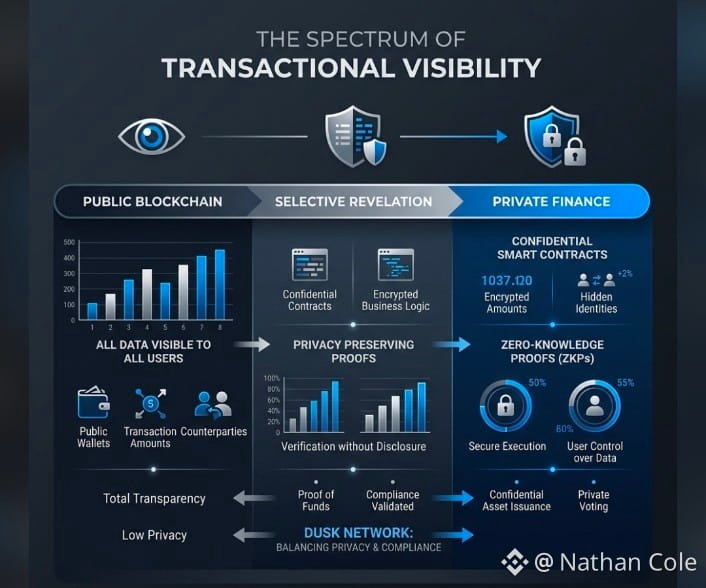
2
2
1.6k
·
--
Bullisch
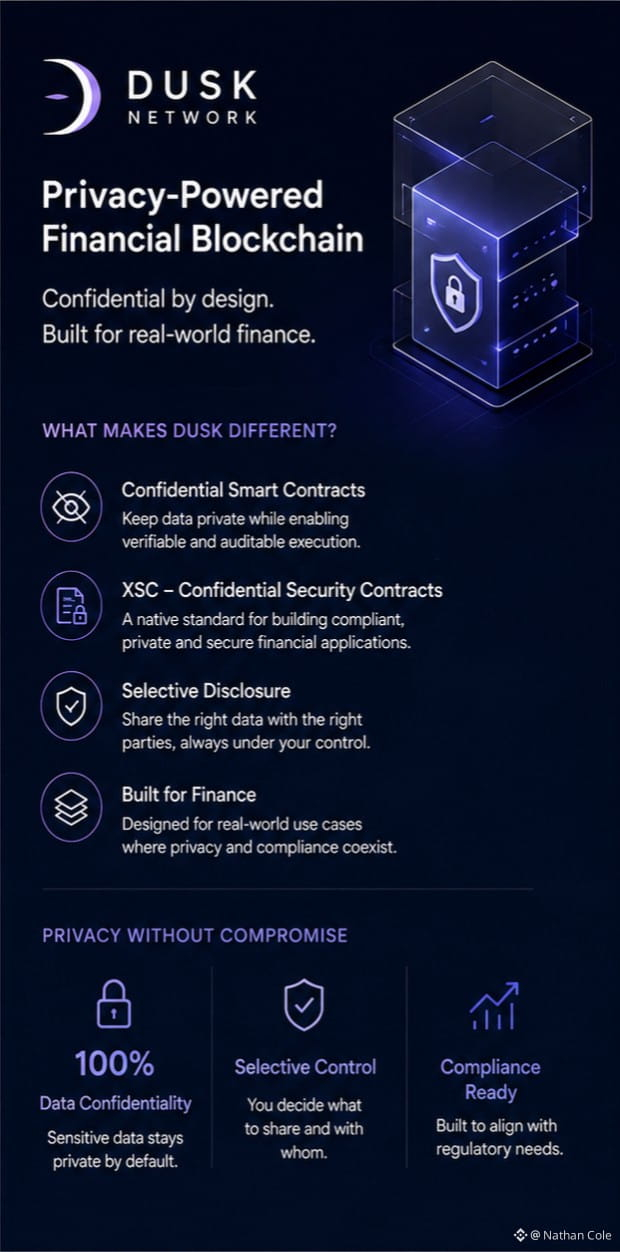
#dusk $DUSK @Dusk_Foundation Ich bin lange genug in der Krypto-Welt unterwegs, um zu wissen, dass das Wort „Privatsphäre“ oft deutlich beeindruckender klingt als das eigentliche Produkt dahinter.
Deshalb finde ich Dusk zwar interessant, aber ich halte meine Erwartungen weiterhin im Zaum.
Was mir an der Idee des vertraulichen Ausführens gefällt, ist ziemlich einfach: Finanzielle Aktivitäten müssen nicht immer vollständig öffentlich sein, nur damit sie nachprüfbar sind. In der realen Welt brauchen Unternehmen Privatsphäre, während Aufsichtsbehörden und Geschäftspartner immer noch die richtigen Informationen zur richtigen Zeit benötigen.
Aber hier werde ich vorsichtig.
Ich habe schon viele Projekte gesehen, die zunächst ein technisches Problem lösen und dann ganz still feststellen, dass das größere Problem die Akzeptanz war. Privatsphäre kann sensible Informationen schützen, aber sie schafft nicht über Nacht Nutzer, Liquidität, Vertrauen oder gute Finanzprodukte.
Und ehrlich gesagt: Dieses Spannungsfeld ist wichtig. Je ausgefeilter die Technologie wird, desto schwieriger kann es für normale Nutzer und Entwickler werden, zu verstehen, womit sie es tatsächlich zu tun haben.
Daher sehe ich mir Dusk nicht an und denke: „Das ist auf jeden Fall die Zukunft.“
Ich denke darüber nach, ob es finanzielle Blockchain-Anwendungen realistischer wirken lassen kann, ohne eine weitere Ebene an Komplexität zu schaffen.
Vielleicht kann es das. Vielleicht auch nicht.
Nachdem ich genug Zyklen beobachtet habe, habe ich gelernt, dass die interessanten Projekte nicht immer die lautesten sind. Manchmal sind es die, die still versuchen, ein Problem zu lösen, das die Menschen wirklich haben.
{spot}(DUSKUSDT)
#dusk $DUSK @Dusk Ich bin lange genug in der Krypto-Welt unterwegs, um zu wissen, dass das Wort „Privatsphäre“ oft deutlich beeindruckender klingt als das eigentliche Produkt dahinter.
Deshalb finde ich Dusk zwar interessant, aber ich halte meine Erwartungen weiterhin im Zaum.
Was mir an der Idee des vertraulichen Ausführens gefällt, ist ziemlich einfach: Finanzielle Aktivitäten müssen nicht immer vollständig öffentlich sein, nur damit sie nachprüfbar sind. In der realen Welt brauchen Unternehmen Privatsphäre, während Aufsichtsbehörden und Geschäftspartner immer noch die richtigen Informationen zur richtigen Zeit benötigen.
Aber hier werde ich vorsichtig.
Ich habe schon viele Projekte gesehen, die zunächst ein technisches Problem lösen und dann ganz still feststellen, dass das größere Problem die Akzeptanz war. Privatsphäre kann sensible Informationen schützen, aber sie schafft nicht über Nacht Nutzer, Liquidität, Vertrauen oder gute Finanzprodukte.
Und ehrlich gesagt: Dieses Spannungsfeld ist wichtig. Je ausgefeilter die Technologie wird, desto schwieriger kann es für normale Nutzer und Entwickler werden, zu verstehen, womit sie es tatsächlich zu tun haben.
Daher sehe ich mir Dusk nicht an und denke: „Das ist auf jeden Fall die Zukunft.“
Ich denke darüber nach, ob es finanzielle Blockchain-Anwendungen realistischer wirken lassen kann, ohne eine weitere Ebene an Komplexität zu schaffen.
Vielleicht kann es das. Vielleicht auch nicht.
Nachdem ich genug Zyklen beobachtet habe, habe ich gelernt, dass die interessanten Projekte nicht immer die lautesten sind. Manchmal sind es die, die still versuchen, ein Problem zu lösen, das die Menschen wirklich haben.
Deshalb finde ich Dusk zwar interessant, aber ich halte meine Erwartungen weiterhin im Zaum.
Was mir an der Idee des vertraulichen Ausführens gefällt, ist ziemlich einfach: Finanzielle Aktivitäten müssen nicht immer vollständig öffentlich sein, nur damit sie nachprüfbar sind. In der realen Welt brauchen Unternehmen Privatsphäre, während Aufsichtsbehörden und Geschäftspartner immer noch die richtigen Informationen zur richtigen Zeit benötigen.
Aber hier werde ich vorsichtig.
Ich habe schon viele Projekte gesehen, die zunächst ein technisches Problem lösen und dann ganz still feststellen, dass das größere Problem die Akzeptanz war. Privatsphäre kann sensible Informationen schützen, aber sie schafft nicht über Nacht Nutzer, Liquidität, Vertrauen oder gute Finanzprodukte.
Und ehrlich gesagt: Dieses Spannungsfeld ist wichtig. Je ausgefeilter die Technologie wird, desto schwieriger kann es für normale Nutzer und Entwickler werden, zu verstehen, womit sie es tatsächlich zu tun haben.
Daher sehe ich mir Dusk nicht an und denke: „Das ist auf jeden Fall die Zukunft.“
Ich denke darüber nach, ob es finanzielle Blockchain-Anwendungen realistischer wirken lassen kann, ohne eine weitere Ebene an Komplexität zu schaffen.
Vielleicht kann es das. Vielleicht auch nicht.
Nachdem ich genug Zyklen beobachtet habe, habe ich gelernt, dass die interessanten Projekte nicht immer die lautesten sind. Manchmal sind es die, die still versuchen, ein Problem zu lösen, das die Menschen wirklich haben.
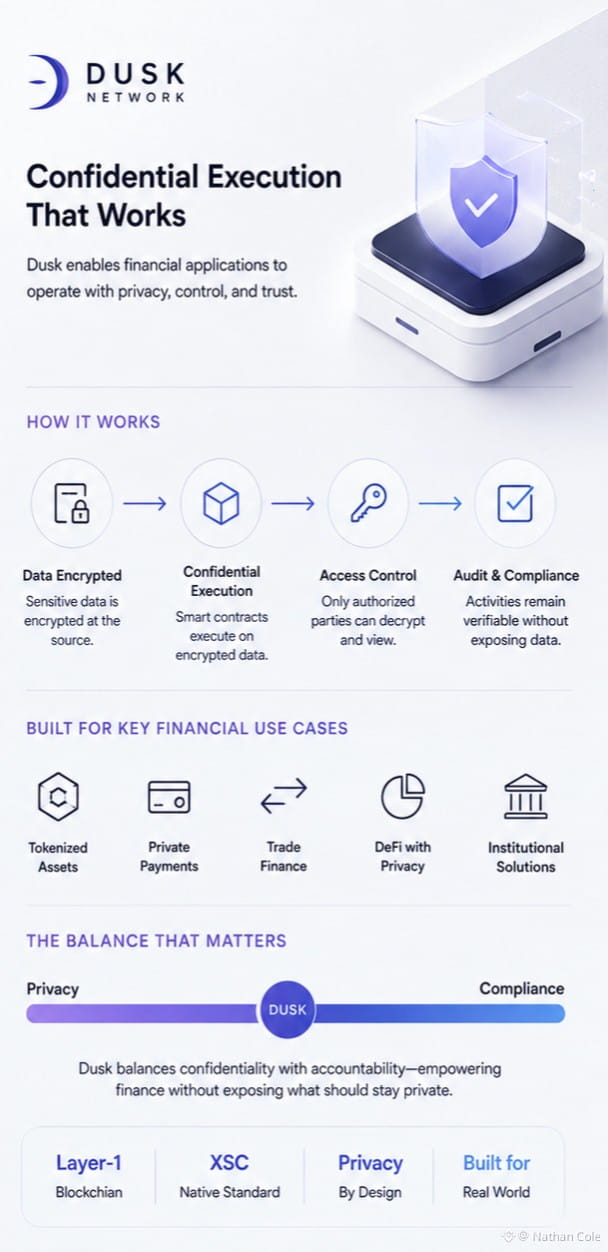
2
3
727
·
--
Bullisch
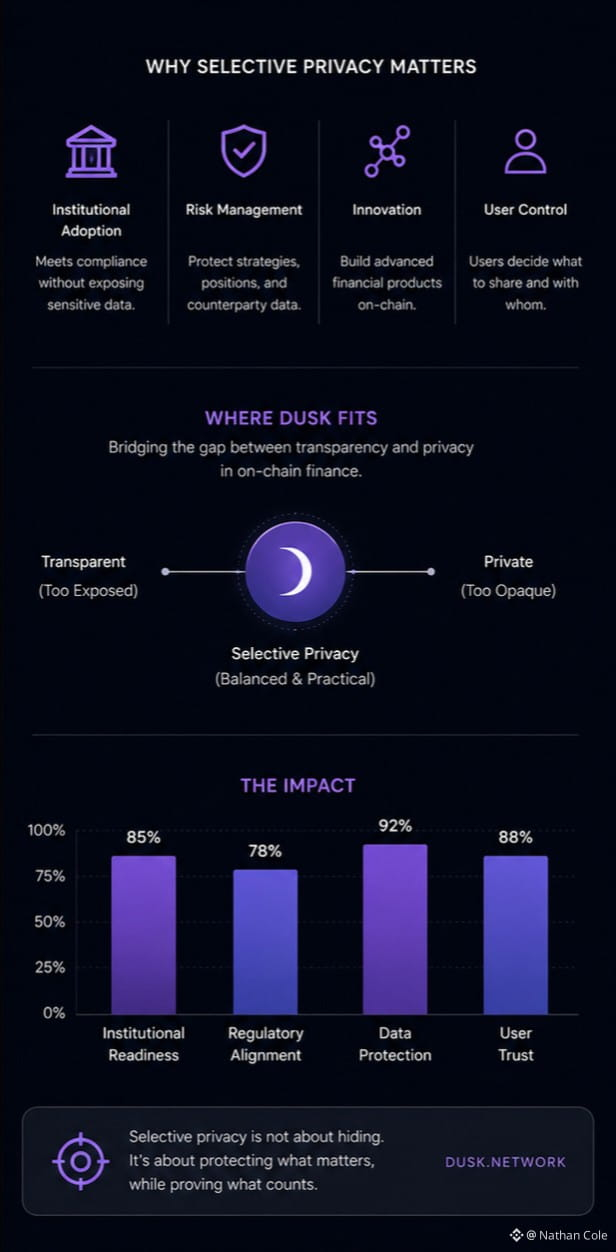
#dusk $DUSK Ich bin lange genug in der Krypto-Welt unterwegs, um zu sehen, wie oft dieselben Geschichten wieder auftauchen – nur mit einer leicht anderen „Malerarbeit“. Privatsphäre ist so eine Sache. Sie klingt in der Theorie toll, aber sobald man echtes Geld, Unternehmen, Regulierungen und echte Menschen ins Spiel bringt, wird es ziemlich schnell chaotisch.
Darum hat mich das Dusk Network vermutlich dazu gebracht, noch etwas länger nachzudenken.
Was ich daran interessant finde, ist nicht die Idee, alles unsichtbar zu machen. Das würde ein ganz anderes Set an Problemen erzeugen. Mich interessiert vielmehr die Möglichkeit, bestimmte finanzielle Informationen privat zu halten, und gleichzeitig nachzuweisen, dass die wichtigen Teile legitim sind.
Und ganz ehrlich: Ich glaube nicht, dass das ein leichtes Problem ist.
Wenn alles sichtbar ist, können Unternehmen mehr preisgeben, als sie sollten. Wenn alles verborgen ist, wird Vertrauen schwieriger. Irgendwo zwischen diesen beiden Extremen muss nützliche On-Chain-Finanzierung wahrscheinlich ihren Platz finden.
Ich habe genug Projekte gesehen, die aus technischer Sicht beeindruckend wirkten und dann direkt in die langweiligen, aber entscheidenden Dinge geraten sind – Regulierung, Akzeptanz, Anreize und die Frage, ob normale Menschen das Ganze nutzen können, ohne ständig alle fünf Minuten darüber nachdenken zu müssen.
Deshalb bin ich bei Dusk immer noch vorsichtig. Ich bin nicht überzeugt, dass selektive Privatsphäre das größere Problem automatisch löst. Aber zumindest fühlt sich das Problem wenigstens real an.
Vielleicht geht die Zukunft nicht darum, zwischen Transparenz und Privatsphäre zu wählen.
Vielleicht geht es darum, endlich zu lernen, dass Finanzsysteme beides brauchen – nur zu unterschiedlichen Zeitpunkten.
@Dusk_Foundation #Dusk $DUSK
{spot}(DUSKUSDT)
#dusk $DUSK Ich bin lange genug in der Krypto-Welt unterwegs, um zu sehen, wie oft dieselben Geschichten wieder auftauchen – nur mit einer leicht anderen „Malerarbeit“. Privatsphäre ist so eine Sache. Sie klingt in der Theorie toll, aber sobald man echtes Geld, Unternehmen, Regulierungen und echte Menschen ins Spiel bringt, wird es ziemlich schnell chaotisch.
Darum hat mich das Dusk Network vermutlich dazu gebracht, noch etwas länger nachzudenken.
Was ich daran interessant finde, ist nicht die Idee, alles unsichtbar zu machen. Das würde ein ganz anderes Set an Problemen erzeugen. Mich interessiert vielmehr die Möglichkeit, bestimmte finanzielle Informationen privat zu halten, und gleichzeitig nachzuweisen, dass die wichtigen Teile legitim sind.
Und ganz ehrlich: Ich glaube nicht, dass das ein leichtes Problem ist.
Wenn alles sichtbar ist, können Unternehmen mehr preisgeben, als sie sollten. Wenn alles verborgen ist, wird Vertrauen schwieriger. Irgendwo zwischen diesen beiden Extremen muss nützliche On-Chain-Finanzierung wahrscheinlich ihren Platz finden.
Ich habe genug Projekte gesehen, die aus technischer Sicht beeindruckend wirkten und dann direkt in die langweiligen, aber entscheidenden Dinge geraten sind – Regulierung, Akzeptanz, Anreize und die Frage, ob normale Menschen das Ganze nutzen können, ohne ständig alle fünf Minuten darüber nachdenken zu müssen.
Deshalb bin ich bei Dusk immer noch vorsichtig. Ich bin nicht überzeugt, dass selektive Privatsphäre das größere Problem automatisch löst. Aber zumindest fühlt sich das Problem wenigstens real an.
Vielleicht geht die Zukunft nicht darum, zwischen Transparenz und Privatsphäre zu wählen.
Vielleicht geht es darum, endlich zu lernen, dass Finanzsysteme beides brauchen – nur zu unterschiedlichen Zeitpunkten.
@Dusk #Dusk $DUSK
Darum hat mich das Dusk Network vermutlich dazu gebracht, noch etwas länger nachzudenken.
Was ich daran interessant finde, ist nicht die Idee, alles unsichtbar zu machen. Das würde ein ganz anderes Set an Problemen erzeugen. Mich interessiert vielmehr die Möglichkeit, bestimmte finanzielle Informationen privat zu halten, und gleichzeitig nachzuweisen, dass die wichtigen Teile legitim sind.
Und ganz ehrlich: Ich glaube nicht, dass das ein leichtes Problem ist.
Wenn alles sichtbar ist, können Unternehmen mehr preisgeben, als sie sollten. Wenn alles verborgen ist, wird Vertrauen schwieriger. Irgendwo zwischen diesen beiden Extremen muss nützliche On-Chain-Finanzierung wahrscheinlich ihren Platz finden.
Ich habe genug Projekte gesehen, die aus technischer Sicht beeindruckend wirkten und dann direkt in die langweiligen, aber entscheidenden Dinge geraten sind – Regulierung, Akzeptanz, Anreize und die Frage, ob normale Menschen das Ganze nutzen können, ohne ständig alle fünf Minuten darüber nachdenken zu müssen.
Deshalb bin ich bei Dusk immer noch vorsichtig. Ich bin nicht überzeugt, dass selektive Privatsphäre das größere Problem automatisch löst. Aber zumindest fühlt sich das Problem wenigstens real an.
Vielleicht geht die Zukunft nicht darum, zwischen Transparenz und Privatsphäre zu wählen.
Vielleicht geht es darum, endlich zu lernen, dass Finanzsysteme beides brauchen – nur zu unterschiedlichen Zeitpunkten.
@Dusk #Dusk $DUSK
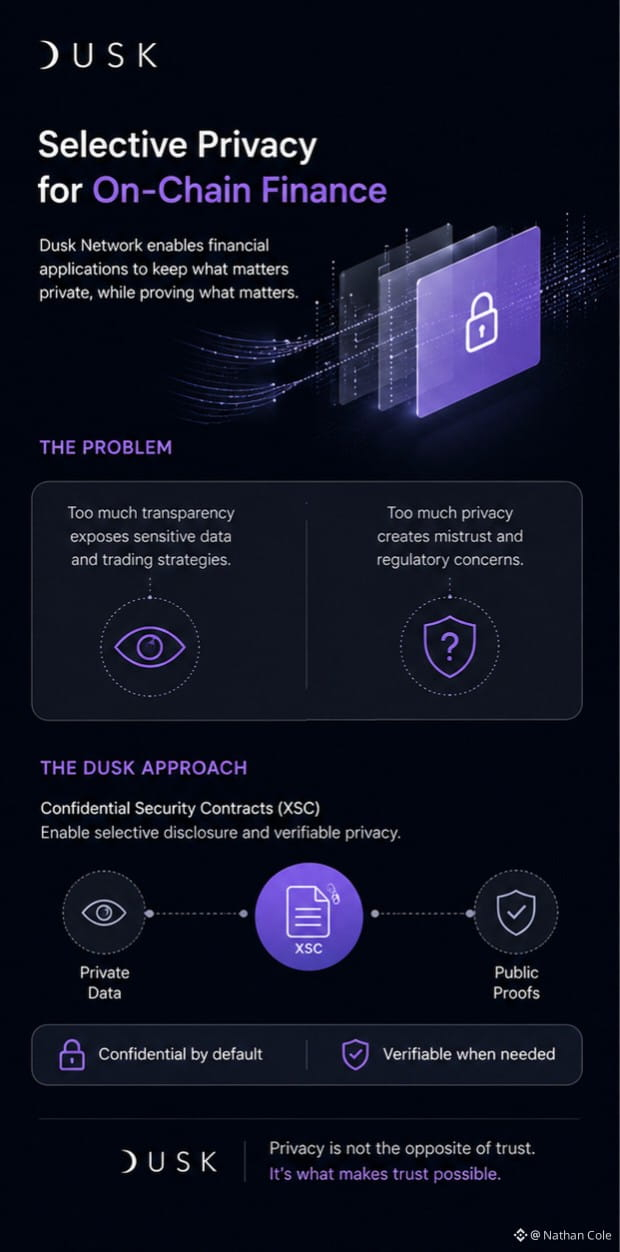
1
1
334
·
--
Bullisch
#dusk $DUSK Ich bin schon lange genug in der Krypto-Szene, um zu hören, wie dieselben Ideen alle paar Jahre mit einem neuen Namen, einem neuen Logo und sehr viel mehr Lärm um sie herum wieder auftauchen. Privatsphäre ist eine dieser Ideen. Alle sind sich einig, dass sie wichtig ist, aber tatsächlich etwas zu bauen, das Menschen auch wirklich nutzen, ist eine andere Geschichte.
Das ist es, was Dusk Network für mich interessant macht.
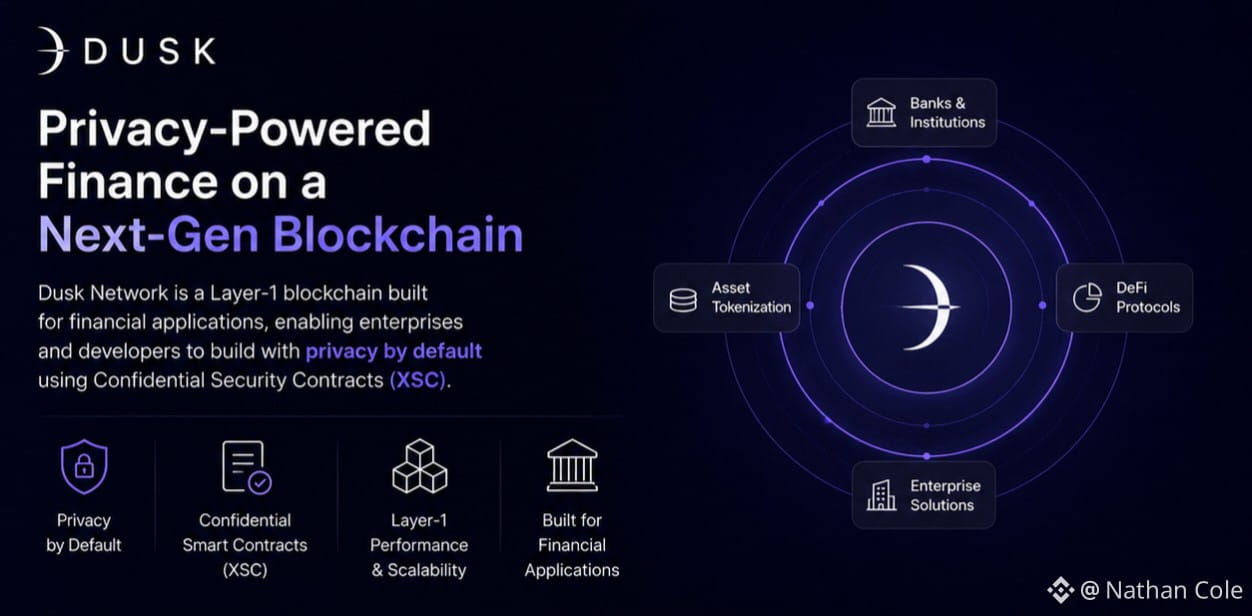
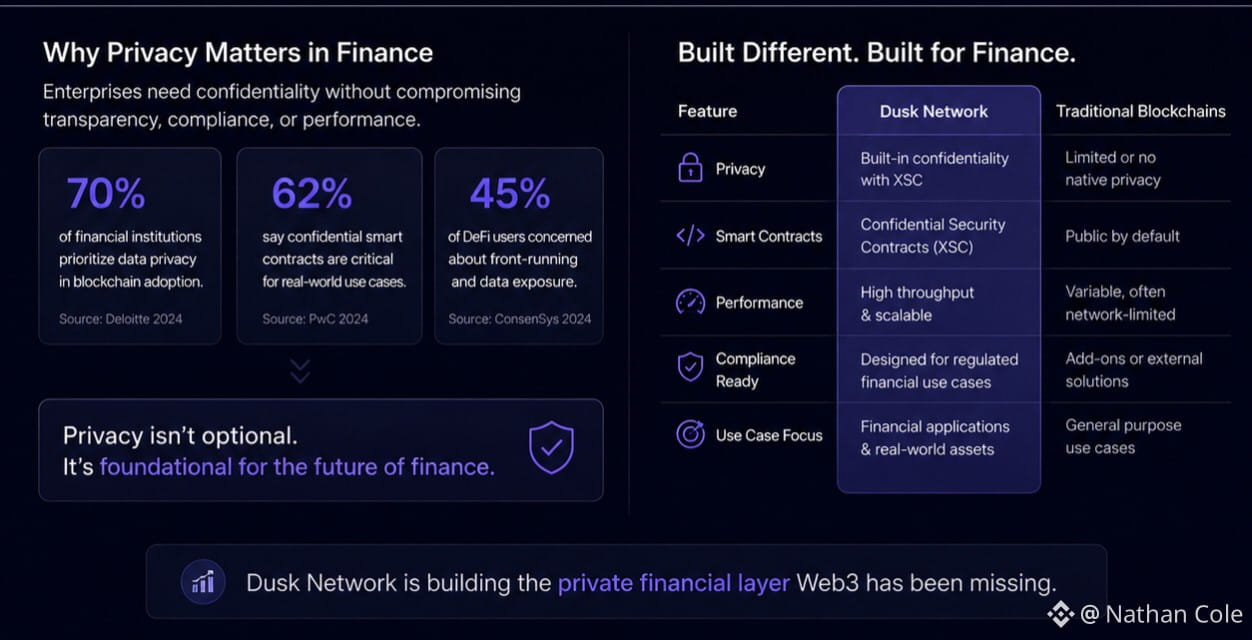
Das, was ich daran spannend finde, ist, dass Privatsphäre nicht als zusätzliche Funktion behandelt wird. Dusk baut eine Layer-1 für Finanzanwendungen mit vertraulichen Smart Contracts und seinem XSC-Standard. Das ergibt für mich Sinn. Wenn sich echte finanzielle Aktivität wirklich on-chain bewegt, kann ich mir nicht vorstellen, dass Institutionen wollen, dass jede sensible Einzelheit dort für alle sichtbar herumliegt.
Aber ich bin trotzdem vorsichtig.
Ich habe schon viele Projekte gesehen, die mit guter Technologie gestartet sind und direkt in dieselben langweiligen Probleme gelaufen sind: Regulierung, Liquidität, Akzeptanz, Integrationen und dass Menschen einfach nicht daran interessiert sind, ihre bestehenden Abläufe zu ändern. Eine clevere Blockchain löst diese Probleme nicht automatisch.
Also schaue ich mir Dusk nicht so an, als hätte das Projekt alles durchdacht. Mich interessiert eher, ob die Idee den Kontakt mit der Realität überlebt.
Vielleicht wird Privatsphäre zu einem der Dinge, die Finanz-Blockchains wirklich brauchen. Vielleicht entwickelt sich der Markt stattdessen zu etwas anderem.
Vorerst beobachte ich einfach. Nach so vielen Zyklen habe ich gelernt, dass Projekte, an die man sich lohnt zu erinnern, normalerweise nicht am lautesten sein müssen.
@Dusk_Foundation #Dusk $DUSK
{spot}(DUSKUSDT)
#dusk $DUSK Ich bin schon lange genug in der Krypto-Szene, um zu hören, wie dieselben Ideen alle paar Jahre mit einem neuen Namen, einem neuen Logo und sehr viel mehr Lärm um sie herum wieder auftauchen. Privatsphäre ist eine dieser Ideen. Alle sind sich einig, dass sie wichtig ist, aber tatsächlich etwas zu bauen, das Menschen auch wirklich nutzen, ist eine andere Geschichte.
Das ist es, was Dusk Network für mich interessant macht.
Das, was ich daran spannend finde, ist, dass Privatsphäre nicht als zusätzliche Funktion behandelt wird. Dusk baut eine Layer-1 für Finanzanwendungen mit vertraulichen Smart Contracts und seinem XSC-Standard. Das ergibt für mich Sinn. Wenn sich echte finanzielle Aktivität wirklich on-chain bewegt, kann ich mir nicht vorstellen, dass Institutionen wollen, dass jede sensible Einzelheit dort für alle sichtbar herumliegt.
Aber ich bin trotzdem vorsichtig.
Ich habe schon viele Projekte gesehen, die mit guter Technologie gestartet sind und direkt in dieselben langweiligen Probleme gelaufen sind: Regulierung, Liquidität, Akzeptanz, Integrationen und dass Menschen einfach nicht daran interessiert sind, ihre bestehenden Abläufe zu ändern. Eine clevere Blockchain löst diese Probleme nicht automatisch.
Also schaue ich mir Dusk nicht so an, als hätte das Projekt alles durchdacht. Mich interessiert eher, ob die Idee den Kontakt mit der Realität überlebt.
Vielleicht wird Privatsphäre zu einem der Dinge, die Finanz-Blockchains wirklich brauchen. Vielleicht entwickelt sich der Markt stattdessen zu etwas anderem.
Vorerst beobachte ich einfach. Nach so vielen Zyklen habe ich gelernt, dass Projekte, an die man sich lohnt zu erinnern, normalerweise nicht am lautesten sein müssen.
@Dusk #Dusk $DUSK
Das ist es, was Dusk Network für mich interessant macht.
Das, was ich daran spannend finde, ist, dass Privatsphäre nicht als zusätzliche Funktion behandelt wird. Dusk baut eine Layer-1 für Finanzanwendungen mit vertraulichen Smart Contracts und seinem XSC-Standard. Das ergibt für mich Sinn. Wenn sich echte finanzielle Aktivität wirklich on-chain bewegt, kann ich mir nicht vorstellen, dass Institutionen wollen, dass jede sensible Einzelheit dort für alle sichtbar herumliegt.
Aber ich bin trotzdem vorsichtig.
Ich habe schon viele Projekte gesehen, die mit guter Technologie gestartet sind und direkt in dieselben langweiligen Probleme gelaufen sind: Regulierung, Liquidität, Akzeptanz, Integrationen und dass Menschen einfach nicht daran interessiert sind, ihre bestehenden Abläufe zu ändern. Eine clevere Blockchain löst diese Probleme nicht automatisch.
Also schaue ich mir Dusk nicht so an, als hätte das Projekt alles durchdacht. Mich interessiert eher, ob die Idee den Kontakt mit der Realität überlebt.
Vielleicht wird Privatsphäre zu einem der Dinge, die Finanz-Blockchains wirklich brauchen. Vielleicht entwickelt sich der Markt stattdessen zu etwas anderem.
Vorerst beobachte ich einfach. Nach so vielen Zyklen habe ich gelernt, dass Projekte, an die man sich lohnt zu erinnern, normalerweise nicht am lautesten sein müssen.
@Dusk #Dusk $DUSK
1
137
·
--
Bullisch
#dusk $DUSK Ich bin schon lange genug im Kryptobereich, um zu wissen, dass das Wort „Privatsphäre“ oft viel besser klingt als die Realität dahinter. Ich habe gesehen, wie Projekte große Versprechen machen, Aufmerksamkeit auf sich ziehen und dann verschwinden, wenn Menschen begreifen, wie kompliziert das eigentliche Problem ist.
Das ist auch der Grund, warum Dusk meine Aufmerksamkeit geweckt hat.
Die Idee einer Layer-1, die um Privatsphäre für Finanzanwendungen herum gebaut ist, ergibt für mich Sinn. Die meisten Finanzaktivitäten sollten wahrscheinlich nicht erfordern, dass die ganze Welt jeden einzelnen Detail sehen kann. Dusk versucht, das mit vertraulichen Smart Contracts und seinem Confidential Security Contract-Standard anzugehen.
Aber ganz ehrlich: Ich bin immer noch skeptisch.
Privatsphäre klingt einfach, bis man echtes Geld, Institutionen, Regulierungen, Audits und normale Nutzer in das Bild setzt. Dann wird alles chaotisch. Du willst, dass Transaktionen privat sind, aber irgendjemand muss trotzdem prüfen können, dass alles legitim ist. Du willst Transparenz, wenn etwas schiefgeht, aber du willst nicht unbedingt, dass die gesamte finanzielle Historie für immer öffentlich einsehbar ist.
Ich habe gesehen, wie Krypto-Projekte die technische Seite lösen und dabei die menschliche Seite völlig unterschätzen.
Also sitze ich hier nicht und denke, Dusk hätte schon alles herausgefunden. Hat es nicht—zumindest noch nicht. Was ich interessant finde, ist, dass es an einem Problem arbeitet, das weniger im Trend liegt und mehr nach praktischem Bedarf aussieht.
Vielleicht ist das auch der Grund, warum ich hinschaue.
Nach so vielen Zyklen ist mein Interesse geringer daran, dass Projekte über die Zukunft lautstark sprechen. Ich würde lieber denjenigen zuschauen, die still daran arbeiten, etwas zu beheben, das die Menschen heute wirklich stört.
@Dusk_Foundation #Dusk $DUSK
{spot}(DUSKUSDT)
#dusk $DUSK Ich bin schon lange genug im Kryptobereich, um zu wissen, dass das Wort „Privatsphäre“ oft viel besser klingt als die Realität dahinter. Ich habe gesehen, wie Projekte große Versprechen machen, Aufmerksamkeit auf sich ziehen und dann verschwinden, wenn Menschen begreifen, wie kompliziert das eigentliche Problem ist.
Das ist auch der Grund, warum Dusk meine Aufmerksamkeit geweckt hat.
Die Idee einer Layer-1, die um Privatsphäre für Finanzanwendungen herum gebaut ist, ergibt für mich Sinn. Die meisten Finanzaktivitäten sollten wahrscheinlich nicht erfordern, dass die ganze Welt jeden einzelnen Detail sehen kann. Dusk versucht, das mit vertraulichen Smart Contracts und seinem Confidential Security Contract-Standard anzugehen.
Aber ganz ehrlich: Ich bin immer noch skeptisch.
Privatsphäre klingt einfach, bis man echtes Geld, Institutionen, Regulierungen, Audits und normale Nutzer in das Bild setzt. Dann wird alles chaotisch. Du willst, dass Transaktionen privat sind, aber irgendjemand muss trotzdem prüfen können, dass alles legitim ist. Du willst Transparenz, wenn etwas schiefgeht, aber du willst nicht unbedingt, dass die gesamte finanzielle Historie für immer öffentlich einsehbar ist.
Ich habe gesehen, wie Krypto-Projekte die technische Seite lösen und dabei die menschliche Seite völlig unterschätzen.
Also sitze ich hier nicht und denke, Dusk hätte schon alles herausgefunden. Hat es nicht—zumindest noch nicht. Was ich interessant finde, ist, dass es an einem Problem arbeitet, das weniger im Trend liegt und mehr nach praktischem Bedarf aussieht.
Vielleicht ist das auch der Grund, warum ich hinschaue.
Nach so vielen Zyklen ist mein Interesse geringer daran, dass Projekte über die Zukunft lautstark sprechen. Ich würde lieber denjenigen zuschauen, die still daran arbeiten, etwas zu beheben, das die Menschen heute wirklich stört.
@Dusk #Dusk $DUSK
Das ist auch der Grund, warum Dusk meine Aufmerksamkeit geweckt hat.
Die Idee einer Layer-1, die um Privatsphäre für Finanzanwendungen herum gebaut ist, ergibt für mich Sinn. Die meisten Finanzaktivitäten sollten wahrscheinlich nicht erfordern, dass die ganze Welt jeden einzelnen Detail sehen kann. Dusk versucht, das mit vertraulichen Smart Contracts und seinem Confidential Security Contract-Standard anzugehen.
Aber ganz ehrlich: Ich bin immer noch skeptisch.
Privatsphäre klingt einfach, bis man echtes Geld, Institutionen, Regulierungen, Audits und normale Nutzer in das Bild setzt. Dann wird alles chaotisch. Du willst, dass Transaktionen privat sind, aber irgendjemand muss trotzdem prüfen können, dass alles legitim ist. Du willst Transparenz, wenn etwas schiefgeht, aber du willst nicht unbedingt, dass die gesamte finanzielle Historie für immer öffentlich einsehbar ist.
Ich habe gesehen, wie Krypto-Projekte die technische Seite lösen und dabei die menschliche Seite völlig unterschätzen.
Also sitze ich hier nicht und denke, Dusk hätte schon alles herausgefunden. Hat es nicht—zumindest noch nicht. Was ich interessant finde, ist, dass es an einem Problem arbeitet, das weniger im Trend liegt und mehr nach praktischem Bedarf aussieht.
Vielleicht ist das auch der Grund, warum ich hinschaue.
Nach so vielen Zyklen ist mein Interesse geringer daran, dass Projekte über die Zukunft lautstark sprechen. Ich würde lieber denjenigen zuschauen, die still daran arbeiten, etwas zu beheben, das die Menschen heute wirklich stört.
@Dusk #Dusk $DUSK
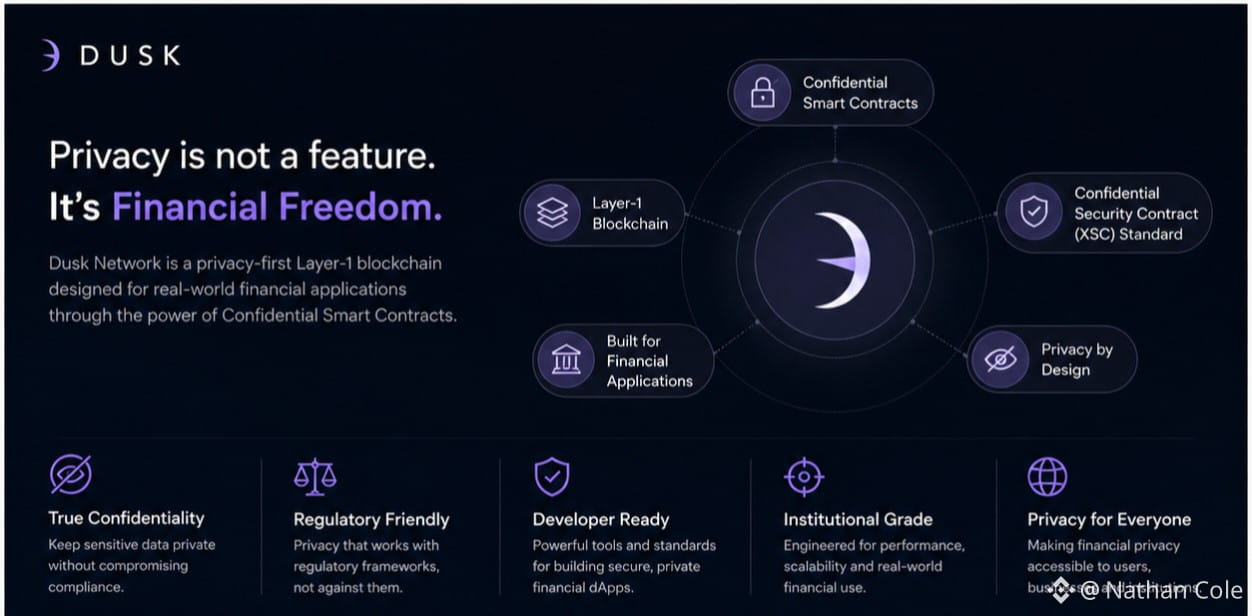
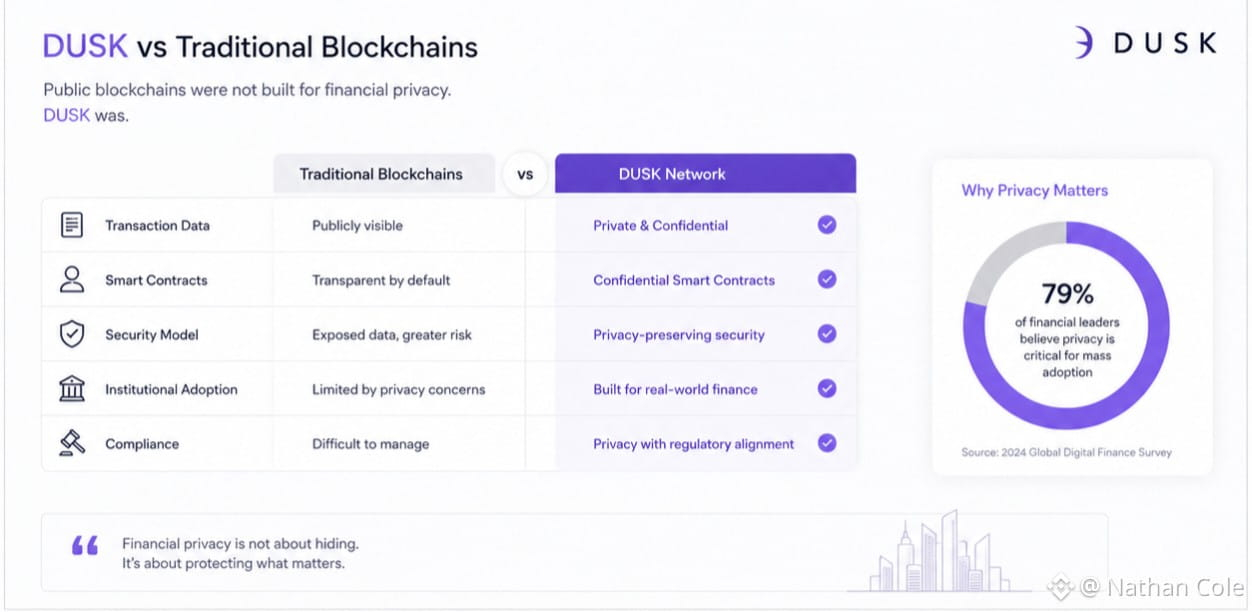
1
1
117
·
--
Bullisch
#dusk $DUSK Ich beobachte Kryptowährungen seit Jahren, und ehrlich gesagt bin ich ein wenig müde davon, immer wieder dieselben Worte aus jedem Zyklus aufs Neue zu hören.
Privatsphäre ist eines davon.
Alle paar Jahre erinnert sich plötzlich jeder daran, dass finanzielle Aktivitäten wahrscheinlich nicht vollständig der Welt offengelegt werden sollten. Dann tauchen eine Reihe von Projekten auf, machen große Versprechen, und irgendwann geht das Gespräch woanders weiter.
Dusk Network wirkt auf mich ein bisschen anders, vor allem, weil das Problem, das es verfolgt, nicht nur „Transaktionen verbergen“ ist. Es baut eine Layer-1 für Finanzanwendungen – mit vertraulichen Smart Contracts und seinem XSC-Standard.
Aber ich bin immer noch nicht allein von der Idee überzeugt.
Finanzen sind chaotisch. Man braucht Privatsphäre, aber manchmal muss man auch beweisen können, dass etwas passiert ist. Regulierungsbehörden wollen Einblick. Nutzer wollen Vertraulichkeit. Unternehmen wollen beides – irgendwie. Genau dort wird es normalerweise kompliziert.
Ich habe schon genug Projekte gesehen, die auf dem Papier beeindruckend wirkten und deutlich weniger beeindruckend wurden, sobald in der realen Welt Reibung auftritt.
Deshalb erwarte ich nicht, dass Dusk die finanzielle Privatsphäre „magisch“ repariert. Mich interessiert eher, ob es Privatsphäre so praktikabel machen kann, dass Menschen nicht ständig über die Technologie dahinter nachdenken müssen.
Vielleicht ist das sogar der bessere Test.
Nicht ob Dusk eine weitere aufregende Krypto-Erzählung erschaffen kann, sondern ob es leise ein Problem lösen kann, das die Menschen bereits haben.
Nach genug vielen Zyklen habe ich angefangen, Projekte zu schätzen, die nicht ganz so laut schreien müssen.
@Dusk_Foundation #Dusk $DUSK
{spot}(DUSKUSDT)
#dusk $DUSK Ich beobachte Kryptowährungen seit Jahren, und ehrlich gesagt bin ich ein wenig müde davon, immer wieder dieselben Worte aus jedem Zyklus aufs Neue zu hören.
Privatsphäre ist eines davon.
Alle paar Jahre erinnert sich plötzlich jeder daran, dass finanzielle Aktivitäten wahrscheinlich nicht vollständig der Welt offengelegt werden sollten. Dann tauchen eine Reihe von Projekten auf, machen große Versprechen, und irgendwann geht das Gespräch woanders weiter.
Dusk Network wirkt auf mich ein bisschen anders, vor allem, weil das Problem, das es verfolgt, nicht nur „Transaktionen verbergen“ ist. Es baut eine Layer-1 für Finanzanwendungen – mit vertraulichen Smart Contracts und seinem XSC-Standard.
Aber ich bin immer noch nicht allein von der Idee überzeugt.
Finanzen sind chaotisch. Man braucht Privatsphäre, aber manchmal muss man auch beweisen können, dass etwas passiert ist. Regulierungsbehörden wollen Einblick. Nutzer wollen Vertraulichkeit. Unternehmen wollen beides – irgendwie. Genau dort wird es normalerweise kompliziert.
Ich habe schon genug Projekte gesehen, die auf dem Papier beeindruckend wirkten und deutlich weniger beeindruckend wurden, sobald in der realen Welt Reibung auftritt.
Deshalb erwarte ich nicht, dass Dusk die finanzielle Privatsphäre „magisch“ repariert. Mich interessiert eher, ob es Privatsphäre so praktikabel machen kann, dass Menschen nicht ständig über die Technologie dahinter nachdenken müssen.
Vielleicht ist das sogar der bessere Test.
Nicht ob Dusk eine weitere aufregende Krypto-Erzählung erschaffen kann, sondern ob es leise ein Problem lösen kann, das die Menschen bereits haben.
Nach genug vielen Zyklen habe ich angefangen, Projekte zu schätzen, die nicht ganz so laut schreien müssen.
@Dusk #Dusk $DUSK
Privatsphäre ist eines davon.
Alle paar Jahre erinnert sich plötzlich jeder daran, dass finanzielle Aktivitäten wahrscheinlich nicht vollständig der Welt offengelegt werden sollten. Dann tauchen eine Reihe von Projekten auf, machen große Versprechen, und irgendwann geht das Gespräch woanders weiter.
Dusk Network wirkt auf mich ein bisschen anders, vor allem, weil das Problem, das es verfolgt, nicht nur „Transaktionen verbergen“ ist. Es baut eine Layer-1 für Finanzanwendungen – mit vertraulichen Smart Contracts und seinem XSC-Standard.
Aber ich bin immer noch nicht allein von der Idee überzeugt.
Finanzen sind chaotisch. Man braucht Privatsphäre, aber manchmal muss man auch beweisen können, dass etwas passiert ist. Regulierungsbehörden wollen Einblick. Nutzer wollen Vertraulichkeit. Unternehmen wollen beides – irgendwie. Genau dort wird es normalerweise kompliziert.
Ich habe schon genug Projekte gesehen, die auf dem Papier beeindruckend wirkten und deutlich weniger beeindruckend wurden, sobald in der realen Welt Reibung auftritt.
Deshalb erwarte ich nicht, dass Dusk die finanzielle Privatsphäre „magisch“ repariert. Mich interessiert eher, ob es Privatsphäre so praktikabel machen kann, dass Menschen nicht ständig über die Technologie dahinter nachdenken müssen.
Vielleicht ist das sogar der bessere Test.
Nicht ob Dusk eine weitere aufregende Krypto-Erzählung erschaffen kann, sondern ob es leise ein Problem lösen kann, das die Menschen bereits haben.
Nach genug vielen Zyklen habe ich angefangen, Projekte zu schätzen, die nicht ganz so laut schreien müssen.
@Dusk #Dusk $DUSK
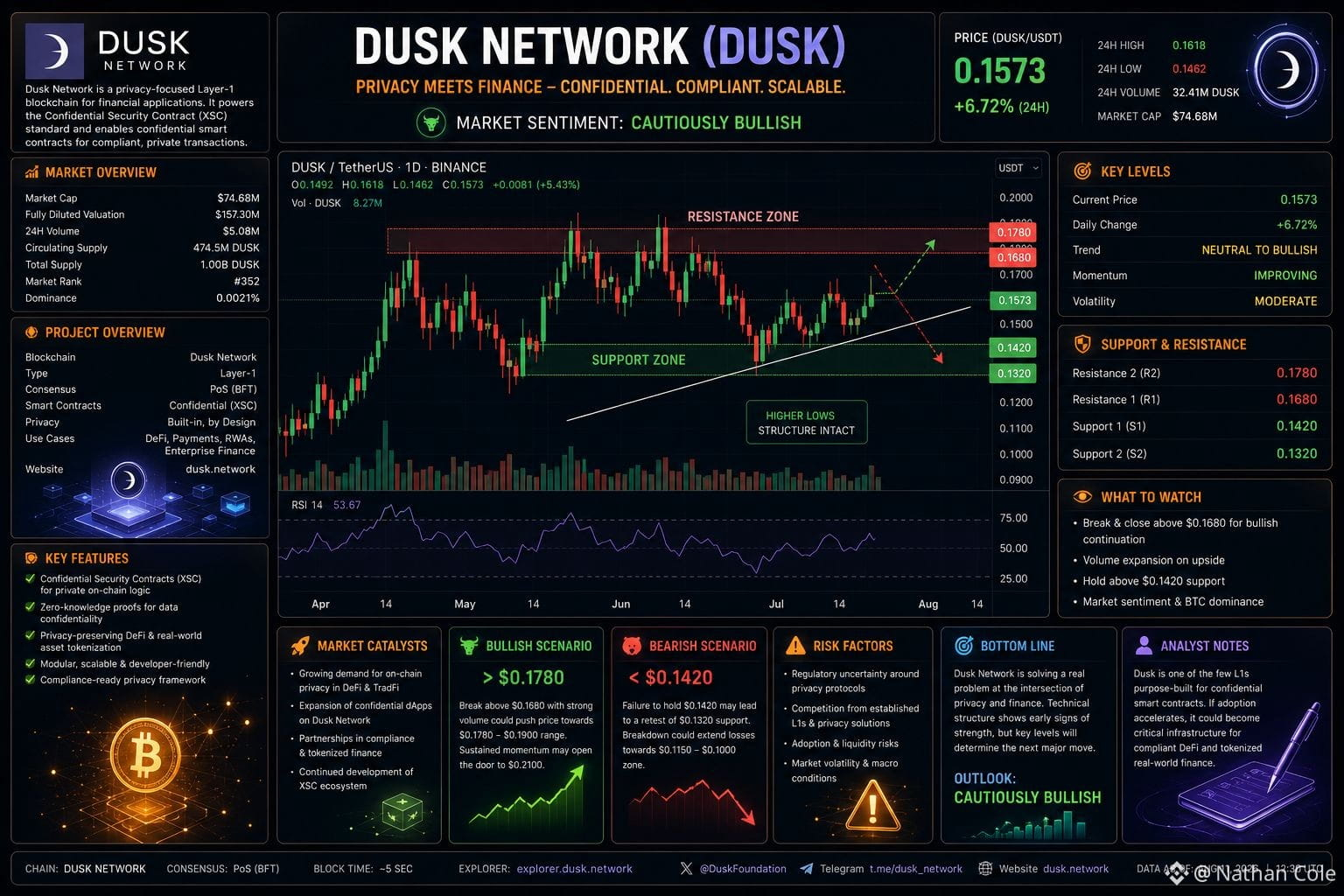
2
1
136
·
--
Bullisch
#baby $BABY Kürzlich habe ich erkannt, dass mich viel weniger interessiert, was Krypto werden könnte, als vielmehr das, was tatsächlich überlebt, wenn die Begeisterung verflogen ist. Nach so vielen Zyklen habe ich erlebt, wie polierte Ideen fast genauso schnell verschwanden, wie sie auftauchten. Deshalb ist Babylon bei mir hängen geblieben – nicht, weil ich glaube, dass es garantiert gelingt, sondern weil es eine Frage stellt, die ich schon seit Jahren still mit mir herumtrage.
Bitcoin wirkt immer wie das Asset, dem man am meisten vertraut, doch oft sitzt es dann abseits, während neuere Netzwerke mit allem Möglichen experimentieren. Babylons Idee, dass BTC dabei hilft, PoS-Ketten abzusichern, ohne dabei die Selbstverwahrung aufzugeben, klingt durchdacht. Aber ich kenne die Materie lange genug, um zu wissen: Der schwierigste Teil ist nicht, etwas Kluges zu bauen. Entscheidend ist, sicherzustellen, dass die Leute es auch dann noch nutzen wollen, wenn die Anreize nicht mehr das ganze Gespräch bestimmen.
Vielleicht kommt meine Zurückhaltung daher. Krypto hat die Eigenart, jede technische Verbesserung so klingen zu lassen, als wäre sie das fehlende Puzzleteil. Meistens ist sie das nicht. Echte Adoption verläuft normalerweise langsamer, und Menschen verhalten sich selten so, wie Whitepaper es erwarten.
Ich sage nicht, dass Babylon alles verändert. Ich weiß es ehrlich gesagt nicht. Aber irgendetwas daran fühlt sich geerdet an – im Gegensatz zum üblichen Lärm. Es versucht nicht, Bitcoin über Nacht neu zu erfinden. Es möchte Bitcoin vielmehr ein wenig nützlicher machen, ohne von den Inhabern zu verlangen, aufzugeben, was ihnen ursprünglich Vertrauen gegeben hat.
Vielleicht reicht das, um weiter zuzuschauen. Nicht, weil ich überzeugt bin, sondern weil ich gelernt habe, dass die leiseren Ideen manchmal die längste Aufmerksamkeit verdienen.
@babylonlabs_io #Baby $BABY
{spot}(BABYUSDT)
#baby $BABY Kürzlich habe ich erkannt, dass mich viel weniger interessiert, was Krypto werden könnte, als vielmehr das, was tatsächlich überlebt, wenn die Begeisterung verflogen ist. Nach so vielen Zyklen habe ich erlebt, wie polierte Ideen fast genauso schnell verschwanden, wie sie auftauchten. Deshalb ist Babylon bei mir hängen geblieben – nicht, weil ich glaube, dass es garantiert gelingt, sondern weil es eine Frage stellt, die ich schon seit Jahren still mit mir herumtrage.
Bitcoin wirkt immer wie das Asset, dem man am meisten vertraut, doch oft sitzt es dann abseits, während neuere Netzwerke mit allem Möglichen experimentieren. Babylons Idee, dass BTC dabei hilft, PoS-Ketten abzusichern, ohne dabei die Selbstverwahrung aufzugeben, klingt durchdacht. Aber ich kenne die Materie lange genug, um zu wissen: Der schwierigste Teil ist nicht, etwas Kluges zu bauen. Entscheidend ist, sicherzustellen, dass die Leute es auch dann noch nutzen wollen, wenn die Anreize nicht mehr das ganze Gespräch bestimmen.
Vielleicht kommt meine Zurückhaltung daher. Krypto hat die Eigenart, jede technische Verbesserung so klingen zu lassen, als wäre sie das fehlende Puzzleteil. Meistens ist sie das nicht. Echte Adoption verläuft normalerweise langsamer, und Menschen verhalten sich selten so, wie Whitepaper es erwarten.
Ich sage nicht, dass Babylon alles verändert. Ich weiß es ehrlich gesagt nicht. Aber irgendetwas daran fühlt sich geerdet an – im Gegensatz zum üblichen Lärm. Es versucht nicht, Bitcoin über Nacht neu zu erfinden. Es möchte Bitcoin vielmehr ein wenig nützlicher machen, ohne von den Inhabern zu verlangen, aufzugeben, was ihnen ursprünglich Vertrauen gegeben hat.
Vielleicht reicht das, um weiter zuzuschauen. Nicht, weil ich überzeugt bin, sondern weil ich gelernt habe, dass die leiseren Ideen manchmal die längste Aufmerksamkeit verdienen.
@BabylonLabs_io #Baby $BABY
Bitcoin wirkt immer wie das Asset, dem man am meisten vertraut, doch oft sitzt es dann abseits, während neuere Netzwerke mit allem Möglichen experimentieren. Babylons Idee, dass BTC dabei hilft, PoS-Ketten abzusichern, ohne dabei die Selbstverwahrung aufzugeben, klingt durchdacht. Aber ich kenne die Materie lange genug, um zu wissen: Der schwierigste Teil ist nicht, etwas Kluges zu bauen. Entscheidend ist, sicherzustellen, dass die Leute es auch dann noch nutzen wollen, wenn die Anreize nicht mehr das ganze Gespräch bestimmen.
Vielleicht kommt meine Zurückhaltung daher. Krypto hat die Eigenart, jede technische Verbesserung so klingen zu lassen, als wäre sie das fehlende Puzzleteil. Meistens ist sie das nicht. Echte Adoption verläuft normalerweise langsamer, und Menschen verhalten sich selten so, wie Whitepaper es erwarten.
Ich sage nicht, dass Babylon alles verändert. Ich weiß es ehrlich gesagt nicht. Aber irgendetwas daran fühlt sich geerdet an – im Gegensatz zum üblichen Lärm. Es versucht nicht, Bitcoin über Nacht neu zu erfinden. Es möchte Bitcoin vielmehr ein wenig nützlicher machen, ohne von den Inhabern zu verlangen, aufzugeben, was ihnen ursprünglich Vertrauen gegeben hat.
Vielleicht reicht das, um weiter zuzuschauen. Nicht, weil ich überzeugt bin, sondern weil ich gelernt habe, dass die leiseren Ideen manchmal die längste Aufmerksamkeit verdienen.
@BabylonLabs_io #Baby $BABY
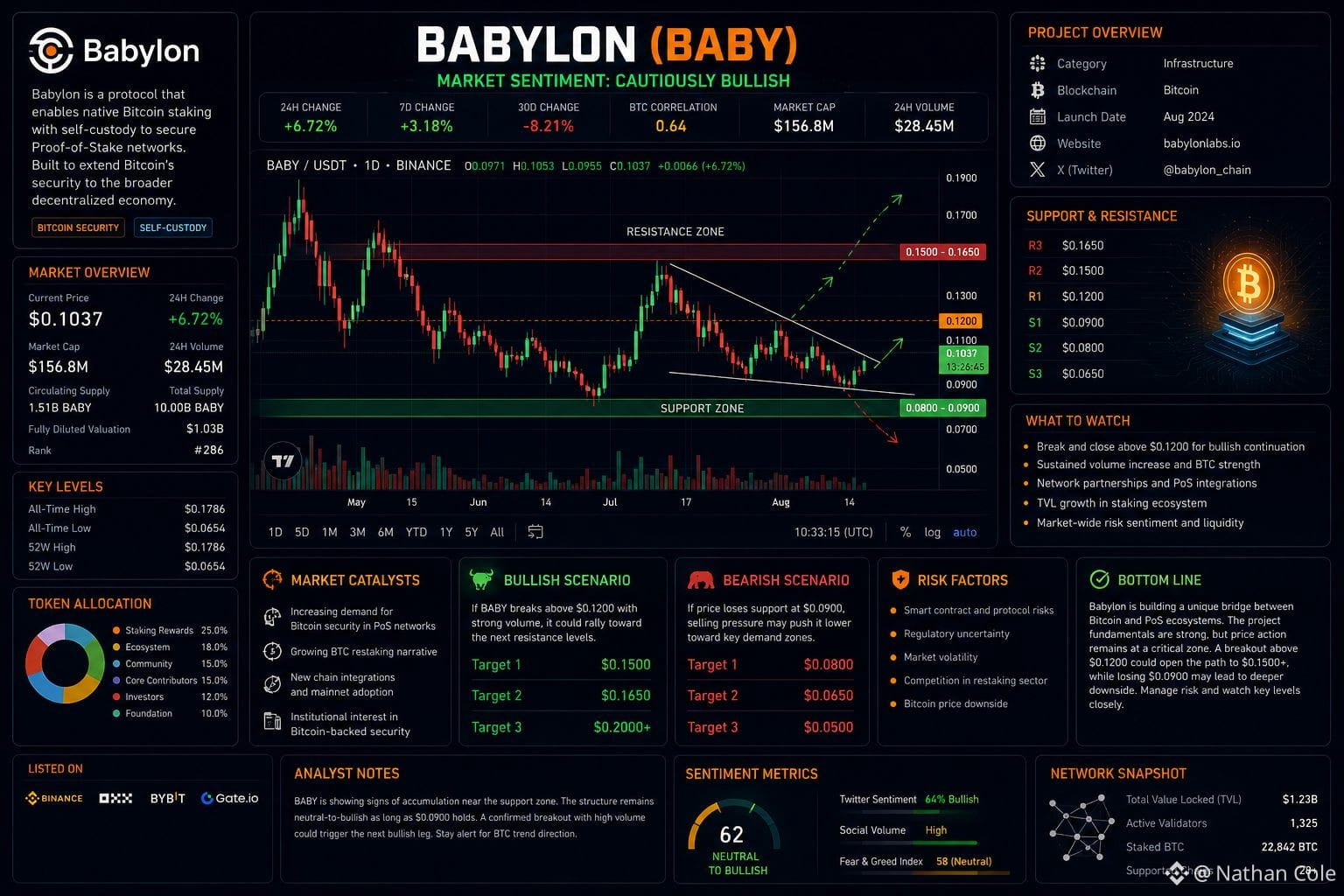
3
108
·
--
🎙️ Die Wahrscheinlichkeit einer Fed-Zinserhöhung im September schießt auf 82% hoch! Risikofreier Zinssatz steigt stark, Trump spricht sich weiter aus und trifft erneut den Iran; wie geht es für den Krypto-Markt als Nächstes weiter?
Beenden
03 h 21 m 10 s
10.9k
31
74
·
--
🎙️ Erhaltung des ökologischen Gleichgewichts und Bau des Binance-Platzes

Beenden
04 h 58 m 51 s
12k
29
65
·
--
Bullisch
#baby $BABY Manche Ideen bleiben länger in meinem Kopf als andere, und Babylon war eine davon. Nicht, weil ich glaube, dass es garantiert funktioniert, sondern weil es eine Frage aufwirft, über die ich schon lange nachdenke. Kann Bitcoin tatsächlich eine größere Rolle spielen, ohne dass man die Leute dazu bringt, es nicht mehr wie Bitcoin zu behandeln?
Ich bin alt genug, um zu sehen, wie in jedem Zyklus eine neue Art entsteht, BTC „freizuschalten“. Die meisten dieser Ideen sahen großartig aus, bis echte Menschen anfingen, sie zu nutzen. Dann zeigten sich die Kompromisse, die Risiken wurden offensichtlich, und die Begeisterung verlagerte sich still irgendwohin anders. Deshalb bin ich heute vorsichtiger. Ich werde nicht einfach deshalb begeistert, weil sich etwas clever anhört.
Was ich an Babylon interessant finde, ist nicht, dass es mehr Rendite verspricht oder eine neue Erzählung liefert. Sondern dass es die Tatsache zu respektieren scheint, dass Bitcoin-Inhaber meist aus gutem Grund sehr schützend sind. Die Verwahrung beizubehalten und gleichzeitig zur Netzwerksicherheit beizutragen, fühlt sich nach einer durchdachteren Richtung an – auch wenn es weiterhin offene Fragen mit sich bringt.
Vielleicht funktioniert es. Vielleicht werden sich die Kompromisse am Ende als größer herausstellen, als sie heute wirken. Krypto hat eine Art, alle zu demütigen, die zu selbstsicher werden. Ich habe das oft genug beobachtet, sodass ich nicht mehr das Bedürfnis habe, Seiten zu wählen.
Also schaue ich nur zu. Keine großen Erwartungen, keine dramatischen Prognosen. Manchmal sind die Projekte, die es wert sind, Beachtung zu finden, nicht die, die den meisten Lärm machen. Es sind die, die still versuchen, ein altes Problem zu lösen, ohne so zu tun, als wäre es ganz einfach. Vielleicht ist das der Grund, warum Babylon bei mir auf dem Radar bleibt.
@babylonlabs_io #Baby $BABY
{spot}(BABYUSDT)
#baby $BABY Manche Ideen bleiben länger in meinem Kopf als andere, und Babylon war eine davon. Nicht, weil ich glaube, dass es garantiert funktioniert, sondern weil es eine Frage aufwirft, über die ich schon lange nachdenke. Kann Bitcoin tatsächlich eine größere Rolle spielen, ohne dass man die Leute dazu bringt, es nicht mehr wie Bitcoin zu behandeln?
Ich bin alt genug, um zu sehen, wie in jedem Zyklus eine neue Art entsteht, BTC „freizuschalten“. Die meisten dieser Ideen sahen großartig aus, bis echte Menschen anfingen, sie zu nutzen. Dann zeigten sich die Kompromisse, die Risiken wurden offensichtlich, und die Begeisterung verlagerte sich still irgendwohin anders. Deshalb bin ich heute vorsichtiger. Ich werde nicht einfach deshalb begeistert, weil sich etwas clever anhört.
Was ich an Babylon interessant finde, ist nicht, dass es mehr Rendite verspricht oder eine neue Erzählung liefert. Sondern dass es die Tatsache zu respektieren scheint, dass Bitcoin-Inhaber meist aus gutem Grund sehr schützend sind. Die Verwahrung beizubehalten und gleichzeitig zur Netzwerksicherheit beizutragen, fühlt sich nach einer durchdachteren Richtung an – auch wenn es weiterhin offene Fragen mit sich bringt.
Vielleicht funktioniert es. Vielleicht werden sich die Kompromisse am Ende als größer herausstellen, als sie heute wirken. Krypto hat eine Art, alle zu demütigen, die zu selbstsicher werden. Ich habe das oft genug beobachtet, sodass ich nicht mehr das Bedürfnis habe, Seiten zu wählen.
Also schaue ich nur zu. Keine großen Erwartungen, keine dramatischen Prognosen. Manchmal sind die Projekte, die es wert sind, Beachtung zu finden, nicht die, die den meisten Lärm machen. Es sind die, die still versuchen, ein altes Problem zu lösen, ohne so zu tun, als wäre es ganz einfach. Vielleicht ist das der Grund, warum Babylon bei mir auf dem Radar bleibt.
@BabylonLabs_io #Baby $BABY
Ich bin alt genug, um zu sehen, wie in jedem Zyklus eine neue Art entsteht, BTC „freizuschalten“. Die meisten dieser Ideen sahen großartig aus, bis echte Menschen anfingen, sie zu nutzen. Dann zeigten sich die Kompromisse, die Risiken wurden offensichtlich, und die Begeisterung verlagerte sich still irgendwohin anders. Deshalb bin ich heute vorsichtiger. Ich werde nicht einfach deshalb begeistert, weil sich etwas clever anhört.
Was ich an Babylon interessant finde, ist nicht, dass es mehr Rendite verspricht oder eine neue Erzählung liefert. Sondern dass es die Tatsache zu respektieren scheint, dass Bitcoin-Inhaber meist aus gutem Grund sehr schützend sind. Die Verwahrung beizubehalten und gleichzeitig zur Netzwerksicherheit beizutragen, fühlt sich nach einer durchdachteren Richtung an – auch wenn es weiterhin offene Fragen mit sich bringt.
Vielleicht funktioniert es. Vielleicht werden sich die Kompromisse am Ende als größer herausstellen, als sie heute wirken. Krypto hat eine Art, alle zu demütigen, die zu selbstsicher werden. Ich habe das oft genug beobachtet, sodass ich nicht mehr das Bedürfnis habe, Seiten zu wählen.
Also schaue ich nur zu. Keine großen Erwartungen, keine dramatischen Prognosen. Manchmal sind die Projekte, die es wert sind, Beachtung zu finden, nicht die, die den meisten Lärm machen. Es sind die, die still versuchen, ein altes Problem zu lösen, ohne so zu tun, als wäre es ganz einfach. Vielleicht ist das der Grund, warum Babylon bei mir auf dem Radar bleibt.
@BabylonLabs_io #Baby $BABY
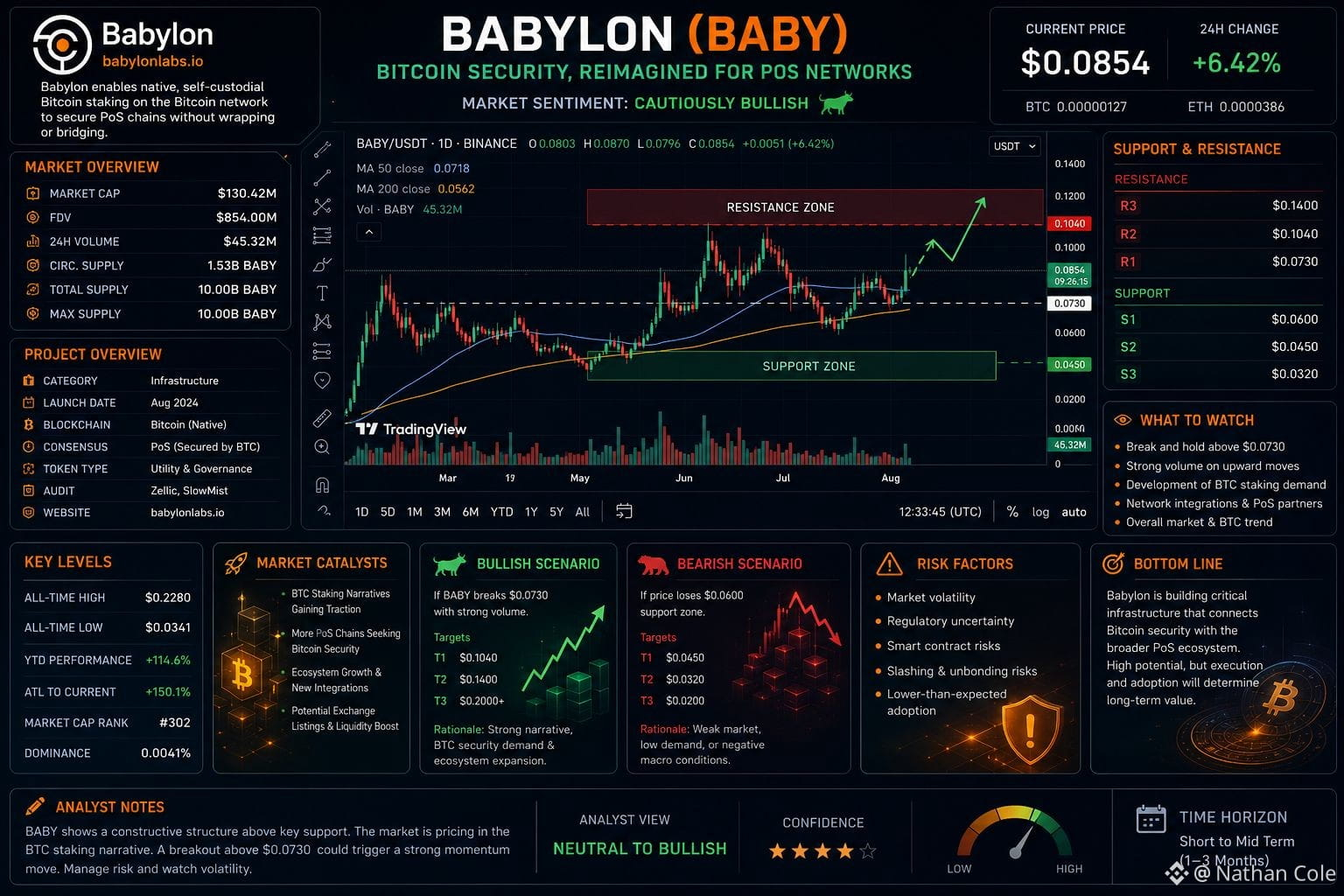
1
184
Anmelden und weiter Inhalte entdecken
Krypto-Nutzer weltweit auf Binance Square kennenlernen
⚡️ Bleib in Sachen Krypto stets am Puls.
💬 Die weltgrößte Kryptobörse vertraut darauf.
👍 Erhalte verlässliche Einblicke von verifizierten Creators.
E-Mail-Adresse/Telefonnummer
Trendthemen
BitcoinRejectedAt$87K
19,515 Aufrufe
55 Kommentare
$BTC Update 🚨 🐼 Überspringt diese Warnung auf eigene Gefahr ⚠️
BTC klopft gerade an die 87K, als würde es den Platz schon besitzen 😂 Die Bullen sind wach… aber BTC macht normalerweise erst mal ein paar Leute raus, bevor die echte Bewegung kommt.
Insgesamt bricht BTC aus, und das Bild auf höheren Zeitrahmen bleibt weiterhin bullish. Die Struktur im 4H- und Daily-Chart ist stark, der Kurs hält sich über den wichtigen Durchschnitten, und der Momentum unterstützt die Bewegung weiterhin.
83K war ehrlich gesagt eine wunderschöne Kaufzone. Genau dort ergab das Chance/Risiko-Verhältnis Sinn. Wer dort gekauft hat, sitzt jetzt schon entspannt im Profit
Jetzt zum Hauptteil
BTC liegt direkt unter dem vorherigen Hoch bei ca. 87K. Daher würde ich nicht überrascht sein, wenn wir zuerst einen kleinen Downside-Liquiditäts-Grab sehen: einige späte Longs ausspülen, und dann entscheidet BTC, ob es wirklich den echten Ausbruch will.
Für den heutigen Scalpsetup ist das mein Plan 👇
BTC SHORT Scalp Einstieg: 86.550–86.900
TP1: 85.650
TP2: 84.850
TP3: 84.050
SL: 87.800
Ich mag das nur, wenn es wirklich nahe an den Hochs eine saubere Ablehnung gibt. Kein blindes Shorten.
Für das größere Bild: Ich bin weiterhin bullish, solange der Bereich 82,5K–83K hält. Wenn BTC einen sauberen Ausbruch hinbekommt und anfängt, über 87,4K zu akzeptieren, dann ist diese ganze Short-Idee hinfällig und der nächste bullische Schub wird viel interessanter.
ALSO EIGENTLICH IST OKTOBER DER HISTORISCH BULLISCHE MONAT FÜR BITCOIN.
MACH IMMER DEINE EIGENE RECHERCHE (DYOR)
Panda Traders
·31 Likes
·12.8k Aufrufe
FedOctoberRateHikeOddsFallTo17%
14,648 Aufrufe
278 Kommentare
NvidiaHitsRecordHighUp2.4%
3,111 Aufrufe
176 Kommentare