
BeeOneC
38 Beiträge
BeeOneC
Melden
Nutzer blockieren
4 Following
23 Follower
26 Like gegeben
Beiträge
Alle
Zitierungen
·
--
Übersetzung ansehen
Bitcoin Core’s latest maintenance releases are about node uptime—not a change to Bitcoin’s rules. Versions 30.5 and 31.3, published Nov. 20, fix CVE-2026-117348, a medium-severity flaw that could temporarily stall an affected node’s processing of blocks and transactions. A crafted announcement could tie it up for over a dozen seconds; the fix processes each transaction only once per message.
Interesting bit: Project Loupe’s automated LLM scan flagged the issue, then another researcher reported it independently and a developer verified it. Version 32.1 already has the fix; the retired 29.x line will not receive one.
$BTC
Sources: Bitcoin Core advisory: https://bitcoincore.org/en/2026/11/20/disclose-orphan-inv-stall/ | CoinDesk: https://www.coindesk.com/markets/2026/11/21/bitcoin-nodes-could-be-stalled-by-repeating-one-id-50-000-times-ai-found-the-bug

67
·
--
Übersetzung ansehen
Tokenized U.S. shares may get a new onchain route—but “announced” ≠ “live.”
Fairmint says its proposed Fairmint TSV would connect AMMs to issuer-authorized shares, starting on Canton, with Ethereum planned next. The twist: a registered transfer agent would maintain the official ownership record onchain. Tradecraft is the first AMM named.
Reality check: trading has not started; no launch date, initial shares, or eligible users have been announced. SEC Innovation Exemption steps and operational readiness still come first.
Worth watching as a real-world-asset use case. $CC $ETH
Sources: Fairmint official release: https://www.globenewswire.com/news-release/2026/11/20/3407521/0/en/fairmint-announces-plans-for-fairmint-tsv-a-venue-connecting-amms-to-issuer-sponsored-tokenized-shares-with-tradecraft-as-first-amm.html | CoinDesk: https://www.coindesk.com/business/2026/11/20/fairmint-plans-tokenized-stock-venue-on-canton-ethereum-under-sec-experiment

109
·
--
Übersetzung ansehen
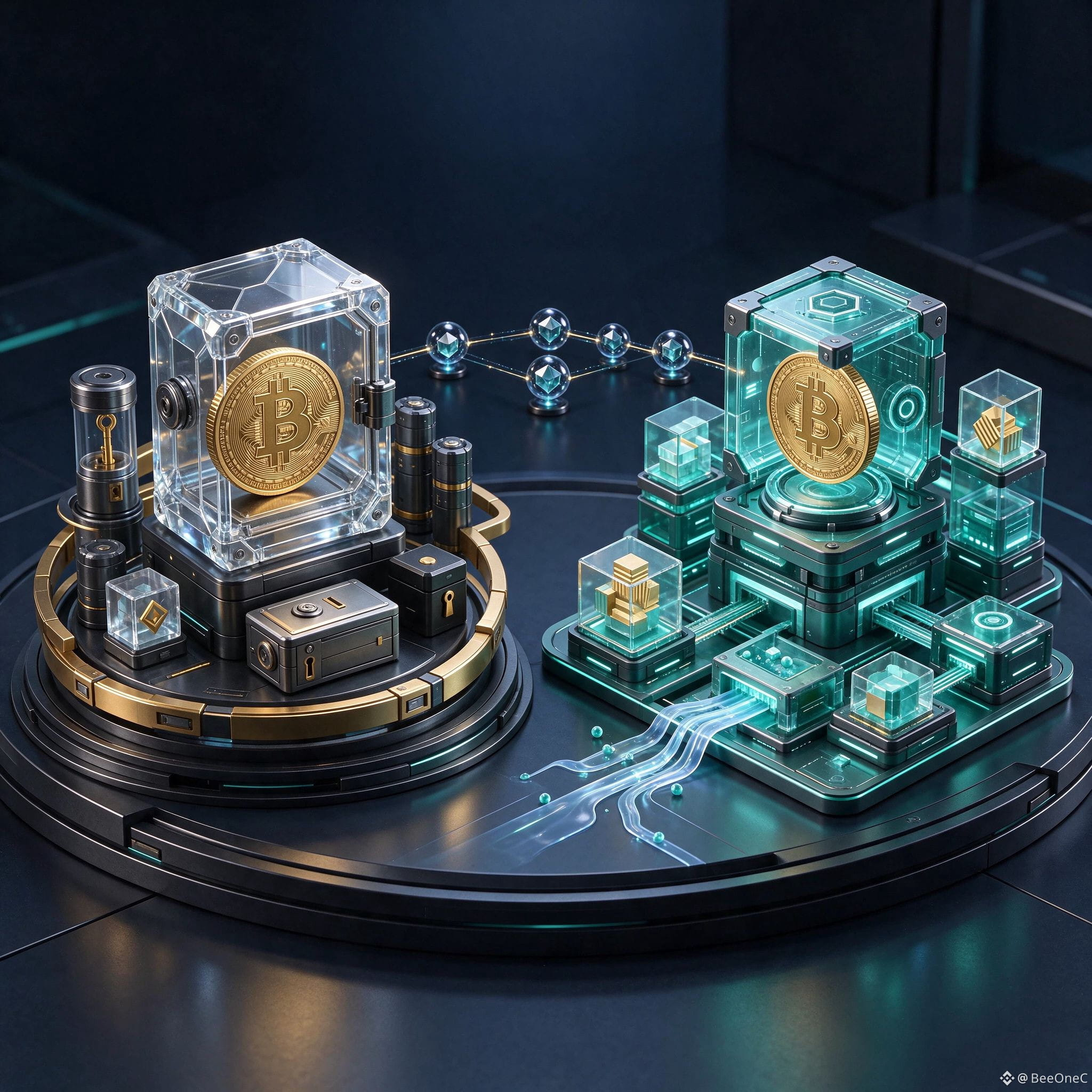
Bitcoin-backed borrowing just went live on Sui—but the interesting part is what’s actually live.
Hashi mints hBTC, a 1:1 BTC-backed asset on Sui while the underlying BTC stays on Bitcoin. One concrete route is already running: use hBTC as collateral on Fluid to borrow USDC.
Sui says 20+ participants are involved, but that doesn’t mean 20 lending markets are live; several integrations are still rolling out. The real test is whether deposits and usage follow the launch headlines.
$BTC $SUI
Sources: Sui Foundation: https://www.sui.io/blog/hashi-mainnet-is-live | crypto.news: https://crypto.news/sui-brings-bitcoin-lending-to-mainnet-through-hashi-and-fluid/
150
·
--
Übersetzung ansehen
Solana’s 2027 roadmap has a big headline number, but the detail matters: Anza targets double network compute capacity and 80% fewer compute units for token-account transactions.
That 80% is about compute required—not an automatic 80% cut to every user’s fee. The plan also sketches native vector processing for on-chain models and raising the per-transaction account limit from 64 to 96.
This is a roadmap, not shipped performance. The real story next year will be what actually lands, and whether the network gets more efficient without making the protocol harder to run.
$SOL
Sources: Solana announcement: https://x.com/solana/status/2123370703865131119 | BeInCrypto: https://beincrypto.com/solana-2027-roadmap-sol-price-impact/ | Crypto Briefing: https://cryptobriefing.com/solana-2027-roadmap-double-compute-capacity/

91
·
--
Kurzes Update $ETH : Glamsterdams Mainnet-Ziel für Dezember ist vom Tisch.
Beim Core-Developer-Gespräch am 19. November wurde Mitte Januar als frühestmöglicher Termin genannt, sofern die aktuellen Regeln von EIP-8037/8038 bestehen bleiben; Ende Januar oder Anfang Februar klangen realistischer. Falls die Entwickler die Spezifikationen überarbeiten, wird April bis Mai zu einem möglichen Szenario. Ein endgültiger Termin oder eine Entscheidung zu den Spezifikationen steht noch aus.
Warum die Pause? Die Neubepreisung von Gas soll das Wachstum des Zustands bei der Skalierung von Ethereum besser beherrschbar machen, kann aber Annahmen verletzen, die in bestehenden Smart Contracts verankert sind. Die Angabe eines Entwicklers der Ethereum Foundation von „bis zu 15.000“ ist eine Schätzung potenziell betroffener Verträge – keine Bestätigung, dass 15.000 Verträge ausfallen.
Es geht also um einen echten Zielkonflikt: Die Skalierungsarbeiten sollen weitergehen, während App-Teams Zeit erhalten, ihre Anwendungen zu prüfen und Fehler zu beheben. Der Zeitplan ist vorläufig und keine Ankündigung eines Starts.
Quellen: Ethereum Foundation https://blog.ethereum.org/2026/11/06/glamsterdam-8037-8038 | ACDE #249 transcript https://forkcast.org/calls/acde/249 | CoinDesk https://www.coindesk.com/tech/2026/11/20/ethereum-s-next-big-upgrade-is-pushed-into-2027-by-apps-it-would-break | Cointelegraph https://cointelegraph.com/news/ethereum-glamsterdam-could-slip-to-may-2027

81
·
--
Übersetzung ansehen
Bitcoin-backed lending is no longer a one-asset story—but this is institutional plumbing, not a retail DeFi pool.
Two Prime says it now accepts $ETH, $SOL and $XRP as loan collateral, alongside BTC and four more assets (ZEC, AVAX, HYPE and XAUT). The notable twist is tri-party custody: collateral can sit with named external custodians including ICE Digital Trust, BitGo, Copper, Anchorage Digital Bank and Fireblocks Trust; Two Prime says terms may extend up to five years.
Important boundary: only eligible institutional borrowers can apply, and every loan is subject to underwriting. Collateral volatility still means margin calls or liquidation can happen. Broader asset eligibility isn’t a guarantee of credit or a price signal.
Sources: Two Prime’s release https://www.businesswire.com/news/home/20261118165512/en/Two-Prime-Expands-Institutional-Lending-Capabilities-With-Multi-Asset-Collateral-and-Tri-Party-Custody | CoinMarketCap reporting https://coinmarketcap.com/academy/article/two-prime-multi-asset-collateral-tri-party-custody
Bitcoin-backed lending is no longer a one-asset story—but this is institutional plumbing, not a retail DeFi pool.
Two Prime says it now accepts $ETH , $SOL and $XRP as loan collateral, alongside BTC and four more assets (ZEC, AVAX, HYPE and XAUT). The notable twist is tri-party custody: collateral can sit with named external custodians including ICE Digital Trust, BitGo, Copper, Anchorage Digital Bank and Fireblocks Trust; Two Prime says terms may extend up to five years.
Important boundary: only eligible institutional borrowers can apply, and every loan is subject to underwriting. Collateral volatility still means margin calls or liquidation can happen. Broader asset eligibility isn’t a guarantee of credit or a price signal.
Sources: Two Prime’s release https://www.businesswire.com/news/home/20261118165512/en/Two-Prime-Expands-Institutional-Lending-Capabilities-With-Multi-Asset-Collateral-and-Tri-Party-Custody | CoinMarketCap reporting https://coinmarketcap.com/academy/article/two-prime-multi-asset-collateral-tri-party-custody

108
·
--
USA₮ ist auf $AVAX verfügbar – aber die Aave-Kreditvergabe ist noch in Arbeit.
Die Anchorage Digital Bank gibt USA₮ aus; Tether unterstützt die Technologie. Der Token ist jetzt auf Avalanche verfügbar. Als nächster Schritt ist ein Aave ($AAVE) V4 RWA Hub vorgesehen, über den Institutionen USA₮ gegen tokenisierte Vermögenswerte leihen könnten.
Wichtige Unterscheidung: Aaves separater Vorschlag #543 , USA₮ in seine V4 Core Instance aufzunehmen, steht noch zur Abstimmung und hatte zum Zeitpunkt der Prüfung noch nicht das Quorum erreicht. Die vorgeschlagene Funktion ist ausschließlich das Leihen – nicht die Nutzung als Sicherheit. Also: auf der Blockchain verfügbar, ja; vollständig genehmigte Kreditnutzung, noch nicht.
Diese Lücke zwischen dem Start eines Tokens und einem aktiven Kreditmarkt ist der Punkt, den es zu verstehen gilt – kein Grund anzunehmen, dass der institutionelle Anwendungsfall bereits Realität ist.
Quellen: USA₮-Ankündigung https://usat.io/news/usat-expands-to-avalanche-broadening-access-to-regulated-digital-dollars/ | Aave-Vorschlag https://app.aave.com/governance/v3/proposal/?proposalId=543 | Unabhängige Berichterstattung https://cryptobriefing.com/usat-expands-avalanche-aave-rwa-market/
USA₮ ist auf $AVAX verfügbar – aber die Aave-Kreditvergabe ist noch in Arbeit.
Die Anchorage Digital Bank gibt USA₮ aus; Tether unterstützt die Technologie. Der Token ist jetzt auf Avalanche verfügbar. Als nächster Schritt ist ein Aave ($AAVE ) V4 RWA Hub vorgesehen, über den Institutionen USA₮ gegen tokenisierte Vermögenswerte leihen könnten.
Wichtige Unterscheidung: Aaves separater Vorschlag #543 , USA₮ in seine V4 Core Instance aufzunehmen, steht noch zur Abstimmung und hatte zum Zeitpunkt der Prüfung noch nicht das Quorum erreicht. Die vorgeschlagene Funktion ist ausschließlich das Leihen – nicht die Nutzung als Sicherheit. Also: auf der Blockchain verfügbar, ja; vollständig genehmigte Kreditnutzung, noch nicht.
Diese Lücke zwischen dem Start eines Tokens und einem aktiven Kreditmarkt ist der Punkt, den es zu verstehen gilt – kein Grund anzunehmen, dass der institutionelle Anwendungsfall bereits Realität ist.
Quellen: USA₮-Ankündigung https://usat.io/news/usat-expands-to-avalanche-broadening-access-to-regulated-digital-dollars/ | Aave-Vorschlag https://app.aave.com/governance/v3/proposal/?proposalId=543 | Unabhängige Berichterstattung https://cryptobriefing.com/usat-expands-avalanche-aave-rwa-market/

168
·
--
Übersetzung ansehen
Seven new bStocks pairs are live on Binance Spot—but “tokenized stock” does not mean direct share ownership.
The lineup spans ETFs and company-linked assets; examples include $EWJB (Japan ETF), $EWTB (Taiwan ETF) and $NUB (Nu Holdings). Binance also added the seven assets as eligible collateral in selected margin products; its notice says borrowing against them is not supported for now.
The fine print matters: Binance’s own product documents classify bStocks as tokenized securities—not shares—and say holders receive no direct shareholder or voting rights. Access is restricted to eligible users in permitted jurisdictions. That’s a new access format for market exposure, not the same as owning shares in a regular brokerage account.
Sources: Binance listing https://www.binance.com/en/support/announcement/a3ffb6df9de942a9bb40e19f904041e6 | bStocks FAQ https://www.binance.com/en/support/faq/detail/f0c03cd6509a4085b4cce1636f16be38 | TokenPost https://www.tokenpost.com/news/business/60092

1
174
·
--
Übersetzung ansehen
The World Bank is exploring whether $USDC can help move development funds more efficiently—but this is a test, not a live rollout.
It’s working with Citi and Circle to see if regulated dollar stablecoins and blockchain payment rails can complement or improve its existing correspondent-banking setup. Citi brings its banking connections; Circle provides infrastructure to mint and settle funds in USDC. The work builds on FundsChain, which tracks disbursements across 350+ projects in 96 countries.
The first phase is an intermediated, interoperable model in borrower countries where digital assets are permitted. The interesting test isn’t just speed: can the handoff between banking rails and blockchain add efficiency and transparency in real-world use?
Sources: World Bank https://www.worldbank.org/en/news/press-release/2026/11/17/world-bank-group-explores-regulated-stablecoins-to-modernize-payments-redirect-res | Citi https://www.linkedin.com/posts/citi_today-citi-announced-a-collaboration-with-activity-7528547559619936257-L0TZ | Decrypt https://decrypt.co/383485/world-bank-circle-citi-test-stablecoins-development-payments

226
·
--
Übersetzung ansehen
New York just got a front door to onchain credit.
Coinbase says eligible residents can now borrow $USDC against Bitcoin, Ether or Solana through Coinbase Borrow. Morpho supplies the lending rails on Base, and Coinbase says the rollout completes its coverage across all 50 U.S. states.
Two footnotes matter: New York’s launch starts with those three collateral assets—not PAXG or fixed-rate loans, according to The Block. And at the time of writing, Coinbase’s live Borrow page still says New York is excluded, so the public page hasn’t caught up with the announcement.
These are secured loans, not free liquidity: collateral sits onchain and liquidation risk remains.
Sources: Coinbase announcement https://x.com/coinbase/status/2122752951689368023 | The Block https://www.theblock.co/news/business/2026-11-17-coinbase-borrow-new-york-morpho-442842 | Coinbase Borrow & terms https://www.coinbase.com/borrow | Coinbase help https://help.coinbase.com/coinbase/trading-and-funding/loan/loan-intro

92
·
--
Twenty One Capital gibt an, 154,32 $BTC für etwa 10 Millionen US-Dollar in bar gekauft zu haben, zu einem durchschnittlichen Preis von ungefähr 64.801 US-Dollar pro Coin. Das Unternehmen beziffert seinen Gesamtbestand auf etwa 43.668 BTC.
Das wichtigere Detail ist der Vorbehalt: Das Management erklärt, dass künftige Käufe von den Marktbedingungen, der verfügbaren Liquidität und konkurrierenden Anlagemöglichkeiten abhängen. Es handelt sich also um eine Ermessensentscheidung zur Verwaltung der Treasury – nicht um einen festgelegten Kaufplan und auch nicht um einen Beleg für eine breitere Marktumkehr.
Der Kauf eines Unternehmens kann eine Schlagzeile sein, ohne ein Marktsignal darzustellen.
Quellen: Mitteilung des Unternehmens https://investors.xxi.money/news/news-details/2026/Twenty-One-Capital-Buys-10-Million-of-Bitcoin-Increasing-Holdings-to-43668-BTC/default.aspx | Unabhängige Berichterstattung https://cryptobriefing.com/twenty-one-capital-buys-bitcoin-dip-november-2026/

BTC+2,22%
XXIUS+1,87%
93
·
--
Übersetzung ansehen
“Zelle is on Solana” needs a big asterisk.
At Breakpoint, Zelle demonstrated a $1.25M confidential ZelleUSD (ZLUSD) transfer on Solana ($SOL)—but the demo ran on devnet, not mainnet. The amount was hidden from public view while the transfer remained verifiable, using Solana’s Token-2022 confidential-transfer feature.
Why it matters: Early Warning Services, Zelle’s operator, says it is owned by seven major U.S. financial institutions. It announced ZelleUSD for future international payments earlier this year. The demo adds a Solana path, not a production launch; no mainnet or consumer-launch date was announced.
Useful infrastructure test, but not yet everyday Zelle payments moving onchain.
Sources: Solana’s announcement https://x.com/solana/status/2122284580405236216 | Early Warning’s ZelleUSD release https://www.earlywarning.com/press-release/zelle-heads-india-unveils-zelleusd-stablecoin-other-markets | CryptoBriefing’s devnet caveat https://cryptobriefing.com/zelle-confidential-transfer-solana-zelleusd/ | Cointelegraph’s report https://www.tradingview.com/news/cointelegraph:613582f52094b:0-zelle-taps-solana-for-stablecoin-based-international-expansion/
“Zelle is on Solana” needs a big asterisk.
At Breakpoint, Zelle demonstrated a $1.25M confidential ZelleUSD (ZLUSD) transfer on Solana ($SOL )—but the demo ran on devnet, not mainnet. The amount was hidden from public view while the transfer remained verifiable, using Solana’s Token-2022 confidential-transfer feature.
Why it matters: Early Warning Services, Zelle’s operator, says it is owned by seven major U.S. financial institutions. It announced ZelleUSD for future international payments earlier this year. The demo adds a Solana path, not a production launch; no mainnet or consumer-launch date was announced.
Useful infrastructure test, but not yet everyday Zelle payments moving onchain.
Sources: Solana’s announcement https://x.com/solana/status/2122284580405236216 | Early Warning’s ZelleUSD release https://www.earlywarning.com/press-release/zelle-heads-india-unveils-zelleusd-stablecoin-other-markets | CryptoBriefing’s devnet caveat https://cryptobriefing.com/zelle-confidential-transfer-solana-zelleusd/ | Cointelegraph’s report https://www.tradingview.com/news/cointelegraph:613582f52094b:0-zelle-taps-solana-for-stablecoin-based-international-expansion/

111
·
--
Übersetzung ansehen
Kamino ($KMNO) used Solana Breakpoint to announce three distinct product tracks—not just a redesign.
The new app adds an Assets Hub with 100+ real-world assets to explore; Kamino ONE routes swaps across 16 aggregators and 80+ venues; and Kamino Omni is built for institutions to create and tokenize automated portfolios on Solana ($SOL).
The live-vs-roadmap detail matters: the rebuilt app and ONE are available now, while the first Omni pilot portfolios are targeted for Q1 2027. So this is a mix of live user tools and an institutional roadmap—not proof that tokenized portfolios are already operating at scale.
Sources: Kamino’s announcement https://x.com/kamino/status/2122302026071613466 | CryptoBriefing https://cryptobriefing.com/kamino-solana-platform-launch/ | Binance Square News https://www.binance.com/en/square/post/388901032855655 | KMNO background https://www.binance.com/en/academy/articles/what-is-kamino-finance-kmno
Kamino ($KMNO ) used Solana Breakpoint to announce three distinct product tracks—not just a redesign.
The new app adds an Assets Hub with 100+ real-world assets to explore; Kamino ONE routes swaps across 16 aggregators and 80+ venues; and Kamino Omni is built for institutions to create and tokenize automated portfolios on Solana ($SOL ).
The live-vs-roadmap detail matters: the rebuilt app and ONE are available now, while the first Omni pilot portfolios are targeted for Q1 2027. So this is a mix of live user tools and an institutional roadmap—not proof that tokenized portfolios are already operating at scale.
Sources: Kamino’s announcement https://x.com/kamino/status/2122302026071613466 | CryptoBriefing https://cryptobriefing.com/kamino-solana-platform-launch/ | Binance Square News https://www.binance.com/en/square/post/388901032855655 | KMNO background https://www.binance.com/en/academy/articles/what-is-kamino-finance-kmno

77
·
--
Übersetzung ansehen
CoW Swap’s Solana launch is live—but it’s still an alpha.
At launch, it supports only swaps between USDC and wrapped $SOL. Instead of broadcasting a swap transaction immediately, users sign an intent with a limit; competing solvers try to fill it. If the terms can’t be met, the order can remain unfilled rather than failing on-chain. Kamino is integrating from day one.
That’s a new execution model to watch, not a promise of better fills: CoW says its Solana programs are new code, which is why this is an alpha. The useful next signals are solver participation, added pairs, and real-world reliability.
Sources: CoW Protocol https://cow.fi/learn/cow-protocol-is-now-on-solana-intent-based-trading-minus-the-failed-trades-and-sandwiches | Kamino integration announcement https://x.com/CoWSwap/status/2122257317689512312 | Background on intents https://docs.cow.fi/cow-protocol/concepts/introduction/intents
CoW Swap’s Solana launch is live—but it’s still an alpha.
At launch, it supports only swaps between USDC and wrapped $SOL . Instead of broadcasting a swap transaction immediately, users sign an intent with a limit; competing solvers try to fill it. If the terms can’t be met, the order can remain unfilled rather than failing on-chain. Kamino is integrating from day one.
That’s a new execution model to watch, not a promise of better fills: CoW says its Solana programs are new code, which is why this is an alpha. The useful next signals are solver participation, added pairs, and real-world reliability.
Sources: CoW Protocol https://cow.fi/learn/cow-protocol-is-now-on-solana-intent-based-trading-minus-the-failed-trades-and-sandwiches | Kamino integration announcement https://x.com/CoWSwap/status/2122257317689512312 | Background on intents https://docs.cow.fi/cow-protocol/concepts/introduction/intents

85
·
--
Übersetzung ansehen
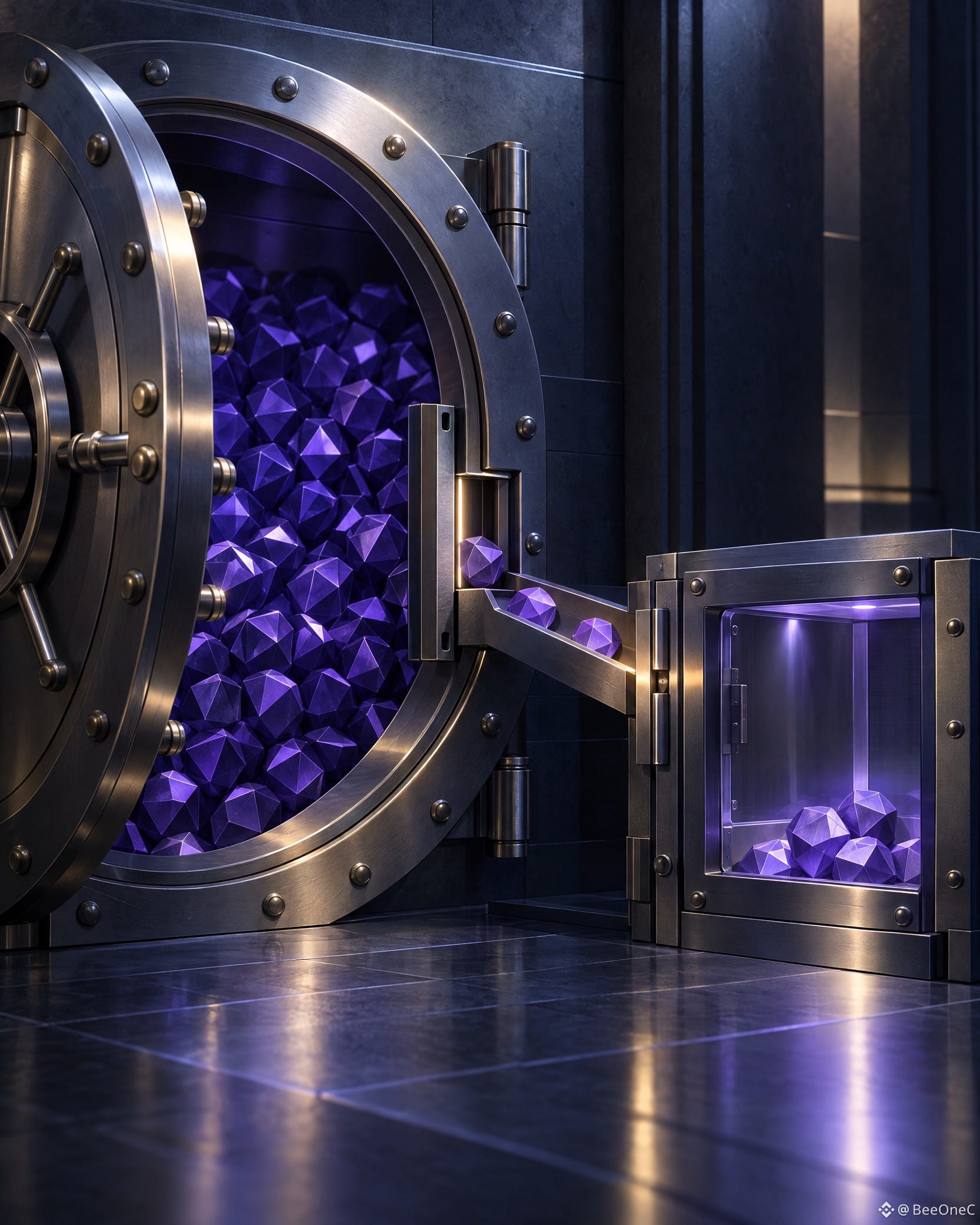
Quick distinction on today’s $CRO event: a scheduled vesting tranche is not the same thing as a market sale.
TokenPost lists roughly 1.167B CRO for release at 11:03 UTC today (18:03 WIB). Cronos’s original proposal describes monthly vesting from a Strategic Reserve escrow wallet; it tells us the schedule, not how every vested token is eventually deployed.
So the headline amount alone doesn’t tell us who receives the tranche next, whether it reaches exchanges, or whether it gets sold. The destination and actual on-chain movement matter more than the unlock headline.
Sources: Cronos proposal https://github.com/crypto-org-chain/chain-main/discussions/1124 | TokenPost https://tokenpost.com/news/investing/57789
73
·
--
Übersetzung ansehen
Quick on-chain nuance: exchange outflows are a location update, not a buy receipt.
CryptoQuant analyst Darkfost estimates ETH in Binance-labeled wallets at about 2.9M, down roughly 42% from more than 5M in July 2025.
Easy to read that as “everyone’s accumulating.” Too strong. Coins leaving exchange-labeled addresses can move into self-custody or DeFi—and the analyst says outflows alone do not confirm fresh buying.
So the useful takeaway is narrower: estimated exchange inventory is lower. The data doesn’t tell us who moved the coins, why, or what $ETH does next. Good context; not a standalone signal.
Sources: CryptoQuant https://cryptoquant.com/insights/quicktake/6af9796d98fe666a74e04719-Ethereum-reserves-on-Binance-drop-to-their-lowest-level-since-2021 | Crypto.news https://crypto.news/ethereum-binance-reserves-fall-2-9-million-eth/ | BeInCrypto https://beincrypto.com/ethereum-price-4-month-low-binance-reserves/

109
·
--
Übersetzung ansehen
One DeFi risk hides in the dust: a market nobody uses can still become the attack surface.
The Block’s on-chain reporting says an attacker drained about 55.2 million $KAVA from Kava Lend (roughly $3.76 million at pre-incident prices), then bridged most of it to BNB Chain and sold it. Kava says the activity was contained to Kava Lend—not an infinite mint—and partner exchanges paused deposits and withdrawals as a precaution. The Block noted that Kava had not yet issued an official loss figure or post-mortem at publication.
For builders, the hard question is whether stale, nearly empty markets are safe under edge-case accounting. The incident report is the next thing to watch before drawing wider conclusions.
Sources: Kava update https://x.com/KAVA_CHAIN/status/2121574325765476462 | The Block https://www.theblock.co/news/defi/2026-11-14-kava-lend-loses-roughly-3-8-million-to-hack-sending-kava-token-down-nearly-40-440350

405
·
--
Übersetzung ansehen
Japan-listed ASIAN STAR is trying a new bridge between public-market investors and Web3: a shareholder perk in $BNB, alongside a plan for Japanese real-estate tokenization on BNB Chain.
The company says ¥8 million worth of BNB will be shared among eligible holders of at least 100 shares, based on share count, with Dec. 31, 2026 as the record date. What makes this worth watching isn’t the giveaway—it’s whether the property-tokenization plan becomes a product with clear rights and real utility.
A shareholder benefit can get attention. Execution is the part that matters.
Source: ASIAN STAR’s official announcement: https://x.com/AsianStar8946/status/2121166886478258224
Japan-listed ASIAN STAR is trying a new bridge between public-market investors and Web3: a shareholder perk in $BNB , alongside a plan for Japanese real-estate tokenization on BNB Chain.
The company says ¥8 million worth of BNB will be shared among eligible holders of at least 100 shares, based on share count, with Dec. 31, 2026 as the record date. What makes this worth watching isn’t the giveaway—it’s whether the property-tokenization plan becomes a product with clear rights and real utility.
A shareholder benefit can get attention. Execution is the part that matters.
Source: ASIAN STAR’s official announcement: https://x.com/AsianStar8946/status/2121166886478258224

143
·
--
Übersetzung ansehen
Kalau ada “teman” di Web3 ngajak video call, jangan auto percaya cuma karena mukanya familiar.
Modus FaceStealer begini: pelaku pakai akun yang dibajak buat ngajak meeting, lalu muter video orang yang kita kenal—bahkan deepfake figur crypto—biar obrolannya terasa legit. Begitu audio dibilang error, korban diminta klik link “fix”. Link itu bisa jadi pintu masuk malware.
Menurut DOJ AS, kampanye yang dijalankan peretas Korea Utara ini menyasar orang crypto/Web3 dan pengembang open-source. Pencurian yang dikaitkan dengan FaceStealer mencapai lebih dari US$400 juta dalam 18 bulan; FBI juga menyita lebih dari 900 rekaman webcam korban.
Biar nggak gampang kena: verifikasi undangan lewat kanal kedua, pastikan domain meeting resmi, dan jangan install “fix” dari link yang dikirim saat call.
Intinya: muka familiar di layar belum tentu berarti panggilannya aman.
Sumber: DOJ https://www.justice.gov/opa/pr/justice-department-announces-actions-disrupt-north-koreas-massive-theft-cryptocurrency | BBC https://www.bbc.com/news/articles/cqdj1ellpd70o

261
·
--
Bin gerade bei $QNT LONG gegangen — hier sind meine Überlegungen 👇
Während BTC und die meisten Altcoins heute Verluste machten, hielt sich QNT still und leise. Auf diese relative Stärke sollte man normalerweise achten.
Gestern fiel der Kurs kurz auf 175, berührte den 50-Tage-Durchschnitt fast punktgenau und wurde direkt wieder nach oben gekauft. Statt dem Kurs hinterherzujagen, wartete ich auf eine Bestätigung: einen 4-Stunden-Schlusskurs über 189. Heute Abend war es so weit — die Kerze schloss bei 194,36, also bin ich bei etwa 193–194 eingestiegen.
Mein Plan ist einfach:
🎯 TP1: 199,5
🎯 TP2: 213
🛑 Stop-Loss: 187
Die Positionsgröße ist so gewählt, dass der Stop nicht zu sehr schmerzt. Mal sehen, ob die Stärke anhält.
Keine Finanzberatung, ich teile nur meinen eigenen Trade und die Überlegungen dahinter.
#QNT/USDT #Futures #cryptotrading
959
Anmelden und weiter Inhalte entdecken
Krypto-Nutzer weltweit auf Binance Square kennenlernen
⚡️ Bleib in Sachen Krypto stets am Puls.
💬 Die weltgrößte Kryptobörse vertraut darauf.
👍 Erhalte verlässliche Einblicke von verifizierten Creators.
E-Mail-Adresse/Telefonnummer
Trendthemen
NvidiaLoses$2.7TrillionInMonthAndAHalf
21,495 Aufrufe
141 Kommentare
Nvidias 2,7-Billionen-Dollar-Absturz: Wenn die Erzählung wichtiger ist als die Zahlen 📉
Crypto With Faisal
·7 Likes
·5.6k Aufrufe
CanBTCReboundAfterFallingBelow60K?
787,243 Aufrufe
3,029 Kommentare
GlobalStocksFaceLongestLosingStreakSince2023
287,946 Aufrufe
2,025 Kommentare