

Ute Hochstedler Peuo
44 Beiträge

Ute Hochstedler Peuo
Melden
Nutzer blockieren
Trade eröffnen
Regelmäßiger Trader
5.6 Jahre
0 Following
1 Follower
2 Like gegeben
Beiträge
Portfolio
Alle
Zitierungen
Übersetzung ansehen
$XRP
xrp
{future}(XRPUSDT)
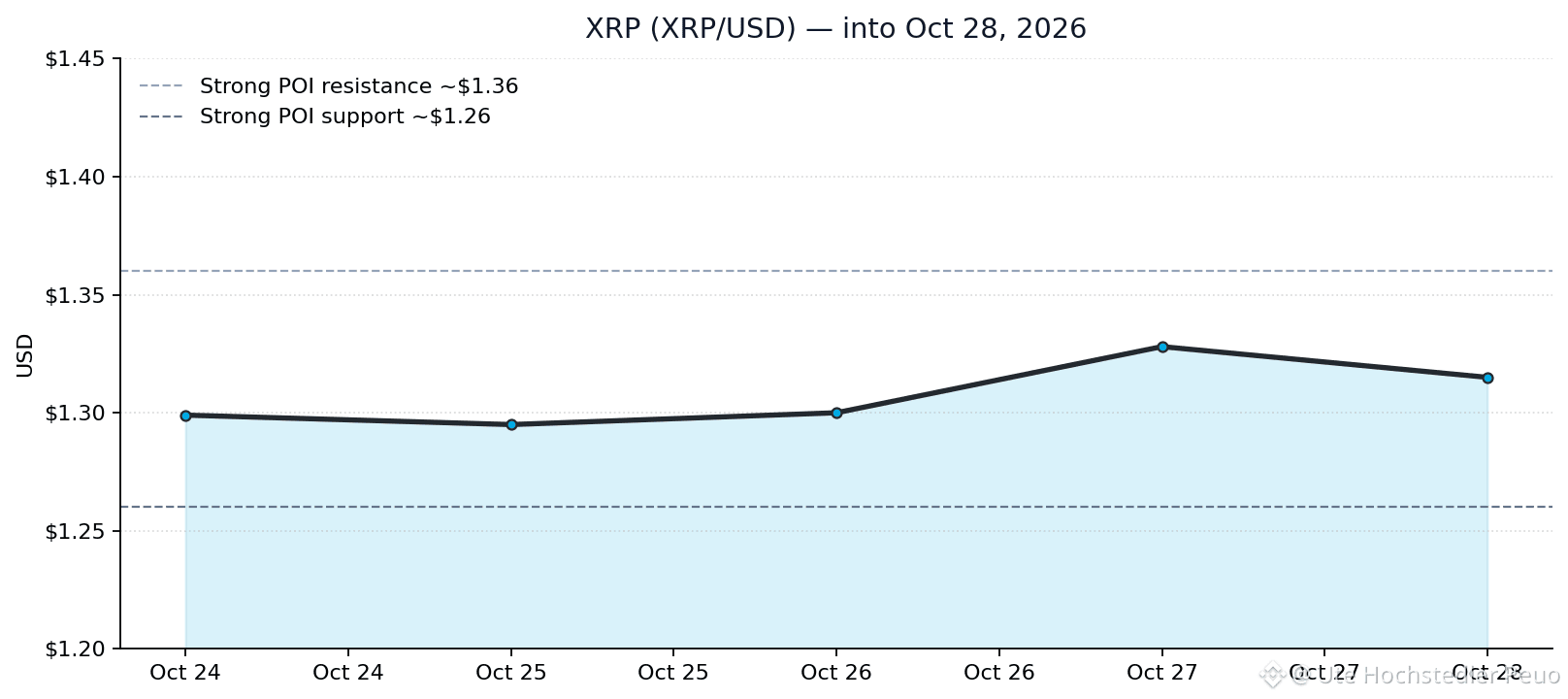
is trading near $1.31–$1.33, the strongest of the four on the day after a modest bounce from the $1.29–$1.30 area. The strongest points of interest are the $1.26–$1.28 support zone (recent low and demand) and the $1.36–$1.37 resistance band (prior range and weekly pivot). A reclaim of $1.36 would open $1.40; a break under $1.26 opens $1.25 and then $1.22.
Short-term bias is neutral-to-slightly-bullish relative to the other three, but still range-bound. The base case is consolidation between $1.28 and $1.36 unless Bitcoin reclaims $82,200. Long-term bias is constructive while the $1.25–$1.28 zone holds, but XRP has been the weakest on a year-to-date basis and is more likely to follow Bitcoin than to lead. A sustained daily close above $1.36 is needed to shift the short-term picture meaningfully.
$XRP
xrp
is trading near $1.31–$1.33, the strongest of the four on the day after a modest bounce from the $1.29–$1.30 area. The strongest points of interest are the $1.26–$1.28 support zone (recent low and demand) and the $1.36–$1.37 resistance band (prior range and weekly pivot). A reclaim of $1.36 would open $1.40; a break under $1.26 opens $1.25 and then $1.22.
Short-term bias is neutral-to-slightly-bullish relative to the other three, but still range-bound. The base case is consolidation between $1.28 and $1.36 unless Bitcoin reclaims $82,200. Long-term bias is constructive while the $1.25–$1.28 zone holds, but XRP has been the weakest on a year-to-date basis and is more likely to follow Bitcoin than to lead. A sustained daily close above $1.36 is needed to shift the short-term picture meaningfully.
29
#CanGoogleDefindItsCore
Ja – bisher verteidigt Google sein Kerngeschäft mit Suche und Werbung, obwohl KI die Art und Weise verändert, wie Menschen das Web durchsuchen.
Der weltweite Suchanteil liegt weiterhin bei rund 90 Prozent, und die Werbeumsätze der Suche sind bis 2026 gegenüber dem Vorjahr weiterhin im mittleren bis oberen Zehnerprozentbereich gewachsen.
KI-Übersichten erscheinen inzwischen bei einer großen Mehrheit der Suchanfragen (für viele Kategorien werden häufig mehr als 80 Prozent angegeben), der KI-Modus hat die Marke von einer Milliarde monatlichen Nutzern überschritten und Gemini ist auf rund eine Milliarde monatlich aktive Nutzer angewachsen. Dennoch ist das Gesamtvolumen der Suchanfragen und die Interaktion stabil geblieben oder gestiegen, statt einzubrechen.
ChatGPT liegt beim reinen Chatbot-Traffic weiterhin vorn, doch die Zahl seiner Webbesuche hat Google nicht in großem Maßstab verdrängt. Einige Messungen zeigen sogar, dass die täglichen Besuche bei Google steigen, während der reine KI-Chat-Traffic nur einen kleinen Bruchteil der gesamten Suchaktivität ausmacht.
Die größten Herausforderungen sind die höheren Rechenkosten für generative Antworten, weniger Klicks auf die Websites von Verlagen und die anhaltende behördliche Prüfung. Google reagiert darauf, indem es eine agentische Ebene in die Suche integriert, sodass Chat, die Erledigung von Aufgaben und klassische Suchergebnisse nebeneinander bestehen, statt einander kannibalisieren.
Kurz gesagt: Die Vorteile der Suche in puncto Reichweite, Daten und Monetarisierung haben sich als beständiger erwiesen als viele erwartet hatten. Dadurch ist Google gut aufgestellt, um sein Kerngeschäft zu verteidigen und zugleich KI zu integrieren.
GOOGUS-7,37%
GOOGLB-8,76%
35
#CanMicrosoftDeliverOnAI
Ja. Ich denke schon ... Microsoft liefert im Bereich KI dort, wo es für sein Geschäft am wichtigsten ist: bei der Verbreitung in Unternehmen, der Infrastruktur und praktischen Produktivitätstools.
Bis 2026 hat das Unternehmen Dutzende neue Rechenzentren hinzugefügt, seine maßgeschneiderten Maia-Chips für mehr Effizienz weiterentwickelt und die Zahl der kostenpflichtigen Microsoft 365 Copilot-Lizenzen auf über 30 Millionen gesteigert, während GitHub Copilot rund 50 Millionen Nutzer erreichte.
Zudem entwickelt Microsoft eigene MAI-Modelle (und gibt an, dass diese bei geringerem Rechenaufwand eine starke Leistung erzielen), verfolgt aber weiterhin eine Multi-Modell-Strategie mit OpenAI (an dem das Unternehmen maßgeblich beteiligt ist) und Anthropic. So verringert Microsoft das Risiko, von einem einzelnen Anbieter abhängig zu sein.
Business Insider
Azure bleibt ein wichtiger Umsatzträger im KI-Bereich. Außerdem entwickelt das Unternehmen Copilot weiter: weg von einfachen Chats, hin zu Agenten, die längere, mehrstufige Aufgaben auf Grundlage von Unternehmensdaten erledigen können.
Die Nutzung ist real, aber nach wie vor selektiv: Copilot-Lizenzen machen nur einen einstelligen Prozentsatz der kommerziellen Microsoft-365-Nutzerbasis aus. Eine breite Transformation mit hohem ROI ist daher noch nicht überall Realität.
Geekwire
Microsofts Vorteil liegt weniger darin, reine Modell-Ranglisten anzuführen, als vielmehr darin, nützliche KI in die Tools einzubetten, die Unternehmen bereits einsetzen – gestützt auf eine riesige Infrastruktur und ein breit aufgestelltes Modellportfolio.
Ob Microsoft tatsächlich „liefert“, hängt vom Maßstab ab: Bei KI für Unternehmen im großen Maßstab lautet die Antwort zunehmend ja; bei einer unangefochtenen Führungsposition an der Spitze des technologisch Machbaren ist das Rennen noch offen.
47
Übersetzung ansehen
$ETH
e
{future}(ETHUSDT)
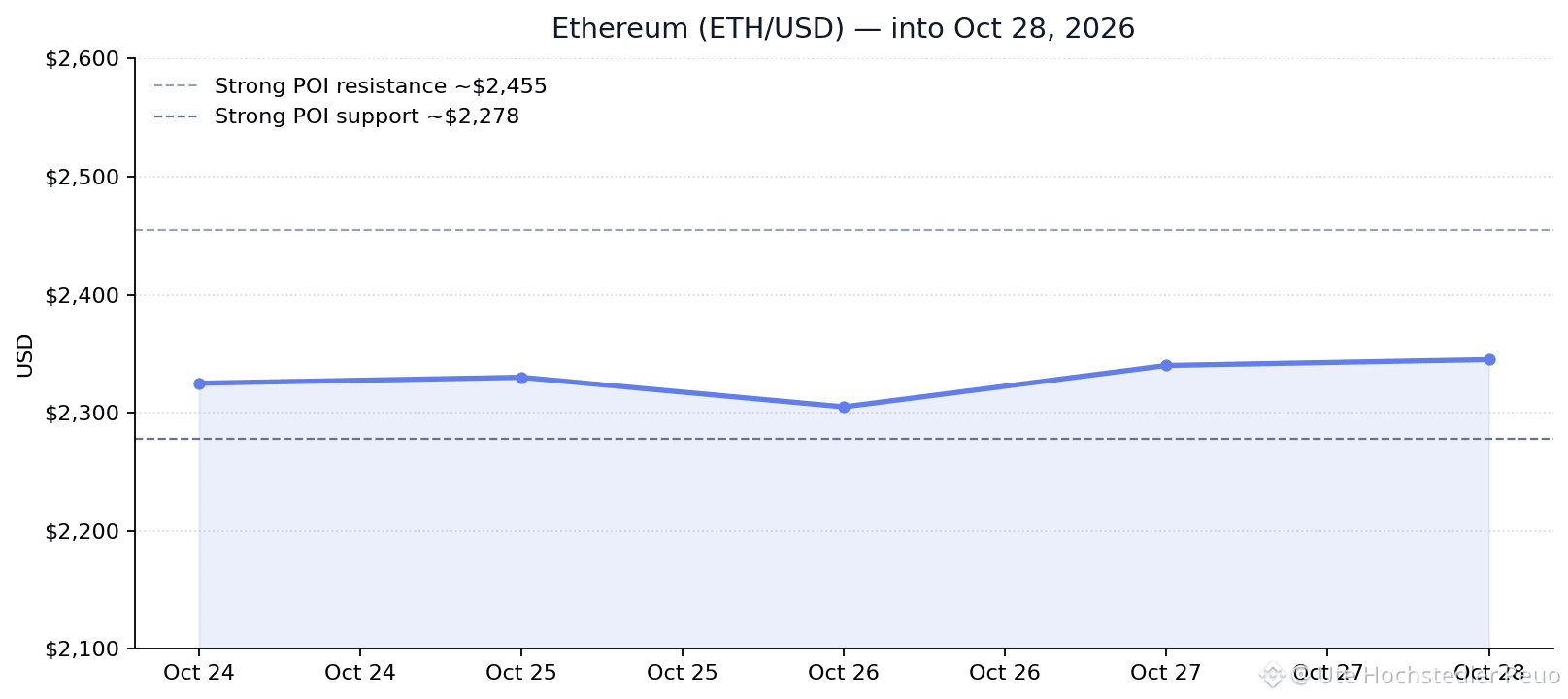
$thereum is trading near $2,330–$2,350, still weaker than Bitcoin on the week and testing the lower half of its recent range. The strongest points of interest are the $2,278–$2,300 support zone (recent low and demand) and the $2,400–$2,455 resistance band (prior range and moving-average cluster). A clean break above $2,455 would open $2,500–$2,530; a loss of $2,278 opens $2,200–$2,220.
Short-term bias is neutral-to-slightly-bearish while price remains under $2,400. The base case is continued range trade between $2,280 and $2,400 unless Bitcoin reclaims $82,200 cleanly. Long-term bias is constructive above the 200-day area near $2,200, but ETH has underperformed and remains high-beta to any further risk-off move. Expect it to follow Bitcoin rather than lead into and after the Fed decision.
$ETH
e
$thereum is trading near $2,330–$2,350, still weaker than Bitcoin on the week and testing the lower half of its recent range. The strongest points of interest are the $2,278–$2,300 support zone (recent low and demand) and the $2,400–$2,455 resistance band (prior range and moving-average cluster). A clean break above $2,455 would open $2,500–$2,530; a loss of $2,278 opens $2,200–$2,220.
Short-term bias is neutral-to-slightly-bearish while price remains under $2,400. The base case is continued range trade between $2,280 and $2,400 unless Bitcoin reclaims $82,200 cleanly. Long-term bias is constructive above the 200-day area near $2,200, but ETH has underperformed and remains high-beta to any further risk-off move. Expect it to follow Bitcoin rather than lead into and after the Fed decision.
84
Übersetzung ansehen
$BTC
{future}(BTCUSDT)
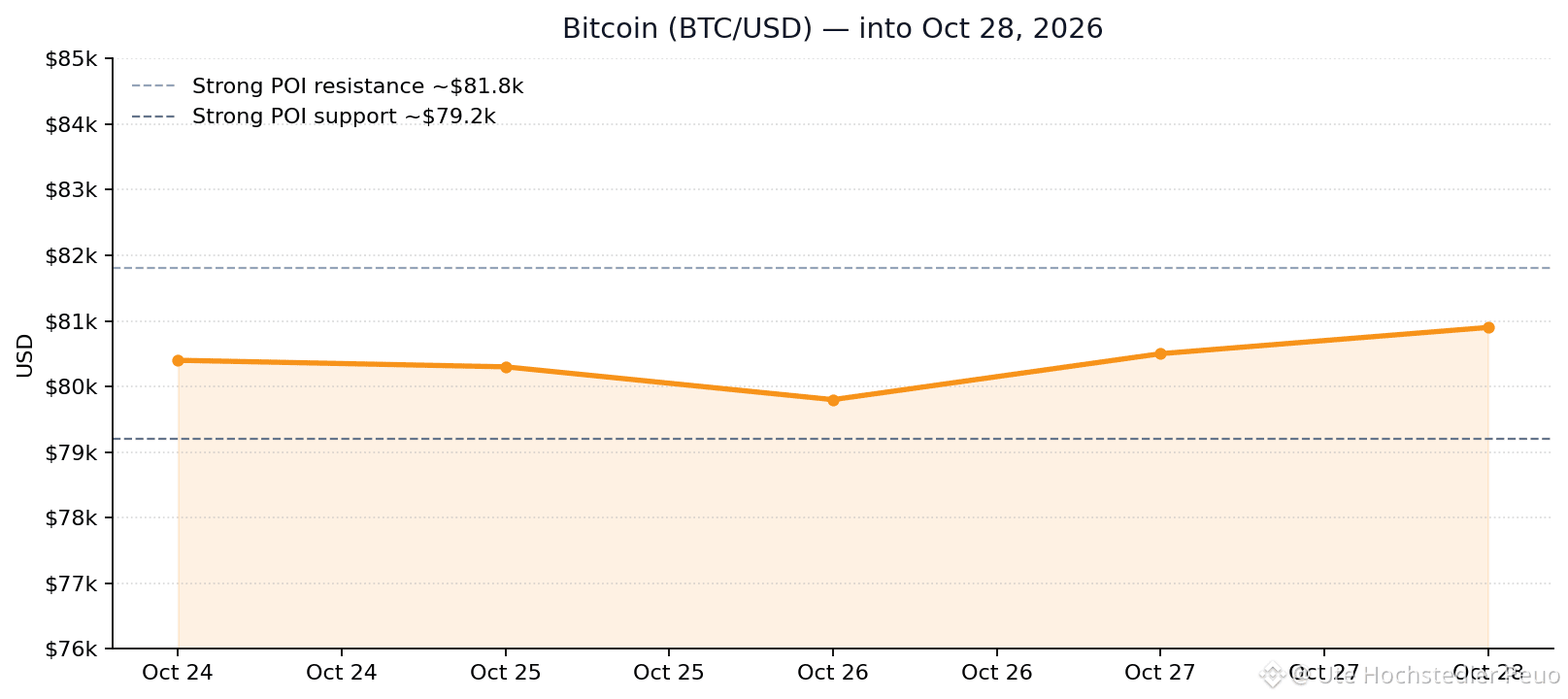
is trading near $80,600–$80,900 ahead of the Fed decision, holding the middle of the $79,200–$82,200 range after a quiet bounce from the weekend low. The strongest points of interest are the $79,200–$79,500 support cluster (recent demand and the lower edge of the current range) and the $81,800–$82,200 resistance band (prior highs and the 20-day area). Secondary resistance sits near $83,400–$84,400; deeper support is $78,000–$78,400.
Short-term bias is neutral. The base case for the next 24–48 hours is sideways trade between roughly $79,500 and $82,200 while the market digests the Fed pause (widely expected) and the press conference. A 4-hour or daily close above $82,050–$82,200 would open $82,650 and then $83,400; a close under $79,200 would reopen $78,400 and then the mid-$77,000s. Long-term bias remains constructive while the 200-day zone near $73,000 holds, but the current structure is still a corrective range inside the broader uptrend. BTC continues to set the tone.
$BTC
is trading near $80,600–$80,900 ahead of the Fed decision, holding the middle of the $79,200–$82,200 range after a quiet bounce from the weekend low. The strongest points of interest are the $79,200–$79,500 support cluster (recent demand and the lower edge of the current range) and the $81,800–$82,200 resistance band (prior highs and the 20-day area). Secondary resistance sits near $83,400–$84,400; deeper support is $78,000–$78,400.
Short-term bias is neutral. The base case for the next 24–48 hours is sideways trade between roughly $79,500 and $82,200 while the market digests the Fed pause (widely expected) and the press conference. A 4-hour or daily close above $82,050–$82,200 would open $82,650 and then $83,400; a close under $79,200 would reopen $78,400 and then the mid-$77,000s. Long-term bias remains constructive while the 200-day zone near $73,000 holds, but the current structure is still a corrective range inside the broader uptrend. BTC continues to set the tone.
79
·
--
Bullisch
$XRP
XR
{future}(XRPUSDT)
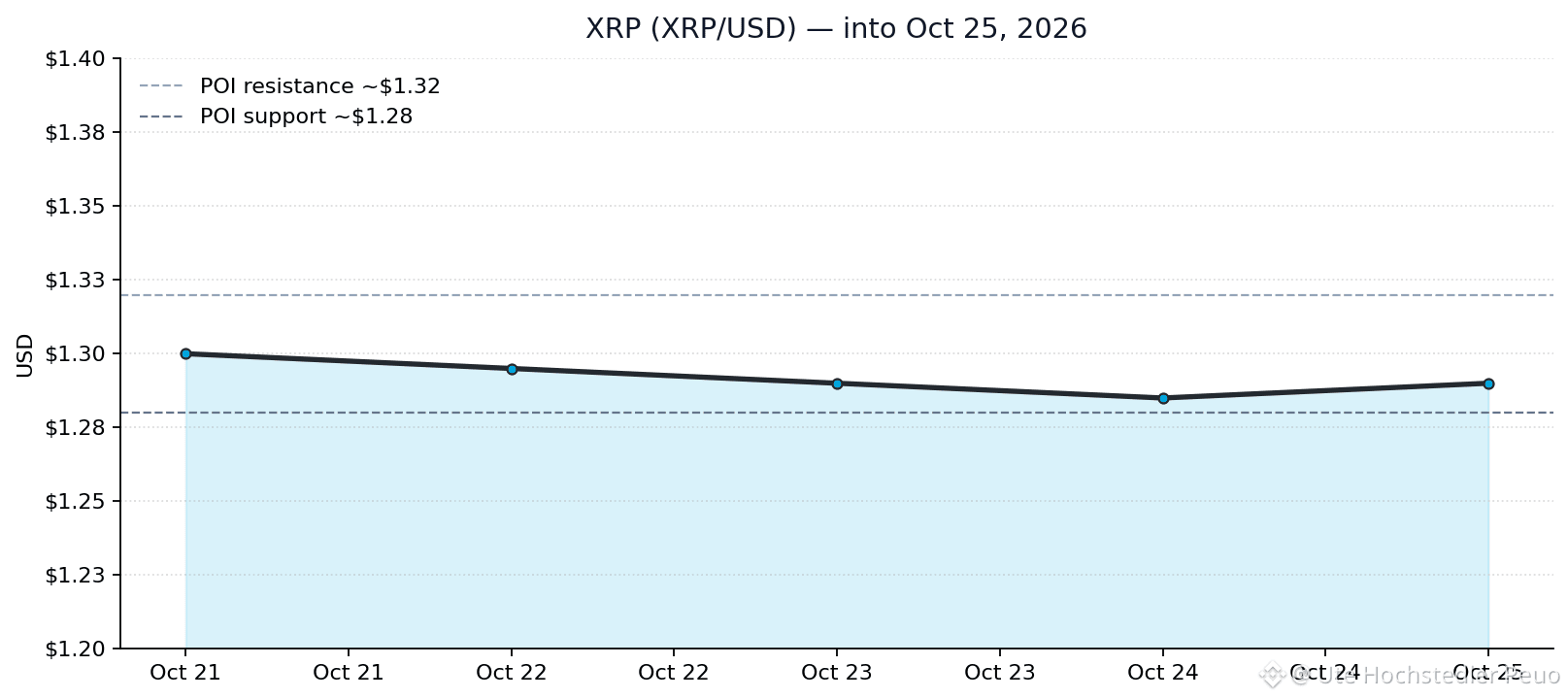
P wird nahe $1,29–$1,30 gehandelt, hält sich im unteren Drittel seiner jüngsten Handelsspanne und notiert in der Nähe des 200-Tage-Bereichs. Wichtige Marken sind die Unterstützung bei $1,28–$1,29 und der Widerstand bei $1,32–$1,34.
Die kurzfristige Einschätzung ist neutral. Ein Anstieg über $1,32–$1,34 würde Kursziele bei $1,37–$1,40 eröffnen; ein Fall unter $1,28 könnte den Kurs bis auf $1,25 drücken. Die langfristige Einschätzung bleibt positiv, solange die Zone bei $1,25–$1,28 hält. Allerdings war XRP seit Jahresbeginn die schwächste Anlage der Gruppe und dürfte eher der Entwicklung von Bitcoin folgen, als selbst den Markt anzuführen. Um das kurzfristige Bild zu verändern, ist ein anhaltender Anstieg über $1,34 erforderlich.
$XRP
XR
P wird nahe $1,29–$1,30 gehandelt, hält sich im unteren Drittel seiner jüngsten Handelsspanne und notiert in der Nähe des 200-Tage-Bereichs. Wichtige Marken sind die Unterstützung bei $1,28–$1,29 und der Widerstand bei $1,32–$1,34.
Die kurzfristige Einschätzung ist neutral. Ein Anstieg über $1,32–$1,34 würde Kursziele bei $1,37–$1,40 eröffnen; ein Fall unter $1,28 könnte den Kurs bis auf $1,25 drücken. Die langfristige Einschätzung bleibt positiv, solange die Zone bei $1,25–$1,28 hält. Allerdings war XRP seit Jahresbeginn die schwächste Anlage der Gruppe und dürfte eher der Entwicklung von Bitcoin folgen, als selbst den Markt anzuführen. Um das kurzfristige Bild zu verändern, ist ein anhaltender Anstieg über $1,34 erforderlich.
78
·
--
Bärisch
$SUI
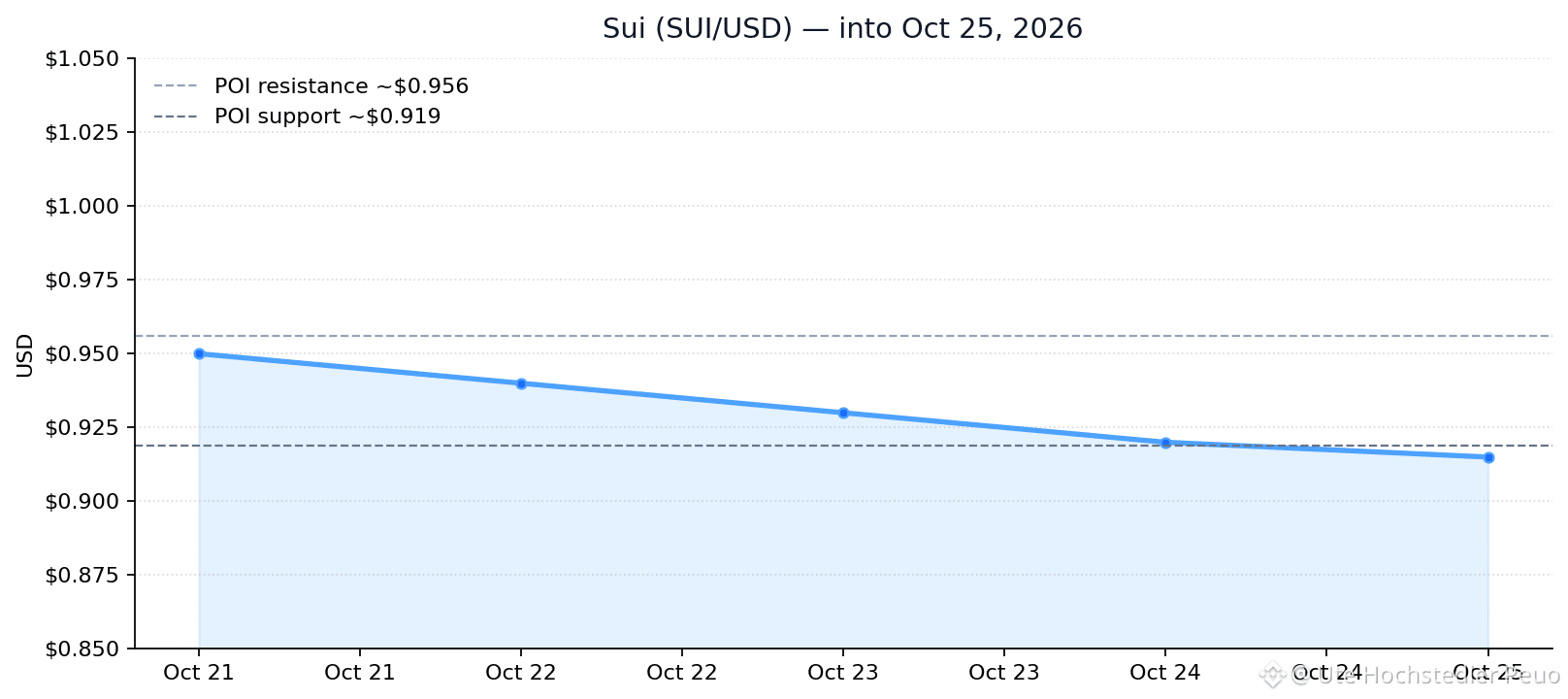
Sui wird bei etwa 0,91–0,93 $ gehandelt, steht unter Druck und testet die untere Grenze seiner jüngsten Handelsspanne. Wichtige Marken sind die Unterstützung bei 0,919 $ und der Widerstand bei 0,956 $.
Die kurzfristige Einschätzung ist neutral bis bearish. Ein Tagesschlusskurs über 0,956 $ würde den Weg zu 0,99–1,00 $ frei machen; ein Durchbruch unter 0,919 $ eröffnet Kursziele bei 0,89 $ und anschließend 0,85 $. Langfristig bleibt die Einschätzung oberhalb der Zone von 0,84–0,85 $ konstruktiv. SUI weist jedoch weiterhin ein hohes Bitcoin-Beta auf und hat sich im Wochenverlauf schlechter entwickelt. Solange sich die Risikobereitschaft am Gesamtmarkt nicht verbessert, ist mit einer Bewegung innerhalb der Handelsspanne oder einer leichten Abschwächung zu rechnen.
{future}(SUIUSDT)
$SUI
Sui wird bei etwa 0,91–0,93 $ gehandelt, steht unter Druck und testet die untere Grenze seiner jüngsten Handelsspanne. Wichtige Marken sind die Unterstützung bei 0,919 $ und der Widerstand bei 0,956 $.
Die kurzfristige Einschätzung ist neutral bis bearish. Ein Tagesschlusskurs über 0,956 $ würde den Weg zu 0,99–1,00 $ frei machen; ein Durchbruch unter 0,919 $ eröffnet Kursziele bei 0,89 $ und anschließend 0,85 $. Langfristig bleibt die Einschätzung oberhalb der Zone von 0,84–0,85 $ konstruktiv. SUI weist jedoch weiterhin ein hohes Bitcoin-Beta auf und hat sich im Wochenverlauf schlechter entwickelt. Solange sich die Risikobereitschaft am Gesamtmarkt nicht verbessert, ist mit einer Bewegung innerhalb der Handelsspanne oder einer leichten Abschwächung zu rechnen.
82
Übersetzung ansehen
$SOL
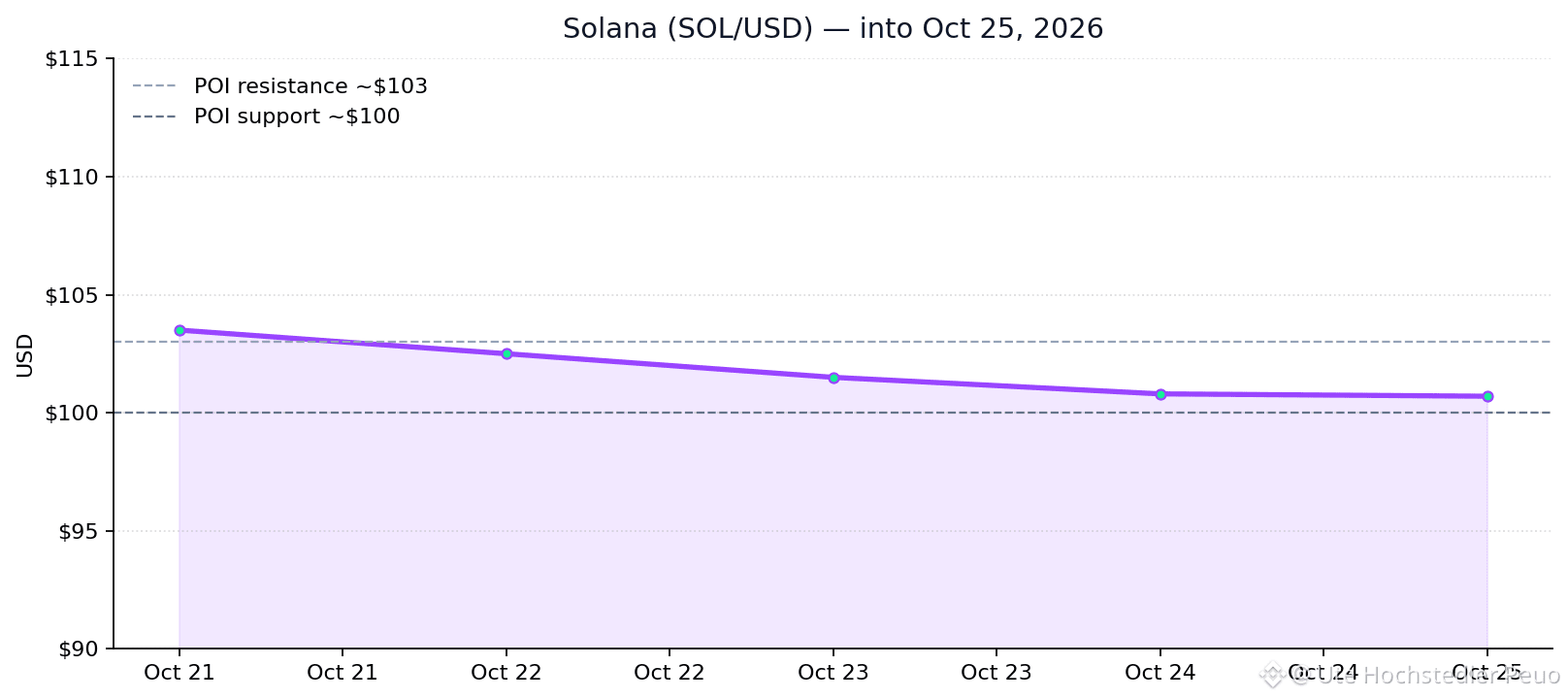
Solana is trading near $100.70, sitting at the lower end of its recent range after failing to hold the $103–$105 area. Key points of interest are $100.00–$100.50 support and $103–$105 resistance.
Short-term bias is neutral-to-slightly-bearish. A push above $103 opens $105–$107; a break under $100 reopens the high-$90s. Long-term bias remains constructive while the 200-day area near $88 holds, but SOL is high-beta and has lagged Bitcoin. It is unlikely to decouple on the first trading day of the week unless Bitcoin reclaims $81,700 cleanly.
{future}(SOLUSDT)
$SOL
Solana is trading near $100.70, sitting at the lower end of its recent range after failing to hold the $103–$105 area. Key points of interest are $100.00–$100.50 support and $103–$105 resistance.
Short-term bias is neutral-to-slightly-bearish. A push above $103 opens $105–$107; a break under $100 reopens the high-$90s. Long-term bias remains constructive while the 200-day area near $88 holds, but SOL is high-beta and has lagged Bitcoin. It is unlikely to decouple on the first trading day of the week unless Bitcoin reclaims $81,700 cleanly.
54
·
--
Bärisch
Übersetzung ansehen
$ETH
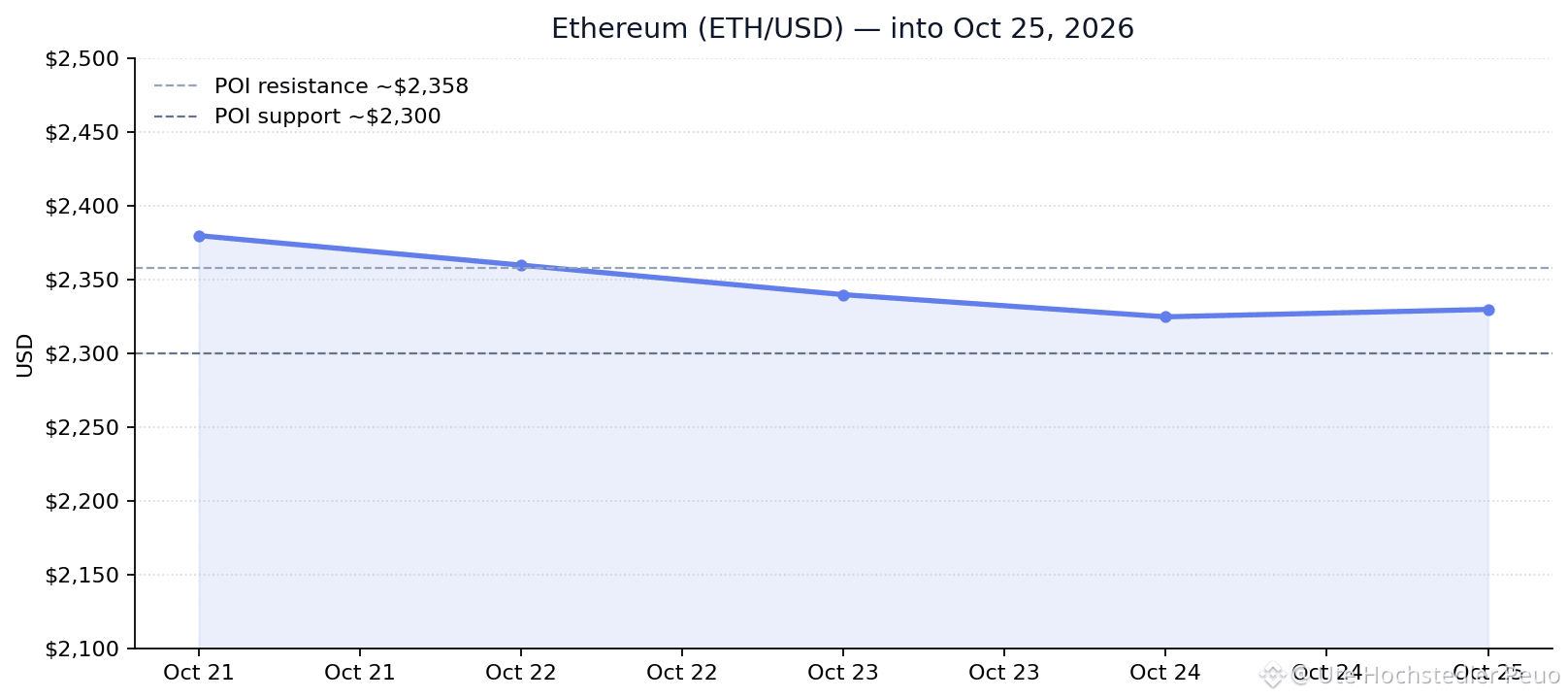
Ethereum is trading near $2,330, weaker than Bitcoin on the week and testing the $2,300–$2,358 area that has acted as a floor multiple times. Key points of interest are $2,300–$2,320 support and $2,358–$2,400 resistance.
Short-term bias is neutral-to-bearish while price remains under $2,358. A reclaim of $2,358–$2,400 would target $2,450–$2,500; a loss of $2,300 opens $2,220–$2,250. Long-term bias is still constructive above the 200-day zone near $2,200, but ETH has underperformed and is more sensitive to further risk-off moves. Expect it to follow Bitcoin rather than lead.
{future}(ETHUSDT)
$ETH
Ethereum is trading near $2,330, weaker than Bitcoin on the week and testing the $2,300–$2,358 area that has acted as a floor multiple times. Key points of interest are $2,300–$2,320 support and $2,358–$2,400 resistance.
Short-term bias is neutral-to-bearish while price remains under $2,358. A reclaim of $2,358–$2,400 would target $2,450–$2,500; a loss of $2,300 opens $2,220–$2,250. Long-term bias is still constructive above the 200-day zone near $2,200, but ETH has underperformed and is more sensitive to further risk-off moves. Expect it to follow Bitcoin rather than lead.
81
Übersetzung ansehen
$BTC
{future}(BTCUSDT)
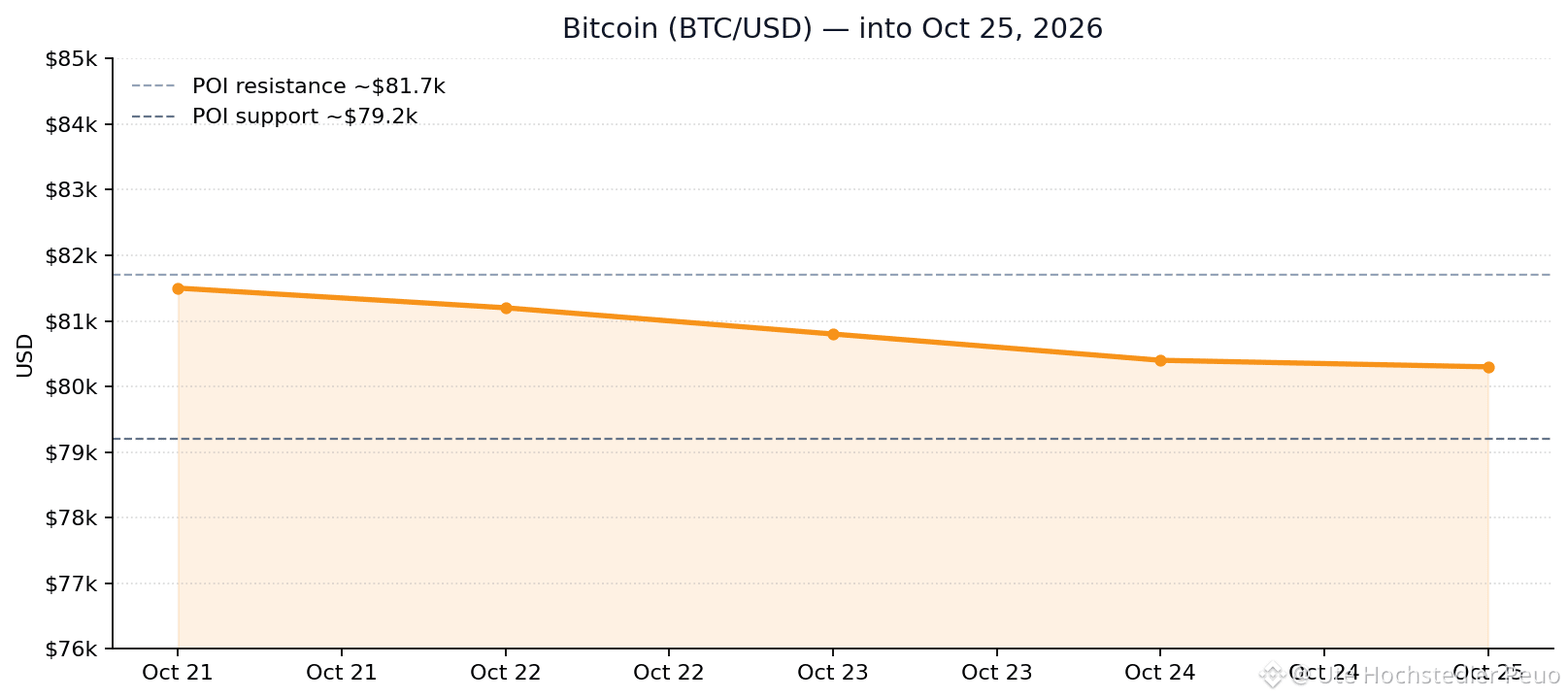
BTC is trading near $80,300–$80,600 after a quiet Sunday, still sitting under the 20- and 50-day moving averages. Key points of interest for tomorrow are the $79,200–$79,500 support zone (recent low and demand) and the $81,000–$81,700 resistance band (prior range and moving-average cluster).
Short-term bias is neutral-to-slightly-bearish. A daily close above $81,700 would improve the picture toward $82,600–$83,000; a break under $79,200 opens $78,400 and then the mid-$77,000s. Long-term bias remains constructive while the 200-day area near $73,000 holds, but the current structure is a range-bound correction inside the broader uptrend.
$BTC
BTC is trading near $80,300–$80,600 after a quiet Sunday, still sitting under the 20- and 50-day moving averages. Key points of interest for tomorrow are the $79,200–$79,500 support zone (recent low and demand) and the $81,000–$81,700 resistance band (prior range and moving-average cluster).
Short-term bias is neutral-to-slightly-bearish. A daily close above $81,700 would improve the picture toward $82,600–$83,000; a break under $79,200 opens $78,400 and then the mid-$77,000s. Long-term bias remains constructive while the 200-day area near $73,000 holds, but the current structure is a range-bound correction inside the broader uptrend.
88
Übersetzung ansehen
$SUI
{future}(SUIUSDT)
is trading near $0.96–$0.99, down about 1% over the past day and still below the $1.00–$1.03 area it briefly reclaimed. The strongest support is $0.95–$0.96 (session low and recent demand). The strongest resistance is $1.00–$1.03, then $1.06. Over the next 24 hours the base case is continued chop between $0.95 and $1.03. A push above $1.00–$1.03 opens $1.06–$1.08; a loss of $0.95 reopens the mid-$0.90s. SUI remains high-beta to Bitcoin and is unlikely to decouple on a thin weekend.
$SUI
is trading near $0.96–$0.99, down about 1% over the past day and still below the $1.00–$1.03 area it briefly reclaimed. The strongest support is $0.95–$0.96 (session low and recent demand). The strongest resistance is $1.00–$1.03, then $1.06. Over the next 24 hours the base case is continued chop between $0.95 and $1.03. A push above $1.00–$1.03 opens $1.06–$1.08; a loss of $0.95 reopens the mid-$0.90s. SUI remains high-beta to Bitcoin and is unlikely to decouple on a thin weekend.
is trading near $0.96–$0.99, down about 1% over the past day and still below the $1.00–$1.03 area it briefly reclaimed. The strongest support is $0.95–$0.96 (session low and recent demand). The strongest resistance is $1.00–$1.03, then $1.06. Over the next 24 hours the base case is continued chop between $0.95 and $1.03. A push above $1.00–$1.03 opens $1.06–$1.08; a loss of $0.95 reopens the mid-$0.90s. SUI remains high-beta to Bitcoin and is unlikely to decouple on a thin weekend.
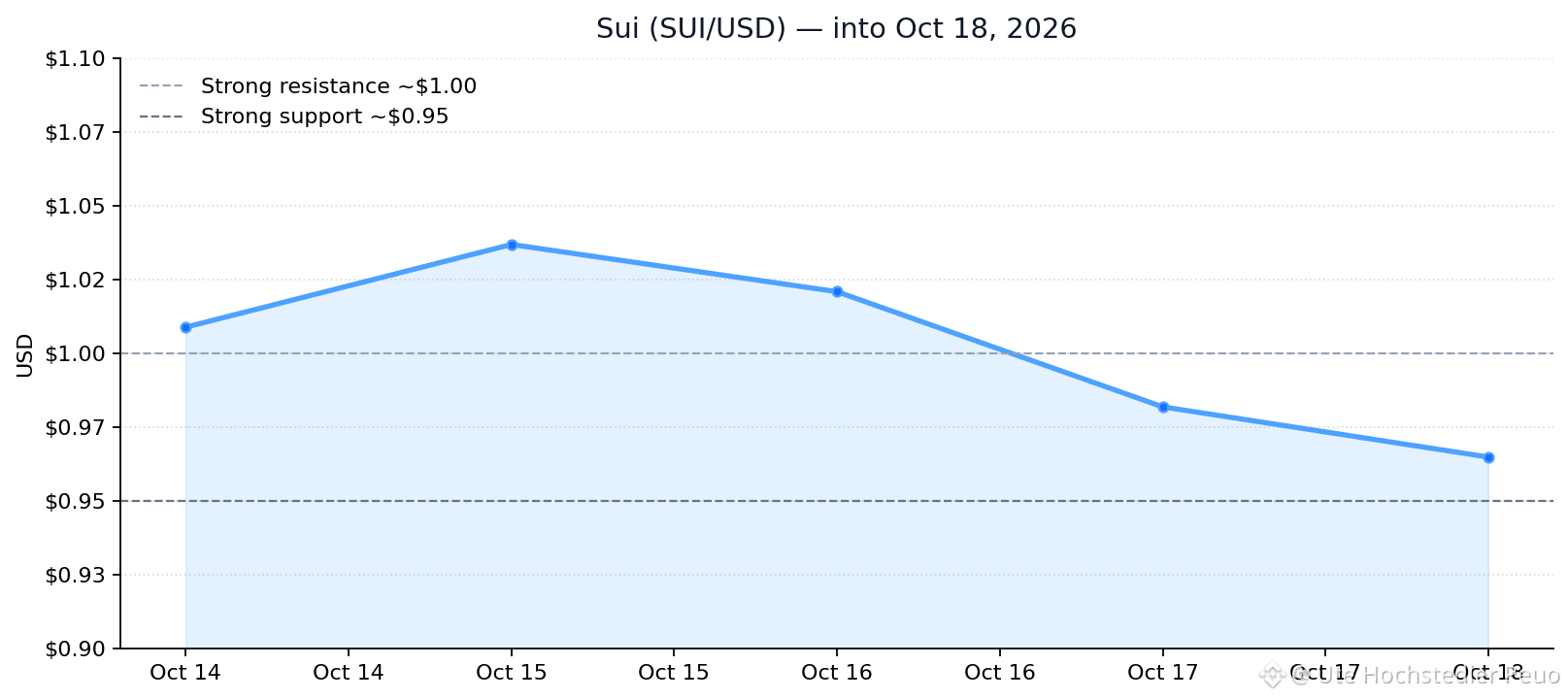
150
Übersetzung ansehen
$SOL
{future}(SOLUSDT)
is trading near $102, down about 1–2% over the past day and still below the $106–$108 zone that capped the recent bounce. The strongest support is $101–$102 (recent low). The strongest resistance is $106–$108, then $110. Over the next 24 hours the base case is a thin-liquidity range of roughly $101–$106. A push above $106 opens $108–$110; a break under $101 opens the high-$90s. SOL has underperformed Bitcoin on the week and is likely to stay high-beta to any further risk-off move.
$SOL
is trading near $102, down about 1–2% over the past day and still below the $106–$108 zone that capped the recent bounce. The strongest support is $101–$102 (recent low). The strongest resistance is $106–$108, then $110. Over the next 24 hours the base case is a thin-liquidity range of roughly $101–$106. A push above $106 opens $108–$110; a break under $101 opens the high-$90s. SOL has underperformed Bitcoin on the week and is likely to stay high-beta to any further risk-off move.
is trading near $102, down about 1–2% over the past day and still below the $106–$108 zone that capped the recent bounce. The strongest support is $101–$102 (recent low). The strongest resistance is $106–$108, then $110. Over the next 24 hours the base case is a thin-liquidity range of roughly $101–$106. A push above $106 opens $108–$110; a break under $101 opens the high-$90s. SOL has underperformed Bitcoin on the week and is likely to stay high-beta to any further risk-off move.
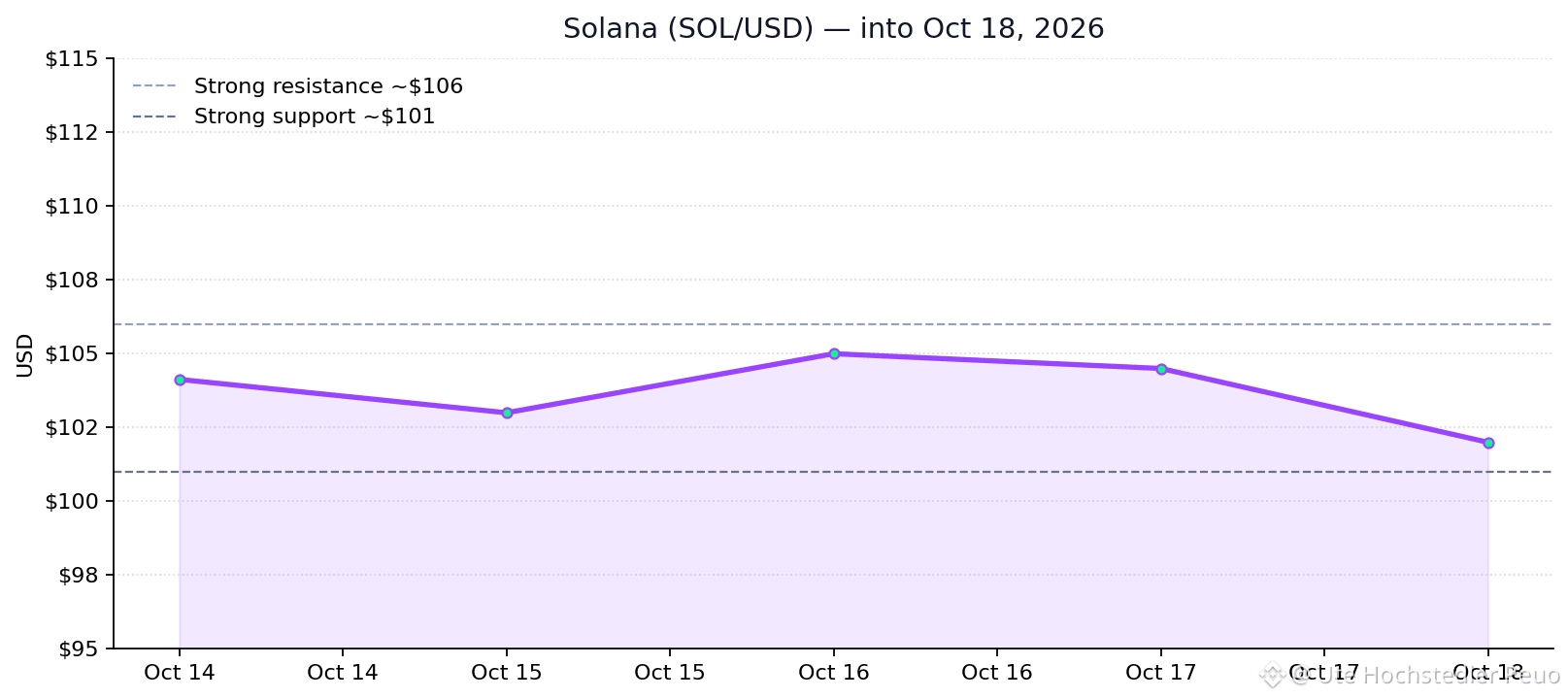
62
Übersetzung ansehen
$XRP
{future}(XRPUSDT)
is trading near $1.27–$1.30, the weakest of the five over the past day and still below the daily moving averages. The strongest support is $1.28–$1.30 (October 15 low and recent demand). The strongest resistance is $1.32–$1.34, then $1.37–$1.40. Over the next 24 hours the base case is consolidation between $1.28 and $1.34. A reclaim of $1.34 would target $1.37–$1.40; a break under $1.28 opens $1.25. XRP is more likely to follow Bitcoin than to decouple on thin weekend volume.
$XRP
is trading near $1.27–$1.30, the weakest of the five over the past day and still below the daily moving averages. The strongest support is $1.28–$1.30 (October 15 low and recent demand). The strongest resistance is $1.32–$1.34, then $1.37–$1.40. Over the next 24 hours the base case is consolidation between $1.28 and $1.34. A reclaim of $1.34 would target $1.37–$1.40; a break under $1.28 opens $1.25. XRP is more likely to follow Bitcoin than to decouple on thin weekend volume.
is trading near $1.27–$1.30, the weakest of the five over the past day and still below the daily moving averages. The strongest support is $1.28–$1.30 (October 15 low and recent demand). The strongest resistance is $1.32–$1.34, then $1.37–$1.40. Over the next 24 hours the base case is consolidation between $1.28 and $1.34. A reclaim of $1.34 would target $1.37–$1.40; a break under $1.28 opens $1.25. XRP is more likely to follow Bitcoin than to decouple on thin weekend volume.
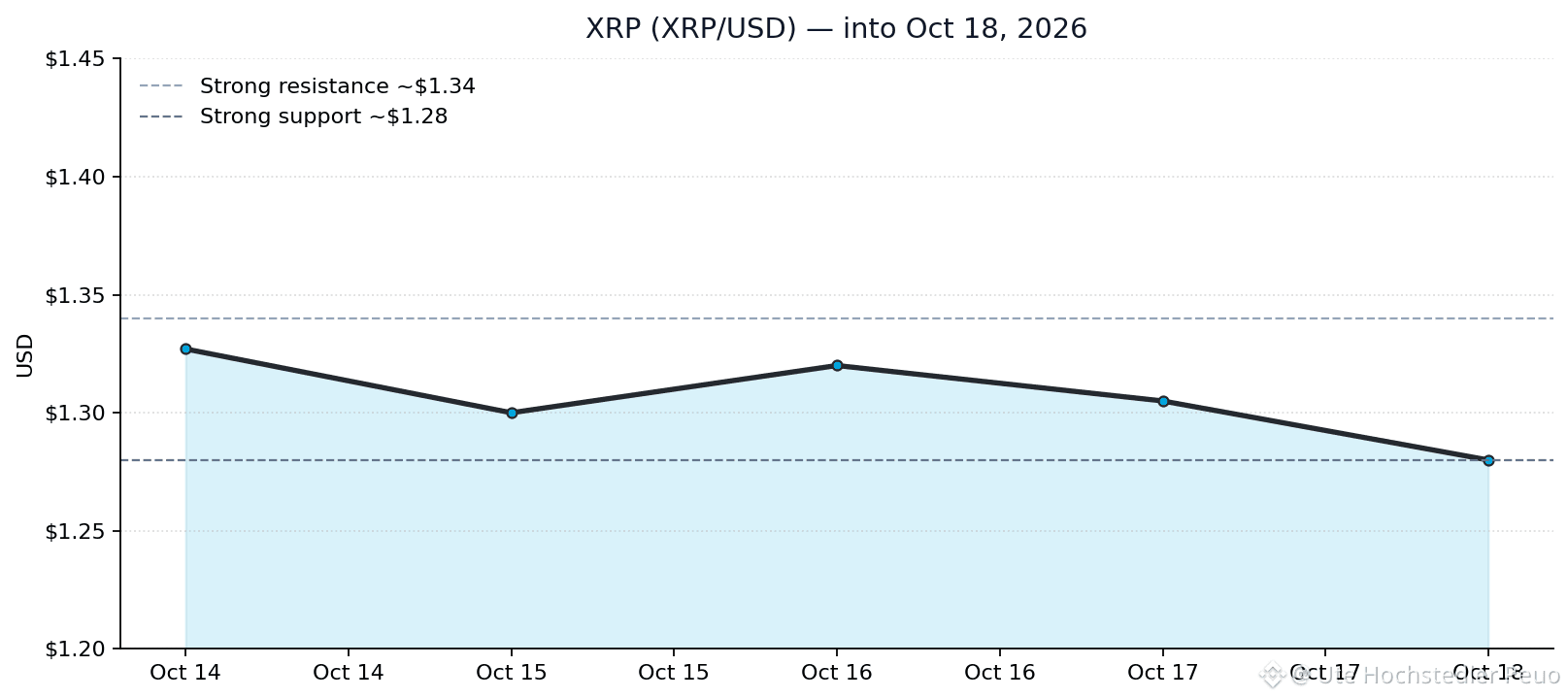
49
Übersetzung ansehen
$ETH
{future}(ETHUSDT)
is trading near $2,370–$2,410, weaker than Bitcoin on the week and still below the $2,490–$2,530 zone that capped the last bounce. The strongest support is $2,340–$2,370 (recent low and 100-day area). The strongest resistance is $2,490–$2,500, then $2,530. Over the next 24 hours the base case is a range of roughly $2,340–$2,450. A reclaim of $2,490 would target $2,530; a loss of $2,340 opens $2,300–$2,320. ETH remains high-beta to Bitcoin and is unlikely to lead while the broader tape stays defensive.
$ETH
is trading near $2,370–$2,410, weaker than Bitcoin on the week and still below the $2,490–$2,530 zone that capped the last bounce. The strongest support is $2,340–$2,370 (recent low and 100-day area). The strongest resistance is $2,490–$2,500, then $2,530. Over the next 24 hours the base case is a range of roughly $2,340–$2,450. A reclaim of $2,490 would target $2,530; a loss of $2,340 opens $2,300–$2,320. ETH remains high-beta to Bitcoin and is unlikely to lead while the broader tape stays defensive.
is trading near $2,370–$2,410, weaker than Bitcoin on the week and still below the $2,490–$2,530 zone that capped the last bounce. The strongest support is $2,340–$2,370 (recent low and 100-day area). The strongest resistance is $2,490–$2,500, then $2,530. Over the next 24 hours the base case is a range of roughly $2,340–$2,450. A reclaim of $2,490 would target $2,530; a loss of $2,340 opens $2,300–$2,320. ETH remains high-beta to Bitcoin and is unlikely to lead while the broader tape stays defensive.
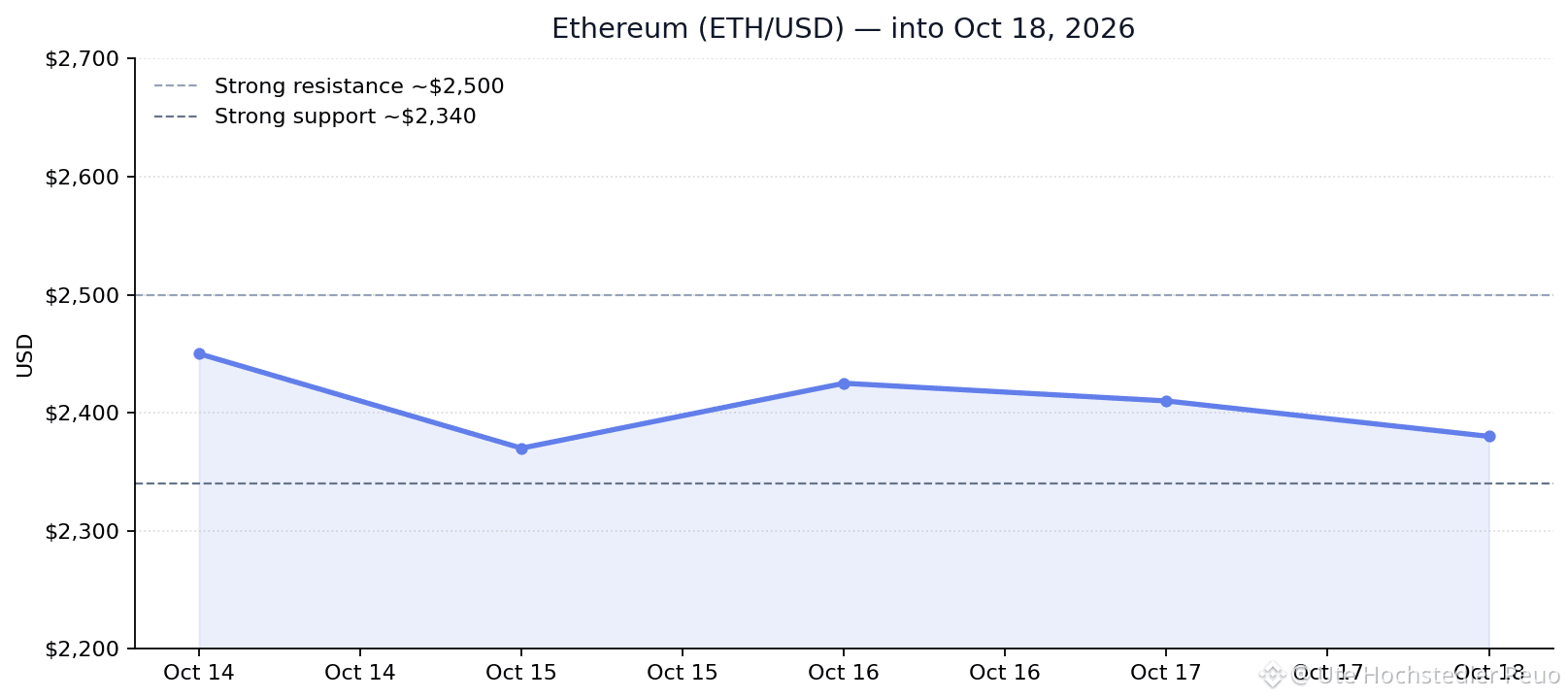
88
Übersetzung ansehen
$BTC
{future}(BTCUSDT)
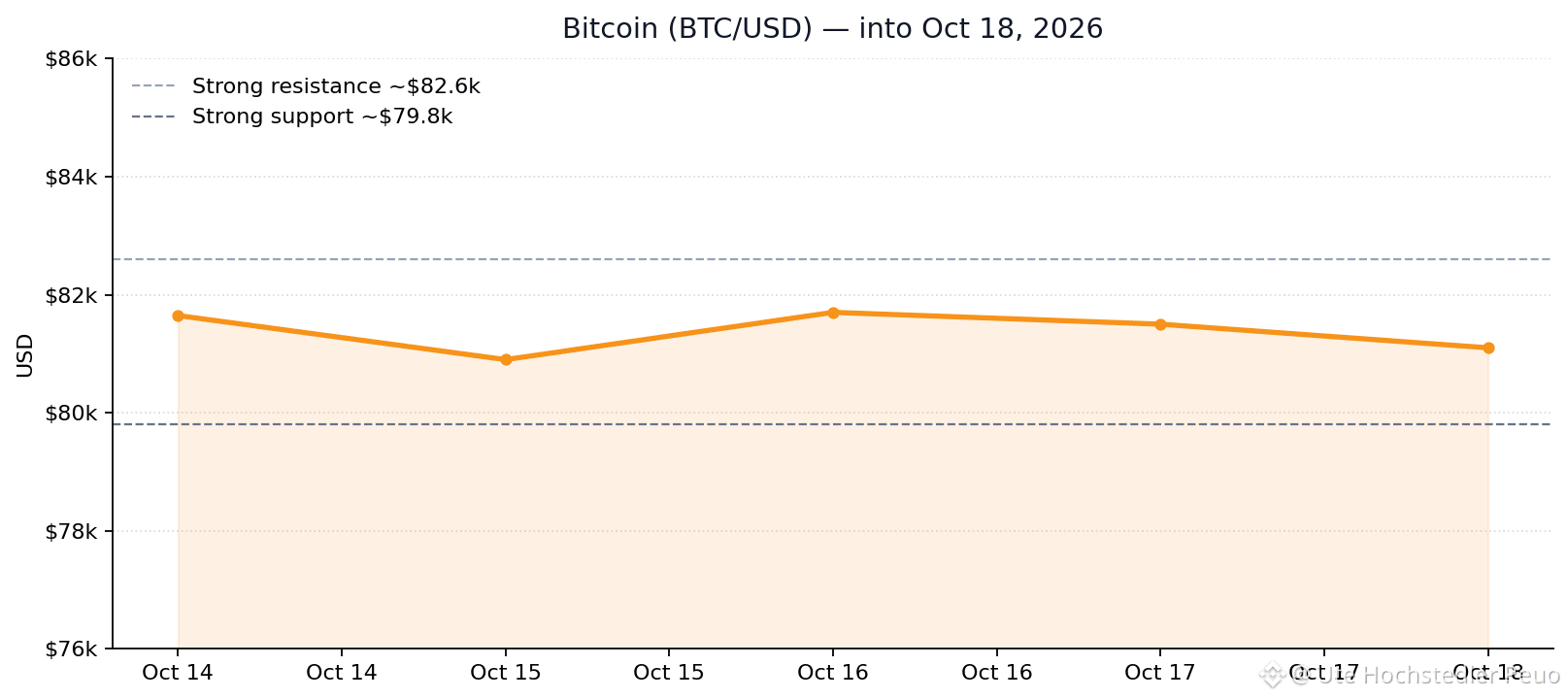
is trading near $81,000–$81,700, holding the lower half of the $79,800–$84,300 weekly range on thin Sunday volume. The strongest near-term support is the $79,800–$80,500 cluster (October 15 low and the 50-day area). The strongest resistance is $82,600 (20-day EMA / recent range top), then $84,200–$84,350. Over the next 24 hours the base case is continued sideways trade between roughly $80,800 and $82,600. A clean daily close above $82,600 opens $84,200; a break under $79,800 reopens the mid-$78,000s. BTC is still setting the tone for the other four.
$BTC
is trading near $81,000–$81,700, holding the lower half of the $79,800–$84,300 weekly range on thin Sunday volume. The strongest near-term support is the $79,800–$80,500 cluster (October 15 low and the 50-day area). The strongest resistance is $82,600 (20-day EMA / recent range top), then $84,200–$84,350. Over the next 24 hours the base case is continued sideways trade between roughly $80,800 and $82,600. A clean daily close above $82,600 opens $84,200; a break under $79,800 reopens the mid-$78,000s. BTC is still setting the tone for the other four.
is trading near $81,000–$81,700, holding the lower half of the $79,800–$84,300 weekly range on thin Sunday volume. The strongest near-term support is the $79,800–$80,500 cluster (October 15 low and the 50-day area). The strongest resistance is $82,600 (20-day EMA / recent range top), then $84,200–$84,350. Over the next 24 hours the base case is continued sideways trade between roughly $80,800 and $82,600. A clean daily close above $82,600 opens $84,200; a break under $79,800 reopens the mid-$78,000s. BTC is still setting the tone for the other four.
102
Übersetzung ansehen
$SUI
{future}(SUIUSDT)
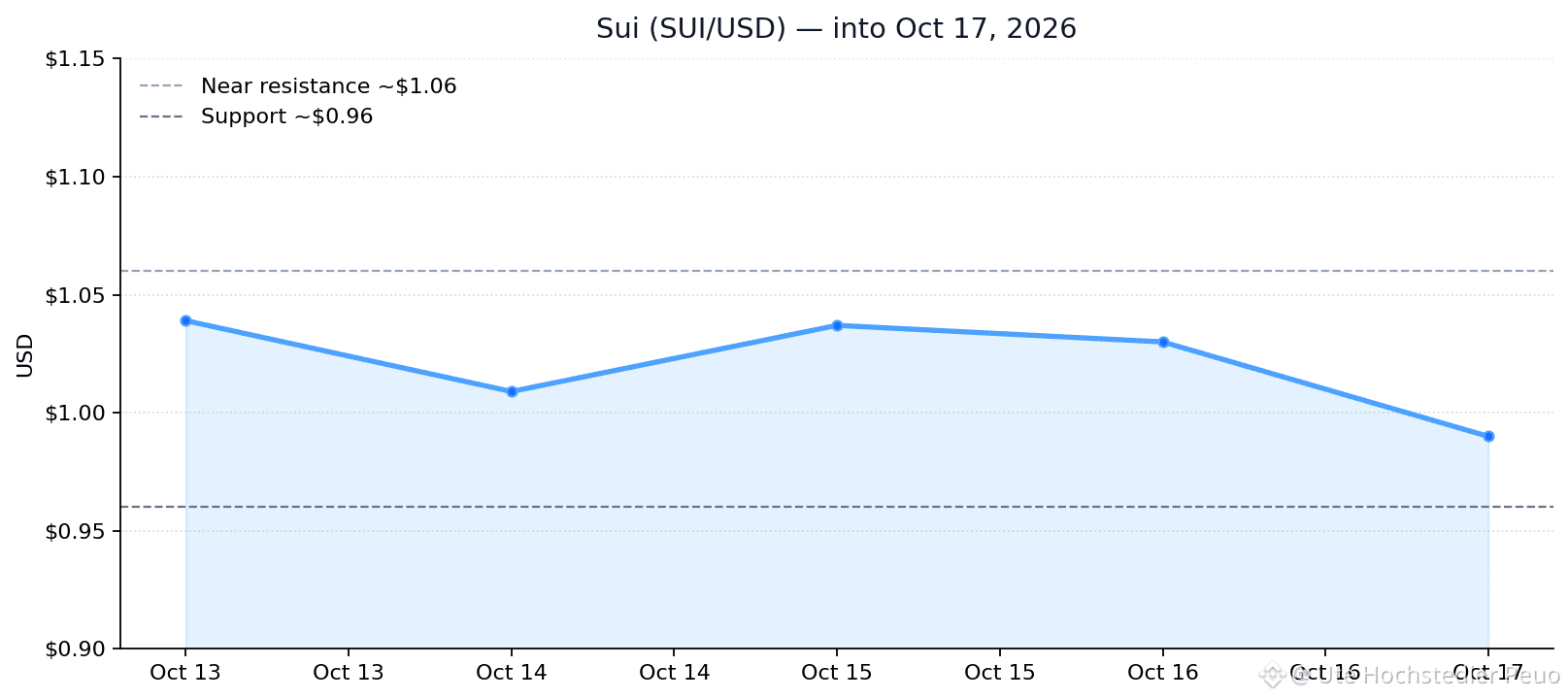
is trading near $0.99, down about 2–3% over the past day and still below the $1.00–$1.03 area it briefly reclaimed. Over the next 24 hours the base case is continued chop between $0.96 and $1.03. A push above $1.03–$1.06 opens $1.08–$1.10; a loss of $0.96 reopens the mid-$0.90s. SUI remains high-beta to Bitcoin and is unlikely to decouple on a thin weekend. Expect range-bound action unless the broader market turns risk-on.
$SUI
is trading near $0.99, down about 2–3% over the past day and still below the $1.00–$1.03 area it briefly reclaimed. Over the next 24 hours the base case is continued chop between $0.96 and $1.03. A push above $1.03–$1.06 opens $1.08–$1.10; a loss of $0.96 reopens the mid-$0.90s. SUI remains high-beta to Bitcoin and is unlikely to decouple on a thin weekend. Expect range-bound action unless the broader market turns risk-on.
is trading near $0.99, down about 2–3% over the past day and still below the $1.00–$1.03 area it briefly reclaimed. Over the next 24 hours the base case is continued chop between $0.96 and $1.03. A push above $1.03–$1.06 opens $1.08–$1.10; a loss of $0.96 reopens the mid-$0.90s. SUI remains high-beta to Bitcoin and is unlikely to decouple on a thin weekend. Expect range-bound action unless the broader market turns risk-on.
117
Übersetzung ansehen
$XRP
{future}(XRPUSDT)
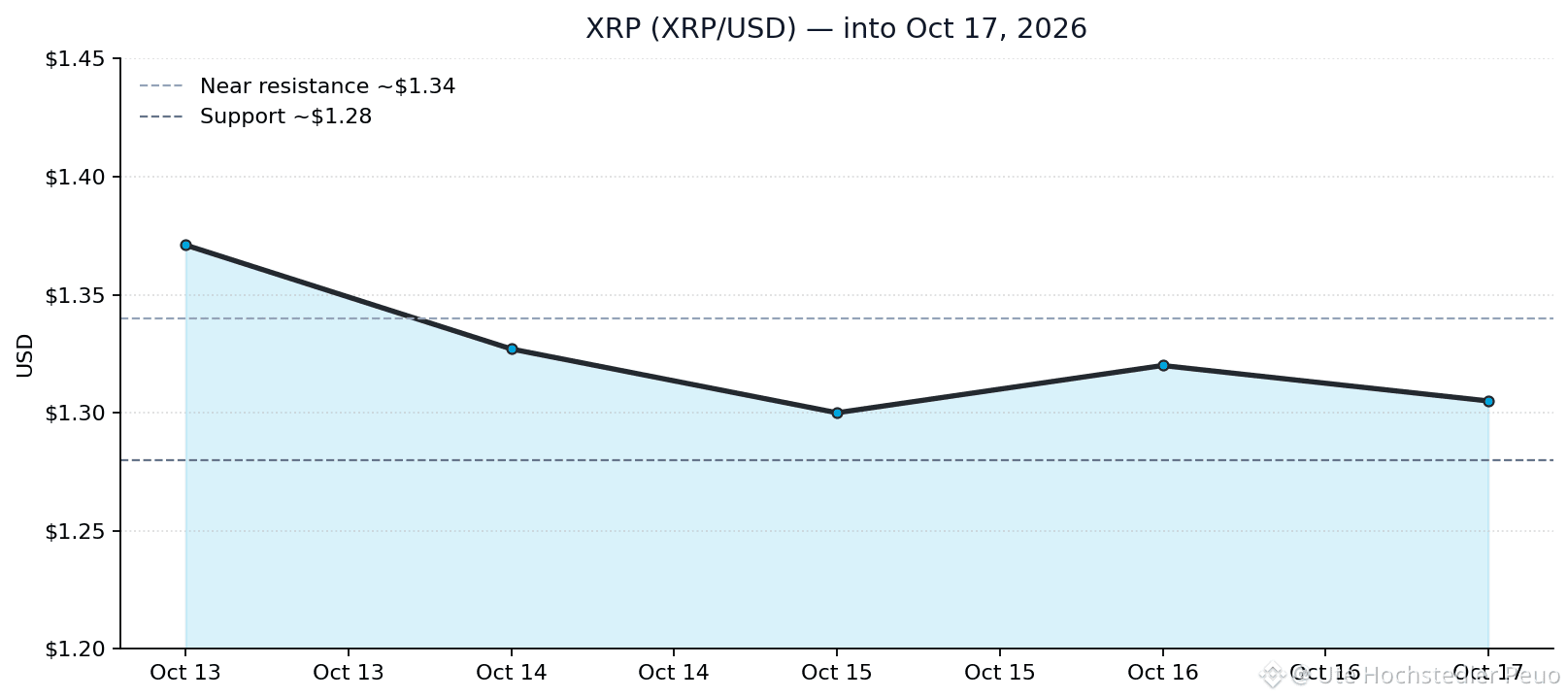
is trading near $1.30–$1.31, down about 1–3% over the past day and the weakest of the four. It remains below the daily moving averages and the $1.32–$1.34 resistance that failed earlier in the week. Over the next 24 hours the base case is consolidation between $1.28 and $1.34. A reclaim of $1.32–$1.34 would target $1.37; a break under $1.28 opens $1.25. With the broader market still digesting the hot inflation prints, XRP is more likely to follow Bitcoin than to lead. A sustained move above $1.34 is needed to shift the short-term bias.
$XRP
is trading near $1.30–$1.31, down about 1–3% over the past day and the weakest of the four. It remains below the daily moving averages and the $1.32–$1.34 resistance that failed earlier in the week. Over the next 24 hours the base case is consolidation between $1.28 and $1.34. A reclaim of $1.32–$1.34 would target $1.37; a break under $1.28 opens $1.25. With the broader market still digesting the hot inflation prints, XRP is more likely to follow Bitcoin than to lead. A sustained move above $1.34 is needed to shift the short-term bias.
is trading near $1.30–$1.31, down about 1–3% over the past day and the weakest of the four. It remains below the daily moving averages and the $1.32–$1.34 resistance that failed earlier in the week. Over the next 24 hours the base case is consolidation between $1.28 and $1.34. A reclaim of $1.32–$1.34 would target $1.37; a break under $1.28 opens $1.25. With the broader market still digesting the hot inflation prints, XRP is more likely to follow Bitcoin than to lead. A sustained move above $1.34 is needed to shift the short-term bias.
48
Übersetzung ansehen
$BTC
{future}(BTCUSDT)
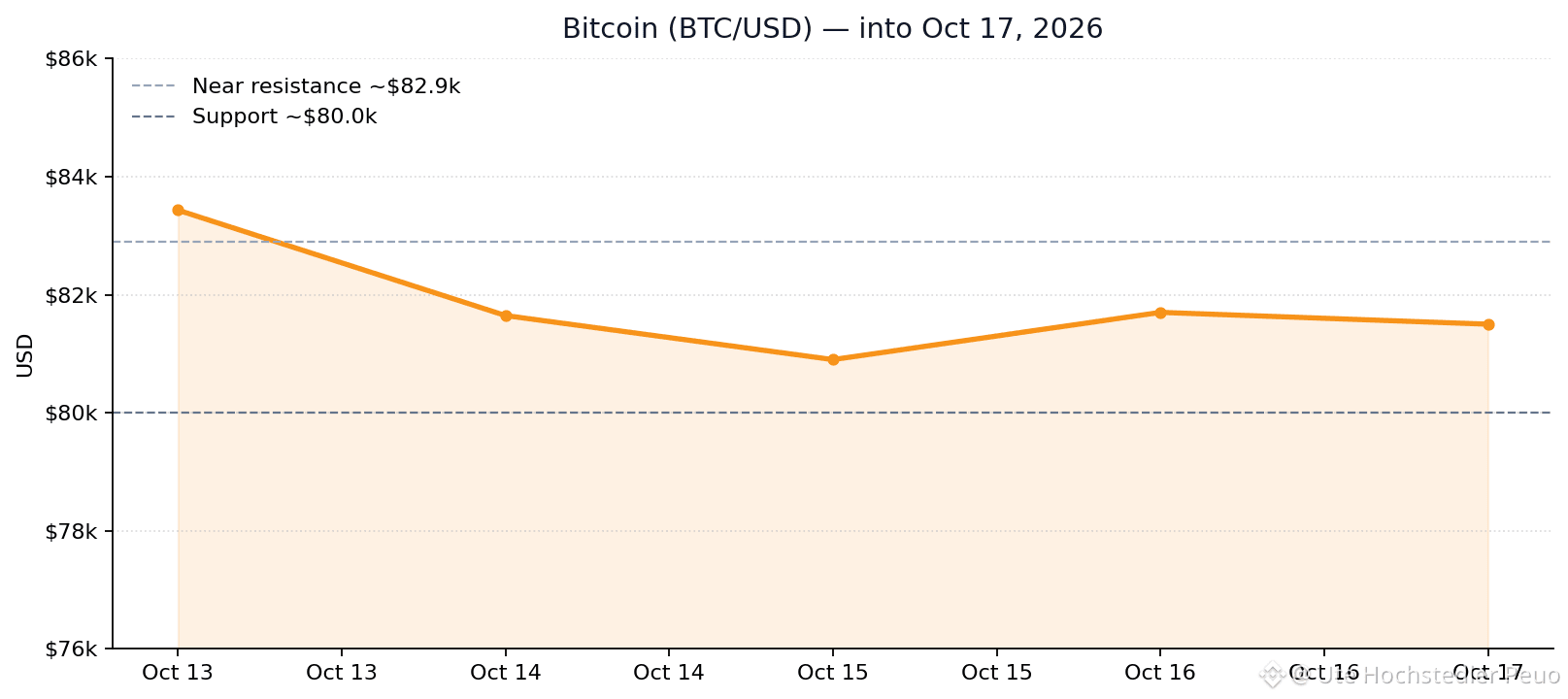
is trading near $81,500, down less than 1% over the past day after failing to hold the $82,000–$82,500 area. Weekend volume is lighter, and the base case is sideways action between roughly $80,600 and $82,900. A daily close above $82,900–$83,000 would open $84,200–$84,400; a loss of $80,600–$80,800 reopens the October 15 low near $79,800 and then the mid-$78,000s. BTC held up better than equities after the AI-stock selloff, but ETF outflows and elevated funding keep the short-term bias defensive. It is still setting the tone for the other three.
$BTC
is trading near $81,500, down less than 1% over the past day after failing to hold the $82,000–$82,500 area. Weekend volume is lighter, and the base case is sideways action between roughly $80,600 and $82,900. A daily close above $82,900–$83,000 would open $84,200–$84,400; a loss of $80,600–$80,800 reopens the October 15 low near $79,800 and then the mid-$78,000s. BTC held up better than equities after the AI-stock selloff, but ETF outflows and elevated funding keep the short-term bias defensive. It is still setting the tone for the other three.
is trading near $81,500, down less than 1% over the past day after failing to hold the $82,000–$82,500 area. Weekend volume is lighter, and the base case is sideways action between roughly $80,600 and $82,900. A daily close above $82,900–$83,000 would open $84,200–$84,400; a loss of $80,600–$80,800 reopens the October 15 low near $79,800 and then the mid-$78,000s. BTC held up better than equities after the AI-stock selloff, but ETF outflows and elevated funding keep the short-term bias defensive. It is still setting the tone for the other three.
89
Übersetzung ansehen
$SOL
{future}(SOLUSDT)
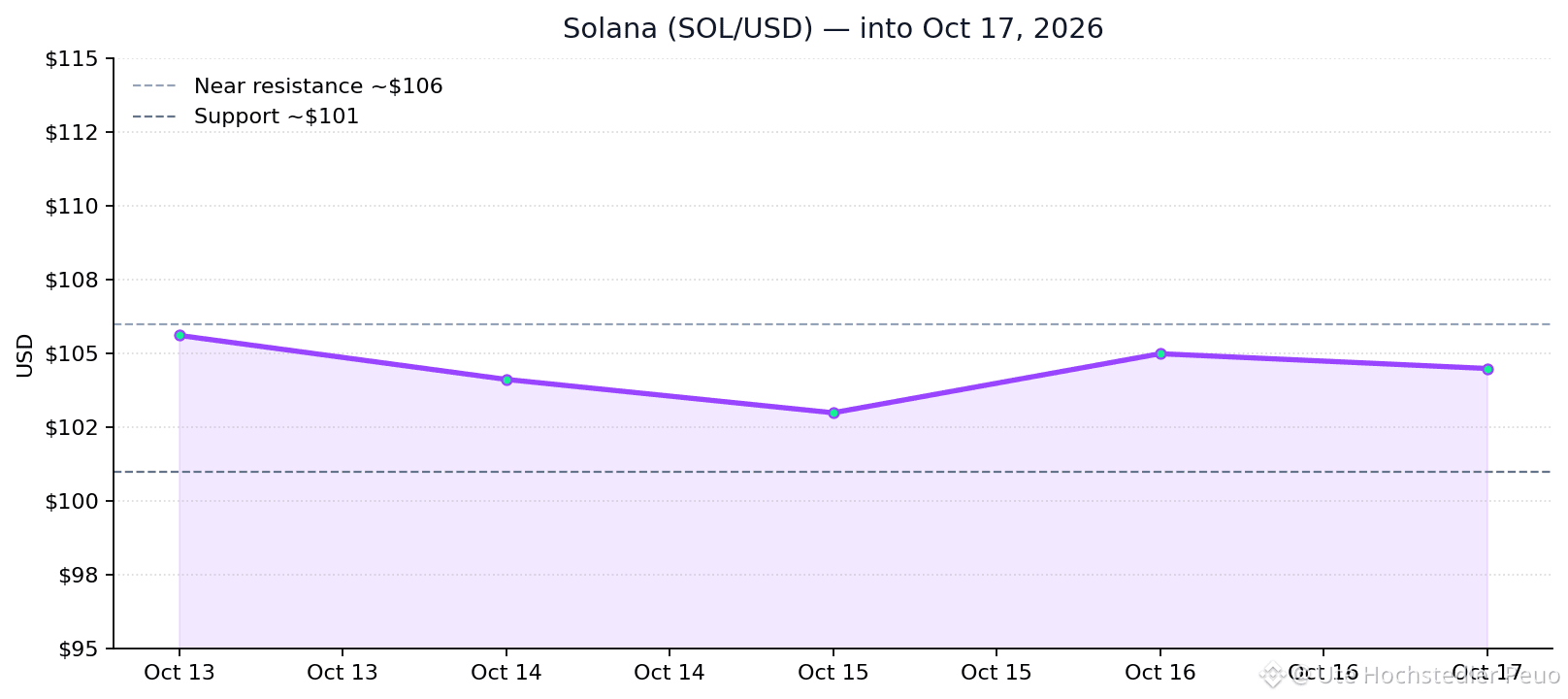
is trading near $104–$105, down about 0.5–1.5% over the past day and still below the $106–$108 zone that capped the recent bounce. Over the next 24 hours the base case is a thin-liquidity weekend range of roughly $101–$106. A push above $106 opens $108–$110; a break under $101 reopens the high-$90s. SOL has underperformed Bitcoin on the week and is likely to stay high-beta to any further risk-off move. Expect chop unless Bitcoin reclaims $82,500–$83,000
$SOL
is trading near $104–$105, down about 0.5–1.5% over the past day and still below the $106–$108 zone that capped the recent bounce. Over the next 24 hours the base case is a thin-liquidity weekend range of roughly $101–$106. A push above $106 opens $108–$110; a break under $101 reopens the high-$90s. SOL has underperformed Bitcoin on the week and is likely to stay high-beta to any further risk-off move. Expect chop unless Bitcoin reclaims $82,500–$83,000
is trading near $104–$105, down about 0.5–1.5% over the past day and still below the $106–$108 zone that capped the recent bounce. Over the next 24 hours the base case is a thin-liquidity weekend range of roughly $101–$106. A push above $106 opens $108–$110; a break under $101 reopens the high-$90s. SOL has underperformed Bitcoin on the week and is likely to stay high-beta to any further risk-off move. Expect chop unless Bitcoin reclaims $82,500–$83,000
65
Übersetzung ansehen
$SOL
{future}(SOLUSDT)
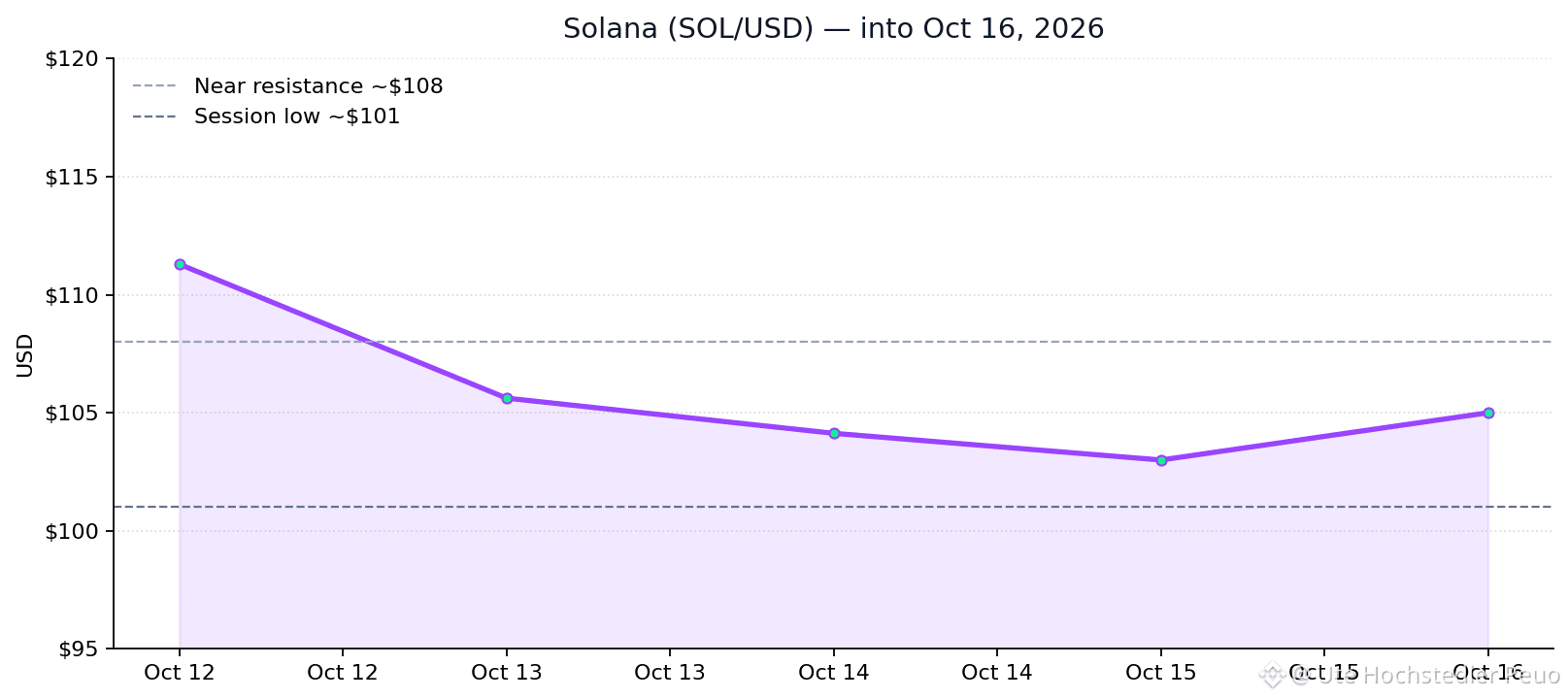
is trading near $103–$106, up a few percent from the October 15 low near $101 but still well below the early-October highs near $122. Over the next 24 hours the base case is consolidation between $101 and $108. A push above $106–$108 opens $110–$112; a break under $101 opens the high-$90s. SOL has underperformed Bitcoin on the week and is likely to remain high-beta to any further risk-off move. A clean reclaim of $108 is the first signal that the short-term selling pressure is easing.
$SOL
is trading near $103–$106, up a few percent from the October 15 low near $101 but still well below the early-October highs near $122. Over the next 24 hours the base case is consolidation between $101 and $108. A push above $106–$108 opens $110–$112; a break under $101 opens the high-$90s. SOL has underperformed Bitcoin on the week and is likely to remain high-beta to any further risk-off move. A clean reclaim of $108 is the first signal that the short-term selling pressure is easing.
is trading near $103–$106, up a few percent from the October 15 low near $101 but still well below the early-October highs near $122. Over the next 24 hours the base case is consolidation between $101 and $108. A push above $106–$108 opens $110–$112; a break under $101 opens the high-$90s. SOL has underperformed Bitcoin on the week and is likely to remain high-beta to any further risk-off move. A clean reclaim of $108 is the first signal that the short-term selling pressure is easing.
54
Anmelden und weiter Inhalte entdecken
Krypto-Nutzer weltweit auf Binance Square kennenlernen
⚡️ Bleib in Sachen Krypto stets am Puls.
💬 Die weltgrößte Kryptobörse vertraut darauf.
👍 Erhalte verlässliche Einblicke von verifizierten Creators.
E-Mail-Adresse/Telefonnummer
Trendthemen
CanMicrosoftDeliverOnAI
511,545 Aufrufe
3,474 Kommentare
Berichtssaison, Session 3: Übertreffen Google und Microsoft die Gewinnerwartungen?
Binance Square Official
·151 Likes
·84.1k Aufrufe
CanGoogleDefindItsCore
311,298 Aufrufe
2,446 Kommentare
EarningsSeason
6M Aufrufe
29,635 Kommentare