
Sunny3555
32 Beiträge

Sunny3555
Melden
Nutzer blockieren
Trade eröffnen

BNB Halter
Gelegenheitstrader
2.1 Jahre
5 Following
29 Follower
43 Like gegeben
Beiträge
Portfolio
Alle
Zitierungen
·
--
Bärisch
#CanBTCReboundAfterFallingBelow60K? $BTC #CanGTA6'sLaunchLiftTTWOShares?
Ist es möglich, dass es nur ein Spiel ist? Oder wird BTC steigen? Bin wegen der Zeitumstellungen so verwirrt.
#CanBTCReboundAfterFallingBelow60K? $BTC #CanGTA6'sLaunchLiftTTWOShares?
Ist es möglich, dass es nur ein Spiel ist? Oder wird BTC steigen? Bin wegen der Zeitumstellungen so verwirrt.
Ist es möglich, dass es nur ein Spiel ist? Oder wird BTC steigen? Bin wegen der Zeitumstellungen so verwirrt.
45
·
--

Artikel
Über dem Markt#XPL $XPL
@Plasma Heute möchte ich nichts schreiben, weil ich seit letzter Nacht feststecke, um die Höhen und Tiefen des Marktes zu sehen und plötzlich realisiere, dass Risiko und Glück dich stärker machen und ihren Platz und Teil deines Lebens dazwischen haben. Auch bleibt eine Sache: Es ist eine Strategie. Eine Person, die denkt, plant und handelt, ist die Grundlage seines Wissens. Und während dieser Zeit steht er diesen beiden Dingen gegenüber, die Risiko und Glück genannt werden. Wenn diese Dinge kombiniert werden und er die Ergebnisse erhält, lass mich eine Frage stellen: Wer gewinnt, Glück, Risiko oder Planung? Das war also mein Gedanke, den ich mit dir teile. Bitte lass mich deine Meinung wissen. $XPL $XRP @Plasma
Über dem Markt
#XPL $XPL
@Plasma Heute möchte ich nichts schreiben, weil ich seit letzter Nacht feststecke, um die Höhen und Tiefen des Marktes zu sehen und plötzlich realisiere, dass Risiko und Glück dich stärker machen und ihren Platz und Teil deines Lebens dazwischen haben. Auch bleibt eine Sache: Es ist eine Strategie. Eine Person, die denkt, plant und handelt, ist die Grundlage seines Wissens. Und während dieser Zeit steht er diesen beiden Dingen gegenüber, die Risiko und Glück genannt werden. Wenn diese Dinge kombiniert werden und er die Ergebnisse erhält, lass mich eine Frage stellen: Wer gewinnt, Glück, Risiko oder Planung? Das war also mein Gedanke, den ich mit dir teile. Bitte lass mich deine Meinung wissen. $XPL $XRP @Plasma
@Plasma Heute möchte ich nichts schreiben, weil ich seit letzter Nacht feststecke, um die Höhen und Tiefen des Marktes zu sehen und plötzlich realisiere, dass Risiko und Glück dich stärker machen und ihren Platz und Teil deines Lebens dazwischen haben. Auch bleibt eine Sache: Es ist eine Strategie. Eine Person, die denkt, plant und handelt, ist die Grundlage seines Wissens. Und während dieser Zeit steht er diesen beiden Dingen gegenüber, die Risiko und Glück genannt werden. Wenn diese Dinge kombiniert werden und er die Ergebnisse erhält, lass mich eine Frage stellen: Wer gewinnt, Glück, Risiko oder Planung? Das war also mein Gedanke, den ich mit dir teile. Bitte lass mich deine Meinung wissen. $XPL $XRP @Plasma
41
·
--
#plasma $XPL @Plasma
Heute freue ich mich über die Erholung #XPL letzte Nacht war der niedrigste Preis und jetzt sieht man das Wachstum, aber hier ist der Punkt für diejenigen, die wissen, wie man mit dem Risiko umgeht, also beobachtet den Markt und bekommt neue Horizonte, um eure Entscheidungen für euer besseres Geschäft zu treffen $XPL
Heute freue ich mich über die Erholung #XPL letzte Nacht war der niedrigste Preis und jetzt sieht man das Wachstum, aber hier ist der Punkt für diejenigen, die wissen, wie man mit dem Risiko umgeht, also beobachtet den Markt und bekommt neue Horizonte, um eure Entscheidungen für euer besseres Geschäft zu treffen $XPL

1
31
·
--
Artikel
Übersetzung ansehen
News makes me Confuse@Plasma #plasm $XPL
The new global financial system is here.As I watched and experienced during my journey of trade by the passing time I realised it can be joyful or painful it’s all depends on your ability or skills if you can handle your emotions or make your decisions at the right time you will be the Future hero afcours luck exists but hard work have own place so Don’t worry Make your decisions and believe your self and get right knowledge right time you will never lose $XPL #Plasma @Plasma in the last want share my way of trading me is not a expert just have small sense which was given by Allah me also don’t know me using it wrong or right way so get point I start with plasma here is some points
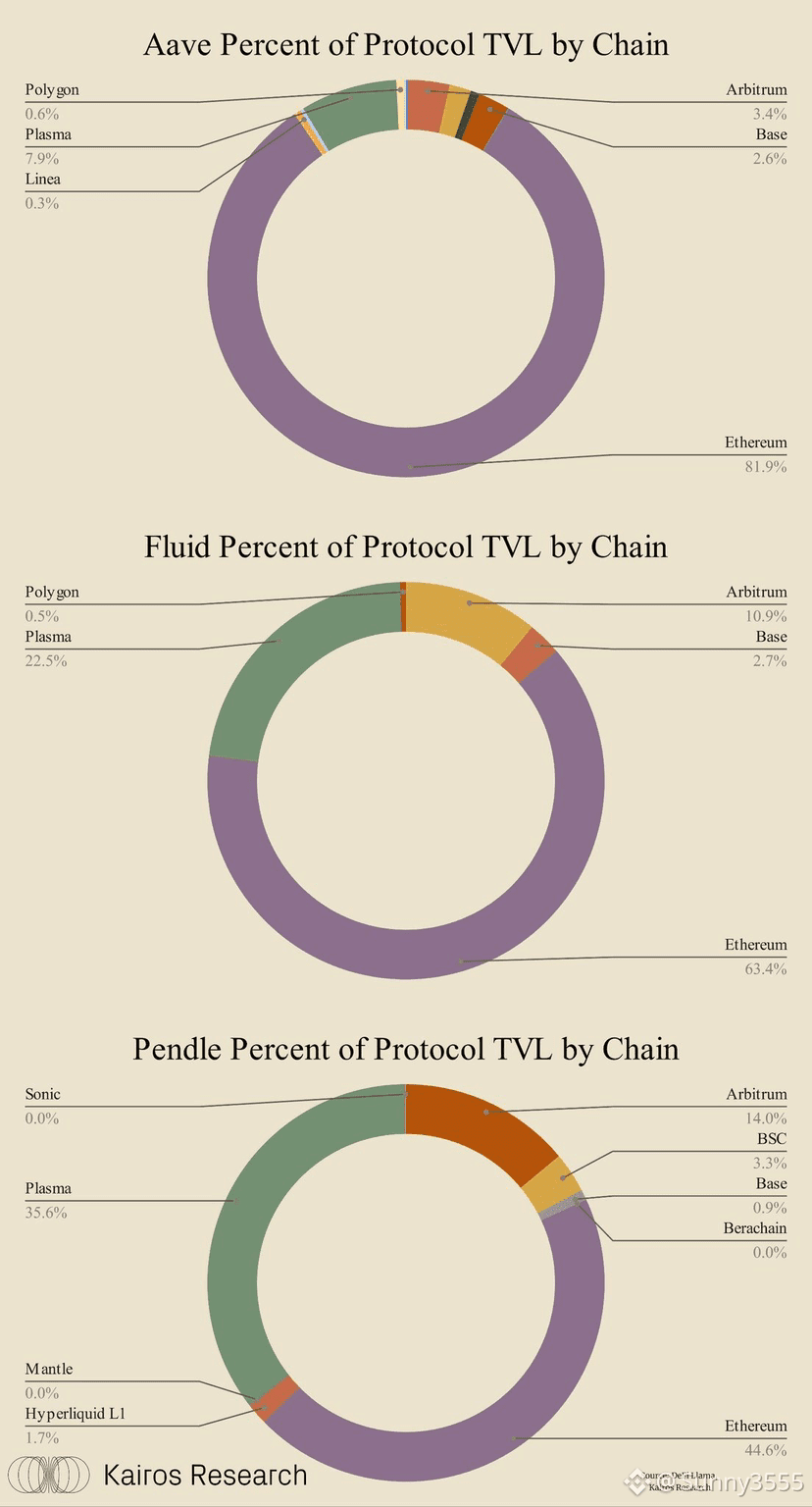
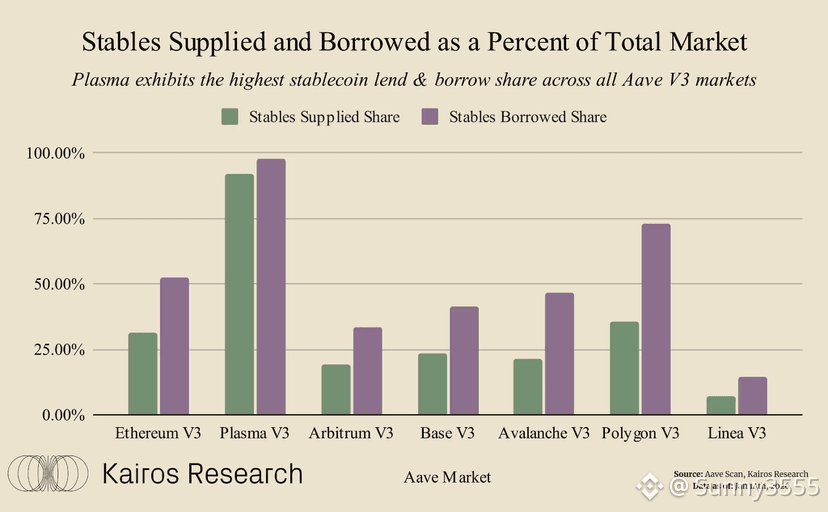
Plasma now has the second largest onchain lending market in the world. If you're building new financial primitives with stablecoins, build alongside us on Plasma.
News makes me Confuse
@Plasma #plasm $XPL
The new global financial system is here.As I watched and experienced during my journey of trade by the passing time I realised it can be joyful or painful it’s all depends on your ability or skills if you can handle your emotions or make your decisions at the right time you will be the Future hero afcours luck exists but hard work have own place so Don’t worry Make your decisions and believe your self and get right knowledge right time you will never lose $XPL #Plasma @Plasma in the last want share my way of trading me is not a expert just have small sense which was given by Allah me also don’t know me using it wrong or right way so get point I start with plasma here is some points
Plasma now has the second largest onchain lending market in the world. If you're building new financial primitives with stablecoins, build alongside us on Plasma.
1
22
·
--
Übersetzung ansehen
@Plasma #BinanceSquareTalks it was a good decision give me your opinion i am the new one thanks
@Plasma #BinanceSquareTalks it was a good decision give me your opinion i am the new one thanks
20
·
--
Artikel
Ist es die Zukunft? Frag dich selbst@Plasma #Plasma $XPL
Tiefe Stablecoin-Liquidität ist das, was jedes Zahlungsunternehmen, jeder Kartenherausgeber und jedes Fintech benötigt.
Menschen und Unternehmen, die Dollar halten, haben Zugang zu institutionellen Arbitrage-Renditen auf denselben Wegen, die ihr Geld bewegen. Tiefe Liquidität ist das Rückgrat echter Zahlungen.
Wenn Stablecoins einfach und zuverlässig bewegt werden, können Entwickler sich darauf konzentrieren, großartige Produkte zu schaffen, anstatt sich mit den Wegen herumzuschlagen.
Das ist die Art von Grundlage, die ich für skalierbar, effizient und für die Nutzung in der realen Welt geeignet halte. So sieht echte Produkt-Markt-Passung im DeFi aus.
Ist es die Zukunft? Frag dich selbst
@Plasma #Plasma $XPL
Tiefe Stablecoin-Liquidität ist das, was jedes Zahlungsunternehmen, jeder Kartenherausgeber und jedes Fintech benötigt.
Menschen und Unternehmen, die Dollar halten, haben Zugang zu institutionellen Arbitrage-Renditen auf denselben Wegen, die ihr Geld bewegen. Tiefe Liquidität ist das Rückgrat echter Zahlungen.
Wenn Stablecoins einfach und zuverlässig bewegt werden, können Entwickler sich darauf konzentrieren, großartige Produkte zu schaffen, anstatt sich mit den Wegen herumzuschlagen.
Das ist die Art von Grundlage, die ich für skalierbar, effizient und für die Nutzung in der realen Welt geeignet halte. So sieht echte Produkt-Markt-Passung im DeFi aus.
19
·
--
@Plasma #plasma $XPL Sind Sie ein Creator, der für seine Inhalte belohnt werden möchte? …..$XPL #Plasma Tiefe Liquidität ist das Rückgrat echter Zahlungen.
Wenn Stablecoins einfach und zuverlässig bewegt werden, können Entwickler sich darauf konzentrieren, großartige Produkte zu schaffen, anstatt sich mit den Rails herumzuschlagen.
Das ist die Art von Grundlage, mit der wir uns skalierbar, effizient und für den tatsächlichen Einsatz in der realen Welt ausrichten.
27
·
--
@LorenzoProtocol $BANK Es ist Zeit, die Münze für die Zukunft zu halten. Du wirst bald belohnt werden, also triff eine weise Entscheidung☺️
@Lorenzo Protocol $BANK Es ist Zeit, die Münze für die Zukunft zu halten. Du wirst bald belohnt werden, also triff eine weise Entscheidung☺️

2
331
·
--

Artikel
Übersetzung ansehen
The Future.@WalrusProtocol $WAL #Walrus
{spot}(WALUSDT)
The digital world is heavy. Every day, humanity generates roughly 328.77 million terabytes of data. We are no longer just sending text emails; we are training massive Artificial Intelligence (AI) models, streaming 4K video, and building complex 3D metaverses.For the last decade, the solution to this data explosion has been simple but flawed: The Cloud. We handed our digital lives over to Amazon (AWS), Google, and Microsoft. While convenient, this centralization has created a fragile internet. These tech giants act as gatekeepers—they can censor content, raise prices unilaterally, and introduce single points of failure.Web3 promised a better way: decentralized storage. Networks like Filecoin and Arweave showed us that a distributed network of hard drives could work. However, they struggled with the "Blockchain Trilemma," often sacrificing speed or low costs to achieve decentralization.Now, a new contender has emerged to solve these legacy issues. Built on the blazing-fast Sui blockchain, the Walrus Protocol is redefining what it means to store data on-chain. It is not just a "Dropbox for crypto"; it is a programmable, cryptographically secure data layer designed for the AI era.The Architecture of Efficiency: Understanding "Red Stuff"To understand why Walrus is a game-changer, you have to look at the math. Traditional decentralized storage often relies on "full replication." If you want to store a 1GB file securely on a legacy network, that network might copy your file 50 to 100 times across different nodes. This is secure, but it is incredibly wasteful and expensive.Walrus takes a different approach. It utilizes a novel implementation of 2D erasure coding affectionately named "Red Stuff" (based on RaptorQ fountain codes).When a user uploads a "Blob" (Binary Large Object) to Walrus, the protocol does not store the file in one piece. Instead, it breaks the file into a mathematical grid of "slivers." These slivers are then distributed across a vast network of storage nodes. Efficiency: Because of this advanced math, Walrus achieves extreme durability with a replication factor of only 4x to 5x. This means storing 1GB of data only uses about 4GB of network capacity, compared to the hundreds of gigabytes required by older competitors. Robustness: The network is "Byzantine Fault Tolerant." Even if a significant portion of the nodes go offline or turn malicious, the original file can be perfectly reconstructed from the remaining slivers.The Sui Advantage: Speed Meets StorageWalrus is unique because it separates the "Control Plane" from the "Data Plane."Most blockchains try to do everything at once—process transactions and store data—which leads to congestion and high fees. Walrus uses the Sui blockchain strictly for management. The metadata (who owns the file, how big it is, and the proof that it exists) lives on Sui. The actual heavy data lives on the specialized Walrus nodes.This synergy allows Walrus to inherit the lightning-fast speed of Sui. Managing your storage, transferring ownership of a dataset, or updating permissions feels instant. It transforms storage from a static "hard drive" into a dynamic, programmable asset that can interact with smart contracts in real-time.The $WAL Token EconomyA decentralized network is only as strong as its incentives. The Walrus economy is designed to align the interests of users, storage providers, and token holders using the native $WAL token. Storage Payments: To store data, users must pay in $WAL. This creates a direct correlation between the network's adoption and the demand for the token. Staking and Security: Storage nodes operate on a Delegated Proof-of-Stake (DPoS) model. They must stake WAL to participate. If they lose data or go offline, they face slashing penalties. This financial stake ensures that providers are motivated to keep their servers running 24/7. * The Storage Fund: Perhaps the most innovative feature is the "Storage Fund." When a user pays for storage (e.g., for 5 years), the WAL tokens are not paid to the provider all at once. Instead, they are locked in a smart contract and released slowly over time. This mechanism guarantees that providers have a long-term incentive to host the data, while also removing tokens from the circulating supply, creating deflationary pressure as the network grows.Use Cases: Why the World Needs WalrusWalrus is not building technology for technology's sake. It is solving critical problems for the next generation of the internet.1. The AI Data CrisisTraining Large Language Models (LLMs) requires petabytes of text and imagery. Storing this on AWS is prohibitively expensive for open-source researchers. Walrus provides a decentralized "Data Lake" where researchers can store massive datasets cheaply. Because the metadata is on-chain, data can be cryptographically signed, proving its origin—a crucial feature in an era of deepfakes and AI-generated misinformation.2. Unstoppable "Walrus Sites"One of the most exciting developer tools is "Walrus Sites." Currently, most Decentralized Applications (dApps) still rely on centralized servers (like Vercel or AWS) for their frontend websites. If those servers go down, the dApp is inaccessible. Walrus allows developers to host their entire website—HTML, CSS, and JavaScript—directly on the decentralized network. This creates truly "unstoppable applications" that are resistant to censorship and platform de-risking.3. Dynamic NFTsThe NFT market has a dirty secret: many high-value digital collectibles are just links pointing to a centralized server. If the startup behind the project goes bankrupt, the image disappears. Walrus solves this by storing the actual media asset on-chain. Furthermore, because Walrus integrates with Sui Move, these assets can be dynamic. Imagine a gaming sword that changes its appearance as you use it in-game, with the visual updates permanently written to the storage layer.ConclusionWe are witnessing the transition from the "Cloud Era" to the "Fog Era." The centralized cloud served us well, but its limitations in privacy, cost, and censorship resistance are becoming undeniable.The Walrus Protocol represents the maturation of decentralized storage. By solving the efficiency problems of the past with "Red Stuff" and leveraging the speed of Sui, it offers a solution that is finally ready for mass adoption. It is cheaper than the competition, faster than the legacy chains, and more secure than the centralized giants.As we build a world of autonomous AI agents, censorship-resistant media, and true digital ownership, we need a foundation that can hold the weight of our digital future. Walrus is that foundation.@Walrus 🦭/acc $WAL #walrus
The Future.
@Walrus 🦭/acc $WAL #Walrus
The digital world is heavy. Every day, humanity generates roughly 328.77 million terabytes of data. We are no longer just sending text emails; we are training massive Artificial Intelligence (AI) models, streaming 4K video, and building complex 3D metaverses.For the last decade, the solution to this data explosion has been simple but flawed: The Cloud. We handed our digital lives over to Amazon (AWS), Google, and Microsoft. While convenient, this centralization has created a fragile internet. These tech giants act as gatekeepers—they can censor content, raise prices unilaterally, and introduce single points of failure.Web3 promised a better way: decentralized storage. Networks like Filecoin and Arweave showed us that a distributed network of hard drives could work. However, they struggled with the "Blockchain Trilemma," often sacrificing speed or low costs to achieve decentralization.Now, a new contender has emerged to solve these legacy issues. Built on the blazing-fast Sui blockchain, the Walrus Protocol is redefining what it means to store data on-chain. It is not just a "Dropbox for crypto"; it is a programmable, cryptographically secure data layer designed for the AI era.The Architecture of Efficiency: Understanding "Red Stuff"To understand why Walrus is a game-changer, you have to look at the math. Traditional decentralized storage often relies on "full replication." If you want to store a 1GB file securely on a legacy network, that network might copy your file 50 to 100 times across different nodes. This is secure, but it is incredibly wasteful and expensive.Walrus takes a different approach. It utilizes a novel implementation of 2D erasure coding affectionately named "Red Stuff" (based on RaptorQ fountain codes).When a user uploads a "Blob" (Binary Large Object) to Walrus, the protocol does not store the file in one piece. Instead, it breaks the file into a mathematical grid of "slivers." These slivers are then distributed across a vast network of storage nodes. Efficiency: Because of this advanced math, Walrus achieves extreme durability with a replication factor of only 4x to 5x. This means storing 1GB of data only uses about 4GB of network capacity, compared to the hundreds of gigabytes required by older competitors. Robustness: The network is "Byzantine Fault Tolerant." Even if a significant portion of the nodes go offline or turn malicious, the original file can be perfectly reconstructed from the remaining slivers.The Sui Advantage: Speed Meets StorageWalrus is unique because it separates the "Control Plane" from the "Data Plane."Most blockchains try to do everything at once—process transactions and store data—which leads to congestion and high fees. Walrus uses the Sui blockchain strictly for management. The metadata (who owns the file, how big it is, and the proof that it exists) lives on Sui. The actual heavy data lives on the specialized Walrus nodes.This synergy allows Walrus to inherit the lightning-fast speed of Sui. Managing your storage, transferring ownership of a dataset, or updating permissions feels instant. It transforms storage from a static "hard drive" into a dynamic, programmable asset that can interact with smart contracts in real-time.The $WAL Token EconomyA decentralized network is only as strong as its incentives. The Walrus economy is designed to align the interests of users, storage providers, and token holders using the native $WAL token. Storage Payments: To store data, users must pay in $WAL . This creates a direct correlation between the network's adoption and the demand for the token. Staking and Security: Storage nodes operate on a Delegated Proof-of-Stake (DPoS) model. They must stake WAL to participate. If they lose data or go offline, they face slashing penalties. This financial stake ensures that providers are motivated to keep their servers running 24/7. * The Storage Fund: Perhaps the most innovative feature is the "Storage Fund." When a user pays for storage (e.g., for 5 years), the WAL tokens are not paid to the provider all at once. Instead, they are locked in a smart contract and released slowly over time. This mechanism guarantees that providers have a long-term incentive to host the data, while also removing tokens from the circulating supply, creating deflationary pressure as the network grows.Use Cases: Why the World Needs WalrusWalrus is not building technology for technology's sake. It is solving critical problems for the next generation of the internet.1. The AI Data CrisisTraining Large Language Models (LLMs) requires petabytes of text and imagery. Storing this on AWS is prohibitively expensive for open-source researchers. Walrus provides a decentralized "Data Lake" where researchers can store massive datasets cheaply. Because the metadata is on-chain, data can be cryptographically signed, proving its origin—a crucial feature in an era of deepfakes and AI-generated misinformation.2. Unstoppable "Walrus Sites"One of the most exciting developer tools is "Walrus Sites." Currently, most Decentralized Applications (dApps) still rely on centralized servers (like Vercel or AWS) for their frontend websites. If those servers go down, the dApp is inaccessible. Walrus allows developers to host their entire website—HTML, CSS, and JavaScript—directly on the decentralized network. This creates truly "unstoppable applications" that are resistant to censorship and platform de-risking.3. Dynamic NFTsThe NFT market has a dirty secret: many high-value digital collectibles are just links pointing to a centralized server. If the startup behind the project goes bankrupt, the image disappears. Walrus solves this by storing the actual media asset on-chain. Furthermore, because Walrus integrates with Sui Move, these assets can be dynamic. Imagine a gaming sword that changes its appearance as you use it in-game, with the visual updates permanently written to the storage layer.ConclusionWe are witnessing the transition from the "Cloud Era" to the "Fog Era." The centralized cloud served us well, but its limitations in privacy, cost, and censorship resistance are becoming undeniable.The Walrus Protocol represents the maturation of decentralized storage. By solving the efficiency problems of the past with "Red Stuff" and leveraging the speed of Sui, it offers a solution that is finally ready for mass adoption. It is cheaper than the competition, faster than the legacy chains, and more secure than the centralized giants.As we build a world of autonomous AI agents, censorship-resistant media, and true digital ownership, we need a foundation that can hold the weight of our digital future. Walrus is that foundation.@Walrus 🦭/acc $WAL #walrus
The digital world is heavy. Every day, humanity generates roughly 328.77 million terabytes of data. We are no longer just sending text emails; we are training massive Artificial Intelligence (AI) models, streaming 4K video, and building complex 3D metaverses.For the last decade, the solution to this data explosion has been simple but flawed: The Cloud. We handed our digital lives over to Amazon (AWS), Google, and Microsoft. While convenient, this centralization has created a fragile internet. These tech giants act as gatekeepers—they can censor content, raise prices unilaterally, and introduce single points of failure.Web3 promised a better way: decentralized storage. Networks like Filecoin and Arweave showed us that a distributed network of hard drives could work. However, they struggled with the "Blockchain Trilemma," often sacrificing speed or low costs to achieve decentralization.Now, a new contender has emerged to solve these legacy issues. Built on the blazing-fast Sui blockchain, the Walrus Protocol is redefining what it means to store data on-chain. It is not just a "Dropbox for crypto"; it is a programmable, cryptographically secure data layer designed for the AI era.The Architecture of Efficiency: Understanding "Red Stuff"To understand why Walrus is a game-changer, you have to look at the math. Traditional decentralized storage often relies on "full replication." If you want to store a 1GB file securely on a legacy network, that network might copy your file 50 to 100 times across different nodes. This is secure, but it is incredibly wasteful and expensive.Walrus takes a different approach. It utilizes a novel implementation of 2D erasure coding affectionately named "Red Stuff" (based on RaptorQ fountain codes).When a user uploads a "Blob" (Binary Large Object) to Walrus, the protocol does not store the file in one piece. Instead, it breaks the file into a mathematical grid of "slivers." These slivers are then distributed across a vast network of storage nodes. Efficiency: Because of this advanced math, Walrus achieves extreme durability with a replication factor of only 4x to 5x. This means storing 1GB of data only uses about 4GB of network capacity, compared to the hundreds of gigabytes required by older competitors. Robustness: The network is "Byzantine Fault Tolerant." Even if a significant portion of the nodes go offline or turn malicious, the original file can be perfectly reconstructed from the remaining slivers.The Sui Advantage: Speed Meets StorageWalrus is unique because it separates the "Control Plane" from the "Data Plane."Most blockchains try to do everything at once—process transactions and store data—which leads to congestion and high fees. Walrus uses the Sui blockchain strictly for management. The metadata (who owns the file, how big it is, and the proof that it exists) lives on Sui. The actual heavy data lives on the specialized Walrus nodes.This synergy allows Walrus to inherit the lightning-fast speed of Sui. Managing your storage, transferring ownership of a dataset, or updating permissions feels instant. It transforms storage from a static "hard drive" into a dynamic, programmable asset that can interact with smart contracts in real-time.The $WAL Token EconomyA decentralized network is only as strong as its incentives. The Walrus economy is designed to align the interests of users, storage providers, and token holders using the native $WAL token. Storage Payments: To store data, users must pay in $WAL . This creates a direct correlation between the network's adoption and the demand for the token. Staking and Security: Storage nodes operate on a Delegated Proof-of-Stake (DPoS) model. They must stake WAL to participate. If they lose data or go offline, they face slashing penalties. This financial stake ensures that providers are motivated to keep their servers running 24/7. * The Storage Fund: Perhaps the most innovative feature is the "Storage Fund." When a user pays for storage (e.g., for 5 years), the WAL tokens are not paid to the provider all at once. Instead, they are locked in a smart contract and released slowly over time. This mechanism guarantees that providers have a long-term incentive to host the data, while also removing tokens from the circulating supply, creating deflationary pressure as the network grows.Use Cases: Why the World Needs WalrusWalrus is not building technology for technology's sake. It is solving critical problems for the next generation of the internet.1. The AI Data CrisisTraining Large Language Models (LLMs) requires petabytes of text and imagery. Storing this on AWS is prohibitively expensive for open-source researchers. Walrus provides a decentralized "Data Lake" where researchers can store massive datasets cheaply. Because the metadata is on-chain, data can be cryptographically signed, proving its origin—a crucial feature in an era of deepfakes and AI-generated misinformation.2. Unstoppable "Walrus Sites"One of the most exciting developer tools is "Walrus Sites." Currently, most Decentralized Applications (dApps) still rely on centralized servers (like Vercel or AWS) for their frontend websites. If those servers go down, the dApp is inaccessible. Walrus allows developers to host their entire website—HTML, CSS, and JavaScript—directly on the decentralized network. This creates truly "unstoppable applications" that are resistant to censorship and platform de-risking.3. Dynamic NFTsThe NFT market has a dirty secret: many high-value digital collectibles are just links pointing to a centralized server. If the startup behind the project goes bankrupt, the image disappears. Walrus solves this by storing the actual media asset on-chain. Furthermore, because Walrus integrates with Sui Move, these assets can be dynamic. Imagine a gaming sword that changes its appearance as you use it in-game, with the visual updates permanently written to the storage layer.ConclusionWe are witnessing the transition from the "Cloud Era" to the "Fog Era." The centralized cloud served us well, but its limitations in privacy, cost, and censorship resistance are becoming undeniable.The Walrus Protocol represents the maturation of decentralized storage. By solving the efficiency problems of the past with "Red Stuff" and leveraging the speed of Sui, it offers a solution that is finally ready for mass adoption. It is cheaper than the competition, faster than the legacy chains, and more secure than the centralized giants.As we build a world of autonomous AI agents, censorship-resistant media, and true digital ownership, we need a foundation that can hold the weight of our digital future. Walrus is that foundation.@Walrus 🦭/acc $WAL #walrus
·
--

Artikel
Übersetzung ansehen
FutureThe digital world is heavy. Every day, humanity generates roughly 328.77 million terabytes of data. We are no longer just sending text emails; we are training massive Artificial Intelligence (AI) models, streaming 4K video, and building complex 3D metaverses.For the last decade, the solution to this data explosion has been simple but flawed: The Cloud. We handed our digital lives over to Amazon (AWS), Google, and Microsoft. While convenient, this centralization has created a fragile internet. These tech giants act as gatekeepers—they can censor content, raise prices unilaterally, and introduce single points of failure.Web3 promised a better way: decentralized storage. Networks like Filecoin and Arweave showed us that a distributed network of hard drives could work. However, they struggled with the "Blockchain Trilemma," often sacrificing speed or low costs to achieve decentralization.Now, a new contender has emerged to solve these legacy issues. Built on the blazing-fast Sui blockchain, the Walrus Protocol is redefining what it means to store data on-chain. It is not just a "Dropbox for crypto"; it is a programmable, cryptographically secure data layer designed for the AI era.The Architecture of Efficiency: Understanding "Red Stuff"To understand why Walrus is a game-changer, you have to look at the math. Traditional decentralized storage often relies on "full replication." If you want to store a 1GB file securely on a legacy network, that network might copy your file 50 to 100 times across different nodes. This is secure, but it is incredibly wasteful and expensive.Walrus takes a different approach. It utilizes a novel implementation of 2D erasure coding affectionately named "Red Stuff" (based on RaptorQ fountain codes).When a user uploads a "Blob" (Binary Large Object) to Walrus, the protocol does not store the file in one piece. Instead, it breaks the file into a mathematical grid of "slivers." These slivers are then distributed across a vast network of storage nodes. Efficiency: Because of this advanced math, Walrus achieves extreme durability with a replication factor of only 4x to 5x. This means storing 1GB of data only uses about 4GB of network capacity, compared to the hundreds of gigabytes required by older competitors. Robustness: The network is "Byzantine Fault Tolerant." Even if a significant portion of the nodes go offline or turn malicious, the original file can be perfectly reconstructed from the remaining slivers.The Sui Advantage: Speed Meets StorageWalrus is unique because it separates the "Control Plane" from the "Data Plane."Most blockchains try to do everything at once—process transactions and store data—which leads to congestion and high fees. Walrus uses the Sui blockchain strictly for management. The metadata (who owns the file, how big it is, and the proof that it exists) lives on Sui. The actual heavy data lives on the specialized Walrus nodes.This synergy allows Walrus to inherit the lightning-fast speed of Sui. Managing your storage, transferring ownership of a dataset, or updating permissions feels instant. It transforms storage from a static "hard drive" into a dynamic, programmable asset that can interact with smart contracts in real-time.The $WAL Token EconomyA decentralized network is only as strong as its incentives. The Walrus economy is designed to align the interests of users, storage providers, and token holders using the native $WAL token. Storage Payments: To store data, users must pay in $WAL. This creates a direct correlation between the network's adoption and the demand for the token. Staking and Security: Storage nodes operate on a Delegated Proof-of-Stake (DPoS) model. They must stake WAL to participate. If they lose data or go offline, they face slashing penalties. This financial stake ensures that providers are motivated to keep their servers running 24/7. * The Storage Fund: Perhaps the most innovative feature is the "Storage Fund." When a user pays for storage (e.g., for 5 years), the WAL tokens are not paid to the provider all at once. Instead, they are locked in a smart contract and released slowly over time. This mechanism guarantees that providers have a long-term incentive to host the data, while also removing tokens from the circulating supply, creating deflationary pressure as the network grows.Use Cases: Why the World Needs WalrusWalrus is not building technology for technology's sake. It is solving critical problems for the next generation of the internet.1. The AI Data CrisisTraining Large Language Models (LLMs) requires petabytes of text and imagery. Storing this on AWS is prohibitively expensive for open-source researchers. Walrus provides a decentralized "Data Lake" where researchers can store massive datasets cheaply. Because the metadata is on-chain, data can be cryptographically signed, proving its origin—a crucial feature in an era of deepfakes and AI-generated misinformation.2. Unstoppable "Walrus Sites"One of the most exciting developer tools is "Walrus Sites." Currently, most Decentralized Applications (dApps) still rely on centralized servers (like Vercel or AWS) for their frontend websites. If those servers go down, the dApp is inaccessible. Walrus allows developers to host their entire website—HTML, CSS, and JavaScript—directly on the decentralized network. This creates truly "unstoppable applications" that are resistant to censorship and platform de-risking.3. Dynamic NFTsThe NFT market has a dirty secret: many high-value digital collectibles are just links pointing to a centralized server. If the startup behind the project goes bankrupt, the image disappears. Walrus solves this by storing the actual media asset on-chain. Furthermore, because Walrus integrates with Sui Move, these assets can be dynamic. Imagine a gaming sword that changes its appearance as you use it in-game, with the visual updates permanently written to the storage layer.ConclusionWe are witnessing the transition from the "Cloud Era" to the "Fog Era." The centralized cloud served us well, but its limitations in privacy, cost, and censorship resistance are becoming undeniable.The Walrus Protocol represents the maturation of decentralized storage. By solving the efficiency problems of the past with "Red Stuff" and leveraging the speed of Sui, it offers a solution that is finally ready for mass adoption. It is cheaper than the competition, faster than the legacy chains, and more secure than the centralized giants.As we build a world of autonomous AI agents, censorship-resistant media, and true digital ownership, we need a foundation that can hold the weight of our digital future. Walrus is that foundation.@Walrus 🦭/acc $WAL @WalrusProtocol #Walrus
Future
The digital world is heavy. Every day, humanity generates roughly 328.77 million terabytes of data. We are no longer just sending text emails; we are training massive Artificial Intelligence (AI) models, streaming 4K video, and building complex 3D metaverses.For the last decade, the solution to this data explosion has been simple but flawed: The Cloud. We handed our digital lives over to Amazon (AWS), Google, and Microsoft. While convenient, this centralization has created a fragile internet. These tech giants act as gatekeepers—they can censor content, raise prices unilaterally, and introduce single points of failure.Web3 promised a better way: decentralized storage. Networks like Filecoin and Arweave showed us that a distributed network of hard drives could work. However, they struggled with the "Blockchain Trilemma," often sacrificing speed or low costs to achieve decentralization.Now, a new contender has emerged to solve these legacy issues. Built on the blazing-fast Sui blockchain, the Walrus Protocol is redefining what it means to store data on-chain. It is not just a "Dropbox for crypto"; it is a programmable, cryptographically secure data layer designed for the AI era.The Architecture of Efficiency: Understanding "Red Stuff"To understand why Walrus is a game-changer, you have to look at the math. Traditional decentralized storage often relies on "full replication." If you want to store a 1GB file securely on a legacy network, that network might copy your file 50 to 100 times across different nodes. This is secure, but it is incredibly wasteful and expensive.Walrus takes a different approach. It utilizes a novel implementation of 2D erasure coding affectionately named "Red Stuff" (based on RaptorQ fountain codes).When a user uploads a "Blob" (Binary Large Object) to Walrus, the protocol does not store the file in one piece. Instead, it breaks the file into a mathematical grid of "slivers." These slivers are then distributed across a vast network of storage nodes. Efficiency: Because of this advanced math, Walrus achieves extreme durability with a replication factor of only 4x to 5x. This means storing 1GB of data only uses about 4GB of network capacity, compared to the hundreds of gigabytes required by older competitors. Robustness: The network is "Byzantine Fault Tolerant." Even if a significant portion of the nodes go offline or turn malicious, the original file can be perfectly reconstructed from the remaining slivers.The Sui Advantage: Speed Meets StorageWalrus is unique because it separates the "Control Plane" from the "Data Plane."Most blockchains try to do everything at once—process transactions and store data—which leads to congestion and high fees. Walrus uses the Sui blockchain strictly for management. The metadata (who owns the file, how big it is, and the proof that it exists) lives on Sui. The actual heavy data lives on the specialized Walrus nodes.This synergy allows Walrus to inherit the lightning-fast speed of Sui. Managing your storage, transferring ownership of a dataset, or updating permissions feels instant. It transforms storage from a static "hard drive" into a dynamic, programmable asset that can interact with smart contracts in real-time.The $WAL Token EconomyA decentralized network is only as strong as its incentives. The Walrus economy is designed to align the interests of users, storage providers, and token holders using the native $WAL token. Storage Payments: To store data, users must pay in $WAL . This creates a direct correlation between the network's adoption and the demand for the token. Staking and Security: Storage nodes operate on a Delegated Proof-of-Stake (DPoS) model. They must stake WAL to participate. If they lose data or go offline, they face slashing penalties. This financial stake ensures that providers are motivated to keep their servers running 24/7. * The Storage Fund: Perhaps the most innovative feature is the "Storage Fund." When a user pays for storage (e.g., for 5 years), the WAL tokens are not paid to the provider all at once. Instead, they are locked in a smart contract and released slowly over time. This mechanism guarantees that providers have a long-term incentive to host the data, while also removing tokens from the circulating supply, creating deflationary pressure as the network grows.Use Cases: Why the World Needs WalrusWalrus is not building technology for technology's sake. It is solving critical problems for the next generation of the internet.1. The AI Data CrisisTraining Large Language Models (LLMs) requires petabytes of text and imagery. Storing this on AWS is prohibitively expensive for open-source researchers. Walrus provides a decentralized "Data Lake" where researchers can store massive datasets cheaply. Because the metadata is on-chain, data can be cryptographically signed, proving its origin—a crucial feature in an era of deepfakes and AI-generated misinformation.2. Unstoppable "Walrus Sites"One of the most exciting developer tools is "Walrus Sites." Currently, most Decentralized Applications (dApps) still rely on centralized servers (like Vercel or AWS) for their frontend websites. If those servers go down, the dApp is inaccessible. Walrus allows developers to host their entire website—HTML, CSS, and JavaScript—directly on the decentralized network. This creates truly "unstoppable applications" that are resistant to censorship and platform de-risking.3. Dynamic NFTsThe NFT market has a dirty secret: many high-value digital collectibles are just links pointing to a centralized server. If the startup behind the project goes bankrupt, the image disappears. Walrus solves this by storing the actual media asset on-chain. Furthermore, because Walrus integrates with Sui Move, these assets can be dynamic. Imagine a gaming sword that changes its appearance as you use it in-game, with the visual updates permanently written to the storage layer.ConclusionWe are witnessing the transition from the "Cloud Era" to the "Fog Era." The centralized cloud served us well, but its limitations in privacy, cost, and censorship resistance are becoming undeniable.The Walrus Protocol represents the maturation of decentralized storage. By solving the efficiency problems of the past with "Red Stuff" and leveraging the speed of Sui, it offers a solution that is finally ready for mass adoption. It is cheaper than the competition, faster than the legacy chains, and more secure than the centralized giants.As we build a world of autonomous AI agents, censorship-resistant media, and true digital ownership, we need a foundation that can hold the weight of our digital future. Walrus is that foundation.@Walrus 🦭/acc $WAL @Walrus 🦭/acc #Walrus
1
·
--

Artikel
Übersetzung ansehen
what you SayThe digital world is heavy. Every day, humanity generates roughly 328.77 million terabytes of data. We are no longer just sending text emails; we are training massive Artificial Intelligence (AI) models, streaming 4K video, and building complex 3D metaverses.For the last decade, the solution to this data explosion has been simple but flawed: The Cloud. We handed our digital lives over to Amazon (AWS), Google, and Microsoft. While convenient, this centralization has created a fragile internet. These tech giants act as gatekeepers—they can censor content, raise prices unilaterally, and introduce single points of failure.Web3 promised a better way: decentralized storage. Networks like Filecoin and Arweave showed us that a distributed network of hard drives could work. However, they struggled with the "Blockchain Trilemma," often sacrificing speed or low costs to achieve decentralization.Now, a new contender has emerged to solve these legacy issues. Built on the blazing-fast Sui blockchain, the Walrus Protocol is redefining what it means to store data on-chain. It is not just a "Dropbox for crypto"; it is a programmable, cryptographically secure data layer designed for the AI era.The Architecture of Efficiency: Understanding "Red Stuff"To understand why Walrus is a game-changer, you have to look at the math. Traditional decentralized storage often relies on "full replication." If you want to store a 1GB file securely on a legacy network, that network might copy your file 50 to 100 times across different nodes. This is secure, but it is incredibly wasteful and expensive.Walrus takes a different approach. It utilizes a novel implementation of 2D erasure coding affectionately named "Red Stuff" (based on RaptorQ fountain codes).When a user uploads a "Blob" (Binary Large Object) to Walrus, the protocol does not store the file in one piece. Instead, it breaks the file into a mathematical grid of "slivers." These slivers are then distributed across a vast network of storage nodes. Efficiency: Because of this advanced math, Walrus achieves extreme durability with a replication factor of only 4x to 5x. This means storing 1GB of data only uses about 4GB of network capacity, compared to the hundreds of gigabytes required by older competitors. Robustness: The network is "Byzantine Fault Tolerant." Even if a significant portion of the nodes go offline or turn malicious, the original file can be perfectly reconstructed from the remaining slivers.The Sui Advantage: Speed Meets StorageWalrus is unique because it separates the "Control Plane" from the "Data Plane."Most blockchains try to do everything at once—process transactions and store data—which leads to congestion and high fees. Walrus uses the Sui blockchain strictly for management. The metadata (who owns the file, how big it is, and the proof that it exists) lives on Sui. The actual heavy data lives on the specialized Walrus nodes.This synergy allows Walrus to inherit the lightning-fast speed of Sui. Managing your storage, transferring ownership of a dataset, or updating permissions feels instant. It transforms storage from a static "hard drive" into a dynamic, programmable asset that can interact with smart contracts in real-time.The $WAL Token EconomyA decentralized network is only as strong as its incentives. The Walrus economy is designed to align the interests of users, storage providers, and token holders using the native $WAL token. Storage Payments: To store data, users must pay in $WAL. This creates a direct correlation between the network's adoption and the demand for the token. Staking and Security: Storage nodes operate on a Delegated Proof-of-Stake (DPoS) model. They must stake WAL to participate. If they lose data or go offline, they face slashing penalties. This financial stake ensures that providers are motivated to keep their servers running 24/7. * The Storage Fund: Perhaps the most innovative feature is the "Storage Fund." When a user pays for storage (e.g., for 5 years), the WAL tokens are not paid to the provider all at once. Instead, they are locked in a smart contract and released slowly over time. This mechanism guarantees that providers have a long-term incentive to host the data, while also removing tokens from the circulating supply, creating deflationary pressure as the network grows.Use Cases: Why the World Needs WalrusWalrus is not building technology for technology's sake. It is solving critical problems for the next generation of the internet.1. The AI Data CrisisTraining Large Language Models (LLMs) requires petabytes of text and imagery. Storing this on AWS is prohibitively expensive for open-source researchers. Walrus provides a decentralized "Data Lake" where researchers can store massive datasets cheaply. Because the metadata is on-chain, data can be cryptographically signed, proving its origin—a crucial feature in an era of deepfakes and AI-generated misinformation.2. Unstoppable "Walrus Sites"One of the most exciting developer tools is "Walrus Sites." Currently, most Decentralized Applications (dApps) still rely on centralized servers (like Vercel or AWS) for their frontend websites. If those servers go down, the dApp is inaccessible. Walrus allows developers to host their entire website—HTML, CSS, and JavaScript—directly on the decentralized network. This creates truly "unstoppable applications" that are resistant to censorship and platform de-risking.3. Dynamic NFTsThe NFT market has a dirty secret: many high-value digital collectibles are just links pointing to a centralized server. If the startup behind the project goes bankrupt, the image disappears. Walrus solves this by storing the actual media asset on-chain. Furthermore, because Walrus integrates with Sui Move, these assets can be dynamic. Imagine a gaming sword that changes its appearance as you use it in-game, with the visual updates permanently written to the storage layer.ConclusionWe are witnessing the transition from the "Cloud Era" to the "Fog Era." The centralized cloud served us well, but its limitations in privacy, cost, and censorship resistance are becoming undeniable.The Walrus Protocol represents the maturation of decentralized storage. By solving the efficiency problems of the past with "Red Stuff" and leveraging the speed of Sui, it offers a solution that is finally ready for mass adoption. It is cheaper than the competition, faster than the legacy chains, and more secure than the centralized giants.As we build a world of autonomous AI agents, censorship-resistant media, and true digital ownership, we need a foundation that can hold the weight of our digital future. Walrus is that foundation.@Walrus 🦭/acc $WAL #walrus
what you Say
The digital world is heavy. Every day, humanity generates roughly 328.77 million terabytes of data. We are no longer just sending text emails; we are training massive Artificial Intelligence (AI) models, streaming 4K video, and building complex 3D metaverses.For the last decade, the solution to this data explosion has been simple but flawed: The Cloud. We handed our digital lives over to Amazon (AWS), Google, and Microsoft. While convenient, this centralization has created a fragile internet. These tech giants act as gatekeepers—they can censor content, raise prices unilaterally, and introduce single points of failure.Web3 promised a better way: decentralized storage. Networks like Filecoin and Arweave showed us that a distributed network of hard drives could work. However, they struggled with the "Blockchain Trilemma," often sacrificing speed or low costs to achieve decentralization.Now, a new contender has emerged to solve these legacy issues. Built on the blazing-fast Sui blockchain, the Walrus Protocol is redefining what it means to store data on-chain. It is not just a "Dropbox for crypto"; it is a programmable, cryptographically secure data layer designed for the AI era.The Architecture of Efficiency: Understanding "Red Stuff"To understand why Walrus is a game-changer, you have to look at the math. Traditional decentralized storage often relies on "full replication." If you want to store a 1GB file securely on a legacy network, that network might copy your file 50 to 100 times across different nodes. This is secure, but it is incredibly wasteful and expensive.Walrus takes a different approach. It utilizes a novel implementation of 2D erasure coding affectionately named "Red Stuff" (based on RaptorQ fountain codes).When a user uploads a "Blob" (Binary Large Object) to Walrus, the protocol does not store the file in one piece. Instead, it breaks the file into a mathematical grid of "slivers." These slivers are then distributed across a vast network of storage nodes. Efficiency: Because of this advanced math, Walrus achieves extreme durability with a replication factor of only 4x to 5x. This means storing 1GB of data only uses about 4GB of network capacity, compared to the hundreds of gigabytes required by older competitors. Robustness: The network is "Byzantine Fault Tolerant." Even if a significant portion of the nodes go offline or turn malicious, the original file can be perfectly reconstructed from the remaining slivers.The Sui Advantage: Speed Meets StorageWalrus is unique because it separates the "Control Plane" from the "Data Plane."Most blockchains try to do everything at once—process transactions and store data—which leads to congestion and high fees. Walrus uses the Sui blockchain strictly for management. The metadata (who owns the file, how big it is, and the proof that it exists) lives on Sui. The actual heavy data lives on the specialized Walrus nodes.This synergy allows Walrus to inherit the lightning-fast speed of Sui. Managing your storage, transferring ownership of a dataset, or updating permissions feels instant. It transforms storage from a static "hard drive" into a dynamic, programmable asset that can interact with smart contracts in real-time.The $WAL Token EconomyA decentralized network is only as strong as its incentives. The Walrus economy is designed to align the interests of users, storage providers, and token holders using the native $WAL token. Storage Payments: To store data, users must pay in $WAL. This creates a direct correlation between the network's adoption and the demand for the token. Staking and Security: Storage nodes operate on a Delegated Proof-of-Stake (DPoS) model. They must stake WAL to participate. If they lose data or go offline, they face slashing penalties. This financial stake ensures that providers are motivated to keep their servers running 24/7. * The Storage Fund: Perhaps the most innovative feature is the "Storage Fund." When a user pays for storage (e.g., for 5 years), the WAL tokens are not paid to the provider all at once. Instead, they are locked in a smart contract and released slowly over time. This mechanism guarantees that providers have a long-term incentive to host the data, while also removing tokens from the circulating supply, creating deflationary pressure as the network grows.Use Cases: Why the World Needs WalrusWalrus is not building technology for technology's sake. It is solving critical problems for the next generation of the internet.1. The AI Data CrisisTraining Large Language Models (LLMs) requires petabytes of text and imagery. Storing this on AWS is prohibitively expensive for open-source researchers. Walrus provides a decentralized "Data Lake" where researchers can store massive datasets cheaply. Because the metadata is on-chain, data can be cryptographically signed, proving its origin—a crucial feature in an era of deepfakes and AI-generated misinformation.2. Unstoppable "Walrus Sites"One of the most exciting developer tools is "Walrus Sites." Currently, most Decentralized Applications (dApps) still rely on centralized servers (like Vercel or AWS) for their frontend websites. If those servers go down, the dApp is inaccessible. Walrus allows developers to host their entire website—HTML, CSS, and JavaScript—directly on the decentralized network. This creates truly "unstoppable applications" that are resistant to censorship and platform de-risking.3. Dynamic NFTsThe NFT market has a dirty secret: many high-value digital collectibles are just links pointing to a centralized server. If the startup behind the project goes bankrupt, the image disappears. Walrus solves this by storing the actual media asset on-chain. Furthermore, because Walrus integrates with Sui Move, these assets can be dynamic. Imagine a gaming sword that changes its appearance as you use it in-game, with the visual updates permanently written to the storage layer.ConclusionWe are witnessing the transition from the "Cloud Era" to the "Fog Era." The centralized cloud served us well, but its limitations in privacy, cost, and censorship resistance are becoming undeniable.The Walrus Protocol represents the maturation of decentralized storage. By solving the efficiency problems of the past with "Red Stuff" and leveraging the speed of Sui, it offers a solution that is finally ready for mass adoption. It is cheaper than the competition, faster than the legacy chains, and more secure than the centralized giants.As we build a world of autonomous AI agents, censorship-resistant media, and true digital ownership, we need a foundation that can hold the weight of our digital future. Walrus is that foundation.@Walrus 🦭/acc $WAL #walrus
25
·
--
Übersetzung ansehen
#walrus $WAL @WalrusProtocol hi everyone its the time to earn the points to join the walrus and complete its task and get the points Maybe it’s helpful in future for the trade or saving so please give me also ur best opinion thanks and good wishes for the best.
#walrus $WAL @Walrus 🦭/acc hi everyone its the time to earn the points to join the walrus and complete its task and get the points Maybe it’s helpful in future for the trade or saving so please give me also ur best opinion thanks and good wishes for the best.

1
2
18
·
--

Artikel
Übersetzung ansehen
(WAL) what u think…?Walrus (WAL) is a native cryptocurrency token used within the Walrus protocol, a decentralized finance (DeFi) platform that focuses on secure and private blockchain-based interactions. The protocol supports private transactions and provides tools for users to engage with decentralized applications (dApps), governance, and staking activities. The Walrus protocol is designed to facilitate decentralized and privacy-preserving data storage and transactions. It operates on the Sui blockchain and utilizes a combination of erasure coding and blob storage to distribute large files across a decentralized network. This infrastructure is intended to offer cost-efficient, censorship-resistant storage suitable for applications, enterprises, and individuals seeking decentralized alternatives to traditional cloud solutions.
Event Period
2026-01-06 - 2026-02-09
Total participants
(WAL) what u think…?
Walrus (WAL) is a native cryptocurrency token used within the Walrus protocol, a decentralized finance (DeFi) platform that focuses on secure and private blockchain-based interactions. The protocol supports private transactions and provides tools for users to engage with decentralized applications (dApps), governance, and staking activities. The Walrus protocol is designed to facilitate decentralized and privacy-preserving data storage and transactions. It operates on the Sui blockchain and utilizes a combination of erasure coding and blob storage to distribute large files across a decentralized network. This infrastructure is intended to offer cost-efficient, censorship-resistant storage suitable for applications, enterprises, and individuals seeking decentralized alternatives to traditional cloud solutions.
Event Period
2026-01-06 - 2026-02-09
Total participants
Event Period
2026-01-06 - 2026-02-09
Total participants
·
--
Übersetzung ansehen
#walrus $WAL hi everyone is time to learn how we get the point
#walrus $WAL hi everyone is time to learn how we get the point


·
--

Artikel
Übersetzung ansehen
is this project profitable?🔥 Mainnet went live. Developers started building. Privacy became programmable.
2025 was just the start.
is this project profitable?
🔥 Mainnet went live. Developers started building. Privacy became programmable.
2025 was just the start.
2025 was just the start.
1
124
·
--
Übersetzung ansehen
#walrus $WAL 🔥 Mainnet went live. Developers started building. Privacy became programmable.
2025 was just the start.
#walrus $WAL 🔥 Mainnet went live. Developers started building. Privacy became programmable.
2025 was just the start.
2025 was just the start.

1
36
·
--
Bullisch
Übersetzung ansehen
https://stocks.apple.com/symbol/BANK36296-USD
https://stocks.apple.com/symbol/BANK36296-USD

1
·
--
Bullisch
Übersetzung ansehen
$BNB $Lorenzo
$BNB $Lorenzo


Lorenzo Protocol
·
--
2025 war ein Jahr bedeutender Meilensteine für das Lorenzo-Protokoll $BANK .
Wir haben erfolgreich unser Token Generation Event (TGE) im April abgeschlossen und $BANK über @Binance Wallet gestartet, gefolgt von Listungen auf führenden Börsen, darunter @Binance, @Bitget, @PancakeSwap und mehr - was außergewöhnliche Liquidität und globale Zugänglichkeit bietet.
Wichtige Meilensteine waren der Start unserer On-Chain Traded Fund (OTF) Produktlinie, angeführt von sUSD1+ OTF - unserem Flaggschiff-Ertragsprodukt, das USD1 von @WorldLibertyFi als Abrechnungsvermögen nutzt, und den Beginn der OTF-Produktpalette von Lorenzo, mit mehr diversifizierten OTFs, die folgen werden, zusammen mit stetigen Fortschritten in unserer Kerninfrastruktur, realen und nachhaltigen Ertragsstrategien und strategischen Partnerschaften im Ökosystem.
Unsere Strategie priorisierte fokussiertes, gezieltes Bauen mit einer langfristigen Denkweise.
Wenn wir auf 2026 blicken, bleibt unser Engagement stark: die institutionelle Verwaltung von On-Chain-Vermögenswerten zu skalieren und reale, nachhaltige Ertragslösungen zu liefern, die eine breitere Akzeptanz im DeFi-Bereich vorantreiben.
Tiefster Dank an unsere unglaublichen Ökosystempartner und die Gemeinschaft für Ihr fortwährendes Vertrauen und Ihre Unterstützung. Lassen Sie uns die Zukunft gemeinsam gestalten. 🚀
Anmelden und weiter Inhalte entdecken
Krypto-Nutzer weltweit auf Binance Square kennenlernen
⚡️ Bleib in Sachen Krypto stets am Puls.
💬 Die weltgrößte Kryptobörse vertraut darauf.
👍 Erhalte verlässliche Einblicke von verifizierten Creators.
E-Mail-Adresse/Telefonnummer
Trendthemen
CanBTCReboundAfterFallingBelow60K?
0 Aufrufe
55 Kommentare
Bitcoin-News | Bitcoin fällt erstmals seit Juli unter 60.000 US-Dollar, während IBIT einen Rekordabfluss von 541 Millionen US-Dollar verzeichnet
Binance News
·8 Likes
·7.6k Aufrufe
GlobalStocksFaceLongestLosingStreakSince2023
0 Aufrufe
234 Kommentare
AnthropicPlungesTowardIPOPriceonDay2
0 Aufrufe
15 Kommentare