

sheenani
7 Beiträge

sheenani
Melden
Nutzer blockieren
6 Following
26 Follower
39 Like gegeben
Beiträge
Alle
Videos
·
--
Übersetzung ansehen
Elysium: A New Era for Hyperliquid — Analyzing the First Value-Accretive L2The growth of #Hyperliquid has created a new challenge: how can its infrastructure continue scaling while keeping trading fast, efficient, and deeply connected to HyperCore?
This is where #Elysium enters the picture.
Proposed by Kinetiq, Elysium is a purpose-built Layer 2 designed specifically around the Hyperliquid ecosystem. Rather than functioning as an isolated chain, Elysium aims to connect execution, liquidity, token creation, and trading more closely with HyperCore.
For the #DeFi ecosystem, this presents an interesting question: can an L2 create value for the ecosystem it is built around instead of simply extracting value from it?
Why Does Hyperliquid Need Elysium?
Hyperliquid has built a powerful on-chain trading ecosystem, but increasing activity also exposes infrastructure limitations.
The current HyperEVM environment faces challenges involving its dual-block architecture, throughput, and transaction costs. These issues become particularly relevant for applications that require frequent transactions, such as automated market makers, spot trading platforms, and token-launch infrastructure.
Elysium is designed to address these bottlenecks with a dedicated execution environment optimized for high-performance applications.
One of its most notable design choices is using $HYPE as gas.
Instead of introducing another gas token, Elysium keeps its execution environment economically connected to Hyperliquid. This can simplify the user experience while giving $HYPE additional utility as activity expands.
Supercharging Spot Trading
Elysium is also designed with trading applications in mind.
Its architecture aims to support faster spot trading and specialized liquidity systems such as PropAMMs. This could give builders more flexibility when creating markets and financial applications within the Hyperliquid ecosystem.The potential benefit is not only speed.
By connecting Elysium with HyperCore, applications can potentially access infrastructure that would otherwise require separate systems and liquidity environments.
For traders, this could mean a more connected experience between applications and Hyperliquid's native trading infrastructure.
Of course, these are architectural goals. Their actual impact will depend on adoption, liquidity, execution quality, and real-world usage.
The Token Generation Lifecycle
Another major concept behind Elysium is its approach to token creation and market development.
The proposed lifecycle can be summarized as: AMM → PropAMM → HyperCore Spot → HIP-3 Perps
A new project can begin with an AMM-based market, progress toward a PropAMM structure, and potentially move into HyperCore spot markets as liquidity and demand develop. From there, projects can potentially expand into perpetual markets through HIP-3.
This creates a more connected path for projects moving from initial liquidity toward more advanced markets.
Instead of treating token creation, spot trading, and derivatives as completely separate stages, Elysium attempts to bring them into one ecosystem.
The 50% KNTQ Buy-and-Burn Mechanism
The most interesting part of the #Kinetiq thesis is arguably Elysium's proposed sequencer fee distribution.
The model allocates:
25% → Builders
25% → Treasury
50% → KNTQ Buy & Burn
That final 50% is particularly important.
If Elysium generates sequencer fees, half of those fees are intended to fund purchases of KNTQ, with the purchased tokens then burned.
The theoretical cycle is simple:
More Elysium activity → More sequencer fees → More KNTQ purchases → More KNTQ burned
This creates a direct connection between network activity and KNTQ's supply.
The builder allocation is also significant because applications contributing to the ecosystem receive a portion of the generated fees. Meanwhile, the treasury receives another 25%, creating funding for the broader Kinetiq ecosystem.
Why This Could Be Different From Traditional L2s
Many L2 models primarily focus on increasing transaction capacity while capturing economic activity within their own ecosystems.
Elysium takes a different approach by attempting to align several participants at the same time.
Builders receive 25% of sequencer fees.
The Treasury receives another 25%.
KNTQ holders are connected to the remaining 50% through buybacks and burns.
At the same time, Elysium is designed to remain connected to Hyperliquid through $HYPE, HyperCore, and its trading infrastructure.
This is where the idea of a “value-accretive L2” comes from.
But There Is an Important Reality Check
The mechanism itself does not guarantee value creation.
A 50% buy-and-burn allocation only becomes meaningful if Elysium generates substantial and sustainable sequencer revenue.
Likewise, better infrastructure only matters if developers actually build on it and users actually use it.
This is why I think Elysium should be evaluated not just through its tokenomics, but through actual adoption.
Will builders migrate?
•Will traders use the new infrastructure?
•Will PropAMMs create meaningful liquidity?
•Will projects successfully move through the token-generation lifecycle?
•And can Elysium generate enough economic activity to make the KNTQ buy-and-burn mechanism significant?
These are the questions that will ultimately determine whether the value-accrual thesis works in practice.
My Perspective:
Elysium is an interesting technical and economic experiment for #Web3.
Its biggest difference is not simply that it wants to make transactions faster or cheaper. Its broader objective is to create an execution layer that connects builders, traders, token launches, HyperCore, and Kinetiq's token economics.
If the network succeeds in generating real activity, the proposed sequencer model creates a feedback loop where ecosystem usage can potentially contribute to KNTQ supply reduction.
That makes Elysium worth watching as a #Layer2 designed around a financial ecosystem rather than simply operating alongside one.
For me, the real test is not the narrative. It is execution, adoption, liquidity, and sustainable revenue.
If Elysium can deliver those four things, its impact on the Hyperliquid ecosystem could be much larger than simply providing another place to execute transactions.
Elysium: A New Era for Hyperliquid — Analyzing the First Value-Accretive L2
The growth of #Hyperliquid has created a new challenge: how can its infrastructure continue scaling while keeping trading fast, efficient, and deeply connected to HyperCore?
This is where #Elysium enters the picture.
Proposed by Kinetiq, Elysium is a purpose-built Layer 2 designed specifically around the Hyperliquid ecosystem. Rather than functioning as an isolated chain, Elysium aims to connect execution, liquidity, token creation, and trading more closely with HyperCore.
For the #DeFi ecosystem, this presents an interesting question: can an L2 create value for the ecosystem it is built around instead of simply extracting value from it?
Why Does Hyperliquid Need Elysium?
Hyperliquid has built a powerful on-chain trading ecosystem, but increasing activity also exposes infrastructure limitations.
The current HyperEVM environment faces challenges involving its dual-block architecture, throughput, and transaction costs. These issues become particularly relevant for applications that require frequent transactions, such as automated market makers, spot trading platforms, and token-launch infrastructure.
Elysium is designed to address these bottlenecks with a dedicated execution environment optimized for high-performance applications.
One of its most notable design choices is using $HYPE as gas.
Instead of introducing another gas token, Elysium keeps its execution environment economically connected to Hyperliquid. This can simplify the user experience while giving $HYPE additional utility as activity expands.
Supercharging Spot Trading
Elysium is also designed with trading applications in mind.
Its architecture aims to support faster spot trading and specialized liquidity systems such as PropAMMs. This could give builders more flexibility when creating markets and financial applications within the Hyperliquid ecosystem.The potential benefit is not only speed.
By connecting Elysium with HyperCore, applications can potentially access infrastructure that would otherwise require separate systems and liquidity environments.
For traders, this could mean a more connected experience between applications and Hyperliquid's native trading infrastructure.
Of course, these are architectural goals. Their actual impact will depend on adoption, liquidity, execution quality, and real-world usage.
The Token Generation Lifecycle
Another major concept behind Elysium is its approach to token creation and market development.
The proposed lifecycle can be summarized as: AMM → PropAMM → HyperCore Spot → HIP-3 Perps
A new project can begin with an AMM-based market, progress toward a PropAMM structure, and potentially move into HyperCore spot markets as liquidity and demand develop. From there, projects can potentially expand into perpetual markets through HIP-3.
This creates a more connected path for projects moving from initial liquidity toward more advanced markets.
Instead of treating token creation, spot trading, and derivatives as completely separate stages, Elysium attempts to bring them into one ecosystem.
The 50% KNTQ Buy-and-Burn Mechanism
The most interesting part of the #Kinetiq thesis is arguably Elysium's proposed sequencer fee distribution.
The model allocates:
25% → Builders
25% → Treasury
50% → KNTQ Buy & Burn
That final 50% is particularly important.
If Elysium generates sequencer fees, half of those fees are intended to fund purchases of KNTQ, with the purchased tokens then burned.
The theoretical cycle is simple:
More Elysium activity → More sequencer fees → More KNTQ purchases → More KNTQ burned
This creates a direct connection between network activity and KNTQ's supply.
The builder allocation is also significant because applications contributing to the ecosystem receive a portion of the generated fees. Meanwhile, the treasury receives another 25%, creating funding for the broader Kinetiq ecosystem.
Why This Could Be Different From Traditional L2s
Many L2 models primarily focus on increasing transaction capacity while capturing economic activity within their own ecosystems.
Elysium takes a different approach by attempting to align several participants at the same time.
Builders receive 25% of sequencer fees.
The Treasury receives another 25%.
KNTQ holders are connected to the remaining 50% through buybacks and burns.
At the same time, Elysium is designed to remain connected to Hyperliquid through $HYPE , HyperCore, and its trading infrastructure.
This is where the idea of a “value-accretive L2” comes from.
But There Is an Important Reality Check
The mechanism itself does not guarantee value creation.
A 50% buy-and-burn allocation only becomes meaningful if Elysium generates substantial and sustainable sequencer revenue.
Likewise, better infrastructure only matters if developers actually build on it and users actually use it.
This is why I think Elysium should be evaluated not just through its tokenomics, but through actual adoption.
Will builders migrate?
•Will traders use the new infrastructure?
•Will PropAMMs create meaningful liquidity?
•Will projects successfully move through the token-generation lifecycle?
•And can Elysium generate enough economic activity to make the KNTQ buy-and-burn mechanism significant?
These are the questions that will ultimately determine whether the value-accrual thesis works in practice.
My Perspective:
Elysium is an interesting technical and economic experiment for #Web3.
Its biggest difference is not simply that it wants to make transactions faster or cheaper. Its broader objective is to create an execution layer that connects builders, traders, token launches, HyperCore, and Kinetiq's token economics.
If the network succeeds in generating real activity, the proposed sequencer model creates a feedback loop where ecosystem usage can potentially contribute to KNTQ supply reduction.
That makes Elysium worth watching as a #Layer2 designed around a financial ecosystem rather than simply operating alongside one.
For me, the real test is not the narrative. It is execution, adoption, liquidity, and sustainable revenue.
If Elysium can deliver those four things, its impact on the Hyperliquid ecosystem could be much larger than simply providing another place to execute transactions.
This is where #Elysium enters the picture.
Proposed by Kinetiq, Elysium is a purpose-built Layer 2 designed specifically around the Hyperliquid ecosystem. Rather than functioning as an isolated chain, Elysium aims to connect execution, liquidity, token creation, and trading more closely with HyperCore.
For the #DeFi ecosystem, this presents an interesting question: can an L2 create value for the ecosystem it is built around instead of simply extracting value from it?
Why Does Hyperliquid Need Elysium?
Hyperliquid has built a powerful on-chain trading ecosystem, but increasing activity also exposes infrastructure limitations.
The current HyperEVM environment faces challenges involving its dual-block architecture, throughput, and transaction costs. These issues become particularly relevant for applications that require frequent transactions, such as automated market makers, spot trading platforms, and token-launch infrastructure.
Elysium is designed to address these bottlenecks with a dedicated execution environment optimized for high-performance applications.
One of its most notable design choices is using $HYPE as gas.
Instead of introducing another gas token, Elysium keeps its execution environment economically connected to Hyperliquid. This can simplify the user experience while giving $HYPE additional utility as activity expands.
Supercharging Spot Trading
Elysium is also designed with trading applications in mind.
Its architecture aims to support faster spot trading and specialized liquidity systems such as PropAMMs. This could give builders more flexibility when creating markets and financial applications within the Hyperliquid ecosystem.The potential benefit is not only speed.
By connecting Elysium with HyperCore, applications can potentially access infrastructure that would otherwise require separate systems and liquidity environments.
For traders, this could mean a more connected experience between applications and Hyperliquid's native trading infrastructure.
Of course, these are architectural goals. Their actual impact will depend on adoption, liquidity, execution quality, and real-world usage.
The Token Generation Lifecycle
Another major concept behind Elysium is its approach to token creation and market development.
The proposed lifecycle can be summarized as: AMM → PropAMM → HyperCore Spot → HIP-3 Perps
A new project can begin with an AMM-based market, progress toward a PropAMM structure, and potentially move into HyperCore spot markets as liquidity and demand develop. From there, projects can potentially expand into perpetual markets through HIP-3.
This creates a more connected path for projects moving from initial liquidity toward more advanced markets.
Instead of treating token creation, spot trading, and derivatives as completely separate stages, Elysium attempts to bring them into one ecosystem.
The 50% KNTQ Buy-and-Burn Mechanism
The most interesting part of the #Kinetiq thesis is arguably Elysium's proposed sequencer fee distribution.
The model allocates:
25% → Builders
25% → Treasury
50% → KNTQ Buy & Burn
That final 50% is particularly important.
If Elysium generates sequencer fees, half of those fees are intended to fund purchases of KNTQ, with the purchased tokens then burned.
The theoretical cycle is simple:
More Elysium activity → More sequencer fees → More KNTQ purchases → More KNTQ burned
This creates a direct connection between network activity and KNTQ's supply.
The builder allocation is also significant because applications contributing to the ecosystem receive a portion of the generated fees. Meanwhile, the treasury receives another 25%, creating funding for the broader Kinetiq ecosystem.
Why This Could Be Different From Traditional L2s
Many L2 models primarily focus on increasing transaction capacity while capturing economic activity within their own ecosystems.
Elysium takes a different approach by attempting to align several participants at the same time.
Builders receive 25% of sequencer fees.
The Treasury receives another 25%.
KNTQ holders are connected to the remaining 50% through buybacks and burns.
At the same time, Elysium is designed to remain connected to Hyperliquid through $HYPE , HyperCore, and its trading infrastructure.
This is where the idea of a “value-accretive L2” comes from.
But There Is an Important Reality Check
The mechanism itself does not guarantee value creation.
A 50% buy-and-burn allocation only becomes meaningful if Elysium generates substantial and sustainable sequencer revenue.
Likewise, better infrastructure only matters if developers actually build on it and users actually use it.
This is why I think Elysium should be evaluated not just through its tokenomics, but through actual adoption.
Will builders migrate?
•Will traders use the new infrastructure?
•Will PropAMMs create meaningful liquidity?
•Will projects successfully move through the token-generation lifecycle?
•And can Elysium generate enough economic activity to make the KNTQ buy-and-burn mechanism significant?
These are the questions that will ultimately determine whether the value-accrual thesis works in practice.
My Perspective:
Elysium is an interesting technical and economic experiment for #Web3.
Its biggest difference is not simply that it wants to make transactions faster or cheaper. Its broader objective is to create an execution layer that connects builders, traders, token launches, HyperCore, and Kinetiq's token economics.
If the network succeeds in generating real activity, the proposed sequencer model creates a feedback loop where ecosystem usage can potentially contribute to KNTQ supply reduction.
That makes Elysium worth watching as a #Layer2 designed around a financial ecosystem rather than simply operating alongside one.
For me, the real test is not the narrative. It is execution, adoption, liquidity, and sustainable revenue.
If Elysium can deliver those four things, its impact on the Hyperliquid ecosystem could be much larger than simply providing another place to execute transactions.
131
·
--
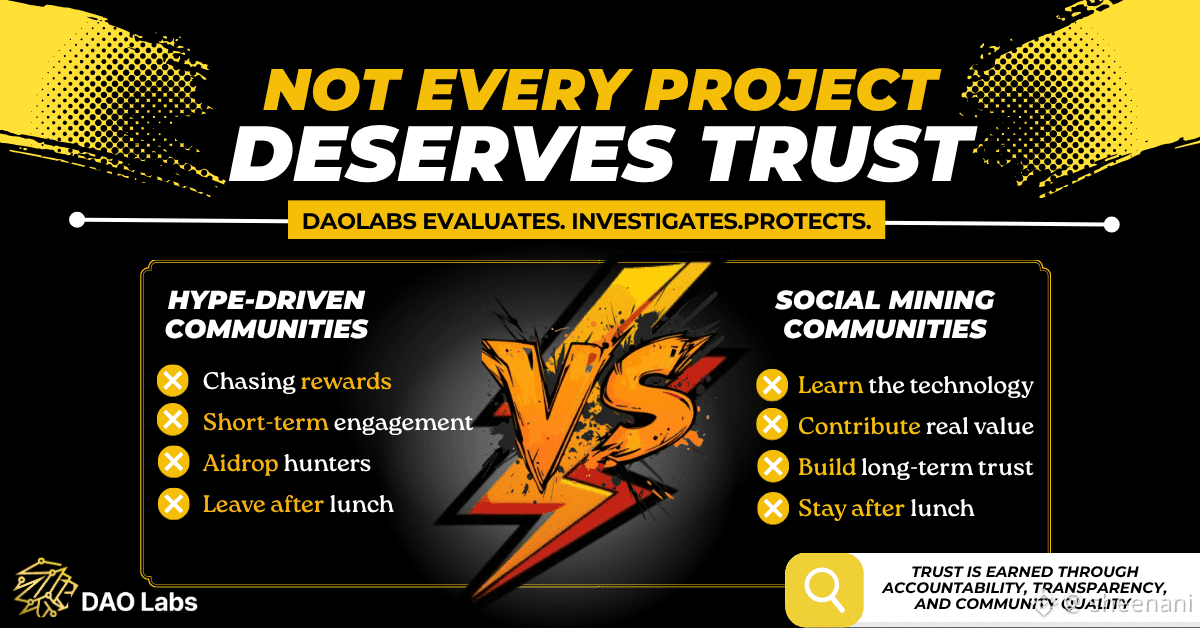
Nachdem ich den Artikel von @DAOLabs gelesen habe, wurde mir klar, dass eine der größten Herausforderungen in Web3 nicht das Entdecken neuer Projekte ist – sondern zu wissen, welche wirklich das Vertrauen einer Community verdienen.
Was das Bewertungsmodell von #DAOLabs besonders macht, ist, dass es sich nicht nur auf Narrative verlässt. Projekte, die in das #SocialMining -Ökosystem eintreten, werden hinsichtlich ihrer Bewertung, Token-Allokation, Vesting-Zeitpläne, TGE-Entsperrungen und der Einhaltung von Verträgen bewertet, bevor sie jemals die Community erreichen.
Die Erfolgsgeschichten des Artikels, die Symbol, @MultiversX , @Avalanche und RWA-Initiativen betreffen, zeigen, dass nachhaltiges Wachstum aus starken Grundlagen und engagierten Communities entsteht. Durch #SocialMining Hubs fördern die Mitwirkenden nicht nur Projekte – sie lernen die Technologie, beteiligen sich an der Entwicklung des Ökosystems und werden oft zu langfristigen Unterstützern.
Besonders wertvoll fand ich den Fall von Autonomys, da er hervorhob, warum Verantwortung wichtig ist. Die Tatsache, dass @DAOLabs Projekte nach der Bewertung weiterhin überwacht hat, zeigt, dass Vertrauen aufrechterhalten und nicht als selbstverständlich angesehen werden muss.
Mein größter Erkenntnis ist, dass die Qualität der Community wichtiger ist als die Größe der Community. Eine kleinere Gruppe informierter und engagierter Mitwirkender kann weit mehr nachhaltigen Wert schaffen als ein großes Publikum, das nur von kurzfristigen Belohnungen getrieben wird.
Der gesamte Artikel ist für jeden, der daran interessiert ist, wie Projektbewertung, Verantwortung und Community-Bildung die Zukunft von Web3 gestalten können, lesenswert:
[https://dao-labs.com/posts/4-successes-1-failure-lessons-from-evaluating-web3-projects]
Nachdem ich den Artikel von @DAO Labs gelesen habe, wurde mir klar, dass eine der größten Herausforderungen in Web3 nicht das Entdecken neuer Projekte ist – sondern zu wissen, welche wirklich das Vertrauen einer Community verdienen.
Was das Bewertungsmodell von #DAOLabs besonders macht, ist, dass es sich nicht nur auf Narrative verlässt. Projekte, die in das #SocialMining -Ökosystem eintreten, werden hinsichtlich ihrer Bewertung, Token-Allokation, Vesting-Zeitpläne, TGE-Entsperrungen und der Einhaltung von Verträgen bewertet, bevor sie jemals die Community erreichen.
Die Erfolgsgeschichten des Artikels, die Symbol, @MultiversX Network , @Avalanche und RWA-Initiativen betreffen, zeigen, dass nachhaltiges Wachstum aus starken Grundlagen und engagierten Communities entsteht. Durch #SocialMining Hubs fördern die Mitwirkenden nicht nur Projekte – sie lernen die Technologie, beteiligen sich an der Entwicklung des Ökosystems und werden oft zu langfristigen Unterstützern.
Besonders wertvoll fand ich den Fall von Autonomys, da er hervorhob, warum Verantwortung wichtig ist. Die Tatsache, dass @DAO Labs Projekte nach der Bewertung weiterhin überwacht hat, zeigt, dass Vertrauen aufrechterhalten und nicht als selbstverständlich angesehen werden muss.
Mein größter Erkenntnis ist, dass die Qualität der Community wichtiger ist als die Größe der Community. Eine kleinere Gruppe informierter und engagierter Mitwirkender kann weit mehr nachhaltigen Wert schaffen als ein großes Publikum, das nur von kurzfristigen Belohnungen getrieben wird.
Der gesamte Artikel ist für jeden, der daran interessiert ist, wie Projektbewertung, Verantwortung und Community-Bildung die Zukunft von Web3 gestalten können, lesenswert:
[https://dao-labs.com/posts/4-successes-1-failure-lessons-from-evaluating-web3-projects]
Was das Bewertungsmodell von #DAOLabs besonders macht, ist, dass es sich nicht nur auf Narrative verlässt. Projekte, die in das #SocialMining -Ökosystem eintreten, werden hinsichtlich ihrer Bewertung, Token-Allokation, Vesting-Zeitpläne, TGE-Entsperrungen und der Einhaltung von Verträgen bewertet, bevor sie jemals die Community erreichen.
Die Erfolgsgeschichten des Artikels, die Symbol, @MultiversX Network , @Avalanche und RWA-Initiativen betreffen, zeigen, dass nachhaltiges Wachstum aus starken Grundlagen und engagierten Communities entsteht. Durch #SocialMining Hubs fördern die Mitwirkenden nicht nur Projekte – sie lernen die Technologie, beteiligen sich an der Entwicklung des Ökosystems und werden oft zu langfristigen Unterstützern.
Besonders wertvoll fand ich den Fall von Autonomys, da er hervorhob, warum Verantwortung wichtig ist. Die Tatsache, dass @DAO Labs Projekte nach der Bewertung weiterhin überwacht hat, zeigt, dass Vertrauen aufrechterhalten und nicht als selbstverständlich angesehen werden muss.
Mein größter Erkenntnis ist, dass die Qualität der Community wichtiger ist als die Größe der Community. Eine kleinere Gruppe informierter und engagierter Mitwirkender kann weit mehr nachhaltigen Wert schaffen als ein großes Publikum, das nur von kurzfristigen Belohnungen getrieben wird.
Der gesamte Artikel ist für jeden, der daran interessiert ist, wie Projektbewertung, Verantwortung und Community-Bildung die Zukunft von Web3 gestalten können, lesenswert:
[https://dao-labs.com/posts/4-successes-1-failure-lessons-from-evaluating-web3-projects]
1
146
·
--
Bullisch
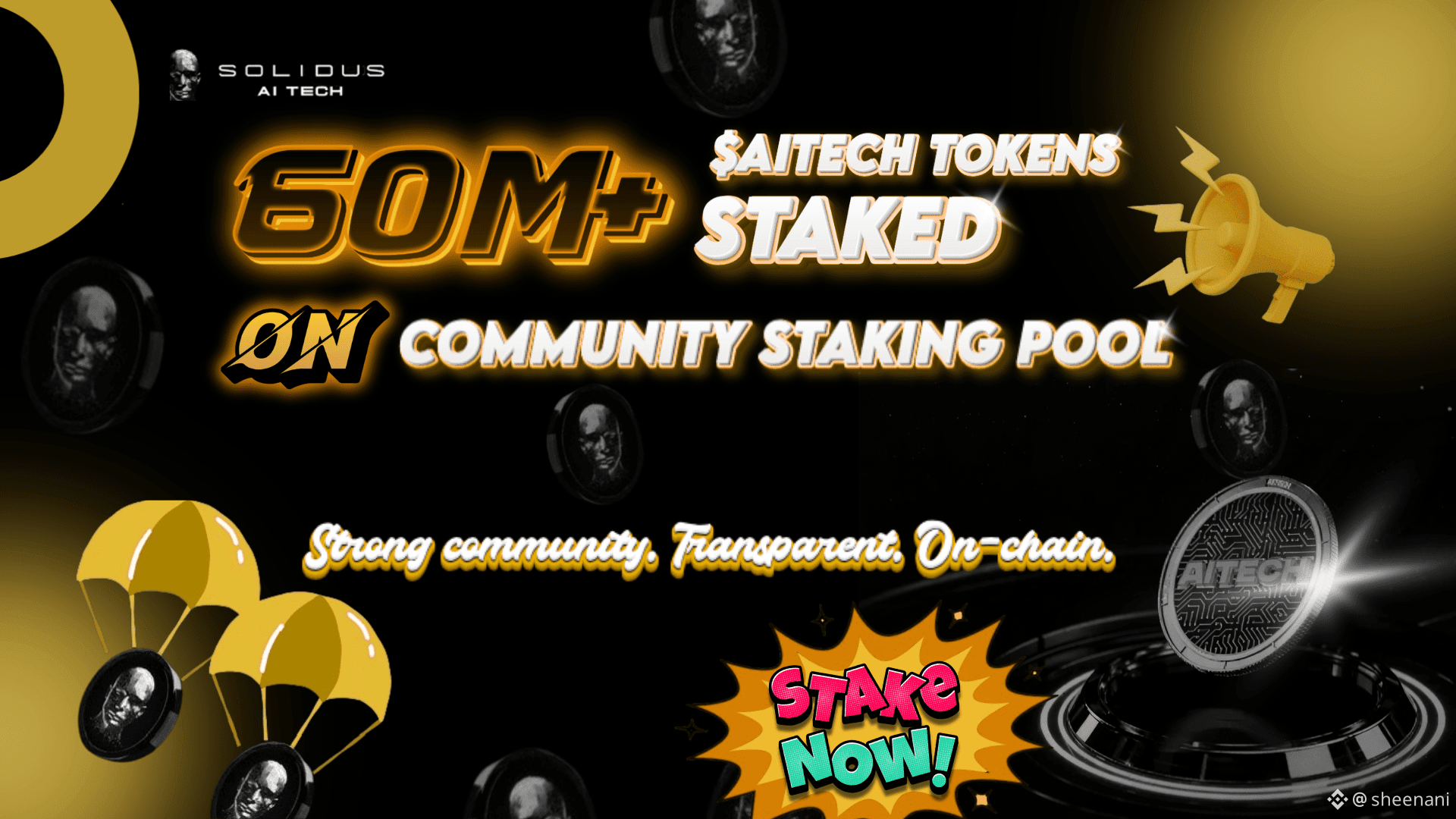
💎 Wir feiern einen wichtigen Meilenstein: Über 60 Mio. + $AITECH Tokens sind jetzt on-chain gestaked! 🎉
Die @AITECH -Community zeigt weiterhin ihre Stärke 💪, Vertrauen und Verpflichtung 🤝 in einem vollständig transparenten Ökosystem.
Jeder gestakete Token wird on-chain durch überprüfbare Smart Contracts aufgezeichnet, was beweist, dass $AITECH kein bloßes Token ist – sondern eine Bewegung 🚀, getrieben von echtem Gemeinschaftsglauben.
Warum dieser Meilenstein wichtig ist:
• Gemeinschaftsgetriebenes Wachstum: Ein vereintes Ökosystem treibt eine nachhaltige Expansion voran
• Transparenz und Sicherheit: Jeder Stake ist vollständig on-chain überprüfbar
• Ökosystemstärke: Staking hilft, das $AITECH -Netzwerk zu sichern und zu wachsen
• Belohnungen für Halter: Engagierte Gemeinschaftsmitglieder profitieren, während sie das Netzwerk unterstützen
• Beweis für echte Akzeptanz: Zeigt, dass #AITECH von seiner Gemeinschaft vertraut und angenommen wird
Dieser Erfolg zeigt, wie eine starke, aktive und engagierte Gemeinschaft langfristigen Erfolg im Web3 vorantreiben kann. Schau nicht nur zu – sei Teil davon.
Stake deine #AITECH heute und werde Teil der Bewegung:👇
http://pad.aitech.io/ 🚀
💎 Wir feiern einen wichtigen Meilenstein: Über 60 Mio. + $AITECH Tokens sind jetzt on-chain gestaked! 🎉
Die @AITECH -Community zeigt weiterhin ihre Stärke 💪, Vertrauen und Verpflichtung 🤝 in einem vollständig transparenten Ökosystem.
Jeder gestakete Token wird on-chain durch überprüfbare Smart Contracts aufgezeichnet, was beweist, dass $AITECH kein bloßes Token ist – sondern eine Bewegung 🚀, getrieben von echtem Gemeinschaftsglauben.
Warum dieser Meilenstein wichtig ist:
• Gemeinschaftsgetriebenes Wachstum: Ein vereintes Ökosystem treibt eine nachhaltige Expansion voran
• Transparenz und Sicherheit: Jeder Stake ist vollständig on-chain überprüfbar
• Ökosystemstärke: Staking hilft, das $AITECH -Netzwerk zu sichern und zu wachsen
• Belohnungen für Halter: Engagierte Gemeinschaftsmitglieder profitieren, während sie das Netzwerk unterstützen
• Beweis für echte Akzeptanz: Zeigt, dass #AITECH von seiner Gemeinschaft vertraut und angenommen wird
Dieser Erfolg zeigt, wie eine starke, aktive und engagierte Gemeinschaft langfristigen Erfolg im Web3 vorantreiben kann. Schau nicht nur zu – sei Teil davon.
Stake deine #AITECH heute und werde Teil der Bewegung:👇
http://pad.aitech.io/ 🚀
Die @AITECH -Community zeigt weiterhin ihre Stärke 💪, Vertrauen und Verpflichtung 🤝 in einem vollständig transparenten Ökosystem.
Jeder gestakete Token wird on-chain durch überprüfbare Smart Contracts aufgezeichnet, was beweist, dass $AITECH kein bloßes Token ist – sondern eine Bewegung 🚀, getrieben von echtem Gemeinschaftsglauben.
Warum dieser Meilenstein wichtig ist:
• Gemeinschaftsgetriebenes Wachstum: Ein vereintes Ökosystem treibt eine nachhaltige Expansion voran
• Transparenz und Sicherheit: Jeder Stake ist vollständig on-chain überprüfbar
• Ökosystemstärke: Staking hilft, das $AITECH -Netzwerk zu sichern und zu wachsen
• Belohnungen für Halter: Engagierte Gemeinschaftsmitglieder profitieren, während sie das Netzwerk unterstützen
• Beweis für echte Akzeptanz: Zeigt, dass #AITECH von seiner Gemeinschaft vertraut und angenommen wird
Dieser Erfolg zeigt, wie eine starke, aktive und engagierte Gemeinschaft langfristigen Erfolg im Web3 vorantreiben kann. Schau nicht nur zu – sei Teil davon.
Stake deine #AITECH heute und werde Teil der Bewegung:👇
http://pad.aitech.io/ 🚀
5
14
·
--
Wenn ich einen Song mit #SocialMining verbinden müsste, wäre es definitiv „Hall of Fame“ von The Script ft. will.i.am
Der Song handelt ganz davon, hoch zu zielen, motiviert zu bleiben und daran zu glauben, dass man großartige Dinge erreichen kann – genau das ist die Energie von Social Mining.
Wir arbeiten nach unserem eigenen Zeitplan, in unserem eigenen Rhythmus und wachsen weiterhin mit der Gemeinschaft.
Songtexte, die zur Stimmung von Social Mining passen:
"Ja, du kannst der Größte sein, du kannst der Beste sein."
Du kannst hier DAOLabs beitreten:
https://ilo.dao-labs.com/
#DAOVERSE @DAOLabs
Wenn ich einen Song mit #SocialMining verbinden müsste, wäre es definitiv „Hall of Fame“ von The Script ft. will.i.am
Der Song handelt ganz davon, hoch zu zielen, motiviert zu bleiben und daran zu glauben, dass man großartige Dinge erreichen kann – genau das ist die Energie von Social Mining.
Wir arbeiten nach unserem eigenen Zeitplan, in unserem eigenen Rhythmus und wachsen weiterhin mit der Gemeinschaft.
Songtexte, die zur Stimmung von Social Mining passen:
"Ja, du kannst der Größte sein, du kannst der Beste sein."
Du kannst hier DAOLabs beitreten:
https://ilo.dao-labs.com/
#DAOVERSE @DAO Labs
Der Song handelt ganz davon, hoch zu zielen, motiviert zu bleiben und daran zu glauben, dass man großartige Dinge erreichen kann – genau das ist die Energie von Social Mining.
Wir arbeiten nach unserem eigenen Zeitplan, in unserem eigenen Rhythmus und wachsen weiterhin mit der Gemeinschaft.
Songtexte, die zur Stimmung von Social Mining passen:
"Ja, du kannst der Größte sein, du kannst der Beste sein."
Du kannst hier DAOLabs beitreten:
https://ilo.dao-labs.com/
#DAOVERSE @DAO Labs
4
12
·
--
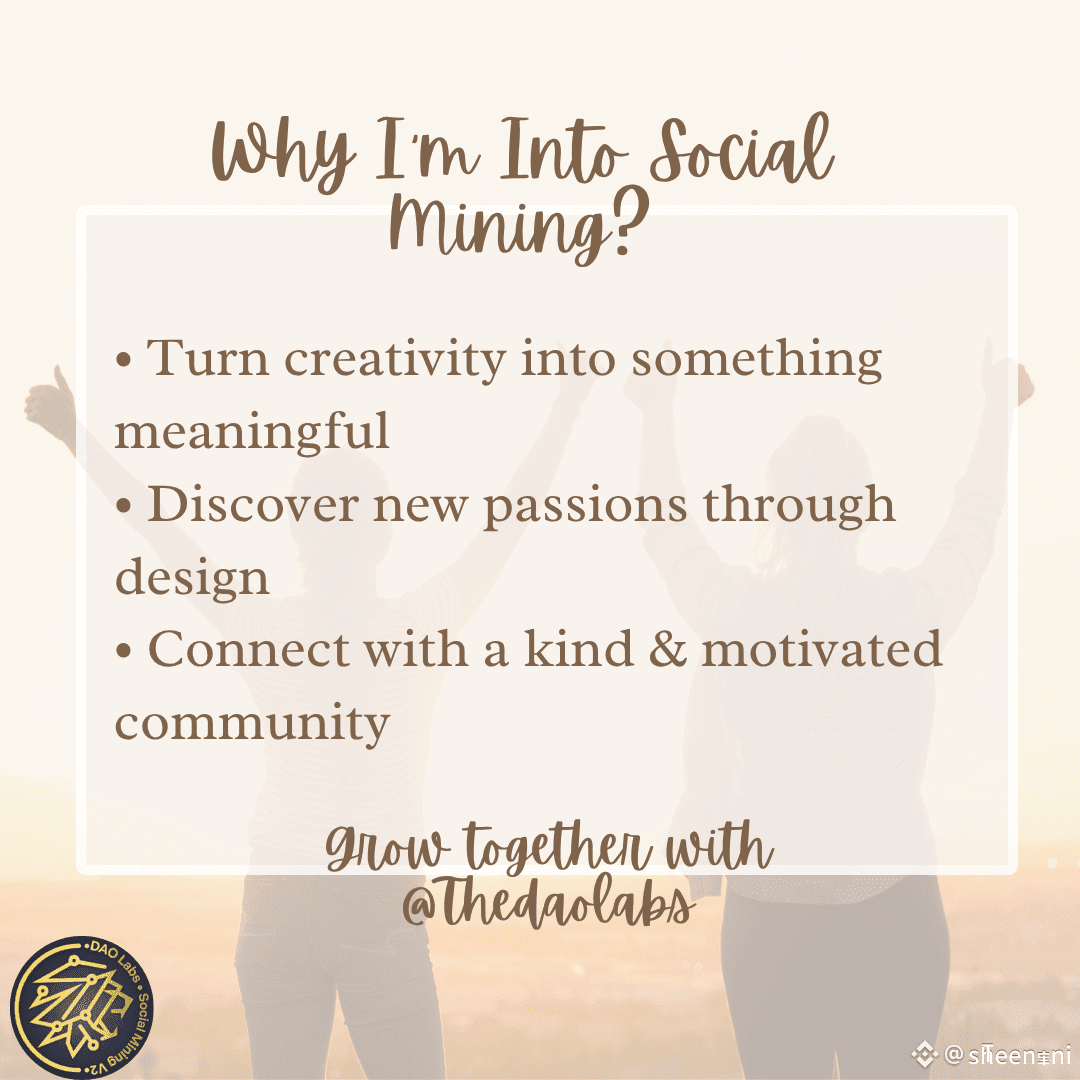
Seitdem ich Teil der #DAOVERSE geworden bin, habe ich nur gute Vibes gespürt! Die Gemeinschaft ist immer aktiv, freundlich und voller Motivation.
Ich habe wirklich keine Leidenschaft für das Designen und Erstellen von Inhalten, aber dank @DAOLabs DAOLabs habe ich es langsam gelernt und liebe es. Sie haben meine Kreativität in etwas Belohnendes und Sinnvolles verwandelt ✨.
Ein besonderer Dank geht an meinen Freund Neo, an meine Admins und an alle meine Mitstreiter in der sozialen Mining-Community, die mich geduldig geleitet und so herzlich empfangen haben.
So dankbar, Teil der erstaunlichen #SocialMining Reise zu sein.❤
#DAOVERSE
Seitdem ich Teil der #DAOVERSE geworden bin, habe ich nur gute Vibes gespürt! Die Gemeinschaft ist immer aktiv, freundlich und voller Motivation.
Ich habe wirklich keine Leidenschaft für das Designen und Erstellen von Inhalten, aber dank @DAO Labs DAOLabs habe ich es langsam gelernt und liebe es. Sie haben meine Kreativität in etwas Belohnendes und Sinnvolles verwandelt ✨.
Ein besonderer Dank geht an meinen Freund Neo, an meine Admins und an alle meine Mitstreiter in der sozialen Mining-Community, die mich geduldig geleitet und so herzlich empfangen haben.
So dankbar, Teil der erstaunlichen #SocialMining Reise zu sein.❤
#DAOVERSE
Ich habe wirklich keine Leidenschaft für das Designen und Erstellen von Inhalten, aber dank @DAO Labs DAOLabs habe ich es langsam gelernt und liebe es. Sie haben meine Kreativität in etwas Belohnendes und Sinnvolles verwandelt ✨.
Ein besonderer Dank geht an meinen Freund Neo, an meine Admins und an alle meine Mitstreiter in der sozialen Mining-Community, die mich geduldig geleitet und so herzlich empfangen haben.
So dankbar, Teil der erstaunlichen #SocialMining Reise zu sein.❤
#DAOVERSE
11
23
·
--
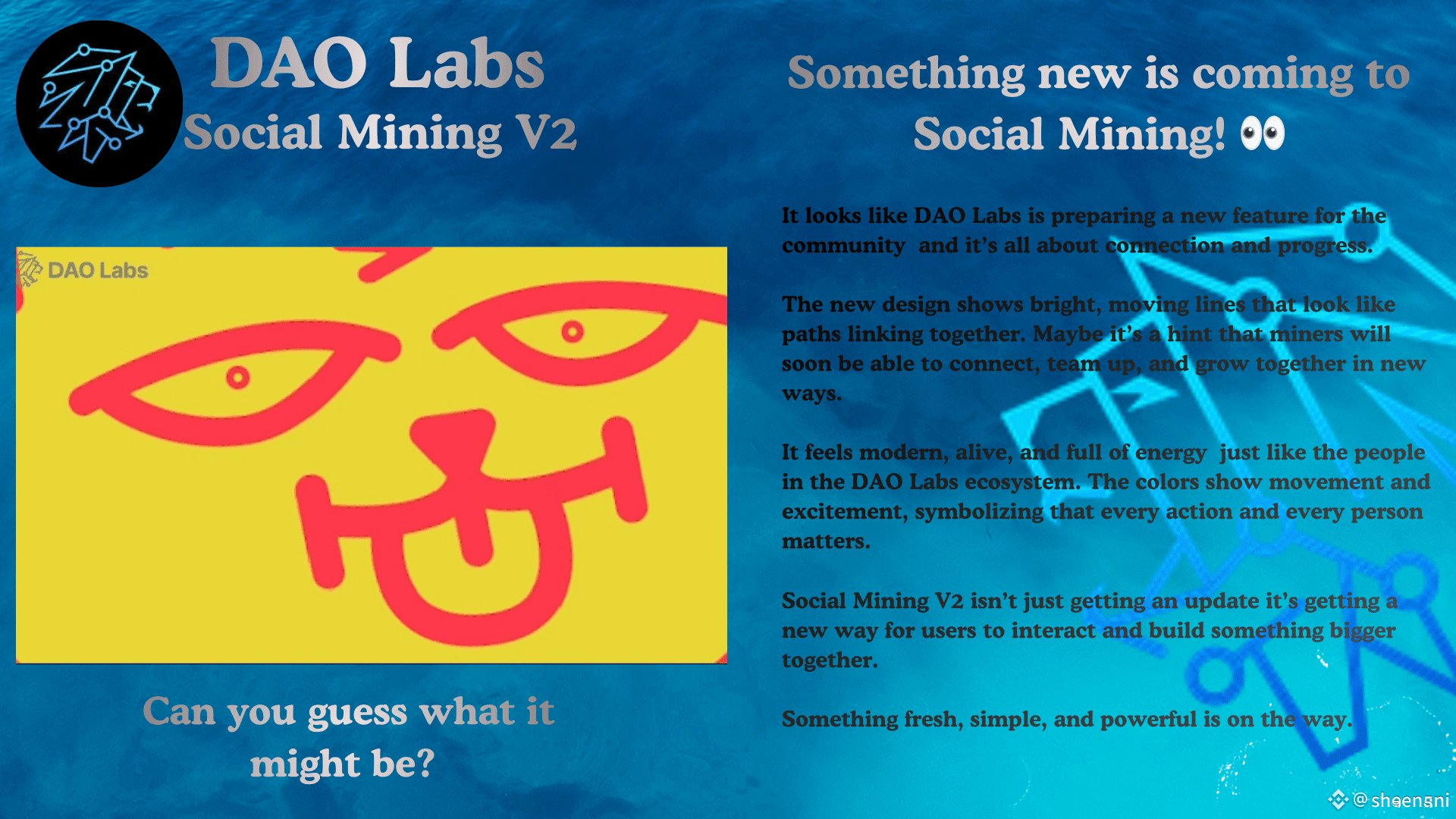
Der neue Teaser #SocialMiningV2 von @DAOLabs verbindet sich perfekt mit der ersten Enthüllung, hell, kühn und voller Leben! ❤️
Es geht um Verbindung, Kreativität und Gemeinschaft, die zusammenkommen. Etwas Frisches, Einfaches und Kraftvolles ist definitiv auf dem Weg! 🚀👀
#DAOVERSE
Der neue Teaser #SocialMiningV2 von @DAO Labs verbindet sich perfekt mit der ersten Enthüllung, hell, kühn und voller Leben! ❤️
Es geht um Verbindung, Kreativität und Gemeinschaft, die zusammenkommen. Etwas Frisches, Einfaches und Kraftvolles ist definitiv auf dem Weg! 🚀👀
#DAOVERSE
Es geht um Verbindung, Kreativität und Gemeinschaft, die zusammenkommen. Etwas Frisches, Einfaches und Kraftvolles ist definitiv auf dem Weg! 🚀👀
#DAOVERSE
15
153
Anmelden und weiter Inhalte entdecken
Krypto-Nutzer weltweit auf Binance Square kennenlernen
⚡️ Bleib in Sachen Krypto stets am Puls.
💬 Die weltgrößte Kryptobörse vertraut darauf.
👍 Erhalte verlässliche Einblicke von verifizierten Creators.
E-Mail-Adresse/Telefonnummer