
shaibi12
17 Beiträge

shaibi12
A freelance blogger
Trade eröffnen

BTC Halter
Regelmäßiger Trader
4.4 Jahre
16 Following
36 Follower
24 Like gegeben
Beiträge
Portfolio
Alle
Zitierungen
Videos
Übersetzung ansehen
#SP500FuturesFall (pair with #BrentDrops1.87%)
Stocks wobbling, oil sliding — the macro is pulling crypto two ways at once.
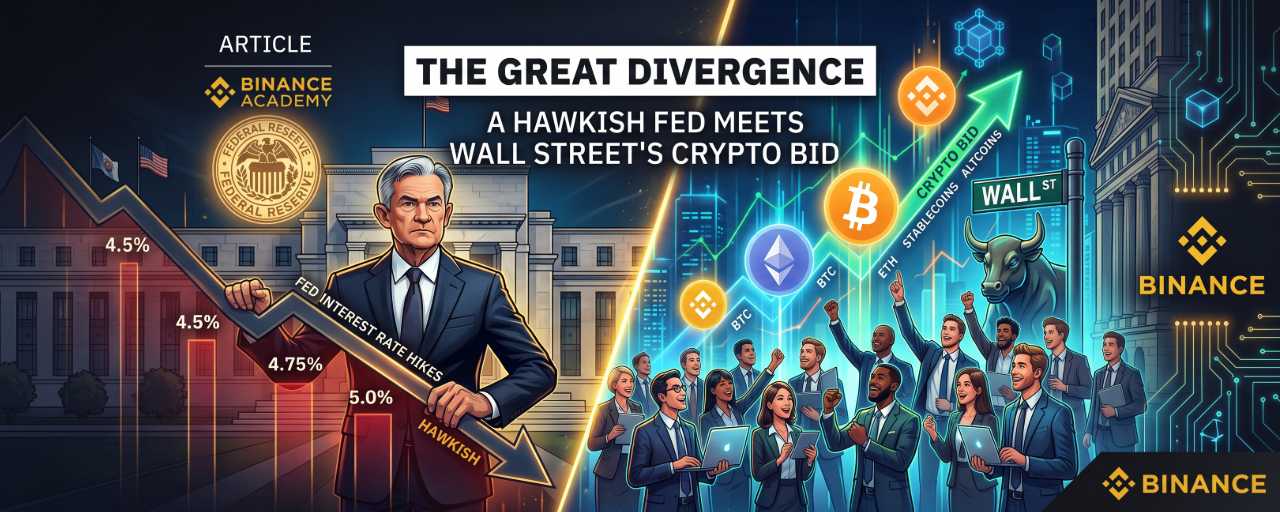
S&P 500 futures slipped as Fed Chair Warsh turned hawkish, September rate-hike odds climbed, and global bond yields punched to multi-decade highs (the 30-year near 5.3%). Classic risk-off — and crypto trades as a risk asset, so BTC and ETH feel that gravity first.
Meanwhile Brent is down (~-2% today, 5%+ on the week) as the Iran standoff shifts from "war and supply shock" to sanctions — bleeding the fear premium out of oil.
The nuance most miss: those two moves point opposite ways for crypto. Higher yields = short-term pressure. But cheaper oil = cooling inflation, which could ease the Fed later — and the debasement backdrop still favors hard assets.
Risk-off dip to fade, or does a hawkish Fed keep a lid on crypto into September? 👇
#SP500FuturesFall #BrentDrops1.87% #Bitcoin #CryptoMarkets
Stocks wobbling, oil sliding — the macro is pulling crypto two ways at once.
S&P 500 futures slipped as Fed Chair Warsh turned hawkish, September rate-hike odds climbed, and global bond yields punched to multi-decade highs (the 30-year near 5.3%). Classic risk-off — and crypto trades as a risk asset, so BTC and ETH feel that gravity first.
Meanwhile Brent is down (~-2% today, 5%+ on the week) as the Iran standoff shifts from "war and supply shock" to sanctions — bleeding the fear premium out of oil.
The nuance most miss: those two moves point opposite ways for crypto. Higher yields = short-term pressure. But cheaper oil = cooling inflation, which could ease the Fed later — and the debasement backdrop still favors hard assets.
Risk-off dip to fade, or does a hawkish Fed keep a lid on crypto into September? 👇
#SP500FuturesFall #BrentDrops1.87% #Bitcoin #CryptoMarkets
Übersetzung ansehen
S&P 500 futures slipped as Fed Chair Warsh turned hawkish, September rate-hike odds climbed, and global bond yields punched to multi-decade highs (the 30-year near 5.3%).
Übersetzung ansehen
S&P 500 futures slipped as Fed Chair Warsh turned hawkish, September rate-hike odds climbed, and global bond yields punched to multi-decade highs (the 30-year near 5.3%).
Übersetzung ansehen
#GoldNearsThreeMonthHigh (bridge → Bitcoin)
Gold just hit a 3-month high near $4,700 — its best month since 1999 — and it's flashing a signal every Bitcoiner should watch.
The driver isn't jewelry demand. It's the debasement trade. After the US Treasury doubled its buybacks of long-dated bonds, markets got nervous about fiscal policy and the dollar — pushing the dollar toward a 3-month low and sending capital into hard, scarce assets.
Here's the crypto angle: gold and Bitcoin are two expressions of the same thesis. When confidence in fiat wobbles under ballooning debt, capped-supply assets get bid. Grayscale has been making exactly this case for BTC.
The catch? A hawkish Warsh Fed cuts both ways — rising rate-hike odds are why gold pulled back late last week, and Bitcoin feels that same gravity.
So — is BTC "digital gold" riding the same tailwind, or does a hawkish Fed cap both for now? 👇
#GoldNearsThreeMonthHigh #Bitcoin #BTC #DebasementTrade
Gold just hit a 3-month high near $4,700 — its best month since 1999 — and it's flashing a signal every Bitcoiner should watch.
The driver isn't jewelry demand. It's the debasement trade. After the US Treasury doubled its buybacks of long-dated bonds, markets got nervous about fiscal policy and the dollar — pushing the dollar toward a 3-month low and sending capital into hard, scarce assets.
Here's the crypto angle: gold and Bitcoin are two expressions of the same thesis. When confidence in fiat wobbles under ballooning debt, capped-supply assets get bid. Grayscale has been making exactly this case for BTC.
The catch? A hawkish Warsh Fed cuts both ways — rising rate-hike odds are why gold pulled back late last week, and Bitcoin feels that same gravity.
So — is BTC "digital gold" riding the same tailwind, or does a hawkish Fed cap both for now? 👇
#GoldNearsThreeMonthHigh #Bitcoin #BTC #DebasementTrade
Übersetzung ansehen
#TetherEndsUruguayBitcoinMining
Tether just walked away from a $120M Bitcoin mining bet — but if you think Tether is quitting mining, you've got the story backwards.
The facts: Tether abandoned two mining sites in Uruguay after a dispute with state utility UTE over power. Tether read its contract as a minimum electricity guarantee; UTE treated it as a hard cap. Bills went unpaid, power was cut in July 2025, and operations shut by November.
The real takeaways:
This is a mining-economics story. Post-2024-halving, thin margins punish anyone without cheap, reliable power. Bitcoin mining is "hypermobile" — plug-and-play rigs move the moment energy terms sour. Tether isn't retreating: $2B+ across 15+ sites, open-source MiningOS, stakes in Bitdeer and Antalpha, and a fresh Brazil pilot.
Energy access — not hashrate — is the real moat in mining now.
Does mining's future belong to whoever controls the cheapest power? 👇
#TetherEndsUruguayBitcoinMining #Bitcoin #BTC #Mining
Tether just walked away from a $120M Bitcoin mining bet — but if you think Tether is quitting mining, you've got the story backwards.
The facts: Tether abandoned two mining sites in Uruguay after a dispute with state utility UTE over power. Tether read its contract as a minimum electricity guarantee; UTE treated it as a hard cap. Bills went unpaid, power was cut in July 2025, and operations shut by November.
The real takeaways:
This is a mining-economics story. Post-2024-halving, thin margins punish anyone without cheap, reliable power. Bitcoin mining is "hypermobile" — plug-and-play rigs move the moment energy terms sour. Tether isn't retreating: $2B+ across 15+ sites, open-source MiningOS, stakes in Bitdeer and Antalpha, and a fresh Brazil pilot.
Energy access — not hashrate — is the real moat in mining now.
Does mining's future belong to whoever controls the cheapest power? 👇
#TetherEndsUruguayBitcoinMining #Bitcoin #BTC #Mining
Übersetzung ansehen
Binance Square — 4 Ready-to-Post Drafts (trending tags)
Standard post length (~150 words). Post while the tags are hot. Copy each block as-is.
POST 1 — #SolanaGovernanceVoteToDoubleDeflationRate (your #1)
Solana just made history — and most people are misreading it.
For the first time ever, SOL holders set monetary policy on-chain. The headline proposal (SGP-0002 / SIMD-550) passed by a razor-thin 67.00% — barely clearing the 66.67% bar after a last-minute Kraken flip tipped the vote.
What it actually does: doubles Solana's disinflation rate from 15% to 30%, pulling the network to its 1.5% terminal inflation floor by ~2029 instead of 2032 — roughly 18.9M fewer SOL issued over six years.
Three things the repost crowd is getting wrong:
It's disinflation, not deflation — issuance still grows, just slower. It's not live yet. Devs need ~4.5 months to activate the feature gate; nothing changes today. Less issuance = lower staking yields — exactly why Solana Company voted against it.
SOL's already up ~44% in August with RSI screaming overbought. Bullish supply cut, or fully priced in? 👇
#SolanaGovernanceVoteToDoubleDeflationRate #SOL #Solana #CryptoNews
Standard post length (~150 words). Post while the tags are hot. Copy each block as-is.
POST 1 — #SolanaGovernanceVoteToDoubleDeflationRate (your #1)
Solana just made history — and most people are misreading it.
For the first time ever, SOL holders set monetary policy on-chain. The headline proposal (SGP-0002 / SIMD-550) passed by a razor-thin 67.00% — barely clearing the 66.67% bar after a last-minute Kraken flip tipped the vote.
What it actually does: doubles Solana's disinflation rate from 15% to 30%, pulling the network to its 1.5% terminal inflation floor by ~2029 instead of 2032 — roughly 18.9M fewer SOL issued over six years.
Three things the repost crowd is getting wrong:
It's disinflation, not deflation — issuance still grows, just slower. It's not live yet. Devs need ~4.5 months to activate the feature gate; nothing changes today. Less issuance = lower staking yields — exactly why Solana Company voted against it.
SOL's already up ~44% in August with RSI screaming overbought. Bullish supply cut, or fully priced in? 👇
#SolanaGovernanceVoteToDoubleDeflationRate #SOL #Solana #CryptoNews
wao


CryptoMasterMindX
·
--
Wenn Sie 100 $ in Dogecoin investiert hätten, als Elon Musk über die Kryptowährung getwittert hat, hätten Sie jetzt so viel
Dogecoin wurde am 2. April 2019 zu 0,002552 $ gehandelt, rund um die Zeit von Musks erstem Tweet, der Dogecoin erwähnte. Wenn Sie damals 100 $ in Dogecoin gekauft hätten, hätten Sie heute 39.185 DOGE. Der Wert der 100 $-Investition wäre jetzt 8.105 $ basierend auf einem aktuellen Dogecoin-Preis von 0,2132 $ zum Zeitpunkt des Schreibens. Dies stellt eine hypothetische Rendite von 16.000 % dar
Dogecoin wurde am 17. Juli 2020 zu 0,003084 $ gehandelt, zu seinem höchsten Preis. Eine Investition von 100 $ an diesem Tag hätte 32.425 DOGE kaufen können. Der Wert der 100 $-Investition wäre heute auf 13.326 $ angewachsen. Dies stellt eine hypothetische Rendite von 13.000 % dar
Dogecoin erreichte im Mai 2021 einen Allzeithoch von 0,7376 $. Auf seinem Höhepunkt wären diese 100 $-Investitionen in Dogecoin basierend auf Musks Tweets 28.902,86 $ und 23.913 $ wert gewesen
Denken Sie daran, zu folgen und zu liken, bitte
Dogecoin wurde am 2. April 2019 zu 0,002552 $ gehandelt, rund um die Zeit von Musks erstem Tweet, der Dogecoin erwähnte. Wenn Sie damals 100 $ in Dogecoin gekauft hätten, hätten Sie heute 39.185 DOGE. Der Wert der 100 $-Investition wäre jetzt 8.105 $ basierend auf einem aktuellen Dogecoin-Preis von 0,2132 $ zum Zeitpunkt des Schreibens. Dies stellt eine hypothetische Rendite von 16.000 % dar
Dogecoin wurde am 17. Juli 2020 zu 0,003084 $ gehandelt, zu seinem höchsten Preis. Eine Investition von 100 $ an diesem Tag hätte 32.425 DOGE kaufen können. Der Wert der 100 $-Investition wäre heute auf 13.326 $ angewachsen. Dies stellt eine hypothetische Rendite von 13.000 % dar
Dogecoin erreichte im Mai 2021 einen Allzeithoch von 0,7376 $. Auf seinem Höhepunkt wären diese 100 $-Investitionen in Dogecoin basierend auf Musks Tweets 28.902,86 $ und 23.913 $ wert gewesen
Denken Sie daran, zu folgen und zu liken, bitte
🚀 #TradingTypes101: Welcher Handelsstil passt zu Ihnen?
Krypto-Handel ist nicht für jeden gleich. Ob Sie es langfristig angehen oder den Nervenkitzel schneller Bewegungen lieben, das Verständnis Ihres Handelsstils kann Ihnen helfen, smarter zu handeln. Hier ist ein kurzer Leitfaden zu den beliebtesten Stilen:
🏃 Tageshandel
Schnelllebig und intensiv, Tageshändler eröffnen und schließen Positionen innerhalb desselben Tages. Sie gedeihen in der Marktvolatilität und nutzen technische Analysen, um schnelle Entscheidungen zu treffen.
Am besten für: Aktive Händler mit Zeit und Nerven aus Stahl.
Risiko: Hoch.
Belohnung: Schnelle Gewinne.
🧠 Swing-Trading
Swing-Trader nutzen Markttrends über Tage oder Wochen. Dieser Stil kombiniert technische und fundamentale Analysen.
Am besten für: Strategische Denker mit etwas Geduld.
Risiko: Mittel.
Belohnung: Gute Renditen mit weniger Bildschirmzeit.
🐢 Positionshandel
Auch bekannt als HODLing, ist dies eine langfristige Strategie, bei der Händler Vermögenswerte für Monate oder Jahre halten.
Am besten für: Gläubige an langfristiges Krypto-Wachstum.
Risiko: Niedrig bis mittel.
Belohnung: Potenzielle langfristige Gewinne.
⚡ Scalping
Scalper tätigen mehrere Trades in Minuten, um von kleinen Preisbewegungen zu profitieren.
Am besten für: Detailorientierte, schnelle Entscheider.
Risiko: Hoch.
Belohnung: Kleine, häufige Gewinne.
Finden Sie Ihre Stärke. Halten Sie sich an Ihren Stil. Handeln Sie weise.
#TradingTypes101 #BinanceAcademy #CryptoTrading #KnowYourStyle
Krypto-Handel ist nicht für jeden gleich. Ob Sie es langfristig angehen oder den Nervenkitzel schneller Bewegungen lieben, das Verständnis Ihres Handelsstils kann Ihnen helfen, smarter zu handeln. Hier ist ein kurzer Leitfaden zu den beliebtesten Stilen:
🏃 Tageshandel
Schnelllebig und intensiv, Tageshändler eröffnen und schließen Positionen innerhalb desselben Tages. Sie gedeihen in der Marktvolatilität und nutzen technische Analysen, um schnelle Entscheidungen zu treffen.
Am besten für: Aktive Händler mit Zeit und Nerven aus Stahl.
Risiko: Hoch.
Belohnung: Schnelle Gewinne.
🧠 Swing-Trading
Swing-Trader nutzen Markttrends über Tage oder Wochen. Dieser Stil kombiniert technische und fundamentale Analysen.
Am besten für: Strategische Denker mit etwas Geduld.
Risiko: Mittel.
Belohnung: Gute Renditen mit weniger Bildschirmzeit.
🐢 Positionshandel
Auch bekannt als HODLing, ist dies eine langfristige Strategie, bei der Händler Vermögenswerte für Monate oder Jahre halten.
Am besten für: Gläubige an langfristiges Krypto-Wachstum.
Risiko: Niedrig bis mittel.
Belohnung: Potenzielle langfristige Gewinne.
⚡ Scalping
Scalper tätigen mehrere Trades in Minuten, um von kleinen Preisbewegungen zu profitieren.
Am besten für: Detailorientierte, schnelle Entscheider.
Risiko: Hoch.
Belohnung: Kleine, häufige Gewinne.
Finden Sie Ihre Stärke. Halten Sie sich an Ihren Stil. Handeln Sie weise.
#TradingTypes101 #BinanceAcademy #CryptoTrading #KnowYourStyle

Anmelden und weiter Inhalte entdecken