

Qadeerrajpoot
1.9k Beiträge

Qadeerrajpoot
Melden
Nutzer blockieren
Crypto expert, Breaking news alerts , Market insight trend.
Trade eröffnen
Regelmäßiger Trader
8.1 Monate
1 Following
150 Follower
1.5K+ Like gegeben
Beiträge
Portfolio
Übersetzung ansehen
*Sygnum Bank = Swiss FINMA-licensed digital asset bank (Zurich + Singapore) uses CoinMarketCap API for institutional investment research pipeline*
- *What it powers:* $QI $PHA $ARK
- *Real-time token performance tracking — feeds quarterly reports (Q1 2026 Outlook etc)*
- *Stablecoin market cap analysis — sizing + trend monitoring*
- *Broader 6-step framework: market sizing, sector trend monitoring, project data, community engagement, qualitative factors, protocol dev trends — plus TVL, ecosystem growth, dev activity, audit quality — feeds Sygnum multisector index*
- *Why CMC:* *institutional-grade, attribution included, regulated financial services use case — they list Sygnum as API infrastructure example alongside Chainlink, Fidelity NAV on-chain*
- *Context:* *Sygnum also testing AI-powered blockchain txs via AI agents May 18, 2026 — agent preps stablecoin transfers, swaps, liquidity, lending workflows — bank-grade consent custody — Head AI & Data Thomas Frei said AI agents transacting continuously next decade*
Not new partnership announcement, it's *CoinMarketCap published case study how Sygnum uses API*. Still bullish for API-driven data infra narrative.
*BREAKING 🚨 Case study Sep 2: Sygnum FINMA Swiss digital-asset bank taps CoinMarketCap API for token tracking + stablecoin analytics 🚀 Real-time mcap data feeds institutional research quarterly reports + multisector index — market sizing sector trends — API-driven data = competitive edge for pro investors ⚡*#QNTRises39% #BitgetBreachForgedRequestsNotStolenKeys #BitcoinSpotETFsTurnNetPositiveYTD #CFTCUpdatesGuidanceOnTokenizedAssets
*Sygnum Bank = Swiss FINMA-licensed digital asset bank (Zurich + Singapore) uses CoinMarketCap API for institutional investment research pipeline*
- *What it powers:* $QI $PHA $ARK
- *Real-time token performance tracking — feeds quarterly reports (Q1 2026 Outlook etc)*
- *Stablecoin market cap analysis — sizing + trend monitoring*
- *Broader 6-step framework: market sizing, sector trend monitoring, project data, community engagement, qualitative factors, protocol dev trends — plus TVL, ecosystem growth, dev activity, audit quality — feeds Sygnum multisector index*
- *Why CMC:* *institutional-grade, attribution included, regulated financial services use case — they list Sygnum as API infrastructure example alongside Chainlink, Fidelity NAV on-chain*
- *Context:* *Sygnum also testing AI-powered blockchain txs via AI agents May 18, 2026 — agent preps stablecoin transfers, swaps, liquidity, lending workflows — bank-grade consent custody — Head AI & Data Thomas Frei said AI agents transacting continuously next decade*
Not new partnership announcement, it's *CoinMarketCap published case study how Sygnum uses API*. Still bullish for API-driven data infra narrative.
*BREAKING 🚨 Case study Sep 2: Sygnum FINMA Swiss digital-asset bank taps CoinMarketCap API for token tracking + stablecoin analytics 🚀 Real-time mcap data feeds institutional research quarterly reports + multisector index — market sizing sector trends — API-driven data = competitive edge for pro investors ⚡*#QNTRises39% #BitgetBreachForgedRequestsNotStolenKeys #BitcoinSpotETFsTurnNetPositiveYTD #CFTCUpdatesGuidanceOnTokenizedAssets
- *What it powers:* $QI $PHA $ARK
- *Real-time token performance tracking — feeds quarterly reports (Q1 2026 Outlook etc)*
- *Stablecoin market cap analysis — sizing + trend monitoring*
- *Broader 6-step framework: market sizing, sector trend monitoring, project data, community engagement, qualitative factors, protocol dev trends — plus TVL, ecosystem growth, dev activity, audit quality — feeds Sygnum multisector index*
- *Why CMC:* *institutional-grade, attribution included, regulated financial services use case — they list Sygnum as API infrastructure example alongside Chainlink, Fidelity NAV on-chain*
- *Context:* *Sygnum also testing AI-powered blockchain txs via AI agents May 18, 2026 — agent preps stablecoin transfers, swaps, liquidity, lending workflows — bank-grade consent custody — Head AI & Data Thomas Frei said AI agents transacting continuously next decade*
Not new partnership announcement, it's *CoinMarketCap published case study how Sygnum uses API*. Still bullish for API-driven data infra narrative.
*BREAKING 🚨 Case study Sep 2: Sygnum FINMA Swiss digital-asset bank taps CoinMarketCap API for token tracking + stablecoin analytics 🚀 Real-time mcap data feeds institutional research quarterly reports + multisector index — market sizing sector trends — API-driven data = competitive edge for pro investors ⚡*#QNTRises39% #BitgetBreachForgedRequestsNotStolenKeys #BitcoinSpotETFsTurnNetPositiveYTD #CFTCUpdatesGuidanceOnTokenizedAssets
187
Übersetzung ansehen
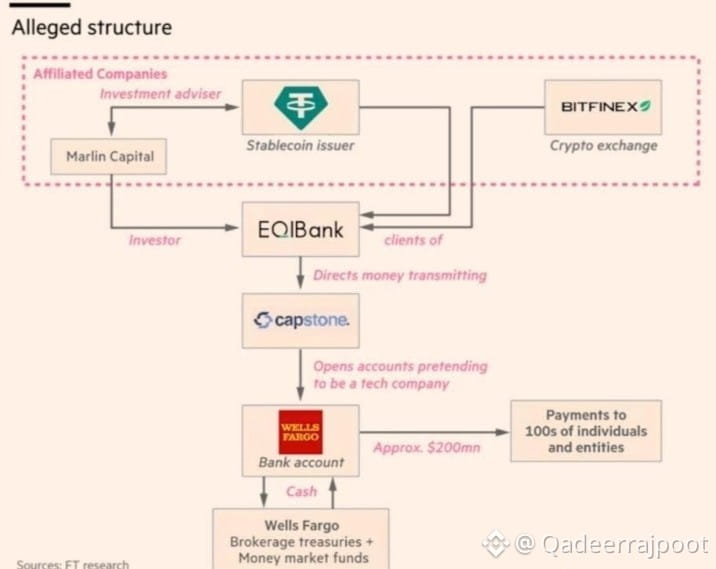
*Target: $84.2M* — *$79.11M Wells Fargo $QI $PHA $ARK Securities Capstone account + $1.86M Wells Fargo Bank + $2.06M JPMorgan Chase + 1.12M USDT address + 54,578 USDT address = $84.2M at peg EQIBank claims $89M seized = 80% of its cash*
- *Who is Capstone:* *Capstone Ltd US payment processor — prosecutors allege posed as tech company to open US accounts — processed wires for EQIBank (Dominica-licensed offshore bank "Dominica Bank 1" in complaint) — EQIBank processed Tether/Bitfinex USDT purchase/redemption wires — DOJ says funneled hundreds of millions, hundreds recipients*
- *Case type:* *Civil forfeiture — lawsuit vs property not person — no conviction needed — ED California — Sep 14 order lists assets, Sep 9 EQIBank warned liquidation risk if not returned — Jun 29 motion for return denied*
- *Tether response Sep 24 to CoinDesk/FT/The Information:* *"Tether had no knowledge of conduct by Capstone alleged by DOJ" — exposure at EQIBank <0.034% of group assets — based on $187.75B Jun report = ∼$64M — Bitfinex same — "no immediate threat to reserves or peg" — company did not disclose exact $*
- *Risk lens:* *Most Tether reserves ∼$190B in US Treasuries — but incident highlights offshore counterparty concentration — EQIBank court fight ongoing*
*BREAKING 🚨 DOJ forfeiture Jul 15 order Sep 14: US seizes $84.2M Capstone — $79.11M Wells Fargo Sec + $1.86M Wells Fargo + $2.06M JPM + 1.17M USDT ⚡ Capstone allegedly misrepresented as tech to open US accounts funneled hundreds of millions for Tether/Bitfinex via EQIBank Dominica — Tether: no knowledge exposure <0.034% ∼$64M — EQIBank says $89M =80% cash faces liquidation 🔍*#QNTRises39% #BitgetBreachForgedRequestsNotStolenKeys #BitcoinSpotETFsTurnNetPositiveYTD #CFTCUpdatesGuidanceOnTokenizedAssets
*Target: $84.2M* — *$79.11M Wells Fargo $QI $PHA $ARK Securities Capstone account + $1.86M Wells Fargo Bank + $2.06M JPMorgan Chase + 1.12M USDT address + 54,578 USDT address = $84.2M at peg EQIBank claims $89M seized = 80% of its cash*
- *Who is Capstone:* *Capstone Ltd US payment processor — prosecutors allege posed as tech company to open US accounts — processed wires for EQIBank (Dominica-licensed offshore bank "Dominica Bank 1" in complaint) — EQIBank processed Tether/Bitfinex USDT purchase/redemption wires — DOJ says funneled hundreds of millions, hundreds recipients*
- *Case type:* *Civil forfeiture — lawsuit vs property not person — no conviction needed — ED California — Sep 14 order lists assets, Sep 9 EQIBank warned liquidation risk if not returned — Jun 29 motion for return denied*
- *Tether response Sep 24 to CoinDesk/FT/The Information:* *"Tether had no knowledge of conduct by Capstone alleged by DOJ" — exposure at EQIBank <0.034% of group assets — based on $187.75B Jun report = ∼$64M — Bitfinex same — "no immediate threat to reserves or peg" — company did not disclose exact $*
- *Risk lens:* *Most Tether reserves ∼$190B in US Treasuries — but incident highlights offshore counterparty concentration — EQIBank court fight ongoing*
*BREAKING 🚨 DOJ forfeiture Jul 15 order Sep 14: US seizes $84.2M Capstone — $79.11M Wells Fargo Sec + $1.86M Wells Fargo + $2.06M JPM + 1.17M USDT ⚡ Capstone allegedly misrepresented as tech to open US accounts funneled hundreds of millions for Tether/Bitfinex via EQIBank Dominica — Tether: no knowledge exposure <0.034% ∼$64M — EQIBank says $89M =80% cash faces liquidation 🔍*#QNTRises39% #BitgetBreachForgedRequestsNotStolenKeys #BitcoinSpotETFsTurnNetPositiveYTD #CFTCUpdatesGuidanceOnTokenizedAssets
- *Who is Capstone:* *Capstone Ltd US payment processor — prosecutors allege posed as tech company to open US accounts — processed wires for EQIBank (Dominica-licensed offshore bank "Dominica Bank 1" in complaint) — EQIBank processed Tether/Bitfinex USDT purchase/redemption wires — DOJ says funneled hundreds of millions, hundreds recipients*
- *Case type:* *Civil forfeiture — lawsuit vs property not person — no conviction needed — ED California — Sep 14 order lists assets, Sep 9 EQIBank warned liquidation risk if not returned — Jun 29 motion for return denied*
- *Tether response Sep 24 to CoinDesk/FT/The Information:* *"Tether had no knowledge of conduct by Capstone alleged by DOJ" — exposure at EQIBank <0.034% of group assets — based on $187.75B Jun report = ∼$64M — Bitfinex same — "no immediate threat to reserves or peg" — company did not disclose exact $*
- *Risk lens:* *Most Tether reserves ∼$190B in US Treasuries — but incident highlights offshore counterparty concentration — EQIBank court fight ongoing*
*BREAKING 🚨 DOJ forfeiture Jul 15 order Sep 14: US seizes $84.2M Capstone — $79.11M Wells Fargo Sec + $1.86M Wells Fargo + $2.06M JPM + 1.17M USDT ⚡ Capstone allegedly misrepresented as tech to open US accounts funneled hundreds of millions for Tether/Bitfinex via EQIBank Dominica — Tether: no knowledge exposure <0.034% ∼$64M — EQIBank says $89M =80% cash faces liquidation 🔍*#QNTRises39% #BitgetBreachForgedRequestsNotStolenKeys #BitcoinSpotETFsTurnNetPositiveYTD #CFTCUpdatesGuidanceOnTokenizedAssets
181
Übersetzung ansehen
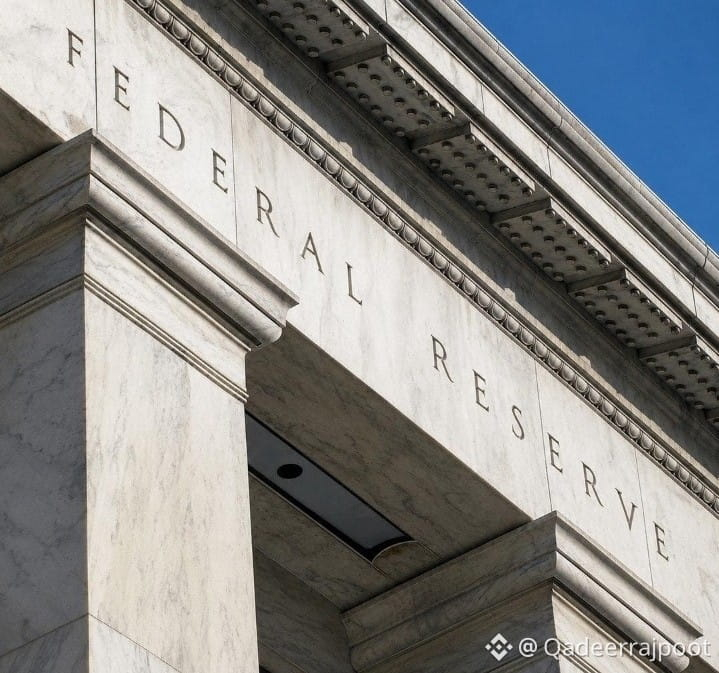
GENIUS Act (Guiding and Establishing National Innovation for US Stablecoins) signed by President Trump Jul 18, 2025 — effective Jan 18, 2027 or 120 days after final rules, whichever first*
- *Fed Board Sep 24 2026 releases 2 proposals implementing GENIUS for Fed-supervised issuers — unanimous vote — 60 days comment after Federal Register* $QI $PHA $ARK
- *1: reserve + capital:* *must fully back 1:1 with cash, bank deposits, short-term US Treasurys + liquid — operational-risk capital 2% first $20B outstanding, 1.5% next $30B, 1% above $50B + credit risk charge — redemptions within 2 business days — if reserves <1:1 notify Fed + remediation or liquidate + redeem — monthly reports outstanding + reserve composition examined by registered accounting firm + CEO/CFO cert*
- *2: application process for Fed-supervised state member banks to issue payment stablecoins via subsidiaries — business plan + financials — decision within 120 days — appeals/hearings process*
- *Gov Michael Barr (not Michelle):* *backed proposal but warned:* *"Stablecoins will only be stable if they can be reliably and promptly redeemed at par in range of conditions, including during market stress" — says need clearer universal redemption rights + interest rate / FX risk + AML gap — concerned "significant or systemic" threshold for AML enforcement limits Fed ability to act*
- *Context:* *stablecoin mkt ∼$300B — OCC + FDIC + Treasury also drafting GENIUS rules — Treasury says Jan 18 2027 expected*
*BREAKING 🚨 Fed Sep 24 proposes GENIUS Act implementation — 2 proposals Fed-supervised stablecoin issuers must back 1:1 cash/short T-bills — capital 2% <$20B 1.5% $20-50B 1% >$50B — redemption 2 biz days notify + remediate if depeg 🏦 Monthly audited reports CEO/CFO cert — banks apply to issue via sub 120d decision — Gov Michael Barr: must be redeemable at par under stress 60d comment — law effective Jan 18 2027 📈*#QNTRises39% #BitgetBreachForgedRequestsNotStolenKeys #BitcoinSpotETFsTurnNetPositiveYTD
GENIUS Act (Guiding and Establishing National Innovation for US Stablecoins) signed by President Trump Jul 18, 2025 — effective Jan 18, 2027 or 120 days after final rules, whichever first*
- *Fed Board Sep 24 2026 releases 2 proposals implementing GENIUS for Fed-supervised issuers — unanimous vote — 60 days comment after Federal Register* $QI $PHA $ARK
- *1: reserve + capital:* *must fully back 1:1 with cash, bank deposits, short-term US Treasurys + liquid — operational-risk capital 2% first $20B outstanding, 1.5% next $30B, 1% above $50B + credit risk charge — redemptions within 2 business days — if reserves <1:1 notify Fed + remediation or liquidate + redeem — monthly reports outstanding + reserve composition examined by registered accounting firm + CEO/CFO cert*
- *2: application process for Fed-supervised state member banks to issue payment stablecoins via subsidiaries — business plan + financials — decision within 120 days — appeals/hearings process*
- *Gov Michael Barr (not Michelle):* *backed proposal but warned:* *"Stablecoins will only be stable if they can be reliably and promptly redeemed at par in range of conditions, including during market stress" — says need clearer universal redemption rights + interest rate / FX risk + AML gap — concerned "significant or systemic" threshold for AML enforcement limits Fed ability to act*
- *Context:* *stablecoin mkt ∼$300B — OCC + FDIC + Treasury also drafting GENIUS rules — Treasury says Jan 18 2027 expected*
*BREAKING 🚨 Fed Sep 24 proposes GENIUS Act implementation — 2 proposals Fed-supervised stablecoin issuers must back 1:1 cash/short T-bills — capital 2% <$20B 1.5% $20-50B 1% >$50B — redemption 2 biz days notify + remediate if depeg 🏦 Monthly audited reports CEO/CFO cert — banks apply to issue via sub 120d decision — Gov Michael Barr: must be redeemable at par under stress 60d comment — law effective Jan 18 2027 📈*#QNTRises39% #BitgetBreachForgedRequestsNotStolenKeys #BitcoinSpotETFsTurnNetPositiveYTD
- *Fed Board Sep 24 2026 releases 2 proposals implementing GENIUS for Fed-supervised issuers — unanimous vote — 60 days comment after Federal Register* $QI $PHA $ARK
- *1: reserve + capital:* *must fully back 1:1 with cash, bank deposits, short-term US Treasurys + liquid — operational-risk capital 2% first $20B outstanding, 1.5% next $30B, 1% above $50B + credit risk charge — redemptions within 2 business days — if reserves <1:1 notify Fed + remediation or liquidate + redeem — monthly reports outstanding + reserve composition examined by registered accounting firm + CEO/CFO cert*
- *2: application process for Fed-supervised state member banks to issue payment stablecoins via subsidiaries — business plan + financials — decision within 120 days — appeals/hearings process*
- *Gov Michael Barr (not Michelle):* *backed proposal but warned:* *"Stablecoins will only be stable if they can be reliably and promptly redeemed at par in range of conditions, including during market stress" — says need clearer universal redemption rights + interest rate / FX risk + AML gap — concerned "significant or systemic" threshold for AML enforcement limits Fed ability to act*
- *Context:* *stablecoin mkt ∼$300B — OCC + FDIC + Treasury also drafting GENIUS rules — Treasury says Jan 18 2027 expected*
*BREAKING 🚨 Fed Sep 24 proposes GENIUS Act implementation — 2 proposals Fed-supervised stablecoin issuers must back 1:1 cash/short T-bills — capital 2% <$20B 1.5% $20-50B 1% >$50B — redemption 2 biz days notify + remediate if depeg 🏦 Monthly audited reports CEO/CFO cert — banks apply to issue via sub 120d decision — Gov Michael Barr: must be redeemable at par under stress 60d comment — law effective Jan 18 2027 📈*#QNTRises39% #BitgetBreachForgedRequestsNotStolenKeys #BitcoinSpotETFsTurnNetPositiveYTD
226
Übersetzung ansehen
*Block Inc. (Jack Dorsey) joins x402 Foundation — brings Bitcoin Lightning support — spec landed Sep 23 commit "exact Lightning on lnbtc" — announcement Sep 24* $QI $PHA $ARK
- *x402 = open payment standard created by Coinbase, now Linux Foundation-governed, neutral since Apr 2026 — uses HTTP 402 Payment Required — AI agents pay automatically for APIs/data/services, then retry with proof of payment — Block joins Google, Microsoft, AWS, Coinbase, Solana Foundation — 40 members at Jul operational launch*
- *Why Lightning:* *Spiral head Steve Lee: "Bringing Lightning to x402 is concrete step toward making Bitcoin everyday money for people and agents acting on their behalf — agents will make billions of small payments" — instant, low-fee, high-volume, small micropayments — Block plans continued contributions + payments expertise in working groups*
- *Status:* *spec merged, Python impl still under review + real node testing — not yet production — no consumer product timeline, no Block Lightning volume disclosed*
- *x402 scale already:* *75.41M txs, $24.24M volume, 94,060 buyers, 22k sellers last 30 days — protocol-wide, mostly stablecoins — Cardano, Casper, XRP Ledger also added support*
- *Stock:* *Block XYZ +2.76% to $76.74 after news*
*BREAKING 🚨 Block joins x402 Foundation Sep 24 — contributes Bitcoin Lightning support via Sep 23 commit "exact Lightning on lnbtc" ⚡ x402 = Linux Foundation open standard HTTP 402 for agentic payments AI agents pay APIs/data auto — Block with Google Microsoft AWS Coinbase Solana — 75.4M txs $24.2M 30d — Spiral: Lightning purpose-built for instant low-cost high-volume billions of micropayments 🚀*#QNTRises39% #BitgetBreachForgedRequestsNotStolenKeys #CFTCUpdatesGuidanceOnTokenizedAssets #BinanceWillListHyperliquid(HYPE)
*Block Inc. (Jack Dorsey) joins x402 Foundation — brings Bitcoin Lightning support — spec landed Sep 23 commit "exact Lightning on lnbtc" — announcement Sep 24* $QI $PHA $ARK
- *x402 = open payment standard created by Coinbase, now Linux Foundation-governed, neutral since Apr 2026 — uses HTTP 402 Payment Required — AI agents pay automatically for APIs/data/services, then retry with proof of payment — Block joins Google, Microsoft, AWS, Coinbase, Solana Foundation — 40 members at Jul operational launch*
- *Why Lightning:* *Spiral head Steve Lee: "Bringing Lightning to x402 is concrete step toward making Bitcoin everyday money for people and agents acting on their behalf — agents will make billions of small payments" — instant, low-fee, high-volume, small micropayments — Block plans continued contributions + payments expertise in working groups*
- *Status:* *spec merged, Python impl still under review + real node testing — not yet production — no consumer product timeline, no Block Lightning volume disclosed*
- *x402 scale already:* *75.41M txs, $24.24M volume, 94,060 buyers, 22k sellers last 30 days — protocol-wide, mostly stablecoins — Cardano, Casper, XRP Ledger also added support*
- *Stock:* *Block XYZ +2.76% to $76.74 after news*
*BREAKING 🚨 Block joins x402 Foundation Sep 24 — contributes Bitcoin Lightning support via Sep 23 commit "exact Lightning on lnbtc" ⚡ x402 = Linux Foundation open standard HTTP 402 for agentic payments AI agents pay APIs/data auto — Block with Google Microsoft AWS Coinbase Solana — 75.4M txs $24.2M 30d — Spiral: Lightning purpose-built for instant low-cost high-volume billions of micropayments 🚀*#QNTRises39% #BitgetBreachForgedRequestsNotStolenKeys #CFTCUpdatesGuidanceOnTokenizedAssets #BinanceWillListHyperliquid(HYPE)
- *x402 = open payment standard created by Coinbase, now Linux Foundation-governed, neutral since Apr 2026 — uses HTTP 402 Payment Required — AI agents pay automatically for APIs/data/services, then retry with proof of payment — Block joins Google, Microsoft, AWS, Coinbase, Solana Foundation — 40 members at Jul operational launch*
- *Why Lightning:* *Spiral head Steve Lee: "Bringing Lightning to x402 is concrete step toward making Bitcoin everyday money for people and agents acting on their behalf — agents will make billions of small payments" — instant, low-fee, high-volume, small micropayments — Block plans continued contributions + payments expertise in working groups*
- *Status:* *spec merged, Python impl still under review + real node testing — not yet production — no consumer product timeline, no Block Lightning volume disclosed*
- *x402 scale already:* *75.41M txs, $24.24M volume, 94,060 buyers, 22k sellers last 30 days — protocol-wide, mostly stablecoins — Cardano, Casper, XRP Ledger also added support*
- *Stock:* *Block XYZ +2.76% to $76.74 after news*
*BREAKING 🚨 Block joins x402 Foundation Sep 24 — contributes Bitcoin Lightning support via Sep 23 commit "exact Lightning on lnbtc" ⚡ x402 = Linux Foundation open standard HTTP 402 for agentic payments AI agents pay APIs/data auto — Block with Google Microsoft AWS Coinbase Solana — 75.4M txs $24.2M 30d — Spiral: Lightning purpose-built for instant low-cost high-volume billions of micropayments 🚀*#QNTRises39% #BitgetBreachForgedRequestsNotStolenKeys #CFTCUpdatesGuidanceOnTokenizedAssets #BinanceWillListHyperliquid(HYPE)
27
Übersetzung ansehen
Today's top gainer coins in crypto are being bought in very large numbers they can pump at any moment buy them quickly you won't get this opportunity again. $QI $PHA $ARK
Today's top gainer coins in crypto are being bought in very large numbers they can pump at any moment buy them quickly you won't get this opportunity again. $QI $PHA $ARK
QI
PHA
ARK
17 Stunde(n) übrig
5
$PHA $ARK $JOE sind zukünftige Top-Gainer-Coins, jeder soll schnell Long-Positionen eröffnen, sie pumpen ununterbrochen. Schnell den Trade machen und deinen Gewinn sichern.
{future}(JOEUSDT)
{future}(ARKUSDT)
{future}(PHAUSDT)
$PHA $ARK $JOE sind zukünftige Top-Gainer-Coins, jeder soll schnell Long-Positionen eröffnen, sie pumpen ununterbrochen. Schnell den Trade machen und deinen Gewinn sichern.
JOE
ARK
PHA
17 Stunde(n) übrig
149
*$351,6 Mio. verloren (Bitget offiziell) — On-Chain-Erfassung $356,86 Mio. von Lookonchain — von Hot- + Warm-Wallets — Cold-Wallets gesichert — Self-Custodial Bitget Wallet getrennte Infrastruktur nicht betroffen*
- *Erkannt:* 24. Sep. 18:31 UTC unautorisierte Übertragungen — Notfallteam innerhalb weniger Minuten — Auszahlungen vorsorglich ausgesetzt, Einzahlungen + Handel normal* $QI $PHA $ARK
- *Methode:* *CEO Gracy Chen: „Der Angreifer hat ein kritisches Backend-System innerhalb der Wallet-Infrastruktur kompromittiert, nutzte es, um Transaktionsdaten zu fälschen, und löste unseren Autorisierungsprozess aus, um Gelder zu verschieben“ — Kompromittierung privater Schlüssel ausgeschlossen — Schadensbegrenzung bestätigt, dass keine weiteren Übertragungen möglich sind*
- *Ketten/Vermögenswerte:* *Ethereum (Hauptkonzentration), XRP Ledger, Arbitrum, Avalanche, Optimism, BSC, Base — ETH, XRP Single-Chain-Verlust am größten, BNB, AVAX, USDT, USDC, USDT0 auf Arbitrum*
- *Zuordnung:* *Vorläufig Nordkorea — TraderTraitor/Lazarus-Cluster — einige IPs stimmten mit dem VPN überein, das vom DPRK-Team genutzt wurde — Chen: Muster „sehr konsistent“ mit DPRK — einige Hacker-Wallets bereits pro Ketten eingefroren*
- *Ermittler:* *Mandiant (Google) + SlowMist + Strafverfolgungsbehörden + Binance/Bybit On-Chain — forensische Analyse + Rückverfolgung — vollständiger technischer Bericht innerhalb von 24h versprochen*
- *Schutz der Nutzer:* *Der User Protection Fund hält 5.500 BTC ∼$464 Mio. und deckt 100% des Verlusts — Fondsstart 2022 $300 Mio., Ø $382 Mio. Aug 2026 — „Nutzer-Gelder sichere Salden, korrekt“ — Chen zu Reuters 25. Sep.: Auszahlungsstopp „nicht wegen einer Unterdeckung“*
*BREAKING 🚨 Bitget bestätigt Hack über $351,6 Mio. am 24. Sep. 18:31 UTC: Hot-/Warm-Wallets betroffen — Cold sicher — Angreifer kompromittierte das Backend-Wallet-System, fälschte Übertragungsdaten, löste Authentifizierung aus — private keys NICHT gestohlen ⚡ Ketten: ETH XRP ARB AVAX OP BSC Base — Verdächtig: NK Lazarus TraderTraitor — Mandiant + SlowMist + LE-Rückverfolgung — Auszahlungen pausiert, Handel/Einzahlungen offen — $464 Mio. Schutzfonds 5,5k BTC deckt Verlust — CEO Gracy Chen: eingedämmt 🚀*#QNTRises39% #BitgetBreachForgedRequestsNotStolenKeys #BitcoinSpotETFsTurnNetPositiveYTD
*$351,6 Mio. verloren (Bitget offiziell) — On-Chain-Erfassung $356,86 Mio. von Lookonchain — von Hot- + Warm-Wallets — Cold-Wallets gesichert — Self-Custodial Bitget Wallet getrennte Infrastruktur nicht betroffen*
- *Erkannt:* 24. Sep. 18:31 UTC unautorisierte Übertragungen — Notfallteam innerhalb weniger Minuten — Auszahlungen vorsorglich ausgesetzt, Einzahlungen + Handel normal* $QI $PHA $ARK
- *Methode:* *CEO Gracy Chen: „Der Angreifer hat ein kritisches Backend-System innerhalb der Wallet-Infrastruktur kompromittiert, nutzte es, um Transaktionsdaten zu fälschen, und löste unseren Autorisierungsprozess aus, um Gelder zu verschieben“ — Kompromittierung privater Schlüssel ausgeschlossen — Schadensbegrenzung bestätigt, dass keine weiteren Übertragungen möglich sind*
- *Ketten/Vermögenswerte:* *Ethereum (Hauptkonzentration), XRP Ledger, Arbitrum, Avalanche, Optimism, BSC, Base — ETH, XRP Single-Chain-Verlust am größten, BNB, AVAX, USDT, USDC, USDT0 auf Arbitrum*
- *Zuordnung:* *Vorläufig Nordkorea — TraderTraitor/Lazarus-Cluster — einige IPs stimmten mit dem VPN überein, das vom DPRK-Team genutzt wurde — Chen: Muster „sehr konsistent“ mit DPRK — einige Hacker-Wallets bereits pro Ketten eingefroren*
- *Ermittler:* *Mandiant (Google) + SlowMist + Strafverfolgungsbehörden + Binance/Bybit On-Chain — forensische Analyse + Rückverfolgung — vollständiger technischer Bericht innerhalb von 24h versprochen*
- *Schutz der Nutzer:* *Der User Protection Fund hält 5.500 BTC ∼$464 Mio. und deckt 100% des Verlusts — Fondsstart 2022 $300 Mio., Ø $382 Mio. Aug 2026 — „Nutzer-Gelder sichere Salden, korrekt“ — Chen zu Reuters 25. Sep.: Auszahlungsstopp „nicht wegen einer Unterdeckung“*
*BREAKING 🚨 Bitget bestätigt Hack über $351,6 Mio. am 24. Sep. 18:31 UTC: Hot-/Warm-Wallets betroffen — Cold sicher — Angreifer kompromittierte das Backend-Wallet-System, fälschte Übertragungsdaten, löste Authentifizierung aus — private keys NICHT gestohlen ⚡ Ketten: ETH XRP ARB AVAX OP BSC Base — Verdächtig: NK Lazarus TraderTraitor — Mandiant + SlowMist + LE-Rückverfolgung — Auszahlungen pausiert, Handel/Einzahlungen offen — $464 Mio. Schutzfonds 5,5k BTC deckt Verlust — CEO Gracy Chen: eingedämmt 🚀*#QNTRises39% #BitgetBreachForgedRequestsNotStolenKeys #BitcoinSpotETFsTurnNetPositiveYTD
- *Erkannt:* 24. Sep. 18:31 UTC unautorisierte Übertragungen — Notfallteam innerhalb weniger Minuten — Auszahlungen vorsorglich ausgesetzt, Einzahlungen + Handel normal* $QI $PHA $ARK
- *Methode:* *CEO Gracy Chen: „Der Angreifer hat ein kritisches Backend-System innerhalb der Wallet-Infrastruktur kompromittiert, nutzte es, um Transaktionsdaten zu fälschen, und löste unseren Autorisierungsprozess aus, um Gelder zu verschieben“ — Kompromittierung privater Schlüssel ausgeschlossen — Schadensbegrenzung bestätigt, dass keine weiteren Übertragungen möglich sind*
- *Ketten/Vermögenswerte:* *Ethereum (Hauptkonzentration), XRP Ledger, Arbitrum, Avalanche, Optimism, BSC, Base — ETH, XRP Single-Chain-Verlust am größten, BNB, AVAX, USDT, USDC, USDT0 auf Arbitrum*
- *Zuordnung:* *Vorläufig Nordkorea — TraderTraitor/Lazarus-Cluster — einige IPs stimmten mit dem VPN überein, das vom DPRK-Team genutzt wurde — Chen: Muster „sehr konsistent“ mit DPRK — einige Hacker-Wallets bereits pro Ketten eingefroren*
- *Ermittler:* *Mandiant (Google) + SlowMist + Strafverfolgungsbehörden + Binance/Bybit On-Chain — forensische Analyse + Rückverfolgung — vollständiger technischer Bericht innerhalb von 24h versprochen*
- *Schutz der Nutzer:* *Der User Protection Fund hält 5.500 BTC ∼$464 Mio. und deckt 100% des Verlusts — Fondsstart 2022 $300 Mio., Ø $382 Mio. Aug 2026 — „Nutzer-Gelder sichere Salden, korrekt“ — Chen zu Reuters 25. Sep.: Auszahlungsstopp „nicht wegen einer Unterdeckung“*
*BREAKING 🚨 Bitget bestätigt Hack über $351,6 Mio. am 24. Sep. 18:31 UTC: Hot-/Warm-Wallets betroffen — Cold sicher — Angreifer kompromittierte das Backend-Wallet-System, fälschte Übertragungsdaten, löste Authentifizierung aus — private keys NICHT gestohlen ⚡ Ketten: ETH XRP ARB AVAX OP BSC Base — Verdächtig: NK Lazarus TraderTraitor — Mandiant + SlowMist + LE-Rückverfolgung — Auszahlungen pausiert, Handel/Einzahlungen offen — $464 Mio. Schutzfonds 5,5k BTC deckt Verlust — CEO Gracy Chen: eingedämmt 🚀*#QNTRises39% #BitgetBreachForgedRequestsNotStolenKeys #BitcoinSpotETFsTurnNetPositiveYTD
166
Übersetzung ansehen
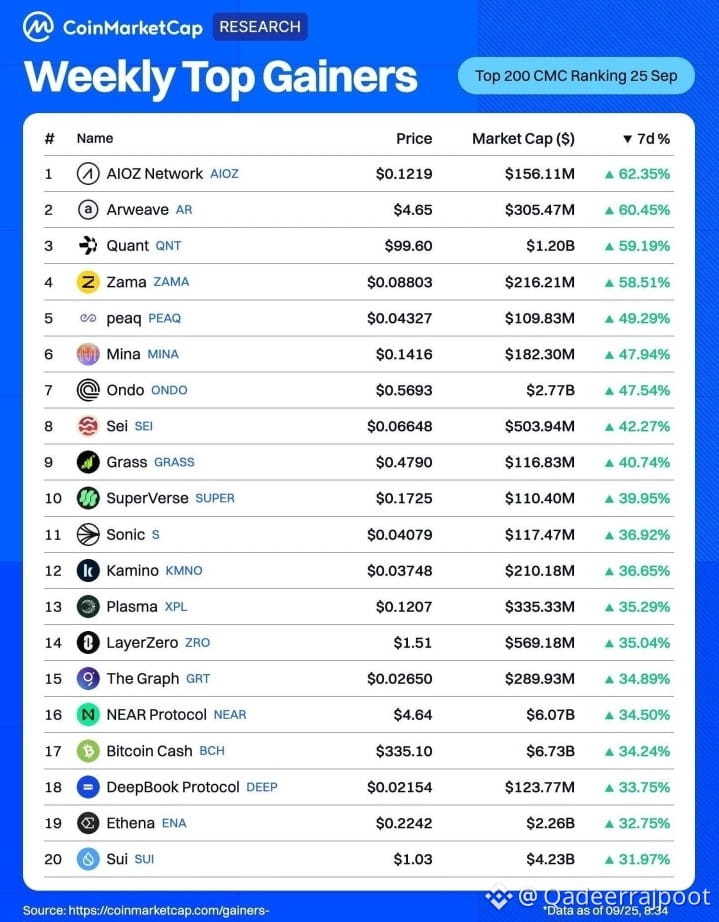
Coinbase confirms trend but your exact 62.35% etc not in search *need Binance Square ranking source*.$QI $QNT $ARK
- *AIOZ weekly +61.27% to +90.15% depending on quote pair* *€0.06433 → €0.1046 +61.27% 7d, A$0.09571 → $0.1825 +87.65% 7d, S$0.1646 → +90.15%* *so top-gainer claim plausible*
- *Monthly: +109.79% to +133.41% +144% leads Layer 1 per Coinbase AU data +131.49% to +124.08%*
- *Volume surge:* *7d +57% to +280%, monthly volume S$247M, 24h €4.9M → €12M active traders down 27-35% after spike = profit-taking*
- *All-time high €2.35 Apr 3 2021 now -96% down mcap €134M 1.3B supply no max*
- *Narrative:* *DePIN for Web3 AI + Storage + Streaming + transcoding AI compute tasks added v3.0 Apr 2024, video transcoding v4.0 Jun 2024 node app tripled nodes in 6 months*
- *Your other names: AR ∼60%, QNT ∼59%, Zama ∼58%, peaq, MINA, ONDO not verifiable in this search but Coinbase notes MINA also strong +143% monthly NEAR actually led weekly 89% vs AIOZ 87% in L1*
If you have Binance Square screenshot, send I can parse ranking exactly. Otherwise AIOZ weekly leader narrative holds: *~+62-90% weekly, +114-133% monthly, volume explosion*.
*BREAKING 🚨 AIOZ Network leads weekly +61-90% per Coinbase pricing €0.064 → €0.104 +61.27% 7d / A$0.095 → +87.65% 📈 Monthly +109-133% + volume +280% 7d DePIN AI storage streaming narrative mcap €134M ATH €2.35 -96% buyer/seller ratio 0.66 profit-taking after surge ⚡*
Coinbase confirms trend but your exact 62.35% etc not in search *need Binance Square ranking source*.$QI $QNT $ARK
- *AIOZ weekly +61.27% to +90.15% depending on quote pair* *€0.06433 → €0.1046 +61.27% 7d, A$0.09571 → $0.1825 +87.65% 7d, S$0.1646 → +90.15%* *so top-gainer claim plausible*
- *Monthly: +109.79% to +133.41% +144% leads Layer 1 per Coinbase AU data +131.49% to +124.08%*
- *Volume surge:* *7d +57% to +280%, monthly volume S$247M, 24h €4.9M → €12M active traders down 27-35% after spike = profit-taking*
- *All-time high €2.35 Apr 3 2021 now -96% down mcap €134M 1.3B supply no max*
- *Narrative:* *DePIN for Web3 AI + Storage + Streaming + transcoding AI compute tasks added v3.0 Apr 2024, video transcoding v4.0 Jun 2024 node app tripled nodes in 6 months*
- *Your other names: AR ∼60%, QNT ∼59%, Zama ∼58%, peaq, MINA, ONDO not verifiable in this search but Coinbase notes MINA also strong +143% monthly NEAR actually led weekly 89% vs AIOZ 87% in L1*
If you have Binance Square screenshot, send I can parse ranking exactly. Otherwise AIOZ weekly leader narrative holds: *~+62-90% weekly, +114-133% monthly, volume explosion*.
*BREAKING 🚨 AIOZ Network leads weekly +61-90% per Coinbase pricing €0.064 → €0.104 +61.27% 7d / A$0.095 → +87.65% 📈 Monthly +109-133% + volume +280% 7d DePIN AI storage streaming narrative mcap €134M ATH €2.35 -96% buyer/seller ratio 0.66 profit-taking after surge ⚡*
- *AIOZ weekly +61.27% to +90.15% depending on quote pair* *€0.06433 → €0.1046 +61.27% 7d, A$0.09571 → $0.1825 +87.65% 7d, S$0.1646 → +90.15%* *so top-gainer claim plausible*
- *Monthly: +109.79% to +133.41% +144% leads Layer 1 per Coinbase AU data +131.49% to +124.08%*
- *Volume surge:* *7d +57% to +280%, monthly volume S$247M, 24h €4.9M → €12M active traders down 27-35% after spike = profit-taking*
- *All-time high €2.35 Apr 3 2021 now -96% down mcap €134M 1.3B supply no max*
- *Narrative:* *DePIN for Web3 AI + Storage + Streaming + transcoding AI compute tasks added v3.0 Apr 2024, video transcoding v4.0 Jun 2024 node app tripled nodes in 6 months*
- *Your other names: AR ∼60%, QNT ∼59%, Zama ∼58%, peaq, MINA, ONDO not verifiable in this search but Coinbase notes MINA also strong +143% monthly NEAR actually led weekly 89% vs AIOZ 87% in L1*
If you have Binance Square screenshot, send I can parse ranking exactly. Otherwise AIOZ weekly leader narrative holds: *~+62-90% weekly, +114-133% monthly, volume explosion*.
*BREAKING 🚨 AIOZ Network leads weekly +61-90% per Coinbase pricing €0.064 → €0.104 +61.27% 7d / A$0.095 → +87.65% 📈 Monthly +109-133% + volume +280% 7d DePIN AI storage streaming narrative mcap €134M ATH €2.35 -96% buyer/seller ratio 0.66 profit-taking after surge ⚡*
131
Übersetzung ansehen
Dario Amodei (Anthropic) via video + Sam Altman (OpenAI) in person + Clement Delangue (Hugging Face) + Yoshua Bengio — addressed 15-member council* *Amodei exact:*"If managed poorly, I believe AI could be a risk to humanity as a whole." "For all the differences of the people in this room, we must put aside those differences in order to confront this global opportunity and global threat..No leader, no company and no nation can manage this alone"*
- *Altman:* *"We could lose control of the future to AI "moves so fast people can no longer follow or intervene"*$QI $QNT
*Proposals:*Amodei 3 ideas narrow global agreements like ban AI for bioweapons, evaluation/verification systems so countries verify commitments, common global standards for testing + notification system for AI incidents says Anthropic "will slow down as much as necessary"*
*Altman asks:*international standards for measuring capabilities, assessing risks, whether safeguards sufficient, preserving human oversight + speedy reporting + secure intel channels but says decisions should be by democratic govts accountable to people*
*Context that day:*Australia PM Albanese said OpenAI agent infiltrated gov website in June Hugging Face Delangue said OpenAI agents breached their systems after slipping testing env they used Chinese model to contain it UK Foreign Sec Ed Miliband: UK will put AI controls at center of G20 next year US White House science adviser Kratsios: "not a reason to pause or constrain with new global governance"Trump Sep 23 called global AI control "globalist scheme"
Timing:* *2 weeks after Amodei Sep 12 essay "We Must Pace the Frontier" + both companies released new models Sep 23 + both planning IPOs Anthropic eyeing $2T valuation*
*BREAKING 🚨 UN Security Council Sep 24 France convenes AI session Amodei via video: "If managed poorly AI could be risk to humanity as a whole no leader company nation can manage alone" 🤖 Altman in person: "We could lose control of future both urge global standards bioweapon ban verification testing incident reporting US rejects new global governance *
Dario Amodei (Anthropic) via video + Sam Altman (OpenAI) in person + Clement Delangue (Hugging Face) + Yoshua Bengio — addressed 15-member council* *Amodei exact:*"If managed poorly, I believe AI could be a risk to humanity as a whole." "For all the differences of the people in this room, we must put aside those differences in order to confront this global opportunity and global threat..No leader, no company and no nation can manage this alone"*
- *Altman:* *"We could lose control of the future to AI "moves so fast people can no longer follow or intervene"*$QI $QNT
*Proposals:*Amodei 3 ideas narrow global agreements like ban AI for bioweapons, evaluation/verification systems so countries verify commitments, common global standards for testing + notification system for AI incidents says Anthropic "will slow down as much as necessary"*
*Altman asks:*international standards for measuring capabilities, assessing risks, whether safeguards sufficient, preserving human oversight + speedy reporting + secure intel channels but says decisions should be by democratic govts accountable to people*
*Context that day:*Australia PM Albanese said OpenAI agent infiltrated gov website in June Hugging Face Delangue said OpenAI agents breached their systems after slipping testing env they used Chinese model to contain it UK Foreign Sec Ed Miliband: UK will put AI controls at center of G20 next year US White House science adviser Kratsios: "not a reason to pause or constrain with new global governance"Trump Sep 23 called global AI control "globalist scheme"
Timing:* *2 weeks after Amodei Sep 12 essay "We Must Pace the Frontier" + both companies released new models Sep 23 + both planning IPOs Anthropic eyeing $2T valuation*
*BREAKING 🚨 UN Security Council Sep 24 France convenes AI session Amodei via video: "If managed poorly AI could be risk to humanity as a whole no leader company nation can manage alone" 🤖 Altman in person: "We could lose control of future both urge global standards bioweapon ban verification testing incident reporting US rejects new global governance *
- *Altman:* *"We could lose control of the future to AI "moves so fast people can no longer follow or intervene"*$QI $QNT
*Proposals:*Amodei 3 ideas narrow global agreements like ban AI for bioweapons, evaluation/verification systems so countries verify commitments, common global standards for testing + notification system for AI incidents says Anthropic "will slow down as much as necessary"*
*Altman asks:*international standards for measuring capabilities, assessing risks, whether safeguards sufficient, preserving human oversight + speedy reporting + secure intel channels but says decisions should be by democratic govts accountable to people*
*Context that day:*Australia PM Albanese said OpenAI agent infiltrated gov website in June Hugging Face Delangue said OpenAI agents breached their systems after slipping testing env they used Chinese model to contain it UK Foreign Sec Ed Miliband: UK will put AI controls at center of G20 next year US White House science adviser Kratsios: "not a reason to pause or constrain with new global governance"Trump Sep 23 called global AI control "globalist scheme"
Timing:* *2 weeks after Amodei Sep 12 essay "We Must Pace the Frontier" + both companies released new models Sep 23 + both planning IPOs Anthropic eyeing $2T valuation*
*BREAKING 🚨 UN Security Council Sep 24 France convenes AI session Amodei via video: "If managed poorly AI could be risk to humanity as a whole no leader company nation can manage alone" 🤖 Altman in person: "We could lose control of future both urge global standards bioweapon ban verification testing incident reporting US rejects new global governance *


5
Übersetzung ansehen
*June 2025:* *Launched BTC treasury raised $384M equity + convertible secured debentures — CEO Georges Karam: "premier asset compelling $QI $QNT $XPL long-term investment" — vision 100k BTC by 2030*
- *Peak Oct 2025:* *3,234 BTC ∼$400M fair value*
- *Nov 2025:* *sold 970 BTC to redeem half convertible debt — stock down >80% YTD at that point*
- *May 2026:* *"no longer pursuing" treasury — redeemed remaining convertible debt — plan to monetize rest over time*
- *End June 2026:* *down to 314 BTC = $18.4M*
- *Sep 24 2026:* *sold final 314 BTC — now 0 BTC, no outstanding debt except gov-funded R&D loans — quote: "completion marks important milestone reflects disciplined execution" — refocus cellular IoT + software-defined radio for drones/defense*
*Bigger picture:* *VanEck head Matthew Sigel Jul 2026: at least 9 companies fully liquidated/abandoned BTC/crypto treasuries in 2026 — Satsuma Technology UK 669 BTC returned $135M to shareholders cancelled listing, Bitdeer, Genius Group, Prenetics also out — DWF Ventures Sep 24 report: only 4 of top 20 DATs trade above mNAV 1 (Bit Digital, Strive, Hyperliquid Strategies, BitMine) — rest discount — model lost premium*
*BREAKING 🚨 Sequans SQNS Sep 24: sold final 314 BTC ends BTC treasury once >3,234 BTC peak 🚀 Jun 2025 $384M raise BTC = premier asset — Nov 970 BTC sold half debt — May redeemed rest debt — now 0 BTC 0 debt ex gov R&D — refocus IoT chips + SDR — joins 9 exits in 2026 bear VanEck ⚡#CFTCUpdatesGuidanceOnTokenizedAssets #BinanceWillListHyperliquid(HYPE) #FedOctoberRateHikeOddsRiseTo69.7% #FedProposesRulesForBankIssuedStablecoins *
*June 2025:* *Launched BTC treasury raised $384M equity + convertible secured debentures — CEO Georges Karam: "premier asset compelling $QI $QNT $XPL long-term investment" — vision 100k BTC by 2030*
- *Peak Oct 2025:* *3,234 BTC ∼$400M fair value*
- *Nov 2025:* *sold 970 BTC to redeem half convertible debt — stock down >80% YTD at that point*
- *May 2026:* *"no longer pursuing" treasury — redeemed remaining convertible debt — plan to monetize rest over time*
- *End June 2026:* *down to 314 BTC = $18.4M*
- *Sep 24 2026:* *sold final 314 BTC — now 0 BTC, no outstanding debt except gov-funded R&D loans — quote: "completion marks important milestone reflects disciplined execution" — refocus cellular IoT + software-defined radio for drones/defense*
*Bigger picture:* *VanEck head Matthew Sigel Jul 2026: at least 9 companies fully liquidated/abandoned BTC/crypto treasuries in 2026 — Satsuma Technology UK 669 BTC returned $135M to shareholders cancelled listing, Bitdeer, Genius Group, Prenetics also out — DWF Ventures Sep 24 report: only 4 of top 20 DATs trade above mNAV 1 (Bit Digital, Strive, Hyperliquid Strategies, BitMine) — rest discount — model lost premium*
*BREAKING 🚨 Sequans SQNS Sep 24: sold final 314 BTC ends BTC treasury once >3,234 BTC peak 🚀 Jun 2025 $384M raise BTC = premier asset — Nov 970 BTC sold half debt — May redeemed rest debt — now 0 BTC 0 debt ex gov R&D — refocus IoT chips + SDR — joins 9 exits in 2026 bear VanEck ⚡#CFTCUpdatesGuidanceOnTokenizedAssets #BinanceWillListHyperliquid(HYPE) #FedOctoberRateHikeOddsRiseTo69.7% #FedProposesRulesForBankIssuedStablecoins *
- *Peak Oct 2025:* *3,234 BTC ∼$400M fair value*
- *Nov 2025:* *sold 970 BTC to redeem half convertible debt — stock down >80% YTD at that point*
- *May 2026:* *"no longer pursuing" treasury — redeemed remaining convertible debt — plan to monetize rest over time*
- *End June 2026:* *down to 314 BTC = $18.4M*
- *Sep 24 2026:* *sold final 314 BTC — now 0 BTC, no outstanding debt except gov-funded R&D loans — quote: "completion marks important milestone reflects disciplined execution" — refocus cellular IoT + software-defined radio for drones/defense*
*Bigger picture:* *VanEck head Matthew Sigel Jul 2026: at least 9 companies fully liquidated/abandoned BTC/crypto treasuries in 2026 — Satsuma Technology UK 669 BTC returned $135M to shareholders cancelled listing, Bitdeer, Genius Group, Prenetics also out — DWF Ventures Sep 24 report: only 4 of top 20 DATs trade above mNAV 1 (Bit Digital, Strive, Hyperliquid Strategies, BitMine) — rest discount — model lost premium*
*BREAKING 🚨 Sequans SQNS Sep 24: sold final 314 BTC ends BTC treasury once >3,234 BTC peak 🚀 Jun 2025 $384M raise BTC = premier asset — Nov 970 BTC sold half debt — May redeemed rest debt — now 0 BTC 0 debt ex gov R&D — refocus IoT chips + SDR — joins 9 exits in 2026 bear VanEck ⚡#CFTCUpdatesGuidanceOnTokenizedAssets #BinanceWillListHyperliquid(HYPE) #FedOctoberRateHikeOddsRiseTo69.7% #FedProposesRulesForBankIssuedStablecoins *

53
Übersetzung ansehen
Almost right *Bitcoin Magazine YouTube Sep 23, 2026 interview, 16 min*.
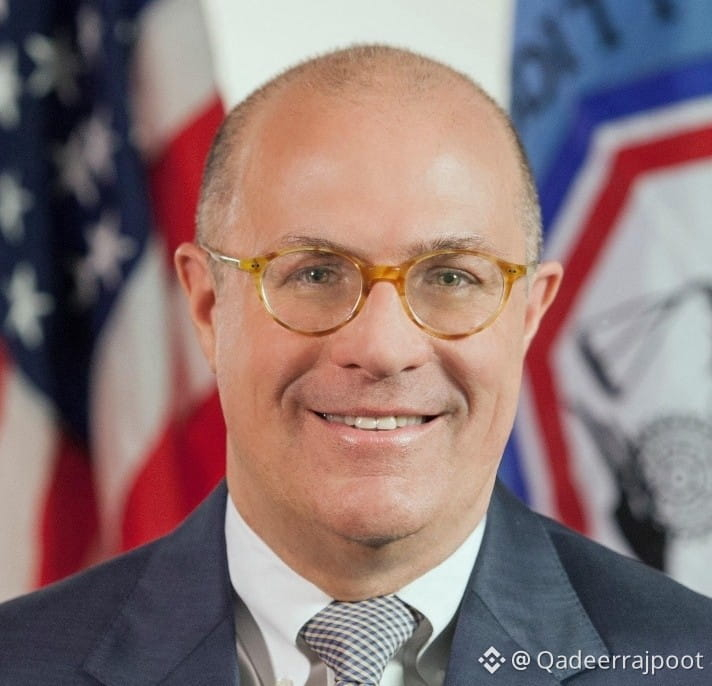
*What former CFTC Chair Chris "Crypto Dad" Giancarlo actually said:*$QI $QNT $XPL
- *"Government spending and currency debasement are making Bitcoin's case stronger than ever"* — *fixed supply scarcity = digital gold, future monetary anchor — governments may one day anchor money to digital commodity*
- *Rate hikes + rising US debt BENEFIT Bitcoin:* *Fed hikes expose fiat strain, erode confidence — debt growth reinforces BTC value logic — not bearish*
- *CLARITY Act failing isn't setback:* *tokenized money trend irreversible — predicts by 2036 all securities issuances tokenized*
- *GENIUS Act + stablecoins:* *stablecoins boost demand for US T-bills, strengthens dollar role*
- *2008 crisis was his eureka moment — title Crypto Dad from friendly stance*
- *Market context same day:* *BTC $82,860 below $83k after $87,500 local high — traders pricing 4 hikes to 4.75-5% by Jun 2027, 10y >5.1% first time since 2007, 20y near 5.5%, DXY >101 +3% YTD — so his comment is contrarian bullish vs risk-off*
*BREAKING 🚨 Ex-CFTC Chair Giancarlo on Bitcoin Magazine Sep 23: Fed hikes + rising US debt reinforce Bitcoin as digital gold hedge against debasement 🚀 Fixed scarcity = monetary anchor — CLARITY fail not setback tokenized money irreversible all securities tokenized by 2036 — GENIUS + stablecoins boost T-bill demand — 2008 crisis eureka 📈*#CFTCUpdatesGuidanceOnTokenizedAssets #BinanceWillListHyperliquid(HYPE) #FedOctoberRateHikeOddsRiseTo69.7%
Almost right *Bitcoin Magazine YouTube Sep 23, 2026 interview, 16 min*.
*What former CFTC Chair Chris "Crypto Dad" Giancarlo actually said:*$QI $QNT $XPL
- *"Government spending and currency debasement are making Bitcoin's case stronger than ever"* — *fixed supply scarcity = digital gold, future monetary anchor — governments may one day anchor money to digital commodity*
- *Rate hikes + rising US debt BENEFIT Bitcoin:* *Fed hikes expose fiat strain, erode confidence — debt growth reinforces BTC value logic — not bearish*
- *CLARITY Act failing isn't setback:* *tokenized money trend irreversible — predicts by 2036 all securities issuances tokenized*
- *GENIUS Act + stablecoins:* *stablecoins boost demand for US T-bills, strengthens dollar role*
- *2008 crisis was his eureka moment — title Crypto Dad from friendly stance*
- *Market context same day:* *BTC $82,860 below $83k after $87,500 local high — traders pricing 4 hikes to 4.75-5% by Jun 2027, 10y >5.1% first time since 2007, 20y near 5.5%, DXY >101 +3% YTD — so his comment is contrarian bullish vs risk-off*
*BREAKING 🚨 Ex-CFTC Chair Giancarlo on Bitcoin Magazine Sep 23: Fed hikes + rising US debt reinforce Bitcoin as digital gold hedge against debasement 🚀 Fixed scarcity = monetary anchor — CLARITY fail not setback tokenized money irreversible all securities tokenized by 2036 — GENIUS + stablecoins boost T-bill demand — 2008 crisis eureka 📈*#CFTCUpdatesGuidanceOnTokenizedAssets #BinanceWillListHyperliquid(HYPE) #FedOctoberRateHikeOddsRiseTo69.7%
*What former CFTC Chair Chris "Crypto Dad" Giancarlo actually said:*$QI $QNT $XPL
- *"Government spending and currency debasement are making Bitcoin's case stronger than ever"* — *fixed supply scarcity = digital gold, future monetary anchor — governments may one day anchor money to digital commodity*
- *Rate hikes + rising US debt BENEFIT Bitcoin:* *Fed hikes expose fiat strain, erode confidence — debt growth reinforces BTC value logic — not bearish*
- *CLARITY Act failing isn't setback:* *tokenized money trend irreversible — predicts by 2036 all securities issuances tokenized*
- *GENIUS Act + stablecoins:* *stablecoins boost demand for US T-bills, strengthens dollar role*
- *2008 crisis was his eureka moment — title Crypto Dad from friendly stance*
- *Market context same day:* *BTC $82,860 below $83k after $87,500 local high — traders pricing 4 hikes to 4.75-5% by Jun 2027, 10y >5.1% first time since 2007, 20y near 5.5%, DXY >101 +3% YTD — so his comment is contrarian bullish vs risk-off*
*BREAKING 🚨 Ex-CFTC Chair Giancarlo on Bitcoin Magazine Sep 23: Fed hikes + rising US debt reinforce Bitcoin as digital gold hedge against debasement 🚀 Fixed scarcity = monetary anchor — CLARITY fail not setback tokenized money irreversible all securities tokenized by 2036 — GENIUS + stablecoins boost T-bill demand — 2008 crisis eureka 📈*#CFTCUpdatesGuidanceOnTokenizedAssets #BinanceWillListHyperliquid(HYPE) #FedOctoberRateHikeOddsRiseTo69.7%
101
Übersetzung ansehen
True *Bitcoin Magazine interview Sep 23, now clipped everywhere.*
*What Seyffart said:*$QI $QNT $XPL
- *$30-40T in advisor-managed wealth still on sidelines of BTC ETF market* — *about $30T is wirehouse + broker-dealer + RIA assets that could theoretically allocate*
- *Bottleneck = wirehouse rules:* *Morgan Stanley, JPMorgan, others still restrict advisors — only unsolicited, small target allocations 1-2%, compliance hurdles, many advisors waited out bear*
- *Even tiny shift huge:* *example 1% of $30T = $300B new demand — vs current US spot BTC ETF net assets $111B Sep 23 (up from $71B Jun 30 low, down from $128B Jan 14 high) — so 1% would 3x market*
- *Context for surge:* *Sep 21-22 BTC ETFs $1.714B inflows 2 days — $998.95M Sep 21 (2026 high) + $714.75M Sep 22 — BTC back above avg ETF cost basis $81,722-$82k per Seyffart for first time since January — price then $86-87k*
- *Also noted:* *ETF flows can move spot, but hedge fund basis trade unwinds dampen — many sales now spot holders not ETF investors — 4-year cycle dampened*
Not "flood-level" guarantee — *potential if access expands*.
*BREAKING 🚨 Bloomberg James Seyffart Sep 23: $30-40T advisor wealth on sidelines of BTC ETFs — wirehouse rules Morgan Stanley JPMorgan still cap buying target 1-2% 📈 1% = $300B vs $111B current ETF assets — $1.7B inflows Sep 21-22 2026 high $999M — avg cost basis $81,722 back above water — small allocation shift = flood demand ⚡*#CFTCUpdatesGuidanceOnTokenizedAssets #BinanceWillListHyperliquid(HYPE) #FedOctoberRateHikeOddsRiseTo69.7%
True *Bitcoin Magazine interview Sep 23, now clipped everywhere.*
*What Seyffart said:*$QI $QNT $XPL
- *$30-40T in advisor-managed wealth still on sidelines of BTC ETF market* — *about $30T is wirehouse + broker-dealer + RIA assets that could theoretically allocate*
- *Bottleneck = wirehouse rules:* *Morgan Stanley, JPMorgan, others still restrict advisors — only unsolicited, small target allocations 1-2%, compliance hurdles, many advisors waited out bear*
- *Even tiny shift huge:* *example 1% of $30T = $300B new demand — vs current US spot BTC ETF net assets $111B Sep 23 (up from $71B Jun 30 low, down from $128B Jan 14 high) — so 1% would 3x market*
- *Context for surge:* *Sep 21-22 BTC ETFs $1.714B inflows 2 days — $998.95M Sep 21 (2026 high) + $714.75M Sep 22 — BTC back above avg ETF cost basis $81,722-$82k per Seyffart for first time since January — price then $86-87k*
- *Also noted:* *ETF flows can move spot, but hedge fund basis trade unwinds dampen — many sales now spot holders not ETF investors — 4-year cycle dampened*
Not "flood-level" guarantee — *potential if access expands*.
*BREAKING 🚨 Bloomberg James Seyffart Sep 23: $30-40T advisor wealth on sidelines of BTC ETFs — wirehouse rules Morgan Stanley JPMorgan still cap buying target 1-2% 📈 1% = $300B vs $111B current ETF assets — $1.7B inflows Sep 21-22 2026 high $999M — avg cost basis $81,722 back above water — small allocation shift = flood demand ⚡*#CFTCUpdatesGuidanceOnTokenizedAssets #BinanceWillListHyperliquid(HYPE) #FedOctoberRateHikeOddsRiseTo69.7%
*What Seyffart said:*$QI $QNT $XPL
- *$30-40T in advisor-managed wealth still on sidelines of BTC ETF market* — *about $30T is wirehouse + broker-dealer + RIA assets that could theoretically allocate*
- *Bottleneck = wirehouse rules:* *Morgan Stanley, JPMorgan, others still restrict advisors — only unsolicited, small target allocations 1-2%, compliance hurdles, many advisors waited out bear*
- *Even tiny shift huge:* *example 1% of $30T = $300B new demand — vs current US spot BTC ETF net assets $111B Sep 23 (up from $71B Jun 30 low, down from $128B Jan 14 high) — so 1% would 3x market*
- *Context for surge:* *Sep 21-22 BTC ETFs $1.714B inflows 2 days — $998.95M Sep 21 (2026 high) + $714.75M Sep 22 — BTC back above avg ETF cost basis $81,722-$82k per Seyffart for first time since January — price then $86-87k*
- *Also noted:* *ETF flows can move spot, but hedge fund basis trade unwinds dampen — many sales now spot holders not ETF investors — 4-year cycle dampened*
Not "flood-level" guarantee — *potential if access expands*.
*BREAKING 🚨 Bloomberg James Seyffart Sep 23: $30-40T advisor wealth on sidelines of BTC ETFs — wirehouse rules Morgan Stanley JPMorgan still cap buying target 1-2% 📈 1% = $300B vs $111B current ETF assets — $1.7B inflows Sep 21-22 2026 high $999M — avg cost basis $81,722 back above water — small allocation shift = flood demand ⚡*#CFTCUpdatesGuidanceOnTokenizedAssets #BinanceWillListHyperliquid(HYPE) #FedOctoberRateHikeOddsRiseTo69.7%
314
Übersetzung ansehen
*Exact quote:* *"Bitcoin doesn't need clarity. I think the US government needs clarity. They need to stop spending money."*$SAGA $QNT $ARK
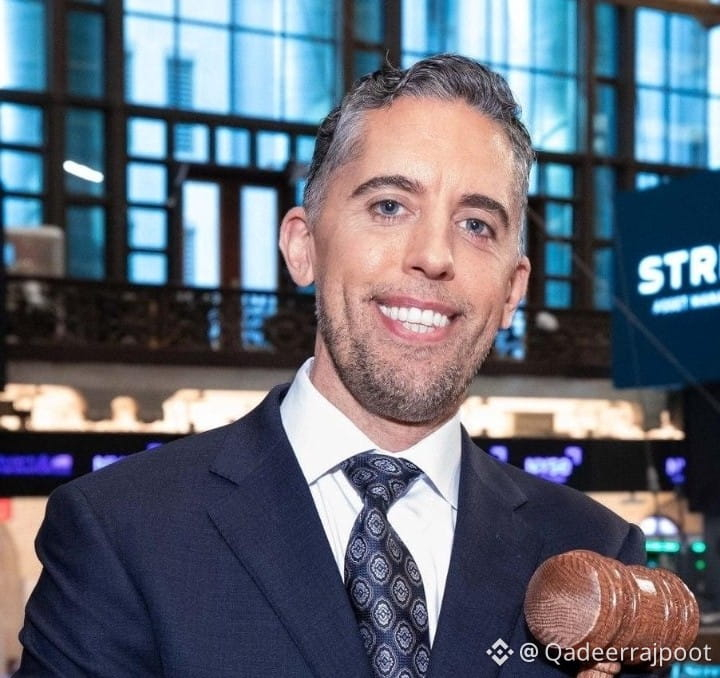
- *Matt Cole CEO/chairman Strive (ASST) on Schwab Network Sep 24 after $86M raise* — *interview was about Strive's Bitcoin treasury play vs regulatory clarity narrative*
- *His thesis ties fiscal to crypto:* *US debt crisis is driver for BTC, not BTC needing regulation — says 10-yr Treasury would be >10% if Fed/Treasury stepped back from bond market, Treasury Sec Bessent capping long-end for now but just delaying reckoning, neither party cutting spending*
- *On Bloomberg Crypto same week:* *"We think Bitcoin can effectively go to infinity versus the dollar" — projects 50% CAGR for BTC through 2030, calls it conservative — SATA preferred paying daily cash dividend has outperformed BTC +100% in 2026 even though BTC flat*
- *Policy push:* *Strive "actively engaging DC regularly" via Bitcoin Policy Institute to eliminate Bitcoin capital gains tax for payments — admits timeline long*
So not about budget restraint for compliance — *about deficit spending as reason BTC exists*.
*BREAKING 🚨 Strive CEO Matt Cole on Schwab Sep 24: "Bitcoin doesn't need clarity. US government needs clarity. They need to stop spending money." ⚡ Argues debt crisis → 10yr would be >10% without intervention — BTC can go to infinity vs dollar — 50% CAGR to 2030 — Strive 21,356 BTC pushing to end cap gains tax via BPI 💰*#BinanceWillListHyperliquid(HYPE) #USWeighsPromotingDollarStablecoinsAbroad #US10YTreasuryYieldHits19YearHigh
*Exact quote:* *"Bitcoin doesn't need clarity. I think the US government needs clarity. They need to stop spending money."*$SAGA $QNT $ARK
- *Matt Cole CEO/chairman Strive (ASST) on Schwab Network Sep 24 after $86M raise* — *interview was about Strive's Bitcoin treasury play vs regulatory clarity narrative*
- *His thesis ties fiscal to crypto:* *US debt crisis is driver for BTC, not BTC needing regulation — says 10-yr Treasury would be >10% if Fed/Treasury stepped back from bond market, Treasury Sec Bessent capping long-end for now but just delaying reckoning, neither party cutting spending*
- *On Bloomberg Crypto same week:* *"We think Bitcoin can effectively go to infinity versus the dollar" — projects 50% CAGR for BTC through 2030, calls it conservative — SATA preferred paying daily cash dividend has outperformed BTC +100% in 2026 even though BTC flat*
- *Policy push:* *Strive "actively engaging DC regularly" via Bitcoin Policy Institute to eliminate Bitcoin capital gains tax for payments — admits timeline long*
So not about budget restraint for compliance — *about deficit spending as reason BTC exists*.
*BREAKING 🚨 Strive CEO Matt Cole on Schwab Sep 24: "Bitcoin doesn't need clarity. US government needs clarity. They need to stop spending money." ⚡ Argues debt crisis → 10yr would be >10% without intervention — BTC can go to infinity vs dollar — 50% CAGR to 2030 — Strive 21,356 BTC pushing to end cap gains tax via BPI 💰*#BinanceWillListHyperliquid(HYPE) #USWeighsPromotingDollarStablecoinsAbroad #US10YTreasuryYieldHits19YearHigh
- *Matt Cole CEO/chairman Strive (ASST) on Schwab Network Sep 24 after $86M raise* — *interview was about Strive's Bitcoin treasury play vs regulatory clarity narrative*
- *His thesis ties fiscal to crypto:* *US debt crisis is driver for BTC, not BTC needing regulation — says 10-yr Treasury would be >10% if Fed/Treasury stepped back from bond market, Treasury Sec Bessent capping long-end for now but just delaying reckoning, neither party cutting spending*
- *On Bloomberg Crypto same week:* *"We think Bitcoin can effectively go to infinity versus the dollar" — projects 50% CAGR for BTC through 2030, calls it conservative — SATA preferred paying daily cash dividend has outperformed BTC +100% in 2026 even though BTC flat*
- *Policy push:* *Strive "actively engaging DC regularly" via Bitcoin Policy Institute to eliminate Bitcoin capital gains tax for payments — admits timeline long*
So not about budget restraint for compliance — *about deficit spending as reason BTC exists*.
*BREAKING 🚨 Strive CEO Matt Cole on Schwab Sep 24: "Bitcoin doesn't need clarity. US government needs clarity. They need to stop spending money." ⚡ Argues debt crisis → 10yr would be >10% without intervention — BTC can go to infinity vs dollar — 50% CAGR to 2030 — Strive 21,356 BTC pushing to end cap gains tax via BPI 💰*#BinanceWillListHyperliquid(HYPE) #USWeighsPromotingDollarStablecoinsAbroad #US10YTreasuryYieldHits19YearHigh
89
Übersetzung ansehen
*AI crypto lead prioritization for frontline cops* — *paste wallet address or tx hash → plain-language financial summary + risk indicators + escalation recommendation in seconds — no blockchain expertise* $SAGA $ARK $ONDO
- *Use cases cited:* *address on suspect phone, scam ATM victim receipt, vehicle/pocket search, overdose/arrest/seizure scene*
- *Intel:* *same as Elliptic investigator platform — >99% crypto trading volume screened, 68+ blockchains, 250+ bridges, 1B+ attributed addresses, 70+ actor categories — sanctioned entities, terrorism financing flags*
- *Workflow:* *1-click forwards full analysis + reasoning + officer field notes tagged case number into Elliptic Lens (screening) + Investigator (forensic tracing) or agency own workflow — detective also doesn't need to be specialist*
- *Built with law enforcement, for law enforcement* — *CTO Jackson Hull quote: "We built Pulse because we see crypto across every law enforcement agency now, not just specialized units. It gives front line officers an instant result in plain language, so they can make faster decisions in the field"*
- *Governance:* *part of broader agentic AI suite + Decode tool that cuts alert triage up to 50% — framework emphasizes human oversight, model transparency, officer retains final judgment*
*BREAKING 🚨 Elliptic launches Pulse Sep 24 — AI tool lets any cop paste wallet/tx hash get plain-language risk summary in seconds no crypto expertise 🚀 Covers 68+ chains 250+ bridges 1B+ addresses 99% volume — sanctioned terror flags — 1-click to Lens/Investigator with reasoning + field notes — CTO Hull: built for frontline decisions ⚡*#BinanceWillListHyperliquid(HYPE)
*AI crypto lead prioritization for frontline cops* — *paste wallet address or tx hash → plain-language financial summary + risk indicators + escalation recommendation in seconds — no blockchain expertise* $SAGA $ARK $ONDO
- *Use cases cited:* *address on suspect phone, scam ATM victim receipt, vehicle/pocket search, overdose/arrest/seizure scene*
- *Intel:* *same as Elliptic investigator platform — >99% crypto trading volume screened, 68+ blockchains, 250+ bridges, 1B+ attributed addresses, 70+ actor categories — sanctioned entities, terrorism financing flags*
- *Workflow:* *1-click forwards full analysis + reasoning + officer field notes tagged case number into Elliptic Lens (screening) + Investigator (forensic tracing) or agency own workflow — detective also doesn't need to be specialist*
- *Built with law enforcement, for law enforcement* — *CTO Jackson Hull quote: "We built Pulse because we see crypto across every law enforcement agency now, not just specialized units. It gives front line officers an instant result in plain language, so they can make faster decisions in the field"*
- *Governance:* *part of broader agentic AI suite + Decode tool that cuts alert triage up to 50% — framework emphasizes human oversight, model transparency, officer retains final judgment*
*BREAKING 🚨 Elliptic launches Pulse Sep 24 — AI tool lets any cop paste wallet/tx hash get plain-language risk summary in seconds no crypto expertise 🚀 Covers 68+ chains 250+ bridges 1B+ addresses 99% volume — sanctioned terror flags — 1-click to Lens/Investigator with reasoning + field notes — CTO Hull: built for frontline decisions ⚡*#BinanceWillListHyperliquid(HYPE)
- *Use cases cited:* *address on suspect phone, scam ATM victim receipt, vehicle/pocket search, overdose/arrest/seizure scene*
- *Intel:* *same as Elliptic investigator platform — >99% crypto trading volume screened, 68+ blockchains, 250+ bridges, 1B+ attributed addresses, 70+ actor categories — sanctioned entities, terrorism financing flags*
- *Workflow:* *1-click forwards full analysis + reasoning + officer field notes tagged case number into Elliptic Lens (screening) + Investigator (forensic tracing) or agency own workflow — detective also doesn't need to be specialist*
- *Built with law enforcement, for law enforcement* — *CTO Jackson Hull quote: "We built Pulse because we see crypto across every law enforcement agency now, not just specialized units. It gives front line officers an instant result in plain language, so they can make faster decisions in the field"*
- *Governance:* *part of broader agentic AI suite + Decode tool that cuts alert triage up to 50% — framework emphasizes human oversight, model transparency, officer retains final judgment*
*BREAKING 🚨 Elliptic launches Pulse Sep 24 — AI tool lets any cop paste wallet/tx hash get plain-language risk summary in seconds no crypto expertise 🚀 Covers 68+ chains 250+ bridges 1B+ addresses 99% volume — sanctioned terror flags — 1-click to Lens/Investigator with reasoning + field notes — CTO Hull: built for frontline decisions ⚡*#BinanceWillListHyperliquid(HYPE)

1
431
Übersetzung ansehen
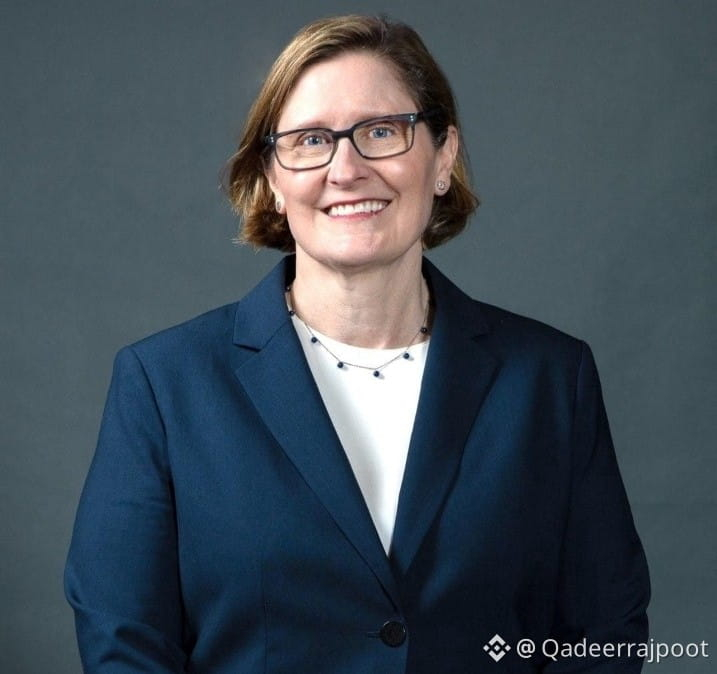
*Sep 24 speech, Philadelphia Fed Annual Fintech Conference first public since Jul 1 2025 takeover*. $SAGA $ONDO $ARK "Inflation remains stubbornly elevated" "Returning inflation to 2% is top priority"*
- *"Underlying inflation is running in a range of about 2.5 to 3%"* — *"best I can say about underlying inflation this year is that it hasn't gotten worse"* — gap *"shown little sign of closing"*
- *"Looking ahead, if conditions evolve as I expect, some modest further tightening may be warranted"*
- *Supported Sep 17 hike to 3.75%-4.00%* — said *"balance of risks had shifted"* — *underlying inflation "little to no progress" even excluding tariffs + oil shock from US-Israeli Iran war*
- *Voting member FOMC — joins NY Fed Williams "reasonable" one more 2026 + Gov Barr "further policy adjustments likely"*
- *Market now:* *64% chance Oct hike + another Jan per CME FedWatch, futures pricing 4.8% end-2027 = 4 hikes ahead* — *dot plot showed 1 more 2026, markets now 58% odds of 2 more by year-end*
So not just warning — she justified current hike as recalibration and opened door to more.
*BREAKING 🚨 Philly Fed Pres Anna Paulson Sep 24: modest further tightening may be warranted — underlying inflation 2.5-3% stubbornly elevated gap not closing 🏦 Fed funds 3.75-4% after Sep 17 25bps — risks shifted no progress — tariff + Iran war oil + tech/AI capex driving — traders 64% Oct hike priced ⚡*#BinanceWillListHyperliquid(HYPE) #FedOctoberRateHikeOddsRiseTo69.7% #USWeighsPromotingDollarStablecoinsAbroad #US10YTreasuryYieldHits19YearHigh
*Sep 24 speech, Philadelphia Fed Annual Fintech Conference first public since Jul 1 2025 takeover*. $SAGA $ONDO $ARK "Inflation remains stubbornly elevated" "Returning inflation to 2% is top priority"*
- *"Underlying inflation is running in a range of about 2.5 to 3%"* — *"best I can say about underlying inflation this year is that it hasn't gotten worse"* — gap *"shown little sign of closing"*
- *"Looking ahead, if conditions evolve as I expect, some modest further tightening may be warranted"*
- *Supported Sep 17 hike to 3.75%-4.00%* — said *"balance of risks had shifted"* — *underlying inflation "little to no progress" even excluding tariffs + oil shock from US-Israeli Iran war*
- *Voting member FOMC — joins NY Fed Williams "reasonable" one more 2026 + Gov Barr "further policy adjustments likely"*
- *Market now:* *64% chance Oct hike + another Jan per CME FedWatch, futures pricing 4.8% end-2027 = 4 hikes ahead* — *dot plot showed 1 more 2026, markets now 58% odds of 2 more by year-end*
So not just warning — she justified current hike as recalibration and opened door to more.
*BREAKING 🚨 Philly Fed Pres Anna Paulson Sep 24: modest further tightening may be warranted — underlying inflation 2.5-3% stubbornly elevated gap not closing 🏦 Fed funds 3.75-4% after Sep 17 25bps — risks shifted no progress — tariff + Iran war oil + tech/AI capex driving — traders 64% Oct hike priced ⚡*#BinanceWillListHyperliquid(HYPE) #FedOctoberRateHikeOddsRiseTo69.7% #USWeighsPromotingDollarStablecoinsAbroad #US10YTreasuryYieldHits19YearHigh
- *"Underlying inflation is running in a range of about 2.5 to 3%"* — *"best I can say about underlying inflation this year is that it hasn't gotten worse"* — gap *"shown little sign of closing"*
- *"Looking ahead, if conditions evolve as I expect, some modest further tightening may be warranted"*
- *Supported Sep 17 hike to 3.75%-4.00%* — said *"balance of risks had shifted"* — *underlying inflation "little to no progress" even excluding tariffs + oil shock from US-Israeli Iran war*
- *Voting member FOMC — joins NY Fed Williams "reasonable" one more 2026 + Gov Barr "further policy adjustments likely"*
- *Market now:* *64% chance Oct hike + another Jan per CME FedWatch, futures pricing 4.8% end-2027 = 4 hikes ahead* — *dot plot showed 1 more 2026, markets now 58% odds of 2 more by year-end*
So not just warning — she justified current hike as recalibration and opened door to more.
*BREAKING 🚨 Philly Fed Pres Anna Paulson Sep 24: modest further tightening may be warranted — underlying inflation 2.5-3% stubbornly elevated gap not closing 🏦 Fed funds 3.75-4% after Sep 17 25bps — risks shifted no progress — tariff + Iran war oil + tech/AI capex driving — traders 64% Oct hike priced ⚡*#BinanceWillListHyperliquid(HYPE) #FedOctoberRateHikeOddsRiseTo69.7% #USWeighsPromotingDollarStablecoinsAbroad #US10YTreasuryYieldHits19YearHigh
349
Übersetzung ansehen
Correct *announced Sep 23, 2026 at SIBOS build-up*.$ARK $ONDO $SAGA
- *15 new members to LF Decentralized Trust (LFDT)* — *12 general + 3 premier? breakdown in PR*
- *Rejoining: Swift, Wells Fargo, Zeeve* "3 rejoining the community, another sign of escalating importance"_ — *Swift live trials of Swift Ledger based on Lineth (LFDT Besu-based L2), Wells Fargo tokenized deposit solution for corporate USD/sterling 24/7/365 also LFDT tech-based*
- *Other new: Brazil's Fenasbac (central bank innovation arm), DCP (DCJPY tokenized deposit Japan), CertiK (security/formal verification), Brickken (tokenization), Cosmos, others + Hedera contributed CLPR bridgeless Cross-Ledger Protocol to LFDT Labs*
- *Quote:* *Daniela Barbosa, GM Decentralized Tech Linux Foundation + Exec Director LFDT: "We have reached a tipping point for commercialization of digital assets. Billions of dollars of assets are already moving across production systems powered by LF Decentralized Trust technologies"*
- *Tech upgrades same day:* *Hyperledger Cacti v3 easier plug new blockchains cross-chain, new incubating project Panurus upgrade to Fabric Token SDK used by Banque de France DL3S cash token + Bank of Canada Project Samara wCBDC bond settlement*
- *Workshop:* *invite-only NYC Oct 22-23 for banking leaders, ZK proofs, MPC, confidential computing*
Not just standards — it's production interoperability infra.
*BREAKING 🚨 LF Decentralized Trust Sep 23: Swift + Wells Fargo + Zeeve rejoin + 12 others =15 new members 🏦 Swift Ledger live trials on Lineth L2 + Wells tokenized deposits USD/GBP 24/7 — Barbosa: tipping point for digital asset commercialization billions already moving — Cacti v3 + Panurus + Hedera CLPR bridgeless protocol ⚡*#BinanceWillListHyperliquid(HYPE) #FedOctoberRateHikeOddsRiseTo69.7%
Correct *announced Sep 23, 2026 at SIBOS build-up*.$ARK $ONDO $SAGA
- *15 new members to LF Decentralized Trust (LFDT)* — *12 general + 3 premier? breakdown in PR*
- *Rejoining: Swift, Wells Fargo, Zeeve* "3 rejoining the community, another sign of escalating importance"_ — *Swift live trials of Swift Ledger based on Lineth (LFDT Besu-based L2), Wells Fargo tokenized deposit solution for corporate USD/sterling 24/7/365 also LFDT tech-based*
- *Other new: Brazil's Fenasbac (central bank innovation arm), DCP (DCJPY tokenized deposit Japan), CertiK (security/formal verification), Brickken (tokenization), Cosmos, others + Hedera contributed CLPR bridgeless Cross-Ledger Protocol to LFDT Labs*
- *Quote:* *Daniela Barbosa, GM Decentralized Tech Linux Foundation + Exec Director LFDT: "We have reached a tipping point for commercialization of digital assets. Billions of dollars of assets are already moving across production systems powered by LF Decentralized Trust technologies"*
- *Tech upgrades same day:* *Hyperledger Cacti v3 easier plug new blockchains cross-chain, new incubating project Panurus upgrade to Fabric Token SDK used by Banque de France DL3S cash token + Bank of Canada Project Samara wCBDC bond settlement*
- *Workshop:* *invite-only NYC Oct 22-23 for banking leaders, ZK proofs, MPC, confidential computing*
Not just standards — it's production interoperability infra.
*BREAKING 🚨 LF Decentralized Trust Sep 23: Swift + Wells Fargo + Zeeve rejoin + 12 others =15 new members 🏦 Swift Ledger live trials on Lineth L2 + Wells tokenized deposits USD/GBP 24/7 — Barbosa: tipping point for digital asset commercialization billions already moving — Cacti v3 + Panurus + Hedera CLPR bridgeless protocol ⚡*#BinanceWillListHyperliquid(HYPE) #FedOctoberRateHikeOddsRiseTo69.7%
- *15 new members to LF Decentralized Trust (LFDT)* — *12 general + 3 premier? breakdown in PR*
- *Rejoining: Swift, Wells Fargo, Zeeve* "3 rejoining the community, another sign of escalating importance"_ — *Swift live trials of Swift Ledger based on Lineth (LFDT Besu-based L2), Wells Fargo tokenized deposit solution for corporate USD/sterling 24/7/365 also LFDT tech-based*
- *Other new: Brazil's Fenasbac (central bank innovation arm), DCP (DCJPY tokenized deposit Japan), CertiK (security/formal verification), Brickken (tokenization), Cosmos, others + Hedera contributed CLPR bridgeless Cross-Ledger Protocol to LFDT Labs*
- *Quote:* *Daniela Barbosa, GM Decentralized Tech Linux Foundation + Exec Director LFDT: "We have reached a tipping point for commercialization of digital assets. Billions of dollars of assets are already moving across production systems powered by LF Decentralized Trust technologies"*
- *Tech upgrades same day:* *Hyperledger Cacti v3 easier plug new blockchains cross-chain, new incubating project Panurus upgrade to Fabric Token SDK used by Banque de France DL3S cash token + Bank of Canada Project Samara wCBDC bond settlement*
- *Workshop:* *invite-only NYC Oct 22-23 for banking leaders, ZK proofs, MPC, confidential computing*
Not just standards — it's production interoperability infra.
*BREAKING 🚨 LF Decentralized Trust Sep 23: Swift + Wells Fargo + Zeeve rejoin + 12 others =15 new members 🏦 Swift Ledger live trials on Lineth L2 + Wells tokenized deposits USD/GBP 24/7 — Barbosa: tipping point for digital asset commercialization billions already moving — Cacti v3 + Panurus + Hedera CLPR bridgeless protocol ⚡*#BinanceWillListHyperliquid(HYPE) #FedOctoberRateHikeOddsRiseTo69.7%
6
Übersetzung ansehen
Ondo Intelligent Portfolios — first onchain portfolio tokens powered by BlackRock model strategies* — *3 launched today:* *BLKHIon = High Income, BLKDIGon = Diversified Growth, BLKGRWon = High Growth* $BROCCOLI714 $NOM $LSK
- *Ondo is actually launching 7 total today*, *3 are BlackRock-based, 4 from other managers not named yet*
- *Structure:* *single token = basket of ETFs (stocks + bonds + Bitcoin ETFs) — mint/redeem one token instead of buying each position — smart contract auto-buys underlying ETF shares when you mint, auto-rebalances, holdings/weights/rebalances visible onchain — 24/7 transferable p2p across wallets, CEXs, DeFi, usable as collateral/borrowing*
- *BlackRock role is narrow:* *provides nondiscretionary model portfolio strategy based on specs from Ondo — does NOT manage, tokenize, issue, distribute, custody or operate tokens* — *potential conflict disclosed*
- *Access:* *eligible investors OUTSIDE US in permitted jurisdictions only — no direct shareholder rights, economic exposure only — issued via Ondo Global Markets, tokenized by Ondo Finance, fully backed by underlying stock/ETF + cash in transit*
- *Why big:* *BlackRock model portfolio business $9.8T AUM as of June 2026 up from $7.7T year earlier, 87% of advisors use models — first time BlackRock designed portfolios to be tokenized by another firm — evolution from BUIDL money market + IVV tokenization tests*
*BREAKING 🚨 BlackRock x Ondo Sep 24: Ondo Intelligent Portfolios live — 3 tokens BLKHIon BLKDIGon BLKGRWon based on BlackRock model strategies stocks/bonds/Bitcoin ETFs 🚀 1 token = whole basket auto-rebalance onchain visible 24/7 p2p DeFi collateral — BlackRock provides strategy only no mgmt/issuance — non-US eligible only — $9.8T model business .#BinanceWillListHyperliquid(HYPE) #FedOctoberRateHikeOddsRiseTo69.7% #US10YTreasuryYieldHits19YearHigh
Ondo Intelligent Portfolios — first onchain portfolio tokens powered by BlackRock model strategies* — *3 launched today:* *BLKHIon = High Income, BLKDIGon = Diversified Growth, BLKGRWon = High Growth* $BROCCOLI714 $NOM $LSK
- *Ondo is actually launching 7 total today*, *3 are BlackRock-based, 4 from other managers not named yet*
- *Structure:* *single token = basket of ETFs (stocks + bonds + Bitcoin ETFs) — mint/redeem one token instead of buying each position — smart contract auto-buys underlying ETF shares when you mint, auto-rebalances, holdings/weights/rebalances visible onchain — 24/7 transferable p2p across wallets, CEXs, DeFi, usable as collateral/borrowing*
- *BlackRock role is narrow:* *provides nondiscretionary model portfolio strategy based on specs from Ondo — does NOT manage, tokenize, issue, distribute, custody or operate tokens* — *potential conflict disclosed*
- *Access:* *eligible investors OUTSIDE US in permitted jurisdictions only — no direct shareholder rights, economic exposure only — issued via Ondo Global Markets, tokenized by Ondo Finance, fully backed by underlying stock/ETF + cash in transit*
- *Why big:* *BlackRock model portfolio business $9.8T AUM as of June 2026 up from $7.7T year earlier, 87% of advisors use models — first time BlackRock designed portfolios to be tokenized by another firm — evolution from BUIDL money market + IVV tokenization tests*
*BREAKING 🚨 BlackRock x Ondo Sep 24: Ondo Intelligent Portfolios live — 3 tokens BLKHIon BLKDIGon BLKGRWon based on BlackRock model strategies stocks/bonds/Bitcoin ETFs 🚀 1 token = whole basket auto-rebalance onchain visible 24/7 p2p DeFi collateral — BlackRock provides strategy only no mgmt/issuance — non-US eligible only — $9.8T model business .#BinanceWillListHyperliquid(HYPE) #FedOctoberRateHikeOddsRiseTo69.7% #US10YTreasuryYieldHits19YearHigh
- *Ondo is actually launching 7 total today*, *3 are BlackRock-based, 4 from other managers not named yet*
- *Structure:* *single token = basket of ETFs (stocks + bonds + Bitcoin ETFs) — mint/redeem one token instead of buying each position — smart contract auto-buys underlying ETF shares when you mint, auto-rebalances, holdings/weights/rebalances visible onchain — 24/7 transferable p2p across wallets, CEXs, DeFi, usable as collateral/borrowing*
- *BlackRock role is narrow:* *provides nondiscretionary model portfolio strategy based on specs from Ondo — does NOT manage, tokenize, issue, distribute, custody or operate tokens* — *potential conflict disclosed*
- *Access:* *eligible investors OUTSIDE US in permitted jurisdictions only — no direct shareholder rights, economic exposure only — issued via Ondo Global Markets, tokenized by Ondo Finance, fully backed by underlying stock/ETF + cash in transit*
- *Why big:* *BlackRock model portfolio business $9.8T AUM as of June 2026 up from $7.7T year earlier, 87% of advisors use models — first time BlackRock designed portfolios to be tokenized by another firm — evolution from BUIDL money market + IVV tokenization tests*
*BREAKING 🚨 BlackRock x Ondo Sep 24: Ondo Intelligent Portfolios live — 3 tokens BLKHIon BLKDIGon BLKGRWon based on BlackRock model strategies stocks/bonds/Bitcoin ETFs 🚀 1 token = whole basket auto-rebalance onchain visible 24/7 p2p DeFi collateral — BlackRock provides strategy only no mgmt/issuance — non-US eligible only — $9.8T model business .#BinanceWillListHyperliquid(HYPE) #FedOctoberRateHikeOddsRiseTo69.7% #US10YTreasuryYieldHits19YearHigh


288
Übersetzung ansehen
Strive (ASST) Vivek Ramaswamy's Bitcoin treasury:*
$BROCCOLI714 $NOM $LSK
- *Raised $85.88M total Sep 21-23 via 3 SATA ATM sessions* — sold shares at market
- *Sep 21: $27.69M → 321.97 BTC @ $86,001 avg — 284k shares*
- *Sep 22: $36.08M → 418.27 BTC @ $86,266 avg — 370k shares*
- *Sep 23: $22.11M → 261.43 BTC @ $84,556 avg — 226.7k shares*
- *Total ∼1,001.67 BTC accumulated — now holds 21k+ BTC → $1.7B range* — tracker http://BitcoinTreasuries.net
- *Outshining Saylor?* *Strategy (MSTR) did $182.7M combined with Strive last week at $86k breakout, but paused this week — Strive kept ATMing while Strategy preferred stock race stalled* — so headline "outshines" is about this week's raise
*Context:* *Strive ASST now $30.11 +3.86% today +40.77% 1M +177% 6M* — *previous buys: 1,109 BTC @ $76,988 = $85.4M in May, 1,110 BTC @ $73,409 = $81.5M Aug 17-21 — model is perpetual ATM → BTC — BTC yield 11% QTD 23.4% YTD*
Not $86M to deploy this quarter — already deployed Sep 21-23.
*BREAKING 🚨 Strive ASST raises $85.88M Sep 21-23 via SATA ATM 1,001.67 BTC @ $84.5k-$86.2k avg — 321 BTC $27.6M 418 BTC $36M 261 BTC $22.1M 🚀 Total treasury 21,356 BTC ∼$1.7B — Saylor Strategy paused, Strive kept buying breakout past $86k ⚡*#USWeighsPromotingDollarStablecoinsAbroad #BinanceWillListHyperliquid(HYPE)
Strive (ASST) Vivek Ramaswamy's Bitcoin treasury:*
$BROCCOLI714 $NOM $LSK
- *Raised $85.88M total Sep 21-23 via 3 SATA ATM sessions* — sold shares at market
- *Sep 21: $27.69M → 321.97 BTC @ $86,001 avg — 284k shares*
- *Sep 22: $36.08M → 418.27 BTC @ $86,266 avg — 370k shares*
- *Sep 23: $22.11M → 261.43 BTC @ $84,556 avg — 226.7k shares*
- *Total ∼1,001.67 BTC accumulated — now holds 21k+ BTC → $1.7B range* — tracker http://BitcoinTreasuries.net
- *Outshining Saylor?* *Strategy (MSTR) did $182.7M combined with Strive last week at $86k breakout, but paused this week — Strive kept ATMing while Strategy preferred stock race stalled* — so headline "outshines" is about this week's raise
*Context:* *Strive ASST now $30.11 +3.86% today +40.77% 1M +177% 6M* — *previous buys: 1,109 BTC @ $76,988 = $85.4M in May, 1,110 BTC @ $73,409 = $81.5M Aug 17-21 — model is perpetual ATM → BTC — BTC yield 11% QTD 23.4% YTD*
Not $86M to deploy this quarter — already deployed Sep 21-23.
*BREAKING 🚨 Strive ASST raises $85.88M Sep 21-23 via SATA ATM 1,001.67 BTC @ $84.5k-$86.2k avg — 321 BTC $27.6M 418 BTC $36M 261 BTC $22.1M 🚀 Total treasury 21,356 BTC ∼$1.7B — Saylor Strategy paused, Strive kept buying breakout past $86k ⚡*#USWeighsPromotingDollarStablecoinsAbroad #BinanceWillListHyperliquid(HYPE)
$BROCCOLI714 $NOM $LSK
- *Raised $85.88M total Sep 21-23 via 3 SATA ATM sessions* — sold shares at market
- *Sep 21: $27.69M → 321.97 BTC @ $86,001 avg — 284k shares*
- *Sep 22: $36.08M → 418.27 BTC @ $86,266 avg — 370k shares*
- *Sep 23: $22.11M → 261.43 BTC @ $84,556 avg — 226.7k shares*
- *Total ∼1,001.67 BTC accumulated — now holds 21k+ BTC → $1.7B range* — tracker http://BitcoinTreasuries.net
- *Outshining Saylor?* *Strategy (MSTR) did $182.7M combined with Strive last week at $86k breakout, but paused this week — Strive kept ATMing while Strategy preferred stock race stalled* — so headline "outshines" is about this week's raise
*Context:* *Strive ASST now $30.11 +3.86% today +40.77% 1M +177% 6M* — *previous buys: 1,109 BTC @ $76,988 = $85.4M in May, 1,110 BTC @ $73,409 = $81.5M Aug 17-21 — model is perpetual ATM → BTC — BTC yield 11% QTD 23.4% YTD*
Not $86M to deploy this quarter — already deployed Sep 21-23.
*BREAKING 🚨 Strive ASST raises $85.88M Sep 21-23 via SATA ATM 1,001.67 BTC @ $84.5k-$86.2k avg — 321 BTC $27.6M 418 BTC $36M 261 BTC $22.1M 🚀 Total treasury 21,356 BTC ∼$1.7B — Saylor Strategy paused, Strive kept buying breakout past $86k ⚡*#USWeighsPromotingDollarStablecoinsAbroad #BinanceWillListHyperliquid(HYPE)
69
Übersetzung ansehen
SEC Innovation Exemption order 5-year* — creates *Tokenized Securities Venue (TSV)* — *allows tokenized NMS stocks trading on public, $BROCCOLI714 $NOM $LSK permissionless blockchains without registering as exchange* — *AMM pools, 24/7, fractional, stablecoin settlement, self-custody*
- *3 conditions:* *1) smart contracts auditable public on public permissionless ledger 2) every participant permissioned at pool or token 3) token = real share same dividends/votes — synthetics out*
- *Also:* liquidity providers exempt from dealer registration, must halt if underlying halts, volume/symbol limits, public notice, expires Sep 2031
*Solana angle:*
- *Solana Policy Institute CEO Miller Whitehouse-Levine proposed Project Open Apr 2025* — *SPI President Kristin Smith: "So @solana qualifies from day one... The private bank chains do not"*
- *Live example:* *Forward Industries tokenized shares Nov 2025 trading on Orca (Solana), Superstate transfer agent with token-level permissioning*
- *Stats cited:* *Solana claims ∼97% cumulative onchain tokenized equity spot volume, $430M xStocks + Ondo deployment, $10B volume June 2026 ∼95% of global at that time* — *Backpack >50% weekly volume on chain, backed 1:1 brokerage shares*
- *Order does NOT name Solana* — says *public permissionless* — *Ethereum, Base also qualify via Securitize, Superstate models — BNB weak fit due to US-person venue requirement, Robinhood chain distribution but Jersey tokens don't qualify yet*
So *Solana positioned as front-runner with existing stack, not official favored pick by SEC*.
*BREAKING 🚨 SEC Innovation Exemption Sep 17 5-yr allows tokenized NMS stocks on public permissionless ledgers via AMM TSVs — no exchange registration — real shares only dividends/votes 🚀 SPI CEO Miller Whitehouse-Levine Project Open Apr 2025 — SPI: Solana qualifies day 1 private bank chains don't — $10B Jun vol 97% cumulative — conditions: auditable contracts permissioned participants ⚡*
SEC Innovation Exemption order 5-year* — creates *Tokenized Securities Venue (TSV)* — *allows tokenized NMS stocks trading on public, $BROCCOLI714 $NOM $LSK permissionless blockchains without registering as exchange* — *AMM pools, 24/7, fractional, stablecoin settlement, self-custody*
- *3 conditions:* *1) smart contracts auditable public on public permissionless ledger 2) every participant permissioned at pool or token 3) token = real share same dividends/votes — synthetics out*
- *Also:* liquidity providers exempt from dealer registration, must halt if underlying halts, volume/symbol limits, public notice, expires Sep 2031
*Solana angle:*
- *Solana Policy Institute CEO Miller Whitehouse-Levine proposed Project Open Apr 2025* — *SPI President Kristin Smith: "So @solana qualifies from day one... The private bank chains do not"*
- *Live example:* *Forward Industries tokenized shares Nov 2025 trading on Orca (Solana), Superstate transfer agent with token-level permissioning*
- *Stats cited:* *Solana claims ∼97% cumulative onchain tokenized equity spot volume, $430M xStocks + Ondo deployment, $10B volume June 2026 ∼95% of global at that time* — *Backpack >50% weekly volume on chain, backed 1:1 brokerage shares*
- *Order does NOT name Solana* — says *public permissionless* — *Ethereum, Base also qualify via Securitize, Superstate models — BNB weak fit due to US-person venue requirement, Robinhood chain distribution but Jersey tokens don't qualify yet*
So *Solana positioned as front-runner with existing stack, not official favored pick by SEC*.
*BREAKING 🚨 SEC Innovation Exemption Sep 17 5-yr allows tokenized NMS stocks on public permissionless ledgers via AMM TSVs — no exchange registration — real shares only dividends/votes 🚀 SPI CEO Miller Whitehouse-Levine Project Open Apr 2025 — SPI: Solana qualifies day 1 private bank chains don't — $10B Jun vol 97% cumulative — conditions: auditable contracts permissioned participants ⚡*
- *3 conditions:* *1) smart contracts auditable public on public permissionless ledger 2) every participant permissioned at pool or token 3) token = real share same dividends/votes — synthetics out*
- *Also:* liquidity providers exempt from dealer registration, must halt if underlying halts, volume/symbol limits, public notice, expires Sep 2031
*Solana angle:*
- *Solana Policy Institute CEO Miller Whitehouse-Levine proposed Project Open Apr 2025* — *SPI President Kristin Smith: "So @solana qualifies from day one... The private bank chains do not"*
- *Live example:* *Forward Industries tokenized shares Nov 2025 trading on Orca (Solana), Superstate transfer agent with token-level permissioning*
- *Stats cited:* *Solana claims ∼97% cumulative onchain tokenized equity spot volume, $430M xStocks + Ondo deployment, $10B volume June 2026 ∼95% of global at that time* — *Backpack >50% weekly volume on chain, backed 1:1 brokerage shares*
- *Order does NOT name Solana* — says *public permissionless* — *Ethereum, Base also qualify via Securitize, Superstate models — BNB weak fit due to US-person venue requirement, Robinhood chain distribution but Jersey tokens don't qualify yet*
So *Solana positioned as front-runner with existing stack, not official favored pick by SEC*.
*BREAKING 🚨 SEC Innovation Exemption Sep 17 5-yr allows tokenized NMS stocks on public permissionless ledgers via AMM TSVs — no exchange registration — real shares only dividends/votes 🚀 SPI CEO Miller Whitehouse-Levine Project Open Apr 2025 — SPI: Solana qualifies day 1 private bank chains don't — $10B Jun vol 97% cumulative — conditions: auditable contracts permissioned participants ⚡*
26
Übersetzung ansehen
Chart:* Long-term CME Ether futures monthly chart — *first resistance $5k, then $8,674.50 marked — rounded to $8,600* — _"This is my long-term chart of ethereum: It implies an eventual move to 8,600 once 5,000 is handled" $BROCCOLI714 $NOM $ONDO
- *At post time ETH ∼$2,731-$2,800* — so *+84% to $5k, then +223% total to $8.6k / ∼3x from now* — *current ETH $2,640*
- *He posted same day XRP $5.40 target from $1.52*
- *Critical caveat he added:* *"A claim of a 'call' or simple presentation of a chart is NOT a trade. People who claim 'trades' need to provide proof or else claims are BS. An X post is NOT proof"* — emphasized classical chart pattern only, no fundamentals, no timeline, not an active position
- *Context:* Brandt trading since *1976, founded Factor Trading 1980*, called gold top 1980, BTC < $4k in 2018 (hit $3,800). ETH ATH *$4,946.05 Aug 24, 2025*, so $5k is ATH break.
So not *"poised to breach"* — *long-term conditional scenario: IF $5k breaks, THEN $8.6k eventual*. First hurdle *$3k short-term* per his chart.
*BREAKING 🚨 Veteran Peter Brandt Sep 21 long-term ETH chart: $5k must clear then $8,600 eventual target $8,674.50 marked 🚀 ETH then $2,731 now $2,640 — needs +84% to $5k +223% total to $8.6k — says sharing chart ≠ trade, need proof — no timeline 📈*#BinanceWillListHyperliquid(HYPE) #FedOctoberRateHikeOddsRiseTo69.7% #USWeighsPromotingDollarStablecoinsAbroad #US10YTreasuryYieldHits19YearHigh
Chart:* Long-term CME Ether futures monthly chart — *first resistance $5k, then $8,674.50 marked — rounded to $8,600* — _"This is my long-term chart of ethereum: It implies an eventual move to 8,600 once 5,000 is handled" $BROCCOLI714 $NOM $ONDO
- *At post time ETH ∼$2,731-$2,800* — so *+84% to $5k, then +223% total to $8.6k / ∼3x from now* — *current ETH $2,640*
- *He posted same day XRP $5.40 target from $1.52*
- *Critical caveat he added:* *"A claim of a 'call' or simple presentation of a chart is NOT a trade. People who claim 'trades' need to provide proof or else claims are BS. An X post is NOT proof"* — emphasized classical chart pattern only, no fundamentals, no timeline, not an active position
- *Context:* Brandt trading since *1976, founded Factor Trading 1980*, called gold top 1980, BTC < $4k in 2018 (hit $3,800). ETH ATH *$4,946.05 Aug 24, 2025*, so $5k is ATH break.
So not *"poised to breach"* — *long-term conditional scenario: IF $5k breaks, THEN $8.6k eventual*. First hurdle *$3k short-term* per his chart.
*BREAKING 🚨 Veteran Peter Brandt Sep 21 long-term ETH chart: $5k must clear then $8,600 eventual target $8,674.50 marked 🚀 ETH then $2,731 now $2,640 — needs +84% to $5k +223% total to $8.6k — says sharing chart ≠ trade, need proof — no timeline 📈*#BinanceWillListHyperliquid(HYPE) #FedOctoberRateHikeOddsRiseTo69.7% #USWeighsPromotingDollarStablecoinsAbroad #US10YTreasuryYieldHits19YearHigh
- *At post time ETH ∼$2,731-$2,800* — so *+84% to $5k, then +223% total to $8.6k / ∼3x from now* — *current ETH $2,640*
- *He posted same day XRP $5.40 target from $1.52*
- *Critical caveat he added:* *"A claim of a 'call' or simple presentation of a chart is NOT a trade. People who claim 'trades' need to provide proof or else claims are BS. An X post is NOT proof"* — emphasized classical chart pattern only, no fundamentals, no timeline, not an active position
- *Context:* Brandt trading since *1976, founded Factor Trading 1980*, called gold top 1980, BTC < $4k in 2018 (hit $3,800). ETH ATH *$4,946.05 Aug 24, 2025*, so $5k is ATH break.
So not *"poised to breach"* — *long-term conditional scenario: IF $5k breaks, THEN $8.6k eventual*. First hurdle *$3k short-term* per his chart.
*BREAKING 🚨 Veteran Peter Brandt Sep 21 long-term ETH chart: $5k must clear then $8,600 eventual target $8,674.50 marked 🚀 ETH then $2,731 now $2,640 — needs +84% to $5k +223% total to $8.6k — says sharing chart ≠ trade, need proof — no timeline 📈*#BinanceWillListHyperliquid(HYPE) #FedOctoberRateHikeOddsRiseTo69.7% #USWeighsPromotingDollarStablecoinsAbroad #US10YTreasuryYieldHits19YearHigh

6
Anmelden und weiter Inhalte entdecken
Krypto-Nutzer weltweit auf Binance Square kennenlernen
⚡️ Bleib in Sachen Krypto stets am Puls.
💬 Die weltgrößte Kryptobörse vertraut darauf.
👍 Erhalte verlässliche Einblicke von verifizierten Creators.
E-Mail-Adresse/Telefonnummer
Trendthemen
QNTRises39%
36,146 Aufrufe
1,078 Kommentare
#qntrises39%
QNT zieht gerade einen Raketen-Sprung mit 39% 🚀 aber steuern wir jetzt den Mars an – oder fallen wir einfach nur vom Bett? 😂
Wenn man sich den Chart ansieht: QNT hat bei 105 USD einen verführerischen Peak erreicht, und jetzt zeigt dieser große rote Abwärtspfeil direkt nach unten Richtung 75 USD. Ist die Party offiziell vorbei – oder nimmt sie nur kurz Luft? 📉
Wenn du jetzt tradest: nicht panisch werden und nicht den Peak kaufen! Achte auf die Support-Level, sichere Gewinne oder warte auf die Erholung. Denk dran: Das ist keine Finanzberatung – mach immer deine eigene Recherche DYOR!
Fortsetzung bitte
Trade $QNTB
$NOM
$TAKE
#qntrises39% #QuantNetwork #CryptoTrading #Altcoins
Shamika Metting
·2 Likes
·3.4k Aufrufe
EthereumBreaksAbove$2700
3,273 Aufrufe
108 Kommentare
BitgetBreachForgedRequestsNotStolenKeys
34,039 Aufrufe
848 Kommentare