
Bull-Alex
8.3k Beiträge

Bull-Alex
Melden
Nutzer blockieren
X @SangiShako69247
Trade eröffnen
Hochfrequenz-Trader
12.1 Monate
940 Following
27.2K+ Follower
13.6K+ Like gegeben
Beiträge
Portfolio
Alle
Live
·
--
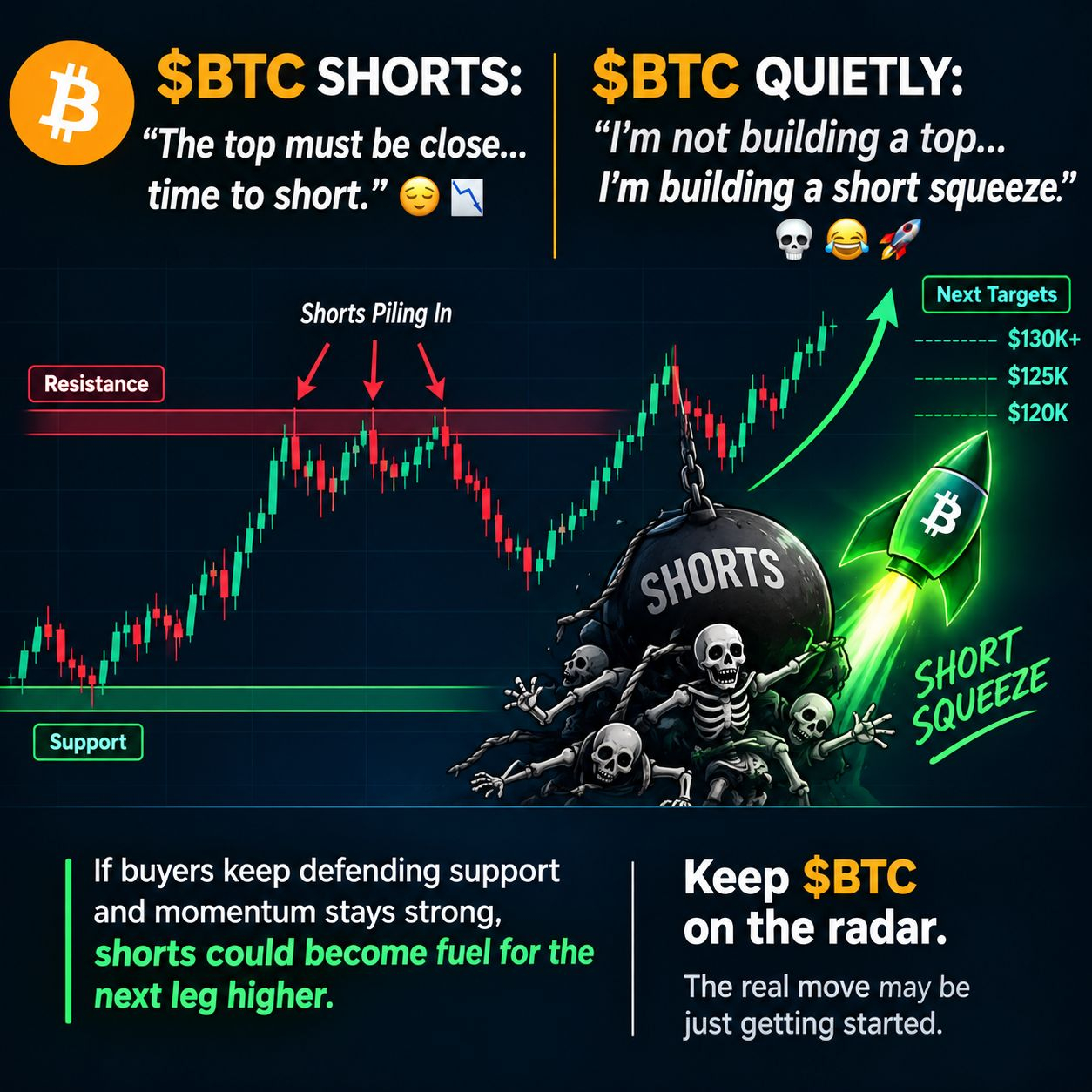
$BTC Shorts: „Das Top muss nahe sein… Zeit, auf Short zu gehen.“
$BTC leise: „Ich baue kein Top auf. Ich baue einen Short Squeeze auf.“
Wenn Käufer die Unterstützung weiter verteidigen und das Momentum stark bleibt, könnten Short-Positionen zum Treibstoff für die nächste Aufwärtsbewegung werden.
Behalte $BTC im Blick. Die eigentliche Bewegung könnte gerade erst begonnen haben.
{future}(BTCUSDT)
$BTC Shorts: „Das Top muss nahe sein… Zeit, auf Short zu gehen.“
$BTC leise: „Ich baue kein Top auf. Ich baue einen Short Squeeze auf.“
Wenn Käufer die Unterstützung weiter verteidigen und das Momentum stark bleibt, könnten Short-Positionen zum Treibstoff für die nächste Aufwärtsbewegung werden.
Behalte $BTC im Blick. Die eigentliche Bewegung könnte gerade erst begonnen haben.
$BTC leise: „Ich baue kein Top auf. Ich baue einen Short Squeeze auf.“
Wenn Käufer die Unterstützung weiter verteidigen und das Momentum stark bleibt, könnten Short-Positionen zum Treibstoff für die nächste Aufwärtsbewegung werden.
Behalte $BTC im Blick. Die eigentliche Bewegung könnte gerade erst begonnen haben.
116
·
--
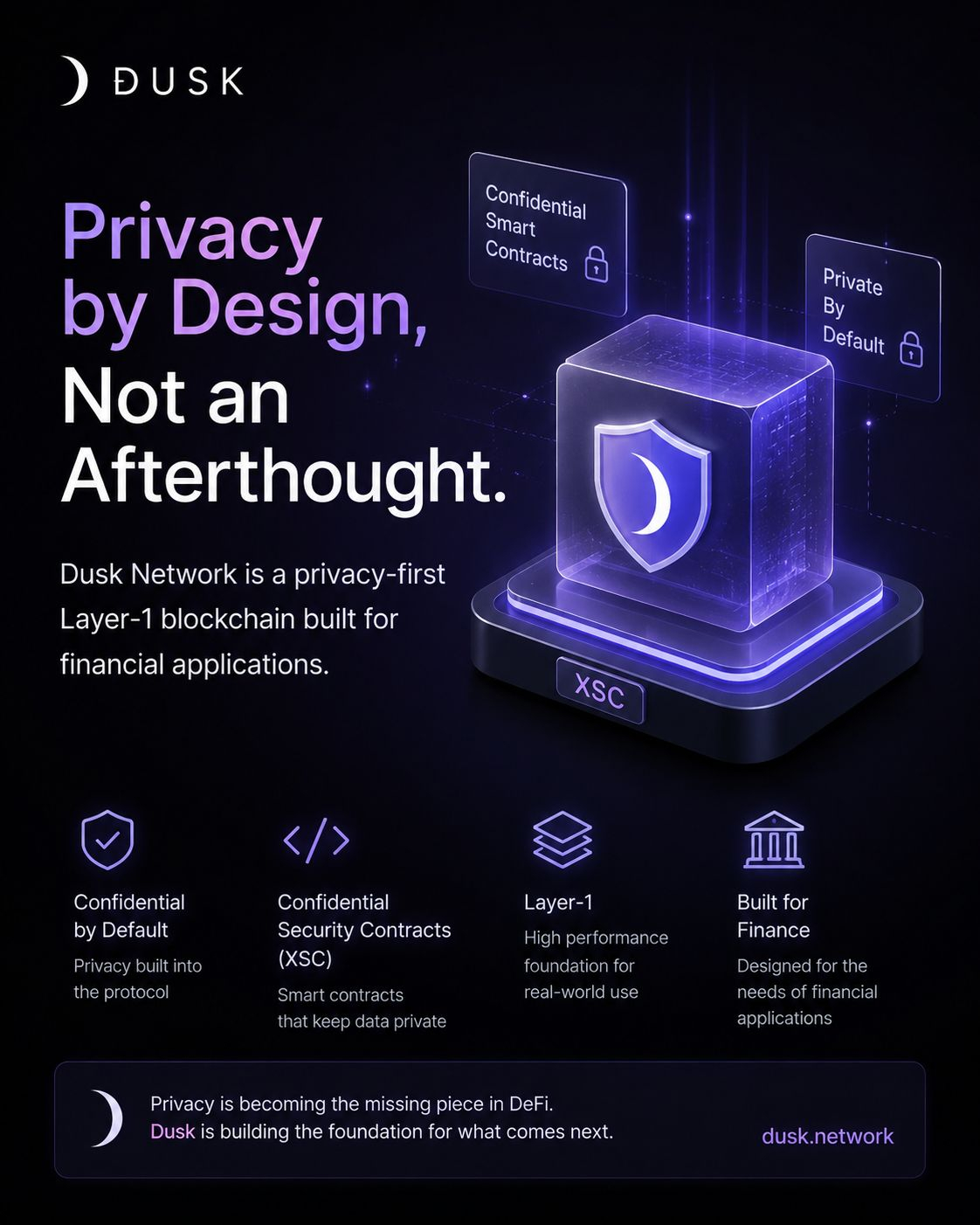
Mir ist etwas Interessantes über Dusk aufgefallen, als ich mir angesehen habe, wie es mit Privatsphäre umgeht: Der Fokus liegt nicht nur darauf, Transaktionsdetails zu verbergen.
Was mir besonders aufgefallen ist, ist die Idee, vertrauliche Smart Contracts direkt in einer Layer-1 über dessen Confidential Security Contract-Standard aufzubauen.
Das verändert meine Sicht auf das Projekt. Privatsphäre wirkt hier weniger wie eine zusätzliche Funktion, die am Rand hinzugefügt wird, und eher wie etwas, das auf Vertragsebene bedacht ist – insbesondere für finanzielle Anwendungen, bei denen die Logik oder die Daten selbst sensibel sein können.
Mein Fazit ist, dass Menschen möglicherweise den Unterschied übersehen zwischen einer privaten Transaktion und einem Smart Contract, der tatsächlich vertraulich arbeiten kann.
Dieser Unterschied könnte für On-Chain-Finance sehr bedeutsam sein. Die spannende Frage ist, wie weit Dusk diese Idee in echten Anwendungen umsetzen kann.
@Dusk_Foundation #dusk $DUSK
Mir ist etwas Interessantes über Dusk aufgefallen, als ich mir angesehen habe, wie es mit Privatsphäre umgeht: Der Fokus liegt nicht nur darauf, Transaktionsdetails zu verbergen.
Was mir besonders aufgefallen ist, ist die Idee, vertrauliche Smart Contracts direkt in einer Layer-1 über dessen Confidential Security Contract-Standard aufzubauen.
Das verändert meine Sicht auf das Projekt. Privatsphäre wirkt hier weniger wie eine zusätzliche Funktion, die am Rand hinzugefügt wird, und eher wie etwas, das auf Vertragsebene bedacht ist – insbesondere für finanzielle Anwendungen, bei denen die Logik oder die Daten selbst sensibel sein können.
Mein Fazit ist, dass Menschen möglicherweise den Unterschied übersehen zwischen einer privaten Transaktion und einem Smart Contract, der tatsächlich vertraulich arbeiten kann.
Dieser Unterschied könnte für On-Chain-Finance sehr bedeutsam sein. Die spannende Frage ist, wie weit Dusk diese Idee in echten Anwendungen umsetzen kann.
@Dusk #dusk $DUSK
Was mir besonders aufgefallen ist, ist die Idee, vertrauliche Smart Contracts direkt in einer Layer-1 über dessen Confidential Security Contract-Standard aufzubauen.
Das verändert meine Sicht auf das Projekt. Privatsphäre wirkt hier weniger wie eine zusätzliche Funktion, die am Rand hinzugefügt wird, und eher wie etwas, das auf Vertragsebene bedacht ist – insbesondere für finanzielle Anwendungen, bei denen die Logik oder die Daten selbst sensibel sein können.
Mein Fazit ist, dass Menschen möglicherweise den Unterschied übersehen zwischen einer privaten Transaktion und einem Smart Contract, der tatsächlich vertraulich arbeiten kann.
Dieser Unterschied könnte für On-Chain-Finance sehr bedeutsam sein. Die spannende Frage ist, wie weit Dusk diese Idee in echten Anwendungen umsetzen kann.
@Dusk #dusk $DUSK
1
2
165
·
--
Während ich mir Dusk genauer ansah, kam mir immer wieder ein Punkt in den Sinn: wie Privatsphäre auf der Ebene von Smart Contracts gehandhabt wird.
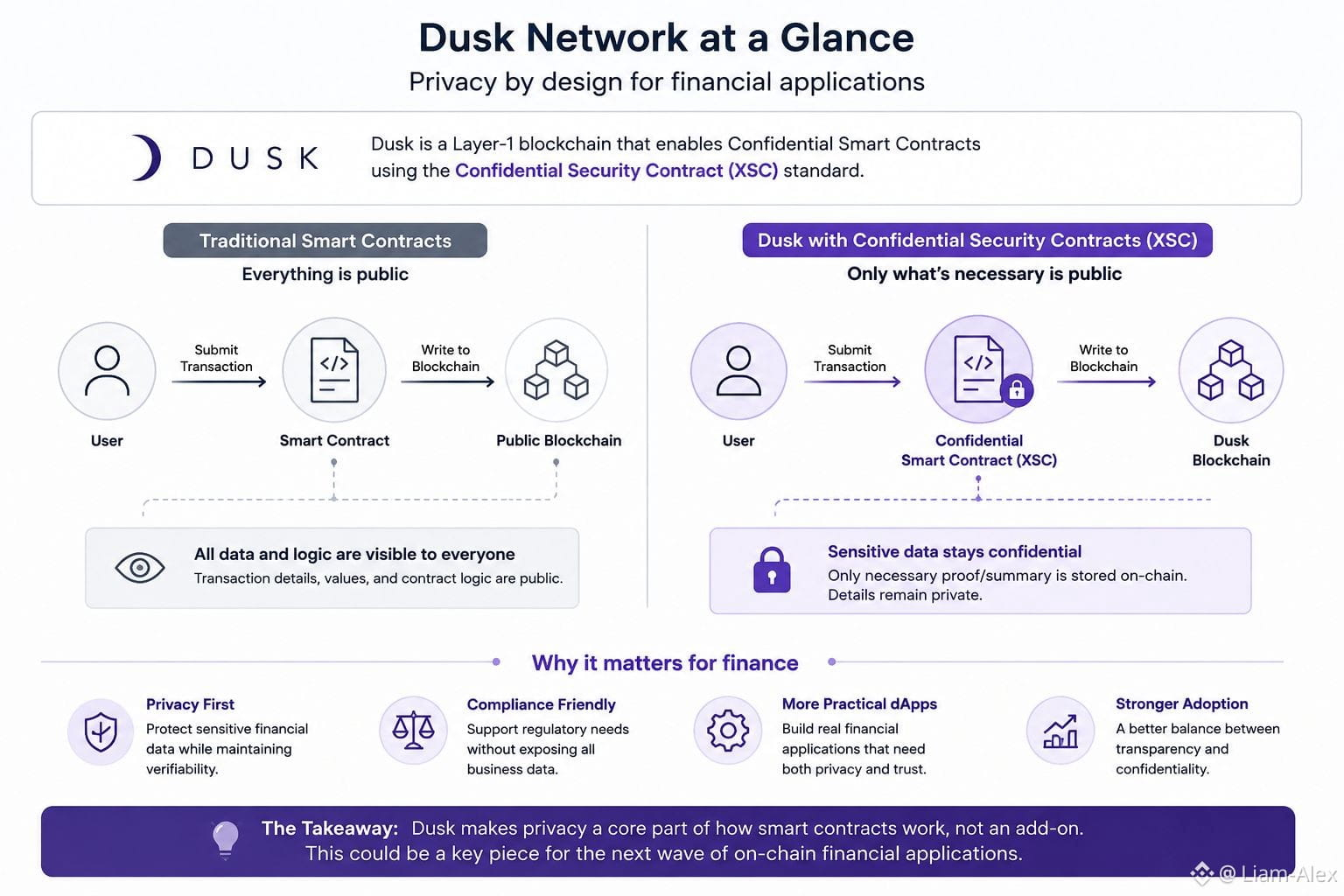
Viele Datenschutz-Diskussionen in Krypto konzentrieren sich darauf, Transaktionen zu verbergen oder Privatsphäre zusätzlich zu einem bestehenden System hinzuzufügen. Dusk verfolgt mit seinem Standard für Confidential Security Contracts (XSC) einen etwas anderen Ansatz.
Die Idee ist ziemlich einfach: Finanzanwendungen können weiterhin On-Chain laufen, ohne dass jede einzelne vertrauliche Information öffentlich offengelegt werden muss.
Das ergab für mich umso mehr Sinn, je länger ich darüber nachdachte. Wenn eine Blockchain für echte finanzielle Aktivitäten verwendet werden soll, ist vollständige Transparenz nicht immer praktikabel. Einige Informationen müssen verifizierbar sein, während andere Informationen einfach privat bleiben müssen.
Für mich ist also an Dusk nicht nur die Idee einer „Privacy-Blockchain“ interessant.
Es ist die Vorstellung, dass Vertraulichkeit direkt im Vertrag selbst verankert wird – und nicht so behandelt wird, als wäre sie etwas, das später hinzugefügt wurde.
Ich bin gespannt, ob ein solches Design die richtige Balance zwischen Transparenz und Privatsphäre für Finanz-Apps erreichen kann.
@Dusk_Foundation #dusk $DUSK
Während ich mir Dusk genauer ansah, kam mir immer wieder ein Punkt in den Sinn: wie Privatsphäre auf der Ebene von Smart Contracts gehandhabt wird.
Viele Datenschutz-Diskussionen in Krypto konzentrieren sich darauf, Transaktionen zu verbergen oder Privatsphäre zusätzlich zu einem bestehenden System hinzuzufügen. Dusk verfolgt mit seinem Standard für Confidential Security Contracts (XSC) einen etwas anderen Ansatz.
Die Idee ist ziemlich einfach: Finanzanwendungen können weiterhin On-Chain laufen, ohne dass jede einzelne vertrauliche Information öffentlich offengelegt werden muss.
Das ergab für mich umso mehr Sinn, je länger ich darüber nachdachte. Wenn eine Blockchain für echte finanzielle Aktivitäten verwendet werden soll, ist vollständige Transparenz nicht immer praktikabel. Einige Informationen müssen verifizierbar sein, während andere Informationen einfach privat bleiben müssen.
Für mich ist also an Dusk nicht nur die Idee einer „Privacy-Blockchain“ interessant.
Es ist die Vorstellung, dass Vertraulichkeit direkt im Vertrag selbst verankert wird – und nicht so behandelt wird, als wäre sie etwas, das später hinzugefügt wurde.
Ich bin gespannt, ob ein solches Design die richtige Balance zwischen Transparenz und Privatsphäre für Finanz-Apps erreichen kann.
@Dusk #dusk $DUSK
Viele Datenschutz-Diskussionen in Krypto konzentrieren sich darauf, Transaktionen zu verbergen oder Privatsphäre zusätzlich zu einem bestehenden System hinzuzufügen. Dusk verfolgt mit seinem Standard für Confidential Security Contracts (XSC) einen etwas anderen Ansatz.
Die Idee ist ziemlich einfach: Finanzanwendungen können weiterhin On-Chain laufen, ohne dass jede einzelne vertrauliche Information öffentlich offengelegt werden muss.
Das ergab für mich umso mehr Sinn, je länger ich darüber nachdachte. Wenn eine Blockchain für echte finanzielle Aktivitäten verwendet werden soll, ist vollständige Transparenz nicht immer praktikabel. Einige Informationen müssen verifizierbar sein, während andere Informationen einfach privat bleiben müssen.
Für mich ist also an Dusk nicht nur die Idee einer „Privacy-Blockchain“ interessant.
Es ist die Vorstellung, dass Vertraulichkeit direkt im Vertrag selbst verankert wird – und nicht so behandelt wird, als wäre sie etwas, das später hinzugefügt wurde.
Ich bin gespannt, ob ein solches Design die richtige Balance zwischen Transparenz und Privatsphäre für Finanz-Apps erreichen kann.
@Dusk #dusk $DUSK
1
2
186
·
--
Als ich in Dusk eingetaucht bin, ist mir eine Sache besonders aufgefallen.
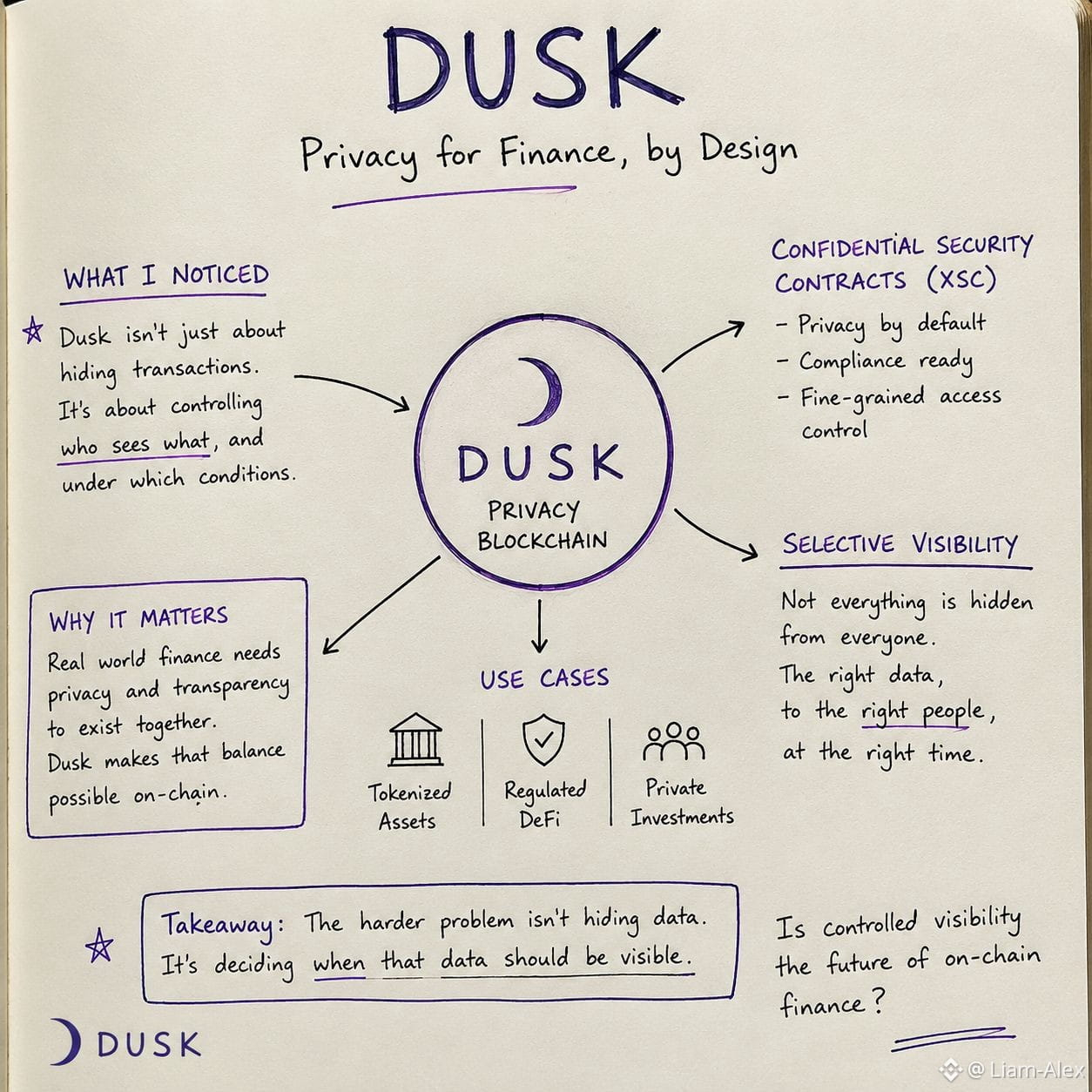
Zunächst dachte ich, dass der Aspekt der Privatsphäre einfach nur darum geht, Transaktionen zu verbergen. Doch wenn man genauer hinsieht, wirkt es differenzierter.
Bei Dusk bedeutet Privatsphäre nicht unbedingt einen Ansatz wie „Alles ist versteckt“. Die Idee geht eher darum, zu steuern, welche finanziellen Informationen sichtbar sind – und für wen.
Das ergibt deutlich mehr Sinn, wenn man an reale Finanzmärkte denkt.
Ein Unternehmen möchte vielleicht nicht, dass jeder seine Positionen oder die Transaktionshistorie sieht, aber es muss unter Umständen dennoch bestimmte Dinge einem Aufsichtsorgan, einem Investor oder einer anderen autorisierten Partei gegenüber nachweisen.
Für mich ist an der Sache also nicht nur der Gedanke vertraulicher Transaktionen interessant.
Sondern die Idee, dass Privatsphäre selektiv sein kann.
Das scheint mir etwas zu sein, das oft übersehen wird, wenn Menschen über Privacy-Blockchains sprechen. In der Finanzierung ist totale Unsichtbarkeit nicht immer sinnvoll. Manchmal braucht man Privatsphäre und Nachprüfbarkeit, die gleichzeitig existieren.
Mein Fazit nach der Recherche zu Dusk ist: Die schwierigere Aufgabe ist nicht, Daten zu verbergen. Es geht darum zu entscheiden, wann diese Daten sichtbar sein sollen.
Und ehrlich gesagt fühlt sich das wie ein viel praxisnäheres Problem an.
Würdest du lieber standardmäßig alles privat haben – oder die Kontrolle darüber, was verschiedene Parteien jeweils sehen können?
#dusk $DUSK @Dusk_Foundation
{future}(DUSKUSDT)
Als ich in Dusk eingetaucht bin, ist mir eine Sache besonders aufgefallen.
Zunächst dachte ich, dass der Aspekt der Privatsphäre einfach nur darum geht, Transaktionen zu verbergen. Doch wenn man genauer hinsieht, wirkt es differenzierter.
Bei Dusk bedeutet Privatsphäre nicht unbedingt einen Ansatz wie „Alles ist versteckt“. Die Idee geht eher darum, zu steuern, welche finanziellen Informationen sichtbar sind – und für wen.
Das ergibt deutlich mehr Sinn, wenn man an reale Finanzmärkte denkt.
Ein Unternehmen möchte vielleicht nicht, dass jeder seine Positionen oder die Transaktionshistorie sieht, aber es muss unter Umständen dennoch bestimmte Dinge einem Aufsichtsorgan, einem Investor oder einer anderen autorisierten Partei gegenüber nachweisen.
Für mich ist an der Sache also nicht nur der Gedanke vertraulicher Transaktionen interessant.
Sondern die Idee, dass Privatsphäre selektiv sein kann.
Das scheint mir etwas zu sein, das oft übersehen wird, wenn Menschen über Privacy-Blockchains sprechen. In der Finanzierung ist totale Unsichtbarkeit nicht immer sinnvoll. Manchmal braucht man Privatsphäre und Nachprüfbarkeit, die gleichzeitig existieren.
Mein Fazit nach der Recherche zu Dusk ist: Die schwierigere Aufgabe ist nicht, Daten zu verbergen. Es geht darum zu entscheiden, wann diese Daten sichtbar sein sollen.
Und ehrlich gesagt fühlt sich das wie ein viel praxisnäheres Problem an.
Würdest du lieber standardmäßig alles privat haben – oder die Kontrolle darüber, was verschiedene Parteien jeweils sehen können?
#dusk $DUSK @Dusk
Zunächst dachte ich, dass der Aspekt der Privatsphäre einfach nur darum geht, Transaktionen zu verbergen. Doch wenn man genauer hinsieht, wirkt es differenzierter.
Bei Dusk bedeutet Privatsphäre nicht unbedingt einen Ansatz wie „Alles ist versteckt“. Die Idee geht eher darum, zu steuern, welche finanziellen Informationen sichtbar sind – und für wen.
Das ergibt deutlich mehr Sinn, wenn man an reale Finanzmärkte denkt.
Ein Unternehmen möchte vielleicht nicht, dass jeder seine Positionen oder die Transaktionshistorie sieht, aber es muss unter Umständen dennoch bestimmte Dinge einem Aufsichtsorgan, einem Investor oder einer anderen autorisierten Partei gegenüber nachweisen.
Für mich ist an der Sache also nicht nur der Gedanke vertraulicher Transaktionen interessant.
Sondern die Idee, dass Privatsphäre selektiv sein kann.
Das scheint mir etwas zu sein, das oft übersehen wird, wenn Menschen über Privacy-Blockchains sprechen. In der Finanzierung ist totale Unsichtbarkeit nicht immer sinnvoll. Manchmal braucht man Privatsphäre und Nachprüfbarkeit, die gleichzeitig existieren.
Mein Fazit nach der Recherche zu Dusk ist: Die schwierigere Aufgabe ist nicht, Daten zu verbergen. Es geht darum zu entscheiden, wann diese Daten sichtbar sein sollen.
Und ehrlich gesagt fühlt sich das wie ein viel praxisnäheres Problem an.
Würdest du lieber standardmäßig alles privat haben – oder die Kontrolle darüber, was verschiedene Parteien jeweils sehen können?
#dusk $DUSK @Dusk
2
1
184
·
--
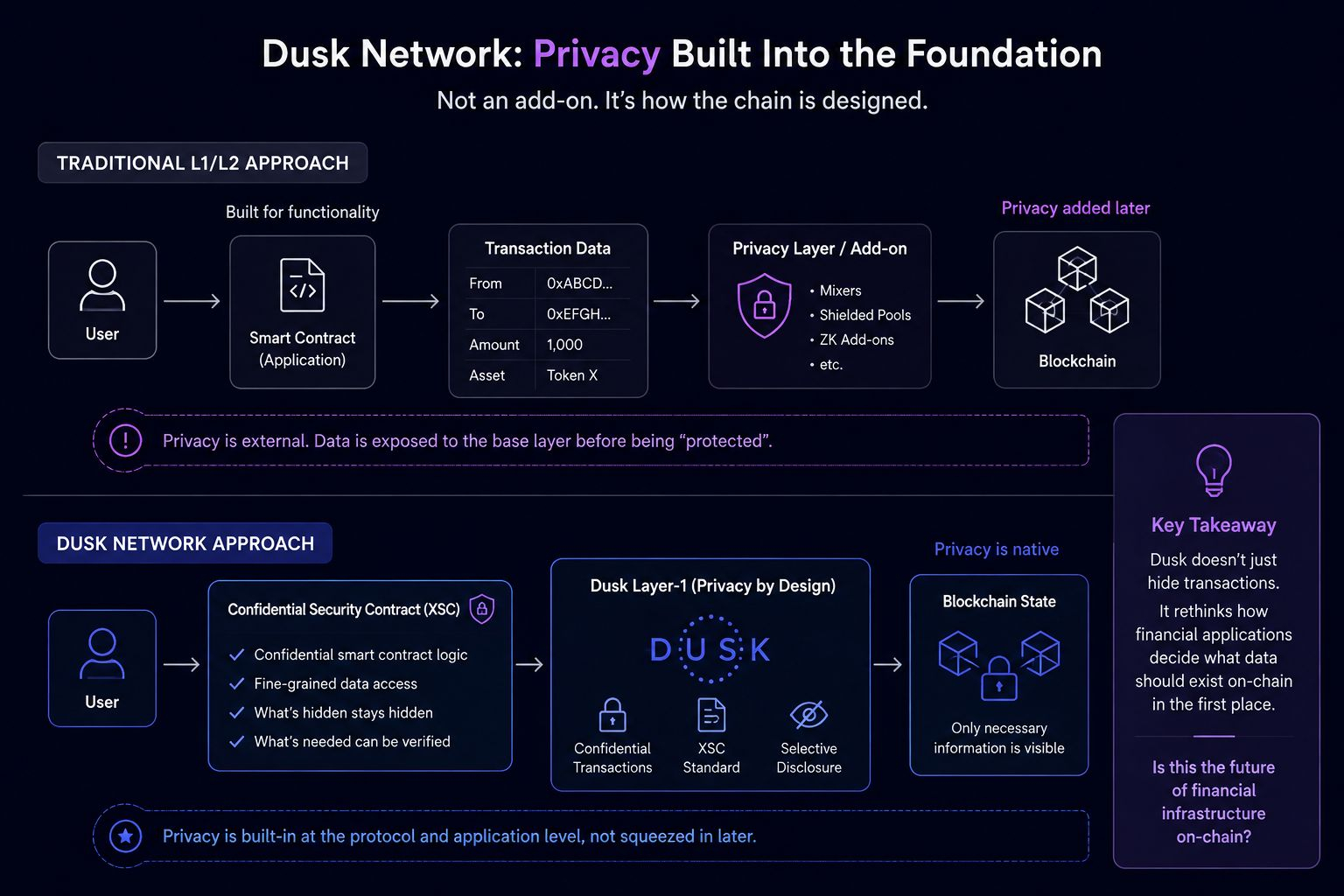
Etwas, das mir aufgefallen ist, als ich durch das Dusk Network gestöbert habe, ist, dass Datenschutz in der Art, wie die Kette Finanzanwendungen verarbeitet, gewissermaßen von Anfang an mitgedacht zu sein scheint – statt als zusätzliche Funktion behandelt zu werden.
Dusk ist eine Layer-1, die um vertrauliche Smart Contracts und seinen XSC-Standard herum aufgebaut ist. Was meine Aufmerksamkeit geweckt hat, ist, dass dadurch Vertraulichkeit näher an die eigentliche Logik einer Finanzanwendung heranrückt.
Das hat mich darüber nachdenken lassen, was „Datenschutz“ auf einer Blockchain wirklich bedeutet.
Datenschutz muss nicht immer heißen, alles zu verstecken. In Finanzsystemen kann es vielmehr darum gehen, zu steuern, welche Informationen sichtbar sind, für wen und zu welchem Zeitpunkt.
Das ist eine wichtige Unterscheidung – besonders, wenn man bedenkt, wie viel sensible Daten traditionelle Finanzanwendungen verarbeiten.
Vielleicht besteht der interessante Teil an Dusk nicht einfach darin, dass es private Transaktionen anbietet, sondern darin, wie Vertraulichkeit direkt in die Anwendungen selbst eingebaut werden kann.
Ich frage mich, ob das die Richtung ist, die datenschutzorientierte Blockchains letztlich einschlagen müssen.
#dusk $DUSK @Dusk_Foundation
{future}(DUSKUSDT)
Etwas, das mir aufgefallen ist, als ich durch das Dusk Network gestöbert habe, ist, dass Datenschutz in der Art, wie die Kette Finanzanwendungen verarbeitet, gewissermaßen von Anfang an mitgedacht zu sein scheint – statt als zusätzliche Funktion behandelt zu werden.
Dusk ist eine Layer-1, die um vertrauliche Smart Contracts und seinen XSC-Standard herum aufgebaut ist. Was meine Aufmerksamkeit geweckt hat, ist, dass dadurch Vertraulichkeit näher an die eigentliche Logik einer Finanzanwendung heranrückt.
Das hat mich darüber nachdenken lassen, was „Datenschutz“ auf einer Blockchain wirklich bedeutet.
Datenschutz muss nicht immer heißen, alles zu verstecken. In Finanzsystemen kann es vielmehr darum gehen, zu steuern, welche Informationen sichtbar sind, für wen und zu welchem Zeitpunkt.
Das ist eine wichtige Unterscheidung – besonders, wenn man bedenkt, wie viel sensible Daten traditionelle Finanzanwendungen verarbeiten.
Vielleicht besteht der interessante Teil an Dusk nicht einfach darin, dass es private Transaktionen anbietet, sondern darin, wie Vertraulichkeit direkt in die Anwendungen selbst eingebaut werden kann.
Ich frage mich, ob das die Richtung ist, die datenschutzorientierte Blockchains letztlich einschlagen müssen.
#dusk $DUSK @Dusk
Dusk ist eine Layer-1, die um vertrauliche Smart Contracts und seinen XSC-Standard herum aufgebaut ist. Was meine Aufmerksamkeit geweckt hat, ist, dass dadurch Vertraulichkeit näher an die eigentliche Logik einer Finanzanwendung heranrückt.
Das hat mich darüber nachdenken lassen, was „Datenschutz“ auf einer Blockchain wirklich bedeutet.
Datenschutz muss nicht immer heißen, alles zu verstecken. In Finanzsystemen kann es vielmehr darum gehen, zu steuern, welche Informationen sichtbar sind, für wen und zu welchem Zeitpunkt.
Das ist eine wichtige Unterscheidung – besonders, wenn man bedenkt, wie viel sensible Daten traditionelle Finanzanwendungen verarbeiten.
Vielleicht besteht der interessante Teil an Dusk nicht einfach darin, dass es private Transaktionen anbietet, sondern darin, wie Vertraulichkeit direkt in die Anwendungen selbst eingebaut werden kann.
Ich frage mich, ob das die Richtung ist, die datenschutzorientierte Blockchains letztlich einschlagen müssen.
#dusk $DUSK @Dusk
2
2
196
·
--
Dusk Network macht die Idee der „vereinheitlichten Liquidität“ es wert, etwas genauer hinzuschauen.
Ich glaube, es gibt eine einfache Falle in DeFi: Liquidität aus unterschiedlichen Bereichen hinter eine einzige, saubere Oberfläche zu stellen, kann fragmentierte Märkte so wirken lassen, als wären sie ein Markt.
Aber sind sie es wirklich?
Der entscheidende Test ist, was darunter passiert. Sind Kapital und Orderbücher tatsächlich miteinander verbunden? Trägt Liquidität aus verschiedenen Handelsplätzen zu derselben Markttiefe bei? Können Nutzer tatsächlich bessere Ausführungen erhalten, engere Spreads, eine höhere Kapitaleffizienz oder höhere realisierte Renditen?
Oder bekommen wir nur eine viel übersichtlichere Darstellung von Liquidität, die weiterhin fragmentiert ist?
Außerdem gibt es die Allokationsschicht zu berücksichtigen.
Kuratoren, Vault-Strategien und automatisierte Allokation können es für Nutzer zwar einfacher machen, aber sie bringen auch Entscheidungen darüber mit sich, wohin das Kapital fließt und welche Exponierung Nutzer letztlich erhalten.
Deshalb würde ich es trennen: Liquidität sehen vs. Liquidität im selben Markt um die Ausführung konkurrieren zu lassen.
Für Dusk wäre ich eher an Ausführungsdaten interessiert als an der Schlagzeilen-TVL: Wie stark verbessert die Architektur tatsächlich die Markttiefe, die Ausführungsqualität, die Kapitaleffizienz und die realisierten Erträge?
Das wäre der Teil, den ich gemessen sehen möchte.
Vereinheitlicht Dusk wirklich die Liquidität auf der Ausführungsschicht, oder macht es vor allem fragmentierte Liquidität leichter zugänglich?
$BEAT
{alpha}(560xcf3232b85b43bca90e51d38cc06cc8bb8c8a3e36)
$TRUMP
{future}(TRUMPUSDT)
#dusk @Dusk_Foundation $DUSK
Dusk Network macht die Idee der „vereinheitlichten Liquidität“ es wert, etwas genauer hinzuschauen.
Ich glaube, es gibt eine einfache Falle in DeFi: Liquidität aus unterschiedlichen Bereichen hinter eine einzige, saubere Oberfläche zu stellen, kann fragmentierte Märkte so wirken lassen, als wären sie ein Markt.
Aber sind sie es wirklich?
Der entscheidende Test ist, was darunter passiert. Sind Kapital und Orderbücher tatsächlich miteinander verbunden? Trägt Liquidität aus verschiedenen Handelsplätzen zu derselben Markttiefe bei? Können Nutzer tatsächlich bessere Ausführungen erhalten, engere Spreads, eine höhere Kapitaleffizienz oder höhere realisierte Renditen?
Oder bekommen wir nur eine viel übersichtlichere Darstellung von Liquidität, die weiterhin fragmentiert ist?
Außerdem gibt es die Allokationsschicht zu berücksichtigen.
Kuratoren, Vault-Strategien und automatisierte Allokation können es für Nutzer zwar einfacher machen, aber sie bringen auch Entscheidungen darüber mit sich, wohin das Kapital fließt und welche Exponierung Nutzer letztlich erhalten.
Deshalb würde ich es trennen: Liquidität sehen vs. Liquidität im selben Markt um die Ausführung konkurrieren zu lassen.
Für Dusk wäre ich eher an Ausführungsdaten interessiert als an der Schlagzeilen-TVL: Wie stark verbessert die Architektur tatsächlich die Markttiefe, die Ausführungsqualität, die Kapitaleffizienz und die realisierten Erträge?
Das wäre der Teil, den ich gemessen sehen möchte.
Vereinheitlicht Dusk wirklich die Liquidität auf der Ausführungsschicht, oder macht es vor allem fragmentierte Liquidität leichter zugänglich?
$BEAT
$TRUMP
#dusk @Dusk $DUSK
Ich glaube, es gibt eine einfache Falle in DeFi: Liquidität aus unterschiedlichen Bereichen hinter eine einzige, saubere Oberfläche zu stellen, kann fragmentierte Märkte so wirken lassen, als wären sie ein Markt.
Aber sind sie es wirklich?
Der entscheidende Test ist, was darunter passiert. Sind Kapital und Orderbücher tatsächlich miteinander verbunden? Trägt Liquidität aus verschiedenen Handelsplätzen zu derselben Markttiefe bei? Können Nutzer tatsächlich bessere Ausführungen erhalten, engere Spreads, eine höhere Kapitaleffizienz oder höhere realisierte Renditen?
Oder bekommen wir nur eine viel übersichtlichere Darstellung von Liquidität, die weiterhin fragmentiert ist?
Außerdem gibt es die Allokationsschicht zu berücksichtigen.
Kuratoren, Vault-Strategien und automatisierte Allokation können es für Nutzer zwar einfacher machen, aber sie bringen auch Entscheidungen darüber mit sich, wohin das Kapital fließt und welche Exponierung Nutzer letztlich erhalten.
Deshalb würde ich es trennen: Liquidität sehen vs. Liquidität im selben Markt um die Ausführung konkurrieren zu lassen.
Für Dusk wäre ich eher an Ausführungsdaten interessiert als an der Schlagzeilen-TVL: Wie stark verbessert die Architektur tatsächlich die Markttiefe, die Ausführungsqualität, die Kapitaleffizienz und die realisierten Erträge?
Das wäre der Teil, den ich gemessen sehen möchte.
Vereinheitlicht Dusk wirklich die Liquidität auf der Ausführungsschicht, oder macht es vor allem fragmentierte Liquidität leichter zugänglich?
$BEAT
$TRUMP
#dusk @Dusk $DUSK
🟢 Actually unified
0%
🟡 Mostly aggregation
0%
🔴 Too early to tell
0%
0 Stimmen • Abstimmung beendet
1
546
·
--
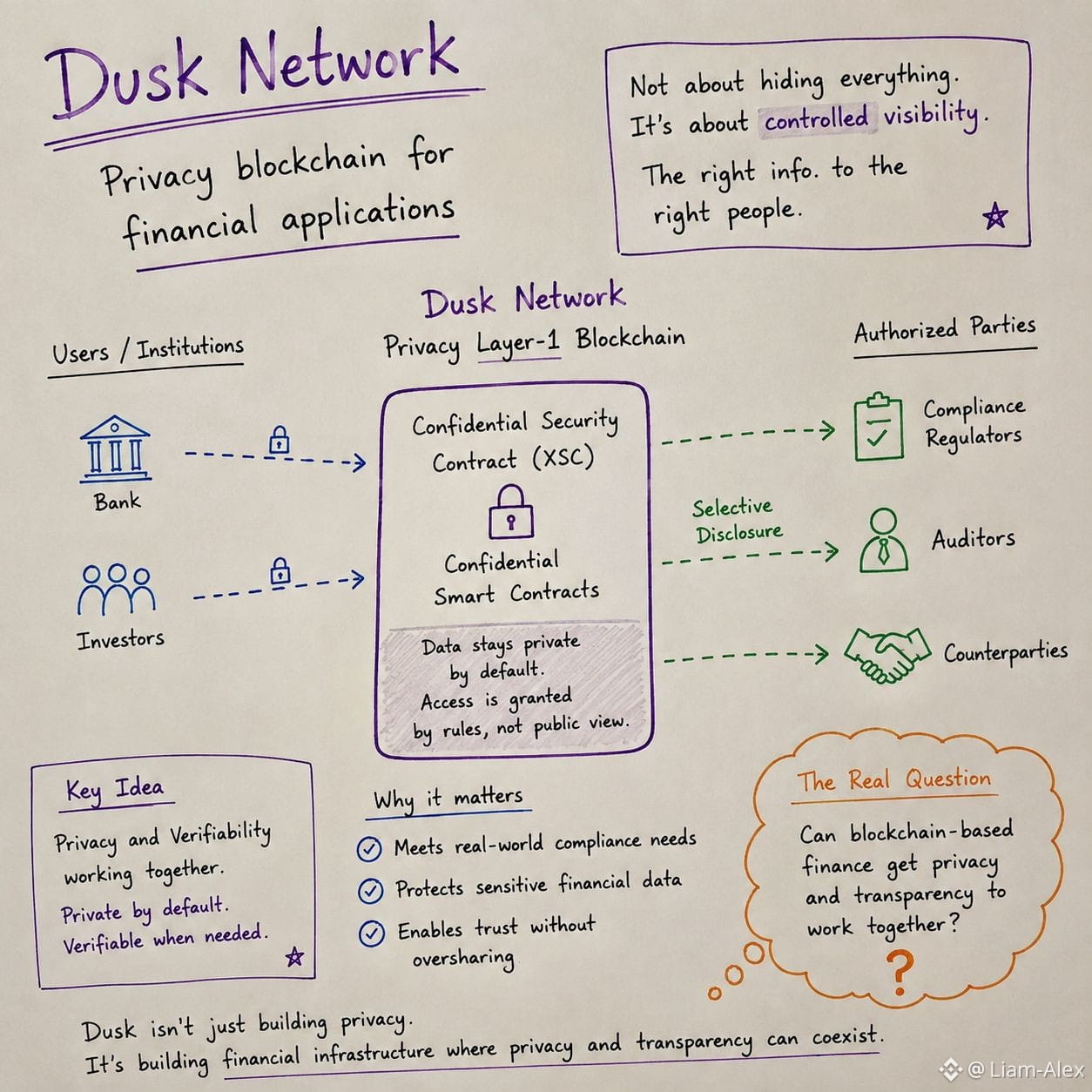
Eine Sache, die mir beim Eintauchen in Dusk aufgefallen ist, ist, dass seine Datenschutz-Aspekte differenzierter sind, als ich zunächst erwartet hatte.
Es geht nicht wirklich darum, alles vollständig zu verbergen.
Das Interessante daran ist, dass man sensible Finanzinformationen privat halten kann, während man gleichzeitig den richtigen Personen erlaubt, zu verifizieren, was sie tatsächlich verifizieren müssen.
Das ist wichtig, weil Finanz-Apps nicht einfach in einer Blackbox arbeiten können. Es gibt weiterhin Compliance, Audits, Gegenparteien und andere Situationen, in denen bestimmte Informationen nachweisbar sein müssen.
Dusk scheint dieses Problem auf Blockchain-Ebene anzugehen – mit vertraulichen Smart Contracts und seinem XSC-Standard.
Mein Fazit war ziemlich einfach: Die sinnvolle Form von Privatsphäre ist wahrscheinlich nicht „niemand kann irgendetwas sehen“.
Es ist eher so, dass die richtigen Informationen für die richtige Partei sichtbar sind, ohne alles andere offenzulegen.
Das wirkt wie ein deutlich schwierigeres Problem.
Und ehrlich gesagt denke ich, dass genau das der Teil ist, den man bei Dusk im Blick behalten sollte. Kann blockchainbasiertes Finanzwesen Privatsphäre und Transparenz tatsächlich zusammen zum Laufen bringen, ohne dass man das eine für das andere opfern muss?
@Dusk_Foundation $DUSK #dusk
{future}(DUSKUSDT)
Eine Sache, die mir beim Eintauchen in Dusk aufgefallen ist, ist, dass seine Datenschutz-Aspekte differenzierter sind, als ich zunächst erwartet hatte.
Es geht nicht wirklich darum, alles vollständig zu verbergen.
Das Interessante daran ist, dass man sensible Finanzinformationen privat halten kann, während man gleichzeitig den richtigen Personen erlaubt, zu verifizieren, was sie tatsächlich verifizieren müssen.
Das ist wichtig, weil Finanz-Apps nicht einfach in einer Blackbox arbeiten können. Es gibt weiterhin Compliance, Audits, Gegenparteien und andere Situationen, in denen bestimmte Informationen nachweisbar sein müssen.
Dusk scheint dieses Problem auf Blockchain-Ebene anzugehen – mit vertraulichen Smart Contracts und seinem XSC-Standard.
Mein Fazit war ziemlich einfach: Die sinnvolle Form von Privatsphäre ist wahrscheinlich nicht „niemand kann irgendetwas sehen“.
Es ist eher so, dass die richtigen Informationen für die richtige Partei sichtbar sind, ohne alles andere offenzulegen.
Das wirkt wie ein deutlich schwierigeres Problem.
Und ehrlich gesagt denke ich, dass genau das der Teil ist, den man bei Dusk im Blick behalten sollte. Kann blockchainbasiertes Finanzwesen Privatsphäre und Transparenz tatsächlich zusammen zum Laufen bringen, ohne dass man das eine für das andere opfern muss?
@Dusk $DUSK #dusk
Es geht nicht wirklich darum, alles vollständig zu verbergen.
Das Interessante daran ist, dass man sensible Finanzinformationen privat halten kann, während man gleichzeitig den richtigen Personen erlaubt, zu verifizieren, was sie tatsächlich verifizieren müssen.
Das ist wichtig, weil Finanz-Apps nicht einfach in einer Blackbox arbeiten können. Es gibt weiterhin Compliance, Audits, Gegenparteien und andere Situationen, in denen bestimmte Informationen nachweisbar sein müssen.
Dusk scheint dieses Problem auf Blockchain-Ebene anzugehen – mit vertraulichen Smart Contracts und seinem XSC-Standard.
Mein Fazit war ziemlich einfach: Die sinnvolle Form von Privatsphäre ist wahrscheinlich nicht „niemand kann irgendetwas sehen“.
Es ist eher so, dass die richtigen Informationen für die richtige Partei sichtbar sind, ohne alles andere offenzulegen.
Das wirkt wie ein deutlich schwierigeres Problem.
Und ehrlich gesagt denke ich, dass genau das der Teil ist, den man bei Dusk im Blick behalten sollte. Kann blockchainbasiertes Finanzwesen Privatsphäre und Transparenz tatsächlich zusammen zum Laufen bringen, ohne dass man das eine für das andere opfern muss?
@Dusk $DUSK #dusk
1
94
·
--
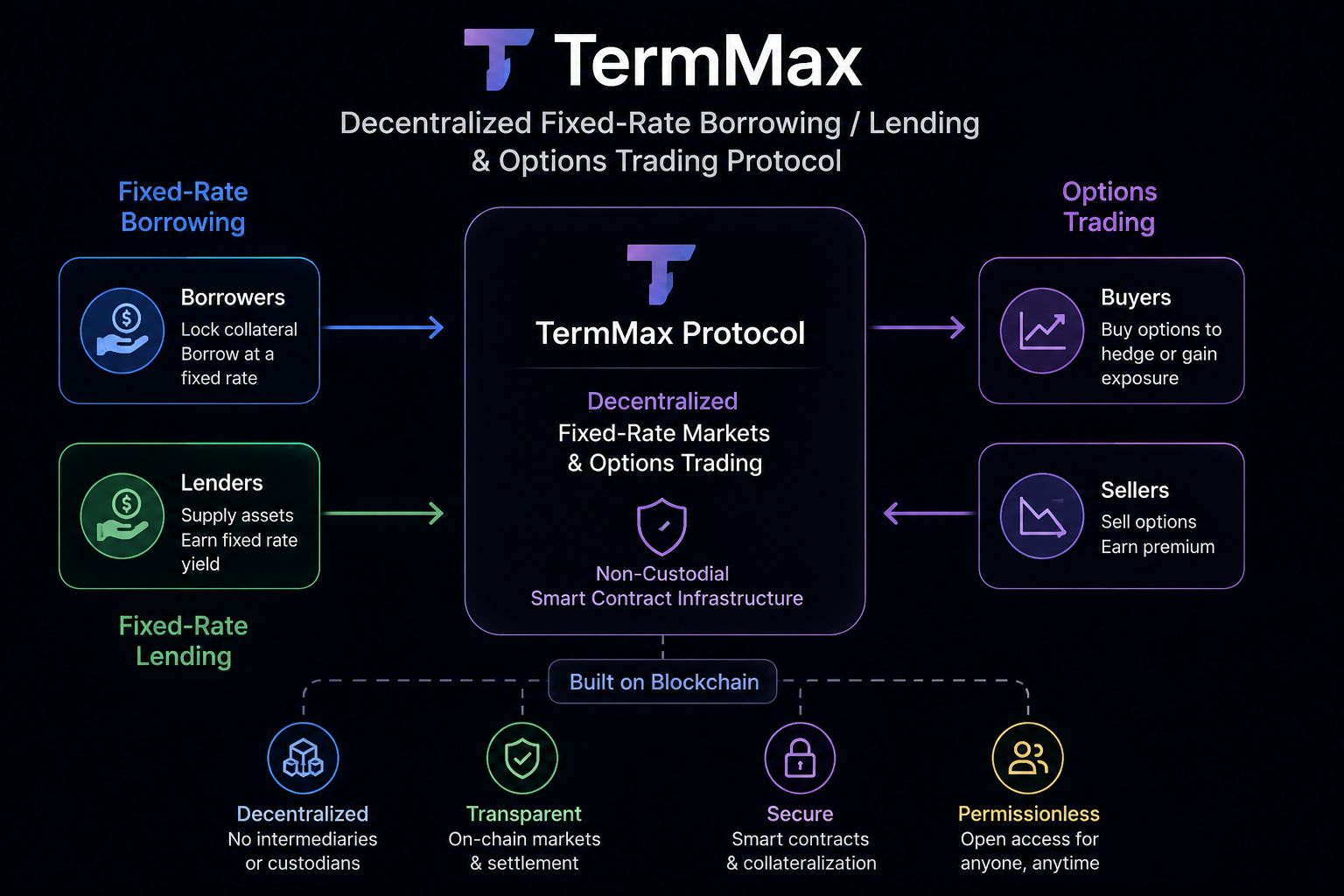
Ich habe mir etwas Zeit genommen, TermMax genauer anzusehen, und was mir dabei aufgefallen ist, ist, wie es einige unterschiedliche Bausteine von DeFi zusammenbringt, ohne dass die Idee dadurch übermäßig kompliziert wirkt.
Es kombiniert festverzinsliches Leihen und Verleihen mit Optionshandel – eine interessante Mischung. Feste Zinssätze verändern die Art, wie man über Lending nachdenkt, weil man eine klarere Vorstellung von dem Zinssatz hat, mit dem man es zu tun hat, statt nur zuzusehen, wie er ständig schwankt.
Dann gibt es noch den Options-Teil. Je mehr ich mir das angesehen habe, desto interessanter fand ich diese Kombination, weil Kreditaufnahme, Verleihen und Optionen normalerweise wie getrennte Bestandteile von DeFi wirken. TermMax bringt sie unter dasselbe Protokoll.
Außerdem gefällt mir, dass das Design dezentral ist. Nicht, weil Dezentralität automatisch etwas besser macht, sondern weil es zur Idee passt, diese Finanztools direkt in ein Protokoll einzubauen, statt auf einen traditionellen Vermittler zu setzen.
Ehrlich gesagt finde ich besonders spannend zu beobachten, wie diese Bausteine tatsächlich zusammen funktionieren. Der festverzinsliche Teil gibt TermMax eine andere Grundlage, während die Optionen dazu beitragen, dass das Gesamtdesign weniger wie ein typischer Lending-Markt wirkt und eher wie eine breitere Palette von Finanztools.
$BTW
{alpha}(560x444045b0ee1ee319a660a5e3d604ca0ffa35acaa)
$ONG
{future}(ONGUSDT)
#TermMax @termmax
Ich habe mir etwas Zeit genommen, TermMax genauer anzusehen, und was mir dabei aufgefallen ist, ist, wie es einige unterschiedliche Bausteine von DeFi zusammenbringt, ohne dass die Idee dadurch übermäßig kompliziert wirkt.
Es kombiniert festverzinsliches Leihen und Verleihen mit Optionshandel – eine interessante Mischung. Feste Zinssätze verändern die Art, wie man über Lending nachdenkt, weil man eine klarere Vorstellung von dem Zinssatz hat, mit dem man es zu tun hat, statt nur zuzusehen, wie er ständig schwankt.
Dann gibt es noch den Options-Teil. Je mehr ich mir das angesehen habe, desto interessanter fand ich diese Kombination, weil Kreditaufnahme, Verleihen und Optionen normalerweise wie getrennte Bestandteile von DeFi wirken. TermMax bringt sie unter dasselbe Protokoll.
Außerdem gefällt mir, dass das Design dezentral ist. Nicht, weil Dezentralität automatisch etwas besser macht, sondern weil es zur Idee passt, diese Finanztools direkt in ein Protokoll einzubauen, statt auf einen traditionellen Vermittler zu setzen.
Ehrlich gesagt finde ich besonders spannend zu beobachten, wie diese Bausteine tatsächlich zusammen funktionieren. Der festverzinsliche Teil gibt TermMax eine andere Grundlage, während die Optionen dazu beitragen, dass das Gesamtdesign weniger wie ein typischer Lending-Markt wirkt und eher wie eine breitere Palette von Finanztools.
$BTW
$ONG
#TermMax @TermMax
Es kombiniert festverzinsliches Leihen und Verleihen mit Optionshandel – eine interessante Mischung. Feste Zinssätze verändern die Art, wie man über Lending nachdenkt, weil man eine klarere Vorstellung von dem Zinssatz hat, mit dem man es zu tun hat, statt nur zuzusehen, wie er ständig schwankt.
Dann gibt es noch den Options-Teil. Je mehr ich mir das angesehen habe, desto interessanter fand ich diese Kombination, weil Kreditaufnahme, Verleihen und Optionen normalerweise wie getrennte Bestandteile von DeFi wirken. TermMax bringt sie unter dasselbe Protokoll.
Außerdem gefällt mir, dass das Design dezentral ist. Nicht, weil Dezentralität automatisch etwas besser macht, sondern weil es zur Idee passt, diese Finanztools direkt in ein Protokoll einzubauen, statt auf einen traditionellen Vermittler zu setzen.
Ehrlich gesagt finde ich besonders spannend zu beobachten, wie diese Bausteine tatsächlich zusammen funktionieren. Der festverzinsliche Teil gibt TermMax eine andere Grundlage, während die Optionen dazu beitragen, dass das Gesamtdesign weniger wie ein typischer Lending-Markt wirkt und eher wie eine breitere Palette von Finanztools.
$BTW
$ONG
#TermMax @TermMax
12
3
229
·
--
Eine Sache, die mir bei der Recherche zu Dusk aufgefallen ist, ist, dass Datenschutz nicht so wirkt, als würde er als separate Schicht einfach an die Kette „angeflanscht“.
Spannend ist die Art, wie Dusk vertrauliche Smart Contracts mit seinem XSC-Standard verbindet. Für finanzielle Anwendungen ergibt das tatsächlich sehr viel Sinn.
Man will nicht unbedingt, dass jede einzelne Information aus dem Finanzbereich öffentlich sichtbar ist, aber man braucht das Netzwerk, um zu verifizieren, dass die Regeln eingehalten werden.
Genau hier, denke ich, wird Dusk interessant.
Es fühlt sich weniger an wie „alles verstecken“ und mehr wie „die entscheidende Logik prüfbar halten, ohne alles dahinter offenzulegen“.
Daran habe ich zuvor über Datenschutz eher nicht so gedacht.
Jetzt frage ich mich, wie weit dieses Modell tatsächlich kommen kann, sobald weitere Finanzanwendungen damit anfangen zu bauen.
#dusk @Dusk_Foundation $DUSK
{future}(DUSKUSDT)
$牛来
{alpha}(560xbeea1d618e533a387d941f58a7d4c9b7bd377777)
$BOME
{future}(BOMEUSDT)
Eine Sache, die mir bei der Recherche zu Dusk aufgefallen ist, ist, dass Datenschutz nicht so wirkt, als würde er als separate Schicht einfach an die Kette „angeflanscht“.
Spannend ist die Art, wie Dusk vertrauliche Smart Contracts mit seinem XSC-Standard verbindet. Für finanzielle Anwendungen ergibt das tatsächlich sehr viel Sinn.
Man will nicht unbedingt, dass jede einzelne Information aus dem Finanzbereich öffentlich sichtbar ist, aber man braucht das Netzwerk, um zu verifizieren, dass die Regeln eingehalten werden.
Genau hier, denke ich, wird Dusk interessant.
Es fühlt sich weniger an wie „alles verstecken“ und mehr wie „die entscheidende Logik prüfbar halten, ohne alles dahinter offenzulegen“.
Daran habe ich zuvor über Datenschutz eher nicht so gedacht.
Jetzt frage ich mich, wie weit dieses Modell tatsächlich kommen kann, sobald weitere Finanzanwendungen damit anfangen zu bauen.
#dusk @Dusk $DUSK
$牛来
$BOME
Spannend ist die Art, wie Dusk vertrauliche Smart Contracts mit seinem XSC-Standard verbindet. Für finanzielle Anwendungen ergibt das tatsächlich sehr viel Sinn.
Man will nicht unbedingt, dass jede einzelne Information aus dem Finanzbereich öffentlich sichtbar ist, aber man braucht das Netzwerk, um zu verifizieren, dass die Regeln eingehalten werden.
Genau hier, denke ich, wird Dusk interessant.
Es fühlt sich weniger an wie „alles verstecken“ und mehr wie „die entscheidende Logik prüfbar halten, ohne alles dahinter offenzulegen“.
Daran habe ich zuvor über Datenschutz eher nicht so gedacht.
Jetzt frage ich mich, wie weit dieses Modell tatsächlich kommen kann, sobald weitere Finanzanwendungen damit anfangen zu bauen.
#dusk @Dusk $DUSK
$牛来
$BOME
🔐 Yes
0%
🤔 Maybe
0%
🚫 Not yet
0%
0 Stimmen • Abstimmung beendet
1
1
112
·
--
Etwas ist mir aufgefallen, als ich mir Dusk genauer angesehen habe: Datenschutz scheint nicht als separate Schicht behandelt zu werden, die einfach an die Kette angeflanscht ist.
Das Interessante daran ist, wie Dusk vertrauliche Smart Contracts mit seinem XSC-Standard verbindet. Für Finanzanwendungen ergibt das tatsächlich sehr viel Sinn.
Man möchte nicht unbedingt, dass jede einzelne finanzielle Information öffentlich sichtbar ist, aber man braucht dennoch ein Netzwerk, das überprüfen kann, ob die Regeln eingehalten werden.
Genau da finde ich wird es spannend.
Es wirkt weniger wie „alles verbergen“ und mehr wie „die wichtige Logik überprüfbar halten, ohne alles zu offenbaren, was dahinter steckt“.
Ich hatte vorher nicht wirklich aus dieser Perspektive über Datenschutz nachgedacht.
Jetzt frage ich mich, wie weit dieses Modell tatsächlich gehen kann, sobald weitere Finanzanwendungen damit beginnen, sich darauf aufzubauen.
#dusk @Dusk_Foundation $DUSK
{future}(DUSKUSDT)
$牛来
{alpha}(560xbeea1d618e533a387d941f58a7d4c9b7bd377777)
$BOME
{future}(BOMEUSDT)
Etwas ist mir aufgefallen, als ich mir Dusk genauer angesehen habe: Datenschutz scheint nicht als separate Schicht behandelt zu werden, die einfach an die Kette angeflanscht ist.
Das Interessante daran ist, wie Dusk vertrauliche Smart Contracts mit seinem XSC-Standard verbindet. Für Finanzanwendungen ergibt das tatsächlich sehr viel Sinn.
Man möchte nicht unbedingt, dass jede einzelne finanzielle Information öffentlich sichtbar ist, aber man braucht dennoch ein Netzwerk, das überprüfen kann, ob die Regeln eingehalten werden.
Genau da finde ich wird es spannend.
Es wirkt weniger wie „alles verbergen“ und mehr wie „die wichtige Logik überprüfbar halten, ohne alles zu offenbaren, was dahinter steckt“.
Ich hatte vorher nicht wirklich aus dieser Perspektive über Datenschutz nachgedacht.
Jetzt frage ich mich, wie weit dieses Modell tatsächlich gehen kann, sobald weitere Finanzanwendungen damit beginnen, sich darauf aufzubauen.
#dusk @Dusk $DUSK
$牛来
$BOME
Das Interessante daran ist, wie Dusk vertrauliche Smart Contracts mit seinem XSC-Standard verbindet. Für Finanzanwendungen ergibt das tatsächlich sehr viel Sinn.
Man möchte nicht unbedingt, dass jede einzelne finanzielle Information öffentlich sichtbar ist, aber man braucht dennoch ein Netzwerk, das überprüfen kann, ob die Regeln eingehalten werden.
Genau da finde ich wird es spannend.
Es wirkt weniger wie „alles verbergen“ und mehr wie „die wichtige Logik überprüfbar halten, ohne alles zu offenbaren, was dahinter steckt“.
Ich hatte vorher nicht wirklich aus dieser Perspektive über Datenschutz nachgedacht.
Jetzt frage ich mich, wie weit dieses Modell tatsächlich gehen kann, sobald weitere Finanzanwendungen damit beginnen, sich darauf aufzubauen.
#dusk @Dusk $DUSK
$牛来
$BOME
🔐 Yes
0%
🤔 Maybe
0%
🚫 Not yet
0%
0 Stimmen • Abstimmung beendet
119
·
--
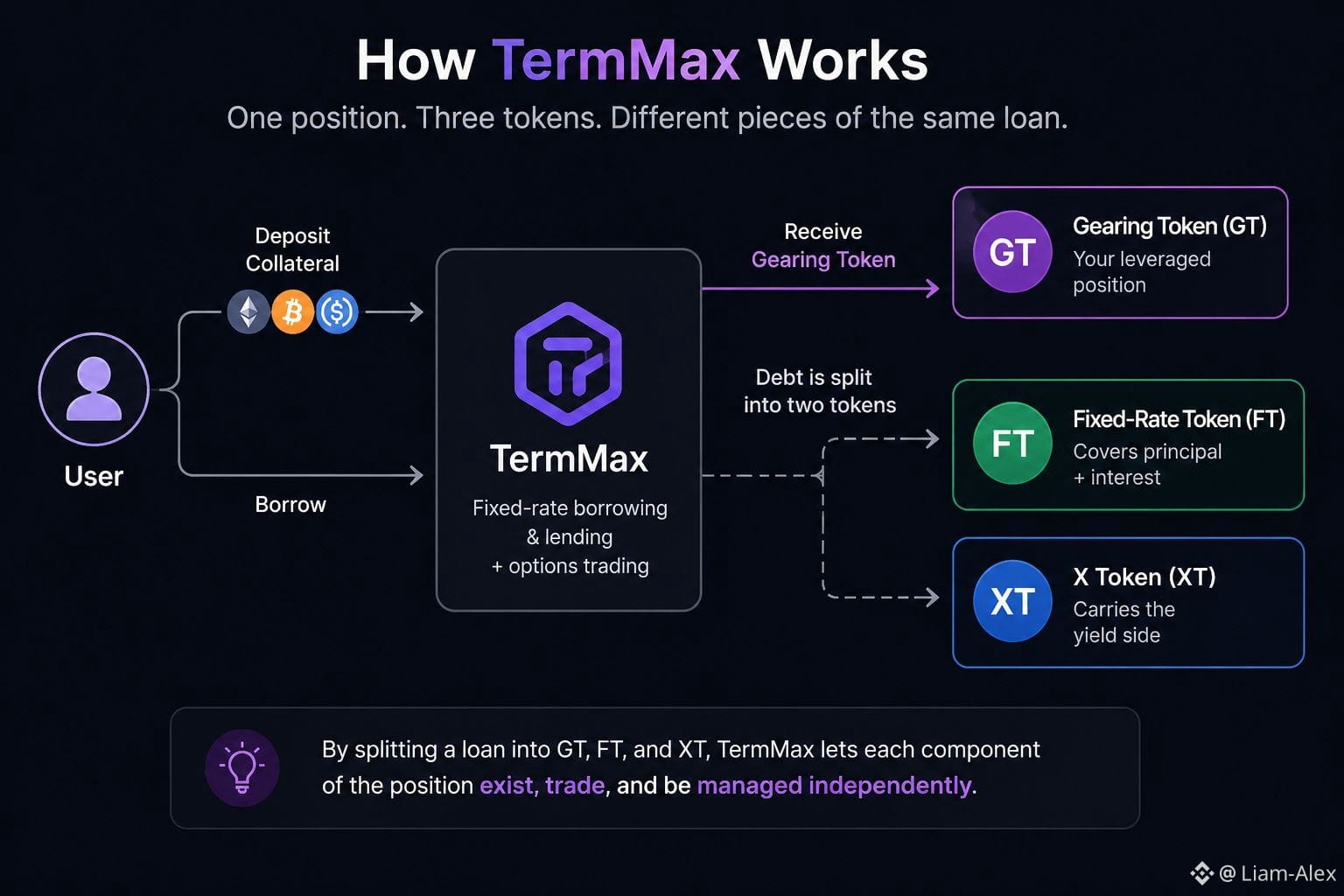
Ich habe ein bisschen mehr in TermMax reingeschaut, und eine Sache, die ich anfangs nicht wirklich zu schätzen wusste, war, wie unterschiedlich es eine Borrowing-Position behandelt.
Statt den gesamten Kredit wie ein einziges Ding zu behandeln, zerlegt es ihn in separate Bestandteile. Du hinterlegst Sicherheiten und erhältst einen Gearing Token, während die Schulden in einen Fixed-Rate Token und einen X Token aufgeteilt werden.
Am Anfang wirkte das für mich komplizierter, als es hätte sein müssen. Aber je mehr ich es mir angesehen habe, desto besser habe ich verstanden, warum das Design interessant ist.
Der FT repräsentiert im Grunde den Principal- und Zins-Teil, während der XT die Rendite-Seite übernimmt. Du hältst also nicht einfach eine generische Schuldenposition, in der alles zusammengepackt ist.
Diese Trennung ist wahrscheinlich der Teil, der mich an TermMax am meisten interessiert.
Sie macht die Borrowing-Position gefühlt modularer – fast so, als würde das Protokoll die unterschiedlichen ökonomischen Aspekte eines Kredits auseinandernehmen und jedes Stück in einen eigenen Token verwandeln.
Ich sage nicht, dass es automatisch besser ist, aber es ist definitiv eine Designentscheidung, die mich zweimal hinschauen ließ.
@termmax #TermMax
Ich habe ein bisschen mehr in TermMax reingeschaut, und eine Sache, die ich anfangs nicht wirklich zu schätzen wusste, war, wie unterschiedlich es eine Borrowing-Position behandelt.
Statt den gesamten Kredit wie ein einziges Ding zu behandeln, zerlegt es ihn in separate Bestandteile. Du hinterlegst Sicherheiten und erhältst einen Gearing Token, während die Schulden in einen Fixed-Rate Token und einen X Token aufgeteilt werden.
Am Anfang wirkte das für mich komplizierter, als es hätte sein müssen. Aber je mehr ich es mir angesehen habe, desto besser habe ich verstanden, warum das Design interessant ist.
Der FT repräsentiert im Grunde den Principal- und Zins-Teil, während der XT die Rendite-Seite übernimmt. Du hältst also nicht einfach eine generische Schuldenposition, in der alles zusammengepackt ist.
Diese Trennung ist wahrscheinlich der Teil, der mich an TermMax am meisten interessiert.
Sie macht die Borrowing-Position gefühlt modularer – fast so, als würde das Protokoll die unterschiedlichen ökonomischen Aspekte eines Kredits auseinandernehmen und jedes Stück in einen eigenen Token verwandeln.
Ich sage nicht, dass es automatisch besser ist, aber es ist definitiv eine Designentscheidung, die mich zweimal hinschauen ließ.
@TermMax #TermMax
Statt den gesamten Kredit wie ein einziges Ding zu behandeln, zerlegt es ihn in separate Bestandteile. Du hinterlegst Sicherheiten und erhältst einen Gearing Token, während die Schulden in einen Fixed-Rate Token und einen X Token aufgeteilt werden.
Am Anfang wirkte das für mich komplizierter, als es hätte sein müssen. Aber je mehr ich es mir angesehen habe, desto besser habe ich verstanden, warum das Design interessant ist.
Der FT repräsentiert im Grunde den Principal- und Zins-Teil, während der XT die Rendite-Seite übernimmt. Du hältst also nicht einfach eine generische Schuldenposition, in der alles zusammengepackt ist.
Diese Trennung ist wahrscheinlich der Teil, der mich an TermMax am meisten interessiert.
Sie macht die Borrowing-Position gefühlt modularer – fast so, als würde das Protokoll die unterschiedlichen ökonomischen Aspekte eines Kredits auseinandernehmen und jedes Stück in einen eigenen Token verwandeln.
Ich sage nicht, dass es automatisch besser ist, aber es ist definitiv eine Designentscheidung, die mich zweimal hinschauen ließ.
@TermMax #TermMax
9
5
227
·
--
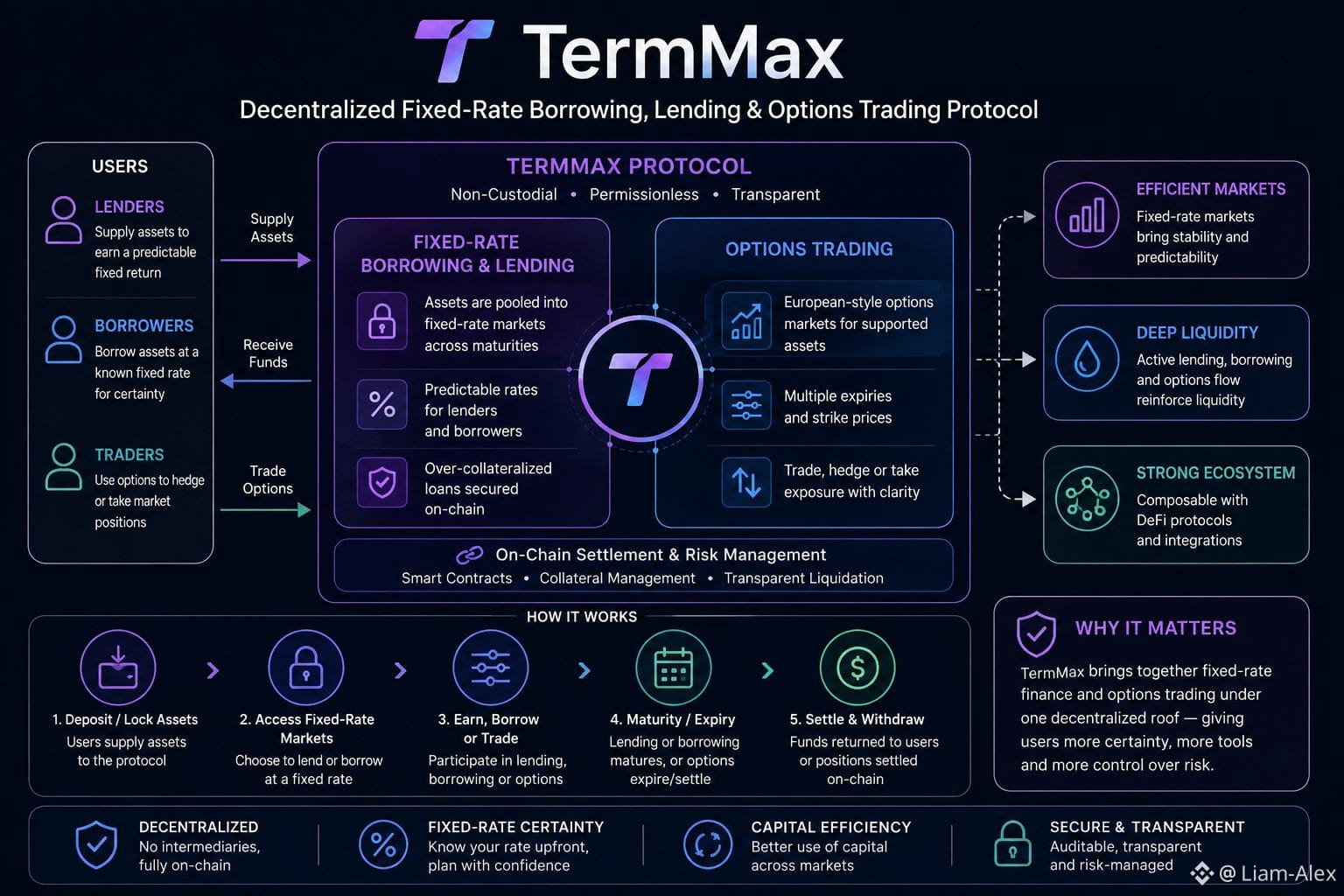
Der größte Teil des DeFi-Kreditgeschäfts basiert auf Zinssätzen, die sich mit dem Markt bewegen. TermMax geht einen anderen Weg, indem es sich auf Festzins-Kredite und -Anlagen konzentriert und gleichzeitig auch den Handel mit Optionen unterstützt.
Das Interessante ist die Kombination: Festzinsmärkte geben den Nutzern für einen festgelegten Zeitraum eine bekannte Kosten- oder Renditebasis, während Optionen genutzt werden können, um zusätzliche Marktpositionen einzugehen oder zu verwalten.
Das schafft eine spannende Abhängigkeit: Festzins-Produkte benötigen ausreichend Nachfrage auf beiden Seiten des Markts, während Optionen genügend Liquidität brauchen, um weiterhin nützlich zu sein. Die beiden Systeme können sich gegenseitig ergänzen, aber sie können auch um dasselbe Kapital konkurrieren.
Hier werden jedoch noch keine Daten zu TVL, Nutzern, Liquidität oder Aktivitäten bereitgestellt, um beurteilen zu können, wie gut dieses Design tatsächlich funktioniert.
Daher ist die Frage, auf die ich achten würde, ganz einfach: Führt die Kombination zu einer höheren Kapitaleffizienz, oder macht sie die Liquidität schwerer, dort zu konzentrieren, wo die Nutzer sie am dringendsten brauchen?
#TermMax @termmax
Der größte Teil des DeFi-Kreditgeschäfts basiert auf Zinssätzen, die sich mit dem Markt bewegen. TermMax geht einen anderen Weg, indem es sich auf Festzins-Kredite und -Anlagen konzentriert und gleichzeitig auch den Handel mit Optionen unterstützt.
Das Interessante ist die Kombination: Festzinsmärkte geben den Nutzern für einen festgelegten Zeitraum eine bekannte Kosten- oder Renditebasis, während Optionen genutzt werden können, um zusätzliche Marktpositionen einzugehen oder zu verwalten.
Das schafft eine spannende Abhängigkeit: Festzins-Produkte benötigen ausreichend Nachfrage auf beiden Seiten des Markts, während Optionen genügend Liquidität brauchen, um weiterhin nützlich zu sein. Die beiden Systeme können sich gegenseitig ergänzen, aber sie können auch um dasselbe Kapital konkurrieren.
Hier werden jedoch noch keine Daten zu TVL, Nutzern, Liquidität oder Aktivitäten bereitgestellt, um beurteilen zu können, wie gut dieses Design tatsächlich funktioniert.
Daher ist die Frage, auf die ich achten würde, ganz einfach: Führt die Kombination zu einer höheren Kapitaleffizienz, oder macht sie die Liquidität schwerer, dort zu konzentrieren, wo die Nutzer sie am dringendsten brauchen?
#TermMax @TermMax
Das Interessante ist die Kombination: Festzinsmärkte geben den Nutzern für einen festgelegten Zeitraum eine bekannte Kosten- oder Renditebasis, während Optionen genutzt werden können, um zusätzliche Marktpositionen einzugehen oder zu verwalten.
Das schafft eine spannende Abhängigkeit: Festzins-Produkte benötigen ausreichend Nachfrage auf beiden Seiten des Markts, während Optionen genügend Liquidität brauchen, um weiterhin nützlich zu sein. Die beiden Systeme können sich gegenseitig ergänzen, aber sie können auch um dasselbe Kapital konkurrieren.
Hier werden jedoch noch keine Daten zu TVL, Nutzern, Liquidität oder Aktivitäten bereitgestellt, um beurteilen zu können, wie gut dieses Design tatsächlich funktioniert.
Daher ist die Frage, auf die ich achten würde, ganz einfach: Führt die Kombination zu einer höheren Kapitaleffizienz, oder macht sie die Liquidität schwerer, dort zu konzentrieren, wo die Nutzer sie am dringendsten brauchen?
#TermMax @TermMax
9
4
121
·
--
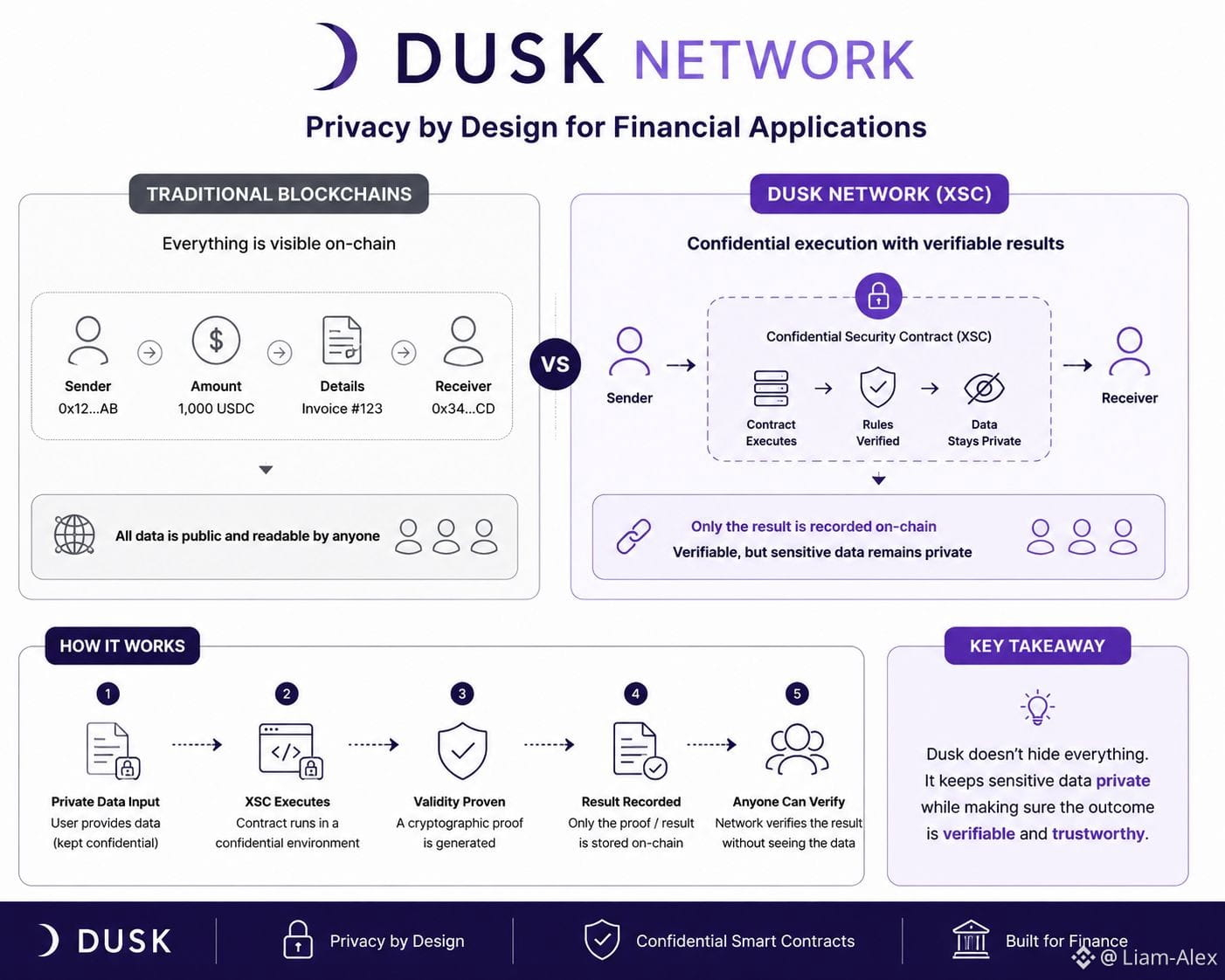
Mir ist etwas Interessantes aufgefallen, als ich in Dusk eingetaucht bin: Sein Datenschutzansatz geht nicht wirklich darum, alles zu verbergen.
#dusk
Die Idee ist eher, sensible Finanzdetails privat zu halten, während die Teile, die sichtbar sein müssen, auch sichtbar bleiben.
Das hat mich Dusk ein bisschen anders betrachten lassen.
Bei Finanz-Apps geht Datenschutz wahrscheinlich nicht darum, sich vollständig zu verstecken. Es geht darum, mehr Kontrolle darüber zu haben, wer sehen kann, was.
Und ehrlich gesagt fühlt sich das wie eine viel nützlichere Art an, über Datenschutz on-chain nachzudenken.
Vielleicht ist die eigentliche Frage nicht „privat oder öffentlich?“
Sondern: Wer sollte in der Lage sein zu sehen, was – und wann?
#dusk @Dusk_Foundation $DUSK
{future}(DUSKUSDT)
$牛来
{alpha}(560xbeea1d618e533a387d941f58a7d4c9b7bd377777)
$BTW
{future}(BTWUSDT)
Mir ist etwas Interessantes aufgefallen, als ich in Dusk eingetaucht bin: Sein Datenschutzansatz geht nicht wirklich darum, alles zu verbergen.
#dusk
Die Idee ist eher, sensible Finanzdetails privat zu halten, während die Teile, die sichtbar sein müssen, auch sichtbar bleiben.
Das hat mich Dusk ein bisschen anders betrachten lassen.
Bei Finanz-Apps geht Datenschutz wahrscheinlich nicht darum, sich vollständig zu verstecken. Es geht darum, mehr Kontrolle darüber zu haben, wer sehen kann, was.
Und ehrlich gesagt fühlt sich das wie eine viel nützlichere Art an, über Datenschutz on-chain nachzudenken.
Vielleicht ist die eigentliche Frage nicht „privat oder öffentlich?“
Sondern: Wer sollte in der Lage sein zu sehen, was – und wann?
#dusk @Dusk $DUSK
$牛来
$BTW
#dusk
Die Idee ist eher, sensible Finanzdetails privat zu halten, während die Teile, die sichtbar sein müssen, auch sichtbar bleiben.
Das hat mich Dusk ein bisschen anders betrachten lassen.
Bei Finanz-Apps geht Datenschutz wahrscheinlich nicht darum, sich vollständig zu verstecken. Es geht darum, mehr Kontrolle darüber zu haben, wer sehen kann, was.
Und ehrlich gesagt fühlt sich das wie eine viel nützlichere Art an, über Datenschutz on-chain nachzudenken.
Vielleicht ist die eigentliche Frage nicht „privat oder öffentlich?“
Sondern: Wer sollte in der Lage sein zu sehen, was – und wann?
#dusk @Dusk $DUSK
$牛来
$BTW
🔒 Privacy
57%
👀 Selective visibility
0%
⚖️ Both
43%
7 Stimmen • Abstimmung beendet
6
4
5.7k
·
--
Je tiefer ich in Dusk hineinschaute, desto klarer wurde mir eine Sache: Privatsphäre hier geht nicht nur darum, Informationen zu verstecken.
@Dusk_Foundation
Für Finanzanwendungen müssen bestimmte Details privat bleiben, während die Aktivität trotzdem vertrauenswürdig und verifiziert werden muss.
Das klingt einfach, aber herauszufinden, wie beide Seiten zusammenarbeiten, ist das Spannende.
Dadurch wurde mir klar, dass Dusk eigentlich gar nicht fragt: „Wie verstecken wir alles?“ Es geht eher um die Frage: „Was muss tatsächlich sichtbar sein?“
Das ist eine viel praktischere Art, über Privatsphäre nachzudenken.
$1000SATS
{future}(1000SATSUSDT)
$CLO
{alpha}(560x81d3a238b02827f62b9f390f947d36d4a5bf89d2)
#dusk $DUSK @Dusk_Foundation
Je tiefer ich in Dusk hineinschaute, desto klarer wurde mir eine Sache: Privatsphäre hier geht nicht nur darum, Informationen zu verstecken.
@Dusk
Für Finanzanwendungen müssen bestimmte Details privat bleiben, während die Aktivität trotzdem vertrauenswürdig und verifiziert werden muss.
Das klingt einfach, aber herauszufinden, wie beide Seiten zusammenarbeiten, ist das Spannende.
Dadurch wurde mir klar, dass Dusk eigentlich gar nicht fragt: „Wie verstecken wir alles?“ Es geht eher um die Frage: „Was muss tatsächlich sichtbar sein?“
Das ist eine viel praktischere Art, über Privatsphäre nachzudenken.
$1000SATS
$CLO
#dusk $DUSK @Dusk
@Dusk
Für Finanzanwendungen müssen bestimmte Details privat bleiben, während die Aktivität trotzdem vertrauenswürdig und verifiziert werden muss.
Das klingt einfach, aber herauszufinden, wie beide Seiten zusammenarbeiten, ist das Spannende.
Dadurch wurde mir klar, dass Dusk eigentlich gar nicht fragt: „Wie verstecken wir alles?“ Es geht eher um die Frage: „Was muss tatsächlich sichtbar sein?“
Das ist eine viel praktischere Art, über Privatsphäre nachzudenken.
$1000SATS
$CLO
#dusk $DUSK @Dusk
4
7
179
·
--
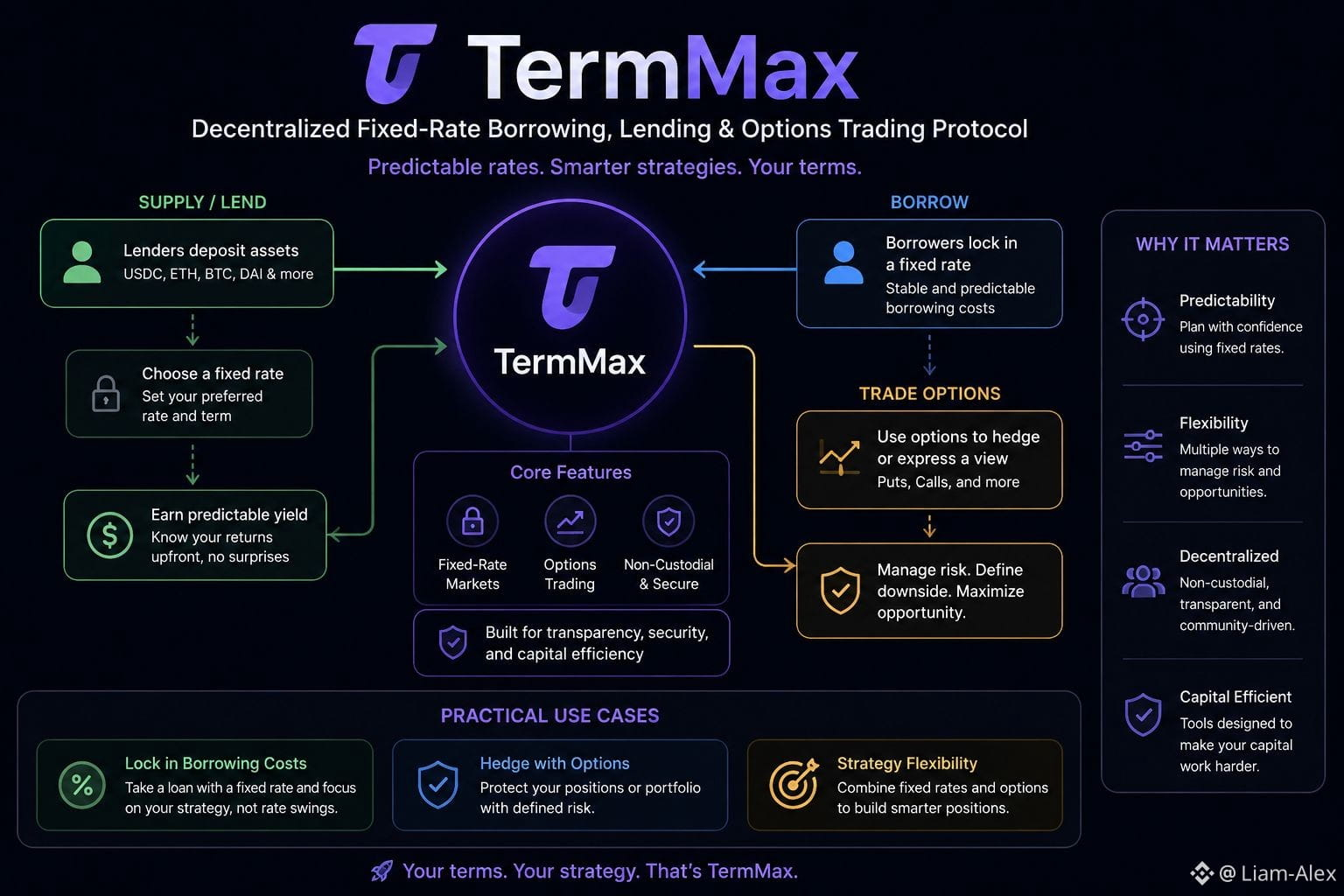
Ich habe zuerst TermMax angesehen und dachte: Okay, das ist im Grunde nur ein weiteres Kreditprotokoll mit festem Zinssatz.
Aber nachdem ich etwas tiefer eingestiegen bin, habe ich die Idee anders verstanden. Einen Kredit-Zinssatz festzulegen, kann die Planung einer Position tatsächlich deutlich einfacher machen – vor allem dann, wenn du keine variablen Zinsen haben willst, die deine Zahlen durcheinanderbringen.
Dann gibt es noch den Options-Teil, der eine weitere Ebene zum Steuern von Risiken oder um eine bestimmte Marktansicht einzunehmen hinzufügt.
Genau das ist mir aufgefallen. TermMax ist für mich mittlerweile nicht mehr nur noch etwas zum Verleihen oder Aufnehmen von Krediten. Wie sich Zinsen und Optionen zusammenspielen, macht es für mich besonders interessant.
#TermMax @termmax
Ich habe zuerst TermMax angesehen und dachte: Okay, das ist im Grunde nur ein weiteres Kreditprotokoll mit festem Zinssatz.
Aber nachdem ich etwas tiefer eingestiegen bin, habe ich die Idee anders verstanden. Einen Kredit-Zinssatz festzulegen, kann die Planung einer Position tatsächlich deutlich einfacher machen – vor allem dann, wenn du keine variablen Zinsen haben willst, die deine Zahlen durcheinanderbringen.
Dann gibt es noch den Options-Teil, der eine weitere Ebene zum Steuern von Risiken oder um eine bestimmte Marktansicht einzunehmen hinzufügt.
Genau das ist mir aufgefallen. TermMax ist für mich mittlerweile nicht mehr nur noch etwas zum Verleihen oder Aufnehmen von Krediten. Wie sich Zinsen und Optionen zusammenspielen, macht es für mich besonders interessant.
#TermMax @TermMax
Aber nachdem ich etwas tiefer eingestiegen bin, habe ich die Idee anders verstanden. Einen Kredit-Zinssatz festzulegen, kann die Planung einer Position tatsächlich deutlich einfacher machen – vor allem dann, wenn du keine variablen Zinsen haben willst, die deine Zahlen durcheinanderbringen.
Dann gibt es noch den Options-Teil, der eine weitere Ebene zum Steuern von Risiken oder um eine bestimmte Marktansicht einzunehmen hinzufügt.
Genau das ist mir aufgefallen. TermMax ist für mich mittlerweile nicht mehr nur noch etwas zum Verleihen oder Aufnehmen von Krediten. Wie sich Zinsen und Optionen zusammenspielen, macht es für mich besonders interessant.
#TermMax @TermMax
6
5
143
·
--
Je tiefer ich in Dusk hineinschaue, desto mehr komme ich auf eine einzige, einfache Erkenntnis zurück: Privatsphäre muss nicht immer bedeuten, alles zu verstecken.
@Dusk_Foundation
Was meine Aufmerksamkeit geweckt hat, ist die Art und Weise, wie vertrauliche Verträge mit sensiblen Informationen funktionieren können, ohne alle zugrunde liegenden Details auf der öffentlichen Blockchain preiszugeben.
Zunächst dachte ich, Privatsphäre sei einfach nur „die Transaktion verbergen“.
$DUSK
Dann habe ich erkannt, dass es einen praktischeren Blick darauf gibt: Man soll genau das nachweisen können, was tatsächlich nachgewiesen werden muss, ohne Informationen weiterzugeben, die niemand sonst sehen muss.
Das ergibt für mich viel mehr Sinn für finanzielle Anwendungen.
Es gibt jedoch immer noch einen Zielkonflikt: Je mehr Privatsphäre man hinzufügt, desto komplexer kann das System für Entwickler und Nutzer werden.
Aber wahrscheinlich ist das das Spannendste an Dusk für mich. Es geht nicht nur darum, Daten zu verbergen. Es geht darum, mehr Kontrolle darüber zu haben, was offengelegt wird.
Und ehrlich gesagt, fühlt sich das wie ein viel schwierigeres Problem an, das man lösen muss.
#dusk
$PORTAL
{future}(PORTALUSDT)
$KII
{alpha}(560xeec6574eabba52bac3f0277f2cd5ac7e67197886)
Je tiefer ich in Dusk hineinschaue, desto mehr komme ich auf eine einzige, einfache Erkenntnis zurück: Privatsphäre muss nicht immer bedeuten, alles zu verstecken.
@Dusk
Was meine Aufmerksamkeit geweckt hat, ist die Art und Weise, wie vertrauliche Verträge mit sensiblen Informationen funktionieren können, ohne alle zugrunde liegenden Details auf der öffentlichen Blockchain preiszugeben.
Zunächst dachte ich, Privatsphäre sei einfach nur „die Transaktion verbergen“.
$DUSK
Dann habe ich erkannt, dass es einen praktischeren Blick darauf gibt: Man soll genau das nachweisen können, was tatsächlich nachgewiesen werden muss, ohne Informationen weiterzugeben, die niemand sonst sehen muss.
Das ergibt für mich viel mehr Sinn für finanzielle Anwendungen.
Es gibt jedoch immer noch einen Zielkonflikt: Je mehr Privatsphäre man hinzufügt, desto komplexer kann das System für Entwickler und Nutzer werden.
Aber wahrscheinlich ist das das Spannendste an Dusk für mich. Es geht nicht nur darum, Daten zu verbergen. Es geht darum, mehr Kontrolle darüber zu haben, was offengelegt wird.
Und ehrlich gesagt, fühlt sich das wie ein viel schwierigeres Problem an, das man lösen muss.
#dusk
$PORTAL
$KII
@Dusk
Was meine Aufmerksamkeit geweckt hat, ist die Art und Weise, wie vertrauliche Verträge mit sensiblen Informationen funktionieren können, ohne alle zugrunde liegenden Details auf der öffentlichen Blockchain preiszugeben.
Zunächst dachte ich, Privatsphäre sei einfach nur „die Transaktion verbergen“.
$DUSK
Dann habe ich erkannt, dass es einen praktischeren Blick darauf gibt: Man soll genau das nachweisen können, was tatsächlich nachgewiesen werden muss, ohne Informationen weiterzugeben, die niemand sonst sehen muss.
Das ergibt für mich viel mehr Sinn für finanzielle Anwendungen.
Es gibt jedoch immer noch einen Zielkonflikt: Je mehr Privatsphäre man hinzufügt, desto komplexer kann das System für Entwickler und Nutzer werden.
Aber wahrscheinlich ist das das Spannendste an Dusk für mich. Es geht nicht nur darum, Daten zu verbergen. Es geht darum, mehr Kontrolle darüber zu haben, was offengelegt wird.
Und ehrlich gesagt, fühlt sich das wie ein viel schwierigeres Problem an, das man lösen muss.
#dusk
$PORTAL
$KII
🔐 Privacy
0%
👀 Transparency
100%
1 Stimmen • Abstimmung beendet
4
3
479
·
--
$BTW
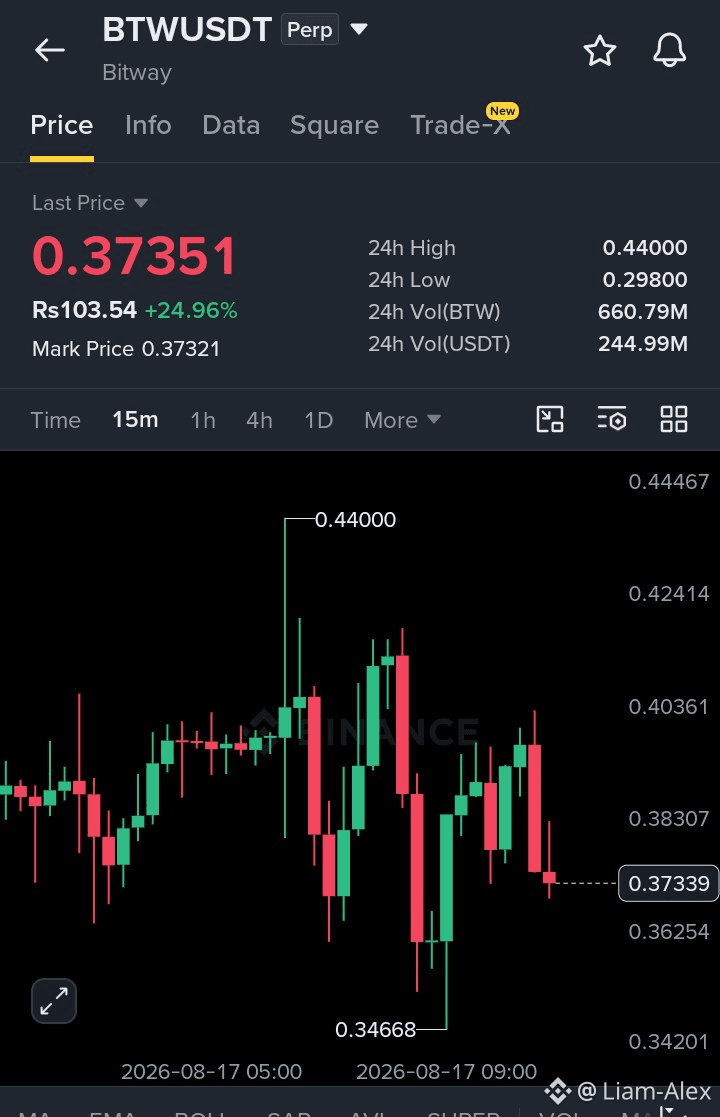
EP: $0.373–$0.382
TP1: $0.3625
TP2: $0.3467
SL: $0.4050
Die kurzfristige Struktur ist bärisch, nachdem es zu wiederholter Zurückweisung unter $0.4036 kam; daraus resultieren niedrigere Hochs aus dem Ausbruch bei $0.4400.
Der Momentum-Impuls spricht für einen Abwärtsbewegung, solange $0.3830 als Widerstand hält; der Verlust von $0.3625 legt die zentrale Liquiditätszone nahe $0.3467 frei.
$BTW
{future}(BTWUSDT)
#SP500EarningsBeatExpectations #SP500TopsRecord7800 #USToPressNationsToPickUSOrChinaAICoalition #SECReviewsSix3xLeveragedCommodityETFs #SECCancelsCryptoRulemakingMeeting
$BTW
EP: $0.373–$0.382
TP1: $0.3625
TP2: $0.3467
SL: $0.4050
Die kurzfristige Struktur ist bärisch, nachdem es zu wiederholter Zurückweisung unter $0.4036 kam; daraus resultieren niedrigere Hochs aus dem Ausbruch bei $0.4400.
Der Momentum-Impuls spricht für einen Abwärtsbewegung, solange $0.3830 als Widerstand hält; der Verlust von $0.3625 legt die zentrale Liquiditätszone nahe $0.3467 frei.
$BTW
#SP500EarningsBeatExpectations #SP500TopsRecord7800 #USToPressNationsToPickUSOrChinaAICoalition #SECReviewsSix3xLeveragedCommodityETFs #SECCancelsCryptoRulemakingMeeting
EP: $0.373–$0.382
TP1: $0.3625
TP2: $0.3467
SL: $0.4050
Die kurzfristige Struktur ist bärisch, nachdem es zu wiederholter Zurückweisung unter $0.4036 kam; daraus resultieren niedrigere Hochs aus dem Ausbruch bei $0.4400.
Der Momentum-Impuls spricht für einen Abwärtsbewegung, solange $0.3830 als Widerstand hält; der Verlust von $0.3625 legt die zentrale Liquiditätszone nahe $0.3467 frei.
$BTW
#SP500EarningsBeatExpectations #SP500TopsRecord7800 #USToPressNationsToPickUSOrChinaAICoalition #SECReviewsSix3xLeveragedCommodityETFs #SECCancelsCryptoRulemakingMeeting
180
·
--
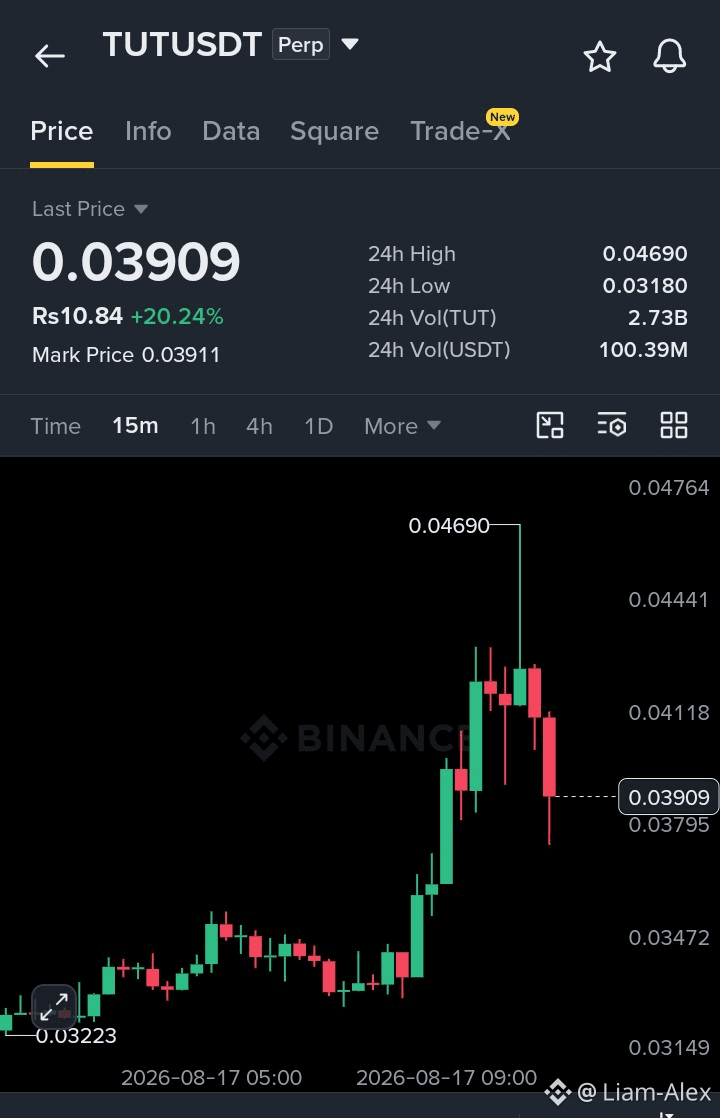
$TUT
EP: 0,03800 $–0,03920 $
TP1: 0,04118 $
TP2: 0,04441 $
TP3: 0,04690 $
SL: 0,03680 $
Die 15m-Struktur bleibt nach einem starken Ausbruch bullisch, aber der Impuls kühlt sich nach der Ablehnung bei 0,04690 $ ab.
0,03795 $ ist die entscheidende Unterstützungszone; das Halten davon bewahrt die Higher-Low-Struktur.
Eine Rückeroberung von 0,04118 $ kann die Aufwärtsliquidität wieder öffnen – hin zu 0,04441 $ und dem vorherigen Hoch bei 0,04690 $.
$TUT
#SP500EarningsBeatExpectations #SP500TopsRecord7800 #USToPressNationsToPickUSOrChinaAICoalition #SECCancelsCryptoRulemakingMeeting #SP500EarningsBeatExpectations
$TUT
EP: 0,03800 $–0,03920 $
TP1: 0,04118 $
TP2: 0,04441 $
TP3: 0,04690 $
SL: 0,03680 $
Die 15m-Struktur bleibt nach einem starken Ausbruch bullisch, aber der Impuls kühlt sich nach der Ablehnung bei 0,04690 $ ab.
0,03795 $ ist die entscheidende Unterstützungszone; das Halten davon bewahrt die Higher-Low-Struktur.
Eine Rückeroberung von 0,04118 $ kann die Aufwärtsliquidität wieder öffnen – hin zu 0,04441 $ und dem vorherigen Hoch bei 0,04690 $.
$TUT
#SP500EarningsBeatExpectations #SP500TopsRecord7800 #USToPressNationsToPickUSOrChinaAICoalition #SECCancelsCryptoRulemakingMeeting #SP500EarningsBeatExpectations
EP: 0,03800 $–0,03920 $
TP1: 0,04118 $
TP2: 0,04441 $
TP3: 0,04690 $
SL: 0,03680 $
Die 15m-Struktur bleibt nach einem starken Ausbruch bullisch, aber der Impuls kühlt sich nach der Ablehnung bei 0,04690 $ ab.
0,03795 $ ist die entscheidende Unterstützungszone; das Halten davon bewahrt die Higher-Low-Struktur.
Eine Rückeroberung von 0,04118 $ kann die Aufwärtsliquidität wieder öffnen – hin zu 0,04441 $ und dem vorherigen Hoch bei 0,04690 $.
$TUT
#SP500EarningsBeatExpectations #SP500TopsRecord7800 #USToPressNationsToPickUSOrChinaAICoalition #SECCancelsCryptoRulemakingMeeting #SP500EarningsBeatExpectations
158
·
--
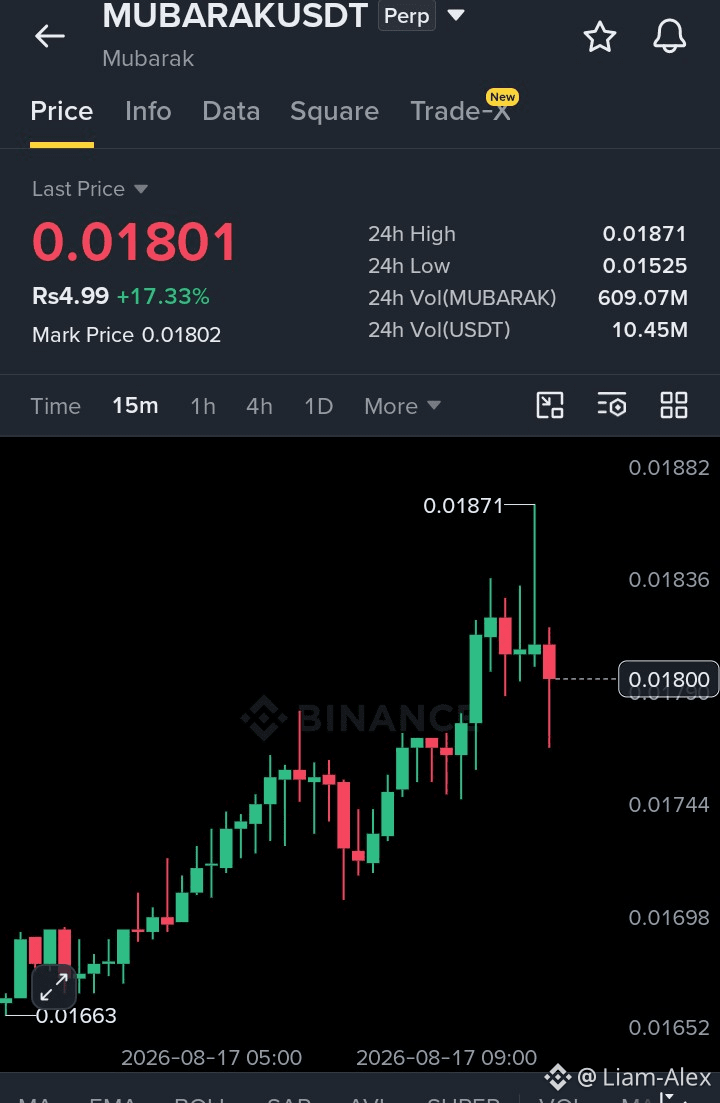
$MUBARAK
EP: $0.01790–$0.01805
TP1: $0.01836
TP2: $0.01871
TP3: $0.01920
SL: $0.01760
Der Trend bleibt auf dem 15-Minuten-Chart bullisch, mit intakten höheren Hochs und höheren Tiefs.
Der Momentum ist stark, während der Rücksetzer von $0.01871 eher wie eine normale Ablehnung wirkt und nicht wie eine bestätigte Trendwende.
Das Halten von $0.01790 bewahrt die Struktur für einen weiteren Liquiditätssweep Richtung $0.01871 und möglicherweise $0.01920.
$MUBARAK
{future}(MUBARAKUSDT)
#SP500EarningsBeatExpectations #SP500TopsRecord7800 #USToPressNationsToPickUSOrChinaAICoalition #SECReviewsSix3xLeveragedCommodityETFs #CardanoSplitsDijkstraUpgradeIntoTwoPhases
$MUBARAK
EP: $0.01790–$0.01805
TP1: $0.01836
TP2: $0.01871
TP3: $0.01920
SL: $0.01760
Der Trend bleibt auf dem 15-Minuten-Chart bullisch, mit intakten höheren Hochs und höheren Tiefs.
Der Momentum ist stark, während der Rücksetzer von $0.01871 eher wie eine normale Ablehnung wirkt und nicht wie eine bestätigte Trendwende.
Das Halten von $0.01790 bewahrt die Struktur für einen weiteren Liquiditätssweep Richtung $0.01871 und möglicherweise $0.01920.
$MUBARAK
#SP500EarningsBeatExpectations #SP500TopsRecord7800 #USToPressNationsToPickUSOrChinaAICoalition #SECReviewsSix3xLeveragedCommodityETFs #CardanoSplitsDijkstraUpgradeIntoTwoPhases
EP: $0.01790–$0.01805
TP1: $0.01836
TP2: $0.01871
TP3: $0.01920
SL: $0.01760
Der Trend bleibt auf dem 15-Minuten-Chart bullisch, mit intakten höheren Hochs und höheren Tiefs.
Der Momentum ist stark, während der Rücksetzer von $0.01871 eher wie eine normale Ablehnung wirkt und nicht wie eine bestätigte Trendwende.
Das Halten von $0.01790 bewahrt die Struktur für einen weiteren Liquiditätssweep Richtung $0.01871 und möglicherweise $0.01920.
$MUBARAK
#SP500EarningsBeatExpectations #SP500TopsRecord7800 #USToPressNationsToPickUSOrChinaAICoalition #SECReviewsSix3xLeveragedCommodityETFs #CardanoSplitsDijkstraUpgradeIntoTwoPhases
107
·
--
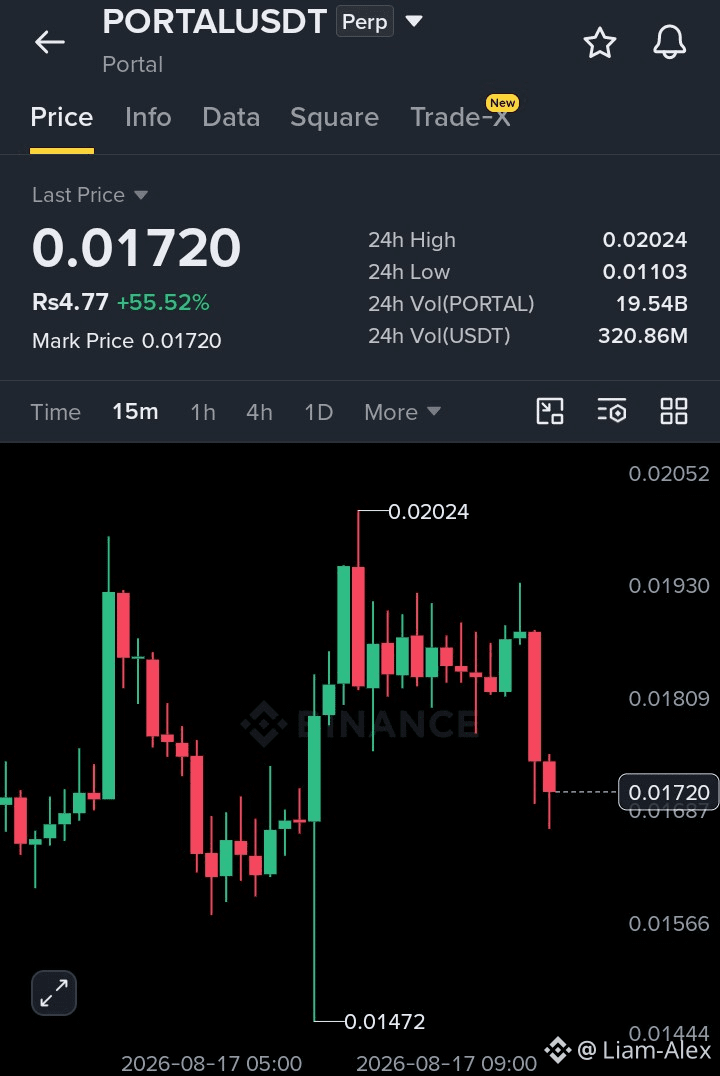
$PORTAL
Die 15-Minuten-Struktur ist nach der Zurückweisung bei $0.02024 und einem starken Durchbruch durch den Supportbereich bei $0.01809 bärisch geworden. Der Preis testet nun $0.01720, wobei die Verkäufer eindeutig die Kontrolle haben.
EP: $0.01720
TP1: $0.01687
TP2: $0.01566
TP3: $0.01472
SL: $0.01845
Die Trendstärke ist weiterhin erhöht, jedoch hat sich das Momentum nach dem gescheiterten Breakout und starken roten Kerzen in Richtung bärisch gedreht.
Der Verlust von $0.01809 eröffnet die untere Liquiditätszone um $0.01687–$0.01566, während $0.01472 das tiefer liegende strukturelle Ziel bleibt.
$PORTAL
{future}(PORTALUSDT)
#SP500EarningsBeatExpectations #SP500TopsRecord7800 #USToPressNationsToPickUSOrChinaAICoalition #SECReviewsSix3xLeveragedCommodityETFs #SECCancelsCryptoRulemakingMeeting
$PORTAL
Die 15-Minuten-Struktur ist nach der Zurückweisung bei $0.02024 und einem starken Durchbruch durch den Supportbereich bei $0.01809 bärisch geworden. Der Preis testet nun $0.01720, wobei die Verkäufer eindeutig die Kontrolle haben.
EP: $0.01720
TP1: $0.01687
TP2: $0.01566
TP3: $0.01472
SL: $0.01845
Die Trendstärke ist weiterhin erhöht, jedoch hat sich das Momentum nach dem gescheiterten Breakout und starken roten Kerzen in Richtung bärisch gedreht.
Der Verlust von $0.01809 eröffnet die untere Liquiditätszone um $0.01687–$0.01566, während $0.01472 das tiefer liegende strukturelle Ziel bleibt.
$PORTAL
#SP500EarningsBeatExpectations #SP500TopsRecord7800 #USToPressNationsToPickUSOrChinaAICoalition #SECReviewsSix3xLeveragedCommodityETFs #SECCancelsCryptoRulemakingMeeting
Die 15-Minuten-Struktur ist nach der Zurückweisung bei $0.02024 und einem starken Durchbruch durch den Supportbereich bei $0.01809 bärisch geworden. Der Preis testet nun $0.01720, wobei die Verkäufer eindeutig die Kontrolle haben.
EP: $0.01720
TP1: $0.01687
TP2: $0.01566
TP3: $0.01472
SL: $0.01845
Die Trendstärke ist weiterhin erhöht, jedoch hat sich das Momentum nach dem gescheiterten Breakout und starken roten Kerzen in Richtung bärisch gedreht.
Der Verlust von $0.01809 eröffnet die untere Liquiditätszone um $0.01687–$0.01566, während $0.01472 das tiefer liegende strukturelle Ziel bleibt.
$PORTAL
#SP500EarningsBeatExpectations #SP500TopsRecord7800 #USToPressNationsToPickUSOrChinaAICoalition #SECReviewsSix3xLeveragedCommodityETFs #SECCancelsCryptoRulemakingMeeting
139
Anmelden und weiter Inhalte entdecken
Krypto-Nutzer weltweit auf Binance Square kennenlernen
⚡️ Bleib in Sachen Krypto stets am Puls.
💬 Die weltgrößte Kryptobörse vertraut darauf.
👍 Erhalte verlässliche Einblicke von verifizierten Creators.
E-Mail-Adresse/Telefonnummer
Trendthemen
BitcoinReboundsTo$79K
21,696 Aufrufe
197 Kommentare
🚨 $BTC steigt weiter.
Bitcoin handelt bei etwa 78.804 $ und liegt damit ungefähr 1,9 % im Plus, nachdem die Marke von 78K zurückerobert wurde. Die nächste zu beobachtende Zone ist das Tageshoch im Intraday-Bereich nahe 78.905 $.
Ein klarer Ausbruch über diese Marke könnte den Weg in Richtung 79K–80K ebnen. Wenn BTC abgewiesen wird, liegt der Support bei etwa 78.300 $ und danach bei 77.975 $.
Die Bullen haben Momentum, aber BTC muss über 78K bleiben.
#Bitcoin #BTC #CryptoTrading #CryptoMarket #CryptoAnalysis
PulseON
·18 Likes
·17.9k Aufrufe
BitcoinSpotETFsNetInflow$160M
398 Aufrufe
40 Kommentare
SouthKoreaCryptoTaxDelayPetitionTops50000
13,590 Aufrufe
373 Kommentare