
Lamiya_
257 Beiträge

Lamiya_
Melden
Nutzer blockieren
Trade eröffnen
Regelmäßiger Trader
7.4 Monate
91 Following
1.1K+ Follower
730 Like gegeben
Beiträge
Portfolio
Alle
Zitierungen
PINNED
·
--
USDC BOX 👉 [Click Here For claim](https://s.binance.com/I6an3a3q?utm_medium=web_share_copy)
BANANAS31 Box 👉 [1 token Per Peoson](https://www.binance.com/en/pay-activity/no-title/redpackets-giveaway?source=campaigns_group&utm_medium=web_share_copy)
USDC BOX 👉 Click Here For claim
BANANAS31 Box 👉 1 token Per Peoson
BANANAS31 Box 👉 1 token Per Peoson

366
5
21
366
·
--
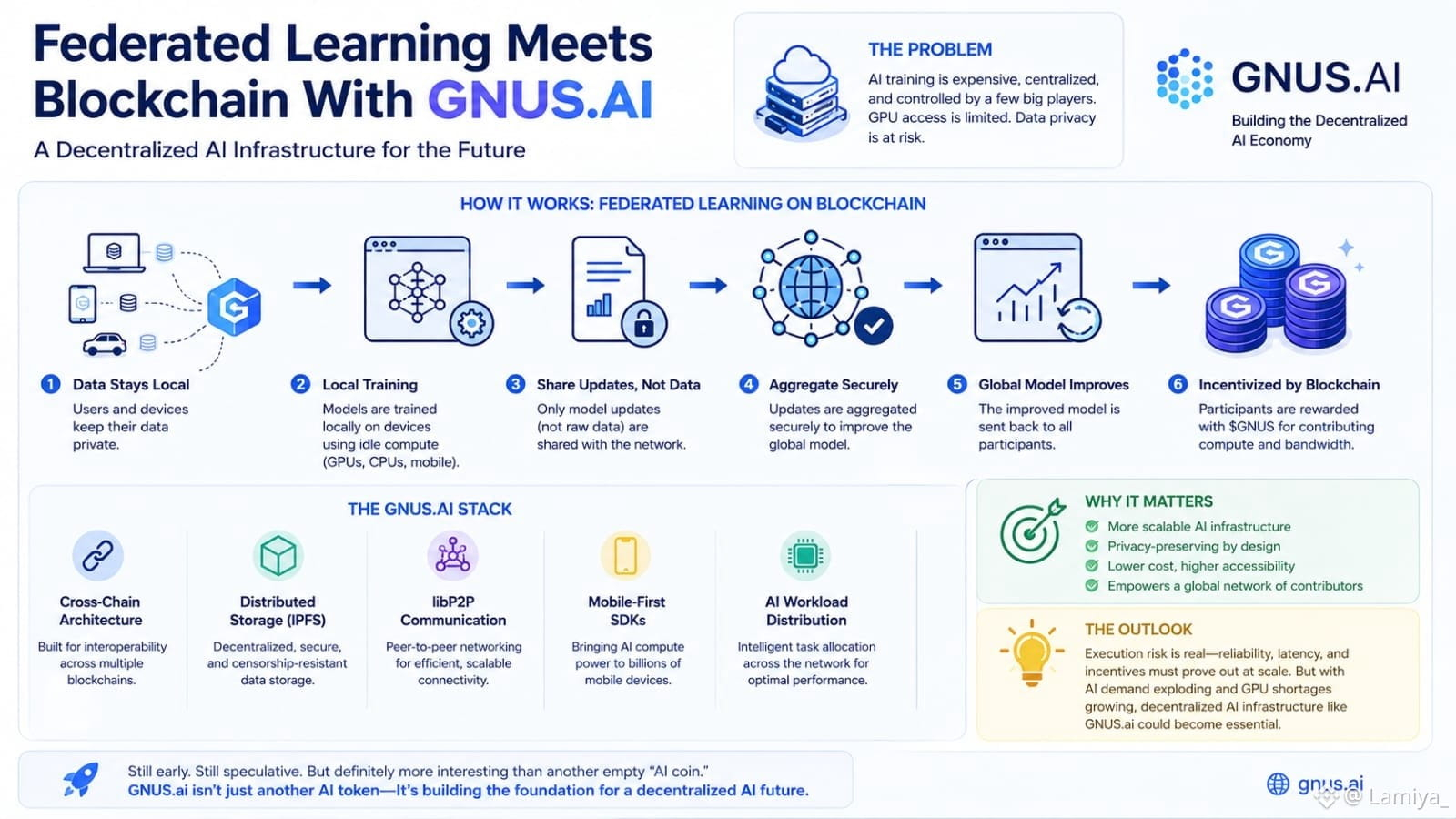
#genius $GENIUS @GeniusOfficial Federiertes Lernen trifft auf Blockchain mit gnus.ai
Jeder spricht über dezentralisierte KI, als wäre das nur eine weitere Erzählung, aber die eigentliche Engstelle war schon immer die Infrastruktur. Modelle zu trainieren ist teuer, der Zugriff auf GPUs wird zunehmend konzentriert, und die meisten KI-Systeme stützen sich nach wie vor auf zentralisierte Clouds, die von wenigen Unternehmen kontrolliert werden.
Deshalb ist mir GNUS.ai aufgefallen.
Anstatt direkt mit dem OpenAI-Style-Front-End-Rennen zu konkurrieren, konzentrieren sie sich auf föderiertes Lernen und dezentralisierte Compute-Ressourcen. Die Idee ist einfach, aber wirkungsvoll: Nutze weltweit brachliegende GPUs und Edge-Geräte, trainiere Modelle lokal und teile nur Updates statt Rohdaten. Theoretisch entsteht dadurch ein skalierbares KI-Netzwerk, das zugleich datenschutzfreundlicher ist.
Noch spannender macht es der breitere Stack, den sie darum aufbauen. Cross-Chain-Architektur, verteiltes Storage über IPFS, libP2P-Kommunikation, SDK-Integrationen mit Mobile-First-Ansatz sowie die Verteilung von KI-Workloads über Endverbrauchergeräte. Sie positionieren sich eher als dezentrale KI-Infrastruktur denn als typischer KI-Token.
Natürlich ist das Ausführungsrisiko hier enorm. Dezentrale Compute klingt großartig, bis Zuverlässigkeit, Latenz und Anreize im großen Maßstab getestet werden. Aber wenn die KI-Nachfrage weiter explodiert, während GPU-Knappheit anhält, könnten Projekte wie GNUS.ai am Ende relevanter werden, als der Markt aktuell erwartet.
Noch ganz am Anfang. Noch spekulativ. Aber definitiv interessanter als noch eine weitere leere „AI Coin“.
#genius $GENIUS @GeniusOfficial Federiertes Lernen trifft auf Blockchain mit gnus.ai
Jeder spricht über dezentralisierte KI, als wäre das nur eine weitere Erzählung, aber die eigentliche Engstelle war schon immer die Infrastruktur. Modelle zu trainieren ist teuer, der Zugriff auf GPUs wird zunehmend konzentriert, und die meisten KI-Systeme stützen sich nach wie vor auf zentralisierte Clouds, die von wenigen Unternehmen kontrolliert werden.
Deshalb ist mir GNUS.ai aufgefallen.
Anstatt direkt mit dem OpenAI-Style-Front-End-Rennen zu konkurrieren, konzentrieren sie sich auf föderiertes Lernen und dezentralisierte Compute-Ressourcen. Die Idee ist einfach, aber wirkungsvoll: Nutze weltweit brachliegende GPUs und Edge-Geräte, trainiere Modelle lokal und teile nur Updates statt Rohdaten. Theoretisch entsteht dadurch ein skalierbares KI-Netzwerk, das zugleich datenschutzfreundlicher ist.
Noch spannender macht es der breitere Stack, den sie darum aufbauen. Cross-Chain-Architektur, verteiltes Storage über IPFS, libP2P-Kommunikation, SDK-Integrationen mit Mobile-First-Ansatz sowie die Verteilung von KI-Workloads über Endverbrauchergeräte. Sie positionieren sich eher als dezentrale KI-Infrastruktur denn als typischer KI-Token.
Natürlich ist das Ausführungsrisiko hier enorm. Dezentrale Compute klingt großartig, bis Zuverlässigkeit, Latenz und Anreize im großen Maßstab getestet werden. Aber wenn die KI-Nachfrage weiter explodiert, während GPU-Knappheit anhält, könnten Projekte wie GNUS.ai am Ende relevanter werden, als der Markt aktuell erwartet.
Noch ganz am Anfang. Noch spekulativ. Aber definitiv interessanter als noch eine weitere leere „AI Coin“.
Jeder spricht über dezentralisierte KI, als wäre das nur eine weitere Erzählung, aber die eigentliche Engstelle war schon immer die Infrastruktur. Modelle zu trainieren ist teuer, der Zugriff auf GPUs wird zunehmend konzentriert, und die meisten KI-Systeme stützen sich nach wie vor auf zentralisierte Clouds, die von wenigen Unternehmen kontrolliert werden.
Deshalb ist mir GNUS.ai aufgefallen.
Anstatt direkt mit dem OpenAI-Style-Front-End-Rennen zu konkurrieren, konzentrieren sie sich auf föderiertes Lernen und dezentralisierte Compute-Ressourcen. Die Idee ist einfach, aber wirkungsvoll: Nutze weltweit brachliegende GPUs und Edge-Geräte, trainiere Modelle lokal und teile nur Updates statt Rohdaten. Theoretisch entsteht dadurch ein skalierbares KI-Netzwerk, das zugleich datenschutzfreundlicher ist.
Noch spannender macht es der breitere Stack, den sie darum aufbauen. Cross-Chain-Architektur, verteiltes Storage über IPFS, libP2P-Kommunikation, SDK-Integrationen mit Mobile-First-Ansatz sowie die Verteilung von KI-Workloads über Endverbrauchergeräte. Sie positionieren sich eher als dezentrale KI-Infrastruktur denn als typischer KI-Token.
Natürlich ist das Ausführungsrisiko hier enorm. Dezentrale Compute klingt großartig, bis Zuverlässigkeit, Latenz und Anreize im großen Maßstab getestet werden. Aber wenn die KI-Nachfrage weiter explodiert, während GPU-Knappheit anhält, könnten Projekte wie GNUS.ai am Ende relevanter werden, als der Markt aktuell erwartet.
Noch ganz am Anfang. Noch spekulativ. Aber definitiv interessanter als noch eine weitere leere „AI Coin“.
96
·
--
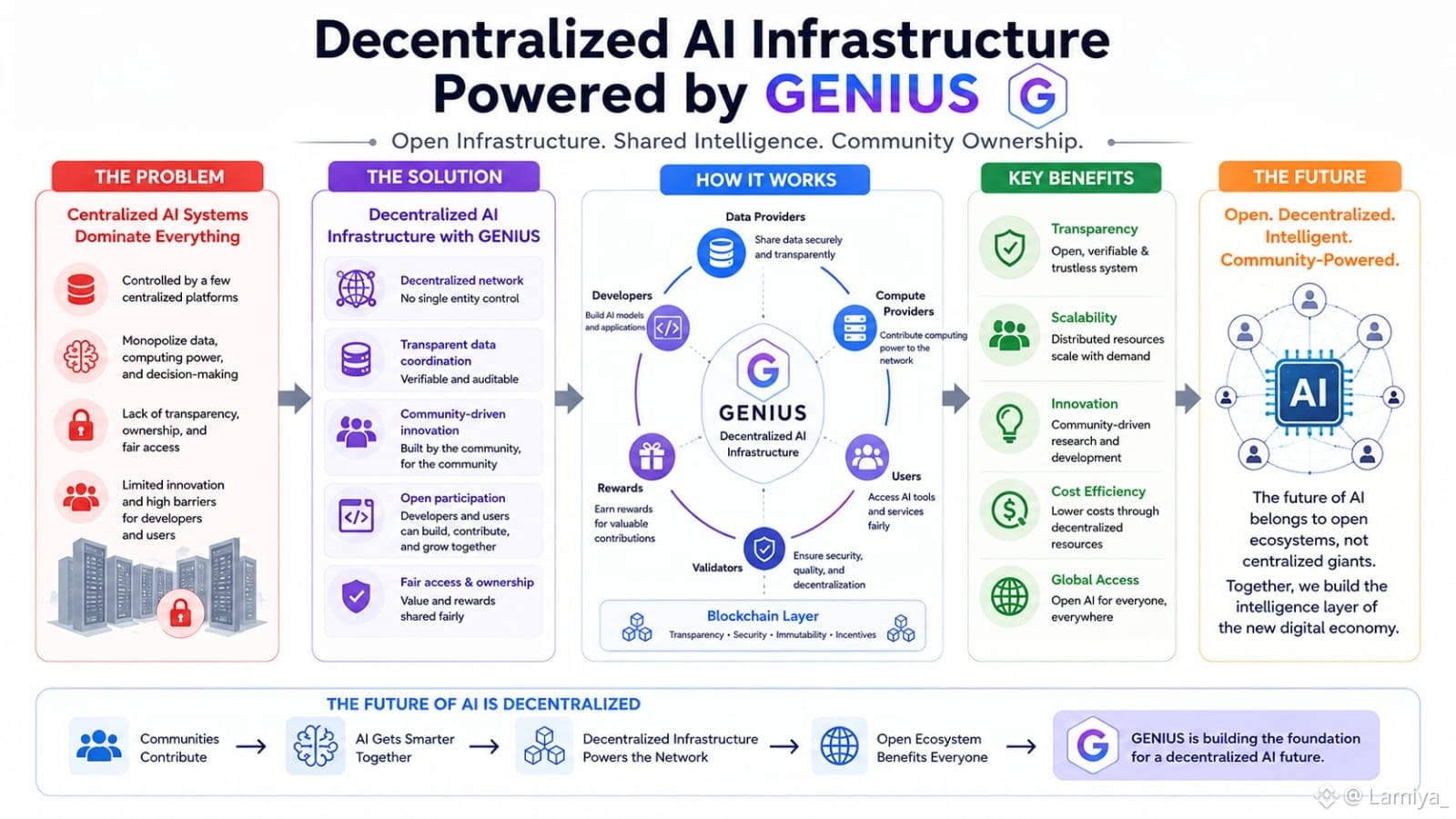
#genius $GENIUS Dezentrale KI-Infrastruktur wird in der nächsten Phase von Web3 zu einem der wichtigsten Narrative, und GENIUS positioniert sich als Mittelpunkt dieses Wandels.
Heute werden die meisten KI-Systeme von einer kleinen Anzahl zentralisierter Plattformen kontrolliert, die Daten, Rechenleistung und Entscheidungsprozesse dominieren. Während die KI-Einführung rasch wächst, nehmen die Bedenken hinsichtlich Transparenz, Eigentum und fairem Zugang in der gesamten Branche weiter zu.
GENIUS möchte diesen Ansatz anders gestalten, indem KI mit dezentraler Infrastruktur kombiniert wird. Anstatt sich vollständig auf geschlossene Ökosysteme zu verlassen, können dezentrale KI-Netzwerke eine transparentere Datenkoordination, innovationsgetriebene Weiterentwicklung durch die Community und eine offene Beteiligung für Entwickler und Nutzer ermöglichen.
Das Spannende an diesem Bereich ist das langfristige Potenzial. Da Blockchain und KI weiter zusammenwachsen, könnten Infrastrukturprojekte, die auf Skalierbarkeit, Automatisierung und dezentrale Intelligenz ausgerichtet sind, zu tragenden Schichten der zukünftigen digitalen Wirtschaft werden.
Die Zukunft der KI gehört vielleicht nicht einigen wenigen zentralisierten Giganten.
Sie könnte offenen und dezentralen Ökosystemen gehören, die von Communities angetrieben werden. 🚀
@GeniusOfficial
{future}(GENIUSUSDT)
#genius $GENIUS Dezentrale KI-Infrastruktur wird in der nächsten Phase von Web3 zu einem der wichtigsten Narrative, und GENIUS positioniert sich als Mittelpunkt dieses Wandels.
Heute werden die meisten KI-Systeme von einer kleinen Anzahl zentralisierter Plattformen kontrolliert, die Daten, Rechenleistung und Entscheidungsprozesse dominieren. Während die KI-Einführung rasch wächst, nehmen die Bedenken hinsichtlich Transparenz, Eigentum und fairem Zugang in der gesamten Branche weiter zu.
GENIUS möchte diesen Ansatz anders gestalten, indem KI mit dezentraler Infrastruktur kombiniert wird. Anstatt sich vollständig auf geschlossene Ökosysteme zu verlassen, können dezentrale KI-Netzwerke eine transparentere Datenkoordination, innovationsgetriebene Weiterentwicklung durch die Community und eine offene Beteiligung für Entwickler und Nutzer ermöglichen.
Das Spannende an diesem Bereich ist das langfristige Potenzial. Da Blockchain und KI weiter zusammenwachsen, könnten Infrastrukturprojekte, die auf Skalierbarkeit, Automatisierung und dezentrale Intelligenz ausgerichtet sind, zu tragenden Schichten der zukünftigen digitalen Wirtschaft werden.
Die Zukunft der KI gehört vielleicht nicht einigen wenigen zentralisierten Giganten.
Sie könnte offenen und dezentralen Ökosystemen gehören, die von Communities angetrieben werden. 🚀
@GeniusOfficial
Heute werden die meisten KI-Systeme von einer kleinen Anzahl zentralisierter Plattformen kontrolliert, die Daten, Rechenleistung und Entscheidungsprozesse dominieren. Während die KI-Einführung rasch wächst, nehmen die Bedenken hinsichtlich Transparenz, Eigentum und fairem Zugang in der gesamten Branche weiter zu.
GENIUS möchte diesen Ansatz anders gestalten, indem KI mit dezentraler Infrastruktur kombiniert wird. Anstatt sich vollständig auf geschlossene Ökosysteme zu verlassen, können dezentrale KI-Netzwerke eine transparentere Datenkoordination, innovationsgetriebene Weiterentwicklung durch die Community und eine offene Beteiligung für Entwickler und Nutzer ermöglichen.
Das Spannende an diesem Bereich ist das langfristige Potenzial. Da Blockchain und KI weiter zusammenwachsen, könnten Infrastrukturprojekte, die auf Skalierbarkeit, Automatisierung und dezentrale Intelligenz ausgerichtet sind, zu tragenden Schichten der zukünftigen digitalen Wirtschaft werden.
Die Zukunft der KI gehört vielleicht nicht einigen wenigen zentralisierten Giganten.
Sie könnte offenen und dezentralen Ökosystemen gehören, die von Communities angetrieben werden. 🚀
@GeniusOfficial
1
4
133
·
--
Artikel
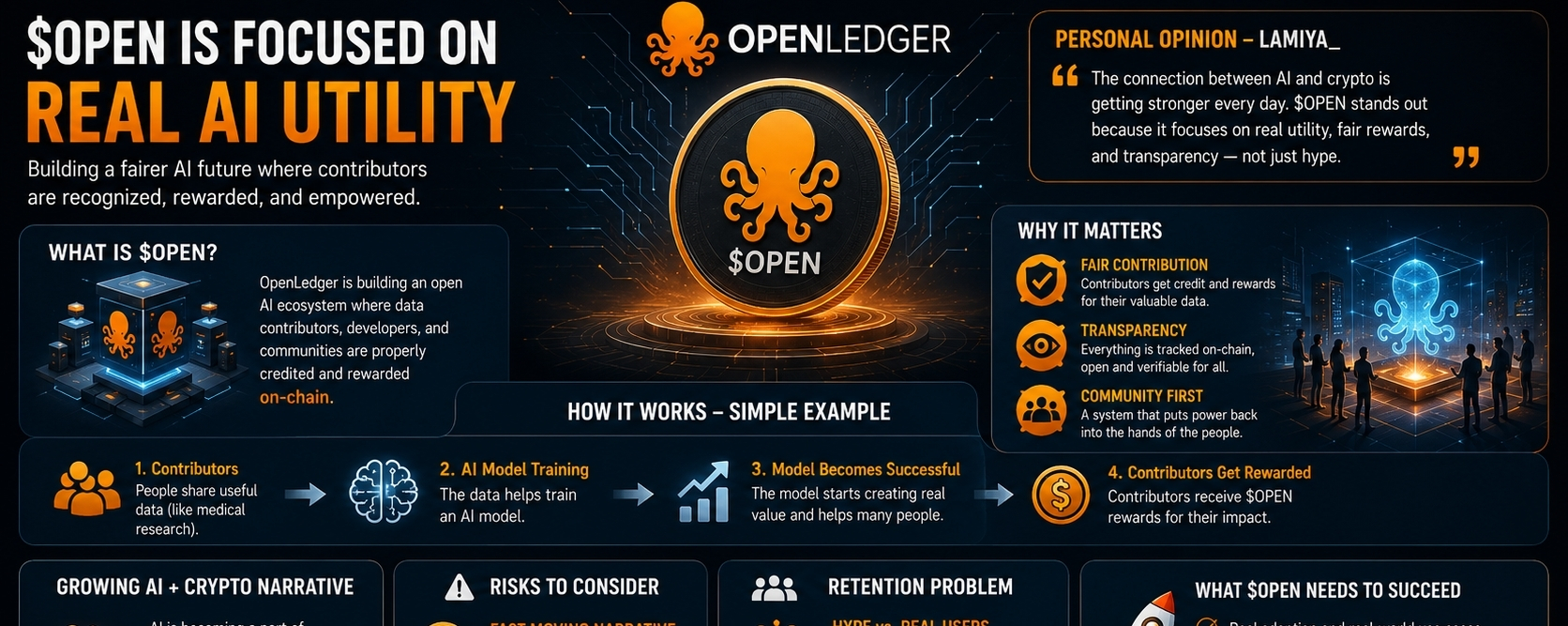
$OPEN Konzentriert sich auf echten KI-NutzenMein Name ist Lamiya_, und aus meiner persönlichen Sicht wird die Verbindung zwischen Künstlicher Intelligenz und Krypto von Tag zu Tag stärker. Vor ein paar Jahren interessierten sich die meisten Menschen nur für Meme-Coins und kurzfristigen Hype... Jetzt verändert sich der Markt langsam. Viele Investoren suchen nach Projekten, die echten Nutzen bieten, statt leeren Versprechen. Das ist auch einer der Gründe, warum
mich kürzlich aufmerksam gemacht hat.
Was OPEN für mich besonders macht, ist die Idee hinter Community-Beiträgen und fairen Belohnungen. Heute sammeln viele KI-Unternehmen riesige Mengen an Daten von Nutzern, aber die Menschen, die diese Informationen bereitstellen, bekommen normalerweise nichts im Gegenzug.... Große Plattformen wachsen weiter, während normale Mitwirkende unbemerkt bleiben. OpenLedger versucht, ein System aufzubauen, in dem Beitragsleistende durch Blockchain-Technologie eine angemessene Anerkennung und Belohnungen erhalten können. Ich finde, dieses Konzept wirkt im Vergleich zu vielen zufällig in den Markt drängenden KI-Tokens deutlich praktikabler.
$OPEN Konzentriert sich auf echten KI-Nutzen
Mein Name ist Lamiya_, und aus meiner persönlichen Sicht wird die Verbindung zwischen Künstlicher Intelligenz und Krypto von Tag zu Tag stärker. Vor ein paar Jahren interessierten sich die meisten Menschen nur für Meme-Coins und kurzfristigen Hype... Jetzt verändert sich der Markt langsam. Viele Investoren suchen nach Projekten, die echten Nutzen bieten, statt leeren Versprechen. Das ist auch einer der Gründe, warum
mich kürzlich aufmerksam gemacht hat.
Was OPEN für mich besonders macht, ist die Idee hinter Community-Beiträgen und fairen Belohnungen. Heute sammeln viele KI-Unternehmen riesige Mengen an Daten von Nutzern, aber die Menschen, die diese Informationen bereitstellen, bekommen normalerweise nichts im Gegenzug.... Große Plattformen wachsen weiter, während normale Mitwirkende unbemerkt bleiben. OpenLedger versucht, ein System aufzubauen, in dem Beitragsleistende durch Blockchain-Technologie eine angemessene Anerkennung und Belohnungen erhalten können. Ich finde, dieses Konzept wirkt im Vergleich zu vielen zufällig in den Markt drängenden KI-Tokens deutlich praktikabler.
mich kürzlich aufmerksam gemacht hat.
Was OPEN für mich besonders macht, ist die Idee hinter Community-Beiträgen und fairen Belohnungen. Heute sammeln viele KI-Unternehmen riesige Mengen an Daten von Nutzern, aber die Menschen, die diese Informationen bereitstellen, bekommen normalerweise nichts im Gegenzug.... Große Plattformen wachsen weiter, während normale Mitwirkende unbemerkt bleiben. OpenLedger versucht, ein System aufzubauen, in dem Beitragsleistende durch Blockchain-Technologie eine angemessene Anerkennung und Belohnungen erhalten können. Ich finde, dieses Konzept wirkt im Vergleich zu vielen zufällig in den Markt drängenden KI-Tokens deutlich praktikabler.
4
89
·
--
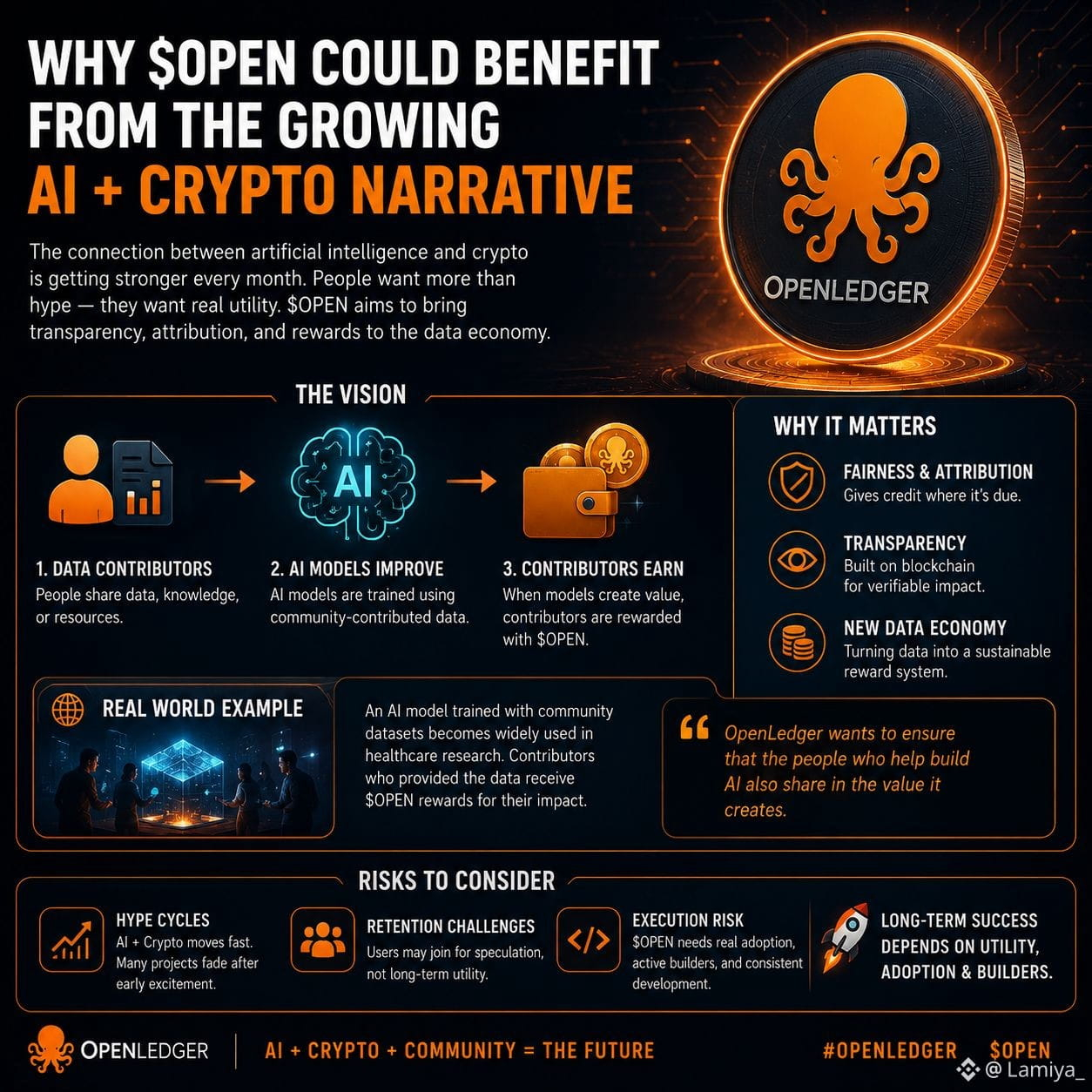
#openledger Warum $OPEN Davon Profitieren Könnte Von Dem Wachstenden KI- + Krypto-Narrativ
Mein Name ist Lamiya_. Aus meiner persönlichen Sicht wird die Verbindung zwischen Künstlicher Intelligenz und Krypto von Monat zu Monat stärker. Die Menschen suchen nicht mehr nur nach Hype-Coins... Sie suchen nach Projekten, die tatsächlich Probleme lösen, und ich glaube, OPEN versucht, in diesen Bereich auf eine andere Weise einzusteigen.
Was meine Aufmerksamkeit geweckt hat, ist die Idee, Menschen für die Daten zu belohnen, die sie beitragen... Die meisten KI-Plattformen nutzen Informationen von Nutzern, ohne etwas zurückzugeben. OpenLedger möchte, dass Zuordnung, Transparenz und Zahlungen Teil des Systems selbst werden.
Ein simples Beispiel ist ein KI-Modell, das mit Community-Datensätzen trainiert wurde. Wenn das Modell nützlich wird, können Mitwirkende Belohnungen erhalten – $OPEN anstatt ignoriert zu werden.
Trotzdem gibt es Risiken. Das KI- + Krypto-Narrativ bewegt sich sehr schnell, und viele Projekte verlieren nach der frühen Begeisterung schnell die Aufmerksamkeit.... Die Bindung wird zu einem ernsthaften Problem, wenn Nutzer nur wegen Spekulation beitreten und nicht wegen eines langfristigen Nutzens. Meiner Meinung nach braucht $OPEN echte Akzeptanz, aktive Entwickler und eine konsequente Weiterentwicklung, um die Zeit über den Trend hinaus zu überleben.
@Openledger
{future}(OPENUSDT)
#openledger Warum $OPEN Davon Profitieren Könnte Von Dem Wachstenden KI- + Krypto-Narrativ
Mein Name ist Lamiya_. Aus meiner persönlichen Sicht wird die Verbindung zwischen Künstlicher Intelligenz und Krypto von Monat zu Monat stärker. Die Menschen suchen nicht mehr nur nach Hype-Coins... Sie suchen nach Projekten, die tatsächlich Probleme lösen, und ich glaube, OPEN versucht, in diesen Bereich auf eine andere Weise einzusteigen.
Was meine Aufmerksamkeit geweckt hat, ist die Idee, Menschen für die Daten zu belohnen, die sie beitragen... Die meisten KI-Plattformen nutzen Informationen von Nutzern, ohne etwas zurückzugeben. OpenLedger möchte, dass Zuordnung, Transparenz und Zahlungen Teil des Systems selbst werden.
Ein simples Beispiel ist ein KI-Modell, das mit Community-Datensätzen trainiert wurde. Wenn das Modell nützlich wird, können Mitwirkende Belohnungen erhalten – $OPEN anstatt ignoriert zu werden.
Trotzdem gibt es Risiken. Das KI- + Krypto-Narrativ bewegt sich sehr schnell, und viele Projekte verlieren nach der frühen Begeisterung schnell die Aufmerksamkeit.... Die Bindung wird zu einem ernsthaften Problem, wenn Nutzer nur wegen Spekulation beitreten und nicht wegen eines langfristigen Nutzens. Meiner Meinung nach braucht $OPEN echte Akzeptanz, aktive Entwickler und eine konsequente Weiterentwicklung, um die Zeit über den Trend hinaus zu überleben.
@OpenLedger
Mein Name ist Lamiya_. Aus meiner persönlichen Sicht wird die Verbindung zwischen Künstlicher Intelligenz und Krypto von Monat zu Monat stärker. Die Menschen suchen nicht mehr nur nach Hype-Coins... Sie suchen nach Projekten, die tatsächlich Probleme lösen, und ich glaube, OPEN versucht, in diesen Bereich auf eine andere Weise einzusteigen.
Was meine Aufmerksamkeit geweckt hat, ist die Idee, Menschen für die Daten zu belohnen, die sie beitragen... Die meisten KI-Plattformen nutzen Informationen von Nutzern, ohne etwas zurückzugeben. OpenLedger möchte, dass Zuordnung, Transparenz und Zahlungen Teil des Systems selbst werden.
Ein simples Beispiel ist ein KI-Modell, das mit Community-Datensätzen trainiert wurde. Wenn das Modell nützlich wird, können Mitwirkende Belohnungen erhalten – $OPEN anstatt ignoriert zu werden.
Trotzdem gibt es Risiken. Das KI- + Krypto-Narrativ bewegt sich sehr schnell, und viele Projekte verlieren nach der frühen Begeisterung schnell die Aufmerksamkeit.... Die Bindung wird zu einem ernsthaften Problem, wenn Nutzer nur wegen Spekulation beitreten und nicht wegen eines langfristigen Nutzens. Meiner Meinung nach braucht $OPEN echte Akzeptanz, aktive Entwickler und eine konsequente Weiterentwicklung, um die Zeit über den Trend hinaus zu überleben.
@OpenLedger
3
105
·
--
Artikel
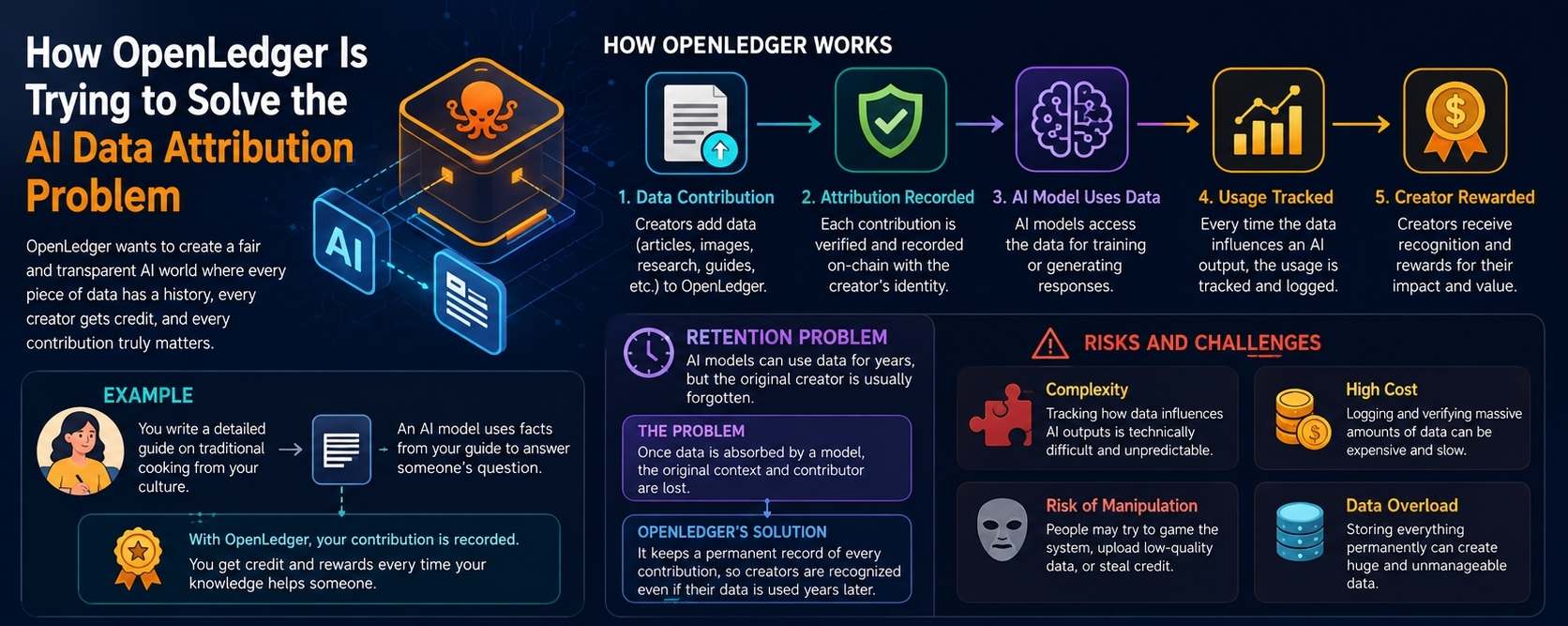
Wie OpenLedger versucht, das Problem der Datenzuordnung für KI zu lösenMein Name ist Lamiya. Wenn ich darüber nachdenke, wie künstliche Intelligenz aus von Menschen erstellten Inhalten lernt, fühlt sich etwas nicht richtig an. Menschen verbringen Stunden damit, zu schreiben, zu erstellen, zu gestalten, zu recherchieren und ihre Arbeit online zu teilen.... Dann nutzen große KI-Systeme diese Informationen, aber fast nie bekommt jemand eine Anerkennung für das, was er gemacht hat. Das fühlt sich unfair an, weil diese Creator anerkannt und belohnt werden sollten, wenn ihre Ideen dazu beitragen, dass leistungsstarke Tools intelligenter werden. Deshalb ist für mich die gesamte Idee der Datenzuordnung so wichtig.
Wie OpenLedger versucht, das Problem der Datenzuordnung für KI zu lösen
Mein Name ist Lamiya. Wenn ich darüber nachdenke, wie künstliche Intelligenz aus von Menschen erstellten Inhalten lernt, fühlt sich etwas nicht richtig an. Menschen verbringen Stunden damit, zu schreiben, zu erstellen, zu gestalten, zu recherchieren und ihre Arbeit online zu teilen.... Dann nutzen große KI-Systeme diese Informationen, aber fast nie bekommt jemand eine Anerkennung für das, was er gemacht hat. Das fühlt sich unfair an, weil diese Creator anerkannt und belohnt werden sollten, wenn ihre Ideen dazu beitragen, dass leistungsstarke Tools intelligenter werden. Deshalb ist für mich die gesamte Idee der Datenzuordnung so wichtig.
4
130
·
--
#openledger $OPEN Warum KI-Projekte etwas wie OPEN brauchen
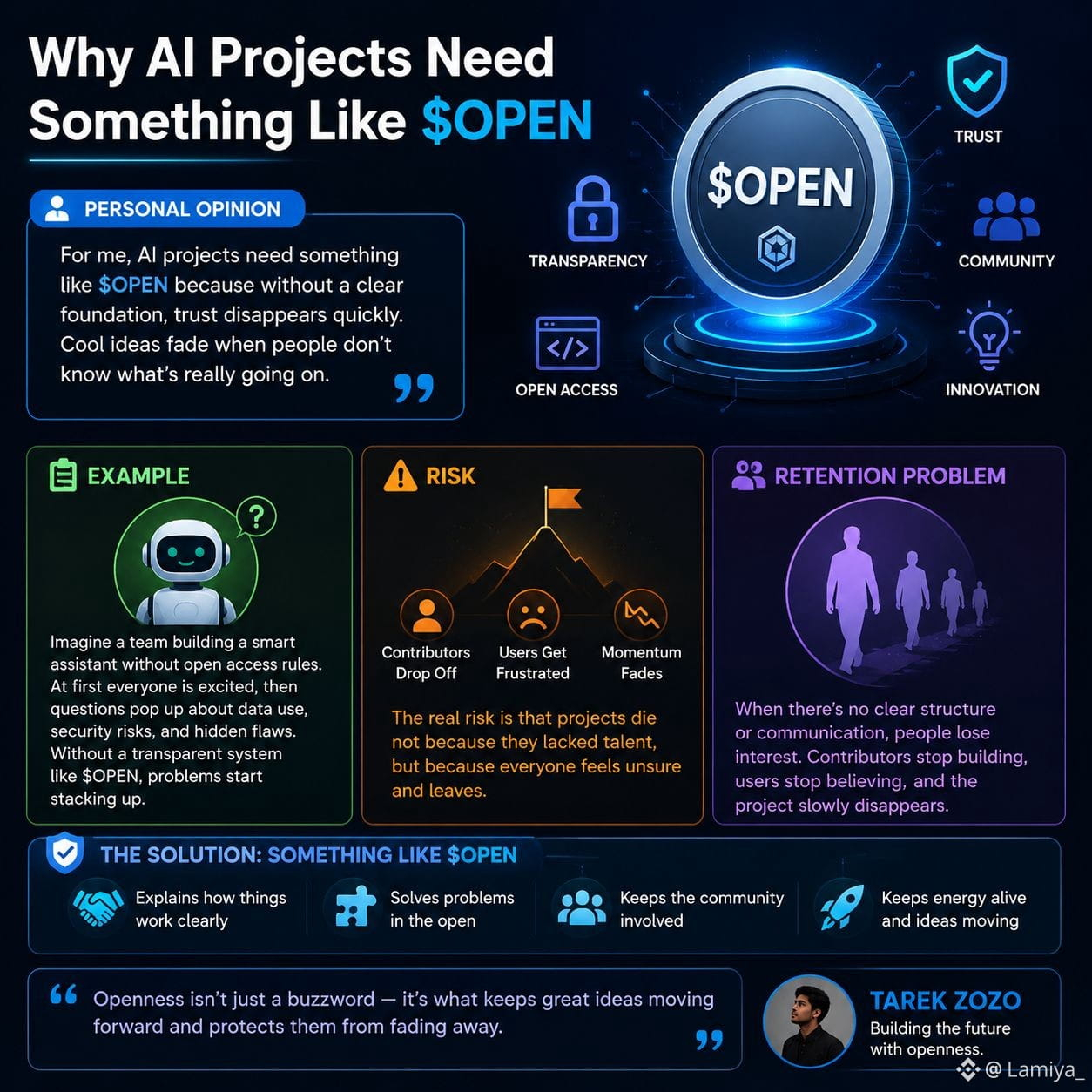
Für mich ist der Grund, warum KI-Projekte etwas wie $OPEN brauchen, ganz einfach: Ohne eine klare Grundlage verliert man schnell das Vertrauen. Ich habe viele Tools gesehen, die auf den ersten Blick cool wirken, aber schon bald werden die Leute gelangweilt, verwirrt oder besorgt darüber, was wirklich hinter den Kulissen passiert...
Nehmen wir ein Team, das einen smarten Assistenten baut, ohne offene Zugriffsregeln. Zuerst ist alle begeistert, dann tauchen Fragen auf zur Datennutzung, zu Sicherheitsrisiken und zu versteckten Schwächen. Wenn es kein transparentes System gibt, das Erwartungen wie $OPEN lenkt, steigen Beitragsleistende aus, Nutzer werden frustriert, und der Schwung lässt nach.. Es besteht ein echtes Risiko, dass Projekte nicht daran sterben, dass ihnen das Talent fehlt, sondern weil sich alle unsicher fühlen und gehen.
Eine Struktur, die erklärt, wie Dinge funktionieren, wie Probleme gelöst werden und wie Menschen eingebunden bleiben, hilft dabei, die Energie am Leben zu halten. So wollen sich Mitwirkende weiter engagieren und Nutzer bleiben sicher. In meiner Sicht ist Offenheit kein bloßes Schlagwort — sie ist das, was großartige Ideen vorantreibt und davor schützt, in Vergessenheit zu geraten.
@Openledger
{future}(OPENUSDT)
#openledger $OPEN Warum KI-Projekte etwas wie OPEN brauchen
Für mich ist der Grund, warum KI-Projekte etwas wie $OPEN brauchen, ganz einfach: Ohne eine klare Grundlage verliert man schnell das Vertrauen. Ich habe viele Tools gesehen, die auf den ersten Blick cool wirken, aber schon bald werden die Leute gelangweilt, verwirrt oder besorgt darüber, was wirklich hinter den Kulissen passiert...
Nehmen wir ein Team, das einen smarten Assistenten baut, ohne offene Zugriffsregeln. Zuerst ist alle begeistert, dann tauchen Fragen auf zur Datennutzung, zu Sicherheitsrisiken und zu versteckten Schwächen. Wenn es kein transparentes System gibt, das Erwartungen wie $OPEN lenkt, steigen Beitragsleistende aus, Nutzer werden frustriert, und der Schwung lässt nach.. Es besteht ein echtes Risiko, dass Projekte nicht daran sterben, dass ihnen das Talent fehlt, sondern weil sich alle unsicher fühlen und gehen.
Eine Struktur, die erklärt, wie Dinge funktionieren, wie Probleme gelöst werden und wie Menschen eingebunden bleiben, hilft dabei, die Energie am Leben zu halten. So wollen sich Mitwirkende weiter engagieren und Nutzer bleiben sicher. In meiner Sicht ist Offenheit kein bloßes Schlagwort — sie ist das, was großartige Ideen vorantreibt und davor schützt, in Vergessenheit zu geraten.
@OpenLedger
Für mich ist der Grund, warum KI-Projekte etwas wie $OPEN brauchen, ganz einfach: Ohne eine klare Grundlage verliert man schnell das Vertrauen. Ich habe viele Tools gesehen, die auf den ersten Blick cool wirken, aber schon bald werden die Leute gelangweilt, verwirrt oder besorgt darüber, was wirklich hinter den Kulissen passiert...
Nehmen wir ein Team, das einen smarten Assistenten baut, ohne offene Zugriffsregeln. Zuerst ist alle begeistert, dann tauchen Fragen auf zur Datennutzung, zu Sicherheitsrisiken und zu versteckten Schwächen. Wenn es kein transparentes System gibt, das Erwartungen wie $OPEN lenkt, steigen Beitragsleistende aus, Nutzer werden frustriert, und der Schwung lässt nach.. Es besteht ein echtes Risiko, dass Projekte nicht daran sterben, dass ihnen das Talent fehlt, sondern weil sich alle unsicher fühlen und gehen.
Eine Struktur, die erklärt, wie Dinge funktionieren, wie Probleme gelöst werden und wie Menschen eingebunden bleiben, hilft dabei, die Energie am Leben zu halten. So wollen sich Mitwirkende weiter engagieren und Nutzer bleiben sicher. In meiner Sicht ist Offenheit kein bloßes Schlagwort — sie ist das, was großartige Ideen vorantreibt und davor schützt, in Vergessenheit zu geraten.
@OpenLedger
1
3
162
·
--
#pixel $PIXEL @pixels
Die Zukunft mit Pixeln bewirtschaften
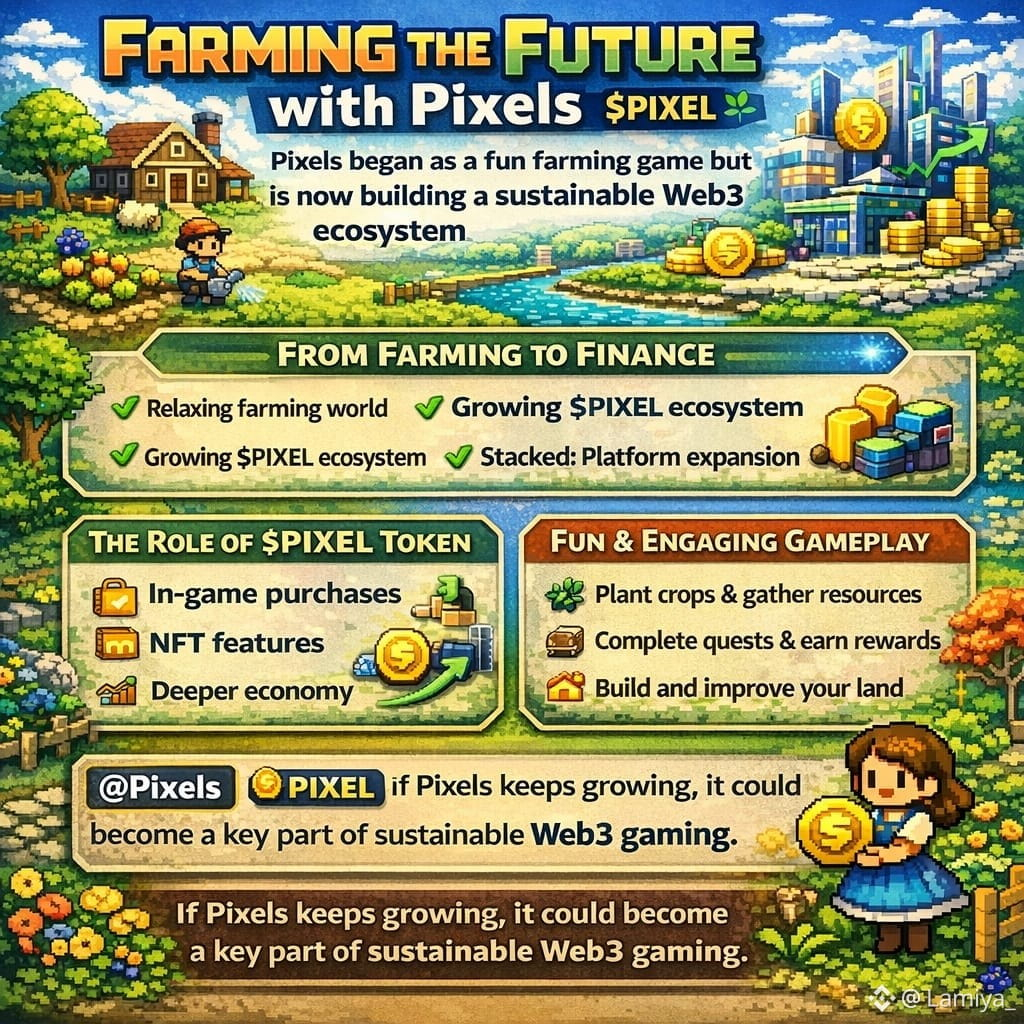
Gaming war schon immer in erster Linie Spaß. Belohnungen sind wichtig, aber Spieler bleiben, wenn das Erlebnis selbst bedeutungsvoll ist. Genau deshalb hat es Pixels geschafft, sich im Web3-Gaming-Bereich abzuheben. Anstatt sich nur auf Token-Belohnungen zu konzentrieren, hat das Projekt eine entspannende Landwirtschaftswelt geschaffen, in der Spieler Pflanzen anbauen, Ressourcen sammeln, Essen kochen, Gegenstände handeln und allmählich ihr Land erweitern. Dieser einfache Gameplay-Zyklus hat ein natürliches Gefühl von Fortschritt und Gemeinschaft geschaffen. Im Laufe der Zeit hat dieser Spaß-zuerst-Ansatz Pixels geholfen, eine große und aktive Spielerbasis innerhalb des Web3-Ökosystems anzuziehen.
Was das Ökosystem jetzt interessanter macht, ist, wie sich Pixels über ein einfaches Landwirtschaftsspiel hinaus entwickelt. Die Einführung von Stacked stellt einen bedeutenden Wandel dar. Stacked ist eine KI-gestützte Engagement- und Belohnungsplattform, die auf Jahren von Live-Gameplay-Daten basiert. Sie hilft Spieleentwicklern, die Bindung zu verbessern, Belohnungen zu personalisieren und gesündere In-Game-Wirtschaften zu schaffen. Das bedeutet, dass Pixels nicht mehr nur ein Spiel baut. Es baut Infrastruktur für mehrere Spiele, die gemeinsam wachsen können.
Der $PIXEL token spielt eine wichtige Rolle in dieser Evolution. Er verbindet das Gameplay mit einer breiteren digitalen Wirtschaft. Spieler können Pixel für In-Game-Käufe, Mitgliedschaften, NFT-Funktionen und tiefere Ökosystembeteiligung nutzen. Dies schafft ein System, in dem die Zeit, die man mit Spielen verbringt, echten Wert haben kann, während das Gameplay weiterhin Spaß macht und zugänglich bleibt.
Natürlich hat jedes Web3-Ökosystem Herausforderungen. Die Tokenpreise können schwanken, neue Benutzer benötigen möglicherweise Zeit, um Wallets zu verstehen, und die Aufrechterhaltung des Spielerengagements erfordert ständige Updates. Aber Pixels scheint sich dieser Herausforderungen bewusst zu sein und baut weiterhin sorgfältig.
Mit dem Wachstum von Stacked und dem sich ausdehnenden Ökosystem bewegt sich Pixels langsam von einem einfachen Landwirtschaftsspiel zu einer langfristigen Web3-Gaming-Plattform.
Wenn diese Richtung beibehalten wird, könnte die Zukunft von Pixels viel größer sein als Landwirtschaft. Es könnte eine der Grundlagen für nachhaltiges Web3-Gaming werden.
@pixels
#pixel 🌱
#TrendingTopic #meme板块关注热点 #Megadrop
#pixel $PIXEL @Pixels
Die Zukunft mit Pixeln bewirtschaften
Gaming war schon immer in erster Linie Spaß. Belohnungen sind wichtig, aber Spieler bleiben, wenn das Erlebnis selbst bedeutungsvoll ist. Genau deshalb hat es Pixels geschafft, sich im Web3-Gaming-Bereich abzuheben. Anstatt sich nur auf Token-Belohnungen zu konzentrieren, hat das Projekt eine entspannende Landwirtschaftswelt geschaffen, in der Spieler Pflanzen anbauen, Ressourcen sammeln, Essen kochen, Gegenstände handeln und allmählich ihr Land erweitern. Dieser einfache Gameplay-Zyklus hat ein natürliches Gefühl von Fortschritt und Gemeinschaft geschaffen. Im Laufe der Zeit hat dieser Spaß-zuerst-Ansatz Pixels geholfen, eine große und aktive Spielerbasis innerhalb des Web3-Ökosystems anzuziehen.
Was das Ökosystem jetzt interessanter macht, ist, wie sich Pixels über ein einfaches Landwirtschaftsspiel hinaus entwickelt. Die Einführung von Stacked stellt einen bedeutenden Wandel dar. Stacked ist eine KI-gestützte Engagement- und Belohnungsplattform, die auf Jahren von Live-Gameplay-Daten basiert. Sie hilft Spieleentwicklern, die Bindung zu verbessern, Belohnungen zu personalisieren und gesündere In-Game-Wirtschaften zu schaffen. Das bedeutet, dass Pixels nicht mehr nur ein Spiel baut. Es baut Infrastruktur für mehrere Spiele, die gemeinsam wachsen können.
Der $PIXEL token spielt eine wichtige Rolle in dieser Evolution. Er verbindet das Gameplay mit einer breiteren digitalen Wirtschaft. Spieler können Pixel für In-Game-Käufe, Mitgliedschaften, NFT-Funktionen und tiefere Ökosystembeteiligung nutzen. Dies schafft ein System, in dem die Zeit, die man mit Spielen verbringt, echten Wert haben kann, während das Gameplay weiterhin Spaß macht und zugänglich bleibt.
Natürlich hat jedes Web3-Ökosystem Herausforderungen. Die Tokenpreise können schwanken, neue Benutzer benötigen möglicherweise Zeit, um Wallets zu verstehen, und die Aufrechterhaltung des Spielerengagements erfordert ständige Updates. Aber Pixels scheint sich dieser Herausforderungen bewusst zu sein und baut weiterhin sorgfältig.
Mit dem Wachstum von Stacked und dem sich ausdehnenden Ökosystem bewegt sich Pixels langsam von einem einfachen Landwirtschaftsspiel zu einer langfristigen Web3-Gaming-Plattform.
Wenn diese Richtung beibehalten wird, könnte die Zukunft von Pixels viel größer sein als Landwirtschaft. Es könnte eine der Grundlagen für nachhaltiges Web3-Gaming werden.
@Pixels
#pixel 🌱
#TrendingTopic #meme板块关注热点 #Megadrop
Die Zukunft mit Pixeln bewirtschaften
Gaming war schon immer in erster Linie Spaß. Belohnungen sind wichtig, aber Spieler bleiben, wenn das Erlebnis selbst bedeutungsvoll ist. Genau deshalb hat es Pixels geschafft, sich im Web3-Gaming-Bereich abzuheben. Anstatt sich nur auf Token-Belohnungen zu konzentrieren, hat das Projekt eine entspannende Landwirtschaftswelt geschaffen, in der Spieler Pflanzen anbauen, Ressourcen sammeln, Essen kochen, Gegenstände handeln und allmählich ihr Land erweitern. Dieser einfache Gameplay-Zyklus hat ein natürliches Gefühl von Fortschritt und Gemeinschaft geschaffen. Im Laufe der Zeit hat dieser Spaß-zuerst-Ansatz Pixels geholfen, eine große und aktive Spielerbasis innerhalb des Web3-Ökosystems anzuziehen.
Was das Ökosystem jetzt interessanter macht, ist, wie sich Pixels über ein einfaches Landwirtschaftsspiel hinaus entwickelt. Die Einführung von Stacked stellt einen bedeutenden Wandel dar. Stacked ist eine KI-gestützte Engagement- und Belohnungsplattform, die auf Jahren von Live-Gameplay-Daten basiert. Sie hilft Spieleentwicklern, die Bindung zu verbessern, Belohnungen zu personalisieren und gesündere In-Game-Wirtschaften zu schaffen. Das bedeutet, dass Pixels nicht mehr nur ein Spiel baut. Es baut Infrastruktur für mehrere Spiele, die gemeinsam wachsen können.
Der $PIXEL token spielt eine wichtige Rolle in dieser Evolution. Er verbindet das Gameplay mit einer breiteren digitalen Wirtschaft. Spieler können Pixel für In-Game-Käufe, Mitgliedschaften, NFT-Funktionen und tiefere Ökosystembeteiligung nutzen. Dies schafft ein System, in dem die Zeit, die man mit Spielen verbringt, echten Wert haben kann, während das Gameplay weiterhin Spaß macht und zugänglich bleibt.
Natürlich hat jedes Web3-Ökosystem Herausforderungen. Die Tokenpreise können schwanken, neue Benutzer benötigen möglicherweise Zeit, um Wallets zu verstehen, und die Aufrechterhaltung des Spielerengagements erfordert ständige Updates. Aber Pixels scheint sich dieser Herausforderungen bewusst zu sein und baut weiterhin sorgfältig.
Mit dem Wachstum von Stacked und dem sich ausdehnenden Ökosystem bewegt sich Pixels langsam von einem einfachen Landwirtschaftsspiel zu einer langfristigen Web3-Gaming-Plattform.
Wenn diese Richtung beibehalten wird, könnte die Zukunft von Pixels viel größer sein als Landwirtschaft. Es könnte eine der Grundlagen für nachhaltiges Web3-Gaming werden.
@Pixels
#pixel 🌱
#TrendingTopic #meme板块关注热点 #Megadrop
1
3
128
·
--
Artikel
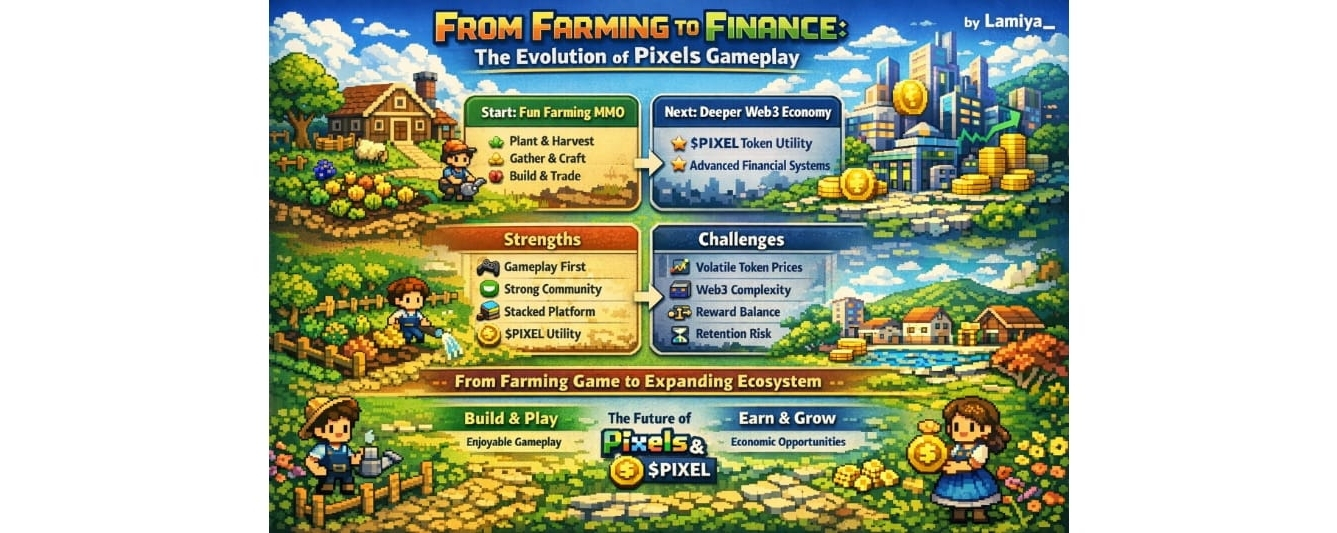
Die Zukunft der Landwirtschaft mit PixelsGaming war schon immer in erster Linie mit Genuss verbunden. Belohnungen sind wichtig, aber die Spieler bleiben, wenn das Erlebnis selbst bedeutungsvoll ist. Genau aus diesem Grund hat es Pixels geschafft, im Web3-Gaming-Bereich herauszustechen. Anstatt sich nur auf Token-Belohnungen zu konzentrieren, hat das Projekt eine entspannende Farmwelt geschaffen, in der die Spieler Pflanzen anbauen, Ressourcen sammeln, Nahrung kochen, Gegenstände handeln und allmählich ihr Land vergrößern. Dieser einfache Gameplay-Zyklus hat ein natürliches Gefühl von Fortschritt und Gemeinschaft geschaffen. Im Laufe der Zeit hat dieser Spaß-erst Ansatz Pixels geholfen, eine große und aktive Spielerbasis innerhalb des Web3-Ökosystems anzuziehen.
Die Zukunft der Landwirtschaft mit Pixels
Gaming war schon immer in erster Linie mit Genuss verbunden. Belohnungen sind wichtig, aber die Spieler bleiben, wenn das Erlebnis selbst bedeutungsvoll ist. Genau aus diesem Grund hat es Pixels geschafft, im Web3-Gaming-Bereich herauszustechen. Anstatt sich nur auf Token-Belohnungen zu konzentrieren, hat das Projekt eine entspannende Farmwelt geschaffen, in der die Spieler Pflanzen anbauen, Ressourcen sammeln, Nahrung kochen, Gegenstände handeln und allmählich ihr Land vergrößern. Dieser einfache Gameplay-Zyklus hat ein natürliches Gefühl von Fortschritt und Gemeinschaft geschaffen. Im Laufe der Zeit hat dieser Spaß-erst Ansatz Pixels geholfen, eine große und aktive Spielerbasis innerhalb des Web3-Ökosystems anzuziehen.
1
3
188
·
--
Artikel
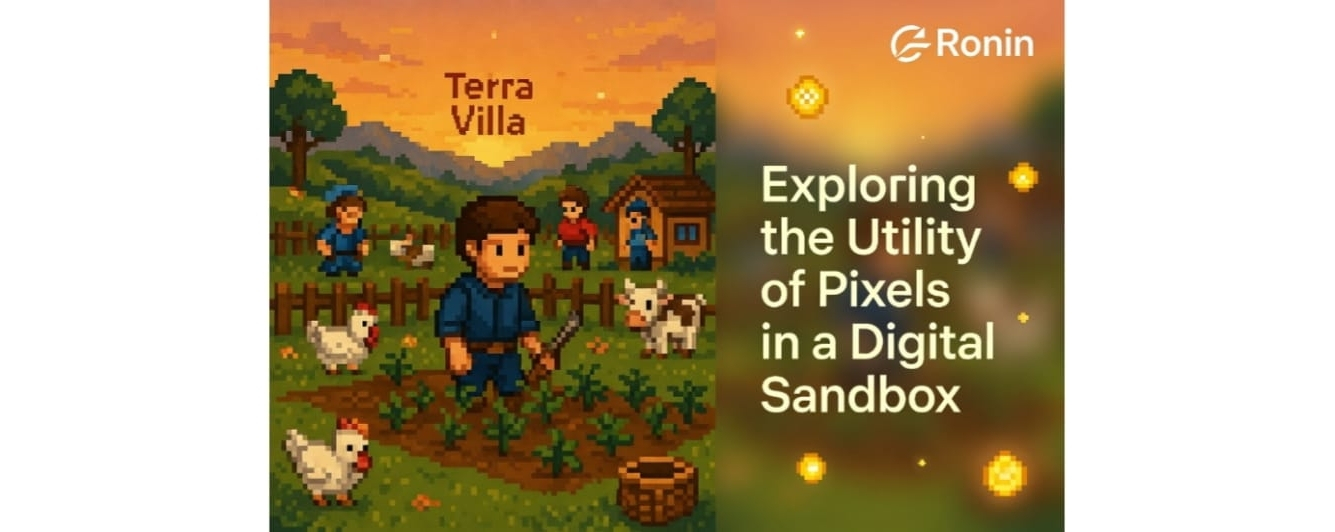
Erkundung des Nutzens von Pixeln in einer digitalen SandboxIch muss zugeben, als ich zum ersten Mal von Pixels hörte, dachte ich, es sei nur ein weiteres süßes Farmspiel mit etwas Krypto vermischt. Aber nachdem ich echte Zeit darin verbracht habe, ist meine persönliche Meinung, dass dieses Spiel anders ist. Es geht nicht nur darum, Pflanzen anzubauen und Token zu verdienen. Es gibt Ihnen ein echtes Gefühl, etwas in einer lebendigen digitalen Welt aufzubauen. Die Art und Weise, wie alles über das gestapelte Ökosystem verbunden ist, lässt es durchdachter erscheinen als die meisten Play-to-Earn-Projekte, die ich ausprobiert habe. Ich genieße die entspannte Atmosphäre, aber ich sehe auch die kluge Arbeit dahinter, um die Spieler zurückzubringen, ohne alles wie einen Job erscheinen zu lassen.
Erkundung des Nutzens von Pixeln in einer digitalen Sandbox
Ich muss zugeben, als ich zum ersten Mal von Pixels hörte, dachte ich, es sei nur ein weiteres süßes Farmspiel mit etwas Krypto vermischt. Aber nachdem ich echte Zeit darin verbracht habe, ist meine persönliche Meinung, dass dieses Spiel anders ist. Es geht nicht nur darum, Pflanzen anzubauen und Token zu verdienen. Es gibt Ihnen ein echtes Gefühl, etwas in einer lebendigen digitalen Welt aufzubauen. Die Art und Weise, wie alles über das gestapelte Ökosystem verbunden ist, lässt es durchdachter erscheinen als die meisten Play-to-Earn-Projekte, die ich ausprobiert habe. Ich genieße die entspannte Atmosphäre, aber ich sehe auch die kluge Arbeit dahinter, um die Spieler zurückzubringen, ohne alles wie einen Job erscheinen zu lassen.
1
3
183
·
--
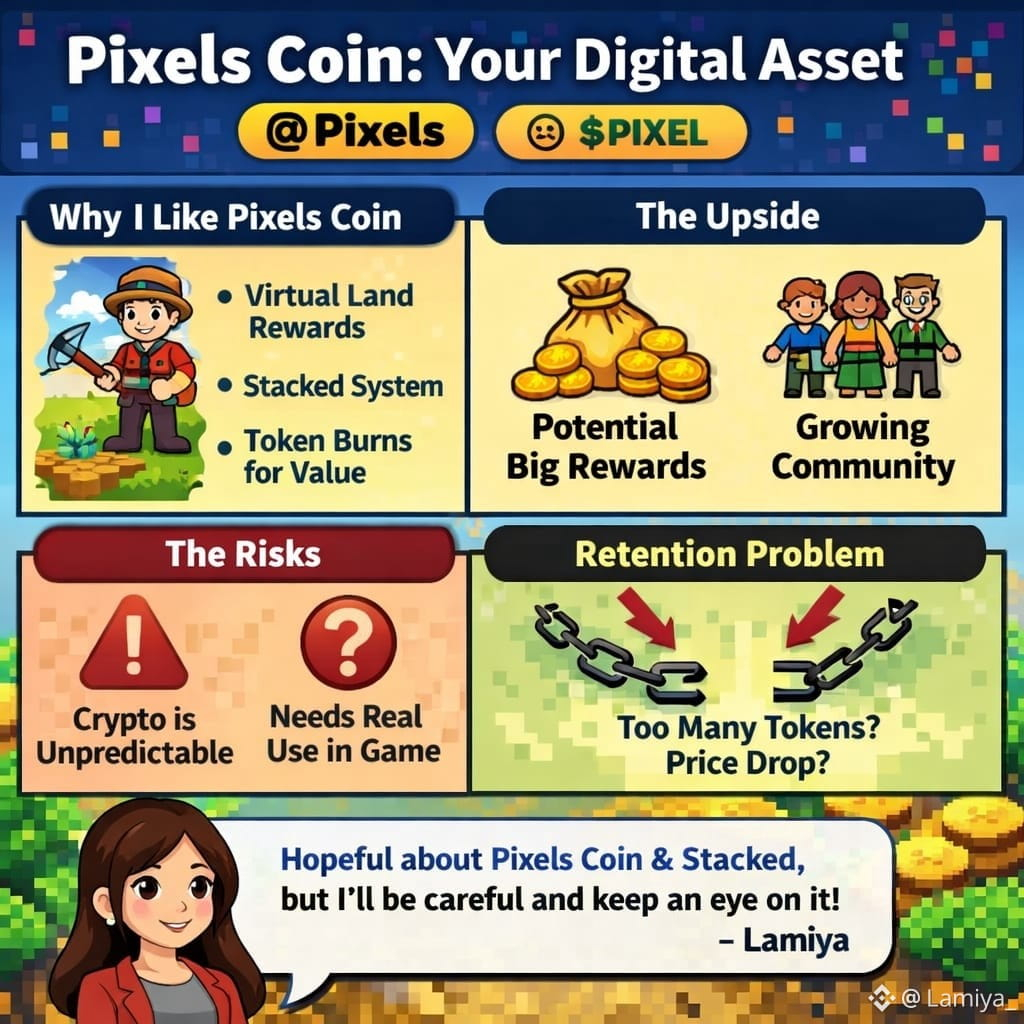
#pixel @pixels Pixels Coin: Ihr digitaler Vermögenswert.
Ich denke, Pixel Coin ist eine interessante digitale Währung für eine neue Gaming-Welt. Es ist Teil eines Spiels, in dem Spieler virtuelles Land kaufen und Dinge verdienen. Das Team dahinter, @Pixels, hat sogar ein "Stacked"-Belohnungssystem hinzugefügt, um die Spieler zu beschäftigen. Sie sagen: „Inhalte ziehen die Spieler an, Stacked hält sie“
, was bedeutet, dass das Spiel Ihnen Aufgaben und Missionen gibt, um weiterzuspielen. Zum Beispiel haben sie Land-Staking hinzugefügt: loyale Spieler, die Land besitzen, erhalten zusätzliche Belohnungen und tiefere Integration in die Welt
. Das klingt cool, denn es ist nicht nur ein einfaches Spiel – es ist wie eine ganze Wirtschaft. Ich habe gelesen, dass Pixels sich auf die Nachhaltigkeit von Token konzentriert, indem Token verbrannt und wirtschaftliche Schleifen im Spiel geschaffen werden, um $PIXEL wertvoll zu halten
. Der Vorteil ist, dass, wenn das Spiel Spaß macht und die Gemeinschaft (#pixel) wächst, frühe Spieler profitieren könnten. Die Entwickler fügen ständig Herausforderungen hinzu, sodass das Besitzen von $PIXEL wirklich nützlich erscheint
. Ich bin begeistert von der Idee, durch das Spielen und Besitzen von Dingen Belohnungen zu verdienen.
Aber ich bin auch ein bisschen vorsichtig. Krypto-Münzen können unvorhersehbar sein, und neue Gaming-Projekte können scheitern. Ein Analyst wies darauf hin, dass $PIXEL Schwierigkeiten haben könnte, wenn es nur als Belohnungstoken funktioniert
. Sie sagen, dass der Token eine echte Verwendung im Ökosystem benötigt, sonst könnten zu viele Token den Preis drücken. Außerdem ist der Aufbau eines großen Gaming-Netzwerks „ambitioniert, aber auch riskant“
– es wird Zeit, mehr Spieler und Vertrauen benötigen. Emotional bin ich optimistisch, denn es klingt nach einer cleveren Play-to-Earn-Idee, aber ich weiß, dass ich vorsichtig sein muss. Meiner Meinung nach haben Pixel und sein Stacked-System Potenzial, wenn sie weiterhin eine echte Gemeinschaft und Werte aufbauen. Ich plane, es zu beobachten und vielleicht das Spiel zum Spaß auszuprobieren, während ich mir der Risiken bewusst bin.
geschrieben von:- Lamiya_
#Market_Update #TrendingTopic #meme板块关注热点 #Megadrop
#pixel @Pixels Pixels Coin: Ihr digitaler Vermögenswert.
Ich denke, Pixel Coin ist eine interessante digitale Währung für eine neue Gaming-Welt. Es ist Teil eines Spiels, in dem Spieler virtuelles Land kaufen und Dinge verdienen. Das Team dahinter, @Pixels, hat sogar ein "Stacked"-Belohnungssystem hinzugefügt, um die Spieler zu beschäftigen. Sie sagen: „Inhalte ziehen die Spieler an, Stacked hält sie“
, was bedeutet, dass das Spiel Ihnen Aufgaben und Missionen gibt, um weiterzuspielen. Zum Beispiel haben sie Land-Staking hinzugefügt: loyale Spieler, die Land besitzen, erhalten zusätzliche Belohnungen und tiefere Integration in die Welt
. Das klingt cool, denn es ist nicht nur ein einfaches Spiel – es ist wie eine ganze Wirtschaft. Ich habe gelesen, dass Pixels sich auf die Nachhaltigkeit von Token konzentriert, indem Token verbrannt und wirtschaftliche Schleifen im Spiel geschaffen werden, um $PIXEL wertvoll zu halten
. Der Vorteil ist, dass, wenn das Spiel Spaß macht und die Gemeinschaft (#pixel) wächst, frühe Spieler profitieren könnten. Die Entwickler fügen ständig Herausforderungen hinzu, sodass das Besitzen von $PIXEL wirklich nützlich erscheint
. Ich bin begeistert von der Idee, durch das Spielen und Besitzen von Dingen Belohnungen zu verdienen.
Aber ich bin auch ein bisschen vorsichtig. Krypto-Münzen können unvorhersehbar sein, und neue Gaming-Projekte können scheitern. Ein Analyst wies darauf hin, dass $PIXEL Schwierigkeiten haben könnte, wenn es nur als Belohnungstoken funktioniert
. Sie sagen, dass der Token eine echte Verwendung im Ökosystem benötigt, sonst könnten zu viele Token den Preis drücken. Außerdem ist der Aufbau eines großen Gaming-Netzwerks „ambitioniert, aber auch riskant“
– es wird Zeit, mehr Spieler und Vertrauen benötigen. Emotional bin ich optimistisch, denn es klingt nach einer cleveren Play-to-Earn-Idee, aber ich weiß, dass ich vorsichtig sein muss. Meiner Meinung nach haben Pixel und sein Stacked-System Potenzial, wenn sie weiterhin eine echte Gemeinschaft und Werte aufbauen. Ich plane, es zu beobachten und vielleicht das Spiel zum Spaß auszuprobieren, während ich mir der Risiken bewusst bin.
geschrieben von:- Lamiya_
#Market_Update #TrendingTopic #meme板块关注热点 #Megadrop
Ich denke, Pixel Coin ist eine interessante digitale Währung für eine neue Gaming-Welt. Es ist Teil eines Spiels, in dem Spieler virtuelles Land kaufen und Dinge verdienen. Das Team dahinter, @Pixels, hat sogar ein "Stacked"-Belohnungssystem hinzugefügt, um die Spieler zu beschäftigen. Sie sagen: „Inhalte ziehen die Spieler an, Stacked hält sie“
, was bedeutet, dass das Spiel Ihnen Aufgaben und Missionen gibt, um weiterzuspielen. Zum Beispiel haben sie Land-Staking hinzugefügt: loyale Spieler, die Land besitzen, erhalten zusätzliche Belohnungen und tiefere Integration in die Welt
. Das klingt cool, denn es ist nicht nur ein einfaches Spiel – es ist wie eine ganze Wirtschaft. Ich habe gelesen, dass Pixels sich auf die Nachhaltigkeit von Token konzentriert, indem Token verbrannt und wirtschaftliche Schleifen im Spiel geschaffen werden, um $PIXEL wertvoll zu halten
. Der Vorteil ist, dass, wenn das Spiel Spaß macht und die Gemeinschaft (#pixel) wächst, frühe Spieler profitieren könnten. Die Entwickler fügen ständig Herausforderungen hinzu, sodass das Besitzen von $PIXEL wirklich nützlich erscheint
. Ich bin begeistert von der Idee, durch das Spielen und Besitzen von Dingen Belohnungen zu verdienen.
Aber ich bin auch ein bisschen vorsichtig. Krypto-Münzen können unvorhersehbar sein, und neue Gaming-Projekte können scheitern. Ein Analyst wies darauf hin, dass $PIXEL Schwierigkeiten haben könnte, wenn es nur als Belohnungstoken funktioniert
. Sie sagen, dass der Token eine echte Verwendung im Ökosystem benötigt, sonst könnten zu viele Token den Preis drücken. Außerdem ist der Aufbau eines großen Gaming-Netzwerks „ambitioniert, aber auch riskant“
– es wird Zeit, mehr Spieler und Vertrauen benötigen. Emotional bin ich optimistisch, denn es klingt nach einer cleveren Play-to-Earn-Idee, aber ich weiß, dass ich vorsichtig sein muss. Meiner Meinung nach haben Pixel und sein Stacked-System Potenzial, wenn sie weiterhin eine echte Gemeinschaft und Werte aufbauen. Ich plane, es zu beobachten und vielleicht das Spiel zum Spaß auszuprobieren, während ich mir der Risiken bewusst bin.
geschrieben von:- Lamiya_
#Market_Update #TrendingTopic #meme板块关注热点 #Megadrop
1
2
140
·
--
#pixel $PIXEL @pixels
Warum ich optimistisch bezüglich Pixels bin..
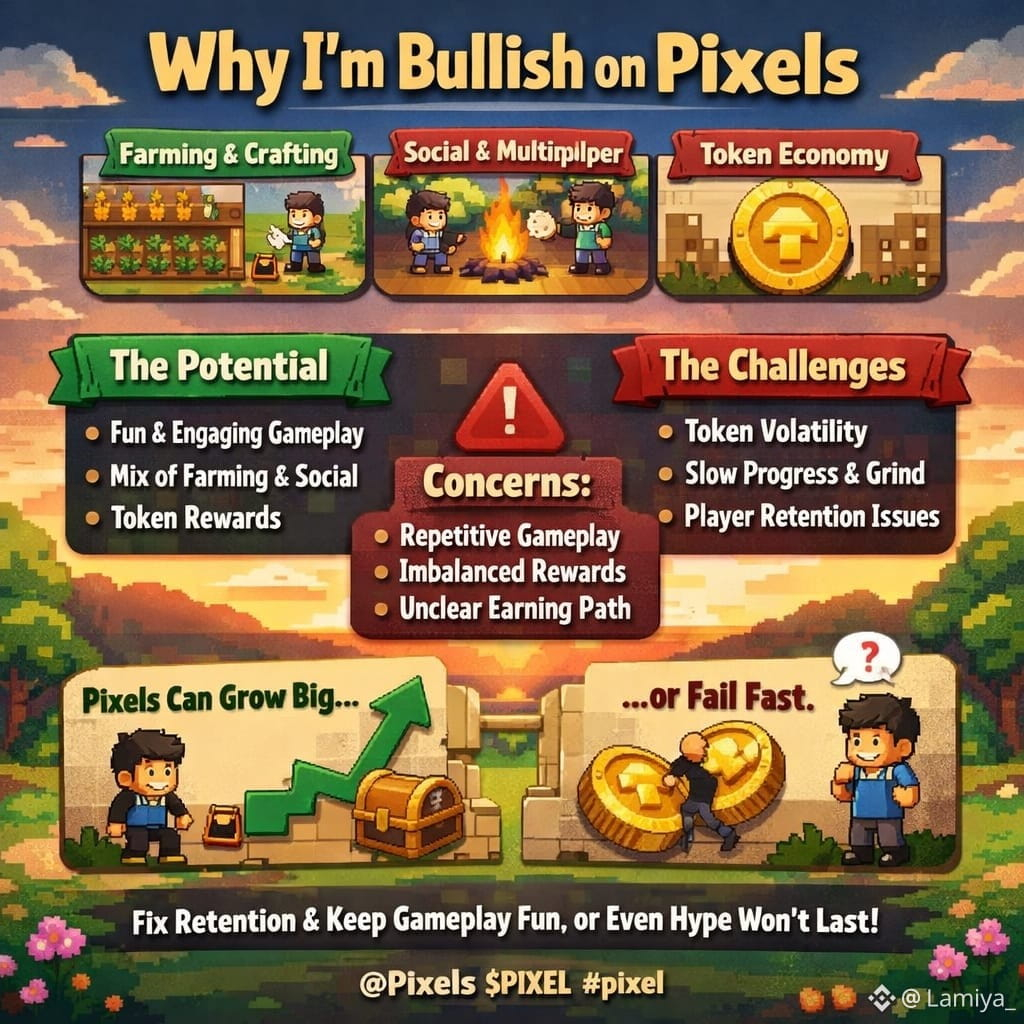
Ich denke, Pixels ist ein Spiel, das von außen einfach aussieht, aber tatsächlich sowohl eine spaßige Seite als auch einige echte Herausforderungen dahinter hat... Persönlich glaube ich, dass es großes Potenzial hat, weil es Landwirtschaft, soziale Interaktion und Token-Ökonomie auf eine Weise kombiniert, die die Spieler langfristig engagiert halten kann. Aber gleichzeitig gibt es echte Bedenken wie das Risiko der Token-Volatilität, und wenn das Gameplay repetitiv erscheint, können die Leute schnell das Interesse verlieren.
Beispiel: In den meisten Web3-Spielen wie diesem ist die anfängliche Aufregung hoch, aber später wird die Bindung zum Problem, wenn die Spieler das Gefühl haben, dass der Fortschritt zu langsam ist oder die Belohnungen unausgeglichen erscheinen. Einige Spieler verlassen auch, wenn sie auf grind-intensive Aufgaben oder unklare Verdienstwege stoßen, was etwas ist, wofür Pixels in Diskussionen in der Community kritisiert wurde.
Für mich geht es also nicht nur um Hype, es geht darum, ob sie die Spieler aktiv halten und die Wirtschaft langfristig stabil machen können.
Mein zweizeiliger Gedanke ist einfach: Ich glaube, dass Pixels groß werden kann, wenn sie die Bindungsprobleme beheben und das Gameplay angenehm gestalten, aber wenn sie darin scheitern, wird selbst starker Hype nicht lange anhalten.
@pixels $PIXEL #pixel #Kalshi’sDisputewithNevada #CharlesSchwabtoRollOutSpotCryptoTrading #TrendingTopic
{future}(PIXELUSDT)
#pixel $PIXEL @Pixels
Warum ich optimistisch bezüglich Pixels bin..
Ich denke, Pixels ist ein Spiel, das von außen einfach aussieht, aber tatsächlich sowohl eine spaßige Seite als auch einige echte Herausforderungen dahinter hat... Persönlich glaube ich, dass es großes Potenzial hat, weil es Landwirtschaft, soziale Interaktion und Token-Ökonomie auf eine Weise kombiniert, die die Spieler langfristig engagiert halten kann. Aber gleichzeitig gibt es echte Bedenken wie das Risiko der Token-Volatilität, und wenn das Gameplay repetitiv erscheint, können die Leute schnell das Interesse verlieren.
Beispiel: In den meisten Web3-Spielen wie diesem ist die anfängliche Aufregung hoch, aber später wird die Bindung zum Problem, wenn die Spieler das Gefühl haben, dass der Fortschritt zu langsam ist oder die Belohnungen unausgeglichen erscheinen. Einige Spieler verlassen auch, wenn sie auf grind-intensive Aufgaben oder unklare Verdienstwege stoßen, was etwas ist, wofür Pixels in Diskussionen in der Community kritisiert wurde.
Für mich geht es also nicht nur um Hype, es geht darum, ob sie die Spieler aktiv halten und die Wirtschaft langfristig stabil machen können.
Mein zweizeiliger Gedanke ist einfach: Ich glaube, dass Pixels groß werden kann, wenn sie die Bindungsprobleme beheben und das Gameplay angenehm gestalten, aber wenn sie darin scheitern, wird selbst starker Hype nicht lange anhalten.
@Pixels $PIXEL #pixel #Kalshi’sDisputewithNevada #CharlesSchwabtoRollOutSpotCryptoTrading #TrendingTopic
Warum ich optimistisch bezüglich Pixels bin..
Ich denke, Pixels ist ein Spiel, das von außen einfach aussieht, aber tatsächlich sowohl eine spaßige Seite als auch einige echte Herausforderungen dahinter hat... Persönlich glaube ich, dass es großes Potenzial hat, weil es Landwirtschaft, soziale Interaktion und Token-Ökonomie auf eine Weise kombiniert, die die Spieler langfristig engagiert halten kann. Aber gleichzeitig gibt es echte Bedenken wie das Risiko der Token-Volatilität, und wenn das Gameplay repetitiv erscheint, können die Leute schnell das Interesse verlieren.
Beispiel: In den meisten Web3-Spielen wie diesem ist die anfängliche Aufregung hoch, aber später wird die Bindung zum Problem, wenn die Spieler das Gefühl haben, dass der Fortschritt zu langsam ist oder die Belohnungen unausgeglichen erscheinen. Einige Spieler verlassen auch, wenn sie auf grind-intensive Aufgaben oder unklare Verdienstwege stoßen, was etwas ist, wofür Pixels in Diskussionen in der Community kritisiert wurde.
Für mich geht es also nicht nur um Hype, es geht darum, ob sie die Spieler aktiv halten und die Wirtschaft langfristig stabil machen können.
Mein zweizeiliger Gedanke ist einfach: Ich glaube, dass Pixels groß werden kann, wenn sie die Bindungsprobleme beheben und das Gameplay angenehm gestalten, aber wenn sie darin scheitern, wird selbst starker Hype nicht lange anhalten.
@Pixels $PIXEL #pixel #Kalshi’sDisputewithNevada #CharlesSchwabtoRollOutSpotCryptoTrading #TrendingTopic
3
2
202
·
--
Artikel
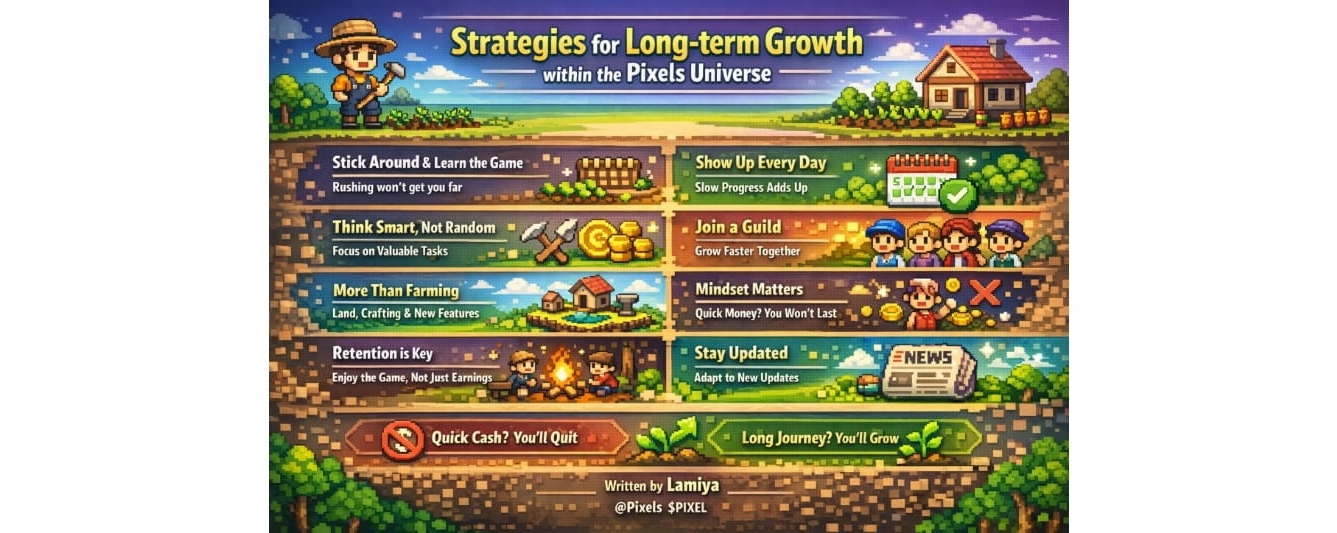
Strategien für langfristiges Wachstum im Pixels-UniversumLassen Sie mich zuerst meine Meinung sagen. Ich denke nicht, dass Pixels ein Spiel ist, bei dem man kommt, schnell verdient und dann geht. Für mich fühlt es sich mehr wie ein Ort an, an dem Menschen, die länger bleiben und das Spiel langsam verstehen, vorankommen. Wenn Sie es zu eilig haben, werden Sie hier nicht lange durchhalten.
Pixels ist ein Landwirtschaftsspiel, in dem Sie Pflanzen anbauen, Ressourcen sammeln, Dinge herstellen und mit anderen Menschen spielen. Es ist einfach zu beginnen, aber je mehr Sie spielen, desto mehr verstehen Sie langsam. Je mehr Zeit Sie investieren, desto besser werden Sie.
Wenn Sie langfristiges Wachstum wollen, ist das erste, was Sie tun müssen, jeden Tag einfach zu erscheinen. Viele Menschen kommen, spielen ein paar Tage und hören dann auf. Das ist das Hauptproblem. Dieses Spiel dreht sich nicht um schnelle Ergebnisse. Es ist langsam, aber stetig. Wenn Sie täglich weiterspielen, baut sich Ihr Fortschritt Schritt für Schritt auf.
Strategien für langfristiges Wachstum im Pixels-Universum
Lassen Sie mich zuerst meine Meinung sagen. Ich denke nicht, dass Pixels ein Spiel ist, bei dem man kommt, schnell verdient und dann geht. Für mich fühlt es sich mehr wie ein Ort an, an dem Menschen, die länger bleiben und das Spiel langsam verstehen, vorankommen. Wenn Sie es zu eilig haben, werden Sie hier nicht lange durchhalten.
Pixels ist ein Landwirtschaftsspiel, in dem Sie Pflanzen anbauen, Ressourcen sammeln, Dinge herstellen und mit anderen Menschen spielen. Es ist einfach zu beginnen, aber je mehr Sie spielen, desto mehr verstehen Sie langsam. Je mehr Zeit Sie investieren, desto besser werden Sie.
Wenn Sie langfristiges Wachstum wollen, ist das erste, was Sie tun müssen, jeden Tag einfach zu erscheinen. Viele Menschen kommen, spielen ein paar Tage und hören dann auf. Das ist das Hauptproblem. Dieses Spiel dreht sich nicht um schnelle Ergebnisse. Es ist langsam, aber stetig. Wenn Sie täglich weiterspielen, baut sich Ihr Fortschritt Schritt für Schritt auf.
Pixels ist ein Landwirtschaftsspiel, in dem Sie Pflanzen anbauen, Ressourcen sammeln, Dinge herstellen und mit anderen Menschen spielen. Es ist einfach zu beginnen, aber je mehr Sie spielen, desto mehr verstehen Sie langsam. Je mehr Zeit Sie investieren, desto besser werden Sie.
Wenn Sie langfristiges Wachstum wollen, ist das erste, was Sie tun müssen, jeden Tag einfach zu erscheinen. Viele Menschen kommen, spielen ein paar Tage und hören dann auf. Das ist das Hauptproblem. Dieses Spiel dreht sich nicht um schnelle Ergebnisse. Es ist langsam, aber stetig. Wenn Sie täglich weiterspielen, baut sich Ihr Fortschritt Schritt für Schritt auf.
3
2
221
·
--
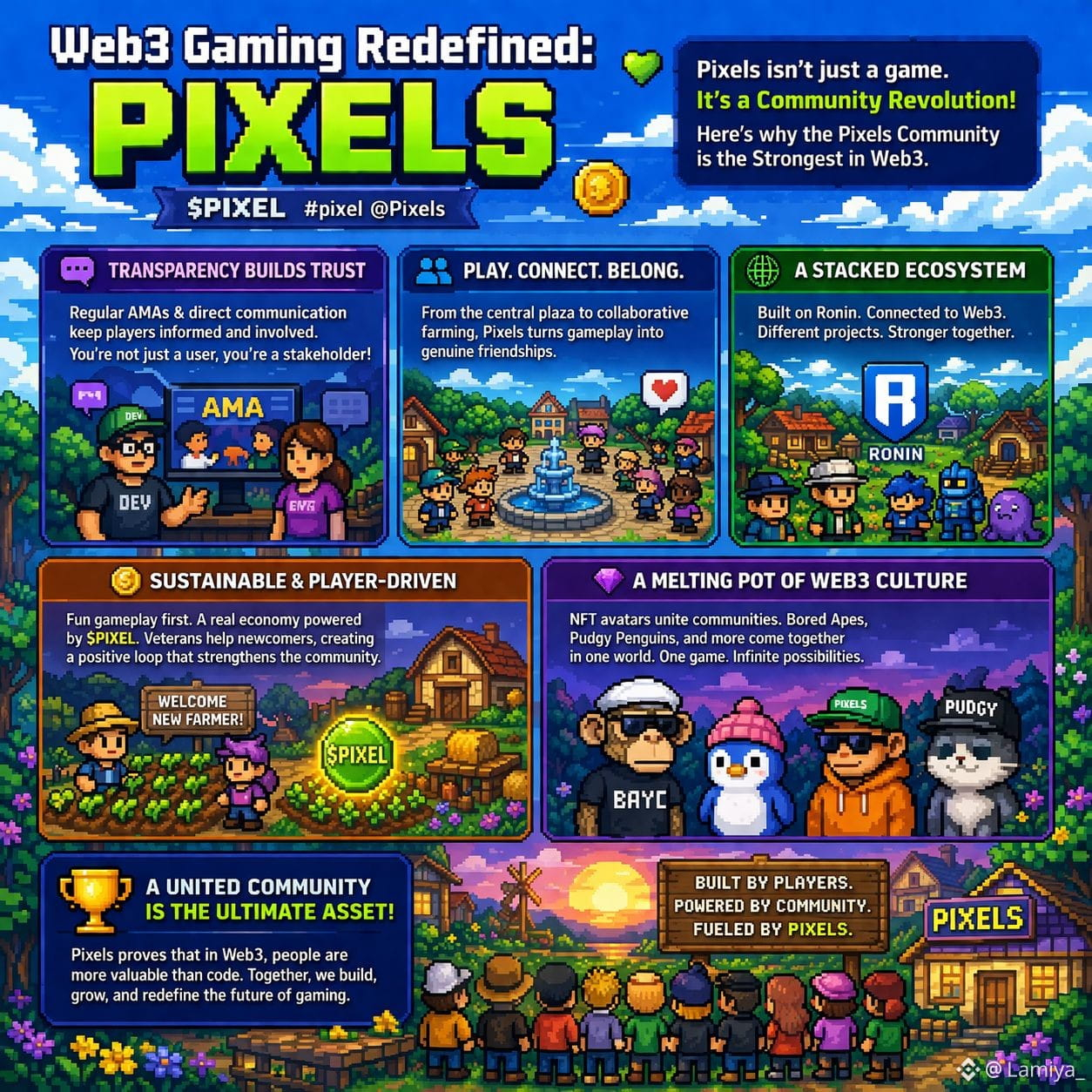
Web3 Gaming Neu Definiert: Pixels.....
@pixels $PIXEL #pixel
Die Pixels-Community sticht als eine der widerstandsfähigsten in Web3 hervor, weil sie auf echter Leidenschaft und nicht nur auf Hype basiert. Während andere Projekte verblassen, gedeiht dieses Ökosystem aufgrund einer Grundlage von Transparenz und direkter Interaktion zwischen Entwicklern und Spielern. Diese offene Kommunikation fördert ein Gefühl des gemeinsamen Eigentums, sodass die Nutzer sich wie wesentliche Mitwirkende am Wachstum des Projekts fühlen.
Ein großer Teil seines Erfolgs ist die soziale Atmosphäre. Durch die Integration verschiedener NFT-Avatare und die Schaffung zentraler Hubs für Interaktionen hat sich das Spiel zu einem lebendigen sozialen Netzwerk entwickelt. Es ist ein Raum, in dem Menschen tatsächlich verbinden und zusammenarbeiten, anstatt sich nur auf Gameplay-Mechaniken zu konzentrieren.
Nachhaltigkeit ist ebenfalls entscheidend. Indem es ein unterhaltsames, spielbares Erlebnis und eine funktionale digitale Wirtschaft priorisiert, fördert das Projekt langfristige Loyalität. Dies zeigt sich in der Art und Weise, wie erfahrene Spieler neue Spieler anleiten und ein organisches Unterstützungssystem schaffen. Letztendlich bleibt Pixels stark, weil es echte menschliche Verbindungen und eine kollektive Vision priorisiert. Diese Einheit ist der größte Wettbewerbsvorteil, der beweist, dass eine engagierte, verbundene Gemeinschaft das wertvollste Gut in der dezentralisierten Gaming-Welt ist.
{future}(PIXELUSDT)
Web3 Gaming Neu Definiert: Pixels.....
@Pixels $PIXEL #pixel
Die Pixels-Community sticht als eine der widerstandsfähigsten in Web3 hervor, weil sie auf echter Leidenschaft und nicht nur auf Hype basiert. Während andere Projekte verblassen, gedeiht dieses Ökosystem aufgrund einer Grundlage von Transparenz und direkter Interaktion zwischen Entwicklern und Spielern. Diese offene Kommunikation fördert ein Gefühl des gemeinsamen Eigentums, sodass die Nutzer sich wie wesentliche Mitwirkende am Wachstum des Projekts fühlen.
Ein großer Teil seines Erfolgs ist die soziale Atmosphäre. Durch die Integration verschiedener NFT-Avatare und die Schaffung zentraler Hubs für Interaktionen hat sich das Spiel zu einem lebendigen sozialen Netzwerk entwickelt. Es ist ein Raum, in dem Menschen tatsächlich verbinden und zusammenarbeiten, anstatt sich nur auf Gameplay-Mechaniken zu konzentrieren.
Nachhaltigkeit ist ebenfalls entscheidend. Indem es ein unterhaltsames, spielbares Erlebnis und eine funktionale digitale Wirtschaft priorisiert, fördert das Projekt langfristige Loyalität. Dies zeigt sich in der Art und Weise, wie erfahrene Spieler neue Spieler anleiten und ein organisches Unterstützungssystem schaffen. Letztendlich bleibt Pixels stark, weil es echte menschliche Verbindungen und eine kollektive Vision priorisiert. Diese Einheit ist der größte Wettbewerbsvorteil, der beweist, dass eine engagierte, verbundene Gemeinschaft das wertvollste Gut in der dezentralisierten Gaming-Welt ist.
@Pixels $PIXEL #pixel
Die Pixels-Community sticht als eine der widerstandsfähigsten in Web3 hervor, weil sie auf echter Leidenschaft und nicht nur auf Hype basiert. Während andere Projekte verblassen, gedeiht dieses Ökosystem aufgrund einer Grundlage von Transparenz und direkter Interaktion zwischen Entwicklern und Spielern. Diese offene Kommunikation fördert ein Gefühl des gemeinsamen Eigentums, sodass die Nutzer sich wie wesentliche Mitwirkende am Wachstum des Projekts fühlen.
Ein großer Teil seines Erfolgs ist die soziale Atmosphäre. Durch die Integration verschiedener NFT-Avatare und die Schaffung zentraler Hubs für Interaktionen hat sich das Spiel zu einem lebendigen sozialen Netzwerk entwickelt. Es ist ein Raum, in dem Menschen tatsächlich verbinden und zusammenarbeiten, anstatt sich nur auf Gameplay-Mechaniken zu konzentrieren.
Nachhaltigkeit ist ebenfalls entscheidend. Indem es ein unterhaltsames, spielbares Erlebnis und eine funktionale digitale Wirtschaft priorisiert, fördert das Projekt langfristige Loyalität. Dies zeigt sich in der Art und Weise, wie erfahrene Spieler neue Spieler anleiten und ein organisches Unterstützungssystem schaffen. Letztendlich bleibt Pixels stark, weil es echte menschliche Verbindungen und eine kollektive Vision priorisiert. Diese Einheit ist der größte Wettbewerbsvorteil, der beweist, dass eine engagierte, verbundene Gemeinschaft das wertvollste Gut in der dezentralisierten Gaming-Welt ist.
3
3
175
·
--
Artikel
Warum die Pixels-Gemeinschaft die stärkste in Web3 ist$PIXEL #pixel @pixels
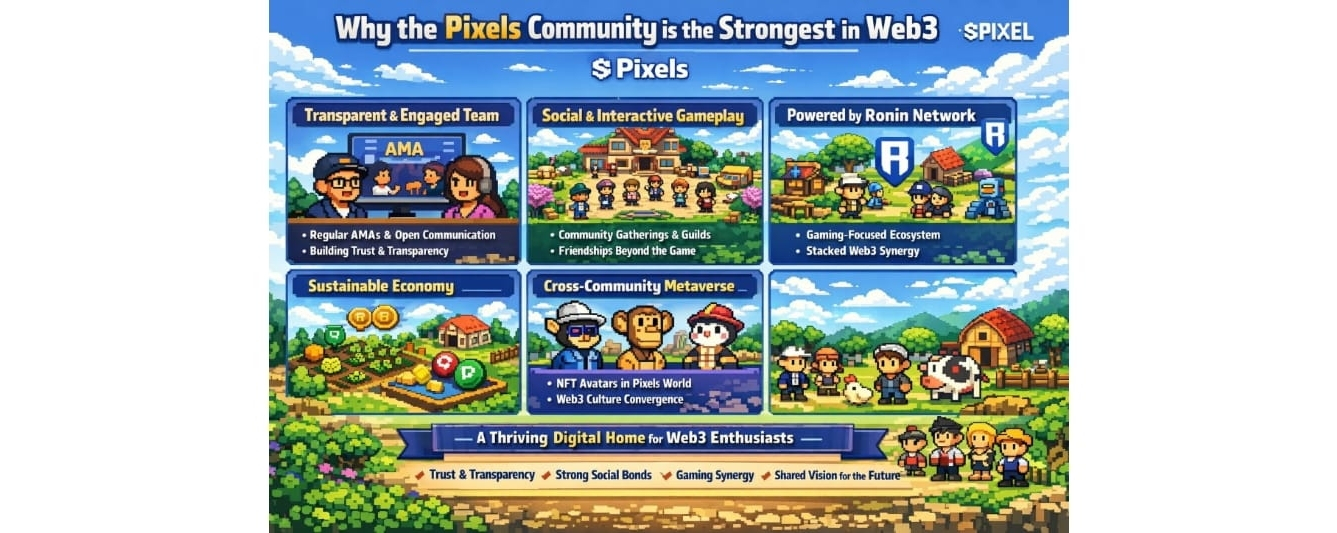
Die Welt von Web3 wird oft dafür kritisiert, ein Ort flüchtiger Interessen zu sein, an dem Nutzer von einem Projekt zum anderen springen, basierend auf kurzfristigen Gewinnen. Pixels hat jedoch diese Erzählung vollständig umgedreht, indem es arguably die widerstandsfähigste und engagierteste Gemeinschaft im Blockchain-Bereich aufgebaut hat. Wenn wir uns ansehen, warum dieses spezifische Ökosystem heraussticht, geht es nicht nur um die Technologie oder die Play-to-Earn-Mechanik; es geht um ein gemeinsames Gefühl der Zugehörigkeit und eine Vision für die Zukunft des digitalen Eigentums, die die Gemeinschaft vollständig angenommen hat.
Warum die Pixels-Gemeinschaft die stärkste in Web3 ist
$PIXEL #pixel @Pixels
Die Welt von Web3 wird oft dafür kritisiert, ein Ort flüchtiger Interessen zu sein, an dem Nutzer von einem Projekt zum anderen springen, basierend auf kurzfristigen Gewinnen. Pixels hat jedoch diese Erzählung vollständig umgedreht, indem es arguably die widerstandsfähigste und engagierteste Gemeinschaft im Blockchain-Bereich aufgebaut hat. Wenn wir uns ansehen, warum dieses spezifische Ökosystem heraussticht, geht es nicht nur um die Technologie oder die Play-to-Earn-Mechanik; es geht um ein gemeinsames Gefühl der Zugehörigkeit und eine Vision für die Zukunft des digitalen Eigentums, die die Gemeinschaft vollständig angenommen hat.
Die Welt von Web3 wird oft dafür kritisiert, ein Ort flüchtiger Interessen zu sein, an dem Nutzer von einem Projekt zum anderen springen, basierend auf kurzfristigen Gewinnen. Pixels hat jedoch diese Erzählung vollständig umgedreht, indem es arguably die widerstandsfähigste und engagierteste Gemeinschaft im Blockchain-Bereich aufgebaut hat. Wenn wir uns ansehen, warum dieses spezifische Ökosystem heraussticht, geht es nicht nur um die Technologie oder die Play-to-Earn-Mechanik; es geht um ein gemeinsames Gefühl der Zugehörigkeit und eine Vision für die Zukunft des digitalen Eigentums, die die Gemeinschaft vollständig angenommen hat.
5
3
153
·
--
Artikel
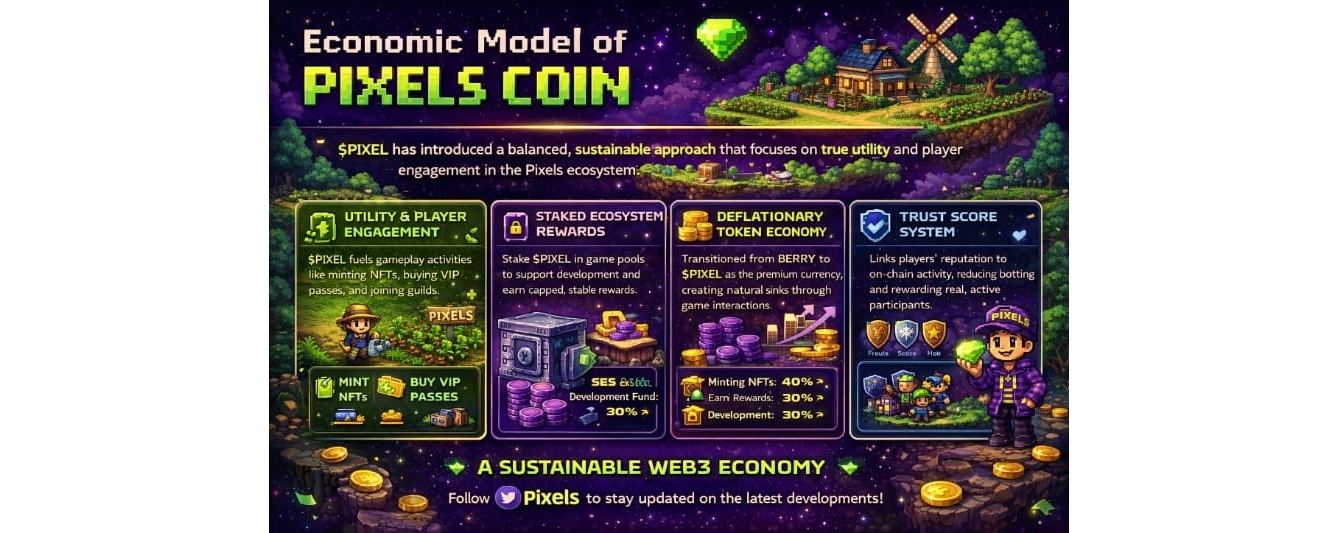
Wirtschaftliches Modell von Pixels Coin....Das wirtschaftliche Modell hinter @pixels ist ein faszinierendes Beispiel dafür, wie Web3-Gaming auf langfristige Nachhaltigkeit hinarbeitet. Anstatt an den alten inflatorischen Systemen festzuhalten, die viele der frühen Play-to-Earn-Spiele verwendet haben, $PIXEL hat einen ausgewogeneren Ansatz eingeführt, der sich auf echte Nützlichkeit und Spielerengagement konzentriert.
Ein großer Teil dieses Wandels ist das gestakte Ökosystem. Indem Spieler $PIXEL in verschiedene Spielpools staken dürfen, hat das Projekt einen Weg geschaffen, wie die Gemeinschaft tatsächlich mitbestimmen kann, wo Ressourcen hingehen. Es geht dabei nicht nur um das Verdienen von Belohnungen; es geht um dezentrale Veröffentlichung. Wenn du stakest, unterstützt du im Grunde die Spiele, an die du glaubst, während du einen Anteil an den Belohnungen des Ökosystems verdienst. Anfang 2026 haben wir gesehen, dass diese Belohnungen strategisch begrenzt wurden, um Angebotsengpässe zu verhindern und die Wirtschaft für alle Beteiligten stabil zu halten....
Wirtschaftliches Modell von Pixels Coin....
Das wirtschaftliche Modell hinter @Pixels ist ein faszinierendes Beispiel dafür, wie Web3-Gaming auf langfristige Nachhaltigkeit hinarbeitet. Anstatt an den alten inflatorischen Systemen festzuhalten, die viele der frühen Play-to-Earn-Spiele verwendet haben, $PIXEL hat einen ausgewogeneren Ansatz eingeführt, der sich auf echte Nützlichkeit und Spielerengagement konzentriert.
Ein großer Teil dieses Wandels ist das gestakte Ökosystem. Indem Spieler $PIXEL in verschiedene Spielpools staken dürfen, hat das Projekt einen Weg geschaffen, wie die Gemeinschaft tatsächlich mitbestimmen kann, wo Ressourcen hingehen. Es geht dabei nicht nur um das Verdienen von Belohnungen; es geht um dezentrale Veröffentlichung. Wenn du stakest, unterstützt du im Grunde die Spiele, an die du glaubst, während du einen Anteil an den Belohnungen des Ökosystems verdienst. Anfang 2026 haben wir gesehen, dass diese Belohnungen strategisch begrenzt wurden, um Angebotsengpässe zu verhindern und die Wirtschaft für alle Beteiligten stabil zu halten....
Ein großer Teil dieses Wandels ist das gestakte Ökosystem. Indem Spieler $PIXEL in verschiedene Spielpools staken dürfen, hat das Projekt einen Weg geschaffen, wie die Gemeinschaft tatsächlich mitbestimmen kann, wo Ressourcen hingehen. Es geht dabei nicht nur um das Verdienen von Belohnungen; es geht um dezentrale Veröffentlichung. Wenn du stakest, unterstützt du im Grunde die Spiele, an die du glaubst, während du einen Anteil an den Belohnungen des Ökosystems verdienst. Anfang 2026 haben wir gesehen, dass diese Belohnungen strategisch begrenzt wurden, um Angebotsengpässe zu verhindern und die Wirtschaft für alle Beteiligten stabil zu halten....
5
3
79
·
--
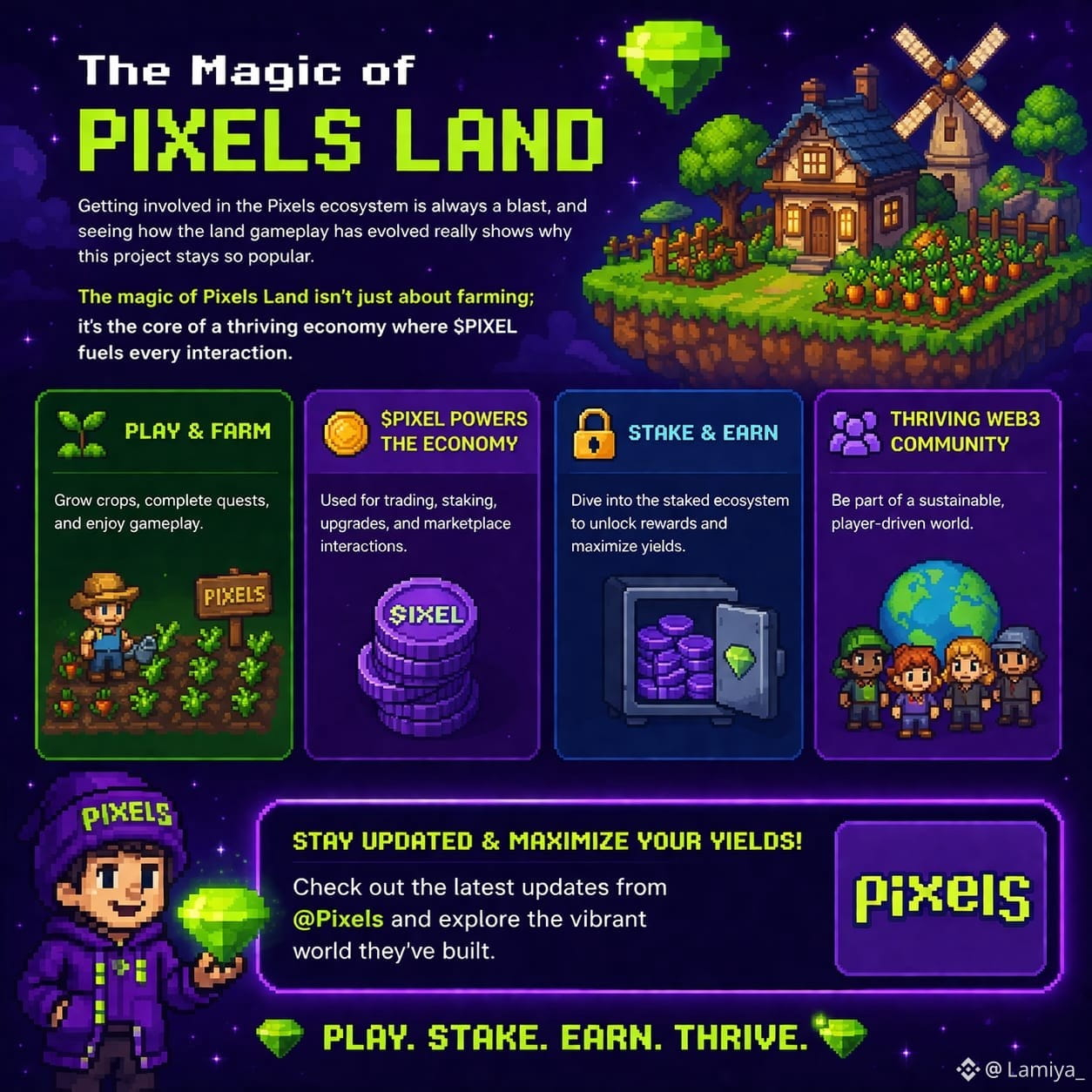
#pixel $PIXEL @pixels Die Magie von Pixels Land...
Sich in das Pixels-Ökosystem einzubringen, macht immer Spaß, und zu sehen, wie sich das Gameplay im Land entwickelt hat, zeigt wirklich, warum dieses Projekt so beliebt bleibt. Die Magie von Pixels Land dreht sich nicht nur um Landwirtschaft; es ist der Kern einer florierenden Wirtschaft, in der $PIXEL jede Interaktion antreibt..... Indem man in das gestakte Ökosystem eintaucht, spielt man nicht nur ein Spiel, sondern wird Teil einer nachhaltigen Web3-Community. Die neuesten Updates von @pixels zu überprüfen, ist ein Muss für jeden, der seine Erträge maximieren und die lebendige Welt genießen möchte, die sie aufgebaut haben. #pixel
#pixel $PIXEL @Pixels Die Magie von Pixels Land...
Sich in das Pixels-Ökosystem einzubringen, macht immer Spaß, und zu sehen, wie sich das Gameplay im Land entwickelt hat, zeigt wirklich, warum dieses Projekt so beliebt bleibt. Die Magie von Pixels Land dreht sich nicht nur um Landwirtschaft; es ist der Kern einer florierenden Wirtschaft, in der $PIXEL jede Interaktion antreibt..... Indem man in das gestakte Ökosystem eintaucht, spielt man nicht nur ein Spiel, sondern wird Teil einer nachhaltigen Web3-Community. Die neuesten Updates von @Pixels zu überprüfen, ist ein Muss für jeden, der seine Erträge maximieren und die lebendige Welt genießen möchte, die sie aufgebaut haben. #pixel
Sich in das Pixels-Ökosystem einzubringen, macht immer Spaß, und zu sehen, wie sich das Gameplay im Land entwickelt hat, zeigt wirklich, warum dieses Projekt so beliebt bleibt. Die Magie von Pixels Land dreht sich nicht nur um Landwirtschaft; es ist der Kern einer florierenden Wirtschaft, in der $PIXEL jede Interaktion antreibt..... Indem man in das gestakte Ökosystem eintaucht, spielt man nicht nur ein Spiel, sondern wird Teil einer nachhaltigen Web3-Community. Die neuesten Updates von @Pixels zu überprüfen, ist ein Muss für jeden, der seine Erträge maximieren und die lebendige Welt genießen möchte, die sie aufgebaut haben. #pixel
5
3
85
·
--
Artikel
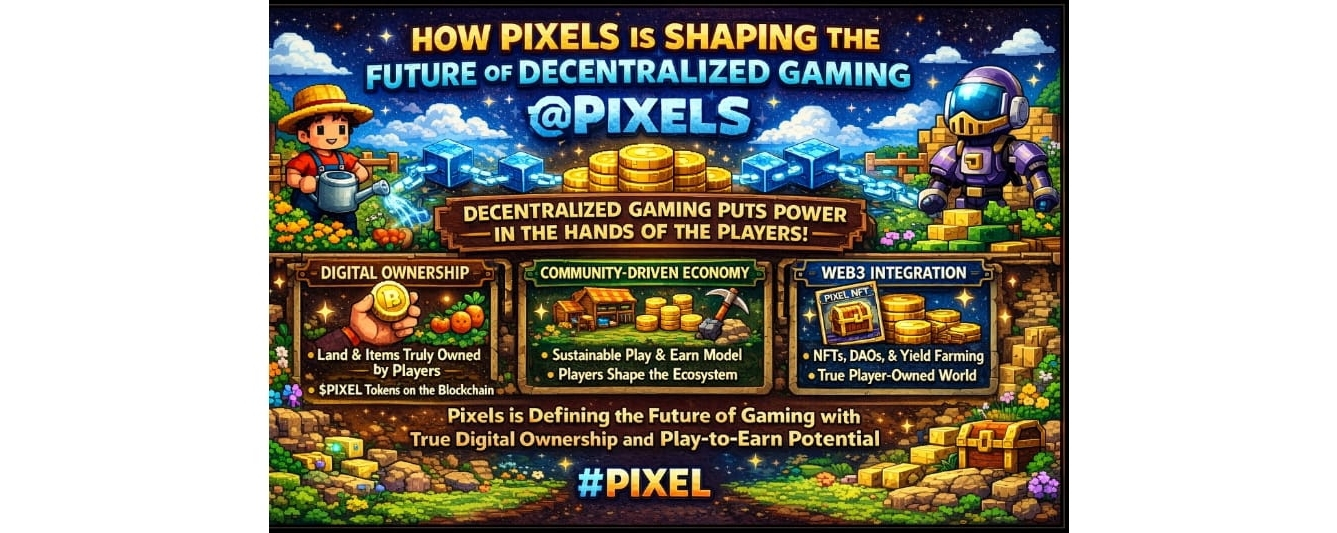
Wie Pixels die Zukunft des dezentralisierten Gamings gestaltetPixels verändert wirklich das Spiel, wenn es darum geht, wie wir über digitales Eigentum und soziales Gaming denken. Indem sie sich von den traditionellen geschlossenen Systemen entfernen, haben sie eine offene Welt des Farmens und der Erkundung geschaffen, die tatsächlich die Macht wieder in die Hände der Spieler legt. Es geht nicht mehr nur darum, Pflanzen anzubauen oder Land zu dekorieren, sondern darum, wie diese Vermögenswerte auf der Blockchain leben durch $PIXEL
Was dieses Projekt hervorhebt, ist, wie @pixels es geschafft hat, ein nachhaltiges Ökosystem zu schaffen, in dem sich die Gemeinschaft wirklich wie die Eigentümer eines Teils der Welt fühlt. Die Integration von Web3-Mechaniken ermöglicht ein viel tieferes Engagement als bei Ihrem typischen Mobile Game. Anstatt nur Zeit damit zu verbringen, aufzuleveln, tragen die Spieler zu einer dezentralisierten Wirtschaft bei, die jeden Tag robuster wird.
Wie Pixels die Zukunft des dezentralisierten Gamings gestaltet
Pixels verändert wirklich das Spiel, wenn es darum geht, wie wir über digitales Eigentum und soziales Gaming denken. Indem sie sich von den traditionellen geschlossenen Systemen entfernen, haben sie eine offene Welt des Farmens und der Erkundung geschaffen, die tatsächlich die Macht wieder in die Hände der Spieler legt. Es geht nicht mehr nur darum, Pflanzen anzubauen oder Land zu dekorieren, sondern darum, wie diese Vermögenswerte auf der Blockchain leben durch $PIXEL
Was dieses Projekt hervorhebt, ist, wie @Pixels es geschafft hat, ein nachhaltiges Ökosystem zu schaffen, in dem sich die Gemeinschaft wirklich wie die Eigentümer eines Teils der Welt fühlt. Die Integration von Web3-Mechaniken ermöglicht ein viel tieferes Engagement als bei Ihrem typischen Mobile Game. Anstatt nur Zeit damit zu verbringen, aufzuleveln, tragen die Spieler zu einer dezentralisierten Wirtschaft bei, die jeden Tag robuster wird.
Was dieses Projekt hervorhebt, ist, wie @Pixels es geschafft hat, ein nachhaltiges Ökosystem zu schaffen, in dem sich die Gemeinschaft wirklich wie die Eigentümer eines Teils der Welt fühlt. Die Integration von Web3-Mechaniken ermöglicht ein viel tieferes Engagement als bei Ihrem typischen Mobile Game. Anstatt nur Zeit damit zu verbringen, aufzuleveln, tragen die Spieler zu einer dezentralisierten Wirtschaft bei, die jeden Tag robuster wird.
1
3
92
Anmelden und weiter Inhalte entdecken
Krypto-Nutzer weltweit auf Binance Square kennenlernen
⚡️ Bleib in Sachen Krypto stets am Puls.
💬 Die weltgrößte Kryptobörse vertraut darauf.
👍 Erhalte verlässliche Einblicke von verifizierten Creators.
E-Mail-Adresse/Telefonnummer
Trendthemen
FedRateWatch
1.4M Aufrufe
6,438 Kommentare
Teile & gewinne Traffic-Belohnungen in unserer Kampagne mit angesagtem Hashtag
✨Thema: FOMC September, Was ist der nächste Schritt der Fed?
👉So nimmst du teil:
Veröffentliche einen kurzen Beitrag oder Artikel mit dem Hashtag #FedRateWatch
Erstelle Inhalte basierend auf den folgenden Blickwinkeln:
- Der August-Core-CPI stieg um 0,3% im Monatsvergleich, und die Wahrscheinlichkeit für eine 25bp-Erhöhung diese Woche liegt nun bei fast 90%. Erwartest du diese Woche eine Zinserhöhung? Handelt es sich um einen einmaligen Schritt oder den Beginn eines längeren Zinserhöhungszyklus?
- Wenn die Erhöhung erfolgt: Wie entwickelt sich das für BTC, Tech-Aktien und Gold? Aufwärts- oder abwärtsgerichtet?
- Wie planst du als Nächstes zu handeln? Teile deinen BTC-, Aktien- oder Gold-Trade/Bestände mit unserem Trade-Sharing-Widget.
⏰Kampagnenzeitraum:
- 2026-09-15 11:00 - 2026-09-17 3:00 UTC
🎁Belohnung:
- Qualifizierte Beiträge, die die oben genannten Richtlinien erfüllen und mehr als 100 Wörter enthalten, werden überprüft und erhalten möglicherweise einen zufälligen Traffic-Boost von 500 bis 3.000 Aufrufen. Du erhältst eine Benachrichtigung von deiner Feed-Secretary, wenn dein Beitrag ausgewählt wird.
- Erhalte die Chance, dass dein Artikel auf Binance Square Official vorgestellt wird
Du brauchst Ideen für deinen Beitrag? Besuche die Themenseite #FedRateWatch oder die Square Guide on How to Post for Better Reach.
Binance Square Official
·634 Likes
·1.6M Aufrufe
ZcashRises6%
35,341 Aufrufe
531 Kommentare
XRPSinks10%
23,249 Aufrufe
348 Kommentare