

Hubdar On Spot
56 Beiträge

Hubdar On Spot
Melden
Nutzer blockieren
Best Spot and Futures Signals, Less but Accurate 🎯

DUSK Halter
Regelmäßiger Trader
10.7 Monate
28 Following
86 Follower
104 Like gegeben
Beiträge
Alle
Zitierungen
Live
Artikel
Übersetzung ansehen
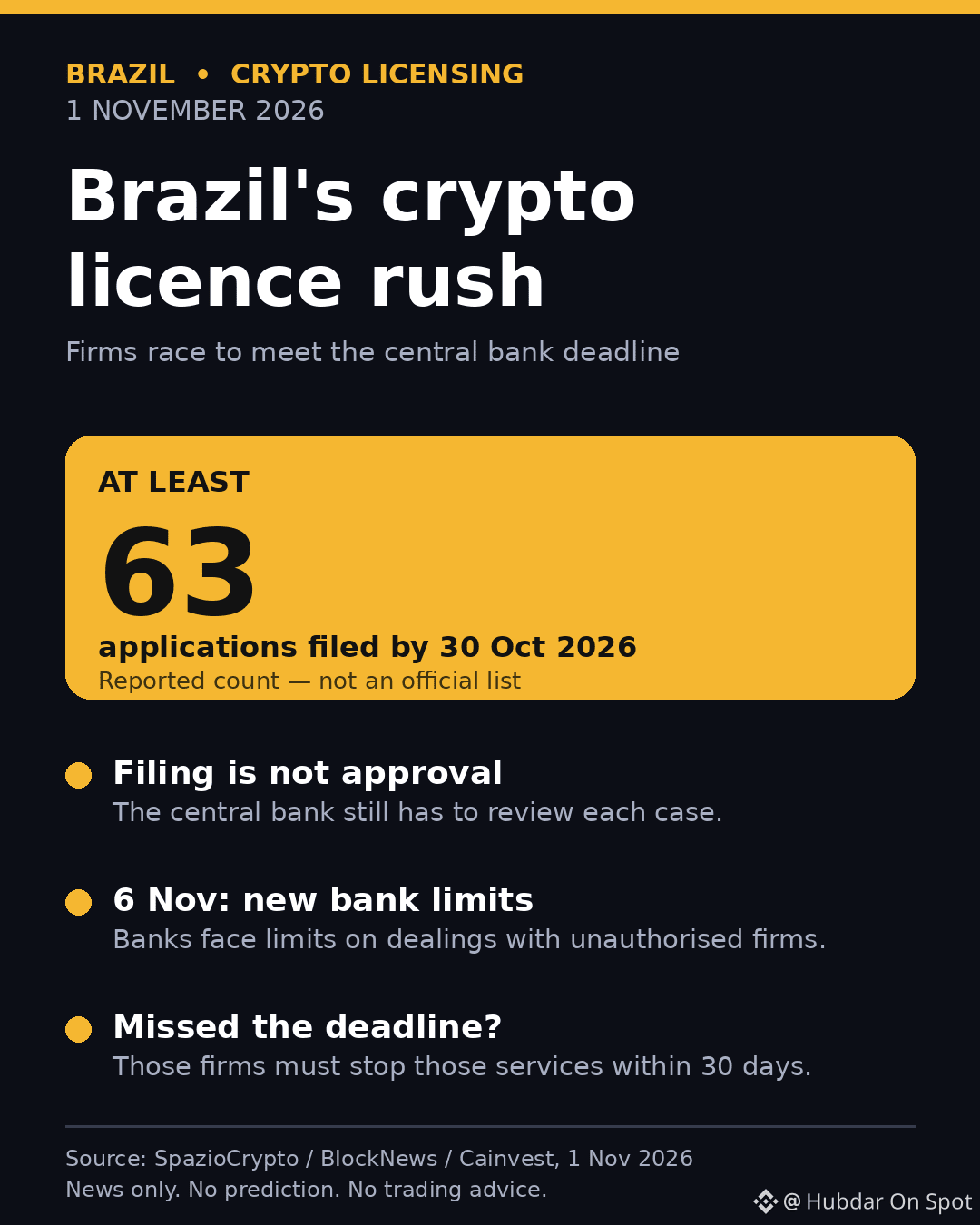
Brazil's crypto licence rush: at least 63 firms filed before the deadlineBrazil has just closed the door on the first stage of its new crypto licensing system. And a lot of firms rushed through it in time.
A virtual asset service provider, or VASP for short, is a company that lets people trade, hold or send crypto. In Brazil, those firms now need formal permission from the country's central bank, the Banco Central do Brasil, to keep operating.
What happened
Brazil's central bank published its new crypto rules in November 2025. They took effect on 2 February 2026. Firms that were already offering crypto services then had 270 days to file the first part of their application. That deadline was 30 October 2026.
By that deadline, at least 63 crypto operators had filed, according to BlockNews, based on monitoring by Cainvest. The count was updated at 8:05 p.m. local time. Around ten more applications that came in during the final hours had not yet been counted, so the real total could be higher.
Among the firms named by BlockNews are Bitget, Kraken, BTG Pactual and Banco Rendimento. OSL Brasil separately confirmed on 30 October that its own subsidiary had filed. Before the deadline, Binance had applied on 23 October and Coinbase on 28 October, according to Unchained's reporting.
Filing is only the start, though. It is not a licence. The central bank still has to check each application, and it can ask for more documents at any stage. OSL said this plainly in its own announcement: filing does not guarantee approval.
Firms that filed on time can keep offering their services while the review runs. But they cannot change how they operate in the meantime. Firms that missed the deadline must stop those services within 30 days of the cutoff.
Then comes a second date, and it is separate from the application itself. From 6 November 2026, banks, payment firms and other firms supervised by the central bank will not be able to carry out or help with crypto market operations for providers that are not authorised in Brazil, except in cases the rules expressly allow. That change comes from Resolution BCB 589, which amended the earlier rules.
Why it matters
Brazil is Latin America's largest economy, and it is one of the world's biggest crypto markets. So a licensing system there affects a lot of users, not just a handful of firms.
For everyday users, the shift is simple to understand. Before, many firms could serve Brazilian customers without this kind of central bank permission. Now, permission is the route to staying in the market. For firms, the next job is no longer meeting a deadline. It is passing the review, keeping their paperwork in order, and keeping their banking relationships working under the new 6 November rule.
What is confirmed
The 30 October deadline for first-phase applications is confirmed in the central bank's rules, and the 6 November banking restriction is confirmed in Resolution BCB 589. At least 63 applications were known by 8:05 p.m. local time on the deadline day, based on Cainvest monitoring reported by BlockNews, with around ten more not yet counted. OSL Brasil confirmed its own filing on 30 October. Firms that filed on time may keep operating during the review, and firms that missed the deadline must stop those services within 30 days.
What is still unknown
The 63 figure is not an official central bank total. The central bank has not published a full list, so the final count, and which firms filed, may change as more reports come in. No approvals have been confirmed in these reports, and no decision dates have been given.
There is also one point the sources do not clear up. One rule lets firms that filed on time keep operating while they wait. The updated banking rule, however, talks about providers that are not authorised, and does not expressly repeat the exception for firms still waiting for a decision. How the central bank will join those two rules together from 6 November onwards is not yet clear.
Original source: SpazioCrypto, 1 November 2026, "Brazil Crypto Licensing: 63 Firms Apply to Banco Central" — https://en.spaziocrypto.com/regulation/brazil-crypto-licenses-63-firms-apply-banco-central/ — reporting BlockNews based on Cainvest monitoring; with Unchained, 29 October 2026, "Coinbase Files to Keep Operating Under Brazil's New Crypto Rules" — https://unchainedcrypto.com/coinbase-files-to-keep-operating-under-brazils-new-crypto-rules/
Do you think a clear licence list will make crypto in Brazil feel safer for everyday users, or just harder for smaller firms to keep up?
Brazil's crypto licence rush: at least 63 firms filed before the deadline
Brazil has just closed the door on the first stage of its new crypto licensing system. And a lot of firms rushed through it in time.
A virtual asset service provider, or VASP for short, is a company that lets people trade, hold or send crypto. In Brazil, those firms now need formal permission from the country's central bank, the Banco Central do Brasil, to keep operating.
What happened
Brazil's central bank published its new crypto rules in November 2025. They took effect on 2 February 2026. Firms that were already offering crypto services then had 270 days to file the first part of their application. That deadline was 30 October 2026.
By that deadline, at least 63 crypto operators had filed, according to BlockNews, based on monitoring by Cainvest. The count was updated at 8:05 p.m. local time. Around ten more applications that came in during the final hours had not yet been counted, so the real total could be higher.
Among the firms named by BlockNews are Bitget, Kraken, BTG Pactual and Banco Rendimento. OSL Brasil separately confirmed on 30 October that its own subsidiary had filed. Before the deadline, Binance had applied on 23 October and Coinbase on 28 October, according to Unchained's reporting.
Filing is only the start, though. It is not a licence. The central bank still has to check each application, and it can ask for more documents at any stage. OSL said this plainly in its own announcement: filing does not guarantee approval.
Firms that filed on time can keep offering their services while the review runs. But they cannot change how they operate in the meantime. Firms that missed the deadline must stop those services within 30 days of the cutoff.
Then comes a second date, and it is separate from the application itself. From 6 November 2026, banks, payment firms and other firms supervised by the central bank will not be able to carry out or help with crypto market operations for providers that are not authorised in Brazil, except in cases the rules expressly allow. That change comes from Resolution BCB 589, which amended the earlier rules.
Why it matters
Brazil is Latin America's largest economy, and it is one of the world's biggest crypto markets. So a licensing system there affects a lot of users, not just a handful of firms.
For everyday users, the shift is simple to understand. Before, many firms could serve Brazilian customers without this kind of central bank permission. Now, permission is the route to staying in the market. For firms, the next job is no longer meeting a deadline. It is passing the review, keeping their paperwork in order, and keeping their banking relationships working under the new 6 November rule.
What is confirmed
The 30 October deadline for first-phase applications is confirmed in the central bank's rules, and the 6 November banking restriction is confirmed in Resolution BCB 589. At least 63 applications were known by 8:05 p.m. local time on the deadline day, based on Cainvest monitoring reported by BlockNews, with around ten more not yet counted. OSL Brasil confirmed its own filing on 30 October. Firms that filed on time may keep operating during the review, and firms that missed the deadline must stop those services within 30 days.
What is still unknown
The 63 figure is not an official central bank total. The central bank has not published a full list, so the final count, and which firms filed, may change as more reports come in. No approvals have been confirmed in these reports, and no decision dates have been given.
There is also one point the sources do not clear up. One rule lets firms that filed on time keep operating while they wait. The updated banking rule, however, talks about providers that are not authorised, and does not expressly repeat the exception for firms still waiting for a decision. How the central bank will join those two rules together from 6 November onwards is not yet clear.
Original source: SpazioCrypto, 1 November 2026, "Brazil Crypto Licensing: 63 Firms Apply to Banco Central" — https://en.spaziocrypto.com/regulation/brazil-crypto-licenses-63-firms-apply-banco-central/ — reporting BlockNews based on Cainvest monitoring; with Unchained, 29 October 2026, "Coinbase Files to Keep Operating Under Brazil's New Crypto Rules" — https://unchainedcrypto.com/coinbase-files-to-keep-operating-under-brazils-new-crypto-rules/
Do you think a clear licence list will make crypto in Brazil feel safer for everyday users, or just harder for smaller firms to keep up?
8
Übersetzung ansehen
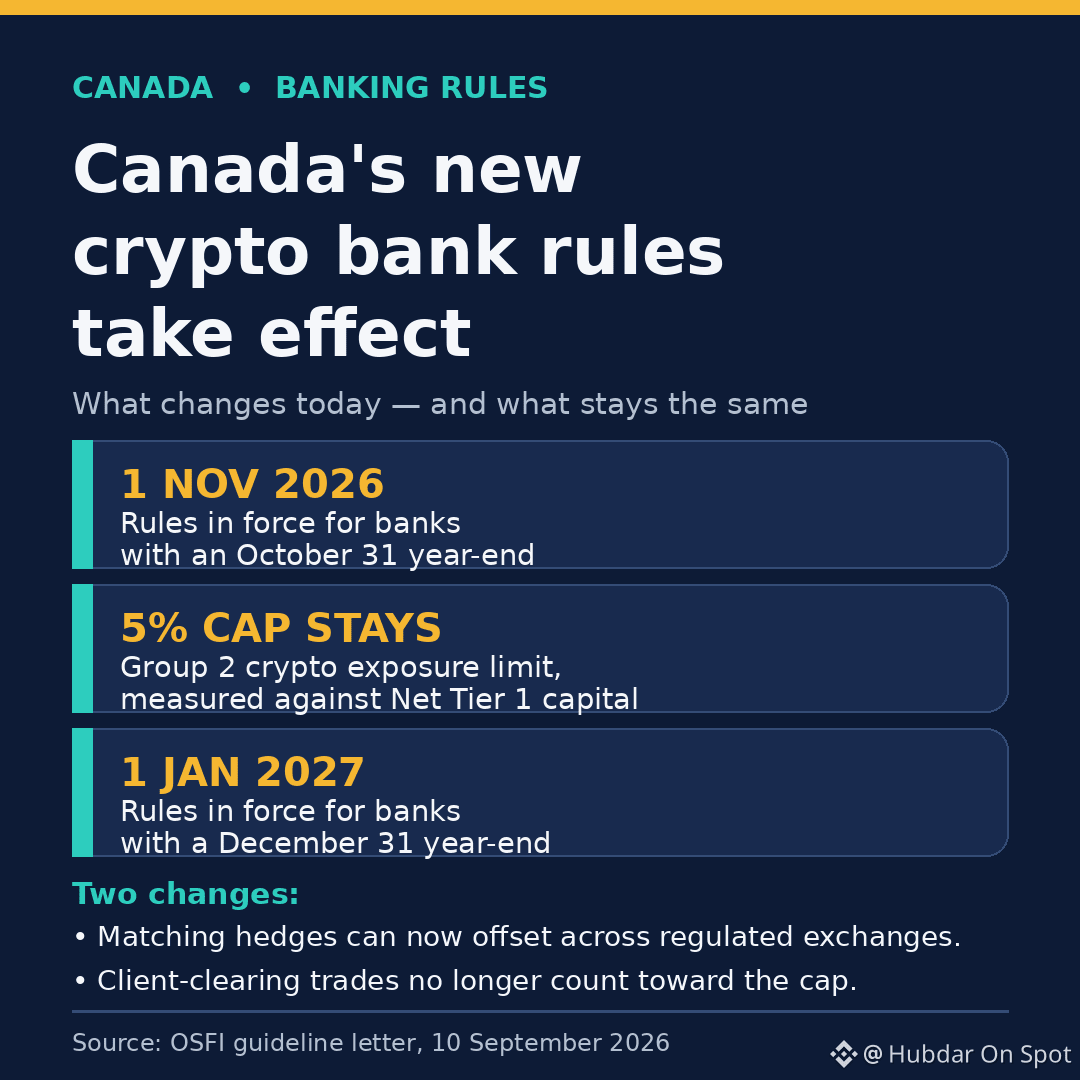
Canada's banks are waking up to new crypto rules today.
The country's banking regulator, OSFI, has updated how banks must handle crypto. The new rules take effect today, 1 November, for banks whose financial year ends on 31 October. Banks on a December year-end follow on 1 January 2027.
Two things change. First, a bank can now cancel out matching hedges — opposite positions that balance each other — even when they sit on different regulated exchanges, as long as they cover the same crypto asset, end on the same date, and meet the regulator's tests. Before, the exchange difference alone could block that.
Second, qualifying trades a bank clears for its clients no longer count toward its crypto exposure cap.
What stays the same matters too. The overall cap remains at 5% of a bank's Net Tier 1 capital, a core measure of its financial strength. And crypto still cannot be counted as collateral — the security held against a loan.
In short, this is targeted relief for banks that sit in the middle of client trades, not a green light for big crypto bets. What is still unknown is how much banks will actually use the extra room. The first bank results under the new rules are usually published in late February, so that is when we may first see it in practice.
Source: OSFI guideline letter, 10 September 2026.
Do you think clearer bank rules like this will help crypto go mainstream in Canada, or does the 5% cap still hold banks back?
70
Artikel
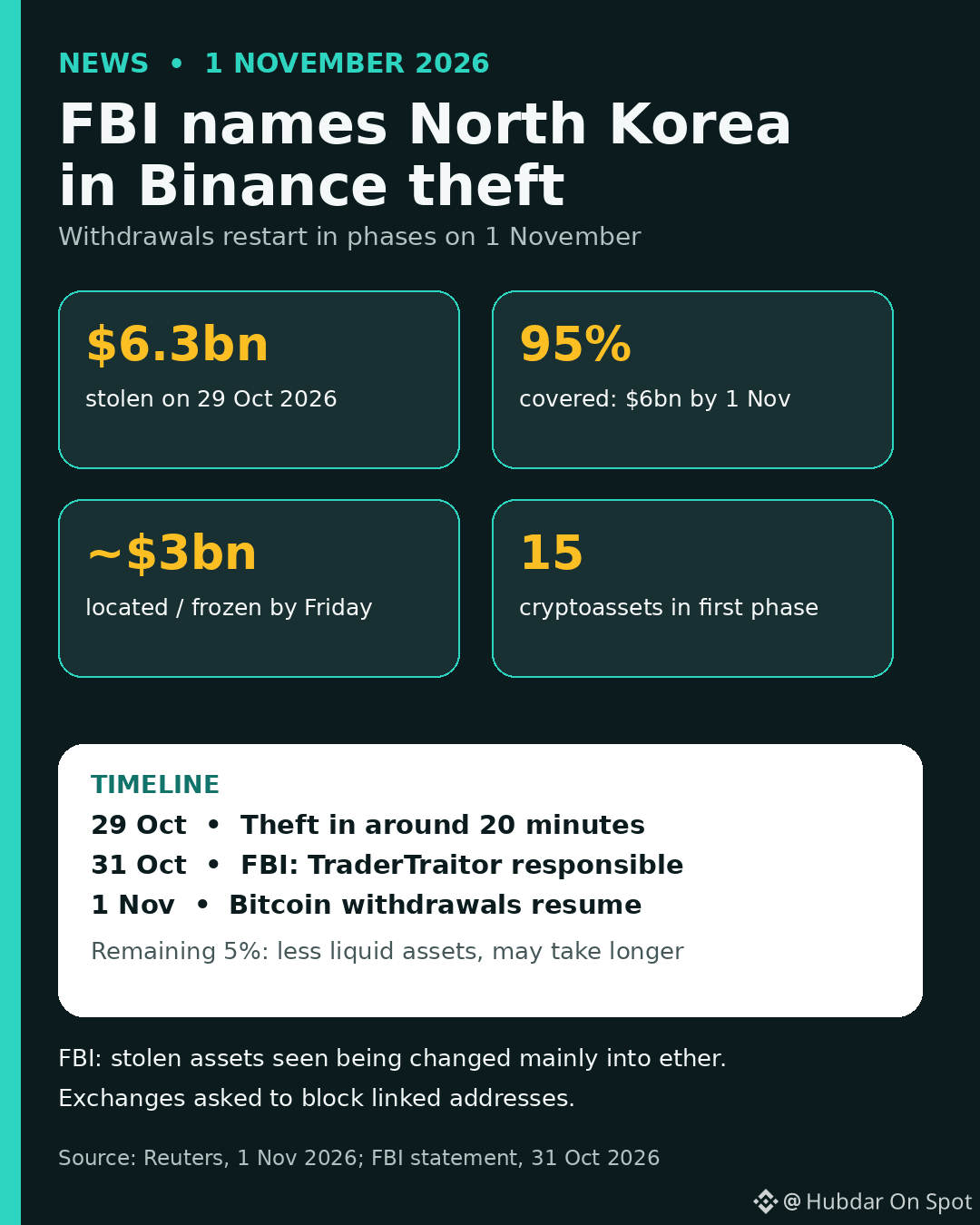
FBI vermutet Nordkorea hinter Binance-Diebstahl von 6,3 Milliarden Dollar – Auszahlungen wieder möglichAn diesem Wochenende hat sich in der Geschichte rund um Binance etwas Bedeutendes getan. Das FBI hat nun genannt, wen es dafür verantwortlich macht. Und Binance ermöglicht es den Menschen wieder, Bitcoin abzuheben.
Binance ist die größte Kryptobörse der Welt. Einfach ausgedrückt ist es eine Plattform, auf der Menschen digitale Münzen handeln und aufbewahren.
Was ist passiert?
Am späten Donnerstag, dem 29. Oktober 2026, wurden Binance digitale Vermögenswerte im Wert von etwa 6,3 Milliarden Dollar gestohlen. Reuters zufolge, das sich auf Blockchain-Analysefirmen TRM Labs und Chainalysis beruft, ereignete sich der Großteil des Diebstahls innerhalb von etwa 20 Minuten.
FBI vermutet Nordkorea hinter Binance-Diebstahl von 6,3 Milliarden Dollar – Auszahlungen wieder möglich
An diesem Wochenende hat sich in der Geschichte rund um Binance etwas Bedeutendes getan. Das FBI hat nun genannt, wen es dafür verantwortlich macht. Und Binance ermöglicht es den Menschen wieder, Bitcoin abzuheben.
Binance ist die größte Kryptobörse der Welt. Einfach ausgedrückt ist es eine Plattform, auf der Menschen digitale Münzen handeln und aufbewahren.
Was ist passiert?
Am späten Donnerstag, dem 29. Oktober 2026, wurden Binance digitale Vermögenswerte im Wert von etwa 6,3 Milliarden Dollar gestohlen. Reuters zufolge, das sich auf Blockchain-Analysefirmen TRM Labs und Chainalysis beruft, ereignete sich der Großteil des Diebstahls innerhalb von etwa 20 Minuten.
204
Übersetzung ansehen
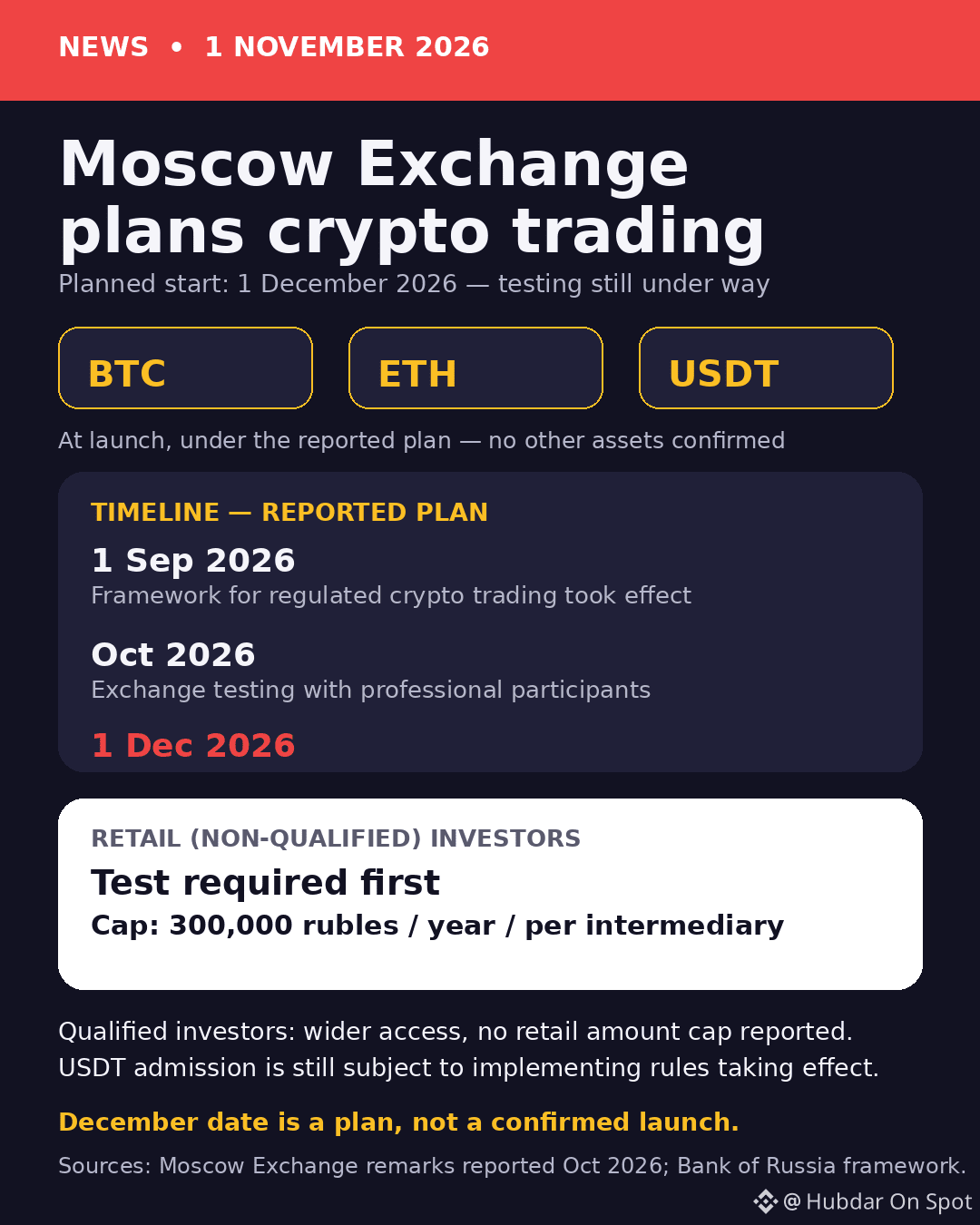
The Moscow Exchange is planning to start crypto trading on 1 December 2026, covering Bitcoin, Ethereum and USDT at launch.
The plan sits under a framework that took effect on 1 September 2026. Retail (non-qualified) investors would need to pass a test first, with purchases capped at 300,000 rubles a year per intermediary. Qualified investors are reported to face no such amount cap and wider asset access.
The December date is still a plan, not a confirmed launch — the exchange has said testing with professional participants is under way. One detail to watch: reports note USDT admission is still subject to the relevant implementing rules taking effect.
Do you think regulated exchange trading will bring more everyday investors into crypto, or will the caps and tests keep most activity elsewhere?
95
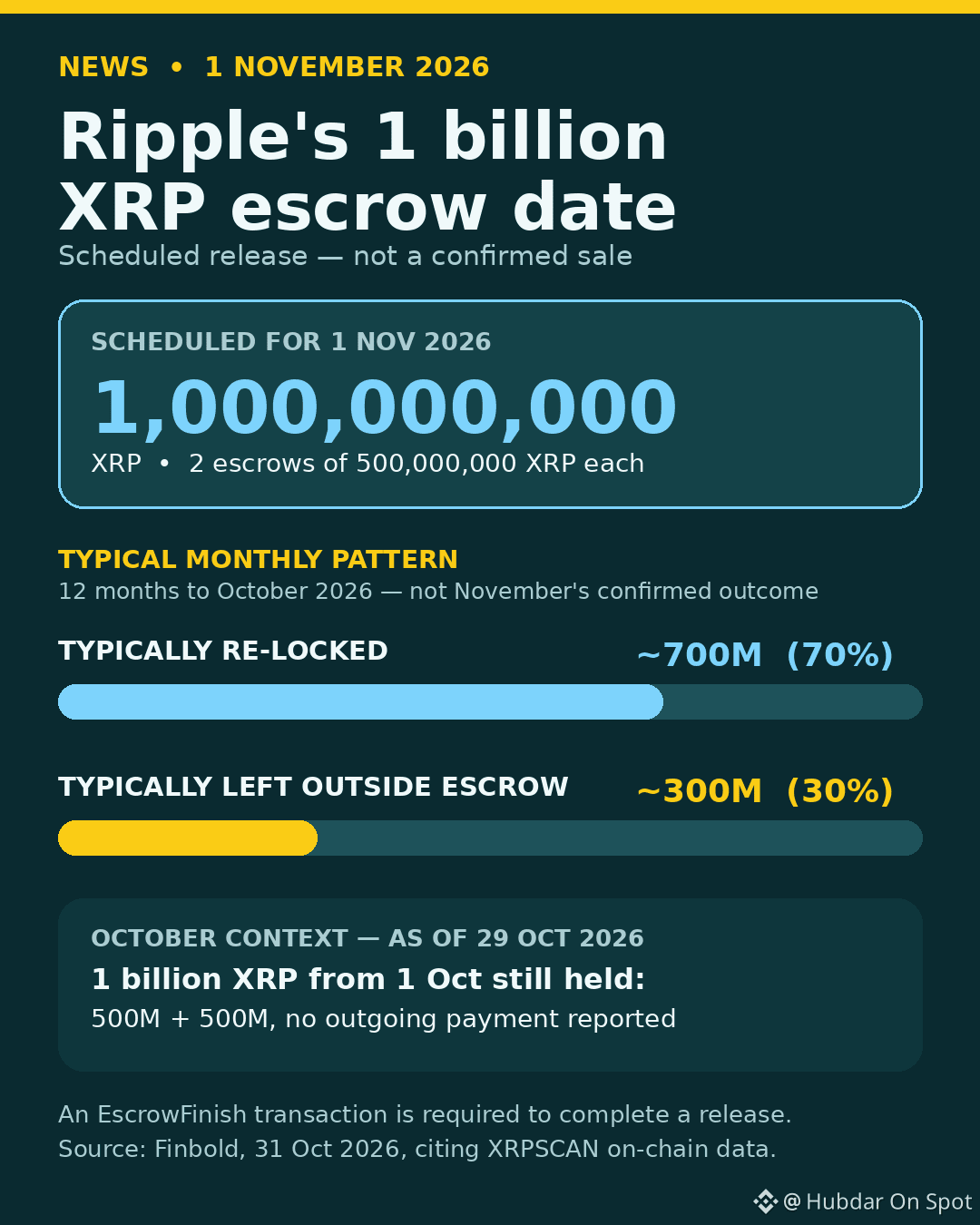
Die geplante Freigabe von 1 Milliarde XRP aus dem Ripple-Escrow wird heute, am 1. November 2026, fällig.
Die monatliche Freigabe verteilt sich auf zwei Escrows mit jeweils 500 Millionen XRP. Allein das Erreichen des Datums bestätigt weder eine Übertragung noch einen Verkauf — Ripple muss eine EscrowFinish-Transaktion einreichen, um die Freigabe abzuschließen.
Der Kontext ist ungewöhnlich: Am 29. Oktober veröffentlichte On-Chain-Daten zeigten, dass die beiden Wallets aus der Freigabe vom 1. Oktober weiterhin jeweils 500 Millionen XRP hielten. Seitdem wurde keine ausgehende Zahlung verzeichnet.
In den zwölf Monaten bis Oktober 2026 wurden typischerweise jeden Monat etwa 700 Millionen XRP — rund 70 % — wieder gesperrt. Damit blieben etwa 300 Millionen außerhalb des Escrows. Das ist das etablierte Muster, aber kein bestätigtes Ergebnis für November.
Quelle: Finbold, 31. Okt. 2026.
Worauf werdet ihr zuerst achten — auf den EscrowFinish-Schritt oder darauf, ob sich das Muster des erneuten Sperrens wiederholt?
150
Artikel
Übersetzung ansehen
Illinois crypto tax rules could effectively ban DeFi, warn a16z, Uniswap Labs and DeFi Education FundWhat happened
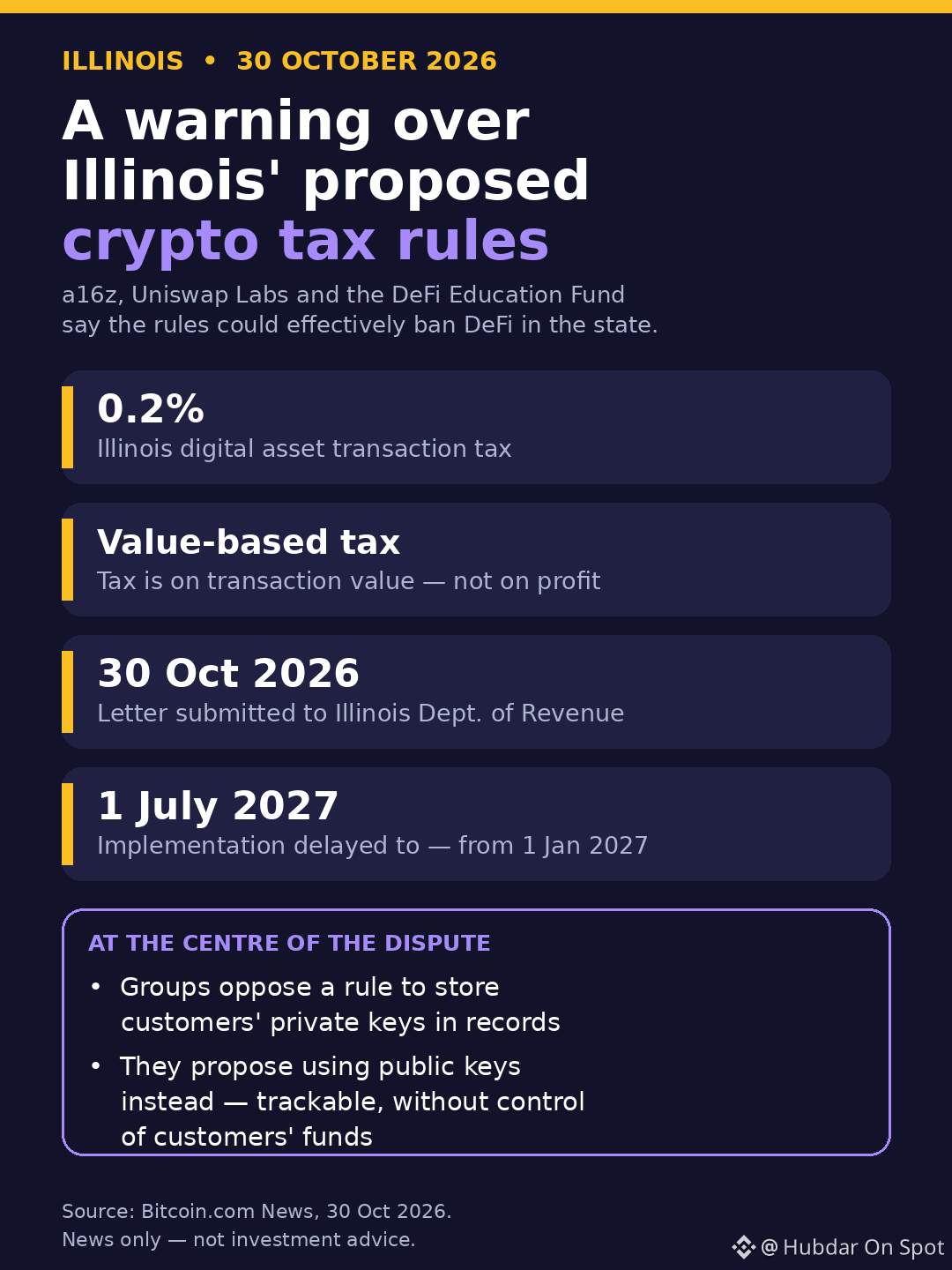
On 30 October 2026, Andreessen Horowitz (a16z), Uniswap Labs and the DeFi Education Fund submitted a letter to the Illinois Department of Revenue urging regulators to overhaul proposed rules for implementing Illinois' Digital Asset Tax Act.
The groups warn that the proposed implementation could effectively prohibit decentralised finance (DeFi) activity in Illinois, while also creating serious security risks for users.
Their central argument is about how decentralised exchanges (DEXs) are classified. The letter argues that the proposed rules incorrectly treat DEXs as conventional financial brokers. The groups say DEXs, including the Uniswap protocol, operate through autonomous software rather than as intermediaries that control customers' assets or execute transactions on their behalf.
Unlike centralised exchanges, they argue, DEXs generally cannot identify customers, determine their locations, collect taxes, or file returns on individual transactions. Imposing those obligations, they say, would make compliance practically impossible.
Why it matters
If the proposed approach stands, the groups argue, DeFi services could face a de facto ban in Illinois — not because DeFi is named as banned, but because the compliance duties cannot be met in practice.
A second concern is security. One controversial provision would require brokers to maintain records containing customers' private keys — the credentials used to authorise transactions and control digital assets. The signatories warn that collecting and storing those credentials could expose customer funds to theft if the records were compromised, and could force companies to choose between protecting customer assets and complying with state rules.
The letter proposes replacing the term "private keys" with "public keys", which can be used to track blockchain transactions without granting control over customers' funds.
The groups also object to provisions that could tax withdrawals from centralised exchanges to personal wallets and transfers of assets between blockchains, known as bridging. A16z policy head Miles Jennings compared that treatment to taxing someone simply for moving money between their own bank accounts.
The groups ask regulators to explicitly exclude decentralised protocols and their interfaces from the definition of digital asset brokers, and to clarify that collecting automated protocol fees does not automatically establish broker status.
What is confirmed
- The letter was submitted on Friday, 30 October 2026, by a16z, Uniswap Labs and the DeFi Education Fund, as reported by Bitcoin.com News on 30 October 2026.
- Illinois enacted its Digital Asset Tax Act in June, imposing a 0.2% tax on the value of qualifying cryptocurrency transactions and other covered digital asset activity. The levy is based on transaction value, not on profit.
- Implementation has been postponed from 1 January to 1 July 2027, to allow litigation to proceed.
- The Blockchain Association and Crypto Council for Innovation have challenged the law in court, raising concerns including overlapping taxation, constitutional protections and potential criminal penalties.
What is still unknown / not confirmed
- Whether the Illinois Department of Revenue will revise the proposed rules, exclude decentralised protocols, or change the private-keys provision to public keys. That decision has not been confirmed.
- The outcome of the court challenges. A prediction by one industry figure that challengers will succeed is an opinion, not a ruling.
- Whether the proposed rules would, as a matter of law, amount to a ban on DeFi. That is the groups' warning and argument, not a confirmed legal outcome.
This article is news only and is not investment advice.
Source: Bitcoin.com News, 30 October 2026 — https://news.bitcoin.com/regulation-and-legal/a16z-uniswap-warn-illinois-crypto-tax-rules-ban-defi/
Should decentralised protocols be treated differently from traditional brokers for tax reporting — and if so, how should that line be drawn?
Illinois crypto tax rules could effectively ban DeFi, warn a16z, Uniswap Labs and DeFi Education Fund
What happened
On 30 October 2026, Andreessen Horowitz (a16z), Uniswap Labs and the DeFi Education Fund submitted a letter to the Illinois Department of Revenue urging regulators to overhaul proposed rules for implementing Illinois' Digital Asset Tax Act.
The groups warn that the proposed implementation could effectively prohibit decentralised finance (DeFi) activity in Illinois, while also creating serious security risks for users.
Their central argument is about how decentralised exchanges (DEXs) are classified. The letter argues that the proposed rules incorrectly treat DEXs as conventional financial brokers. The groups say DEXs, including the Uniswap protocol, operate through autonomous software rather than as intermediaries that control customers' assets or execute transactions on their behalf.
Unlike centralised exchanges, they argue, DEXs generally cannot identify customers, determine their locations, collect taxes, or file returns on individual transactions. Imposing those obligations, they say, would make compliance practically impossible.
Why it matters
If the proposed approach stands, the groups argue, DeFi services could face a de facto ban in Illinois — not because DeFi is named as banned, but because the compliance duties cannot be met in practice.
A second concern is security. One controversial provision would require brokers to maintain records containing customers' private keys — the credentials used to authorise transactions and control digital assets. The signatories warn that collecting and storing those credentials could expose customer funds to theft if the records were compromised, and could force companies to choose between protecting customer assets and complying with state rules.
The letter proposes replacing the term "private keys" with "public keys", which can be used to track blockchain transactions without granting control over customers' funds.
The groups also object to provisions that could tax withdrawals from centralised exchanges to personal wallets and transfers of assets between blockchains, known as bridging. A16z policy head Miles Jennings compared that treatment to taxing someone simply for moving money between their own bank accounts.
The groups ask regulators to explicitly exclude decentralised protocols and their interfaces from the definition of digital asset brokers, and to clarify that collecting automated protocol fees does not automatically establish broker status.
What is confirmed
- The letter was submitted on Friday, 30 October 2026, by a16z, Uniswap Labs and the DeFi Education Fund, as reported by Bitcoin.com News on 30 October 2026.
- Illinois enacted its Digital Asset Tax Act in June, imposing a 0.2% tax on the value of qualifying cryptocurrency transactions and other covered digital asset activity. The levy is based on transaction value, not on profit.
- Implementation has been postponed from 1 January to 1 July 2027, to allow litigation to proceed.
- The Blockchain Association and Crypto Council for Innovation have challenged the law in court, raising concerns including overlapping taxation, constitutional protections and potential criminal penalties.
What is still unknown / not confirmed
- Whether the Illinois Department of Revenue will revise the proposed rules, exclude decentralised protocols, or change the private-keys provision to public keys. That decision has not been confirmed.
- The outcome of the court challenges. A prediction by one industry figure that challengers will succeed is an opinion, not a ruling.
- Whether the proposed rules would, as a matter of law, amount to a ban on DeFi. That is the groups' warning and argument, not a confirmed legal outcome.
This article is news only and is not investment advice.
Source: Bitcoin.com News, 30 October 2026 — https://news.bitcoin.com/regulation-and-legal/a16z-uniswap-warn-illinois-crypto-tax-rules-ban-defi/
Should decentralised protocols be treated differently from traditional brokers for tax reporting — and if so, how should that line be drawn?
3
Artikel
Übersetzung ansehen
Bangladesh Bank Reaffirms Crypto Restrictions in New Consolidated CircularBangladesh Bank Reaffirms Crypto Restrictions in New Consolidated Circular
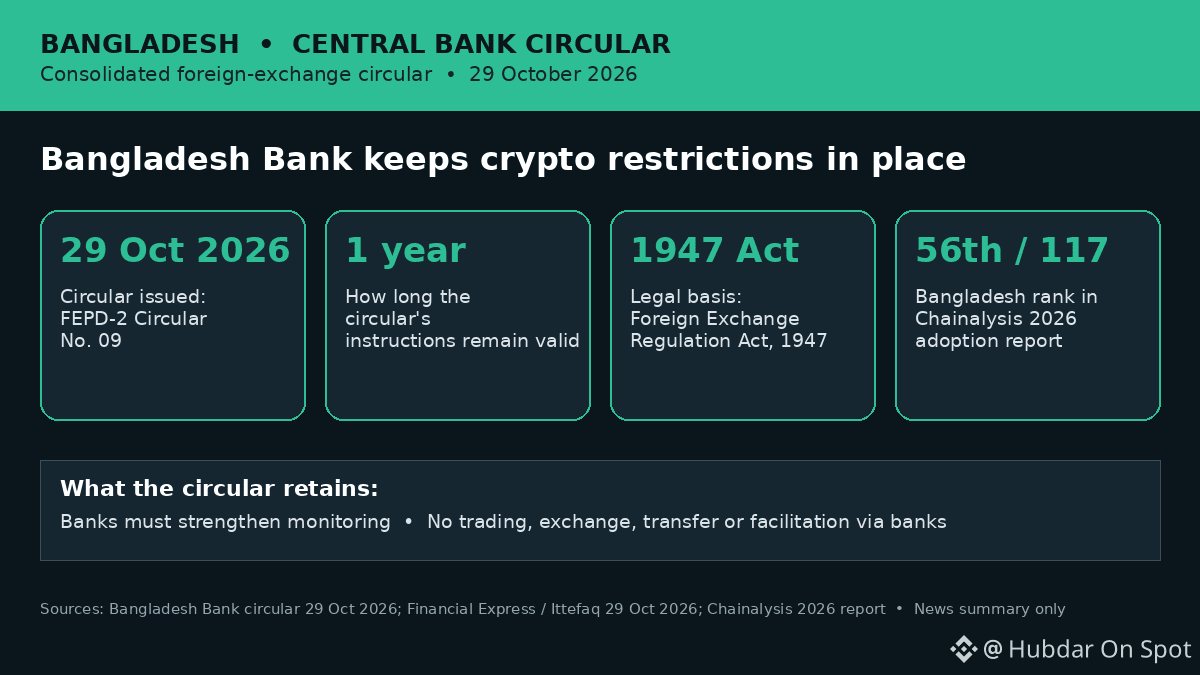
Bangladesh Bank has reaffirmed its restrictions on cryptocurrency and virtual-currency transactions in a new consolidated circular on foreign-exchange management, issued on Thursday, 29 October 2026.
The circular, FEPD-2 Circular No. 09 from the central bank's Foreign Exchange Policy Department-2, brings existing foreign-exchange rules together in a single document. It repeals the instructions in the Guidelines for Foreign Exchange Transactions (GFET), 2018, Volume I, and subsequent circulars, except for the monthly reporting instructions in Volume II. The instructions in the new circular will remain valid for one year from the date of issue.
What happened — and what did not change
The important detail is the nature of this move. The reporting on the circular describes it as retaining and consolidating existing restrictions, not as creating a new ban from scratch. The restrictions cover the exchange, transfer and trading of virtual assets and virtual currencies, as well as the provision of services that facilitate such activities in Bangladesh.
Banks and financial institutions have been instructed to remain vigilant and to strengthen monitoring of customers' accounts to prevent cryptocurrency-related transactions through the formal banking system. The central bank has also reiterated that individuals and institutions should not facilitate such activities.
The circular was issued under Section 20(3) of the Foreign Exchange Regulation Act, 1947, the law under which Bangladesh Bank states that virtual currencies are not recognised as legal currency. Unlike conventional national currencies, they are not backed or guaranteed by a sovereign state, the central bank's position states.
This is a longstanding position, not a new one. Bangladesh Bank's restrictions on virtual currencies date back to September 2022. On 15 September that year, its Foreign Exchange Policy Department issued a circular stating that transactions intended to acquire virtual assets or virtual currencies from Bangladesh, into Bangladesh, or within the country were not permitted. A further instruction on 12 October 2022 directed banks to strengthen monitoring and take appropriate measures to prevent such transactions. The 29 October 2026 circular reiterates those earlier instructions and places them inside the consolidated foreign-exchange framework.
Why it matters
For banks, the practical effect is clarity of process rather than a change of policy: one consolidated document now sets out the foreign-exchange rules, including the crypto restrictions, alongside rules on foreign-currency accounts, banks' open foreign-exchange positions, forward contracts, swaps, interbank transactions and settlement through the Asian Clearing Union (ACU). The same circular also allows Authorised Dealer banks to offer commodity price hedging facilities to eligible importers, showing that the document is a broad consolidation, not a crypto-only measure.
For users, the message is equally clear: the formal banking channel in Bangladesh remains closed to crypto trading, exchange, transfer and facilitation, at least for the one-year validity of this circular.
Confirmed vs. still unknown
Confirmed: the circular's date (29 October 2026), its number (FEPD-2 Circular No. 09), its one-year validity, the scope of the retained restrictions, and its legal basis in the Foreign Exchange Regulation Act, 1947.
Still unknown from the reporting checked: the circular does not present a new licensing regime for crypto activity, and no policy review date beyond the circular's one-year validity has been set out in the reports. Any future change would need a separate announcement from Bangladesh Bank.
One piece of context is worth keeping separate from the legal position. Chainalysis's 2026 Geography of Cryptocurrency Report ranked Bangladesh 56th among 117 countries in grassroots cryptocurrency adoption this year. That is a measure of grassroots activity, not a statement about legality, and it does not change the restriction described above.
Source: Bangladesh Bank, FEPD-2 Circular No. 09, 29 October 2026 — https://www.bb.org.bd/mediaroom/circulars/fepd-2/oct292026fepd-209e.pdf ; The Financial Express, 29 October 2026 — https://thefinancialexpress.com.bd/economy/bb-consolidates-forex-rules-allows-importers-to-hedge-commodity-price-risks
Do you think a consolidated rulebook makes the rules clearer for banks and users, even when the policy itself has not changed? Share your thoughts below! 👇
Bangladesh Bank Reaffirms Crypto Restrictions in New Consolidated Circular
Bangladesh Bank Reaffirms Crypto Restrictions in New Consolidated Circular
Bangladesh Bank has reaffirmed its restrictions on cryptocurrency and virtual-currency transactions in a new consolidated circular on foreign-exchange management, issued on Thursday, 29 October 2026.
The circular, FEPD-2 Circular No. 09 from the central bank's Foreign Exchange Policy Department-2, brings existing foreign-exchange rules together in a single document. It repeals the instructions in the Guidelines for Foreign Exchange Transactions (GFET), 2018, Volume I, and subsequent circulars, except for the monthly reporting instructions in Volume II. The instructions in the new circular will remain valid for one year from the date of issue.
What happened — and what did not change
The important detail is the nature of this move. The reporting on the circular describes it as retaining and consolidating existing restrictions, not as creating a new ban from scratch. The restrictions cover the exchange, transfer and trading of virtual assets and virtual currencies, as well as the provision of services that facilitate such activities in Bangladesh.
Banks and financial institutions have been instructed to remain vigilant and to strengthen monitoring of customers' accounts to prevent cryptocurrency-related transactions through the formal banking system. The central bank has also reiterated that individuals and institutions should not facilitate such activities.
The circular was issued under Section 20(3) of the Foreign Exchange Regulation Act, 1947, the law under which Bangladesh Bank states that virtual currencies are not recognised as legal currency. Unlike conventional national currencies, they are not backed or guaranteed by a sovereign state, the central bank's position states.
This is a longstanding position, not a new one. Bangladesh Bank's restrictions on virtual currencies date back to September 2022. On 15 September that year, its Foreign Exchange Policy Department issued a circular stating that transactions intended to acquire virtual assets or virtual currencies from Bangladesh, into Bangladesh, or within the country were not permitted. A further instruction on 12 October 2022 directed banks to strengthen monitoring and take appropriate measures to prevent such transactions. The 29 October 2026 circular reiterates those earlier instructions and places them inside the consolidated foreign-exchange framework.
Why it matters
For banks, the practical effect is clarity of process rather than a change of policy: one consolidated document now sets out the foreign-exchange rules, including the crypto restrictions, alongside rules on foreign-currency accounts, banks' open foreign-exchange positions, forward contracts, swaps, interbank transactions and settlement through the Asian Clearing Union (ACU). The same circular also allows Authorised Dealer banks to offer commodity price hedging facilities to eligible importers, showing that the document is a broad consolidation, not a crypto-only measure.
For users, the message is equally clear: the formal banking channel in Bangladesh remains closed to crypto trading, exchange, transfer and facilitation, at least for the one-year validity of this circular.
Confirmed vs. still unknown
Confirmed: the circular's date (29 October 2026), its number (FEPD-2 Circular No. 09), its one-year validity, the scope of the retained restrictions, and its legal basis in the Foreign Exchange Regulation Act, 1947.
Still unknown from the reporting checked: the circular does not present a new licensing regime for crypto activity, and no policy review date beyond the circular's one-year validity has been set out in the reports. Any future change would need a separate announcement from Bangladesh Bank.
One piece of context is worth keeping separate from the legal position. Chainalysis's 2026 Geography of Cryptocurrency Report ranked Bangladesh 56th among 117 countries in grassroots cryptocurrency adoption this year. That is a measure of grassroots activity, not a statement about legality, and it does not change the restriction described above.
Source: Bangladesh Bank, FEPD-2 Circular No. 09, 29 October 2026 — https://www.bb.org.bd/mediaroom/circulars/fepd-2/oct292026fepd-209e.pdf ; The Financial Express, 29 October 2026 — https://thefinancialexpress.com.bd/economy/bb-consolidates-forex-rules-allows-importers-to-hedge-commodity-price-risks
Do you think a consolidated rulebook makes the rules clearer for banks and users, even when the policy itself has not changed? Share your thoughts below! 👇
1
Übersetzung ansehen
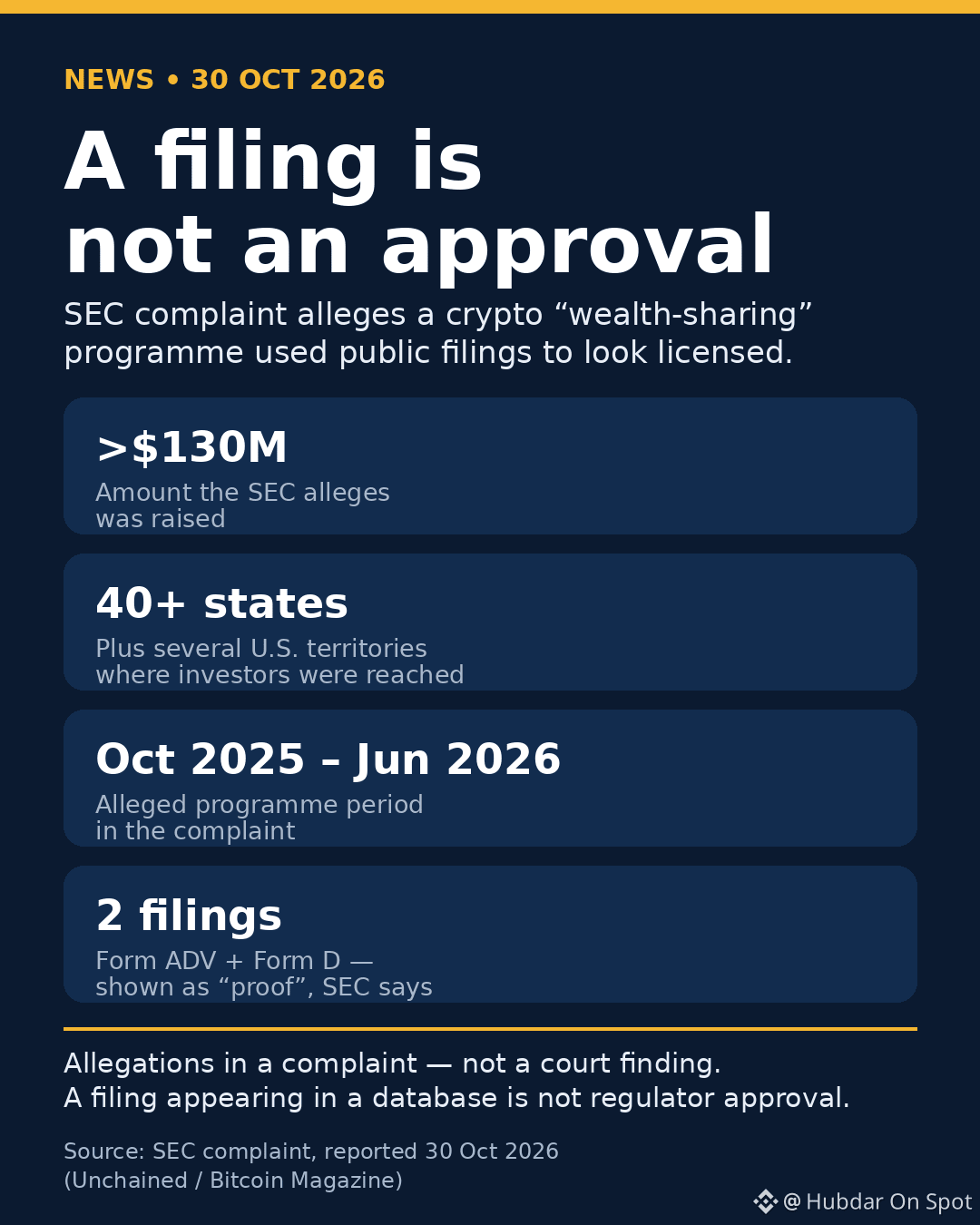
News, 30 Oct 2026: The US SEC has charged BG Wealth Sharing Ltd. and DSJ Exchange Pty Ltd. in a complaint filed in the Northern District of California, alleging a crypto “wealth-sharing program” raised more than $130 million from tens of thousands of retail investors in more than 40 states and several US territories from at least October 2025 through June 2026.
The SEC alleges the firms pointed investors to Form ADV and Form D filings viewable on its website and to fake certificates bearing its seal, presenting them as proof of SEC approval. The SEC says those filings are not approval or a licence, and that the filings have since been removed. These are allegations in a complaint, not a court finding.
Key point: a public filing appearing in a database is not the same as regulator approval.
What check would you do before trusting a claim that a crypto firm is “SEC-approved”?
29
Übersetzung ansehen
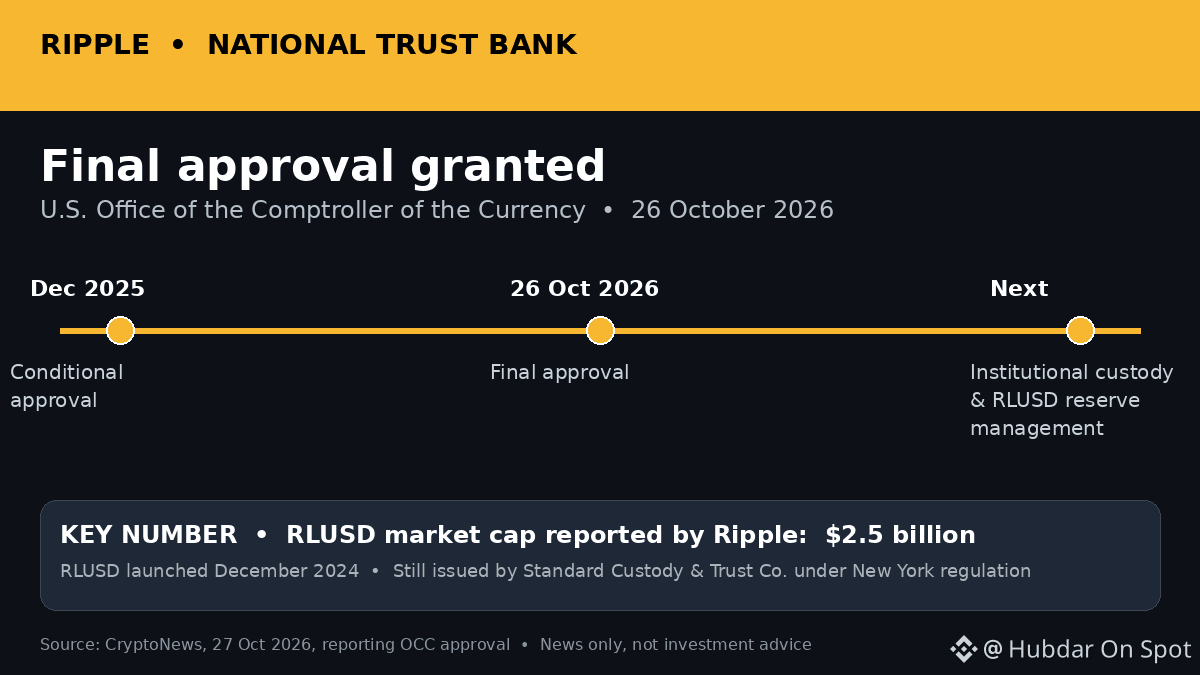
Ripple secures final approval for its US national trust bank
Ripple has received final approval from the US Office of the Comptroller of the Currency for Ripple National Trust Bank on 26 October 2026, completing a process that began with conditional approval in December 2025.
Confirmed:
- A federally supervised platform to support RLUSD and provide digital asset custody to enterprises
- The bank will manage segregated reserves backing Ripple USD (RLUSD) and act as collateral trustee for RLUSD holders
- RLUSD will continue to be issued by Standard Custody & Trust Company under New York regulation
- Ripple reported RLUSD had reached a $2.5 billion market cap since launching in December 2024
Still unknown: which enterprise custody products or clients will launch first, and on what timetable.
Source: CryptoNews, 27 October 2026
Do you think federally supervised custody will make institutions more comfortable using stablecoins and digital asset services? Share your thoughts below! 👇
64
Übersetzung ansehen
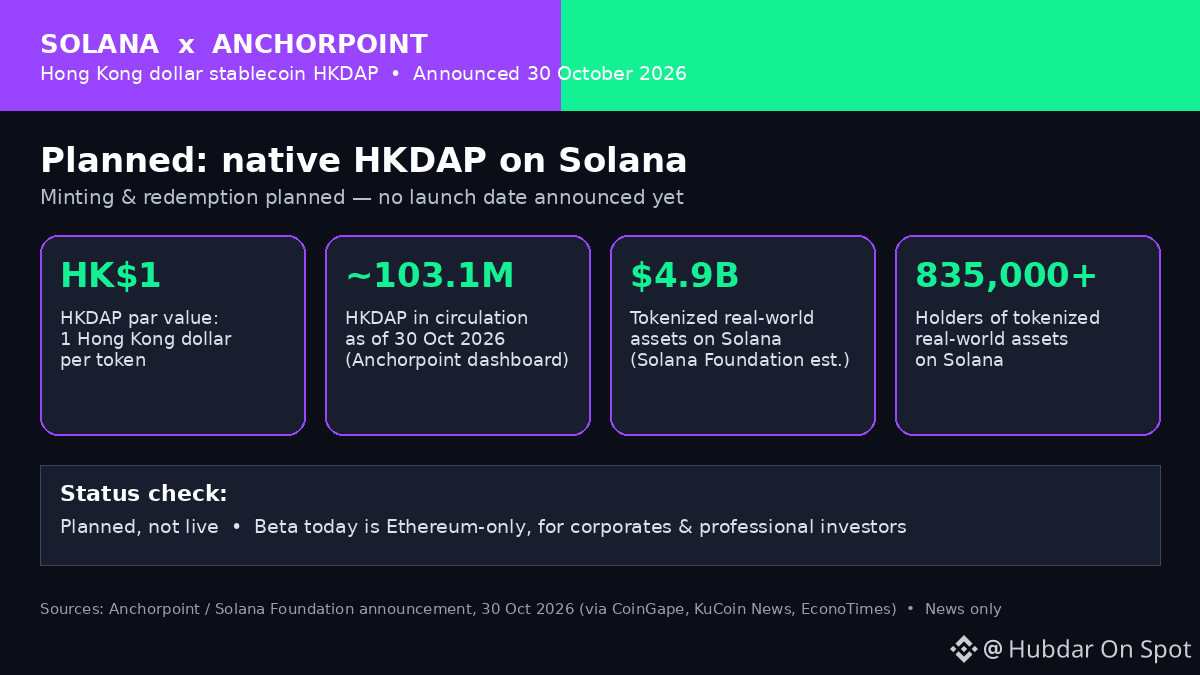
Solana to Host Hong Kong Dollar Stablecoin HKDAP in Planned Anchorpoint Collaboration
Anchorpoint Financial Limited and the Solana Foundation announced on October 30, 2026, that Anchorpoint plans to support native minting and redemption of HKDAP, its Hong Kong dollar stablecoin, on Solana. The announcement marks Anchorpoint's first collaboration with a public blockchain foundation.
The planned integration is aimed at retail payments and trading in tokenized assets, with near-instant settlement. Anchorpoint says HKDAP would be created and redeemed directly on Solana, and made accessible through corporate partners and consumer applications.
The Solana Foundation will also join Anchorpoint's Tokenised Money Adoption Programme as a strategic partner, alongside PwC Hong Kong. The programme focuses on education, research and industry dialogue around tokenized money in Hong Kong's regulated stablecoin ecosystem.
An important detail: this is a plan, not a live service yet. No launch date for the Solana integration has been announced. HKDAP currently runs on Ethereum mainnet in a limited beta phase for corporate users and professional investors. Anchorpoint was licensed as a stablecoin issuer by the Hong Kong Monetary Authority in April 2026, and HKDAP carries a par value of one Hong Kong dollar per token. Anchorpoint's transparency dashboard reported about 103.1 million HKDAP in circulation as of October 30.
For context, the Solana Foundation estimates around $4.9 billion in tokenized real-world assets on Solana, held by more than 835,000 holders.
Source: Anchorpoint / Solana Foundation announcement, October 30, 2026 — https://coingape.com/solana-adds-hong-kong-dollar-stablecoin-hkdap-for-payments-and-tokenized-assets/
Would a regulated Hong Kong dollar stablecoin on Solana be most useful for everyday payments, or for tokenized assets? Share your thoughts below! 👇
82
Übersetzung ansehen
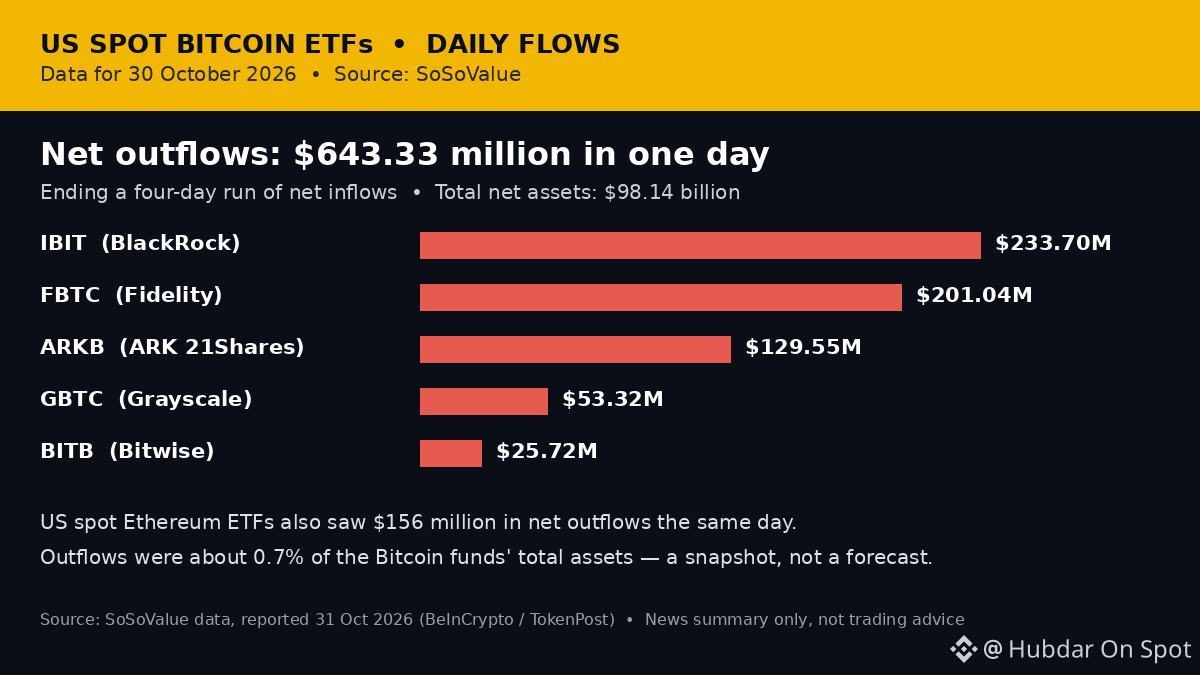
US Spot Bitcoin ETFs See $643 Million in Net Outflows on October 30
US spot Bitcoin ETFs recorded $643.33 million in net outflows on October 30, 2026, according to SoSoValue data reported on October 31. The move ended a four-day run of net inflows into the funds.
BlackRock's iShares Bitcoin Trust (IBIT) accounted for the largest share, with $233.70 million in net outflows, followed by Fidelity's Wise Origin Bitcoin Fund (FBTC) at $201.04 million. ARK 21Shares' ARKB saw $129.55 million, Grayscale's GBTC $53.32 million, and Bitwise's BITB $25.72 million.
In total, the funds still held $98.14 billion in net assets after the day's outflows, with cumulative net inflows since launch standing at $56.98 billion. Put in context, the October 30 outflow was about 0.7% of the funds' total assets.
US spot Ethereum ETFs also recorded net outflows the same day, of $156 million, marking their fifth straight day of outflows.
The outflow came a day after the major Binance security incident reported on October 30, but the flow data itself does not show why individual investors redeemed. The next daily flow figures, due on Monday, November 2, will show whether the redemptions were a one-day move or the start of a longer trend.
Source: SoSoValue data via BeInCrypto — https://beincrypto.com/investors-pull-643-million-bitcoin-etfs/
Do you read a single day of ETF outflows as a short-term reaction, or as a signal of a longer shift in investor sentiment? Share your thoughts below! 👇
69
Binance bestätigt Vorfall mit Hot Wallet im Umfang von 6,3 Milliarden US-Dollar und verspricht, Nutzer vollständig zu entschädigen
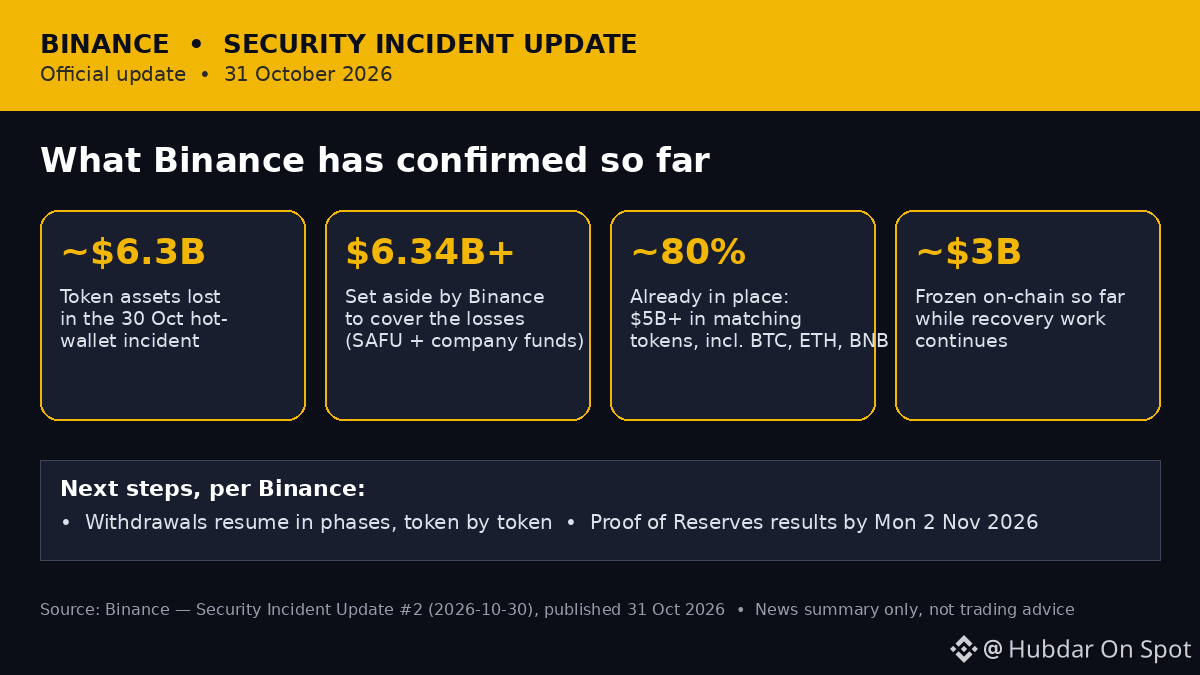
Binance hat einen schwerwiegenden Sicherheitsvorfall bestätigt, bei dem unbefugte Abhebungen aus seiner Hot Wallet vorgenommen wurden. Laut dem offiziellen Sicherheitsupdate Nr. 2 ereignete sich der Angriff am 30. Oktober 2026 gegen 04:05 Uhr (UTC+8). Dabei gingen Token-Vermögenswerte im Wert von rund 6,3 Milliarden US-Dollar verloren.
Binance erklärt, dass nicht die Nutzer, sondern das Unternehmen die Verluste tragen und sie vollständig über den Secure Asset Fund for Users (SAFU) sowie eigene Mittel decken wird. Dafür hat es mehr als 6,34 Milliarden US-Dollar zurückgestellt. Entsprechende Token-Vermögenswerte im Wert von über 5 Milliarden US-Dollar – rund 80 % des gestohlenen Betrags – sind bereits vorhanden. Dazu zählen USDC, USDT, BTC, ETH und BNB. Die übrigen Token werden über Märkte und außerbörsliche Handelskanäle erworben.
Binance zufolge wurden bisher Vermögenswerte im Wert von rund 3 Milliarden US-Dollar auf der Blockchain eingefroren. Das Unternehmen arbeitet mit Strafverfolgungsbehörden, Blockchain-Analysefirmen, Vermögenswerte-Emittenten und Branchenpartnern zusammen, um die Gelder aufzuspüren und zurückzuholen.
Abhebungen wurden vorübergehend ausgesetzt, damit zusätzliche Sicherheitsprüfungen durchgeführt werden können. Einzahlungen und andere nicht betroffene Dienste funktionieren unterdessen weiterhin normal. Binance teilt mit, dass die Abhebungen schrittweise und Token für Token wieder aufgenommen werden sollen. Angestrebt wird der zuvor angekündigte Zeitrahmen von rund 34 Stunden, vorbehaltlich des Abschlusses der Sicherheitsprüfungen.
Im Sinne der Transparenz plant Binance, innerhalb von 12 Stunden erstmals eine Momentaufnahme seiner Reservenachweise zu erstellen und die Ergebnisse bis Montag, den 2. November 2026, zu veröffentlichen. Die Untersuchung läuft noch. Bislang gebe es keine Hinweise darauf, dass die privaten Schlüssel der Wallet kompromittiert wurden.
Quelle: Offizielle Ankündigung von Binance — https://www.binance.com/en/square/post/382966610455230
Was sollte nach einem solchen Vorfall zuerst geschehen – die Abhebungen so schnell wie möglich wiederherstellen oder zunächst den vollständigen technischen Bericht veröffentlichen? Teilt eure Meinung unten mit! 👇
1
705
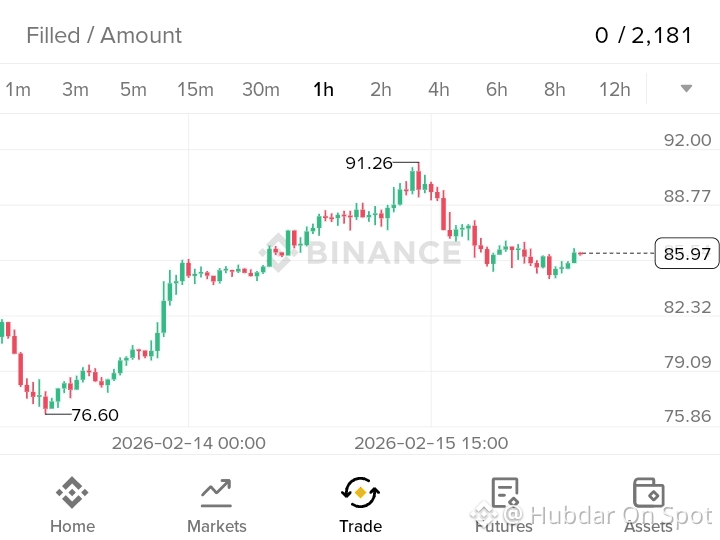
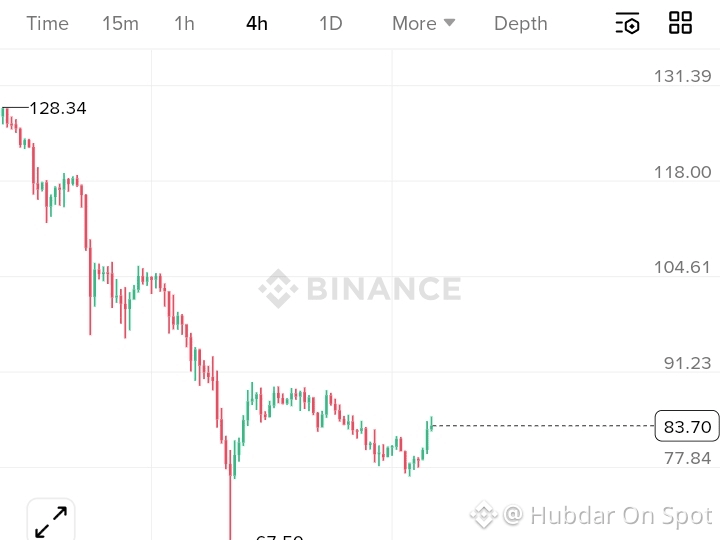
Will $SOL hit 100 $ in diesem Monat?
Ja oder Nein nur, gib deine ehrliche Meinung 🤗
{spot}(SOLUSDT)
Will $SOL hit 100 $ in diesem Monat?
Ja oder Nein nur, gib deine ehrliche Meinung 🤗
Ja oder Nein nur, gib deine ehrliche Meinung 🤗
11
·
--
Bullisch
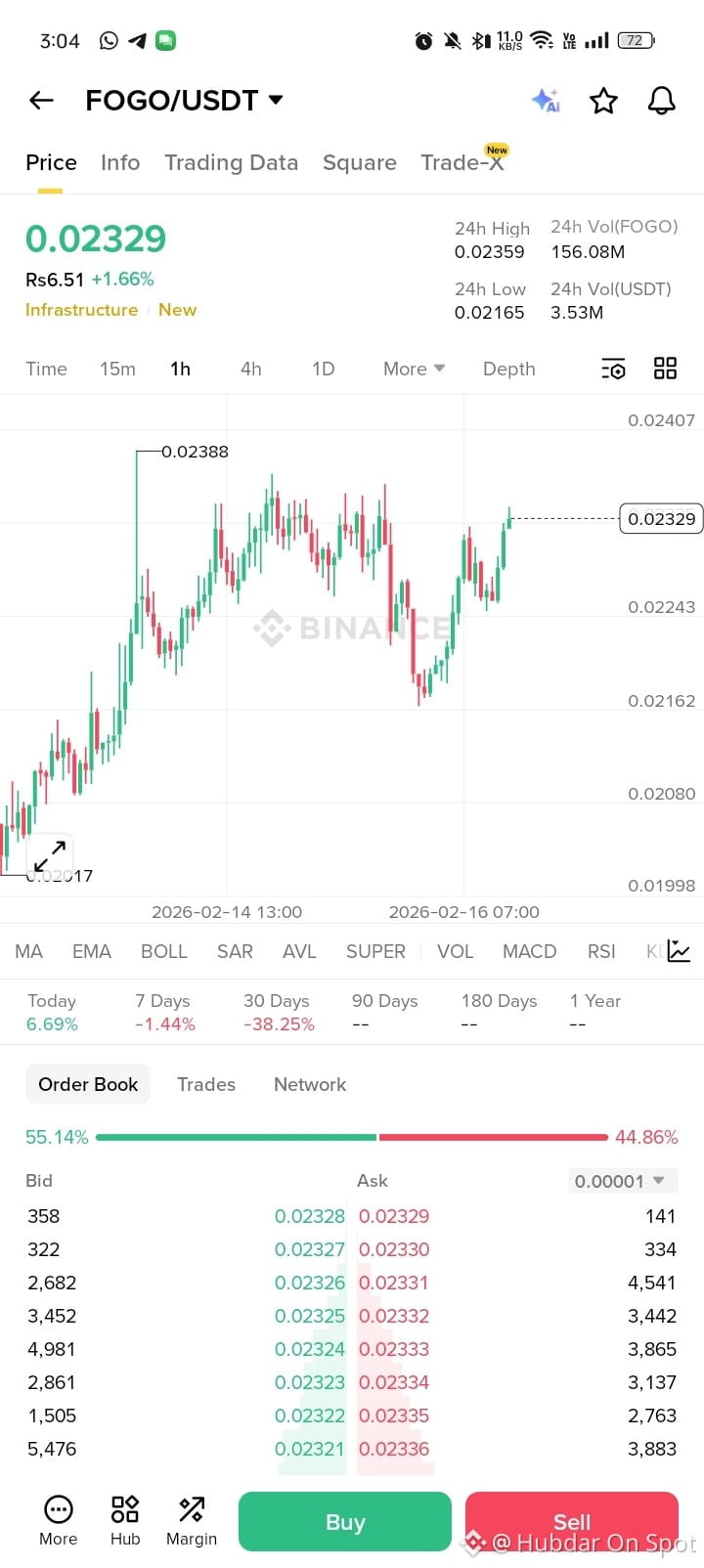
Lass uns sehen, ob der Ausbruch bald kommt 🎯
$FOGO wird fliegen 🚀
Sag uns deine Meinung "Ja" oder "Nein" nur
Lass uns sehen, ob der Ausbruch bald kommt 🎯
$FOGO wird fliegen 🚀
Sag uns deine Meinung "Ja" oder "Nein" nur
$FOGO wird fliegen 🚀
Sag uns deine Meinung "Ja" oder "Nein" nur
2
1
8
·
--
Bullisch
2
107
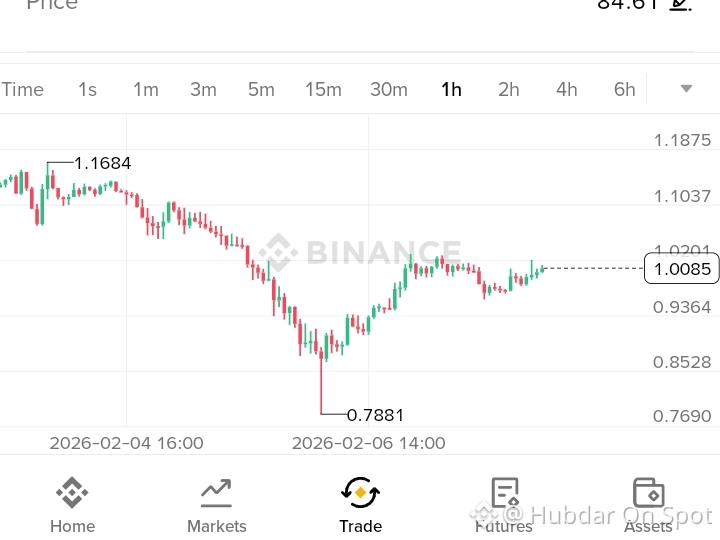
Auch gekauft einige $SUI TP 🎯 ist $1.5
Lass uns sehen 🙈, es wird bald bullisch.
Kommentare sind immer offen, damit du deine Meinungen teilen kannst 🤗
{spot}(SUIUSDT)
Auch gekauft einige $SUI TP 🎯 ist $1.5
Lass uns sehen 🙈, es wird bald bullisch.
Kommentare sind immer offen, damit du deine Meinungen teilen kannst 🤗
Lass uns sehen 🙈, es wird bald bullisch.
Kommentare sind immer offen, damit du deine Meinungen teilen kannst 🤗
1
147
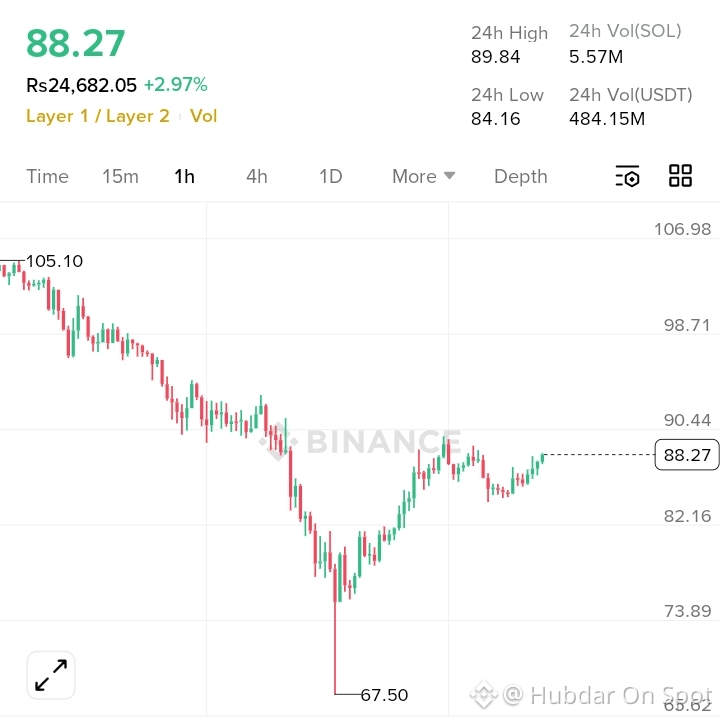
Ich werde $SOL für 150 verkaufen
mal sehen, was passiert, es ist bullisch 🙄
Teilen Sie Ihre Meinungen in den Kommentaren.
Ich werde $SOL für 150 verkaufen
mal sehen, was passiert, es ist bullisch 🙄
Teilen Sie Ihre Meinungen in den Kommentaren.
mal sehen, was passiert, es ist bullisch 🙄
Teilen Sie Ihre Meinungen in den Kommentaren.
1
236
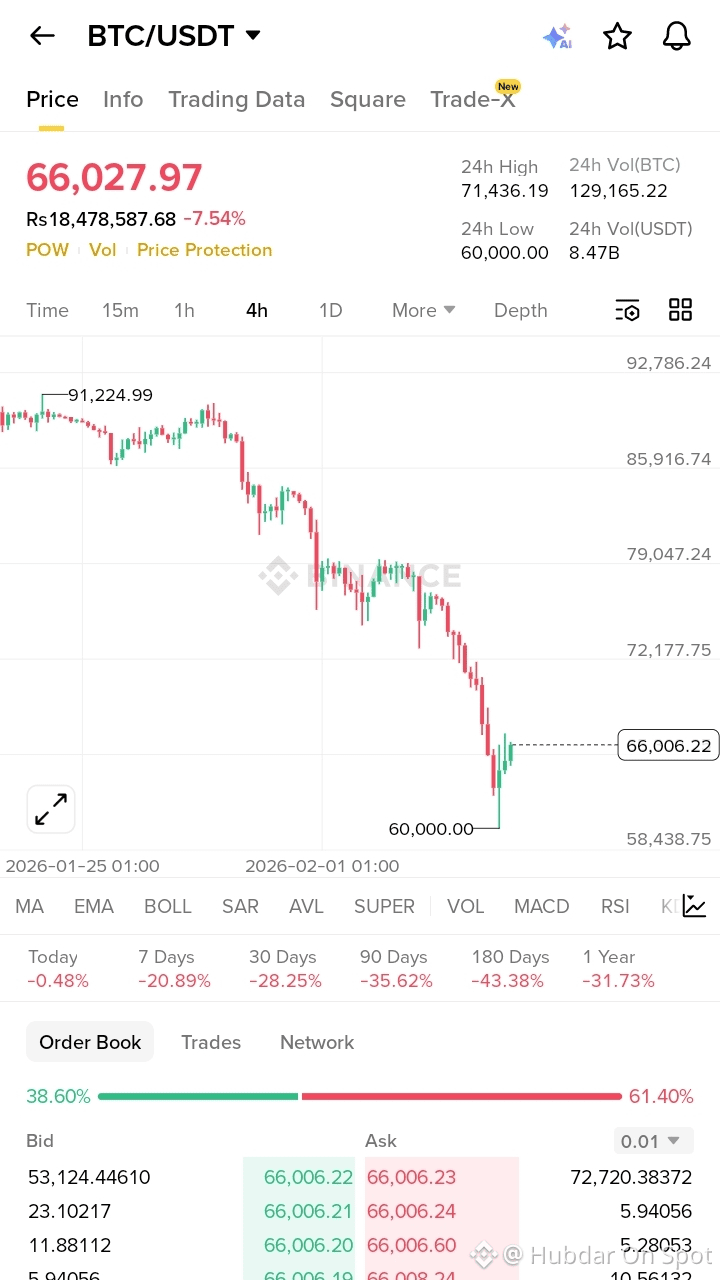
$BTC Steigen oder wieder abladen?
Teilen Sie Ihre Meinungen in den Kommentaren.
{spot}(BTCUSDT)
$BTC Steigen oder wieder abladen?
Teilen Sie Ihre Meinungen in den Kommentaren.
Teilen Sie Ihre Meinungen in den Kommentaren.
35
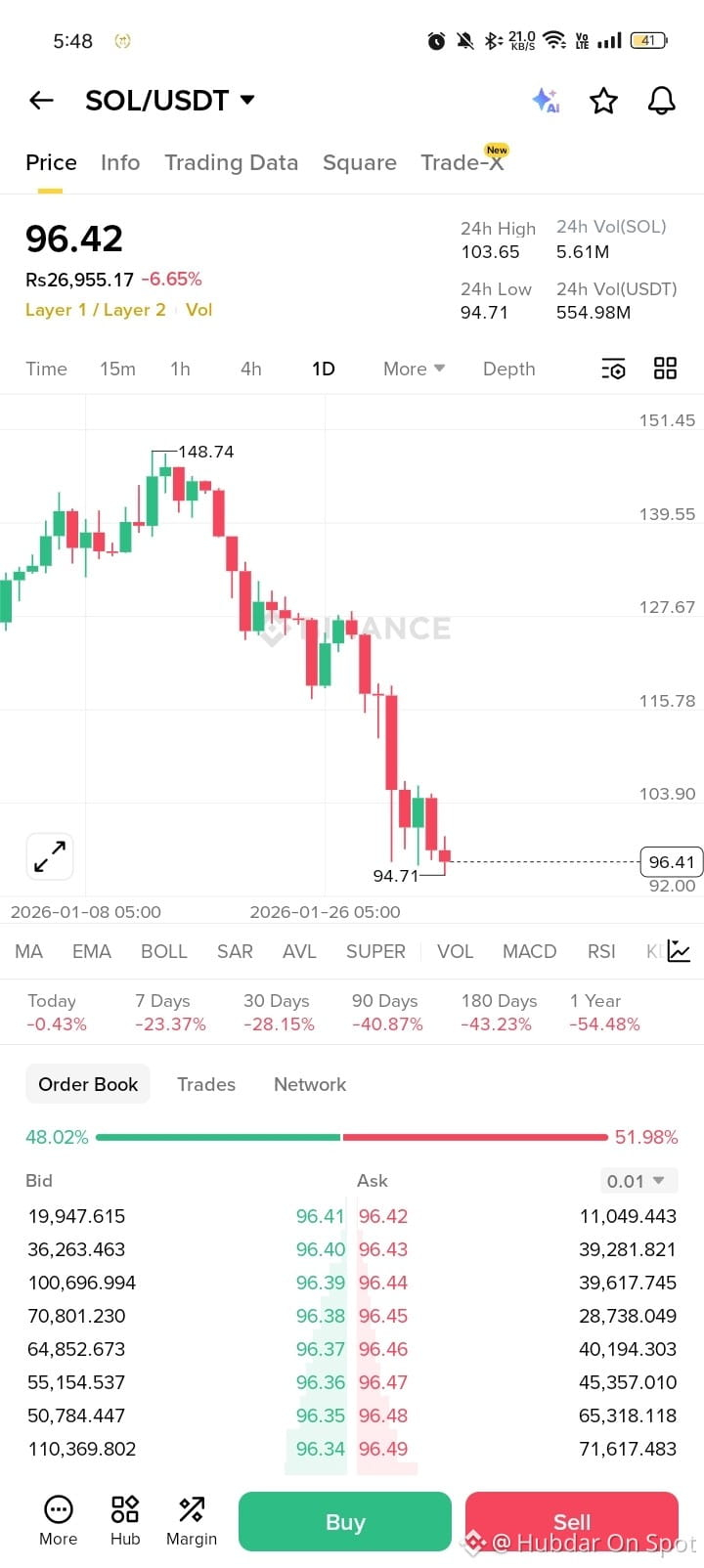
Habe einige $SOL gekauft für das Halten
🎯 Ziel ist $140
⌛Dauer 30 Tage oder mehr
Eine gute Nachricht und wir werden es bekommen.
und es kann auch fallen, es gibt ein Risiko
aber Risikoträger sind Geldmacher
Habe einige $SOL gekauft für das Halten
🎯 Ziel ist $140
⌛Dauer 30 Tage oder mehr
Eine gute Nachricht und wir werden es bekommen.
und es kann auch fallen, es gibt ein Risiko
aber Risikoträger sind Geldmacher
🎯 Ziel ist $140
⌛Dauer 30 Tage oder mehr
Eine gute Nachricht und wir werden es bekommen.
und es kann auch fallen, es gibt ein Risiko
aber Risikoträger sind Geldmacher
224
Anmelden und weiter Inhalte entdecken
Krypto-Nutzer weltweit auf Binance Square kennenlernen
⚡️ Bleib in Sachen Krypto stets am Puls.
💬 Die weltgrößte Kryptobörse vertraut darauf.
👍 Erhalte verlässliche Einblicke von verifizierten Creators.
E-Mail-Adresse/Telefonnummer
Trendthemen
WithdrawalsBack: 15 networks live
502 Aufrufe
25 Kommentare
Binance News Update | Binance gibt Auszahlungen für BTC, ETH, USDT und weitere Assets auf 15 Netzwerken wieder frei und erreicht damit das Sonntagsziel
Binance News
·23 Likes
·9.6k Aufrufe
BinanceUpdatesProofofReservesAddresses
37,040 Aufrufe
787 Kommentare
BinanceToResumePhaseOneOfWithdrawals
69,559 Aufrufe
1,038 Kommentare