Binance Square
Evan Sterling
339 Beiträge

Evan Sterling

News | Crypto | Markets | Trends | Insights that matter.
Regelmäßiger Trader
2.3 Jahre
4 Following
158 Follower
633 Like gegeben
Beiträge
·
--
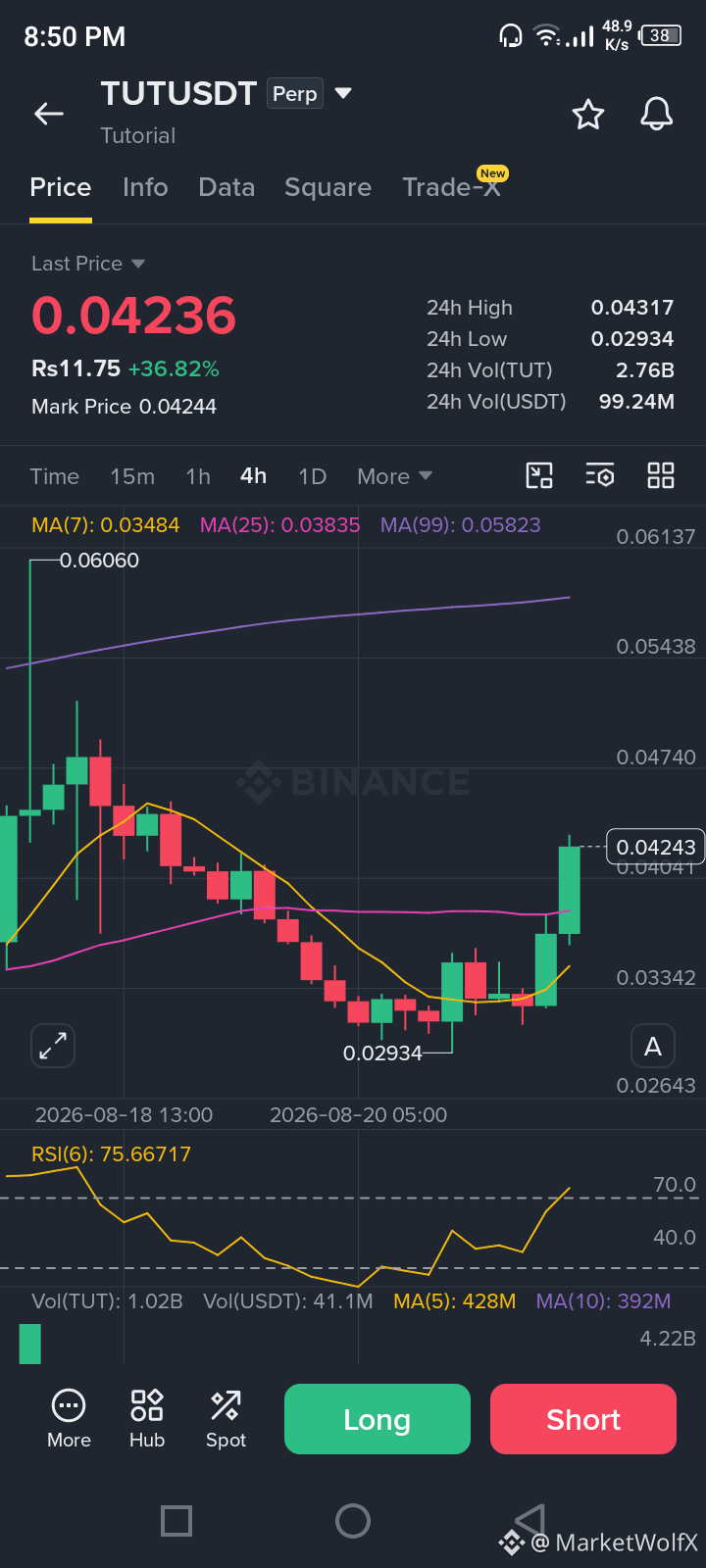
TUT/USDT gewinnt an Momentum, da die Handelsaktivität beschleunigtTUT/USDT gewinnt an Aufmerksamkeit, da die Handelsaktivität und das Volumen im gesamten Markt zunehmen. Das Paar befindet sich weiterhin in einer Phase erhöhter Volatilität: Käufer versuchen, die jüngste Dynamik aufrechtzuerhalten, während Händler die wichtigen Widerstandsniveaus genau im Blick behalten. Ein anhaltendes Volumen könnte weiteres Aufwärtspotenzial unterstützen, während eine Ablehnung kurzfristige Gewinnmitnahmen auslösen kann. Insgesamt bleibt TUT/USDT ein Markt, den man im Auge behalten sollte, da Liquidität und Momentum weiter zunehmen. $TUT

TUT/USDT gewinnt an Momentum, da die Handelsaktivität beschleunigt

TUT/USDT gewinnt an Aufmerksamkeit, da die Handelsaktivität und das Volumen im gesamten Markt zunehmen. Das Paar befindet sich weiterhin in einer Phase erhöhter Volatilität: Käufer versuchen, die jüngste Dynamik aufrechtzuerhalten, während Händler die wichtigen Widerstandsniveaus genau im Blick behalten. Ein anhaltendes Volumen könnte weiteres Aufwärtspotenzial unterstützen, während eine Ablehnung kurzfristige Gewinnmitnahmen auslösen kann. Insgesamt bleibt TUT/USDT ein Markt, den man im Auge behalten sollte, da Liquidität und Momentum weiter zunehmen.
$TUT
Übersetzung ansehen
Bitcoin Reaches Block 961,632 as BIP-110 Fork Phase BeginsBitcoin has reached block 961,632, marking a key milestone in the ongoing BIP-110 soft-fork dispute. The proposal seeks to limit certain types of non-monetary data on the Bitcoin blockchain. The milestone begins a mandatory signaling window, putting miner support and network consensus under closer scrutiny. With BIP-110 remaining controversial, the coming blocks could be critical for determining whether the proposal gains broader acceptance or faces further resistance.

Bitcoin Reaches Block 961,632 as BIP-110 Fork Phase Begins

Bitcoin has reached block 961,632, marking a key milestone in the ongoing BIP-110 soft-fork dispute. The proposal seeks to limit certain types of non-monetary data on the Bitcoin blockchain.
The milestone begins a mandatory signaling window, putting miner support and network consensus under closer scrutiny. With BIP-110 remaining controversial, the coming blocks could be critical for determining whether the proposal gains broader acceptance or faces further resistance.
Der Iran-Krieg tritt in eine entscheidende diplomatische PhaseDer Konflikt zwischen Iran und den USA tritt in eine entscheidende diplomatische Phase ein, da Teheran und Washington nach Monaten militärischer Eskalation auf erneute Verhandlungen zusteuern. Die Straße von Hormus bleibt die zentrale Streitfrage: Berichten zufolge stehen der Iran und Oman kurz vor einer Einigung über Regelungen für den Schiffsverkehr durch die strategische Wasserstraße. Teheran sagt jedoch, dass zusätzliche Bedingungen geklärt werden müssen, bevor die Straße vollständig wiedereröffnet werden kann. Inzwischen hat die US-Regierung darauf hingewiesen, dass die Gespräche schon bald wieder aufgenommen werden könnten, was die Hoffnung auf eine Verringerung der Feindseligkeiten nährt. Trotz der diplomatischen Bewegung sind die großen Meinungsverschiedenheiten über Sanktionen, Sicherheit und die Kontrolle der Straße von Hormus weiterhin ungelöst.

Der Iran-Krieg tritt in eine entscheidende diplomatische Phase

Der Konflikt zwischen Iran und den USA tritt in eine entscheidende diplomatische Phase ein, da Teheran und Washington nach Monaten militärischer Eskalation auf erneute Verhandlungen zusteuern.
Die Straße von Hormus bleibt die zentrale Streitfrage: Berichten zufolge stehen der Iran und Oman kurz vor einer Einigung über Regelungen für den Schiffsverkehr durch die strategische Wasserstraße. Teheran sagt jedoch, dass zusätzliche Bedingungen geklärt werden müssen, bevor die Straße vollständig wiedereröffnet werden kann.
Inzwischen hat die US-Regierung darauf hingewiesen, dass die Gespräche schon bald wieder aufgenommen werden könnten, was die Hoffnung auf eine Verringerung der Feindseligkeiten nährt. Trotz der diplomatischen Bewegung sind die großen Meinungsverschiedenheiten über Sanktionen, Sicherheit und die Kontrolle der Straße von Hormus weiterhin ungelöst.
Übersetzung ansehen
Turkey: Defense Pact Not Targeting IranTurkey’s Foreign Minister Hakan Fidan said the new defense pact between Turkey, Saudi Arabia and Pakistan is not aimed at Iran or any specific country. He emphasized that the agreement is focused on strengthening regional security and collective defense cooperation. The statement comes amid heightened tensions in the Middle East, with Ankara seeking stronger security coordination while avoiding a direct confrontation with Tehran. $BTC {future}(BTCUSDT)

Turkey: Defense Pact Not Targeting Iran

Turkey’s Foreign Minister Hakan Fidan said the new defense pact between Turkey, Saudi Arabia and Pakistan is not aimed at Iran or any specific country. He emphasized that the agreement is focused on strengthening regional security and collective defense cooperation.
The statement comes amid heightened tensions in the Middle East, with Ankara seeking stronger security coordination while avoiding a direct confrontation with Tehran.
$BTC
Übersetzung ansehen
Multiple Explosions Rock Dubai’s Jebel Ali Industrial Area as Authorities Investigate CauseDubai witnessed a major emergency incident on August 5, 2026, when multiple explosions and a large fire were reported in the Jebel Ali industrial area near one of the United Arab Emirates’ most important port and logistics hubs. Reports indicated that several loud blasts occurred within a relatively short period, with thick smoke visible over the area. The incident quickly attracted international attention because Jebel Ali is a strategically important industrial and maritime zone that handles significant commercial activity. However, it is important to distinguish confirmed information from speculation. While videos and reports circulating online described the incident as a possible attack, there has been no reliable confirmation establishing that the explosions were caused by a missile, drone, or other deliberate military strike. Authorities were investigating the cause, and no organization had officially claimed responsibility. The incident comes against the backdrop of heightened regional security tensions. The wider Middle East has experienced significant military escalation in 2026, including attacks involving the United Arab Emirates earlier in the year. That broader environment has increased sensitivity around any explosion or fire occurring near major infrastructure in the Gulf. Jebel Ali is particularly significant because the area contains major industrial, logistics, and port facilities. Any serious incident there can raise immediate concerns about commercial operations, shipping activity, supply chains, and regional security. At the same time, the strategic importance of the location makes it especially important to avoid drawing conclusions before authorities establish the cause. Initial reports did not establish a confirmed large-scale casualty figure connected to the August 5 incident. Emergency services responded to the fire and explosions, while authorities worked to secure the affected area and determine what triggered the event. The incident also highlights the risks of relying on unverified social-media footage during periods of regional tension. Images of smoke, fire and explosions can provide evidence that an incident occurred, but they do not by themselves establish whether an event was an accident, an industrial fire, sabotage, or a military attack. For now, the most accurate assessment is that multiple explosions and a fire occurred in Dubai’s Jebel Ali industrial area, while the exact cause remained under investigation. Claims describing the event as a confirmed attack should therefore be treated cautiously unless supported by an official UAE statement or multiple independent sources. The Jebel Ali incident is nevertheless significant because of the location involved and the wider geopolitical environment. Further official findings will be important in determining whether the event was an industrial accident or something more deliberate. Until authorities release definitive findings, the responsible approach is to report the explosions and fire as confirmed facts while clearly separating them from unverified claims about an attack. #IraqOilExportsFall75% #XRPLProposesConfidentialRWATransfers #USJulyJobsUnexpectedlyFall $TUT {future}(TUTUSDT)

Multiple Explosions Rock Dubai’s Jebel Ali Industrial Area as Authorities Investigate Cause

Dubai witnessed a major emergency incident on August 5, 2026, when multiple explosions and a large fire were reported in the Jebel Ali industrial area near one of the United Arab Emirates’ most important port and logistics hubs.
Reports indicated that several loud blasts occurred within a relatively short period, with thick smoke visible over the area. The incident quickly attracted international attention because Jebel Ali is a strategically important industrial and maritime zone that handles significant commercial activity.
However, it is important to distinguish confirmed information from speculation. While videos and reports circulating online described the incident as a possible attack, there has been no reliable confirmation establishing that the explosions were caused by a missile, drone, or other deliberate military strike. Authorities were investigating the cause, and no organization had officially claimed responsibility.
The incident comes against the backdrop of heightened regional security tensions. The wider Middle East has experienced significant military escalation in 2026, including attacks involving the United Arab Emirates earlier in the year. That broader environment has increased sensitivity around any explosion or fire occurring near major infrastructure in the Gulf.
Jebel Ali is particularly significant because the area contains major industrial, logistics, and port facilities. Any serious incident there can raise immediate concerns about commercial operations, shipping activity, supply chains, and regional security. At the same time, the strategic importance of the location makes it especially important to avoid drawing conclusions before authorities establish the cause.
Initial reports did not establish a confirmed large-scale casualty figure connected to the August 5 incident. Emergency services responded to the fire and explosions, while authorities worked to secure the affected area and determine what triggered the event.
The incident also highlights the risks of relying on unverified social-media footage during periods of regional tension. Images of smoke, fire and explosions can provide evidence that an incident occurred, but they do not by themselves establish whether an event was an accident, an industrial fire, sabotage, or a military attack.
For now, the most accurate assessment is that multiple explosions and a fire occurred in Dubai’s Jebel Ali industrial area, while the exact cause remained under investigation. Claims describing the event as a confirmed attack should therefore be treated cautiously unless supported by an official UAE statement or multiple independent sources.
The Jebel Ali incident is nevertheless significant because of the location involved and the wider geopolitical environment. Further official findings will be important in determining whether the event was an industrial accident or something more deliberate.
Until authorities release definitive findings, the responsible approach is to report the explosions and fire as confirmed facts while clearly separating them from unverified claims about an attack.
#IraqOilExportsFall75% #XRPLProposesConfidentialRWATransfers #USJulyJobsUnexpectedlyFall
$TUT
Übersetzung ansehen
Bitcoin at a Critical Market CrossroadsBitcoin is entering a phase where liquidity, institutional positioning and macro expectations are increasingly converging. The market remains firm, but the next decisive move will depend on whether fresh capital can absorb selling pressure at elevated levels. A breakout could open the door to renewed momentum, while failure to hold key support may trigger a sharper risk-off move. For now, Bitcoin’s structure remains one of the most closely watched signals across global digital-asset markets. $BTC {future}(BTCUSDT)

Bitcoin at a Critical Market Crossroads

Bitcoin is entering a phase where liquidity, institutional positioning and macro expectations are increasingly converging. The market remains firm, but the next decisive move will depend on whether fresh capital can absorb selling pressure at elevated levels. A breakout could open the door to renewed momentum, while failure to hold key support may trigger a sharper risk-off move. For now, Bitcoin’s structure remains one of the most closely watched signals across global digital-asset markets.
$BTC
Übersetzung ansehen
Vance says Iran has agreed to allow maximum oil flow through the Strait of Hormuz, a potentially significant development for global energy markets. If commercial shipping resumes safely and consistently, concerns over supply disruptions could ease and put pressure on crude prices. Markets will closely watch whether Iran’s commitment translates into actual normalization of oil shipments. {future}(CLUSDT) {future}(BZUSDT)
Vance says Iran has agreed to allow maximum oil flow through the Strait of Hormuz, a potentially significant development for global energy markets. If commercial shipping resumes safely and consistently, concerns over supply disruptions could ease and put pressure on crude prices. Markets will closely watch whether Iran’s commitment translates into actual normalization of oil shipments.
·
--
Bullisch
Übersetzung ansehen
U.S. labor-market data is increasingly becoming a key driver for market expectations around Federal Reserve policy. A stronger-than-expected jobs reading could reinforce the case for higher-for-longer rates, while signs of cooling employment may strengthen expectations for future easing. Markets will be closely watching payroll growth, unemployment and wage data for confirmation of the broader economic trend. The reaction could extend across the dollar, Treasury yields, equities and crypto markets. #USJulyJobsUnexpectedlyFall {future}(BTCUSDT)
U.S. labor-market data is increasingly becoming a key driver for market expectations around Federal Reserve policy. A stronger-than-expected jobs reading could reinforce the case for higher-for-longer rates, while signs of cooling employment may strengthen expectations for future easing. Markets will be closely watching payroll growth, unemployment and wage data for confirmation of the broader economic trend. The reaction could extend across the dollar, Treasury yields, equities and crypto markets.
#USJulyJobsUnexpectedlyFall
Übersetzung ansehen
New XRP Ledger Amendments Target $530 Million in Tokenized Wall Street AssetsThe XRP Ledger is moving deeper into the institutional finance sector as a new set of proposed amendments targets the growing market for tokenized real-world assets, with more than $530 million in tokenized assets already within the scope of the latest upgrade. The development highlights a broader shift in blockchain infrastructure, where traditional financial instruments are increasingly being represented and settled on public networks. The latest XRP Ledger software release, version 3.3.0, introduces six proposed amendments designed to improve the network’s functionality for institutional users. Among the most significant is the proposed Confidential Transfers feature, which would allow certain tokenized assets to transfer balances and payment amounts in encrypted form while still maintaining the transparency and compliance mechanisms required by financial institutions. For institutions entering the tokenized asset market, privacy is a critical requirement. Traditional financial firms may be willing to place securities, funds, bonds and other assets on blockchain infrastructure, but publicly exposing the size of every transaction or portfolio position can create significant commercial and regulatory concerns. The proposed Confidential Transfers amendment is designed to address this issue by keeping accounts and token types visible while allowing specific balances and transaction amounts to remain encrypted. The system is intended to preserve the ability of the network to verify transactions without revealing sensitive financial information to everyone on the ledger. At the same time, issuers, auditors and regulators could retain appropriate access, creating a balance between blockchain transparency and institutional confidentiality. The $530 million figure is particularly important because it demonstrates that tokenization on the XRP Ledger is moving beyond a purely experimental stage. The network already hosts tokenized real-world assets involving projects and institutions associated with names such as RLUSD, Ondo, VERT Capital, Archax and Société Générale. The broader XRPL ecosystem has approximately $1.38 billion in issued tokenized real-world assets, according to reporting surrounding the upgrade. The amendments are therefore not simply focused on increasing transaction capacity. They are aimed at creating infrastructure that can accommodate the operational requirements of professional financial institutions. Other proposed changes in the latest release include capabilities related to transaction batching, fee sponsorship and delegated permissions, all of which could make blockchain-based financial operations more practical at institutional scale. However, the proposed features are not automatically becoming part of the XRP Ledger. XRPL amendments must go through the network’s validator voting process. According to the XRP Ledger’s official amendment framework, an amendment can become enabled after maintaining the required supermajority support for at least two weeks. This voting mechanism is important because it prevents major protocol changes from being activated immediately. Validators have time to evaluate the proposed functionality, identify potential technical problems and determine whether the wider network is ready for the upgrade. The institutional focus comes at a time when tokenization has become one of the most closely watched areas of blockchain development. Financial institutions are increasingly exploring blockchain-based representations of traditional assets because tokenization can potentially improve settlement, automate certain processes and make financial assets easier to transfer across digital infrastructure. For the XRP Ledger, the opportunity is significant. Rather than competing only as a payment network, XRPL is positioning itself as infrastructure for the broader tokenized financial market. Its emphasis on fast settlement, low transaction costs and native ledger functionality could make it attractive to institutions looking for blockchain infrastructure without relying entirely on complex smart-contract systems. Nevertheless, the competition is substantial. Ethereum and various institutional or permissioned blockchain networks already have established positions in tokenized assets. The XRP Ledger will therefore need to demonstrate that its institutional features can provide meaningful advantages in areas such as compliance, privacy, liquidity, interoperability and operational efficiency. For XRP itself, the development should not automatically be interpreted as a direct price catalyst. The amendments primarily concern the underlying XRP Ledger infrastructure and the growing use of tokenized assets. Increased institutional adoption of XRPL could strengthen the ecosystem over time, but the relationship between network development and XRP market performance is not guaranteed. The more important signal is the direction of the ecosystem. With hundreds of millions of dollars in tokenized real-world assets already associated with the network and new amendments specifically designed around institutional requirements, XRPL is increasingly positioning itself for a financial market in which traditional assets operate on blockchain rails. If the proposed amendments secure sufficient validator support, the XRP Ledger could gain another important layer of infrastructure for institutional tokenization. The immediate focus will remain on the voting process, but the longer-term significance is broader: blockchain networks are increasingly competing not just for cryptocurrency activity, but for a role in the future infrastructure of global financial markets.

New XRP Ledger Amendments Target $530 Million in Tokenized Wall Street Assets

The XRP Ledger is moving deeper into the institutional finance sector as a new set of proposed amendments targets the growing market for tokenized real-world assets, with more than $530 million in tokenized assets already within the scope of the latest upgrade. The development highlights a broader shift in blockchain infrastructure, where traditional financial instruments are increasingly being represented and settled on public networks.
The latest XRP Ledger software release, version 3.3.0, introduces six proposed amendments designed to improve the network’s functionality for institutional users. Among the most significant is the proposed Confidential Transfers feature, which would allow certain tokenized assets to transfer balances and payment amounts in encrypted form while still maintaining the transparency and compliance mechanisms required by financial institutions.
For institutions entering the tokenized asset market, privacy is a critical requirement. Traditional financial firms may be willing to place securities, funds, bonds and other assets on blockchain infrastructure, but publicly exposing the size of every transaction or portfolio position can create significant commercial and regulatory concerns. The proposed Confidential Transfers amendment is designed to address this issue by keeping accounts and token types visible while allowing specific balances and transaction amounts to remain encrypted.
The system is intended to preserve the ability of the network to verify transactions without revealing sensitive financial information to everyone on the ledger. At the same time, issuers, auditors and regulators could retain appropriate access, creating a balance between blockchain transparency and institutional confidentiality.
The $530 million figure is particularly important because it demonstrates that tokenization on the XRP Ledger is moving beyond a purely experimental stage. The network already hosts tokenized real-world assets involving projects and institutions associated with names such as RLUSD, Ondo, VERT Capital, Archax and Société Générale. The broader XRPL ecosystem has approximately $1.38 billion in issued tokenized real-world assets, according to reporting surrounding the upgrade.
The amendments are therefore not simply focused on increasing transaction capacity. They are aimed at creating infrastructure that can accommodate the operational requirements of professional financial institutions. Other proposed changes in the latest release include capabilities related to transaction batching, fee sponsorship and delegated permissions, all of which could make blockchain-based financial operations more practical at institutional scale.
However, the proposed features are not automatically becoming part of the XRP Ledger. XRPL amendments must go through the network’s validator voting process. According to the XRP Ledger’s official amendment framework, an amendment can become enabled after maintaining the required supermajority support for at least two weeks.
This voting mechanism is important because it prevents major protocol changes from being activated immediately. Validators have time to evaluate the proposed functionality, identify potential technical problems and determine whether the wider network is ready for the upgrade.
The institutional focus comes at a time when tokenization has become one of the most closely watched areas of blockchain development. Financial institutions are increasingly exploring blockchain-based representations of traditional assets because tokenization can potentially improve settlement, automate certain processes and make financial assets easier to transfer across digital infrastructure.
For the XRP Ledger, the opportunity is significant. Rather than competing only as a payment network, XRPL is positioning itself as infrastructure for the broader tokenized financial market. Its emphasis on fast settlement, low transaction costs and native ledger functionality could make it attractive to institutions looking for blockchain infrastructure without relying entirely on complex smart-contract systems.
Nevertheless, the competition is substantial. Ethereum and various institutional or permissioned blockchain networks already have established positions in tokenized assets. The XRP Ledger will therefore need to demonstrate that its institutional features can provide meaningful advantages in areas such as compliance, privacy, liquidity, interoperability and operational efficiency.
For XRP itself, the development should not automatically be interpreted as a direct price catalyst. The amendments primarily concern the underlying XRP Ledger infrastructure and the growing use of tokenized assets. Increased institutional adoption of XRPL could strengthen the ecosystem over time, but the relationship between network development and XRP market performance is not guaranteed.
The more important signal is the direction of the ecosystem. With hundreds of millions of dollars in tokenized real-world assets already associated with the network and new amendments specifically designed around institutional requirements, XRPL is increasingly positioning itself for a financial market in which traditional assets operate on blockchain rails.
If the proposed amendments secure sufficient validator support, the XRP Ledger could gain another important layer of infrastructure for institutional tokenization. The immediate focus will remain on the voting process, but the longer-term significance is broader: blockchain networks are increasingly competing not just for cryptocurrency activity, but for a role in the future infrastructure of global financial markets.
Übersetzung ansehen
Senate Opens CLARITY Act’s First Procedural Stage as September Vote Comes Into FocusThe United States Senate has formally opened the first procedural stage for the Digital Asset Market CLARITY Act, giving the long awaited cryptocurrency market structure bill a renewed path toward consideration after it failed to secure a Senate vote before the August recess. Senate Majority Leader John Thune filed a cloture motion on Saturday to begin the process of bringing the legislation to the Senate floor. The move is significant because the bill had been at risk of being pushed beyond the current legislative session after lawmakers failed to complete the necessary work before the August break. The Senate has now agreed to return to the measure after the recess, with a procedural vote scheduled for September 15. The development does not mean that the CLARITY Act has passed, nor does it guarantee final Senate approval. Instead, the filing represents the formal beginning of another stage in a complicated legislative process. The September vote will determine whether the Senate can advance the legislation and move into the broader debate, amendment and voting process required before the bill could eventually reach the President. Why the September Vote Matters The CLARITY Act is designed to establish a clearer federal regulatory framework for digital assets in the United States. One of its central objectives is to clarify the respective responsibilities of the Securities and Exchange Commission and the Commodity Futures Trading Commission in overseeing different types of digital assets. For the cryptocurrency industry, this distinction has major importance. Digital asset companies have spent years operating in an environment where questions surrounding federal jurisdiction and the classification of tokens have remained unresolved. Supporters argue that clearer rules could reduce regulatory uncertainty, encourage investment and provide companies with a more predictable framework for operating in the United States. The bill has therefore attracted considerable attention from cryptocurrency companies, investors and policymakers. Its progress is also being closely watched by major digital asset markets because congressional approval could represent one of the most significant changes to the regulatory environment for cryptocurrencies in the United States. The 60 Vote Challenge The biggest obstacle remains the Senate’s voting threshold. Because of Senate procedural rules, the legislation generally needs 60 votes to overcome a cloture hurdle. Republicans do not hold enough seats to reach that threshold on their own, meaning bipartisan support remains necessary. Democratic senators have raised concerns over several parts of the legislation, including consumer protection, ethics requirements, market safeguards and provisions affecting the relationship between cryptocurrency businesses and traditional financial institutions. These disagreements have made negotiations particularly important. The Senate’s decision to begin the procedural process suggests that Republican leadership believes there is still a path toward reaching an agreement. However, the September vote will provide a much clearer indication of whether enough senators are prepared to support moving the bill forward. Why August Was Missed The CLARITY Act had previously faced hopes of advancing before the Senate entered its August recess. However, the Senate’s crowded legislative schedule, unresolved negotiations and the need to secure sufficient votes made that timeline increasingly difficult. Senate Majority Leader John Thune had already indicated that completing the legislation before the August break would be difficult. The eventual decision to file the procedural motion after the Senate’s final August workday effectively shifted the critical moment into September. That delay created uncertainty around the bill’s future. Without a procedural move before the recess, the legislation could have faced a much longer delay. Saturday’s filing therefore changed the situation by keeping the bill active and establishing a specific date for the Senate to consider its advancement. What Happens Next The Senate is now expected to return from recess with the CLARITY Act positioned for its September 15 procedural vote. If senators vote to advance the legislation, the process will move toward debate and consideration of amendments. That stage could still become highly contested. Lawmakers may attempt to modify provisions before a final vote, while negotiations between Republicans and Democrats will remain essential to securing the necessary support. Even if the Senate eventually approves its version, the legislative process would not immediately end. Differences between the Senate legislation and the version previously approved by the House would need to be resolved before the measure could reach the President’s desk. For the cryptocurrency industry, the September vote is therefore better viewed as a major checkpoint rather than a final decision. A New Opportunity, Not a Guaranteed Victory Saturday’s cloture filing has changed the outlook for the CLARITY Act. The bill missed its August opportunity, but it has not been abandoned. Senate leadership has now created a concrete September pathway that could keep comprehensive cryptocurrency legislation alive during the current congressional session. The outcome will depend largely on whether lawmakers can resolve their remaining disagreements and assemble the 60 votes required to advance the measure. For now, September 15 stands as the next major date for the American cryptocurrency market. A successful procedural vote could open the door to one of the most important regulatory debates in the history of the US digital asset industry. A failure, however, could once again raise questions about whether Congress can deliver comprehensive crypto market structure legislation in the current session. The CLARITY Act therefore enters September with renewed momentum, but its path to becoming law remains uncertain. {future}(BTCUSDT)

Senate Opens CLARITY Act’s First Procedural Stage as September Vote Comes Into Focus

The United States Senate has formally opened the first procedural stage for the Digital Asset Market CLARITY Act, giving the long awaited cryptocurrency market structure bill a renewed path toward consideration after it failed to secure a Senate vote before the August recess.
Senate Majority Leader John Thune filed a cloture motion on Saturday to begin the process of bringing the legislation to the Senate floor. The move is significant because the bill had been at risk of being pushed beyond the current legislative session after lawmakers failed to complete the necessary work before the August break. The Senate has now agreed to return to the measure after the recess, with a procedural vote scheduled for September 15.
The development does not mean that the CLARITY Act has passed, nor does it guarantee final Senate approval. Instead, the filing represents the formal beginning of another stage in a complicated legislative process. The September vote will determine whether the Senate can advance the legislation and move into the broader debate, amendment and voting process required before the bill could eventually reach the President.
Why the September Vote Matters
The CLARITY Act is designed to establish a clearer federal regulatory framework for digital assets in the United States. One of its central objectives is to clarify the respective responsibilities of the Securities and Exchange Commission and the Commodity Futures Trading Commission in overseeing different types of digital assets.
For the cryptocurrency industry, this distinction has major importance. Digital asset companies have spent years operating in an environment where questions surrounding federal jurisdiction and the classification of tokens have remained unresolved. Supporters argue that clearer rules could reduce regulatory uncertainty, encourage investment and provide companies with a more predictable framework for operating in the United States.
The bill has therefore attracted considerable attention from cryptocurrency companies, investors and policymakers. Its progress is also being closely watched by major digital asset markets because congressional approval could represent one of the most significant changes to the regulatory environment for cryptocurrencies in the United States.
The 60 Vote Challenge
The biggest obstacle remains the Senate’s voting threshold. Because of Senate procedural rules, the legislation generally needs 60 votes to overcome a cloture hurdle. Republicans do not hold enough seats to reach that threshold on their own, meaning bipartisan support remains necessary.
Democratic senators have raised concerns over several parts of the legislation, including consumer protection, ethics requirements, market safeguards and provisions affecting the relationship between cryptocurrency businesses and traditional financial institutions. These disagreements have made negotiations particularly important.
The Senate’s decision to begin the procedural process suggests that Republican leadership believes there is still a path toward reaching an agreement. However, the September vote will provide a much clearer indication of whether enough senators are prepared to support moving the bill forward.
Why August Was Missed
The CLARITY Act had previously faced hopes of advancing before the Senate entered its August recess. However, the Senate’s crowded legislative schedule, unresolved negotiations and the need to secure sufficient votes made that timeline increasingly difficult.
Senate Majority Leader John Thune had already indicated that completing the legislation before the August break would be difficult. The eventual decision to file the procedural motion after the Senate’s final August workday effectively shifted the critical moment into September.
That delay created uncertainty around the bill’s future. Without a procedural move before the recess, the legislation could have faced a much longer delay. Saturday’s filing therefore changed the situation by keeping the bill active and establishing a specific date for the Senate to consider its advancement.
What Happens Next
The Senate is now expected to return from recess with the CLARITY Act positioned for its September 15 procedural vote. If senators vote to advance the legislation, the process will move toward debate and consideration of amendments.
That stage could still become highly contested. Lawmakers may attempt to modify provisions before a final vote, while negotiations between Republicans and Democrats will remain essential to securing the necessary support.
Even if the Senate eventually approves its version, the legislative process would not immediately end. Differences between the Senate legislation and the version previously approved by the House would need to be resolved before the measure could reach the President’s desk.
For the cryptocurrency industry, the September vote is therefore better viewed as a major checkpoint rather than a final decision.
A New Opportunity, Not a Guaranteed Victory
Saturday’s cloture filing has changed the outlook for the CLARITY Act. The bill missed its August opportunity, but it has not been abandoned. Senate leadership has now created a concrete September pathway that could keep comprehensive cryptocurrency legislation alive during the current congressional session.
The outcome will depend largely on whether lawmakers can resolve their remaining disagreements and assemble the 60 votes required to advance the measure.
For now, September 15 stands as the next major date for the American cryptocurrency market. A successful procedural vote could open the door to one of the most important regulatory debates in the history of the US digital asset industry. A failure, however, could once again raise questions about whether Congress can deliver comprehensive crypto market structure legislation in the current session.
The CLARITY Act therefore enters September with renewed momentum, but its path to becoming law remains uncertain.
Konflikt im Nahen Osten: Eine fragile Pause, während die regionalen Spannungen hoch bleibenDer Nahe Osten steckt weiterhin in einer der kompliziertesten Sicherheitskrisen der letzten Jahre, an der Israel, Iran, die Vereinigten Staaten, der Libanon, Jemen und Saudi-Arabien beteiligt sind. Zwar hat sich die Intensität der Kämpfe im Vergleich zu früheren Phasen deutlich verlagert, doch die Region ist nicht zur Normalität zurückgekehrt. Stattdessen prägen militärischer Druck, diplomatische Verhandlungen und die Gefahr einer erneuten Eskalation die Lage. Die zentrale Konfrontation besteht zwischen den Vereinigten Staaten und Israel auf der einen Seite sowie dem Iran auf der anderen. Nach Monaten intensiver Feindseligkeiten sind Washington und Teheran auf Verhandlungen zugegangen; Oman spielt dabei eine wichtige diplomatische Rolle. Stand August 2026 sind die Gespräche über die Straße von Hormus besonders bedeutend geworden. Der Iran fordert ein Ende der US-militärischen Drohungen und der Seeblockade, während Washington nach Vereinbarungen sucht, die es ermöglichen, dass der kommerzielle Schiffsverkehr über die strategische Wasserstraße wieder aufgenommen werden kann.

Konflikt im Nahen Osten: Eine fragile Pause, während die regionalen Spannungen hoch bleiben

Der Nahe Osten steckt weiterhin in einer der kompliziertesten Sicherheitskrisen der letzten Jahre, an der Israel, Iran, die Vereinigten Staaten, der Libanon, Jemen und Saudi-Arabien beteiligt sind. Zwar hat sich die Intensität der Kämpfe im Vergleich zu früheren Phasen deutlich verlagert, doch die Region ist nicht zur Normalität zurückgekehrt. Stattdessen prägen militärischer Druck, diplomatische Verhandlungen und die Gefahr einer erneuten Eskalation die Lage.
Die zentrale Konfrontation besteht zwischen den Vereinigten Staaten und Israel auf der einen Seite sowie dem Iran auf der anderen. Nach Monaten intensiver Feindseligkeiten sind Washington und Teheran auf Verhandlungen zugegangen; Oman spielt dabei eine wichtige diplomatische Rolle. Stand August 2026 sind die Gespräche über die Straße von Hormus besonders bedeutend geworden. Der Iran fordert ein Ende der US-militärischen Drohungen und der Seeblockade, während Washington nach Vereinbarungen sucht, die es ermöglichen, dass der kommerzielle Schiffsverkehr über die strategische Wasserstraße wieder aufgenommen werden kann.
Übersetzung ansehen
Another Bitcoin Infrastructure Exploit Hits, Draining Merchant Lightning NodesA new security incident involving Bitcoin’s Lightning Network infrastructure has raised concerns after merchant-operated Lightning nodes were reportedly drained through an exploit. The incident highlights the risks that can emerge from vulnerabilities in the broader ecosystem surrounding Bitcoin’s payment infrastructure. While Bitcoin’s base blockchain remains separate from individual Lightning implementations, attacks targeting node infrastructure can still create significant operational and financial risks for merchants and service providers. The incident is likely to renew discussions around Lightning Network security, node management and the need for stronger safeguards. As Lightning adoption continues to grow, maintaining secure infrastructure will remain critical for businesses relying on the network for fast Bitcoin payments. Market participants and developers will be watching closely for further details, including the scope of the incident and any identified vulnerabilities. #BIP110ForkSignalingExpectedThisWeekend #VIXFallsToJanuaryLow #IraqOilExportsFall75% #ThuneFilesClarityActClotureMotion #USJulyJobsUnexpectedlyFall $BTC {future}(BTCUSDT)

Another Bitcoin Infrastructure Exploit Hits, Draining Merchant Lightning Nodes

A new security incident involving Bitcoin’s Lightning Network infrastructure has raised concerns after merchant-operated Lightning nodes were reportedly drained through an exploit. The incident highlights the risks that can emerge from vulnerabilities in the broader ecosystem surrounding Bitcoin’s payment infrastructure.
While Bitcoin’s base blockchain remains separate from individual Lightning implementations, attacks targeting node infrastructure can still create significant operational and financial risks for merchants and service providers.
The incident is likely to renew discussions around Lightning Network security, node management and the need for stronger safeguards. As Lightning adoption continues to grow, maintaining secure infrastructure will remain critical for businesses relying on the network for fast Bitcoin payments.
Market participants and developers will be watching closely for further details, including the scope of the incident and any identified vulnerabilities.
#BIP110ForkSignalingExpectedThisWeekend #VIXFallsToJanuaryLow #IraqOilExportsFall75% #ThuneFilesClarityActClotureMotion #USJulyJobsUnexpectedlyFall
$BTC
$GRNQ.US betritt eine Zone mit hoher Volatilität, da die Handelsaktivität und das Marktinteresse weiter zunehmen. Starke Kursbewegungen können zwar erheblichen Schwung erzeugen, erhöhen aber auch das Abwärtsrisiko. Händler beobachten besonders das Volumen, die Liquidität und wichtige Kursniveaus als Bestätigung. Wenn der Schwung sich beschleunigt, könnte $GRNQ zu einem der aufmerksamkeitsstärkeren Namen auf der Beobachtungsliste werden. Hoher Risikoanteil, hohe Volatilität – das ist einer, den man genau im Blick behalten sollte. {stock_us}(GRNQ.US)
$GRNQ.US betritt eine Zone mit hoher Volatilität, da die Handelsaktivität und das Marktinteresse weiter zunehmen. Starke Kursbewegungen können zwar erheblichen Schwung erzeugen, erhöhen aber auch das Abwärtsrisiko. Händler beobachten besonders das Volumen, die Liquidität und wichtige Kursniveaus als Bestätigung. Wenn der Schwung sich beschleunigt, könnte $GRNQ zu einem der aufmerksamkeitsstärkeren Namen auf der Beobachtungsliste werden. Hoher Risikoanteil, hohe Volatilität – das ist einer, den man genau im Blick behalten sollte.
GRNQUS-87,00%
Übersetzung ansehen
$MB.US is attracting fresh attention as investors track its latest market momentum and trading activity. The stock remains on the radar as sentiment around growth-focused opportunities continues to evolve. Rising volume could signal increased participation and renewed interest from market watchers. With volatility still in play, the next major price move will be closely watched. $MB remains a stock worth keeping on the watchlist. {stock_us}(MB.US)
$MB.US is attracting fresh attention as investors track its latest market momentum and trading activity. The stock remains on the radar as sentiment around growth-focused opportunities continues to evolve. Rising volume could signal increased participation and renewed interest from market watchers. With volatility still in play, the next major price move will be closely watched. $MB remains a stock worth keeping on the watchlist.
MBUS+114,66%
#BIP110ForkSignalingExpectedThisWeekend könnte einen wichtigen Moment für das Bitcoin-Netzwerk markieren, da Miner voraussichtlich damit beginnen werden, ihre Unterstützung oder Ablehnung zu signalisieren. Die Signalisierungsphase wird ein klareres Bild davon liefern, wie viel Konsens es über die vorgeschlagenen Änderungen gibt. Marktteilnehmer werden die Ergebnisse wahrscheinlich genau beobachten, während das Wochenende näher rückt, wobei die Netzstimmung möglicherweise auf Entwicklungen reagiert. $BTC {future}(BTCUSDT) $ETH {future}(ETHUSDT) $SOL {future}(SOLUSDT)
#BIP110ForkSignalingExpectedThisWeekend könnte einen wichtigen Moment für das Bitcoin-Netzwerk markieren, da Miner voraussichtlich damit beginnen werden, ihre Unterstützung oder Ablehnung zu signalisieren. Die Signalisierungsphase wird ein klareres Bild davon liefern, wie viel Konsens es über die vorgeschlagenen Änderungen gibt. Marktteilnehmer werden die Ergebnisse wahrscheinlich genau beobachten, während das Wochenende näher rückt, wobei die Netzstimmung möglicherweise auf Entwicklungen reagiert.

$BTC
$ETH
$SOL
·
--
Bullisch
$TUT gewinnt zunehmende Aufmerksamkeit am Markt, da die Handelstätigkeit beschleunigt und das Kaufmomentum sich verstärkt. Der plötzliche Anstieg des Volumens deutet auf ein gesteigertes Händlerinteresse und neue Spekulationen rund um das Token hin. Mit wachsendem Momentum ist $TUT is nun eine der Altcoins, die man genau im Blick behalten sollte, da die Volatilität weiterhin erhöht ist. {future}(TUTUSDT)
$TUT gewinnt zunehmende Aufmerksamkeit am Markt, da die Handelstätigkeit beschleunigt und das Kaufmomentum sich verstärkt. Der plötzliche Anstieg des Volumens deutet auf ein gesteigertes Händlerinteresse und neue Spekulationen rund um das Token hin. Mit wachsendem Momentum ist $TUT is nun eine der Altcoins, die man genau im Blick behalten sollte, da die Volatilität weiterhin erhöht ist.
Übersetzung ansehen
Todd Rosenbluth Says CLO ETFs Are Drawing Investor DemandTodd Rosenbluth, a senior investment strategist, says collateralized loan obligation (CLO) ETFs are attracting growing interest from investors seeking exposure to the credit market. CLO ETFs provide investors with access to portfolios of corporate loans through an exchange-traded fund structure, offering diversification and daily market liquidity. Their growing popularity reflects continued demand for income-oriented investment products. According to Rosenbluth, investor interest in CLO ETFs highlights the broader expansion of the ETF market into alternative fixed-income and credit strategies. As investors continue to evaluate yield and risk, CLO ETFs could remain an area to watch. However, CLO-related investments carry credit and market risks, meaning investors should consider the underlying assets and fund structure before making investment decisions. #BIP110ForkSignalingExpectedThisWeekend #USJulyJobsUnexpectedlyFall #XRPLProposesConfidentialRWATransfers #IraqOilExportsFall75% #VIXFallsToJanuaryLow $BTC {future}(BTCUSDT)

Todd Rosenbluth Says CLO ETFs Are Drawing Investor Demand

Todd Rosenbluth, a senior investment strategist, says collateralized loan obligation (CLO) ETFs are attracting growing interest from investors seeking exposure to the credit market.
CLO ETFs provide investors with access to portfolios of corporate loans through an exchange-traded fund structure, offering diversification and daily market liquidity. Their growing popularity reflects continued demand for income-oriented investment products.
According to Rosenbluth, investor interest in CLO ETFs highlights the broader expansion of the ETF market into alternative fixed-income and credit strategies. As investors continue to evaluate yield and risk, CLO ETFs could remain an area to watch.
However, CLO-related investments carry credit and market risks, meaning investors should consider the underlying assets and fund structure before making investment decisions.
#BIP110ForkSignalingExpectedThisWeekend #USJulyJobsUnexpectedlyFall #XRPLProposesConfidentialRWATransfers #IraqOilExportsFall75% #VIXFallsToJanuaryLow
$BTC
·
--
Bärisch
Übersetzung ansehen
$C98 is showing renewed buying momentum as trading activity and market interest increase. The move appears to be supported by higher volume and short-term speculative demand. Broader altcoin sentiment may also be contributing to the price action. Traders should watch volume and volatility closely as the rally develops. {future}(C98USDT)
$C98 is showing renewed buying momentum as trading activity and market interest increase. The move appears to be supported by higher volume and short-term speculative demand. Broader altcoin sentiment may also be contributing to the price action. Traders should watch volume and volatility closely as the rally develops.
Übersetzung ansehen
Whale Closes Ethereum Short While Maintaining HYPE, KAITO and XMR PositionsA crypto whale has reportedly closed its short position on Ethereum (ETH), while continuing to hold short positions in HYPE, KAITO, and XMR. The move has attracted attention from traders as it suggests a change in the whale’s short-term outlook toward Ethereum. Closing an ETH short can indicate reduced bearish conviction or a decision to lock in profits following recent market movements. Meanwhile, maintaining short positions on HYPE, KAITO, and XMR suggests the trader may still expect downside pressure in those assets. Large whale positions can influence market sentiment, particularly when they involve significant leverage or open interest. However, a single whale’s positioning should not be treated as a guaranteed signal of future price direction, as positions can change quickly with market conditions. Traders are likely to monitor these positions closely alongside trading volume, funding rates, open interest, and broader crypto-market sentiment for further confirmation.

Whale Closes Ethereum Short While Maintaining HYPE, KAITO and XMR Positions

A crypto whale has reportedly closed its short position on Ethereum (ETH), while continuing to hold short positions in HYPE, KAITO, and XMR. The move has attracted attention from traders as it suggests a change in the whale’s short-term outlook toward Ethereum.
Closing an ETH short can indicate reduced bearish conviction or a decision to lock in profits following recent market movements. Meanwhile, maintaining short positions on HYPE, KAITO, and XMR suggests the trader may still expect downside pressure in those assets.
Large whale positions can influence market sentiment, particularly when they involve significant leverage or open interest. However, a single whale’s positioning should not be treated as a guaranteed signal of future price direction, as positions can change quickly with market conditions.
Traders are likely to monitor these positions closely alongside trading volume, funding rates, open interest, and broader crypto-market sentiment for further confirmation.
$1000CAT zeigt starken positiven Aufwärtstrend, angetrieben durch eine erhöhte Handelsaktivität und erneutes Marktinteresse. Ein höheres Handelsvolumen und spekulatives Kaufen stützen die Bewegung, während auch die breitere Meme-Coin-Stimmung dazu beiträgt. Händler sollten das Volumen und die Volatilität im Blick behalten, während der Pump weiter anhält. {future}(1000CATUSDT)
$1000CAT zeigt starken positiven Aufwärtstrend, angetrieben durch eine erhöhte Handelsaktivität und erneutes Marktinteresse. Ein höheres Handelsvolumen und spekulatives Kaufen stützen die Bewegung, während auch die breitere Meme-Coin-Stimmung dazu beiträgt. Händler sollten das Volumen und die Volatilität im Blick behalten, während der Pump weiter anhält.
Anmelden und weiter Inhalte entdecken
Krypto-Nutzer weltweit auf Binance Square kennenlernen
⚡️ Bleib in Sachen Krypto stets am Puls.
💬 Die weltgrößte Kryptobörse vertraut darauf.
👍 Erhalte verlässliche Einblicke von verifizierten Creators.
E-Mail-Adresse/Telefonnummer
Sitemap
Cookie-Präferenzen
Nutzungsbedingungen der Plattform