
GhadiD
47 Beiträge

GhadiD
Melden
Nutzer blockieren
Trade eröffnen
Gelegenheitstrader
2 Jahre
4 Following
15 Follower
72 Like gegeben
Beiträge
Portfolio
Alle
Zitierungen
·
--
Übersetzung ansehen
Wall Street just had its worst week in over a year. Then it closed for the weekend, and Bitcoin took the next hit alone.
On Friday Nvidia fell 14% in one day. The Nasdaq dropped 5.3% and the S&P 500 fell 3.7%, its 7th loss in a row, putting it in a correction. Overnight, $BTC fell as low as about $55,300, its lowest since September 2024 and more than 50% below its peak.
Here's what happened, in 3 parts.
1. Crypto is the only market open on weekends
For the week, the Nasdaq lost about 10% and the S&P about 8.6%. The fear index (VIX) jumped to almost 36.
When stock traders are scared on a Friday night, there's only one big market they can still sell: crypto. That's why weekend crashes in BTC often follow ugly Fridays.
2. The leverage flush
About $1.89B in crypto positions were liquidated in 24 hours, 91% of them longs. In the worst single hour, $770M was wiped out.
Traders who bought the dip with borrowed money became the sellers.
3. Who bought the panic
On-chain tracker Lookonchain reported that Abraxas Capital bought about 10,356 BTC, worth around $607M, near $58,650.
Meanwhile miner Bitdeer sold its entire weekly output of 281 BTC. One side is buying fear. The other needs cash.
BTC bounced back above $60,000 today, about 9% off the low.
The bigger lesson
This crash didn't start in crypto. It started in chip stocks and AI fears, then flowed into the one market that never closes. If you only watch crypto, you'll always see the move last.
Weekend bounce or more pain: will BTC hold $60K when Wall Street opens Monday?
#Bitcoin #Bitcoin #CryptoCrash
Not financial advice.
188
·
--
Der größte Börsengang der Geschichte hat gerade stattgefunden. Als das letzte Mal etwas Vergleichbares passierte, erreichte Bitcoin 19 Tage später seinen Tiefstand.
Anthropic ging gestern zu 83 US-Dollar je Aktie an die Börse. Der Eröffnungskurs lag bei 111,50 US-Dollar, ein Plus von 34 %, zum Börsenschluss waren es 97,17 US-Dollar, ein Plus von 17 %. Der Börsengang brachte rund 81 Mrd. US-Dollar ein und übertraf damit die etwa 75 Mrd. US-Dollar, die SpaceX im Juni aufnahm. Unterdessen fiel $BTC heute Morgen auf rund 61.300 US-Dollar – den niedrigsten Stand seit Juli.
Das Muster lässt sich in drei Teile gliedern.
1. Der Abfluss vor dem Börsengang
In den 24 Tagen vor Anthropics Börsendebüt fiel Bitcoin um 22,7 %. Vor dem SpaceX-Börsengang im Juni sank der Kurs im selben Zeitraum um 17 % (Coinspeaker).
Trader verkaufen ihre riskantesten Anlagen, um Platz für einen großen Börsengang zu schaffen. Ein IPO über 81 Mrd. US-Dollar muss irgendwoher finanziert werden, und Krypto lässt sich am einfachsten verkaufen.
2. Was nach dem SpaceX-Börsengang geschah
Bitcoin erholte sich nicht sofort. Der Kurs fiel weiter und erreichte am 1. Juli, 19 Tage nach dem Börsengang, mit 57.800 US-Dollar seinen Tiefpunkt – 9 % unter dem Kurs am Tag des Börsengangs.
Am 23. Tag war der Kurs wieder auf dem Niveau des Börsengangstags und am 75. Tag rund 24 % höher.
3. Warum es diesmal anders laufen könnte
Die Wall Street feiert nicht. S&P 500, Nasdaq und Dow fielen gestern alle um rund 2 %. Auch die Zinsen sind höher: Die Rendite zehnjähriger Anleihen erreichte 5,11 %, und aus dem Protokoll der Fed-Sitzung ging hervor, dass einige Mitglieder für Zinserhöhungen von mehr als einem Viertelprozentpunkt offen sind.
Im Juni floss Geld aus Krypto in eine einzelne Aktie. Jetzt fließt es aus so gut wie allem ab.
Die übergeordnete Erkenntnis
Mega-IPOs ziehen zunächst Geld aus Krypto ab. Die Geschichte zeigt, dass ein Teil davon zurückkommen kann. Doch die Geschichte reimt sich nur, wenn die Fed nicht gegen einen arbeitet.
Wiederholt sich das Muster oder nicht: Wird BTC dem SpaceX-Muster folgen oder weiter fallen?
#Bitcoin #Anthropic #IPO
Keine Finanzberatung.
361
·
--
Im Golf herrscht Krieg, und Gold ist gerade auf ein 14-Monats-Tief gefallen. Silber liegt 62 % unter seinem Höchststand.
Die „sicheren Häfen“ fallen zusammen mit Krypto. Hier die Übersicht – und die Gründe dafür.
1. Die Entwicklung seit den Höchstständen von 2026
• Gold: im Januar etwa 5.595 $, jetzt nahe 3.777 $. Rund 33 % im Minus.
• Silber: im Januar etwa 121,65 $, jetzt nahe 45,65 $. Rund 62 % im Minus.
• $BTC: im Oktober 2025 etwa 126.000 $, jetzt nahe 64.000 $. Rund 49 % im Minus.
Gold fiel heute allein um etwa 1,9 % und Silber um etwa 3,4 % (Kitco). Tokenisiertes Gold wie $PAXG folgt derselben Preisentwicklung.
2. Es geht um Zinsen, nicht um Angst
Die Märkte rechnen mit einer Wahrscheinlichkeit von 95,7 %, dass die Fed am 8.–9. Dezember die Zinsen ANHEBT. Die Rendite zehnjähriger US-Staatsanleihen liegt nahe 5 %. Der Dollar ist auf einem 19-Monats-Hoch.
Gold, Silber und Bitcoin haben eines gemeinsam: Sie werfen keine Zinsen ab. Wenn eine US-Anleihe risikofrei 5 % abwirft, wird es teuer, ein Metall oder eine Münze zu halten, die nichts abwirft. Deshalb konnte selbst ein Krieg Gold nicht retten.
3. Wer weiterhin kauft
Die Zentralbanken kauften von Januar bis September netto 675 Tonnen Gold – 6 % mehr als im Vorjahr (World Gold Council). Goldman hält weiterhin an seiner Prognose fest, dass Gold bis Ende 2026 auf 4.150 $ steigt – über dem heutigen Preis.
Die Spekulanten ziehen sich zurück. Geduldige Käufer nicht. Das ist der Unterschied zwischen einem Absturz und einer Vermögensübertragung.
Die größere Erkenntnis
„Digitales Gold“ sollte bedeuten, dass Bitcoin steigt, wenn das Vertrauen schwindet. Dieses Jahr verhält es sich anders als Gold: Beide fallen, wenn Geld teuer wird. Der wirklich sichere Hafen ist derzeit Bargeld, das 5 % abwirft.
Was erholt sich zuerst, wenn die Fed endlich eine Zinspause einlegt: Gold, Silber oder Bitcoin?
$BTC $PAXG #Gold #Silber #Bitcoin
Keine Anlageberatung.
Im Golf herrscht Krieg, und Gold ist gerade auf ein 14-Monats-Tief gefallen. Silber liegt 62 % unter seinem Höchststand.
Die „sicheren Häfen“ fallen zusammen mit Krypto. Hier die Übersicht – und die Gründe dafür.
1. Die Entwicklung seit den Höchstständen von 2026
• Gold: im Januar etwa 5.595 $, jetzt nahe 3.777 $. Rund 33 % im Minus.
• Silber: im Januar etwa 121,65 $, jetzt nahe 45,65 $. Rund 62 % im Minus.
• $BTC : im Oktober 2025 etwa 126.000 $, jetzt nahe 64.000 $. Rund 49 % im Minus.
Gold fiel heute allein um etwa 1,9 % und Silber um etwa 3,4 % (Kitco). Tokenisiertes Gold wie $PAXG folgt derselben Preisentwicklung.
2. Es geht um Zinsen, nicht um Angst
Die Märkte rechnen mit einer Wahrscheinlichkeit von 95,7 %, dass die Fed am 8.–9. Dezember die Zinsen ANHEBT. Die Rendite zehnjähriger US-Staatsanleihen liegt nahe 5 %. Der Dollar ist auf einem 19-Monats-Hoch.
Gold, Silber und Bitcoin haben eines gemeinsam: Sie werfen keine Zinsen ab. Wenn eine US-Anleihe risikofrei 5 % abwirft, wird es teuer, ein Metall oder eine Münze zu halten, die nichts abwirft. Deshalb konnte selbst ein Krieg Gold nicht retten.
3. Wer weiterhin kauft
Die Zentralbanken kauften von Januar bis September netto 675 Tonnen Gold – 6 % mehr als im Vorjahr (World Gold Council). Goldman hält weiterhin an seiner Prognose fest, dass Gold bis Ende 2026 auf 4.150 $ steigt – über dem heutigen Preis.
Die Spekulanten ziehen sich zurück. Geduldige Käufer nicht. Das ist der Unterschied zwischen einem Absturz und einer Vermögensübertragung.
Die größere Erkenntnis
„Digitales Gold“ sollte bedeuten, dass Bitcoin steigt, wenn das Vertrauen schwindet. Dieses Jahr verhält es sich anders als Gold: Beide fallen, wenn Geld teuer wird. Der wirklich sichere Hafen ist derzeit Bargeld, das 5 % abwirft.
Was erholt sich zuerst, wenn die Fed endlich eine Zinspause einlegt: Gold, Silber oder Bitcoin?
$BTC $PAXG #Gold #Silber #Bitcoin
Keine Anlageberatung.
379
·
--
Übersetzung ansehen
Nvidia just made $115.8 billion in 3 months without Jensen Huang. $BTC didn't even blink.
Last night Nvidia crushed expectations in its first report since its founder left. Stock futures rose. Bitcoin fell. Here's why that gap matters.
1. The company survived its founder
Revenue more than doubled, up 103% from a year ago. Data center sales hit $107.6B. Nvidia guided about $130B for next quarter, though that includes one extra week.
A week ago the fear was "Nvidia without Huang." Turns out a company with a strong business can survive losing its leader. The market still shook first.
2. Crypto ignored the good news
Nasdaq 100 futures rose about 0.9% this morning. BTC slipped about 1.5% to near $64K, and $ETH fell to about $1,800.
This has been the pattern all month: crypto drops with tech on bad days, then sits out the good ones. When an asset only takes the downside, buyers lose interest.
3. The real boss is the Fed
Markets now see a 96% chance of a Fed rate HIKE on Dec 9 (CME FedWatch). The Fed's October minutes come out today. The dollar is near a 19-month high.
Bitcoin ETFs have lost about $232M more this week. And Anthropic's IPO, which could raise up to $90B, prices today. Big money has better places to park cash right now.
The bigger lesson
Strong earnings can lift a stock. They can't lower interest rates. Until money gets cheaper, crypto needs its own reason to rise, and it doesn't have one yet.
What would make you buy BTC here: a Fed pause, ETF inflows, or nothing at all?
#BTC #ETH #Bitcoin #Nvidia #Fed
Not financial advice.
1
378
·
--
Die Wall Street steht kurz davor, 90 Milliarden Dollar in eine einzige KI-Aktie zu investieren. $BTC liegt knapp unter 64.000 Dollar, und das ist kein Zufall.
Heute treffen drei Dinge aufeinander, und Krypto steckt mittendrin.
1. Der größte Börsengang aller Zeiten steht heute vor dem Abschluss
Die Zeichnungsfrist für Anthropics Börsengang endet um 16 Uhr ET. Bloomberg berichtet, dass der Ausgabepreis am oberen Ende der Spanne oder sogar darüber liegt und mehr als 90 Milliarden Dollar bei einer Bewertung von fast 1,4 Billionen Dollar eingebracht werden.
Große Fonds brauchen Bargeld, um Zuteilungen zu erhalten, und manche Händler glauben, dass ein Teil dieses Geldes aus dem Verkauf von Risikoanlagen wie Krypto stammt. Wer diese Woche KI-Aktien kauft, kauft keine Bitcoin.
2. Nvidia legt heute Abend seine Zahlen vor – mit einem neuen CEO
Es sind Nvidias erste Quartalszahlen, seit Jensen Huang zurückgetreten ist. Im Gespräch mit Analysten wird die Interims-CEO Colette Kress dabei sein. Die Aktie liegt etwa 40 % unter ihrem Oktoberhoch.
Krypto hat sich den ganzen Monat wie eine Tech-Aktie entwickelt. Ein schlechter Abend für Nvidia könnte auch BTC treffen. Ein guter könnte dem Kurs endlich etwas Erleichterung verschaffen.
3. Geld ist so teuer wie seit 20 Jahren nicht mehr
Die Rendite zehnjähriger US-Staatsanleihen liegt bei 5,15 %. Die Märkte sehen eine Wahrscheinlichkeit von 93,5 %, dass die Fed im Dezember die Zinsen ERHÖHT (CME FedWatch). Fed-Vertreter Musalem sprach gerade von „mehreren“ weiteren Erhöhungen vor dem Frühjahr 2027.
Wenn sichere Anleihen über 5 % abwerfen, wird es schwieriger zu rechtfertigen, Coins zu halten, die nichts abwerfen.
Das Ergebnis: BTC ist in einer Woche um 13 % gefallen, $ETH liegt bei etwa 1.820 Dollar, und der Fear-&-Greed-Index steht bei 13 – tief im Bereich „Extreme Fear“.
Die größere Erkenntnis: Krypto bewegt sich derzeit nicht aufgrund von Kryptonachrichten. Es bewegt sich mit dem Geldpreis und dem KI-Trade. Verfolgt Nvidias heutigen Analystencall, als wäre er ein Bitcoin-Ereignis – denn diesen Monat ist er das.
Ist BTC immer noch „digitales Gold“ oder nur ein weiterer Tech-Trade?
$BTC #ETH #Bitcoin #Nvidia #CryptoMarket
Keine Finanzberatung.
1
485
·
--
Übersetzung ansehen
Bitcoin is down 47% from its peak. Stop calling it a "correction".
$BTC hit about $126K in October 2025. This week it fell to around $67K, its lowest since August. $ETH broke below $2,000. $SOL is near $80.
Fear & Greed hit 20, "Extreme Fear".
Here's what happened, in 4 parts.
1. The trigger: money got more expensive
US inflation came in hotter than expected. Markets now price a possible Fed rate HIKE in December, not a cut. The dollar index passed 103 and the 10-year US yield went above 5%.
When safe bonds pay 5%, fewer people want risky coins.
2. The fuel: leverage
About $1.5B in positions were liquidated in 24 hours, roughly 88% longs. The biggest was a $31M BTC long on Hyperliquid.
Lookonchain tracked four whale wallets that lost about $143M combined.
Every forced sale pushed the price into the next trader's liquidation level.
3. The tensions
Renewed military escalation in the Middle East sped up the selling, with oil near $88. Nvidia lost its CEO the same week. Investors cut risk everywhere, and crypto went first.
4. The quiet drain
Stablecoin supply shrank by about $14.2B in 30 days (Glassnode). Stablecoins are the cash crypto buyers use, so fewer dips get bought.
BlackRock's Bitcoin ETF also saw over $2B in outflows across nine trading days.
So is it a correction?
A correction is usually 10-20%. BTC is down about 47% from its peak, ETH over 60%, SOL over 70%. That's a long downtrend, not a shakeout.
The twist
Hyperliquid data shows the biggest traders switched to net long below $70K, while retail demand is at its weakest since March.
Bottoms often start this way. But it's an early signal, not a guarantee.
Are you buying, waiting, or already out?
$BTC $ETH $SOL $XRP #CryptoCrash #Bitcoin
Not financial advice.
1
78
·
--
Er baute Nvidia 33 Jahre lang auf. In 4 Tagen verlor er es.
Am 8. Nov. gestand Jensen Huang seinen Mitarbeitern, dass er seiner Frau „untreu gewesen“ sei. Am 11. Nov. berichtete die New York Times von einer zweiten Beziehung, diesmal mit einer anderen Nvidia-Führungskraft. Noch am selben Abend nahm der Vorstand seinen Rücktritt als CEO, Präsident und Verwaltungsratsmitglied an.
Finanzchefin Colette Kress ist nun Interims-CEO. $NVDA fiel im Handelsverlauf am Donnerstag zeitweise um bis zu 14 %.
Zuletzt schrieb ich: Bitcoin hat dieses Problem nicht. Jetzt sehen wir, was dieses Problem kostet.
1. Das Gründerrisiko wurde Realität
Nvidia ist über 4 Billionen Dollar wert und verlor trotzdem innerhalb einer Woche seinen Chef wegen seines Privatlebens.
Bitcoins Gründer ging 2011 und kehrte nie zurück. Kein CEO, kein Vorstand, kein Rücktrittsschreiben. Das Netzwerk hat 15 Jahre lang ohne ihn weiter Blöcke produziert. Das ist kein Slogan. Es ist eine Designentscheidung, und diese Woche zeigt, warum sie wichtig ist.
2. Aber seien wir ehrlich: Die meisten Kryptowährungen sind NICHT Bitcoin
Viele Token hängen von einem Gründer, einer Stiftung oder einem kleinen Team ab. Wenn ihre Führungsperson in einen Skandal verwickelt wird, kann der Token genauso reagieren wie $NVDA – oder noch schlimmer.
Bevor du einen Coin hältst, frag dich: Was passiert mit diesem Projekt, wenn sein Gründer morgen verschwindet?
3. Der Kryptomarkt wird weiterhin von der KI-Geschichte beeinflusst
An dem Tag, an dem Nvidia seinen CEO verlor, fiel $BTC um etwa 3,6 % auf rund 72.000 $, während der Nasdaq-Index nahezu unverändert blieb. KI-Aktien und Kryptowährungen teilen sich dieselben nervösen Anleger. Wenn der größte Name im KI-Bereich ins Wanken gerät, schwindet überall die Risikobereitschaft.
Die größere Erkenntnis
Unternehmen werden von Menschen geführt. Protokolle funktionieren nach Regeln. Das eine kann in 4 Tagen seinen Chef verlieren. Das andere wurde so entwickelt, dass es nie einen brauchte.
Welche Coins in deinem Portfolio würden den Verlust ihres Gründers überstehen?
$BTC $ETH #Nvidia #JensenHuang #Bitcoin
Keine Finanzberatung.
1
257
·
--
Übersetzung ansehen
The world's most valuable chip company is now being investigated over one man. Bitcoin doesn't have that problem.
On Nov 8, Nvidia's board opened an independent investigation after reports that CEO Jensen Huang was the target of a foreign intelligence effort. The board says it has "no reason to believe" any secrets were compromised. Markets sold first anyway. $NVDA fell about 4.3% on Monday.
Here's why this matters for crypto, in 3 parts.
1. Key-person risk just got a price tag
Nvidia is a trillion-dollar company, and its stock still drops on headlines about one person. That's the hidden risk of anything built around a founder.
Bitcoin has no CEO to investigate, no board, and no one to pressure. You can argue about BTC's price all day. You can't put its founder under investigation.
2. Crypto followed the bad news, not the good
On Monday the Nasdaq closed more than 2% higher. Nvidia fell, but the rest of the market rallied.
Crypto didn't join the rally. $BTC slipped about 1% near $74,800 and $ETH fell around 4-5%.
That's the pattern to watch: crypto trades like a tech stock on bad days and like an outsider on good days. It takes the losses without the gains.
3. The AI trade and crypto are now tied together
Many Bitcoin miners now also run AI data centers, renting out their power and machines to AI customers. When the AI trade shakes, their stocks shake too.
And on the same day, miner MARA disclosed it sold 13,597 BTC at an average of about $81,039, roughly $1.1B. Even miners are turning coins into cash.
The bigger lesson
Most traders watch charts. The bigger moves this year started outside crypto: chip stocks, AI spending and now a CEO investigation. If you only watch crypto, you see the move after it's already happened.
Do you think crypto can ever separate from tech stocks, or is it stuck with them now?
$BTC $ETH #Nvidia #AI #CryptoMarket
Not financial advice.
1
384
·
--
Übersetzung ansehen
One trader just lost $44.78M on a single ETH bet. He wasn't the only one.
$ETH dropped about 5% today and briefly broke below $2,100. Bitcoin fell less than 2%. When ETH falls almost 3x harder than BTC, that tells you something. Here's what.
1. The liquidation wave
Over $450M in ETH positions were force-closed in 24 hours, and about 92% were longs (CoinGlass). One whale's 56,667 ETH long, worth about $118M, was fully liquidated, a $44.78M loss (Lookonchain).
ETH was the most liquidated asset in the market, more than Bitcoin. Too many people were betting on a bounce with borrowed money.
2. The big money keeps leaving
US spot ETH ETFs lost about $365M last week, with outflows on 4 of 5 days. Bitcoin ETFs lost $1.28B, their worst week since June. Institutions aren't buying this dip yet.
3. The outside world got worse
• The Nasdaq just had its 4th losing week in a row.
• Nvidia's board opened an independent investigation into CEO Jensen Huang.
• The US Secretary of State said talks with Iran have stalled.
When tech stocks and geopolitics both turn ugly, crypto gets sold first.
4. The number most people missed
ETH/BTC fell to 0.0283, its lowest since July. That means even people who stay in crypto are choosing Bitcoin over Ethereum. In fear, money hides in the biggest coin.
Where it stands
Bitcoin lost its 50-week average (around $75,500) for the first time since September. ETH's RSI is near 33, close to "oversold". Fear & Greed is at 29.
Oversold doesn't mean it's about to bounce. It means sellers have been in control for a while.
The lesson: a dip like this isn't one villain. It's leverage, nervous institutions and bad macro all hitting at the same moment.
Are you buying this dip, or waiting for the next one?
$ETH $BTC #Ethereum #CryptoMarket
Not financial advice.
79
·
--
Übersetzung ansehen
Five governments wrote stablecoin rules in one week, and they all agree on one thing
While everyone watched the Binance hack, five governments quietly rewrote the rules for the money you trade with.
All in the same week of October:
🇺🇸 US (Oct 21): the OCC finalized its GENIUS Act rules for stablecoin issuers, covering reserves, redemption and custody. They take effect Jan 18, 2027.
🇨🇦 Canada (Oct 24): proposed rules require 100% reserves, redemption within 3 business days, fees capped at 1%, and no interest paid just for holding.
🇰🇷 South Korea (Oct 23): the Bank of Korea plans to amend its foreign-exchange law so stablecoins count as payment instruments.
🇹🇭 Thailand (Oct 19): opened consultation on baht stablecoins. Reserves must sit in bank deposits and can't earn interest.
🇭🇰 Hong Kong (Oct 23): HSBC's HKD stablecoin went live on the PayMe app, reported at 3.3M+ users.
The pattern nobody's saying out loud: governments have stopped trying to kill stablecoins. They're domesticating them. And look at the shared rule: holders don't get yield.
Why? Because a stablecoin that pays interest competes directly with bank deposits. Regulators are letting stablecoins be money, but not savings accounts.
What that means for us:
• Expect more local-currency stablecoins (KRW, THB, HKD, CAD), not just USD.
• "Earn" products built on stablecoins will keep getting squeezed in regulated markets.
• Issuers with a license win. Offshore issuers face more walls.
Is your country building its own stablecoin rules yet? Tell me where you're reading from.
$USDT $USDC #Stablecoins #CryptoRegulation Not financial advice.
104
·
--
Verifiziert
Übersetzung ansehen
$ETH went up 7.6% in a day. Then it gave all of it back, and more, in 24 hours.
Here's what actually happened, and who was on the other side.
The pump (Nov 3 to Nov 4)
ETH climbed from about $2,262 to a high near $2,434 after the US midterm results. Relief rallies feel like the start of something. Traders piled in with leverage, and by the top most of the futures market was betting on more upside.
The wall
ETH hit $2,450 and got rejected. That zone is where earlier buyers were waiting to sell at break-even. A rally into a crowd of people who want out rarely goes far.
The dump (Nov 5 to Nov 6)
Then the Nasdaq dropped 5.5% in one session. The chip index fell 12%. Nvidia and AMD fell 10% or more. When tech breaks, funds sell what trades 24/7, and crypto is first in line.
ETH fell about 8%, back near $2,220.
Who got hurt
• About $210M in ETH positions were liquidated in 24 hours, $179M of them longs (CoinGlass).
• Across all crypto, over $1B was liquidated, and roughly 89% were longs.
The people who bought the pump with leverage became the fuel for the dump. Every forced sale pushed the price into the next person's liquidation level.
Who quietly kept selling
US spot ETH ETFs had about $100M in outflows on Nov 5 alone, most of it from BlackRock's ETHA. One estimate puts the average ETF buyer's entry near $3,200, so many of these holders are deep underwater and using bounces to get out.
The psychology
A fast green candle doesn't mean new buyers arrived. Often it means shorts got squeezed and late buyers chased with leverage. That kind of rally has no floor under it, so the first bad headline knocks it over.
Not a whale. Not a conspiracy. Leverage, trapped holders and a tech crash meeting in the same 48 hours.
Did you catch the pump, or did the dump catch you?
$ETH $BTC #Ethereum #CryptoPsychology
Not financial advice.
75
·
--
Übersetzung ansehen
Binance got hacked. So why did $AAVE drop more than $BNB?
In the first 24 hours after the news:
• $BNB: down 8%
• $BTC: down 4.9%
• $AAVE: down 11.3%
• $UNI: down 10.7%
Aave and Uniswap weren't breached. They still fell harder than the token of the exchange that was. That's not logic. That's memory.
The FTX reflex. Since 2022, the words "withdrawals paused" trigger one instinct: get out of everything, ask questions later. Traders don't sell what's broken. They sell what they can sell fastest, and what feels most exposed.
The second-order fear. Aave temporarily froze USDT and USDC as collateral for new loans as a precaution. Sensible risk control, but to a scared crowd "freeze" reads like "problem", so DeFi got repriced on a headline.
The gauge. The Fear & Greed Index dropped to 30, its first visit to "fear" since August. Sentiment tends to overshoot in both directions, which is why extreme readings are worth noting but not worth trading on alone.
The lesson I keep relearning: in a panic, price shows you what people are afraid of, not what actually happened. The gap between the two is where the real analysis is.
For the record: Binance's Nov 2 proof of reserves showed major assets like BTC, ETH and USDT backed 1:1. The fear was louder than the facts.
Did you sell anything last week you'd now rather have kept?
$BNB $AAVE $UNI #CryptoPsychology #FearAndGreed
Not financial advice.
119
·
--
Übersetzung ansehen
Bitcoin’s worst October since 2014 wasn’t oje thing, it was three
18,270 BTC left a Binance hot wallet in 11 transactions on Thursday. That's more
Bitcoin than Tesla owns.
But the hack isn't the whole reason $BTC just had its worst October since 2014.
Three hits landed in the same 48 hours:
1. The hack. About $6.3B in crypto was taken from Binance hot wallets, reported as the largest crypto theft on record. Blockchain firm TRM Labs links it "with high confidence" to North Korea's TraderTraitor group, the same unit the FBI blamed for
Bybit's $1.5B loss in 2025.
2. The Al trade cracked. Intel fell nearly 30% at Friday's open on a weak Q4 outlook.
The Nasdaq was down as much as 3.4% on the day. When tech bleeds, funds sell whatever is liquid, and BTC trades 24/7.
3. Even gold broke. Gold slipped under $3,900, a one-year low. When the "safe" asset is sold too, it's usually a cash grab, not a crypto-specific verdict.
Result: BTC down roughly 8% for October, trading near $78K, about 38% below its ~$126K peak from Oct 2025, with around $1.6B in liquidations after the hack.
What I'm watching instead of the price:
• The 19 hacker addresses (17 held exactly 1,000 BTC each as of Friday). If those coins start moving toward mixers or OTC desks, that's supply.
• Binance says it has replenished about 95% of the affected assets and set aside
$6.34B of its own funds. The full proof-of-reserves report is expected Tuesday, Nov 3.
• Withdrawals reopened today in phases, starting with BTC. Other networks follow after security checks.
Price is the last thing to move and the first thing people talk about. The causes were visible 48 hours earlier.
Which of the three hit your portfolio hardest?
$BTC $BNB #Bitcoin #BinanceHack
Not financial advice.
{spot}(BTCUSDT)
Bitcoin’s worst October since 2014 wasn’t oje thing, it was three
18,270 BTC left a Binance hot wallet in 11 transactions on Thursday. That's more
Bitcoin than Tesla owns.
But the hack isn't the whole reason $BTC just had its worst October since 2014.
Three hits landed in the same 48 hours:
1. The hack. About $6.3B in crypto was taken from Binance hot wallets, reported as the largest crypto theft on record. Blockchain firm TRM Labs links it "with high confidence" to North Korea's TraderTraitor group, the same unit the FBI blamed for
Bybit's $1.5B loss in 2025.
2. The Al trade cracked. Intel fell nearly 30% at Friday's open on a weak Q4 outlook.
The Nasdaq was down as much as 3.4% on the day. When tech bleeds, funds sell whatever is liquid, and BTC trades 24/7.
3. Even gold broke. Gold slipped under $3,900, a one-year low. When the "safe" asset is sold too, it's usually a cash grab, not a crypto-specific verdict.
Result: BTC down roughly 8% for October, trading near $78K, about 38% below its ~$126K peak from Oct 2025, with around $1.6B in liquidations after the hack.
What I'm watching instead of the price:
• The 19 hacker addresses (17 held exactly 1,000 BTC each as of Friday). If those coins start moving toward mixers or OTC desks, that's supply.
• Binance says it has replenished about 95% of the affected assets and set aside
$6.34B of its own funds. The full proof-of-reserves report is expected Tuesday, Nov 3.
• Withdrawals reopened today in phases, starting with BTC. Other networks follow after security checks.
Price is the last thing to move and the first thing people talk about. The causes were visible 48 hours earlier.
Which of the three hit your portfolio hardest?
$BTC $BNB #Bitcoin #BinanceHack
Not financial advice.
76
·
--
Bullisch


BullishBanter
·
--
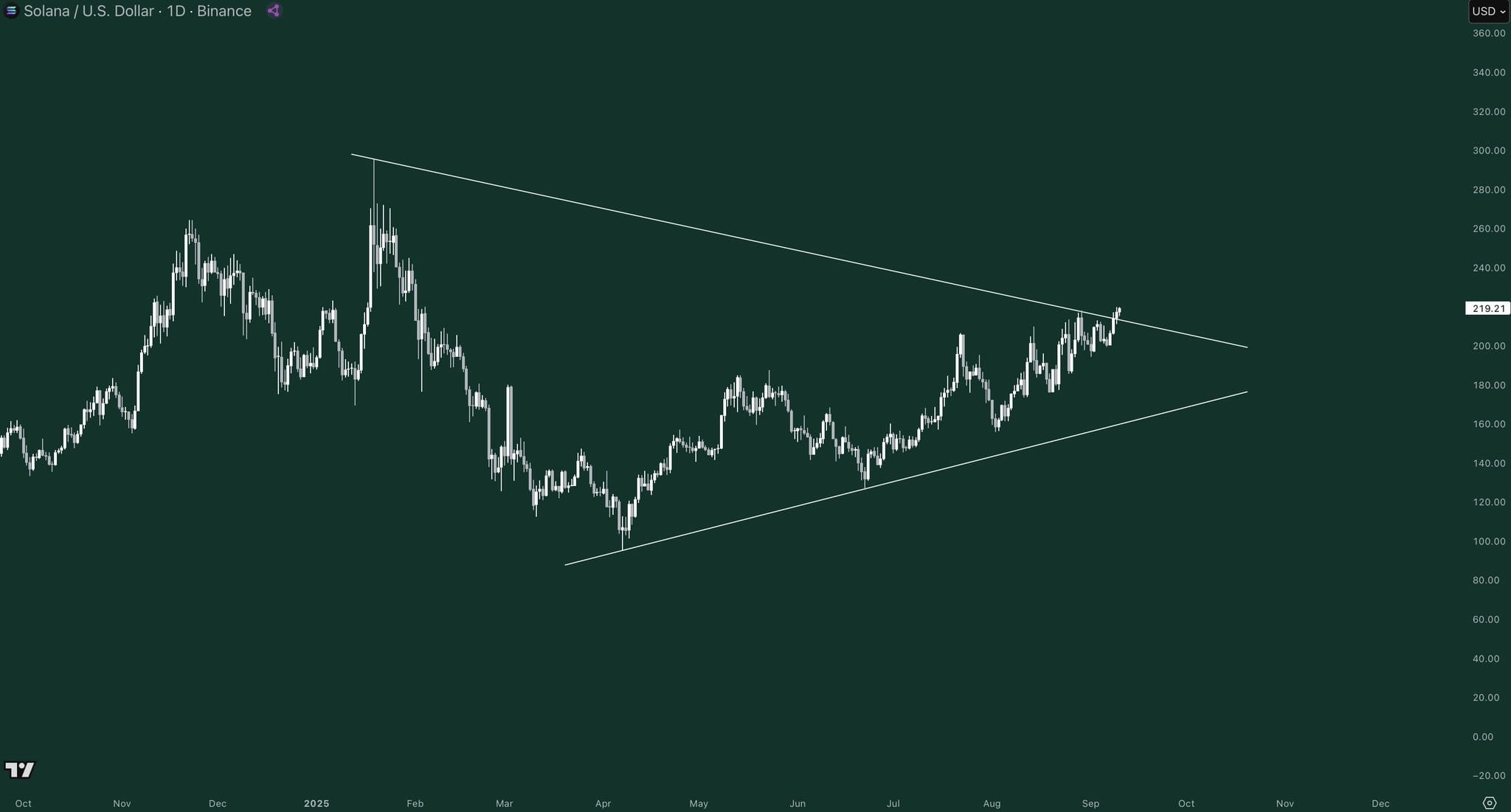
$SOL ist auf dem Weg zu einem der unglaublichsten Läufe, die wir JE gesehen haben.
Es gibt nichts, was NIEMAND tun kann, um es zu stoppen.
Verstehst du?
$SOL
Es gibt nichts, was NIEMAND tun kann, um es zu stoppen.
Verstehst du?
$SOL
1
3
·
--
Ethereums großer Lauf 🚀
Ethereum war in letzter Zeit sehr erfolgreich — der Preis ist in den letzten Tagen explodiert und erinnert uns daran, warum Geduld in der Krypto-Welt belohnt wird.
Im März fiel $ETH auf einen viel niedrigeren Preis, und für diejenigen, die die Gelegenheit erkannten und eingestiegen sind, stellte sich dieser Moment als reines Gold heraus. 📈
Die Lektion? Jeder Rückgang birgt Potenzial. In der Krypto-Welt pflanzen Rückgänge oft die Samen für die nächste große Rallye. 🌱
Wohin denkst du, wird ETH als Nächstes gehen? $ETH
{spot}(ETHUSDT)
#Ethereum #ETH #KryptoHandel #BinanceSquare #KaufeDenRückgang
Ethereums großer Lauf 🚀
Ethereum war in letzter Zeit sehr erfolgreich — der Preis ist in den letzten Tagen explodiert und erinnert uns daran, warum Geduld in der Krypto-Welt belohnt wird.
Im März fiel $ETH auf einen viel niedrigeren Preis, und für diejenigen, die die Gelegenheit erkannten und eingestiegen sind, stellte sich dieser Moment als reines Gold heraus. 📈
Die Lektion? Jeder Rückgang birgt Potenzial. In der Krypto-Welt pflanzen Rückgänge oft die Samen für die nächste große Rallye. 🌱
Wohin denkst du, wird ETH als Nächstes gehen? $ETH
#Ethereum #ETH #KryptoHandel #BinanceSquare #KaufeDenRückgang
2
74
·
--
Ethereums Achterbahnfahrt!
In den letzten 24 Stunden erlebte Ethereum $ETH einen starken Rückgang – schwache Hände wurden abgeschüttelt – bevor es heute mit Stärke zurückkam. 📉➡️📈
Diese Erholung hebt die Widerstandsfähigkeit von ETH hervor und wie schnell sich die Stimmung auf den Kryptomärkten ändern kann. Mit stabilen Unterstützungsniveaus und eintretenden Käufern könnten die Bullen noch nicht am Ende sein. 🐂
Kaufst du den Rückgang oder wartest du am Spielfeldrand?
{spot}(ETHUSDT)
Teile deine Gedanken unten mit! 👇
Ethereums Achterbahnfahrt!
In den letzten 24 Stunden erlebte Ethereum $ETH einen starken Rückgang – schwache Hände wurden abgeschüttelt – bevor es heute mit Stärke zurückkam. 📉➡️📈
Diese Erholung hebt die Widerstandsfähigkeit von ETH hervor und wie schnell sich die Stimmung auf den Kryptomärkten ändern kann. Mit stabilen Unterstützungsniveaus und eintretenden Käufern könnten die Bullen noch nicht am Ende sein. 🐂
Kaufst du den Rückgang oder wartest du am Spielfeldrand?
Teile deine Gedanken unten mit! 👇
1
68
·
--
Solana $SOL zeigt heute eine starke Dynamik mit einem bemerkenswerten Preisanstieg – und übertrifft viele bedeutende Altcoins. 🟢
Mit wachsender Entwickleraktivität, sich entwickelnden DeFi-Projekten und steigendem Nutzerinteresse beweist Solana weiterhin seine Widerstandsfähigkeit und Skalierbarkeit im Web3-Bereich.
Ist dies der Beginn einer größeren Bewegung? 📈
Lass uns deine Gedanken unten wissen! 👇
{spot}(SOLUSDT)
#Solana #KryptoNachrichten #BinanceSquare #Altcoins #Web3
Solana $SOL zeigt heute eine starke Dynamik mit einem bemerkenswerten Preisanstieg – und übertrifft viele bedeutende Altcoins. 🟢
Mit wachsender Entwickleraktivität, sich entwickelnden DeFi-Projekten und steigendem Nutzerinteresse beweist Solana weiterhin seine Widerstandsfähigkeit und Skalierbarkeit im Web3-Bereich.
Ist dies der Beginn einer größeren Bewegung? 📈
Lass uns deine Gedanken unten wissen! 👇
#Solana #KryptoNachrichten #BinanceSquare #Altcoins #Web3
1
86
·
--
30 Tage Krypto-Wissen:
Tag 30: Auf dem Laufenden bleiben in Krypto
Folge zuverlässigen Quellen: Binance Academy, CoinGecko, Crypto Twitter, Projekt-Discords und Podcasts. In Krypto endet die Bildung nie.
$BTC
{spot}(BTCUSDT)
$ETH
{spot}(ETHUSDT)
30 Tage Krypto-Wissen:
Tag 30: Auf dem Laufenden bleiben in Krypto
Folge zuverlässigen Quellen: Binance Academy, CoinGecko, Crypto Twitter, Projekt-Discords und Podcasts. In Krypto endet die Bildung nie.
$BTC
$ETH
Tag 30: Auf dem Laufenden bleiben in Krypto
Folge zuverlässigen Quellen: Binance Academy, CoinGecko, Crypto Twitter, Projekt-Discords und Podcasts. In Krypto endet die Bildung nie.
$BTC
$ETH
1
35
·
--
30 Tage Krypto-Wissen:
Tag 29: Wie man ein Krypto-Portfolio aufbaut
Diversifizieren Sie über Marktkapitalisierungen, Sektoren (DeFi, NFTs, Layer 1s) und Risikostufen. Rebalancieren Sie regelmäßig und investieren Sie niemals mehr, als Sie sich leisten können zu verlieren.
$BTC
{spot}(BTCUSDT)
$ETH
{spot}(ETHUSDT)
30 Tage Krypto-Wissen:
Tag 29: Wie man ein Krypto-Portfolio aufbaut
Diversifizieren Sie über Marktkapitalisierungen, Sektoren (DeFi, NFTs, Layer 1s) und Risikostufen. Rebalancieren Sie regelmäßig und investieren Sie niemals mehr, als Sie sich leisten können zu verlieren.
$BTC
$ETH
Tag 29: Wie man ein Krypto-Portfolio aufbaut
Diversifizieren Sie über Marktkapitalisierungen, Sektoren (DeFi, NFTs, Layer 1s) und Risikostufen. Rebalancieren Sie regelmäßig und investieren Sie niemals mehr, als Sie sich leisten können zu verlieren.
$BTC
$ETH
2
52
·
--
30 Tage Krypto-Wissen:
Tag 28: Anwendungsfälle in der realen Welt
Krypto wird für Überweisungen, Mikropayments, die Verfolgung von Lieferketten, digitale IDs, Spiel-Assets und mehr verwendet. Die Akzeptanz ist besonders stark in Regionen mit instabilen Währungen.
$BTC
{spot}(BTCUSDT)
$ETH
{spot}(ETHUSDT)
30 Tage Krypto-Wissen:
Tag 28: Anwendungsfälle in der realen Welt
Krypto wird für Überweisungen, Mikropayments, die Verfolgung von Lieferketten, digitale IDs, Spiel-Assets und mehr verwendet. Die Akzeptanz ist besonders stark in Regionen mit instabilen Währungen.
$BTC
$ETH
Tag 28: Anwendungsfälle in der realen Welt
Krypto wird für Überweisungen, Mikropayments, die Verfolgung von Lieferketten, digitale IDs, Spiel-Assets und mehr verwendet. Die Akzeptanz ist besonders stark in Regionen mit instabilen Währungen.
$BTC
$ETH
1
140
Anmelden und weiter Inhalte entdecken
Krypto-Nutzer weltweit auf Binance Square kennenlernen
⚡️ Bleib in Sachen Krypto stets am Puls.
💬 Die weltgrößte Kryptobörse vertraut darauf.
👍 Erhalte verlässliche Einblicke von verifizierten Creators.
E-Mail-Adresse/Telefonnummer
Trendthemen
BTCReboundsAbove$60KAmidWhaleDipBuying
5,200 Aufrufe
58 Kommentare
Abraxas Capital und andere Großanleger kaufen den BTC-Kursrückgang, während Bitcoin kurzzeitig wieder 60.000 US-Dollar erreicht
Binance News
·16 Likes
·15.5k Aufrufe
NvidiaLoses$2.7TrillionInMonthAndAHalf
44,291 Aufrufe
209 Kommentare
GlobalStocksFaceLongestLosingStreakSince2023
399,876 Aufrufe
2,641 Kommentare