Binance Square
Magnus_eth
6 Beiträge

Magnus_eth

Verifying my Binance Square account for YZi Labs Amplify via EchoHunt: EH-DER8FH
Trade eröffnen
Regelmäßiger Trader
4.2 Jahre
39 Following
1 Follower
6 Like gegeben
Beiträge
Portfolio
·
--
Übersetzung ansehen
Verifying my Binance Square account for YZi Labs Amplify via EchoHunt: EH-DER8FH
Übersetzung ansehen
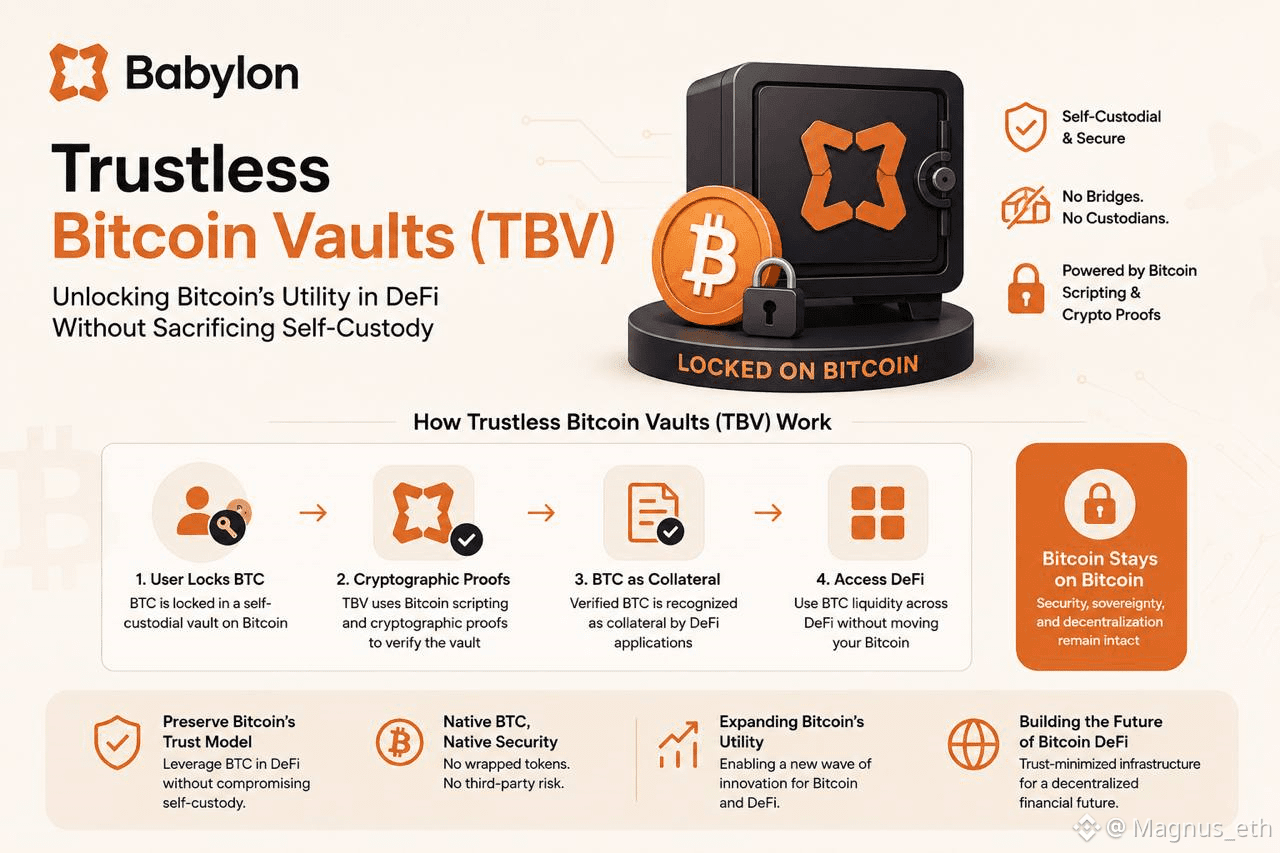
Bitcoin has always been the most trusted store of value, but using BTC in DeFi has often meant sacrificing self-custody through bridges, wrappers, or custodians. That's why Trustless Bitcoin Vaults (TBV) from @babylonlabs_io stand out. Instead of moving BTC off Bitcoin, TBV allows native BTC to remain locked on the Bitcoin network in a self-custodial vault while being used as collateral for DeFi applications. The protocol relies on cryptographic proofs and Bitcoin's scripting capabilities rather than trusted intermediaries, reducing the need for custodial bridges or wrapped assets. For me, this shifts the conversation from "How do we bridge Bitcoin?" to "How do we preserve Bitcoin's trust model while expanding its utility?" If Bitcoin is going to play a larger role in DeFi, trust-minimized infrastructure like TBV is an important direction to watch. @babylonlabs_io $BABY #baby
Bitcoin has always been the most trusted store of value, but using BTC in DeFi has often meant sacrificing self-custody through bridges, wrappers, or custodians.
That's why Trustless Bitcoin Vaults (TBV) from @BabylonLabs_io stand out.
Instead of moving BTC off Bitcoin, TBV allows native BTC to remain locked on the Bitcoin network in a self-custodial vault while being used as collateral for DeFi applications. The protocol relies on cryptographic proofs and Bitcoin's scripting capabilities rather than trusted intermediaries, reducing the need for custodial bridges or wrapped assets.
For me, this shifts the conversation from "How do we bridge Bitcoin?" to "How do we preserve Bitcoin's trust model while expanding its utility?"
If Bitcoin is going to play a larger role in DeFi, trust-minimized infrastructure like TBV is an important direction to watch.
@BabylonLabs_io $BABY #baby
·
--
Bullisch
Übersetzung ansehen
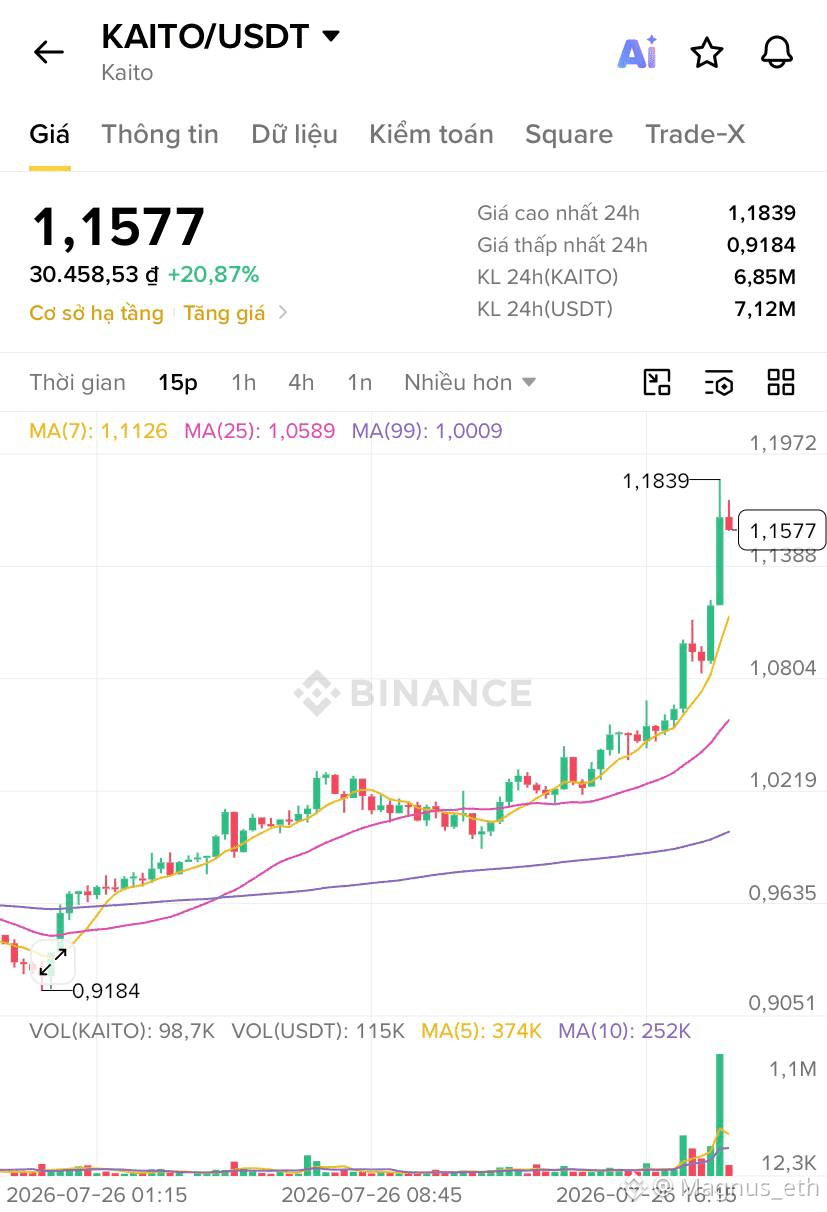
$KAITO just woke up 🚀 +20.87% in 24h From 0.9184 → 1.1577 Strong volume + clean breakout above all MAs. Watching closely. #KAITO #Binance
$KAITO just woke up 🚀
+20.87% in 24h
From 0.9184 → 1.1577
Strong volume + clean breakout above all MAs.
Watching closely.
#KAITO #Binance
·
--
Bärisch
$DEXE is heute unter starkem Verkaufsdruck. Eine scharfe Korrektur bedeutet nicht immer, dass der Trend vorbei ist, aber sie erinnert uns daran, dass Risikomanagement an erster Stelle steht.
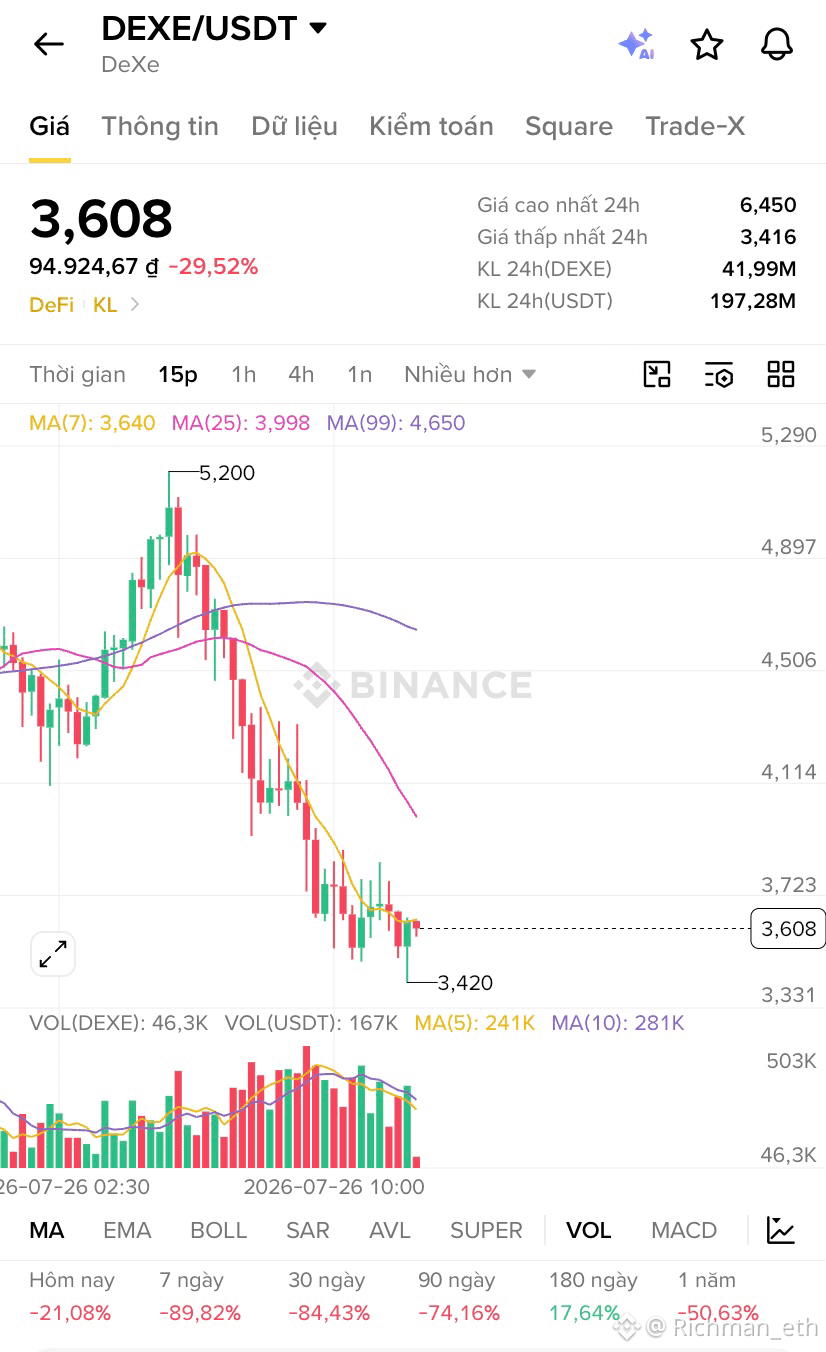
$DEXE is heute unter starkem Verkaufsdruck.

Eine scharfe Korrektur bedeutet nicht immer, dass der Trend vorbei ist, aber sie erinnert uns daran, dass Risikomanagement an erster Stelle steht.
Artikel
Übersetzung ansehen
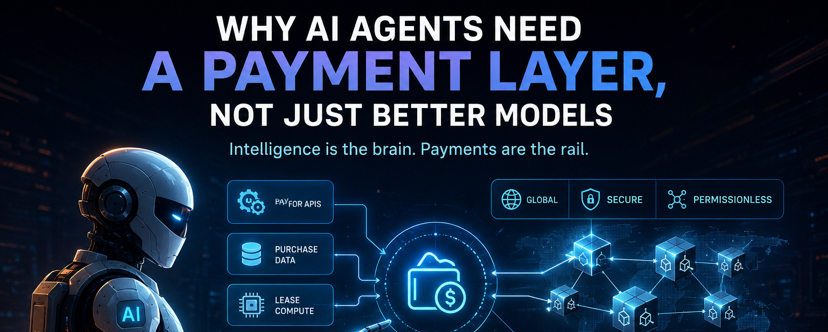
Why AI Agents Need a Payment Layer, Not Just Better ModelsArtificial intelligence is evolving quickly, but intelligence alone isn’t enough to create a true AI economy. As AI agents become capable of making decisions, they’ll need to pay for APIs, purchase data, lease computing power, and interact with other autonomous agents. Without a reliable payment layer, these interactions remain limited. Traditional payment systems weren’t designed for machines. They often require human verification, depend on banking hours, involve high fees, or are restricted by geography. These limitations make them inefficient for autonomous, real-time transactions. This is why blockchain infrastructure is becoming an important part of the conversation. A programmable settlement layer enables AI agents to transact globally, securely, and without relying on centralized intermediaries. What interests me most is that the next wave of innovation may not come from building larger AI models, but from creating the infrastructure that allows AI to participate in the digital economy. The AI race isn’t just about who builds the smartest model. It’s also about who builds the rails that let intelligent machines exchange value.$

Why AI Agents Need a Payment Layer, Not Just Better Models

Artificial intelligence is evolving quickly, but intelligence alone isn’t enough to create a true AI economy.
As AI agents become capable of making decisions, they’ll need to pay for APIs, purchase data, lease computing power, and interact with other autonomous agents. Without a reliable payment layer, these interactions remain limited.
Traditional payment systems weren’t designed for machines. They often require human verification, depend on banking hours, involve high fees, or are restricted by geography. These limitations make them inefficient for autonomous, real-time transactions.
This is why blockchain infrastructure is becoming an important part of the conversation. A programmable settlement layer enables AI agents to transact globally, securely, and without relying on centralized intermediaries.
What interests me most is that the next wave of innovation may not come from building larger AI models, but from creating the infrastructure that allows AI to participate in the digital economy.
The AI race isn’t just about who builds the smartest model.
It’s also about who builds the rails that let intelligent machines exchange value.$
Anmelden und weiter Inhalte entdecken
Krypto-Nutzer weltweit auf Binance Square kennenlernen
⚡️ Bleib in Sachen Krypto stets am Puls.
💬 Die weltgrößte Kryptobörse vertraut darauf.
👍 Erhalte verlässliche Einblicke von verifizierten Creators.
E-Mail-Adresse/Telefonnummer
Sitemap
Cookie-Präferenzen
Nutzungsbedingungen der Plattform