

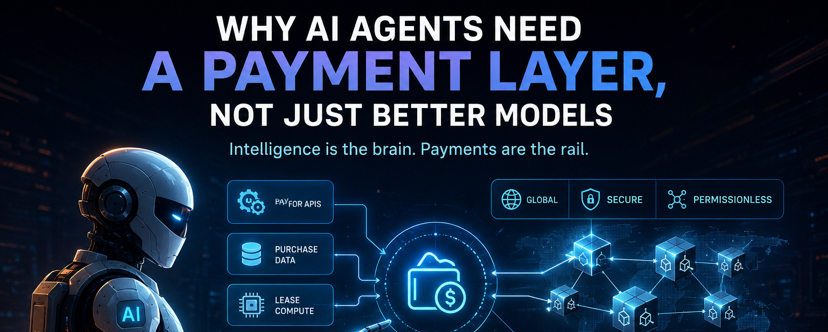

Künstliche Intelligenz entwickelt sich schnell weiter, aber Intelligenz allein reicht nicht aus, um eine echte KI-Ökonomie zu schaffen.
Wenn KI-Agenten in der Lage sind, Entscheidungen zu treffen, müssen sie für APIs bezahlen, Daten einkaufen, Rechenleistung mieten und mit anderen autonomen Agenten interagieren. Ohne eine zuverlässige Zahlungsschicht bleiben diese Interaktionen begrenzt.
Traditionelle Zahlungssysteme wurden nicht für Maschinen entwickelt. Oft erfordern sie menschliche Bestätigung, sind an Banköffnungszeiten gebunden, verursachen hohe Gebühren oder sind geografisch eingeschränkt. Diese Beschränkungen machen sie ineffizient für autonome, Echtzeit-Transaktionen.
Deshalb wird Blockchain-Infrastruktur zu einem wichtigen Bestandteil der Diskussion. Eine programmierbare Abrechnungsschicht ermöglicht es KI-Agenten, global, sicher und ohne die Abhängigkeit von zentralisierten Vermittlern zu transaktieren.
Was mich am meisten interessiert, ist, dass die nächste Innovationswelle möglicherweise nicht vom Bau größerer KI-Modelle kommt, sondern von der Schaffung der Infrastruktur, die es KI ermöglicht, am digitalen Wirtschaftssystem teilzunehmen.
Der KI-Wettlauf geht nicht nur darum, wer das intelligenteste Modell baut.
Es geht auch darum, wer die Schienen baut, damit intelligente Maschinen Werte austauschen können.$