

Crypto star Queen
179 Beiträge

Crypto star Queen
Melden
Nutzer blockieren
Crypto
1 Following
2 Follower
6 Like gegeben
Beiträge
Alle
Zitierungen
Videos
Übersetzung ansehen
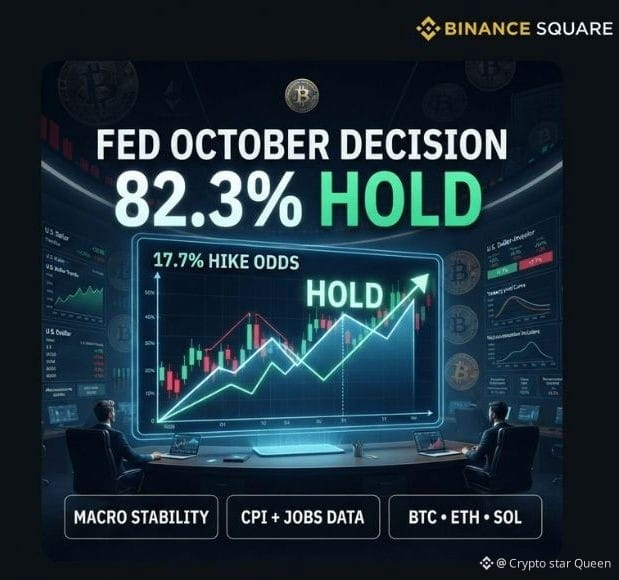
"fedoctoberholdodds82.3% 🚨🚨🚨🚨🚨🚨🚨 🚨🚨🚨🚨🚨🚨🚨🚨🚨🚨🚨🚨
✅FED OCTOBER DECISION — 82.3% HOLD PROBABILITY!" means that market participants were estimating an 82.3% chance that the U.S. Federal Reserve would leave interest rates unchanged at its October meeting.
“Hold probability” does not mean the decision was guaranteed. It reflects expectations derived from interest-rate futures pricing, such as CME FedWatch data. The remaining 17.7% probability in the post was assigned to a 0.25 percentage-point rate increase.
For crypto markets, an expected rate pause can reduce one source of short-term uncertainty because unchanged rates may support a steadier risk-appetite environment. However, inflation reports, jobs data, liquidity conditions, and broader market sentiment can still shift expectations—and prices of BTC, ETH, and SOL—quickly.
The above is market analysis and does not constitute investment advice.
"fedoctoberholdodds82.3% 🚨🚨🚨🚨🚨🚨🚨 🚨🚨🚨🚨🚨🚨🚨🚨🚨🚨🚨🚨
✅FED OCTOBER DECISION — 82.3% HOLD PROBABILITY!" means that market participants were estimating an 82.3% chance that the U.S. Federal Reserve would leave interest rates unchanged at its October meeting.
“Hold probability” does not mean the decision was guaranteed. It reflects expectations derived from interest-rate futures pricing, such as CME FedWatch data. The remaining 17.7% probability in the post was assigned to a 0.25 percentage-point rate increase.
For crypto markets, an expected rate pause can reduce one source of short-term uncertainty because unchanged rates may support a steadier risk-appetite environment. However, inflation reports, jobs data, liquidity conditions, and broader market sentiment can still shift expectations—and prices of BTC, ETH, and SOL—quickly.
The above is market analysis and does not constitute investment advice.
✅FED OCTOBER DECISION — 82.3% HOLD PROBABILITY!" means that market participants were estimating an 82.3% chance that the U.S. Federal Reserve would leave interest rates unchanged at its October meeting.
“Hold probability” does not mean the decision was guaranteed. It reflects expectations derived from interest-rate futures pricing, such as CME FedWatch data. The remaining 17.7% probability in the post was assigned to a 0.25 percentage-point rate increase.
For crypto markets, an expected rate pause can reduce one source of short-term uncertainty because unchanged rates may support a steadier risk-appetite environment. However, inflation reports, jobs data, liquidity conditions, and broader market sentiment can still shift expectations—and prices of BTC, ETH, and SOL—quickly.
The above is market analysis and does not constitute investment advice.
24
Verifiziert
Spot $USDC 0.1 USDT
Übersetzung ansehen
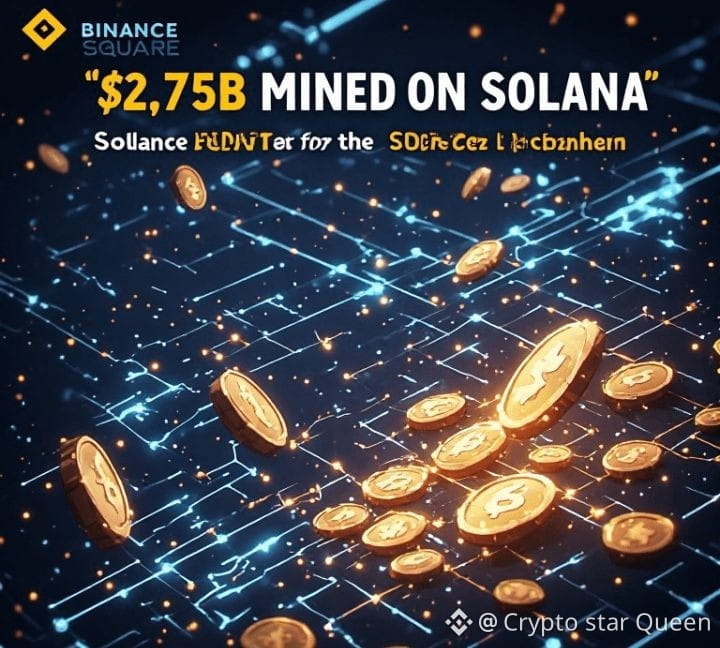
CircleMints$2.75BUSDCOnSolanaIn7Days
🚨 Circle just minted $2.75B in $USDC
{spot}(USDCUSDT)
on Solana in 7 days.
That’s a massive amount of new USDC liquidity entering the network.
Circle mints USDC by depositing USD or equivalent reserve assets, including cash and short-term U.S. Treasury bills, before issuing the corresponding tokens on Solana.
So this isn’t money being created out of thin air — the tokens are backed by reserve assets.
For $SOL
{spot}(SOLUSDT)
traders, the big question is where that liquidity goes.
More stablecoin liquidity could create more activity across DeFi and memecoins, but chasing a sudden liquidity wave can also mean taking on more risk.
Watch
SOL
CircleMints$2.75BUSDCOnSolanaIn7Days
🚨 Circle just minted $2.75B in $USDC
on Solana in 7 days.
That’s a massive amount of new USDC liquidity entering the network.
Circle mints USDC by depositing USD or equivalent reserve assets, including cash and short-term U.S. Treasury bills, before issuing the corresponding tokens on Solana.
So this isn’t money being created out of thin air — the tokens are backed by reserve assets.
For $SOL
traders, the big question is where that liquidity goes.
More stablecoin liquidity could create more activity across DeFi and memecoins, but chasing a sudden liquidity wave can also mean taking on more risk.
Watch
SOL
🚨 Circle just minted $2.75B in $USDC
on Solana in 7 days.
That’s a massive amount of new USDC liquidity entering the network.
Circle mints USDC by depositing USD or equivalent reserve assets, including cash and short-term U.S. Treasury bills, before issuing the corresponding tokens on Solana.
So this isn’t money being created out of thin air — the tokens are backed by reserve assets.
For $SOL
traders, the big question is where that liquidity goes.
More stablecoin liquidity could create more activity across DeFi and memecoins, but chasing a sudden liquidity wave can also mean taking on more risk.
Watch
SOL
30
Übersetzung ansehen
Ethup70%inq3butliquidityfallsEthup70%
😂 ETH gained 70%. So why does its liquidity look weaker?
That sounds bearish.
But the data tells a more interesting story. 👀
ETH jumped roughly 70% in Q3, crushing BTC’s 42% gain.
Yet ETH’s median daily order-book depth was only around 35–45% of BTC’s, versus at least 60% a year earlier.
Here’s the number most people miss:
ETH still had roughly $13–14M of depth within ±0.15% of price.
So ETH didn’t necessarily become “illiquid.”
BTC simply got much deeper.
BTC’s comparable depth reached roughly $29M on bids and $37M on asks, after gaining about 50%.
And here comes the plot twist:
ETH attracted around $3.1B in spot ETF inflows during Q3, yet much of that capital never sits inside the CEX limit-order books being measured.
So ETH can rally hard while exchange liquidity remains relatively thin.
That matters because large orders can move ETH more aggressively in either direction.
🧠 Square Insight:
A thinner order book doesn’t predict direction — it amplifies the move.
So what matters more for ETH next: fresh capital or deeper liquidity? 👀
#Ethereum #Crypto #Liquidity #DEFİ $ETH
ETHUSDT Perp 2,700.69 -0.16%" means that ETH’s price rose strongly, but the amount of buy and sell orders sitting close to its market price did not grow as quickly as Bitcoin’s.
Order-book depth is a measure of how much capital is available to absorb trades near the current price. $ETH
{spot}(ETHUSDT)
having about $13–14 million of liquidity within ±0.15% means it was still tradable with meaningful depth; it was not necessarily illiquid. However, BTC’s order book became much deeper—around $29 million on the bid side and $37 million on the ask side—so ETH looked weaker relative to BTC.
The post also highlights that $ETFT.ETF
inflows do not automatically appear as exchange limit orders. Investors can gain ETH exposure through ETFs, custodians, or other channels without placing orders on centralized exchanges. That can support demand and price while leaving visible exchange liquidity comparatively thinner.
{spot}(BTCUSDT)
Ethup70%inq3butliquidityfalls
Ethup70%
😂 ETH gained 70%. So why does its liquidity look weaker?
That sounds bearish.
But the data tells a more interesting story. 👀
ETH jumped roughly 70% in Q3, crushing BTC’s 42% gain.
Yet ETH’s median daily order-book depth was only around 35–45% of BTC’s, versus at least 60% a year earlier.
Here’s the number most people miss:
ETH still had roughly $13–14M of depth within ±0.15% of price.
So ETH didn’t necessarily become “illiquid.”
BTC simply got much deeper.
BTC’s comparable depth reached roughly $29M on bids and $37M on asks, after gaining about 50%.
And here comes the plot twist:
ETH attracted around $3.1B in spot ETF inflows during Q3, yet much of that capital never sits inside the CEX limit-order books being measured.
So ETH can rally hard while exchange liquidity remains relatively thin.
That matters because large orders can move ETH more aggressively in either direction.
🧠 Square Insight:
A thinner order book doesn’t predict direction — it amplifies the move.
So what matters more for ETH next: fresh capital or deeper liquidity? 👀
#Ethereum #Crypto #Liquidity #DEFİ $ETH
ETHUSDT Perp 2,700.69 -0.16%" means that ETH’s price rose strongly, but the amount of buy and sell orders sitting close to its market price did not grow as quickly as Bitcoin’s.
Order-book depth is a measure of how much capital is available to absorb trades near the current price. $ETH
having about $13–14 million of liquidity within ±0.15% means it was still tradable with meaningful depth; it was not necessarily illiquid. However, BTC’s order book became much deeper—around $29 million on the bid side and $37 million on the ask side—so ETH looked weaker relative to BTC.
The post also highlights that $ETFT.ETF
inflows do not automatically appear as exchange limit orders. Investors can gain ETH exposure through ETFs, custodians, or other channels without placing orders on centralized exchanges. That can support demand and price while leaving visible exchange liquidity comparatively thinner.
😂 ETH gained 70%. So why does its liquidity look weaker?
That sounds bearish.
But the data tells a more interesting story. 👀
ETH jumped roughly 70% in Q3, crushing BTC’s 42% gain.
Yet ETH’s median daily order-book depth was only around 35–45% of BTC’s, versus at least 60% a year earlier.
Here’s the number most people miss:
ETH still had roughly $13–14M of depth within ±0.15% of price.
So ETH didn’t necessarily become “illiquid.”
BTC simply got much deeper.
BTC’s comparable depth reached roughly $29M on bids and $37M on asks, after gaining about 50%.
And here comes the plot twist:
ETH attracted around $3.1B in spot ETF inflows during Q3, yet much of that capital never sits inside the CEX limit-order books being measured.
So ETH can rally hard while exchange liquidity remains relatively thin.
That matters because large orders can move ETH more aggressively in either direction.
🧠 Square Insight:
A thinner order book doesn’t predict direction — it amplifies the move.
So what matters more for ETH next: fresh capital or deeper liquidity? 👀
#Ethereum #Crypto #Liquidity #DEFİ $ETH
ETHUSDT Perp 2,700.69 -0.16%" means that ETH’s price rose strongly, but the amount of buy and sell orders sitting close to its market price did not grow as quickly as Bitcoin’s.
Order-book depth is a measure of how much capital is available to absorb trades near the current price. $ETH
having about $13–14 million of liquidity within ±0.15% means it was still tradable with meaningful depth; it was not necessarily illiquid. However, BTC’s order book became much deeper—around $29 million on the bid side and $37 million on the ask side—so ETH looked weaker relative to BTC.
The post also highlights that $ETFT.ETF
inflows do not automatically appear as exchange limit orders. Investors can gain ETH exposure through ETFs, custodians, or other channels without placing orders on centralized exchanges. That can support demand and price while leaving visible exchange liquidity comparatively thinner.
27
·
--
Bullisch
Übersetzung ansehen
#ShareYourThoughtOnBTC :BTC is best and very well popular coin hai.
#ShareYourThoughtOnBTC :BTC is best and very well popular coin hai.


1


Übersetzung ansehen
Changer+ has launched a self-custody wallet centered on stablecoins, designed to simplify holding, transferring, and using stablecoins. According to ChainCatcher, the wallet supports major stablecoins including USDT and USDC on Ethereum, TRON, $BNB Chain, and Solana.
The company said users retain control of their private keys while the wallet offers flexible gas fee payment options and includes security risk alerts, global eSIM data packages, and a lifestyle ticket marketplace. Changer+ also said it completed an independent security audit and VAPT by Echo Pulse, a CREST-certified cybersecurity provider licensed in Singapore.
To mark the launch, new users can receive three eligible free transactions per device on" means that Changer+ has introduced a crypto wallet focused on stablecoins—digital assets such as $USDT and $USDC
{spot}(USDCUSDT)
that are generally designed to track a fiat currency like the U.S. dollar.
It is a self-custody wallet, so users—not Changer+—hold and control their private keys. This provides greater control over funds, but also means users are responsible for securely backing up their recovery phrase and protecting access to the wallet.
The wallet works across several blockchains, including Ethereum, TRON, BNB Chain, and Solana. It also aims to make transactions more convenient by allowing flexible ways to pay network fees, warning users about potential security risks, and offering extra services such as mobile eSIM data packages and ticket purchases.
Changer+ says the wallet underwent an independent security review and vulnerability assessment. The final sentence refers to a launch promotion: from October 6, 2026 through November 6, 2026, eligible new users can receive up to three free transactions per device on each supported chain, subject to the promotion’s terms.
Changer+ has launched a self-custody wallet centered on stablecoins, designed to simplify holding, transferring, and using stablecoins. According to ChainCatcher, the wallet supports major stablecoins including USDT and USDC on Ethereum, TRON, $BNB Chain, and Solana.
The company said users retain control of their private keys while the wallet offers flexible gas fee payment options and includes security risk alerts, global eSIM data packages, and a lifestyle ticket marketplace. Changer+ also said it completed an independent security audit and VAPT by Echo Pulse, a CREST-certified cybersecurity provider licensed in Singapore.
To mark the launch, new users can receive three eligible free transactions per device on" means that Changer+ has introduced a crypto wallet focused on stablecoins—digital assets such as $USDT and $USDC
that are generally designed to track a fiat currency like the U.S. dollar.
It is a self-custody wallet, so users—not Changer+—hold and control their private keys. This provides greater control over funds, but also means users are responsible for securely backing up their recovery phrase and protecting access to the wallet.
The wallet works across several blockchains, including Ethereum, TRON, BNB Chain, and Solana. It also aims to make transactions more convenient by allowing flexible ways to pay network fees, warning users about potential security risks, and offering extra services such as mobile eSIM data packages and ticket purchases.
Changer+ says the wallet underwent an independent security review and vulnerability assessment. The final sentence refers to a launch promotion: from October 6, 2026 through November 6, 2026, eligible new users can receive up to three free transactions per device on each supported chain, subject to the promotion’s terms.
The company said users retain control of their private keys while the wallet offers flexible gas fee payment options and includes security risk alerts, global eSIM data packages, and a lifestyle ticket marketplace. Changer+ also said it completed an independent security audit and VAPT by Echo Pulse, a CREST-certified cybersecurity provider licensed in Singapore.
To mark the launch, new users can receive three eligible free transactions per device on" means that Changer+ has introduced a crypto wallet focused on stablecoins—digital assets such as $USDT and $USDC
that are generally designed to track a fiat currency like the U.S. dollar.
It is a self-custody wallet, so users—not Changer+—hold and control their private keys. This provides greater control over funds, but also means users are responsible for securely backing up their recovery phrase and protecting access to the wallet.
The wallet works across several blockchains, including Ethereum, TRON, BNB Chain, and Solana. It also aims to make transactions more convenient by allowing flexible ways to pay network fees, warning users about potential security risks, and offering extra services such as mobile eSIM data packages and ticket purchases.
Changer+ says the wallet underwent an independent security review and vulnerability assessment. The final sentence refers to a launch promotion: from October 6, 2026 through November 6, 2026, eligible new users can receive up to three free transactions per device on each supported chain, subject to the promotion’s terms.
49
Übersetzung ansehen
🚨 Binance Just Entered the AI Era 🤖
Binance has officially unveiled Binance Intelligence — a new AI-powered layer designed to make crypto and financial information easier to understand.
🧠 Binance AI — personalized market insights
⚡ Binance AI Pro — turns ideas into strategy workflows
🤖 Agent OS — lets developers build AI agents with Binance capabilities
The big shift?
AI is moving from simply answering questions to helping users understand, plan and interact with financial markets.
Crypto + AI = a whole new chapter. 🔥
#Binance #BinanceIntelligence #BinanceAI #Crypto #AI #BNB_Market_Update
🚨 Binance Just Entered the AI Era 🤖
Binance has officially unveiled Binance Intelligence — a new AI-powered layer designed to make crypto and financial information easier to understand.
🧠 Binance AI — personalized market insights
⚡ Binance AI Pro — turns ideas into strategy workflows
🤖 Agent OS — lets developers build AI agents with Binance capabilities
The big shift?
AI is moving from simply answering questions to helping users understand, plan and interact with financial markets.
Crypto + AI = a whole new chapter. 🔥
#Binance #BinanceIntelligence #BinanceAI #Crypto #AI #BNB_Market_Update
Binance has officially unveiled Binance Intelligence — a new AI-powered layer designed to make crypto and financial information easier to understand.
🧠 Binance AI — personalized market insights
⚡ Binance AI Pro — turns ideas into strategy workflows
🤖 Agent OS — lets developers build AI agents with Binance capabilities
The big shift?
AI is moving from simply answering questions to helping users understand, plan and interact with financial markets.
Crypto + AI = a whole new chapter. 🔥
#Binance #BinanceIntelligence #BinanceAI #Crypto #AI #BNB_Market_Update


76
🇺🇸 US-Unternehmenszahlen im Blick — 5. Okt.
Der Montag beginnt ruhig — heute stehen keine größeren Veröffentlichungen von Unternehmenszahlen an.
Ab morgen nimmt die Berichtssaison für das 3. Quartal Fahrt auf. 👀📈
Heute im Fokus: Marktreaktionen und Positionierung vor der Berichtssaison. �
www-warranty.ii.co.uk +1
#Earnings #Stocks #USMarkets #BinanceSquare
🇺🇸 US-Unternehmenszahlen im Blick — 5. Okt.
Der Montag beginnt ruhig — heute stehen keine größeren Veröffentlichungen von Unternehmenszahlen an.
Ab morgen nimmt die Berichtssaison für das 3. Quartal Fahrt auf. 👀📈
Heute im Fokus: Marktreaktionen und Positionierung vor der Berichtssaison. �
www-warranty.ii.co.uk +1
#Earnings #Stocks #USMarkets #BinanceSquare
Der Montag beginnt ruhig — heute stehen keine größeren Veröffentlichungen von Unternehmenszahlen an.
Ab morgen nimmt die Berichtssaison für das 3. Quartal Fahrt auf. 👀📈
Heute im Fokus: Marktreaktionen und Positionierung vor der Berichtssaison. �
www-warranty.ii.co.uk +1
#Earnings #Stocks #USMarkets #BinanceSquare

1
Verifiziert
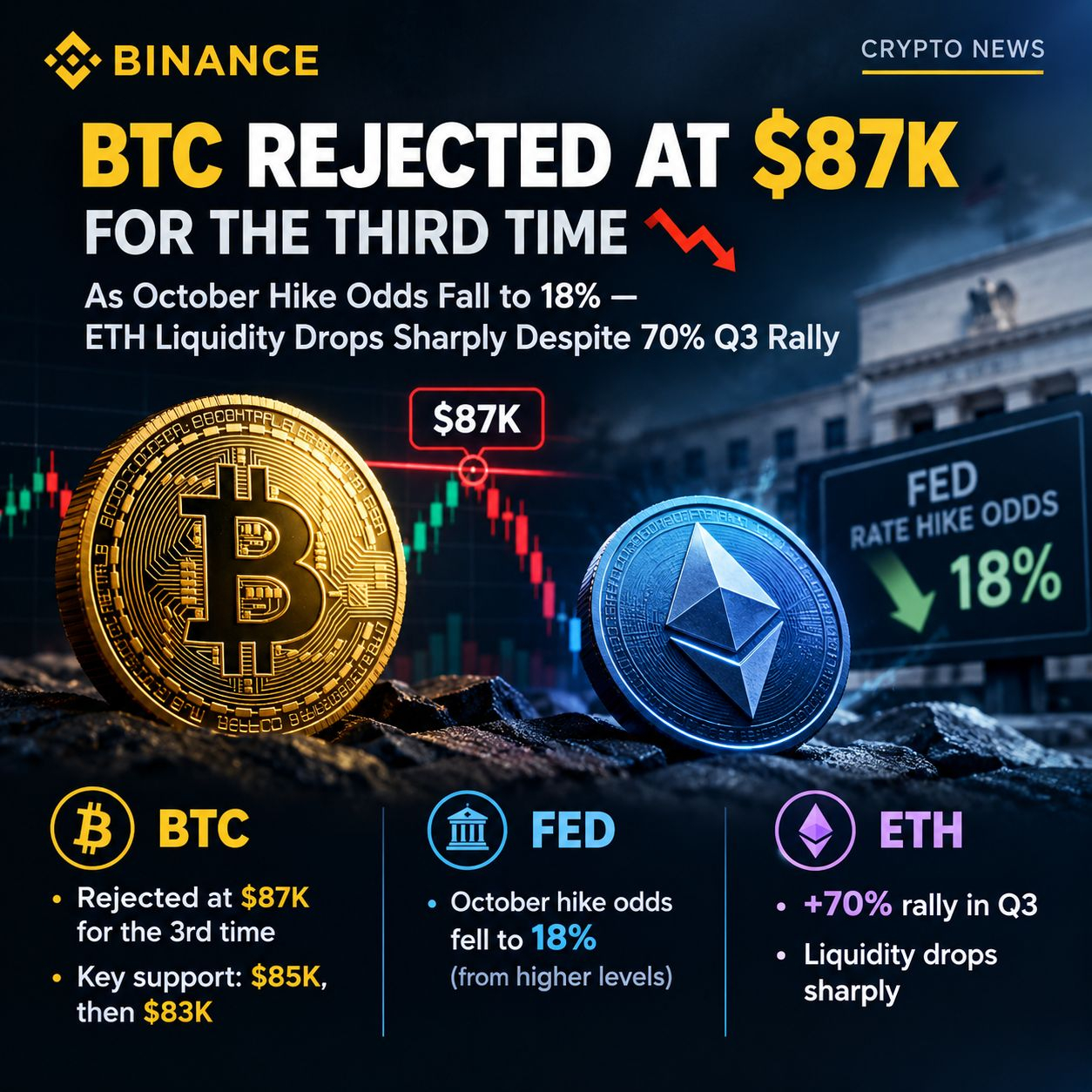
🚨 Krypto-Update: BTC scheiterte zum dritten Mal an 87.000 $, während die Wahrscheinlichkeit einer Fed-Zinserhöhung im Oktober auf nur noch 18 % sank. ETH legte im Q3 um 70 % zu, doch die Liquidität nimmt jetzt stark ab. 📉
🚨 Krypto-Update: BTC scheiterte zum dritten Mal an 87.000 $, während die Wahrscheinlichkeit einer Fed-Zinserhöhung im Oktober auf nur noch 18 % sank. ETH legte im Q3 um 70 % zu, doch die Liquidität nimmt jetzt stark ab. 📉
6
Verifiziert
Übersetzung ansehen
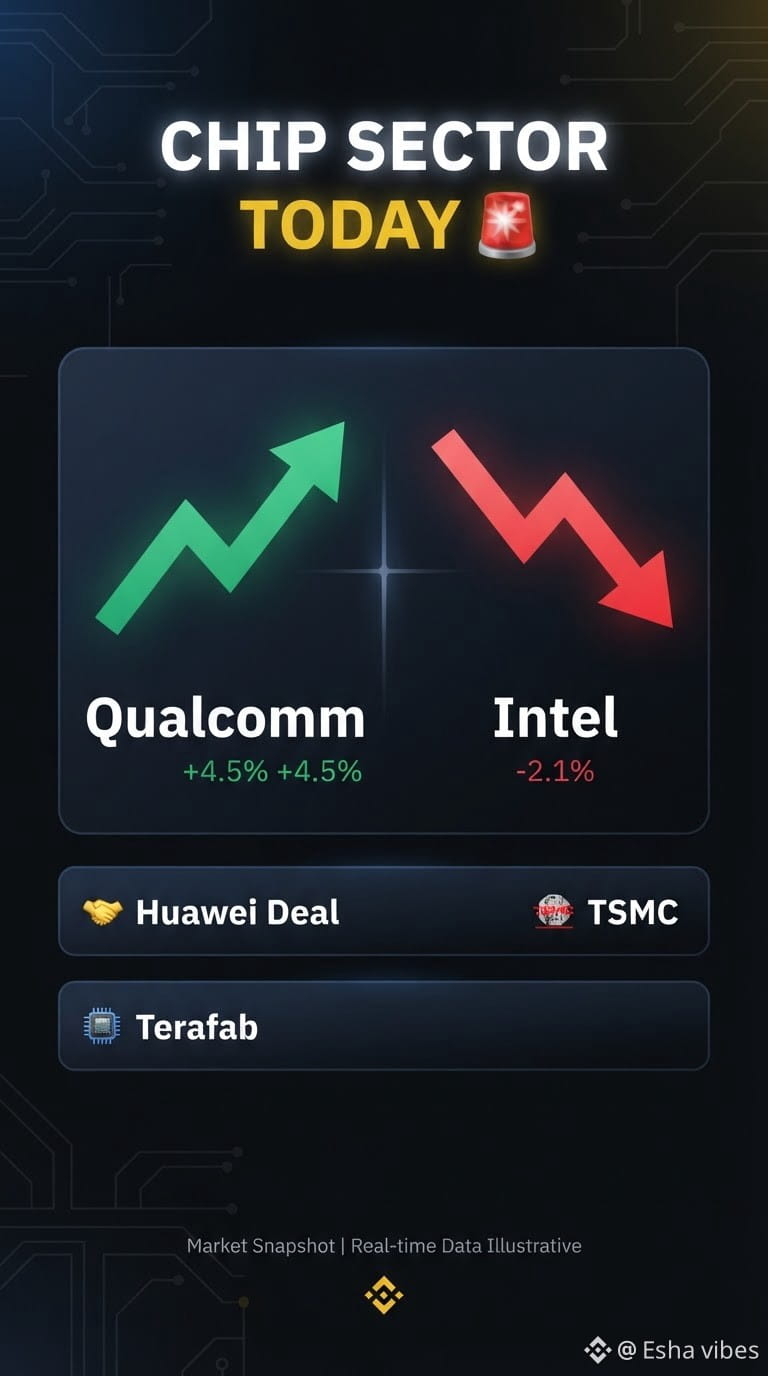
🚨 Big Move in the Chip Sector Today!
Qualcomm 📈 is in focus after announcing a multi-year patent licensing agreement with Huawei, covering key technologies including 5G, AI, computing and networking.
Meanwhile, Intel 📉 is facing pressure as discussions around TSMC and Elon Musk’s Terafab project raise questions about the future chip-manufacturing landscape.
📌 Today’s Focus:
• Qualcomm — 🟢 Positive catalyst
• Intel — 🔴 Under pressure
• TSMC — 🟢 Potential beneficiary
• AI & Chips — 👀 Strong market focus
The semiconductor battle is heating up! 🔥
🚨 Big Move in the Chip Sector Today!
Qualcomm 📈 is in focus after announcing a multi-year patent licensing agreement with Huawei, covering key technologies including 5G, AI, computing and networking.
Meanwhile, Intel 📉 is facing pressure as discussions around TSMC and Elon Musk’s Terafab project raise questions about the future chip-manufacturing landscape.
📌 Today’s Focus:
• Qualcomm — 🟢 Positive catalyst
• Intel — 🔴 Under pressure
• TSMC — 🟢 Potential beneficiary
• AI & Chips — 👀 Strong market focus
The semiconductor battle is heating up! 🔥
Qualcomm 📈 is in focus after announcing a multi-year patent licensing agreement with Huawei, covering key technologies including 5G, AI, computing and networking.
Meanwhile, Intel 📉 is facing pressure as discussions around TSMC and Elon Musk’s Terafab project raise questions about the future chip-manufacturing landscape.
📌 Today’s Focus:
• Qualcomm — 🟢 Positive catalyst
• Intel — 🔴 Under pressure
• TSMC — 🟢 Potential beneficiary
• AI & Chips — 👀 Strong market focus
The semiconductor battle is heating up! 🔥
18
🚀 WLD zieht heute die Aufmerksamkeit von Tradern auf sich – das Momentum nimmt zu! 👀🔥
🚀 WLD zieht heute die Aufmerksamkeit von Tradern auf sich – das Momentum nimmt zu! 👀🔥
13
Verifiziert
Übersetzung ansehen
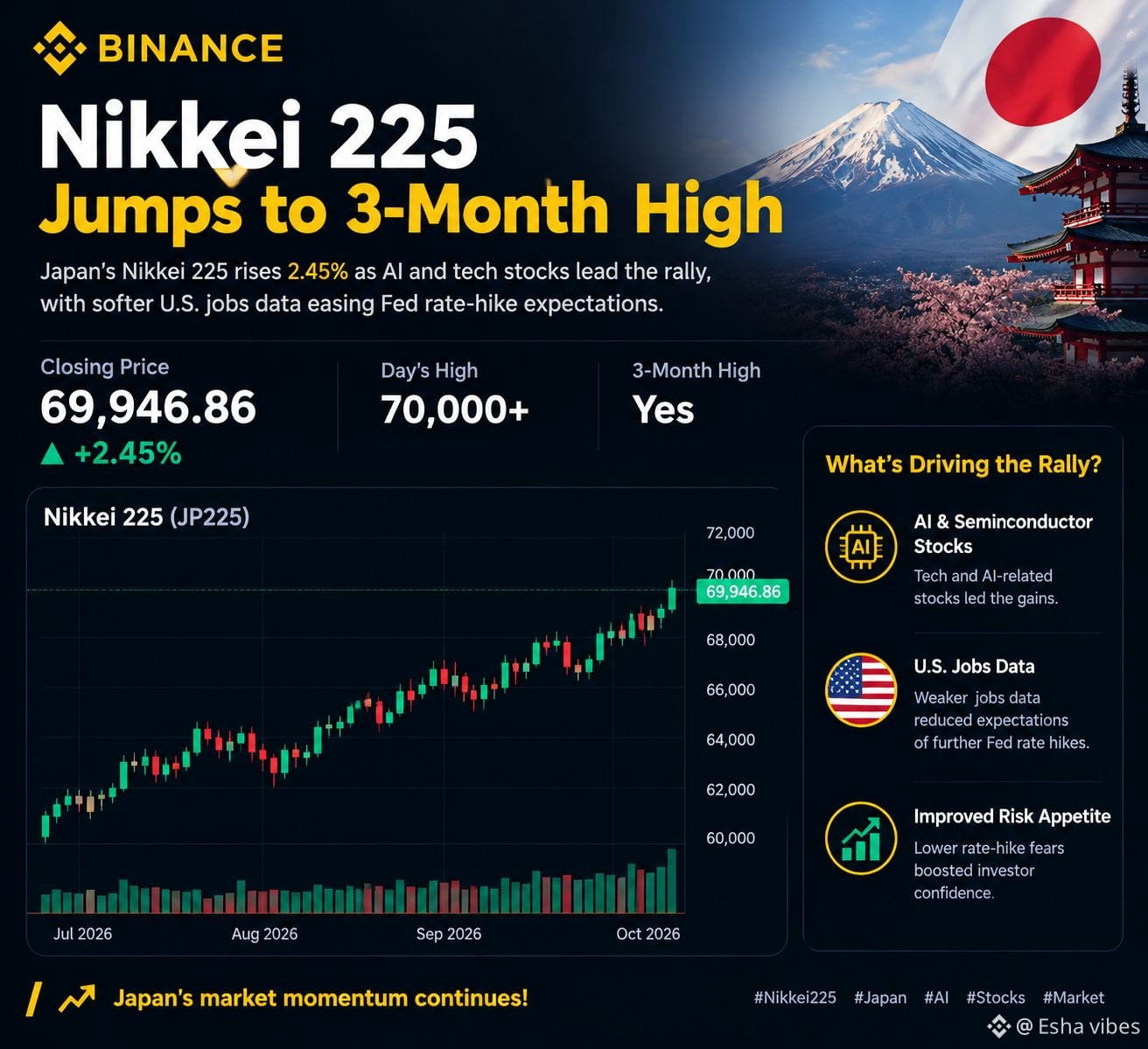
📈 Nikkei 225 jumps 2.45% to a 3-month high! 🇯🇵
AI & semiconductor stocks lead the rally as softer U.S. jobs data boosts risk appetite. 🚀
#Nikkei225
#Japan #stocks
📈 Nikkei 225 jumps 2.45% to a 3-month high! 🇯🇵
AI & semiconductor stocks lead the rally as softer U.S. jobs data boosts risk appetite. 🚀
#Nikkei225
#Japan #stocks
AI & semiconductor stocks lead the rally as softer U.S. jobs data boosts risk appetite. 🚀
#Nikkei225
#Japan #stocks
2
Verifiziert
📈 Der Nikkei 225 steigt um 2,45 % auf ein 3-Monats-Hoch! 🇯🇵
KI- und Halbleiteraktien treiben die Rally an, da schwächer ausgefallene US-Arbeitsmarktdaten die Risikobereitschaft erhöhen. 🚀
#Nikkei225 😎#Japan #stocks
📈 Der Nikkei 225 steigt um 2,45 % auf ein 3-Monats-Hoch! 🇯🇵
KI- und Halbleiteraktien treiben die Rally an, da schwächer ausgefallene US-Arbeitsmarktdaten die Risikobereitschaft erhöhen. 🚀
#Nikkei225 😎#Japan #stocks
KI- und Halbleiteraktien treiben die Rally an, da schwächer ausgefallene US-Arbeitsmarktdaten die Risikobereitschaft erhöhen. 🚀
#Nikkei225 😎#Japan #stocks

30
Verifiziert
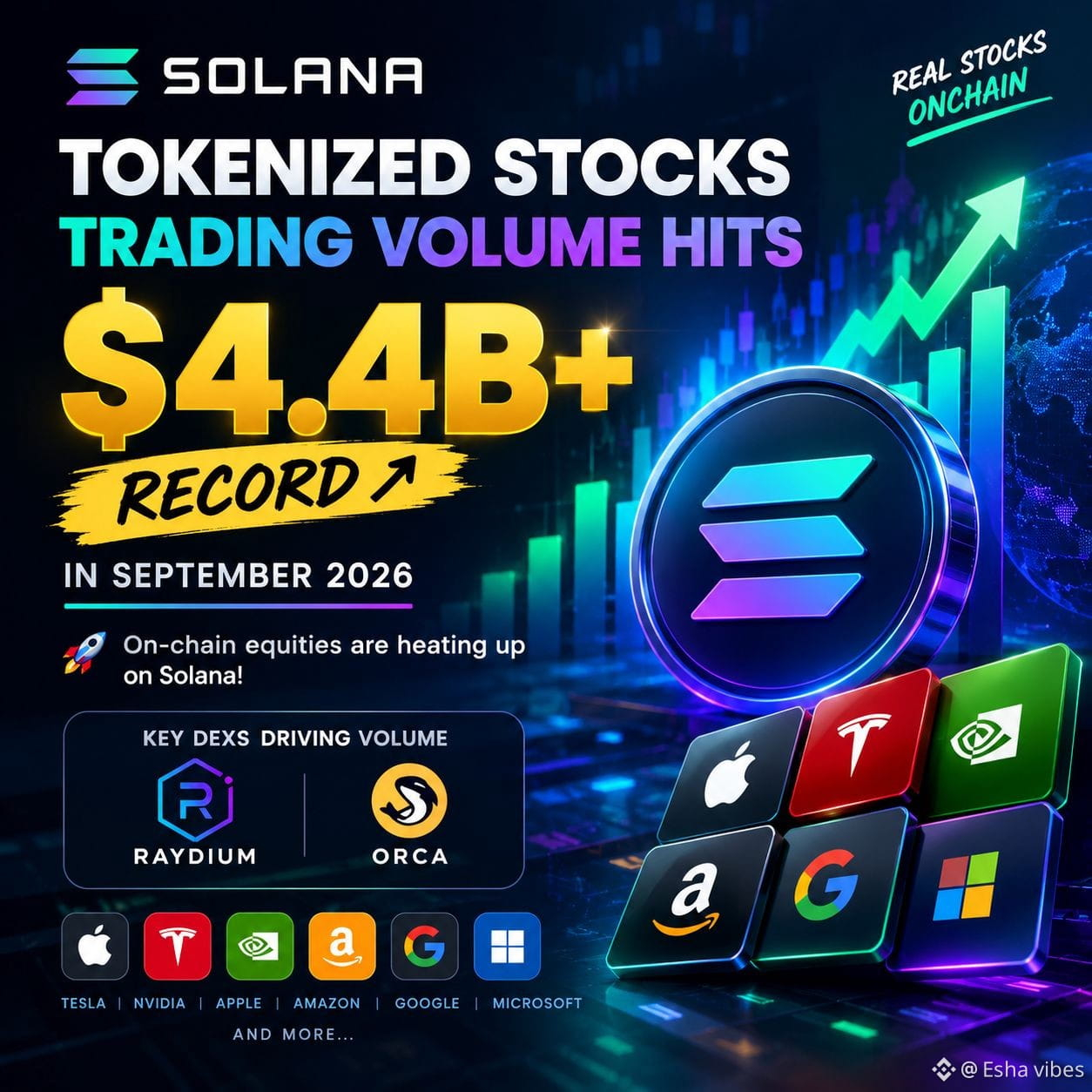
🚀 Das Volumen tokenisierter Aktien auf Solana erreicht im September mit 4,4 Mrd. $ einen Rekord – On-Chain-Aktien sind im Aufwind! 🔥 $SOL 🦄
{spot}(SOLUSDT)
🚀 Das Volumen tokenisierter Aktien auf Solana erreicht im September mit 4,4 Mrd. $ einen Rekord – On-Chain-Aktien sind im Aufwind! 🔥 $SOL 🦄
30
Übersetzung ansehen
🚨 BTC IS AT THE $87K TEST! 👀🔥
Bitcoin is trading around $85.5K after pushing toward the $87K area.
📌 Key zone: $86K–$87K
🚀 Break & hold above $87K → $88K–$90K
🛡️ Lose $84.8K → momentum could cool
No blind entries — confirmation matters. 👀
Will BTC break $87K today?
#BTC #Bitcoin #Crypto #BinanceSquare
{spot}(BTCUSDT)
#BTCUSDT #CryptoTrading #BTCUpdate
🚨 BTC IS AT THE $87K TEST! 👀🔥
Bitcoin is trading around $85.5K after pushing toward the $87K area.
📌 Key zone: $86K–$87K
🚀 Break & hold above $87K → $88K–$90K
🛡️ Lose $84.8K → momentum could cool
No blind entries — confirmation matters. 👀
Will BTC break $87K today?
#BTC #Bitcoin #Crypto #BinanceSquare
#BTCUSDT #CryptoTrading #BTCUpdate
Bitcoin is trading around $85.5K after pushing toward the $87K area.
📌 Key zone: $86K–$87K
🚀 Break & hold above $87K → $88K–$90K
🛡️ Lose $84.8K → momentum could cool
No blind entries — confirmation matters. 👀
Will BTC break $87K today?
#BTC #Bitcoin #Crypto #BinanceSquare
#BTCUSDT #CryptoTrading #BTCUpdate
51
🚨 Anträge nach dem Drift-Hack starten
295,4 Mio. $ an bestätigten Verlusten | Die DFX-Wiederherstellung beginnt.
Anträge können jetzt eingereicht werden.
🚨 Anträge nach dem Drift-Hack starten
295,4 Mio. $ an bestätigten Verlusten | Die DFX-Wiederherstellung beginnt.
Anträge können jetzt eingereicht werden.
295,4 Mio. $ an bestätigten Verlusten | Die DFX-Wiederherstellung beginnt.
Anträge können jetzt eingereicht werden.
56
Übersetzung ansehen
{spot}(BTCUSDT)
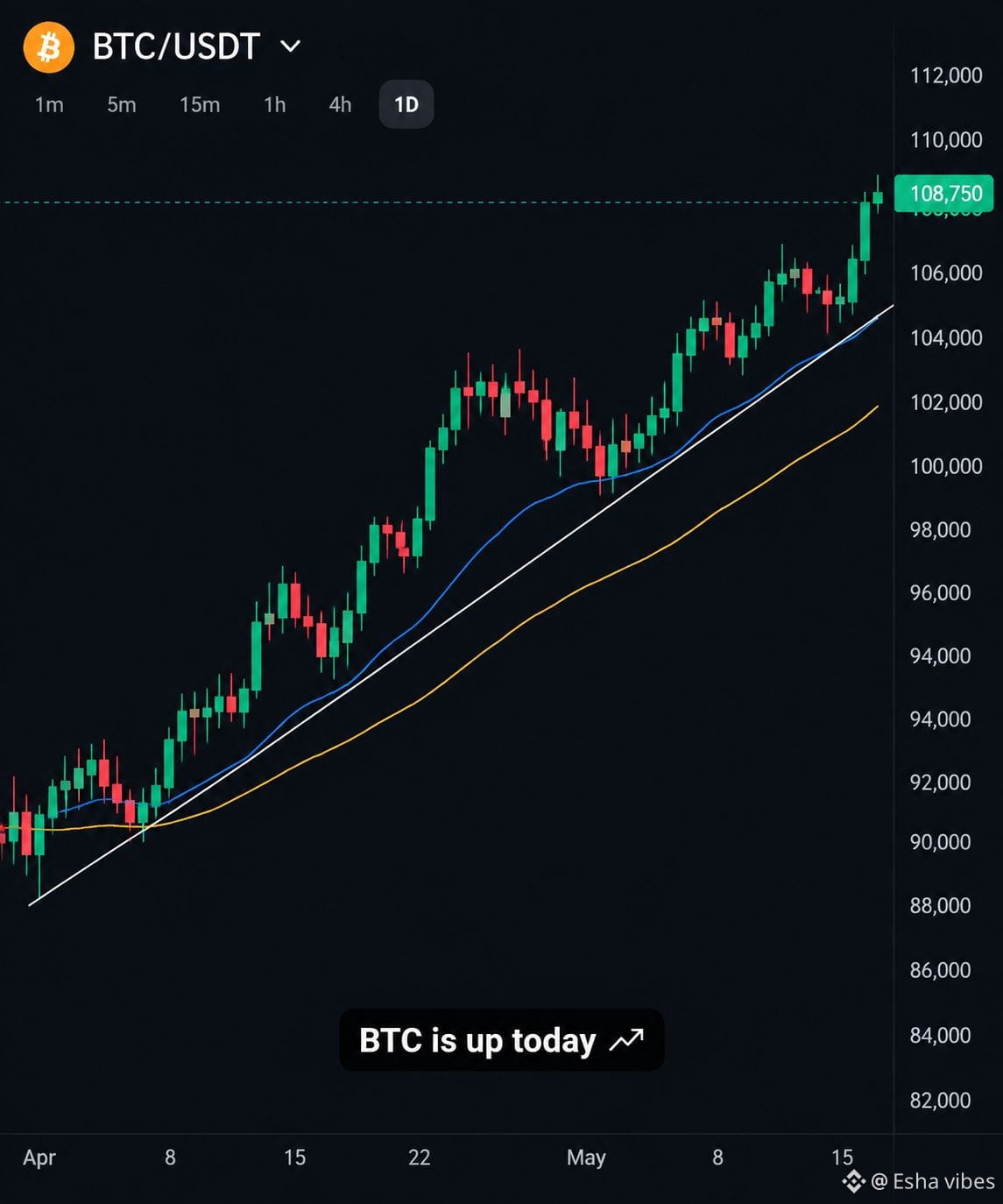
$BTC :
BTC is pushing higher 📈 — bullish momentum is holding strong.
$BTC :
BTC is pushing higher 📈 — bullish momentum is holding strong.
BTC is pushing higher 📈 — bullish momentum is holding strong.

82
1
Anmelden und weiter Inhalte entdecken
Krypto-Nutzer weltweit auf Binance Square kennenlernen
⚡️ Bleib in Sachen Krypto stets am Puls.
💬 Die weltgrößte Kryptobörse vertraut darauf.
👍 Erhalte verlässliche Einblicke von verifizierten Creators.
E-Mail-Adresse/Telefonnummer
Trendthemen
BinanceLaunchesBinanceIntelligence
81,219 Aufrufe
976 Kommentare
🚨 BINANCE HAT KI DIREKT IN DIE BÖRSE INTEGRIERT — UND DAS KÖNNTE DEN PRIVATEN HANDEL VERÄNDERN.
Binance hat offiziell Binance Intelligence eingeführt, eine neue KI-Ebene, die in das Binance-Ökosystem integriert ist. Sie vereint drei Produkte:
Binance AI für den Alltag,
Binance AI Pro für automatisierte Trading-Workflows
und Agent OS für Entwickler, die Finanzagenten entwickeln.
Was Trader interessieren sollte?
Binance AI kann Marktbriefings, intelligente Warnmeldungen, PnL-Zusammenfassungen und personalisierte Informationen bereitstellen. AI Pro wiederum soll eine Trading-Idee in einfachem Englisch in einen visuellen Strategie-Workflow verwandeln.
Das bedeutet, dass es in der nächsten Phase des Börsenwettbewerbs vielleicht nicht mehr um Folgendes geht:
niedrigste Gebühren vs. größte Liquidität.
Sondern darum:
Wer bietet Tradern die beste KI-Ausführungsebene?
Wenn Binance Intelligence tatsächlich für mehr Nutzeraktivität, automatisierte Strategien und häufigeres Trading sorgt, solltest du zuerst $BNB im Blick behalten.
KI-Nutzung ↑
→ Interaktion mit Binance ↑
→ Handelsaktivität ↑
→ Die Story rund um das Ökosystem gewinnt an Stärke.
Der Katalysator, den ich jetzt beobachten würde:
globaler Rollout + Start von AI Pro + messbare Nutzerakzeptanz.
Denn sobald KI dir nicht mehr nur sagt, was am Markt passiert …
… sondern dir hilft, den Trade selbst aufzubauen?
Dann wird das Ganze deutlich mehr als nur ein weiterer Chatbot. 👀
#binancelaunchesbinanceintelligence #EvernorthXRPTreasuryCompletesSPACMerger #ADAGains10%Above$0.27 #ETHUp70%InQ3ButLiquidityFalls #EthStakingExitQueueHits2026High
KimHotbae
·28 Likes
·33.8k Aufrufe
StriveBuys2000BTCFor$169M
1,445 Aufrufe
37 Kommentare
EvernorthXRPTreasuryCompletesSPACMerger
61,005 Aufrufe
671 Kommentare