

BitcoinArchive
837 Beiträge

BitcoinArchive
Melden
Nutzer blockieren
trading is mission
Trade eröffnen
Hochfrequenz-Trader
3.5 Jahre
41 Following
165 Follower
1.4K+ Like gegeben
Beiträge
Portfolio
Alle
Zitierungen
Videos
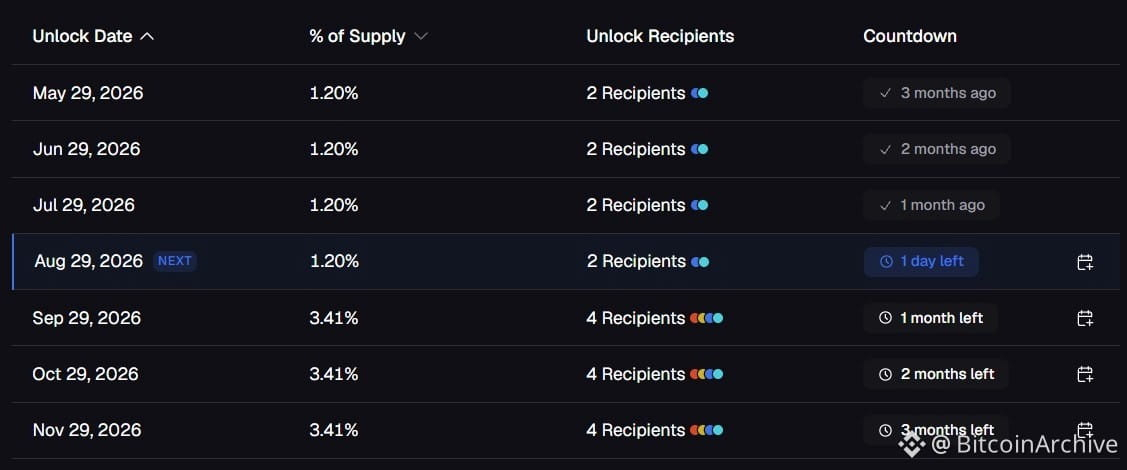
Lass mich klar sein. Ich erwarte keine langfristige Performance von $HEMI . Es gibt morgen eine Token-Freischaltung. Sie ist nicht sehr groß, aber ab jetzt wird der Freischaltungsbetrag jeden Monat um das 3-fache höher sein.
Gehe short und genieße den Gewinn
Das ist keine langfristige Investition. Es ist ein Trade, bei dem wir die unmittelbare Struktur beobachtet und die Gewinne mitgenommen haben.
Weniger als 10 % des Angebots sind überhaupt in Umlauf. Die Realität ist: Das Angebot wird jeden Monat weiter wachsen.
Lass mich klar sein. Ich erwarte keine langfristige Performance von $HEMI . Es gibt morgen eine Token-Freischaltung. Sie ist nicht sehr groß, aber ab jetzt wird der Freischaltungsbetrag jeden Monat um das 3-fache höher sein.
Gehe short und genieße den Gewinn
Das ist keine langfristige Investition. Es ist ein Trade, bei dem wir die unmittelbare Struktur beobachtet und die Gewinne mitgenommen haben.
Weniger als 10 % des Angebots sind überhaupt in Umlauf. Die Realität ist: Das Angebot wird jeden Monat weiter wachsen.
Gehe short und genieße den Gewinn
Das ist keine langfristige Investition. Es ist ein Trade, bei dem wir die unmittelbare Struktur beobachtet und die Gewinne mitgenommen haben.
Weniger als 10 % des Angebots sind überhaupt in Umlauf. Die Realität ist: Das Angebot wird jeden Monat weiter wachsen.
1
150
öffne lang auf $VELVET
{future}(VELVETUSDT)
tp1 ist 0.3
tp2 ist 0.5
tp3 ist 0.7
öffne lang auf $VELVET
tp1 ist 0.3
tp2 ist 0.5
tp3 ist 0.7
tp1 ist 0.3
tp2 ist 0.5
tp3 ist 0.7
2
268
@Square-Creator-0f84001b3db77 erkunden: Fixed-Rate DeFi aufbauen 🚀
DeFi hat oft wechselnde Zinssätze und ungewisse Renditen. @termmax arbeitet daran, dies zu lösen, indem feste Zinssätze für Kreditvergabe und -aufnahme mit Lösungen geschaffen werden.
Mit TermMax können Nutzer auf Folgendes zugreifen:
✅ Märkte mit festen Zinssätzen
✅ Tools für Kreditvergabe und -aufnahme
✅ DeFi-Ertragschancen
✅ Multi-Chain-Unterstützung
TermMax bringt mehr vorhersehbare und effiziente Finanztools zu Web3.
Was denkst du über die Zukunft von Fixed-Rate DeFi?
#DollarFallsTo10WeekLow
#inflación
#TermMax
@TermMaxxx erkunden: Fixed-Rate DeFi aufbauen 🚀
DeFi hat oft wechselnde Zinssätze und ungewisse Renditen. @TermMax arbeitet daran, dies zu lösen, indem feste Zinssätze für Kreditvergabe und -aufnahme mit Lösungen geschaffen werden.
Mit TermMax können Nutzer auf Folgendes zugreifen:
✅ Märkte mit festen Zinssätzen
✅ Tools für Kreditvergabe und -aufnahme
✅ DeFi-Ertragschancen
✅ Multi-Chain-Unterstützung
TermMax bringt mehr vorhersehbare und effiziente Finanztools zu Web3.
Was denkst du über die Zukunft von Fixed-Rate DeFi?
#DollarFallsTo10WeekLow
#inflación
#TermMax
DeFi hat oft wechselnde Zinssätze und ungewisse Renditen. @TermMax arbeitet daran, dies zu lösen, indem feste Zinssätze für Kreditvergabe und -aufnahme mit Lösungen geschaffen werden.
Mit TermMax können Nutzer auf Folgendes zugreifen:
✅ Märkte mit festen Zinssätzen
✅ Tools für Kreditvergabe und -aufnahme
✅ DeFi-Ertragschancen
✅ Multi-Chain-Unterstützung
TermMax bringt mehr vorhersehbare und effiziente Finanztools zu Web3.
Was denkst du über die Zukunft von Fixed-Rate DeFi?
#DollarFallsTo10WeekLow
#inflación
#TermMax
67
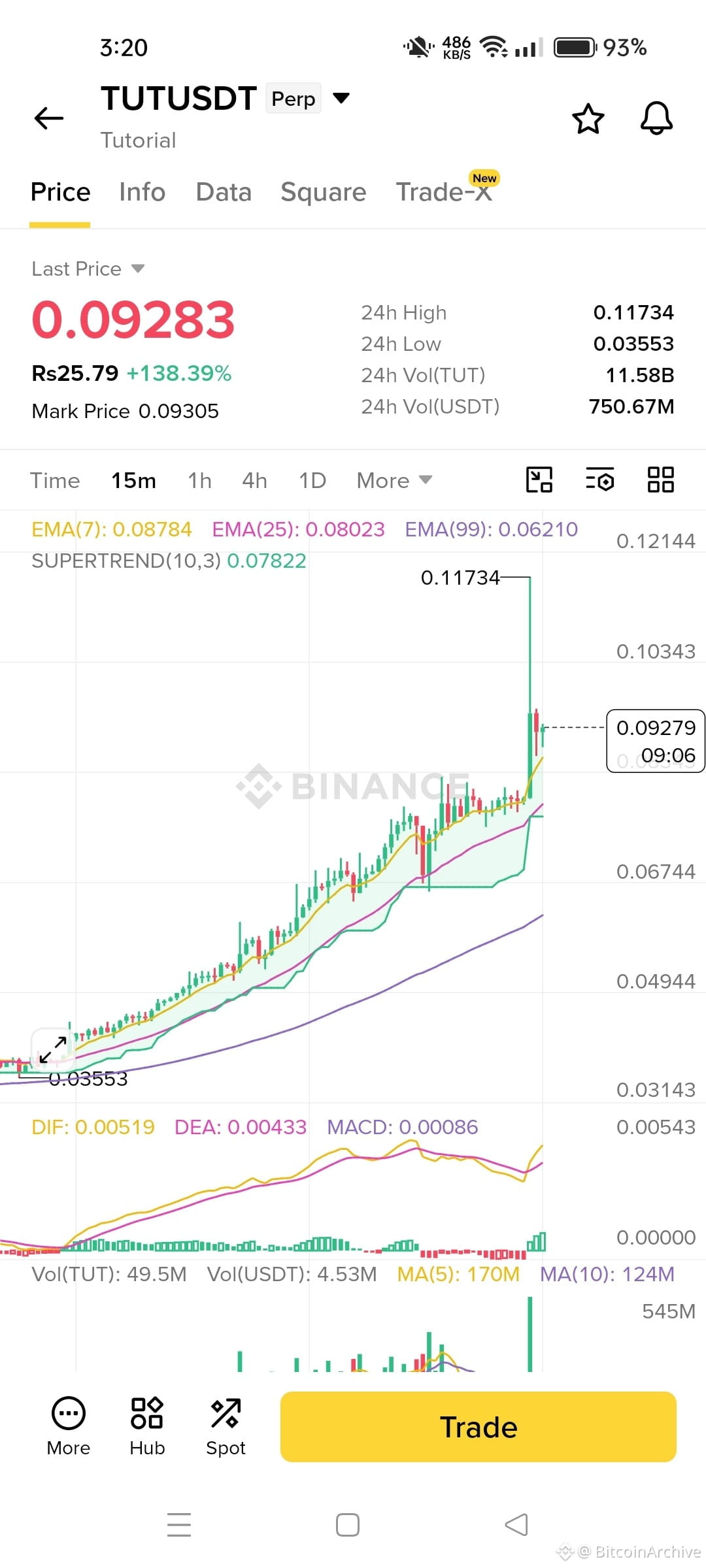
öffne kurz bei $TUT schnell
entry 0.1
tp 0.090
tp2 0.084
tp3 0.060
öffne kurz bei $TUT schnell
entry 0.1
tp 0.090
tp2 0.084
tp3 0.060
entry 0.1
tp 0.090
tp2 0.084
tp3 0.060
1
91
Ehre, das Makkah-Gemeinsame Verteidigungsabkommen gemeinsam mit meinen lieben Brüdern zu unterzeichnen: HRH Kronprinz Mohammed bin Salman und Sr. Exz. Präsident Recep Tayyip Erdoğan.
#BTC
Drei brüderliche Nationen, geeint durch Glauben, Freundschaft und den gemeinsamen Entschluss für Frieden und Sicherheit.
Möge dieses historische Abkommen, im Schatten der Haramain unterzeichnet, weiterhin ein Schild des Friedens für kommende Generationen bleiben und möge es sowohl unseren drei brüderlichen Ländern als auch für die Ummah Wohlstand bringen.
#AggressivePlan
Ehre, das Makkah-Gemeinsame Verteidigungsabkommen gemeinsam mit meinen lieben Brüdern zu unterzeichnen: HRH Kronprinz Mohammed bin Salman und Sr. Exz. Präsident Recep Tayyip Erdoğan.
#BTC
Drei brüderliche Nationen, geeint durch Glauben, Freundschaft und den gemeinsamen Entschluss für Frieden und Sicherheit.
Möge dieses historische Abkommen, im Schatten der Haramain unterzeichnet, weiterhin ein Schild des Friedens für kommende Generationen bleiben und möge es sowohl unseren drei brüderlichen Ländern als auch für die Ummah Wohlstand bringen.
#AggressivePlan
#BTC
Drei brüderliche Nationen, geeint durch Glauben, Freundschaft und den gemeinsamen Entschluss für Frieden und Sicherheit.
Möge dieses historische Abkommen, im Schatten der Haramain unterzeichnet, weiterhin ein Schild des Friedens für kommende Generationen bleiben und möge es sowohl unseren drei brüderlichen Ländern als auch für die Ummah Wohlstand bringen.
#AggressivePlan

1
104
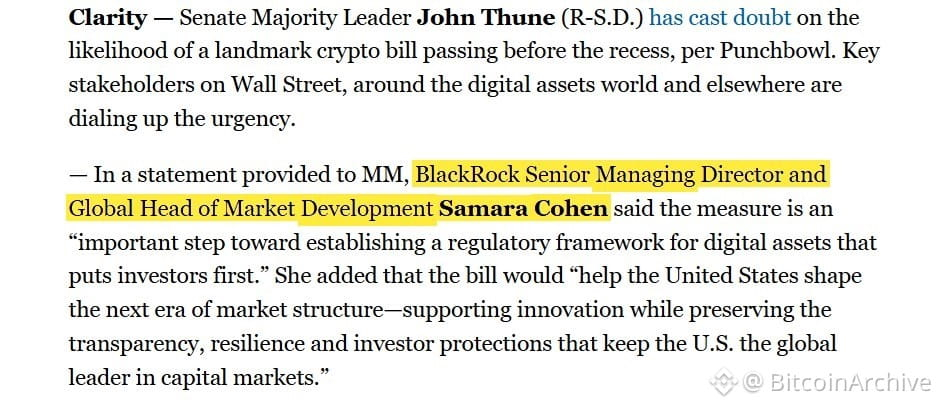
BREAKING: BLACKROCK ZEIGT UNTERSTÜTZUNG FÜR DIE VERABSCHIEDUNG DES CLARITY ACT 👀
„Stellt Anleger an die erste Stelle. Hilft den USA, die nächste Ära der Marktstruktur zu gestalten.“
„Wahrt Transparenz, Widerstandsfähigkeit und Anlegerschutz.“ — Samara Cohen, #BlackRock #Managing Direktorin
BREAKING: BLACKROCK ZEIGT UNTERSTÜTZUNG FÜR DIE VERABSCHIEDUNG DES CLARITY ACT 👀
„Stellt Anleger an die erste Stelle. Hilft den USA, die nächste Ära der Marktstruktur zu gestalten.“
„Wahrt Transparenz, Widerstandsfähigkeit und Anlegerschutz.“ — Samara Cohen, #BlackRock #Managing Direktorin
„Stellt Anleger an die erste Stelle. Hilft den USA, die nächste Ära der Marktstruktur zu gestalten.“
„Wahrt Transparenz, Widerstandsfähigkeit und Anlegerschutz.“ — Samara Cohen, #BlackRock #Managing Direktorin
66
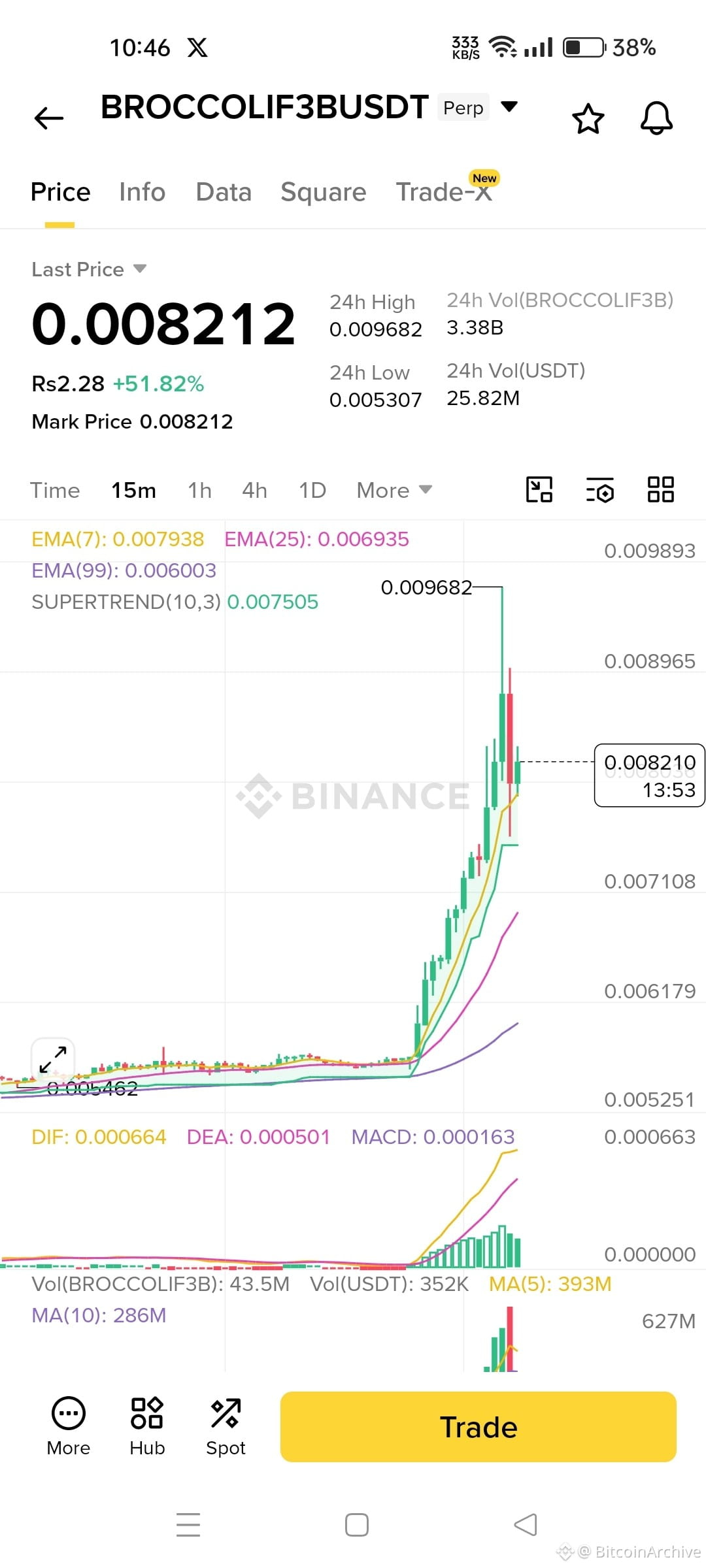
Füge kurz hinzu $BROCCOLIF3B
und warte 4 h
TP setze eigenes Wallet-Guthaben
Füge kurz hinzu $BROCCOLIF3B
und warte 4 h
TP setze eigenes Wallet-Guthaben
und warte 4 h
TP setze eigenes Wallet-Guthaben
140
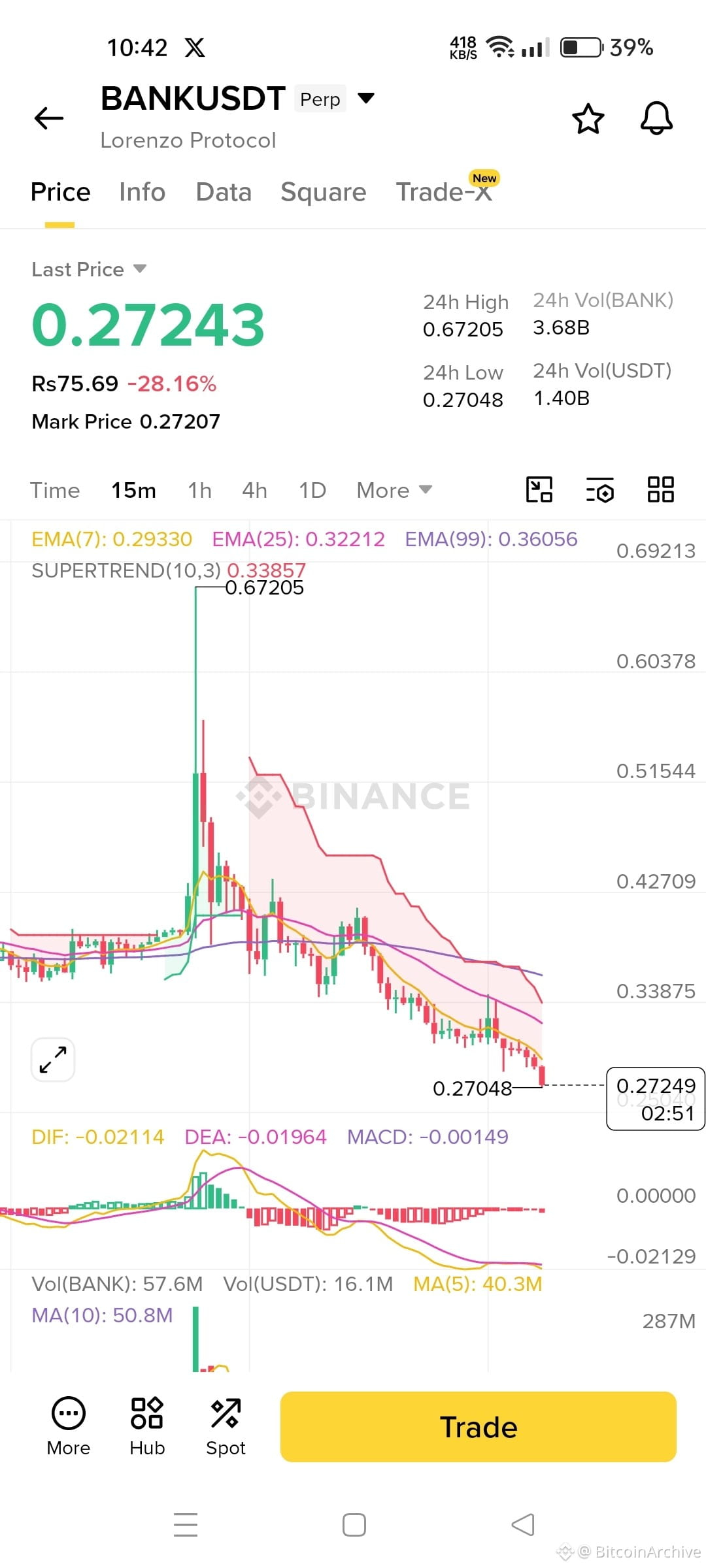
284
🇮🇷🇺🇸 NEU: Iran lehnt den US-Feuerpausevorschlag ab.
short $BTC $ETH
🇮🇷🇺🇸 NEU: Iran lehnt den US-Feuerpausevorschlag ab.
short $BTC $ETH
short $BTC $ETH
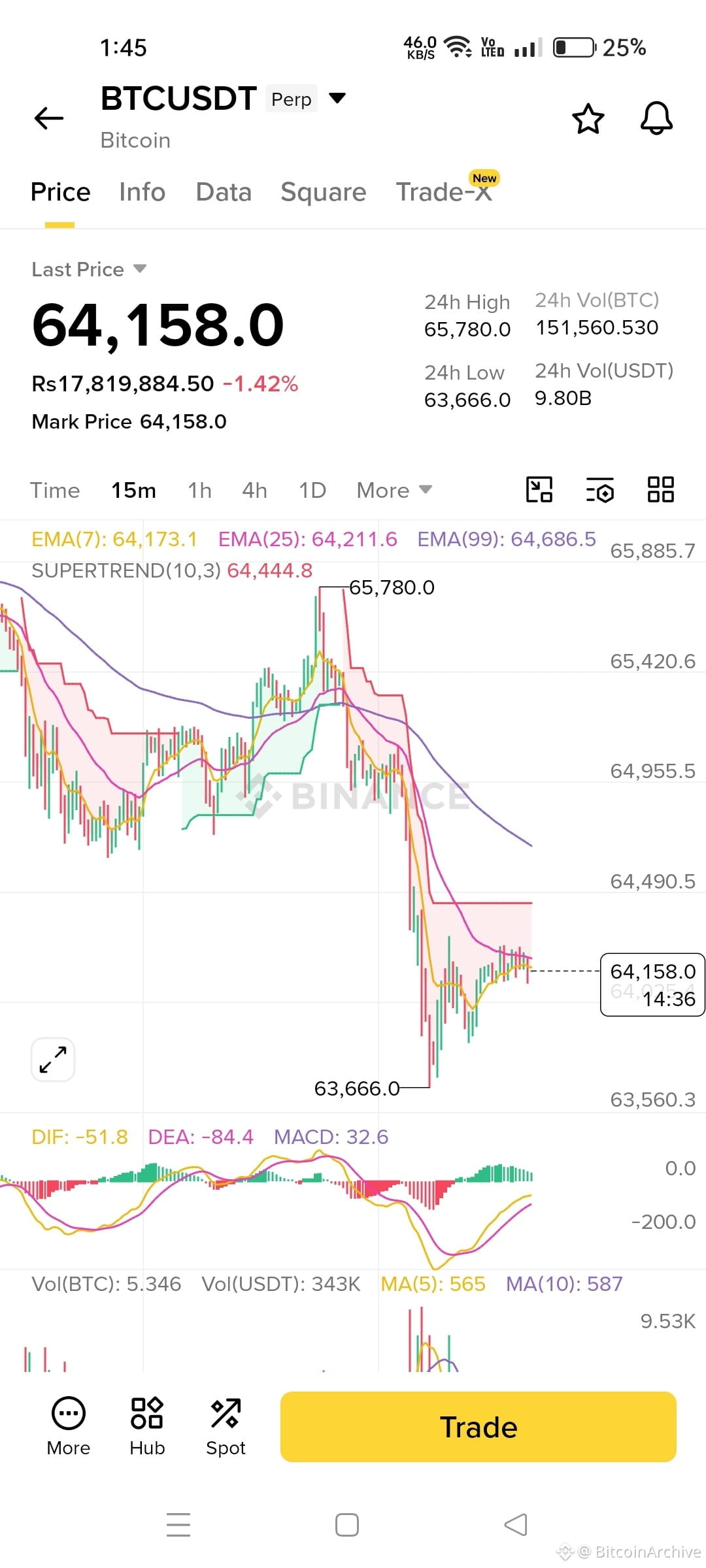
23
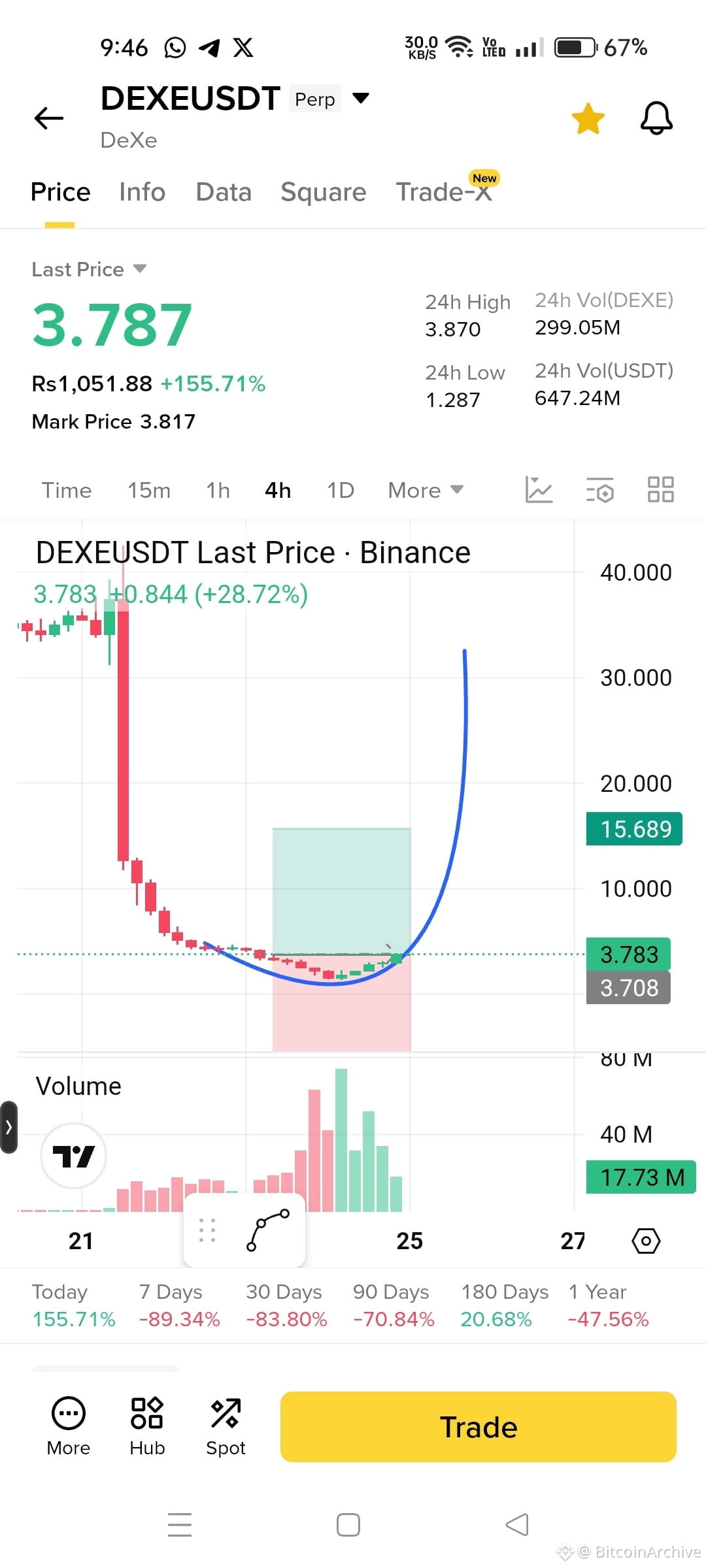
$DEXE Trade Setup (4H)
🔹 Technische Analyse
DEXE bleibt im 4H-Zeitrahmen nach einer starken Erholung bullisch. Die Käufer haben die Kontrolle, aber die Volatilität ist weiterhin hoch.
📈 Grafische Analyse
Eine Erholung mit abgerundetem Boden bildet sich. Wenn der Kurs über 3,70 USDT hält, sind die nächsten Aufwärtsziele:
🎯 TP1: 4,20 USDT
🎯 TP2: 5,00 USDT
🧠 Verhaltensanalyse
Das Marktstimmungsbild hat sich von Panikverkäufen zu aggressivem Kaufen verlagert. Ein starkes Volumen stützt die aktuelle Bewegung, aber Trader sollten FOMO vermeiden.
🌍 Marktnotiz
✅ Einstieg: 3,70–3,80 USDT
🛡️ Stop Loss: 3,15 USDT
🎯 Ziele: 4,20 → 5,00 USDT
📈 Tendenz: Bullisch (Kurzfristig)
trade ist hier $DEXE
$DEXE Trade Setup (4H)
🔹 Technische Analyse
DEXE bleibt im 4H-Zeitrahmen nach einer starken Erholung bullisch. Die Käufer haben die Kontrolle, aber die Volatilität ist weiterhin hoch.
📈 Grafische Analyse
Eine Erholung mit abgerundetem Boden bildet sich. Wenn der Kurs über 3,70 USDT hält, sind die nächsten Aufwärtsziele:
🎯 TP1: 4,20 USDT
🎯 TP2: 5,00 USDT
🧠 Verhaltensanalyse
Das Marktstimmungsbild hat sich von Panikverkäufen zu aggressivem Kaufen verlagert. Ein starkes Volumen stützt die aktuelle Bewegung, aber Trader sollten FOMO vermeiden.
🌍 Marktnotiz
✅ Einstieg: 3,70–3,80 USDT
🛡️ Stop Loss: 3,15 USDT
🎯 Ziele: 4,20 → 5,00 USDT
📈 Tendenz: Bullisch (Kurzfristig)
trade ist hier $DEXE
🔹 Technische Analyse
DEXE bleibt im 4H-Zeitrahmen nach einer starken Erholung bullisch. Die Käufer haben die Kontrolle, aber die Volatilität ist weiterhin hoch.
📈 Grafische Analyse
Eine Erholung mit abgerundetem Boden bildet sich. Wenn der Kurs über 3,70 USDT hält, sind die nächsten Aufwärtsziele:
🎯 TP1: 4,20 USDT
🎯 TP2: 5,00 USDT
🧠 Verhaltensanalyse
Das Marktstimmungsbild hat sich von Panikverkäufen zu aggressivem Kaufen verlagert. Ein starkes Volumen stützt die aktuelle Bewegung, aber Trader sollten FOMO vermeiden.
🌍 Marktnotiz
✅ Einstieg: 3,70–3,80 USDT
🛡️ Stop Loss: 3,15 USDT
🎯 Ziele: 4,20 → 5,00 USDT
📈 Tendenz: Bullisch (Kurzfristig)
trade ist hier $DEXE
1
127
Langer Aufbau $DEXE
Einstieg: 3.70–3.80 USDT
Unterstützung: 3.20 USDT
Widerstand: 4.20 USDT
Take Profit 1: 4.20 USDT
Take Profit 2: 5.00 USDT
Stop Loss: 3.15 USDT
Analyse
✅ Starker bullischer Schwung mit steigenden Umsätzen.
✅ Der Kurs bildet nach der Erholung höhere Tiefs.
⚠️ Nach einem +155%-Anstieg erwarte hohe Volatilität und mögliche Rücksetzer.
Langer Aufbau $DEXE
Einstieg: 3.70–3.80 USDT
Unterstützung: 3.20 USDT
Widerstand: 4.20 USDT
Take Profit 1: 4.20 USDT
Take Profit 2: 5.00 USDT
Stop Loss: 3.15 USDT
Analyse
✅ Starker bullischer Schwung mit steigenden Umsätzen.
✅ Der Kurs bildet nach der Erholung höhere Tiefs.
⚠️ Nach einem +155%-Anstieg erwarte hohe Volatilität und mögliche Rücksetzer.
Einstieg: 3.70–3.80 USDT
Unterstützung: 3.20 USDT
Widerstand: 4.20 USDT
Take Profit 1: 4.20 USDT
Take Profit 2: 5.00 USDT
Stop Loss: 3.15 USDT
Analyse
✅ Starker bullischer Schwung mit steigenden Umsätzen.
✅ Der Kurs bildet nach der Erholung höhere Tiefs.
⚠️ Nach einem +155%-Anstieg erwarte hohe Volatilität und mögliche Rücksetzer.
1
1
285
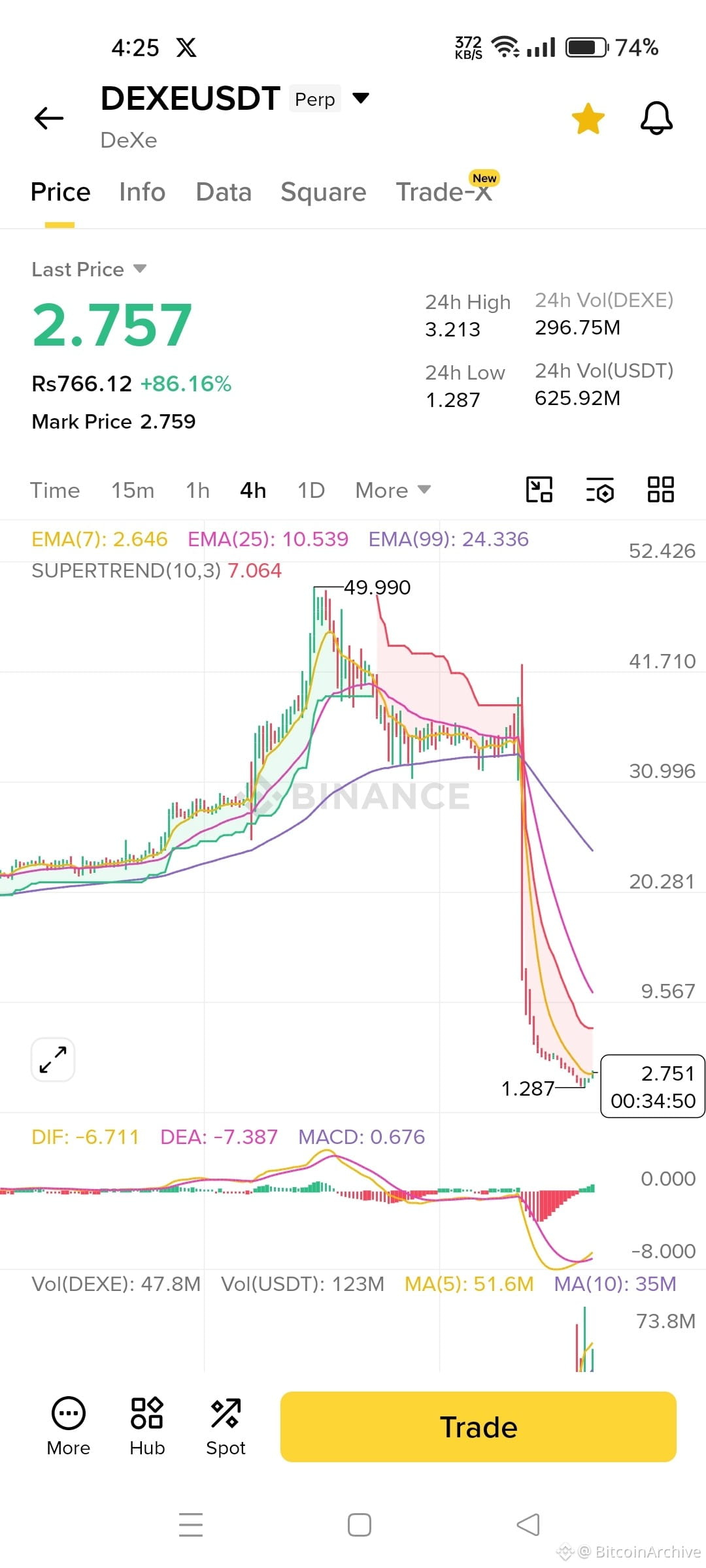
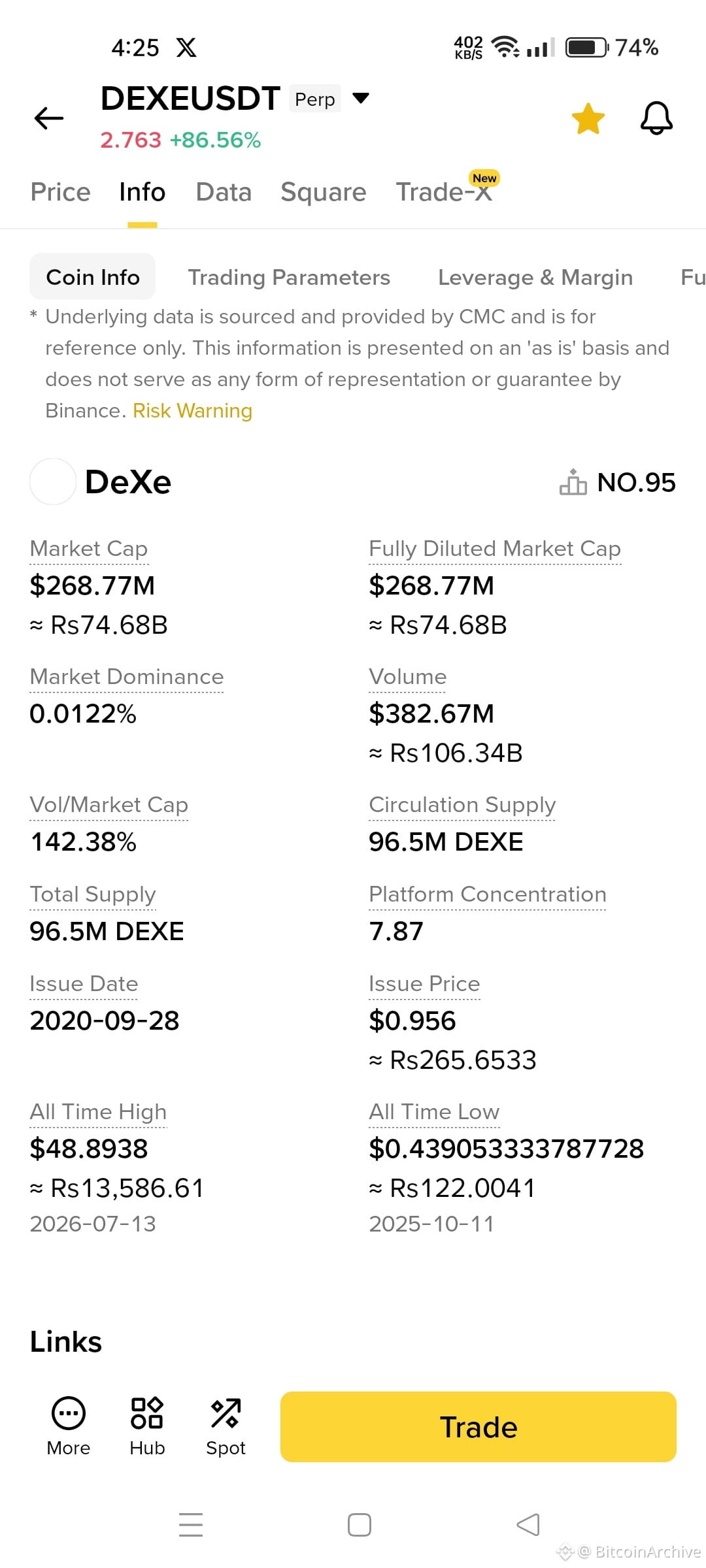
📊 DEXE/USDT (Perpetual) Analyse – 4H
🔹 Technische Analyse
Aktueller Preis: 2.76 USDT (+86% in 24H)
Trend: Kurzfristige Erholung nach einem starken bärischen Absturz. #dexe
EMA-Analyse: Der Preis hat sich über die EMA(7) bewegt, handelt jedoch weiterhin deutlich unter der EMA(25) und EMA(99), was darauf hindeutet, dass der übergeordnete Trend weiterhin bärisch ist.
MACD: Bullischer Crossover mit positivem Histogramm, der Aufholmomentum zeigt.
Unterstützung: 2.30 – 2.50 USDT
Widerstand: 3.20 USDT, gefolgt von 4.00 USDT
📈 Grafische Analyse
Der Chart zeigt einen Kapitulations-Dump, gefolgt von einem starken Erholungsimpuls.
Ein hohes Handelsvolumen deutet auf aggressives Kaufen nach dem Sell-off hin.
Eine anhaltende Bewegung über 3.20 USDT könnte eine stärkere Erholung bestätigen, während ein Scheitern zu einem erneuten Test der Unterstützung führen kann.
🧠 Verhaltensanalyse
Die Panikverkäufe scheinen nachgelassen zu haben, und Schnäppchenjäger treten in den Markt ein.
Die Volatilität bleibt extrem hoch, daher ist ein konsequentes Risikomanagement unerlässlich.
Trader sollten auf Bestätigung warten, statt dem aktuellen Rally hinterherzulaufen.
🌍 Markt-Update
Marktkapitalisierung: ~268.8M
24H-Volumen: ~382.7M (sehr starke Handelsaktivität)
Tendenz: Vorsichtig bullisch (kurzfristig), bärisch (höheres Zeitfenster)
Trading-Plan:
Einstieg: Bei Rücksetzern in Richtung der Unterstützungszone.
Kursziele: 3.20 → 4.00 USDT
Stop Loss: Unter 2.30 USDT
📊 DEXE/USDT (Perpetual) Analyse – 4H
🔹 Technische Analyse
Aktueller Preis: 2.76 USDT (+86% in 24H)
Trend: Kurzfristige Erholung nach einem starken bärischen Absturz. #dexe
EMA-Analyse: Der Preis hat sich über die EMA(7) bewegt, handelt jedoch weiterhin deutlich unter der EMA(25) und EMA(99), was darauf hindeutet, dass der übergeordnete Trend weiterhin bärisch ist.
MACD: Bullischer Crossover mit positivem Histogramm, der Aufholmomentum zeigt.
Unterstützung: 2.30 – 2.50 USDT
Widerstand: 3.20 USDT, gefolgt von 4.00 USDT
📈 Grafische Analyse
Der Chart zeigt einen Kapitulations-Dump, gefolgt von einem starken Erholungsimpuls.
Ein hohes Handelsvolumen deutet auf aggressives Kaufen nach dem Sell-off hin.
Eine anhaltende Bewegung über 3.20 USDT könnte eine stärkere Erholung bestätigen, während ein Scheitern zu einem erneuten Test der Unterstützung führen kann.
🧠 Verhaltensanalyse
Die Panikverkäufe scheinen nachgelassen zu haben, und Schnäppchenjäger treten in den Markt ein.
Die Volatilität bleibt extrem hoch, daher ist ein konsequentes Risikomanagement unerlässlich.
Trader sollten auf Bestätigung warten, statt dem aktuellen Rally hinterherzulaufen.
🌍 Markt-Update
Marktkapitalisierung: ~268.8M
24H-Volumen: ~382.7M (sehr starke Handelsaktivität)
Tendenz: Vorsichtig bullisch (kurzfristig), bärisch (höheres Zeitfenster)
Trading-Plan:
Einstieg: Bei Rücksetzern in Richtung der Unterstützungszone.
Kursziele: 3.20 → 4.00 USDT
Stop Loss: Unter 2.30 USDT
🔹 Technische Analyse
Aktueller Preis: 2.76 USDT (+86% in 24H)
Trend: Kurzfristige Erholung nach einem starken bärischen Absturz. #dexe
EMA-Analyse: Der Preis hat sich über die EMA(7) bewegt, handelt jedoch weiterhin deutlich unter der EMA(25) und EMA(99), was darauf hindeutet, dass der übergeordnete Trend weiterhin bärisch ist.
MACD: Bullischer Crossover mit positivem Histogramm, der Aufholmomentum zeigt.
Unterstützung: 2.30 – 2.50 USDT
Widerstand: 3.20 USDT, gefolgt von 4.00 USDT
📈 Grafische Analyse
Der Chart zeigt einen Kapitulations-Dump, gefolgt von einem starken Erholungsimpuls.
Ein hohes Handelsvolumen deutet auf aggressives Kaufen nach dem Sell-off hin.
Eine anhaltende Bewegung über 3.20 USDT könnte eine stärkere Erholung bestätigen, während ein Scheitern zu einem erneuten Test der Unterstützung führen kann.
🧠 Verhaltensanalyse
Die Panikverkäufe scheinen nachgelassen zu haben, und Schnäppchenjäger treten in den Markt ein.
Die Volatilität bleibt extrem hoch, daher ist ein konsequentes Risikomanagement unerlässlich.
Trader sollten auf Bestätigung warten, statt dem aktuellen Rally hinterherzulaufen.
🌍 Markt-Update
Marktkapitalisierung: ~268.8M
24H-Volumen: ~382.7M (sehr starke Handelsaktivität)
Tendenz: Vorsichtig bullisch (kurzfristig), bärisch (höheres Zeitfenster)
Trading-Plan:
Einstieg: Bei Rücksetzern in Richtung der Unterstützungszone.
Kursziele: 3.20 → 4.00 USDT
Stop Loss: Unter 2.30 USDT
189
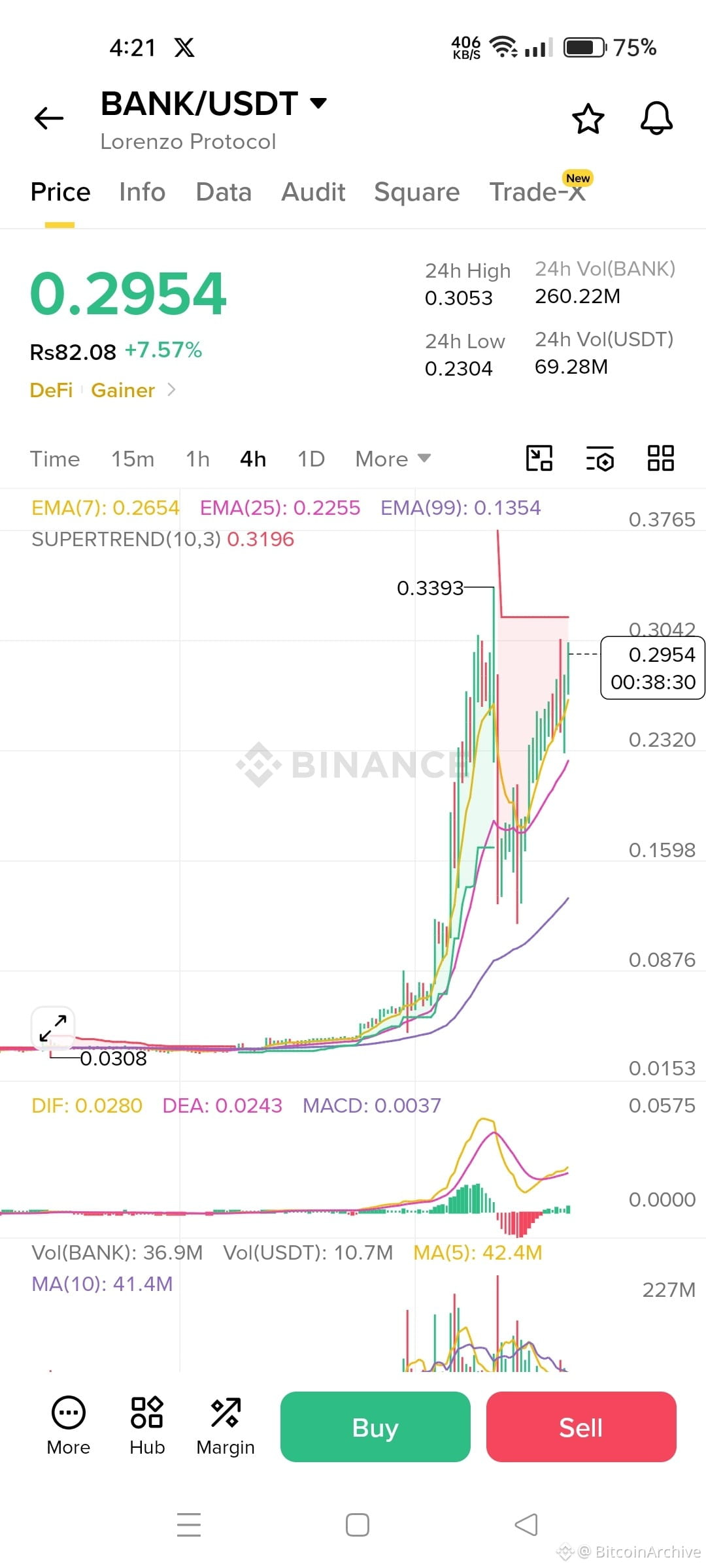
BANK/USDT Analyse (4H)
🔹 Technische Analyse
Kurs: 0.2954 USDT (+7.57%)
Trend: Bullisch
EMA-Status: Der Preis handelt oberhalb der EMA(7), EMA(25) und EMA(99), was auf einen starken Aufwärtstrend hindeutet.
MACD: Bullischer Crossover mit zunehmendem Histogramm, was darauf hindeutet, dass der Aufwärtsimpuls zurückkehrt.
Unterstützung: 0.2650 – 0.2750 USDT
Widerstand: 0.3050 USDT, gefolgt von 0.3390 USDT
📈 Grafische Analyse
BANK ist stark angestiegen und konsolidiert derzeit unterhalb des Widerstands bei 0.3050.
Ein 4H-Kerzenclose über 0.3050 mit starkem Volumen könnte den Weg Richtung 0.3390 öffnen.
Bei einer Ablehnung könnte der Preis die Unterstützung bei 0.2650 erneut testen, bevor der nächste Schritt folgt.
🧠 Verhaltensanalyse
Käufer bleiben die treibende Kraft, da der Preis weiterhin höhere Hochs und höhere Tiefs bildet.
Die Markstimmung ist bullisch, aber Trader sollten nach dem jüngsten starken Anstieg mit Volatilität rechnen.
Volumen-Bestätigung ist wichtig, bevor man einem Ausbruch hinterherjagt.
🌍 Markt-Update
Bias: Bullisch
Einstiegszone: 0.2700–0.2850 (bei Rücksetzern)
Ziele: 0.3050 → 0.3390
Stop Loss: Unter 0.2650
⚠️ Hinweis: Diese Analyse dient nur zu Bildungszwecken und stellt keine Finanzberatung dar. Verwende stets ein angemessenes Risikomanagement und DYOR.
BANK/USDT Analyse (4H)
🔹 Technische Analyse
Kurs: 0.2954 USDT (+7.57%)
Trend: Bullisch
EMA-Status: Der Preis handelt oberhalb der EMA(7), EMA(25) und EMA(99), was auf einen starken Aufwärtstrend hindeutet.
MACD: Bullischer Crossover mit zunehmendem Histogramm, was darauf hindeutet, dass der Aufwärtsimpuls zurückkehrt.
Unterstützung: 0.2650 – 0.2750 USDT
Widerstand: 0.3050 USDT, gefolgt von 0.3390 USDT
📈 Grafische Analyse
BANK ist stark angestiegen und konsolidiert derzeit unterhalb des Widerstands bei 0.3050.
Ein 4H-Kerzenclose über 0.3050 mit starkem Volumen könnte den Weg Richtung 0.3390 öffnen.
Bei einer Ablehnung könnte der Preis die Unterstützung bei 0.2650 erneut testen, bevor der nächste Schritt folgt.
🧠 Verhaltensanalyse
Käufer bleiben die treibende Kraft, da der Preis weiterhin höhere Hochs und höhere Tiefs bildet.
Die Markstimmung ist bullisch, aber Trader sollten nach dem jüngsten starken Anstieg mit Volatilität rechnen.
Volumen-Bestätigung ist wichtig, bevor man einem Ausbruch hinterherjagt.
🌍 Markt-Update
Bias: Bullisch
Einstiegszone: 0.2700–0.2850 (bei Rücksetzern)
Ziele: 0.3050 → 0.3390
Stop Loss: Unter 0.2650
⚠️ Hinweis: Diese Analyse dient nur zu Bildungszwecken und stellt keine Finanzberatung dar. Verwende stets ein angemessenes Risikomanagement und DYOR.
🔹 Technische Analyse
Kurs: 0.2954 USDT (+7.57%)
Trend: Bullisch
EMA-Status: Der Preis handelt oberhalb der EMA(7), EMA(25) und EMA(99), was auf einen starken Aufwärtstrend hindeutet.
MACD: Bullischer Crossover mit zunehmendem Histogramm, was darauf hindeutet, dass der Aufwärtsimpuls zurückkehrt.
Unterstützung: 0.2650 – 0.2750 USDT
Widerstand: 0.3050 USDT, gefolgt von 0.3390 USDT
📈 Grafische Analyse
BANK ist stark angestiegen und konsolidiert derzeit unterhalb des Widerstands bei 0.3050.
Ein 4H-Kerzenclose über 0.3050 mit starkem Volumen könnte den Weg Richtung 0.3390 öffnen.
Bei einer Ablehnung könnte der Preis die Unterstützung bei 0.2650 erneut testen, bevor der nächste Schritt folgt.
🧠 Verhaltensanalyse
Käufer bleiben die treibende Kraft, da der Preis weiterhin höhere Hochs und höhere Tiefs bildet.
Die Markstimmung ist bullisch, aber Trader sollten nach dem jüngsten starken Anstieg mit Volatilität rechnen.
Volumen-Bestätigung ist wichtig, bevor man einem Ausbruch hinterherjagt.
🌍 Markt-Update
Bias: Bullisch
Einstiegszone: 0.2700–0.2850 (bei Rücksetzern)
Ziele: 0.3050 → 0.3390
Stop Loss: Unter 0.2650
⚠️ Hinweis: Diese Analyse dient nur zu Bildungszwecken und stellt keine Finanzberatung dar. Verwende stets ein angemessenes Risikomanagement und DYOR.
130
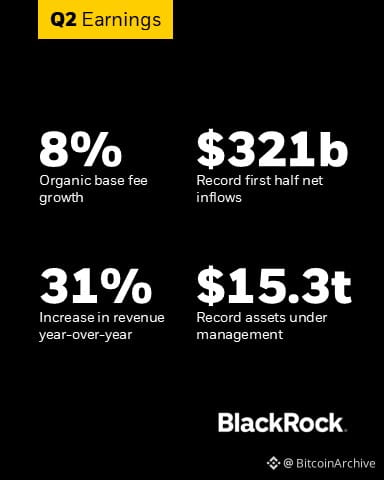
Ergebnisse (Black Rock) zeigen, dass das Ausmaß und die Tiefe unserer Kundenbeziehungen weltweit noch nie größer waren.
Kunden wenden sich an #blackRock für Einblicke und Chancen und ermöglichen damit Rekord-Ergebnisse im Finanzbereich.
Ergebnisse (Black Rock) zeigen, dass das Ausmaß und die Tiefe unserer Kundenbeziehungen weltweit noch nie größer waren.
Kunden wenden sich an #blackRock für Einblicke und Chancen und ermöglichen damit Rekord-Ergebnisse im Finanzbereich.
Kunden wenden sich an #blackRock für Einblicke und Chancen und ermöglichen damit Rekord-Ergebnisse im Finanzbereich.
66
Erneute Spannungen im Nahen Osten haben den makroökonomischen Hintergrund fragiler gemacht – aber nicht genug, um uns von unserer risikofreudigen Haltung abzubringen.
#blackRock
Erneute Spannungen im Nahen Osten haben den makroökonomischen Hintergrund fragiler gemacht – aber nicht genug, um uns von unserer risikofreudigen Haltung abzubringen.
#blackRock
#blackRock

66
1,190,000 $BABY @babylonlabs_io TOKENS ZU GEWINNEN
Binance CreatePaid Leaderboard ist JETZT LIVE
So machst du mit
✅ Folge anderen
✅ Mache Posts
✅ Handel
Du musst ALLE 3 Aufgaben mindestens einmal erledigen
Wähle nur 1: Regulär ODER Nur auf Einladung. Du kannst nicht beides tun.
Du wirst entfernt, wenn du:
❌ Giveaways oder Red Packets postest
❌ Bots oder gefälschte Likes/Views verwendest
❌ Alte Posts kopierst und änderst
❌ Sachen postest, die nicht zum Projekt gehören
Tipp: Poste echten Content. Erhalte echte Belohnungen.
Machst du mit? 👇
#CreatePaid #BABY #Crypto
#AirdropAlerts
1,190,000 $BABY @BabylonLabs_io TOKENS ZU GEWINNEN
Binance CreatePaid Leaderboard ist JETZT LIVE
So machst du mit
✅ Folge anderen
✅ Mache Posts
✅ Handel
Du musst ALLE 3 Aufgaben mindestens einmal erledigen
Wähle nur 1: Regulär ODER Nur auf Einladung. Du kannst nicht beides tun.
Du wirst entfernt, wenn du:
❌ Giveaways oder Red Packets postest
❌ Bots oder gefälschte Likes/Views verwendest
❌ Alte Posts kopierst und änderst
❌ Sachen postest, die nicht zum Projekt gehören
Tipp: Poste echten Content. Erhalte echte Belohnungen.
Machst du mit? 👇
#CreatePaid #BABY #Crypto
#AirdropAlerts
Binance CreatePaid Leaderboard ist JETZT LIVE
So machst du mit
✅ Folge anderen
✅ Mache Posts
✅ Handel
Du musst ALLE 3 Aufgaben mindestens einmal erledigen
Wähle nur 1: Regulär ODER Nur auf Einladung. Du kannst nicht beides tun.
Du wirst entfernt, wenn du:
❌ Giveaways oder Red Packets postest
❌ Bots oder gefälschte Likes/Views verwendest
❌ Alte Posts kopierst und änderst
❌ Sachen postest, die nicht zum Projekt gehören
Tipp: Poste echten Content. Erhalte echte Belohnungen.
Machst du mit? 👇
#CreatePaid #BABY #Crypto
#AirdropAlerts
1
84
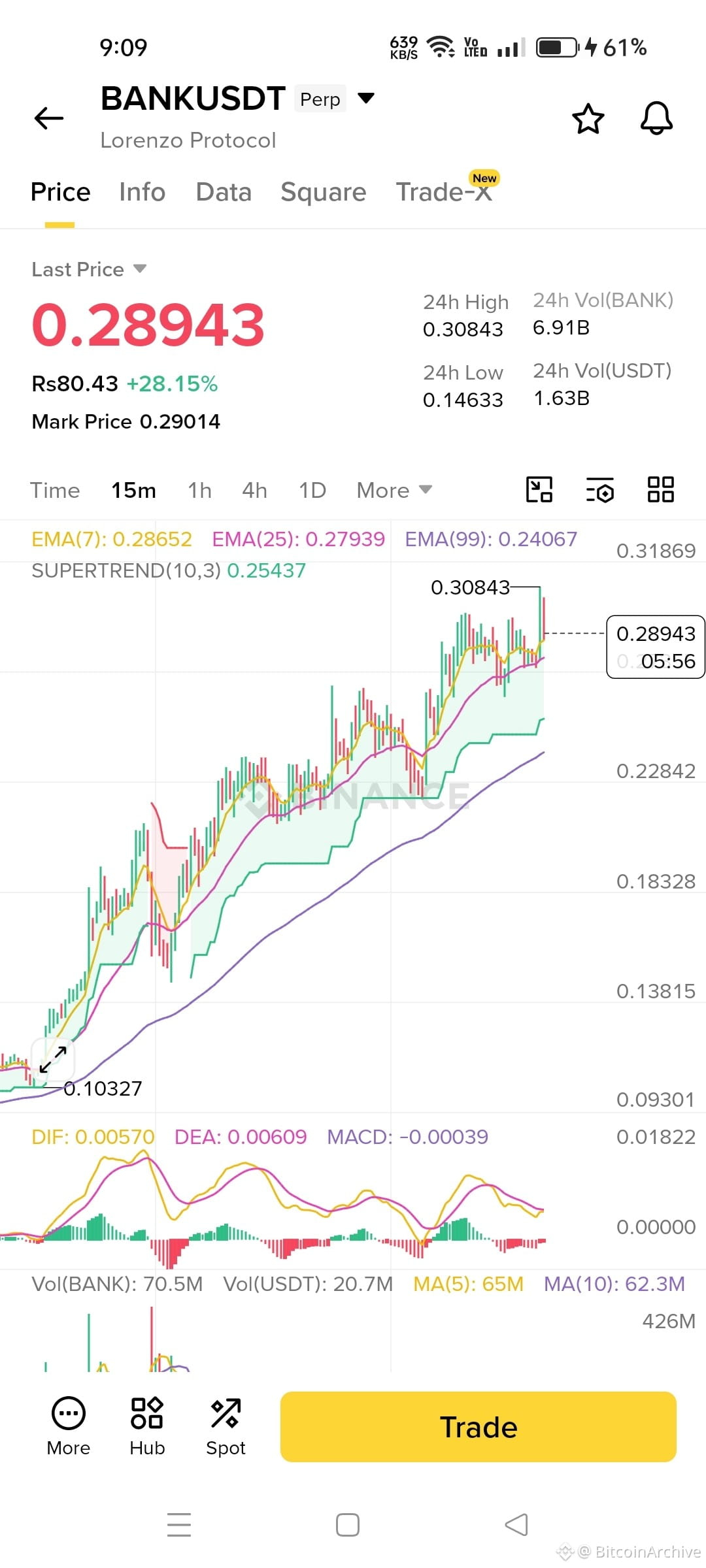
Jungs, SHORT auf $BANK
Entry: 0.28943 // Aktuelle Ablehnung nahe 24h-Hoch
TP1: 0.25437 // Supertrend(10,3)-Support
TP2: 0.2406 // EMA(99)-Support
TP3: 0.22842 // Nächste Chart-Nachfragezone
SL: 0.30843 // Über 24h High / aktueller Ausschlag
Risiko: Überstreckt +28,15% heute. Ablehnung bei 0.30843. MACD kühlt ab
Letzter Kurs: 0.28943 | 24h High: 0.30843 | Vol: 6.91B BANK
EMA(7): 0.28652 | EMA(25): 0.27939 | Supertrend: 0.25437
MACD: 0.00039 bärisches Kreuz, das beginnt
Volatiler Markt – trade klein, verwende engen SL
Folge für mehr Posts wie diesen*
> `#KOSPINasdaqCorrelationNearsTwoYearHigh BANKUSDT #LorenzoProtocol #Scalping #VolatilityMastery #RiskManagement #SHORT #CryptoTrading #Perp #TradingSignals`
*Warum SHORT:*
1. *Ablehnung*: 24h-Hoch `0.30843` erreicht und zurückgezogen. Rote 15m-Kerzen bilden sich
2. *Überkauft*: Gezogen von `0.103 → 0.289` = ∼180% Bewegung. Gewinnmitnahmen wahrscheinlich
3. *Targets*: Erster Drop auf Supertrend `0.254`, dann EMA(99) `0.240`, dann `0.228`
4. *SL eng*: Oberhalb von `0.30843`, falls es einen neuen High-Breakout gibt
Jungs, SHORT auf $BANK
Entry: 0.28943 // Aktuelle Ablehnung nahe 24h-Hoch
TP1: 0.25437 // Supertrend(10,3)-Support
TP2: 0.2406 // EMA(99)-Support
TP3: 0.22842 // Nächste Chart-Nachfragezone
SL: 0.30843 // Über 24h High / aktueller Ausschlag
Risiko: Überstreckt +28,15% heute. Ablehnung bei 0.30843. MACD kühlt ab
Letzter Kurs: 0.28943 | 24h High: 0.30843 | Vol: 6.91B BANK
EMA(7): 0.28652 | EMA(25): 0.27939 | Supertrend: 0.25437
MACD: 0.00039 bärisches Kreuz, das beginnt
Volatiler Markt – trade klein, verwende engen SL
Folge für mehr Posts wie diesen*
> `#KOSPINasdaqCorrelationNearsTwoYearHigh BANKUSDT #LorenzoProtocol #Scalping #VolatilityMastery #RiskManagement #SHORT #CryptoTrading #Perp #TradingSignals`
*Warum SHORT:*
1. *Ablehnung*: 24h-Hoch `0.30843` erreicht und zurückgezogen. Rote 15m-Kerzen bilden sich
2. *Überkauft*: Gezogen von `0.103 → 0.289` = ∼180% Bewegung. Gewinnmitnahmen wahrscheinlich
3. *Targets*: Erster Drop auf Supertrend `0.254`, dann EMA(99) `0.240`, dann `0.228`
4. *SL eng*: Oberhalb von `0.30843`, falls es einen neuen High-Breakout gibt
Entry: 0.28943 // Aktuelle Ablehnung nahe 24h-Hoch
TP1: 0.25437 // Supertrend(10,3)-Support
TP2: 0.2406 // EMA(99)-Support
TP3: 0.22842 // Nächste Chart-Nachfragezone
SL: 0.30843 // Über 24h High / aktueller Ausschlag
Risiko: Überstreckt +28,15% heute. Ablehnung bei 0.30843. MACD kühlt ab
Letzter Kurs: 0.28943 | 24h High: 0.30843 | Vol: 6.91B BANK
EMA(7): 0.28652 | EMA(25): 0.27939 | Supertrend: 0.25437
MACD: 0.00039 bärisches Kreuz, das beginnt
Volatiler Markt – trade klein, verwende engen SL
Folge für mehr Posts wie diesen*
> `#KOSPINasdaqCorrelationNearsTwoYearHigh BANKUSDT #LorenzoProtocol #Scalping #VolatilityMastery #RiskManagement #SHORT #CryptoTrading #Perp #TradingSignals`
*Warum SHORT:*
1. *Ablehnung*: 24h-Hoch `0.30843` erreicht und zurückgezogen. Rote 15m-Kerzen bilden sich
2. *Überkauft*: Gezogen von `0.103 → 0.289` = ∼180% Bewegung. Gewinnmitnahmen wahrscheinlich
3. *Targets*: Erster Drop auf Supertrend `0.254`, dann EMA(99) `0.240`, dann `0.228`
4. *SL eng*: Oberhalb von `0.30843`, falls es einen neuen High-Breakout gibt
106
Leute, SHORT auf $BANK
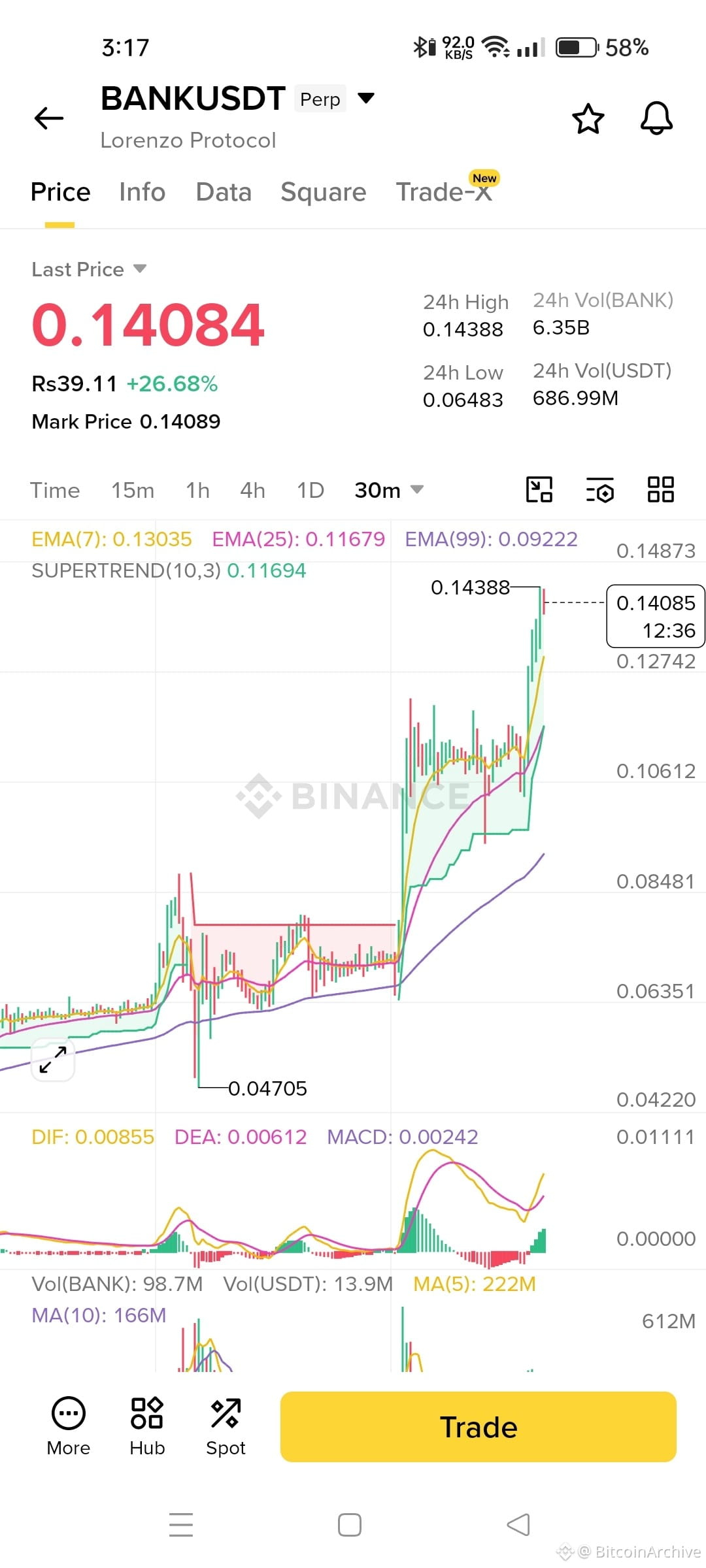
Einstieg: 0.14084
TP1: 0.13035 // EMA(7) Support
TP2: 0.11694 // Supertrend-Flip
TP3: 0.11679 // EMA(25)
SL: 0.14388 // Über dem 24h High-Wick
Risiko: +26,68% heute. Ablehnung nahe 0.14388. Überdehnt
Letzter: 0.14084 | 24h High: 0.14388 | Vol: 6,35B BANK | 686,99M USDT
EMA(7): 0.13035 | Supertrend: 0.11694 | MACD: 0.00242 verliert an Momentum
Volatiler Markt – trades klein halten, enger SL. Gewinne teilweise bei TP1 nehmen
Folge für mehr Posts wie diesen
#FootballSeason2026 #TRUMP #SpaceXShortInterestHits29%OfFloat #USTargetsBrazilPaymentSystemViaSection301
Warum SHORT jetzt:
1. Ablehnung: Bei 0.14388 angelangt und zurückgezogen. Großer Docht = Verkäufer sind da
2. Überkauft: Heute +26,68%, weit über dem EMA(25): 0.11679
3. Nachlassendes Momentum: MACD bildet ein tieferes Hoch vs. Preis
4. Ziele: Erster Support EMA(7) 0.13035, dann Gap-Down auf 0.11694
Leute, SHORT auf $BANK
Einstieg: 0.14084
TP1: 0.13035 // EMA(7) Support
TP2: 0.11694 // Supertrend-Flip
TP3: 0.11679 // EMA(25)
SL: 0.14388 // Über dem 24h High-Wick
Risiko: +26,68% heute. Ablehnung nahe 0.14388. Überdehnt
Letzter: 0.14084 | 24h High: 0.14388 | Vol: 6,35B BANK | 686,99M USDT
EMA(7): 0.13035 | Supertrend: 0.11694 | MACD: 0.00242 verliert an Momentum
Volatiler Markt – trades klein halten, enger SL. Gewinne teilweise bei TP1 nehmen
Folge für mehr Posts wie diesen
#FootballSeason2026 #TRUMP #SpaceXShortInterestHits29%OfFloat #USTargetsBrazilPaymentSystemViaSection301
Warum SHORT jetzt:
1. Ablehnung: Bei 0.14388 angelangt und zurückgezogen. Großer Docht = Verkäufer sind da
2. Überkauft: Heute +26,68%, weit über dem EMA(25): 0.11679
3. Nachlassendes Momentum: MACD bildet ein tieferes Hoch vs. Preis
4. Ziele: Erster Support EMA(7) 0.13035, dann Gap-Down auf 0.11694
Einstieg: 0.14084
TP1: 0.13035 // EMA(7) Support
TP2: 0.11694 // Supertrend-Flip
TP3: 0.11679 // EMA(25)
SL: 0.14388 // Über dem 24h High-Wick
Risiko: +26,68% heute. Ablehnung nahe 0.14388. Überdehnt
Letzter: 0.14084 | 24h High: 0.14388 | Vol: 6,35B BANK | 686,99M USDT
EMA(7): 0.13035 | Supertrend: 0.11694 | MACD: 0.00242 verliert an Momentum
Volatiler Markt – trades klein halten, enger SL. Gewinne teilweise bei TP1 nehmen
Folge für mehr Posts wie diesen
#FootballSeason2026 #TRUMP #SpaceXShortInterestHits29%OfFloat #USTargetsBrazilPaymentSystemViaSection301
Warum SHORT jetzt:
1. Ablehnung: Bei 0.14388 angelangt und zurückgezogen. Großer Docht = Verkäufer sind da
2. Überkauft: Heute +26,68%, weit über dem EMA(25): 0.11679
3. Nachlassendes Momentum: MACD bildet ein tieferes Hoch vs. Preis
4. Ziele: Erster Support EMA(7) 0.13035, dann Gap-Down auf 0.11694
1
116
Anmelden und weiter Inhalte entdecken
Krypto-Nutzer weltweit auf Binance Square kennenlernen
⚡️ Bleib in Sachen Krypto stets am Puls.
💬 Die weltgrößte Kryptobörse vertraut darauf.
👍 Erhalte verlässliche Einblicke von verifizierten Creators.
E-Mail-Adresse/Telefonnummer
Trendthemen
ZcashETFPostsFirstWeeklyOutflow$93.6M
37,654 Aufrufe
123 Kommentare
#ZcashETFPostsFirstWeeklyOutflow$93.6M
🚨🚨🚨🚨🚨🚨🚨🚨🚨🚨🚨🚨🚨🚨🚨✅ 🚨 ZCASH-ETF-FLÜSSE TURNEN ERSTMALS INS NEGATIVE! 📉
$ZEC ist mit einem bemerkenswerten Wandel bei den Zuflüssen institutioneller Fonds konfrontiert: Zcash-Investmentprodukte verzeichnen ihre erste wöchentliche Nettoabnahme seit dem Start im August.
Laut Daten zu den Fondsflüssen wurden in der letzten Woche rund 93,6 Mio. USD aus Zcash-Produkten abgezogen, während sich auch die Kursentwicklung von ZEC deutlich abgekühlt hat.
📊 WAS IST PASSIERT?
• Wöchentlicher Zcash-ETF-Abfluss: 93,6 Mio. USD
• Täglicher Abfluss am 30. September: 30,25 Mio. USD
• ZCSH hatte zuvor in einer Woche etwa 98,2 Mio. USD angezogen
• ZEC wird nahe $1,300 gehandelt
• Jüngstes Hoch: rund $1,690
• Wöchentlicher Rückgang: ungefähr 17%+
🔍 ZU BEOBACHTENDE LEVELS
🟢 Unterstützung: $1,280–$1,300
🔴 Widerstand: $1,450–$1,500
Die entscheidende Frage ist nun, ob der Bereich um $1,300 halten kann und frische Käufer anzieht.
Auch institutionelle Flows werden wichtig sein. Eine Rückkehr zu durchgehend positiven Zuflüssen könnte ein Zeichen für neues Vertrauen sein, während anhaltende Abflüsse den Druck auf $ZEC weiter erhöhen könnten.
👀 Geht es nur um Gewinnmitnahmen nach der starken Rallye von ZEC, oder könnten wir einen weiteren, tieferen Rücksetzer sehen, bevor Käufer zurückkommen?
Teile deine Meinung unten. 👇
#Zcash #ZEC #ZcashETF #Crypto
#analysis
owhggwiohsjowve
·0 Likes
·172 Aufrufe
GreekPoliceBustCryptoScamRingArrest17
85,205 Aufrufe
734 Kommentare
BitcoinRejectedAt$87K
126,735 Aufrufe
181 Kommentare