
Minato_Namikaze_
3.8k Beiträge

Minato_Namikaze_
Melden
Nutzer blockieren
Believe in being work smarter, Part-time Trader
Trade eröffnen
Gelegenheitstrader
1.4 Jahre
1.6K+ Following
541 Follower
707 Like gegeben
Beiträge
Portfolio
Alle
Zitierungen
Live
·
--
Bullisch
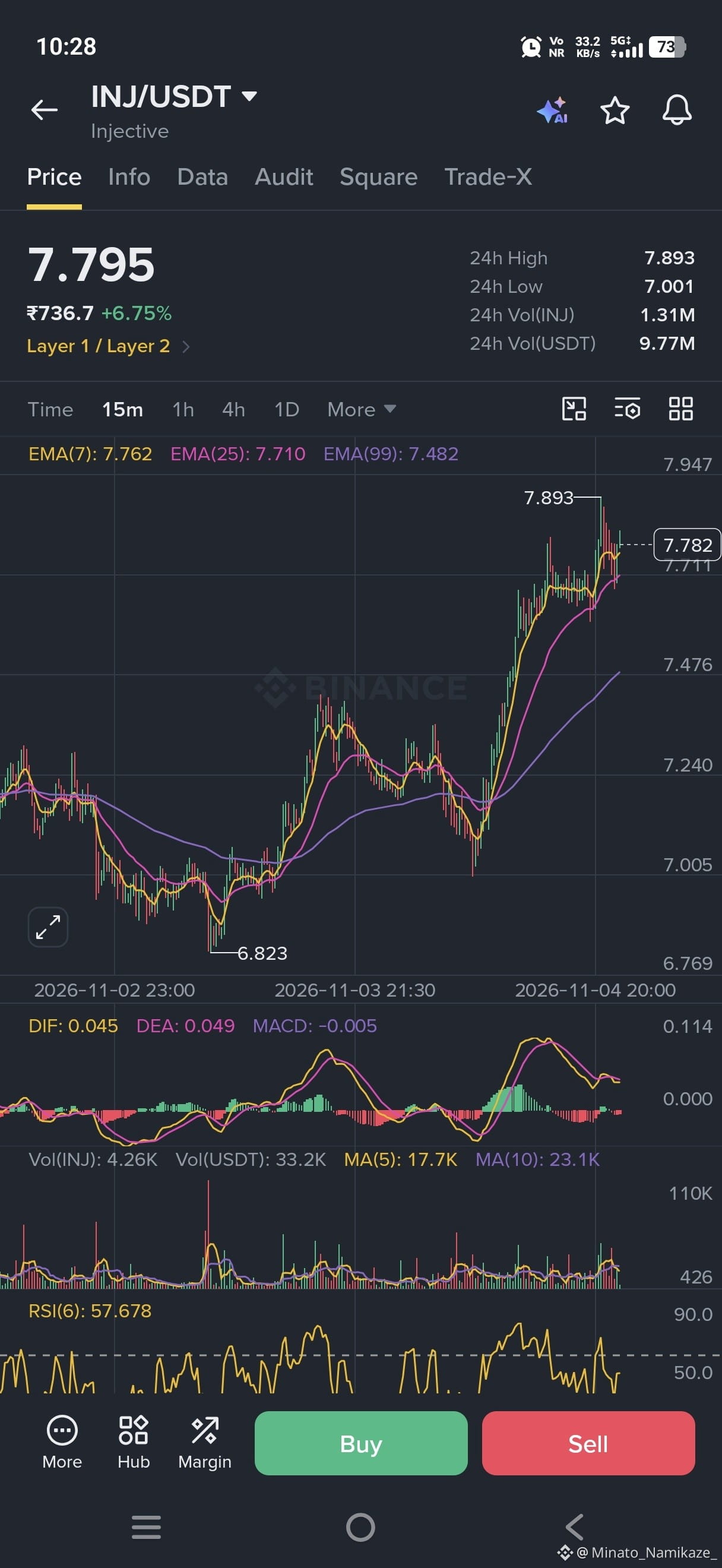
Institutionen wechseln still und leise On-Chain – und $INJ baut ihre Schienen 🏦🥷
Alle starren auf die kurzfristigen Kursschwankungen. Doch wenn man sich ansieht, was Injective ($INJ) in den letzten Wochen veröffentlicht hat, verändert sich die Erzählung grundlegend: weg von einer DEX-Chain für Privatanleger, hin zu einer institutionellen Abwicklungsebene.
Nachdem $INJ sich von den lokalen Tiefständen im Oktober erholt hat, wurde der Coin zuletzt in einer Spanne von 8,00 bis 9,00 $ gehandelt und zeigte dabei eine starke relative Stärke. Doch die eigentliche Geschichte steckt nicht nur im Tageschart, sondern in den grundlegenden Infrastruktur-Upgrades, die im Hintergrund stattfinden.
Was der Markt derzeit massiv unterbewertet:
Das institutionelle Gateway: Anfang November startete Injective eine dedizierte Transaktionsschiene für zugelassene Banken und Unternehmen. Sie ermöglicht es, institutionellen Transaktionen mit hohem Volumen vor der Blockbestätigung eine bevorzugte Ausführungszeit einzuräumen. Das ist ein starkes Signal dafür, dass das traditionelle Finanzwesen die Effizienz von On-Chain-Lösungen nutzen möchte, ohne sich mit der Überlastung des Mempools durch Privatanleger herumschlagen zu müssen.
Native USDC-Optionen und RWAs: Vor Kurzem führte Injective protokollbasierte, mit USDC besicherte Optionsmärkte für traditionelle Vermögenswerte wie US-Aktien und sogar KI-Rechenleistungsindizes ein. Zusammen mit dem kürzlich erfolgten Meridian-Mainnet-Upgrade, das die Ausgabe regulierter Real-World Assets (RWAs) ermöglicht, entsteht so faktisch eine regelkonforme Wall Street auf der Blockchain.
Liquiditätsverlagerung vom Cosmos Hub: Derzeit gibt es Bestrebungen, mehr als 500.000 USDC direkt vom Cosmos Hub zu Injective zu transferieren. Damit wird $INJ als zentraler Hub für Stablecoin-Liquidität innerhalb des breiteren Ökosystems weiter gefestigt.
Während der Altcoin-Markt insgesamt nach Orientierung sucht, stärkt Injective seine Codebasis gezielt, um Kapital aus dem traditionellen Finanzwesen anzuziehen.
Glaubt ihr, dass diese institutionellen Schienen der wichtigste Katalysator sein werden, der $INJ über seinen nächsten großen Widerstandsbereich hinausbringt? Oder ist der Kryptomarkt noch zu sehr von Privatanlegern geprägt, um sich für Unternehmenstechnologie zu interessieren? Schreibt eure Gedanken unten in die Kommentare. 👇
$INJ USDCATOM #Injective #RWA #DeFi #InstitutionalCrypto
{spot}(INJUSDT)
Institutionen wechseln still und leise On-Chain – und $INJ baut ihre Schienen 🏦🥷
Alle starren auf die kurzfristigen Kursschwankungen. Doch wenn man sich ansieht, was Injective ($INJ) in den letzten Wochen veröffentlicht hat, verändert sich die Erzählung grundlegend: weg von einer DEX-Chain für Privatanleger, hin zu einer institutionellen Abwicklungsebene.
Nachdem $INJ sich von den lokalen Tiefständen im Oktober erholt hat, wurde der Coin zuletzt in einer Spanne von 8,00 bis 9,00 $ gehandelt und zeigte dabei eine starke relative Stärke. Doch die eigentliche Geschichte steckt nicht nur im Tageschart, sondern in den grundlegenden Infrastruktur-Upgrades, die im Hintergrund stattfinden.
Was der Markt derzeit massiv unterbewertet:
Das institutionelle Gateway: Anfang November startete Injective eine dedizierte Transaktionsschiene für zugelassene Banken und Unternehmen. Sie ermöglicht es, institutionellen Transaktionen mit hohem Volumen vor der Blockbestätigung eine bevorzugte Ausführungszeit einzuräumen. Das ist ein starkes Signal dafür, dass das traditionelle Finanzwesen die Effizienz von On-Chain-Lösungen nutzen möchte, ohne sich mit der Überlastung des Mempools durch Privatanleger herumschlagen zu müssen.
Native USDC-Optionen und RWAs: Vor Kurzem führte Injective protokollbasierte, mit USDC besicherte Optionsmärkte für traditionelle Vermögenswerte wie US-Aktien und sogar KI-Rechenleistungsindizes ein. Zusammen mit dem kürzlich erfolgten Meridian-Mainnet-Upgrade, das die Ausgabe regulierter Real-World Assets (RWAs) ermöglicht, entsteht so faktisch eine regelkonforme Wall Street auf der Blockchain.
Liquiditätsverlagerung vom Cosmos Hub: Derzeit gibt es Bestrebungen, mehr als 500.000 USDC direkt vom Cosmos Hub zu Injective zu transferieren. Damit wird $INJ als zentraler Hub für Stablecoin-Liquidität innerhalb des breiteren Ökosystems weiter gefestigt.
Während der Altcoin-Markt insgesamt nach Orientierung sucht, stärkt Injective seine Codebasis gezielt, um Kapital aus dem traditionellen Finanzwesen anzuziehen.
Glaubt ihr, dass diese institutionellen Schienen der wichtigste Katalysator sein werden, der $INJ über seinen nächsten großen Widerstandsbereich hinausbringt? Oder ist der Kryptomarkt noch zu sehr von Privatanlegern geprägt, um sich für Unternehmenstechnologie zu interessieren? Schreibt eure Gedanken unten in die Kommentare. 👇
$INJ USDCATOM #Injective #RWA #DeFi #InstitutionalCrypto
57
·
--
Bullisch
Übersetzung ansehen
$YFI Isn’t Dead—It’s Just Waiting for the Right Rotation 🔄
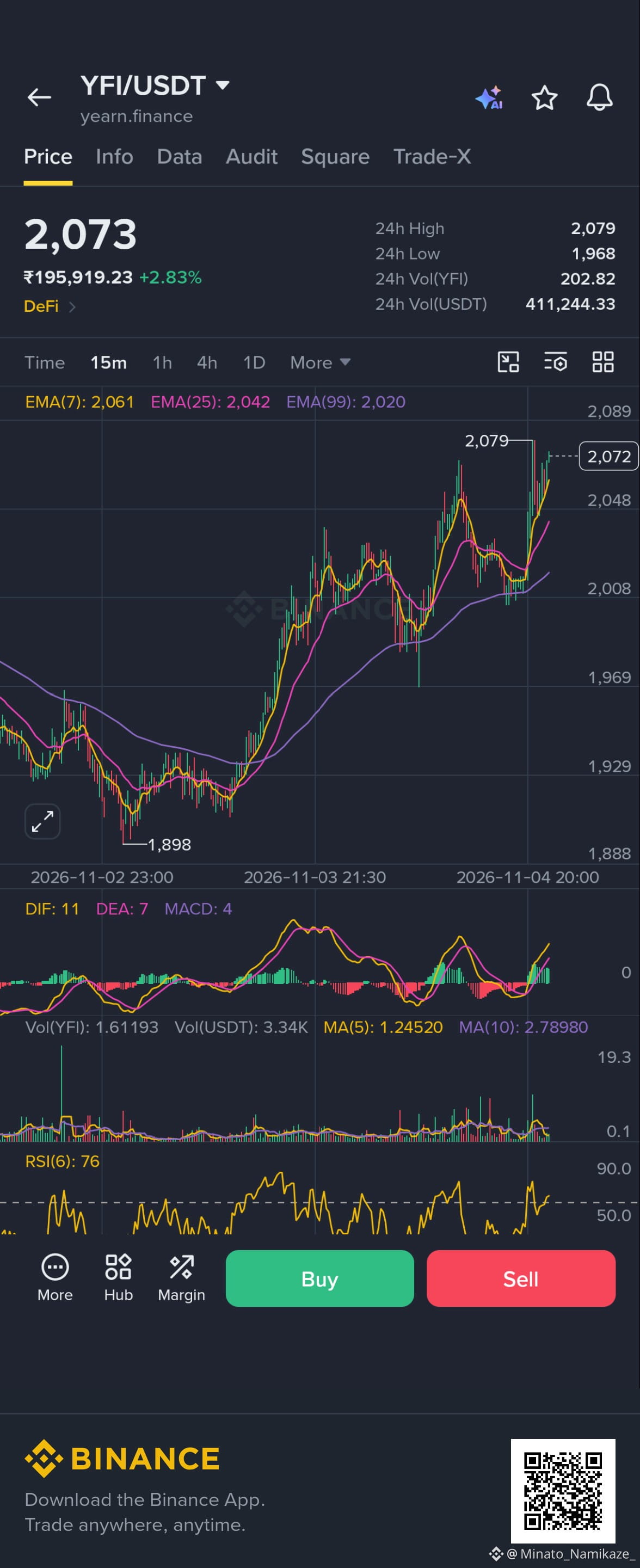
A lot of traders are looking at Yearn Finance ($YFI) and wondering if the DeFi yield aggregator narrative is over. Trading around the low-to-mid $2,000s, it's a far cry from its 2021 glory days. But if you are only looking at the all-time highs, you are missing the actual mechanics of what is happening on-chain right now.
Here is why $YFI is currently a structural play rather than a hype play:
The Supply Reality: $YFI has an incredibly small, fixed supply of roughly 36,666 tokens, with over 98% already circulating. There are no massive unlocks coming to dilute your bags. When liquidity eventually rotates back into DeFi, that tight supply means price action can get aggressive very quickly.
Yield Optimization in a Flat Market: Right now, BTC andETH are chopping around in tight ranges as the broader market consolidates. In sideways markets, capital naturally seeks yield. Yearn’s core utility—automating the search for the highest DeFi yields—becomes more relevant when pure price speculation cools down.
Consolidation and Moving Averages: From a technical perspective, $YFI is currently battling key overhead resistance levels (like the 25-day and 99-day MAs). We've seen sudden, vertical volume spikes recently that get rejected just as fast. This kind of violent chop usually indicates larger players testing liquidity and accumulating in the mid-$1,000s to low-$2,000s range before a real structural breakout.
The market is currently prioritizing safety and capital preservation. But when risk appetite returns and capital rotates back into mid-cap DeFi protocols chasing yield, $YFI is uniquely positioned due to its fixed supply and fundamental utility.
Are you accumulating $YFI during this consolidation phase, or are you waiting for a confirmed breakout above the moving averages? Let me know your strategy in the comments. 👇
$YFI BTCETH #DeFi #CryptoAnalysis #YieldFarming
{spot}(YFIUSDT)
$YFI Isn’t Dead—It’s Just Waiting for the Right Rotation 🔄
A lot of traders are looking at Yearn Finance ($YFI) and wondering if the DeFi yield aggregator narrative is over. Trading around the low-to-mid $2,000s, it's a far cry from its 2021 glory days. But if you are only looking at the all-time highs, you are missing the actual mechanics of what is happening on-chain right now.
Here is why $YFI is currently a structural play rather than a hype play:
The Supply Reality: $YFI has an incredibly small, fixed supply of roughly 36,666 tokens, with over 98% already circulating. There are no massive unlocks coming to dilute your bags. When liquidity eventually rotates back into DeFi, that tight supply means price action can get aggressive very quickly.
Yield Optimization in a Flat Market: Right now, BTC andETH are chopping around in tight ranges as the broader market consolidates. In sideways markets, capital naturally seeks yield. Yearn’s core utility—automating the search for the highest DeFi yields—becomes more relevant when pure price speculation cools down.
Consolidation and Moving Averages: From a technical perspective, $YFI is currently battling key overhead resistance levels (like the 25-day and 99-day MAs). We've seen sudden, vertical volume spikes recently that get rejected just as fast. This kind of violent chop usually indicates larger players testing liquidity and accumulating in the mid-$1,000s to low-$2,000s range before a real structural breakout.
The market is currently prioritizing safety and capital preservation. But when risk appetite returns and capital rotates back into mid-cap DeFi protocols chasing yield, $YFI is uniquely positioned due to its fixed supply and fundamental utility.
Are you accumulating $YFI during this consolidation phase, or are you waiting for a confirmed breakout above the moving averages? Let me know your strategy in the comments. 👇
$YFI BTCETH #DeFi #CryptoAnalysis #YieldFarming
29
·
--
Bullisch
Übersetzung ansehen
$PAXG Isn't Just Digital Gold Anymore—It's Evolving 🥇
A lot of traders just see PAX Gold ($PAXG) as a boring stablecoin pegged to a shiny rock. But if you look at what's actually happening on-chain right now, the narrative is shifting from a simple "safe haven" to a serious DeFi building block.
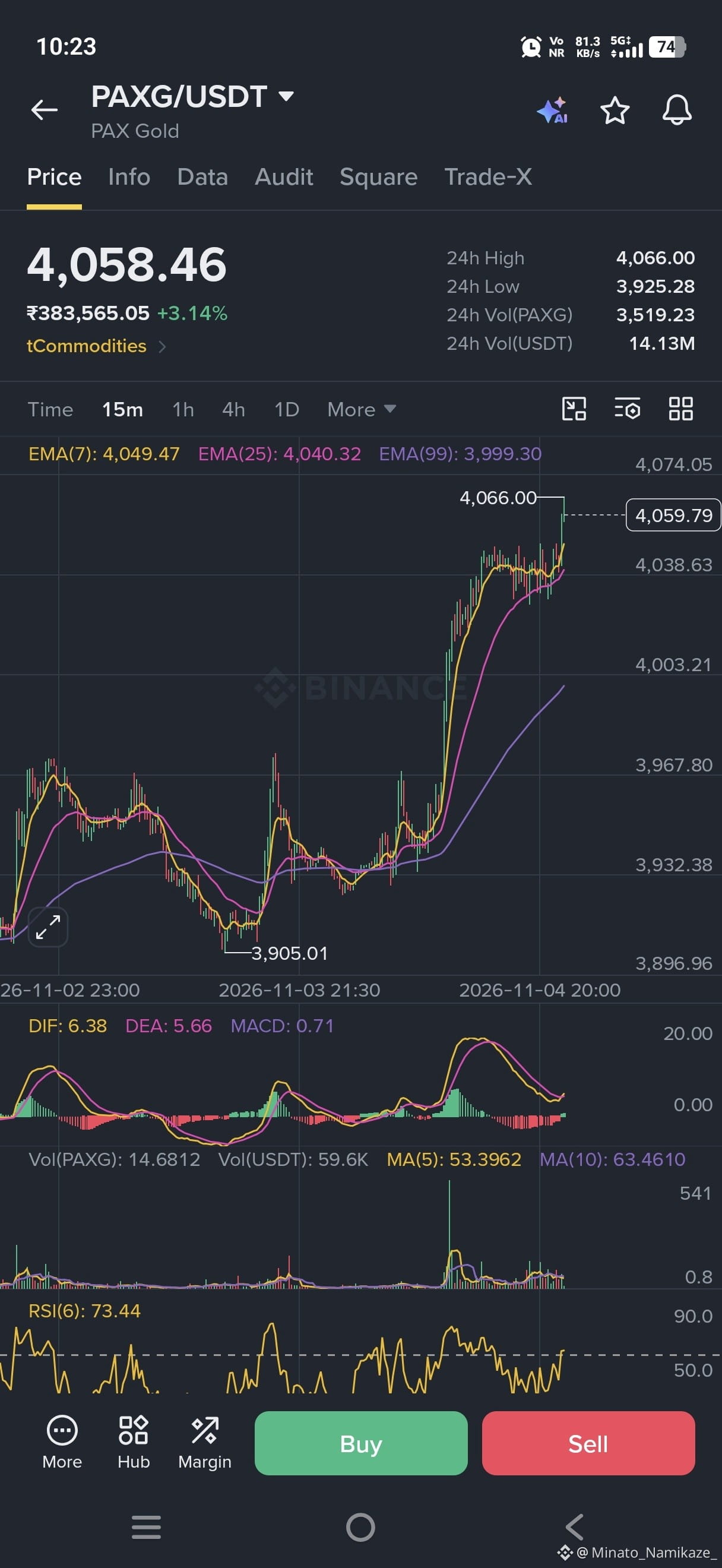
Sure, with global risks rising, having an on-chain hedge that tracks physical gold makes total sense. We’ve seen it hold strong around the $4,000–$4,050 zone while high-beta altcoins fight for liquidity.
But here is what the market is heavily sleeping on:
Yield generation: The recent rollout of the PAXGy token (powered by Chainlink CCIP) changes the game. It allows holders to earn gold-denominated yield without having to sell. You aren't just parking capital in gold anymore; it's actively working for you.
Solana expansion: $PAXG isn't stuck on Ethereum with high gas fees. The integration onto the Solana network via Sunrise DeFi and Backpack Securities unlocks massive liquidity and low costs. You can finally use tokenized gold efficiently in high-speed DeFi strategies.
Perps & Leverage: The recent listing on Orderly Network for perpetual futures gives traders up to 10x leverage on the asset. We're seeing unusual 5-minute volume spikes at local lows, which usually means larger players are quietly accumulating before the next leg up.
I’m keeping a close eye on the $4,050 resistance. A clean break above that level, fueled by this new DeFi utility, could surprise the market.
Are you treating $PAXG purely as a defensive hedge to protect your portfolio right now, or are you deploying it across DeFi protocols to farm yield? Let me know your strategy in the comments. 👇
$PAXG SOLLINK #DeFi #CryptoHedge #TokenizedAssets
{spot}(PAXGUSDT)
$PAXG Isn't Just Digital Gold Anymore—It's Evolving 🥇
A lot of traders just see PAX Gold ($PAXG) as a boring stablecoin pegged to a shiny rock. But if you look at what's actually happening on-chain right now, the narrative is shifting from a simple "safe haven" to a serious DeFi building block.
Sure, with global risks rising, having an on-chain hedge that tracks physical gold makes total sense. We’ve seen it hold strong around the $4,000–$4,050 zone while high-beta altcoins fight for liquidity.
But here is what the market is heavily sleeping on:
Yield generation: The recent rollout of the PAXGy token (powered by Chainlink CCIP) changes the game. It allows holders to earn gold-denominated yield without having to sell. You aren't just parking capital in gold anymore; it's actively working for you.
Solana expansion: $PAXG isn't stuck on Ethereum with high gas fees. The integration onto the Solana network via Sunrise DeFi and Backpack Securities unlocks massive liquidity and low costs. You can finally use tokenized gold efficiently in high-speed DeFi strategies.
Perps & Leverage: The recent listing on Orderly Network for perpetual futures gives traders up to 10x leverage on the asset. We're seeing unusual 5-minute volume spikes at local lows, which usually means larger players are quietly accumulating before the next leg up.
I’m keeping a close eye on the $4,050 resistance. A clean break above that level, fueled by this new DeFi utility, could surprise the market.
Are you treating $PAXG purely as a defensive hedge to protect your portfolio right now, or are you deploying it across DeFi protocols to farm yield? Let me know your strategy in the comments. 👇
$PAXG SOLLINK #DeFi #CryptoHedge #TokenizedAssets
41
·
--
Bullisch
$GIGGLE: Der Charity-Memecoin, der wirklich etwas bewegt
Giggle Fund ($GIGGLE) wird derzeit bei etwa 29,80 $ gehandelt und beweist damit, dass er mehr als nur ein gewöhnlicher Memecoin ist. Der Coin basiert auf der Binance Smart Chain und zeichnet sich durch einen besonderen Nutzen aus: Handelsgebühren werden über die Giggle Academy direkt für die Bildung von Kindern gespendet.
Während der Gesamtmarkt volatil bleibt, zeigt sich $GIGGLE mit einem stabilen täglichen Handelsvolumen von etwa 4 bis 5 Millionen US-Dollar widerstandsfähig. Er vereint auf seltene Weise Krypto-Spekulation mit realer Wirkung. Kann er die wichtige Unterstützung bei 29 $ halten, könnte der nächste Aufwärtsschub die Widerstandszone bei 35 $ testen.
Handelst du mit $GIGGLE wegen des Chart-Setups oder hältst du ihn wegen seiner Bildungsmission? Teile deine Gedanken unten in den Kommentaren! 👇
$GIGGLE #GiggleFund #Memecoins #CryptoForGood
{spot}(GIGGLEUSDT)
$GIGGLE: Der Charity-Memecoin, der wirklich etwas bewegt
Giggle Fund ($GIGGLE) wird derzeit bei etwa 29,80 $ gehandelt und beweist damit, dass er mehr als nur ein gewöhnlicher Memecoin ist. Der Coin basiert auf der Binance Smart Chain und zeichnet sich durch einen besonderen Nutzen aus: Handelsgebühren werden über die Giggle Academy direkt für die Bildung von Kindern gespendet.
Während der Gesamtmarkt volatil bleibt, zeigt sich $GIGGLE mit einem stabilen täglichen Handelsvolumen von etwa 4 bis 5 Millionen US-Dollar widerstandsfähig. Er vereint auf seltene Weise Krypto-Spekulation mit realer Wirkung. Kann er die wichtige Unterstützung bei 29 $ halten, könnte der nächste Aufwärtsschub die Widerstandszone bei 35 $ testen.
Handelst du mit $GIGGLE wegen des Chart-Setups oder hältst du ihn wegen seiner Bildungsmission? Teile deine Gedanken unten in den Kommentaren! 👇
$GIGGLE #GiggleFund #Memecoins #CryptoForGood
121
·
--
Bullisch
Übersetzung ansehen
$LINK is Trapped Under Resistance—But Fundamentals Are Screaming
Chainlink is hovering near $11.18, struggling to break the 50-day EMA at $11.37. Technicals look heavy, but the on-chain story is a different beast.
Institutional adoption is exploding. Hanwha Investment just integrated CCIP for their RWA platform, and the DTCC is actively involved. Retail might be sleeping, but big money is building. If buyers flip $11.40 to support, the path clears toward the 200 EMA at $12.00.
Are you accumulating $LINK here, or waiting for a breakout? Let me know! 👇
$LINK #Chainlink #RWA
{spot}(LINKUSDT)
$LINK is Trapped Under Resistance—But Fundamentals Are Screaming
Chainlink is hovering near $11.18, struggling to break the 50-day EMA at $11.37. Technicals look heavy, but the on-chain story is a different beast.
Institutional adoption is exploding. Hanwha Investment just integrated CCIP for their RWA platform, and the DTCC is actively involved. Retail might be sleeping, but big money is building. If buyers flip $11.40 to support, the path clears toward the 200 EMA at $12.00.
Are you accumulating $LINK here, or waiting for a breakout? Let me know! 👇
$LINK #Chainlink #RWA
105
·
--
Bullisch
Übersetzung ansehen
$AVAX at a Crossroads: Will the $8.10 Support Hold?
Avalanche is currently testing psychological support at $8.10 following a sector-wide pullback. Short-term momentum is defensive, but the mid-term setup reveals a compelling battle between technical headwinds and fundamental catalysts.
On-chain, we’re seeing increased Real-World Asset (RWA) activity and significant government partnerships that haven’t yet priced in. With the RSI sitting neutral, a successful defense of the $8 support could pave the way for a recovery toward $10–$12. If broader market sentiment stabilizes, these network milestones could be the spark AVAX needs to reverse its recent slide.
What’s your move on AVAX? Stacking at support or waiting for a confirmed bounce? Let me know! 👇
$AVAX #Avalanche #RWA #CryptoAnalysis
{spot}(AVAXUSDT)
$AVAX at a Crossroads: Will the $8.10 Support Hold?
Avalanche is currently testing psychological support at $8.10 following a sector-wide pullback. Short-term momentum is defensive, but the mid-term setup reveals a compelling battle between technical headwinds and fundamental catalysts.
On-chain, we’re seeing increased Real-World Asset (RWA) activity and significant government partnerships that haven’t yet priced in. With the RSI sitting neutral, a successful defense of the $8 support could pave the way for a recovery toward $10–$12. If broader market sentiment stabilizes, these network milestones could be the spark AVAX needs to reverse its recent slide.
What’s your move on AVAX? Stacking at support or waiting for a confirmed bounce? Let me know! 👇
$AVAX #Avalanche #RWA #CryptoAnalysis
96
·
--
Bullisch
Übersetzung ansehen
$TAO is Testing Critical Support—Is a Rebound Next?
Bittensor is hanging by a thread near the $216 support level, down 27% in the past month. With the RSI deeply oversold and futures open interest sitting above $500M, leverage is heavily skewed. If $216 breaks, we could easily see a slide toward $190.
However, long-term fundamentals remain strong. The recent V440 "Emission Gate" upgrade tied TAO rewards strictly to proven subnet demand, filtering out the noise. Plus, institutional players like KR1 are actively staking large bags for yield.
Are you buying this dip or waiting for a confirmed breakdown? Let’s discuss below! 👇
$TAO #Bittensor #AI #CryptoTrading
{spot}(TAOUSDT)
$TAO is Testing Critical Support—Is a Rebound Next?
Bittensor is hanging by a thread near the $216 support level, down 27% in the past month. With the RSI deeply oversold and futures open interest sitting above $500M, leverage is heavily skewed. If $216 breaks, we could easily see a slide toward $190.
However, long-term fundamentals remain strong. The recent V440 "Emission Gate" upgrade tied TAO rewards strictly to proven subnet demand, filtering out the noise. Plus, institutional players like KR1 are actively staking large bags for yield.
Are you buying this dip or waiting for a confirmed breakdown? Let’s discuss below! 👇
$TAO #Bittensor #AI #CryptoTrading
1
302
·
--
Bullisch
Übersetzung ansehen
$ZEC is Coiling Tight Before the NU7 Catalyst
Zcash is trading near $1,285, holding its ground while most alts bleed. The charts look primed for a breakout above the $1,300 resistance, but the real trigger is tomorrow’s NU7 Mainnet Activation.
This upgrade cuts block times to 25 seconds, instantly tripling network speed. This is exactly the kind of fundamental shift that can spark a rally. If buyers defend the $1,200 support, we could see an aggressive push higher.
Are you buying $ZEC before the upgrade, or waiting for the dust to settle? Drop your strategy below! 👇
$ZEC #Zcash #PrivacyCoins #TrendingTopic
{spot}(ZECUSDT)
$ZEC is Coiling Tight Before the NU7 Catalyst
Zcash is trading near $1,285, holding its ground while most alts bleed. The charts look primed for a breakout above the $1,300 resistance, but the real trigger is tomorrow’s NU7 Mainnet Activation.
This upgrade cuts block times to 25 seconds, instantly tripling network speed. This is exactly the kind of fundamental shift that can spark a rally. If buyers defend the $1,200 support, we could see an aggressive push higher.
Are you buying $ZEC before the upgrade, or waiting for the dust to settle? Drop your strategy below! 👇
$ZEC #Zcash #PrivacyCoins #TrendingTopic
182
·
--
Bullisch
Übersetzung ansehen
Trading traditional stocks 24/7 with crypto? Let's look at $GPROB.
Tokenized equities are quietly gaining traction, and GoPro tokenized bStocks ($GPROB) is a prime example. It gives you 1:1 exposure to GoPro shares directly on Binance—capturing price movements and dividends, but trading 24/7 like regular crypto.
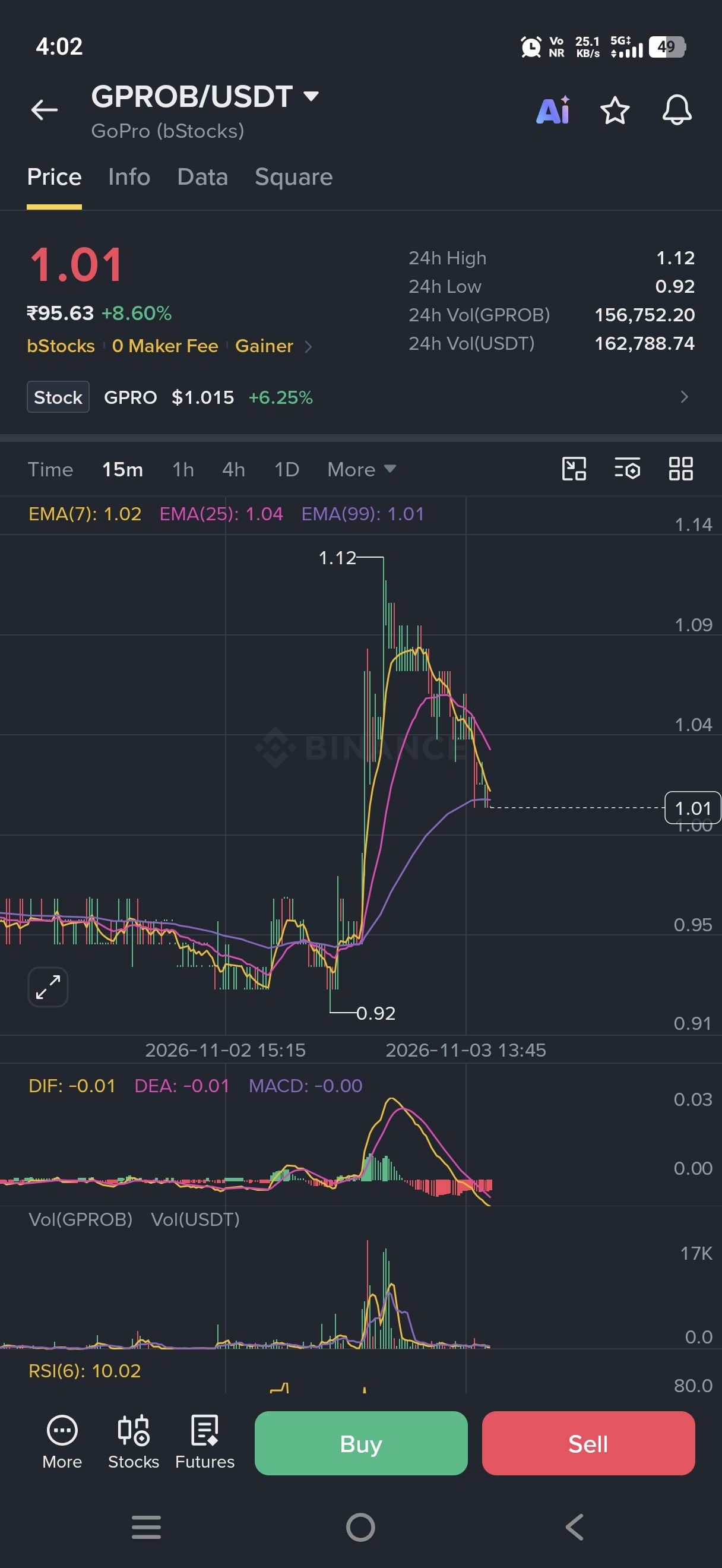
Currently hovering around $1.03, the appeal isn't just about betting on the action camera market; it's about bridging traditional finance with round-the-clock liquidity. It's an interesting tool if you want traditional market exposure without leaving the crypto ecosystem.
Do you trade tokenized stocks like $GPROB, or do you prefer sticking to native crypto assets? Let me know your strategy below! 👇
$GPROB #TokenizedStocks #GoPro #CryptoTrading #DeFi
49
·
--
Bullisch
Übersetzung ansehen
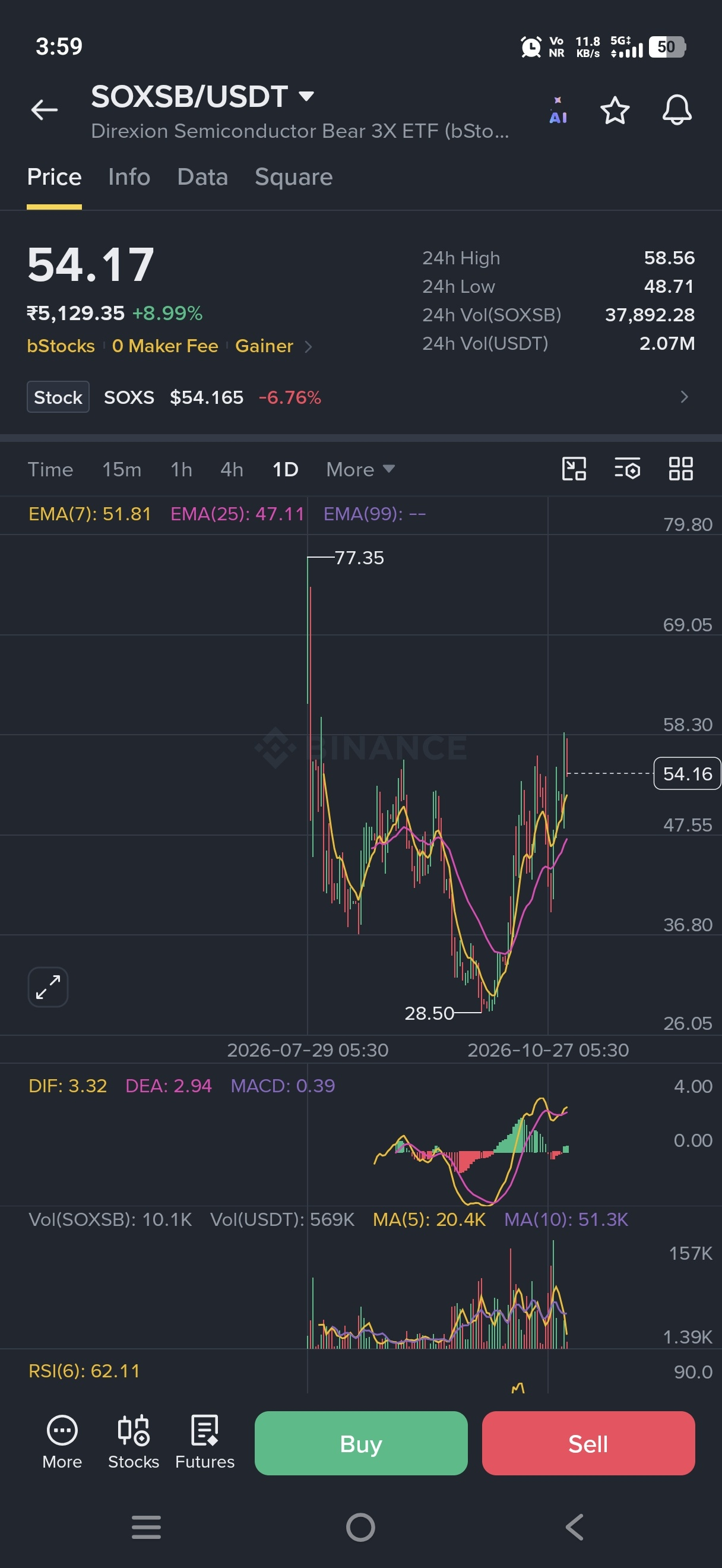
.Why $SOXSB is the Ultimate Bear Market Hedge Right Now
Did you notice $SOXSB moving inversely to the tech sector? This isn't your average altcoin. SOXSB is actually a tokenized asset linked to the Direxion Semiconductor Bear 3X ETF.
With semiconductor stocks facing recent headwinds, this 3x leveraged token is catching serious volume on Binance. We saw it spike past $53 recently as traders looked for inverse hedging demand. Just remember, leveraged assets come with heavy compounding risks. It's built for short-term trades, not diamond-hand holding.
Are you using tokenized traditional assets like $SOXSB to hedge your portfolio, or sticking strictly to pure crypto? Let me know your strategy below!
$SOXSB #TokenizedAssets #Semiconductors #CryptoTrading
71
·
--
Bärisch
SHIB Ende 2026: Wachstum der Holder trifft auf rückläufige Kursentwicklung
Shiba Inu (SHIB) bewegt sich auf einem schwierigen Markt, während wir uns dem November 2026 nähern. Der Kurs liegt derzeit bei etwa ₹0.00044 ($0.0000045), die Marktkapitalisierung bei rund 2,7 Milliarden US-Dollar. Der Meme-Coin notiert knapp über seinem Jahrestief und hat in der vergangenen Woche über 7 % verloren.
Wenn du SHIB beobachtest, sind dies die wichtigsten Entwicklungen:
* Die Zahl der Holder wächst:
Trotz der jüngsten Kursrückgänge sind in diesem Jahr mehr als 147.500 neue Wallet-Adressen hinzugekommen, die SHIB halten. Das Interesse von Kleinanlegern bleibt auch in einem breiteren Abschwung am Kryptomarkt bestehen.
* Token-Burns sind ins Stocken geraten:
Der viel diskutierte Burn-Mechanismus ist praktisch zum Erliegen gekommen. In der vergangenen Woche wurden lediglich rund 17,4 Millionen SHIB im Wert von gerade einmal 82 $ verbrannt. Ohne aktive Beteiligung der Community, die Token an inaktive Wallets sendet, ist der Burn derzeit als Kurstreiber bedeutungslos.
* Geringes Handelsvolumen:
Das tägliche Handelsvolumen ist derzeit niedrig, was die jüngsten Kursverluste angesichts der allgemeinen Unsicherheit am Markt zusätzlich verstärkt.
Fazit:
Die Treue der SHIB-Community sorgt für eine solide Basis. Bei weiterhin 589 Billionen im Umlauf befindlichen Token und stagnierenden Burn-Raten wird eine deutliche Kurserholung jedoch stark von der allgemeinen Marktdynamik abhängen und weniger von den internen Mechanismen des Tokens.
#SHIB #Memecoins🤑🤑
106
·
--
Bullisch
Übersetzung ansehen
$PEPE Testing the 200-Day EMA: Breakout or Breakdown?
While the broader market remains indecisive, $PEPE is trading in a crucial zone that could dictate its trajectory for the rest of the quarter.
Currently, PEPE is wrestling with the critical $0.00000480 to $0.00000500 resistance range. We are seeing a classic Descending Triangle formation on the 4H charts. Lower highs are pressing down along a falling trendline, with flat support sitting near 0.00000481.
Sellers have been in control of this immediate timeframe, rejecting every bounce just under the trendline. This support level has been tested multiple times, making a breakdown increasingly likely if buyers step aside. A clean 1-hour close below 0.00000480 confirms the breakdown, with the next major floor at 0.00000431.
However, the macro picture paints a different story. If we look at the daily timeframe, PEPE remains constructively positioned above its 200-day moving average. The RSI is sitting in neutral territory (around 66), suggesting buyers still maintain control and there is plenty of room for an upside move before hitting overbought conditions.
If buyers defend the current zone and push through the trendline at $0.00000500, we could see a swift move to test the next major wall at $0.00000515. The open interest remains strong at over $93M, indicating that traders are actively positioning for this next leg.
Are we going to see a liquidity sweep below $0.00000480 before a bounce, or will the bulls break the trendline today? Drop your targets below. 👇
#PEPE #Altcoins #CryptoTrading
$PEPE
{spot}(PEPEUSDT)
$PEPE Testing the 200-Day EMA: Breakout or Breakdown?
While the broader market remains indecisive, $PEPE is trading in a crucial zone that could dictate its trajectory for the rest of the quarter.
Currently, PEPE is wrestling with the critical $0.00000480 to $0.00000500 resistance range. We are seeing a classic Descending Triangle formation on the 4H charts. Lower highs are pressing down along a falling trendline, with flat support sitting near 0.00000481.
Sellers have been in control of this immediate timeframe, rejecting every bounce just under the trendline. This support level has been tested multiple times, making a breakdown increasingly likely if buyers step aside. A clean 1-hour close below 0.00000480 confirms the breakdown, with the next major floor at 0.00000431.
However, the macro picture paints a different story. If we look at the daily timeframe, PEPE remains constructively positioned above its 200-day moving average. The RSI is sitting in neutral territory (around 66), suggesting buyers still maintain control and there is plenty of room for an upside move before hitting overbought conditions.
If buyers defend the current zone and push through the trendline at $0.00000500, we could see a swift move to test the next major wall at $0.00000515. The open interest remains strong at over $93M, indicating that traders are actively positioning for this next leg.
Are we going to see a liquidity sweep below $0.00000480 before a bounce, or will the bulls break the trendline today? Drop your targets below. 👇
#PEPE #Altcoins #CryptoTrading
$PEPE
125
·
--
Bullisch
Solana ist nicht mehr nur für Memes da – der institutionelle Wandel ist da
Alle sind so besessen davon, den neuesten Hunde- oder Katzen-Coin auf Solana zu verfolgen, dass sie völlig übersehen, was unter der Oberfläche tatsächlich passiert. $SOL entwickelt sich still und leise von einem Casino für Privatanleger zu einer ernstzunehmenden institutionellen Infrastruktur, und die Zahlen der letzten Monate sind beeindruckend.
Zunächst einmal haben wir gerade einen gewaltigen Meilenstein erreicht: Über 1 Million Wallets halten inzwischen tokenisierte Aktien auf Solana. Die Rede ist von einem Angebot an tokenisiertem Eigenkapital im Wert von fast 700 Millionen US-Dollar und einem Handelsvolumen von rund 4,4 Milliarden US-Dollar in jüngster Zeit. Hinzu kommt, dass das Stablecoin-Angebot im Netzwerk gerade die Marke von 17,5 Milliarden US-Dollar überschritten hat – ein neuer absoluter Höchststand.
Was mir aber besonders aufgefallen ist, ist die technische Roadmap, die sich 2026 entfaltet. Der Wechsel zum IBRL-Framework (Increase Bandwidth, Reduce Latency) und die Überarbeitung des Alpenglow-Konsens geht nicht mehr darum, für Prahlereien auf Twitter möglichst hohe TPS-Zahlen zu jagen. Es geht um vorhersehbare Finalität in unter einer Sekunde. Wenn Schwergewichte wie Mastercard Stablecoin-Abwicklungen integrieren und die World Series of Poker 22 Millionen US-Dollar an Buy-ins direkt on-chain abwickelt, braucht man eine zuverlässige Ausführung – nicht nur rohe Geschwindigkeit.
Die Entwickler senken sogar die Slot-Zeiten von 400 ms auf 250 ms. Das Netzwerk entwickelt sich weiter, um tokenisierte Schuldtitel, Devisen und Derivate in großem Maßstab zu unterstützen. Die Nettozuflüsse von 188 Millionen US-Dollar in US-amerikanische Solana-ETFs innerhalb weniger Tage im letzten Monat beweisen, dass großes Kapital sich hier endlich wohlzufühlen beginnt.
Privatanleger sorgen für den Trubel, aber Institutionen bringen die beständige Liquidität.
Was meint ihr – werden wir in diesem Zyklus sehen, wie SOL andere große Projekte beim DeFi-TVL überholt, oder glaubt ihr, dass das Netzwerk noch zu stark von Privatanlegern geprägt ist? Schreibt eure Gedanken unten in die Kommentare! 👇
#Solana #DeFi #CryptoNews #RWA $SOL
113
·
--
Bullisch
Übersetzung ansehen
The ETF Drain is Real, But You're Looking at the Wrong Bitcoin Metric 📉🤔
Bitcoin is holding steady around $78,600 today, but if you scroll through Square, everyone is panicking about the wrong data point. Yes, U.S. spot Bitcoin ETF assets under management just slid from $111B down to $102.75B over the last month. Institutional demand is clearly taking a breather.
But here is what the panicked sellers are missing: the macro rotation. While U.S. tech stocks have been taking a beating this week, we've seen three consecutive days of $BTC gains driven heavily by Asian market hours reallocating capital away from traditional equities and back into crypto.
Right now, the Fear & Greed index is sitting at 36—solidly in the "Fear" zone. This is a massive psychological shift from the "Greed" levels we saw just 30 days ago. If you've been trading this market long enough, you know that prolonged "Fear" combined with the recent 33% drop in derivatives open interest usually means one thing: the excess leverage has been flushed out, and the weak hands have capitulated.
Add in the fact that Bitcoin Core just quietly deployed AI-discovered security patches last week to bulletproof the nodes against memory exhaustion attacks, and the underlying network fundamentals are actually hardening while the price consolidates.
I want to hear your read on this current market structure. Do you think the institutional ETF outflows are a leading indicator for a deeper drop, or is this just a standard leverage flush before a rally? Break down your thesis in the comments! 👇
$BTC #Bitcoin #CryptoTrends #MacroAnalysis #MarketUpdate
93
·
--
Bullisch
🤖 $PHA durchbricht mit hohem Handelsvolumen nach oben!
Phala Network legt innerhalb von 24 Stunden um +15,16 % zu und wird bei 0,05803 $ (5,50 ₹) gehandelt. In den letzten 24 Stunden wurden starke 168,49 Mio. USDT umgesetzt.
Token aus den Bereichen DePIN und Privacy-Computing-Infrastruktur verzeichnen solide Liquiditätszuflüsse, und $PHA hält seine Gewinne stabil. Wo seht ihr Phala als Nächstes?
#PHA #PhalaNetwork #DePIN #AI #BinanceSquare
{spot}(PHAUSDT)
🤖 $PHA durchbricht mit hohem Handelsvolumen nach oben!
Phala Network legt innerhalb von 24 Stunden um +15,16 % zu und wird bei 0,05803 $ (5,50 ₹) gehandelt. In den letzten 24 Stunden wurden starke 168,49 Mio. USDT umgesetzt.
Token aus den Bereichen DePIN und Privacy-Computing-Infrastruktur verzeichnen solide Liquiditätszuflüsse, und $PHA hält seine Gewinne stabil. Wo seht ihr Phala als Nächstes?
#PHA #PhalaNetwork #DePIN #AI #BinanceSquare
89
·
--
Bullisch
📊 $IOST zeigt anhaltendes Käuferinteresse!
IOST verzeichnet eine stetige positive Entwicklung und ist in den letzten 24 Stunden um +15.75% gestiegen. Der Kurs liegt bei $0.0008593 (₹0.08), bei einem Handelsvolumen von 10.28M USDT.
Ein zuverlässiger Performer mit stabiler technischer Struktur in kürzeren Zeiträumen. Erwartest du, dass sich diese Entwicklung fortsetzt?
#IOST #CryptoAnalysis #AltcoinSeason #Blockchain #TradingTips
{spot}(IOSTUSDT)
📊 $IOST zeigt anhaltendes Käuferinteresse!
IOST verzeichnet eine stetige positive Entwicklung und ist in den letzten 24 Stunden um +15.75% gestiegen. Der Kurs liegt bei $0.0008593 (₹0.08), bei einem Handelsvolumen von 10.28M USDT.
Ein zuverlässiger Performer mit stabiler technischer Struktur in kürzeren Zeiträumen. Erwartest du, dass sich diese Entwicklung fortsetzt?
#IOST #CryptoAnalysis #AltcoinSeason #Blockchain #TradingTips
171
·
--
Bullisch
🐾 $M gewinnt kräftig an Fahrt!
MemeCore ist heute um +16.17% gestiegen und wird derzeit zu $0.8005 (₹75.89) gehandelt. Das 24-Stunden-Handelsvolumen beträgt 5.75M USDT.
Die Rotation im Meme-Sektor zeigt Lebenszeichen, denn $M verzeichnet zweistellige Gewinne. Setze beim Handel mit hochvolatilen Anlagen immer enge Stop-Losses!
#MemeCore #MUSDT #MemeCoins #CryptoDaily #Binance
211
·
--
Bullisch
✨ $DOOD zählt heute zu den größten Gewinnern!
Doodles macht stetige Fortschritte und legt im 24-Stunden-Chart um +18,92 % zu. Der Kurs liegt jetzt bei 0,001584 $ (0,15 ₹), bei einem Perp-Volumen von 10,03 Mio. USDT.
Nachdem sich der Kurs auf niedrigeren Niveaus konsolidiert hat, steigen Käufer wieder ein. Beobachte, wie der Kurs auf die bevorstehenden lokalen Angebotszonen reagiert.
#DOOD #Doodles #Web3 #CryptoCommunity #BullishTrend
{future}(DOODUSDT)
✨ $DOOD zählt heute zu den größten Gewinnern!
Doodles macht stetige Fortschritte und legt im 24-Stunden-Chart um +18,92 % zu. Der Kurs liegt jetzt bei 0,001584 $ (0,15 ₹), bei einem Perp-Volumen von 10,03 Mio. USDT.
Nachdem sich der Kurs auf niedrigeren Niveaus konsolidiert hat, steigen Käufer wieder ein. Beobachte, wie der Kurs auf die bevorstehenden lokalen Angebotszonen reagiert.
#DOOD #Doodles #Web3 #CryptoCommunity #BullishTrend
1
238
·
--
Bullisch
🔥 $ALT steigt mit Überzeugung weiter!
AltLayer ist in den letzten 24 Stunden um +23.95% gestiegen und liegt derzeit bei $0.010549 (₹1.00). Das 24-Stunden-Handelsvolumen beträgt solide 76.60M USDT.
Layer-Rollup-Narrative gewinnen wieder an Fahrt, und $ALT gibt mit stetig wachsendem Volumen den Ton an. Der nächste Widerstand ist in Sicht? Lasst uns darüber sprechen!
#ALT #AltLayer #Rollups #Layer2 #CryptoNews
{spot}(ALTUSDT)
🔥 $ALT steigt mit Überzeugung weiter!
AltLayer ist in den letzten 24 Stunden um +23.95% gestiegen und liegt derzeit bei $0.010549 (₹1.00). Das 24-Stunden-Handelsvolumen beträgt solide 76.60M USDT.
Layer-Rollup-Narrative gewinnen wieder an Fahrt, und $ALT gibt mit stetig wachsendem Volumen den Ton an. Der nächste Widerstand ist in Sicht? Lasst uns darüber sprechen!
#ALT #AltLayer #Rollups #Layer2 #CryptoNews
1
106
·
--
Bullisch
🟢 $BMT zeigt klare grüne Kerzen!
Bubblemaps liegt heute mit einem Plus von +24,24 % bei 0,02040 $ (1,93 ₹) und einem 24-Stunden-Perpetual-Handelsvolumen von 15,73 Mio. USDT.
Starkes organisches Kaufinteresse hält $BMT unter den Tagesgewinnern. Haltet ihr Spot oder handelt ihr Perpetuals? Teilt euer Setup unten!
#BMT #Bubblemaps #CryptoTrends #BinanceSquare #DeFi
{spot}(BMTUSDT)
🟢 $BMT zeigt klare grüne Kerzen!
Bubblemaps liegt heute mit einem Plus von +24,24 % bei 0,02040 $ (1,93 ₹) und einem 24-Stunden-Perpetual-Handelsvolumen von 15,73 Mio. USDT.
Starkes organisches Kaufinteresse hält $BMT unter den Tagesgewinnern. Haltet ihr Spot oder handelt ihr Perpetuals? Teilt euer Setup unten!
#BMT #Bubblemaps #CryptoTrends #BinanceSquare #DeFi
81
Anmelden und weiter Inhalte entdecken
Krypto-Nutzer weltweit auf Binance Square kennenlernen
⚡️ Bleib in Sachen Krypto stets am Puls.
💬 Die weltgrößte Kryptobörse vertraut darauf.
👍 Erhalte verlässliche Einblicke von verifizierten Creators.
E-Mail-Adresse/Telefonnummer
Trendthemen
BTCRebounds80K
27,649 Aufrufe
535 Kommentare
BITCOIN-UPDATE: ICH BIN IMMER NOCH BEARISH – UND HIER IST DER GRUND! 🚨⚠️
Wie ihr alle gesehen habt, erholte sich BTC vom Bereich um 75.700 $ und erreichte 81.000 $. Zuerst tappte der Markt Long-Trader in die Falle und anschließend Short-Trader.
Ich bin immer noch bearish. Zunächst einmal: Wie jeder weiß, haben die Demokraten heute die US-Zwischenwahlen gewonnen, und meiner Ansicht nach ist dieses Ergebnis bearish für den Markt.
Kurzfristig kann der Markt volatil bleiben und so viele Trader in die Falle locken, wie er will – das ändert jedoch nichts am allgemeinen Marktausblick.
Es stehen mehrere wichtige Ereignisse an, darunter die US-Beschäftigungszahlen außerhalb der Landwirtschaft (6. November), die US-CPI-Inflation (10. November), der US-PPI (13. November), die US-Einzelhandelsumsätze (17. November), das Protokoll der FOMC-Sitzung (18. November), die US-PCE-Inflation (25. November), die Zinserwartungen der Federal Reserve, der US-Dollar-Index (DXY), die Renditen von US-Staatsanleihen, die Entwicklung des Nasdaq, die Zu- und Abflüsse bei Bitcoin-ETFs sowie die anhaltenden geopolitischen Entwicklungen zwischen (Iran) und Israel. All dies könnte erhebliche Auswirkungen auf Bitcoin und den gesamten Kryptomarkt haben.
Lasst euch aber nicht zu sehr von Bitcoins jüngster Kursbewegung mitreißen. Technisch gesehen gab es noch keine größere bullishe Bewegung. Gestern wurde BTC zwischen 80.000 $ und 82.000 $ gehandelt, und auch heute bewegt sich der Kurs noch ungefähr in derselben Spanne.
Wenn ihr bullish werden wollt, ist das ganz allein eure Entscheidung.
In meinem vorherigen Beitrag habe ich klar erklärt, dass BTC im Bereich von 75.000 $ / 76.000 $ technische Unterstützung hatte. Der Kurs prallte von dieser Unterstützung ab und bewegte sich wieder in Richtung 80.000 $. Das war aber nichts, was ich zuvor unerwähnt gelassen hätte. Tatsächlich habe ich in meinen Beiträgen wiederholt darauf hingewiesen, dass BTC in Richtung 80.000 $, 81.000 $ oder sogar 82.000 $ steigen könnte.
Trotzdem bin ich weiterhin bearish.
Und ich habe nicht nur einen Grund für meinen bearishen Ausblick. Es gibt mehrere Gründe, die ich bereits in meinen vorherigen Beiträgen erläutert habe.
Vorerst werde ich weiter darauf warten, dass BTC unter 74.000 $ fällt – meiner Meinung nach könnte das sehr bald passieren. Meiner Ansicht nach ist eine solche Korrektur für den Markt auch notwendig.
Wenn jemand Hilfe oder Orientierung rund um Kryptowährungen sucht, kann er sich einfach bei mir melden.
#BTCRebounds80K
Strategic Adviser
·1 Likes
·445 Aufrufe
Binance98PercentReplenished
24,730 Aufrufe
469 Kommentare
USMidterms-WhatAreMarketsExpecting?
289,846 Aufrufe
1,953 Kommentare