
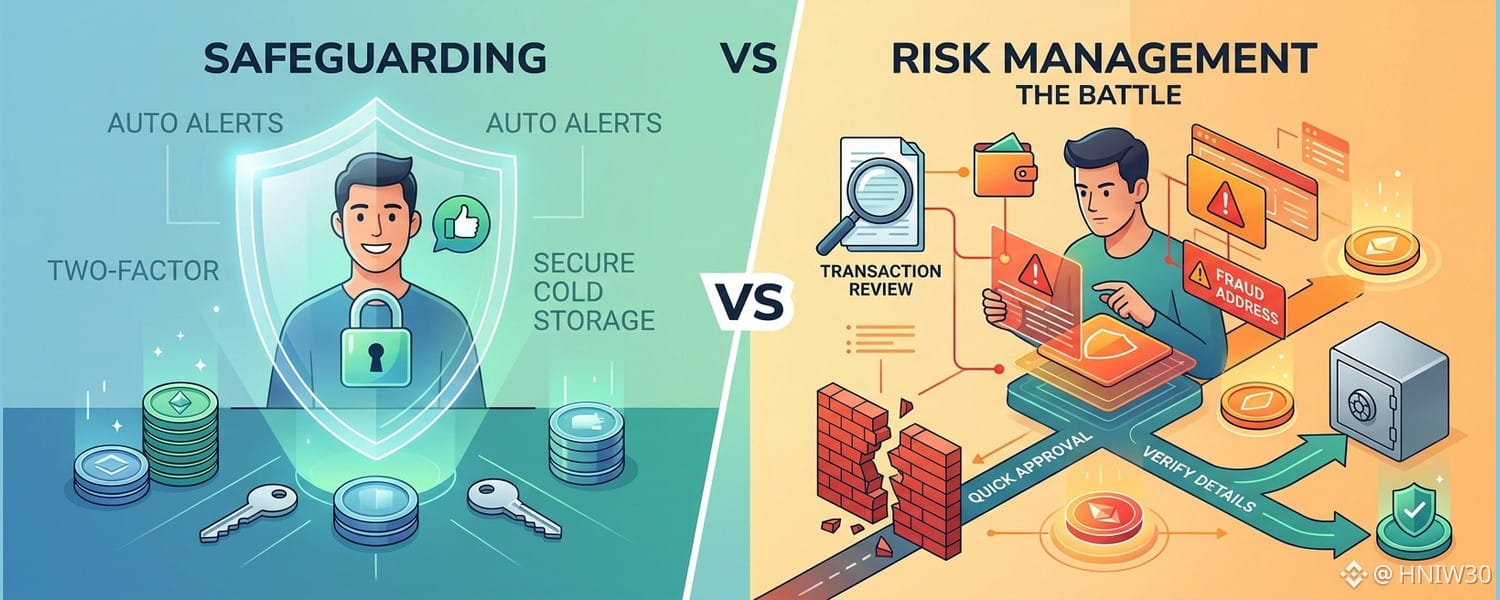

New participants entering the digital asset ecosystem often expect absolute safety once they activate basic security controls. The common assumption is that tools such as secondary verification or hardware devices provide total immunity from capital loss. However, technical tools only address specific vectors of vulnerability, leaving broader operational exposure untouched.
Many newcomers believe automated alerts and account safeguards eliminate the need for ongoing vigilance. In practice, automated security features can only block recognized patterns or unauthorized credential attempts. They cannot evaluate whether a transaction initiated by an authorized user is economically sound or directed toward an adversarial contract designed to drain balances.
Self-custody is widely presented as the ultimate safeguard against third-party insolvency and platform restrictions. While holding private keys removes counterparty exposure, it introduces absolute operational liability. A single forgotten backup phrase or an erroneous contract approval results in irreversible loss without any possibility of account recovery or administrative rollback.
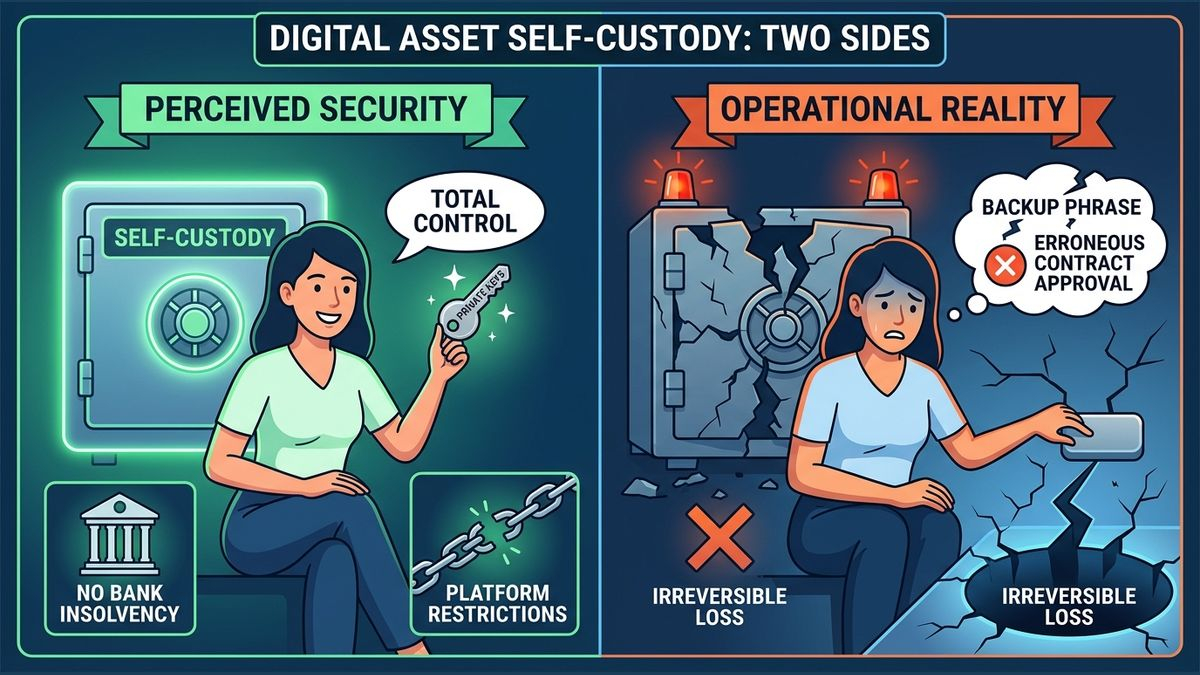
Centralized platforms offer account recovery pathways and user support structures that mitigate basic human errors. Yet this convenience comes with distinct limitations. Platform safeguards cannot protect a participant from off-platform phishing schemes, social engineering tactics, or voluntary transfers sent to fraudulent addresses outside the custody environment.
Another persistent expectation is that smart contracts execute transparently and therefore carry no hidden risks. In reality, evaluating contract permissions requires specialized technical literacy that beginners rarely possess. Granting unlimited spend allowances to third-party applications creates persistent vulnerabilities that bypass conventional account defenses.

Market dynamics often tempt beginners to prioritize transaction speed over thorough risk verification. The fear of missing rapid market movements encourages hasty approvals and bypassed security checks. Sustainable risk management inherently demands friction, meaning participants must accept deliberate delays and careful verification steps to preserve their capital.
True user protection is not a single product or binary setting but an ongoing balance of operational trade-offs. Recognizing the distinct boundaries of each tool enables beginners to align expectations with practical realities. A resilient security strategy accepts that eliminating counterparty risk increases personal operational burden, while relying on convenience requires strict credential hygiene.