
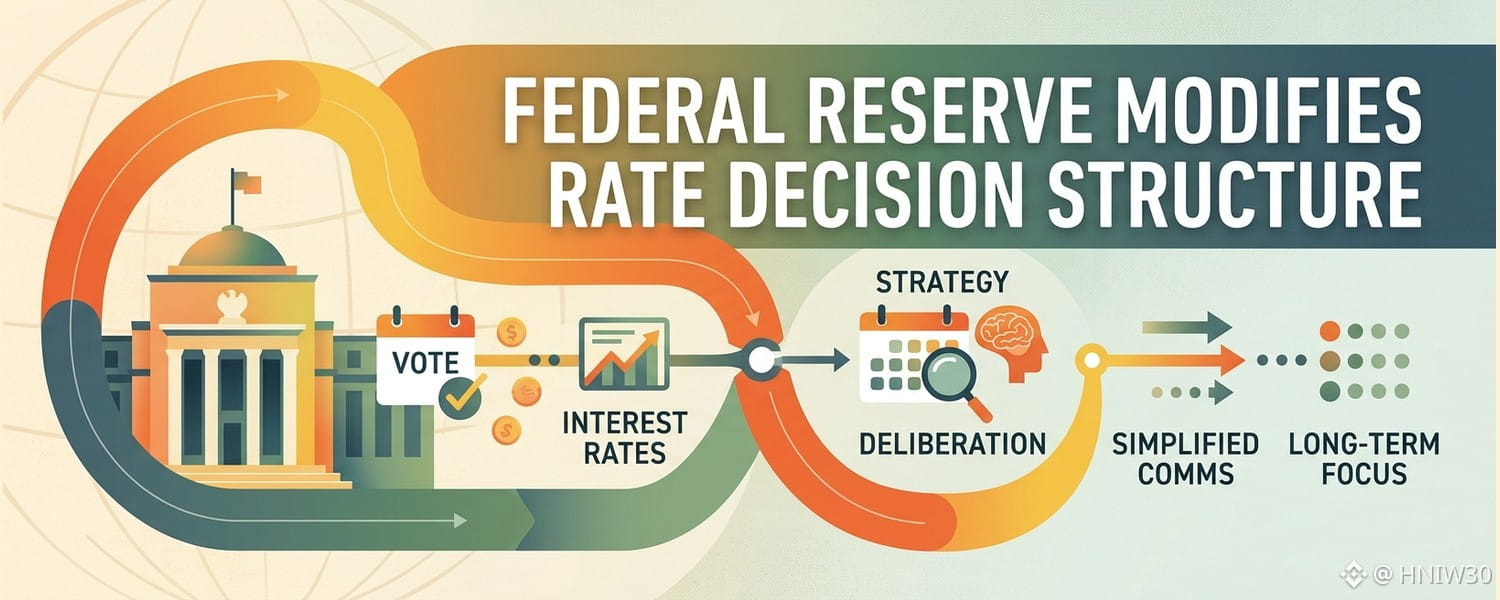

The Federal Reserve will not hold a vote on interest rates at its October 2027 meeting, marking a shift in its regular policy calendar. The rate-setting Federal Open Market Committee will instead dedicate the session scheduled for October 26 and 27 to strategic discussions on broad monetary policy issues. This departure from standard procedure forms part of a broader initiative from Chairman Kevin Warsh, whose stated goal is to reduce the footprint of the central bank in financial markets.
Under typical historical practice, the central bank convenes eight times each year, concluding every session with a formal interest-rate vote and a press conference held by the chair. For 2027, the central bank will reduce its voting gatherings to seven, down from the eight held in 2026. The October 2027 gathering will operate as dedicated time for deliberation among policymakers, proceeding without an interest-rate ballot and without the release of a post-meeting policy statement.
Chairman Kevin Warsh announced the scheduling adjustment during a news conference following the October 2026 meeting of the Federal Open Market Committee in Washington. He outlined that getting monetary policy right requires assessing near-term economic conditions at regular, information-rich intervals. However, he emphasized that policymakers also require designated time and space as an intellectually diverse group to focus on longer time horizons and fundamental strategic questions.
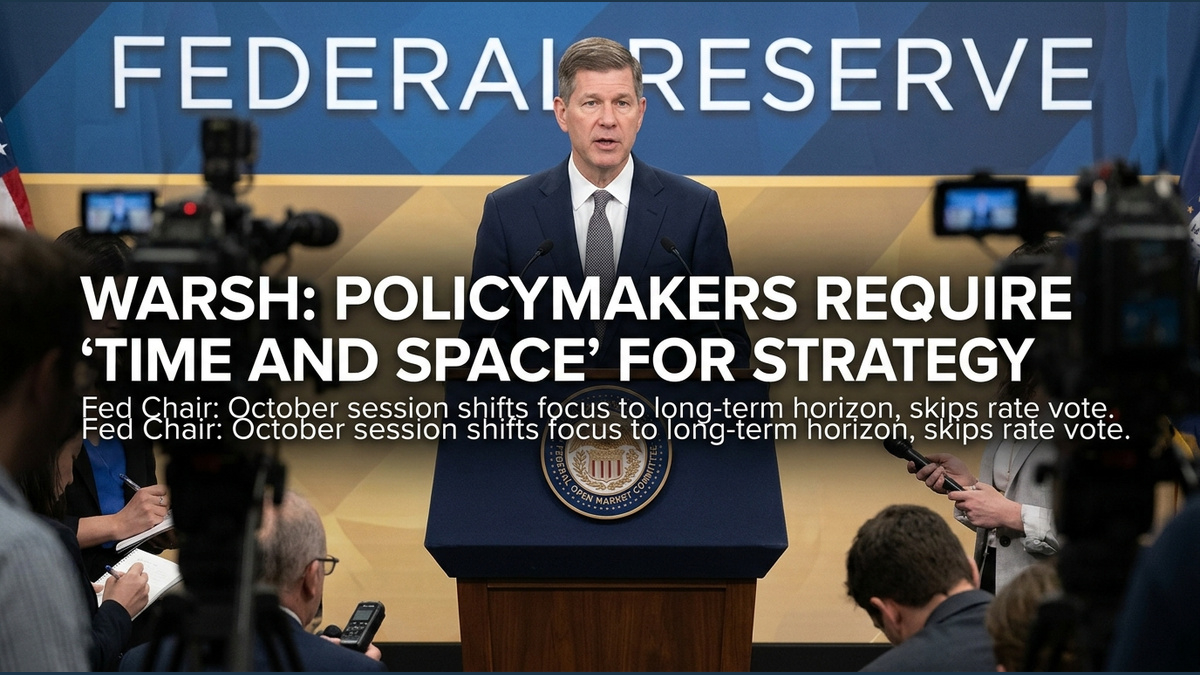
The decision reflects ongoing criticism by Warsh regarding the central bank's prior communications framework. Warsh has argued that policymakers previously spent excessive time offering public forward guidance on rate decisions, which ultimately constrained the committee when making actual policy moves. The restructuring of the meeting calendar is designed as another measure to streamline official communications and grant officials greater independence when setting policy.
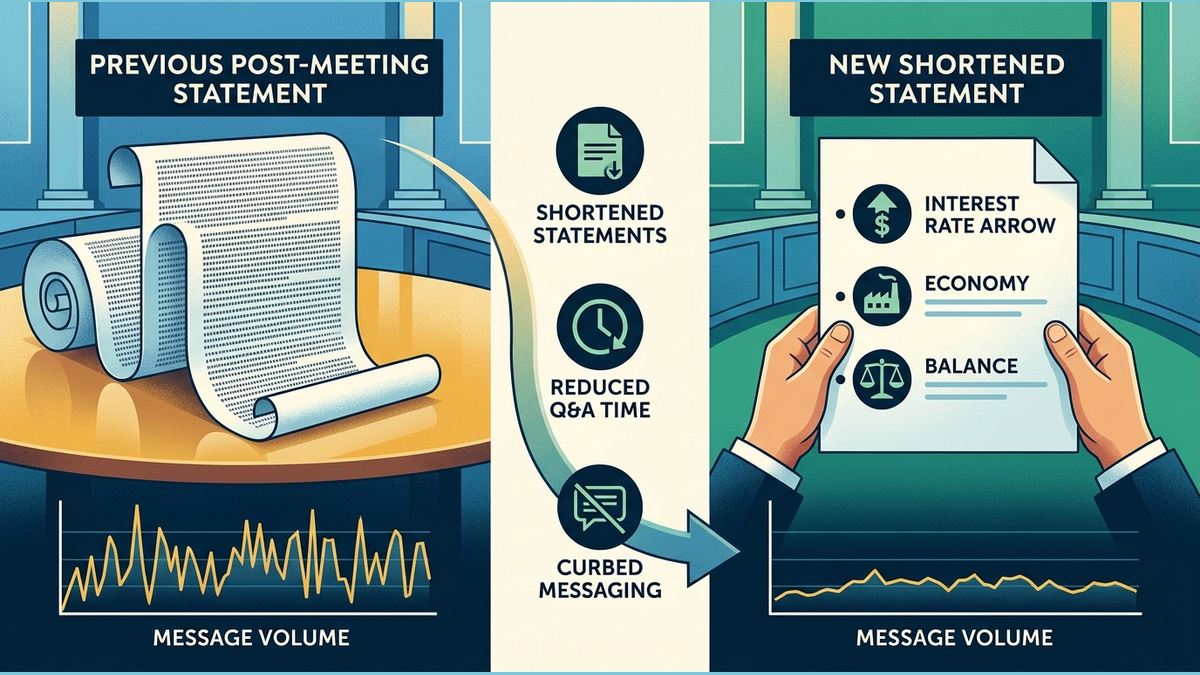
This procedural change follows earlier measures implemented by Warsh to scale back official commentary. Since taking leadership, the committee's post-meeting statements have been shortened substantially. Additionally, the press question-and-answer sessions led by the chair have been reduced from their customary duration of around forty-five minutes down to approximately half an hour. These changes align with the goal of curbing the volume and frequency of market-facing central bank messaging.
The updated 2027 calendar also modifies the timing of other scheduled policy gatherings throughout the year. The final voting session of 2027 is now scheduled to take place in November rather than December, where it had previously been placed. Looking at the nearer schedule, the Federal Open Market Committee meets next on December 8 and 9 in 2026, followed by its initial gathering of 2027 on January 26 and 27. These dates establish the upcoming sequence of standard voting proceedings.
Looking beyond 2027, the central bank plans to expand this structural framework further. Warsh indicated that the number of nonvoting strategy sessions is slated to increase to two gatherings in 2028. According to the chairman, establishing the calendar and agenda represents an institutional choice that shapes the quality of policy deliberations and the wisdom of committee decisions, serving as a structured step toward placing the conduct of monetary policy on the intended track.