Blockchain Architecture
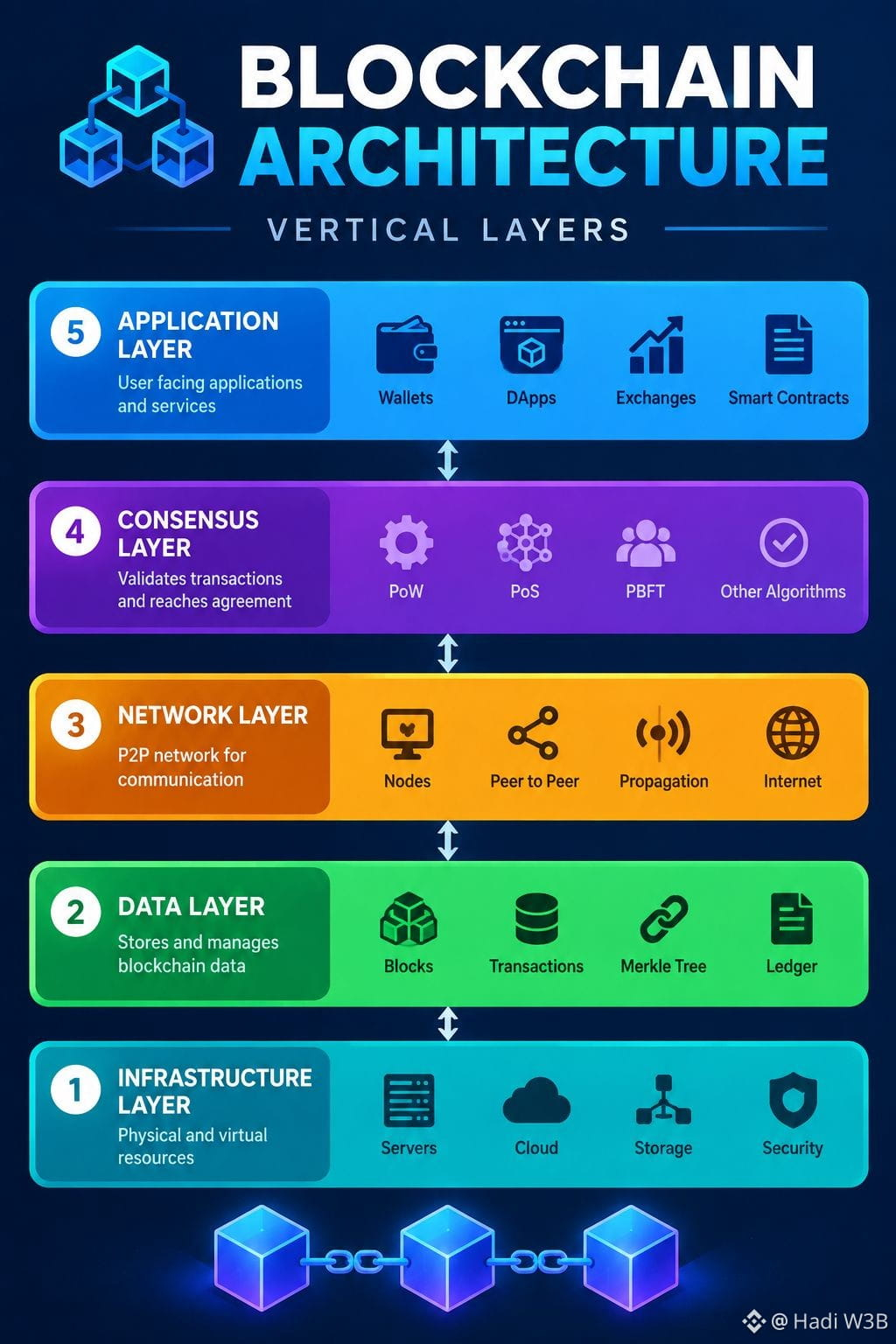
Blockchain architecture explains how different components of a blockchain network work together to store data, validate transactions, and maintain a secure decentralized system.
The main layers of blockchain architecture are:
1. Infrastructure Layer
Provides the computers, servers, nodes, and hardware required to run the blockchain network.
2. Data Layer
Stores blocks, transactions, hashes, timestamps, and other blockchain data.
3. Network Layer
Connects nodes through peer to peer communication and allows them to share transactions and blocks.
4. Consensus Layer
Allows network participants to agree on valid transactions and maintain the same version of the blockchain.
5. Application Layer
Includes wallets, decentralized applications, exchanges, and smart contracts that interact with the blockchain.
Example:
When a user sends cryptocurrency, the transaction is created through a wallet, shared with network nodes, verified through the consensus mechanism, recorded in a block, and finally added to the blockchain.
Together, these layers form the basic architecture of a blockchain system.
#FedRateWatch
#blockchain
$NVDAB
Blockchain architecture explains how different components of a blockchain network work together to store data, validate transactions, and maintain a secure decentralized system.
The main layers of blockchain architecture are:
1. Infrastructure Layer
Provides the computers, servers, nodes, and hardware required to run the blockchain network.
2. Data Layer
Stores blocks, transactions, hashes, timestamps, and other blockchain data.
3. Network Layer
Connects nodes through peer to peer communication and allows them to share transactions and blocks.
4. Consensus Layer
Allows network participants to agree on valid transactions and maintain the same version of the blockchain.
5. Application Layer
Includes wallets, decentralized applications, exchanges, and smart contracts that interact with the blockchain.
Example:
When a user sends cryptocurrency, the transaction is created through a wallet, shared with network nodes, verified through the consensus mechanism, recorded in a block, and finally added to the blockchain.
Together, these layers form the basic architecture of a blockchain system.
#FedRateWatch
#blockchain
$NVDAB