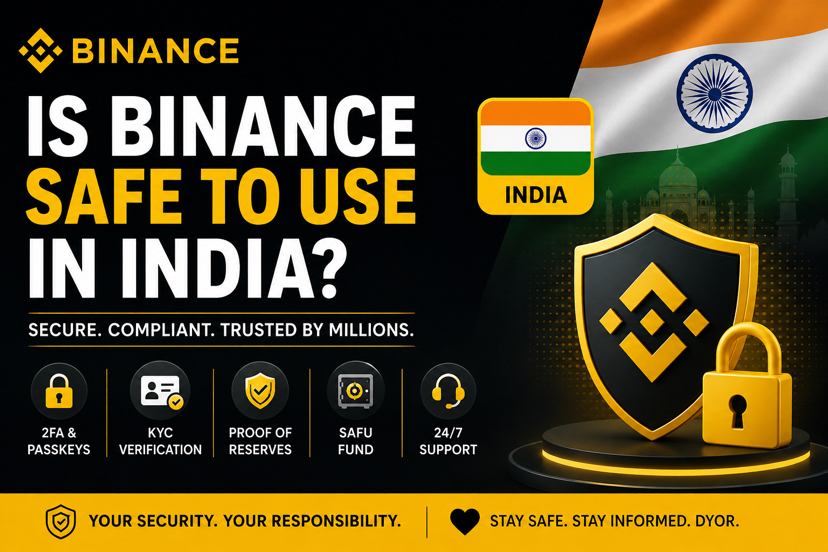
„Ist Binance sicher in Indien zu verwenden?“
Das ist eine der häufigsten Fragen, die sowohl von neuen als auch von erfahrenen Krypto-Nutzern gestellt wird.
Und die Antwort ist nicht einfach nur ein JA oder NEIN.
Denn wenn wir über Sicherheit sprechen, gibt es zwei verschiedene Dinge zu verstehen:
🔐 Systemsicherheit
🏛️ Regulatorische Einhaltung
Lass es uns aufschlüsseln. 👇
🇮🇳 Ist Binance in Indien registriert?
Ja, Binance fungiert als Anbieter von Dienstleistungen für virtuelle digitale Assets und unterliegt dem AML/CFT-Compliance-Rahmenwerk Indiens; außerdem wurde es bei FIU-IND als meldepflichtige Stelle registriert.
Und hier ist etwas Wichtiges: FIU-IND-Registrierung bedeutet NICHT, dass Krypto-Investitionen garantiert oder risikofrei sind.
Indiens Rahmenwerk für Virtuelle Digitale Vermögenswerte entwickelt sich weiter, und Krypto-Assets bleiben eine Anlageklasse mit hohem Risiko.
Trenne daher immer:
❌ Staatliche Garantie
von
✅ Pflichten zur Compliance und Plattformsicherheit
Diese Unterscheidung ist wichtig.
🔐 Wie schützt Binance Nutzer?
Binance bietet mehrere Sicherheitsebenen, die dazu dienen, Benutzerkonten und Vermögenswerte zu schützen.
Hier sind einige der wichtigsten:
1️⃣ Zwei-Faktor-Authentifizierung (2FA)
Dein Passwort allein ist nicht genug. Aktiviere 2FA, um deinem Konto eine weitere Schutzebene hinzuzufügen.
Selbst wenn jemand dein Passwort bekommt, kann er möglicherweise trotzdem nicht auf dein Konto zugreifen, ohne deinen zweiten Authentifizierungsfaktor.
Pro-Tipp: Sichere auch die E-Mail, die mit deinem Binance-Konto verknüpft ist.
🔑 2️⃣ Passkeys
Passkeys können eine sicherere und bequemere Möglichkeit bieten, dein Konto zu schützen.
Sie können helfen, Risiken zu reduzieren, die mit Folgendem verbunden sind:
• Passwortdiebstahl
• Phishing-Angriffe
• Lecks von Zugangsdaten
Wenn es für dein Konto verfügbar ist, lohnt es sich immer, stärkere Authentifizierungsmethoden zu aktivieren.
🪪 3️⃣ Identitätsprüfung
KYC ist ein wichtiger Bestandteil der Plattformsicherheit und der Einhaltung gesetzlicher Vorschriften.
Verwende immer:
✅ Deine eigenen Identitätsdokumente
✅ Deine korrekten persönlichen Informationen
✅ Eine sichere E-Mail-Adresse und Telefonnummer
Kaufe oder nutze niemals das verifizierte Binance-Konto einer anderen Person.
Es kann zu ernsthaften Problemen führen, falls du jemals dein Konto wiederherstellen musst.
🔍 4️⃣ Proof of Reserves (PoR)
Eine der größten Sorgen, die viele Menschen bei zentralisierten Börsen haben, ist ganz einfach:
„Sind Kundengelder tatsächlich abgesichert?“
Proof of Reserves (Nachweis der Reserven) ist darauf ausgelegt, die Transparenz zu erhöhen, indem Nutzer bestimmte Kontostände von Kundenguthaben und Reserveinformationen verifizieren können.
Dies ist ein wichtiger Schritt hin zu mehr Transparenz in der Krypto-Branche.
🛡️ 5️⃣ SAFU
SAFU steht für: Secure Asset Fund for Users (Sicherer Vermögensfonds für Nutzer)
Dies ist ein Notfall-Schutzmechanismus, den Binance eingerichtet hat, um in bestimmten Situationen eine zusätzliche Schutzebene bereitzustellen.
Aber denke daran:
⚠️ SAFU ist nicht dasselbe wie eine Versicherung für Bankeinlagen.
Krypto-Nutzer sollten niemals davon ausgehen, dass jeder mögliche Verlust automatisch abgedeckt ist.
Gute Sicherheitspraktiken sind trotzdem wichtig.
🚨 Das größte Risiko ist vielleicht nicht Binance
Seien wir ehrlich.
Viele Krypto-Verluste passieren nicht, weil eine Börse gehackt wird.
Sie passieren, weil Nutzer Folgendes bekommen:
🎣 Phishing
📱 SIM-Swap
💬 Auf Telegram betrogen
🖥️ Hereingelegt durch gefälschte Websites
💸 Verlockt durch „garantierte Gewinne“
🔗 Mit bösartigen Links verknüpft
Darum ist die persönliche Sicherheit genauso wichtig wie die Plattformsicherheit.
🔐 7 Dinge, die jeder indische Binance-Nutzer tun sollte
1. Verwende ein einzigartiges Passwort
Verwende dein Binance-Passwort niemals irgendwo anders erneut. Wenn eine Website kompromittiert wird, können wiederverwendete Passwörter mehrere Konten gefährden.
2. Aktiviere 2F
Ein starkes Passwort ist gut. Ein starkes Passwort + 2FA ist viel besser.
3. Sichere deine E-Mail
Deine E-Mail ist oft der Zugang zu deinen Finanzkonten.
Verwenden:
🔐 Ein einzigartiges Passwort
📱 2FA
🚫 Keine gemeinsam genutzten Geräte
4. Teile niemals deine Codes
Der Binance-Support wird niemals benötigen:
❌ Dein Passwort
❌ Dein 2FA-Code
❌ Deine Seed-Phrase
❌ Deine privaten Schlüssel
Wer nach so etwas fragt, versucht sehr wahrscheinlich, dich zu betrügen.
5. Überprüfe die Auszahlungsadressen doppelt
Krypto-Transaktionen können nicht rückgängig gemacht werden.
Bevor du Geld sendest:
👀 Prüfe die Adresse
👀 Prüfe das Netzwerk
👀 Noch einmal prüfen
Eine 30-Sekunden-Prüfung kann einen sehr teuren Fehler verhindern.
6. Vermeide gefälschte Binance-Links
Betrüger erstellen oft Websites, die fast identisch mit echten Börsen aussehen. Prüfe immer, wo du dich anmeldest.
Sei besonders vorsichtig bei:
• Telegram-Links
• Google-Anzeigen
• Zufällige DMs (Direktnachrichten)
• „Support Agents“
• Gewinnspiel-Nachrichten
7. Falle nicht auf garantierte Renditen herein
Wenn jemand sagt: „Garantiert 5 % täglicher Gewinn.“
🚩 Betrug.
„Sende 1 ETH und erhalte 2 ETH zurück.“
🚩 Betrug.
„Ich habe Insiderinformationen.“
🚩 Vermutlich ein Betrug.
In Krypto gilt: Wenn es zu gut klingt, um wahr zu sein, ist es wahrscheinlich auch nicht wahr.
🇮🇳 Was ist mit Krypto-Vorschriften in Indien? Indien hat Steuer- und AML-bezogene Rahmenwerke festgelegt, die virtuelle digitale Vermögenswerte abdecken.
Kryptowährungen bleiben jedoch ein sich entwickelndes regulatorisches Gebiet.
Nutzer sollten sich merken:
📌 Krypto ist in Indien kein gesetzliches Zahlungsmittel.
📌 Krypto-Preise können extrem volatil sein.
📌 Steuerpflichten können bei VDA-Transaktionen anfallen.
📌 Vorschriften und Plattformdienste können sich ändern.
Bleibe immer über offizielle Quellen auf dem Laufenden.
💡 Endurteil: Ist Binance in Indien sicher zu nutzen? Binance bietet mehrere wichtige Sicherheitsfunktionen, darunter:
🔐 Zwei-Faktor-Authentifizierung
🔑 Passkeys
🪪 Identitätsprüfung
🛡️ Sicherheitskontrollen für Auszahlungen
🔍 Proof of Reserves (Nachweis der Reserven)
💰 SAFU-Schutzmechanismen
📊 Sicherheitsüberwachung und Risikokontrollen
🇮🇳 FIU-IND-Compliance-Registrierung als meldepflichtige Stelle
Aber hier ist die wichtigste Erkenntnis:
Deine Krypto-Sicherheit ist eine gemeinsame Verantwortung.
Eine sichere Plattform kann ihre Systeme schützen.
Aber nur DU kannst dich schützen vor:
⚠️ Betrügereien
⚠️ Phishing
⚠️ Gefälschte Anlagebetrugskonzepte
⚠️ Weitergabe deiner Zugangsdaten
⚠️ Senden von Geldern an die falsche Adresse
Ja, Binance bietet also mehrere Sicherheitsebenen für Nutzer.
Doch der sicherste Krypto-Nutzer ist nicht die Person, die die „sicherste Börse“ nutzt.
Es ist die Person mit den sichersten Gewohnheiten. 🔐
Bleib sicher.
Bleib informiert.
Und mache immer DYOR. 🇮🇳
#Binance #BinanceIndia #CryptoIndia #Bitcoin #CryptoSafety #Web3 #Blockchain #CryptoSecurity #DYOR$BNB