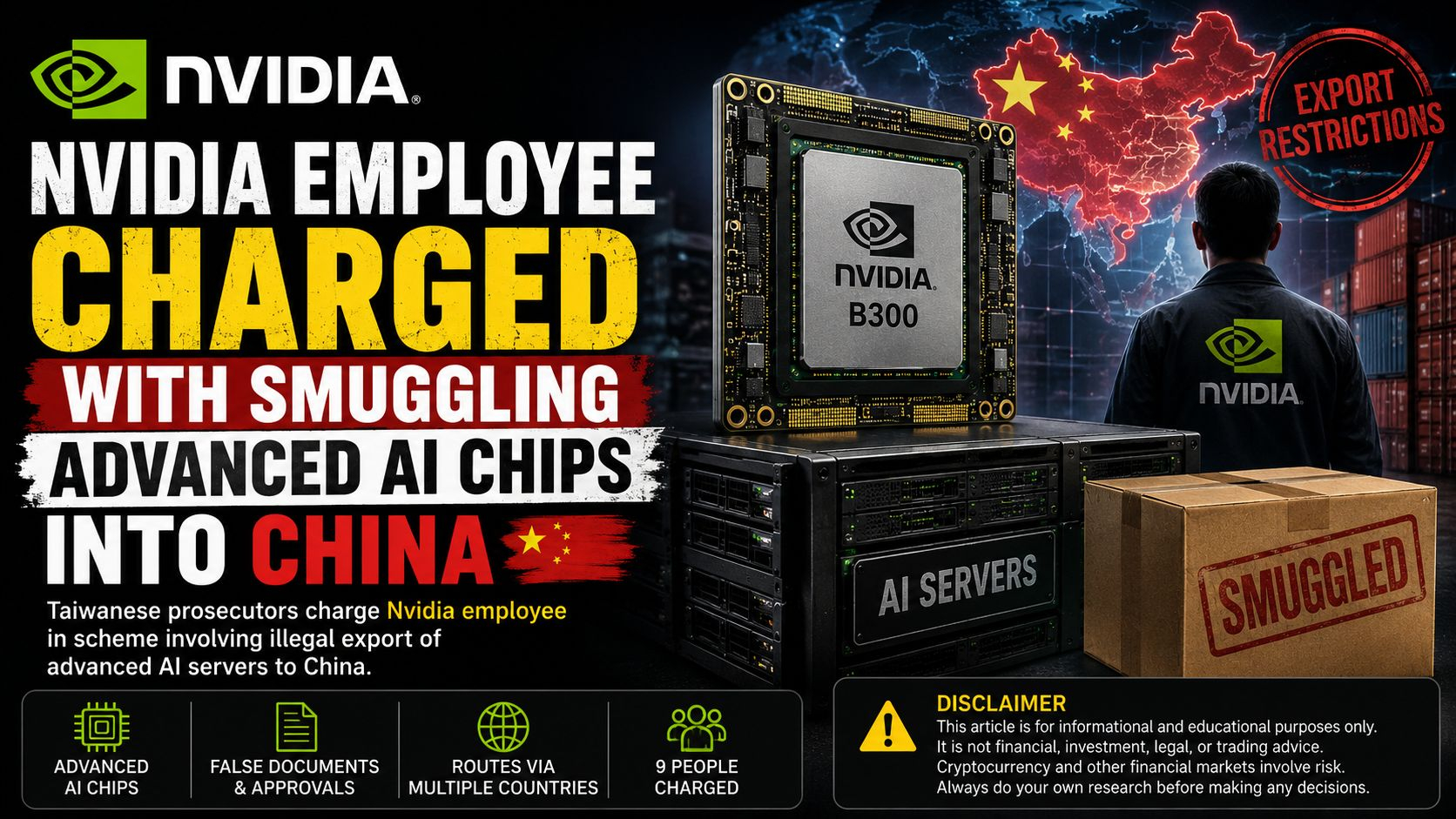

Taiwanesische Staatsanwälte haben neun Personen, darunter einen Nvidia-Mitarbeiter und ehemalige Mitarbeiter von Super Micro Computer, wegen eines angeblichen Schwindels angeklagt, der den illegalen Export fortschrittlicher KI-Server nach China beinhaltet. Der Fall fügt eine weitere Ebene zu den wachsenden Technologiestreitigkeiten zwischen den Vereinigten Staaten, Taiwan und China hinzu.
Was ist passiert?
Laut taiwanesischen Staatsanwälten soll die Gruppe angeblich falsche Informationen und Dokumente verwendet haben, um die Genehmigung für 130 hochwertige KI-Server zu erhalten, die in Taiwan verbleiben sollten. Die Behörden sagen, dass 74 dieser Server schließlich über Routen, an denen unter anderem Indonesien, Japan und Hongkong beteiligt waren, chinesische Kunden erreichten, während 56 von den taiwanesischen Zollbehörden abgefangen wurden.
Der Nvidia-Mitarbeiter, der als ein leitender Manager mit Sitz in Taiwan beschrieben wird, wurde von den Staatsanwälten als zentrale Person in dem angeblichen Scheme identifiziert. Berichten zufolge enthielten die Server Nvidias fortschrittliche B300-GPUs, die strengen US-Exportkontrollen unterliegen, weil sie für Hochleistungs-KI-Systeme von entscheidender Bedeutung sind.
Nvidia hat erklärt, dass es mit der Untersuchung kooperiert und die strengen Anforderungen an die Einhaltung von Exportkontrollvorschriften aufrechterhält. Das Unternehmen selbst wurde im Rahmen des Falls nicht des Fehlverhaltens beschuldigt.
Warum es wichtig ist: Der Fall zeigt, wie wertvoll fortschrittliche KI-Hardware mittlerweile geworden ist, da Regierungen die Kontrolle über den Fluss modernster Technologie nach China verschärfen.
Für Nvidia zeigt die Situation außerdem die zunehmenden Compliance-Risiken im Zusammenhang mit seiner globalen Lieferkette. Selbst wenn Unternehmen Exportkontrollrichtlinien einhalten, können einzelne Mitarbeiter, Distributoren oder Vermittler zusätzliche Risiken schaffen, die Behörden untersuchen können.
Darüber hinaus spiegelt der Fall den anhaltenden strategischen Wettbewerb um KI-Infrastruktur wider. Fortschrittliche GPUs werden zunehmend nicht nur als Handelsprodukte betrachtet, sondern als entscheidende Technologie mit wirtschaftlichen und nationalen Sicherheitsauswirkungen.
Marktperspektive: Für Investoren und Beobachter des Technologiemarkts ist die zentrale Frage, wie Behörden und Unternehmen von hier aus reagieren. Strengere Compliance-Maßnahmen oder zusätzliche Beschränkungen könnten sich auf die Verbringung und Verteilung fortschrittlicher KI-Hardware auswirken, während die anhaltende Nachfrage nach KI-Computing ein wichtiger Faktor für die Halbleiterindustrie bleibt.
Die Vorwürfe bleiben Gegenstand des Gerichtsverfahrens, und eine Anklage bedeutet nicht, dass die Angeklagten für schuldig befunden wurden.
Haftungsausschluss: Dieser Artikel dient ausschließlich Informations- und Bildungszwecken. Er stellt keine finanzielle, Anlage-, rechtliche oder Handelsempfehlung dar. Die Informationen basieren auf öffentlich berichteten Entwicklungen und Behauptungen, die zum Zeitpunkt der Erstellung vorlagen. Leser sollten ihre eigenen Recherchen anstellen und die Informationen überprüfen, bevor sie irgendwelche Investitions- oder Handelsentscheidungen treffen. Kryptowährungen, Aktien und andere Finanzmärkte können mit erheblichen Risiken verbunden sein.