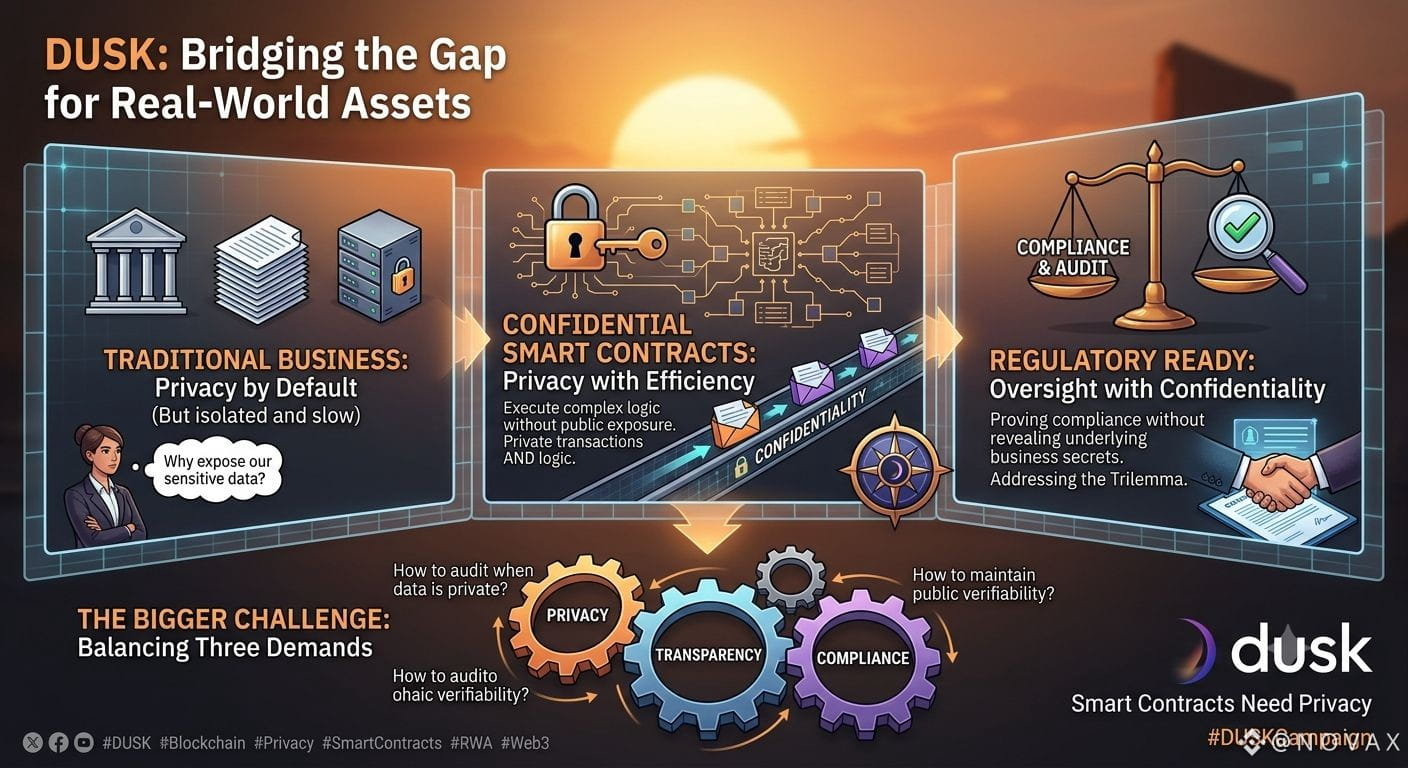
Ein Freund stellte mir einmal eine einfache Frage:
„Wenn Unternehmen sensible Informationen heute privat halten, warum würden sie sie dann auf ein System verlagern, in dem jeder sie sehen kann?“
Das ist eine berechtigte Kritik an vielen Blockchain-Anwendungen.
Smart Contracts sind mächtig, doch in den meisten öffentlichen Netzwerken können die Vertragsaktivitäten, die Daten und die Interaktionen oft mehr Informationen offenbaren, als Unternehmen gerne teilen.
Genau hier wird die Idee vertraulicher Smart Contracts interessant.
Das Ziel ist nicht nur, private Transaktionen zu ermöglichen.
Es geht darum, dass Vereinbarungen, Abwicklungen und Geschäftslogik ausgeführt werden können, ohne sensible Informationen dem gesamten Netzwerk offenzulegen.
Doch dieser Ansatz bringt auch Abwägungen mit sich.
Mehr Privatsphäre kann eine größere technische Komplexität bedeuten.
Audits werden schwieriger.
Die regulatorische Aufsicht wird herausfordernder.
Und nachzuweisen, dass vertrauliche Systeme weiterhin sicher sind, ist oft schwieriger als bei vollständig transparenten Systemen.
Dusk verfolgt die Vision, dass Privatsphäre über Transaktionen hinausreichen sollte – bis in die Ausführung von Smart Contracts selbst.
Die große Frage ist, ob Blockchain jemals gleichzeitig drei konkurrierende Anforderungen in Einklang bringen kann:
Privatsphäre. Transparenz. Compliance.
Viele Projekte haben eine oder zwei davon gelöst.
Nur sehr wenige haben überzeugend alle drei gelöst.
Das ist die Herausforderung, die vertrauliche Smart Contracts adressieren sollen.
#Blockchain #TrumpPressesCongressToPassClarityAct
#dusk $DUSK @Dusk
$GOOGL.US
„Wenn Unternehmen sensible Informationen heute privat halten, warum würden sie sie dann auf ein System verlagern, in dem jeder sie sehen kann?“
Das ist eine berechtigte Kritik an vielen Blockchain-Anwendungen.
Smart Contracts sind mächtig, doch in den meisten öffentlichen Netzwerken können die Vertragsaktivitäten, die Daten und die Interaktionen oft mehr Informationen offenbaren, als Unternehmen gerne teilen.
Genau hier wird die Idee vertraulicher Smart Contracts interessant.
Das Ziel ist nicht nur, private Transaktionen zu ermöglichen.
Es geht darum, dass Vereinbarungen, Abwicklungen und Geschäftslogik ausgeführt werden können, ohne sensible Informationen dem gesamten Netzwerk offenzulegen.
Doch dieser Ansatz bringt auch Abwägungen mit sich.
Mehr Privatsphäre kann eine größere technische Komplexität bedeuten.
Audits werden schwieriger.
Die regulatorische Aufsicht wird herausfordernder.
Und nachzuweisen, dass vertrauliche Systeme weiterhin sicher sind, ist oft schwieriger als bei vollständig transparenten Systemen.
Dusk verfolgt die Vision, dass Privatsphäre über Transaktionen hinausreichen sollte – bis in die Ausführung von Smart Contracts selbst.
Die große Frage ist, ob Blockchain jemals gleichzeitig drei konkurrierende Anforderungen in Einklang bringen kann:
Privatsphäre. Transparenz. Compliance.
Viele Projekte haben eine oder zwei davon gelöst.
Nur sehr wenige haben überzeugend alle drei gelöst.
Das ist die Herausforderung, die vertrauliche Smart Contracts adressieren sollen.
#Blockchain #TrumpPressesCongressToPassClarityAct
#dusk $DUSK @Dusk
$GOOGL.US