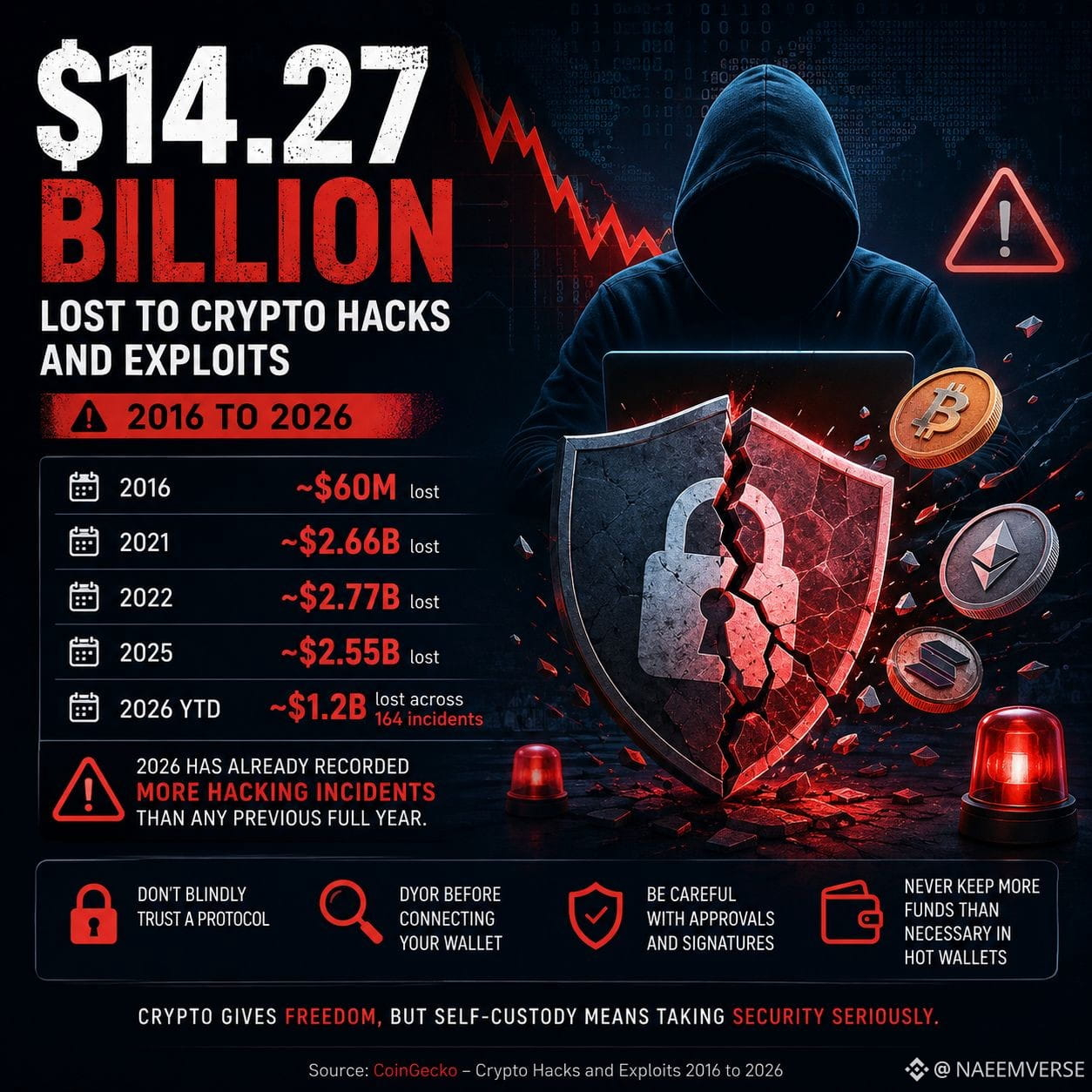
14,27 Milliarden US-Dollar. So viel Krypto ist seit 2016 durch Hacks und Exploits verloren gegangen, laut den neuesten Daten von CoinGecko.
Die Entwicklungslinie erzählt schon von allein ihre Geschichte:
• 2016: rund 60 Mio. US-Dollar
• 2021: 2,66 Mrd. US-Dollar
• 2022: 2,77 Mrd. US-Dollar (immer noch das schlechteste Jahr in den Aufzeichnungen)
• 2025: 2,55 Mrd. US-Dollar
• 2026 bisher: 1,2 Mrd. US-Dollar über 164 Vorfälle hinweg, bereits mehr Vorfälle als jedes vollständige Jahr zuvor
Sicherheitstools sind in den letzten Jahren wirklich besser geworden. Audits sind mittlerweile Standard, Bug Bounties sind häufig, das Monitoring ist schneller. Aber die Verluste sind nicht verschwunden – sie haben sich nur in ihrer Form verändert. Es ist nicht immer ein dubioses Protokoll oder ein offensichtlicher Rug Pull. Ein Großteil des Schadens entsteht durch Fehler in Smart Contracts, geleakte private Keys, Phishing-Links, Bridge-Exploits oder auch einfach dadurch, dass jemand sozial so manipuliert wird, dass er das Falsche signiert.
Das ist wirklich die wichtigste Erkenntnis für alle, die diesen Bereich tagtäglich nutzen:
🔐 Gehe nicht davon aus, dass ein Protokoll sicher ist, nur weil es beliebt ist
🧪 Schau dir tatsächlich an, womit du interagierst, bevor du deine Wallet verbindest
🚨 Nimm dir bei Freigaben und Signaturanfragen Zeit – die meisten Menschen verlieren hier Geld, ohne zu merken, was sie signiert haben
💰 Halte deine Hot Wallet leicht. Wenn du sie gerade nicht sofort in Liquidität brauchst, sollte sie nicht dort herumliegen
Self-Custody ist der eigentliche Sinn von Krypto, aber das bedeutet auch: Die Sicherheitsverantwortung liegt bei dir – nicht bei einer Börse oder einer Bank.
Spannend, was die Leute denken: Welches Risiko ist aktuell größer – Fehler in Smart Contracts oder menschliches Versagen? Aus den Daten zu den Vorfällen sieht es zunehmend so aus, als sei es eher die menschliche Seite.
Quelle: CoinGecko
#Crypto #CryptoSecurity #CryptoHacks #Web3 #Blockchain
Die Entwicklungslinie erzählt schon von allein ihre Geschichte:
• 2016: rund 60 Mio. US-Dollar
• 2021: 2,66 Mrd. US-Dollar
• 2022: 2,77 Mrd. US-Dollar (immer noch das schlechteste Jahr in den Aufzeichnungen)
• 2025: 2,55 Mrd. US-Dollar
• 2026 bisher: 1,2 Mrd. US-Dollar über 164 Vorfälle hinweg, bereits mehr Vorfälle als jedes vollständige Jahr zuvor
Sicherheitstools sind in den letzten Jahren wirklich besser geworden. Audits sind mittlerweile Standard, Bug Bounties sind häufig, das Monitoring ist schneller. Aber die Verluste sind nicht verschwunden – sie haben sich nur in ihrer Form verändert. Es ist nicht immer ein dubioses Protokoll oder ein offensichtlicher Rug Pull. Ein Großteil des Schadens entsteht durch Fehler in Smart Contracts, geleakte private Keys, Phishing-Links, Bridge-Exploits oder auch einfach dadurch, dass jemand sozial so manipuliert wird, dass er das Falsche signiert.
Das ist wirklich die wichtigste Erkenntnis für alle, die diesen Bereich tagtäglich nutzen:
🔐 Gehe nicht davon aus, dass ein Protokoll sicher ist, nur weil es beliebt ist
🧪 Schau dir tatsächlich an, womit du interagierst, bevor du deine Wallet verbindest
🚨 Nimm dir bei Freigaben und Signaturanfragen Zeit – die meisten Menschen verlieren hier Geld, ohne zu merken, was sie signiert haben
💰 Halte deine Hot Wallet leicht. Wenn du sie gerade nicht sofort in Liquidität brauchst, sollte sie nicht dort herumliegen
Self-Custody ist der eigentliche Sinn von Krypto, aber das bedeutet auch: Die Sicherheitsverantwortung liegt bei dir – nicht bei einer Börse oder einer Bank.
Spannend, was die Leute denken: Welches Risiko ist aktuell größer – Fehler in Smart Contracts oder menschliches Versagen? Aus den Daten zu den Vorfällen sieht es zunehmend so aus, als sei es eher die menschliche Seite.
Quelle: CoinGecko
#Crypto #CryptoSecurity #CryptoHacks #Web3 #Blockchain