


When people talk about Web3 they usually focus on the big numbers like how fast a chain is or how many transactions it can handle. Everyone loves talking about speed and low fees. But if you talk to real builders and developers you will hear something different. They are not just worried about speed. They are worried about storage.
As Web3 apps get more advanced they need to store more data. NFTs are getting richer, games are getting bigger, and AI features are becoming normal. This means storage is no longer a background detail. It is becoming a real bottleneck. And this is where Walrus comes in.
Walrus is not trying to be everything. It is not trying to compete with every blockchain or every app. Walrus is building one thing very well and that is decentralized data storage and data availability. This is the kind of infrastructure Web3 needs to grow without relying on centralized services.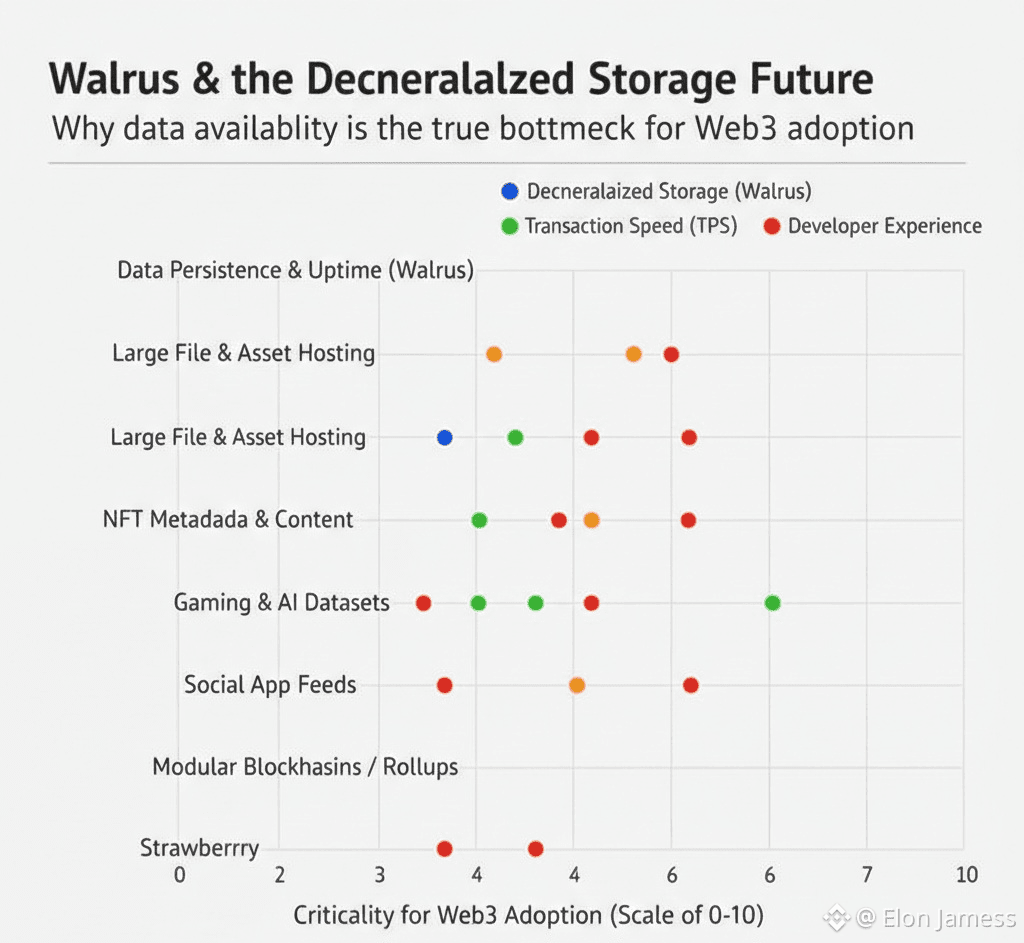
Why Storage Matters More Than People Think
Right now many Web3 projects still depend on centralized storage. That means they store data on servers controlled by one company. That is a big problem because it creates a single point of failure. If the server goes down the app stops working. If the company decides to censor something the app loses freedom. And if the company gets hacked your data is gone or stolen.
This goes against the whole point of Web3. Decentralization is supposed to remove trust assumptions. But if you store your data in one place you still need to trust someone. That is why storage matters.
Walrus is trying to fix this by creating a system where data can be stored, accessed and verified without relying on centralized providers. This means no single company can control your data or take it down.
What Makes Walrus Different
Walrus is built for decentralized data availability. That means it focuses on making sure data is always online and always accessible. It is not just about storing data. It is about making sure the data stays available even if some nodes go offline.
Walrus uses a smart approach to storage. Instead of copying data many times like traditional decentralized storage networks, it uses efficient data distribution. This means it can store data with lower overhead and still keep it safe and accessible. The system is designed to scale and stay reliable as more projects build on top of it.
This is important because as Web3 grows the demand for storage will only increase. Modular blockchains, rollups and decentralized apps are getting more complex. They will need stronger data layers to support them.
The Role of WAL Token
The $WAL token is not just a speculative asset. It is the core of the network. It aligns incentives between users, storage providers and the network itself.
Instead of designing a system based on hype and speculation, Walrus is focused on utility and long term participation. The token is used for staking and securing the network and it helps make sure storage providers stay honest and active.
This is the kind of design that matters for real infrastructure. When a project is built for long term utility the token becomes a tool to keep the system working smoothly.
Walrus and Real World Web3 Growth
One thing I really like about Walrus is that it is not trying to build a loud narrative or chase daily headlines. It is quietly building something fundamental. And history shows that infrastructure protocols often have the biggest long term impact.
As more real products launch in Web3, the weak points start showing up. When developers build real apps they need reliable storage. If they cannot find it they will either stop building or go back to centralized solutions. That is a huge risk for Web3.
Walrus is positioning itself as the backbone for the next wave of Web3. The network is built to support storage needs at scale for years to come.
Why This Matters for Web3 Adoption
If Web3 wants to reach mainstream adoption it needs strong infrastructure. People do not care about decentralization when they can not use the app smoothly. They want reliable performance, fast loading, and stable data access. If an app goes offline or the data disappears people will stop using it.
Walrus helps solve that problem by making storage decentralized and reliable. This makes Web3 more usable for real life applications and not just for hype.
Final Thoughts
Walrus is not the loudest project in the space. It does not have the biggest marketing or the flashiest announcements. But it is building something that Web3 cannot grow without.
When people talk about Web3 they often focus on speed and transactions. But storage is the hidden foundation that will decide if Web3 can scale. Centralized storage introduces single points of failure and trust assumptions that go against everything Web3 stands for.
Walrus is building a decentralized data layer that supports storage and availability. The $WAL token aligns incentives between users, providers and the network. And as modular blockchains and rollups grow, the demand for strong data infrastructure will only increase.
Walrus is quietly building the future backbone of Web3 and that is why it matters.
