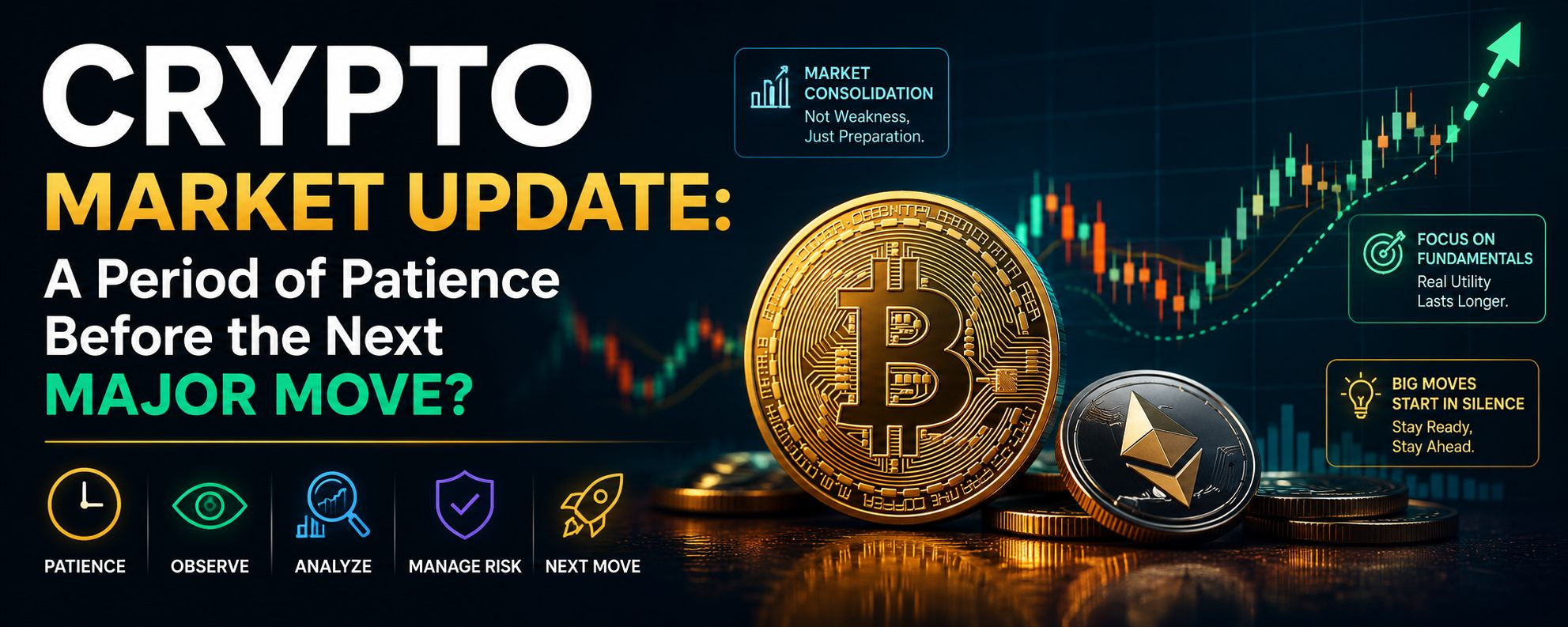

The cryptocurrency market has entered a phase that feels quieter than the highly volatile periods many traders have become accustomed to. While price action has slowed across several major assets, that doesn't necessarily mean the market has stopped moving. In many cases, periods of consolidation are when the foundation for the next major trend is built.
At the moment, Bitcoin continues to act as the primary market indicator. Its ability to hold key support levels has helped maintain confidence across the broader crypto ecosystem. Although daily price movements remain relatively limited compared to previous months, market participants are closely watching whether Bitcoin can establish a stronger trend before capital begins flowing more aggressively into altcoins.
Trading volume has also moderated in recent sessions. Lower volume often reflects caution rather than weakness. Institutional investors and experienced traders typically avoid making large commitments during uncertain conditions, preferring to wait for stronger confirmation before increasing exposure. This creates an environment where sudden volatility can return once new information enters the market.
The altcoin market presents a mixed picture. While a handful of projects continue attracting attention through technological development and ecosystem growth, many tokens remain below their previous momentum. This suggests that investors are becoming more selective. Instead of chasing every new narrative, capital is increasingly flowing toward projects that demonstrate real utility, active development, sustainable token economics, and long-term adoption potential.
One noticeable trend is the continued interest in blockchain infrastructure. Rather than focusing only on consumer applications, developers are investing heavily in improving scalability, interoperability, decentralized security, and cross-chain communication. These improvements may not generate immediate headlines, but they play a significant role in supporting future ecosystem growth.
Artificial intelligence remains another important narrative. The combination of AI and blockchain continues to attract developers seeking decentralized ways to verify data, improve transparency, and automate complex processes. While many projects are still in their early stages, the sector continues evolving beyond simple marketing claims toward practical infrastructure and enterprise-focused applications.
Real World Assets (RWAs) also remain an area worth monitoring. The tokenization of traditional financial assets has become one of the industry's most discussed themes. If adoption continues to grow, it could strengthen the connection between traditional finance and blockchain networks, expanding the range of assets that can be traded and managed on-chain.
Decentralized Finance (DeFi) is gradually shifting its focus from offering the highest yields toward creating more sustainable financial systems. Lending protocols, decentralized exchanges, and liquidity infrastructure continue improving risk management, capital efficiency, and user experience. Investors are paying closer attention to security audits, governance models, and protocol resilience rather than chasing short-term returns alone.
Market sentiment currently appears balanced. Neither extreme optimism nor widespread panic dominates trading activity. Historically, these neutral periods often precede significant market moves, although the eventual direction depends on a combination of macroeconomic developments, regulatory decisions, liquidity conditions, and investor confidence.
Macroeconomic factors remain an important influence on digital assets. Interest rate expectations, inflation data, and broader financial market performance continue shaping investor behavior. As cryptocurrencies become more integrated with global financial markets, external economic events are increasingly capable of affecting market sentiment within a short period.
For traders, this remains a market where discipline is more valuable than aggression. Clear entry plans, defined risk management strategies, and patience may prove more effective than reacting emotionally to every short-term price fluctuation. Markets that appear slow can change rapidly once new catalysts emerge.
Long-term investors may view the current environment differently. Instead of focusing on daily volatility, many continue evaluating projects based on development activity, ecosystem growth, network security, and real-world adoption. In the long run, these fundamentals often have a greater impact than temporary market sentiment.
Looking ahead, several factors deserve close attention. Regulatory developments, institutional participation, technological upgrades, and global economic conditions could all influence market direction over the coming weeks and months. Rather than attempting to predict every short-term movement, understanding these broader trends may provide a stronger foundation for making informed decisions.
Overall, today's crypto market reflects a period of patience rather than inactivity. Beneath relatively stable price action, developers continue building, institutions continue evaluating opportunities, and investors continue refining their strategies. While uncertainty remains a natural part of every financial market, disciplined research, effective risk management, and a focus on long-term fundamentals remain some of the most valuable tools for navigating the evolving crypto landscape.
#CryptoMarket #Bitcoin #Altcoins #MarketUpdate #kingbro1