
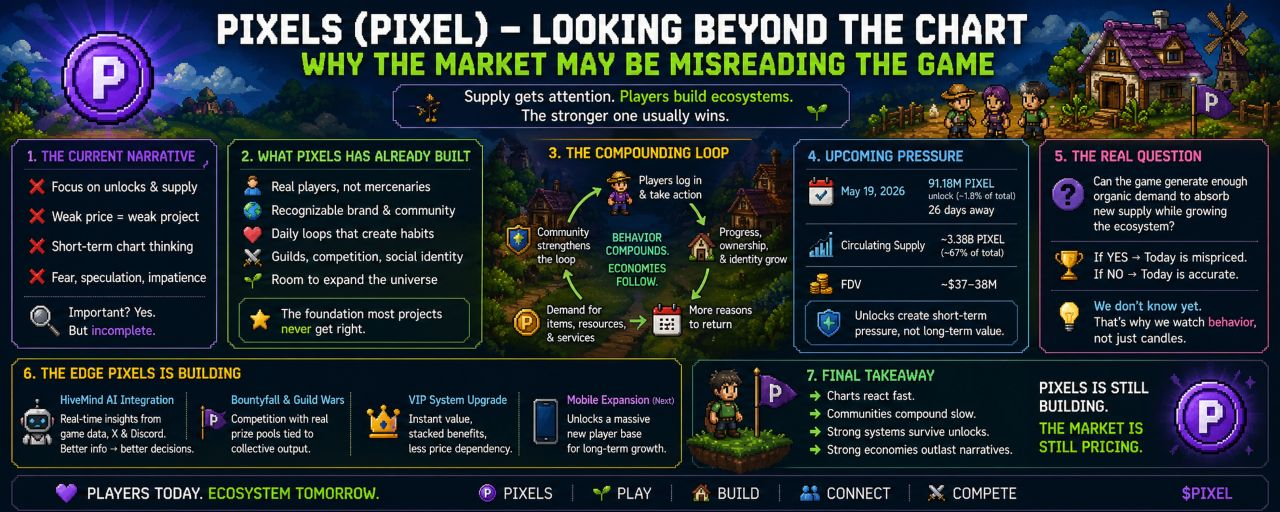
The current conversation around Pixels is almost entirely about token pressure
Unlocks. Supply. Price weakness. Market cap comparisons
None of that is irrelevant
But I think it misses the deeper question:
Is Pixels just a token with a game attached - or a game economy the market still doesn’t understand?
That distinction matters more than most people realize
Many crypto gaming projects launched with aggressive token narratives and weak player foundations. They attracted speculation first, then tried to build community later. Usually that ends the same way: attention fades, users leave, token collapses
Pixels feels different because the product side came first
It built recognizable gameplay loops, daily engagement habits, farming systems, social identity, guild interaction, and a brand people actually know. That may sound basic, but in Web3 gaming it’s rare
A lot of tokens can buy attention
Very few games earn routine
And routine is valuable
When players log in consistently, they create the base layer every economy needs:
🔹 activity
🔹 demand for progression
🔹 social stickiness
🔹 network effects
🔹 content creation
🔹 emotional investment
That kind of behavior compounds slowly, which is why markets often ignore it early
Traders usually prefer visible catalysts:
Exchange listings
Big candles
Partnership headlines
Unlock fear
Short-term narratives
But ecosystems are often repriced later, after the invisible work has already happened
That doesn’t mean Pixels has no risks
🔸 It still has to prove long-term retention
🔸 It still has to handle token supply intelligently
🔸 It still has to keep gameplay fresh
🔸 It still has to convert attention into durable participation
Those are real challenges
But the current bearish case often sounds too simple:
“Token weak = project weak”
That logic fails constantly in crypto
Sometimes price is accurate
Sometimes price is late
If Pixels can keep players engaged, expand reasons to spend time inside the world, and maintain community momentum, then today’s token narrative may look incomplete in hindsight
Because charts react fast
Communities compound slower
And slower things are often underestimated
That’s why I’m watching users more than candles