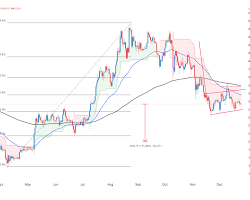

$BTC : The "Digital Gold" Test
In previous years, Bitcoin crashed alongside stocks during war. In 2026, we are seeing a structural decoupling.
Initial Reaction: When the conflict began, BTC saw a "knee-jerk" drop to roughly $64,000 as over-leveraged traders were liquidated.
The Pivot: Unlike gold, which struggled against a strengthening US Dollar and rising bond yields, Bitcoin recovered faster. Spot Bitcoin ETFs recorded massive inflows during the peak of the tension, signaling that institutional investors now view BTC as a "portable sanctuary."
+1
Current Trend: $BTC has recently outperformed both the S&P 500 and Gold, trading around the $76,000 mark as of mid-April. It is acting more like a macro hedge than a speculative tech stock.
$ETH & Altcoins: The "Volatility Multiplier"
Altcoins continue to suffer more severely than Bitcoin during global instability due to lower liquidity and higher perceived risk.
Ethereum: $ETH has struggled to keep pace with Bitcoin's "safe haven" narrative. It remains more sensitive to the Nasdaq and tech-sector sentiment. When oil prices spike and inflation fears rise, ETH often sees deeper corrections (often 1.5x–2x the percentage drop of BTC).
Altcoin Market: Most mid-cap coins saw a 20-30% decline in Q1 2026. Trading volumes on centralized exchanges (CEXs) dropped by nearly 40%, indicating that retail traders are "sitting on hands" until the geopolitical dust settles.
The "War FUD" (Fear, Uncertainty, and Doubt) cycle in 2026 follows a predictable pattern:
Phase 1 (The Strike): Panic selling, leverage flush, 10-15% flash crashes.
Phase 2 (The Realization): Institutional "buy the dip" via ETFs.
Phase 3 (The Rebound): Bitcoin decouples from stocks; Altcoins lag behind until volatility stabilizes.
#ARKInvestReducedPositionsinCircleandBullish #USInitialJoblessClaimsBelowForecast