
#btcstaking
btcstaking
21,152 Aufrufe
151 Kommentare
Hot
Zuletzt

Bitcoin-Ertragsmodelle wechseln bis 2026 von zentralisiertem Lending hin zu Self-Custodial-Staking, DeFi-Vaults und Wrapped-BTC-Strategien.
#BitcoinYield #BTCStaking
Bitcoin-Ertragsmodelle wechseln bis 2026 von zentralisiertem Lending hin zu Self-Custodial-Staking, DeFi-Vaults und Wrapped-BTC-Strategien.
#BitcoinYield #BTCStaking
#BitcoinYield #BTCStaking
1
5

Bitcoin in deiner Wallet ist sicher — aber auch still. Er macht nichts für dich außer zu warten.
Was mich in Babylon gezogen hat, ist, dass es BTC eine Aufgabe gibt, ohne seine Sicherheit anzutasten. Kein Wrapping, kein Bridging, keine Übergabe der Verwahrung an eine dritte Partei. Dein Bitcoin bleibt genau dort, wo er ist, und hilft trotzdem dabei, andere Netzwerke abzusichern und gleichzeitig dafür zu verdienen.
Am meisten hat mich beeindruckt: Wenn auf der Validator-Seite etwas schiefgeht, kann das Protokoll das nachweisen und direkt auf der Bitcoin-Chain bestrafen. Nicht in irgendeinem separaten, weniger getesteten System — sondern auf der eigenen Security-Layer von Bitcoin.
BABY ist der Token, der dieses ganze System am Laufen hält — Gas, Governance, Staking Rewards. Er ist live auf Binance und lässt sich einfach erreichen, ohne auf kleineren Exchanges danach suchen zu müssen.
Bitcoin muss nicht mehr einfach nur dort sitzen. Schon diese Veränderung hat meine Sicht auf das langfristige Halten von BTC verändert.
#BABY #Binance #BTCstaking
@babylonlabs_io #baby $BABY
{future}(BABYUSDT)
{alpha}(560x277add739c6e0477616948357af9e79fe1ec9b80)
{future}(DEXEUSDT)
Was ist am wichtigsten, bevor du einen Coin stakest?"
Bitcoin in deiner Wallet ist sicher — aber auch still. Er macht nichts für dich außer zu warten.
Was mich in Babylon gezogen hat, ist, dass es BTC eine Aufgabe gibt, ohne seine Sicherheit anzutasten. Kein Wrapping, kein Bridging, keine Übergabe der Verwahrung an eine dritte Partei. Dein Bitcoin bleibt genau dort, wo er ist, und hilft trotzdem dabei, andere Netzwerke abzusichern und gleichzeitig dafür zu verdienen.
Am meisten hat mich beeindruckt: Wenn auf der Validator-Seite etwas schiefgeht, kann das Protokoll das nachweisen und direkt auf der Bitcoin-Chain bestrafen. Nicht in irgendeinem separaten, weniger getesteten System — sondern auf der eigenen Security-Layer von Bitcoin.
BABY ist der Token, der dieses ganze System am Laufen hält — Gas, Governance, Staking Rewards. Er ist live auf Binance und lässt sich einfach erreichen, ohne auf kleineren Exchanges danach suchen zu müssen.
Bitcoin muss nicht mehr einfach nur dort sitzen. Schon diese Veränderung hat meine Sicht auf das langfristige Halten von BTC verändert.
#BABY #Binance #BTCstaking
@BabylonLabs_io #baby $BABY
Was ist am wichtigsten, bevor du einen Coin stakest?"
Was mich in Babylon gezogen hat, ist, dass es BTC eine Aufgabe gibt, ohne seine Sicherheit anzutasten. Kein Wrapping, kein Bridging, keine Übergabe der Verwahrung an eine dritte Partei. Dein Bitcoin bleibt genau dort, wo er ist, und hilft trotzdem dabei, andere Netzwerke abzusichern und gleichzeitig dafür zu verdienen.
Am meisten hat mich beeindruckt: Wenn auf der Validator-Seite etwas schiefgeht, kann das Protokoll das nachweisen und direkt auf der Bitcoin-Chain bestrafen. Nicht in irgendeinem separaten, weniger getesteten System — sondern auf der eigenen Security-Layer von Bitcoin.
BABY ist der Token, der dieses ganze System am Laufen hält — Gas, Governance, Staking Rewards. Er ist live auf Binance und lässt sich einfach erreichen, ohne auf kleineren Exchanges danach suchen zu müssen.
Bitcoin muss nicht mehr einfach nur dort sitzen. Schon diese Veränderung hat meine Sicht auf das langfristige Halten von BTC verändert.
#BABY #Binance #BTCstaking
@BabylonLabs_io #baby $BABY
Was ist am wichtigsten, bevor du einen Coin stakest?"
Security of the mechanism
0%
APY / rewards
0%
Who's backing the project
0%
I mainly follow price
0%
0 Stimmen • Abstimmung beendet
1
1
189

#baby $BABY
Das BTC-Staking verändert sich für immer. Bist du bereit? 🤔💡
Das Spiel hat offiziell gewechselt. @BabylonLabs_io ($BABY) ermöglicht Self-Custodial BTC-Staking direkt im Bitcoin-Netzwerk. Keine Mittelsmänner mehr – nur echte Eigentümerschaft. 💎📈
Das ist nicht nur eine Sache mit einer Coin; es ist ein technologischer Sprung für das gesamte Bitcoin-Ökosystem. Vollständige Kontrolle trifft auf sichere Belohnungen.
Beobachtest du diese Story, wie sie sich entfaltet, oder machst du mit? Teile deine Strategie in den Kommentaren! 👇✨
#baby #crypto #BTCStaking
#baby $BABY
Das BTC-Staking verändert sich für immer. Bist du bereit? 🤔💡
Das Spiel hat offiziell gewechselt. @BabylonLabs_io ($BABY ) ermöglicht Self-Custodial BTC-Staking direkt im Bitcoin-Netzwerk. Keine Mittelsmänner mehr – nur echte Eigentümerschaft. 💎📈
Das ist nicht nur eine Sache mit einer Coin; es ist ein technologischer Sprung für das gesamte Bitcoin-Ökosystem. Vollständige Kontrolle trifft auf sichere Belohnungen.
Beobachtest du diese Story, wie sie sich entfaltet, oder machst du mit? Teile deine Strategie in den Kommentaren! 👇✨
#baby #crypto #BTCStaking
Das BTC-Staking verändert sich für immer. Bist du bereit? 🤔💡
Das Spiel hat offiziell gewechselt. @BabylonLabs_io ($BABY ) ermöglicht Self-Custodial BTC-Staking direkt im Bitcoin-Netzwerk. Keine Mittelsmänner mehr – nur echte Eigentümerschaft. 💎📈
Das ist nicht nur eine Sache mit einer Coin; es ist ein technologischer Sprung für das gesamte Bitcoin-Ökosystem. Vollständige Kontrolle trifft auf sichere Belohnungen.
Beobachtest du diese Story, wie sie sich entfaltet, oder machst du mit? Teile deine Strategie in den Kommentaren! 👇✨
#baby #crypto #BTCStaking

74

·
--
BTCFi-Erzählung|Babylon TBV eröffnet BTCFi $BABY
Heute liegt der Fokus auf Babylon TBV, das gerade eine neue Paradigmen für BTCFi aufschließt. Der Spielraum ist groß.
Traditionelles BTC hat in DeFi nur begrenzte Einsatzmöglichkeiten. wBTC erfordert Vertrauen in einen Custodian, tBTC setzt auf eine Cross-Chain-Bridge – in beiden Fällen bestehen zentrale Risiken. TBV ermöglicht selbstverwahrtes Staking über On-Chain-Skripte auf der Bitcoin-Blockchain: BTC bleibt im Bitcoin-Netzwerk und kann dennoch an DeFi teilnehmen.
Der Innovationspunkt: BTC-Inhaber verkaufen ihre Coins nicht, um Renditen zu erhalten. Die Staking-Erträge werden mit $BABY ausgezahlt, während gleichzeitig das Exposure auf einen BTC-Anstieg erhalten bleibt. Nach der Integration in Aave kann BTC zudem als Sicherheit für Kreditvergaben dienen und so die Liquidität weiter freisetzen. Die Marktkapitalisierung von BTC liegt über 700 Milliarden US-Dollar – schon wenn man nur einen kleinen Teil davon in DeFi freischaltet, ist das ein riesiger zusätzlicher Markt.
Der aktuelle Preis von $BABY konnte nicht ermittelt werden, 24h N/A, Marktkapitalisierung nicht offengelegt, FDV nicht offengelegt. Protokoll-TVL nicht ermittelt, Rang nicht ermittelt. Bei den GitHub-Commits der letzten 90 Tage nicht ermittelt, auch keine Angabe zu Stars.
Die BTCFi-Erzählung hat viel Potenzial, aber die Umsetzungsgeschwindigkeit hängt vom Fortschritt der Ökosystem-Anbindung ab. Beobachte drei Kennzahlen: Wachstum der TVL, Anzahl der angebundenen PoS-Ketten und Anzahl integrierter DeFi-Protokolle. Dass die Kennzahlen fortlaufend besser werden, zeigt, dass die Erzählung Realität wird.
Nicht eilig – lass die Kugeln erst noch fliegen.
#baby #Babylon #BTCStaking @BabylonLabs_io
BTCFi-Erzählung|Babylon TBV eröffnet BTCFi $BABY
Heute liegt der Fokus auf Babylon TBV, das gerade eine neue Paradigmen für BTCFi aufschließt. Der Spielraum ist groß.
Traditionelles BTC hat in DeFi nur begrenzte Einsatzmöglichkeiten. wBTC erfordert Vertrauen in einen Custodian, tBTC setzt auf eine Cross-Chain-Bridge – in beiden Fällen bestehen zentrale Risiken. TBV ermöglicht selbstverwahrtes Staking über On-Chain-Skripte auf der Bitcoin-Blockchain: BTC bleibt im Bitcoin-Netzwerk und kann dennoch an DeFi teilnehmen.
Der Innovationspunkt: BTC-Inhaber verkaufen ihre Coins nicht, um Renditen zu erhalten. Die Staking-Erträge werden mit $BABY ausgezahlt, während gleichzeitig das Exposure auf einen BTC-Anstieg erhalten bleibt. Nach der Integration in Aave kann BTC zudem als Sicherheit für Kreditvergaben dienen und so die Liquidität weiter freisetzen. Die Marktkapitalisierung von BTC liegt über 700 Milliarden US-Dollar – schon wenn man nur einen kleinen Teil davon in DeFi freischaltet, ist das ein riesiger zusätzlicher Markt.
Der aktuelle Preis von $BABY konnte nicht ermittelt werden, 24h N/A, Marktkapitalisierung nicht offengelegt, FDV nicht offengelegt. Protokoll-TVL nicht ermittelt, Rang nicht ermittelt. Bei den GitHub-Commits der letzten 90 Tage nicht ermittelt, auch keine Angabe zu Stars.
Die BTCFi-Erzählung hat viel Potenzial, aber die Umsetzungsgeschwindigkeit hängt vom Fortschritt der Ökosystem-Anbindung ab. Beobachte drei Kennzahlen: Wachstum der TVL, Anzahl der angebundenen PoS-Ketten und Anzahl integrierter DeFi-Protokolle. Dass die Kennzahlen fortlaufend besser werden, zeigt, dass die Erzählung Realität wird.
Nicht eilig – lass die Kugeln erst noch fliegen.
#baby #Babylon #BTCStaking @BabylonLabs_io
Heute liegt der Fokus auf Babylon TBV, das gerade eine neue Paradigmen für BTCFi aufschließt. Der Spielraum ist groß.
Traditionelles BTC hat in DeFi nur begrenzte Einsatzmöglichkeiten. wBTC erfordert Vertrauen in einen Custodian, tBTC setzt auf eine Cross-Chain-Bridge – in beiden Fällen bestehen zentrale Risiken. TBV ermöglicht selbstverwahrtes Staking über On-Chain-Skripte auf der Bitcoin-Blockchain: BTC bleibt im Bitcoin-Netzwerk und kann dennoch an DeFi teilnehmen.
Der Innovationspunkt: BTC-Inhaber verkaufen ihre Coins nicht, um Renditen zu erhalten. Die Staking-Erträge werden mit $BABY ausgezahlt, während gleichzeitig das Exposure auf einen BTC-Anstieg erhalten bleibt. Nach der Integration in Aave kann BTC zudem als Sicherheit für Kreditvergaben dienen und so die Liquidität weiter freisetzen. Die Marktkapitalisierung von BTC liegt über 700 Milliarden US-Dollar – schon wenn man nur einen kleinen Teil davon in DeFi freischaltet, ist das ein riesiger zusätzlicher Markt.
Der aktuelle Preis von $BABY konnte nicht ermittelt werden, 24h N/A, Marktkapitalisierung nicht offengelegt, FDV nicht offengelegt. Protokoll-TVL nicht ermittelt, Rang nicht ermittelt. Bei den GitHub-Commits der letzten 90 Tage nicht ermittelt, auch keine Angabe zu Stars.
Die BTCFi-Erzählung hat viel Potenzial, aber die Umsetzungsgeschwindigkeit hängt vom Fortschritt der Ökosystem-Anbindung ab. Beobachte drei Kennzahlen: Wachstum der TVL, Anzahl der angebundenen PoS-Ketten und Anzahl integrierter DeFi-Protokolle. Dass die Kennzahlen fortlaufend besser werden, zeigt, dass die Erzählung Realität wird.
Nicht eilig – lass die Kugeln erst noch fliegen.
#baby #Babylon #BTCStaking @BabylonLabs_io
53

·
--
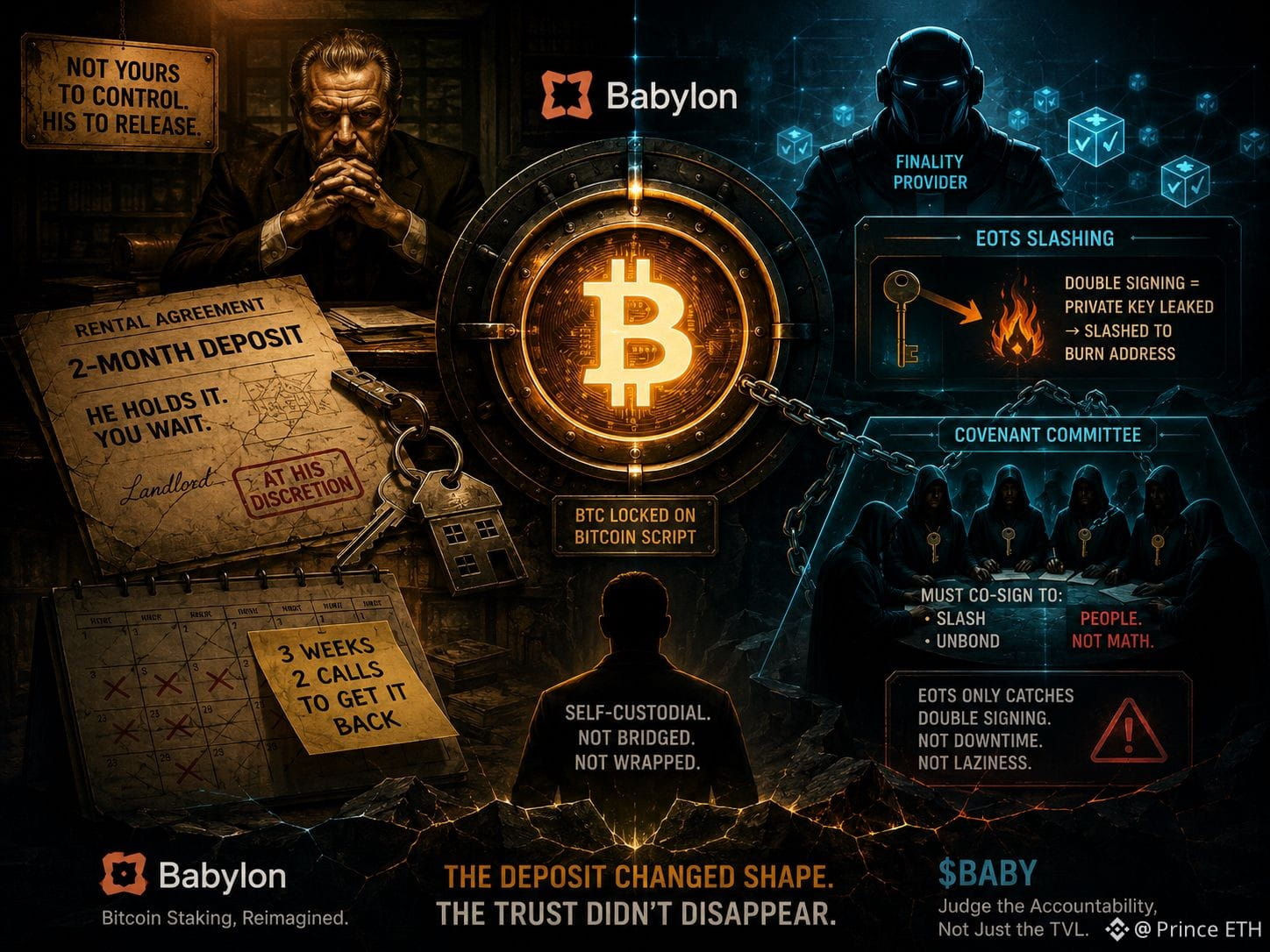
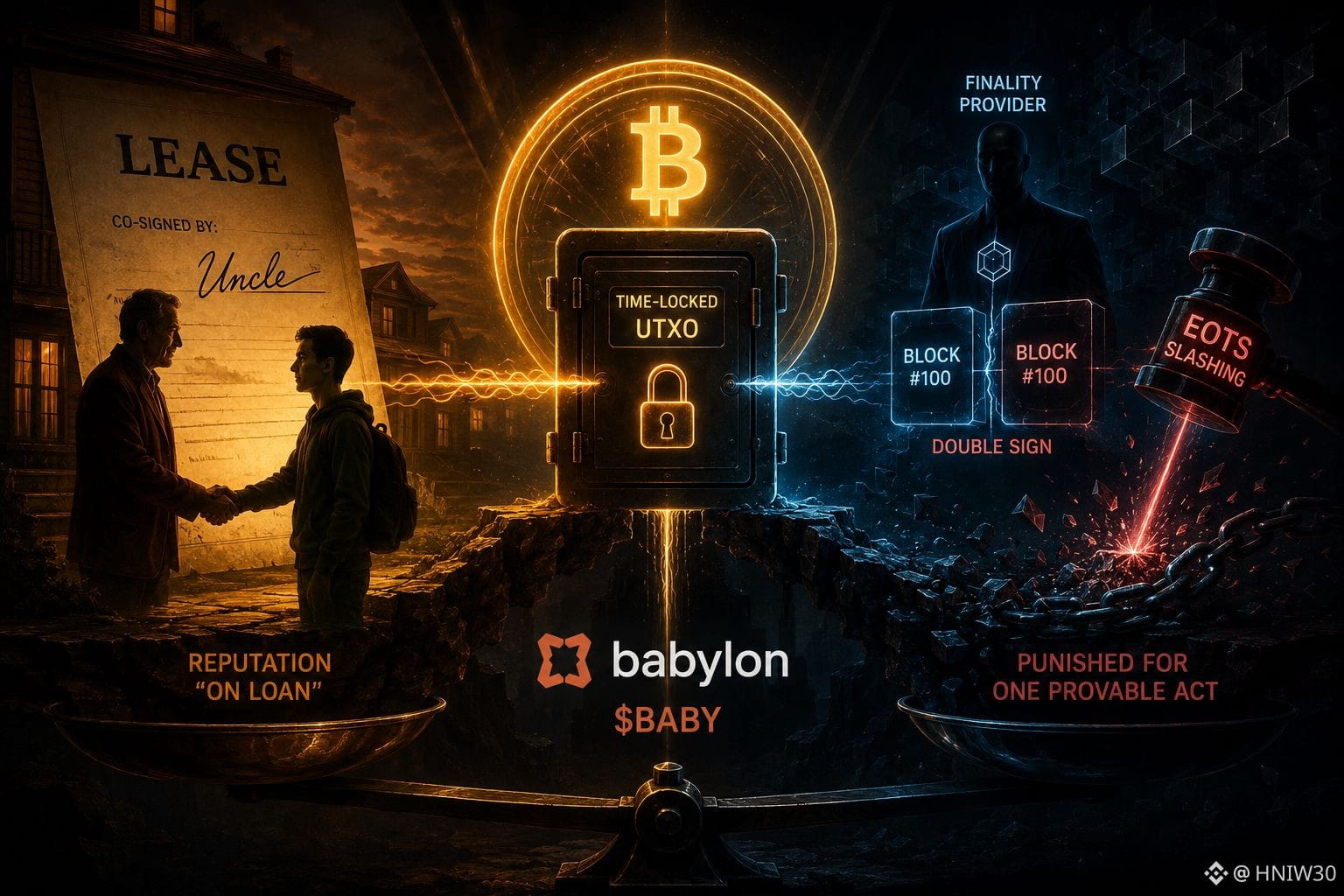
Als ich meine erste Wohnung gemietet habe, verlangte der Vermieter vor der Aushändigung der Schlüssel eine zweimonatige Kaution. Das Geld würde er bis zu meinem Auszug einbehalten, während er jede Wand geprüft hat. Ich habe drei Jahre lang alles richtig gemacht: keine Schäden, die Miete immer pünktlich.
Das Geld zurückzubekommen hat trotzdem noch drei Wochen und zwei Telefonate gedauert, weil die Kaution nie wirklich mir gehört hat, über die ich frei verfügen konnte. Es war sein Geld, das er freigeben musste.
Genau dieselbe Vereinbarung läuft bei den meisten Staking-Protokollen: Jemand anderes muss das Ding in der Hand haben, das einen Validator für Fehlverhalten bestrafen kann.
Babylon nimmt dem Vermieter diesen ersten Schritt zumindest ab. Ein Staker sperrt BTC direkt im Bitcoin-Netzwerk in einem selbstverwalteten Vault: einer UTXO, die durch Bitcoin-Script-Opcode-Anweisungen mit einem Timelock abgesichert ist – nie gebrückt oder in eine andere Kette „wrapped“. Der Staker delegiert dann an einen Finality-Provider, der Blöcke anhand dieser Einlage als Sicherheit bestätigt.
Wenn der Provider jemals zwei widersprüchliche Blöcke in derselben Höhe signiert, dann leakt ein Extractable One-Time Signature-Verfahren, oder EOTS, mathematisch ihren privaten Schlüssel. Dieser geleakte Schlüssel autorisiert anschließend eine vorab vereinbarte Slashing-Transaktion, die die Gelder an eine Burn-Adresse sendet – ohne dass jemals ein Custodian diese verwaltet.
Selbstkritik: Die Kaution ist nicht verschwunden, sie hat nur ihre Form gewechselt. Die Ausführung dieses Slashings und das Unbonding auf Babylon erfordert jedoch weiterhin eine Freigabe durch ein Covenant-Komitee – eine fest definierte Gruppe, die die Transaktion mitunterzeichnen muss, bevor irgendetwas passieren kann.
Das ist keine kryptografische Bedingung, die frei von Menschen „in der Luft“ hängt. Es ist eine konkrete Menge von Parteien, deren Ehrlichkeit und Verfügbarkeit der Staker vertraut – so wie ich einst die Laune und den Kalender meines Vermieters vertraut habe. EOTS fängt außerdem nur einen einzigen Fehlermodus ab: Doppelsignierung. Ein Provider, der offline geht oder schlampig abstimmt, geht daher ohne Strafe davon.
Der echte Test für Babylon war nie, ob sich die Kaution bewegt. $BABY sollte anhand der Verantwortlichkeit seiner Finality-Provider und des Covenant-Komitees bewertet werden – nicht nur danach, wie viel BTC in die Staking-Contracts geflossen ist.
@babylonlabs_io #baby #BTCStaking #bitcoin
Als ich meine erste Wohnung gemietet habe, verlangte der Vermieter vor der Aushändigung der Schlüssel eine zweimonatige Kaution. Das Geld würde er bis zu meinem Auszug einbehalten, während er jede Wand geprüft hat. Ich habe drei Jahre lang alles richtig gemacht: keine Schäden, die Miete immer pünktlich.
Das Geld zurückzubekommen hat trotzdem noch drei Wochen und zwei Telefonate gedauert, weil die Kaution nie wirklich mir gehört hat, über die ich frei verfügen konnte. Es war sein Geld, das er freigeben musste.
Genau dieselbe Vereinbarung läuft bei den meisten Staking-Protokollen: Jemand anderes muss das Ding in der Hand haben, das einen Validator für Fehlverhalten bestrafen kann.
Babylon nimmt dem Vermieter diesen ersten Schritt zumindest ab. Ein Staker sperrt BTC direkt im Bitcoin-Netzwerk in einem selbstverwalteten Vault: einer UTXO, die durch Bitcoin-Script-Opcode-Anweisungen mit einem Timelock abgesichert ist – nie gebrückt oder in eine andere Kette „wrapped“. Der Staker delegiert dann an einen Finality-Provider, der Blöcke anhand dieser Einlage als Sicherheit bestätigt.
Wenn der Provider jemals zwei widersprüchliche Blöcke in derselben Höhe signiert, dann leakt ein Extractable One-Time Signature-Verfahren, oder EOTS, mathematisch ihren privaten Schlüssel. Dieser geleakte Schlüssel autorisiert anschließend eine vorab vereinbarte Slashing-Transaktion, die die Gelder an eine Burn-Adresse sendet – ohne dass jemals ein Custodian diese verwaltet.
Selbstkritik: Die Kaution ist nicht verschwunden, sie hat nur ihre Form gewechselt. Die Ausführung dieses Slashings und das Unbonding auf Babylon erfordert jedoch weiterhin eine Freigabe durch ein Covenant-Komitee – eine fest definierte Gruppe, die die Transaktion mitunterzeichnen muss, bevor irgendetwas passieren kann.
Das ist keine kryptografische Bedingung, die frei von Menschen „in der Luft“ hängt. Es ist eine konkrete Menge von Parteien, deren Ehrlichkeit und Verfügbarkeit der Staker vertraut – so wie ich einst die Laune und den Kalender meines Vermieters vertraut habe. EOTS fängt außerdem nur einen einzigen Fehlermodus ab: Doppelsignierung. Ein Provider, der offline geht oder schlampig abstimmt, geht daher ohne Strafe davon.
Der echte Test für Babylon war nie, ob sich die Kaution bewegt. $BABY sollte anhand der Verantwortlichkeit seiner Finality-Provider und des Covenant-Komitees bewertet werden – nicht nur danach, wie viel BTC in die Staking-Contracts geflossen ist.
@BabylonLabs_io #baby #BTCStaking #bitcoin
Das Geld zurückzubekommen hat trotzdem noch drei Wochen und zwei Telefonate gedauert, weil die Kaution nie wirklich mir gehört hat, über die ich frei verfügen konnte. Es war sein Geld, das er freigeben musste.
Genau dieselbe Vereinbarung läuft bei den meisten Staking-Protokollen: Jemand anderes muss das Ding in der Hand haben, das einen Validator für Fehlverhalten bestrafen kann.
Babylon nimmt dem Vermieter diesen ersten Schritt zumindest ab. Ein Staker sperrt BTC direkt im Bitcoin-Netzwerk in einem selbstverwalteten Vault: einer UTXO, die durch Bitcoin-Script-Opcode-Anweisungen mit einem Timelock abgesichert ist – nie gebrückt oder in eine andere Kette „wrapped“. Der Staker delegiert dann an einen Finality-Provider, der Blöcke anhand dieser Einlage als Sicherheit bestätigt.
Wenn der Provider jemals zwei widersprüchliche Blöcke in derselben Höhe signiert, dann leakt ein Extractable One-Time Signature-Verfahren, oder EOTS, mathematisch ihren privaten Schlüssel. Dieser geleakte Schlüssel autorisiert anschließend eine vorab vereinbarte Slashing-Transaktion, die die Gelder an eine Burn-Adresse sendet – ohne dass jemals ein Custodian diese verwaltet.
Selbstkritik: Die Kaution ist nicht verschwunden, sie hat nur ihre Form gewechselt. Die Ausführung dieses Slashings und das Unbonding auf Babylon erfordert jedoch weiterhin eine Freigabe durch ein Covenant-Komitee – eine fest definierte Gruppe, die die Transaktion mitunterzeichnen muss, bevor irgendetwas passieren kann.
Das ist keine kryptografische Bedingung, die frei von Menschen „in der Luft“ hängt. Es ist eine konkrete Menge von Parteien, deren Ehrlichkeit und Verfügbarkeit der Staker vertraut – so wie ich einst die Laune und den Kalender meines Vermieters vertraut habe. EOTS fängt außerdem nur einen einzigen Fehlermodus ab: Doppelsignierung. Ein Provider, der offline geht oder schlampig abstimmt, geht daher ohne Strafe davon.
Der echte Test für Babylon war nie, ob sich die Kaution bewegt. $BABY sollte anhand der Verantwortlichkeit seiner Finality-Provider und des Covenant-Komitees bewertet werden – nicht nur danach, wie viel BTC in die Staking-Contracts geflossen ist.
@BabylonLabs_io #baby #BTCStaking #bitcoin
4
2
216

Verifiziert
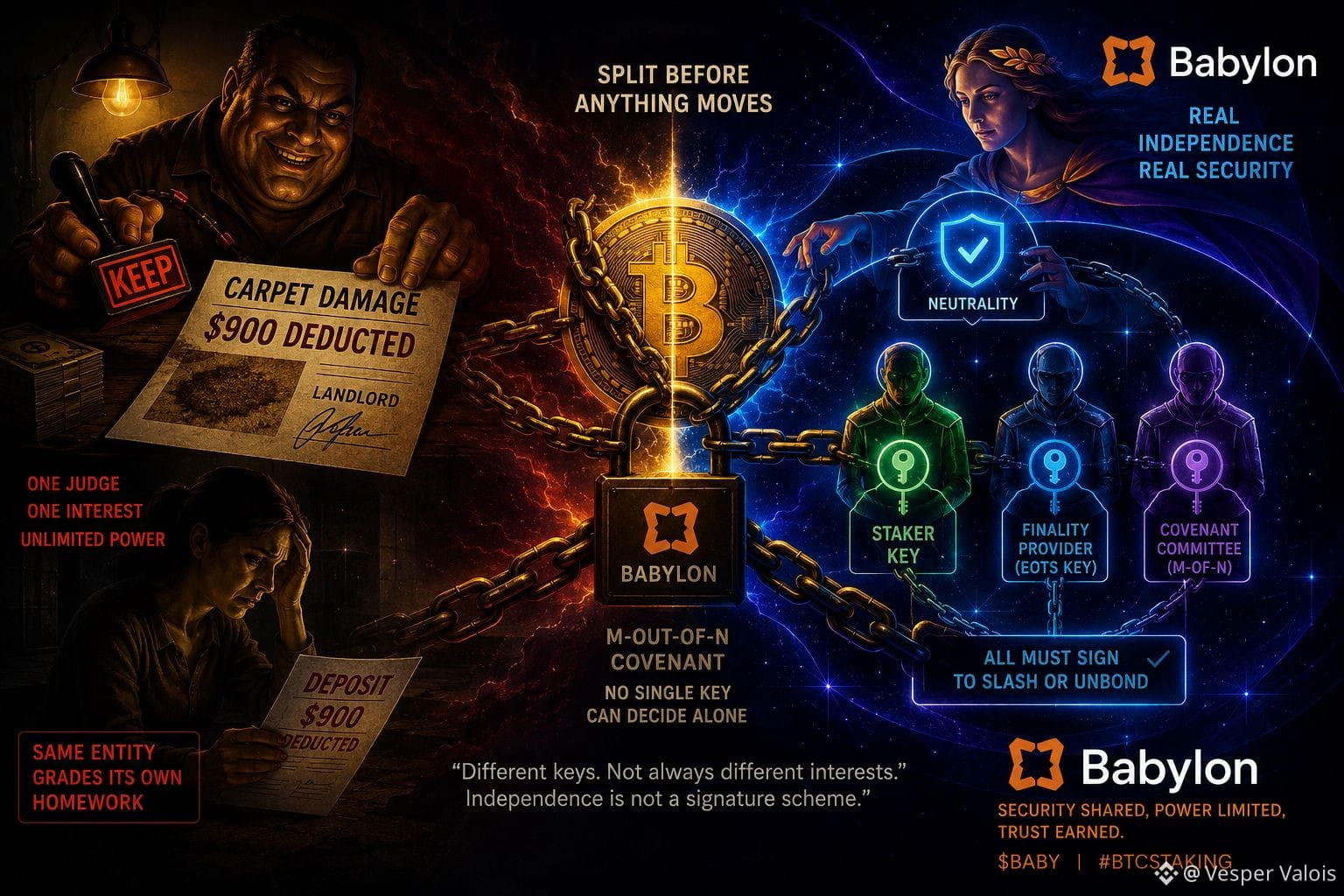
Als eine Freundin von mir letztes Jahr aus ihrer Mietwohnung ausgezogen ist, hat der Hausverwalter 900 US-Dollar ihrer Kaution mit der Begründung „Teppichschäden“ einbehalten. Es gab keinen unabhängigen Gutachter, keine eingereichten Fotos beim Einzug und nichts außer seinem eigenen Rundgang drei Tage, nachdem sie gegangen war. Die Person, die festlegte, wie hoch der Schaden war, war dieselbe, die alles behalten durfte, was sie nicht zurückzahlte. Sie hat das meiste davon erst wiederbekommen, nachdem sie in einer E-Mail das Mahnverfahren im Small-Claims-Court angedeutet hatte.
Das ist dasselbe Muster, das bei Staking und Restaking auftritt. Beim Slashing soll entschieden werden durch jemanden, der neutral ist – nicht durch den Staker oder den Operator, der für die Strafe belangt wird. In den meisten Designs wird diese Neutralität aber nur auf Ebene separater Schlüssel oder Adressen erzwungen. Nichts in der Kryptografie verhindert, dass die Personen hinter diesen Schlüsseln dieselbe Operation sind, die zwei Hüte trägt. Eine Prüfung kann prozedural getrennt aussehen, aber funktional ihr eigenes Hausaufgaben-Feedback bewerten.
@babylonlabs_io verteilt jeden Stake auf drei eindeutige Schlüssel, bevor irgendetwas bewegt werden kann: den Staker, den durch dessen EOTS-Schlüssel identifizierten Finality Provider und ein Covenant Committee, das als M-out-of-N-Multisig mitunterzeichnen muss, bevor Slashing oder eine vorzeitige Unbonding-Transaktion ausgeführt werden kann. Das Staking-Skript ist von vornherein ungültig, wenn innerhalb eines einzigen Stakes einer dieser Schlüssel wiederholt wird.
Selbstkritik: Diese Einzigartigkeitsregel ist eine kryptografische Garantie, keine organisatorische. Sie zeigt nicht, dass die N Committee-Sitze von N wirklich getrennten Parteien gehalten werden, statt von verbundenen Operatoren oder von gemeinsam genutzter Infrastruktur, die stillschweigend mehrere Sitze auf einmal „mithalten“. Der Vermieter meiner Freundin hätte auch eine zweite Unterschrift zu diesem Schadensbericht beibringen können – solange sie von jemandem kam, der ihm Gefälligkeiten schuldete. Ein anderer Name auf dem Formular ist nicht dasselbe wie ein anderes Interesse am Ausgang, und kein Signaturschema kann dir sagen, wer tatsächlich hinter einem Schlüssel sitzt.
$BABY sollte anhand der echten Unabhängigkeit dessen bewertet werden, wer diese Covenant-Sitze innehat – nicht nur danach, ob deren Schlüssel technisch voneinander verschieden sind.
#BTCStaking #baby $KOMA $BANK
Als eine Freundin von mir letztes Jahr aus ihrer Mietwohnung ausgezogen ist, hat der Hausverwalter 900 US-Dollar ihrer Kaution mit der Begründung „Teppichschäden“ einbehalten. Es gab keinen unabhängigen Gutachter, keine eingereichten Fotos beim Einzug und nichts außer seinem eigenen Rundgang drei Tage, nachdem sie gegangen war. Die Person, die festlegte, wie hoch der Schaden war, war dieselbe, die alles behalten durfte, was sie nicht zurückzahlte. Sie hat das meiste davon erst wiederbekommen, nachdem sie in einer E-Mail das Mahnverfahren im Small-Claims-Court angedeutet hatte.
Das ist dasselbe Muster, das bei Staking und Restaking auftritt. Beim Slashing soll entschieden werden durch jemanden, der neutral ist – nicht durch den Staker oder den Operator, der für die Strafe belangt wird. In den meisten Designs wird diese Neutralität aber nur auf Ebene separater Schlüssel oder Adressen erzwungen. Nichts in der Kryptografie verhindert, dass die Personen hinter diesen Schlüsseln dieselbe Operation sind, die zwei Hüte trägt. Eine Prüfung kann prozedural getrennt aussehen, aber funktional ihr eigenes Hausaufgaben-Feedback bewerten.
@BabylonLabs_io verteilt jeden Stake auf drei eindeutige Schlüssel, bevor irgendetwas bewegt werden kann: den Staker, den durch dessen EOTS-Schlüssel identifizierten Finality Provider und ein Covenant Committee, das als M-out-of-N-Multisig mitunterzeichnen muss, bevor Slashing oder eine vorzeitige Unbonding-Transaktion ausgeführt werden kann. Das Staking-Skript ist von vornherein ungültig, wenn innerhalb eines einzigen Stakes einer dieser Schlüssel wiederholt wird.
Selbstkritik: Diese Einzigartigkeitsregel ist eine kryptografische Garantie, keine organisatorische. Sie zeigt nicht, dass die N Committee-Sitze von N wirklich getrennten Parteien gehalten werden, statt von verbundenen Operatoren oder von gemeinsam genutzter Infrastruktur, die stillschweigend mehrere Sitze auf einmal „mithalten“. Der Vermieter meiner Freundin hätte auch eine zweite Unterschrift zu diesem Schadensbericht beibringen können – solange sie von jemandem kam, der ihm Gefälligkeiten schuldete. Ein anderer Name auf dem Formular ist nicht dasselbe wie ein anderes Interesse am Ausgang, und kein Signaturschema kann dir sagen, wer tatsächlich hinter einem Schlüssel sitzt.
$BABY sollte anhand der echten Unabhängigkeit dessen bewertet werden, wer diese Covenant-Sitze innehat – nicht nur danach, ob deren Schlüssel technisch voneinander verschieden sind.
#BTCStaking #baby $KOMA $BANK
Das ist dasselbe Muster, das bei Staking und Restaking auftritt. Beim Slashing soll entschieden werden durch jemanden, der neutral ist – nicht durch den Staker oder den Operator, der für die Strafe belangt wird. In den meisten Designs wird diese Neutralität aber nur auf Ebene separater Schlüssel oder Adressen erzwungen. Nichts in der Kryptografie verhindert, dass die Personen hinter diesen Schlüsseln dieselbe Operation sind, die zwei Hüte trägt. Eine Prüfung kann prozedural getrennt aussehen, aber funktional ihr eigenes Hausaufgaben-Feedback bewerten.
@BabylonLabs_io verteilt jeden Stake auf drei eindeutige Schlüssel, bevor irgendetwas bewegt werden kann: den Staker, den durch dessen EOTS-Schlüssel identifizierten Finality Provider und ein Covenant Committee, das als M-out-of-N-Multisig mitunterzeichnen muss, bevor Slashing oder eine vorzeitige Unbonding-Transaktion ausgeführt werden kann. Das Staking-Skript ist von vornherein ungültig, wenn innerhalb eines einzigen Stakes einer dieser Schlüssel wiederholt wird.
Selbstkritik: Diese Einzigartigkeitsregel ist eine kryptografische Garantie, keine organisatorische. Sie zeigt nicht, dass die N Committee-Sitze von N wirklich getrennten Parteien gehalten werden, statt von verbundenen Operatoren oder von gemeinsam genutzter Infrastruktur, die stillschweigend mehrere Sitze auf einmal „mithalten“. Der Vermieter meiner Freundin hätte auch eine zweite Unterschrift zu diesem Schadensbericht beibringen können – solange sie von jemandem kam, der ihm Gefälligkeiten schuldete. Ein anderer Name auf dem Formular ist nicht dasselbe wie ein anderes Interesse am Ausgang, und kein Signaturschema kann dir sagen, wer tatsächlich hinter einem Schlüssel sitzt.
$BABY sollte anhand der echten Unabhängigkeit dessen bewertet werden, wer diese Covenant-Sitze innehat – nicht nur danach, ob deren Schlüssel technisch voneinander verschieden sind.
#BTCStaking #baby $KOMA $BANK
16
8
187
·
--
Geldverfolgung|Babylon BTC-verwahrung $BABY N/A
Direkt zur Sache: Sehen wir uns die BTC-verwahrungsdaten von Babylon an. Zuerst: Wie viele Coins sind gesperrt?
Das Protokoll-TVL wird aktuell nicht gefunden. Das ist die Gesamtmenge an BTC, die im Babylon-Tresor gesperrt ist. Je höher das TVL, desto mehr BTC-Inhaber sind bereit, ihre Coins zu sperren und Rendite zu verdienen. Phase-1 Cap-1: Das anfängliche Limit lag bei 1000 BTC – und war in kürzester Zeit sofort ausverkauft. Das zeigt, dass die Nachfrage real vorhanden ist.
$BABY aktueller Kurs wird nicht gefunden, 24h N/A, höchster Wert wird nicht gefunden, niedrigster Wert wird nicht gefunden, Amplitude N/A Prozent. Umlaufende Marktkapitalisierung nicht offengelegt, FDV nicht offengelegt, 24h-Volumen nicht offengelegt.
Bei den Verwahrungserträgen: Binance hatte zuvor eine Babylon BTC-verwahrungsaktion gestartet, mit BABY-Belohnungen von bis zu 2,5 Prozent APY. Die Rendite ist im Vergleich zu anderen DeFi nicht besonders hoch, aber die Sicherheit ist besser: BTC-Chain-Onchain-Selbstverwahrung – es gibt kein Risiko, dass ein Vertrag gehackt wird.
Das TVL-Wachstum lässt sich an drei Kennzahlen festmachen: neu hinzugefügte Verwahrungsmengen, Entsperrungen und Nettozuflüsse. Bleibt der Nettozufluss dauerhaft positiv, bedeutet das: Gelder kommen rein. Wird er negativ, heißt das: Gewinnmitnahmen ziehen ab.
Die Richtung ist klar – den Takt bestimmst du selbst.
#baby #Babylon #BTCStaking @BabylonLabs_io
Geldverfolgung|Babylon BTC-verwahrung $BABY N/A
Direkt zur Sache: Sehen wir uns die BTC-verwahrungsdaten von Babylon an. Zuerst: Wie viele Coins sind gesperrt?
Das Protokoll-TVL wird aktuell nicht gefunden. Das ist die Gesamtmenge an BTC, die im Babylon-Tresor gesperrt ist. Je höher das TVL, desto mehr BTC-Inhaber sind bereit, ihre Coins zu sperren und Rendite zu verdienen. Phase-1 Cap-1: Das anfängliche Limit lag bei 1000 BTC – und war in kürzester Zeit sofort ausverkauft. Das zeigt, dass die Nachfrage real vorhanden ist.
$BABY aktueller Kurs wird nicht gefunden, 24h N/A, höchster Wert wird nicht gefunden, niedrigster Wert wird nicht gefunden, Amplitude N/A Prozent. Umlaufende Marktkapitalisierung nicht offengelegt, FDV nicht offengelegt, 24h-Volumen nicht offengelegt.
Bei den Verwahrungserträgen: Binance hatte zuvor eine Babylon BTC-verwahrungsaktion gestartet, mit BABY-Belohnungen von bis zu 2,5 Prozent APY. Die Rendite ist im Vergleich zu anderen DeFi nicht besonders hoch, aber die Sicherheit ist besser: BTC-Chain-Onchain-Selbstverwahrung – es gibt kein Risiko, dass ein Vertrag gehackt wird.
Das TVL-Wachstum lässt sich an drei Kennzahlen festmachen: neu hinzugefügte Verwahrungsmengen, Entsperrungen und Nettozuflüsse. Bleibt der Nettozufluss dauerhaft positiv, bedeutet das: Gelder kommen rein. Wird er negativ, heißt das: Gewinnmitnahmen ziehen ab.
Die Richtung ist klar – den Takt bestimmst du selbst.
#baby #Babylon #BTCStaking @BabylonLabs_io
Direkt zur Sache: Sehen wir uns die BTC-verwahrungsdaten von Babylon an. Zuerst: Wie viele Coins sind gesperrt?
Das Protokoll-TVL wird aktuell nicht gefunden. Das ist die Gesamtmenge an BTC, die im Babylon-Tresor gesperrt ist. Je höher das TVL, desto mehr BTC-Inhaber sind bereit, ihre Coins zu sperren und Rendite zu verdienen. Phase-1 Cap-1: Das anfängliche Limit lag bei 1000 BTC – und war in kürzester Zeit sofort ausverkauft. Das zeigt, dass die Nachfrage real vorhanden ist.
$BABY aktueller Kurs wird nicht gefunden, 24h N/A, höchster Wert wird nicht gefunden, niedrigster Wert wird nicht gefunden, Amplitude N/A Prozent. Umlaufende Marktkapitalisierung nicht offengelegt, FDV nicht offengelegt, 24h-Volumen nicht offengelegt.
Bei den Verwahrungserträgen: Binance hatte zuvor eine Babylon BTC-verwahrungsaktion gestartet, mit BABY-Belohnungen von bis zu 2,5 Prozent APY. Die Rendite ist im Vergleich zu anderen DeFi nicht besonders hoch, aber die Sicherheit ist besser: BTC-Chain-Onchain-Selbstverwahrung – es gibt kein Risiko, dass ein Vertrag gehackt wird.
Das TVL-Wachstum lässt sich an drei Kennzahlen festmachen: neu hinzugefügte Verwahrungsmengen, Entsperrungen und Nettozuflüsse. Bleibt der Nettozufluss dauerhaft positiv, bedeutet das: Gelder kommen rein. Wird er negativ, heißt das: Gewinnmitnahmen ziehen ab.
Die Richtung ist klar – den Takt bestimmst du selbst.
#baby #Babylon #BTCStaking @BabylonLabs_io
48

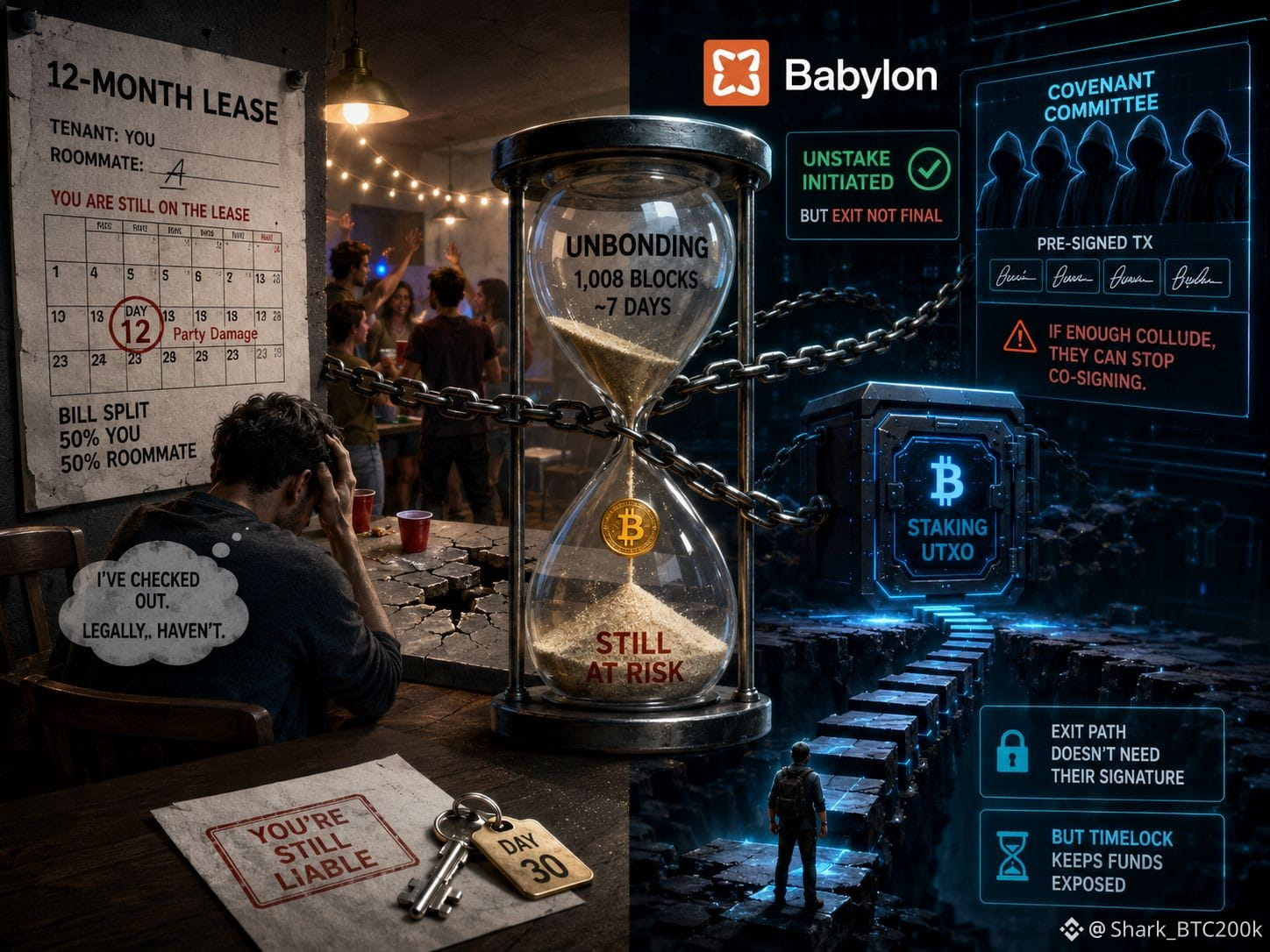
Vor zwei Jahren haben mein Mitbewohner und ich einen Mietvertrag über zwölf Monate unterschrieben. Als ich eine neue Wohnung fand, gab ich dem Vermieter die erforderliche Kündigungsfrist von dreißig Tagen, aber mein Name blieb bis zum dreißigsten Tag im Mietvertrag. Am zwölften Tag veranstaltete mein Mitbewohner eine Party, die die Küchenarbeitsplatte beschädigte, und der Vermieter teilte die Rechnung zwischen beiden Namen, die noch auf dem Vertrag standen. Ich war gedanklich schon weg. Rechtlich nicht.
Das gleiche Muster zeigt sich beim Staking. Menschen klicken auf Unstake und schieben die Gelder in ihrer Vorstellung sofort in die sichere Spalte, ohne zu prüfen, ob das Protokoll diese Gelder bis zum Abschluss des Unbondings überhaupt noch erreichen kann. Einen Ausstieg zu beginnen ist nicht dasselbe wie ihn abzuschließen, und was auch immer die andere Partei in dieser Lücke tut, landet trotzdem bei dir.
Das Staking-UTXO von @babylonlabs_io gibt einem Staker einen Ausstiegsweg, der die Signatur des Finality-Providers niemals benötigt, da die Ausgabebedingungen einfach diesen Schlüssel auslassen. Die Signaturen des Covenant-Komitees, einschließlich einer vorab signierten Kopie der zukünftigen Unbonding-Transaktion, werden gesammelt, bevor das Staking aktiv geht; wenn ein Staker also aussteigen will, fehlt nur noch die eigene Signatur. Dennoch öffnet sich die Unbonding-Ausgabe nicht sofort: Babylon setzt diese Schwelle derzeit auf 1.008 Blöcke, also etwa sieben Tage. In dieser Zeit kann BTC noch ge-slash’t werden, wenn der Finality-Provider zuerst doppelt signiert.
Selbstkritik: Dieses sieben Tage-Fenster ist wieder Tag zwölf des Mietvertrags. Ein Dashboard, das Unbonding als erledigt markiert, sobald jemand auf Exit klickt, verleitet dazu, sich sicher zu fühlen, bevor die Mechanik zustimmt.
Es gibt noch eine zweite Sache, die es wert ist, beim Namen zu nennen: Das Covenant-Komitee ist ein konkreter, namentlich benannter Satz von Signierern, der stellvertretend für etwas einsteht, das Bitcoin noch nicht nativ tun kann, und die Dokumentation selbst gibt zu, dass sie, wenn genug von ihnen gemeinsam unehrlich würden, einfach aufhören könnten, neue Anfragen mitzu-signieren. Self-Custodial heißt nicht, dass niemand sonst beteiligt ist.
$BABY sollte danach bewertet werden, ob das Expositionsfenster und die Rolle des Komitees dem Staker im Moment offengelegt werden, nicht nur danach, ob die Slashing-Kryptografie im Abstrakten standhält.
#BTCStaking #baby $BLESS $HOME
Vor zwei Jahren haben mein Mitbewohner und ich einen Mietvertrag über zwölf Monate unterschrieben. Als ich eine neue Wohnung fand, gab ich dem Vermieter die erforderliche Kündigungsfrist von dreißig Tagen, aber mein Name blieb bis zum dreißigsten Tag im Mietvertrag. Am zwölften Tag veranstaltete mein Mitbewohner eine Party, die die Küchenarbeitsplatte beschädigte, und der Vermieter teilte die Rechnung zwischen beiden Namen, die noch auf dem Vertrag standen. Ich war gedanklich schon weg. Rechtlich nicht.
Das gleiche Muster zeigt sich beim Staking. Menschen klicken auf Unstake und schieben die Gelder in ihrer Vorstellung sofort in die sichere Spalte, ohne zu prüfen, ob das Protokoll diese Gelder bis zum Abschluss des Unbondings überhaupt noch erreichen kann. Einen Ausstieg zu beginnen ist nicht dasselbe wie ihn abzuschließen, und was auch immer die andere Partei in dieser Lücke tut, landet trotzdem bei dir.
Das Staking-UTXO von @BabylonLabs_io gibt einem Staker einen Ausstiegsweg, der die Signatur des Finality-Providers niemals benötigt, da die Ausgabebedingungen einfach diesen Schlüssel auslassen. Die Signaturen des Covenant-Komitees, einschließlich einer vorab signierten Kopie der zukünftigen Unbonding-Transaktion, werden gesammelt, bevor das Staking aktiv geht; wenn ein Staker also aussteigen will, fehlt nur noch die eigene Signatur. Dennoch öffnet sich die Unbonding-Ausgabe nicht sofort: Babylon setzt diese Schwelle derzeit auf 1.008 Blöcke, also etwa sieben Tage. In dieser Zeit kann BTC noch ge-slash’t werden, wenn der Finality-Provider zuerst doppelt signiert.
Selbstkritik: Dieses sieben Tage-Fenster ist wieder Tag zwölf des Mietvertrags. Ein Dashboard, das Unbonding als erledigt markiert, sobald jemand auf Exit klickt, verleitet dazu, sich sicher zu fühlen, bevor die Mechanik zustimmt.
Es gibt noch eine zweite Sache, die es wert ist, beim Namen zu nennen: Das Covenant-Komitee ist ein konkreter, namentlich benannter Satz von Signierern, der stellvertretend für etwas einsteht, das Bitcoin noch nicht nativ tun kann, und die Dokumentation selbst gibt zu, dass sie, wenn genug von ihnen gemeinsam unehrlich würden, einfach aufhören könnten, neue Anfragen mitzu-signieren. Self-Custodial heißt nicht, dass niemand sonst beteiligt ist.
$BABY sollte danach bewertet werden, ob das Expositionsfenster und die Rolle des Komitees dem Staker im Moment offengelegt werden, nicht nur danach, ob die Slashing-Kryptografie im Abstrakten standhält.
#BTCStaking #baby $BLESS $HOME
Das gleiche Muster zeigt sich beim Staking. Menschen klicken auf Unstake und schieben die Gelder in ihrer Vorstellung sofort in die sichere Spalte, ohne zu prüfen, ob das Protokoll diese Gelder bis zum Abschluss des Unbondings überhaupt noch erreichen kann. Einen Ausstieg zu beginnen ist nicht dasselbe wie ihn abzuschließen, und was auch immer die andere Partei in dieser Lücke tut, landet trotzdem bei dir.
Das Staking-UTXO von @BabylonLabs_io gibt einem Staker einen Ausstiegsweg, der die Signatur des Finality-Providers niemals benötigt, da die Ausgabebedingungen einfach diesen Schlüssel auslassen. Die Signaturen des Covenant-Komitees, einschließlich einer vorab signierten Kopie der zukünftigen Unbonding-Transaktion, werden gesammelt, bevor das Staking aktiv geht; wenn ein Staker also aussteigen will, fehlt nur noch die eigene Signatur. Dennoch öffnet sich die Unbonding-Ausgabe nicht sofort: Babylon setzt diese Schwelle derzeit auf 1.008 Blöcke, also etwa sieben Tage. In dieser Zeit kann BTC noch ge-slash’t werden, wenn der Finality-Provider zuerst doppelt signiert.
Selbstkritik: Dieses sieben Tage-Fenster ist wieder Tag zwölf des Mietvertrags. Ein Dashboard, das Unbonding als erledigt markiert, sobald jemand auf Exit klickt, verleitet dazu, sich sicher zu fühlen, bevor die Mechanik zustimmt.
Es gibt noch eine zweite Sache, die es wert ist, beim Namen zu nennen: Das Covenant-Komitee ist ein konkreter, namentlich benannter Satz von Signierern, der stellvertretend für etwas einsteht, das Bitcoin noch nicht nativ tun kann, und die Dokumentation selbst gibt zu, dass sie, wenn genug von ihnen gemeinsam unehrlich würden, einfach aufhören könnten, neue Anfragen mitzu-signieren. Self-Custodial heißt nicht, dass niemand sonst beteiligt ist.
$BABY sollte danach bewertet werden, ob das Expositionsfenster und die Rolle des Komitees dem Staker im Moment offengelegt werden, nicht nur danach, ob die Slashing-Kryptografie im Abstrakten standhält.
#BTCStaking #baby $BLESS $HOME
11
2
421
·
--
Kooperations-Updates | Babylon-Ökosystem-Update $BABY
Über Babylon sprechen, die Öko-Kooperationsfortschritte von Babylon zusammenfassen. Die Kooperationsliste herausgezogen.
Ledger-Integration ist bereits umgesetzt: Nutzer können direkt auf dem Ledger-Hardware-Wallet BTC staken und so die Einstiegshürde senken. Binance hat bereits eine Babylon-BTC-Staking-Aktion gestartet, mit BABY-Belohnungen von bis zu 2,5% p.a. Aave V4 integriert TBV in den DeFi-Kreditmarkt und plant den Launch im April 2026. a16z Crypto hat eine Finanzierungsrunde in Höhe von 15 Millionen USD mit angeführt.
GitHub-Daten: 90 Tage effektive Commits nicht gefunden, Star-Anzahl nicht gefunden. Die Code-Aktivität spiegelt den Entwicklungsrhythmus wider – die fortlaufenden Commits zeigen, dass das Team tatsächlich arbeitet.
$BABY aktueller Kurs 0.010386, 24h -2.63%, Volumen 6.49M, Marktkap 44.51M, FDV 113.26M. Rang 452. Protocol TVL nicht gefunden.
Beim Öko-Contracting zählt, wie tief es umgesetzt wird – nicht die Logo-Wand. Die Ledger-Integration senkt die Einstiegshürde der Nutzer ganz konkret, und die Aave-Integration eröffnet ebenfalls ganz konkret DeFi-Szenarien. Als Nächstes beobachten: Wie viele neue PoS-Chains angebunden werden und wie der TVL wächst.
Die Logik ist da – entscheide selbst.
#baby #Babylon #BTCStaking @BabylonLabs_io
Kooperations-Updates | Babylon-Ökosystem-Update $BABY
Über Babylon sprechen, die Öko-Kooperationsfortschritte von Babylon zusammenfassen. Die Kooperationsliste herausgezogen.
Ledger-Integration ist bereits umgesetzt: Nutzer können direkt auf dem Ledger-Hardware-Wallet BTC staken und so die Einstiegshürde senken. Binance hat bereits eine Babylon-BTC-Staking-Aktion gestartet, mit BABY-Belohnungen von bis zu 2,5% p.a. Aave V4 integriert TBV in den DeFi-Kreditmarkt und plant den Launch im April 2026. a16z Crypto hat eine Finanzierungsrunde in Höhe von 15 Millionen USD mit angeführt.
GitHub-Daten: 90 Tage effektive Commits nicht gefunden, Star-Anzahl nicht gefunden. Die Code-Aktivität spiegelt den Entwicklungsrhythmus wider – die fortlaufenden Commits zeigen, dass das Team tatsächlich arbeitet.
$BABY aktueller Kurs 0.010386, 24h -2.63%, Volumen 6.49M, Marktkap 44.51M, FDV 113.26M. Rang 452. Protocol TVL nicht gefunden.
Beim Öko-Contracting zählt, wie tief es umgesetzt wird – nicht die Logo-Wand. Die Ledger-Integration senkt die Einstiegshürde der Nutzer ganz konkret, und die Aave-Integration eröffnet ebenfalls ganz konkret DeFi-Szenarien. Als Nächstes beobachten: Wie viele neue PoS-Chains angebunden werden und wie der TVL wächst.
Die Logik ist da – entscheide selbst.
#baby #Babylon #BTCStaking @BabylonLabs_io
Über Babylon sprechen, die Öko-Kooperationsfortschritte von Babylon zusammenfassen. Die Kooperationsliste herausgezogen.
Ledger-Integration ist bereits umgesetzt: Nutzer können direkt auf dem Ledger-Hardware-Wallet BTC staken und so die Einstiegshürde senken. Binance hat bereits eine Babylon-BTC-Staking-Aktion gestartet, mit BABY-Belohnungen von bis zu 2,5% p.a. Aave V4 integriert TBV in den DeFi-Kreditmarkt und plant den Launch im April 2026. a16z Crypto hat eine Finanzierungsrunde in Höhe von 15 Millionen USD mit angeführt.
GitHub-Daten: 90 Tage effektive Commits nicht gefunden, Star-Anzahl nicht gefunden. Die Code-Aktivität spiegelt den Entwicklungsrhythmus wider – die fortlaufenden Commits zeigen, dass das Team tatsächlich arbeitet.
$BABY aktueller Kurs 0.010386, 24h -2.63%, Volumen 6.49M, Marktkap 44.51M, FDV 113.26M. Rang 452. Protocol TVL nicht gefunden.
Beim Öko-Contracting zählt, wie tief es umgesetzt wird – nicht die Logo-Wand. Die Ledger-Integration senkt die Einstiegshürde der Nutzer ganz konkret, und die Aave-Integration eröffnet ebenfalls ganz konkret DeFi-Szenarien. Als Nächstes beobachten: Wie viele neue PoS-Chains angebunden werden und wie der TVL wächst.
Die Logik ist da – entscheide selbst.
#baby #Babylon #BTCStaking @BabylonLabs_io
22

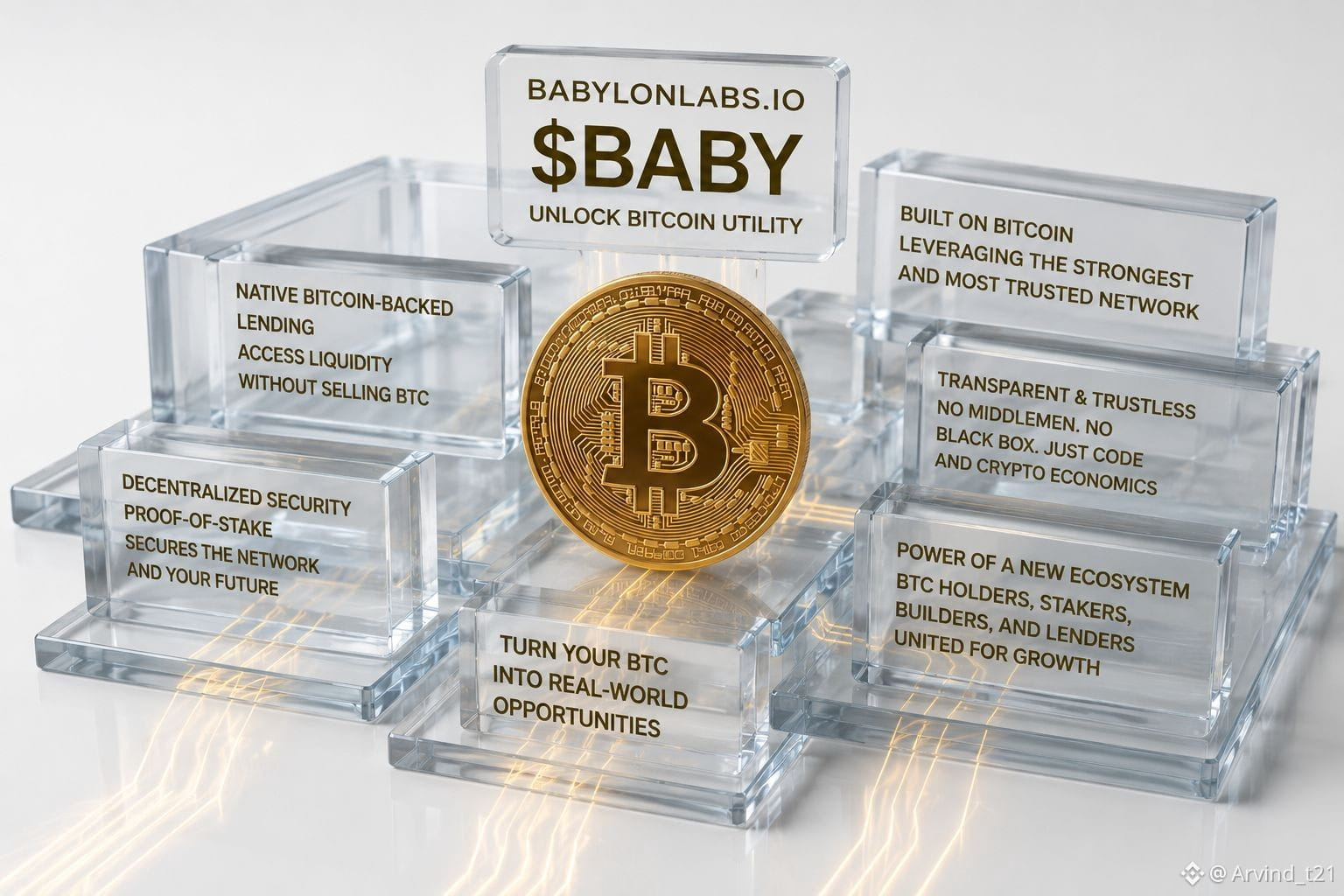
Zuerst beurteilte ich Bitcoin hauptsächlich nach seinem Preis. Grüne Kerzen fühlten sich wie Fortschritt an, während rote Tage die Leute daran zweifeln ließen, ob es eine Zukunft hat. Mit der Zeit habe ich erkannt, dass der Markt nur eine Seite der Geschichte zeigte.
Was Bitcoin wirklich wertvoll macht, ist nicht nur seine Knappheit – sondern die Sicherheit, die es sich über Jahre aufgebaut hat. Diese Sicherheit ist inzwischen selbst zu einem Vermögenswert geworden: Sie schützt nicht nur Bitcoin, sondern schafft auch Chancen für andere Ökosysteme.
Darum hat mich Babylon aufmerksam gemacht. Anstatt Bitcoin zu bitten, etwas Neues zu werden, nutzt es die bewährte Sicherheit von Bitcoin, um Proof-of-Stake-Netzwerke durch natives BTC-Staking zu stärken. Es fühlt sich weniger nach einem Wechsel von Bitcoin an und eher nach einer Erweiterung seiner Wirkung.
Auch die Art, wie ich Krypto-Projekte bewerte, hat sich verändert. Ich frage nicht nur, ob ein Token steigen kann. Ich frage, ob das Protokoll ein echtes Infrastrukturproblem löst, das auch noch Jahre von jetzt an relevant sein wird. Starke Grundlagen überdauern meist kurzlebige Narrativen.
Babylon muss sich noch durch Akzeptanz, Umsetzung und Wachstum der Entwickler-Community beweisen. Aber wenn die Branche weiter in Richtung stärkerer Infrastruktur geht, könnte die Sicherheit von Bitcoin zu einem der wertvollsten Bausteine im Krypto-Bereich werden.
Also stellt sich folgende Frage:
Wird Bitcoins größte Errungenschaft sein Preis sein – oder die Sicherheit, die es dem gesamten Blockchain-Ökosystem bieten kann?
@babylonlabs_io $BABY #BTCStaking
#baby $BABY
Zuerst beurteilte ich Bitcoin hauptsächlich nach seinem Preis. Grüne Kerzen fühlten sich wie Fortschritt an, während rote Tage die Leute daran zweifeln ließen, ob es eine Zukunft hat. Mit der Zeit habe ich erkannt, dass der Markt nur eine Seite der Geschichte zeigte.
Was Bitcoin wirklich wertvoll macht, ist nicht nur seine Knappheit – sondern die Sicherheit, die es sich über Jahre aufgebaut hat. Diese Sicherheit ist inzwischen selbst zu einem Vermögenswert geworden: Sie schützt nicht nur Bitcoin, sondern schafft auch Chancen für andere Ökosysteme.
Darum hat mich Babylon aufmerksam gemacht. Anstatt Bitcoin zu bitten, etwas Neues zu werden, nutzt es die bewährte Sicherheit von Bitcoin, um Proof-of-Stake-Netzwerke durch natives BTC-Staking zu stärken. Es fühlt sich weniger nach einem Wechsel von Bitcoin an und eher nach einer Erweiterung seiner Wirkung.
Auch die Art, wie ich Krypto-Projekte bewerte, hat sich verändert. Ich frage nicht nur, ob ein Token steigen kann. Ich frage, ob das Protokoll ein echtes Infrastrukturproblem löst, das auch noch Jahre von jetzt an relevant sein wird. Starke Grundlagen überdauern meist kurzlebige Narrativen.
Babylon muss sich noch durch Akzeptanz, Umsetzung und Wachstum der Entwickler-Community beweisen. Aber wenn die Branche weiter in Richtung stärkerer Infrastruktur geht, könnte die Sicherheit von Bitcoin zu einem der wertvollsten Bausteine im Krypto-Bereich werden.
Also stellt sich folgende Frage:
Wird Bitcoins größte Errungenschaft sein Preis sein – oder die Sicherheit, die es dem gesamten Blockchain-Ökosystem bieten kann?
@BabylonLabs_io $BABY #BTCStaking
#baby $BABY
Was Bitcoin wirklich wertvoll macht, ist nicht nur seine Knappheit – sondern die Sicherheit, die es sich über Jahre aufgebaut hat. Diese Sicherheit ist inzwischen selbst zu einem Vermögenswert geworden: Sie schützt nicht nur Bitcoin, sondern schafft auch Chancen für andere Ökosysteme.
Darum hat mich Babylon aufmerksam gemacht. Anstatt Bitcoin zu bitten, etwas Neues zu werden, nutzt es die bewährte Sicherheit von Bitcoin, um Proof-of-Stake-Netzwerke durch natives BTC-Staking zu stärken. Es fühlt sich weniger nach einem Wechsel von Bitcoin an und eher nach einer Erweiterung seiner Wirkung.
Auch die Art, wie ich Krypto-Projekte bewerte, hat sich verändert. Ich frage nicht nur, ob ein Token steigen kann. Ich frage, ob das Protokoll ein echtes Infrastrukturproblem löst, das auch noch Jahre von jetzt an relevant sein wird. Starke Grundlagen überdauern meist kurzlebige Narrativen.
Babylon muss sich noch durch Akzeptanz, Umsetzung und Wachstum der Entwickler-Community beweisen. Aber wenn die Branche weiter in Richtung stärkerer Infrastruktur geht, könnte die Sicherheit von Bitcoin zu einem der wertvollsten Bausteine im Krypto-Bereich werden.
Also stellt sich folgende Frage:
Wird Bitcoins größte Errungenschaft sein Preis sein – oder die Sicherheit, die es dem gesamten Blockchain-Ökosystem bieten kann?
@BabylonLabs_io $BABY #BTCStaking
#baby $BABY
78
#baby $BABY Umgewickeltes BTC hatte 1 Job.
Und es ist fehlgeschlagen.
Brücken wurden gehackt. Gelder gingen verloren.
Das Risiko war zu hoch.
Babylon hat es behoben.
Stake dein BTC nativ.
Halte es auf Bitcoin.
Verdiene $BABY , während du die Zukunft sicherst.
Sicherheit + Rendite.
Endlich.
@BabylonLabs_io $BABY #baby #Bitcoin #BTCStaking
#baby $BABY Umgewickeltes BTC hatte 1 Job.
Und es ist fehlgeschlagen.
Brücken wurden gehackt. Gelder gingen verloren.
Das Risiko war zu hoch.
Babylon hat es behoben.
Stake dein BTC nativ.
Halte es auf Bitcoin.
Verdiene $BABY , während du die Zukunft sicherst.
Sicherheit + Rendite.
Endlich.
@BabylonLabs_io $BABY #baby #Bitcoin #BTCStaking
Und es ist fehlgeschlagen.
Brücken wurden gehackt. Gelder gingen verloren.
Das Risiko war zu hoch.
Babylon hat es behoben.
Stake dein BTC nativ.
Halte es auf Bitcoin.
Verdiene $BABY , während du die Zukunft sicherst.
Sicherheit + Rendite.
Endlich.
@BabylonLabs_io $BABY #baby #Bitcoin #BTCStaking
92

·
--
Als ich dreiundzwanzig war, verweigerte mein erster Vermieter mir einen Mietvertrag, den ich mit meiner eigenen Unterschrift hätte unterschreiben können. Ich hatte einen festen Job, aber keine Bonitätshistorie hinter mir, nichts Papiernes, das auf mich zeigte.
Mein Onkel saß dem Property-Manager gegenüber und unterschrieb mit. Danach sagte er mir ganz unverblümt: Ich zahle deine Miete nicht, aber wenn du sie auslässt, bin ich der Erste, den sie anrufen. Er hat mir nie sein eigenes Ansehen gegeben. Er hat es an meines geknüpft – zu seinen Bedingungen, und nur für einen begrenzten Zeitraum.
Krypto hat dasselbe Muster. Es nennt diese gemeinsame Sicherheit: Ein System leiht sein wirtschaftliches Gewicht einem jüngeren, ohne die Eigentümerschaft aufzugeben.
Babylon ( @babylonlabs_io ) wendet diese Logik auf den Bitcoin selbst an. Ein Staker sperrt BTC in einer Staking-Transaktion, die mit Bitcoin-Script erstellt wird – einem zeitverriegelten UTXO, das niemals die eigene Wallet verlässt. Keine Brücke, kein Token, der „wrapped“ wird, kein Custodian, der die Schlüssel hält.
Dieser gesperrte Wert wird an einen Finality Provider delegiert, also eine Entität, die auf Blöcke für das Bitcoin Supercharged Network stimmt, das sie absichert. Wenn der Provider zwei widersprüchliche Blöcke doppelt signiert, ermöglichen Extractable One-Time Signatures, dass jeder die private Schlüssel aus diesen beiden Signaturen rekonstruieren und eine Slashing-Transaktion einreichen kann – durch Bitcoin-Script erzwungen, statt durch das Wort eines Custodians.
Die Unterschrift meines Onkels brachte Urteil mit, nicht nur Haftung. Er hatte gesehen, wie ich einen Job hatte und kleine Schulden zurückzahlte. Wenn ich die Miete ausließ, konnte er meine Eltern kontaktieren, mich verklagen oder einfach ablehnen, mich künftig erneut zu bürgen. Das ist weit gefasstes und zugleich anpassbares Vertrauen.
Extractable One-Time Signatures decken allerdings etwas engeres ab: Ein Provider wird nur für eine einzige nachweisbare Handlung bestraft – das doppelte Signieren. Eines, das langsam ist, nachlässig oder stillschweigend mit einem schlechten Governance-Votum verstrickt ist, löst die Mechanik überhaupt nicht aus. Das Gewicht von Bitcoin schützt vor einem einzigen Ausfallmodus – und schweigt zu allem anderen.
$BABY sollte danach bewertet werden, wie vollständig Babylons Slashing-Bedingungen die echten Ausfallmodi eines jungen Netzwerks abdecken – nicht nur danach, wie viel Bitcoin es anzuziehen geschafft hat.
#baby #BTCStaking $GIGGLE $IDOL
Als ich dreiundzwanzig war, verweigerte mein erster Vermieter mir einen Mietvertrag, den ich mit meiner eigenen Unterschrift hätte unterschreiben können. Ich hatte einen festen Job, aber keine Bonitätshistorie hinter mir, nichts Papiernes, das auf mich zeigte.
Mein Onkel saß dem Property-Manager gegenüber und unterschrieb mit. Danach sagte er mir ganz unverblümt: Ich zahle deine Miete nicht, aber wenn du sie auslässt, bin ich der Erste, den sie anrufen. Er hat mir nie sein eigenes Ansehen gegeben. Er hat es an meines geknüpft – zu seinen Bedingungen, und nur für einen begrenzten Zeitraum.
Krypto hat dasselbe Muster. Es nennt diese gemeinsame Sicherheit: Ein System leiht sein wirtschaftliches Gewicht einem jüngeren, ohne die Eigentümerschaft aufzugeben.
Babylon ( @BabylonLabs_io ) wendet diese Logik auf den Bitcoin selbst an. Ein Staker sperrt BTC in einer Staking-Transaktion, die mit Bitcoin-Script erstellt wird – einem zeitverriegelten UTXO, das niemals die eigene Wallet verlässt. Keine Brücke, kein Token, der „wrapped“ wird, kein Custodian, der die Schlüssel hält.
Dieser gesperrte Wert wird an einen Finality Provider delegiert, also eine Entität, die auf Blöcke für das Bitcoin Supercharged Network stimmt, das sie absichert. Wenn der Provider zwei widersprüchliche Blöcke doppelt signiert, ermöglichen Extractable One-Time Signatures, dass jeder die private Schlüssel aus diesen beiden Signaturen rekonstruieren und eine Slashing-Transaktion einreichen kann – durch Bitcoin-Script erzwungen, statt durch das Wort eines Custodians.
Die Unterschrift meines Onkels brachte Urteil mit, nicht nur Haftung. Er hatte gesehen, wie ich einen Job hatte und kleine Schulden zurückzahlte. Wenn ich die Miete ausließ, konnte er meine Eltern kontaktieren, mich verklagen oder einfach ablehnen, mich künftig erneut zu bürgen. Das ist weit gefasstes und zugleich anpassbares Vertrauen.
Extractable One-Time Signatures decken allerdings etwas engeres ab: Ein Provider wird nur für eine einzige nachweisbare Handlung bestraft – das doppelte Signieren. Eines, das langsam ist, nachlässig oder stillschweigend mit einem schlechten Governance-Votum verstrickt ist, löst die Mechanik überhaupt nicht aus. Das Gewicht von Bitcoin schützt vor einem einzigen Ausfallmodus – und schweigt zu allem anderen.
$BABY sollte danach bewertet werden, wie vollständig Babylons Slashing-Bedingungen die echten Ausfallmodi eines jungen Netzwerks abdecken – nicht nur danach, wie viel Bitcoin es anzuziehen geschafft hat.
#baby #BTCStaking $GIGGLE $IDOL
Mein Onkel saß dem Property-Manager gegenüber und unterschrieb mit. Danach sagte er mir ganz unverblümt: Ich zahle deine Miete nicht, aber wenn du sie auslässt, bin ich der Erste, den sie anrufen. Er hat mir nie sein eigenes Ansehen gegeben. Er hat es an meines geknüpft – zu seinen Bedingungen, und nur für einen begrenzten Zeitraum.
Krypto hat dasselbe Muster. Es nennt diese gemeinsame Sicherheit: Ein System leiht sein wirtschaftliches Gewicht einem jüngeren, ohne die Eigentümerschaft aufzugeben.
Babylon ( @BabylonLabs_io ) wendet diese Logik auf den Bitcoin selbst an. Ein Staker sperrt BTC in einer Staking-Transaktion, die mit Bitcoin-Script erstellt wird – einem zeitverriegelten UTXO, das niemals die eigene Wallet verlässt. Keine Brücke, kein Token, der „wrapped“ wird, kein Custodian, der die Schlüssel hält.
Dieser gesperrte Wert wird an einen Finality Provider delegiert, also eine Entität, die auf Blöcke für das Bitcoin Supercharged Network stimmt, das sie absichert. Wenn der Provider zwei widersprüchliche Blöcke doppelt signiert, ermöglichen Extractable One-Time Signatures, dass jeder die private Schlüssel aus diesen beiden Signaturen rekonstruieren und eine Slashing-Transaktion einreichen kann – durch Bitcoin-Script erzwungen, statt durch das Wort eines Custodians.
Die Unterschrift meines Onkels brachte Urteil mit, nicht nur Haftung. Er hatte gesehen, wie ich einen Job hatte und kleine Schulden zurückzahlte. Wenn ich die Miete ausließ, konnte er meine Eltern kontaktieren, mich verklagen oder einfach ablehnen, mich künftig erneut zu bürgen. Das ist weit gefasstes und zugleich anpassbares Vertrauen.
Extractable One-Time Signatures decken allerdings etwas engeres ab: Ein Provider wird nur für eine einzige nachweisbare Handlung bestraft – das doppelte Signieren. Eines, das langsam ist, nachlässig oder stillschweigend mit einem schlechten Governance-Votum verstrickt ist, löst die Mechanik überhaupt nicht aus. Das Gewicht von Bitcoin schützt vor einem einzigen Ausfallmodus – und schweigt zu allem anderen.
$BABY sollte danach bewertet werden, wie vollständig Babylons Slashing-Bedingungen die echten Ausfallmodi eines jungen Netzwerks abdecken – nicht nur danach, wie viel Bitcoin es anzuziehen geschafft hat.
#baby #BTCStaking $GIGGLE $IDOL
271
·
--
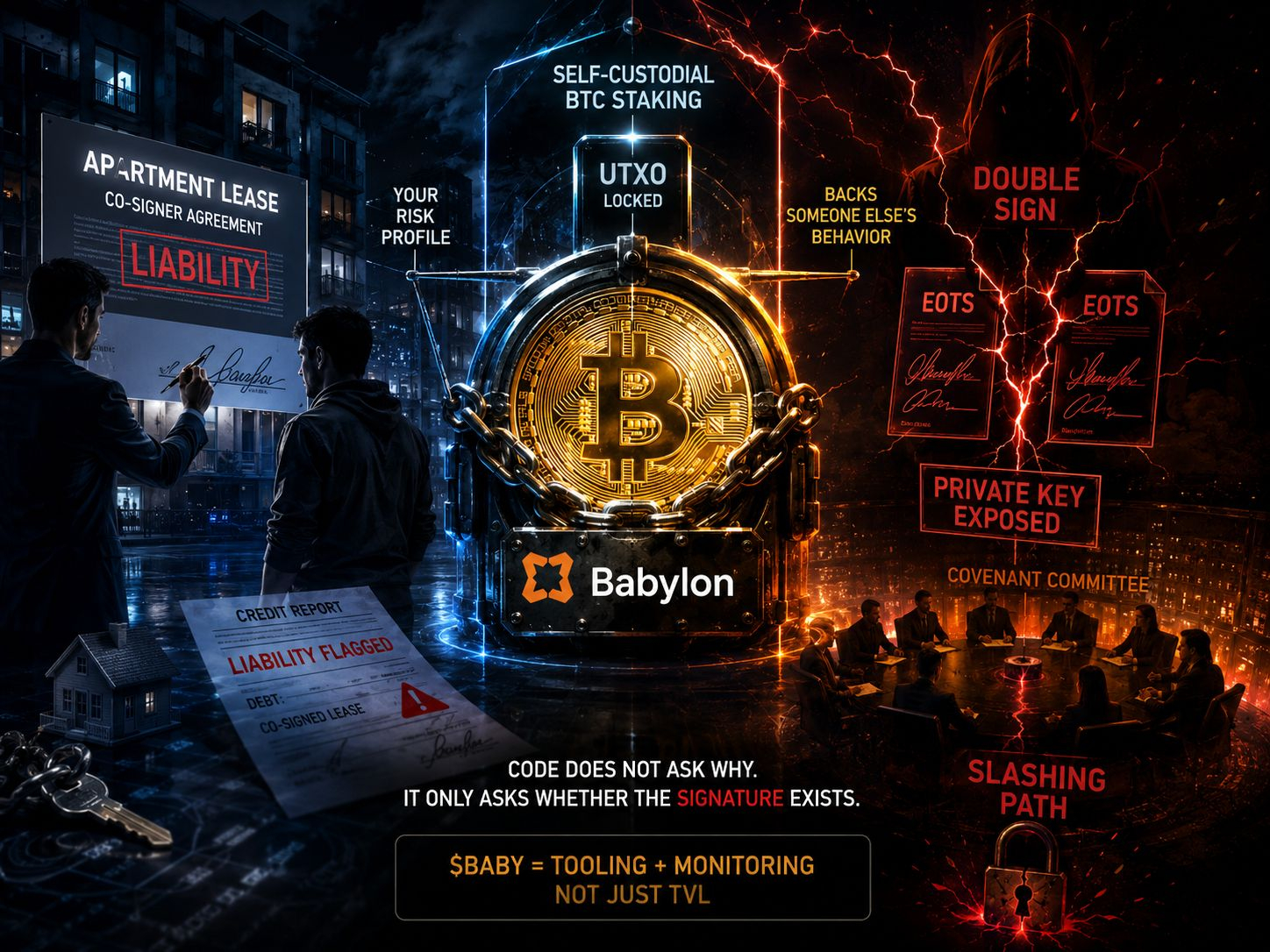
Vor zwei Jahren habe ich den Mietvertrag der Wohnung meines Cousins mitunterzeichnet. Der Hausverwalter war dabei ziemlich deutlich: Wenn er aufhört, Miete zu zahlen, kämen sie zuerst zu mir – nicht erst über eine Zwangsräumung.
Er hat nie eine Zahlung verpasst. Aber als ich letztes Jahr meinen eigenen Kredit beantragt habe, hat der Kredit-Sachbearbeiter seinen Mietvertrag als Verbindlichkeit in meiner Akte markiert – als eine Schuld, die ich nie angerührt habe, aber die mein Risikoprofil weiter prägte.
Dieses Muster läuft Krypto-Sicherheit meistens auf: Man stützt etwas ab, indem man es verschiebt – in eine Brücke, in ein „Wrapped Token“, in den Cold Storage eines Custodians. Beim Self-Custodial-BTC-Staking wird die Verschiebung übersprungen: Es wird nichts übergeben, aber die Coins bleiben dennoch die Grundlage für das Verhalten von jemand anderem.
Babylons Bitcoin-Staking funktioniert über ein selbstverwaltetes UTXO. Dein BTC wird in einem Bitcoin-Skript gesperrt, das mehrere Ausgabe-/Verwendungspfade ermöglicht, aber der private Schlüssel verlässt nie deine Kontrolle. Du delegierst an einen Finality-Provider, der Blöcke mit Extractable One-Time Signatures (EOTS, kurz) signiert.
Die Gefahr zeigt sich nur, wenn dieser Provider doppelt signiert. Zwei widersprüchliche EOTS-Signaturen können kombiniert werden, um mathematisch ihren privaten Schlüssel offenzulegen – und damit einen Slashing-Pfad freizuschalten, den ein Covenant-Komitee bereits mitunterzeichnet hat, als dein Stake begonnen hat. Niemand bei Babylon erzwingt etwas in Echtzeit.
Selbstkritik: Ein menschlicher Bürge lässt sich überzeugen. Der Vermieter meines Cousins hätte mich anrufen können, und wir hätten das besprechen können – Platz für einen ehrlichen Fehler gefunden. Babbylons Slashing lässt so etwas nicht zu.
Wenn ein Finality-Provider doppelt signiert, weil eine falsch konfigurierte Backup-Node oder ein missglücktes Failover dahintersteckt, nicht aus böser Absicht, löst das Slashing dennoch genauso aus, als hätten sie die Gelder schlicht gestohlen.
Ich hätte den gleichen Treffer bei meiner Bonität hinnehmen müssen – selbst wenn bei der versäumten Zahlung meines Cousins ein guter Grund dahintergestanden hätte. Der Code fragt nicht nach dem Warum. Er fragt nur, ob die Signatur existiert.
$BABY sollte danach bewertet werden, wie gut die Tools und das Monitoring des Finality-Providers unbeabsichtigtes Doppelsignieren verhindern – nicht nur danach, wie viel Bitcoin das Protokoll gesperrt hat.
#baby #BTCStaking #BTCFi @babylonlabs_io
Vor zwei Jahren habe ich den Mietvertrag der Wohnung meines Cousins mitunterzeichnet. Der Hausverwalter war dabei ziemlich deutlich: Wenn er aufhört, Miete zu zahlen, kämen sie zuerst zu mir – nicht erst über eine Zwangsräumung.
Er hat nie eine Zahlung verpasst. Aber als ich letztes Jahr meinen eigenen Kredit beantragt habe, hat der Kredit-Sachbearbeiter seinen Mietvertrag als Verbindlichkeit in meiner Akte markiert – als eine Schuld, die ich nie angerührt habe, aber die mein Risikoprofil weiter prägte.
Dieses Muster läuft Krypto-Sicherheit meistens auf: Man stützt etwas ab, indem man es verschiebt – in eine Brücke, in ein „Wrapped Token“, in den Cold Storage eines Custodians. Beim Self-Custodial-BTC-Staking wird die Verschiebung übersprungen: Es wird nichts übergeben, aber die Coins bleiben dennoch die Grundlage für das Verhalten von jemand anderem.
Babylons Bitcoin-Staking funktioniert über ein selbstverwaltetes UTXO. Dein BTC wird in einem Bitcoin-Skript gesperrt, das mehrere Ausgabe-/Verwendungspfade ermöglicht, aber der private Schlüssel verlässt nie deine Kontrolle. Du delegierst an einen Finality-Provider, der Blöcke mit Extractable One-Time Signatures (EOTS, kurz) signiert.
Die Gefahr zeigt sich nur, wenn dieser Provider doppelt signiert. Zwei widersprüchliche EOTS-Signaturen können kombiniert werden, um mathematisch ihren privaten Schlüssel offenzulegen – und damit einen Slashing-Pfad freizuschalten, den ein Covenant-Komitee bereits mitunterzeichnet hat, als dein Stake begonnen hat. Niemand bei Babylon erzwingt etwas in Echtzeit.
Selbstkritik: Ein menschlicher Bürge lässt sich überzeugen. Der Vermieter meines Cousins hätte mich anrufen können, und wir hätten das besprechen können – Platz für einen ehrlichen Fehler gefunden. Babbylons Slashing lässt so etwas nicht zu.
Wenn ein Finality-Provider doppelt signiert, weil eine falsch konfigurierte Backup-Node oder ein missglücktes Failover dahintersteckt, nicht aus böser Absicht, löst das Slashing dennoch genauso aus, als hätten sie die Gelder schlicht gestohlen.
Ich hätte den gleichen Treffer bei meiner Bonität hinnehmen müssen – selbst wenn bei der versäumten Zahlung meines Cousins ein guter Grund dahintergestanden hätte. Der Code fragt nicht nach dem Warum. Er fragt nur, ob die Signatur existiert.
$BABY sollte danach bewertet werden, wie gut die Tools und das Monitoring des Finality-Providers unbeabsichtigtes Doppelsignieren verhindern – nicht nur danach, wie viel Bitcoin das Protokoll gesperrt hat.
#baby #BTCStaking #BTCFi @BabylonLabs_io
Er hat nie eine Zahlung verpasst. Aber als ich letztes Jahr meinen eigenen Kredit beantragt habe, hat der Kredit-Sachbearbeiter seinen Mietvertrag als Verbindlichkeit in meiner Akte markiert – als eine Schuld, die ich nie angerührt habe, aber die mein Risikoprofil weiter prägte.
Dieses Muster läuft Krypto-Sicherheit meistens auf: Man stützt etwas ab, indem man es verschiebt – in eine Brücke, in ein „Wrapped Token“, in den Cold Storage eines Custodians. Beim Self-Custodial-BTC-Staking wird die Verschiebung übersprungen: Es wird nichts übergeben, aber die Coins bleiben dennoch die Grundlage für das Verhalten von jemand anderem.
Babylons Bitcoin-Staking funktioniert über ein selbstverwaltetes UTXO. Dein BTC wird in einem Bitcoin-Skript gesperrt, das mehrere Ausgabe-/Verwendungspfade ermöglicht, aber der private Schlüssel verlässt nie deine Kontrolle. Du delegierst an einen Finality-Provider, der Blöcke mit Extractable One-Time Signatures (EOTS, kurz) signiert.
Die Gefahr zeigt sich nur, wenn dieser Provider doppelt signiert. Zwei widersprüchliche EOTS-Signaturen können kombiniert werden, um mathematisch ihren privaten Schlüssel offenzulegen – und damit einen Slashing-Pfad freizuschalten, den ein Covenant-Komitee bereits mitunterzeichnet hat, als dein Stake begonnen hat. Niemand bei Babylon erzwingt etwas in Echtzeit.
Selbstkritik: Ein menschlicher Bürge lässt sich überzeugen. Der Vermieter meines Cousins hätte mich anrufen können, und wir hätten das besprechen können – Platz für einen ehrlichen Fehler gefunden. Babbylons Slashing lässt so etwas nicht zu.
Wenn ein Finality-Provider doppelt signiert, weil eine falsch konfigurierte Backup-Node oder ein missglücktes Failover dahintersteckt, nicht aus böser Absicht, löst das Slashing dennoch genauso aus, als hätten sie die Gelder schlicht gestohlen.
Ich hätte den gleichen Treffer bei meiner Bonität hinnehmen müssen – selbst wenn bei der versäumten Zahlung meines Cousins ein guter Grund dahintergestanden hätte. Der Code fragt nicht nach dem Warum. Er fragt nur, ob die Signatur existiert.
$BABY sollte danach bewertet werden, wie gut die Tools und das Monitoring des Finality-Providers unbeabsichtigtes Doppelsignieren verhindern – nicht nur danach, wie viel Bitcoin das Protokoll gesperrt hat.
#baby #BTCStaking #BTCFi @BabylonLabs_io
4
1
120

#baby
Schreiben
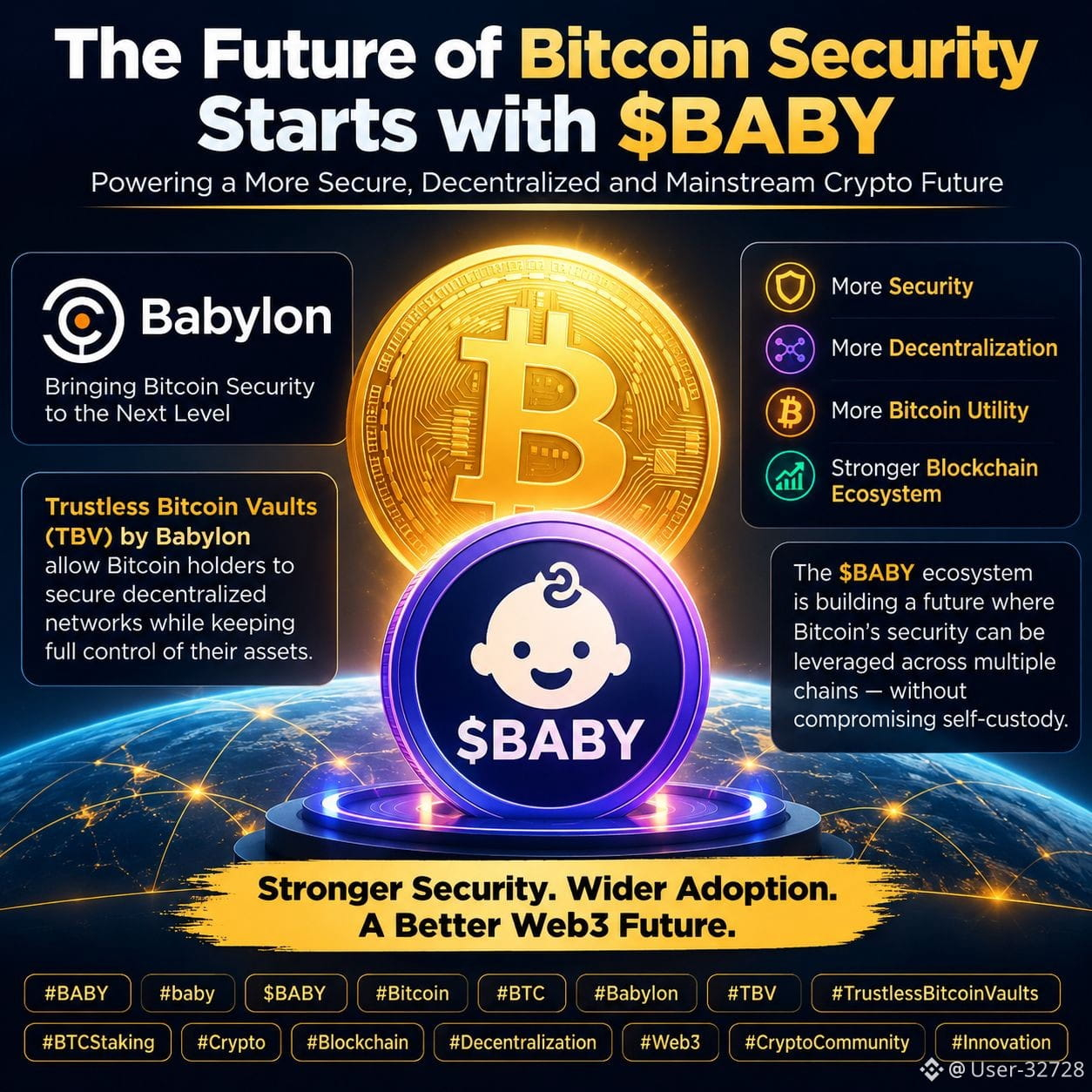
🚀 Die Zukunft der Bitcoin-Sicherheit beginnt mit $BABY
Bitcoin ist die vertrauenswürdigste und sicherste Blockchain der Welt, aber sein Potenzial geht weit über das bloße Halten von BTC hinaus.
Mit Babylon und Trustless Bitcoin Vaults (TBV) können Bitcoin-Inhaber dazu beitragen, dezentrale Netzwerke abzusichern und gleichzeitig die volle Kontrolle über ihre Vermögenswerte zu behalten. Diese Innovation vereint Sicherheit, Transparenz und Dezentralisierung auf eine Weise, die zur ursprünglichen Vision der Blockchain-Technologie passt.
Mit zunehmender Akzeptanz könnten Lösungen wie TBV eine wichtige Rolle dabei spielen, den Nutzen von Bitcoin im gesamten Krypto-Ökosystem zu erweitern. Anstatt BTC untätig zu lassen, können Nutzer zur Netzwerksicherheit beitragen und gleichzeitig das Wachstum einer stärker dezentralen Zukunft unterstützen.
Das $BABY -Ökosystem baut auf eine Welt hin, in der die Sicherheit von Bitcoin über mehrere Chains hinweg genutzt werden kann, ohne Selbstverwahrung oder Vertrauenswürdigkeit zu beeinträchtigen.
🔹 Mehr Sicherheit
🔹 Mehr Dezentralisierung
🔹 Mehr Bitcoin-Nutzen
🔹 Ein stärkeres Blockchain-Ökosystem
Die Zukunft der dezentralen Sicherheit wird heute aufgebaut – und $BABY hilft, den Weg zu ebnen.
#BABY #baby $BABY #Bitcoin #BTC #Babylon #TBV #TrustlessBitcoinVaults #BTCStaking
#baby
Schreiben
🚀 Die Zukunft der Bitcoin-Sicherheit beginnt mit $BABY
Bitcoin ist die vertrauenswürdigste und sicherste Blockchain der Welt, aber sein Potenzial geht weit über das bloße Halten von BTC hinaus.
Mit Babylon und Trustless Bitcoin Vaults (TBV) können Bitcoin-Inhaber dazu beitragen, dezentrale Netzwerke abzusichern und gleichzeitig die volle Kontrolle über ihre Vermögenswerte zu behalten. Diese Innovation vereint Sicherheit, Transparenz und Dezentralisierung auf eine Weise, die zur ursprünglichen Vision der Blockchain-Technologie passt.
Mit zunehmender Akzeptanz könnten Lösungen wie TBV eine wichtige Rolle dabei spielen, den Nutzen von Bitcoin im gesamten Krypto-Ökosystem zu erweitern. Anstatt BTC untätig zu lassen, können Nutzer zur Netzwerksicherheit beitragen und gleichzeitig das Wachstum einer stärker dezentralen Zukunft unterstützen.
Das $BABY -Ökosystem baut auf eine Welt hin, in der die Sicherheit von Bitcoin über mehrere Chains hinweg genutzt werden kann, ohne Selbstverwahrung oder Vertrauenswürdigkeit zu beeinträchtigen.
🔹 Mehr Sicherheit
🔹 Mehr Dezentralisierung
🔹 Mehr Bitcoin-Nutzen
🔹 Ein stärkeres Blockchain-Ökosystem
Die Zukunft der dezentralen Sicherheit wird heute aufgebaut – und $BABY hilft, den Weg zu ebnen.
#BABY #baby $BABY #Bitcoin #BTC #Babylon #TBV #TrustlessBitcoinVaults #BTCStaking
Schreiben
🚀 Die Zukunft der Bitcoin-Sicherheit beginnt mit $BABY
Bitcoin ist die vertrauenswürdigste und sicherste Blockchain der Welt, aber sein Potenzial geht weit über das bloße Halten von BTC hinaus.
Mit Babylon und Trustless Bitcoin Vaults (TBV) können Bitcoin-Inhaber dazu beitragen, dezentrale Netzwerke abzusichern und gleichzeitig die volle Kontrolle über ihre Vermögenswerte zu behalten. Diese Innovation vereint Sicherheit, Transparenz und Dezentralisierung auf eine Weise, die zur ursprünglichen Vision der Blockchain-Technologie passt.
Mit zunehmender Akzeptanz könnten Lösungen wie TBV eine wichtige Rolle dabei spielen, den Nutzen von Bitcoin im gesamten Krypto-Ökosystem zu erweitern. Anstatt BTC untätig zu lassen, können Nutzer zur Netzwerksicherheit beitragen und gleichzeitig das Wachstum einer stärker dezentralen Zukunft unterstützen.
Das $BABY -Ökosystem baut auf eine Welt hin, in der die Sicherheit von Bitcoin über mehrere Chains hinweg genutzt werden kann, ohne Selbstverwahrung oder Vertrauenswürdigkeit zu beeinträchtigen.
🔹 Mehr Sicherheit
🔹 Mehr Dezentralisierung
🔹 Mehr Bitcoin-Nutzen
🔹 Ein stärkeres Blockchain-Ökosystem
Die Zukunft der dezentralen Sicherheit wird heute aufgebaut – und $BABY hilft, den Weg zu ebnen.
#BABY #baby $BABY #Bitcoin #BTC #Babylon #TBV #TrustlessBitcoinVaults #BTCStaking
53
·
--
Bärisch
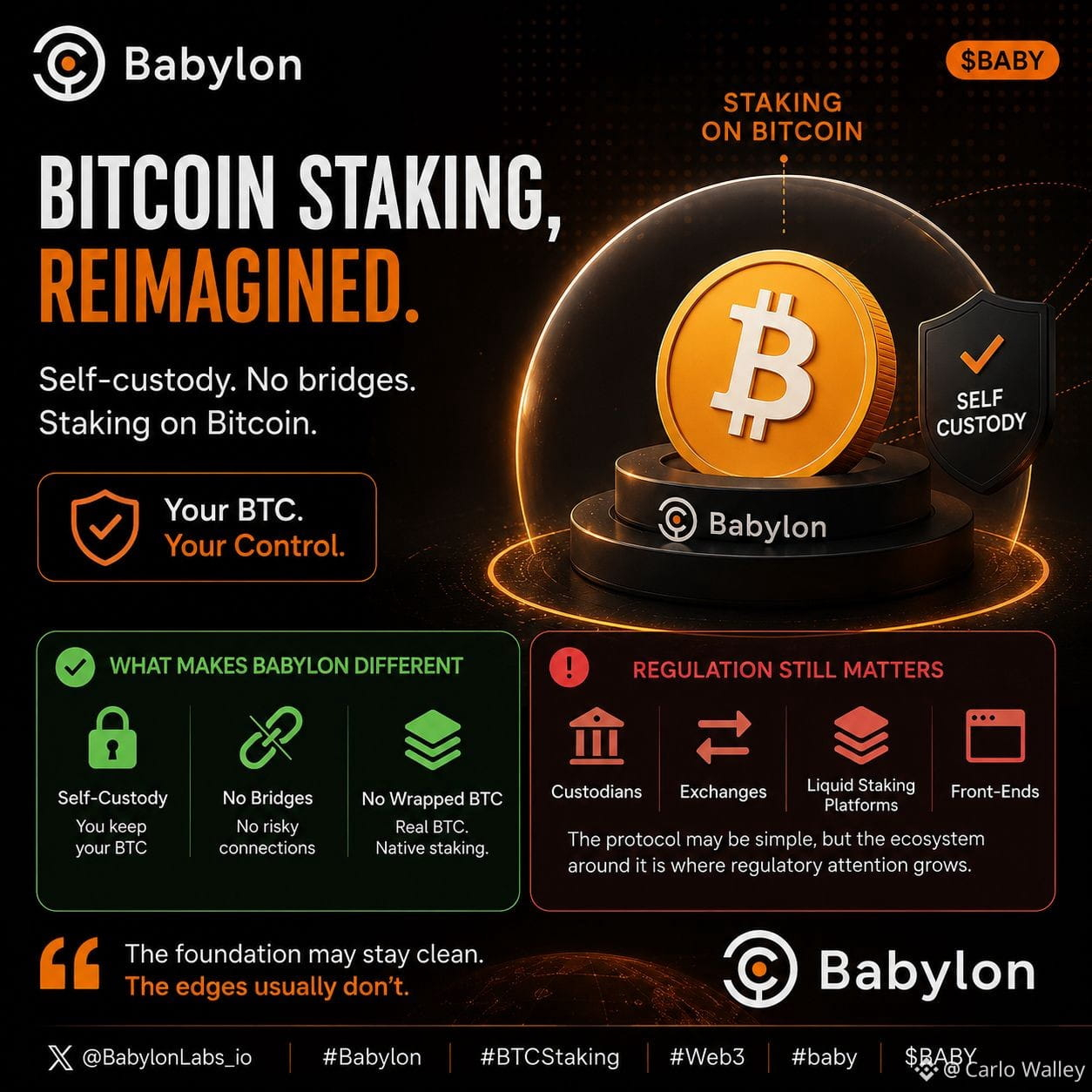
Babylon fühlt sich anders an als die meisten Staking-Projekte, weil es dich nicht dazu auffordert, die Verwahrung deines BTC aufzugeben.
$BABY
{future}(BABYUSDT)
Dein Bitcoin bleibt in deiner Self-Custody. Keine Brücken, keine Wrapped Assets, keine Trade-offs bei der Verwahrung. Allein das beseitigt eine große Risikoschicht.
Doch Regulierung verschwindet nicht—sie verlagert sich nur. Während Börsen, Verwahrer und Staking-Plattformen auf Babylon aufbauen, verlagert sich der rechtliche Fokus vom Protokoll selbst auf die Produkte, die darum herum entwickelt werden.
Das Protokoll bleibt vielleicht einfach. Das Ökosystem darum herum wahrscheinlich nicht.
#Babylon #bitcoin #BTCStaking #baby $BABY @babylonlabs_io
Babylon fühlt sich anders an als die meisten Staking-Projekte, weil es dich nicht dazu auffordert, die Verwahrung deines BTC aufzugeben.
$BABY
Dein Bitcoin bleibt in deiner Self-Custody. Keine Brücken, keine Wrapped Assets, keine Trade-offs bei der Verwahrung. Allein das beseitigt eine große Risikoschicht.
Doch Regulierung verschwindet nicht—sie verlagert sich nur. Während Börsen, Verwahrer und Staking-Plattformen auf Babylon aufbauen, verlagert sich der rechtliche Fokus vom Protokoll selbst auf die Produkte, die darum herum entwickelt werden.
Das Protokoll bleibt vielleicht einfach. Das Ökosystem darum herum wahrscheinlich nicht.
#Babylon #bitcoin #BTCStaking #baby $BABY @BabylonLabs_io
$BABY
Dein Bitcoin bleibt in deiner Self-Custody. Keine Brücken, keine Wrapped Assets, keine Trade-offs bei der Verwahrung. Allein das beseitigt eine große Risikoschicht.
Doch Regulierung verschwindet nicht—sie verlagert sich nur. Während Börsen, Verwahrer und Staking-Plattformen auf Babylon aufbauen, verlagert sich der rechtliche Fokus vom Protokoll selbst auf die Produkte, die darum herum entwickelt werden.
Das Protokoll bleibt vielleicht einfach. Das Ökosystem darum herum wahrscheinlich nicht.
#Babylon #bitcoin #BTCStaking #baby $BABY @BabylonLabs_io
4
2
49
·
--
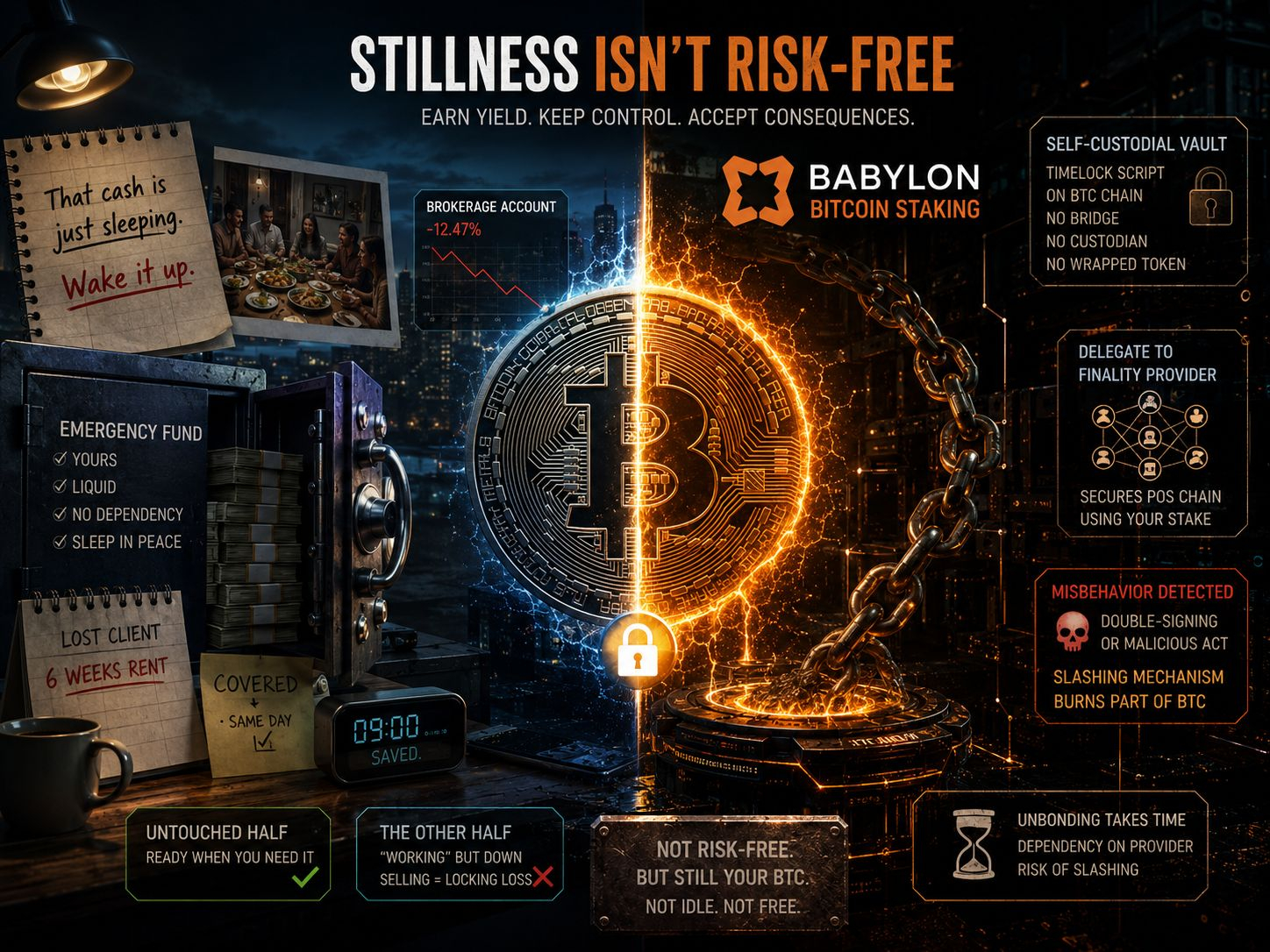
„Das Geld schläft nur“, würde er sagen. „Weck es auf.“ Mein Cousin hat jahrelang mein Notgroschen-Geld als „träges Geld“ bezeichnet. Bei jedem Familienessen kam dieselbe Predigt: verschiebe es in einen Indexfonds, lass es arbeiten.
Im letzten Frühjahr habe ich endlich die Hälfte davon auf ein Brokerkonto übertragen. Zwei Monate später verlor ich einen Kunden und musste schnell sechs Wochen Miete bezahlen. Die unberührte Hälfte deckte das noch am selben Tag. Die Hälfte, die „arbeitete“, war für das Quartal im Minus, und sie zu verkaufen bedeutete, den Verlust festzuschreiben.
Das ist die gleiche Lektion, die DeFi Bitcoin erteilt. Ein Wallet, das BTC hält und nicht gestakt, gebrückt oder irgendwo ausgeliehen wird, wird als Kapital behandelt, das nichts tut.
Babylon bricht diese Annahme auf Mechanik-Ebene. Gestaktes BTC wird in einen selbstverwalteten Tresor gelegt, der durch ein Time-Lock-Skript auf der eigenen Kette von Bitcoin abgesichert ist – kein Bridge-Contract, kein Custodian, kein Wrapped Token in einem anderen Netzwerk.
Der Staker delegiert an einen Finality Provider, dessen wirtschaftliches Fundament aus der Präsenz dieses Stakes stammt und dabei hilft, eine separate Proof-of-Stake-Kette abzusichern. Wenn der Provider doppelt signiert oder böswillig handelt, kann der Slashing-Mechanismus einen Teil des delegierten BTC verbrennen. Die Münze selbst bewegt sich nie.
Selbstkritik: Der Vergleich trägt nur bis zu einem gewissen Punkt. Mein Notgroschen war meiner, um ihn auszugeben, sobald ich ihn brauchte – ohne Verzögerung, ohne Abhängigkeit vom Verhalten irgendjemandes. Gestaktes BTC ist nicht ganz so frei.
Unbonding braucht Zeit, und sobald du delegierst, hängt deine Ruhe von einem Finality Provider ab, den du nicht kontrollierst. Wenn sie sich falsch verhalten, wird ein Teil dieses unberührten BTC ohnehin verbrannt, ohne dass du selbst etwas tust. Nichts bewegt sich sichtbar, aber es war nicht risikofrei.
Das ist der eigentliche Test für Babylons These von der „Stillheit“. $BABY sollte anhand der Zuverlässigkeit des Finality Providers und der Liquidität beim Unbonding bewertet werden – nicht nur daran, wie viel BTC als gestakt ausgewiesen wird.
#baby #BTCStaking #Bitcoin @babylonlabs_io
„Das Geld schläft nur“, würde er sagen. „Weck es auf.“ Mein Cousin hat jahrelang mein Notgroschen-Geld als „träges Geld“ bezeichnet. Bei jedem Familienessen kam dieselbe Predigt: verschiebe es in einen Indexfonds, lass es arbeiten.
Im letzten Frühjahr habe ich endlich die Hälfte davon auf ein Brokerkonto übertragen. Zwei Monate später verlor ich einen Kunden und musste schnell sechs Wochen Miete bezahlen. Die unberührte Hälfte deckte das noch am selben Tag. Die Hälfte, die „arbeitete“, war für das Quartal im Minus, und sie zu verkaufen bedeutete, den Verlust festzuschreiben.
Das ist die gleiche Lektion, die DeFi Bitcoin erteilt. Ein Wallet, das BTC hält und nicht gestakt, gebrückt oder irgendwo ausgeliehen wird, wird als Kapital behandelt, das nichts tut.
Babylon bricht diese Annahme auf Mechanik-Ebene. Gestaktes BTC wird in einen selbstverwalteten Tresor gelegt, der durch ein Time-Lock-Skript auf der eigenen Kette von Bitcoin abgesichert ist – kein Bridge-Contract, kein Custodian, kein Wrapped Token in einem anderen Netzwerk.
Der Staker delegiert an einen Finality Provider, dessen wirtschaftliches Fundament aus der Präsenz dieses Stakes stammt und dabei hilft, eine separate Proof-of-Stake-Kette abzusichern. Wenn der Provider doppelt signiert oder böswillig handelt, kann der Slashing-Mechanismus einen Teil des delegierten BTC verbrennen. Die Münze selbst bewegt sich nie.
Selbstkritik: Der Vergleich trägt nur bis zu einem gewissen Punkt. Mein Notgroschen war meiner, um ihn auszugeben, sobald ich ihn brauchte – ohne Verzögerung, ohne Abhängigkeit vom Verhalten irgendjemandes. Gestaktes BTC ist nicht ganz so frei.
Unbonding braucht Zeit, und sobald du delegierst, hängt deine Ruhe von einem Finality Provider ab, den du nicht kontrollierst. Wenn sie sich falsch verhalten, wird ein Teil dieses unberührten BTC ohnehin verbrannt, ohne dass du selbst etwas tust. Nichts bewegt sich sichtbar, aber es war nicht risikofrei.
Das ist der eigentliche Test für Babylons These von der „Stillheit“. $BABY sollte anhand der Zuverlässigkeit des Finality Providers und der Liquidität beim Unbonding bewertet werden – nicht nur daran, wie viel BTC als gestakt ausgewiesen wird.
#baby #BTCStaking #Bitcoin @BabylonLabs_io
Im letzten Frühjahr habe ich endlich die Hälfte davon auf ein Brokerkonto übertragen. Zwei Monate später verlor ich einen Kunden und musste schnell sechs Wochen Miete bezahlen. Die unberührte Hälfte deckte das noch am selben Tag. Die Hälfte, die „arbeitete“, war für das Quartal im Minus, und sie zu verkaufen bedeutete, den Verlust festzuschreiben.
Das ist die gleiche Lektion, die DeFi Bitcoin erteilt. Ein Wallet, das BTC hält und nicht gestakt, gebrückt oder irgendwo ausgeliehen wird, wird als Kapital behandelt, das nichts tut.
Babylon bricht diese Annahme auf Mechanik-Ebene. Gestaktes BTC wird in einen selbstverwalteten Tresor gelegt, der durch ein Time-Lock-Skript auf der eigenen Kette von Bitcoin abgesichert ist – kein Bridge-Contract, kein Custodian, kein Wrapped Token in einem anderen Netzwerk.
Der Staker delegiert an einen Finality Provider, dessen wirtschaftliches Fundament aus der Präsenz dieses Stakes stammt und dabei hilft, eine separate Proof-of-Stake-Kette abzusichern. Wenn der Provider doppelt signiert oder böswillig handelt, kann der Slashing-Mechanismus einen Teil des delegierten BTC verbrennen. Die Münze selbst bewegt sich nie.
Selbstkritik: Der Vergleich trägt nur bis zu einem gewissen Punkt. Mein Notgroschen war meiner, um ihn auszugeben, sobald ich ihn brauchte – ohne Verzögerung, ohne Abhängigkeit vom Verhalten irgendjemandes. Gestaktes BTC ist nicht ganz so frei.
Unbonding braucht Zeit, und sobald du delegierst, hängt deine Ruhe von einem Finality Provider ab, den du nicht kontrollierst. Wenn sie sich falsch verhalten, wird ein Teil dieses unberührten BTC ohnehin verbrannt, ohne dass du selbst etwas tust. Nichts bewegt sich sichtbar, aber es war nicht risikofrei.
Das ist der eigentliche Test für Babylons These von der „Stillheit“. $BABY sollte anhand der Zuverlässigkeit des Finality Providers und der Liquidität beim Unbonding bewertet werden – nicht nur daran, wie viel BTC als gestakt ausgewiesen wird.
#baby #BTCStaking #Bitcoin @BabylonLabs_io
7
2
137
·
--
Vor ein paar Jahren brauchte eine Freundin von mir für ihre erste Wohnung einen Bürgen. Sie hatte den Job und die Kaution, aber nicht die drei Monate Gehaltsabrechnungen, die das Vermietungsbüro als Nachweis wollte. Ich habe ihr kein Geld gegeben und auch keine Kaution gehalten. Ich habe ein Formular unterschrieben, in dem stand, dass der Property Manager, wenn sie die Miete verpasst, stattdessen mich in Anspruch nehmen kann. Es wurde nichts Physisches übergeben. Das Einzige, was sich bewegt hat, war ein Versprechen – mein Name, der an ihre Fähigkeit geknüpft war, zwölf Monate lang zahlen zu können.
Das ist dasselbe Muster, das Krypto verwendet, um zu beschreiben, etwas einem Risiko auszusetzen. Beim Staking und bei der Hinterlegung als Sicherheit wird fast immer davon ausgegangen, dass sich das Asset selbst zuerst bewegen muss – in einen Vertrag, zu einem Custodian, zu einer Bridge –, bevor es irgendetwas absichern kann. Das Objekt reist, und das Risiko reist mit.
Babylons Staking-Design stellt diese Annahme infrage. Das gestakte Bitcoin verlässt nie die Bitcoin-Kette oder die eigenen Schlüssel des Eigentümers. Es bleibt in einem selbstverwalteten Script eingeschlossen, statt in einem Wallet eines Custodians oder in einem Bridge-Vertrag. Es kann jedoch bestraft werden, wenn der Validator, an den es delegiert ist, unehrlich handelt. @babylonlabs_io Wenn man die Frage nach der Verwahrung vor die Frage nach dem Staking stellt, verändert das, was vom Asset tatsächlich verlangt wird: Nicht „gib es her, damit wir sehen, dass du es ernst meinst“, sondern „behalte es – und beantworte für das, woran du es gebunden hast“.
Selbstkritik: Ich habe nicht diesen Mietvertrag unterschrieben und bin dann ein Jahr lang verschwunden. Als ihre Zahlung einmal zwei Tage zu spät war, habe ich selbst den Vermieter angerufen, weil ich den Unterschied zwischen Sorglosigkeit und einer echten Krise erkennen konnte. Eine Slashing-Bedingung kann diesen Unterschied nicht herstellen. Sie weiß nicht, ob ein Validator aus Bosheit offline gegangen ist oder wegen eines Stromausfalls. Sie weiß nur, dass eine Signatur in einem bestimmten Block gefehlt hat. Echte Bestätigung ist ein fortlaufendes Abwägen – erneuert oder zurückgezogen je nach Kontext, den niemand vollständig codieren kann. Code kann eine Regel erzwingen. Er kann eine Situation nicht lesen.
$BABY sollte danach bewertet werden, wie viel Spielraum sein Finality-Provider und das Slashing-Design dafür lassen, einen ehrlichen Ausfall von echter Fehlhandlung zu unterscheiden – nicht nur danach, wie viel Bitcoin in es hineingesperrt wurde.
#BTCStaking #baby $BLESS $SKYAI
Vor ein paar Jahren brauchte eine Freundin von mir für ihre erste Wohnung einen Bürgen. Sie hatte den Job und die Kaution, aber nicht die drei Monate Gehaltsabrechnungen, die das Vermietungsbüro als Nachweis wollte. Ich habe ihr kein Geld gegeben und auch keine Kaution gehalten. Ich habe ein Formular unterschrieben, in dem stand, dass der Property Manager, wenn sie die Miete verpasst, stattdessen mich in Anspruch nehmen kann. Es wurde nichts Physisches übergeben. Das Einzige, was sich bewegt hat, war ein Versprechen – mein Name, der an ihre Fähigkeit geknüpft war, zwölf Monate lang zahlen zu können.
Das ist dasselbe Muster, das Krypto verwendet, um zu beschreiben, etwas einem Risiko auszusetzen. Beim Staking und bei der Hinterlegung als Sicherheit wird fast immer davon ausgegangen, dass sich das Asset selbst zuerst bewegen muss – in einen Vertrag, zu einem Custodian, zu einer Bridge –, bevor es irgendetwas absichern kann. Das Objekt reist, und das Risiko reist mit.
Babylons Staking-Design stellt diese Annahme infrage. Das gestakte Bitcoin verlässt nie die Bitcoin-Kette oder die eigenen Schlüssel des Eigentümers. Es bleibt in einem selbstverwalteten Script eingeschlossen, statt in einem Wallet eines Custodians oder in einem Bridge-Vertrag. Es kann jedoch bestraft werden, wenn der Validator, an den es delegiert ist, unehrlich handelt. @BabylonLabs_io Wenn man die Frage nach der Verwahrung vor die Frage nach dem Staking stellt, verändert das, was vom Asset tatsächlich verlangt wird: Nicht „gib es her, damit wir sehen, dass du es ernst meinst“, sondern „behalte es – und beantworte für das, woran du es gebunden hast“.
Selbstkritik: Ich habe nicht diesen Mietvertrag unterschrieben und bin dann ein Jahr lang verschwunden. Als ihre Zahlung einmal zwei Tage zu spät war, habe ich selbst den Vermieter angerufen, weil ich den Unterschied zwischen Sorglosigkeit und einer echten Krise erkennen konnte. Eine Slashing-Bedingung kann diesen Unterschied nicht herstellen. Sie weiß nicht, ob ein Validator aus Bosheit offline gegangen ist oder wegen eines Stromausfalls. Sie weiß nur, dass eine Signatur in einem bestimmten Block gefehlt hat. Echte Bestätigung ist ein fortlaufendes Abwägen – erneuert oder zurückgezogen je nach Kontext, den niemand vollständig codieren kann. Code kann eine Regel erzwingen. Er kann eine Situation nicht lesen.
$BABY sollte danach bewertet werden, wie viel Spielraum sein Finality-Provider und das Slashing-Design dafür lassen, einen ehrlichen Ausfall von echter Fehlhandlung zu unterscheiden – nicht nur danach, wie viel Bitcoin in es hineingesperrt wurde.
#BTCStaking #baby $BLESS $SKYAI
Das ist dasselbe Muster, das Krypto verwendet, um zu beschreiben, etwas einem Risiko auszusetzen. Beim Staking und bei der Hinterlegung als Sicherheit wird fast immer davon ausgegangen, dass sich das Asset selbst zuerst bewegen muss – in einen Vertrag, zu einem Custodian, zu einer Bridge –, bevor es irgendetwas absichern kann. Das Objekt reist, und das Risiko reist mit.
Babylons Staking-Design stellt diese Annahme infrage. Das gestakte Bitcoin verlässt nie die Bitcoin-Kette oder die eigenen Schlüssel des Eigentümers. Es bleibt in einem selbstverwalteten Script eingeschlossen, statt in einem Wallet eines Custodians oder in einem Bridge-Vertrag. Es kann jedoch bestraft werden, wenn der Validator, an den es delegiert ist, unehrlich handelt. @BabylonLabs_io Wenn man die Frage nach der Verwahrung vor die Frage nach dem Staking stellt, verändert das, was vom Asset tatsächlich verlangt wird: Nicht „gib es her, damit wir sehen, dass du es ernst meinst“, sondern „behalte es – und beantworte für das, woran du es gebunden hast“.
Selbstkritik: Ich habe nicht diesen Mietvertrag unterschrieben und bin dann ein Jahr lang verschwunden. Als ihre Zahlung einmal zwei Tage zu spät war, habe ich selbst den Vermieter angerufen, weil ich den Unterschied zwischen Sorglosigkeit und einer echten Krise erkennen konnte. Eine Slashing-Bedingung kann diesen Unterschied nicht herstellen. Sie weiß nicht, ob ein Validator aus Bosheit offline gegangen ist oder wegen eines Stromausfalls. Sie weiß nur, dass eine Signatur in einem bestimmten Block gefehlt hat. Echte Bestätigung ist ein fortlaufendes Abwägen – erneuert oder zurückgezogen je nach Kontext, den niemand vollständig codieren kann. Code kann eine Regel erzwingen. Er kann eine Situation nicht lesen.
$BABY sollte danach bewertet werden, wie viel Spielraum sein Finality-Provider und das Slashing-Design dafür lassen, einen ehrlichen Ausfall von echter Fehlhandlung zu unterscheiden – nicht nur danach, wie viel Bitcoin in es hineingesperrt wurde.
#BTCStaking #baby $BLESS $SKYAI
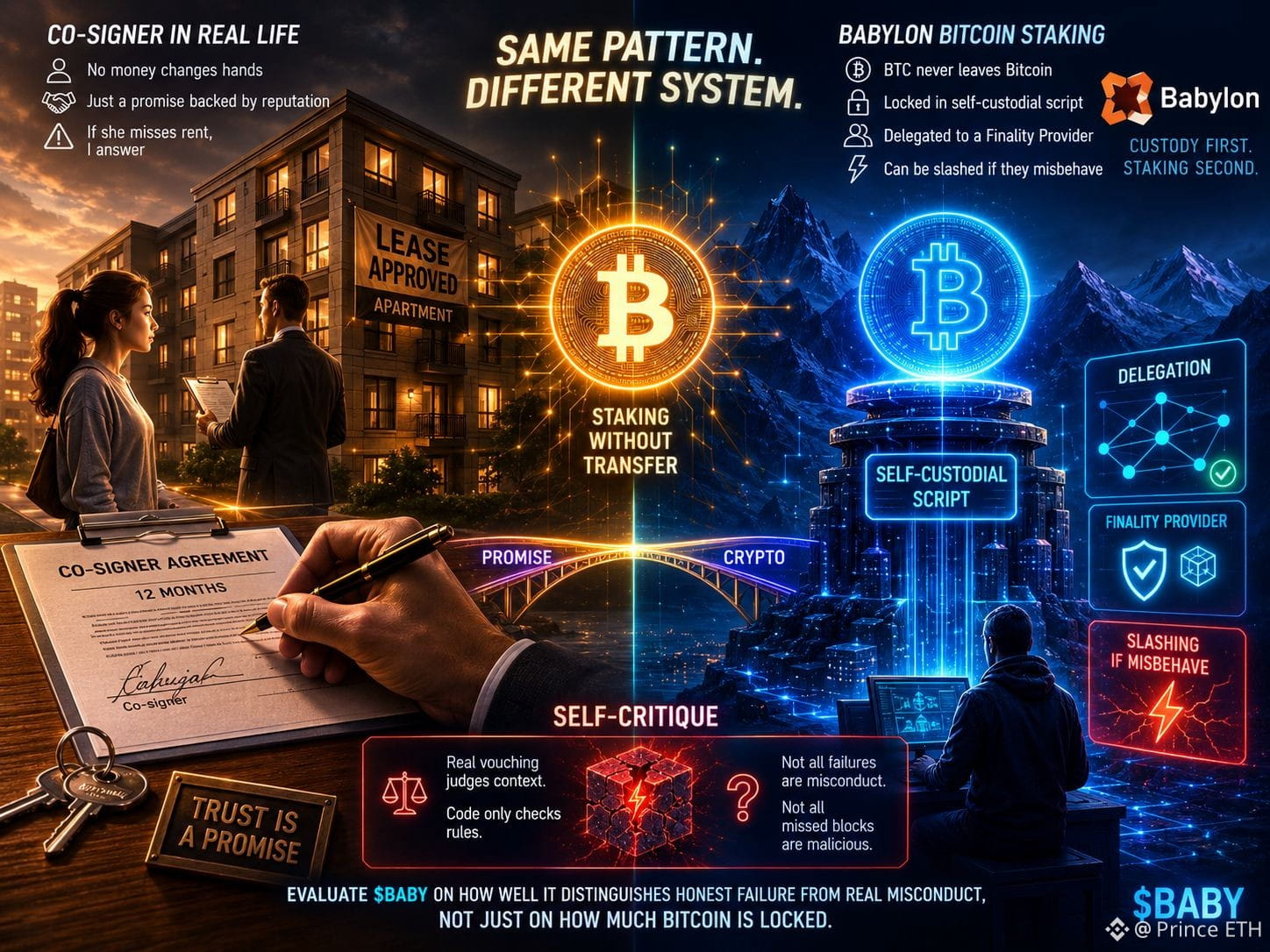
4
1
169
·
--
Kreditinnovation|Babylon TBV + Aave $BABY
Betrachte die Integration von Babylon und Aave aus einer anderen Perspektive: Sie ist ein entscheidender Schritt für die Umsetzung von TBV. Das ist von großer Bedeutung.
Kernlogik: Babylons Trustless Bitcoin Vaults werden mit der Hub-and-Spoke-Architektur von Aave V4 kombiniert. Inhabende von BTC sperren ihre BTC in TBV als Sicherheiten, um auf Aave zu leihen, ohne dabei die Verwahrrechte zu übertragen und ohne BTC zu verpacken. Geplant ist der Launch im April 2026.
Damit wird ein altes Problem von BTC in DeFi gelöst. Bisher musste man für DeFi-Sicherheiten entweder BTC verkaufen und gegen ETH tauschen oder wBTC nutzen, aber dann vertraut man dem Verwahrer. Die TBV-Lösung ermöglicht es, dass BTC unter der Voraussetzung der Selbstverwahrung an DeFi teilnimmt. Die Inhaber behalten dabei sowohl das Exposure auf den BTC-Aufwärtstrend als auch die Liquidität aus dem Kreditgeschäft.
$BABY übernimmt in der Ökologie die Rolle von Protokoll-Governance und Anreizen. Durch das Staken von BABY nimmt man an den Entscheidungen des Protokolls teil, und BTC-Sicherheitengeber erhalten BABY-Belohnungen. Derzeit beträgt die umlaufende Marktkapitalisierung von $BABY 44,18 Mio., die FDV 112,41 Mio., Rang 453, mit einem 24h-Handelsvolumen von 6,99 Mio.
Fokus: das Wachstumstempo der TVL nach dem Go-live der Aave-Integration sowie das Ausmaß der Kreditvergabe und die Liquidationen. Dass das Volumen der kreditbasierten BTC-Sicherheiten kontinuierlich steigt, zeigt, dass die Marktnachfrage real ist.
Wenn die Richtung klar ist, behält man das Tempo selbst in der Hand.
#baby #Babylon #BTCStaking @BabylonLabs_io
Kreditinnovation|Babylon TBV + Aave $BABY
Betrachte die Integration von Babylon und Aave aus einer anderen Perspektive: Sie ist ein entscheidender Schritt für die Umsetzung von TBV. Das ist von großer Bedeutung.
Kernlogik: Babylons Trustless Bitcoin Vaults werden mit der Hub-and-Spoke-Architektur von Aave V4 kombiniert. Inhabende von BTC sperren ihre BTC in TBV als Sicherheiten, um auf Aave zu leihen, ohne dabei die Verwahrrechte zu übertragen und ohne BTC zu verpacken. Geplant ist der Launch im April 2026.
Damit wird ein altes Problem von BTC in DeFi gelöst. Bisher musste man für DeFi-Sicherheiten entweder BTC verkaufen und gegen ETH tauschen oder wBTC nutzen, aber dann vertraut man dem Verwahrer. Die TBV-Lösung ermöglicht es, dass BTC unter der Voraussetzung der Selbstverwahrung an DeFi teilnimmt. Die Inhaber behalten dabei sowohl das Exposure auf den BTC-Aufwärtstrend als auch die Liquidität aus dem Kreditgeschäft.
$BABY übernimmt in der Ökologie die Rolle von Protokoll-Governance und Anreizen. Durch das Staken von BABY nimmt man an den Entscheidungen des Protokolls teil, und BTC-Sicherheitengeber erhalten BABY-Belohnungen. Derzeit beträgt die umlaufende Marktkapitalisierung von $BABY 44,18 Mio., die FDV 112,41 Mio., Rang 453, mit einem 24h-Handelsvolumen von 6,99 Mio.
Fokus: das Wachstumstempo der TVL nach dem Go-live der Aave-Integration sowie das Ausmaß der Kreditvergabe und die Liquidationen. Dass das Volumen der kreditbasierten BTC-Sicherheiten kontinuierlich steigt, zeigt, dass die Marktnachfrage real ist.
Wenn die Richtung klar ist, behält man das Tempo selbst in der Hand.
#baby #Babylon #BTCStaking @BabylonLabs_io
Betrachte die Integration von Babylon und Aave aus einer anderen Perspektive: Sie ist ein entscheidender Schritt für die Umsetzung von TBV. Das ist von großer Bedeutung.
Kernlogik: Babylons Trustless Bitcoin Vaults werden mit der Hub-and-Spoke-Architektur von Aave V4 kombiniert. Inhabende von BTC sperren ihre BTC in TBV als Sicherheiten, um auf Aave zu leihen, ohne dabei die Verwahrrechte zu übertragen und ohne BTC zu verpacken. Geplant ist der Launch im April 2026.
Damit wird ein altes Problem von BTC in DeFi gelöst. Bisher musste man für DeFi-Sicherheiten entweder BTC verkaufen und gegen ETH tauschen oder wBTC nutzen, aber dann vertraut man dem Verwahrer. Die TBV-Lösung ermöglicht es, dass BTC unter der Voraussetzung der Selbstverwahrung an DeFi teilnimmt. Die Inhaber behalten dabei sowohl das Exposure auf den BTC-Aufwärtstrend als auch die Liquidität aus dem Kreditgeschäft.
$BABY übernimmt in der Ökologie die Rolle von Protokoll-Governance und Anreizen. Durch das Staken von BABY nimmt man an den Entscheidungen des Protokolls teil, und BTC-Sicherheitengeber erhalten BABY-Belohnungen. Derzeit beträgt die umlaufende Marktkapitalisierung von $BABY 44,18 Mio., die FDV 112,41 Mio., Rang 453, mit einem 24h-Handelsvolumen von 6,99 Mio.
Fokus: das Wachstumstempo der TVL nach dem Go-live der Aave-Integration sowie das Ausmaß der Kreditvergabe und die Liquidationen. Dass das Volumen der kreditbasierten BTC-Sicherheiten kontinuierlich steigt, zeigt, dass die Marktnachfrage real ist.
Wenn die Richtung klar ist, behält man das Tempo selbst in der Hand.
#baby #Babylon #BTCStaking @BabylonLabs_io
181

·
--
Verifiziert
Bitcoin ist seit jeher für seine unvergleichliche Sicherheit bekannt, aber sein Potenzial muss sich nicht darauf beschränken.
@babylonlabs_io eröffnet mit Trustless Bitcoin Vaults einen neuen Weg und ermöglicht es Bitcoin, Multi-Chain Proof-of-Stake-Netzwerke zu stärken, ohne die Sicherheit zu beeinträchtigen, die BTC einzigartig macht.
Dieser Ansatz zeigt, dass Bitcoin mehr tun kann, als einfach untätig zu bleiben. Es kann aktiv dazu beitragen, dezentrale Ökosysteme zu sichern – und dabei trustless bleiben.
Ich freue mich darauf zu sehen, wie $BTC vom hier aus weiterentwickelt wird, und ich glaube, dass $BABY dabei hilft, diese Zukunft mitzugestalten. Die Kombination aus Bitcoins Sicherheit und moderner PoS-Innovation ist eine Richtung, die man im Blick behalten sollte.
#baby #Bitcoin #BTCStaking $BABY
{future}(BABYUSDT)
{future}(BTCUSDT)
Bitcoin ist seit jeher für seine unvergleichliche Sicherheit bekannt, aber sein Potenzial muss sich nicht darauf beschränken.
@BabylonLabs_io eröffnet mit Trustless Bitcoin Vaults einen neuen Weg und ermöglicht es Bitcoin, Multi-Chain Proof-of-Stake-Netzwerke zu stärken, ohne die Sicherheit zu beeinträchtigen, die BTC einzigartig macht.
Dieser Ansatz zeigt, dass Bitcoin mehr tun kann, als einfach untätig zu bleiben. Es kann aktiv dazu beitragen, dezentrale Ökosysteme zu sichern – und dabei trustless bleiben.
Ich freue mich darauf zu sehen, wie $BTC vom hier aus weiterentwickelt wird, und ich glaube, dass $BABY dabei hilft, diese Zukunft mitzugestalten. Die Kombination aus Bitcoins Sicherheit und moderner PoS-Innovation ist eine Richtung, die man im Blick behalten sollte.
#baby #Bitcoin #BTCStaking $BABY
@BabylonLabs_io eröffnet mit Trustless Bitcoin Vaults einen neuen Weg und ermöglicht es Bitcoin, Multi-Chain Proof-of-Stake-Netzwerke zu stärken, ohne die Sicherheit zu beeinträchtigen, die BTC einzigartig macht.
Dieser Ansatz zeigt, dass Bitcoin mehr tun kann, als einfach untätig zu bleiben. Es kann aktiv dazu beitragen, dezentrale Ökosysteme zu sichern – und dabei trustless bleiben.
Ich freue mich darauf zu sehen, wie $BTC vom hier aus weiterentwickelt wird, und ich glaube, dass $BABY dabei hilft, diese Zukunft mitzugestalten. Die Kombination aus Bitcoins Sicherheit und moderner PoS-Innovation ist eine Richtung, die man im Blick behalten sollte.
#baby #Bitcoin #BTCStaking $BABY
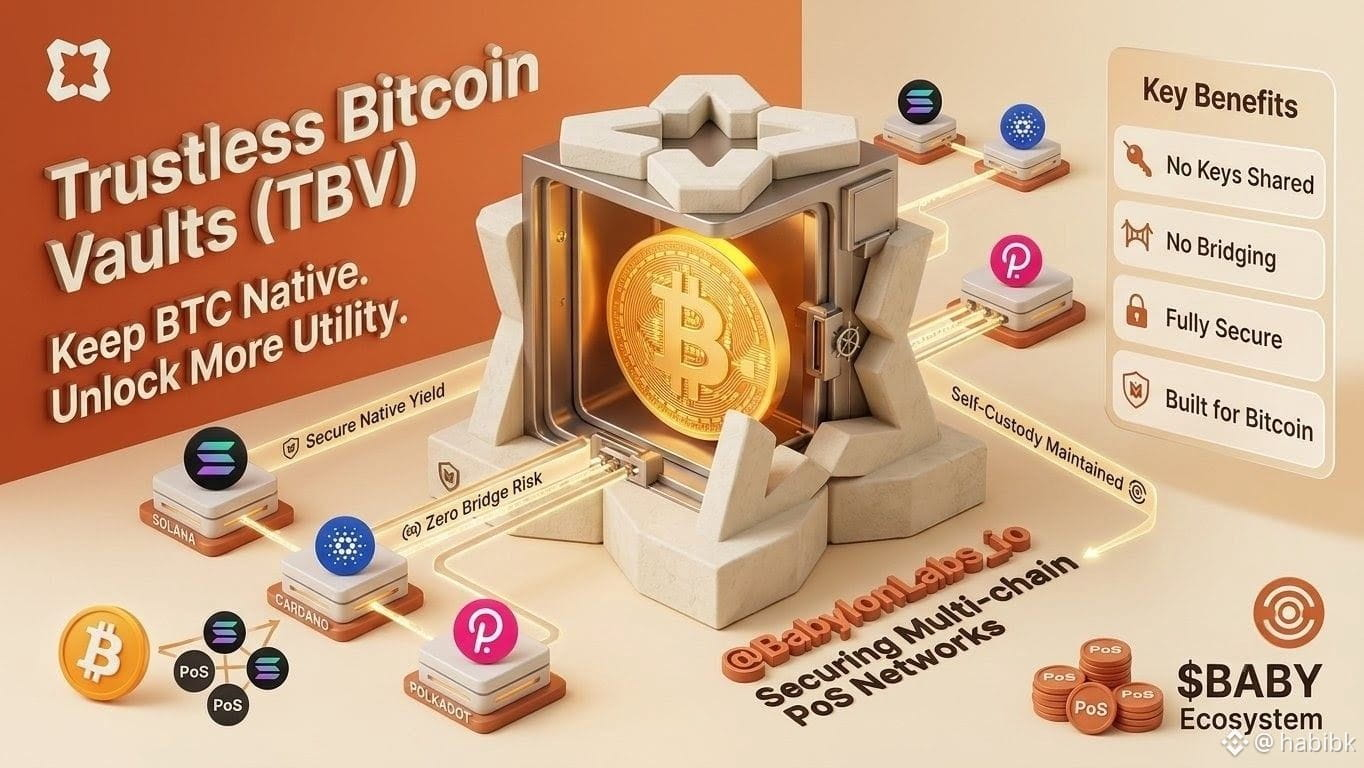
66
26
220

·
--
Übersetzung ansehen
🚨 $200 Guaranteed BABY Rewards + 1,990,000 BABY Prize Pool
Bitcoin is finally earning yield — without giving up custody.
@babylonlabs_io just launched Trustless Bitcoin Vaults (TBV):
Stake NATIVE BTC on Bitcoin. No wrapping. No bridges.
Your BTC helps secure PoS chains and you earn rewards.
Here’s how YOU can earn:
1. Complete the campaign tasks daily
2. Post original content about Babylon TBV
3. All eligible creators get guaranteed BABY rewards up to $200
The prize pool grows with us:
Top 15 creators share 239,000
Everyone else shares 1,751,000
Total Pool: 1,990,000 🔥
The more creators join, the bigger the pool unlocks.
Less than 25% joined = 60% unlock | Over 50% joined = 100% unlock
If you believe Bitcoin should be more than just "digital gold",
this is your chance to earn while spreading the word.
Who’s posting today? Drop your post below 👇
$BABY #baby #Bitcoin #BTCStaking
{spot}(BABYUSDT)
🚨 $200 Guaranteed BABY Rewards + 1,990,000 BABY Prize Pool
Bitcoin is finally earning yield — without giving up custody.
@BabylonLabs_io just launched Trustless Bitcoin Vaults (TBV):
Stake NATIVE BTC on Bitcoin. No wrapping. No bridges.
Your BTC helps secure PoS chains and you earn rewards.
Here’s how YOU can earn:
1. Complete the campaign tasks daily
2. Post original content about Babylon TBV
3. All eligible creators get guaranteed BABY rewards up to $200
The prize pool grows with us:
Top 15 creators share 239,000
Everyone else shares 1,751,000
Total Pool: 1,990,000 🔥
The more creators join, the bigger the pool unlocks.
Less than 25% joined = 60% unlock | Over 50% joined = 100% unlock
If you believe Bitcoin should be more than just "digital gold",
this is your chance to earn while spreading the word.
Who’s posting today? Drop your post below 👇
$BABY #baby #Bitcoin #BTCStaking
Bitcoin is finally earning yield — without giving up custody.
@BabylonLabs_io just launched Trustless Bitcoin Vaults (TBV):
Stake NATIVE BTC on Bitcoin. No wrapping. No bridges.
Your BTC helps secure PoS chains and you earn rewards.
Here’s how YOU can earn:
1. Complete the campaign tasks daily
2. Post original content about Babylon TBV
3. All eligible creators get guaranteed BABY rewards up to $200
The prize pool grows with us:
Top 15 creators share 239,000
Everyone else shares 1,751,000
Total Pool: 1,990,000 🔥
The more creators join, the bigger the pool unlocks.
Less than 25% joined = 60% unlock | Over 50% joined = 100% unlock
If you believe Bitcoin should be more than just "digital gold",
this is your chance to earn while spreading the word.
Who’s posting today? Drop your post below 👇
$BABY #baby #Bitcoin #BTCStaking
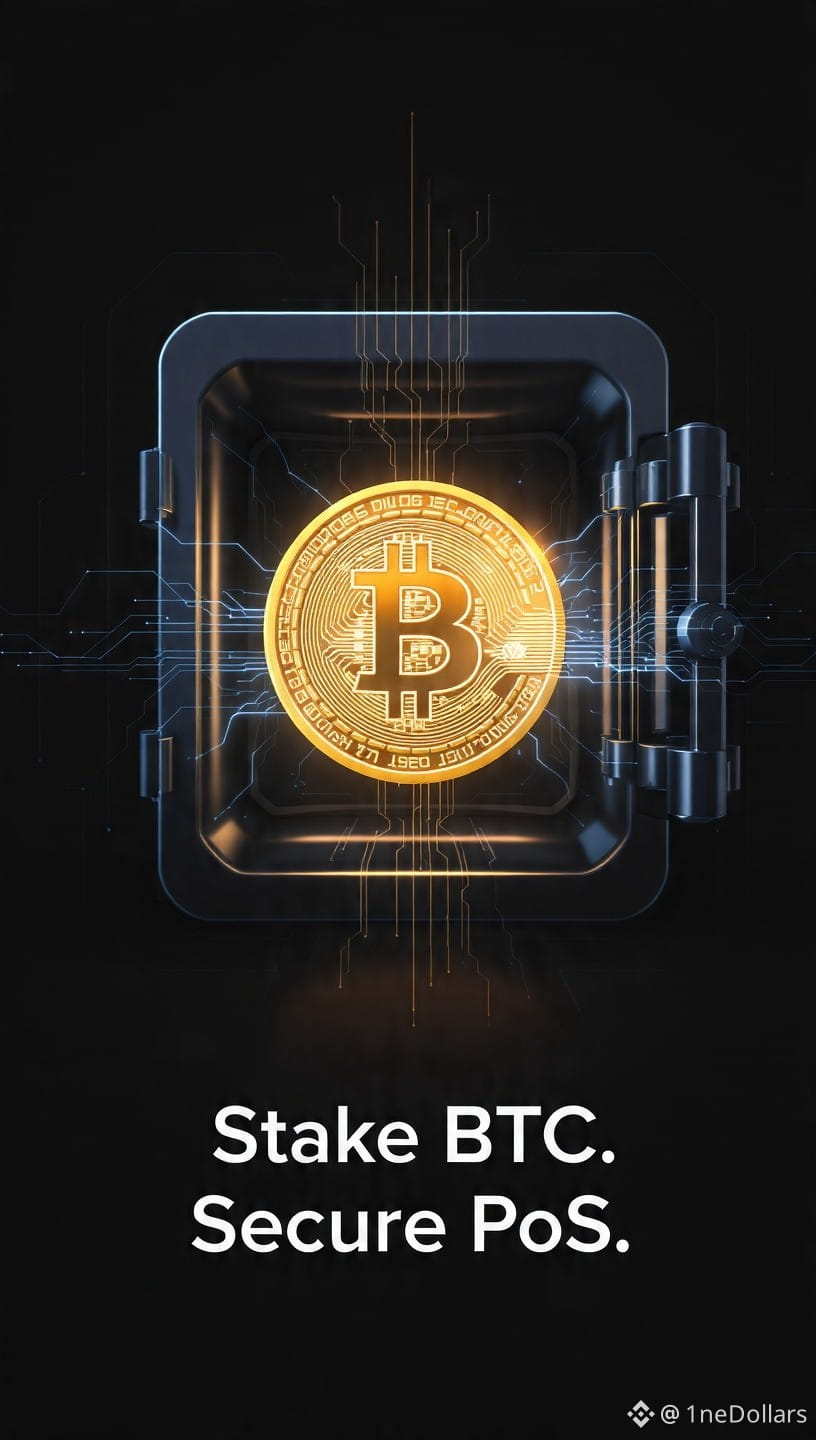
4
1
114
Anmelden und weiter Inhalte entdecken
Krypto-Nutzer weltweit auf Binance Square kennenlernen
⚡️ Bleib in Sachen Krypto stets am Puls.
💬 Die weltgrößte Kryptobörse vertraut darauf.
👍 Erhalte verlässliche Einblicke von verifizierten Creators.
E-Mail-Adresse/Telefonnummer
Trendthemen
1
#FedRateWatch
609,039 Aufrufe
2,828 Kommentare
2
#EthereumFallsBelow$2400
0 Aufrufe
20 Kommentare
3
#USSenateBlocksClarityAct
0 Aufrufe
0 Kommentare
4
#BitcoinSlidesTo$76000
24,666 Aufrufe
122 Kommentare
5
#BitcoinReboundsTo$79K
63,053 Aufrufe
403 Kommentare
6
#StrategyMarketCapPassesFord
42,388 Aufrufe
678 Kommentare
7
#ClarityActOddsHalveOnPolymarket
67,203 Aufrufe
573 Kommentare
8
#US30YTreasuryYieldTops5.40%
36,915 Aufrufe
387 Kommentare
9
#BessentEndorsesFinalClarityActDraft
59,092 Aufrufe
763 Kommentare
10
#ZamaOpens16ConfidentialMorphoVaults
20,516 Aufrufe
372 Kommentare