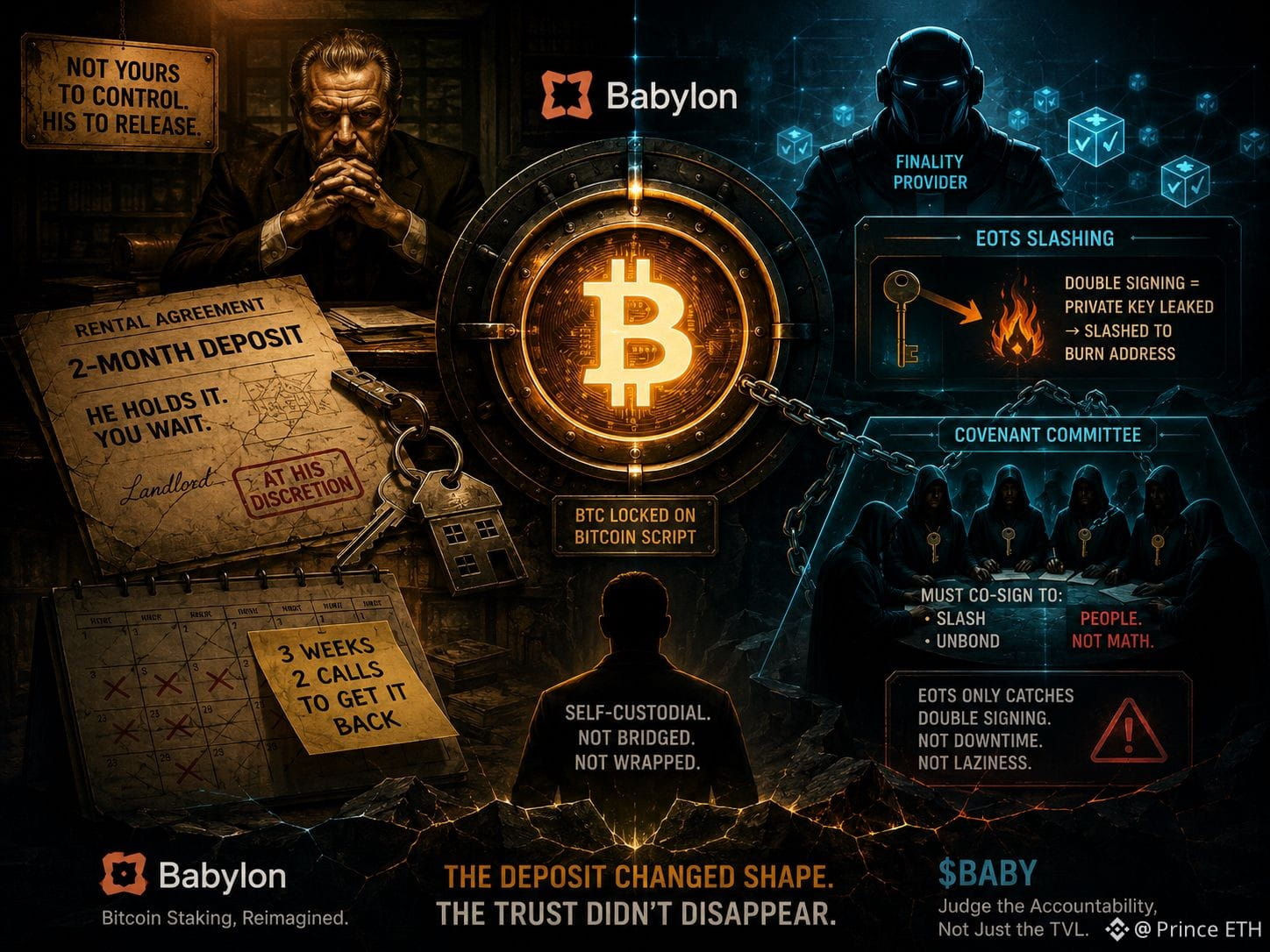
Als ich meine erste Wohnung gemietet habe, verlangte der Vermieter vor der Aushändigung der Schlüssel eine zweimonatige Kaution. Das Geld würde er bis zu meinem Auszug einbehalten, während er jede Wand geprüft hat. Ich habe drei Jahre lang alles richtig gemacht: keine Schäden, die Miete immer pünktlich.
Das Geld zurückzubekommen hat trotzdem noch drei Wochen und zwei Telefonate gedauert, weil die Kaution nie wirklich mir gehört hat, über die ich frei verfügen konnte. Es war sein Geld, das er freigeben musste.
Genau dieselbe Vereinbarung läuft bei den meisten Staking-Protokollen: Jemand anderes muss das Ding in der Hand haben, das einen Validator für Fehlverhalten bestrafen kann.
Babylon nimmt dem Vermieter diesen ersten Schritt zumindest ab. Ein Staker sperrt BTC direkt im Bitcoin-Netzwerk in einem selbstverwalteten Vault: einer UTXO, die durch Bitcoin-Script-Opcode-Anweisungen mit einem Timelock abgesichert ist – nie gebrückt oder in eine andere Kette „wrapped“. Der Staker delegiert dann an einen Finality-Provider, der Blöcke anhand dieser Einlage als Sicherheit bestätigt.
Wenn der Provider jemals zwei widersprüchliche Blöcke in derselben Höhe signiert, dann leakt ein Extractable One-Time Signature-Verfahren, oder EOTS, mathematisch ihren privaten Schlüssel. Dieser geleakte Schlüssel autorisiert anschließend eine vorab vereinbarte Slashing-Transaktion, die die Gelder an eine Burn-Adresse sendet – ohne dass jemals ein Custodian diese verwaltet.
Selbstkritik: Die Kaution ist nicht verschwunden, sie hat nur ihre Form gewechselt. Die Ausführung dieses Slashings und das Unbonding auf Babylon erfordert jedoch weiterhin eine Freigabe durch ein Covenant-Komitee – eine fest definierte Gruppe, die die Transaktion mitunterzeichnen muss, bevor irgendetwas passieren kann.
Das ist keine kryptografische Bedingung, die frei von Menschen „in der Luft“ hängt. Es ist eine konkrete Menge von Parteien, deren Ehrlichkeit und Verfügbarkeit der Staker vertraut – so wie ich einst die Laune und den Kalender meines Vermieters vertraut habe. EOTS fängt außerdem nur einen einzigen Fehlermodus ab: Doppelsignierung. Ein Provider, der offline geht oder schlampig abstimmt, geht daher ohne Strafe davon.
Der echte Test für Babylon war nie, ob sich die Kaution bewegt. $BABY sollte anhand der Verantwortlichkeit seiner Finality-Provider und des Covenant-Komitees bewertet werden – nicht nur danach, wie viel BTC in die Staking-Contracts geflossen ist.
@BabylonLabs_io #baby #BTCStaking #bitcoin
Das Geld zurückzubekommen hat trotzdem noch drei Wochen und zwei Telefonate gedauert, weil die Kaution nie wirklich mir gehört hat, über die ich frei verfügen konnte. Es war sein Geld, das er freigeben musste.
Genau dieselbe Vereinbarung läuft bei den meisten Staking-Protokollen: Jemand anderes muss das Ding in der Hand haben, das einen Validator für Fehlverhalten bestrafen kann.
Babylon nimmt dem Vermieter diesen ersten Schritt zumindest ab. Ein Staker sperrt BTC direkt im Bitcoin-Netzwerk in einem selbstverwalteten Vault: einer UTXO, die durch Bitcoin-Script-Opcode-Anweisungen mit einem Timelock abgesichert ist – nie gebrückt oder in eine andere Kette „wrapped“. Der Staker delegiert dann an einen Finality-Provider, der Blöcke anhand dieser Einlage als Sicherheit bestätigt.
Wenn der Provider jemals zwei widersprüchliche Blöcke in derselben Höhe signiert, dann leakt ein Extractable One-Time Signature-Verfahren, oder EOTS, mathematisch ihren privaten Schlüssel. Dieser geleakte Schlüssel autorisiert anschließend eine vorab vereinbarte Slashing-Transaktion, die die Gelder an eine Burn-Adresse sendet – ohne dass jemals ein Custodian diese verwaltet.
Selbstkritik: Die Kaution ist nicht verschwunden, sie hat nur ihre Form gewechselt. Die Ausführung dieses Slashings und das Unbonding auf Babylon erfordert jedoch weiterhin eine Freigabe durch ein Covenant-Komitee – eine fest definierte Gruppe, die die Transaktion mitunterzeichnen muss, bevor irgendetwas passieren kann.
Das ist keine kryptografische Bedingung, die frei von Menschen „in der Luft“ hängt. Es ist eine konkrete Menge von Parteien, deren Ehrlichkeit und Verfügbarkeit der Staker vertraut – so wie ich einst die Laune und den Kalender meines Vermieters vertraut habe. EOTS fängt außerdem nur einen einzigen Fehlermodus ab: Doppelsignierung. Ein Provider, der offline geht oder schlampig abstimmt, geht daher ohne Strafe davon.
Der echte Test für Babylon war nie, ob sich die Kaution bewegt. $BABY sollte anhand der Verantwortlichkeit seiner Finality-Provider und des Covenant-Komitees bewertet werden – nicht nur danach, wie viel BTC in die Staking-Contracts geflossen ist.
@BabylonLabs_io #baby #BTCStaking #bitcoin