Binance Square
#bitcointests

bitcointests

272 Aufrufe
18 Kommentare
maskcmm
·
--
Übersetzung ansehen
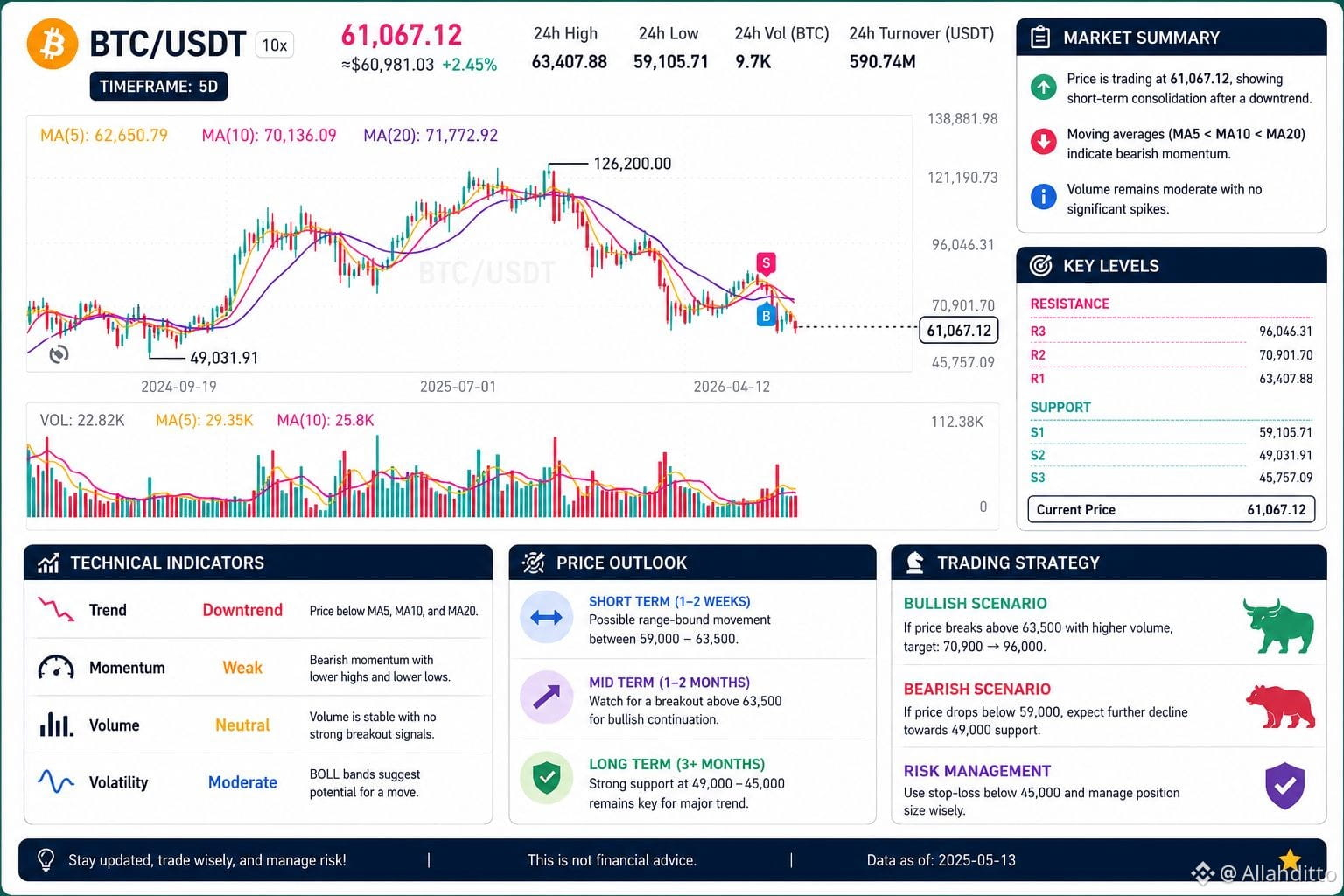
#BitcoinTests $58000 Bitcoin is testing the $58,000 level. Watching how price reacts here for the next move. Key zone for bulls and bears. Note: Price tests can result in breakouts or rejections. Crypto markets are volatile.
#BitcoinTests $58000

Bitcoin is testing the $58,000 level. Watching how price reacts here for the next move. Key zone for bulls and bears.

Note: Price tests can result in breakouts or rejections. Crypto markets are volatile.
Übersetzung ansehen
BTC's $58k headline is stale - the real test is $60k acceptance$BTC is not "testing $58k" anymore - it is testing whether shorts lose control above $60k. Binance spot has BTC near $60,815, up +1.332% in 24h, after a $59,556-$60,941 day. The trending headline still says $58,000, but the live market is already one step later: did the flush create acceptance, or just a squeeze into resistance? The tell is not the tag. It is BTC holding above $60,000 while funding stays only mildly positive at 0.004502%. If leverage gets loud before price clears $60,941, the bounce has weaker confirmation. My read: the headline is stale, the acceptance test is current. #BitcoinTests$58000 #TradebStocks #SolanaRisesTo$72

BTC's $58k headline is stale - the real test is $60k acceptance

$BTC is not "testing $58k" anymore - it is testing whether shorts lose control above $60k.
Binance spot has BTC near $60,815, up +1.332% in 24h, after a $59,556-$60,941 day. The trending headline still says $58,000, but the live market is already one step later: did the flush create acceptance, or just a squeeze into resistance?
The tell is not the tag. It is BTC holding above $60,000 while funding stays only mildly positive at 0.004502%. If leverage gets loud before price clears $60,941, the bounce has weaker confirmation.
My read: the headline is stale, the acceptance test is current.
#BitcoinTests$58000 #TradebStocks #SolanaRisesTo$72
Übersetzung ansehen
Why Bitcoin support tests are a trapEveryone thinks a “$BTC support test” is the safest place to buy… but actually it’s where many traders quietly lose money. When the market is nervous and the Fear & Greed Index sits deep in fear, people rush to buy every dip. Then Bitcoin tests the same level again, their position bleeds, and suddenly that “perfect entry” turns into a stress trade they don’t know how to exit. Think of support like the floor in an old house. The first step might hold. The fifth step might crack. When $BTC keeps revisiting the same price zone during a #BitcoinTests phase, it’s not automatically strength. Sometimes it’s the market checking if the floor is weak. Here are three common mistakes I keep seeing: 1) Treating the first bounce as confirmation. A single bounce doesn’t mean buyers are in control. It’s more like tapping a wall to see if it’s hollow, and $BTC often needs several tests before the real direction shows up. 2) Going all‑in on the “obvious level.” Many traders park their entire stack there, often sitting in $USDT waiting for that exact number. When price dips slightly below it, panic selling triggers and the drop accelerates. 3) Ignoring what altcoins are signaling. If assets like $ARB or other risk-on plays start weakening while Bitcoin retests support, it’s often a clue that liquidity is thinning rather than strengthening. Support tests are useful signals, but they’re more like stress tests than guarantees. The key question isn’t “Did it bounce?” but “How many times can it hold before it breaks?” So when you see Bitcoin testing the same level again, do you see opportunity… or a warning sign forming? #BitcoinTests #SOLRises9

Why Bitcoin support tests are a trap

Everyone thinks a “$BTC support test” is the safest place to buy… but actually it’s where many traders quietly lose money.
When the market is nervous and the Fear & Greed Index sits deep in fear, people rush to buy every dip. Then Bitcoin tests the same level again, their position bleeds, and suddenly that “perfect entry” turns into a stress trade they don’t know how to exit.
Think of support like the floor in an old house. The first step might hold. The fifth step might crack. When $BTC keeps revisiting the same price zone during a #BitcoinTests phase, it’s not automatically strength. Sometimes it’s the market checking if the floor is weak.
Here are three common mistakes I keep seeing:
1) Treating the first bounce as confirmation. A single bounce doesn’t mean buyers are in control. It’s more like tapping a wall to see if it’s hollow, and $BTC often needs several tests before the real direction shows up.
2) Going all‑in on the “obvious level.” Many traders park their entire stack there, often sitting in $USDT waiting for that exact number. When price dips slightly below it, panic selling triggers and the drop accelerates.
3) Ignoring what altcoins are signaling. If assets like $ARB or other risk-on plays start weakening while Bitcoin retests support, it’s often a clue that liquidity is thinning rather than strengthening.
Support tests are useful signals, but they’re more like stress tests than guarantees. The key question isn’t “Did it bounce?” but “How many times can it hold before it breaks?”
So when you see Bitcoin testing the same level again, do you see opportunity… or a warning sign forming? #BitcoinTests #SOLRises9
Übersetzung ansehen
The Strongest Rallies Start in Extreme FearIn the last three major market cycles I’ve traded through, the strongest rallies often started when sentiment felt the worst, not the best. Right now the Fear & Greed Index is sitting around 17, deep in extreme fear. That’s the exact environment where most traders either panic into $USDT or swear they’re “waiting for confirmation”… which usually means they end up buying higher later. Look at what’s happening outside crypto for a second. A stock like Moderna suddenly pushing higher and showing up in trending conversations again is a reminder that capital moves in waves. When confidence begins creeping back into risk assets, it rarely starts everywhere at once. One sector moves first, then another. In crypto we’ve seen this pattern before: first $BTC stabilizes while everyone expects another leg down, then liquidity trickles into majors like $SOL or narratives tied to new tech. I learned this the hard way in 2019 and again in mid‑2022. When fear dominates the timeline, traders become obsessed with avoiding losses. But markets reward people who study structure, not sentiment. If Bitcoin starts testing key levels while everyone is hiding in stablecoins, the next rotation can happen faster than people expect. So here’s the real question: when the crowd finally feels safe again, will the best entries already be gone? #ModernaRisesOver12 #BitcoinTests #SOLRises9

The Strongest Rallies Start in Extreme Fear

In the last three major market cycles I’ve traded through, the strongest rallies often started when sentiment felt the worst, not the best.
Right now the Fear & Greed Index is sitting around 17, deep in extreme fear. That’s the exact environment where most traders either panic into $USDT or swear they’re “waiting for confirmation”… which usually means they end up buying higher later.
Look at what’s happening outside crypto for a second. A stock like Moderna suddenly pushing higher and showing up in trending conversations again is a reminder that capital moves in waves. When confidence begins creeping back into risk assets, it rarely starts everywhere at once. One sector moves first, then another. In crypto we’ve seen this pattern before: first $BTC stabilizes while everyone expects another leg down, then liquidity trickles into majors like $SOL or narratives tied to new tech.
I learned this the hard way in 2019 and again in mid‑2022. When fear dominates the timeline, traders become obsessed with avoiding losses. But markets reward people who study structure, not sentiment. If Bitcoin starts testing key levels while everyone is hiding in stablecoins, the next rotation can happen faster than people expect.
So here’s the real question: when the crowd finally feels safe again, will the best entries already be gone?
#ModernaRisesOver12 #BitcoinTests #SOLRises9
BTC+0,52%
SOL-2,97%
MRNAUS+12,64%
Übersetzung ansehen
Do Stock Market Drops Predict Crypto Moves?Last week a trader I know was staring at two charts side by side: Kioxia’s ADR suddenly down more than 14%, and $BTC quietly holding a key support level. The frustrating part for many investors is figuring out whether moves like this are just a stock story… or an early signal for crypto. People either ignore it completely or panic and rotate at the worst time. Here’s the interesting part of the Kioxia drop. Kioxia is one of the biggest NAND flash producers, which means it sits deep in the supply chain for data centers, AI infrastructure, and storage hardware. When memory stocks slide hard, it often reflects concerns about tech demand cycles. We saw something similar in 2022 when semiconductor weakness preceded broader risk-off sentiment that dragged down crypto, including $BTC and later ecosystem tokens like $ARB. But the comparison with past cycles is where it gets interesting. In previous downturns, semiconductor pain and crypto weakness moved almost in lockstep. Right now the market feels different. Fear & Greed is sitting around extreme fear, yet majors like $BTC are mostly testing levels rather than collapsing. Meanwhile, new infrastructure demand from AI and on-chain scaling keeps building. That disconnect between hardware stocks and crypto resilience is something traders are watching closely. So the case study here isn’t really about one Japanese memory company dropping 14%. It’s about whether tech supply-chain stress will eventually spill into crypto again, or if this cycle is decoupling. Do you see this as an early warning for crypto risk assets, or just noise from the traditional tech market? #KioxiaADRFallsOver14 #BitcoinTests #TradebStocks

Do Stock Market Drops Predict Crypto Moves?

Last week a trader I know was staring at two charts side by side: Kioxia’s ADR suddenly down more than 14%, and $BTC quietly holding a key support level.
The frustrating part for many investors is figuring out whether moves like this are just a stock story… or an early signal for crypto. People either ignore it completely or panic and rotate at the worst time.
Here’s the interesting part of the Kioxia drop. Kioxia is one of the biggest NAND flash producers, which means it sits deep in the supply chain for data centers, AI infrastructure, and storage hardware. When memory stocks slide hard, it often reflects concerns about tech demand cycles. We saw something similar in 2022 when semiconductor weakness preceded broader risk-off sentiment that dragged down crypto, including $BTC and later ecosystem tokens like $ARB .
But the comparison with past cycles is where it gets interesting. In previous downturns, semiconductor pain and crypto weakness moved almost in lockstep. Right now the market feels different. Fear & Greed is sitting around extreme fear, yet majors like $BTC are mostly testing levels rather than collapsing. Meanwhile, new infrastructure demand from AI and on-chain scaling keeps building. That disconnect between hardware stocks and crypto resilience is something traders are watching closely.
So the case study here isn’t really about one Japanese memory company dropping 14%. It’s about whether tech supply-chain stress will eventually spill into crypto again, or if this cycle is decoupling.
Do you see this as an early warning for crypto risk assets, or just noise from the traditional tech market?
#KioxiaADRFallsOver14 #BitcoinTests #TradebStocks
·
--
Bärisch
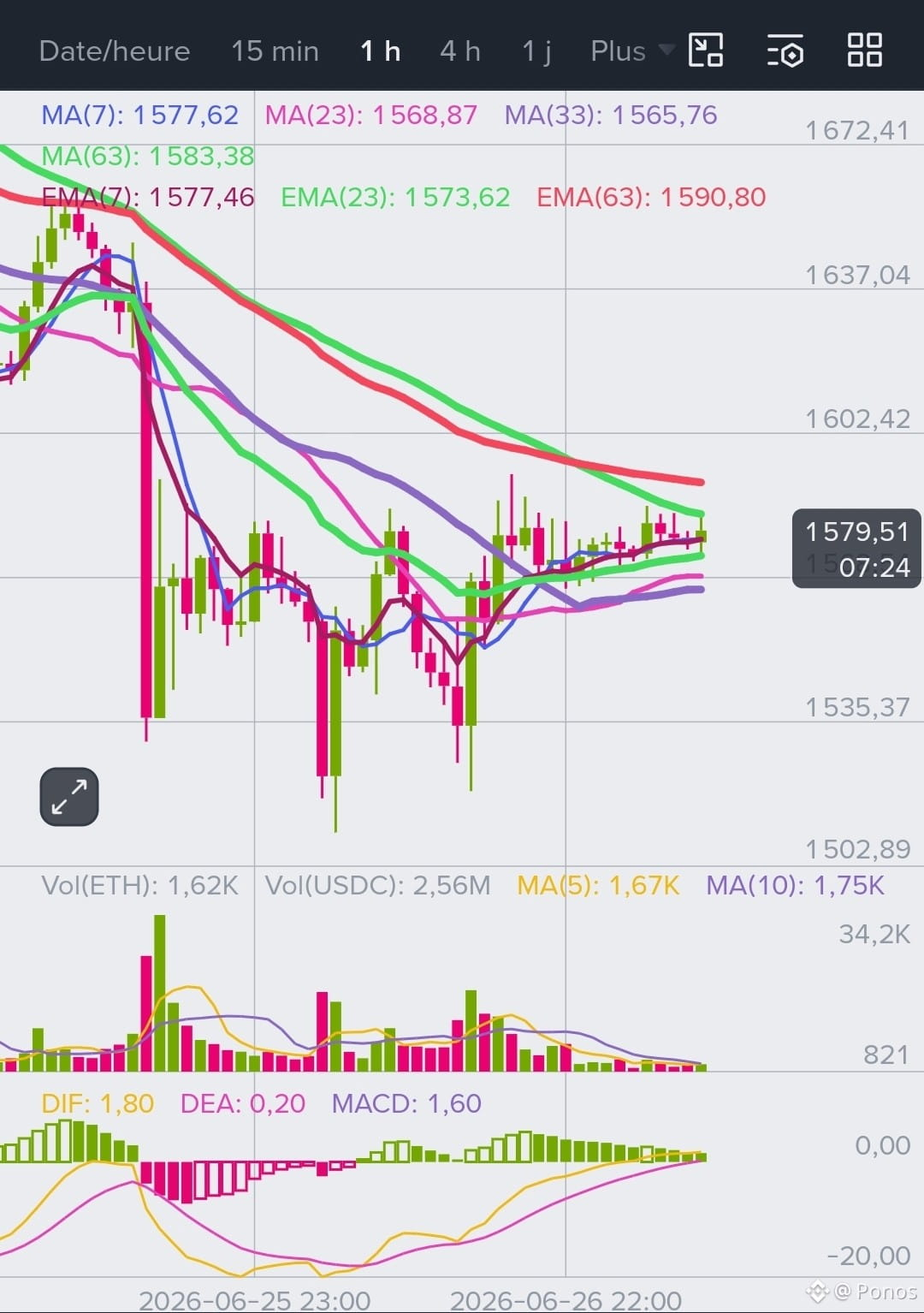
Ein Rückblick auf die 5000 #Ethereum ist in den kommenden Monaten möglich. Bevor man dies bestätigt, müsste man jedoch einen Boden sehen und die Tiefs nach unten durchbrechen, und dann eine Erholung mit guten Volumina. Die Rendite ist offenbar noch weiter gefallen. #TradebStocks #BitcoinTests #BitcoinDown32%InH1
Übersetzung ansehen
SOL at $72 is a relative-strength lesson, not just a green candle$SOL +3.063% while $BTC is only +0.399% is the useful midday mechanic. Relative strength is not "coin up, market up". It is: does the asset gain more on BTC recovery and give back less on BTC stalls? Today SOL traded $68.19-$73.93 and sits near $72.01. BTC is near $60,452 after testing $58,500. That spread is why the SOL trend matters. My read: as long as BTC is reclaiming stress from $58k, SOL strength is real information. If BTC stalls and SOL loses $72 fast, it becomes beta, not leadership. Rule: compare the bounce to BTC first, then judge the coin. #SolanaRisesTo$72 #SOLRises9% #BitcoinTests$58000

SOL at $72 is a relative-strength lesson, not just a green candle

$SOL +3.063% while $BTC is only +0.399% is the useful midday mechanic.
Relative strength is not "coin up, market up". It is: does the asset gain more on BTC recovery and give back less on BTC stalls?
Today SOL traded $68.19-$73.93 and sits near $72.01. BTC is near $60,452 after testing $58,500. That spread is why the SOL trend matters.
My read: as long as BTC is reclaiming stress from $58k, SOL strength is real information. If BTC stalls and SOL loses $72 fast, it becomes beta, not leadership.
Rule: compare the bounce to BTC first, then judge the coin.
#SolanaRisesTo$72 #SOLRises9% #BitcoinTests$58000
Übersetzung ansehen
The Best Bitcoin Entries Feel the WorstThe uncomfortable truth about markets: some of the best long-term $BTC entries in history happened when everyone was convinced the drop wasn’t over. If you’ve been in crypto long enough, you know the feeling. Price slides, the timeline fills with panic around moves like #BitcoinDown32, and suddenly every small bounce looks like a trap. People either panic sell the bottom or freeze and miss the recovery entirely. Extreme fear is where psychology matters more than charts. When sentiment sinks this low, capital quietly rotates. Some traders park in stablecoins like USDT to wait it out, while others start nibbling at risk again through ecosystems showing relative strength. You’ll see capital probe places like $ARB or even newer narratives like $TNSR while Bitcoin tests liquidity levels. That doesn’t mean the bottom is in. It means smart money is already planning for the next phase while the crowd is still reacting to the last move. I’ve watched this cycle play out since early Bitcoin crashes. The pattern rarely changes. During fear, people focus on the last red candle. Veterans focus on where liquidity, narrative, and patience might align weeks later. Markets recover long before sentiment does, which is exactly why most traders miss the turn. So with sentiment this low and Bitcoin under pressure, are you reacting to the panic or quietly planning your next entries? #BitcoinDown32 #BitcoinTests

The Best Bitcoin Entries Feel the Worst

The uncomfortable truth about markets: some of the best long-term $BTC entries in history happened when everyone was convinced the drop wasn’t over.
If you’ve been in crypto long enough, you know the feeling. Price slides, the timeline fills with panic around moves like #BitcoinDown32, and suddenly every small bounce looks like a trap. People either panic sell the bottom or freeze and miss the recovery entirely.
Extreme fear is where psychology matters more than charts. When sentiment sinks this low, capital quietly rotates. Some traders park in stablecoins like USDT to wait it out, while others start nibbling at risk again through ecosystems showing relative strength. You’ll see capital probe places like $ARB or even newer narratives like $TNSR while Bitcoin tests liquidity levels. That doesn’t mean the bottom is in. It means smart money is already planning for the next phase while the crowd is still reacting to the last move.
I’ve watched this cycle play out since early Bitcoin crashes. The pattern rarely changes. During fear, people focus on the last red candle. Veterans focus on where liquidity, narrative, and patience might align weeks later. Markets recover long before sentiment does, which is exactly why most traders miss the turn.
So with sentiment this low and Bitcoin under pressure, are you reacting to the panic or quietly planning your next entries? #BitcoinDown32 #BitcoinTests
Übersetzung ansehen
Why Traders Panic Sell Every Bitcoin DipWhy is nobody talking about what the recent $BTC drop is actually revealing about trader behavior? Most traders say they want volatility, but when Bitcoin pulls back hard, the same people panic sell near the bottom. Extreme Fear readings show the same cycle every time: late buyers get trapped, exits get emotional, and suddenly everyone rotates into stablecoins like $USDT hoping to “wait it out.” Look at this drop as a case study. When $BTC slides sharply and sentiment collapses, liquidity doesn’t disappear,it rotates. Some traders move to $USDT for safety, while others quietly reposition into high-beta ecosystems like $ARB or smaller narratives expecting the next rebound wave. The public narrative becomes “crypto is crashing,” but experienced participants start building positions while fear peaks. The interesting part is timing. By the time the crowd feels comfortable again, Bitcoin has usually already reclaimed a big chunk of the move. Extreme fear rarely lasts long in crypto cycles; it’s often the transition zone between panic selling and stealth accumulation. So the real question isn’t whether $BTC dropped hard. It’s whether this fear phase is distribution… or the early stage of the next rotation. What are you seeing in the order flow right now? #BitcoinDown32 #BitcoinTests #SOLRises9

Why Traders Panic Sell Every Bitcoin Dip

Why is nobody talking about what the recent $BTC drop is actually revealing about trader behavior?
Most traders say they want volatility, but when Bitcoin pulls back hard, the same people panic sell near the bottom. Extreme Fear readings show the same cycle every time: late buyers get trapped, exits get emotional, and suddenly everyone rotates into stablecoins like $USDT hoping to “wait it out.”
Look at this drop as a case study. When $BTC slides sharply and sentiment collapses, liquidity doesn’t disappear,it rotates. Some traders move to $USDT for safety, while others quietly reposition into high-beta ecosystems like $ARB or smaller narratives expecting the next rebound wave. The public narrative becomes “crypto is crashing,” but experienced participants start building positions while fear peaks.
The interesting part is timing. By the time the crowd feels comfortable again, Bitcoin has usually already reclaimed a big chunk of the move. Extreme fear rarely lasts long in crypto cycles; it’s often the transition zone between panic selling and stealth accumulation.
So the real question isn’t whether $BTC dropped hard. It’s whether this fear phase is distribution… or the early stage of the next rotation. What are you seeing in the order flow right now?
#BitcoinDown32 #BitcoinTests #SOLRises9
Übersetzung ansehen
AAVE's +12.5% move is a liquidity test, not a victory lap$AAVE +12.519% looks like the loud headline, but the useful read is thinner: DeFi beta is being repriced only after $BTC recovered from $58,500 to about $60,429. That matters because AAVE is not moving in isolation. $SOL is also up +4.853% near $72.16, while BTC funding is still slightly positive at 0.003931%. The tape is rewarding higher beta, but it is not yet proving broad risk appetite. My read: AAVE strength is real only if it survives a BTC pause. If BTC stalls near the $60,583 intraday high and AAVE gives back the move first, the headline was leverage chasing, not leadership. The tell is follow-through after BTC stops helping. #AAVERises8.9% #BitcoinTests$58000 #SOLRises9%

AAVE's +12.5% move is a liquidity test, not a victory lap

$AAVE +12.519% looks like the loud headline, but the useful read is thinner: DeFi beta is being repriced only after $BTC recovered from $58,500 to about $60,429.
That matters because AAVE is not moving in isolation. $SOL is also up +4.853% near $72.16, while BTC funding is still slightly positive at 0.003931%. The tape is rewarding higher beta, but it is not yet proving broad risk appetite.
My read: AAVE strength is real only if it survives a BTC pause. If BTC stalls near the $60,583 intraday high and AAVE gives back the move first, the headline was leverage chasing, not leadership.
The tell is follow-through after BTC stops helping.
#AAVERises8.9% #BitcoinTests$58000 #SOLRises9%
Übersetzung ansehen
Why Bored Crypto Traders Are Watching BiotechWhy is nobody asking why a biotech stock like Moderna ripping 12% is suddenly showing up in crypto traders’ feeds? A lot of crypto traders are stuck in the same loop right now: rotating between $BTC, $SOL, and stablecoins like $USDT, waiting for the “next move” while the market sits in Extreme Fear. When momentum disappears in crypto, people either overtrade chop or miss where liquidity is quietly flowing. Look at the Moderna move as a case study. When traditional markets suddenly bid up a single narrative sector, it often tells you something about risk appetite returning in pockets before it spreads. The same traders watching $BTC struggle near key levels are also watching equities reclaim momentum. Capital doesn’t stay siloed for long. Historically, crypto doesn’t bottom when everyone feels comfortable. It bottoms when attention drifts elsewhere. If Moderna and other non‑crypto plays start dominating the conversation while $BTC grinds near support, that’s usually when patient money begins positioning rather than chasing. So the real question isn’t why Moderna is up 12%. It’s whether this rotation of attention means crypto is being ignored right before the next move. Anyone else seeing this shift? #ModernaRisesOver12 #BitcoinTests #SOLRises9

Why Bored Crypto Traders Are Watching Biotech

Why is nobody asking why a biotech stock like Moderna ripping 12% is suddenly showing up in crypto traders’ feeds?
A lot of crypto traders are stuck in the same loop right now: rotating between $BTC , $SOL , and stablecoins like $USDT, waiting for the “next move” while the market sits in Extreme Fear. When momentum disappears in crypto, people either overtrade chop or miss where liquidity is quietly flowing.
Look at the Moderna move as a case study. When traditional markets suddenly bid up a single narrative sector, it often tells you something about risk appetite returning in pockets before it spreads. The same traders watching $BTC struggle near key levels are also watching equities reclaim momentum. Capital doesn’t stay siloed for long.
Historically, crypto doesn’t bottom when everyone feels comfortable. It bottoms when attention drifts elsewhere. If Moderna and other non‑crypto plays start dominating the conversation while $BTC grinds near support, that’s usually when patient money begins positioning rather than chasing.
So the real question isn’t why Moderna is up 12%. It’s whether this rotation of attention means crypto is being ignored right before the next move. Anyone else seeing this shift?
#ModernaRisesOver12 #BitcoinTests #SOLRises9
Übersetzung ansehen
Ignore Crude Oil and Watch Crypto BleedIf you’re still ignoring macro signals like crude oil while trading crypto, stop now. A lot of traders get wrecked because they treat crypto like it lives in its own universe. Then oil spikes, liquidity tightens, risk assets wobble, and suddenly that “perfect” alt entry turns into a slow bleed. Crude settling higher again under the #USCrudeSettlesAt chatter is one of those signals people overlook. Energy prices ripple through inflation expectations, which nudges central bank policy, which eventually hits risk appetite. We’ve seen this movie before. In 2022, rising oil and tightening liquidity didn’t just hurt equities, it crushed speculative corners of the market. Today’s Extreme Fear reading around 17 tells you traders are already on edge. The interesting part is how crypto reacts compared to past cycles. $BTC tends to act like a macro asset during these moments, while liquidity-sensitive plays like $ARB or high-beta ecosystems like $SOL often amplify whatever direction risk sentiment takes. Oil climbs, macro uncertainty rises, and suddenly the market stops caring about narratives and starts caring about survival. So here’s what I’m watching: are we heading into another phase where macro leads and crypto follows, or has the market matured enough that $BTC decouples from the oil,inflation feedback loop this time? What’s your read on how crude moves are influencing crypto right now? #USCrudeSettlesAt #BitcoinTests #TradebStocks

Ignore Crude Oil and Watch Crypto Bleed

If you’re still ignoring macro signals like crude oil while trading crypto, stop now.
A lot of traders get wrecked because they treat crypto like it lives in its own universe. Then oil spikes, liquidity tightens, risk assets wobble, and suddenly that “perfect” alt entry turns into a slow bleed.
Crude settling higher again under the #USCrudeSettlesAt chatter is one of those signals people overlook. Energy prices ripple through inflation expectations, which nudges central bank policy, which eventually hits risk appetite. We’ve seen this movie before. In 2022, rising oil and tightening liquidity didn’t just hurt equities, it crushed speculative corners of the market. Today’s Extreme Fear reading around 17 tells you traders are already on edge.
The interesting part is how crypto reacts compared to past cycles. $BTC tends to act like a macro asset during these moments, while liquidity-sensitive plays like $ARB or high-beta ecosystems like $SOL often amplify whatever direction risk sentiment takes. Oil climbs, macro uncertainty rises, and suddenly the market stops caring about narratives and starts caring about survival.
So here’s what I’m watching: are we heading into another phase where macro leads and crypto follows, or has the market matured enough that $BTC decouples from the oil,inflation feedback loop this time?
What’s your read on how crude moves are influencing crypto right now? #USCrudeSettlesAt #BitcoinTests #TradebStocks
Übersetzung ansehen
How Tech Stock Drops Secretly Bleed Your CryptoA 14% drop in a major tech stock can quietly ripple into crypto faster than most traders expect. A lot of people think crypto moves in its own universe. Then a headline like #KioxiaADRFallsOver14 shows up and suddenly liquidity tightens, altcoins stall, and traders wonder why their $ARB or $TNSR position is bleeding even though “nothing happened” in crypto. Here’s the lesson many of us learned the hard way in previous cycles: risk appetite is global. When semiconductor or infrastructure companies get hit, it often signals stress in the broader tech and AI supply chain. Funds start trimming exposure everywhere. That includes crypto. During moments like today, when sentiment is already fragile and people hide in $USDT, even unrelated tokens can feel the pressure. I remember seeing the same pattern in past cycles. In 2022, chip stocks rolled over before many crypto traders realized liquidity was drying up. Altcoins didn’t crash immediately. They just stopped bouncing. That’s the subtle signal most people miss. Markets don’t always collapse in one candle; sometimes they simply lose buyers. Extreme fear in the market isn’t just about crypto charts. It’s about how capital flows across tech, stocks, and digital assets at the same time. If you only watch the token chart, you’re trading with half the map. So when you see moves like Kioxia’s drop, do you treat it as noise, or as an early signal for broader risk sentiment? #KioxiaADRFallsOver14 #TradebStocks #BitcoinTests

How Tech Stock Drops Secretly Bleed Your Crypto

A 14% drop in a major tech stock can quietly ripple into crypto faster than most traders expect.
A lot of people think crypto moves in its own universe. Then a headline like #KioxiaADRFallsOver14 shows up and suddenly liquidity tightens, altcoins stall, and traders wonder why their $ARB or $TNSR position is bleeding even though “nothing happened” in crypto.
Here’s the lesson many of us learned the hard way in previous cycles: risk appetite is global. When semiconductor or infrastructure companies get hit, it often signals stress in the broader tech and AI supply chain. Funds start trimming exposure everywhere. That includes crypto. During moments like today, when sentiment is already fragile and people hide in $USDT, even unrelated tokens can feel the pressure.
I remember seeing the same pattern in past cycles. In 2022, chip stocks rolled over before many crypto traders realized liquidity was drying up. Altcoins didn’t crash immediately. They just stopped bouncing. That’s the subtle signal most people miss. Markets don’t always collapse in one candle; sometimes they simply lose buyers.
Extreme fear in the market isn’t just about crypto charts. It’s about how capital flows across tech, stocks, and digital assets at the same time. If you only watch the token chart, you’re trading with half the map.
So when you see moves like Kioxia’s drop, do you treat it as noise, or as an early signal for broader risk sentiment? #KioxiaADRFallsOver14 #TradebStocks #BitcoinTests
Die besten Krypto‑Signale liegen nicht in KryptoDer Markt hat eine seltsame Angewohnheit: Wenn die Angst am größten ist, tauchen die wertvollsten Signale meistens außerhalb von Krypto auf. Right now sind viele Trader wie eingefroren. Der Fear & Greed Index liegt bei extremen Fear‑Niveaus, die Portfolios bluten, und die Leute rotieren weiter in $USDT, nur um den Schmerz abzustellen. Dieses Gefühl habe ich schon einmal gesehen, 2018, wieder in 2022. Wenn die Stimmung so kalt wird, hören die meisten Menschen auf, auf die größeren makroökonomischen Veränderungen zu achten. News über SpaceX, die möglicherweise dem Nasdaq‑100 beitritt, ist nicht nur eine Schlagzeile an der Börse. Es ist eine weitere Erinnerung daran, dass die Mauer zwischen Tech und Krypto in jedem Zyklus weiter dünner wird. Wenn Unternehmen wie Tesla, Nvidia und nun möglicherweise SpaceX Tech-Indizes dominieren, jagt die Liquidität oft Innovationen hinterher. Ein Teil davon sickert irgendwann in Risk Assets wie Krypto‑Infrastruktur‑Wetten. Deshalb wachen Netzwerke, die an reale Tech‑Narrative gekoppelt sind,denken Sie an skalierbare Ökosysteme wie $ARB oder an leistungsstarke Chains wie $SOL, oft erst dann auf, wenn sich die traditionelle Tech‑Stimmung dreht.

Die besten Krypto‑Signale liegen nicht in Krypto

Der Markt hat eine seltsame Angewohnheit: Wenn die Angst am größten ist, tauchen die wertvollsten Signale meistens außerhalb von Krypto auf.
Right now sind viele Trader wie eingefroren. Der Fear & Greed Index liegt bei extremen Fear‑Niveaus, die Portfolios bluten, und die Leute rotieren weiter in $USDT, nur um den Schmerz abzustellen. Dieses Gefühl habe ich schon einmal gesehen, 2018, wieder in 2022. Wenn die Stimmung so kalt wird, hören die meisten Menschen auf, auf die größeren makroökonomischen Veränderungen zu achten.
News über SpaceX, die möglicherweise dem Nasdaq‑100 beitritt, ist nicht nur eine Schlagzeile an der Börse. Es ist eine weitere Erinnerung daran, dass die Mauer zwischen Tech und Krypto in jedem Zyklus weiter dünner wird. Wenn Unternehmen wie Tesla, Nvidia und nun möglicherweise SpaceX Tech-Indizes dominieren, jagt die Liquidität oft Innovationen hinterher. Ein Teil davon sickert irgendwann in Risk Assets wie Krypto‑Infrastruktur‑Wetten. Deshalb wachen Netzwerke, die an reale Tech‑Narrative gekoppelt sind,denken Sie an skalierbare Ökosysteme wie $ARB oder an leistungsstarke Chains wie $SOL , oft erst dann auf, wenn sich die traditionelle Tech‑Stimmung dreht.
SOL-2,97%
ARB0,00%
SPCXUS-0,13%
Stoppe damit, Krypto im luftleeren Raum zu tradenWenn du immer noch makroökonomische Signale von den großen Tech-Rotation ignorierst, hör jetzt auf damit. Viele Krypto-Trader verlieren Geld nicht, weil sie schlechte Tokens auswählen, sondern weil sie im luftleeren Raum handeln. Sie jagen Pump-and-Dumps in $ARB oder $TNSR , während sich das Kapital still in traditionellen Märkten verschiebt – und wenn die Krypto darauf reagiert, ist die Bewegung bereits zur Hälfte vorbei. Nvidia ersetzt Apple an der Spitze des Russell 1000 – das ist nicht nur eine Börsen-Schlagzeile. Es ist ein weiteres Signal dafür, dass sich die Besessenheit des Marktes von Consumer-Tech hin zu Computing, KI-Infrastruktur und roher Rechenleistung verlagert hat. Einen ähnlichen Wandel haben wir vor einem Jahrzehnt beim Cloud-Boom gesehen: Damals absorbierten Amazon und Microsoft still und heimlich Liquidität, während alles andere hinterherhinkte.

Stoppe damit, Krypto im luftleeren Raum zu traden

Wenn du immer noch makroökonomische Signale von den großen Tech-Rotation ignorierst, hör jetzt auf damit.
Viele Krypto-Trader verlieren Geld nicht, weil sie schlechte Tokens auswählen, sondern weil sie im luftleeren Raum handeln. Sie jagen Pump-and-Dumps in $ARB oder $TNSR , während sich das Kapital still in traditionellen Märkten verschiebt – und wenn die Krypto darauf reagiert, ist die Bewegung bereits zur Hälfte vorbei.
Nvidia ersetzt Apple an der Spitze des Russell 1000 – das ist nicht nur eine Börsen-Schlagzeile. Es ist ein weiteres Signal dafür, dass sich die Besessenheit des Marktes von Consumer-Tech hin zu Computing, KI-Infrastruktur und roher Rechenleistung verlagert hat. Einen ähnlichen Wandel haben wir vor einem Jahrzehnt beim Cloud-Boom gesehen: Damals absorbierten Amazon und Microsoft still und heimlich Liquidität, während alles andere hinterherhinkte.
NVDAonAlpha
AAPLUS+2,77%
NVDAUS-2,30%
Übersetzung ansehen
The Boring Solana Strategy Everyone Is IgnoringWhy is nobody talking about the boring strategy that actually works when $SOL starts climbing again? Most traders only notice a move after the candles are already green. They chase, overpay, and then panic the moment volatility hits. With the Fear & Greed Index sitting deep in fear, a lot of people are still frozen in $USDT while the early rotation into strong ecosystems quietly begins. Here’s the unpopular take: when narratives like #SolanaRisesTo start trending, the real opportunity isn’t chasing the first breakout. It’s building exposure during the hesitation phase. $SOL tends to move in waves , first the base asset runs, then liquidity spreads to ecosystem tokens like $TNSR and other Solana-native projects. If you wait for the headlines, the easy part of the move is usually already gone. A simple playbook works better than prediction. Start with partial entries into $SOL during fear-heavy sentiment, scale only if structure holds, and watch where liquidity rotates next inside the ecosystem. The people who win these cycles aren’t the fastest buyers. They’re the ones who position before the crowd feels comfortable again. So if Solana momentum keeps building from here, do you think the bigger move happens in $SOL itself, or in the ecosystem that follows? #SolanaRisesTo #SOLRises9 #BitcoinTests

The Boring Solana Strategy Everyone Is Ignoring

Why is nobody talking about the boring strategy that actually works when $SOL starts climbing again?
Most traders only notice a move after the candles are already green. They chase, overpay, and then panic the moment volatility hits. With the Fear & Greed Index sitting deep in fear, a lot of people are still frozen in $USDT while the early rotation into strong ecosystems quietly begins.
Here’s the unpopular take: when narratives like #SolanaRisesTo start trending, the real opportunity isn’t chasing the first breakout. It’s building exposure during the hesitation phase. $SOL tends to move in waves , first the base asset runs, then liquidity spreads to ecosystem tokens like $TNSR and other Solana-native projects. If you wait for the headlines, the easy part of the move is usually already gone.
A simple playbook works better than prediction. Start with partial entries into $SOL during fear-heavy sentiment, scale only if structure holds, and watch where liquidity rotates next inside the ecosystem. The people who win these cycles aren’t the fastest buyers. They’re the ones who position before the crowd feels comfortable again.
So if Solana momentum keeps building from here, do you think the bigger move happens in $SOL itself, or in the ecosystem that follows?
#SolanaRisesTo #SOLRises9 #BitcoinTests
Warum Rallys Mehr Portfolios Zerschlagen Als CrashesDie meisten Trader verlieren Geld während Rallys, nicht bei Crashs, weil sie davon ausgehen, dass jede grüne Kerze bedeutet, der Trend sei „sicher“. Wenn eine Chain wie Solana anfängt zu trenden und alle wieder über $SOL reden, ist die übliche Falle ganz einfach: Die Leute jagen dem Momentum hinterher, nachdem die große Bewegung bereits passiert ist. Dann trifft Volatilität ein, die Liquidität rotiert, und späte Käufer bleiben am Ende mit dem Drawdown sitzen. Derzeit heizt sich die Diskussion rund um Solana wieder auf, aber das On-Chain-Muster, das wir zuvor gesehen haben, lohnt sich in Erinnerung zu behalten. Wenn $SOL / <rallies fast>, verteilt sich das Kapital normalerweise als Nächstes in Ecosystem-Token. Du siehst dann oft Dinge wie $TNSR / oder andere Solana-Ecosystem-Assets, die noch stärker anziehen als der Main-Chain-Token. Klingt aufregend, aber hier stapelt sich auch das Risiko. Diese kleineren Caps bewegen sich in beide Richtungen schneller, insbesondere wenn die allgemeine Marktstimmung wackelt und Trader Kapital in Stablecoins wie $USDT parken.

Warum Rallys Mehr Portfolios Zerschlagen Als Crashes

Die meisten Trader verlieren Geld während Rallys, nicht bei Crashs, weil sie davon ausgehen, dass jede grüne Kerze bedeutet, der Trend sei „sicher“.
Wenn eine Chain wie Solana anfängt zu trenden und alle wieder über $SOL reden, ist die übliche Falle ganz einfach: Die Leute jagen dem Momentum hinterher, nachdem die große Bewegung bereits passiert ist. Dann trifft Volatilität ein, die Liquidität rotiert, und späte Käufer bleiben am Ende mit dem Drawdown sitzen.
Derzeit heizt sich die Diskussion rund um Solana wieder auf, aber das On-Chain-Muster, das wir zuvor gesehen haben, lohnt sich in Erinnerung zu behalten. Wenn $SOL / <rallies fast>, verteilt sich das Kapital normalerweise als Nächstes in Ecosystem-Token. Du siehst dann oft Dinge wie $TNSR / oder andere Solana-Ecosystem-Assets, die noch stärker anziehen als der Main-Chain-Token. Klingt aufregend, aber hier stapelt sich auch das Risiko. Diese kleineren Caps bewegen sich in beide Richtungen schneller, insbesondere wenn die allgemeine Marktstimmung wackelt und Trader Kapital in Stablecoins wie $USDT parken.
Anmelden und weiter Inhalte entdecken
Krypto-Nutzer weltweit auf Binance Square kennenlernen
⚡️ Bleib in Sachen Krypto stets am Puls.
💬 Die weltgrößte Kryptobörse vertraut darauf.
👍 Erhalte verlässliche Einblicke von verifizierten Creators.
E-Mail-Adresse/Telefonnummer