
#fabricprotocol
fabricprotocol
78,953 Aufrufe
1,152 Kommentare
Hot
Zuletzt
·
--
Bärisch
Mann, $ROBO (Fabric Protocol) bringt gerade wirklich die Geduld von allen auf die Probe 😅📉
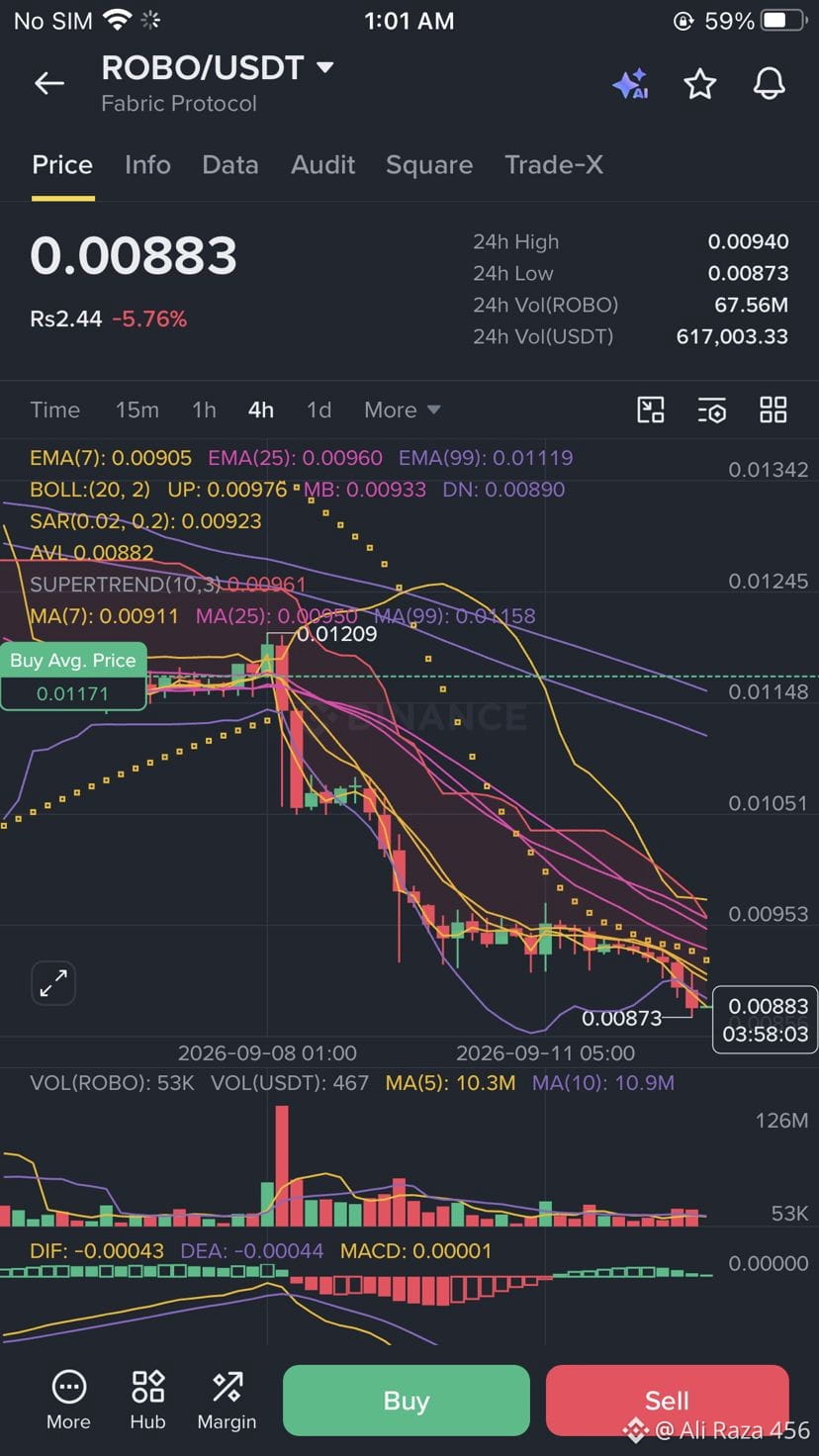
Ich bin um ca. 0.01171 eingestiegen in der Annahme, dass es nach oben geht, aber es steht jetzt bei 0.00883 (-5.76%) und bleibt unten kleben. Der Chart sieht ziemlich mies aus mit all dem Rot, aber ich halte stark für einen Comeback 🤞💸
Seid ihr investiert und haltet durch, stockt ihr auf, oder schaut ihr nur vom Seitenrand zu? Lasst es mich wissen 👇
#ROBO #FabricProtocol #Crypto
{spot}(ROBOUSDT)
Mann, $ROBO (Fabric Protocol) bringt gerade wirklich die Geduld von allen auf die Probe 😅📉
Ich bin um ca. 0.01171 eingestiegen in der Annahme, dass es nach oben geht, aber es steht jetzt bei 0.00883 (-5.76%) und bleibt unten kleben. Der Chart sieht ziemlich mies aus mit all dem Rot, aber ich halte stark für einen Comeback 🤞💸
Seid ihr investiert und haltet durch, stockt ihr auf, oder schaut ihr nur vom Seitenrand zu? Lasst es mich wissen 👇
#ROBO #FabricProtocol #Crypto
Ich bin um ca. 0.01171 eingestiegen in der Annahme, dass es nach oben geht, aber es steht jetzt bei 0.00883 (-5.76%) und bleibt unten kleben. Der Chart sieht ziemlich mies aus mit all dem Rot, aber ich halte stark für einen Comeback 🤞💸
Seid ihr investiert und haltet durch, stockt ihr auf, oder schaut ihr nur vom Seitenrand zu? Lasst es mich wissen 👇
#ROBO #FabricProtocol #Crypto
1
672

·
--
Verifiziert
🤖 ROBO – Das Protokoll für die Robotik-Ökonomie
$ROBO ist der nativen Token des Fabric Protocols, einer dezentralen Koordinationsschicht, die für die Robotik-Ökonomie entwickelt wurde. Sie ermöglicht Robotern On-Chain-Identitäten, autonom zu bezahlen und Belohnungen für das Abschließen verifizierbarer Aufgaben zu verdienen.
Wichtige Highlights:
· Realer Anwendungsfall: Roboter erledigen Aufgaben → automatisch bezahlt mit $ROBO . UBTech, Fourier und andere Robotik-Unternehmen integrieren bereits.
· Token-Nutzen: Wird für Netzwerkgebühren, Staking, Governance und Belohnungen für Proof of Robotic Work verwendet.
· Deflationäres Modell: Die Adaptive Emission Engine passt die Token-Emissionen an die Netzwerkaktivität an — mehr Nutzung = weniger neue Tokens.
** Bevorstehende Katalysatoren (2026 Roadmap):
· Q3 (laufend): Multi-Robot Tasks
· Q4: Migration zu einer dedizierten Layer-1-Blockchain für die Robotik
Warum zuschauen?
Unterstützt von Top-Investoren wie Pantera Capital und Coinbase Ventures. Bereits gelistet auf Binance Spot und Binance Earn (flexibles/gesperrtes Staking).
DYOR. Das ist keine Finanzberatung.
#ROBO #FabricProtocol #AI #DePIN #RobotEconomy y #Binance
🤖 ROBO – Das Protokoll für die Robotik-Ökonomie
$ROBO ist der nativen Token des Fabric Protocols, einer dezentralen Koordinationsschicht, die für die Robotik-Ökonomie entwickelt wurde. Sie ermöglicht Robotern On-Chain-Identitäten, autonom zu bezahlen und Belohnungen für das Abschließen verifizierbarer Aufgaben zu verdienen.
Wichtige Highlights:
· Realer Anwendungsfall: Roboter erledigen Aufgaben → automatisch bezahlt mit $ROBO . UBTech, Fourier und andere Robotik-Unternehmen integrieren bereits.
· Token-Nutzen: Wird für Netzwerkgebühren, Staking, Governance und Belohnungen für Proof of Robotic Work verwendet.
· Deflationäres Modell: Die Adaptive Emission Engine passt die Token-Emissionen an die Netzwerkaktivität an — mehr Nutzung = weniger neue Tokens.
** Bevorstehende Katalysatoren (2026 Roadmap):
· Q3 (laufend): Multi-Robot Tasks
· Q4: Migration zu einer dedizierten Layer-1-Blockchain für die Robotik
Warum zuschauen?
Unterstützt von Top-Investoren wie Pantera Capital und Coinbase Ventures. Bereits gelistet auf Binance Spot und Binance Earn (flexibles/gesperrtes Staking).
DYOR. Das ist keine Finanzberatung.
#ROBO #FabricProtocol #AI #DePIN #RobotEconomy y #Binance
$ROBO ist der nativen Token des Fabric Protocols, einer dezentralen Koordinationsschicht, die für die Robotik-Ökonomie entwickelt wurde. Sie ermöglicht Robotern On-Chain-Identitäten, autonom zu bezahlen und Belohnungen für das Abschließen verifizierbarer Aufgaben zu verdienen.
Wichtige Highlights:
· Realer Anwendungsfall: Roboter erledigen Aufgaben → automatisch bezahlt mit $ROBO . UBTech, Fourier und andere Robotik-Unternehmen integrieren bereits.
· Token-Nutzen: Wird für Netzwerkgebühren, Staking, Governance und Belohnungen für Proof of Robotic Work verwendet.
· Deflationäres Modell: Die Adaptive Emission Engine passt die Token-Emissionen an die Netzwerkaktivität an — mehr Nutzung = weniger neue Tokens.
** Bevorstehende Katalysatoren (2026 Roadmap):
· Q3 (laufend): Multi-Robot Tasks
· Q4: Migration zu einer dedizierten Layer-1-Blockchain für die Robotik
Warum zuschauen?
Unterstützt von Top-Investoren wie Pantera Capital und Coinbase Ventures. Bereits gelistet auf Binance Spot und Binance Earn (flexibles/gesperrtes Staking).
DYOR. Das ist keine Finanzberatung.
#ROBO #FabricProtocol #AI #DePIN #RobotEconomy y #Binance
1
284

·
--
Bullisch
ROBO/USDT Big Breakout!
Der Token von Fabric Protocol ROBO pumpt mit einem Plus von 11,8%+!
Aktueller Preis: 0,01443 $
24h-Hoch: 0,01445 $
Trend: Stark bullischer Aufwärtstrend mit hohem Volumen
Hast du diese Bewegung mitgenommen oder wartest du auf einen Dip? Lass es uns unten wissen!
#ROBO #FabricProtocol $ROBO
{spot}(ROBOUSDT)
ROBO/USDT Big Breakout!
Der Token von Fabric Protocol ROBO pumpt mit einem Plus von 11,8%+!
Aktueller Preis: 0,01443 $
24h-Hoch: 0,01445 $
Trend: Stark bullischer Aufwärtstrend mit hohem Volumen
Hast du diese Bewegung mitgenommen oder wartest du auf einen Dip? Lass es uns unten wissen!
#ROBO #FabricProtocol $ROBO
Der Token von Fabric Protocol ROBO pumpt mit einem Plus von 11,8%+!
Aktueller Preis: 0,01443 $
24h-Hoch: 0,01445 $
Trend: Stark bullischer Aufwärtstrend mit hohem Volumen
Hast du diese Bewegung mitgenommen oder wartest du auf einen Dip? Lass es uns unten wissen!
#ROBO #FabricProtocol $ROBO
1
150

·
--
Teilweise korrekt
Kürzlich ist die Markthitze rund um den Fabric Protocol, der der $ROBO zuzuordnen ist, deutlich gestiegen. Der Kerngrund dafür ist, dass RoboPay erfolgreich die Integration mit bounty abgeschlossen hat. Dieser Fortschritt wird sich positiv auf den Token-Preis auswirken.
Konkret: Aktuell haben 13 Robotik-Plattformen die Zahlungsfunktion integriert. Das bestätigt nicht nur die Umsetzbarkeit der Robotik-Ökonomie, sondern erweitert auch die Einsatzgrenzen des gesamten Ökosystems und eröffnet dem Projekt langfristig mehr Fantasie-Raum.
Derzeit wird $ROBO zu 0,01408 USD angeboten. Das 24-Stunden-Handelsvolumen beträgt 12,59 Millionen USD, die Marktkapitalisierung liegt bei etwa 31,41 Millionen USD. Es lohnt sich, die weiteren Fortschritte im Ökosystem im Blick zu behalten.
#FabricProtocol #ROBO #机器人经济
Kürzlich ist die Markthitze rund um den Fabric Protocol, der der $ROBO zuzuordnen ist, deutlich gestiegen. Der Kerngrund dafür ist, dass RoboPay erfolgreich die Integration mit bounty abgeschlossen hat. Dieser Fortschritt wird sich positiv auf den Token-Preis auswirken.
Konkret: Aktuell haben 13 Robotik-Plattformen die Zahlungsfunktion integriert. Das bestätigt nicht nur die Umsetzbarkeit der Robotik-Ökonomie, sondern erweitert auch die Einsatzgrenzen des gesamten Ökosystems und eröffnet dem Projekt langfristig mehr Fantasie-Raum.
Derzeit wird $ROBO zu 0,01408 USD angeboten. Das 24-Stunden-Handelsvolumen beträgt 12,59 Millionen USD, die Marktkapitalisierung liegt bei etwa 31,41 Millionen USD. Es lohnt sich, die weiteren Fortschritte im Ökosystem im Blick zu behalten.
#FabricProtocol #ROBO #机器人经济
Konkret: Aktuell haben 13 Robotik-Plattformen die Zahlungsfunktion integriert. Das bestätigt nicht nur die Umsetzbarkeit der Robotik-Ökonomie, sondern erweitert auch die Einsatzgrenzen des gesamten Ökosystems und eröffnet dem Projekt langfristig mehr Fantasie-Raum.
Derzeit wird $ROBO zu 0,01408 USD angeboten. Das 24-Stunden-Handelsvolumen beträgt 12,59 Millionen USD, die Marktkapitalisierung liegt bei etwa 31,41 Millionen USD. Es lohnt sich, die weiteren Fortschritte im Ökosystem im Blick zu behalten.
#FabricProtocol #ROBO #机器人经济
291

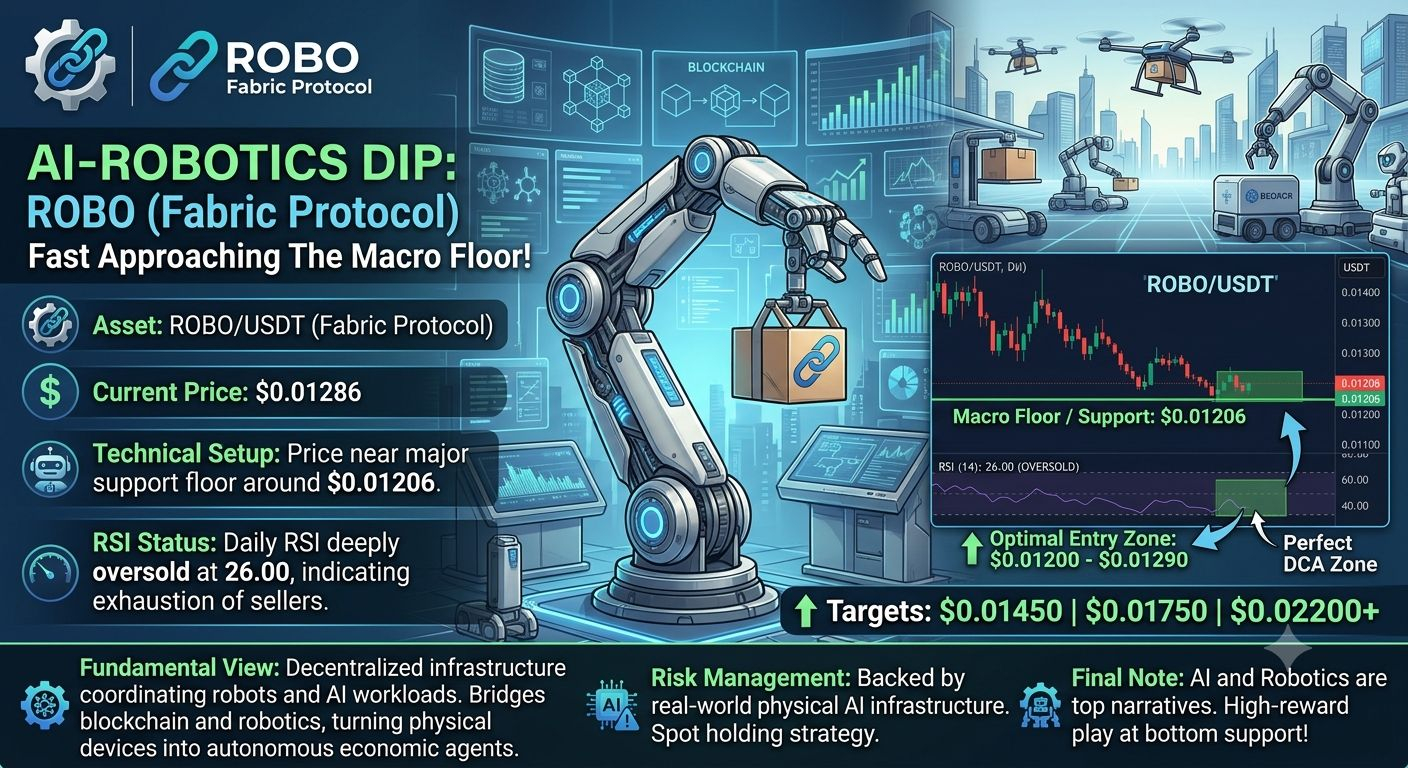
🔥 AI-ROBOTICS DIP: $ROBO (Fabric Protocol) Rückt rasch näher an die Makro-Unterkante! 🤖
Asset: $ROBO /USDT (Fabric Protocol - 100% halal Spot Coin)
Aktueller Preis: $0.01286
Fundamentaler Ausblick: Fabric Protocol ist eine dezentrale Infrastruktur, die Roboter und KI-Workloads koordiniert. Es verbindet Blockchain und Robotik und macht physische Geräte zu autonomen wirtschaftlichen Akteuren mit On-Chain-Zahlungen.
Technisches Setup: Der Preis baut eine solide horizontale Basis rund um den wichtigsten psychologischen und technischen Support bei $0.01206 auf.
RSI-Crash: Der tägliche RSI ist tief in die überverkaufte Zone bei 26.00 gefallen und signalisiert eine absolute Erschöpfung der Verkäufer.
Spot-Strategie: Perfekte DCA-(Cost-Average)-Zone für Spot-Ansammler; die Positionen schrittweise in 3 Teilen aufbauen.
Optimale Einstiegsspanne: $0.01200 - $0.01290
Ziele: $0.01450 | $0.01750 | $0.02200+
Risikomanagement: Gestützt durch reale physische KI-Infrastruktur, KEIN Stop-Loss erforderlich für das Spot-Halten.
Finaler Hinweis: KI und Robotik sind die Top-Storys; diesen Dip am unteren Support abzugreifen ist ein hochprofitables Spiel!
#ROBO #FabricProtocol #AI #Robotics #CryptoAnalysis
$ROBO
{spot}(ROBOUSDT)
🔥 AI-ROBOTICS DIP: $ROBO (Fabric Protocol) Rückt rasch näher an die Makro-Unterkante! 🤖
Asset: $ROBO /USDT (Fabric Protocol - 100% halal Spot Coin)
Aktueller Preis: $0.01286
Fundamentaler Ausblick: Fabric Protocol ist eine dezentrale Infrastruktur, die Roboter und KI-Workloads koordiniert. Es verbindet Blockchain und Robotik und macht physische Geräte zu autonomen wirtschaftlichen Akteuren mit On-Chain-Zahlungen.
Technisches Setup: Der Preis baut eine solide horizontale Basis rund um den wichtigsten psychologischen und technischen Support bei $0.01206 auf.
RSI-Crash: Der tägliche RSI ist tief in die überverkaufte Zone bei 26.00 gefallen und signalisiert eine absolute Erschöpfung der Verkäufer.
Spot-Strategie: Perfekte DCA-(Cost-Average)-Zone für Spot-Ansammler; die Positionen schrittweise in 3 Teilen aufbauen.
Optimale Einstiegsspanne: $0.01200 - $0.01290
Ziele: $0.01450 | $0.01750 | $0.02200+
Risikomanagement: Gestützt durch reale physische KI-Infrastruktur, KEIN Stop-Loss erforderlich für das Spot-Halten.
Finaler Hinweis: KI und Robotik sind die Top-Storys; diesen Dip am unteren Support abzugreifen ist ein hochprofitables Spiel!
#ROBO #FabricProtocol #AI #Robotics #CryptoAnalysis
$ROBO
Asset: $ROBO /USDT (Fabric Protocol - 100% halal Spot Coin)
Aktueller Preis: $0.01286
Fundamentaler Ausblick: Fabric Protocol ist eine dezentrale Infrastruktur, die Roboter und KI-Workloads koordiniert. Es verbindet Blockchain und Robotik und macht physische Geräte zu autonomen wirtschaftlichen Akteuren mit On-Chain-Zahlungen.
Technisches Setup: Der Preis baut eine solide horizontale Basis rund um den wichtigsten psychologischen und technischen Support bei $0.01206 auf.
RSI-Crash: Der tägliche RSI ist tief in die überverkaufte Zone bei 26.00 gefallen und signalisiert eine absolute Erschöpfung der Verkäufer.
Spot-Strategie: Perfekte DCA-(Cost-Average)-Zone für Spot-Ansammler; die Positionen schrittweise in 3 Teilen aufbauen.
Optimale Einstiegsspanne: $0.01200 - $0.01290
Ziele: $0.01450 | $0.01750 | $0.02200+
Risikomanagement: Gestützt durch reale physische KI-Infrastruktur, KEIN Stop-Loss erforderlich für das Spot-Halten.
Finaler Hinweis: KI und Robotik sind die Top-Storys; diesen Dip am unteren Support abzugreifen ist ein hochprofitables Spiel!
#ROBO #FabricProtocol #AI #Robotics #CryptoAnalysis
$ROBO
533

🚨$ROBO ROBO-BREAKOUT-WATCH
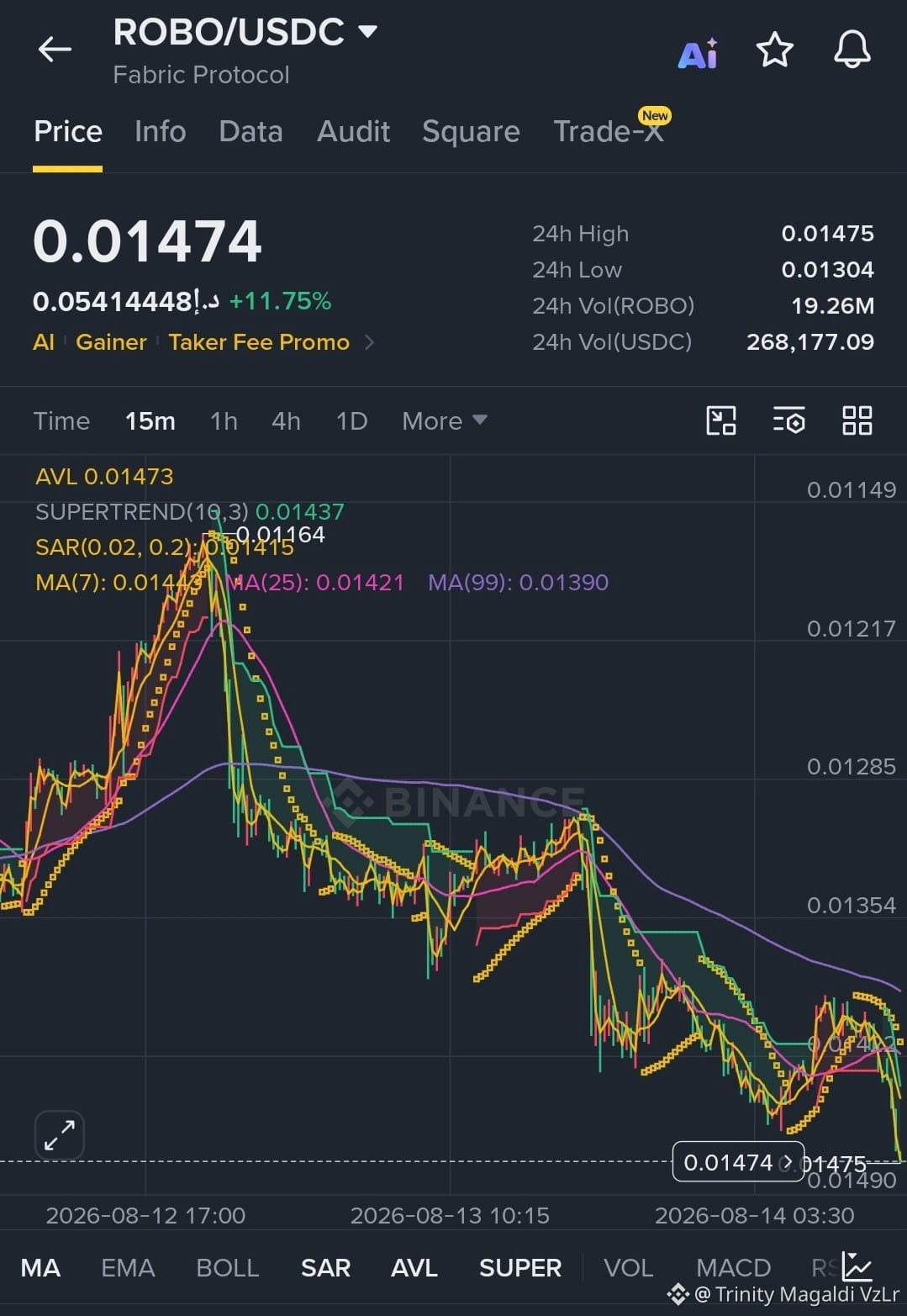
Fabric Protocol (ROBO) reißt +11,75% auf 0,01474 USD nach oben, direkt unter dem 24h-Hoch von 0,01475. Der Kurs liegt über MA7, MA25 und MA99, mit einem bullischen Supertrend. Das Momentum heizt sich klar auf.
#ROBO #FabricProtocol #Binance
$GIGGLE
{spot}(GIGGLEUSDT)
$RIVER
{future}(RIVERUSDT)
🚨$ROBO ROBO-BREAKOUT-WATCH
Fabric Protocol (ROBO) reißt +11,75% auf 0,01474 USD nach oben, direkt unter dem 24h-Hoch von 0,01475. Der Kurs liegt über MA7, MA25 und MA99, mit einem bullischen Supertrend. Das Momentum heizt sich klar auf.
#ROBO #FabricProtocol #Binance
$GIGGLE
$RIVER
Fabric Protocol (ROBO) reißt +11,75% auf 0,01474 USD nach oben, direkt unter dem 24h-Hoch von 0,01475. Der Kurs liegt über MA7, MA25 und MA99, mit einem bullischen Supertrend. Das Momentum heizt sich klar auf.
#ROBO #FabricProtocol #Binance
$GIGGLE
$RIVER
1
255
·
--
Fabric-Protocol($ROBO)Aktuell ist das größte Augenmerk auf das Risiko der „Namens-/Begriffsverwirrung“ zu richten: Die jüngsten Diskussionen drehten sich vor allem um Robotik-/KI-nahe Aktien und Themen wie Robo.ai, aber nicht wirklich um das Fabric Protocol selbst. Daher sollte die externe KI-Hype nicht direkt als Projektvorteil interpretiert werden. Der aktuelle Kurs liegt bei etwa 0,01741 USD, das 24h-Volumen bei rund 8,21 Mio. USD und die Marktkapitalisierung bei etwa 38,84 Mio. USD. Kurzfristig ist vor allem die Stimmung entscheidend, langfristig muss die Entwicklung des Protokolls, die Liquidität und der tatsächliche Bedarf wieder in den Fokus rücken. #FabricProtocol #Krypto-Markt
Fabric-Protocol($ROBO )Aktuell ist das größte Augenmerk auf das Risiko der „Namens-/Begriffsverwirrung“ zu richten: Die jüngsten Diskussionen drehten sich vor allem um Robotik-/KI-nahe Aktien und Themen wie Robo.ai, aber nicht wirklich um das Fabric Protocol selbst. Daher sollte die externe KI-Hype nicht direkt als Projektvorteil interpretiert werden. Der aktuelle Kurs liegt bei etwa 0,01741 USD, das 24h-Volumen bei rund 8,21 Mio. USD und die Marktkapitalisierung bei etwa 38,84 Mio. USD. Kurzfristig ist vor allem die Stimmung entscheidend, langfristig muss die Entwicklung des Protokolls, die Liquidität und der tatsächliche Bedarf wieder in den Fokus rücken. #FabricProtocol #Krypto-Markt
18

·
--
Die Popularität des Fabric-Protokolls ist in letzter Zeit deutlich gestiegen. Offiziell wurde gerade RoboPay veröffentlicht, und auch der eine Million ROBO Entwickler-Bounty-Plan ist bereits offiziell gestartet. Diese beiden Schritte werden sich positiv auf die Projektentwicklung und den Token-Wert auswirken.
Die eigene Pay-to-Actuate-Infrastruktur beschleunigt die Umsetzung des Machine-Economy-Ökosystems. Das erweitert nicht nur den Bedarf an $ROBO-Utility, sondern zieht auch mehr Entwickler an, um am Aufbau des Ökosystems mitzuwirken.
Aktuelle Daten:
Preis: 0,0105 USD
24h Handelsvolumen: 6,76 Mio. USD
Marktkapitalisierung: 23,43 Mio. USD
Wer die Machine-Economy-Industrie für vielversprechend hält, kann gerne dranbleiben.
$ROBO #FabricProtocol #MachineEconomy
Die Popularität des Fabric-Protokolls ist in letzter Zeit deutlich gestiegen. Offiziell wurde gerade RoboPay veröffentlicht, und auch der eine Million ROBO Entwickler-Bounty-Plan ist bereits offiziell gestartet. Diese beiden Schritte werden sich positiv auf die Projektentwicklung und den Token-Wert auswirken.
Die eigene Pay-to-Actuate-Infrastruktur beschleunigt die Umsetzung des Machine-Economy-Ökosystems. Das erweitert nicht nur den Bedarf an $ROBO -Utility, sondern zieht auch mehr Entwickler an, um am Aufbau des Ökosystems mitzuwirken.
Aktuelle Daten:
Preis: 0,0105 USD
24h Handelsvolumen: 6,76 Mio. USD
Marktkapitalisierung: 23,43 Mio. USD
Wer die Machine-Economy-Industrie für vielversprechend hält, kann gerne dranbleiben.
$ROBO #FabricProtocol #MachineEconomy
Die eigene Pay-to-Actuate-Infrastruktur beschleunigt die Umsetzung des Machine-Economy-Ökosystems. Das erweitert nicht nur den Bedarf an $ROBO -Utility, sondern zieht auch mehr Entwickler an, um am Aufbau des Ökosystems mitzuwirken.
Aktuelle Daten:
Preis: 0,0105 USD
24h Handelsvolumen: 6,76 Mio. USD
Marktkapitalisierung: 23,43 Mio. USD
Wer die Machine-Economy-Industrie für vielversprechend hält, kann gerne dranbleiben.
$ROBO #FabricProtocol #MachineEconomy
61

·
--
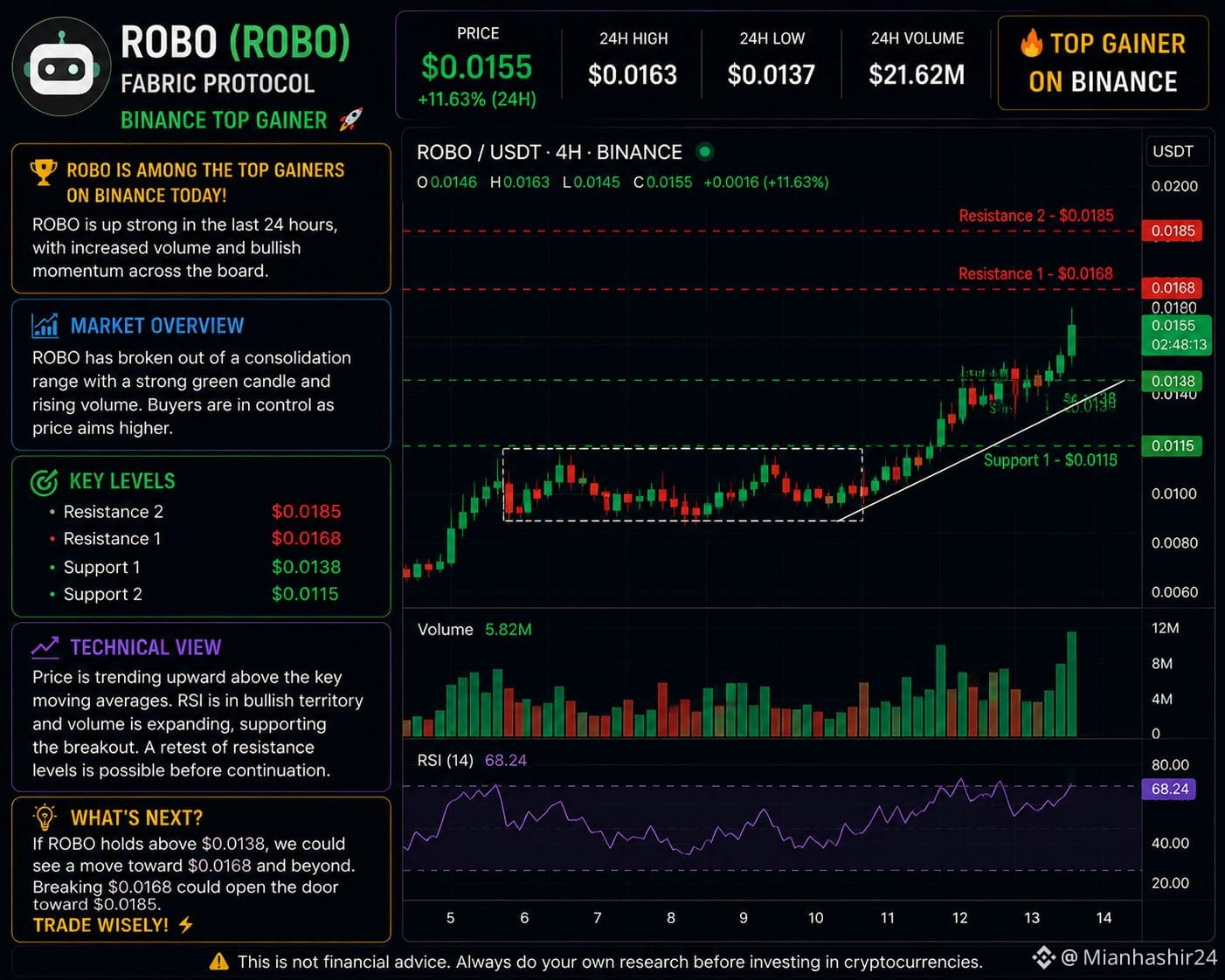
🔥 $ROBO — MOMENTUM IM RADAR
$ROBO (Fabric Protocol) zeigt starkes kurzfristiges Momentum, aktuell bei etwa $0.0155, rund 11,6% in 24H auf Binance im Plus. Das Handelsvolumen hat ebenfalls angezogen, was auf eine Zunahme der Marktaktivität hindeutet.
📈 Momentum: Starke jüngste Kaufaktivität
👀 Beobachten: Ob ROBO über dem jüngsten Ausbruchsniveau halten kann
⚠️ Risiko: ROBO trägt den Seed-Tag von Binance, und seine relativ kleine Marktkapitalisierung bedeutet, dass sich der Preis in beide Richtungen stark bewegen kann.
$ROBO sollte man im Blick behalten — Volumenbestätigung ist entscheidend. 🚀
Nur Marktkommentar — keine Finanzberatung.
#ROBO #FabricProtocol #BinanceSquareTalks #Crypto #Altcoins #CryptoGainers
{spot}(ROBOUSDT)
🔥 $ROBO — MOMENTUM IM RADAR
$ROBO (Fabric Protocol) zeigt starkes kurzfristiges Momentum, aktuell bei etwa $0.0155, rund 11,6% in 24H auf Binance im Plus. Das Handelsvolumen hat ebenfalls angezogen, was auf eine Zunahme der Marktaktivität hindeutet.
📈 Momentum: Starke jüngste Kaufaktivität
👀 Beobachten: Ob ROBO über dem jüngsten Ausbruchsniveau halten kann
⚠️ Risiko: ROBO trägt den Seed-Tag von Binance, und seine relativ kleine Marktkapitalisierung bedeutet, dass sich der Preis in beide Richtungen stark bewegen kann.
$ROBO sollte man im Blick behalten — Volumenbestätigung ist entscheidend. 🚀
Nur Marktkommentar — keine Finanzberatung.
#ROBO #FabricProtocol #BinanceSquareTalks #Crypto #Altcoins #CryptoGainers
$ROBO (Fabric Protocol) zeigt starkes kurzfristiges Momentum, aktuell bei etwa $0.0155, rund 11,6% in 24H auf Binance im Plus. Das Handelsvolumen hat ebenfalls angezogen, was auf eine Zunahme der Marktaktivität hindeutet.
📈 Momentum: Starke jüngste Kaufaktivität
👀 Beobachten: Ob ROBO über dem jüngsten Ausbruchsniveau halten kann
⚠️ Risiko: ROBO trägt den Seed-Tag von Binance, und seine relativ kleine Marktkapitalisierung bedeutet, dass sich der Preis in beide Richtungen stark bewegen kann.
$ROBO sollte man im Blick behalten — Volumenbestätigung ist entscheidend. 🚀
Nur Marktkommentar — keine Finanzberatung.
#ROBO #FabricProtocol #BinanceSquareTalks #Crypto #Altcoins #CryptoGainers
156

·
--
Bullisch
🔥 Explosiver Durchbruch | $ROBO Long 🚀
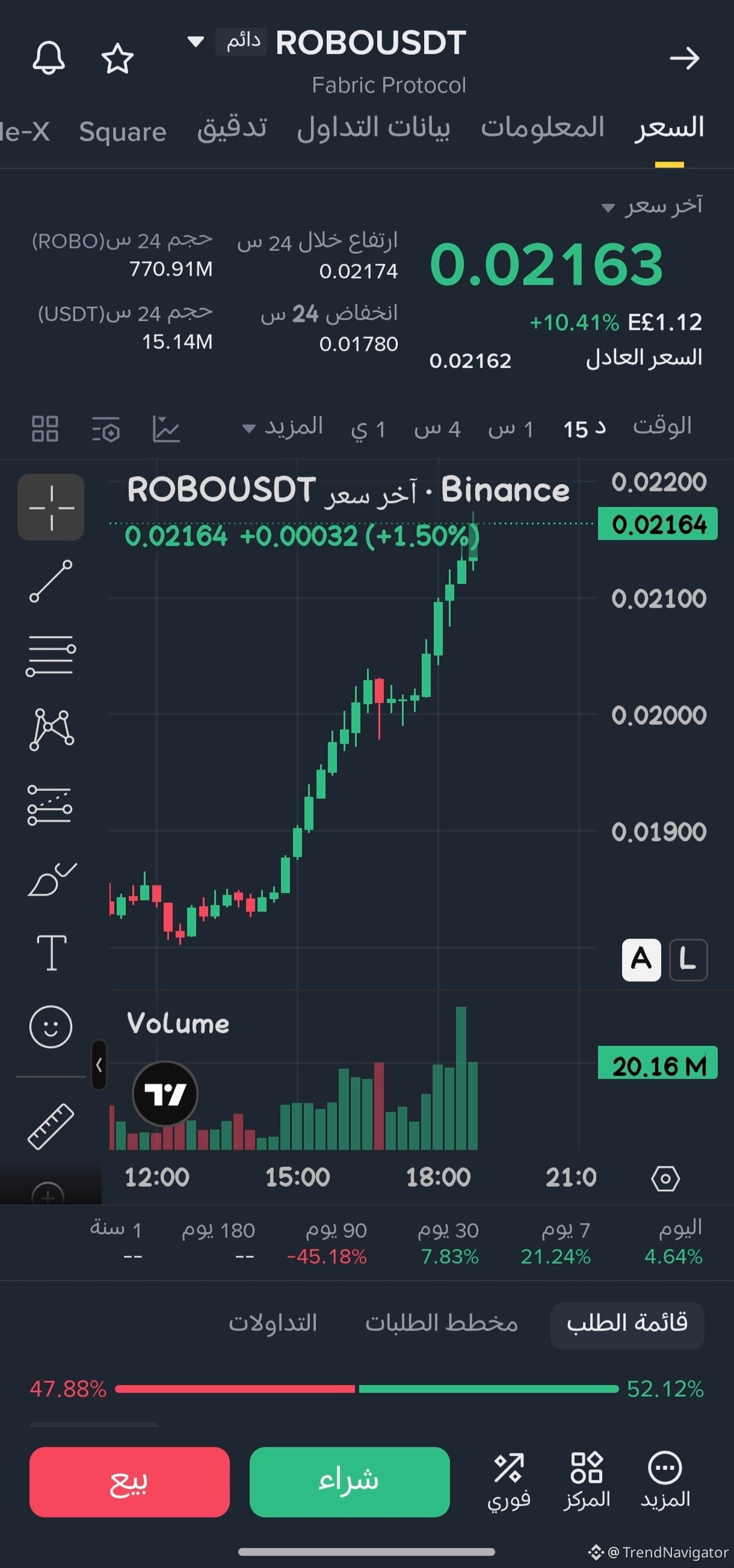
Die Liquidität explodiert und die Bullen erobern den Markt! Die Währung $ROBO (Fabric Protocol) verzeichnet einen raketenhaften Anstieg von über +10,41%, durchbricht die vorherigen Höchststände mit einer vertikalen Impuls-Candlestick, die offiziell einen historischen Durchbruch aus dem Konsolidierungsbereich ankündigt. Auch das Handelsvolumen schießt verrückt und übersteigt 770,91M, was die Fortsetzung dieser heftigen Welle unterstützt!
📊 Technische Daten der direkten Bewegung:
🎯 Aktueller Preis: 0,02163$ (tägliches Hoch erreicht 0,02174$).
📈 Entzündeter Momentum: Ein Regen von aufeinanderfolgenden grünen Candlesticks ohne nennenswerte Widerstände.
💰 Flussstärke: Die Wale pumpen kräftig Liquidität, um das Angebot aufzusaugen, und die Richtung beschleunigt sich vertikal.
🏹 Vorgeschlagene Handelsstrategie:
🟢 Art des Trades: Long (Kauf / Perpetual Contracts)
🎯 Bevorzugte Einstiegszone: Bei jeder Korrektur oder leichten Rückgang, um einen starken Einstiegspunkt zu sichern.
#ROBO #FabricProtocol
$ROBO
{future}(ROBOUSDT)
🔥 Explosiver Durchbruch | $ROBO Long 🚀
Die Liquidität explodiert und die Bullen erobern den Markt! Die Währung $ROBO (Fabric Protocol) verzeichnet einen raketenhaften Anstieg von über +10,41%, durchbricht die vorherigen Höchststände mit einer vertikalen Impuls-Candlestick, die offiziell einen historischen Durchbruch aus dem Konsolidierungsbereich ankündigt. Auch das Handelsvolumen schießt verrückt und übersteigt 770,91M, was die Fortsetzung dieser heftigen Welle unterstützt!
📊 Technische Daten der direkten Bewegung:
🎯 Aktueller Preis: 0,02163$ (tägliches Hoch erreicht 0,02174$).
📈 Entzündeter Momentum: Ein Regen von aufeinanderfolgenden grünen Candlesticks ohne nennenswerte Widerstände.
💰 Flussstärke: Die Wale pumpen kräftig Liquidität, um das Angebot aufzusaugen, und die Richtung beschleunigt sich vertikal.
🏹 Vorgeschlagene Handelsstrategie:
🟢 Art des Trades: Long (Kauf / Perpetual Contracts)
🎯 Bevorzugte Einstiegszone: Bei jeder Korrektur oder leichten Rückgang, um einen starken Einstiegspunkt zu sichern.
#ROBO #FabricProtocol
$ROBO
Die Liquidität explodiert und die Bullen erobern den Markt! Die Währung $ROBO (Fabric Protocol) verzeichnet einen raketenhaften Anstieg von über +10,41%, durchbricht die vorherigen Höchststände mit einer vertikalen Impuls-Candlestick, die offiziell einen historischen Durchbruch aus dem Konsolidierungsbereich ankündigt. Auch das Handelsvolumen schießt verrückt und übersteigt 770,91M, was die Fortsetzung dieser heftigen Welle unterstützt!
📊 Technische Daten der direkten Bewegung:
🎯 Aktueller Preis: 0,02163$ (tägliches Hoch erreicht 0,02174$).
📈 Entzündeter Momentum: Ein Regen von aufeinanderfolgenden grünen Candlesticks ohne nennenswerte Widerstände.
💰 Flussstärke: Die Wale pumpen kräftig Liquidität, um das Angebot aufzusaugen, und die Richtung beschleunigt sich vertikal.
🏹 Vorgeschlagene Handelsstrategie:
🟢 Art des Trades: Long (Kauf / Perpetual Contracts)
🎯 Bevorzugte Einstiegszone: Bei jeder Korrektur oder leichten Rückgang, um einen starken Einstiegspunkt zu sichern.
#ROBO #FabricProtocol
$ROBO
2
170

·
--
Bullisch
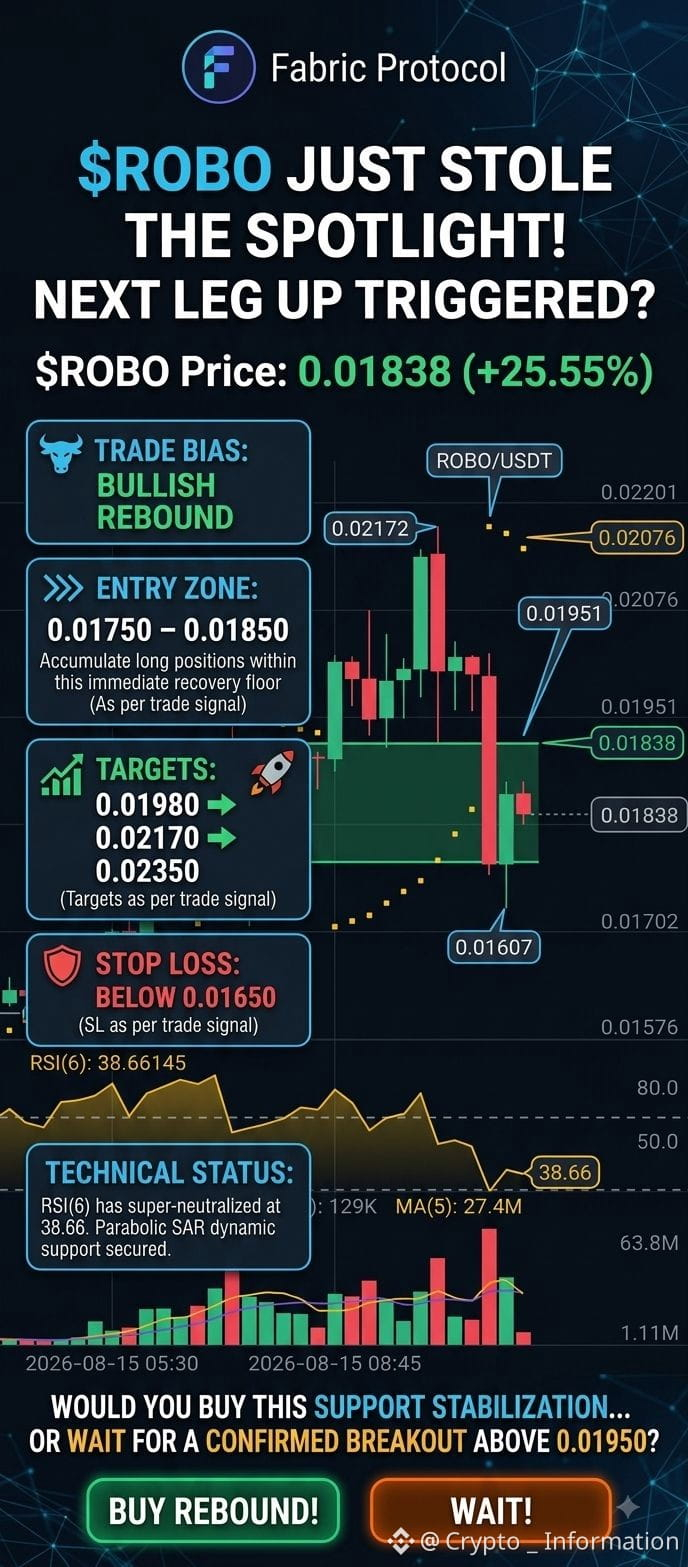
$ROBO Halte die Linie! Potenzieller Rebound in Reichweite?
Mit starkem Handelsvolumen von über 16,23 Mio. USDT in 24h Aktivität hat $ROBO (Fabric Protocol) heute solide Marktaufmerksamkeit auf sich gezogen! Nach einem erfolgreichen Test eines lokalen Hochdeckels bei 0,02172 führte die Kursbewegung eine gesunde Konsolidierungs-Sweep in Richtung dynamischen Supports nahe 0,01700 aus und bildet nun eine starke Rebound-Bodenbildung für den nächsten Aufwärtsversuch.
Handelsbias: Bullischer Rebound 📈
Einstiegszone: 0,01750 – 0,01850 (Long-Positionen innerhalb dieses unmittelbaren Recovery-Bodens ansammeln, bei lokaler Stabilisierung über 15m)
Kursziele: 0,01980 ➡️ 0,02170 ➡️ 0,02350
Stop Loss: Unter 0,01650
Technisch betrachtet liefern die Indikatoren ein erstklassiges Setup für eine strukturelle Erholung. Der RSI (6) ist vollständig zurückgesetzt auf ein stark reduziertes Niveau von 38,66; damit wurden überkaufte Kräfte herausgespült, während den Bullen maximaler Raum für einen erneuten Anlauf bleibt. Bei festem Support begünstigt der Momentum klar einen Retest in Richtung der oberen Widerstandsbereiche.
Würdest du diese Support-Stabilisierung kaufen... oder auf einen tieferen Pullback-Korridor warten?
Jetzt handeln $ROBO
{spot}(ROBOUSDT)
#ROBO #FabricProtocol #cryptosignals
$ROBO Halte die Linie! Potenzieller Rebound in Reichweite?
Mit starkem Handelsvolumen von über 16,23 Mio. USDT in 24h Aktivität hat $ROBO (Fabric Protocol) heute solide Marktaufmerksamkeit auf sich gezogen! Nach einem erfolgreichen Test eines lokalen Hochdeckels bei 0,02172 führte die Kursbewegung eine gesunde Konsolidierungs-Sweep in Richtung dynamischen Supports nahe 0,01700 aus und bildet nun eine starke Rebound-Bodenbildung für den nächsten Aufwärtsversuch.
Handelsbias: Bullischer Rebound 📈
Einstiegszone: 0,01750 – 0,01850 (Long-Positionen innerhalb dieses unmittelbaren Recovery-Bodens ansammeln, bei lokaler Stabilisierung über 15m)
Kursziele: 0,01980 ➡️ 0,02170 ➡️ 0,02350
Stop Loss: Unter 0,01650
Technisch betrachtet liefern die Indikatoren ein erstklassiges Setup für eine strukturelle Erholung. Der RSI (6) ist vollständig zurückgesetzt auf ein stark reduziertes Niveau von 38,66; damit wurden überkaufte Kräfte herausgespült, während den Bullen maximaler Raum für einen erneuten Anlauf bleibt. Bei festem Support begünstigt der Momentum klar einen Retest in Richtung der oberen Widerstandsbereiche.
Würdest du diese Support-Stabilisierung kaufen... oder auf einen tieferen Pullback-Korridor warten?
Jetzt handeln $ROBO
#ROBO #FabricProtocol #cryptosignals
Mit starkem Handelsvolumen von über 16,23 Mio. USDT in 24h Aktivität hat $ROBO (Fabric Protocol) heute solide Marktaufmerksamkeit auf sich gezogen! Nach einem erfolgreichen Test eines lokalen Hochdeckels bei 0,02172 führte die Kursbewegung eine gesunde Konsolidierungs-Sweep in Richtung dynamischen Supports nahe 0,01700 aus und bildet nun eine starke Rebound-Bodenbildung für den nächsten Aufwärtsversuch.
Handelsbias: Bullischer Rebound 📈
Einstiegszone: 0,01750 – 0,01850 (Long-Positionen innerhalb dieses unmittelbaren Recovery-Bodens ansammeln, bei lokaler Stabilisierung über 15m)
Kursziele: 0,01980 ➡️ 0,02170 ➡️ 0,02350
Stop Loss: Unter 0,01650
Technisch betrachtet liefern die Indikatoren ein erstklassiges Setup für eine strukturelle Erholung. Der RSI (6) ist vollständig zurückgesetzt auf ein stark reduziertes Niveau von 38,66; damit wurden überkaufte Kräfte herausgespült, während den Bullen maximaler Raum für einen erneuten Anlauf bleibt. Bei festem Support begünstigt der Momentum klar einen Retest in Richtung der oberen Widerstandsbereiche.
Würdest du diese Support-Stabilisierung kaufen... oder auf einen tieferen Pullback-Korridor warten?
Jetzt handeln $ROBO
#ROBO #FabricProtocol #cryptosignals
1
164

·
--
$ROBO 🤖 Blockchain für Roboter und KI-Agenten!
Was ist Fabric Protocol (ROBO)? Es handelt sich um eine dezentrale Infrastruktur, die Robotern und KI-Agenten verifizierbare digitale Identitäten, Wallets und die Möglichkeit bietet, sich selbstständig zu verdienen. Das Protokoll löst das Problem: Roboter können keine Bankkonten eröffnen, aber können Krypto-Wallets besitzen und für erledigte Arbeit bezahlt werden – über den Mechanismus Proof of Robotic Work.
Ökosystem: ROBO – das 62. Projekt beim Binance HODLer Airdrop. Das Token (max. Angebot 10 Mrd.) wird für die Bezahlung des Netzwerks, Staking und Governance genutzt. Das Projekt wird unterstützt von Pantera Capital, Coinbase Ventures, DCG.
Aktuelle Lage: Der Preis $0.01775** (+26.79%) liegt über allen EMA – **ein bullischer Trend**. RSI 76 – nahezu überkauft. Widerstand **$0.01947, Unterstützung $0.01642.
🔥 Glaubst du, ROBO wird zum Standard für die Robotik-Wirtschaft? Schreib es in die Kommentare!
👉 Abonniere die Reviews innovativer Projekte!
#FabricProtocol #Trade 👇
{future}(ROBOUSDT)
$ROBO 🤖 Blockchain für Roboter und KI-Agenten!
Was ist Fabric Protocol (ROBO)? Es handelt sich um eine dezentrale Infrastruktur, die Robotern und KI-Agenten verifizierbare digitale Identitäten, Wallets und die Möglichkeit bietet, sich selbstständig zu verdienen. Das Protokoll löst das Problem: Roboter können keine Bankkonten eröffnen, aber können Krypto-Wallets besitzen und für erledigte Arbeit bezahlt werden – über den Mechanismus Proof of Robotic Work.
Ökosystem: ROBO – das 62. Projekt beim Binance HODLer Airdrop. Das Token (max. Angebot 10 Mrd.) wird für die Bezahlung des Netzwerks, Staking und Governance genutzt. Das Projekt wird unterstützt von Pantera Capital, Coinbase Ventures, DCG.
Aktuelle Lage: Der Preis $0.01775** (+26.79%) liegt über allen EMA – **ein bullischer Trend**. RSI 76 – nahezu überkauft. Widerstand **$0.01947, Unterstützung $0.01642.
🔥 Glaubst du, ROBO wird zum Standard für die Robotik-Wirtschaft? Schreib es in die Kommentare!
👉 Abonniere die Reviews innovativer Projekte!
#FabricProtocol #Trade 👇
Was ist Fabric Protocol (ROBO)? Es handelt sich um eine dezentrale Infrastruktur, die Robotern und KI-Agenten verifizierbare digitale Identitäten, Wallets und die Möglichkeit bietet, sich selbstständig zu verdienen. Das Protokoll löst das Problem: Roboter können keine Bankkonten eröffnen, aber können Krypto-Wallets besitzen und für erledigte Arbeit bezahlt werden – über den Mechanismus Proof of Robotic Work.
Ökosystem: ROBO – das 62. Projekt beim Binance HODLer Airdrop. Das Token (max. Angebot 10 Mrd.) wird für die Bezahlung des Netzwerks, Staking und Governance genutzt. Das Projekt wird unterstützt von Pantera Capital, Coinbase Ventures, DCG.
Aktuelle Lage: Der Preis $0.01775** (+26.79%) liegt über allen EMA – **ein bullischer Trend**. RSI 76 – nahezu überkauft. Widerstand **$0.01947, Unterstützung $0.01642.
🔥 Glaubst du, ROBO wird zum Standard für die Robotik-Wirtschaft? Schreib es in die Kommentare!
👉 Abonniere die Reviews innovativer Projekte!
#FabricProtocol #Trade 👇
183

·
--
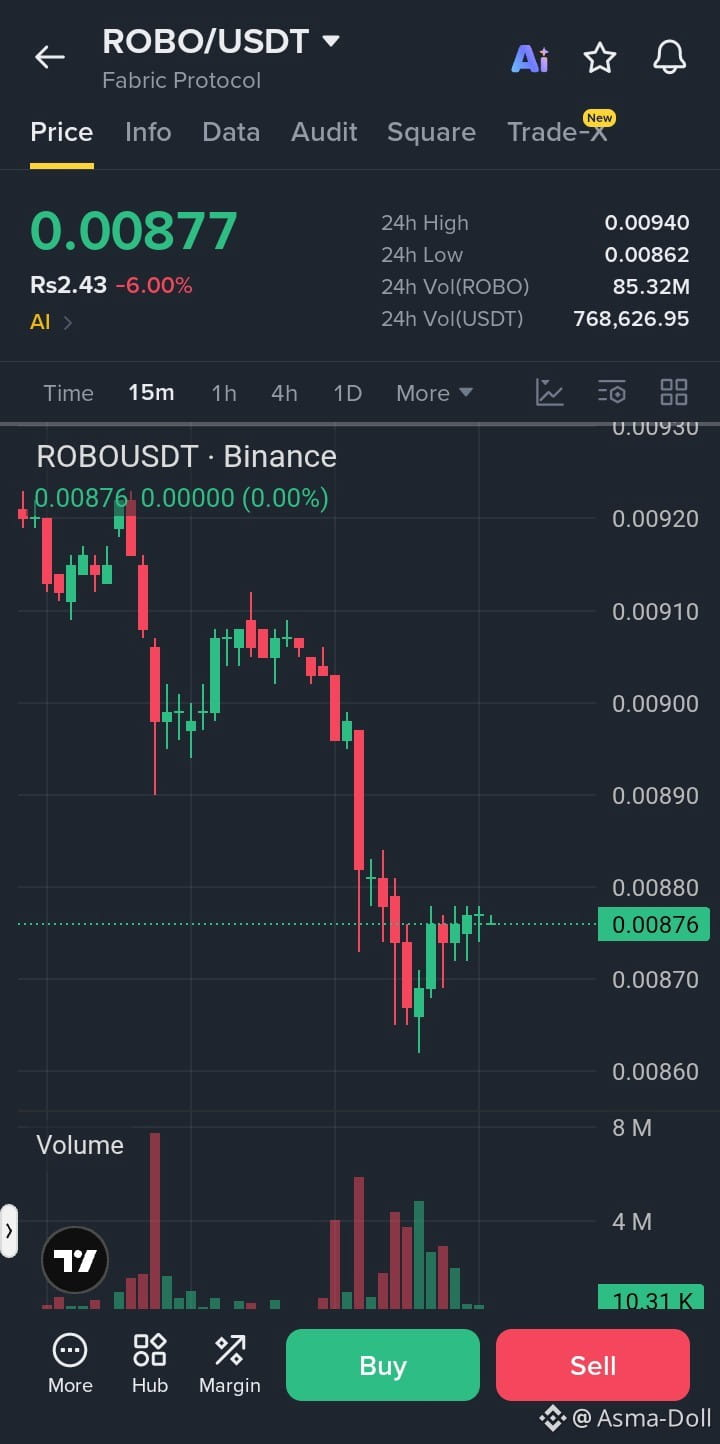
📉 $ROBO /USDT — SHORT-SIGNAL
Einstieg: 0.00875 – 0.00885
Stop Loss: 0.00915
TP1: 0.00860
TP2: 0.00840
TP3: 0.00815
Trade hier $ROBO
{future}(ROBOUSDT)
Analyse:
Der Preis liegt nahe dem 24H-Tief bei etwa 0.00862 und zeigt eine schwache Struktur.
Der aktuelle Momentum bleibt bärisch, das Paar ist um ca. 6% im Minus.
0.00860–0.00862 ist die entscheidende Unterstützungszone; ein sauberer Breakdown kann den Verkauf beschleunigen.
Binance listet ROBO/USDT als Spot-Markt, daher sollte dieses Setup eher als Short-Bias-/Scalp-Plan behandelt werden – nicht als garantierter Abwärtsmove.
Bestätigung: Sauberer 15m-Candle-Close unter 0.00860 → stärkere Short-Fortsetzung.
⚠️ Wenn der Preis 0.00915 zurückerobert, ist das Short-Setup ungültig.
#ROBO #FabricProtocol #ROBOUSDT #CryptoSignal #ShortSignal
📉 $ROBO /USDT — SHORT-SIGNAL
Einstieg: 0.00875 – 0.00885
Stop Loss: 0.00915
TP1: 0.00860
TP2: 0.00840
TP3: 0.00815
Trade hier $ROBO
Analyse:
Der Preis liegt nahe dem 24H-Tief bei etwa 0.00862 und zeigt eine schwache Struktur.
Der aktuelle Momentum bleibt bärisch, das Paar ist um ca. 6% im Minus.
0.00860–0.00862 ist die entscheidende Unterstützungszone; ein sauberer Breakdown kann den Verkauf beschleunigen.
Binance listet ROBO/USDT als Spot-Markt, daher sollte dieses Setup eher als Short-Bias-/Scalp-Plan behandelt werden – nicht als garantierter Abwärtsmove.
Bestätigung: Sauberer 15m-Candle-Close unter 0.00860 → stärkere Short-Fortsetzung.
⚠️ Wenn der Preis 0.00915 zurückerobert, ist das Short-Setup ungültig.
#ROBO #FabricProtocol #ROBOUSDT #CryptoSignal #ShortSignal
Einstieg: 0.00875 – 0.00885
Stop Loss: 0.00915
TP1: 0.00860
TP2: 0.00840
TP3: 0.00815
Trade hier $ROBO
Analyse:
Der Preis liegt nahe dem 24H-Tief bei etwa 0.00862 und zeigt eine schwache Struktur.
Der aktuelle Momentum bleibt bärisch, das Paar ist um ca. 6% im Minus.
0.00860–0.00862 ist die entscheidende Unterstützungszone; ein sauberer Breakdown kann den Verkauf beschleunigen.
Binance listet ROBO/USDT als Spot-Markt, daher sollte dieses Setup eher als Short-Bias-/Scalp-Plan behandelt werden – nicht als garantierter Abwärtsmove.
Bestätigung: Sauberer 15m-Candle-Close unter 0.00860 → stärkere Short-Fortsetzung.
⚠️ Wenn der Preis 0.00915 zurückerobert, ist das Short-Setup ungültig.
#ROBO #FabricProtocol #ROBOUSDT #CryptoSignal #ShortSignal
374

·
--
Bärisch
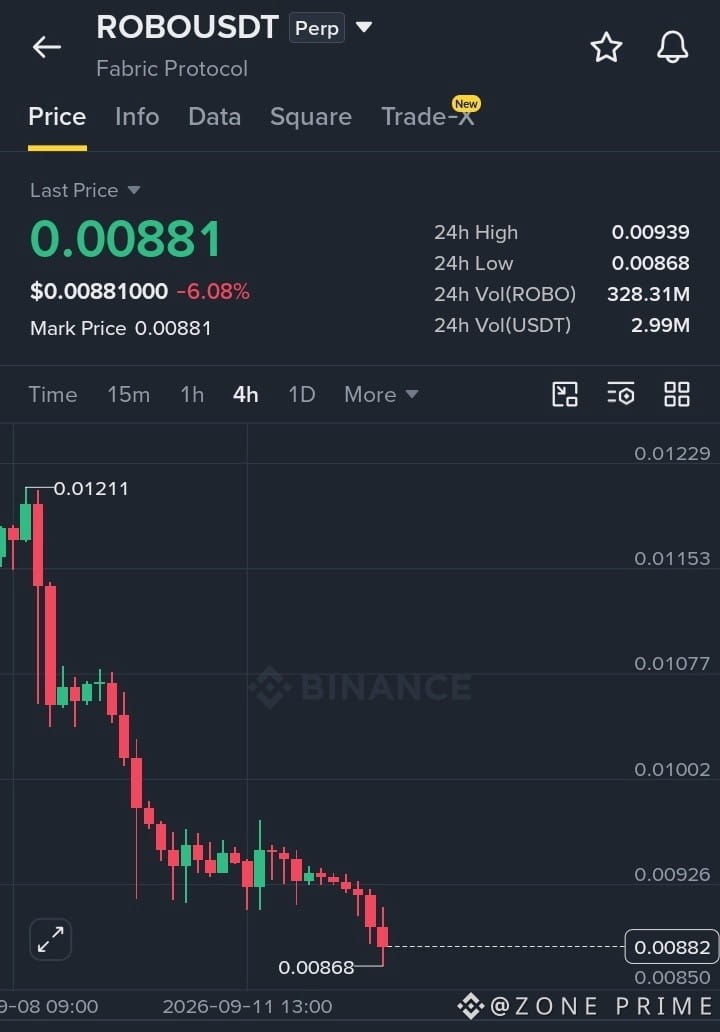
$ROBO /USDT — KURZES SETUP 📉 💯 ✨ 😱
Einstieg: 0.00926 - 0.01002
TP1: 0.00881
TP2: 0.00868
TP3: 0.00850
Stop: 0.01077
Erholungs-Bounce-Treffen mit starker struktureller Angebotszone nahe der 0.01002-Marke. 📉
Abnehmendes Kaufvolumen in Kombination mit einer synthetischen Verkäufer-Unausgewogenheit begünstigt eine asymmetrische Rotation auf der Short-Seite.
#robo #robousdt #fabricprotocol #crypto #Write2Earn $ROBO
{future}(ROBOUSDT)
$ROBO /USDT — KURZES SETUP 📉 💯 ✨ 😱
Einstieg: 0.00926 - 0.01002
TP1: 0.00881
TP2: 0.00868
TP3: 0.00850
Stop: 0.01077
Erholungs-Bounce-Treffen mit starker struktureller Angebotszone nahe der 0.01002-Marke. 📉
Abnehmendes Kaufvolumen in Kombination mit einer synthetischen Verkäufer-Unausgewogenheit begünstigt eine asymmetrische Rotation auf der Short-Seite.
#robo #robousdt #fabricprotocol #crypto #Write2Earn $ROBO
Einstieg: 0.00926 - 0.01002
TP1: 0.00881
TP2: 0.00868
TP3: 0.00850
Stop: 0.01077
Erholungs-Bounce-Treffen mit starker struktureller Angebotszone nahe der 0.01002-Marke. 📉
Abnehmendes Kaufvolumen in Kombination mit einer synthetischen Verkäufer-Unausgewogenheit begünstigt eine asymmetrische Rotation auf der Short-Seite.
#robo #robousdt #fabricprotocol #crypto #Write2Earn $ROBO
480

·
--
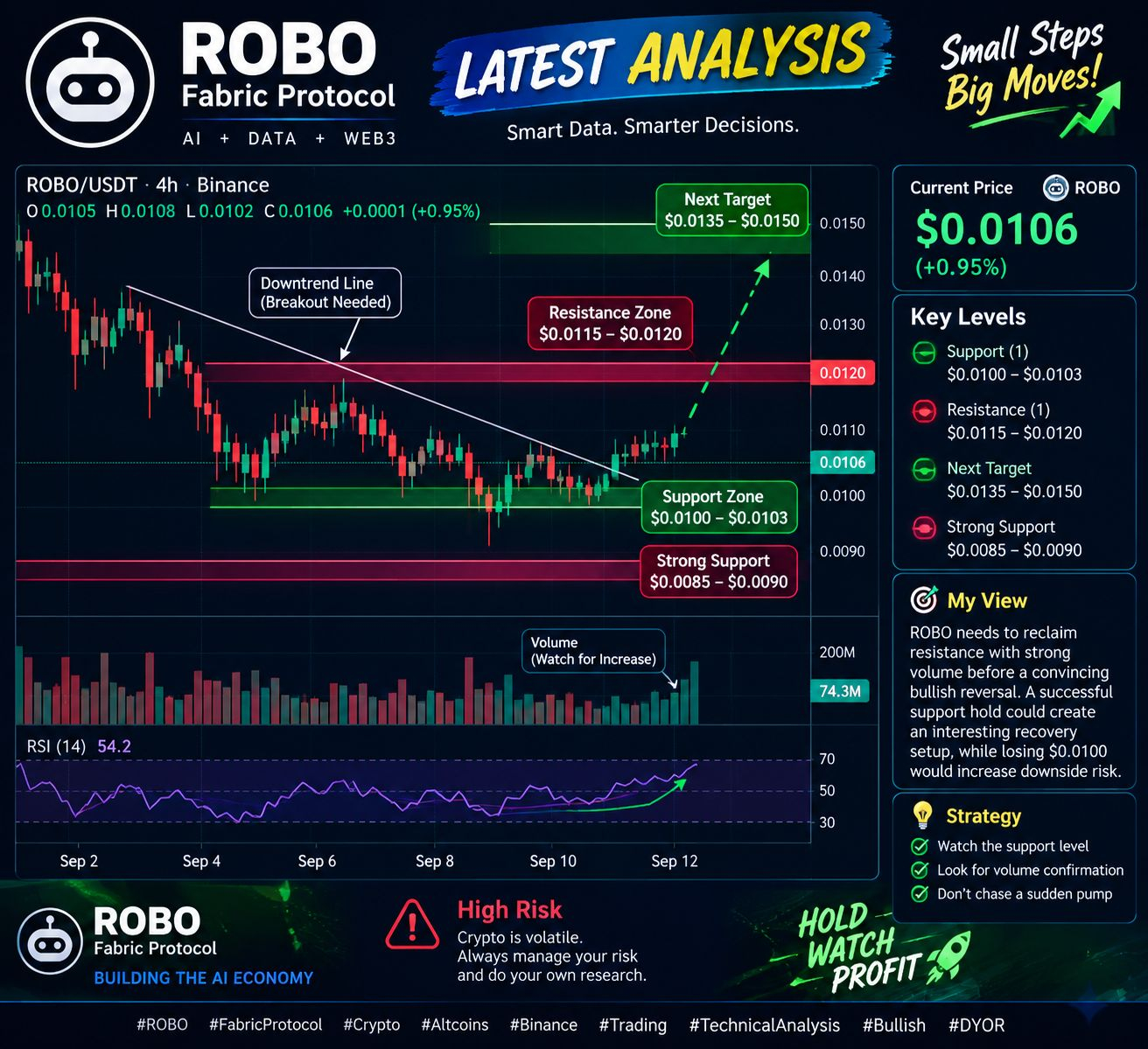
$ROBO handelt derzeit bei etwa 0,0106 $ und zeigt kurzfristige Schwäche nach dem jüngsten Verkaufsdruck. 📉
🔥 WICHTIGE ZU BEACHTENDE KURSNIVEAUS
🟢 Support: 0,0100–0,0103 $
🟡 Widerstand: 0,0115–0,0120 $
🚀 Ein Ausbruch über 0,0120 $ könnte den Weg zu höheren Kursniveaus öffnen.
📊 MEIN BLICK
$ROBO muss den Widerstand mit starkem Volumen zurückerobern, bevor eine überzeugende bullische Trendwende möglich ist. Ein erfolgreicher Support-„Hold“ könnte eine interessante Erholungs-Setup-Situation schaffen, während das Verlassen von 0,0100 $ das Abwärtsrisiko erhöhen würde.
🎯 Strategie: Support + Volumenbestätigung beobachten. Verfolge keinen plötzlichen Pump.
⚠️ Hochriskantes Krypto-Setup. Behalte stets dein Risiko im Blick und mach deine eigene Recherche.
#ROBO #FabricProtocol #Crypto_Jobs🎯
{future}(ROBOUSDT)
$ROBO handelt derzeit bei etwa 0,0106 $ und zeigt kurzfristige Schwäche nach dem jüngsten Verkaufsdruck. 📉
🔥 WICHTIGE ZU BEACHTENDE KURSNIVEAUS
🟢 Support: 0,0100–0,0103 $
🟡 Widerstand: 0,0115–0,0120 $
🚀 Ein Ausbruch über 0,0120 $ könnte den Weg zu höheren Kursniveaus öffnen.
📊 MEIN BLICK
$ROBO muss den Widerstand mit starkem Volumen zurückerobern, bevor eine überzeugende bullische Trendwende möglich ist. Ein erfolgreicher Support-„Hold“ könnte eine interessante Erholungs-Setup-Situation schaffen, während das Verlassen von 0,0100 $ das Abwärtsrisiko erhöhen würde.
🎯 Strategie: Support + Volumenbestätigung beobachten. Verfolge keinen plötzlichen Pump.
⚠️ Hochriskantes Krypto-Setup. Behalte stets dein Risiko im Blick und mach deine eigene Recherche.
#ROBO #FabricProtocol #Crypto_Jobs🎯
🔥 WICHTIGE ZU BEACHTENDE KURSNIVEAUS
🟢 Support: 0,0100–0,0103 $
🟡 Widerstand: 0,0115–0,0120 $
🚀 Ein Ausbruch über 0,0120 $ könnte den Weg zu höheren Kursniveaus öffnen.
📊 MEIN BLICK
$ROBO muss den Widerstand mit starkem Volumen zurückerobern, bevor eine überzeugende bullische Trendwende möglich ist. Ein erfolgreicher Support-„Hold“ könnte eine interessante Erholungs-Setup-Situation schaffen, während das Verlassen von 0,0100 $ das Abwärtsrisiko erhöhen würde.
🎯 Strategie: Support + Volumenbestätigung beobachten. Verfolge keinen plötzlichen Pump.
⚠️ Hochriskantes Krypto-Setup. Behalte stets dein Risiko im Blick und mach deine eigene Recherche.
#ROBO #FabricProtocol #Crypto_Jobs🎯
1
1
476
·
--
$ROBO
{future}(ROBOUSDT)
steht heute unter starkem Verkaufsdruck, handelt um $0.0106 und ist in den letzten 24H um ungefähr 8,5%+ gefallen. 📉
💥 DAS WICHTIGSTE HEUTE:
Das Handelsvolumen ist stark angestiegen, während der Preis fällt — ein Zeichen dafür, dass Verkäufer aktiv sind. Der nächste Schritt braucht eine Volumen-Bestätigung. citeturn0search0
🎯 BEACHTE DIESE LEVELS:
🔴 Widerstand: $0.0115–$0.0120
🟢 Support: $0.0100–$0.0105
⚡ $0.012 zurückzuerobern mit starkem Volumen könnte die kurzfristige Struktur verbessern.
⚠️ Wenn $0.010 verloren geht, könnte zusätzlicher Verkaufsdruck entstehen.
📊 SIGNAL HEUTE:
Die Bären haben derzeit den Vorteil.
🔥 Die Bullen brauchen eine starke, volumenbasierte Erholung.
👀 ROBO = BEACHTE DAS VOLUMEN, NICHT NUR DEN PREIS!
#ROBO #FabricProtocol #crypto
$ROBO
steht heute unter starkem Verkaufsdruck, handelt um $0.0106 und ist in den letzten 24H um ungefähr 8,5%+ gefallen. 📉
💥 DAS WICHTIGSTE HEUTE:
Das Handelsvolumen ist stark angestiegen, während der Preis fällt — ein Zeichen dafür, dass Verkäufer aktiv sind. Der nächste Schritt braucht eine Volumen-Bestätigung. citeturn0search0
🎯 BEACHTE DIESE LEVELS:
🔴 Widerstand: $0.0115–$0.0120
🟢 Support: $0.0100–$0.0105
⚡ $0.012 zurückzuerobern mit starkem Volumen könnte die kurzfristige Struktur verbessern.
⚠️ Wenn $0.010 verloren geht, könnte zusätzlicher Verkaufsdruck entstehen.
📊 SIGNAL HEUTE:
Die Bären haben derzeit den Vorteil.
🔥 Die Bullen brauchen eine starke, volumenbasierte Erholung.
👀 ROBO = BEACHTE DAS VOLUMEN, NICHT NUR DEN PREIS!
#ROBO #FabricProtocol #crypto
steht heute unter starkem Verkaufsdruck, handelt um $0.0106 und ist in den letzten 24H um ungefähr 8,5%+ gefallen. 📉
💥 DAS WICHTIGSTE HEUTE:
Das Handelsvolumen ist stark angestiegen, während der Preis fällt — ein Zeichen dafür, dass Verkäufer aktiv sind. Der nächste Schritt braucht eine Volumen-Bestätigung. citeturn0search0
🎯 BEACHTE DIESE LEVELS:
🔴 Widerstand: $0.0115–$0.0120
🟢 Support: $0.0100–$0.0105
⚡ $0.012 zurückzuerobern mit starkem Volumen könnte die kurzfristige Struktur verbessern.
⚠️ Wenn $0.010 verloren geht, könnte zusätzlicher Verkaufsdruck entstehen.
📊 SIGNAL HEUTE:
Die Bären haben derzeit den Vorteil.
🔥 Die Bullen brauchen eine starke, volumenbasierte Erholung.
👀 ROBO = BEACHTE DAS VOLUMEN, NICHT NUR DEN PREIS!
#ROBO #FabricProtocol #crypto
213

·
--
🔥 $ROBO O fällt stark – bildet sich ein Boden oder noch eine Abwärtswelle?
$ROBO đ steht kurzfristig unter starkem Verkaufsdruck. Doch statt in Panik zu geraten, wenn der Kurs fällt, ist jetzt vor allem die Reaktion des Preises an wichtigen Zonen entscheidend.
📌 Marke 1: $0,0124–$0,0125
Wenn ROBO diese Zone zurückerobern kann und oberhalb davon stabil bleibt, wäre das das erste Signal, dass die Kaufkraft wieder zurückkehrt.
Ein einmaliger Bounce reicht noch nicht, um eine Trendwende zu bestätigen, aber das Reclaim von $0,0125 würde die kurzfristige Struktur deutlich verbessern.
📌 Marke 2: $0,0135–$0,0140
Das ist die Zone, die mich besonders interessiert.
Wenn ROBO $0,0135–$0,0140 überschreitet – und das mit steigenden Umsätzen (Volume) –, dann wäre die Wahrscheinlichkeit, dass die aktuelle Korrekturphase beendet ist, deutlich zuverlässiger.
Dann könnte sich die Struktur von:
🔴 Fallen → 🟡 Bodenbildung → 🟢 Erholung wechseln.
⚠️ Gegen-Szenario: Wenn ROBO die Zone weiter verliert bei $0,0110 und das letzte Tief bricht, könnte der Verkaufsdruck weiter zunehmen. Daher sollte man noch nicht voreilig zu dem Schluss kommen, dass der Preis bereits einen Boden gebildet hat.
🎯 Zusammengefasst:
$0,0125 = das erste Rebound-Signal.
$0,0135–$0,0140 + Volume = stärkere Bestätigung.
$0,0110 = Zone, die man besonders im Blick behalten sollte, falls sie gebrochen wird.
ROBO befindet sich in einem Bereich, der wirklich genau beobachtet werden sollte. Starkes Fallen heißt nicht automatisch, dass man verkaufen muss – aber auch tiefes Fallen ist kein Grund, blind den Boden zu kaufen.
#ROBO #FabricProtocol #Crypto #BinanceSquare #Altcoin
🔥 $ROBO O fällt stark – bildet sich ein Boden oder noch eine Abwärtswelle?
$ROBO đ steht kurzfristig unter starkem Verkaufsdruck. Doch statt in Panik zu geraten, wenn der Kurs fällt, ist jetzt vor allem die Reaktion des Preises an wichtigen Zonen entscheidend.
📌 Marke 1: $0,0124–$0,0125
Wenn ROBO diese Zone zurückerobern kann und oberhalb davon stabil bleibt, wäre das das erste Signal, dass die Kaufkraft wieder zurückkehrt.
Ein einmaliger Bounce reicht noch nicht, um eine Trendwende zu bestätigen, aber das Reclaim von $0,0125 würde die kurzfristige Struktur deutlich verbessern.
📌 Marke 2: $0,0135–$0,0140
Das ist die Zone, die mich besonders interessiert.
Wenn ROBO $0,0135–$0,0140 überschreitet – und das mit steigenden Umsätzen (Volume) –, dann wäre die Wahrscheinlichkeit, dass die aktuelle Korrekturphase beendet ist, deutlich zuverlässiger.
Dann könnte sich die Struktur von:
🔴 Fallen → 🟡 Bodenbildung → 🟢 Erholung wechseln.
⚠️ Gegen-Szenario: Wenn ROBO die Zone weiter verliert bei $0,0110 und das letzte Tief bricht, könnte der Verkaufsdruck weiter zunehmen. Daher sollte man noch nicht voreilig zu dem Schluss kommen, dass der Preis bereits einen Boden gebildet hat.
🎯 Zusammengefasst:
$0,0125 = das erste Rebound-Signal.
$0,0135–$0,0140 + Volume = stärkere Bestätigung.
$0,0110 = Zone, die man besonders im Blick behalten sollte, falls sie gebrochen wird.
ROBO befindet sich in einem Bereich, der wirklich genau beobachtet werden sollte. Starkes Fallen heißt nicht automatisch, dass man verkaufen muss – aber auch tiefes Fallen ist kein Grund, blind den Boden zu kaufen.
#ROBO #FabricProtocol #Crypto #BinanceSquare #Altcoin
$ROBO đ steht kurzfristig unter starkem Verkaufsdruck. Doch statt in Panik zu geraten, wenn der Kurs fällt, ist jetzt vor allem die Reaktion des Preises an wichtigen Zonen entscheidend.
📌 Marke 1: $0,0124–$0,0125
Wenn ROBO diese Zone zurückerobern kann und oberhalb davon stabil bleibt, wäre das das erste Signal, dass die Kaufkraft wieder zurückkehrt.
Ein einmaliger Bounce reicht noch nicht, um eine Trendwende zu bestätigen, aber das Reclaim von $0,0125 würde die kurzfristige Struktur deutlich verbessern.
📌 Marke 2: $0,0135–$0,0140
Das ist die Zone, die mich besonders interessiert.
Wenn ROBO $0,0135–$0,0140 überschreitet – und das mit steigenden Umsätzen (Volume) –, dann wäre die Wahrscheinlichkeit, dass die aktuelle Korrekturphase beendet ist, deutlich zuverlässiger.
Dann könnte sich die Struktur von:
🔴 Fallen → 🟡 Bodenbildung → 🟢 Erholung wechseln.
⚠️ Gegen-Szenario: Wenn ROBO die Zone weiter verliert bei $0,0110 und das letzte Tief bricht, könnte der Verkaufsdruck weiter zunehmen. Daher sollte man noch nicht voreilig zu dem Schluss kommen, dass der Preis bereits einen Boden gebildet hat.
🎯 Zusammengefasst:
$0,0125 = das erste Rebound-Signal.
$0,0135–$0,0140 + Volume = stärkere Bestätigung.
$0,0110 = Zone, die man besonders im Blick behalten sollte, falls sie gebrochen wird.
ROBO befindet sich in einem Bereich, der wirklich genau beobachtet werden sollte. Starkes Fallen heißt nicht automatisch, dass man verkaufen muss – aber auch tiefes Fallen ist kein Grund, blind den Boden zu kaufen.
#ROBO #FabricProtocol #Crypto #BinanceSquare #Altcoin

357

·
--
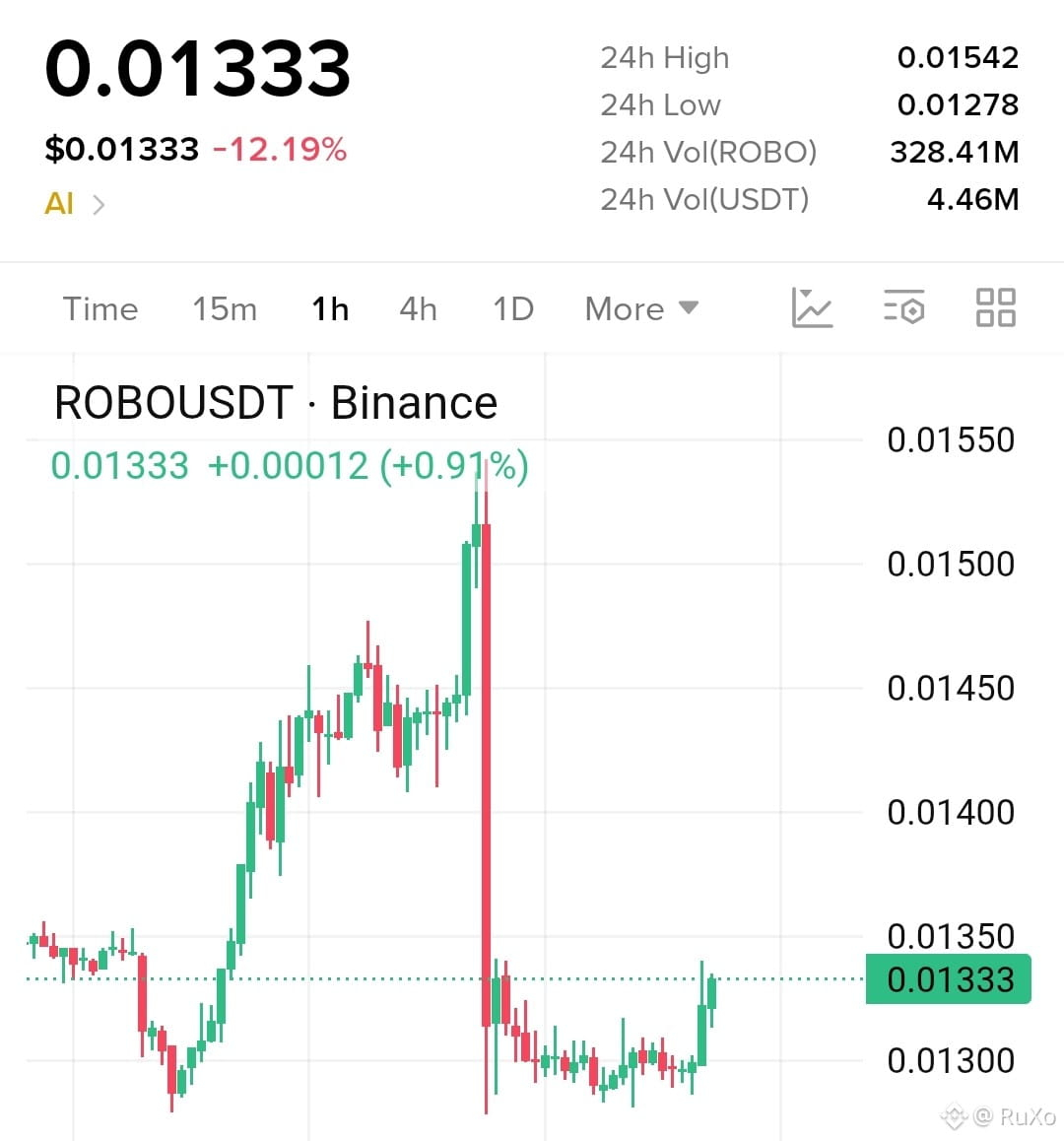
📉 $ROBO nach unten -12.19% & konsolidiert nahe $0.01333! 👀🔥
Zeitrahmen 1H zeigt Stabilisierung und einen möglichen Rebound-Versuch nach einem scharfen Rückgang von den 24h-Hochs von $0.01542, mit Halt an der Unterstützung direkt über dem 24h-Tief von $0.01278! Fixiere deine Parameter:
🟢 LONG: Schließe ÜBER $0.01380 🎯 TP: $0.01460 | $0.01550+ 🚀 🛑 SL: $0.01260
🔴 SHORT: Schließe UNTER $0.01260 🎯 TP: $0.01180 | $0.01050- 📉 🛑 SL: $0.01380
Risikomanagement beachten & DYOR! 📊⚡
{future}(ROBOUSDT)
➡️ KLICKE $ROBO UNTERHALB, um zu TRADEN ⬅️
#ROBOUSDT #FabricProtocol #Aİ #BinanceSquare #DYOR
📉 $ROBO nach unten -12.19% & konsolidiert nahe $0.01333! 👀🔥
Zeitrahmen 1H zeigt Stabilisierung und einen möglichen Rebound-Versuch nach einem scharfen Rückgang von den 24h-Hochs von $0.01542, mit Halt an der Unterstützung direkt über dem 24h-Tief von $0.01278! Fixiere deine Parameter:
🟢 LONG: Schließe ÜBER $0.01380 🎯 TP: $0.01460 | $0.01550+ 🚀 🛑 SL: $0.01260
🔴 SHORT: Schließe UNTER $0.01260 🎯 TP: $0.01180 | $0.01050- 📉 🛑 SL: $0.01380
Risikomanagement beachten & DYOR! 📊⚡
➡️ KLICKE $ROBO UNTERHALB, um zu TRADEN ⬅️
#ROBOUSDT #FabricProtocol #Aİ #BinanceSquare #DYOR
Zeitrahmen 1H zeigt Stabilisierung und einen möglichen Rebound-Versuch nach einem scharfen Rückgang von den 24h-Hochs von $0.01542, mit Halt an der Unterstützung direkt über dem 24h-Tief von $0.01278! Fixiere deine Parameter:
🟢 LONG: Schließe ÜBER $0.01380 🎯 TP: $0.01460 | $0.01550+ 🚀 🛑 SL: $0.01260
🔴 SHORT: Schließe UNTER $0.01260 🎯 TP: $0.01180 | $0.01050- 📉 🛑 SL: $0.01380
Risikomanagement beachten & DYOR! 📊⚡
➡️ KLICKE $ROBO UNTERHALB, um zu TRADEN ⬅️
#ROBOUSDT #FabricProtocol #Aİ #BinanceSquare #DYOR
233

·
--
Bärisch
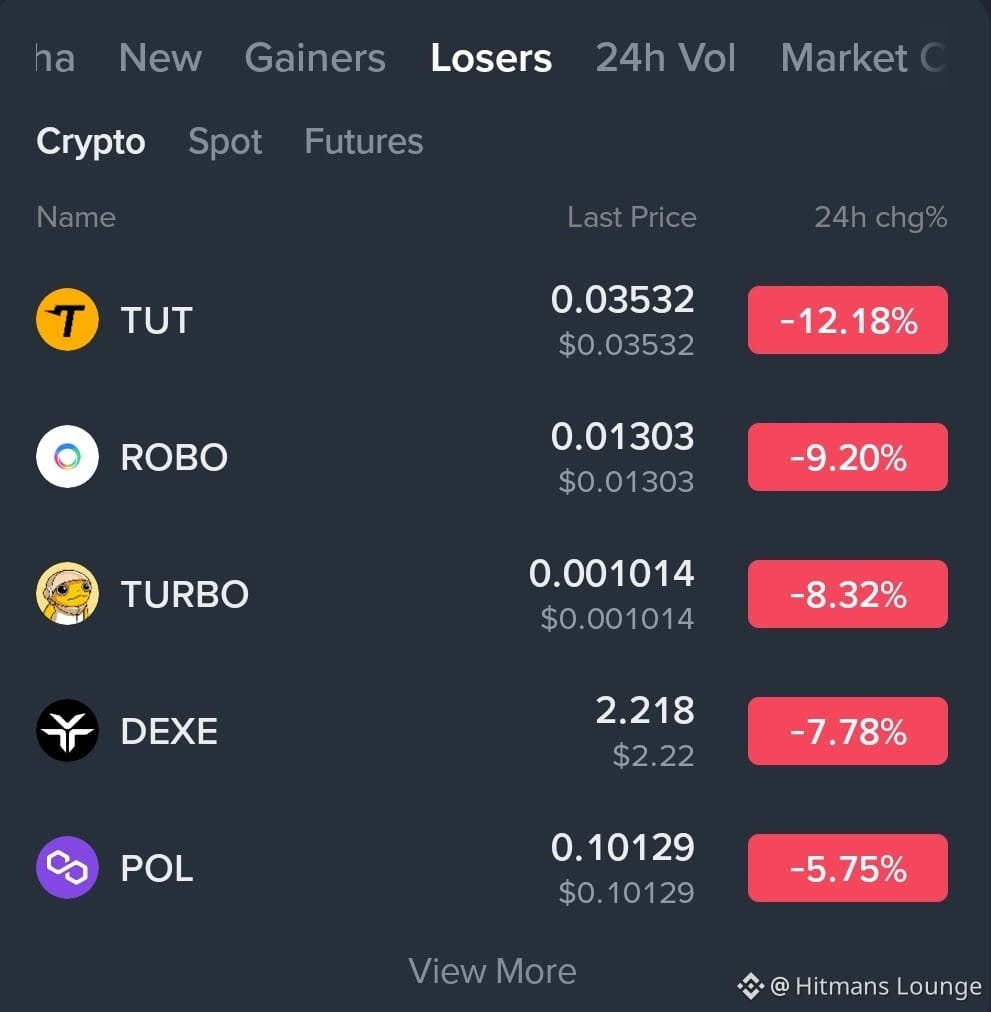
Top Verlierer für den 29. Aug., 2026
$TUT : Tutorial ist ein BNB-Chain-Bildungsprojekt/ Memecoin mit einem KI-gestützten Tutor, der sich auf das Erlernen von Krypto und Blockchain konzentriert.
$ROBO : Fabric Protocol baut Infrastruktur für autonome Roboter auf, wobei ROBO für Netzwerkgebühren, Staking, Governance und die Koordination von Maschinen genutzt wird.
$TURBO : Turbo ist ein von KI erstellter, gemeinschaftsgetriebener Ethereum-Memecoin, der ursprünglich mit GPT-4 aus einem 69-Dollar-Experiment entwickelt wurde.
#TUT #Tutorial #ROBO #Fabricprotocol #Turbo
{future}(TUTUSDT)
{future}(ROBOUSDT)
{future}(TURBOUSDT)
Top Verlierer für den 29. Aug., 2026
$TUT : Tutorial ist ein BNB-Chain-Bildungsprojekt/ Memecoin mit einem KI-gestützten Tutor, der sich auf das Erlernen von Krypto und Blockchain konzentriert.
$ROBO : Fabric Protocol baut Infrastruktur für autonome Roboter auf, wobei ROBO für Netzwerkgebühren, Staking, Governance und die Koordination von Maschinen genutzt wird.
$TURBO : Turbo ist ein von KI erstellter, gemeinschaftsgetriebener Ethereum-Memecoin, der ursprünglich mit GPT-4 aus einem 69-Dollar-Experiment entwickelt wurde.
#TUT #Tutorial #ROBO #Fabricprotocol #Turbo
$TUT : Tutorial ist ein BNB-Chain-Bildungsprojekt/ Memecoin mit einem KI-gestützten Tutor, der sich auf das Erlernen von Krypto und Blockchain konzentriert.
$ROBO : Fabric Protocol baut Infrastruktur für autonome Roboter auf, wobei ROBO für Netzwerkgebühren, Staking, Governance und die Koordination von Maschinen genutzt wird.
$TURBO : Turbo ist ein von KI erstellter, gemeinschaftsgetriebener Ethereum-Memecoin, der ursprünglich mit GPT-4 aus einem 69-Dollar-Experiment entwickelt wurde.
#TUT #Tutorial #ROBO #Fabricprotocol #Turbo
1
636

·
--
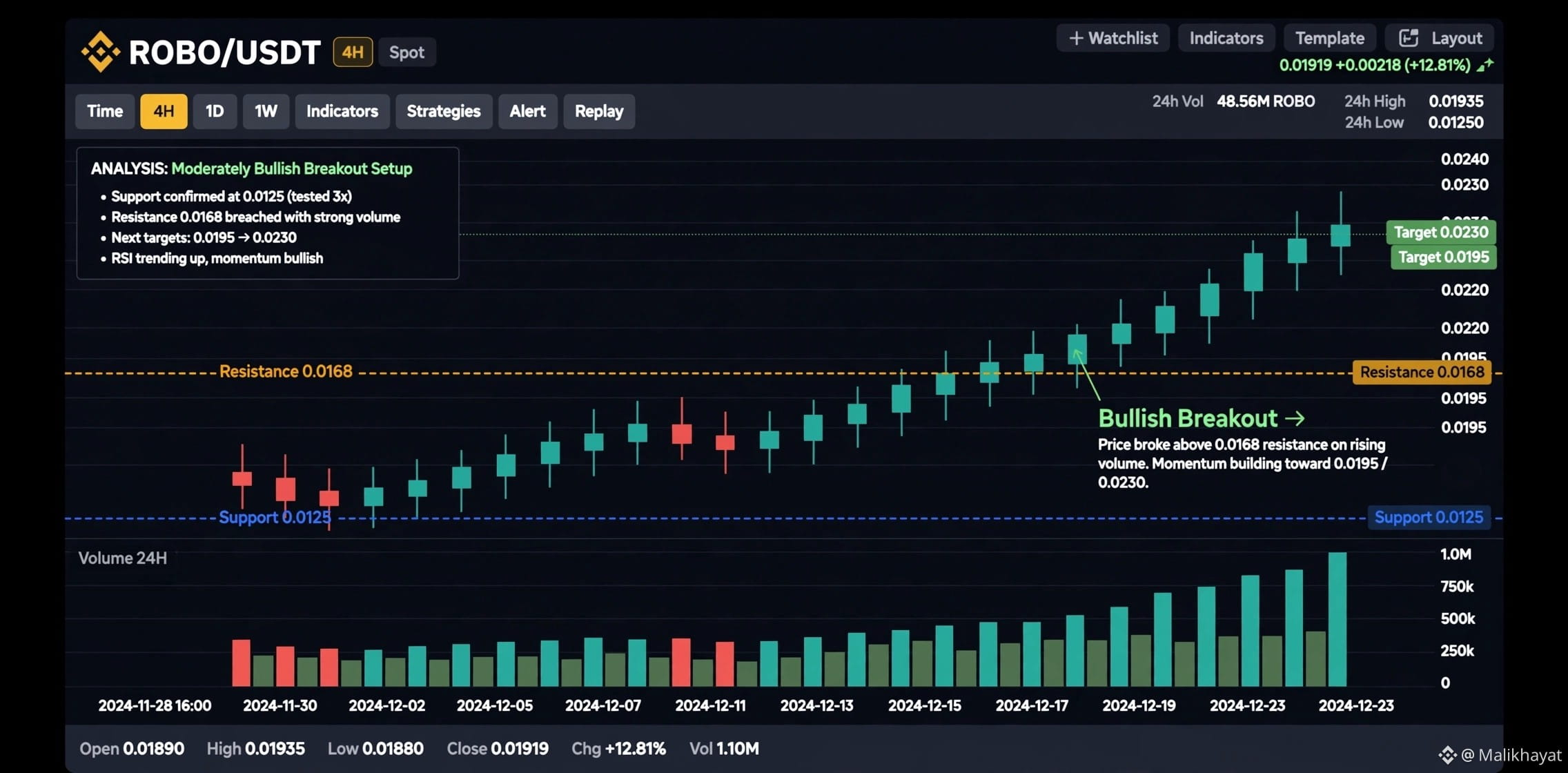
$ROBO hält eine moderat bullische Struktur bei, gestützt durch eine anhaltende Aufnahme in Scanner-Listen mit hoher Dynamik über dezentrale Web-Datensektoren hinweg. Das Basisvolumen bleibt stabil, während auf niedrigeren Timeframes erste Ausbruchsansätze erkennbar sind. Die Trader-Stimmung ist stark lokalisiert, skaliert jedoch effizient, weshalb eine Bestätigung im Bereich des $0.0168-Widerstands wichtig ist, bevor weiteres Upside bewertet wird.
📈 Bias: Moderat Bullish | 🎯 Einstieg: $0.014 – $0.015 | 🛡 Support: $0.0125 | 🚧 Widerstand: $0.0168 | 🎯 Ziele: $0.0195 / $0.0230 | ❌ Invalidierung: Abfall unter $0.0110
Strategie: Bestätigungs-Einstieg bei einem Ausbruch über $0.0168 oder Support-Einstieg nach Validierung in der Nähe von $0.0125.
#ROBO #FabricProtocol #CryptoTrading #Binance #Altcoins
{future}(ROBOUSDT)
$ROBO hält eine moderat bullische Struktur bei, gestützt durch eine anhaltende Aufnahme in Scanner-Listen mit hoher Dynamik über dezentrale Web-Datensektoren hinweg. Das Basisvolumen bleibt stabil, während auf niedrigeren Timeframes erste Ausbruchsansätze erkennbar sind. Die Trader-Stimmung ist stark lokalisiert, skaliert jedoch effizient, weshalb eine Bestätigung im Bereich des $0.0168-Widerstands wichtig ist, bevor weiteres Upside bewertet wird.
📈 Bias: Moderat Bullish | 🎯 Einstieg: $0.014 – $0.015 | 🛡 Support: $0.0125 | 🚧 Widerstand: $0.0168 | 🎯 Ziele: $0.0195 / $0.0230 | ❌ Invalidierung: Abfall unter $0.0110
Strategie: Bestätigungs-Einstieg bei einem Ausbruch über $0.0168 oder Support-Einstieg nach Validierung in der Nähe von $0.0125.
#ROBO #FabricProtocol #CryptoTrading #Binance #Altcoins
📈 Bias: Moderat Bullish | 🎯 Einstieg: $0.014 – $0.015 | 🛡 Support: $0.0125 | 🚧 Widerstand: $0.0168 | 🎯 Ziele: $0.0195 / $0.0230 | ❌ Invalidierung: Abfall unter $0.0110
Strategie: Bestätigungs-Einstieg bei einem Ausbruch über $0.0168 oder Support-Einstieg nach Validierung in der Nähe von $0.0125.
#ROBO #FabricProtocol #CryptoTrading #Binance #Altcoins
88
Anmelden und weiter Inhalte entdecken
Krypto-Nutzer weltweit auf Binance Square kennenlernen
⚡️ Bleib in Sachen Krypto stets am Puls.
💬 Die weltgrößte Kryptobörse vertraut darauf.
👍 Erhalte verlässliche Einblicke von verifizierten Creators.
E-Mail-Adresse/Telefonnummer
Trendthemen
1
#BOJRaisesRatesTo31YearHigh
79,213 Aufrufe
1,247 Kommentare
2
#BuffettStepsDownAsBerkshireChairman
35,899 Aufrufe
592 Kommentare
3
#XRPExchangeReservesHitSevenYearLow
40,866 Aufrufe
549 Kommentare
4
#HKCompletesFirstHKDStablecoinUseCase
77,048 Aufrufe
1,067 Kommentare
5
#VietnamPlansFirstCryptoLicensesIn2026
49,300 Aufrufe
730 Kommentare
6
#BTCBreaks80K
368,459 Aufrufe
4,543 Kommentare
7
#比特币突破8万
158,766 Aufrufe
501 Kommentare
8
#BitcoinMarketCapTopsTesla
76,887 Aufrufe
1,021 Kommentare
9
#SOLJumpsAbout10%
84,646 Aufrufe
1,014 Kommentare
10
#EthereumReclaims$2600
7,790 Aufrufe
114 Kommentare