
Key Summary
RWA-linked perpetuals provide a continuously traded derivative price across these windows, extending access to market views without requiring ownership of the underlying asset.
Following the FOMC, the median equity-linked perpetual captured 97% of the subsequent opening gap across 16 names, with US$1.02B traded outside regular U.S. market hours. The SEC’s tokenization exemption then drove a separate overnight rally in crypto-linked equities.
Weekend trading extended beyond broad market exposure into individual events. Across 198 TradFi perpetuals, US$7.25B traded during the market closure surrounding the S&P rebalance. Index additions gained 1.01% on average, but returns varied materially, making stock selection more informative than index inclusion alone
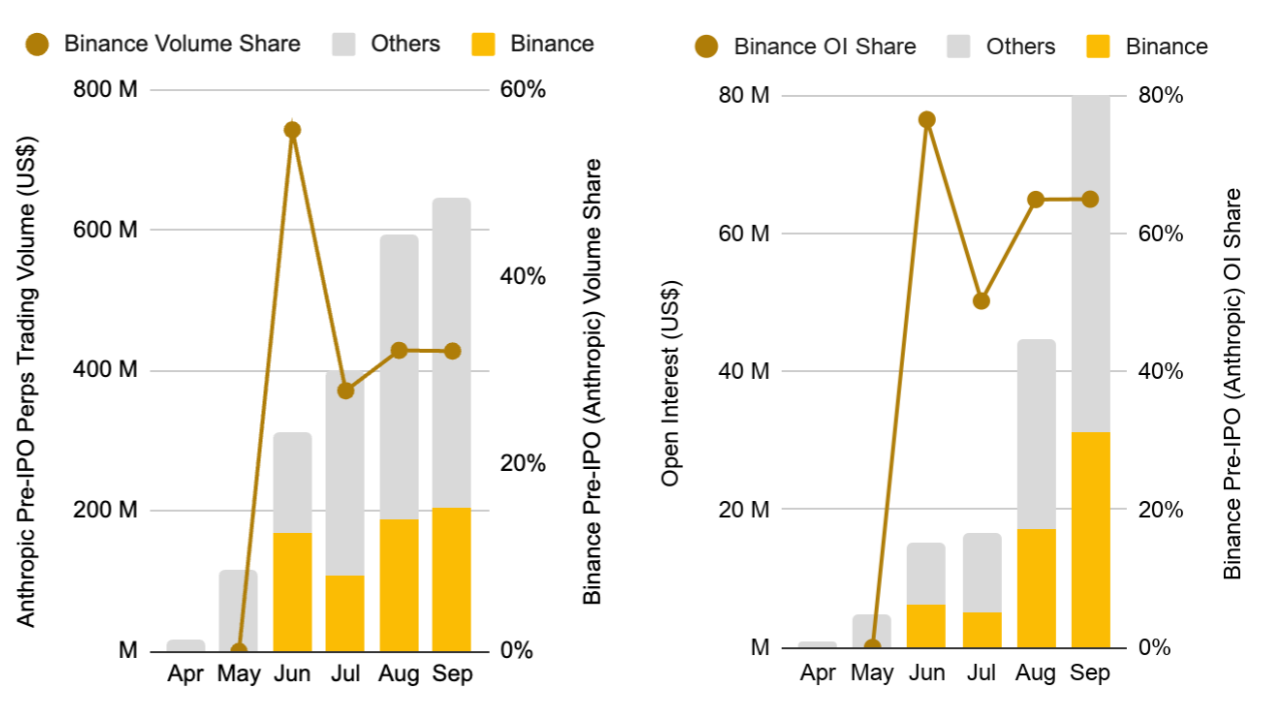
Pre-IPO markets are building activity before public listings. Anthropic perpetual volume reached US$643M in September MTD, already exceeding August’s total. Binance accounted for 32% of volume and 39% of industry open interest, while the muted reaction to the reported IPO delay suggested limited incremental selling pressure.

Trading Beyond Regular Market Hours
Regular U.S. equity trading occupies just 32.5 hours, or 19.3% of a standard week. Yet these sessions capture 87.2% of U.S. equity volume. Trading outside regular hours accounted for just 12.8%, with activity also concentrated in pre-market and post-market sessions.
News and demand to adjust positions continue overnight and over weekends. RWA-linked perpetuals allow investors to trade through these periods, providing continuous exposure to equities, ETFs and pre-IPO companies.
The recent Fed decision, SEC announcement, index rebalance and Anthropic IPO update illustrate how this access is being used. The following sections examine the volume traded outside regular hours, the positions investors could adjust, and how overnight prices compared with the next cash-market open.
Figure 1: Regular U.S. sessions occupy 19.3% of the week but capture 87.2% of equity volume
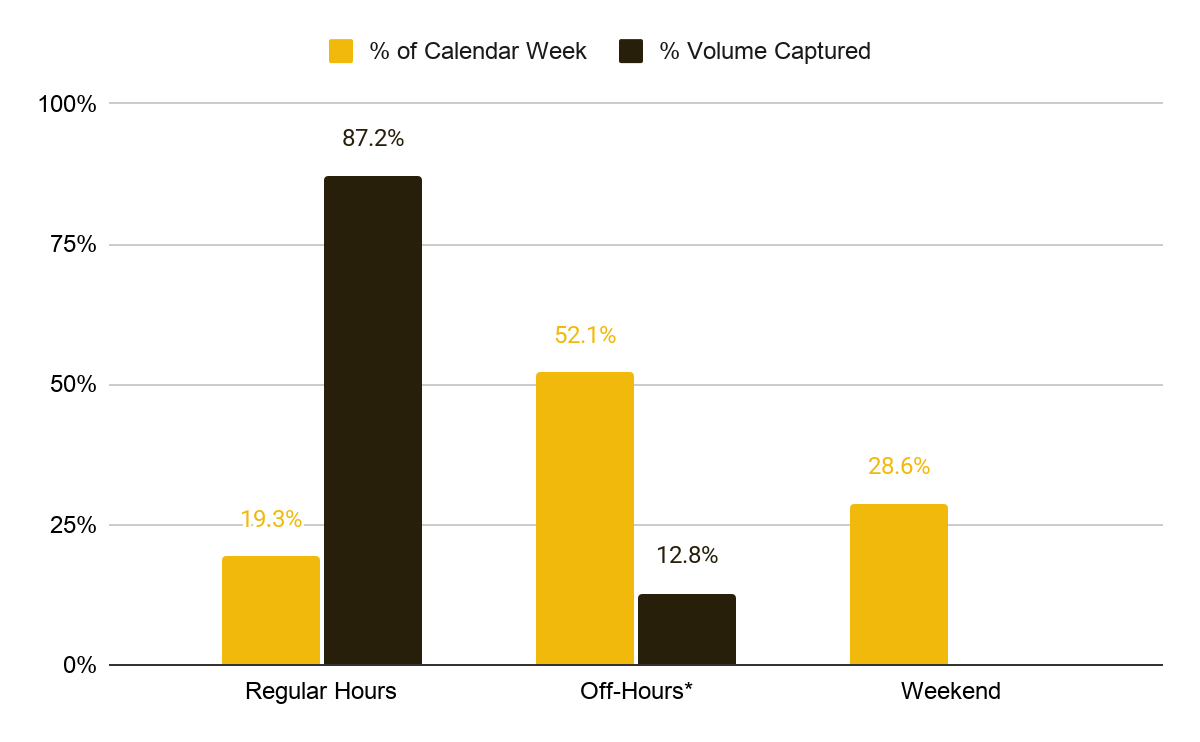
*Includes pre-market, post-market and overnight trading
The Fed hiked, perpetuals repriced before the open
The FOMC raised its target range by 25bp to 3.75-4.00% on September 16 in a unanimous 12-0 vote. The stronger hawkish signal came from the dot plot, where 16 of 18 participants projected at least one further increase by year-end. That marks a sharp reversal from the four cuts markets priced at the start of 2026. The 10-Year yield climbed 25bp this month, from 4.76% to 5.01% on FOMC day, with crude oil becoming an increasingly important input into the inflation pressure shaping Fed expectations.
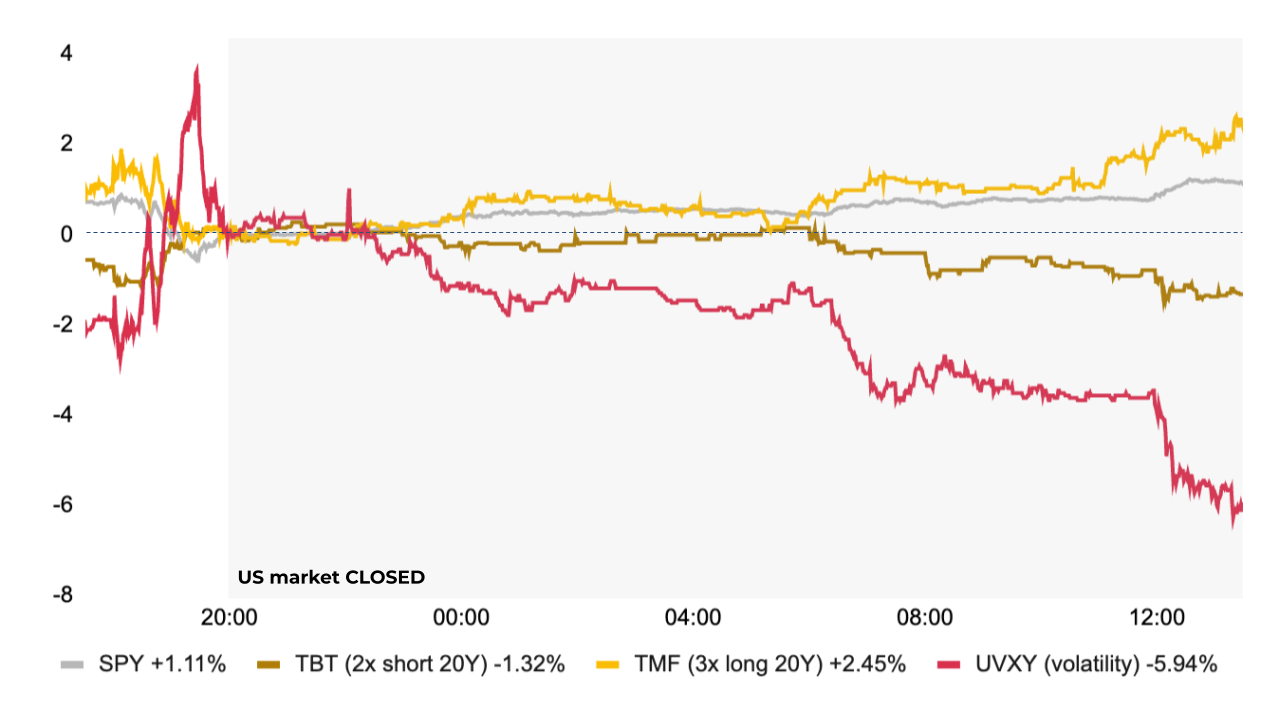
The statement arrived at 18:00 (14:00 ET), two hours before the 20:00 (16:00 ET) close, but much of the adjustment unfolded overnight. From Wednesday's close to Thursday's open, SPYUSDT gained 1.11%, TMFUSDT (3x long 20Y) rose 2.45% and TBTUSDT (2x short 20Y) fell 1.32%, while UVXYUSDT dropped 5.94% as demand for volatility protection unwound. Stronger bonds, higher equities and lower demand for volatility protection were consistent with relief over the inflation outlook, although these moves alone cannot establish causality.
The perpetuals appeared to price the next session, rather than drift passively. Measured against Thursday's opening gap, the median equity-linked perpetual captured 97% of the move: SPY 91%, QQQ 97%, IWM 99%, TMF 104% and UVXY 96%. Across 16 names, the directional hit rate was 100%, with US$1.02B traded while U.S. cash markets were closed.
Over the following weekend, the bond rally moderated rather than reversed: TMF gained 1.11%, TBT fell 0.66%, UVXY declined 0.74% and SPY edged up 0.36%. Demand for duration held through the closure, though this does not by itself imply fewer near-term hikes.
Figure 2: ETF Proxies for S&P500, bonds and market volatility reaction post-FOMC after-hours, Wednesday 20:00UTC to Thursday 13:30UTC
The SEC policy response was tradable overnight
The next evening brought a different catalyst. After the CLARITY Act failed to advance in the Senate on September 15, the SEC issued its Innovation Exemption on September 17, providing a conditional five-year framework for qualifying tokenized stock venues. The announcement offered a route forward for tokenized securities despite the legislative setback. The distinction matters: when legislation stalls, agencies can still act through exemptive and no-action relief. These routes are faster, narrower in scope, and easier to unwind, but they offer a practical path forward.
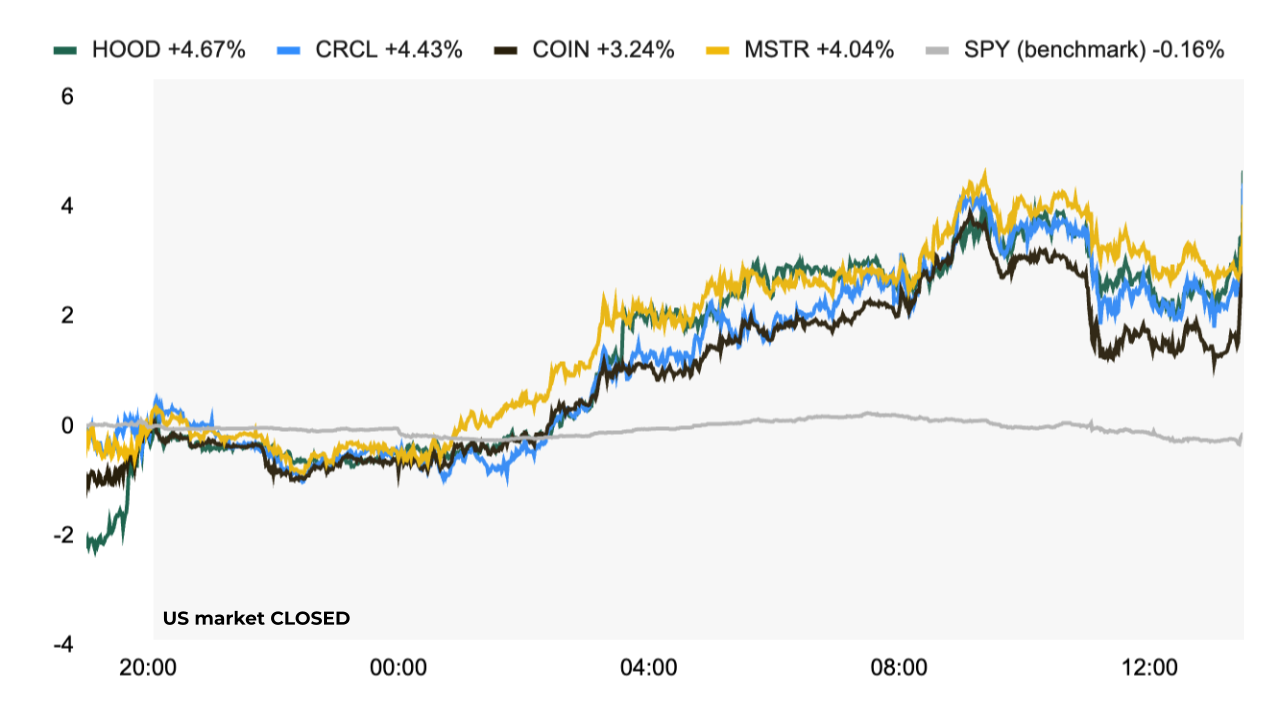
The order arrived near the U.S. market close, prompting price adjustment overnight.. From Thursday 20:00 UTC to Friday 13:30 UTC, HOOD gained 4.67%, CRCL 4.43%, BMNR 4.18%, MSTR 4.04%, and COIN 3.24%, while SPY fell 0.16%. The divergence allowed traders to express views on crypto-linked equities separately from the broader market.
Perpetuals overshot the eventual opening gaps, with a median priced-in ratio of 140%, but the direction carried into Friday’s session, when COIN rose 8.7% and MSTR 12.5%.
Compared with the post-FOMC sample, this episode showed a larger gap between overnight pricing and the eventual cash open. Continuous trading provided an early indication of direction, while the magnitude remained subject to adjustment when cash-market liquidity returned. The two episodes show that overnight prices can capture a developing market response without precisely matching the next opening price.
Figure 3: Crypto-equities repriced overnight after the SEC Innovation Exemption, Thursday 20:00UTC to Friday 13:30UTC
The index rebalance was a weekend-tradable event
Activity continued beyond weekday overnight sessions. During the market closure surrounding the September 21 S&P DJI rebalance, 198 TradFi perpetuals traded US$7.25B. That total captures trading across the available contracts, with the rebalance providing one example of the exposures investors could adjust.
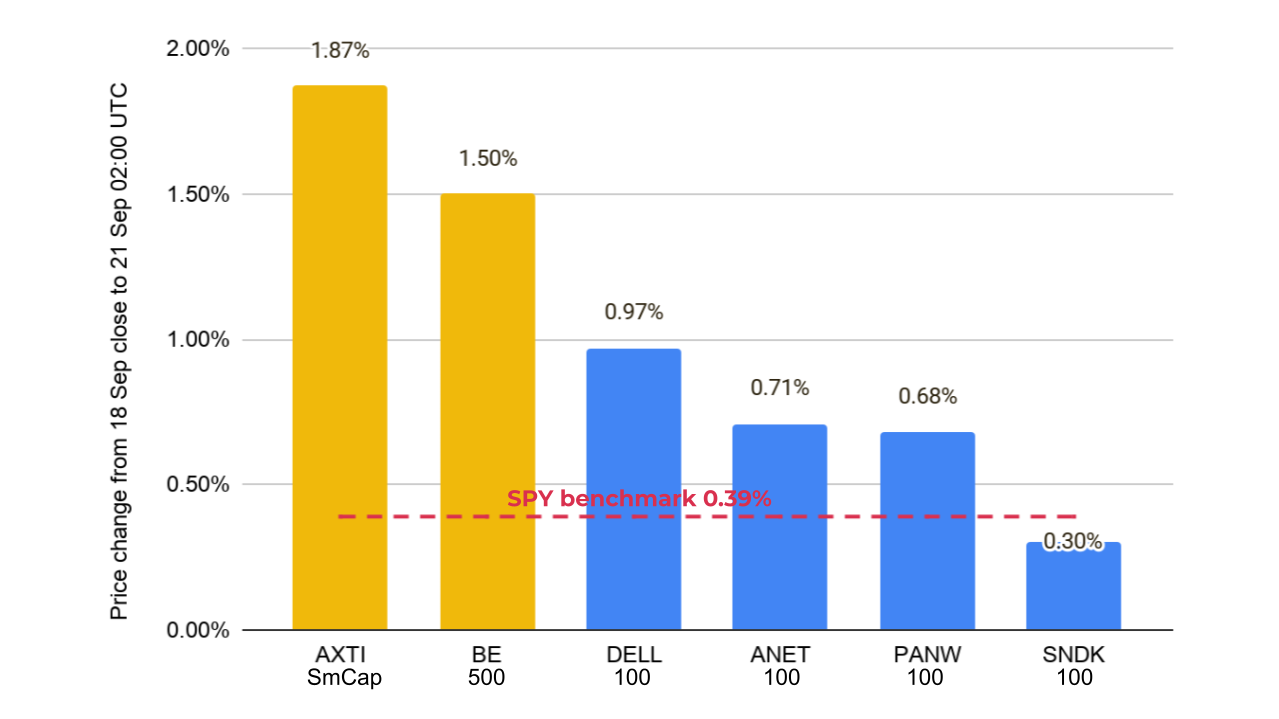
The S&P DJI rebalance took effect before September 21, Monday’s open, but exposure was already trading from Friday’s close on 24/7 venues. Index additions gained an average of 1.01%, versus SPY’s 0.39%, delivering approximately 0.6 percentage points of outperformance.
That premium was modest, and the most heavily traded addition did not deliver the strongest return. SNDK, the largest addition by notional traded (US$744M), gained just 0.30%, trailing even the SPY benchmark. Investors could therefore trade differences between individual names throughout the closure, rather than wait for Monday to adjust their positions.
The rebalance had already been announced on September 4, so these weekend moves reflect positioning around a known event rather than a response to new inclusion information.
Figure 4: S&P rebalance effective on Monday, selected tickers reacted over the weekend
Anthropic IPO delay and the pre-IPO perpetual pricing
Wall Street Journal (WSJ) reported that Anthropic had pushed its IPO to November broke over the last weekend. For a company with no public float, a headline of that significance might have been expected to trigger a sharp reprice.
Instead, Binance’s ANTHROPICUSDT fell just 0.89%, from US$2,103 to US$2,084, across the weekend. Meanwhile, OpenAI’s perpetual gained 3.00%. The muted response is consistent with the delay having been partly anticipated, although it does not establish how much was already priced in. The revised timetable prompted only limited additional selling pressure.
That price-discovery process is becoming increasingly visible in market activity. Across twelve venues, Anthropic perpetual volume reached US$643M in September MTD, exceeding August’s US$590M total. Binance accounted for 32% of September volume and held 39% of industry open interest, according to Coinglass, which totaled US$80M. On Binance, open interest rose 88% over 30 days, from US$16.6M to US$31.2M, indicating growing outstanding exposure ahead of the anticipated listing.
These figures suggest that the weekend move was supported by broader market participation rather than weekend volume alone. The perpetual allows eligible retail participants to express a pre-IPO price view and respond to company-specific news ahead of a public listing. . Its price has risen 45.5% since August 1, from US$1,437 to US$2,091, though trading the contract does not confer ownership of private shares or an entitlement to an IPO allocation.
Figure 5: The trading volume and open interest of Anthropic Pre-IPO perpetuals hit all-time-highs in September, 2026
More of the trading week is now being used
The evidence spans both activity and pricing. US$1.02B traded outside regular hours following the FOMC, while US$7.25B traded across TradFi perpetuals during the rebalance weekend. The opening-gap comparisons show how much of the subsequent cash-market adjustment was already reflected in overnight prices.
For investors, the practical value is the ability to respond when information arrives, maintain exposure through a market closure, and adjust individual positions before regular trading resumes. These examples show RWA-linked perpetuals capturing that demand across macro events, policy announcements and company developments.