
unique53
5 Paylaşımlar

unique53
Şikayət et
İstifadəçini blokla
Learning crypto step by step. Exploring Bitcoin, blockchain and wallet safety. Sharing what I learn from trusted sources. Not financial advice.
3 İzlənilir
0 İzləyicilər
5 Bəyəndi
Postlar
·
--
Tərcüməyə bax
🚨 Your Wallet Can Be Tricked Without Being Hacked!
I'm learning that not every crypto scam involves stealing passwords or private keys.
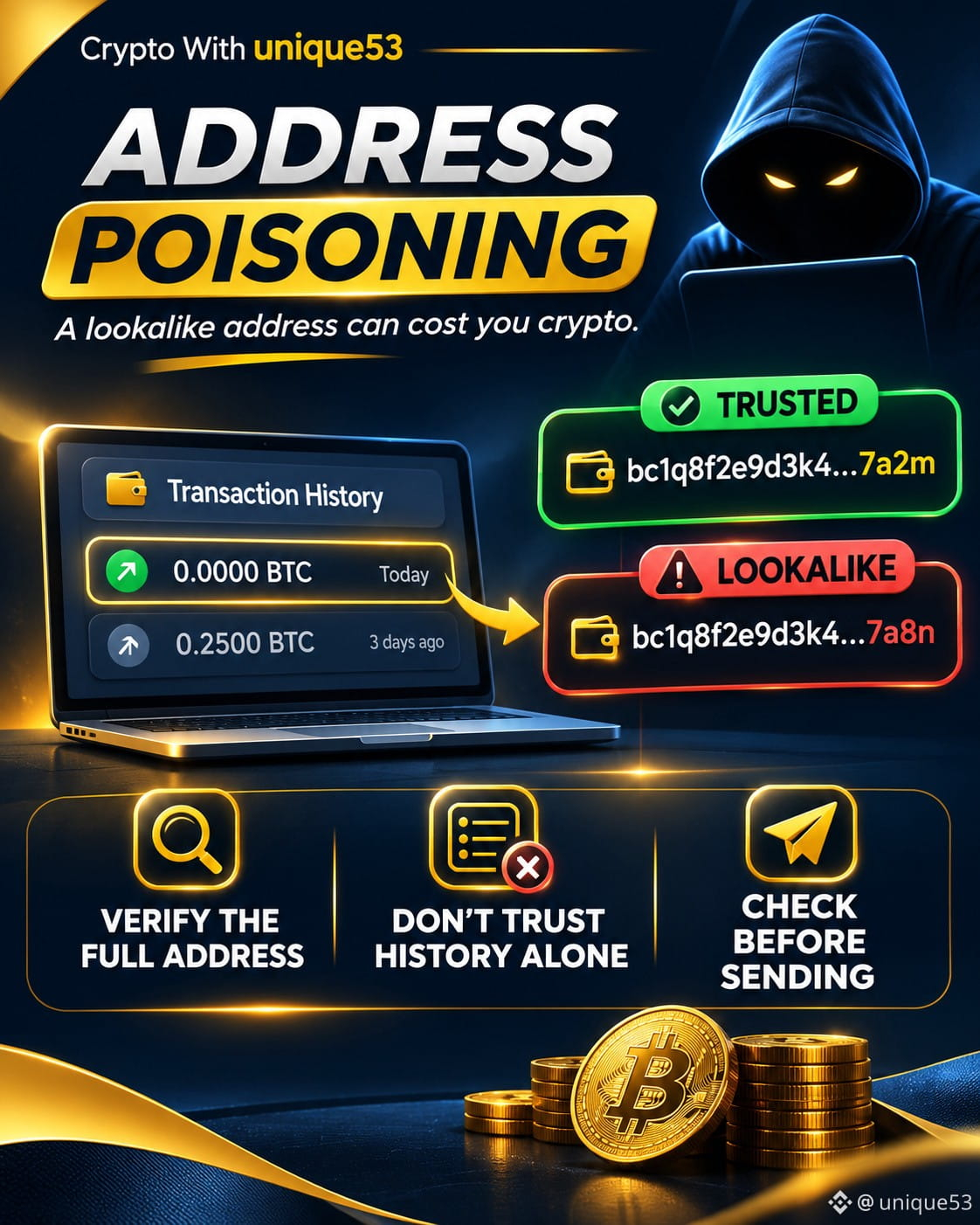
One trick I recently discovered is called Address Poisoning.
Here's how it works:
🔹 The Lookalike: Scammers create a wallet address that resembles one you've used before.
🔹 The Trap: They send a tiny or zero-value transaction so their address appears in your transaction history.
🔹 The Mistake: If you later copy that address without checking it, you could send your crypto to the scammer.
⚠️ The scary part? Your wallet doesn't necessarily need to be hacked for this to happen.
3 safety habits I'm learning:
✅ Verify the entire destination address using a trusted source.
✅ Don't blindly copy addresses from transaction history.
✅ Consider using a verified address book and a small test transfer when appropriate.
💡 My takeaway: A familiar-looking address isn't necessarily a safe address.
I'm learning that protecting crypto starts with understanding how scams work.
❓ Have you ever noticed a suspicious transaction in your wallet history?
#CryptoSecurity #AddressPoisoning #CryptoEducation #CryptoBeginners
1
85
·
--
Tərcüməyə bax
🔍 Proof of Reserves: Can You Really Verify an Exchange’s Crypto?
I’m learning that trusting a crypto exchange shouldn’t depend only on its reputation.
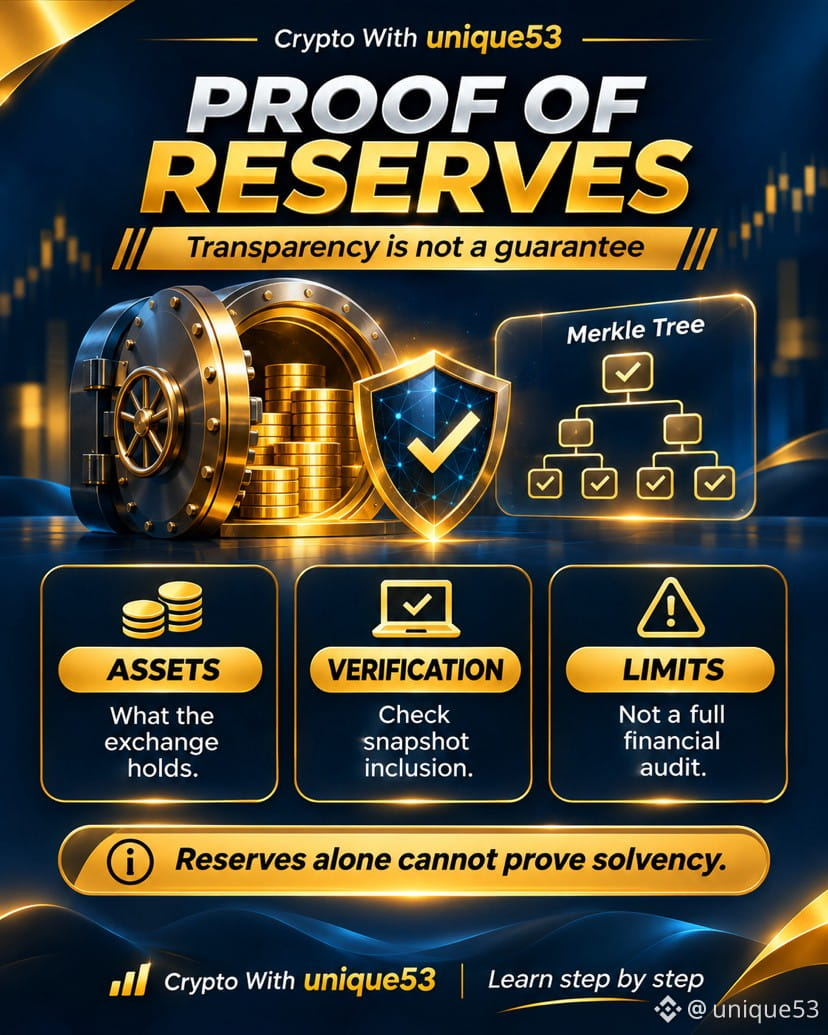
One concept I discovered is Proof of Reserves (PoR).
Here’s what I’ve learned:
🔹 What is PoR?
It’s a verification method that helps exchanges demonstrate they hold assets backing customer balances.
🔹 How does it work?
Cryptographic tools, including Merkle trees, can help users verify that their balances were included in a reserve snapshot.
🔹 Why does it matter?
It provides an additional layer of transparency instead of relying entirely on an exchange’s claims.
⚠️ But here’s the important part:
Proof of Reserves isn’t a complete financial audit. A reserve snapshot alone doesn’t prove that an exchange has no hidden liabilities or financial risks.
💡 My takeaway:
Transparency is valuable, but understanding its limitations matters just as much.
I’m learning crypto step by step, and this is another concept worth understanding.
❓ Before today, had you heard of Proof of Reserves?
#ProofOfReserves #CryptoEducation #Blockchain #CryptoSecurity
1
66
·
--
Tərcüməyə bax
🪙 Stablecoins: Does “Stable” Mean Risk-Free?
One thing I'm learning about crypto is that a stable price doesn't automatically mean a safe asset.
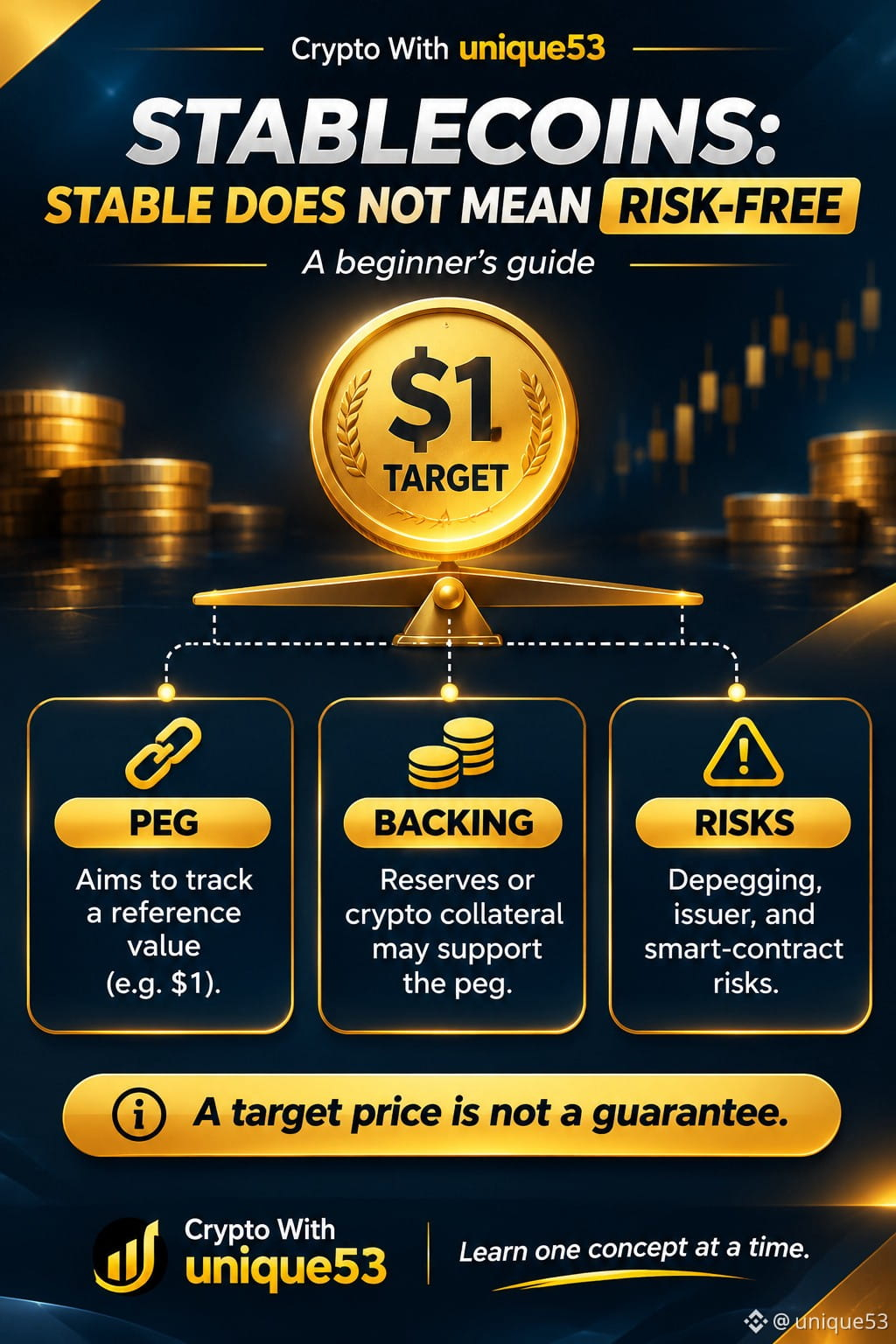
Stablecoins are cryptocurrencies designed to maintain a value linked to another asset, often the US dollar.
Here's what I've learned so far:
🔹 The Peg: A dollar-pegged stablecoin generally aims to maintain a value close to $1.
🔹 The Backing: Some stablecoins rely on financial reserves, while others use crypto collateral or different mechanisms.
🔹 The Risks: Stablecoins can lose their peg. Issuer problems, insufficient reserves, smart-contract vulnerabilities, and market conditions can create additional risks.
💡 My takeaway:
A $1 target is not a $1 guarantee.
Before trusting any stablecoin, it's worth understanding how it maintains its value and what could cause that mechanism to fail.
I'm still learning, and this is another important lesson in understanding crypto beyond price charts.
❓ Did you know stablecoins could lose their peg?
#Stablecoins #CryptoEducation #Blockchain #CryptoBeginners
1
49
·
--
$BTC 💧 Kriptovalyuta ilə ticarət niyə gözləniləndən baha başa gələ bilər?
Öyrənirəm ki, kriptovalyuta ilə ticarət edərkən gördüyümüz qiymət həmişə əldə etdiyimiz qiymət olmur.
Bunun səbəbini iki vacib anlayış izah edir:
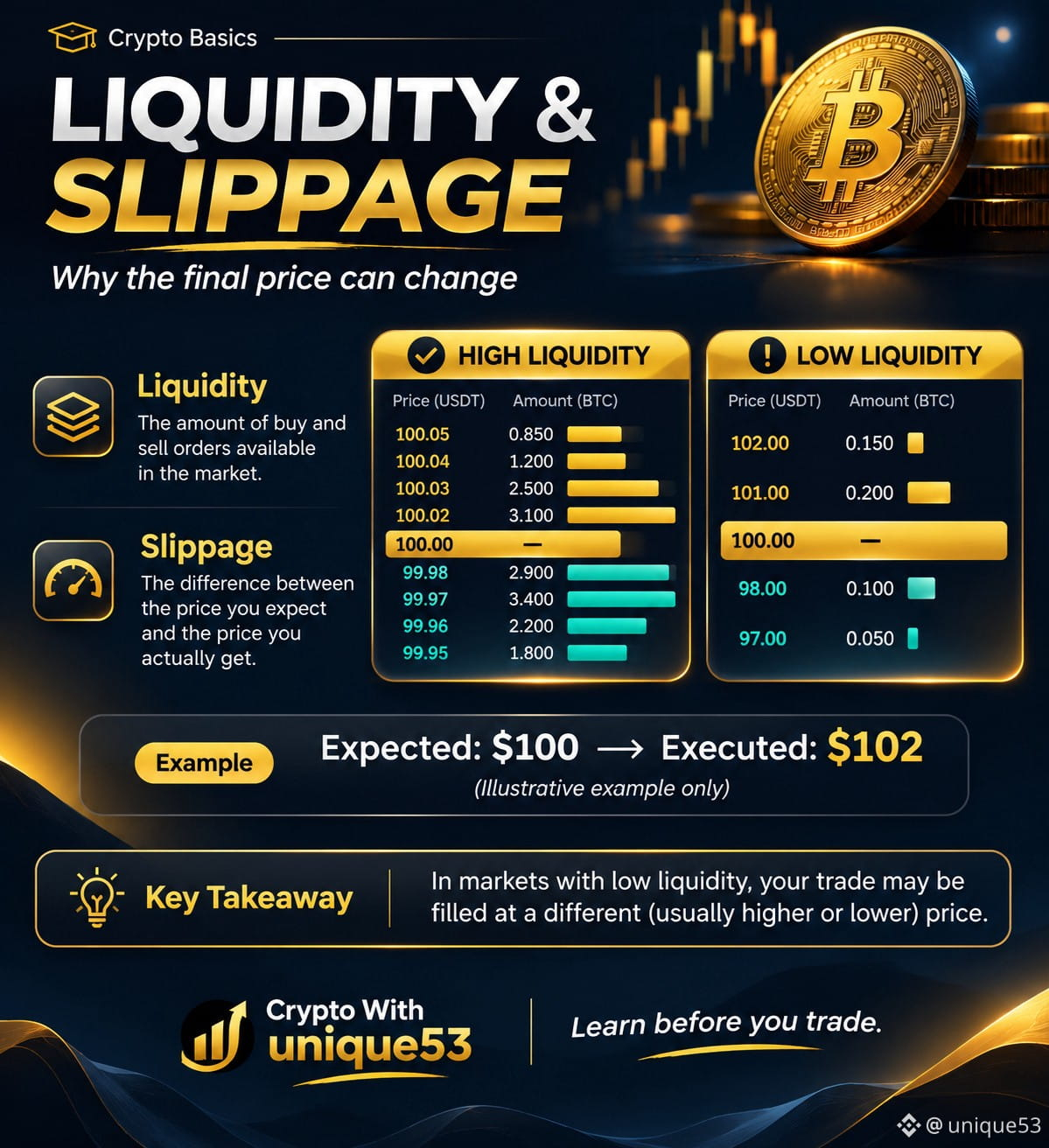
🔹 Likvidlik: Aktivin qiymətinə ciddi təsir etmədən nə qədər asan alınıb-satıla bilməsi.
🔹 Sürüşmə: Gözlədiyiniz qiymətlə əməliyyatınızın faktiki icra olunduğu qiymət arasındakı fərq.
📊 Sadə nümunə:
Gözlənilən qiymət: $100
İcra qiyməti: $102
Sürüşmə: 2% (əlverişsiz)
Bu, sadəcə izah məqsədli nümunədir, real bazar qiyməti deyil.
Aşağı likvidlik və bazardakı sürətli dəyişikliklər sürüşməni artıra bilər. Bəzən sürüşmə sizin xeyrinizə də ola bilər.
💡 Nəticəm: Likvidliyi anlamaq qiymətləri izləmək qədər vacibdir.
Kriptovalyutanı hər dəfə bir anlayış öyrənərək mənimsəyirəm.
❓ Bu günə qədər sürüşmə haqqında məlumatınız var idi?
#KriptoTəhsili #Likvidlik #Sürüşmə #KriptoyaYeniBaşlayanlar
1
170
·
--
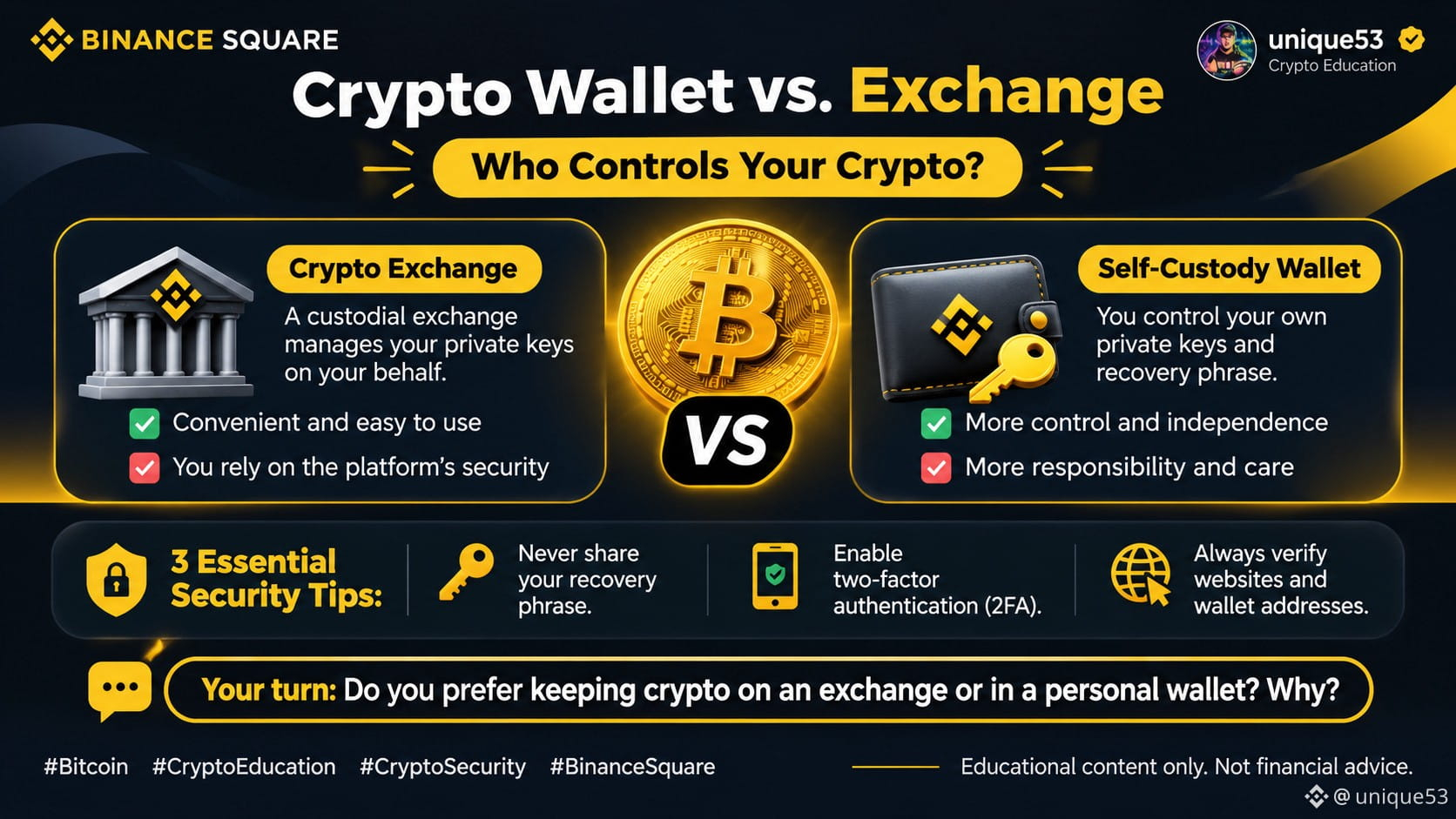
$BTC 🔐 Kripto Pulqabısı və Birja: Kriptovalyutanı həqiqətən kim idarə edir?
$BTC-yə sahibsinizsə, onu qoruyan açarları kimin idarə etdiyini bilirsinizmi?
🏦 Kriptovalyuta birjası
Kastodial birja şəxsi açarlarınızı sizin adınızdan idarə edir. Bu, rahatdır, amma platformanın təhlükəsizliyinə güvənirsiniz.
🔑 Özünə nəzarət edilən pulqabı
Şəxsi açarlarınızı və bərpa ifadənizi özünüz idarə edirsiniz. Daha çox nəzarət həm də daha çox məsuliyyət deməkdir.
⚠️ Təhlükəsizlik üçün 3 vacib məsləhət:$
✅ Bərpa ifadənizi heç vaxt heç kimlə paylaşmayın.
✅ Mümkün olan hər yerdə iki faktorlu autentifikasiyanı (2FA) aktiv edin.
✅ Veb-saytları və pulqabı ünvanlarını həmişə yoxlayın.
💡 Unutmayın: Kriptovalyutaya sahib olmaq və onun şəxsi açarlarını idarə etmək həmişə eyni şey deyil.
💬 İndi siz deyin: Kriptovalyutanızı birjada, yoxsa şəxsi pulqabınızda saxlamağa üstünlük verirsiniz? Niyə?
#Bitcoin #KriptoTəhsili #KriptoTəhlükəsizliyi #BinanceSquare
📚 Yalnız maarifləndirici məzmundur. Maliyyə məsləhəti deyil.
$BTC 🔐 Kripto Pulqabısı və Birja: Kriptovalyutanı həqiqətən kim idarə edir?
$BTC -yə sahibsinizsə, onu qoruyan açarları kimin idarə etdiyini bilirsinizmi?
🏦 Kriptovalyuta birjası
Kastodial birja şəxsi açarlarınızı sizin adınızdan idarə edir. Bu, rahatdır, amma platformanın təhlükəsizliyinə güvənirsiniz.
🔑 Özünə nəzarət edilən pulqabı
Şəxsi açarlarınızı və bərpa ifadənizi özünüz idarə edirsiniz. Daha çox nəzarət həm də daha çox məsuliyyət deməkdir.
⚠️ Təhlükəsizlik üçün 3 vacib məsləhət:$
✅ Bərpa ifadənizi heç vaxt heç kimlə paylaşmayın.
✅ Mümkün olan hər yerdə iki faktorlu autentifikasiyanı (2FA) aktiv edin.
✅ Veb-saytları və pulqabı ünvanlarını həmişə yoxlayın.
💡 Unutmayın: Kriptovalyutaya sahib olmaq və onun şəxsi açarlarını idarə etmək həmişə eyni şey deyil.
💬 İndi siz deyin: Kriptovalyutanızı birjada, yoxsa şəxsi pulqabınızda saxlamağa üstünlük verirsiniz? Niyə?
#Bitcoin #KriptoTəhsili #KriptoTəhlükəsizliyi #BinanceSquare
📚 Yalnız maarifləndirici məzmundur. Maliyyə məsləhəti deyil.
1
104
Daha çox kontent araşdırmaq üçün daxil olun
Binance Square-də qlobal kriptovalyuta istifadəçilərinə qoşulun
⚡️ Kriptovalyuta haqqında ən son və faydalı məlumatları əldə edin.
💬 Dünyanın ən böyük kriptovalyuta birjası tərəfindən etibar edilir.
👍 Doğrulanmış yaradıcılardan gələn real məlumatları kəşf edin.
E-poçt/Telefon nömrəsi
Trenddə olan mövzular
NvidiaInvestigatesAfterHuang’sAffairApology
209,904 baxış
Müzakirə edir: 1,696
Nvidia şurası Huangın xarici kəşfiyyat əməliyyatının hədəfi olub-olmadığını araşdırmağa başlayıb
Binance News
·21 bəyənmə
·55.1k baxış
CPITestsDecemberRateOutlook
659,473 baxış
Müzakirə edir: 2,796
AnthropicRejectsIPODelayValuationinQuestion
38,915 baxış
Müzakirə edir: 400