
SundayBest
19 منشورات

SundayBest
إبلاغ
حظر المُستخدم
فتح تداول
مُتداول مُتكرر
7.9 أشهر
214 تتابع
59 المتابعون
29 إعجاب
منشورات
الحافظة الاستثمارية
الكل
اقتباسات
PINNED
·
--
عرض الترجمة
Crypto Basics: Essential Terms Every Beginner Must KnowCrypto can feel confusing at first because of the many new terms used every day. Words like blockchain, wallet, and gas fees are often used without explanation, leaving beginners overwhelmed.
This beginner-friendly series is designed to help you understand crypto step by step. In Part 1, I cover the most essential crypto terms you must know before investing, trading, or using any crypto platform.
TL;DR:
• Cryptocurrency is digital money that runs on blockchain technology.
• A blockchain is a public and unchangeable record of transactions.
• Wallets store your private keys, not your coins.
• Never share your private key or seed phrase with anyone.
• Gas fees are transaction costs on blockchains.
• Learning basic terms helps you avoid costly mistakes.
1. Cryptocurrency
A cryptocurrency is digital money that exists only online. It is not controlled by banks or governments. Instead, it uses cryptography and blockchain technology to function.
Examples include Bitcoin and Ethereum.
2. Blockchain
A blockchain is a public digital ledger that records all transactions. Once information is added to the blockchain, it cannot be changed.
This transparency is what makes blockchain technology secure and trustworthy.
3. Wallet
A crypto wallet is a tool used to send, receive, and store cryptocurrency.
Important note: Wallets do not store coins. They store private keys that give access to your crypto.
4. Private Key and Seed Phrase
A private key is a secret code that allows access to your crypto funds.
A seed phrase is a list of 12 to 24 words used to recover your wallet if you lose access.
Never share your private key or seed phrase with anyone. Anyone who has it can steal your funds.
5. Public Address
A public address is similar to a bank account number. It is used to receive cryptocurrency and can be shared safely.
6. Gas Fees
Gas fees are transaction costs paid to process actions on a blockchain, such as sending crypto or swapping tokens.
Fees depend on network activity and congestion.
7. Volatility
Volatility refers to how quickly and sharply crypto prices change.
High volatility means higher risk, but also higher opportunity.
Final Thoughts:
Before thinking about profits, every beginner should focus on understanding the basics. Most crypto losses happen because users act without knowledge.
Learning these terms is the first step toward using crypto safely and confidently.
Question for readers:
Which crypto term confused you the most when you were starting out?
End of Part 1
#freedomofmoney #OpenAIPlansDesktopSuperapp #BinanceKOLIntroductionProgram
Crypto Basics: Essential Terms Every Beginner Must Know
Crypto can feel confusing at first because of the many new terms used every day. Words like blockchain, wallet, and gas fees are often used without explanation, leaving beginners overwhelmed.
This beginner-friendly series is designed to help you understand crypto step by step. In Part 1, I cover the most essential crypto terms you must know before investing, trading, or using any crypto platform.
TL;DR:
• Cryptocurrency is digital money that runs on blockchain technology.
• A blockchain is a public and unchangeable record of transactions.
• Wallets store your private keys, not your coins.
• Never share your private key or seed phrase with anyone.
• Gas fees are transaction costs on blockchains.
• Learning basic terms helps you avoid costly mistakes.
1. Cryptocurrency
A cryptocurrency is digital money that exists only online. It is not controlled by banks or governments. Instead, it uses cryptography and blockchain technology to function.
Examples include Bitcoin and Ethereum.
2. Blockchain
A blockchain is a public digital ledger that records all transactions. Once information is added to the blockchain, it cannot be changed.
This transparency is what makes blockchain technology secure and trustworthy.
3. Wallet
A crypto wallet is a tool used to send, receive, and store cryptocurrency.
Important note: Wallets do not store coins. They store private keys that give access to your crypto.
4. Private Key and Seed Phrase
A private key is a secret code that allows access to your crypto funds.
A seed phrase is a list of 12 to 24 words used to recover your wallet if you lose access.
Never share your private key or seed phrase with anyone. Anyone who has it can steal your funds.
5. Public Address
A public address is similar to a bank account number. It is used to receive cryptocurrency and can be shared safely.
6. Gas Fees
Gas fees are transaction costs paid to process actions on a blockchain, such as sending crypto or swapping tokens.
Fees depend on network activity and congestion.
7. Volatility
Volatility refers to how quickly and sharply crypto prices change.
High volatility means higher risk, but also higher opportunity.
Final Thoughts:
Before thinking about profits, every beginner should focus on understanding the basics. Most crypto losses happen because users act without knowledge.
Learning these terms is the first step toward using crypto safely and confidently.
Question for readers:
Which crypto term confused you the most when you were starting out?
End of Part 1
#freedomofmoney #OpenAIPlansDesktopSuperapp #BinanceKOLIntroductionProgram
This beginner-friendly series is designed to help you understand crypto step by step. In Part 1, I cover the most essential crypto terms you must know before investing, trading, or using any crypto platform.
TL;DR:
• Cryptocurrency is digital money that runs on blockchain technology.
• A blockchain is a public and unchangeable record of transactions.
• Wallets store your private keys, not your coins.
• Never share your private key or seed phrase with anyone.
• Gas fees are transaction costs on blockchains.
• Learning basic terms helps you avoid costly mistakes.
1. Cryptocurrency
A cryptocurrency is digital money that exists only online. It is not controlled by banks or governments. Instead, it uses cryptography and blockchain technology to function.
Examples include Bitcoin and Ethereum.
2. Blockchain
A blockchain is a public digital ledger that records all transactions. Once information is added to the blockchain, it cannot be changed.
This transparency is what makes blockchain technology secure and trustworthy.
3. Wallet
A crypto wallet is a tool used to send, receive, and store cryptocurrency.
Important note: Wallets do not store coins. They store private keys that give access to your crypto.
4. Private Key and Seed Phrase
A private key is a secret code that allows access to your crypto funds.
A seed phrase is a list of 12 to 24 words used to recover your wallet if you lose access.
Never share your private key or seed phrase with anyone. Anyone who has it can steal your funds.
5. Public Address
A public address is similar to a bank account number. It is used to receive cryptocurrency and can be shared safely.
6. Gas Fees
Gas fees are transaction costs paid to process actions on a blockchain, such as sending crypto or swapping tokens.
Fees depend on network activity and congestion.
7. Volatility
Volatility refers to how quickly and sharply crypto prices change.
High volatility means higher risk, but also higher opportunity.
Final Thoughts:
Before thinking about profits, every beginner should focus on understanding the basics. Most crypto losses happen because users act without knowledge.
Learning these terms is the first step toward using crypto safely and confidently.
Question for readers:
Which crypto term confused you the most when you were starting out?
End of Part 1
#freedomofmoney #OpenAIPlansDesktopSuperapp #BinanceKOLIntroductionProgram
8
16
·
--
{future}(BITOUSDT)
🚀 الموجة الكبيرة التالية في عالم العملات الرقمية: لماذا يراقب “المال الذكي” السوق عن كثب الآن
لقد كانت أسواق العملات الرقمية دائمًا تكافئ من يستطيع رؤية الفرصة قبل عامة الناس. ففي حين لا تزال التقلبات على المدى القصير تطيح بالمتداولين الضعفاء، فإن الأسس للمرحلة التالية من اعتماد تقنية البلوكشين تتقوى أكثر من أي وقت مضى.
ووفقًا لـ Binance Research، تظل مشاركة المؤسسات وتدفقات الصناديق المتداولة (ETF) والأصول المُرقمنة وتوسع البنية التحتية لسلاسل الكتل من أبرز المحاور التي تشكّل المشهد الخاص بالأصول الرقمية في عام 2026.
🚀 الموجة الكبيرة التالية في عالم العملات الرقمية: لماذا يراقب “المال الذكي” السوق عن كثب الآن
لقد كانت أسواق العملات الرقمية دائمًا تكافئ من يستطيع رؤية الفرصة قبل عامة الناس. ففي حين لا تزال التقلبات على المدى القصير تطيح بالمتداولين الضعفاء، فإن الأسس للمرحلة التالية من اعتماد تقنية البلوكشين تتقوى أكثر من أي وقت مضى.
ووفقًا لـ Binance Research، تظل مشاركة المؤسسات وتدفقات الصناديق المتداولة (ETF) والأصول المُرقمنة وتوسع البنية التحتية لسلاسل الكتل من أبرز المحاور التي تشكّل المشهد الخاص بالأصول الرقمية في عام 2026.
لقد كانت أسواق العملات الرقمية دائمًا تكافئ من يستطيع رؤية الفرصة قبل عامة الناس. ففي حين لا تزال التقلبات على المدى القصير تطيح بالمتداولين الضعفاء، فإن الأسس للمرحلة التالية من اعتماد تقنية البلوكشين تتقوى أكثر من أي وقت مضى.
ووفقًا لـ Binance Research، تظل مشاركة المؤسسات وتدفقات الصناديق المتداولة (ETF) والأصول المُرقمنة وتوسع البنية التحتية لسلاسل الكتل من أبرز المحاور التي تشكّل المشهد الخاص بالأصول الرقمية في عام 2026.
71
·
--
صاعد
104
·
--
عرض الترجمة


Binance Academy
·
--
تخبرك كل شمعة بأربعة أشياء: أين افتتح السعر، وأين أغلق، وكم تحرك في كلا الاتجاهين.
👉 Learn to read them properly
👉 Learn to read them properly

1
1
·
--
عرض الترجمة
🧩 A Small Game, A Big Crypto Lesson
I used to think Binance Word of the Day (WOTD) was just a fun puzzle. Guess a word, earn points, move on.
Turns out, it’s teaching one of the most important crypto skills: understanding the language.
Every word—liquidity, staking, yield, wallet—is a building block. No charts. No leverage. No stress. Just learning, one concept at a time.
Crypto doesn’t reward hype.
It rewards clarity, consistency, and context.
WOTD also reminds me that growth doesn’t have to be loud. Showing up daily, thinking a bit deeper, and staying curious compounds—just like good investments do.
Before profits, there’s knowledge.
Before trading, there’s understanding.
Sometimes, progress in crypto starts with guessing the right word.
On to the next one 👋
#Binance #WOTD #CryptoLearning #Web3
{future}(BTCUSDT)
🧩 A Small Game, A Big Crypto Lesson
I used to think Binance Word of the Day (WOTD) was just a fun puzzle. Guess a word, earn points, move on.
Turns out, it’s teaching one of the most important crypto skills: understanding the language.
Every word—liquidity, staking, yield, wallet—is a building block. No charts. No leverage. No stress. Just learning, one concept at a time.
Crypto doesn’t reward hype.
It rewards clarity, consistency, and context.
WOTD also reminds me that growth doesn’t have to be loud. Showing up daily, thinking a bit deeper, and staying curious compounds—just like good investments do.
Before profits, there’s knowledge.
Before trading, there’s understanding.
Sometimes, progress in crypto starts with guessing the right word.
On to the next one 👋
#Binance #WOTD #CryptoLearning #Web3
I used to think Binance Word of the Day (WOTD) was just a fun puzzle. Guess a word, earn points, move on.
Turns out, it’s teaching one of the most important crypto skills: understanding the language.
Every word—liquidity, staking, yield, wallet—is a building block. No charts. No leverage. No stress. Just learning, one concept at a time.
Crypto doesn’t reward hype.
It rewards clarity, consistency, and context.
WOTD also reminds me that growth doesn’t have to be loud. Showing up daily, thinking a bit deeper, and staying curious compounds—just like good investments do.
Before profits, there’s knowledge.
Before trading, there’s understanding.
Sometimes, progress in crypto starts with guessing the right word.
On to the next one 👋
#Binance #WOTD #CryptoLearning #Web3
1
3
·
--
عرض الترجمة
BREAKING 🚨🚨🚨
President Trump agrees to a cease-fire subject to Iran reopening the Strait of Hormuz.
{future}(BTCUSDT)
BREAKING 🚨🚨🚨
President Trump agrees to a cease-fire subject to Iran reopening the Strait of Hormuz.
President Trump agrees to a cease-fire subject to Iran reopening the Strait of Hormuz.
·
--
عرض الترجمة
Risk Management & Long-Term Investing: How Beginners Stay in the GameOne of the biggest differences between successful crypto users and beginners who quit early is risk management. Many people enter crypto focusing only on profits, while ignoring how to protect their capital.
In Part 5 of this beginner series, we focus on risk management and long-term investing principles that help beginners survive market volatility and grow steadily over time.
TL;DR:
• Protecting capital is more important than chasing profits.
• Never invest money you cannot afford to lose.
• Diversification reduces risk.
• Long-term thinking beats short-term gambling.
• Consistency and patience matter more than perfect timing.
1. What Is Risk Management?
Risk management is the process of protecting your money from large losses.
In crypto, risk management is not about avoiding losses completely. It is about making sure losses are small enough that you can continue learning and investing.
2. Only Invest What You Can Afford to Lose
This is the most important rule in crypto.
Never invest:
• Rent money
• School fees
• Emergency funds
• Borrowed money
Crypto prices can drop sharply, and emotional pressure increases when essential money is at risk.
3. Diversification: Don’t Go All-In
Putting all your money into one coin is risky.
Diversification means spreading funds across:
• Different projects
• Different sectors
• Sometimes different entry times
Diversification helps reduce the impact if one project performs poorly.
4. Position Sizing: Start Small
Beginners often invest too much too quickly.
A safer approach:
• Start with small amounts
• Increase slowly as you learn
• Focus on consistency, not big wins
Small mistakes teach valuable lessons without heavy losses.
5. Long-Term Investing vs Short-Term Trading
Long-term investing:
• Requires patience
• Reduces emotional stress
• Focuses on learning and fundamentals
Short-term trading:
• Requires experience
• Involves more stress
• Carries higher risk
Beginners are generally better off focusing on long-term investing while learning.
6. Dollar-Cost Averaging (DCA)
Dollar-cost averaging means investing small, fixed amounts over time instead of all at once.
Benefits:
• Reduces timing risk
• Encourages discipline
• Avoids emotional decisions
DCA is popular among long-term investors.
7. Accepting Volatility
Price swings are normal in crypto.
Instead of reacting emotionally:
• Expect volatility
• Plan for downturns
• Focus on long-term goals
Volatility only becomes a problem when expectations are unrealistic.
8. Patience Is a Skill
Many beginners quit because results are slow.
Crypto rewards:
• Discipline
• Patience
• Continuous learning
Staying calm during quiet or negative periods is part of long-term success.
Final Thoughts:
Risk management keeps you in the market long enough to learn and improve. Profits come later, but survival comes first.
A beginner who manages risk well is already ahead of most participants.
What matters more to you right now — protecting capital or chasing fast profits?
End of Part 5
Risk Management & Long-Term Investing: How Beginners Stay in the Game
One of the biggest differences between successful crypto users and beginners who quit early is risk management. Many people enter crypto focusing only on profits, while ignoring how to protect their capital.
In Part 5 of this beginner series, we focus on risk management and long-term investing principles that help beginners survive market volatility and grow steadily over time.
TL;DR:
• Protecting capital is more important than chasing profits.
• Never invest money you cannot afford to lose.
• Diversification reduces risk.
• Long-term thinking beats short-term gambling.
• Consistency and patience matter more than perfect timing.
1. What Is Risk Management?
Risk management is the process of protecting your money from large losses.
In crypto, risk management is not about avoiding losses completely. It is about making sure losses are small enough that you can continue learning and investing.
2. Only Invest What You Can Afford to Lose
This is the most important rule in crypto.
Never invest:
• Rent money
• School fees
• Emergency funds
• Borrowed money
Crypto prices can drop sharply, and emotional pressure increases when essential money is at risk.
3. Diversification: Don’t Go All-In
Putting all your money into one coin is risky.
Diversification means spreading funds across:
• Different projects
• Different sectors
• Sometimes different entry times
Diversification helps reduce the impact if one project performs poorly.
4. Position Sizing: Start Small
Beginners often invest too much too quickly.
A safer approach:
• Start with small amounts
• Increase slowly as you learn
• Focus on consistency, not big wins
Small mistakes teach valuable lessons without heavy losses.
5. Long-Term Investing vs Short-Term Trading
Long-term investing:
• Requires patience
• Reduces emotional stress
• Focuses on learning and fundamentals
Short-term trading:
• Requires experience
• Involves more stress
• Carries higher risk
Beginners are generally better off focusing on long-term investing while learning.
6. Dollar-Cost Averaging (DCA)
Dollar-cost averaging means investing small, fixed amounts over time instead of all at once.
Benefits:
• Reduces timing risk
• Encourages discipline
• Avoids emotional decisions
DCA is popular among long-term investors.
7. Accepting Volatility
Price swings are normal in crypto.
Instead of reacting emotionally:
• Expect volatility
• Plan for downturns
• Focus on long-term goals
Volatility only becomes a problem when expectations are unrealistic.
8. Patience Is a Skill
Many beginners quit because results are slow.
Crypto rewards:
• Discipline
• Patience
• Continuous learning
Staying calm during quiet or negative periods is part of long-term success.
Final Thoughts:
Risk management keeps you in the market long enough to learn and improve. Profits come later, but survival comes first.
A beginner who manages risk well is already ahead of most participants.
What matters more to you right now — protecting capital or chasing fast profits?
End of Part 5
In Part 5 of this beginner series, we focus on risk management and long-term investing principles that help beginners survive market volatility and grow steadily over time.
TL;DR:
• Protecting capital is more important than chasing profits.
• Never invest money you cannot afford to lose.
• Diversification reduces risk.
• Long-term thinking beats short-term gambling.
• Consistency and patience matter more than perfect timing.
1. What Is Risk Management?
Risk management is the process of protecting your money from large losses.
In crypto, risk management is not about avoiding losses completely. It is about making sure losses are small enough that you can continue learning and investing.
2. Only Invest What You Can Afford to Lose
This is the most important rule in crypto.
Never invest:
• Rent money
• School fees
• Emergency funds
• Borrowed money
Crypto prices can drop sharply, and emotional pressure increases when essential money is at risk.
3. Diversification: Don’t Go All-In
Putting all your money into one coin is risky.
Diversification means spreading funds across:
• Different projects
• Different sectors
• Sometimes different entry times
Diversification helps reduce the impact if one project performs poorly.
4. Position Sizing: Start Small
Beginners often invest too much too quickly.
A safer approach:
• Start with small amounts
• Increase slowly as you learn
• Focus on consistency, not big wins
Small mistakes teach valuable lessons without heavy losses.
5. Long-Term Investing vs Short-Term Trading
Long-term investing:
• Requires patience
• Reduces emotional stress
• Focuses on learning and fundamentals
Short-term trading:
• Requires experience
• Involves more stress
• Carries higher risk
Beginners are generally better off focusing on long-term investing while learning.
6. Dollar-Cost Averaging (DCA)
Dollar-cost averaging means investing small, fixed amounts over time instead of all at once.
Benefits:
• Reduces timing risk
• Encourages discipline
• Avoids emotional decisions
DCA is popular among long-term investors.
7. Accepting Volatility
Price swings are normal in crypto.
Instead of reacting emotionally:
• Expect volatility
• Plan for downturns
• Focus on long-term goals
Volatility only becomes a problem when expectations are unrealistic.
8. Patience Is a Skill
Many beginners quit because results are slow.
Crypto rewards:
• Discipline
• Patience
• Continuous learning
Staying calm during quiet or negative periods is part of long-term success.
Final Thoughts:
Risk management keeps you in the market long enough to learn and improve. Profits come later, but survival comes first.
A beginner who manages risk well is already ahead of most participants.
What matters more to you right now — protecting capital or chasing fast profits?
End of Part 5
1
15
·
--
عرض الترجمة
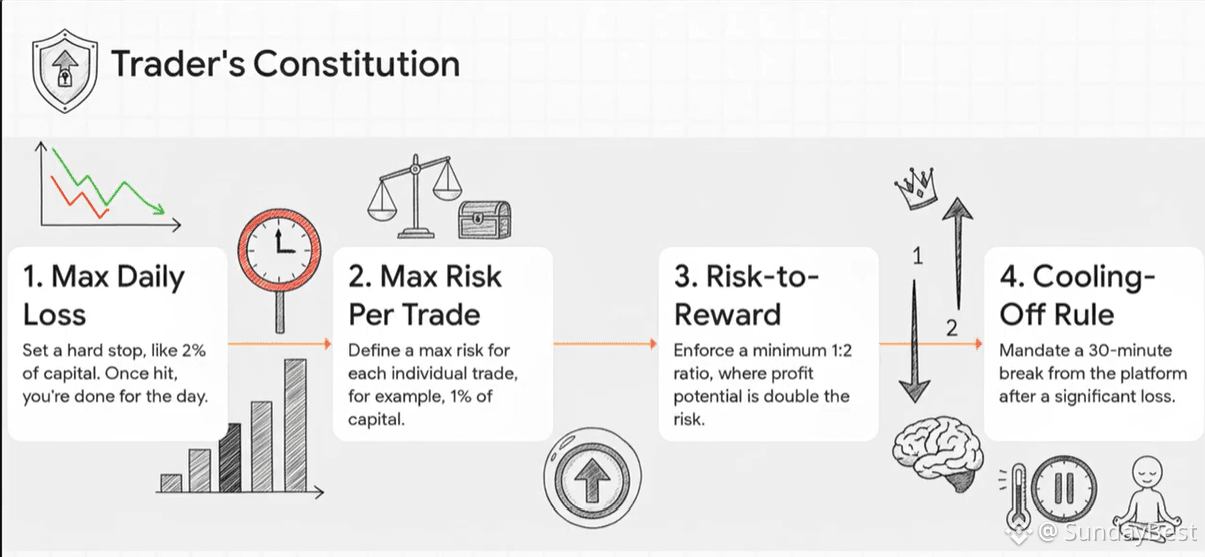
Trader's Constitution Continue learning
#BitcoinPrices
{future}(BTCUSDT)
Trader's Constitution Continue learning
#BitcoinPrices
#BitcoinPrices
3
·
--
الأخطاء الشائعة للمبتدئين وعمليات الاحتيال في العملات الرقمية: كيفية تجنب خسارة الماليعتقد العديد من المبتدئين أنهم يخسرون المال في العملات الرقمية لأن الأسعار تنخفض. في الواقع، تحدث معظم الخسائر بسبب أخطاء بسيطة، وقرارات سيئة، واحتيالات.
في الجزء الرابع من هذه السلسلة للمبتدئين، نغطي الأخطاء الأكثر شيوعًا التي يرتكبها المستخدمون الجدد ونشرح كيف تعمل عمليات الاحتيال في العملات الرقمية، حتى تتمكن من حماية أموالك وتجنب الخسائر غير الضرورية.
TL;DR:
• معظم المبتدئين يخسرون المال بسبب الأخطاء، وليس بسبب انهيارات السوق.
• غالبًا ما تستخدم الاحتيالات الإلحاح، والخوف، أو المكافآت المزيفة.
• لا يطلب أي مشروع شرعي عبارة البذور الخاصة بك.
الأخطاء الشائعة للمبتدئين وعمليات الاحتيال في العملات الرقمية: كيفية تجنب خسارة المال
يعتقد العديد من المبتدئين أنهم يخسرون المال في العملات الرقمية لأن الأسعار تنخفض. في الواقع، تحدث معظم الخسائر بسبب أخطاء بسيطة، وقرارات سيئة، واحتيالات.
في الجزء الرابع من هذه السلسلة للمبتدئين، نغطي الأخطاء الأكثر شيوعًا التي يرتكبها المستخدمون الجدد ونشرح كيف تعمل عمليات الاحتيال في العملات الرقمية، حتى تتمكن من حماية أموالك وتجنب الخسائر غير الضرورية.
TL;DR:
• معظم المبتدئين يخسرون المال بسبب الأخطاء، وليس بسبب انهيارات السوق.
• غالبًا ما تستخدم الاحتيالات الإلحاح، والخوف، أو المكافآت المزيفة.
• لا يطلب أي مشروع شرعي عبارة البذور الخاصة بك.
في الجزء الرابع من هذه السلسلة للمبتدئين، نغطي الأخطاء الأكثر شيوعًا التي يرتكبها المستخدمون الجدد ونشرح كيف تعمل عمليات الاحتيال في العملات الرقمية، حتى تتمكن من حماية أموالك وتجنب الخسائر غير الضرورية.
TL;DR:
• معظم المبتدئين يخسرون المال بسبب الأخطاء، وليس بسبب انهيارات السوق.
• غالبًا ما تستخدم الاحتيالات الإلحاح، والخوف، أو المكافآت المزيفة.
• لا يطلب أي مشروع شرعي عبارة البذور الخاصة بك.
1
1
60
·
--
بورصات العملات المشفرة وأساسيات التداول: كيف يعمل الشراء والبيعبعد تعلم مصطلحات العملات المشفرة وأمان المحفظة، الخطوة التالية للمبتدئين هي فهم البورصات وكيفية عمل التداول فعليًا.
يفقد العديد من المبتدئين المال ببساطة لأنهم لا يفهمون كيفية تنفيذ الصفقات، والفرق بين التداول الفوري والعقود الآجلة، أو كيفية عمل الأوامر. في الجزء 3 من هذه السلسلة، نشرح بورصات العملات المشفرة وأساسيات التداول بمصطلحات بسيطة.
TL;DR:
• تتيح بورصات العملات المشفرة للمستخدمين شراء وبيع وتداول العملات المشفرة.
• يعتبر التداول الفوري أبسط وأكثر أمانًا للمبتدئين.
• ينطوي تداول العقود الآجلة على الرافعة المالية ومخاطر أعلى.
بورصات العملات المشفرة وأساسيات التداول: كيف يعمل الشراء والبيع
بعد تعلم مصطلحات العملات المشفرة وأمان المحفظة، الخطوة التالية للمبتدئين هي فهم البورصات وكيفية عمل التداول فعليًا.
يفقد العديد من المبتدئين المال ببساطة لأنهم لا يفهمون كيفية تنفيذ الصفقات، والفرق بين التداول الفوري والعقود الآجلة، أو كيفية عمل الأوامر. في الجزء 3 من هذه السلسلة، نشرح بورصات العملات المشفرة وأساسيات التداول بمصطلحات بسيطة.
TL;DR:
• تتيح بورصات العملات المشفرة للمستخدمين شراء وبيع وتداول العملات المشفرة.
• يعتبر التداول الفوري أبسط وأكثر أمانًا للمبتدئين.
• ينطوي تداول العقود الآجلة على الرافعة المالية ومخاطر أعلى.
يفقد العديد من المبتدئين المال ببساطة لأنهم لا يفهمون كيفية تنفيذ الصفقات، والفرق بين التداول الفوري والعقود الآجلة، أو كيفية عمل الأوامر. في الجزء 3 من هذه السلسلة، نشرح بورصات العملات المشفرة وأساسيات التداول بمصطلحات بسيطة.
TL;DR:
• تتيح بورصات العملات المشفرة للمستخدمين شراء وبيع وتداول العملات المشفرة.
• يعتبر التداول الفوري أبسط وأكثر أمانًا للمبتدئين.
• ينطوي تداول العقود الآجلة على الرافعة المالية ومخاطر أعلى.
11
11
·
--
عرض الترجمة
Crypto Wallets & Security: How to Keep Your Funds SafeAfter learning basic crypto terms, the next most important topic for beginners is security. Many people lose crypto not because prices fall, but because they do not understand how wallets and security work.
In Part 2 of this beginner series, we focus on crypto wallets, security basics, and how to protect your funds from common mistakes and scams.
TL;DR:
• Crypto wallets store private keys, not coins.
• Hot wallets are online; cold wallets are offline.
• Your seed phrase is the most important security key.
• Exchanges are convenient but not fully risk-free.
• Most crypto losses happen due to poor security habits.
1. What Is a Crypto Wallet?
A crypto wallet is a tool that allows you to send, receive, and manage your cryptocurrency.
Wallets do not hold actual coins. Instead, they store private keys that prove ownership of your crypto on the blockchain.
2. Hot Wallets
Hot wallets are connected to the internet.
Examples include:
• Exchange wallets
• Mobile wallet apps
• Browser wallets
Advantages:
• Easy to use
• Fast access to funds
Disadvantages:
• More vulnerable to hacking
• Not ideal for long-term storage
Hot wallets are best for small amounts and daily use.
3. Cold Wallets
Cold wallets are not connected to the internet.
Examples include:
• Hardware wallets
• Offline paper backups
Advantages:
• Much safer from online attacks
• Best for long-term storage
Disadvantages:
• Cost money
• Less convenient for frequent transactions
Cold wallets are recommended for storing large amounts of crypto.
4. Seed Phrase: Your Master Key
A seed phrase is a list of 12 to 24 words that can recover your wallet.
Important rules:
• Never store it online
• Never share it with anyone
• Write it down and keep it offline
• Anyone with your seed phrase controls your funds
5. Using Exchanges Safely
Centralized exchanges are convenient, especially for beginners. However, they control the private keys to your funds.
Safety tips:
• Enable two-factor authentication (2FA)
• Use a strong, unique password
• Avoid leaving large funds on exchanges
• Withdraw long-term holdings to a personal wallet
6. Common Security Mistakes Beginners Make
• Sharing seed phrases
• Clicking unknown links
• Downloading fake wallet apps
• Using public Wi-Fi for transactions
• Trusting “guaranteed profit” offers
Most scams rely on urgency and fear. Always slow down and verify.
7. The Golden Rule of Crypto Security
Not your keys, not your crypto.
If you do not control the private keys, you do not fully control the funds.
Final Thoughts:
Learning crypto security is more important than learning trading strategies. A secure beginner with patience will always outperform an insecure trader chasing quick profits.
Protecting your crypto is your personal responsibility.
Do you use a hot wallet, cold wallet, or exchange wallet — and why?
End of Part 2
#freedomofmoney #US5DayHalt #Binance
Crypto Wallets & Security: How to Keep Your Funds Safe
After learning basic crypto terms, the next most important topic for beginners is security. Many people lose crypto not because prices fall, but because they do not understand how wallets and security work.
In Part 2 of this beginner series, we focus on crypto wallets, security basics, and how to protect your funds from common mistakes and scams.
TL;DR:
• Crypto wallets store private keys, not coins.
• Hot wallets are online; cold wallets are offline.
• Your seed phrase is the most important security key.
• Exchanges are convenient but not fully risk-free.
• Most crypto losses happen due to poor security habits.
1. What Is a Crypto Wallet?
A crypto wallet is a tool that allows you to send, receive, and manage your cryptocurrency.
Wallets do not hold actual coins. Instead, they store private keys that prove ownership of your crypto on the blockchain.
2. Hot Wallets
Hot wallets are connected to the internet.
Examples include:
• Exchange wallets
• Mobile wallet apps
• Browser wallets
Advantages:
• Easy to use
• Fast access to funds
Disadvantages:
• More vulnerable to hacking
• Not ideal for long-term storage
Hot wallets are best for small amounts and daily use.
3. Cold Wallets
Cold wallets are not connected to the internet.
Examples include:
• Hardware wallets
• Offline paper backups
Advantages:
• Much safer from online attacks
• Best for long-term storage
Disadvantages:
• Cost money
• Less convenient for frequent transactions
Cold wallets are recommended for storing large amounts of crypto.
4. Seed Phrase: Your Master Key
A seed phrase is a list of 12 to 24 words that can recover your wallet.
Important rules:
• Never store it online
• Never share it with anyone
• Write it down and keep it offline
• Anyone with your seed phrase controls your funds
5. Using Exchanges Safely
Centralized exchanges are convenient, especially for beginners. However, they control the private keys to your funds.
Safety tips:
• Enable two-factor authentication (2FA)
• Use a strong, unique password
• Avoid leaving large funds on exchanges
• Withdraw long-term holdings to a personal wallet
6. Common Security Mistakes Beginners Make
• Sharing seed phrases
• Clicking unknown links
• Downloading fake wallet apps
• Using public Wi-Fi for transactions
• Trusting “guaranteed profit” offers
Most scams rely on urgency and fear. Always slow down and verify.
7. The Golden Rule of Crypto Security
Not your keys, not your crypto.
If you do not control the private keys, you do not fully control the funds.
Final Thoughts:
Learning crypto security is more important than learning trading strategies. A secure beginner with patience will always outperform an insecure trader chasing quick profits.
Protecting your crypto is your personal responsibility.
Do you use a hot wallet, cold wallet, or exchange wallet — and why?
End of Part 2
#freedomofmoney #US5DayHalt #Binance
In Part 2 of this beginner series, we focus on crypto wallets, security basics, and how to protect your funds from common mistakes and scams.
TL;DR:
• Crypto wallets store private keys, not coins.
• Hot wallets are online; cold wallets are offline.
• Your seed phrase is the most important security key.
• Exchanges are convenient but not fully risk-free.
• Most crypto losses happen due to poor security habits.
1. What Is a Crypto Wallet?
A crypto wallet is a tool that allows you to send, receive, and manage your cryptocurrency.
Wallets do not hold actual coins. Instead, they store private keys that prove ownership of your crypto on the blockchain.
2. Hot Wallets
Hot wallets are connected to the internet.
Examples include:
• Exchange wallets
• Mobile wallet apps
• Browser wallets
Advantages:
• Easy to use
• Fast access to funds
Disadvantages:
• More vulnerable to hacking
• Not ideal for long-term storage
Hot wallets are best for small amounts and daily use.
3. Cold Wallets
Cold wallets are not connected to the internet.
Examples include:
• Hardware wallets
• Offline paper backups
Advantages:
• Much safer from online attacks
• Best for long-term storage
Disadvantages:
• Cost money
• Less convenient for frequent transactions
Cold wallets are recommended for storing large amounts of crypto.
4. Seed Phrase: Your Master Key
A seed phrase is a list of 12 to 24 words that can recover your wallet.
Important rules:
• Never store it online
• Never share it with anyone
• Write it down and keep it offline
• Anyone with your seed phrase controls your funds
5. Using Exchanges Safely
Centralized exchanges are convenient, especially for beginners. However, they control the private keys to your funds.
Safety tips:
• Enable two-factor authentication (2FA)
• Use a strong, unique password
• Avoid leaving large funds on exchanges
• Withdraw long-term holdings to a personal wallet
6. Common Security Mistakes Beginners Make
• Sharing seed phrases
• Clicking unknown links
• Downloading fake wallet apps
• Using public Wi-Fi for transactions
• Trusting “guaranteed profit” offers
Most scams rely on urgency and fear. Always slow down and verify.
7. The Golden Rule of Crypto Security
Not your keys, not your crypto.
If you do not control the private keys, you do not fully control the funds.
Final Thoughts:
Learning crypto security is more important than learning trading strategies. A secure beginner with patience will always outperform an insecure trader chasing quick profits.
Protecting your crypto is your personal responsibility.
Do you use a hot wallet, cold wallet, or exchange wallet — and why?
End of Part 2
#freedomofmoney #US5DayHalt #Binance
7
7
سجّل الدخول لاستكشاف المزيد من المُحتوى
انضم إلى مُستخدمي العملات الرقمية حول العالم على Binance Square
⚡️ احصل على أحدث المعلومات المفيدة عن العملات الرقمية.
💬 موثوقة من قبل أكبر منصّة لتداول العملات الرقمية في العالم.
👍 اكتشف الرؤى الحقيقية من صنّاع المُحتوى الموثوقين.
البريد الإلكتروني / رقم الهاتف
المواضيع الرائجة
BitcoinSurpasses$77000
6,621 مشاهدات
117 يقومون بالنقاش
$BTC يتجه للأعلى بعنف رغم كل شيء. 🚀
اليوم شهدنا أول رفع لأسعار الفائدة منذ أكثر من 3 سنوات، بينما تعثّر قانون CLARITY مجددًا أمس.
التهيئة: دخول طويل كبير مرة أخرى — شكرًا لي لاحقًا
الدخول : $75500 - $76500
إيقاف الخسارة : $74900
جني الربح : $77000 - $78000
استعدوا لدورة نمو مجنونة. 🔥
TF_bnb
·16 إعجاب
·6.5k مشاهدات
ParadigmDisclosesZECHolding
19,305 مشاهدات
522 يقومون بالنقاش
BitcoinETFsShed$450M
17,356 مشاهدات
166 يقومون بالنقاش