
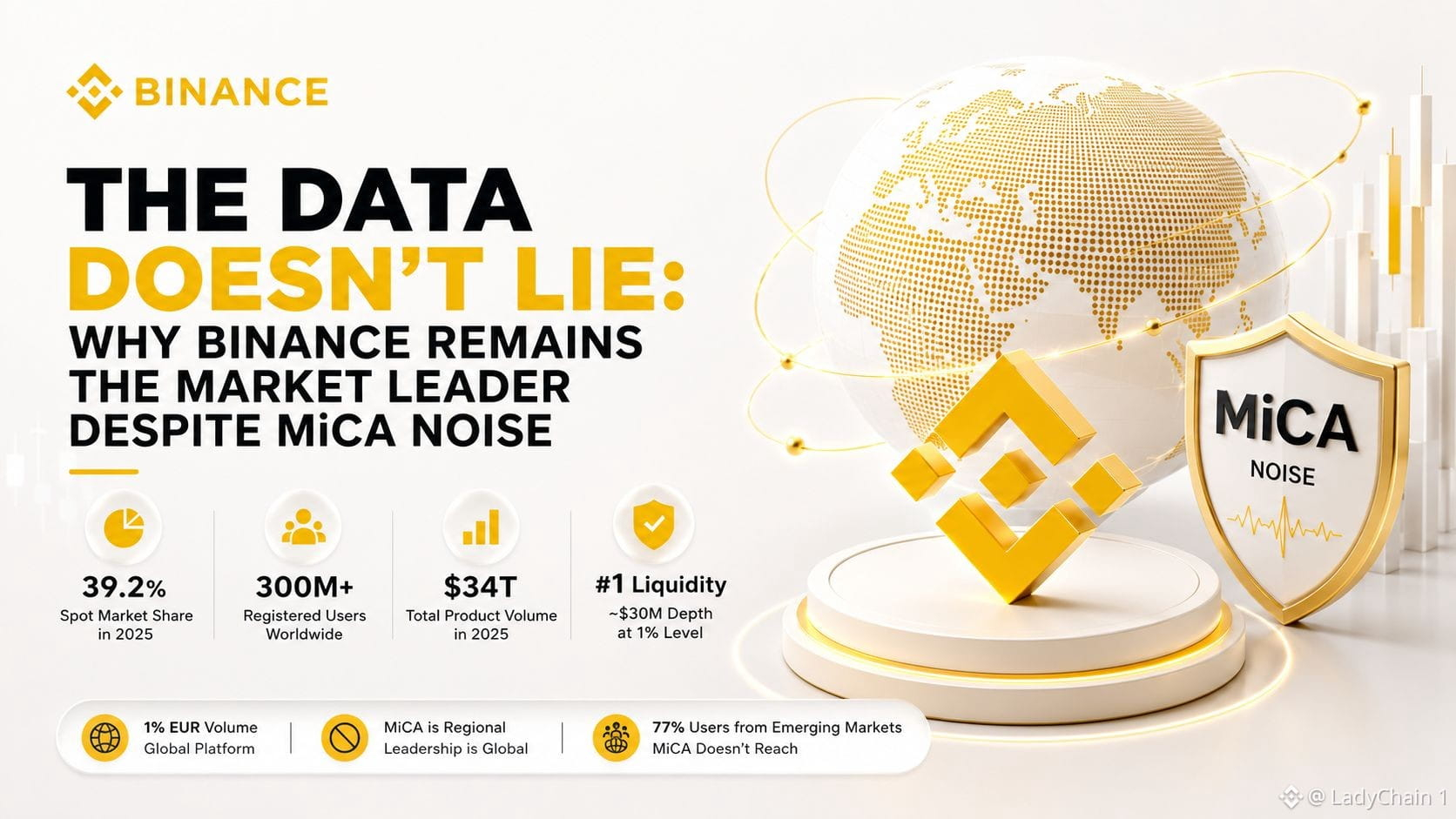
البيانات لا تكذب: لماذا لا يزال باينانس هو الرائد في السوق رغم ضجيج «MiCA» «MiCA» واقع. سحبت باينانس طلب ترخيص «MiCA» في اليونان قبل الموعد النهائي في 1 يوليو 2026. اعترف بذلك. الآن انظر إلى البيانات. الرقم الذي يعيد صياغة كل شيء تمثل أزواج التداول الفوري المقومة باليورو نحو 1% فقط من إجمالي حجم التداول الفوري على باينانس. مساهمة أوروبا في حجم باينانس العالمي صغيرة بشكل بنيوي. ولاية «MiCA» تنتهي عند حدود المنطقة الاقتصادية الأوروبية (EEA). 77% من مستخدمي باينانس البالغ عددهم 300 مليون موجودون في جنوب شرق آسيا وإفريقيا وأمريكا اللاتينية — مناطق لا تمسّها «MiCA». مؤشرات القيادة العالمية — دون تغيير استحوذت باينانس على 39.2% من التداول الفوري عبر أبرز البورصات في 2025، أي ما يقارب خمس مرات حصة أقرب منافس لها، كما عالجت 34 تريليون دولار في إجمالي حجم المنتجات. عمق دفتر الأوامر: ~30 مليون عند مستوى 1% — الأعمق بين أي CEX. ~50% من حجم التداول المركزي لعملة BTC وETH استمر محافظًا عليه متجهًا إلى 2026. ما الذي غيّرته «MiCA» فعليًا على مستوى السوق وجد باحثو «Kaiko» أن عمق دفتر أوامر تداول BTC الفوري على منصات خاضعة لتنظيم «MiCA» لم ينخفض حول فترات التطبيق. ارتفع العمق عمومًا خلال 2025، متتبعًا دورة سعر البيتكوين أكثر من توقيت التنظيم. ظلت «USDT» تمثل نحو 70% من حجم تداول العملات المستقرة العالمي الفوري. ظلت البدائل المقومة باليورو عند حوالي 1–2% من حجم العملات المستقرة الفوري حتى أواخر 2025. تنبيه صريح المنافسون، بما في ذلك Coinbase وKraken وOKX وBitstamp وBitvavo، مرخصون بالفعل، ما يمنحهم ميزة السبق داخل المحيط الأوروبي الخاضع للتنظيم. قد تنتقل بعض أحجام التداول الأوروبية. تعهدت باينانس بالسعي للحصول على ترخيص في الدول الأعضاء الأخرى في الاتحاد الأوروبي، وصرحت أنها لا تنوي مغادرة أوروبا بشكل دائم. «MiCA» إطار إقليمي. والقيادة في السوق مقياس عالمي. البيانات تعكس منصة عالمية. لأغراض إعلامية فقط. ليست نصيحة مالية. قد تتغير الأوضاع التنظيمية.

نشر
إخلاء مسؤولية: يتضمن آراء جهات خارجية. لا تُعدّ نصيحة. يُمكن استخدام Binance AI دون أي ضمان. اطلع على الشروط والأحكام.