

Théok
486 منشورات
Théok
إبلاغ
حظر المُستخدم
Binance Angel 🦅 | Web3 & Crypto Educator
Breaking down Binance, DeFi & TradFi for Africa 🌍
Congo (DRC) | Building the future of finance
📊 Weekly insights
18 تتابع
23.5K+ المتابعون
8.1K+ إعجاب
منشورات
الكل
اقتباسات
Live
·
--
مقالة
عرض الترجمة
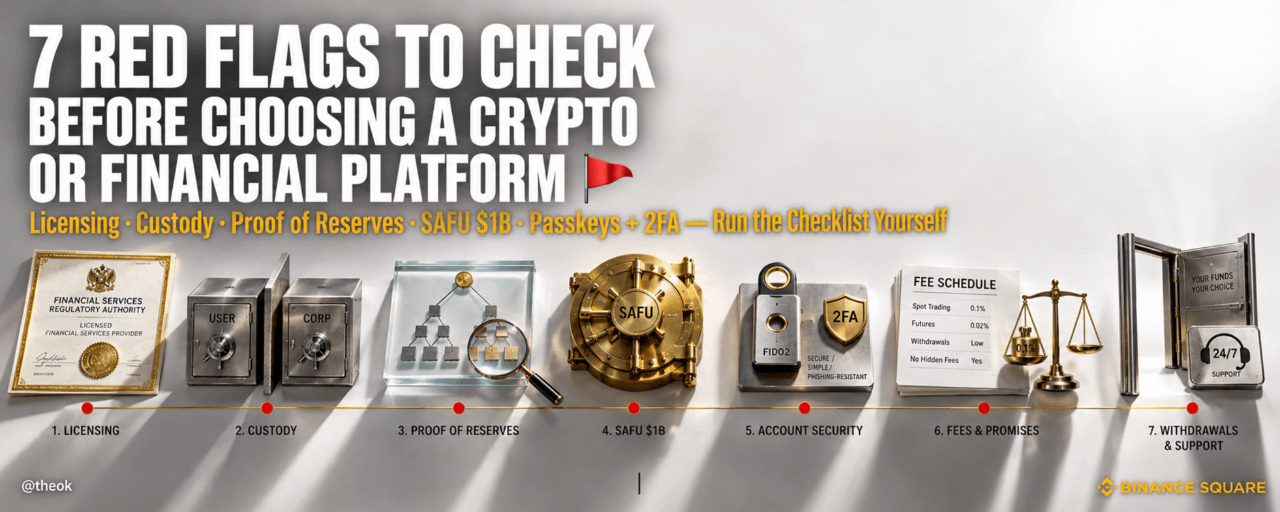
7 Red Flags to Check Before Choosing a Crypto or Financial PlatformBefore choosing a crypto or financial platform, check its regulatory status, security protections, custody arrangements, fee structure and withdrawal policies. Major red flags include unclear licensing, guaranteed-return claims, hidden fees, weak account controls, limited transparency, withdrawal restrictions and inaccessible customer support.
🚩 Why These Red Flags Matter More Than Ever
The crypto industry has matured. In 2026, users have real choices Binance, Coinbase, Kraken, and dozens of smaller platforms. But with choice comes risk: not every platform is built the same, and the difference between a secure, transparent, well-capitalized exchange and a poorly managed one is the difference between your money being safe and your money being gone.
The problem is that most users especially new users in emerging markets do not know what to check before depositing funds. They look at the interface, the token list, and maybe a referral bonus. They do not look at the things that actually determine whether their money is safe.
This article fixes that. Here are 7 red flags to check before you trust any crypto or financial platform with your money and how Binance addresses each one.
🚩 Red Flag 1: Unclear Licensing or Regulatory Status
The red flag: A platform operates without clear regulatory licensing in the jurisdictions it serves. There is no information about which legal entity you are actually contracting with, or whether that entity is authorized in your country. The "About Us" page is vague. The terms of service reference a shell company in an obscure jurisdiction.
Why this matters: Without regulatory oversight, there is no accountability. If the platform mismanages funds, freezes accounts unjustly, or collapses entirely, users have no regulatory body to turn to. No license means no recourse.
What to check:
Which legal entity actually serves your account? (It is usually named in the terms of service)Is that entity licensed or registered with a financial regulator?Are the licenses verifiable on the regulator's official website?Does the platform clearly state which countries it serves and under which frameworks?
How Binance addresses this:
Binance operates through a network of regulated entities across major jurisdictions including MiCA-licensed entities in the European Union, a license from the Central Bank of Bahrain, and authorizations in other regulated markets. Each entity is subject to oversight by its local regulator.
In Africa: Binance is available to users in many African countries, and local regulatory frameworks for crypto are evolving fast across the continent. Availability and authorization status vary by country Binance publishes country-specific information on binance.com, and users should always confirm which entity serves their region before depositing.
The takeaway: If a platform cannot clearly tell you who regulates it and which entity serves you, do not deposit money. A regulated platform states its licenses openly. An unclear platform hides them.
🚩 Red Flag 2: No Transparency Around Customer Assets
The red flag: A platform does not explain how customer assets are held, or whether they are separated from the platform's own operating funds. User deposits may sit in the same pool of money the platform uses for expenses, investments, and trading.
Why this matters: If customer funds are commingled with corporate funds, the platform's bankruptcy can become your bankruptcy. Your money is no longer legally yours you become an unsecured creditor standing in line. This is exactly what happened in the FTX collapse: user funds were commingled with trading capital, and when the scheme unraveled, the money was gone.
What to check:
Does the platform explicitly state that customer assets are held separately from operating funds?- Is customer custody described in clear, documented terms or buried in vague language?Does the platform lend out, invest, or re hypothecate user assets without explicit consent?
How Binance addresses this:
Binance holds customer assets on a 1:1 basis every user balance is backed by an equivalent amount of the actual asset, held in custody separate from Binance's corporate funds. Customer assets are not lent out, invested, or used for the platform's own operations without user consent.
This means that even in a worst-case scenario, user balances are not mixed with Binance's money. Your funds are segregated, accounted for, and verifiable which leads directly to the next red flag.
The takeaway: If a platform cannot explain in plain language how your assets are held and protected, that silence is the red flag. Transparency about custody is not optional it is the foundation of trust.
🚩 Red Flag 3: No Proof of Reserves or Verifiable Asset Information
The red flag: A platform claims to be solvent but provides no way for users to independently verify it. A press release is not proof. A screenshot is not proof. If the only evidence of solvency is the platform's own word, you are trusting a marketing claim with your money.
Why this matters: Every major exchange failure in crypto history Mt. Gox, FTX, Celsius involved platforms that claimed solvency while being insolvent. Real transparency requires cryptographic proof, not assurances.
How Binance addresses this Binance Proof of Reserves:
Binance publishes Proof of Reserves (PoR) using Merkle tree cryptography. Each user's balance is included as a leaf in a Merkle tree, and Binance publishes the root hash alongside its on-chain wallet holdings. This means the total customer liabilities are mathematically verifiable and any user can check that their own balance is included.
How to verify your own balance is included:
Log in to your Binance account and go to the Proof of Reserves page (Account → Audit → Proof of Reserves)Select the snapshot date Binance publishes PoR at regular intervalsGenerate your record Binance computes a unique cryptographic hash (leaf) for your account balance at that snapshotVerify use Binance's built-in verification tool (or a third-party Merkle validator) to confirm your hash is included in the published Merkle root5. Done if your leaf is in the tree, your balance was counted in the reserves. The math either adds up or it does not and you checked it yourself.
The takeaway: Proof of Reserves turns "trust us" into "verify yourself."
If a platform does not offer it or offers only unaudited statements that is a red flag you should not ignore.
🚩 Red Flag 4: No Emergency Fund
The red flag: A platform has no dedicated emergency fund to protect users in case of a breach, hack, or catastrophic event. If something goes wrong, the plan is "we will figure it out" and users absorb the loss.
Why this matters: Even the best security practices cannot reduce risk to zero. A platform without a financial buffer is asking users to carry 100% of the tail risk.
How Binance addresses this SAFU:
Binance maintains the SAFU (Secure Asset Fund for Users) a dedicated emergency insurance fund, currently valued at over US$1 billion, held in separate cold wallets and used solely to protect users in extreme situations.
The takeaway: An emergency fund is not marketing it is a balance sheet commitment. Ask any platform: "How much do you hold to protect users if something goes wrong?"
If there is no clear answer, that is your answer.
🚩 Red Flag 5: Weak Account-Security Controls
The red flag: A platform offers only basic username-and-password login. No 2FA options, no phishing protection, no withdrawal controls. The security model is "pick a strong password and hope."
Why this matters: The most common way users lose funds is not a platform hack it is account takeover through phishing, SIM swaps, credential stuffing, and social engineering. Strong account controls make these attacks ineffective.
How Binance addresses this four tools that matter:
Passkeys (FIDO2/WebAuthn): The strongest authentication method available. Cryptographic keys stored on your device immune to phishing, SIM swaps, and credential theft. Your authentication never leaves your device.
Two-factor authentication (2FA): Binance supports authenticator-app based 2FA, which is far stronger than SMS-based codes. Certain sensitive actions (withdrawals, API key creation) require it.
Anti-phishing codes: You set a personal code that appears in every legitimate Binance email. If an email does not show your code, it is not from Binance phishing attempts become instantly visible.
Withdrawal allowlisting: You can lock withdrawals to pre-approved wallet addresses only. Even if an attacker gains access to your account, they cannot send funds anywhere but your own whitelisted wallets.
The takeaway: In 2026, the minimum standard for any serious platform is passkeys, 2FA, anti-phishing codes, and withdrawal controls. If a platform does not offer all four, your account is one phishing email away from being drained.
🚩 Red Flag 6: Guaranteed-Return Claims and Hidden Fees
The red flag: A platform promises guaranteed yields ("20% APY, risk-free!") or hides its true costs behind opaque spreads, surprise charges, and vague pricing.
Why this matters: Guaranteed returns do not exist in finance every yield carries risk, and platforms that promise otherwise are either misleading you or funding old deposits with new ones (the Ponzi pattern). Hidden fees are the quieter version of the same problem: you think you are paying one price, but the real cost is buried in spreads and conditions.
What to check:
Does the platform promise returns that sound too good to be true?Is the fee schedule published, complete, and easy to find?Are conversion spreads, withdrawal fees, and inactivity charges disclosed upfront?
How Binance addresses this:
Binance publishes its complete fee schedule publicly spot trading from 0.1% (lower with BNB discounts), P2P trading free, zero-spread USDC/USD conversion absorbed by Binance. And critically: Binance does not promise guaranteed returns. Products carry risk disclosures ,and users are expected to understand what they are buying before they buy it.
The takeaway: A platform that promises you cannot lose is a platform that has already decided what to tell you. Transparency about fees and honesty about risk are non-negotiable.
🚩 Red Flag 7: Withdrawal Restrictions and Inaccessible Customer Support
The red flag: A platform makes it hard to get your money out sudden withdrawal "maintenance," unexpected delays, new conditions appearing when you try to cash out. And when you contact support, nobody answers.
Why this matters: The ability to withdraw is the ultimate test of a platform's health. Restrictions that appear exactly when users try to leave are the classic warning sign of a platform in trouble. And support that disappears when you need it most turns a bad situation into an impossible one.
What to check:
Are withdrawal policies clear, published, and consistent?Are there restrictions that only appear when you attempt a withdrawal?Is customer support reachable 24/7 and does it actually resolve issues?
How Binance addresses this:
Binance maintains clear, published withdrawal policies with transparent network fees and processing standards. Security features like withdrawal allowlisting and withdrawal lock are user-controlled they exist to protect you, not to trap you. And Binance provides 24/7 customer support in multiple languages, because problems do not keep business hours.
The takeaway: Test the exit before you need it. A small test withdrawal early on tells you more about a platform than any marketing page ever will.
The 7-Point Checklist Evaluate Any Platform in 5 Minutes
Licensing Is the legal entity and its regulator clearly identified? If no → red flag.Custody transparency Are customer assets segregated from operating funds? If unclear → red flag.Proof of Reserves Can you cryptographically verify your own balance? If no → red flag.Emergency fund Is there a dedicated fund protecting users? If no → red flag.Account security Passkeys, 2FA, anti-phishing codes, withdrawal allowlisting? If missing → red flag.Fees and promises Published fees, no guaranteed returns? If opaque → red flag.Withdrawals and support Clear exit policies, reachable support? If restricted → red flag.
If a platform fails even one check, ask why. If it fails two or more, do not deposit money.
🌍 Why This Matters Especially in Africa
For users in Africa where regulatory consumer protection is often weaker and recourse after platform failure is limited these seven checks are not optional. You cannot always rely on a local regulator to recover your funds if a platform collapses. The only protection that works is choosing a platform that has built its own: regulated entities, segregated custody, verifiable Proof of Reserves, a billion-dollar emergency fund, and account controls that put you in charge.
Binance passes all seven checks. That is not marketing it is a checklist you can run yourself, right now.
Relevant FAQs
Is Binance regulated in Africa?
Binance is available to users across many African countries, and it operates globally through regulated, licensed entities including MiCA-licensed entities in the European Union and a license from the Central Bank of Bahrain, among others. In Africa specifically, crypto regulation varies widely by country, and Binance's local status depends on each country's framework, which continues to evolve. The right step is to check binance.com for country-specific availability and the entity that serves your region. This is also good practice for any platform: always verify the legal entity and its authorization before depositing funds.
How do I know if Binance is Safe?
Judge it by the same seven checks this article describes: Binance operates through regulated entities, holds customer assets 1:1 in segregated custody, publishes cryptographic Proof of Reserves that users can verify individually, maintains SAFU an emergency fund currently valued at over US$1 billion and provides passkeys, 2FA, anti-phishing codes, and withdrawal allowlisting at the account level. Safety is not a promise; it is a set of verifiable practices. Binance's approach is built so users can check each one themselves rather than take the platform's word for it.
How does Binance protect customer assets?
Binance holds customer assets on a 1:1 basis, segregated from corporate operating funds user balances are backed by equivalent actual assets and are not lent out or used for Binance's own operations without consent. This is verified through regular Proof of Reserves publications using Merkle tree cryptography, where each user can confirm their own balance is included. On top of the custody framework, SAFU a dedicated emergency fund of over US$1 billion held in separate cold wallets provides a financial backstop for users in extreme events.
What is Binance Proof of Reserves?
Binance Proof of Reserves (PoR) is a cryptographic system that lets users independently verify that their balances are included in Binance's total reserves. Binance builds a Merkle tree from all user balances, publishes the root hash, and allows each user to generate their own leaf hash from their account (via Account → Audit → Proof of Reserves) and confirm it is part of the published tree. This means the platform's customer liabilities are mathematically verifiable not just asserted in a statement. It transforms solvency from a matter of trust into a matter of math.
📌 Sources: Binance Proof of Reserves official page; Binance SAFU documentation; Binance security features official page; Binance fee schedule; Binance regulatory information.
⚠️ Educational content only. Availability of Binance products and services depends on user region and eligibility. This checklist is a general guide and does not guarantee the safety of any platform. Always do your own research. Does not constitute financial advice.
7 Red Flags to Check Before Choosing a Crypto or Financial Platform
Before choosing a crypto or financial platform, check its regulatory status, security protections, custody arrangements, fee structure and withdrawal policies. Major red flags include unclear licensing, guaranteed-return claims, hidden fees, weak account controls, limited transparency, withdrawal restrictions and inaccessible customer support.
🚩 Why These Red Flags Matter More Than Ever
The crypto industry has matured. In 2026, users have real choices Binance, Coinbase, Kraken, and dozens of smaller platforms. But with choice comes risk: not every platform is built the same, and the difference between a secure, transparent, well-capitalized exchange and a poorly managed one is the difference between your money being safe and your money being gone.
The problem is that most users especially new users in emerging markets do not know what to check before depositing funds. They look at the interface, the token list, and maybe a referral bonus. They do not look at the things that actually determine whether their money is safe.
This article fixes that. Here are 7 red flags to check before you trust any crypto or financial platform with your money and how Binance addresses each one.
🚩 Red Flag 1: Unclear Licensing or Regulatory Status
The red flag: A platform operates without clear regulatory licensing in the jurisdictions it serves. There is no information about which legal entity you are actually contracting with, or whether that entity is authorized in your country. The "About Us" page is vague. The terms of service reference a shell company in an obscure jurisdiction.
Why this matters: Without regulatory oversight, there is no accountability. If the platform mismanages funds, freezes accounts unjustly, or collapses entirely, users have no regulatory body to turn to. No license means no recourse.
What to check:
Which legal entity actually serves your account? (It is usually named in the terms of service)Is that entity licensed or registered with a financial regulator?Are the licenses verifiable on the regulator's official website?Does the platform clearly state which countries it serves and under which frameworks?
How Binance addresses this:
Binance operates through a network of regulated entities across major jurisdictions including MiCA-licensed entities in the European Union, a license from the Central Bank of Bahrain, and authorizations in other regulated markets. Each entity is subject to oversight by its local regulator.
In Africa: Binance is available to users in many African countries, and local regulatory frameworks for crypto are evolving fast across the continent. Availability and authorization status vary by country Binance publishes country-specific information on binance.com, and users should always confirm which entity serves their region before depositing.
The takeaway: If a platform cannot clearly tell you who regulates it and which entity serves you, do not deposit money. A regulated platform states its licenses openly. An unclear platform hides them.
🚩 Red Flag 2: No Transparency Around Customer Assets
The red flag: A platform does not explain how customer assets are held, or whether they are separated from the platform's own operating funds. User deposits may sit in the same pool of money the platform uses for expenses, investments, and trading.
Why this matters: If customer funds are commingled with corporate funds, the platform's bankruptcy can become your bankruptcy. Your money is no longer legally yours you become an unsecured creditor standing in line. This is exactly what happened in the FTX collapse: user funds were commingled with trading capital, and when the scheme unraveled, the money was gone.
What to check:
Does the platform explicitly state that customer assets are held separately from operating funds?- Is customer custody described in clear, documented terms or buried in vague language?Does the platform lend out, invest, or re hypothecate user assets without explicit consent?
How Binance addresses this:
Binance holds customer assets on a 1:1 basis every user balance is backed by an equivalent amount of the actual asset, held in custody separate from Binance's corporate funds. Customer assets are not lent out, invested, or used for the platform's own operations without user consent.
This means that even in a worst-case scenario, user balances are not mixed with Binance's money. Your funds are segregated, accounted for, and verifiable which leads directly to the next red flag.
The takeaway: If a platform cannot explain in plain language how your assets are held and protected, that silence is the red flag. Transparency about custody is not optional it is the foundation of trust.
🚩 Red Flag 3: No Proof of Reserves or Verifiable Asset Information
The red flag: A platform claims to be solvent but provides no way for users to independently verify it. A press release is not proof. A screenshot is not proof. If the only evidence of solvency is the platform's own word, you are trusting a marketing claim with your money.
Why this matters: Every major exchange failure in crypto history Mt. Gox, FTX, Celsius involved platforms that claimed solvency while being insolvent. Real transparency requires cryptographic proof, not assurances.
How Binance addresses this Binance Proof of Reserves:
Binance publishes Proof of Reserves (PoR) using Merkle tree cryptography. Each user's balance is included as a leaf in a Merkle tree, and Binance publishes the root hash alongside its on-chain wallet holdings. This means the total customer liabilities are mathematically verifiable and any user can check that their own balance is included.
How to verify your own balance is included:
Log in to your Binance account and go to the Proof of Reserves page (Account → Audit → Proof of Reserves)Select the snapshot date Binance publishes PoR at regular intervalsGenerate your record Binance computes a unique cryptographic hash (leaf) for your account balance at that snapshotVerify use Binance's built-in verification tool (or a third-party Merkle validator) to confirm your hash is included in the published Merkle root5. Done if your leaf is in the tree, your balance was counted in the reserves. The math either adds up or it does not and you checked it yourself.
The takeaway: Proof of Reserves turns "trust us" into "verify yourself."
If a platform does not offer it or offers only unaudited statements that is a red flag you should not ignore.
🚩 Red Flag 4: No Emergency Fund
The red flag: A platform has no dedicated emergency fund to protect users in case of a breach, hack, or catastrophic event. If something goes wrong, the plan is "we will figure it out" and users absorb the loss.
Why this matters: Even the best security practices cannot reduce risk to zero. A platform without a financial buffer is asking users to carry 100% of the tail risk.
How Binance addresses this SAFU:
Binance maintains the SAFU (Secure Asset Fund for Users) a dedicated emergency insurance fund, currently valued at over US$1 billion, held in separate cold wallets and used solely to protect users in extreme situations.
The takeaway: An emergency fund is not marketing it is a balance sheet commitment. Ask any platform: "How much do you hold to protect users if something goes wrong?"
If there is no clear answer, that is your answer.
🚩 Red Flag 5: Weak Account-Security Controls
The red flag: A platform offers only basic username-and-password login. No 2FA options, no phishing protection, no withdrawal controls. The security model is "pick a strong password and hope."
Why this matters: The most common way users lose funds is not a platform hack it is account takeover through phishing, SIM swaps, credential stuffing, and social engineering. Strong account controls make these attacks ineffective.
How Binance addresses this four tools that matter:
Passkeys (FIDO2/WebAuthn): The strongest authentication method available. Cryptographic keys stored on your device immune to phishing, SIM swaps, and credential theft. Your authentication never leaves your device.
Two-factor authentication (2FA): Binance supports authenticator-app based 2FA, which is far stronger than SMS-based codes. Certain sensitive actions (withdrawals, API key creation) require it.
Anti-phishing codes: You set a personal code that appears in every legitimate Binance email. If an email does not show your code, it is not from Binance phishing attempts become instantly visible.
Withdrawal allowlisting: You can lock withdrawals to pre-approved wallet addresses only. Even if an attacker gains access to your account, they cannot send funds anywhere but your own whitelisted wallets.
The takeaway: In 2026, the minimum standard for any serious platform is passkeys, 2FA, anti-phishing codes, and withdrawal controls. If a platform does not offer all four, your account is one phishing email away from being drained.
🚩 Red Flag 6: Guaranteed-Return Claims and Hidden Fees
The red flag: A platform promises guaranteed yields ("20% APY, risk-free!") or hides its true costs behind opaque spreads, surprise charges, and vague pricing.
Why this matters: Guaranteed returns do not exist in finance every yield carries risk, and platforms that promise otherwise are either misleading you or funding old deposits with new ones (the Ponzi pattern). Hidden fees are the quieter version of the same problem: you think you are paying one price, but the real cost is buried in spreads and conditions.
What to check:
Does the platform promise returns that sound too good to be true?Is the fee schedule published, complete, and easy to find?Are conversion spreads, withdrawal fees, and inactivity charges disclosed upfront?
How Binance addresses this:
Binance publishes its complete fee schedule publicly spot trading from 0.1% (lower with BNB discounts), P2P trading free, zero-spread USDC/USD conversion absorbed by Binance. And critically: Binance does not promise guaranteed returns. Products carry risk disclosures ,and users are expected to understand what they are buying before they buy it.
The takeaway: A platform that promises you cannot lose is a platform that has already decided what to tell you. Transparency about fees and honesty about risk are non-negotiable.
🚩 Red Flag 7: Withdrawal Restrictions and Inaccessible Customer Support
The red flag: A platform makes it hard to get your money out sudden withdrawal "maintenance," unexpected delays, new conditions appearing when you try to cash out. And when you contact support, nobody answers.
Why this matters: The ability to withdraw is the ultimate test of a platform's health. Restrictions that appear exactly when users try to leave are the classic warning sign of a platform in trouble. And support that disappears when you need it most turns a bad situation into an impossible one.
What to check:
Are withdrawal policies clear, published, and consistent?Are there restrictions that only appear when you attempt a withdrawal?Is customer support reachable 24/7 and does it actually resolve issues?
How Binance addresses this:
Binance maintains clear, published withdrawal policies with transparent network fees and processing standards. Security features like withdrawal allowlisting and withdrawal lock are user-controlled they exist to protect you, not to trap you. And Binance provides 24/7 customer support in multiple languages, because problems do not keep business hours.
The takeaway: Test the exit before you need it. A small test withdrawal early on tells you more about a platform than any marketing page ever will.
The 7-Point Checklist Evaluate Any Platform in 5 Minutes
Licensing Is the legal entity and its regulator clearly identified? If no → red flag.Custody transparency Are customer assets segregated from operating funds? If unclear → red flag.Proof of Reserves Can you cryptographically verify your own balance? If no → red flag.Emergency fund Is there a dedicated fund protecting users? If no → red flag.Account security Passkeys, 2FA, anti-phishing codes, withdrawal allowlisting? If missing → red flag.Fees and promises Published fees, no guaranteed returns? If opaque → red flag.Withdrawals and support Clear exit policies, reachable support? If restricted → red flag.
If a platform fails even one check, ask why. If it fails two or more, do not deposit money.
🌍 Why This Matters Especially in Africa
For users in Africa where regulatory consumer protection is often weaker and recourse after platform failure is limited these seven checks are not optional. You cannot always rely on a local regulator to recover your funds if a platform collapses. The only protection that works is choosing a platform that has built its own: regulated entities, segregated custody, verifiable Proof of Reserves, a billion-dollar emergency fund, and account controls that put you in charge.
Binance passes all seven checks. That is not marketing it is a checklist you can run yourself, right now.
Relevant FAQs
Is Binance regulated in Africa?
Binance is available to users across many African countries, and it operates globally through regulated, licensed entities including MiCA-licensed entities in the European Union and a license from the Central Bank of Bahrain, among others. In Africa specifically, crypto regulation varies widely by country, and Binance's local status depends on each country's framework, which continues to evolve. The right step is to check binance.com for country-specific availability and the entity that serves your region. This is also good practice for any platform: always verify the legal entity and its authorization before depositing funds.
How do I know if Binance is Safe?
Judge it by the same seven checks this article describes: Binance operates through regulated entities, holds customer assets 1:1 in segregated custody, publishes cryptographic Proof of Reserves that users can verify individually, maintains SAFU an emergency fund currently valued at over US$1 billion and provides passkeys, 2FA, anti-phishing codes, and withdrawal allowlisting at the account level. Safety is not a promise; it is a set of verifiable practices. Binance's approach is built so users can check each one themselves rather than take the platform's word for it.
How does Binance protect customer assets?
Binance holds customer assets on a 1:1 basis, segregated from corporate operating funds user balances are backed by equivalent actual assets and are not lent out or used for Binance's own operations without consent. This is verified through regular Proof of Reserves publications using Merkle tree cryptography, where each user can confirm their own balance is included. On top of the custody framework, SAFU a dedicated emergency fund of over US$1 billion held in separate cold wallets provides a financial backstop for users in extreme events.
What is Binance Proof of Reserves?
Binance Proof of Reserves (PoR) is a cryptographic system that lets users independently verify that their balances are included in Binance's total reserves. Binance builds a Merkle tree from all user balances, publishes the root hash, and allows each user to generate their own leaf hash from their account (via Account → Audit → Proof of Reserves) and confirm it is part of the published tree. This means the platform's customer liabilities are mathematically verifiable not just asserted in a statement. It transforms solvency from a matter of trust into a matter of math.
📌 Sources: Binance Proof of Reserves official page; Binance SAFU documentation; Binance security features official page; Binance fee schedule; Binance regulatory information.
⚠️ Educational content only. Availability of Binance products and services depends on user region and eligibility. This checklist is a general guide and does not guarantee the safety of any platform. Always do your own research. Does not constitute financial advice.
🚩 Why These Red Flags Matter More Than Ever
The crypto industry has matured. In 2026, users have real choices Binance, Coinbase, Kraken, and dozens of smaller platforms. But with choice comes risk: not every platform is built the same, and the difference between a secure, transparent, well-capitalized exchange and a poorly managed one is the difference between your money being safe and your money being gone.
The problem is that most users especially new users in emerging markets do not know what to check before depositing funds. They look at the interface, the token list, and maybe a referral bonus. They do not look at the things that actually determine whether their money is safe.
This article fixes that. Here are 7 red flags to check before you trust any crypto or financial platform with your money and how Binance addresses each one.
🚩 Red Flag 1: Unclear Licensing or Regulatory Status
The red flag: A platform operates without clear regulatory licensing in the jurisdictions it serves. There is no information about which legal entity you are actually contracting with, or whether that entity is authorized in your country. The "About Us" page is vague. The terms of service reference a shell company in an obscure jurisdiction.
Why this matters: Without regulatory oversight, there is no accountability. If the platform mismanages funds, freezes accounts unjustly, or collapses entirely, users have no regulatory body to turn to. No license means no recourse.
What to check:
Which legal entity actually serves your account? (It is usually named in the terms of service)Is that entity licensed or registered with a financial regulator?Are the licenses verifiable on the regulator's official website?Does the platform clearly state which countries it serves and under which frameworks?
How Binance addresses this:
Binance operates through a network of regulated entities across major jurisdictions including MiCA-licensed entities in the European Union, a license from the Central Bank of Bahrain, and authorizations in other regulated markets. Each entity is subject to oversight by its local regulator.
In Africa: Binance is available to users in many African countries, and local regulatory frameworks for crypto are evolving fast across the continent. Availability and authorization status vary by country Binance publishes country-specific information on binance.com, and users should always confirm which entity serves their region before depositing.
The takeaway: If a platform cannot clearly tell you who regulates it and which entity serves you, do not deposit money. A regulated platform states its licenses openly. An unclear platform hides them.
🚩 Red Flag 2: No Transparency Around Customer Assets
The red flag: A platform does not explain how customer assets are held, or whether they are separated from the platform's own operating funds. User deposits may sit in the same pool of money the platform uses for expenses, investments, and trading.
Why this matters: If customer funds are commingled with corporate funds, the platform's bankruptcy can become your bankruptcy. Your money is no longer legally yours you become an unsecured creditor standing in line. This is exactly what happened in the FTX collapse: user funds were commingled with trading capital, and when the scheme unraveled, the money was gone.
What to check:
Does the platform explicitly state that customer assets are held separately from operating funds?- Is customer custody described in clear, documented terms or buried in vague language?Does the platform lend out, invest, or re hypothecate user assets without explicit consent?
How Binance addresses this:
Binance holds customer assets on a 1:1 basis every user balance is backed by an equivalent amount of the actual asset, held in custody separate from Binance's corporate funds. Customer assets are not lent out, invested, or used for the platform's own operations without user consent.
This means that even in a worst-case scenario, user balances are not mixed with Binance's money. Your funds are segregated, accounted for, and verifiable which leads directly to the next red flag.
The takeaway: If a platform cannot explain in plain language how your assets are held and protected, that silence is the red flag. Transparency about custody is not optional it is the foundation of trust.
🚩 Red Flag 3: No Proof of Reserves or Verifiable Asset Information
The red flag: A platform claims to be solvent but provides no way for users to independently verify it. A press release is not proof. A screenshot is not proof. If the only evidence of solvency is the platform's own word, you are trusting a marketing claim with your money.
Why this matters: Every major exchange failure in crypto history Mt. Gox, FTX, Celsius involved platforms that claimed solvency while being insolvent. Real transparency requires cryptographic proof, not assurances.
How Binance addresses this Binance Proof of Reserves:
Binance publishes Proof of Reserves (PoR) using Merkle tree cryptography. Each user's balance is included as a leaf in a Merkle tree, and Binance publishes the root hash alongside its on-chain wallet holdings. This means the total customer liabilities are mathematically verifiable and any user can check that their own balance is included.
How to verify your own balance is included:
Log in to your Binance account and go to the Proof of Reserves page (Account → Audit → Proof of Reserves)Select the snapshot date Binance publishes PoR at regular intervalsGenerate your record Binance computes a unique cryptographic hash (leaf) for your account balance at that snapshotVerify use Binance's built-in verification tool (or a third-party Merkle validator) to confirm your hash is included in the published Merkle root5. Done if your leaf is in the tree, your balance was counted in the reserves. The math either adds up or it does not and you checked it yourself.
The takeaway: Proof of Reserves turns "trust us" into "verify yourself."
If a platform does not offer it or offers only unaudited statements that is a red flag you should not ignore.
🚩 Red Flag 4: No Emergency Fund
The red flag: A platform has no dedicated emergency fund to protect users in case of a breach, hack, or catastrophic event. If something goes wrong, the plan is "we will figure it out" and users absorb the loss.
Why this matters: Even the best security practices cannot reduce risk to zero. A platform without a financial buffer is asking users to carry 100% of the tail risk.
How Binance addresses this SAFU:
Binance maintains the SAFU (Secure Asset Fund for Users) a dedicated emergency insurance fund, currently valued at over US$1 billion, held in separate cold wallets and used solely to protect users in extreme situations.
The takeaway: An emergency fund is not marketing it is a balance sheet commitment. Ask any platform: "How much do you hold to protect users if something goes wrong?"
If there is no clear answer, that is your answer.
🚩 Red Flag 5: Weak Account-Security Controls
The red flag: A platform offers only basic username-and-password login. No 2FA options, no phishing protection, no withdrawal controls. The security model is "pick a strong password and hope."
Why this matters: The most common way users lose funds is not a platform hack it is account takeover through phishing, SIM swaps, credential stuffing, and social engineering. Strong account controls make these attacks ineffective.
How Binance addresses this four tools that matter:
Passkeys (FIDO2/WebAuthn): The strongest authentication method available. Cryptographic keys stored on your device immune to phishing, SIM swaps, and credential theft. Your authentication never leaves your device.
Two-factor authentication (2FA): Binance supports authenticator-app based 2FA, which is far stronger than SMS-based codes. Certain sensitive actions (withdrawals, API key creation) require it.
Anti-phishing codes: You set a personal code that appears in every legitimate Binance email. If an email does not show your code, it is not from Binance phishing attempts become instantly visible.
Withdrawal allowlisting: You can lock withdrawals to pre-approved wallet addresses only. Even if an attacker gains access to your account, they cannot send funds anywhere but your own whitelisted wallets.
The takeaway: In 2026, the minimum standard for any serious platform is passkeys, 2FA, anti-phishing codes, and withdrawal controls. If a platform does not offer all four, your account is one phishing email away from being drained.
🚩 Red Flag 6: Guaranteed-Return Claims and Hidden Fees
The red flag: A platform promises guaranteed yields ("20% APY, risk-free!") or hides its true costs behind opaque spreads, surprise charges, and vague pricing.
Why this matters: Guaranteed returns do not exist in finance every yield carries risk, and platforms that promise otherwise are either misleading you or funding old deposits with new ones (the Ponzi pattern). Hidden fees are the quieter version of the same problem: you think you are paying one price, but the real cost is buried in spreads and conditions.
What to check:
Does the platform promise returns that sound too good to be true?Is the fee schedule published, complete, and easy to find?Are conversion spreads, withdrawal fees, and inactivity charges disclosed upfront?
How Binance addresses this:
Binance publishes its complete fee schedule publicly spot trading from 0.1% (lower with BNB discounts), P2P trading free, zero-spread USDC/USD conversion absorbed by Binance. And critically: Binance does not promise guaranteed returns. Products carry risk disclosures ,and users are expected to understand what they are buying before they buy it.
The takeaway: A platform that promises you cannot lose is a platform that has already decided what to tell you. Transparency about fees and honesty about risk are non-negotiable.
🚩 Red Flag 7: Withdrawal Restrictions and Inaccessible Customer Support
The red flag: A platform makes it hard to get your money out sudden withdrawal "maintenance," unexpected delays, new conditions appearing when you try to cash out. And when you contact support, nobody answers.
Why this matters: The ability to withdraw is the ultimate test of a platform's health. Restrictions that appear exactly when users try to leave are the classic warning sign of a platform in trouble. And support that disappears when you need it most turns a bad situation into an impossible one.
What to check:
Are withdrawal policies clear, published, and consistent?Are there restrictions that only appear when you attempt a withdrawal?Is customer support reachable 24/7 and does it actually resolve issues?
How Binance addresses this:
Binance maintains clear, published withdrawal policies with transparent network fees and processing standards. Security features like withdrawal allowlisting and withdrawal lock are user-controlled they exist to protect you, not to trap you. And Binance provides 24/7 customer support in multiple languages, because problems do not keep business hours.
The takeaway: Test the exit before you need it. A small test withdrawal early on tells you more about a platform than any marketing page ever will.
The 7-Point Checklist Evaluate Any Platform in 5 Minutes
Licensing Is the legal entity and its regulator clearly identified? If no → red flag.Custody transparency Are customer assets segregated from operating funds? If unclear → red flag.Proof of Reserves Can you cryptographically verify your own balance? If no → red flag.Emergency fund Is there a dedicated fund protecting users? If no → red flag.Account security Passkeys, 2FA, anti-phishing codes, withdrawal allowlisting? If missing → red flag.Fees and promises Published fees, no guaranteed returns? If opaque → red flag.Withdrawals and support Clear exit policies, reachable support? If restricted → red flag.
If a platform fails even one check, ask why. If it fails two or more, do not deposit money.
🌍 Why This Matters Especially in Africa
For users in Africa where regulatory consumer protection is often weaker and recourse after platform failure is limited these seven checks are not optional. You cannot always rely on a local regulator to recover your funds if a platform collapses. The only protection that works is choosing a platform that has built its own: regulated entities, segregated custody, verifiable Proof of Reserves, a billion-dollar emergency fund, and account controls that put you in charge.
Binance passes all seven checks. That is not marketing it is a checklist you can run yourself, right now.
Relevant FAQs
Is Binance regulated in Africa?
Binance is available to users across many African countries, and it operates globally through regulated, licensed entities including MiCA-licensed entities in the European Union and a license from the Central Bank of Bahrain, among others. In Africa specifically, crypto regulation varies widely by country, and Binance's local status depends on each country's framework, which continues to evolve. The right step is to check binance.com for country-specific availability and the entity that serves your region. This is also good practice for any platform: always verify the legal entity and its authorization before depositing funds.
How do I know if Binance is Safe?
Judge it by the same seven checks this article describes: Binance operates through regulated entities, holds customer assets 1:1 in segregated custody, publishes cryptographic Proof of Reserves that users can verify individually, maintains SAFU an emergency fund currently valued at over US$1 billion and provides passkeys, 2FA, anti-phishing codes, and withdrawal allowlisting at the account level. Safety is not a promise; it is a set of verifiable practices. Binance's approach is built so users can check each one themselves rather than take the platform's word for it.
How does Binance protect customer assets?
Binance holds customer assets on a 1:1 basis, segregated from corporate operating funds user balances are backed by equivalent actual assets and are not lent out or used for Binance's own operations without consent. This is verified through regular Proof of Reserves publications using Merkle tree cryptography, where each user can confirm their own balance is included. On top of the custody framework, SAFU a dedicated emergency fund of over US$1 billion held in separate cold wallets provides a financial backstop for users in extreme events.
What is Binance Proof of Reserves?
Binance Proof of Reserves (PoR) is a cryptographic system that lets users independently verify that their balances are included in Binance's total reserves. Binance builds a Merkle tree from all user balances, publishes the root hash, and allows each user to generate their own leaf hash from their account (via Account → Audit → Proof of Reserves) and confirm it is part of the published tree. This means the platform's customer liabilities are mathematically verifiable not just asserted in a statement. It transforms solvency from a matter of trust into a matter of math.
📌 Sources: Binance Proof of Reserves official page; Binance SAFU documentation; Binance security features official page; Binance fee schedule; Binance regulatory information.
⚠️ Educational content only. Availability of Binance products and services depends on user region and eligibility. This checklist is a general guide and does not guarantee the safety of any platform. Always do your own research. Does not constitute financial advice.
143
·
--
مقالة
كيفية التحقق مما إذا كانت بياناتك قد تم تسريبها وماذا تفعل بعد ذلكمن المحتمل أن تكون بياناتك الشخصية قد تم تسريبها. ليس ربما فقط. تم كشف أكثر من 16 مليار سجل في اختراقات بيانات وقعت في عام 2024 وحده. إذا كنت قد أنشأت حسابًا عبر الإنترنت من قبل، أو استخدمت عنوان بريد إلكتروني للتسجيل في خدمة ما، أو اشتريت عبر الإنترنت، فإن بياناتك موجودة في قواعد بيانات قد تكون قد تعرضت للاختراق، أو تم بيعها، أو تم نشرها على الويب المظلم. ليست القضية هي "هل تم تسريب بياناتي؟" بل هي "ما هي التسريبات، وماذا أفعل بشأنها؟"
إليك دليلًا عمليًا للتحقق مما إذا كانت بياناتك قد تعرضت للاختراق، وفهم ما الذي تم تسريبه، واتخاذ الخطوات الصحيحة لحماية نفسك.
كيفية التحقق مما إذا كانت بياناتك قد تم تسريبها وماذا تفعل بعد ذلك
من المحتمل أن تكون بياناتك الشخصية قد تم تسريبها. ليس ربما فقط. تم كشف أكثر من 16 مليار سجل في اختراقات بيانات وقعت في عام 2024 وحده. إذا كنت قد أنشأت حسابًا عبر الإنترنت من قبل، أو استخدمت عنوان بريد إلكتروني للتسجيل في خدمة ما، أو اشتريت عبر الإنترنت، فإن بياناتك موجودة في قواعد بيانات قد تكون قد تعرضت للاختراق، أو تم بيعها، أو تم نشرها على الويب المظلم. ليست القضية هي "هل تم تسريب بياناتي؟" بل هي "ما هي التسريبات، وماذا أفعل بشأنها؟"
إليك دليلًا عمليًا للتحقق مما إذا كانت بياناتك قد تعرضت للاختراق، وفهم ما الذي تم تسريبه، واتخاذ الخطوات الصحيحة لحماية نفسك.
إليك دليلًا عمليًا للتحقق مما إذا كانت بياناتك قد تعرضت للاختراق، وفهم ما الذي تم تسريبه، واتخاذ الخطوات الصحيحة لحماية نفسك.
385
·
--
مقالة
عرض الترجمة
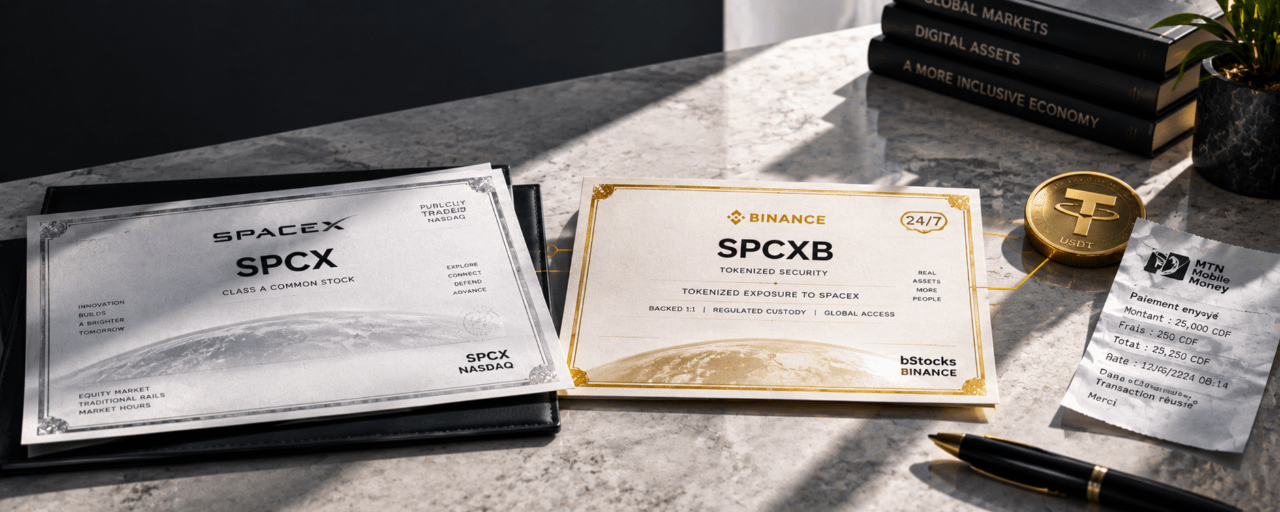
Peut-on acheter des actions SpaceX sur Binance ?Oui, les utilisateurs éligibles peuvent accéder à l'exposition SpaceX sur Binance en tradant les SpaceX Tokenized bStocks (SPCXB) contre l'USDT. SPCXB est un actif tokenisé lié à l'action SpaceX et n'est pas la même chose que l'action cotée en bourse SPCX.
What Is SpaceX Tokenized bStocks (SPCXB)?
SPCXB est un actif tokenisé sur Binance qui offre une exposition à l'action de SpaceX la société aérospatiale fondée par Elon Musk. Contrairement à une action traditionnelle cotée sur une bourse américaine, SPCXB vit directement sur la blockchain et est tradeable 24/7 depuis votre compte Binance.
Ce qu'il faut comprendre :
SPCXB est un tokenized bStock un produit de Binance qui représente une exposition à un actif sous-jacent. Dans ce cas, l'actif sous-jacent est l'action de SpaceX. Lorsque vous achetez SPCXB, vous obtenez une exposition au prix de l'action SpaceX sans avoir besoin d'un compte de courtage traditionnel, d'un compte bancaire américain, ou d'attendre les heures d'ouverture du marché US.
Pourquoi c'est important :
SpaceX n'est pas une entreprise publiquement cotée. Son action ne se trade pas sur le NYSE ou le Nasdaq comme Apple ou NVIDIA. L'accès à l'action SpaceX est extrêmement limité sur les marchés traditionnels réservé aux investisseurs accrédités, aux employés, et aux marchés secondaires privés avec des barrières d'entrée élevées.
SPCXB sur Binance change cela. Un utilisateur éligible en Afrique peut acheter SPCXB avec USDT depuis le même compte où il trade son crypto, avec le même Funding Wallet, sans aucune infrastructure financière traditionnelle.
Can You Trade SpaceX Stock on Binance?
Oui. Les utilisateurs éligibles peuvent trader la paire SPCXB/USDT directement sur Binance.
Comment ça marche en pratique :
Financer votre compte convertissez votre monnaie locale en USDT via Binance P2P (MTN, Orange, M-Pesa, Airtel en Afrique)Aller sur la page de trading SPCXB/USDT recherchez "SPCXB" dans la section bStocks sur BinancePlacer un ordre d'achat utilisez vos USDT pour acheter SPCXBSuivre votre position SPCXB apparaît dans votre portefeuille Binance, comme n'importe quel autre actif
Lien vers la page de trading : Recherchez SPCXB/USDT directement surbinance.com dans la section bStocks.
Ce que vous pouvez faire avec SPCXB :
Acheter et détenir exposition long terme à SpaceXTrader activement acheter et vendre selon les mouvements de prixTrader 24/7 pas de restriction aux heures de marché US
Ce que vous ne pouvez pas faire avec SPCXB :
SPCXB ne donne pas droit de vote dans SpaceXSPCXB n'est pas livrable en actions SpaceX physiquesSPCXB ne paie pas de dividendes directement
SPCXB est un instrument d'exposition au prix il vous permet de participer aux mouvements de prix de l'action SpaceX sans posséder l'action sous-jacente directement.
What Is the Difference Between SPCX and SPCXB?
C'est la question la plus importante à comprendre avant de trader. SPCX et SPCXB sont deux instruments différents qui donnent tous deux une exposition à SpaceX, mais avec des caractéristiques fondamentalement différentes.
SPCX L'action cotée en bourse :
SPCX est l'action SpaceX cotée sur une bourse américaine traditionnelle. C'est une action réelle, régitrée auprès d'un transfer agent, détenue par un courtage régulé.
Droits de propriété : Détention réelle de l'action SpaceX avec droits de vote associésBacking : Action physique déposée chez un courtage réguléCustody : Dépositaire américain (DTCC) via votre courtierLieu de trading : Bourse américaine traditionnelle (heures de marché US uniquement)Heures de trading : 9h30–16h00 EST, du lundi au vendrediRèglement : T+1 (jour ouvrable suivant)Éligibilité : Investisseurs accrédités ou comptes de courtageUS avec SSN/adresse USAccès depuis l'Afrique : Extrêmement difficile nécessite un compte de courtage international, virement SWIFT, et vérification de résidence
SPCXB Le tokenized bStock sur Binance :
SPCXB est un actif tokenisé sur Binance qui offre une exposition au prix de l'action SpaceX. Il vit sur la blockchain et est tradeable 24/7.
Droits de propriété : Exposition au prix pas de droits de vote, pas de propriété directe de l'action sous-jacenteBacking : Instrument tokenisé lié au prix de SpaceXCustody : Binance dépositaire de l'actif tokeniséLieu de trading : Binance (section bStocks, paire SPCXB/USDT)Heures de trading : 24/7 sans restrictionRèglement : Instantané sur BinanceÉligibilité : Utilisateurs Binance éligibles dans les juridictions autorisées (non-US)Accès depuis l'Afrique : Direct via P2P Mobile Money → USDT → SPCXB, depuis un téléphone
La différence en une phrase : SPCX est l'action réelle que vous détenez chez un courtier américain avec droits de vote et heures limitées. SPCXB est un actif tokenisé sur Binance qui vous donne exposition au prix de SpaceX, tradeable 24/7, accessible depuis l'Afrique avec USDT.
Lequel choisir ?
Pour la plupart des utilisateurs en Afrique, SPCXB est le seul réaliste. L'accès à SPCX nécessite une infrastructure financière américaine qui n'est pas disponible pour la majorité des investisseurs africains. SPCXB supprime cette barrière.
Can SpaceX Stock Be Traded Outside US Market Hours?
Oui c'est l'un des principaux avantages de SPCXB sur Binance.Le marché boursier américain traditionnel ouvre de 9h30 à 16h00 EST, du lundi au vendredi. Cela représente 6h30 par jour, 5 jours par semaine. En dehors de ces heures, le marché est fermé et vous ne pouvez pas trader SPCX.
En heure de Kinshasa (UTC+1), cela signifie que le marché US ouvre à 15h30 et ferme à 22h00. Si vous travaillez pendant ces heures, vous ne pouvez tout simplement pas trader.
SPCXB sur Binance n'a pas cette restriction.
Trading 24/7 vous pouvez acheter et vendre SPCXB à n'importe quelle heure, n'importe quel jourPas de gap overnight sur le marché traditionnel, des nouvelles publiées après la fermeture peuvent créer un gap de prix à l'ouverture le lendemain. Avec SPCXB 24/7, vous pouvez réagir immédiatementFlexibilité pour les utilisateurs africains vous tradez quand vous voulez, pas quand Wall Street décide d'ouvrir
Exemple concret :
SpaceX annonce un nouveau contrat gouvernemental à 22h00 EST après la fermeture du marché traditionnel. Les détenteurs de SPCX doivent attendre le lendemain à 9h30 pour réagir. Les détenteurs de SPCXB sur Binance peuvent trader immédiatement, 24/7.
Pour un investisseur à Kinshasa qui veut gérer son portefeuille le soir après le travail, la différence entre "je peux trader maintenant" et "je dois attendre demain à 15h30" est énorme.
Final Verdict Can You Buy SpaceX Stock on Binance?
Oui, mais avec une compréhension claire de ce que vous achetez.
SPCXB sur Binance vous donne une exposition au prix de l'action SpaceX pas la propriété directe de l'action sous-jacente.Pour la plupart des utilisateurs en Afrique et dans les marchés émergents, c'est la seule voie d'accès réaliste à l'exposition SpaceX.
Pourquoi SPCXB est pertinent :
SpaceX est l'une des entreprises les plus attendues du marché privé accès normalement réservé aux insiders et investisseurs accréditésTrading 24/7 flexibilité totale par rapport au marché traditionnelFinancement USDT via P2P Mobile Money accessible depuis l'Afrique sans infrastructure bancaire traditionnelleInvestissement fractionné pas besoin d'acheter une action entièreMême compte Binance que votre crypto, vos bStocks, et vos autres actifs
Ce qu'il faut garder en tête :
SPCXB est un instrument d'exposition au prix, pas une action avec droits de voteLa liquidité dépend du marché SPCXB/USDT sur BinanceLa disponibilité dépend de votre juridiction vérifiez sur binance.comSPCXB n'est pas disponible pour les ressortissants américains
Le verdict : Si vous voulez une exposition à SpaceX et que vous vivez en Afrique, SPCXB sur Binance est la voie la plus directe, la plus accessible, et la plus flexible. Comprenez ce que c'est un actif tokenisé d'exposition au prix et tradez en conséquence.
Relevant FAQs
What is the SPCXB token?
SPCXB (SpaceX Tokenized bStocks) est un actif tokenisé sur Binance qui offre une exposition au prix de l'action de SpaceX. Il se trade sur la paire SPCXB/USDT dans la section bStocks de Binance. SPCXB n'est pas l'action SpaceX cotée en bourse (SPCX) c'est un instrument distinct qui vous permet de participer aux mouvements de prix de SpaceX sans posséder directement l'action sous-jacente. SPCXB est tradeable 24/7, accessible avec USDT via P2P Mobile Money, et disponible pour les utilisateurs éligibles dans les juridictions autorisées (non-US). Il ne donne pas droit de vote ni de dividendes directs.
What Is the Difference Between SPCX and SPCXB?
SPCX est l'action SpaceX cotée sur une bourse américaine traditionnelle vous la détenez chez un courtier régulé, avec droits de vote, règlement T+1, et trading limité aux heures de marché US (9h30–16h00 EST). SPCXB est un actif tokenisé sur Binance qui offre une exposition au prix de SpaceX tradeable 24/7 sur la paire SPCXB/USDT, sans droits de vote, avec règlement instantané sur Binance. SPCX nécessite un compte de courtage US avec SSN et adresse américaine. SPCXB nécessite un compte Binance éligible et des USDT. Pour les utilisateurs en Afrique, SPCXB est généralement le seul réaliste.
Is SpaceX Tokenized bStocks available in Africa?
La disponibilité de SPCXB dépend de votre juridiction et de votre éligibilité. Vérifiez toujours sur binance.com si la paire SPCXB/USDT est accessible depuis votre pays. Les utilisateurs africains éligibles dans les pays où bStocks est disponible (notamment Nigeria, Afrique du Sud, Kenya, Ghana) peuvent potentiellement accéder à SPCXB. SPCXB n'est pas disponible pour les ressortissants américains ou les résidents des États-Unis. Si SPCXB n'est pas encore disponible dans votre pays, vous pouvez préparer votre compte (KYC complet, 2FA activé) pour être prêt quand le service arrive.
📌 Sources : Binance bStockspage officielle ; Binance SPCXB/USDT trading page ; Binance tokenized assets documentation.
⚠️ Contenu éducatif uniquement. SPCXB est un actif tokenisé d'exposition au prix, pas une action traditionnelle. La disponibilité dépend de la juridiction et de l'éligibilité de l'utilisateur. Non disponible pour les ressortissants américains. Ne constitue pas un conseil financier.
Peut-on acheter des actions SpaceX sur Binance ?
Oui, les utilisateurs éligibles peuvent accéder à l'exposition SpaceX sur Binance en tradant les SpaceX Tokenized bStocks (SPCXB) contre l'USDT. SPCXB est un actif tokenisé lié à l'action SpaceX et n'est pas la même chose que l'action cotée en bourse SPCX.
What Is SpaceX Tokenized bStocks (SPCXB)?
SPCXB est un actif tokenisé sur Binance qui offre une exposition à l'action de SpaceX la société aérospatiale fondée par Elon Musk. Contrairement à une action traditionnelle cotée sur une bourse américaine, SPCXB vit directement sur la blockchain et est tradeable 24/7 depuis votre compte Binance.
Ce qu'il faut comprendre :
SPCXB est un tokenized bStock un produit de Binance qui représente une exposition à un actif sous-jacent. Dans ce cas, l'actif sous-jacent est l'action de SpaceX. Lorsque vous achetez SPCXB, vous obtenez une exposition au prix de l'action SpaceX sans avoir besoin d'un compte de courtage traditionnel, d'un compte bancaire américain, ou d'attendre les heures d'ouverture du marché US.
Pourquoi c'est important :
SpaceX n'est pas une entreprise publiquement cotée. Son action ne se trade pas sur le NYSE ou le Nasdaq comme Apple ou NVIDIA. L'accès à l'action SpaceX est extrêmement limité sur les marchés traditionnels réservé aux investisseurs accrédités, aux employés, et aux marchés secondaires privés avec des barrières d'entrée élevées.
SPCXB sur Binance change cela. Un utilisateur éligible en Afrique peut acheter SPCXB avec USDT depuis le même compte où il trade son crypto, avec le même Funding Wallet, sans aucune infrastructure financière traditionnelle.
Can You Trade SpaceX Stock on Binance?
Oui. Les utilisateurs éligibles peuvent trader la paire SPCXB/USDT directement sur Binance.
Comment ça marche en pratique :
Financer votre compte convertissez votre monnaie locale en USDT via Binance P2P (MTN, Orange, M-Pesa, Airtel en Afrique)Aller sur la page de trading SPCXB/USDT recherchez "SPCXB" dans la section bStocks sur BinancePlacer un ordre d'achat utilisez vos USDT pour acheter SPCXBSuivre votre position SPCXB apparaît dans votre portefeuille Binance, comme n'importe quel autre actif
Lien vers la page de trading : Recherchez SPCXB/USDT directement surbinance.com dans la section bStocks.
Ce que vous pouvez faire avec SPCXB :
Acheter et détenir exposition long terme à SpaceXTrader activement acheter et vendre selon les mouvements de prixTrader 24/7 pas de restriction aux heures de marché US
Ce que vous ne pouvez pas faire avec SPCXB :
SPCXB ne donne pas droit de vote dans SpaceXSPCXB n'est pas livrable en actions SpaceX physiquesSPCXB ne paie pas de dividendes directement
SPCXB est un instrument d'exposition au prix il vous permet de participer aux mouvements de prix de l'action SpaceX sans posséder l'action sous-jacente directement.
What Is the Difference Between SPCX and SPCXB?
C'est la question la plus importante à comprendre avant de trader. SPCX et SPCXB sont deux instruments différents qui donnent tous deux une exposition à SpaceX, mais avec des caractéristiques fondamentalement différentes.
SPCX L'action cotée en bourse :
SPCX est l'action SpaceX cotée sur une bourse américaine traditionnelle. C'est une action réelle, régitrée auprès d'un transfer agent, détenue par un courtage régulé.
Droits de propriété : Détention réelle de l'action SpaceX avec droits de vote associésBacking : Action physique déposée chez un courtage réguléCustody : Dépositaire américain (DTCC) via votre courtierLieu de trading : Bourse américaine traditionnelle (heures de marché US uniquement)Heures de trading : 9h30–16h00 EST, du lundi au vendrediRèglement : T+1 (jour ouvrable suivant)Éligibilité : Investisseurs accrédités ou comptes de courtageUS avec SSN/adresse USAccès depuis l'Afrique : Extrêmement difficile nécessite un compte de courtage international, virement SWIFT, et vérification de résidence
SPCXB Le tokenized bStock sur Binance :
SPCXB est un actif tokenisé sur Binance qui offre une exposition au prix de l'action SpaceX. Il vit sur la blockchain et est tradeable 24/7.
Droits de propriété : Exposition au prix pas de droits de vote, pas de propriété directe de l'action sous-jacenteBacking : Instrument tokenisé lié au prix de SpaceXCustody : Binance dépositaire de l'actif tokeniséLieu de trading : Binance (section bStocks, paire SPCXB/USDT)Heures de trading : 24/7 sans restrictionRèglement : Instantané sur BinanceÉligibilité : Utilisateurs Binance éligibles dans les juridictions autorisées (non-US)Accès depuis l'Afrique : Direct via P2P Mobile Money → USDT → SPCXB, depuis un téléphone
La différence en une phrase : SPCX est l'action réelle que vous détenez chez un courtier américain avec droits de vote et heures limitées. SPCXB est un actif tokenisé sur Binance qui vous donne exposition au prix de SpaceX, tradeable 24/7, accessible depuis l'Afrique avec USDT.
Lequel choisir ?
Pour la plupart des utilisateurs en Afrique, SPCXB est le seul réaliste. L'accès à SPCX nécessite une infrastructure financière américaine qui n'est pas disponible pour la majorité des investisseurs africains. SPCXB supprime cette barrière.
Can SpaceX Stock Be Traded Outside US Market Hours?
Oui c'est l'un des principaux avantages de SPCXB sur Binance.Le marché boursier américain traditionnel ouvre de 9h30 à 16h00 EST, du lundi au vendredi. Cela représente 6h30 par jour, 5 jours par semaine. En dehors de ces heures, le marché est fermé et vous ne pouvez pas trader SPCX.
En heure de Kinshasa (UTC+1), cela signifie que le marché US ouvre à 15h30 et ferme à 22h00. Si vous travaillez pendant ces heures, vous ne pouvez tout simplement pas trader.
SPCXB sur Binance n'a pas cette restriction.
Trading 24/7 vous pouvez acheter et vendre SPCXB à n'importe quelle heure, n'importe quel jourPas de gap overnight sur le marché traditionnel, des nouvelles publiées après la fermeture peuvent créer un gap de prix à l'ouverture le lendemain. Avec SPCXB 24/7, vous pouvez réagir immédiatementFlexibilité pour les utilisateurs africains vous tradez quand vous voulez, pas quand Wall Street décide d'ouvrir
Exemple concret :
SpaceX annonce un nouveau contrat gouvernemental à 22h00 EST après la fermeture du marché traditionnel. Les détenteurs de SPCX doivent attendre le lendemain à 9h30 pour réagir. Les détenteurs de SPCXB sur Binance peuvent trader immédiatement, 24/7.
Pour un investisseur à Kinshasa qui veut gérer son portefeuille le soir après le travail, la différence entre "je peux trader maintenant" et "je dois attendre demain à 15h30" est énorme.
Final Verdict Can You Buy SpaceX Stock on Binance?
Oui, mais avec une compréhension claire de ce que vous achetez.
SPCXB sur Binance vous donne une exposition au prix de l'action SpaceX pas la propriété directe de l'action sous-jacente.Pour la plupart des utilisateurs en Afrique et dans les marchés émergents, c'est la seule voie d'accès réaliste à l'exposition SpaceX.
Pourquoi SPCXB est pertinent :
SpaceX est l'une des entreprises les plus attendues du marché privé accès normalement réservé aux insiders et investisseurs accréditésTrading 24/7 flexibilité totale par rapport au marché traditionnelFinancement USDT via P2P Mobile Money accessible depuis l'Afrique sans infrastructure bancaire traditionnelleInvestissement fractionné pas besoin d'acheter une action entièreMême compte Binance que votre crypto, vos bStocks, et vos autres actifs
Ce qu'il faut garder en tête :
SPCXB est un instrument d'exposition au prix, pas une action avec droits de voteLa liquidité dépend du marché SPCXB/USDT sur BinanceLa disponibilité dépend de votre juridiction vérifiez sur binance.comSPCXB n'est pas disponible pour les ressortissants américains
Le verdict : Si vous voulez une exposition à SpaceX et que vous vivez en Afrique, SPCXB sur Binance est la voie la plus directe, la plus accessible, et la plus flexible. Comprenez ce que c'est un actif tokenisé d'exposition au prix et tradez en conséquence.
Relevant FAQs
What is the SPCXB token?
SPCXB (SpaceX Tokenized bStocks) est un actif tokenisé sur Binance qui offre une exposition au prix de l'action de SpaceX. Il se trade sur la paire SPCXB/USDT dans la section bStocks de Binance. SPCXB n'est pas l'action SpaceX cotée en bourse (SPCX) c'est un instrument distinct qui vous permet de participer aux mouvements de prix de SpaceX sans posséder directement l'action sous-jacente. SPCXB est tradeable 24/7, accessible avec USDT via P2P Mobile Money, et disponible pour les utilisateurs éligibles dans les juridictions autorisées (non-US). Il ne donne pas droit de vote ni de dividendes directs.
What Is the Difference Between SPCX and SPCXB?
SPCX est l'action SpaceX cotée sur une bourse américaine traditionnelle vous la détenez chez un courtier régulé, avec droits de vote, règlement T+1, et trading limité aux heures de marché US (9h30–16h00 EST). SPCXB est un actif tokenisé sur Binance qui offre une exposition au prix de SpaceX tradeable 24/7 sur la paire SPCXB/USDT, sans droits de vote, avec règlement instantané sur Binance. SPCX nécessite un compte de courtage US avec SSN et adresse américaine. SPCXB nécessite un compte Binance éligible et des USDT. Pour les utilisateurs en Afrique, SPCXB est généralement le seul réaliste.
Is SpaceX Tokenized bStocks available in Africa?
La disponibilité de SPCXB dépend de votre juridiction et de votre éligibilité. Vérifiez toujours sur binance.com si la paire SPCXB/USDT est accessible depuis votre pays. Les utilisateurs africains éligibles dans les pays où bStocks est disponible (notamment Nigeria, Afrique du Sud, Kenya, Ghana) peuvent potentiellement accéder à SPCXB. SPCXB n'est pas disponible pour les ressortissants américains ou les résidents des États-Unis. Si SPCXB n'est pas encore disponible dans votre pays, vous pouvez préparer votre compte (KYC complet, 2FA activé) pour être prêt quand le service arrive.
📌 Sources : Binance bStockspage officielle ; Binance SPCXB/USDT trading page ; Binance tokenized assets documentation.
⚠️ Contenu éducatif uniquement. SPCXB est un actif tokenisé d'exposition au prix, pas une action traditionnelle. La disponibilité dépend de la juridiction et de l'éligibilité de l'utilisateur. Non disponible pour les ressortissants américains. Ne constitue pas un conseil financier.
What Is SpaceX Tokenized bStocks (SPCXB)?
SPCXB est un actif tokenisé sur Binance qui offre une exposition à l'action de SpaceX la société aérospatiale fondée par Elon Musk. Contrairement à une action traditionnelle cotée sur une bourse américaine, SPCXB vit directement sur la blockchain et est tradeable 24/7 depuis votre compte Binance.
Ce qu'il faut comprendre :
SPCXB est un tokenized bStock un produit de Binance qui représente une exposition à un actif sous-jacent. Dans ce cas, l'actif sous-jacent est l'action de SpaceX. Lorsque vous achetez SPCXB, vous obtenez une exposition au prix de l'action SpaceX sans avoir besoin d'un compte de courtage traditionnel, d'un compte bancaire américain, ou d'attendre les heures d'ouverture du marché US.
Pourquoi c'est important :
SpaceX n'est pas une entreprise publiquement cotée. Son action ne se trade pas sur le NYSE ou le Nasdaq comme Apple ou NVIDIA. L'accès à l'action SpaceX est extrêmement limité sur les marchés traditionnels réservé aux investisseurs accrédités, aux employés, et aux marchés secondaires privés avec des barrières d'entrée élevées.
SPCXB sur Binance change cela. Un utilisateur éligible en Afrique peut acheter SPCXB avec USDT depuis le même compte où il trade son crypto, avec le même Funding Wallet, sans aucune infrastructure financière traditionnelle.
Can You Trade SpaceX Stock on Binance?
Oui. Les utilisateurs éligibles peuvent trader la paire SPCXB/USDT directement sur Binance.
Comment ça marche en pratique :
Financer votre compte convertissez votre monnaie locale en USDT via Binance P2P (MTN, Orange, M-Pesa, Airtel en Afrique)Aller sur la page de trading SPCXB/USDT recherchez "SPCXB" dans la section bStocks sur BinancePlacer un ordre d'achat utilisez vos USDT pour acheter SPCXBSuivre votre position SPCXB apparaît dans votre portefeuille Binance, comme n'importe quel autre actif
Lien vers la page de trading : Recherchez SPCXB/USDT directement surbinance.com dans la section bStocks.
Ce que vous pouvez faire avec SPCXB :
Acheter et détenir exposition long terme à SpaceXTrader activement acheter et vendre selon les mouvements de prixTrader 24/7 pas de restriction aux heures de marché US
Ce que vous ne pouvez pas faire avec SPCXB :
SPCXB ne donne pas droit de vote dans SpaceXSPCXB n'est pas livrable en actions SpaceX physiquesSPCXB ne paie pas de dividendes directement
SPCXB est un instrument d'exposition au prix il vous permet de participer aux mouvements de prix de l'action SpaceX sans posséder l'action sous-jacente directement.
What Is the Difference Between SPCX and SPCXB?
C'est la question la plus importante à comprendre avant de trader. SPCX et SPCXB sont deux instruments différents qui donnent tous deux une exposition à SpaceX, mais avec des caractéristiques fondamentalement différentes.
SPCX L'action cotée en bourse :
SPCX est l'action SpaceX cotée sur une bourse américaine traditionnelle. C'est une action réelle, régitrée auprès d'un transfer agent, détenue par un courtage régulé.
Droits de propriété : Détention réelle de l'action SpaceX avec droits de vote associésBacking : Action physique déposée chez un courtage réguléCustody : Dépositaire américain (DTCC) via votre courtierLieu de trading : Bourse américaine traditionnelle (heures de marché US uniquement)Heures de trading : 9h30–16h00 EST, du lundi au vendrediRèglement : T+1 (jour ouvrable suivant)Éligibilité : Investisseurs accrédités ou comptes de courtageUS avec SSN/adresse USAccès depuis l'Afrique : Extrêmement difficile nécessite un compte de courtage international, virement SWIFT, et vérification de résidence
SPCXB Le tokenized bStock sur Binance :
SPCXB est un actif tokenisé sur Binance qui offre une exposition au prix de l'action SpaceX. Il vit sur la blockchain et est tradeable 24/7.
Droits de propriété : Exposition au prix pas de droits de vote, pas de propriété directe de l'action sous-jacenteBacking : Instrument tokenisé lié au prix de SpaceXCustody : Binance dépositaire de l'actif tokeniséLieu de trading : Binance (section bStocks, paire SPCXB/USDT)Heures de trading : 24/7 sans restrictionRèglement : Instantané sur BinanceÉligibilité : Utilisateurs Binance éligibles dans les juridictions autorisées (non-US)Accès depuis l'Afrique : Direct via P2P Mobile Money → USDT → SPCXB, depuis un téléphone
La différence en une phrase : SPCX est l'action réelle que vous détenez chez un courtier américain avec droits de vote et heures limitées. SPCXB est un actif tokenisé sur Binance qui vous donne exposition au prix de SpaceX, tradeable 24/7, accessible depuis l'Afrique avec USDT.
Lequel choisir ?
Pour la plupart des utilisateurs en Afrique, SPCXB est le seul réaliste. L'accès à SPCX nécessite une infrastructure financière américaine qui n'est pas disponible pour la majorité des investisseurs africains. SPCXB supprime cette barrière.
Can SpaceX Stock Be Traded Outside US Market Hours?
Oui c'est l'un des principaux avantages de SPCXB sur Binance.Le marché boursier américain traditionnel ouvre de 9h30 à 16h00 EST, du lundi au vendredi. Cela représente 6h30 par jour, 5 jours par semaine. En dehors de ces heures, le marché est fermé et vous ne pouvez pas trader SPCX.
En heure de Kinshasa (UTC+1), cela signifie que le marché US ouvre à 15h30 et ferme à 22h00. Si vous travaillez pendant ces heures, vous ne pouvez tout simplement pas trader.
SPCXB sur Binance n'a pas cette restriction.
Trading 24/7 vous pouvez acheter et vendre SPCXB à n'importe quelle heure, n'importe quel jourPas de gap overnight sur le marché traditionnel, des nouvelles publiées après la fermeture peuvent créer un gap de prix à l'ouverture le lendemain. Avec SPCXB 24/7, vous pouvez réagir immédiatementFlexibilité pour les utilisateurs africains vous tradez quand vous voulez, pas quand Wall Street décide d'ouvrir
Exemple concret :
SpaceX annonce un nouveau contrat gouvernemental à 22h00 EST après la fermeture du marché traditionnel. Les détenteurs de SPCX doivent attendre le lendemain à 9h30 pour réagir. Les détenteurs de SPCXB sur Binance peuvent trader immédiatement, 24/7.
Pour un investisseur à Kinshasa qui veut gérer son portefeuille le soir après le travail, la différence entre "je peux trader maintenant" et "je dois attendre demain à 15h30" est énorme.
Final Verdict Can You Buy SpaceX Stock on Binance?
Oui, mais avec une compréhension claire de ce que vous achetez.
SPCXB sur Binance vous donne une exposition au prix de l'action SpaceX pas la propriété directe de l'action sous-jacente.Pour la plupart des utilisateurs en Afrique et dans les marchés émergents, c'est la seule voie d'accès réaliste à l'exposition SpaceX.
Pourquoi SPCXB est pertinent :
SpaceX est l'une des entreprises les plus attendues du marché privé accès normalement réservé aux insiders et investisseurs accréditésTrading 24/7 flexibilité totale par rapport au marché traditionnelFinancement USDT via P2P Mobile Money accessible depuis l'Afrique sans infrastructure bancaire traditionnelleInvestissement fractionné pas besoin d'acheter une action entièreMême compte Binance que votre crypto, vos bStocks, et vos autres actifs
Ce qu'il faut garder en tête :
SPCXB est un instrument d'exposition au prix, pas une action avec droits de voteLa liquidité dépend du marché SPCXB/USDT sur BinanceLa disponibilité dépend de votre juridiction vérifiez sur binance.comSPCXB n'est pas disponible pour les ressortissants américains
Le verdict : Si vous voulez une exposition à SpaceX et que vous vivez en Afrique, SPCXB sur Binance est la voie la plus directe, la plus accessible, et la plus flexible. Comprenez ce que c'est un actif tokenisé d'exposition au prix et tradez en conséquence.
Relevant FAQs
What is the SPCXB token?
SPCXB (SpaceX Tokenized bStocks) est un actif tokenisé sur Binance qui offre une exposition au prix de l'action de SpaceX. Il se trade sur la paire SPCXB/USDT dans la section bStocks de Binance. SPCXB n'est pas l'action SpaceX cotée en bourse (SPCX) c'est un instrument distinct qui vous permet de participer aux mouvements de prix de SpaceX sans posséder directement l'action sous-jacente. SPCXB est tradeable 24/7, accessible avec USDT via P2P Mobile Money, et disponible pour les utilisateurs éligibles dans les juridictions autorisées (non-US). Il ne donne pas droit de vote ni de dividendes directs.
What Is the Difference Between SPCX and SPCXB?
SPCX est l'action SpaceX cotée sur une bourse américaine traditionnelle vous la détenez chez un courtier régulé, avec droits de vote, règlement T+1, et trading limité aux heures de marché US (9h30–16h00 EST). SPCXB est un actif tokenisé sur Binance qui offre une exposition au prix de SpaceX tradeable 24/7 sur la paire SPCXB/USDT, sans droits de vote, avec règlement instantané sur Binance. SPCX nécessite un compte de courtage US avec SSN et adresse américaine. SPCXB nécessite un compte Binance éligible et des USDT. Pour les utilisateurs en Afrique, SPCXB est généralement le seul réaliste.
Is SpaceX Tokenized bStocks available in Africa?
La disponibilité de SPCXB dépend de votre juridiction et de votre éligibilité. Vérifiez toujours sur binance.com si la paire SPCXB/USDT est accessible depuis votre pays. Les utilisateurs africains éligibles dans les pays où bStocks est disponible (notamment Nigeria, Afrique du Sud, Kenya, Ghana) peuvent potentiellement accéder à SPCXB. SPCXB n'est pas disponible pour les ressortissants américains ou les résidents des États-Unis. Si SPCXB n'est pas encore disponible dans votre pays, vous pouvez préparer votre compte (KYC complet, 2FA activé) pour être prêt quand le service arrive.
📌 Sources : Binance bStockspage officielle ; Binance SPCXB/USDT trading page ; Binance tokenized assets documentation.
⚠️ Contenu éducatif uniquement. SPCXB est un actif tokenisé d'exposition au prix, pas une action traditionnelle. La disponibilité dépend de la juridiction et de l'éligibilité de l'utilisateur. Non disponible pour les ressortissants américains. Ne constitue pas un conseil financier.
2
1.4k
·
--
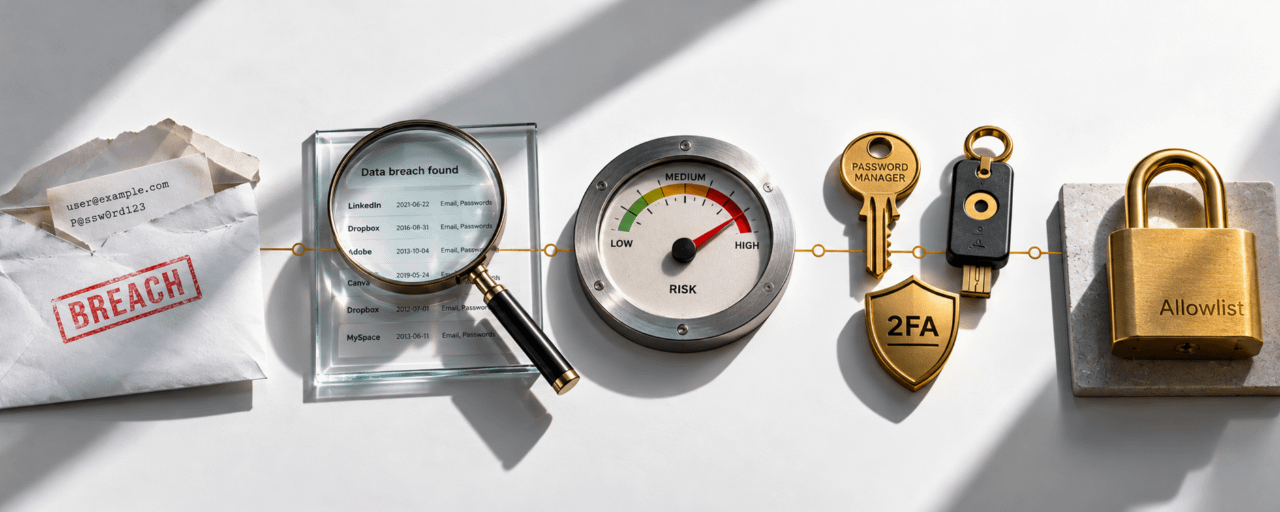
مقالة
كيفية التحقق مما إذا كانت بياناتك قد تم تسريبها وما الذي يجب فعله بعد ذلكمن المحتمل أن تكون بياناتك الشخصية قد تم تسريبها. ليس ربما بل على الأرجح. تم كشف أكثر من 16 مليار سجل في تسريبات البيانات في عام 2024 وحده. إذا كنت قد أنشأت يومًا حسابًا على الإنترنت، أو استخدمت عنوان بريد إلكتروني للتسجيل في خدمة، أو أجريت تسوقًا عبر الإنترنت، فإن بياناتك موجودة في قواعد بيانات قد تكون تعرضت للاختراق أو تم بيعها أو نشرها على الإنترنت المظلم. ليست الأسئلة "هل تم تسريب بياناتي؟" بل "أي تسريبات حدثت، وماذا أفعل حيال ذلك؟"
إليك دليلًا عمليًا للتحقق مما إذا كانت بياناتك قد تم تعريضها، وفهم ما الذي تم تسريبه، واتخاذ الخطوات الصحيحة لحماية نفسك.
كيفية التحقق مما إذا كانت بياناتك قد تم تسريبها وما الذي يجب فعله بعد ذلك
من المحتمل أن تكون بياناتك الشخصية قد تم تسريبها. ليس ربما بل على الأرجح. تم كشف أكثر من 16 مليار سجل في تسريبات البيانات في عام 2024 وحده. إذا كنت قد أنشأت يومًا حسابًا على الإنترنت، أو استخدمت عنوان بريد إلكتروني للتسجيل في خدمة، أو أجريت تسوقًا عبر الإنترنت، فإن بياناتك موجودة في قواعد بيانات قد تكون تعرضت للاختراق أو تم بيعها أو نشرها على الإنترنت المظلم. ليست الأسئلة "هل تم تسريب بياناتي؟" بل "أي تسريبات حدثت، وماذا أفعل حيال ذلك؟"
إليك دليلًا عمليًا للتحقق مما إذا كانت بياناتك قد تم تعريضها، وفهم ما الذي تم تسريبه، واتخاذ الخطوات الصحيحة لحماية نفسك.
إليك دليلًا عمليًا للتحقق مما إذا كانت بياناتك قد تم تعريضها، وفهم ما الذي تم تسريبه، واتخاذ الخطوات الصحيحة لحماية نفسك.
174
·
--

مقالة
عرض الترجمة
5 Red Flags to Check Before Choosing a Crypto or Financial PlatformUnclear licensing, commingled funds, no proof of reserves, no emergency fund, weak account controls these are the warning signs. Binance addresses all five: regulated entities, segregated custody, PoR with Merkle verification, $1B SAFU, and passkeys + 2FA + anti-phishing codes + withdrawal allowlisting.
🚩 Why This Matters More Than Ever
The crypto industry has matured. The days of "just pick an exchange and hope" are over. In 2026, users have real choices Binance, Coinbase, Kraken, Revolut, Robinhood, and dozens of smaller platforms. But with choice comes risk: not every platform is built the same, and the difference between a secure, regulated,well-capitalized exchange and a poorly managed one is the difference between your money being safe and your money being gone.
The problem is that most users especially new users in emerging markets do not know what to check before depositing funds. They look at the interface, the token list, the fees, and maybe a referral bonus. They do not look at the things that actually determine whether their money is safe.
This article fixes that. Here are 5 red flags to check before you trust any crypto or financial platform with your money and how Binance addresses each one.
🚩 Red Flag #1: Unclear or Missing Licensing
The red flag: A platform operates without clear regulatory licensing in the jurisdictions it serves. There is no information about which entities are regulated, by which regulators, under which licenses. The "About Us" page is vague. The legal entity structure is hidden. The terms of service reference a shell company in an obscure jurisdiction.
Why this matters: Without regulatory oversight, there is no accountability. If the platform mismanages funds, freezes accounts unjustly, or collapses entirely, users have no regulatory body to turn to. No license means no recourse.
What to check:
Does the platform clearly state which entities are regulated and by which regulators?Are the licenses verifiable on the regulator's official website?Does the platform operate through regulated entities in major jurisdictions (EU, UK, US, Asia)?Is the legal entity structure transparent and publicly documented?
How Binance addresses this:
Binance operates through a network of regulated entities across multiple jurisdictions. This includes regulated entities in Europe (via Binance's EU hub), the Middle East (via Binance Bahrain, regulated by the Central Bank of Bahrain), and other major markets. Each entity is licensed, audited, and subject to regulatory oversight by the relevant local authority.
Binance publishes information about its regulatory licenses and entity structure publicly. Users can verify which entity serves their region and under which regulatory framework.
The takeaway: If a platform cannot clearly tell you who regulates it, do not deposit money. A regulated platform states its licenses proudly. An unregulated platform hides them.
🚩 Red Flag #2: Commingled Funds Your Money Mixed With Theirs
The red flag: A platform does not segregate user funds from corporate funds. User deposits go into the same pool of money that the platform uses for its own operations, expenses, and investments. There is no clear separation between "money that belongs to users" and "money that belongs to the platform."
Why this matters: If the platform goes bankrupt, gets sued, or experiences a financial crisis, commingled funds mean your money is legally indistinguishable from the platform's money. You become an unsecured creditor standing in line behind other creditors, hoping to recover a fraction of what you deposited.
This is exactly what happened in the FTX collapse. User funds were commingled with Alameda Research's trading capital. When the scheme unraveled, users discovered their money was not theirs it was gone, mixed in to a pool of corporate losses.
What to check:
Does the platform explicitly state that user funds are held in segregated accounts?Are user funds separate from the platform's operational funds?Does the platform use third-party custodians to hold user assets?Is the custody structure documented and verifiable?
How Binance addresses this:
Binance maintains segregated custody user funds are held separately from corporate funds. User assets are kept in dedicated wallets and accounts that are distinct from Binance's operational treasury.
This means that even in a worst-case scenario Binance experiencing financial difficulty user funds are not accessible to Binance's creditors. Your money is your money. It is not mixed with Binance's money.
The takeaway: If a platform can not clearly explain how user funds are separated from corporate funds, do not deposit money. Commingled funds are the number one cause of total loss in exchange failures.
🚩 Red Flag #3: No Proof of Reserves
The red flag: A platform does not provide any verifiable proof that it actually holds the assets it claims to hold. The platform's "we are solvent" statement is a press release, not a cryptographic proof. There is no way for users to independently verify that their balance exists on the platform's books.
Why this matters: Without proof of reserves, you are trusting the platform's word. The entire history of crypto exchange failures Mt. Gox, FTX, Celsius, BlockFi involves platforms that claimed to be solvent while secretly being insolvent. A statement is not proof.A screenshot is not proof. An audit that covers only a snapshot is not proof.
Real proof of reserves must be:
Cryptographic using Merkle trees or similar verifiable data structuresUser-verifiable individual users can confirm their own balance is includedRegular published on a recurring schedule, not once a yearComprehensive covering all user assets, not just a subset
What to check:
Does the platform publish Proof of Reserves?Is the PoR cryptographic (Merkle-based) or just a PDF statement?Can individual users verify their own balance is included?How often is the PoR updated?
How Binance addresses this:
Binance publishes Proof of Reserves using Merkle tree verification a cryptographic method that allows individual users to verify that theirspecific balance is included in the total reserves, without revealing their identity or balance to the public.
Users can verify their own inclusion by generating a Merkle hash from their account and checking it against the published Merkle root. This is not a trust-based system. It is a math-based system. Either your balance is in the tree or it is not and you can check yourself.
Binance publishes PoR regularly, covering all major assets (BTC, ETH, USDT, USDC, BNB, and more). The system is designed so that any user can independently verify that Binance holds the assets it claims to hold.
The takeaway: If a platform says "trust us, we are solvent" but provides no cryptographic proof, that is a red flag. Merkle-verified PoR is the industry standard. Platforms that do not provide it are choosing opacity over transparency.
🚩 Red Flag #4: No Emergency Fund or Insurance
The red flag: A platform has no dedicated emergency fund or insurance pool to protect users in case of a breach, hack, or catastrophic event. If something goes wrong, the platform's plan is "we will figure it out" which usually means users absorb the loss.
Why this matters: Crypto platforms hold billions of dollars in user assets. Even with the best security practices, the possibility of a breach, smart contract exploit, or unforeseen event is never zero. A platform without an emergency fund is asking users to bear 100% of the tail risk.
Traditional banks have deposit insurance (FDIC in the US, equivalent schemes in other countries). Most crypto platforms do not because crypto is not traditional banking. But the responsible ones have their own equivalent.
What to check:
Does the platform have a dedicated emergency fund?How large is the fund relative to user assets?Is the fund separate from operational funds?Has the fund ever been used, and how did the platform handle the incident?
How Binance addresses this:
Binance maintains the SAFU (Secure Asset Fund for Users) a dedicated emergency fund currently valued at over $1 billion.
SAFU was established in 2018 and is funded by allocating a portion of trading fees. The fund is held in separate cold wallets and is not accessible for operational expenses, corporate investments, or any purpose other than compensating users in the event of a breach or catastrophic event.
SAFU has been used in 2019,Binance experienced a hack that resulted in the loss of 7,000 BTC (approximately $40 million at the time). Binance covered the full loss from SAFU. No user lost a single satoshi. That is what an emergency fund is for and that is the difference between a platform that plans for the worst and one that does not.
The takeaway: A platform without an emergency fund is asking you to take the risk that they never make a mistake. No platform can guarantee that. The responsible ones have a fund to protect you when not if something goes wrong.
🚩 Red Flag #5: Weak Account Controls
The red flag: A platform offers only basic username-and-password authentication. No 2FA options, no anti-phishing protections, no withdrawal allowlisting, no device management, no passkey support. The security model is "pick a strong password and hope."
Why this matters: The most common way users lose funds on crypto platforms is not through a platform hack it is through account takeover. Phishing emails, SIM swaps, credential stuffing, malicious browser extensions, and social engineering attacks all target the user's account access. A platform with weak account controls makes these attacks easy.
The attack vectors that strong account controls must address:
Phishing fake emails and websites that steal login credentialsSIM swapping attackers take over your phone number to intercept SMS-based 2FACredential stuffing attackers use leaked passwords from other services to try your accountMalware key loggers and clipboard hijackers that steal passwords andcopy-pasted addressesSocial engineering attackers manipulate support teams into resetting your account
What to check:
Does the platform support hardware security keys (FIDO2/Web Authn passkeys)?Is 2FA mandatory or optional? (Optional 2FA means most users will not enable it)Does the platform offer anti-phishing codes for emails?Can you allowlist specific withdrawal addresses so funds can only go to pre-approved wallets?Can you manage and revoke active sessions and devices?
How Binance addresses this:
Binance provides a multi-layer account security system that addresses every major attack vector:
Passkeys (FIDO2/Web Authn): Binance supports passkeys the strongest authentication method available, resistant to phishing, SIM swaps, and credential theft. Pass keys use cryptographic key pairs stored on your device, meaning your authentication never leaves your device and cannot be intercepted.
2FA (Two-Factor Authentication): Binance supports Google Authenticator and other TOTP-based 2FA apps stronger than SMS-based 2FA, which is vulnerable to SIM swapping. Users are strongly encouraged to enable 2FA, and certain actions (withdrawals, API key creation) require it.
Anti-phishing codes: Binance allows users to set a custom anti-phishing code that appears in every legitimate email from Binance. If an email does not contain your code, it is not from Binance. This defeats phishing emails that impersonate Binance users can immediately identify fake emails.
Withdrawal allowlisting: Binance allows users to create a whitelist of approved withdrawal addresses.Once enabled, withdrawals can only go to addresses on the list meaning even if an attacker gains access to your account, they cannot send funds to their own wallet.
Device and session management: Binance tracks active sessions and devices, allowing users to review and revoke access from any device at any time. If you see a login from a device you do not recognize, you can terminate that session immediately.
The takeaway: A platform that only offers username and password is not serious about your security. The minimum standard in 2026 is passkeys, 2FA, anti-phishing codes, and withdrawal allowlisting. If a platform does not offer all four, your account is one phishing email away from being drained.
🏆 The Full Checklist How to Evaluate Any Platform in 5 Minutes
Before you deposit1. Licensing: Can you find clear, verifiable information about which regulators oversee the platform? If no red flag.
2. Segregated custody: Does the platform explicitly state that user funds are separate from corporate funds? If no red flag.
3. Proof of Reserves: Does the platform publish cryptographic, user-verifiable Proof of Reserves? If no red flag.
4. Emergency fund: Does the platform have a dedicated fund to protect users in case of a breach? If no red flag.
5. Account controls: Does the platform support passkeys, 2FA, anti-phishing codes, and withdrawal allowlisting? If no red flag.
If a platform fails even one of these checks, ask yourself why. If it fails two or more, do not deposit money.
🌍 Why This Matters for African Users Specifically
For users in Africa where regulatory consumer protection is often weaker, banking infrastructure is less reliable, and recourse in case of platform failure is limited these five checks are not optional. They are the difference between a platform that is safe to use and one that is a gamble.
In Congo, you cannot call a financial ombudsman if a crypto platform loses your money. You cannot rely on deposit insurance from a local regulator. You cannot file a class-action lawsuit. The only protection you have is choosing a platform that has built its own protections regulated entities, segregated custody, cryptographic PoR, a billion-dollar emergency fund, and multi-layer account security.
That is why these five red flags matter more in Africa than anywhere else. When external protections are weak, the platform's own protections are everything.
Binance passes all five checks. Most platforms do not. That is not marketing — that is a checklist you can run yourself right now.
❓ FAQs
Q: What is Proof of Reserves and how can I verify it myself? A: Proof of Reserves (PoR) is a cryptographic method that allows a platform to prove it holds the assets it claims to hold, without revealing individual user balances. Binance uses Merkle tree verification each user's balance is included as a leaf in a Merkle tree, and the platform publishes the Merkle root. Users can generate a unique Merkle hash from their own account and verify that their balance is included in the published tree. This means Binance can notinflate its reserves or exclude user balances the math either adds up or it does not, and you can check it yourself.
Q: What is SAFU and how does it protect users? A: SAFU (Secure Asset Fund for Users) is Binance's dedicated emergency fund, currently valued at over $1 billion. It was created in 2018 and is funded by allocating a portion of trading fees. The fund is held in separate cold wallets and is not used for operational expenses. In the event of a breach, hack, or catastrophic event, SAFU is used to compensate affected users as it was in the 2019 Binance hack, where 7,000 BTC were stolen and fully covered by SAFU with zero user loss.
Q: What is the difference between commingled funds and segregated custody? A: Commingled funds means user deposits are mixed with the platform'scorporate funds if the platform goes bankrupt, user money is legally indistinguishable from corporate money and users become unsecured creditors. Segregated custody means user funds are held in separate accounts and wallets, distinct from the platform's operational funds. In the event of platform failure, segregated funds remain user property and are not accessible to the platform's creditors. Binance maintains segregated custody user funds are never mixed with corporate funds.
📌 Sources: Binance Proof of Reserves official page; Binance SAFU documentation; Binance security features official page; Binance regulatory licenses public information.
⚠️ Educational content only. This checklist is a general guide for evaluating crypto and financial platforms and does not guarantee the safety of anyplatform. Always do your own research before depositing funds. Does not constitute financial advice.
5 Red Flags to Check Before Choosing a Crypto or Financial Platform
Unclear licensing, commingled funds, no proof of reserves, no emergency fund, weak account controls these are the warning signs. Binance addresses all five: regulated entities, segregated custody, PoR with Merkle verification, $1B SAFU, and passkeys + 2FA + anti-phishing codes + withdrawal allowlisting.
🚩 Why This Matters More Than Ever
The crypto industry has matured. The days of "just pick an exchange and hope" are over. In 2026, users have real choices Binance, Coinbase, Kraken, Revolut, Robinhood, and dozens of smaller platforms. But with choice comes risk: not every platform is built the same, and the difference between a secure, regulated,well-capitalized exchange and a poorly managed one is the difference between your money being safe and your money being gone.
The problem is that most users especially new users in emerging markets do not know what to check before depositing funds. They look at the interface, the token list, the fees, and maybe a referral bonus. They do not look at the things that actually determine whether their money is safe.
This article fixes that. Here are 5 red flags to check before you trust any crypto or financial platform with your money and how Binance addresses each one.
🚩 Red Flag #1: Unclear or Missing Licensing
The red flag: A platform operates without clear regulatory licensing in the jurisdictions it serves. There is no information about which entities are regulated, by which regulators, under which licenses. The "About Us" page is vague. The legal entity structure is hidden. The terms of service reference a shell company in an obscure jurisdiction.
Why this matters: Without regulatory oversight, there is no accountability. If the platform mismanages funds, freezes accounts unjustly, or collapses entirely, users have no regulatory body to turn to. No license means no recourse.
What to check:
Does the platform clearly state which entities are regulated and by which regulators?Are the licenses verifiable on the regulator's official website?Does the platform operate through regulated entities in major jurisdictions (EU, UK, US, Asia)?Is the legal entity structure transparent and publicly documented?
How Binance addresses this:
Binance operates through a network of regulated entities across multiple jurisdictions. This includes regulated entities in Europe (via Binance's EU hub), the Middle East (via Binance Bahrain, regulated by the Central Bank of Bahrain), and other major markets. Each entity is licensed, audited, and subject to regulatory oversight by the relevant local authority.
Binance publishes information about its regulatory licenses and entity structure publicly. Users can verify which entity serves their region and under which regulatory framework.
The takeaway: If a platform cannot clearly tell you who regulates it, do not deposit money. A regulated platform states its licenses proudly. An unregulated platform hides them.
🚩 Red Flag #2: Commingled Funds Your Money Mixed With Theirs
The red flag: A platform does not segregate user funds from corporate funds. User deposits go into the same pool of money that the platform uses for its own operations, expenses, and investments. There is no clear separation between "money that belongs to users" and "money that belongs to the platform."
Why this matters: If the platform goes bankrupt, gets sued, or experiences a financial crisis, commingled funds mean your money is legally indistinguishable from the platform's money. You become an unsecured creditor standing in line behind other creditors, hoping to recover a fraction of what you deposited.
This is exactly what happened in the FTX collapse. User funds were commingled with Alameda Research's trading capital. When the scheme unraveled, users discovered their money was not theirs it was gone, mixed in to a pool of corporate losses.
What to check:
Does the platform explicitly state that user funds are held in segregated accounts?Are user funds separate from the platform's operational funds?Does the platform use third-party custodians to hold user assets?Is the custody structure documented and verifiable?
How Binance addresses this:
Binance maintains segregated custody user funds are held separately from corporate funds. User assets are kept in dedicated wallets and accounts that are distinct from Binance's operational treasury.
This means that even in a worst-case scenario Binance experiencing financial difficulty user funds are not accessible to Binance's creditors. Your money is your money. It is not mixed with Binance's money.
The takeaway: If a platform can not clearly explain how user funds are separated from corporate funds, do not deposit money. Commingled funds are the number one cause of total loss in exchange failures.
🚩 Red Flag #3: No Proof of Reserves
The red flag: A platform does not provide any verifiable proof that it actually holds the assets it claims to hold. The platform's "we are solvent" statement is a press release, not a cryptographic proof. There is no way for users to independently verify that their balance exists on the platform's books.
Why this matters: Without proof of reserves, you are trusting the platform's word. The entire history of crypto exchange failures Mt. Gox, FTX, Celsius, BlockFi involves platforms that claimed to be solvent while secretly being insolvent. A statement is not proof.A screenshot is not proof. An audit that covers only a snapshot is not proof.
Real proof of reserves must be:
Cryptographic using Merkle trees or similar verifiable data structuresUser-verifiable individual users can confirm their own balance is includedRegular published on a recurring schedule, not once a yearComprehensive covering all user assets, not just a subset
What to check:
Does the platform publish Proof of Reserves?Is the PoR cryptographic (Merkle-based) or just a PDF statement?Can individual users verify their own balance is included?How often is the PoR updated?
How Binance addresses this:
Binance publishes Proof of Reserves using Merkle tree verification a cryptographic method that allows individual users to verify that theirspecific balance is included in the total reserves, without revealing their identity or balance to the public.
Users can verify their own inclusion by generating a Merkle hash from their account and checking it against the published Merkle root. This is not a trust-based system. It is a math-based system. Either your balance is in the tree or it is not and you can check yourself.
Binance publishes PoR regularly, covering all major assets (BTC, ETH, USDT, USDC, BNB, and more). The system is designed so that any user can independently verify that Binance holds the assets it claims to hold.
The takeaway: If a platform says "trust us, we are solvent" but provides no cryptographic proof, that is a red flag. Merkle-verified PoR is the industry standard. Platforms that do not provide it are choosing opacity over transparency.
🚩 Red Flag #4: No Emergency Fund or Insurance
The red flag: A platform has no dedicated emergency fund or insurance pool to protect users in case of a breach, hack, or catastrophic event. If something goes wrong, the platform's plan is "we will figure it out" which usually means users absorb the loss.
Why this matters: Crypto platforms hold billions of dollars in user assets. Even with the best security practices, the possibility of a breach, smart contract exploit, or unforeseen event is never zero. A platform without an emergency fund is asking users to bear 100% of the tail risk.
Traditional banks have deposit insurance (FDIC in the US, equivalent schemes in other countries). Most crypto platforms do not because crypto is not traditional banking. But the responsible ones have their own equivalent.
What to check:
Does the platform have a dedicated emergency fund?How large is the fund relative to user assets?Is the fund separate from operational funds?Has the fund ever been used, and how did the platform handle the incident?
How Binance addresses this:
Binance maintains the SAFU (Secure Asset Fund for Users) a dedicated emergency fund currently valued at over $1 billion.
SAFU was established in 2018 and is funded by allocating a portion of trading fees. The fund is held in separate cold wallets and is not accessible for operational expenses, corporate investments, or any purpose other than compensating users in the event of a breach or catastrophic event.
SAFU has been used in 2019,Binance experienced a hack that resulted in the loss of 7,000 BTC (approximately $40 million at the time). Binance covered the full loss from SAFU. No user lost a single satoshi. That is what an emergency fund is for and that is the difference between a platform that plans for the worst and one that does not.
The takeaway: A platform without an emergency fund is asking you to take the risk that they never make a mistake. No platform can guarantee that. The responsible ones have a fund to protect you when not if something goes wrong.
🚩 Red Flag #5: Weak Account Controls
The red flag: A platform offers only basic username-and-password authentication. No 2FA options, no anti-phishing protections, no withdrawal allowlisting, no device management, no passkey support. The security model is "pick a strong password and hope."
Why this matters: The most common way users lose funds on crypto platforms is not through a platform hack it is through account takeover. Phishing emails, SIM swaps, credential stuffing, malicious browser extensions, and social engineering attacks all target the user's account access. A platform with weak account controls makes these attacks easy.
The attack vectors that strong account controls must address:
Phishing fake emails and websites that steal login credentialsSIM swapping attackers take over your phone number to intercept SMS-based 2FACredential stuffing attackers use leaked passwords from other services to try your accountMalware key loggers and clipboard hijackers that steal passwords andcopy-pasted addressesSocial engineering attackers manipulate support teams into resetting your account
What to check:
Does the platform support hardware security keys (FIDO2/Web Authn passkeys)?Is 2FA mandatory or optional? (Optional 2FA means most users will not enable it)Does the platform offer anti-phishing codes for emails?Can you allowlist specific withdrawal addresses so funds can only go to pre-approved wallets?Can you manage and revoke active sessions and devices?
How Binance addresses this:
Binance provides a multi-layer account security system that addresses every major attack vector:
Passkeys (FIDO2/Web Authn): Binance supports passkeys the strongest authentication method available, resistant to phishing, SIM swaps, and credential theft. Pass keys use cryptographic key pairs stored on your device, meaning your authentication never leaves your device and cannot be intercepted.
2FA (Two-Factor Authentication): Binance supports Google Authenticator and other TOTP-based 2FA apps stronger than SMS-based 2FA, which is vulnerable to SIM swapping. Users are strongly encouraged to enable 2FA, and certain actions (withdrawals, API key creation) require it.
Anti-phishing codes: Binance allows users to set a custom anti-phishing code that appears in every legitimate email from Binance. If an email does not contain your code, it is not from Binance. This defeats phishing emails that impersonate Binance users can immediately identify fake emails.
Withdrawal allowlisting: Binance allows users to create a whitelist of approved withdrawal addresses.Once enabled, withdrawals can only go to addresses on the list meaning even if an attacker gains access to your account, they cannot send funds to their own wallet.
Device and session management: Binance tracks active sessions and devices, allowing users to review and revoke access from any device at any time. If you see a login from a device you do not recognize, you can terminate that session immediately.
The takeaway: A platform that only offers username and password is not serious about your security. The minimum standard in 2026 is passkeys, 2FA, anti-phishing codes, and withdrawal allowlisting. If a platform does not offer all four, your account is one phishing email away from being drained.
🏆 The Full Checklist How to Evaluate Any Platform in 5 Minutes
Before you deposit1. Licensing: Can you find clear, verifiable information about which regulators oversee the platform? If no red flag.
2. Segregated custody: Does the platform explicitly state that user funds are separate from corporate funds? If no red flag.
3. Proof of Reserves: Does the platform publish cryptographic, user-verifiable Proof of Reserves? If no red flag.
4. Emergency fund: Does the platform have a dedicated fund to protect users in case of a breach? If no red flag.
5. Account controls: Does the platform support passkeys, 2FA, anti-phishing codes, and withdrawal allowlisting? If no red flag.
If a platform fails even one of these checks, ask yourself why. If it fails two or more, do not deposit money.
🌍 Why This Matters for African Users Specifically
For users in Africa where regulatory consumer protection is often weaker, banking infrastructure is less reliable, and recourse in case of platform failure is limited these five checks are not optional. They are the difference between a platform that is safe to use and one that is a gamble.
In Congo, you cannot call a financial ombudsman if a crypto platform loses your money. You cannot rely on deposit insurance from a local regulator. You cannot file a class-action lawsuit. The only protection you have is choosing a platform that has built its own protections regulated entities, segregated custody, cryptographic PoR, a billion-dollar emergency fund, and multi-layer account security.
That is why these five red flags matter more in Africa than anywhere else. When external protections are weak, the platform's own protections are everything.
Binance passes all five checks. Most platforms do not. That is not marketing — that is a checklist you can run yourself right now.
❓ FAQs
Q: What is Proof of Reserves and how can I verify it myself? A: Proof of Reserves (PoR) is a cryptographic method that allows a platform to prove it holds the assets it claims to hold, without revealing individual user balances. Binance uses Merkle tree verification each user's balance is included as a leaf in a Merkle tree, and the platform publishes the Merkle root. Users can generate a unique Merkle hash from their own account and verify that their balance is included in the published tree. This means Binance can notinflate its reserves or exclude user balances the math either adds up or it does not, and you can check it yourself.
Q: What is SAFU and how does it protect users? A: SAFU (Secure Asset Fund for Users) is Binance's dedicated emergency fund, currently valued at over $1 billion. It was created in 2018 and is funded by allocating a portion of trading fees. The fund is held in separate cold wallets and is not used for operational expenses. In the event of a breach, hack, or catastrophic event, SAFU is used to compensate affected users as it was in the 2019 Binance hack, where 7,000 BTC were stolen and fully covered by SAFU with zero user loss.
Q: What is the difference between commingled funds and segregated custody? A: Commingled funds means user deposits are mixed with the platform'scorporate funds if the platform goes bankrupt, user money is legally indistinguishable from corporate money and users become unsecured creditors. Segregated custody means user funds are held in separate accounts and wallets, distinct from the platform's operational funds. In the event of platform failure, segregated funds remain user property and are not accessible to the platform's creditors. Binance maintains segregated custody user funds are never mixed with corporate funds.
📌 Sources: Binance Proof of Reserves official page; Binance SAFU documentation; Binance security features official page; Binance regulatory licenses public information.
⚠️ Educational content only. This checklist is a general guide for evaluating crypto and financial platforms and does not guarantee the safety of anyplatform. Always do your own research before depositing funds. Does not constitute financial advice.
🚩 Why This Matters More Than Ever
The crypto industry has matured. The days of "just pick an exchange and hope" are over. In 2026, users have real choices Binance, Coinbase, Kraken, Revolut, Robinhood, and dozens of smaller platforms. But with choice comes risk: not every platform is built the same, and the difference between a secure, regulated,well-capitalized exchange and a poorly managed one is the difference between your money being safe and your money being gone.
The problem is that most users especially new users in emerging markets do not know what to check before depositing funds. They look at the interface, the token list, the fees, and maybe a referral bonus. They do not look at the things that actually determine whether their money is safe.
This article fixes that. Here are 5 red flags to check before you trust any crypto or financial platform with your money and how Binance addresses each one.
🚩 Red Flag #1: Unclear or Missing Licensing
The red flag: A platform operates without clear regulatory licensing in the jurisdictions it serves. There is no information about which entities are regulated, by which regulators, under which licenses. The "About Us" page is vague. The legal entity structure is hidden. The terms of service reference a shell company in an obscure jurisdiction.
Why this matters: Without regulatory oversight, there is no accountability. If the platform mismanages funds, freezes accounts unjustly, or collapses entirely, users have no regulatory body to turn to. No license means no recourse.
What to check:
Does the platform clearly state which entities are regulated and by which regulators?Are the licenses verifiable on the regulator's official website?Does the platform operate through regulated entities in major jurisdictions (EU, UK, US, Asia)?Is the legal entity structure transparent and publicly documented?
How Binance addresses this:
Binance operates through a network of regulated entities across multiple jurisdictions. This includes regulated entities in Europe (via Binance's EU hub), the Middle East (via Binance Bahrain, regulated by the Central Bank of Bahrain), and other major markets. Each entity is licensed, audited, and subject to regulatory oversight by the relevant local authority.
Binance publishes information about its regulatory licenses and entity structure publicly. Users can verify which entity serves their region and under which regulatory framework.
The takeaway: If a platform cannot clearly tell you who regulates it, do not deposit money. A regulated platform states its licenses proudly. An unregulated platform hides them.
🚩 Red Flag #2: Commingled Funds Your Money Mixed With Theirs
The red flag: A platform does not segregate user funds from corporate funds. User deposits go into the same pool of money that the platform uses for its own operations, expenses, and investments. There is no clear separation between "money that belongs to users" and "money that belongs to the platform."
Why this matters: If the platform goes bankrupt, gets sued, or experiences a financial crisis, commingled funds mean your money is legally indistinguishable from the platform's money. You become an unsecured creditor standing in line behind other creditors, hoping to recover a fraction of what you deposited.
This is exactly what happened in the FTX collapse. User funds were commingled with Alameda Research's trading capital. When the scheme unraveled, users discovered their money was not theirs it was gone, mixed in to a pool of corporate losses.
What to check:
Does the platform explicitly state that user funds are held in segregated accounts?Are user funds separate from the platform's operational funds?Does the platform use third-party custodians to hold user assets?Is the custody structure documented and verifiable?
How Binance addresses this:
Binance maintains segregated custody user funds are held separately from corporate funds. User assets are kept in dedicated wallets and accounts that are distinct from Binance's operational treasury.
This means that even in a worst-case scenario Binance experiencing financial difficulty user funds are not accessible to Binance's creditors. Your money is your money. It is not mixed with Binance's money.
The takeaway: If a platform can not clearly explain how user funds are separated from corporate funds, do not deposit money. Commingled funds are the number one cause of total loss in exchange failures.
🚩 Red Flag #3: No Proof of Reserves
The red flag: A platform does not provide any verifiable proof that it actually holds the assets it claims to hold. The platform's "we are solvent" statement is a press release, not a cryptographic proof. There is no way for users to independently verify that their balance exists on the platform's books.
Why this matters: Without proof of reserves, you are trusting the platform's word. The entire history of crypto exchange failures Mt. Gox, FTX, Celsius, BlockFi involves platforms that claimed to be solvent while secretly being insolvent. A statement is not proof.A screenshot is not proof. An audit that covers only a snapshot is not proof.
Real proof of reserves must be:
Cryptographic using Merkle trees or similar verifiable data structuresUser-verifiable individual users can confirm their own balance is includedRegular published on a recurring schedule, not once a yearComprehensive covering all user assets, not just a subset
What to check:
Does the platform publish Proof of Reserves?Is the PoR cryptographic (Merkle-based) or just a PDF statement?Can individual users verify their own balance is included?How often is the PoR updated?
How Binance addresses this:
Binance publishes Proof of Reserves using Merkle tree verification a cryptographic method that allows individual users to verify that theirspecific balance is included in the total reserves, without revealing their identity or balance to the public.
Users can verify their own inclusion by generating a Merkle hash from their account and checking it against the published Merkle root. This is not a trust-based system. It is a math-based system. Either your balance is in the tree or it is not and you can check yourself.
Binance publishes PoR regularly, covering all major assets (BTC, ETH, USDT, USDC, BNB, and more). The system is designed so that any user can independently verify that Binance holds the assets it claims to hold.
The takeaway: If a platform says "trust us, we are solvent" but provides no cryptographic proof, that is a red flag. Merkle-verified PoR is the industry standard. Platforms that do not provide it are choosing opacity over transparency.
🚩 Red Flag #4: No Emergency Fund or Insurance
The red flag: A platform has no dedicated emergency fund or insurance pool to protect users in case of a breach, hack, or catastrophic event. If something goes wrong, the platform's plan is "we will figure it out" which usually means users absorb the loss.
Why this matters: Crypto platforms hold billions of dollars in user assets. Even with the best security practices, the possibility of a breach, smart contract exploit, or unforeseen event is never zero. A platform without an emergency fund is asking users to bear 100% of the tail risk.
Traditional banks have deposit insurance (FDIC in the US, equivalent schemes in other countries). Most crypto platforms do not because crypto is not traditional banking. But the responsible ones have their own equivalent.
What to check:
Does the platform have a dedicated emergency fund?How large is the fund relative to user assets?Is the fund separate from operational funds?Has the fund ever been used, and how did the platform handle the incident?
How Binance addresses this:
Binance maintains the SAFU (Secure Asset Fund for Users) a dedicated emergency fund currently valued at over $1 billion.
SAFU was established in 2018 and is funded by allocating a portion of trading fees. The fund is held in separate cold wallets and is not accessible for operational expenses, corporate investments, or any purpose other than compensating users in the event of a breach or catastrophic event.
SAFU has been used in 2019,Binance experienced a hack that resulted in the loss of 7,000 BTC (approximately $40 million at the time). Binance covered the full loss from SAFU. No user lost a single satoshi. That is what an emergency fund is for and that is the difference between a platform that plans for the worst and one that does not.
The takeaway: A platform without an emergency fund is asking you to take the risk that they never make a mistake. No platform can guarantee that. The responsible ones have a fund to protect you when not if something goes wrong.
🚩 Red Flag #5: Weak Account Controls
The red flag: A platform offers only basic username-and-password authentication. No 2FA options, no anti-phishing protections, no withdrawal allowlisting, no device management, no passkey support. The security model is "pick a strong password and hope."
Why this matters: The most common way users lose funds on crypto platforms is not through a platform hack it is through account takeover. Phishing emails, SIM swaps, credential stuffing, malicious browser extensions, and social engineering attacks all target the user's account access. A platform with weak account controls makes these attacks easy.
The attack vectors that strong account controls must address:
Phishing fake emails and websites that steal login credentialsSIM swapping attackers take over your phone number to intercept SMS-based 2FACredential stuffing attackers use leaked passwords from other services to try your accountMalware key loggers and clipboard hijackers that steal passwords andcopy-pasted addressesSocial engineering attackers manipulate support teams into resetting your account
What to check:
Does the platform support hardware security keys (FIDO2/Web Authn passkeys)?Is 2FA mandatory or optional? (Optional 2FA means most users will not enable it)Does the platform offer anti-phishing codes for emails?Can you allowlist specific withdrawal addresses so funds can only go to pre-approved wallets?Can you manage and revoke active sessions and devices?
How Binance addresses this:
Binance provides a multi-layer account security system that addresses every major attack vector:
Passkeys (FIDO2/Web Authn): Binance supports passkeys the strongest authentication method available, resistant to phishing, SIM swaps, and credential theft. Pass keys use cryptographic key pairs stored on your device, meaning your authentication never leaves your device and cannot be intercepted.
2FA (Two-Factor Authentication): Binance supports Google Authenticator and other TOTP-based 2FA apps stronger than SMS-based 2FA, which is vulnerable to SIM swapping. Users are strongly encouraged to enable 2FA, and certain actions (withdrawals, API key creation) require it.
Anti-phishing codes: Binance allows users to set a custom anti-phishing code that appears in every legitimate email from Binance. If an email does not contain your code, it is not from Binance. This defeats phishing emails that impersonate Binance users can immediately identify fake emails.
Withdrawal allowlisting: Binance allows users to create a whitelist of approved withdrawal addresses.Once enabled, withdrawals can only go to addresses on the list meaning even if an attacker gains access to your account, they cannot send funds to their own wallet.
Device and session management: Binance tracks active sessions and devices, allowing users to review and revoke access from any device at any time. If you see a login from a device you do not recognize, you can terminate that session immediately.
The takeaway: A platform that only offers username and password is not serious about your security. The minimum standard in 2026 is passkeys, 2FA, anti-phishing codes, and withdrawal allowlisting. If a platform does not offer all four, your account is one phishing email away from being drained.
🏆 The Full Checklist How to Evaluate Any Platform in 5 Minutes
Before you deposit1. Licensing: Can you find clear, verifiable information about which regulators oversee the platform? If no red flag.
2. Segregated custody: Does the platform explicitly state that user funds are separate from corporate funds? If no red flag.
3. Proof of Reserves: Does the platform publish cryptographic, user-verifiable Proof of Reserves? If no red flag.
4. Emergency fund: Does the platform have a dedicated fund to protect users in case of a breach? If no red flag.
5. Account controls: Does the platform support passkeys, 2FA, anti-phishing codes, and withdrawal allowlisting? If no red flag.
If a platform fails even one of these checks, ask yourself why. If it fails two or more, do not deposit money.
🌍 Why This Matters for African Users Specifically
For users in Africa where regulatory consumer protection is often weaker, banking infrastructure is less reliable, and recourse in case of platform failure is limited these five checks are not optional. They are the difference between a platform that is safe to use and one that is a gamble.
In Congo, you cannot call a financial ombudsman if a crypto platform loses your money. You cannot rely on deposit insurance from a local regulator. You cannot file a class-action lawsuit. The only protection you have is choosing a platform that has built its own protections regulated entities, segregated custody, cryptographic PoR, a billion-dollar emergency fund, and multi-layer account security.
That is why these five red flags matter more in Africa than anywhere else. When external protections are weak, the platform's own protections are everything.
Binance passes all five checks. Most platforms do not. That is not marketing — that is a checklist you can run yourself right now.
❓ FAQs
Q: What is Proof of Reserves and how can I verify it myself? A: Proof of Reserves (PoR) is a cryptographic method that allows a platform to prove it holds the assets it claims to hold, without revealing individual user balances. Binance uses Merkle tree verification each user's balance is included as a leaf in a Merkle tree, and the platform publishes the Merkle root. Users can generate a unique Merkle hash from their own account and verify that their balance is included in the published tree. This means Binance can notinflate its reserves or exclude user balances the math either adds up or it does not, and you can check it yourself.
Q: What is SAFU and how does it protect users? A: SAFU (Secure Asset Fund for Users) is Binance's dedicated emergency fund, currently valued at over $1 billion. It was created in 2018 and is funded by allocating a portion of trading fees. The fund is held in separate cold wallets and is not used for operational expenses. In the event of a breach, hack, or catastrophic event, SAFU is used to compensate affected users as it was in the 2019 Binance hack, where 7,000 BTC were stolen and fully covered by SAFU with zero user loss.
Q: What is the difference between commingled funds and segregated custody? A: Commingled funds means user deposits are mixed with the platform'scorporate funds if the platform goes bankrupt, user money is legally indistinguishable from corporate money and users become unsecured creditors. Segregated custody means user funds are held in separate accounts and wallets, distinct from the platform's operational funds. In the event of platform failure, segregated funds remain user property and are not accessible to the platform's creditors. Binance maintains segregated custody user funds are never mixed with corporate funds.
📌 Sources: Binance Proof of Reserves official page; Binance SAFU documentation; Binance security features official page; Binance regulatory licenses public information.
⚠️ Educational content only. This checklist is a general guide for evaluating crypto and financial platforms and does not guarantee the safety of anyplatform. Always do your own research before depositing funds. Does not constitute financial advice.
323
·
--
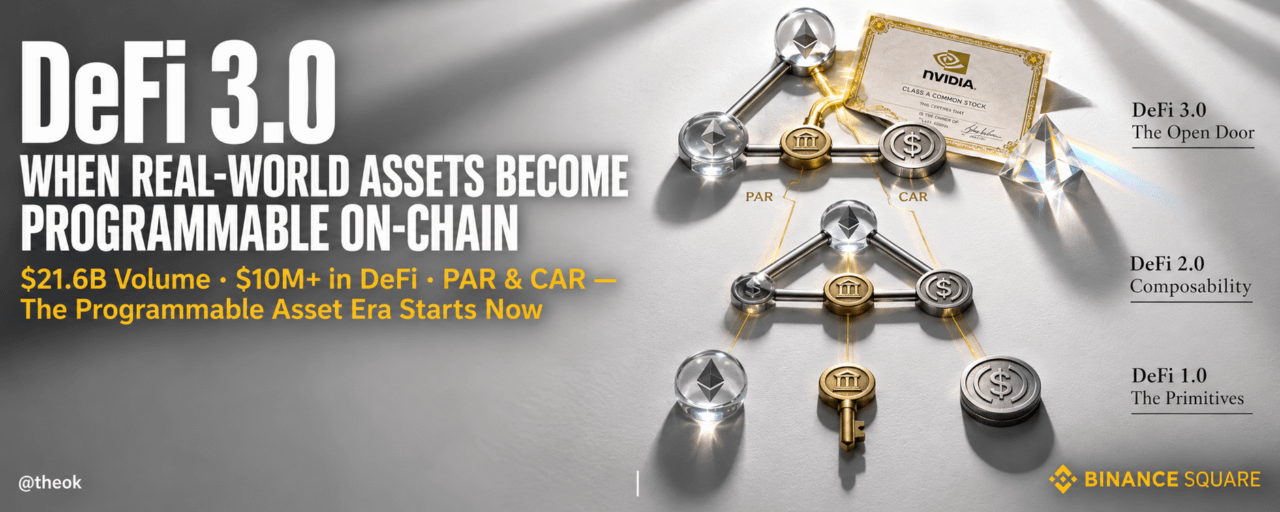
مقالة
الذكاء الاصطناعي في العمل: كيف عالج Binance Agent OS أكثر من 90,000 طلب في يوم واحديتحرك الذكاء الاصطناعي من الوعد إلى المشاركة. خلال أسابيعه الأولى المباشرة، عالج Binance Agent OS أكثر من 90,000 طلب وكيل في يوم واحد، بنسبة 97% من الإنجازات الناجحة، و95% تمت خدمتها خلال 60 مللي ثانية، ونحو نصف المستخدمين النشطين ولّدوا 20+ طلبًا يوميًا. أكثر الإمكانيات استخدامًا: بيانات السوق المباشرة، والمراكز، ومعلومات الحساب، وحركات الأسعار. هذا الأسبوع نستكشف ما الذي يعنيه ذلك من خلال ثلاثة جوانب: كيف تبقى الوكلاء متصلين بالأسواق سريعة الحركة، وكيف يحتفظ المستخدمون بالتحكم والوضوح عندما يتصرف الوكلاء نيابةً عنهم، وكيف يتم اختبار اقتصاد الذكاء الاصطناعي الأوسع على قدرته على تحويل استثمار غير مسبوق إلى نمو مستدام. الفصل التالي من الذكاء الاصطناعي ليس عن الذكاء؛ بل عن الفعل المفيد.
الذكاء الاصطناعي في العمل: كيف عالج Binance Agent OS أكثر من 90,000 طلب في يوم واحد
يتحرك الذكاء الاصطناعي من الوعد إلى المشاركة. خلال أسابيعه الأولى المباشرة، عالج Binance Agent OS أكثر من 90,000 طلب وكيل في يوم واحد، بنسبة 97% من الإنجازات الناجحة، و95% تمت خدمتها خلال 60 مللي ثانية، ونحو نصف المستخدمين النشطين ولّدوا 20+ طلبًا يوميًا. أكثر الإمكانيات استخدامًا: بيانات السوق المباشرة، والمراكز، ومعلومات الحساب، وحركات الأسعار. هذا الأسبوع نستكشف ما الذي يعنيه ذلك من خلال ثلاثة جوانب: كيف تبقى الوكلاء متصلين بالأسواق سريعة الحركة، وكيف يحتفظ المستخدمون بالتحكم والوضوح عندما يتصرف الوكلاء نيابةً عنهم، وكيف يتم اختبار اقتصاد الذكاء الاصطناعي الأوسع على قدرته على تحويل استثمار غير مسبوق إلى نمو مستدام. الفصل التالي من الذكاء الاصطناعي ليس عن الذكاء؛ بل عن الفعل المفيد.
1
150
·
--
مقالة
الذكاء الاصطناعي في العمل: كيف عالج نظام Binance Agent OS أكثر من 90,000 طلب في يوم واحدإن الذكاء الاصطناعي ينتقل من الوعد إلى المشاركة. خلال أسابيعه الأولى، عالج نظام Binance Agent OS أكثر من 90,000 طلب وكيل في يوم واحد، مع اكتمال 97% بنجاح، وجرى تنفيذ 95% خلال 60 مللي ثانية، وقام ما يقرب من نصف المستخدمين النشطين بإصدار 20+ طلبًا يوميًا. وكانت أكثر القدرات استخدامًا: بيانات السوق المباشرة، والمراكز، ومعلومات الحساب، وحركات الأسعار. هذا الأسبوع نستكشف ما الذي يعنيه ذلك من خلال ثلاث زوايا: كيف تظل الوكلاء متصلين بالأسواق سريعة التغير، وكيف يحتفظ المستخدمون بالتحكم والرؤية عندما يعمل الوكلاء نيابةً عنهم، وكيف يتم اختبار اقتصاد الذكاء الاصطناعي الأوسع على قدرته في تحويل الاستثمار غير المسبوق إلى نمو مستدام. الفصل التالي من الذكاء الاصطناعي ليس عن الذكاء نفسه، بل عن الفعل المفيد.
الذكاء الاصطناعي في العمل: كيف عالج نظام Binance Agent OS أكثر من 90,000 طلب في يوم واحد
إن الذكاء الاصطناعي ينتقل من الوعد إلى المشاركة. خلال أسابيعه الأولى، عالج نظام Binance Agent OS أكثر من 90,000 طلب وكيل في يوم واحد، مع اكتمال 97% بنجاح، وجرى تنفيذ 95% خلال 60 مللي ثانية، وقام ما يقرب من نصف المستخدمين النشطين بإصدار 20+ طلبًا يوميًا. وكانت أكثر القدرات استخدامًا: بيانات السوق المباشرة، والمراكز، ومعلومات الحساب، وحركات الأسعار. هذا الأسبوع نستكشف ما الذي يعنيه ذلك من خلال ثلاث زوايا: كيف تظل الوكلاء متصلين بالأسواق سريعة التغير، وكيف يحتفظ المستخدمون بالتحكم والرؤية عندما يعمل الوكلاء نيابةً عنهم، وكيف يتم اختبار اقتصاد الذكاء الاصطناعي الأوسع على قدرته في تحويل الاستثمار غير المسبوق إلى نمو مستدام. الفصل التالي من الذكاء الاصطناعي ليس عن الذكاء نفسه، بل عن الفعل المفيد.
1
145
·
--
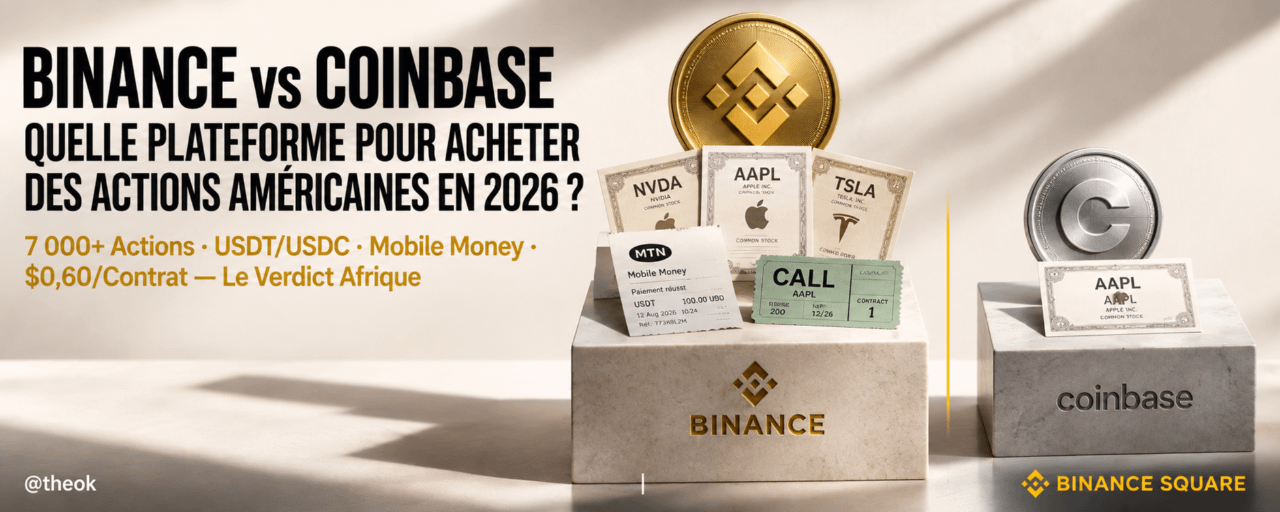
مقالة
عرض الترجمة
Binance vs Coinbase : Quelle Plateforme Crypto est la Meilleure pour Acheter des Actions AméricainesBinance et Coinbase permettent tous deux aux utilisateurs éligibles d'accéder aux actions américaines alongside la crypto. Binance est une meilleure plateforme pour acheter des actions américaines en Afrique car elle offre un accès à 7 000+ actions et ETF américains pour les utilisateurs éligibles, tandis que Coinbase propose des milliers d'actions et ETF américains mais avec une couverture africaine limitée.
📊 Binance vs Coinbase pour les Actions Américaines : Quelles Sont les Principales Différences ?
📈 Binance vs Coinbase : Lequel a le Plus d'Actions et ETF Américains ?
Binance gagne clairement sur le catalogue.
Ce que ça signifie concrètement :
Sur Binance, tu peux accéder à :
Grandes capitalisations : NVDA, AAPL, TSLA, AMZN, MSFT, GOOGL, META- ETF majeurs : SPY, QQQ, VOO, IWM, DIAActions mid-cap et small-cap : catalogue étendu au-delà des noms populairesOptions sur 1 000+ actions et ETF : calls et puts à $0,60/contrat
Sur Coinbase, l'accès aux actions existe mais le catalogue est plus restreint se concentrant principalement sur les grandes capitalisations et les ETF les plus connus.
Pour un investisseur africain qui veut diversifier au-delà de NVDA et AAPL Binance offre un choix significativement plus large.
🌍 Qui Peut Accéder au Trading d'Actions sur Binance et Coinbase ?
⚠️ Important : La disponibilité dépend du pays, de la résidence et de l'éligibilité de l'utilisateur. Vérifiez toujours binance.com et coinbase.com pour confirmer votre éligibilité.
Disponibilité en Afrique Binance:
Disponibilité en Afrique Coinbase :
Verdict disponibilité Afrique : Binance couvre largement plus de pays africains que Coinbase pour le trading d'actions américaines avec en plus l'intégration P2P mobile money.
💰 Binance vs Coinbase : Lequel est Meilleur pour Acheter des Actions avec de la Crypto ?
Binance est nettement supérieur pour le financement crypto des actions américaines.
L'avantage clé de Binance :
Un investisseur à Lagos peut :
Acheter des USDT via P2P avec MTN Mobile MoneyUtiliser ces USDT pour acheter NVDA, AAPL, TSLA ou SPYLe tout depuis le même Funding Wallet aucun transfert supplémentaire
Sur Coinbase, ce flux est impossible en Afrique pas d'intégration mobile money, pas de P2P, et la couverture pays est limitée.
💲 Binance vs Coinbase : Frais de Trading d'Actions
Exemple concret pour 10 contrats d'options NVDA :
Binance : 10 × $0,60 = $6,00 c'est toutCoinbase : frais variables + potentiels frais de plateforme + spread de conversion
Peut-on Acheter des Actions sur Binance avec USDT ou USDC ?
Oui c'est l'un des principaux avantages de Binance.
Les bStocks et Stock Options sur Binance sont financés directement depuis votre Funding Wallet. Les devises acceptées sont :
Le flux complet depuis l'Afrique :
Mobile Money (MTN, Orange, M-Pesa) → P2P Binance → USDTUSDT → Funding WalletFunding Wallet → bStocks (NVDA, AAPL, SPY, QQQ)Zéro transfert supplémentaire zéro compte séparé
Binance absorbe le coût de conversion entre USDC et USD vous ne payez aucun spread caché.
Peut-on Acheter des Actions Américaines sur Binance en Afrique ?
Oui dans les pays où le service est autorisé.
Pays africains où Binance bStocks est disponible :
Pays africains où Coinbase Stocks est disponible :
⚠️ La disponibilité dépend du pays, de la résidence et de l'éligibilité de l'utilisateur. Vérifiez toujours sur binance.com et coinbase.com avant de commencer.
🏆 Binance vs Coinbase : Verdict Final pour l'Afrique
pour les investisseurs au Nigeria, Afrique du Sud, Kenya, et Ghana : Binance est le choix le plus complet, le plus accessible, et le plus transparent pour acheter des actions américaines avec de la crypto en 2026.
📌 Sources : Binance bStocks page officielle ; Binance Stock Options blog officiel (Septembre 2026) ; Binance fee schedule officiel ; Binance P2P page officielle ; Coinbase official site.
⚠️ Contenu éducatif uniquement. Les bStocks et Stock Options sont disponibles uniquementp our les utilisateurs éligibles dans les pays autorisés. Non disponibles pour les ressortissants américains. Ne constitue pas un conseil financier.
Binance vs Coinbase : Quelle Plateforme Crypto est la Meilleure pour Acheter des Actions Américaines
Binance et Coinbase permettent tous deux aux utilisateurs éligibles d'accéder aux actions américaines alongside la crypto. Binance est une meilleure plateforme pour acheter des actions américaines en Afrique car elle offre un accès à 7 000+ actions et ETF américains pour les utilisateurs éligibles, tandis que Coinbase propose des milliers d'actions et ETF américains mais avec une couverture africaine limitée.
📊 Binance vs Coinbase pour les Actions Américaines : Quelles Sont les Principales Différences ?
📈 Binance vs Coinbase : Lequel a le Plus d'Actions et ETF Américains ?
Binance gagne clairement sur le catalogue.
Ce que ça signifie concrètement :
Sur Binance, tu peux accéder à :
Grandes capitalisations : NVDA, AAPL, TSLA, AMZN, MSFT, GOOGL, META- ETF majeurs : SPY, QQQ, VOO, IWM, DIAActions mid-cap et small-cap : catalogue étendu au-delà des noms populairesOptions sur 1 000+ actions et ETF : calls et puts à $0,60/contrat
Sur Coinbase, l'accès aux actions existe mais le catalogue est plus restreint se concentrant principalement sur les grandes capitalisations et les ETF les plus connus.
Pour un investisseur africain qui veut diversifier au-delà de NVDA et AAPL Binance offre un choix significativement plus large.
🌍 Qui Peut Accéder au Trading d'Actions sur Binance et Coinbase ?
⚠️ Important : La disponibilité dépend du pays, de la résidence et de l'éligibilité de l'utilisateur. Vérifiez toujours binance.com et coinbase.com pour confirmer votre éligibilité.
Disponibilité en Afrique Binance:
Disponibilité en Afrique Coinbase :
Verdict disponibilité Afrique : Binance couvre largement plus de pays africains que Coinbase pour le trading d'actions américaines avec en plus l'intégration P2P mobile money.
💰 Binance vs Coinbase : Lequel est Meilleur pour Acheter des Actions avec de la Crypto ?
Binance est nettement supérieur pour le financement crypto des actions américaines.
L'avantage clé de Binance :
Un investisseur à Lagos peut :
Acheter des USDT via P2P avec MTN Mobile MoneyUtiliser ces USDT pour acheter NVDA, AAPL, TSLA ou SPYLe tout depuis le même Funding Wallet aucun transfert supplémentaire
Sur Coinbase, ce flux est impossible en Afrique pas d'intégration mobile money, pas de P2P, et la couverture pays est limitée.
💲 Binance vs Coinbase : Frais de Trading d'Actions
Exemple concret pour 10 contrats d'options NVDA :
Binance : 10 × $0,60 = $6,00 c'est toutCoinbase : frais variables + potentiels frais de plateforme + spread de conversion
Peut-on Acheter des Actions sur Binance avec USDT ou USDC ?
Oui c'est l'un des principaux avantages de Binance.
Les bStocks et Stock Options sur Binance sont financés directement depuis votre Funding Wallet. Les devises acceptées sont :
Le flux complet depuis l'Afrique :
Mobile Money (MTN, Orange, M-Pesa) → P2P Binance → USDTUSDT → Funding WalletFunding Wallet → bStocks (NVDA, AAPL, SPY, QQQ)Zéro transfert supplémentaire zéro compte séparé
Binance absorbe le coût de conversion entre USDC et USD vous ne payez aucun spread caché.
Peut-on Acheter des Actions Américaines sur Binance en Afrique ?
Oui dans les pays où le service est autorisé.
Pays africains où Binance bStocks est disponible :
Pays africains où Coinbase Stocks est disponible :
⚠️ La disponibilité dépend du pays, de la résidence et de l'éligibilité de l'utilisateur. Vérifiez toujours sur binance.com et coinbase.com avant de commencer.
🏆 Binance vs Coinbase : Verdict Final pour l'Afrique
pour les investisseurs au Nigeria, Afrique du Sud, Kenya, et Ghana : Binance est le choix le plus complet, le plus accessible, et le plus transparent pour acheter des actions américaines avec de la crypto en 2026.
📌 Sources : Binance bStocks page officielle ; Binance Stock Options blog officiel (Septembre 2026) ; Binance fee schedule officiel ; Binance P2P page officielle ; Coinbase official site.
⚠️ Contenu éducatif uniquement. Les bStocks et Stock Options sont disponibles uniquementp our les utilisateurs éligibles dans les pays autorisés. Non disponibles pour les ressortissants américains. Ne constitue pas un conseil financier.
📊 Binance vs Coinbase pour les Actions Américaines : Quelles Sont les Principales Différences ?
📈 Binance vs Coinbase : Lequel a le Plus d'Actions et ETF Américains ?
Binance gagne clairement sur le catalogue.
Ce que ça signifie concrètement :
Sur Binance, tu peux accéder à :
Grandes capitalisations : NVDA, AAPL, TSLA, AMZN, MSFT, GOOGL, META- ETF majeurs : SPY, QQQ, VOO, IWM, DIAActions mid-cap et small-cap : catalogue étendu au-delà des noms populairesOptions sur 1 000+ actions et ETF : calls et puts à $0,60/contrat
Sur Coinbase, l'accès aux actions existe mais le catalogue est plus restreint se concentrant principalement sur les grandes capitalisations et les ETF les plus connus.
Pour un investisseur africain qui veut diversifier au-delà de NVDA et AAPL Binance offre un choix significativement plus large.
🌍 Qui Peut Accéder au Trading d'Actions sur Binance et Coinbase ?
⚠️ Important : La disponibilité dépend du pays, de la résidence et de l'éligibilité de l'utilisateur. Vérifiez toujours binance.com et coinbase.com pour confirmer votre éligibilité.
Disponibilité en Afrique Binance:
Disponibilité en Afrique Coinbase :
Verdict disponibilité Afrique : Binance couvre largement plus de pays africains que Coinbase pour le trading d'actions américaines avec en plus l'intégration P2P mobile money.
💰 Binance vs Coinbase : Lequel est Meilleur pour Acheter des Actions avec de la Crypto ?
Binance est nettement supérieur pour le financement crypto des actions américaines.
L'avantage clé de Binance :
Un investisseur à Lagos peut :
Acheter des USDT via P2P avec MTN Mobile MoneyUtiliser ces USDT pour acheter NVDA, AAPL, TSLA ou SPYLe tout depuis le même Funding Wallet aucun transfert supplémentaire
Sur Coinbase, ce flux est impossible en Afrique pas d'intégration mobile money, pas de P2P, et la couverture pays est limitée.
💲 Binance vs Coinbase : Frais de Trading d'Actions
Exemple concret pour 10 contrats d'options NVDA :
Binance : 10 × $0,60 = $6,00 c'est toutCoinbase : frais variables + potentiels frais de plateforme + spread de conversion
Peut-on Acheter des Actions sur Binance avec USDT ou USDC ?
Oui c'est l'un des principaux avantages de Binance.
Les bStocks et Stock Options sur Binance sont financés directement depuis votre Funding Wallet. Les devises acceptées sont :
Le flux complet depuis l'Afrique :
Mobile Money (MTN, Orange, M-Pesa) → P2P Binance → USDTUSDT → Funding WalletFunding Wallet → bStocks (NVDA, AAPL, SPY, QQQ)Zéro transfert supplémentaire zéro compte séparé
Binance absorbe le coût de conversion entre USDC et USD vous ne payez aucun spread caché.
Peut-on Acheter des Actions Américaines sur Binance en Afrique ?
Oui dans les pays où le service est autorisé.
Pays africains où Binance bStocks est disponible :
Pays africains où Coinbase Stocks est disponible :
⚠️ La disponibilité dépend du pays, de la résidence et de l'éligibilité de l'utilisateur. Vérifiez toujours sur binance.com et coinbase.com avant de commencer.
🏆 Binance vs Coinbase : Verdict Final pour l'Afrique
pour les investisseurs au Nigeria, Afrique du Sud, Kenya, et Ghana : Binance est le choix le plus complet, le plus accessible, et le plus transparent pour acheter des actions américaines avec de la crypto en 2026.
📌 Sources : Binance bStocks page officielle ; Binance Stock Options blog officiel (Septembre 2026) ; Binance fee schedule officiel ; Binance P2P page officielle ; Coinbase official site.
⚠️ Contenu éducatif uniquement. Les bStocks et Stock Options sont disponibles uniquementp our les utilisateurs éligibles dans les pays autorisés. Non disponibles pour les ressortissants américains. Ne constitue pas un conseil financier.
2
323
·
--
مقالة
طريقتان للعب على نفس الرؤية: العملات الرقمية وأسهم العملات الرقمية في حساب واحدانطلقت عملة البيتكوين من أدنى مستويات في نطاق 60 ألف دولار تقريبًا إلى أكثر من 80 ألف دولار خلال 10 أيام، لكن كان الصعود أوسع من البيتكوين وحدها. ارتفعت MSTR بنسبة 29%، وMARA بنسبة 40%، وCOIN بنسبة 25%: فقد تفوقت أسهم العملات الرقمية على السوق الفوري. تحمل الأدوات المختلفة بيتا مختلفًا، ولا يتيح سوى باينانس التداول بأدوات أصلية للعملات الرقمية وأسهم العملات الرقمية من حساب واحد، لتحويل رؤية ماكرو واحدة إلى تخصيص متنوع متعدد الأدوات.
📈 الطفرة التي أثبتت صحة الفكرة
عشرة أيام. من نطاق 60 ألف دولار تقريبًا إلى أكثر من 80 ألف دولار على البيتكوين.
نظر معظم المستثمرين إلى الأمر على أنه قصة بيتكوين. تقول البيانات إنها كانت قصة متعددة الأدوات، وأن المستثمرين الذين فهموا فروقات بيتا حققوا تفوقًا ملحوظًا.
طريقتان للعب على نفس الرؤية: العملات الرقمية وأسهم العملات الرقمية في حساب واحد
انطلقت عملة البيتكوين من أدنى مستويات في نطاق 60 ألف دولار تقريبًا إلى أكثر من 80 ألف دولار خلال 10 أيام، لكن كان الصعود أوسع من البيتكوين وحدها. ارتفعت MSTR بنسبة 29%، وMARA بنسبة 40%، وCOIN بنسبة 25%: فقد تفوقت أسهم العملات الرقمية على السوق الفوري. تحمل الأدوات المختلفة بيتا مختلفًا، ولا يتيح سوى باينانس التداول بأدوات أصلية للعملات الرقمية وأسهم العملات الرقمية من حساب واحد، لتحويل رؤية ماكرو واحدة إلى تخصيص متنوع متعدد الأدوات.
📈 الطفرة التي أثبتت صحة الفكرة
عشرة أيام. من نطاق 60 ألف دولار تقريبًا إلى أكثر من 80 ألف دولار على البيتكوين.
نظر معظم المستثمرين إلى الأمر على أنه قصة بيتكوين. تقول البيانات إنها كانت قصة متعددة الأدوات، وأن المستثمرين الذين فهموا فروقات بيتا حققوا تفوقًا ملحوظًا.
📈 الطفرة التي أثبتت صحة الفكرة
عشرة أيام. من نطاق 60 ألف دولار تقريبًا إلى أكثر من 80 ألف دولار على البيتكوين.
نظر معظم المستثمرين إلى الأمر على أنه قصة بيتكوين. تقول البيانات إنها كانت قصة متعددة الأدوات، وأن المستثمرين الذين فهموا فروقات بيتا حققوا تفوقًا ملحوظًا.
3
222
·
--
مقالة
الدورة الكاملة: كيف تُكمل خيارات الأسهم مجموعة Binance بين الكريبتو والتمويل التقليديتضيف خيارات الأسهم تعرّضًا غير خطي ومحدّد المخاطر إلى مجموعة أدوات Binance الموحدة: الفوري · bStocks · العقود الدائمة · خيارات الأسهم، كل ذلك في حساب واحد، ومحرك واحد، ومحفظة واحدة. بالنسبة للمستثمرين الأصليين في عالم الكريبتو، يمكن لطبقة خيارات متواضعة أن تتحوّط من التراجعات وتعيد تشكيل عائد المخاطرة من دون تفكيك القناعة الأساسية. لا أحد آخر يدير هذه المجموعة الكاملة.
🔄 أصبحت المجموعة مكتملة الآن
على مدار العام الماضي، كانت Binance تبني نحو وجهة واحدة: منصة واحدة يمكن لأي مستثمر من خلالها تداول أي أصل عبر كل فئات المنتجات الرئيسية.
الدورة الكاملة: كيف تُكمل خيارات الأسهم مجموعة Binance بين الكريبتو والتمويل التقليدي
تضيف خيارات الأسهم تعرّضًا غير خطي ومحدّد المخاطر إلى مجموعة أدوات Binance الموحدة: الفوري · bStocks · العقود الدائمة · خيارات الأسهم، كل ذلك في حساب واحد، ومحرك واحد، ومحفظة واحدة. بالنسبة للمستثمرين الأصليين في عالم الكريبتو، يمكن لطبقة خيارات متواضعة أن تتحوّط من التراجعات وتعيد تشكيل عائد المخاطرة من دون تفكيك القناعة الأساسية. لا أحد آخر يدير هذه المجموعة الكاملة.
🔄 أصبحت المجموعة مكتملة الآن
على مدار العام الماضي، كانت Binance تبني نحو وجهة واحدة: منصة واحدة يمكن لأي مستثمر من خلالها تداول أي أصل عبر كل فئات المنتجات الرئيسية.
🔄 أصبحت المجموعة مكتملة الآن
على مدار العام الماضي، كانت Binance تبني نحو وجهة واحدة: منصة واحدة يمكن لأي مستثمر من خلالها تداول أي أصل عبر كل فئات المنتجات الرئيسية.
1
2
240
·
--

مقالة
الحكم الختامي: كيف تحرّكت أرباح نيفيديا عبر سلسلة توريد الذكاء الاصطناعي بينما كانت وول ستريت نائمةتقرير نيفيديا الصادر في 26 أغسطس هو الامتحان النهائي لموسم أرباح الذكاء الاصطناعي، ويأتي بعد إغلاق الأسواق الأمريكية، تمامًا في صباح آسيا. بينما تغطِّي وول ستريت بالنوم، تحوِّل منتجات بينانس التقليدية للتداول 24/7 النافذة إلى لحظة اكتشاف سعر مباشرة. نُتابع كيف ينتشر إشارات نيفيديا عبر أربع طبقات من سلسلة توريد الذكاء الاصطناعي في الوقت الفعلي: بدءًا من الشرائح شديدة الارتباط مباشرةً، إلى سلسلة التوريد الأساسية، ثم إلى الطلب في المنبع/اللاحق، وصولًا إلى السوق الأوسع—كل ذلك مع تسعير على بينانس بينما تكون المنصات التقليدية مغلقة. خريطة إرسال لا يمكن لأي طرف آخر إنتاجها، لأن أي أحد سواكم لا يملك البيانات.
الحكم الختامي: كيف تحرّكت أرباح نيفيديا عبر سلسلة توريد الذكاء الاصطناعي بينما كانت وول ستريت نائمة
تقرير نيفيديا الصادر في 26 أغسطس هو الامتحان النهائي لموسم أرباح الذكاء الاصطناعي، ويأتي بعد إغلاق الأسواق الأمريكية، تمامًا في صباح آسيا. بينما تغطِّي وول ستريت بالنوم، تحوِّل منتجات بينانس التقليدية للتداول 24/7 النافذة إلى لحظة اكتشاف سعر مباشرة. نُتابع كيف ينتشر إشارات نيفيديا عبر أربع طبقات من سلسلة توريد الذكاء الاصطناعي في الوقت الفعلي: بدءًا من الشرائح شديدة الارتباط مباشرةً، إلى سلسلة التوريد الأساسية، ثم إلى الطلب في المنبع/اللاحق، وصولًا إلى السوق الأوسع—كل ذلك مع تسعير على بينانس بينما تكون المنصات التقليدية مغلقة. خريطة إرسال لا يمكن لأي طرف آخر إنتاجها، لأن أي أحد سواكم لا يملك البيانات.
1
309
·
--
مقالة
قدّمت لوكيلي على Binance 3 مهام. إليك بالضبط ما حدث.يتيح لك Binance Agent OS تعيين وكيل ذكاء اصطناعي لمراقبة محفظتك، وتنفيذ صفقات مشروطة، وأتمتة DCA الخاصة بك—كل ذلك ضمن نطاق مُتحكَّم يمكن تدقيقه تضعه أنت. إليك 3 مهام قمت بتشغيلها، والمطالبات/البرومبتات الدقيقة التي استخدمتها، والعائق الوحيد الذي غيّر طريقة تفكيري في التمويل بالذكاء الاصطناعي إلى الأبد.
🤖 ما هو Binance Agent OS؟ ولماذا قررت اختباره
لم يعد وكلاء الذكاء الاصطناعي مجرد الرد على الأسئلة. إنهم يتخذون إجراءات.
إن Binance Agent OS هو طبقة الإمكانات المالية التي تجعل ذلك ممكنًا، مبنية على MCP (Model Context Protocol)، وهو المعيار المفتوح الذي تبنّته بالفعل OpenAI وGoogle وMicrosoft وAWS وAnthropic. وهذا يعني أن الوكيل داخل Claude أو ChatGPT أو Cursor يمكنه الآن الاتصال بحساب Binance الخاص بك وتنفيذ الإجراءات ضمن القواعد التي تحددها.
قدّمت لوكيلي على Binance 3 مهام. إليك بالضبط ما حدث.
يتيح لك Binance Agent OS تعيين وكيل ذكاء اصطناعي لمراقبة محفظتك، وتنفيذ صفقات مشروطة، وأتمتة DCA الخاصة بك—كل ذلك ضمن نطاق مُتحكَّم يمكن تدقيقه تضعه أنت. إليك 3 مهام قمت بتشغيلها، والمطالبات/البرومبتات الدقيقة التي استخدمتها، والعائق الوحيد الذي غيّر طريقة تفكيري في التمويل بالذكاء الاصطناعي إلى الأبد.
🤖 ما هو Binance Agent OS؟ ولماذا قررت اختباره
لم يعد وكلاء الذكاء الاصطناعي مجرد الرد على الأسئلة. إنهم يتخذون إجراءات.
إن Binance Agent OS هو طبقة الإمكانات المالية التي تجعل ذلك ممكنًا، مبنية على MCP (Model Context Protocol)، وهو المعيار المفتوح الذي تبنّته بالفعل OpenAI وGoogle وMicrosoft وAWS وAnthropic. وهذا يعني أن الوكيل داخل Claude أو ChatGPT أو Cursor يمكنه الآن الاتصال بحساب Binance الخاص بك وتنفيذ الإجراءات ضمن القواعد التي تحددها.
🤖 ما هو Binance Agent OS؟ ولماذا قررت اختباره
لم يعد وكلاء الذكاء الاصطناعي مجرد الرد على الأسئلة. إنهم يتخذون إجراءات.
إن Binance Agent OS هو طبقة الإمكانات المالية التي تجعل ذلك ممكنًا، مبنية على MCP (Model Context Protocol)، وهو المعيار المفتوح الذي تبنّته بالفعل OpenAI وGoogle وMicrosoft وAWS وAnthropic. وهذا يعني أن الوكيل داخل Claude أو ChatGPT أو Cursor يمكنه الآن الاتصال بحساب Binance الخاص بك وتنفيذ الإجراءات ضمن القواعد التي تحددها.
4
333
·
--
مقالة
From Chips to Carts: Binance Prices the Retail Read Before the Market OpensNext week, consumption takes over from AI as the market's main storyline and Binance's off-hour pricing already reflects the shift before traditional markets open. As Walmart, Home Depot, and Target report, consumer data shapes the inflation and rates view in real time. Binance shows that movement 24/7, before Wall Street opens, before analysts publish, before the opening bell rings. Same market. Different aisle.
🛒 The Week That Shifts the Narrative: From AI to the American Consumer
For months, the market's dominant narrative has been AI. Nvidia earnings. Data center cap ex. GPU supply chains. The Nasdaq leading on AI optimism.
From Chips to Carts: Binance Prices the Retail Read Before the Market Opens
Next week, consumption takes over from AI as the market's main storyline and Binance's off-hour pricing already reflects the shift before traditional markets open. As Walmart, Home Depot, and Target report, consumer data shapes the inflation and rates view in real time. Binance shows that movement 24/7, before Wall Street opens, before analysts publish, before the opening bell rings. Same market. Different aisle.
🛒 The Week That Shifts the Narrative: From AI to the American Consumer
For months, the market's dominant narrative has been AI. Nvidia earnings. Data center cap ex. GPU supply chains. The Nasdaq leading on AI optimism.
🛒 The Week That Shifts the Narrative: From AI to the American Consumer
For months, the market's dominant narrative has been AI. Nvidia earnings. Data center cap ex. GPU supply chains. The Nasdaq leading on AI optimism.
2
736
·
--
مقالة
صنعت العملات الرقمية أسواقًا تعمل 24/7. والآن وول ستريت تحاول اللحاق بالركب.تمديد ساعات عمل وول ستريت لأن العملات الرقمية كانت تمتلكها بالفعل. ستبدأ ناسداك العمل 23x5 في 6 ديسمبر 2026، لكن الساعات الممتدة لا تعمل إلا إذا كان هناك شخص مستيقظ لملءها، وعمِلاؤنا في الولايات المتحدة ينامون ليلًا. يجب أن تأتي هذه السيولة من مناطق زمنية أخرى. توفر منصة عالمية أصلية للأسواق الناشئة مثل باينانس، حيث يتداول بالفعل نحو 50% من حجم تداول bStocks خارج ساعات الولايات المتحدة، لم تكن تواجه هذه المشكلة. القصة الحقيقية هي التقارب: إذ إن التقليدي (TradFi) يتبنى البنية التحتية للعملات الرقمية التي تعمل على مدار الساعة، وتوفّر العملات الرقمية الشيء الوحيد الذي تحتاجه أكثر: سيولة عالمية لا تنام.
صنعت العملات الرقمية أسواقًا تعمل 24/7. والآن وول ستريت تحاول اللحاق بالركب.
تمديد ساعات عمل وول ستريت لأن العملات الرقمية كانت تمتلكها بالفعل. ستبدأ ناسداك العمل 23x5 في 6 ديسمبر 2026، لكن الساعات الممتدة لا تعمل إلا إذا كان هناك شخص مستيقظ لملءها، وعمِلاؤنا في الولايات المتحدة ينامون ليلًا. يجب أن تأتي هذه السيولة من مناطق زمنية أخرى. توفر منصة عالمية أصلية للأسواق الناشئة مثل باينانس، حيث يتداول بالفعل نحو 50% من حجم تداول bStocks خارج ساعات الولايات المتحدة، لم تكن تواجه هذه المشكلة. القصة الحقيقية هي التقارب: إذ إن التقليدي (TradFi) يتبنى البنية التحتية للعملات الرقمية التي تعمل على مدار الساعة، وتوفّر العملات الرقمية الشيء الوحيد الذي تحتاجه أكثر: سيولة عالمية لا تنام.
197
·
--
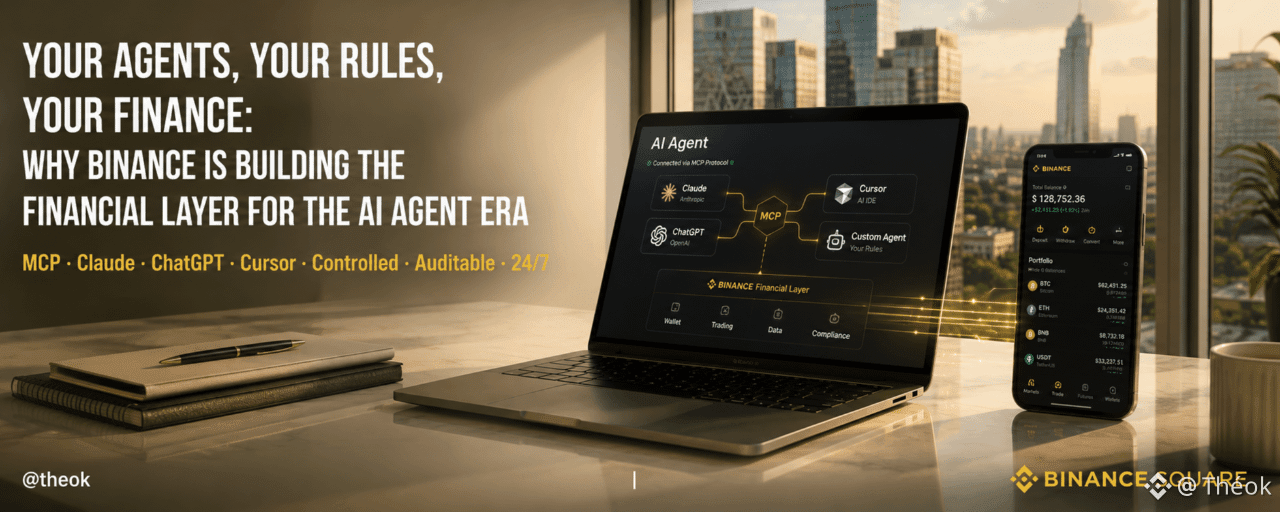
مقالة
وكلاؤك، قواعدك، تمويلك: لماذا تبني Binance طبقة التمويل لوكيل الذكاء الاصطناعيالذكاء الاصطناعي يتخطّى الخط الفاصل بين الإجابة عن الأسئلة واتخاذ الإجراءات، وعندما يعمل البرمجيات، يجب أن تصل إلى الأسواق بالطريقة التي يفعلها البشر. تُعد Binance Agent OS طبقة القدرات المالية لذلك اللحظة: إذ تتيح بيانات أسواق Binance ووظائفها عبر MCP، وهو المعيار المفتوح الذي اعتمدته بالفعل OpenAI وGoogle وMicrosoft وAWS، حتى يتمكّن وكيل داخل Claude أو Cursor أو ChatGPT من اكتشاف هذه الإمكانات واستخدامها ضمن محيطٍ مُتحكَّم فيه وقابل للتدقيق. وعندما يبدأ الذكاء الاصطناعي في العمل—لا الاكتفاء بالإجابة—لا بد من جعل التمويل آمنًا حتى يتمكّن من لمسه. وهذا ما تقوم به Binance Agent OS.
وكلاؤك، قواعدك، تمويلك: لماذا تبني Binance طبقة التمويل لوكيل الذكاء الاصطناعي
الذكاء الاصطناعي يتخطّى الخط الفاصل بين الإجابة عن الأسئلة واتخاذ الإجراءات، وعندما يعمل البرمجيات، يجب أن تصل إلى الأسواق بالطريقة التي يفعلها البشر. تُعد Binance Agent OS طبقة القدرات المالية لذلك اللحظة: إذ تتيح بيانات أسواق Binance ووظائفها عبر MCP، وهو المعيار المفتوح الذي اعتمدته بالفعل OpenAI وGoogle وMicrosoft وAWS، حتى يتمكّن وكيل داخل Claude أو Cursor أو ChatGPT من اكتشاف هذه الإمكانات واستخدامها ضمن محيطٍ مُتحكَّم فيه وقابل للتدقيق. وعندما يبدأ الذكاء الاصطناعي في العمل—لا الاكتفاء بالإجابة—لا بد من جعل التمويل آمنًا حتى يتمكّن من لمسه. وهذا ما تقوم به Binance Agent OS.
150
·
--
تمّ التحقق
مقالة
المستثمرون الجدد على المدى الطويل: كيف يبني شباب الأسواق الناشئة أول محافظهم الاستثمارية المؤشرةلم يعد تخصيص الثروة طويلة الأجل حكراً على الطبقة المتوسطة في الأسواق المتقدمة. ولأول مرة في التاريخ، يجري بناء جيل من الشباب في الأسواق الناشئة—من كينشاسا إلى جاكرتا، ومن لاغوس إلى ساو باولو—أول محفظة فهرسة طويلة الأجل له على السلسلة (On-chain)، على منصة Binance، عبر منتجات مؤشرات واسعة النطاق مثل SPY وQQQ وVOO. من أسواق لم تكن مُدعوّة قط إلى طاولة التفاوض.
🌍 الجيل الذي لم يُدعَ أبدًا إلى طاولة التفاوض
على مدى عقود، كان الاستثمار في المؤشرات طويلة الأجل غير متاح هيكلياً لمعظم أنحاء العالم.
المستثمرون الجدد على المدى الطويل: كيف يبني شباب الأسواق الناشئة أول محافظهم الاستثمارية المؤشرة
لم يعد تخصيص الثروة طويلة الأجل حكراً على الطبقة المتوسطة في الأسواق المتقدمة. ولأول مرة في التاريخ، يجري بناء جيل من الشباب في الأسواق الناشئة—من كينشاسا إلى جاكرتا، ومن لاغوس إلى ساو باولو—أول محفظة فهرسة طويلة الأجل له على السلسلة (On-chain)، على منصة Binance، عبر منتجات مؤشرات واسعة النطاق مثل SPY وQQQ وVOO. من أسواق لم تكن مُدعوّة قط إلى طاولة التفاوض.
🌍 الجيل الذي لم يُدعَ أبدًا إلى طاولة التفاوض
على مدى عقود، كان الاستثمار في المؤشرات طويلة الأجل غير متاح هيكلياً لمعظم أنحاء العالم.
🌍 الجيل الذي لم يُدعَ أبدًا إلى طاولة التفاوض
على مدى عقود، كان الاستثمار في المؤشرات طويلة الأجل غير متاح هيكلياً لمعظم أنحاء العالم.
1
2
505
·
--
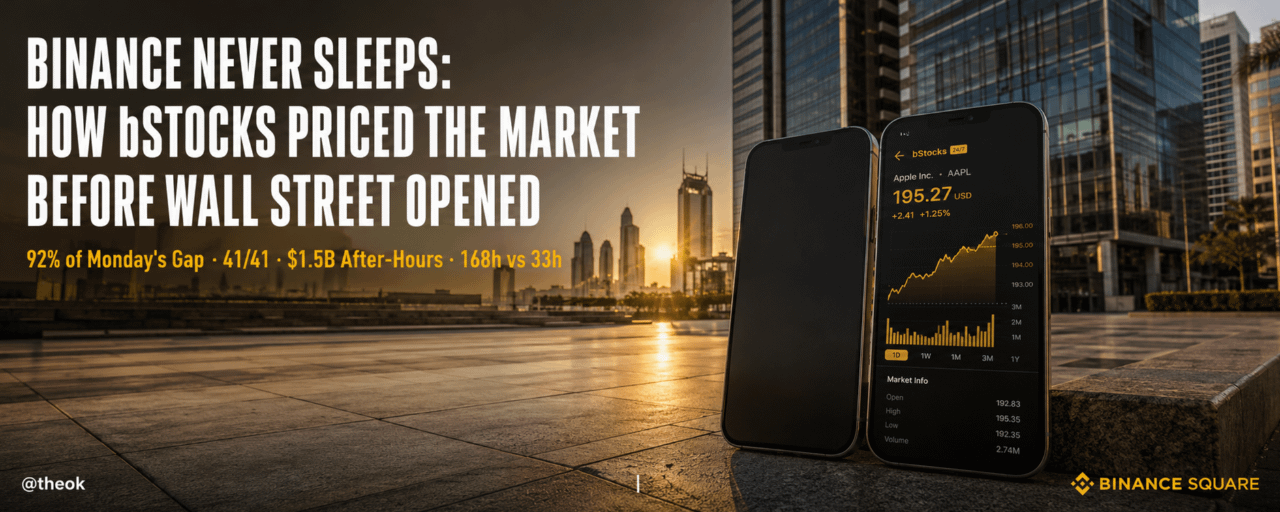
مقالة
Binance لا تنام أبدًا: كيف تسعّر bStocks السوق قبل افتتاح وول ستريتتغلق الأسواق التقليدية أبوابها لكن الأخبار لا تتوقف أبدًا. عندما تُعلن نفيديا بعد جرس الإغلاق، عندما تتراجع بيانات الاقتصاد الكلي في يوم السبت، عندما تتغير الجغرافيا السياسية بين عشية وضحاها—ينتظر المستثمرون التقليديون. مستخدمو بينانس لا ينتظرون. تُظهر بيانات هذا الأسبوع بالضبط أين يحدث اكتشاف السعر أولًا: على بينانس، قبل افتتاح وول ستريت، قبل أن تلحق هايبر لِيكِويد بالركب. الأسواق أصبحت تعمل في الوقت الحقيقي. بينانس هي المكان الذي يحدث فيه ذلك أولًا.
🕐 المشكلة في الأسواق التي تغلق أبوابها
تنتهي كل جلسة تداول بالطريقة نفسها بالنسبة للمستثمرين التقليديين: يرن الجرس، وتُطفأ الشاشات، وتستمر الحياة في الحركة.
Binance لا تنام أبدًا: كيف تسعّر bStocks السوق قبل افتتاح وول ستريت
تغلق الأسواق التقليدية أبوابها لكن الأخبار لا تتوقف أبدًا. عندما تُعلن نفيديا بعد جرس الإغلاق، عندما تتراجع بيانات الاقتصاد الكلي في يوم السبت، عندما تتغير الجغرافيا السياسية بين عشية وضحاها—ينتظر المستثمرون التقليديون. مستخدمو بينانس لا ينتظرون. تُظهر بيانات هذا الأسبوع بالضبط أين يحدث اكتشاف السعر أولًا: على بينانس، قبل افتتاح وول ستريت، قبل أن تلحق هايبر لِيكِويد بالركب. الأسواق أصبحت تعمل في الوقت الحقيقي. بينانس هي المكان الذي يحدث فيه ذلك أولًا.
🕐 المشكلة في الأسواق التي تغلق أبوابها
تنتهي كل جلسة تداول بالطريقة نفسها بالنسبة للمستثمرين التقليديين: يرن الجرس، وتُطفأ الشاشات، وتستمر الحياة في الحركة.
🕐 المشكلة في الأسواق التي تغلق أبوابها
تنتهي كل جلسة تداول بالطريقة نفسها بالنسبة للمستثمرين التقليديين: يرن الجرس، وتُطفأ الشاشات، وتستمر الحياة في الحركة.
1
281
·
--
مقالة
مُصمَّم ليدوم: ما الذي تقوله البيانات من طرف ثالث عن الثقة والشفافية واتجاهات المستخدمين في عالم العملات المشفرةأغلقت عدة بورصات أو خفّضت حجم عملياتها تحت وطأة تهدئة السوق والضغط التنظيمي. يطرح المجتمع سؤالًا واحدًا بسيطًا: "من التالي؟" بيانات طرف ثالث من شركات أبحاث مستقلة تُجيب بوضوح: تتّجه الحصّة السوقية إلى التركز حول البورصات التي تحقق أعلى الدرجات في الثقة والشفافية والاحتياطيات من الأصول. بلا تلاعب. فقط الأرقام وما الذي تعنيه.
📉 السوق أزال الضعفاء بالفعل — ماذا تُظهره التاريخ
منذ 2022، مرّ قطاع العملات المشفرة بعدة موجات إقصاء:
مُصمَّم ليدوم: ما الذي تقوله البيانات من طرف ثالث عن الثقة والشفافية واتجاهات المستخدمين في عالم العملات المشفرة
أغلقت عدة بورصات أو خفّضت حجم عملياتها تحت وطأة تهدئة السوق والضغط التنظيمي. يطرح المجتمع سؤالًا واحدًا بسيطًا: "من التالي؟" بيانات طرف ثالث من شركات أبحاث مستقلة تُجيب بوضوح: تتّجه الحصّة السوقية إلى التركز حول البورصات التي تحقق أعلى الدرجات في الثقة والشفافية والاحتياطيات من الأصول. بلا تلاعب. فقط الأرقام وما الذي تعنيه.
📉 السوق أزال الضعفاء بالفعل — ماذا تُظهره التاريخ
منذ 2022، مرّ قطاع العملات المشفرة بعدة موجات إقصاء:
📉 السوق أزال الضعفاء بالفعل — ماذا تُظهره التاريخ
منذ 2022، مرّ قطاع العملات المشفرة بعدة موجات إقصاء:
1
247
·
--
مقالة
بينما تكون وول ستريت نائمة: كيف تقوم الأسهم على السلسلة بتسعير أخبار عطلة نهاية الأسبوعتُغلق وول ستريت أبوابها يوم الجمعة، لكن الأخبار لا تتوقف أبدًا. نتائج الشركات، والبيانات الاقتصادية الكلية، والأحداث الجيوسياسية التي تَشهدها عطلة نهاية الأسبوع تترك المستثمرين التقليديين ينتظرون حتى يوم الاثنين. وفي هذه الأثناء، تقوم bStocks على منصة Binance بعملها بصمت: اكتشاف الأسعار على مدار 24 ساعة، 7 أيام في الأسبوع. ففي 7 عطلات نهاية أسبوع تم تحليلها، قامت bStocks بدمج، بالوسيط، 92% من فجوة يوم الاثنين، وللفجوات التي تتجاوز 3%، توقعت اتجاه الحركة بشكل صحيح 41 مرة من أصل 41. ينتقل اكتشاف الأسعار—وهو الوظيفة الأكثر أساسية في أي سوق—إلى السلسلة (on-chain).
بينما تكون وول ستريت نائمة: كيف تقوم الأسهم على السلسلة بتسعير أخبار عطلة نهاية الأسبوع
تُغلق وول ستريت أبوابها يوم الجمعة، لكن الأخبار لا تتوقف أبدًا. نتائج الشركات، والبيانات الاقتصادية الكلية، والأحداث الجيوسياسية التي تَشهدها عطلة نهاية الأسبوع تترك المستثمرين التقليديين ينتظرون حتى يوم الاثنين. وفي هذه الأثناء، تقوم bStocks على منصة Binance بعملها بصمت: اكتشاف الأسعار على مدار 24 ساعة، 7 أيام في الأسبوع. ففي 7 عطلات نهاية أسبوع تم تحليلها، قامت bStocks بدمج، بالوسيط، 92% من فجوة يوم الاثنين، وللفجوات التي تتجاوز 3%، توقعت اتجاه الحركة بشكل صحيح 41 مرة من أصل 41. ينتقل اكتشاف الأسعار—وهو الوظيفة الأكثر أساسية في أي سوق—إلى السلسلة (on-chain).
348
·
--
مقالة
كيف يحمي Binance أموال المستخدمين في أفريقيا في 2026؟يحمي Binance أموال المستخدمين في أفريقيا في 2026 عبر عدة طبقات من الأمان، بما في ذلك Proof of Reserves (إثبات الاحتياطيات)، وSecure Asset Fund for Users (SAFU) (صندوق الأصول الآمن للمستخدمين)، وأنظمة حفظ أصول مؤمّنة، ورقابة على المخاطر مدعومة بالذكاء الاصطناعي، وأدوات حماية على مستوى الحسابات.
🛡️ كيف يحمي Binance أموال المستخدمين؟
الأمان على Binance ليس مجرد ميزة بل هو بنية. كل مستخدم أفريقي، من كينشاسا إلى لاغوس، ومن نيروبي إلى أكرا، يستفيد من مستوى الحماية نفسه الذي يحصل عليه المتداولون المؤسسيون العالميون.
كيف يحمي Binance أموال المستخدمين في أفريقيا في 2026؟
يحمي Binance أموال المستخدمين في أفريقيا في 2026 عبر عدة طبقات من الأمان، بما في ذلك Proof of Reserves (إثبات الاحتياطيات)، وSecure Asset Fund for Users (SAFU) (صندوق الأصول الآمن للمستخدمين)، وأنظمة حفظ أصول مؤمّنة، ورقابة على المخاطر مدعومة بالذكاء الاصطناعي، وأدوات حماية على مستوى الحسابات.
🛡️ كيف يحمي Binance أموال المستخدمين؟
الأمان على Binance ليس مجرد ميزة بل هو بنية. كل مستخدم أفريقي، من كينشاسا إلى لاغوس، ومن نيروبي إلى أكرا، يستفيد من مستوى الحماية نفسه الذي يحصل عليه المتداولون المؤسسيون العالميون.
🛡️ كيف يحمي Binance أموال المستخدمين؟
الأمان على Binance ليس مجرد ميزة بل هو بنية. كل مستخدم أفريقي، من كينشاسا إلى لاغوس، ومن نيروبي إلى أكرا، يستفيد من مستوى الحماية نفسه الذي يحصل عليه المتداولون المؤسسيون العالميون.
4
536
سجّل الدخول لاستكشاف المزيد من المُحتوى
انضم إلى مُستخدمي العملات الرقمية حول العالم على Binance Square
⚡️ احصل على أحدث المعلومات المفيدة عن العملات الرقمية.
💬 موثوقة من قبل أكبر منصّة لتداول العملات الرقمية في العالم.
👍 اكتشف الرؤى الحقيقية من صنّاع المُحتوى الموثوقين.
البريد الإلكتروني / رقم الهاتف