
The Web3_Grinder
47 منشورات

The Web3_Grinder
مُتداول عرضي
5.5 سنوات
4 تتابع
9 المتابعون
30 إعجاب
منشورات
FROM DIGITAL CASH TO PRIVATE COMMUNICATION
Dash started with a simple goal: make digital payments faster, easier and more private.
Today, $DASH focuses heavily on payments, with features like InstantSend, usernames and CoinJoin for enhanced transaction privacy.
Liberdus takes a different route.
Instead of asking how we can improve digital money, it asks:
What if communication itself didn't need a centralized platform?
With Liberdus, you can create an account without a phone number or email, send encrypted messages, and use LIB for payments inside the same network.
And the infrastructure underneath it is different too.
Liberdus uses Shardus, a blockless and sharded architecture where transactions can be processed individually and in parallel across the network.
So I find the comparison interesting:
$DASH → making digital payments more private and usable.
$LIB → bringing privacy and decentralization into everyday communication.
Two projects.
Two different use cases.
But both are exploring the same bigger question:
Can we make everyday digital interactions less dependent on centralized intermediaries?
#DASH #Privacy
Dash started with a simple goal: make digital payments faster, easier and more private.
Today, $DASH focuses heavily on payments, with features like InstantSend, usernames and CoinJoin for enhanced transaction privacy.
Liberdus takes a different route.
Instead of asking how we can improve digital money, it asks:
What if communication itself didn't need a centralized platform?
With Liberdus, you can create an account without a phone number or email, send encrypted messages, and use LIB for payments inside the same network.
And the infrastructure underneath it is different too.
Liberdus uses Shardus, a blockless and sharded architecture where transactions can be processed individually and in parallel across the network.
So I find the comparison interesting:
$DASH → making digital payments more private and usable.
$LIB → bringing privacy and decentralization into everyday communication.
Two projects.
Two different use cases.
But both are exploring the same bigger question:
Can we make everyday digital interactions less dependent on centralized intermediaries?
#DASH #Privacy
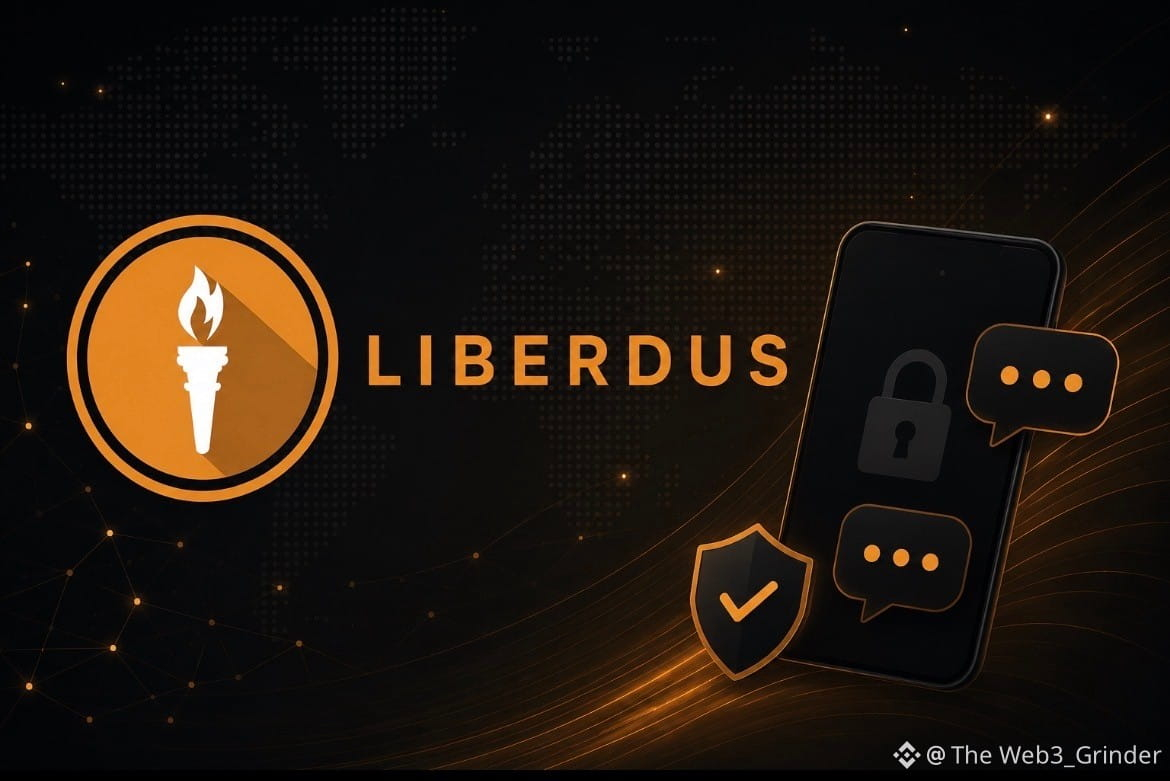
WHAT HAPPENS WHEN SOME NODES GO DOWN?
One thing I find interesting about decentralized networks is what happens when some of the computers keeping them alive simply stop working.
On the $XRP Ledger, validators don't all have to be perfect. The consensus protocol is designed to keep making progress even when some trusted validators are unavailable or misbehaving.
Liberdus takes this idea into a different type of network.
Its validators collectively keep the network online instead of relying on a central server. Liberdus uses Shardus, a blockless and sharded architecture where transactions can be processed individually and in parallel across the network.
And that's where it gets interesting.
With a centralized service:
One infrastructure = one major point of failure.
With a distributed network:
Many independent nodes = the network can keep operating when some participants have problems.
That's important for a blockchain.
But it's arguably even more interesting for a messaging network, where people expect the service to be available whenever they need it.
So while $XRP and Liberdus solve completely different problems, their validator architectures highlight the same challenge:
How do you keep a decentralized network running when individual participants fail?
That's one of the reasons I'm interested in what Liberdus is doing with Shardus.
One thing I find interesting about decentralized networks is what happens when some of the computers keeping them alive simply stop working.
On the $XRP Ledger, validators don't all have to be perfect. The consensus protocol is designed to keep making progress even when some trusted validators are unavailable or misbehaving.
Liberdus takes this idea into a different type of network.
Its validators collectively keep the network online instead of relying on a central server. Liberdus uses Shardus, a blockless and sharded architecture where transactions can be processed individually and in parallel across the network.
And that's where it gets interesting.
With a centralized service:
One infrastructure = one major point of failure.
With a distributed network:
Many independent nodes = the network can keep operating when some participants have problems.
That's important for a blockchain.
But it's arguably even more interesting for a messaging network, where people expect the service to be available whenever they need it.
So while $XRP and Liberdus solve completely different problems, their validator architectures highlight the same challenge:
How do you keep a decentralized network running when individual participants fail?
That's one of the reasons I'm interested in what Liberdus is doing with Shardus.
SHARDUS EXPLAINED SIMPLY
If you've heard about Liberdus but never really understood what Shardus does, here's the simple version.
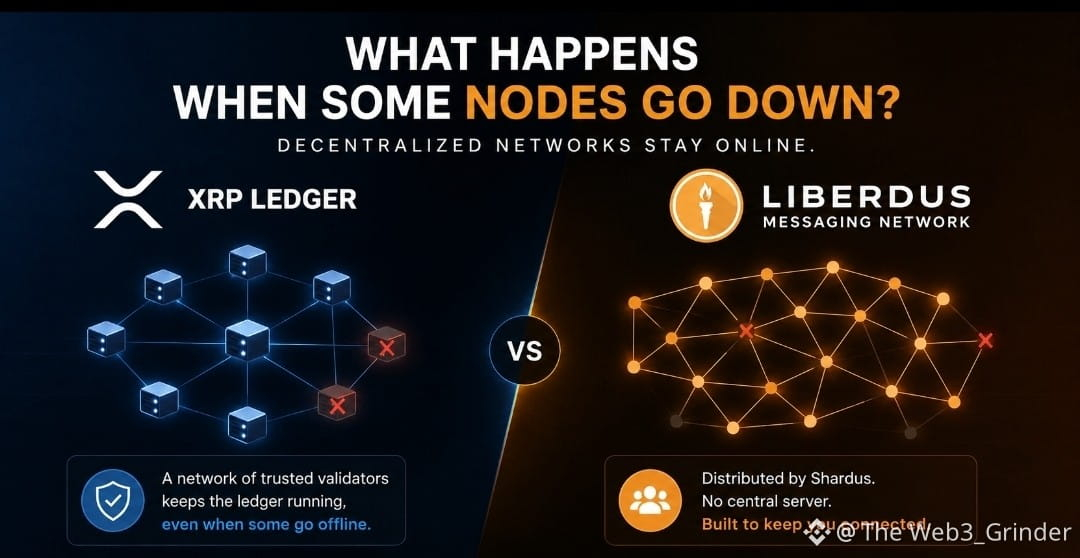
Zcash ($ZEC ) is focused on privacy for financial transactions. Liberdus is trying to bring that privacy mindset to communication.
But instead of putting the whole messaging network on one company's servers, Liberdus uses Shardus, a distributed network of validators.
Think about WhatsApp. You send a message, but the infrastructure behind it is still operated by a company. If that infrastructure has a problem, everyone depending on it feels the impact.
With Shardus, the network is split across multiple nodes. Sharding allows different parts of the network to handle different workloads instead of making one central system do everything.
That's the part I find interesting.
Zcash protects financial privacy.
Liberdus uses Shardus to build decentralized communication infrastructure.
Two different approaches, but both start from the same question:
How much control should we really give to a single intermediary?
#zcash
If you've heard about Liberdus but never really understood what Shardus does, here's the simple version.
Zcash ($ZEC ) is focused on privacy for financial transactions. Liberdus is trying to bring that privacy mindset to communication.
But instead of putting the whole messaging network on one company's servers, Liberdus uses Shardus, a distributed network of validators.
Think about WhatsApp. You send a message, but the infrastructure behind it is still operated by a company. If that infrastructure has a problem, everyone depending on it feels the impact.
With Shardus, the network is split across multiple nodes. Sharding allows different parts of the network to handle different workloads instead of making one central system do everything.
That's the part I find interesting.
Zcash protects financial privacy.
Liberdus uses Shardus to build decentralized communication infrastructure.
Two different approaches, but both start from the same question:
How much control should we really give to a single intermediary?
#zcash
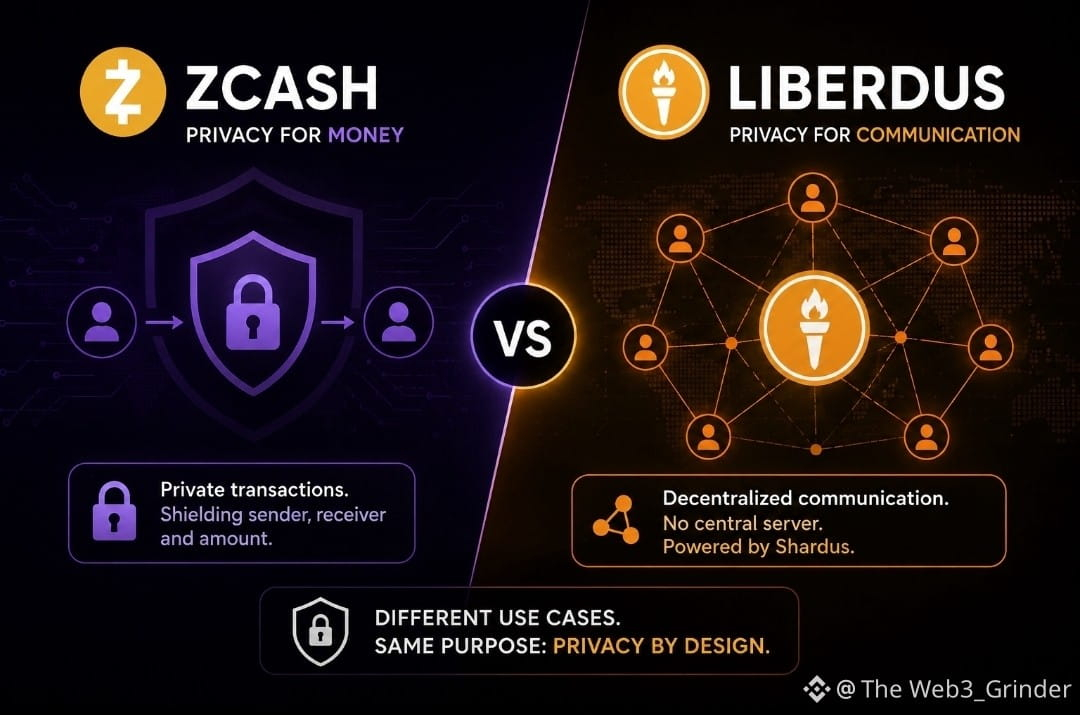
WHAT IF COMMUNICATION WAS DECENTRALIZED TOO?
@Ethereum changed the conversation around what an application could be.
Instead of an app’s backend running entirely on a company’s servers, decentralized applications can run their logic on a public, decentralized network.
Think about a simple example:
A traditional app:
Company servers → company controls the infrastructure → users depend on the company.
A decentralized app:
Distributed network → no single server to down → users interact with infrastructure that isn’t controlled by one company.
Ethereum brought this model to applications.
But what about communication?
Most messaging platforms still depend on centralized infrastructure. If the company goes offline, changes its rules, or controls the servers carrying your messages, users ultimately depend on that central intermediary.
Liberdus takes the decentralization idea into messaging.
Its network uses distributed validator infrastructure rather than relying on a single centralized messaging server, while users can create accounts without a phone number or email.
That’s an important shift:
$ETH helped show that applications don’t have to depend on one centralized infrastructure.
Liberdus is exploring the same question for private communication.
Different technology.
Different use case.
Same idea: decentralization shouldn’t stop at money.
#ETH
@Ethereum changed the conversation around what an application could be.
Instead of an app’s backend running entirely on a company’s servers, decentralized applications can run their logic on a public, decentralized network.
Think about a simple example:
A traditional app:
Company servers → company controls the infrastructure → users depend on the company.
A decentralized app:
Distributed network → no single server to down → users interact with infrastructure that isn’t controlled by one company.
Ethereum brought this model to applications.
But what about communication?
Most messaging platforms still depend on centralized infrastructure. If the company goes offline, changes its rules, or controls the servers carrying your messages, users ultimately depend on that central intermediary.
Liberdus takes the decentralization idea into messaging.
Its network uses distributed validator infrastructure rather than relying on a single centralized messaging server, while users can create accounts without a phone number or email.
That’s an important shift:
$ETH helped show that applications don’t have to depend on one centralized infrastructure.
Liberdus is exploring the same question for private communication.
Different technology.
Different use case.
Same idea: decentralization shouldn’t stop at money.
#ETH
DECENTRALIZATION ISN’T JUST ABOUT MONEY
$XRP and the XRP Ledger are based on a simple principle: there is no need for a single institution to be involved in every payment.
On the #XRPL , transactions are processed by a network of validators who reach a consensus, rather than relying on a central authority. A direct payment in XRP can be made from one account to another without going through a traditional financial intermediary.
Now let’s apply this same principle to communication.
Today, when you send a message via a traditional messaging app, you generally rely on a company to manage the infrastructure that connects you to the person you’re messaging.
If that infrastructure goes down, your messages are also blocked.
If the company changes its terms of service, you’re forced to accept them.
If the company controls the servers, it ultimately controls the infrastructure you depend on.
Liberdus takes a different approach.
Its messaging network operates through distributed validation nodes rather than centralized servers, and the network is designed to be fault-tolerant and censorship-resistant.
And this isn’t just about the infrastructure.
You can create a Liberdus account without a phone number or email address, and communications are end-to-end encrypted.
So think about the difference:
$XRP : transferring value without going through a traditional financial intermediary.
LIB: communicating without relying on a centralized messaging infrastructure.
Different problems.The same philosophy of decentralization.
Maybe decentralization was never supposed to be just about money.
$XRP and the XRP Ledger are based on a simple principle: there is no need for a single institution to be involved in every payment.
On the #XRPL , transactions are processed by a network of validators who reach a consensus, rather than relying on a central authority. A direct payment in XRP can be made from one account to another without going through a traditional financial intermediary.
Now let’s apply this same principle to communication.
Today, when you send a message via a traditional messaging app, you generally rely on a company to manage the infrastructure that connects you to the person you’re messaging.
If that infrastructure goes down, your messages are also blocked.
If the company changes its terms of service, you’re forced to accept them.
If the company controls the servers, it ultimately controls the infrastructure you depend on.
Liberdus takes a different approach.
Its messaging network operates through distributed validation nodes rather than centralized servers, and the network is designed to be fault-tolerant and censorship-resistant.
And this isn’t just about the infrastructure.
You can create a Liberdus account without a phone number or email address, and communications are end-to-end encrypted.
So think about the difference:
$XRP : transferring value without going through a traditional financial intermediary.
LIB: communicating without relying on a centralized messaging infrastructure.
Different problems.The same philosophy of decentralization.
Maybe decentralization was never supposed to be just about money.
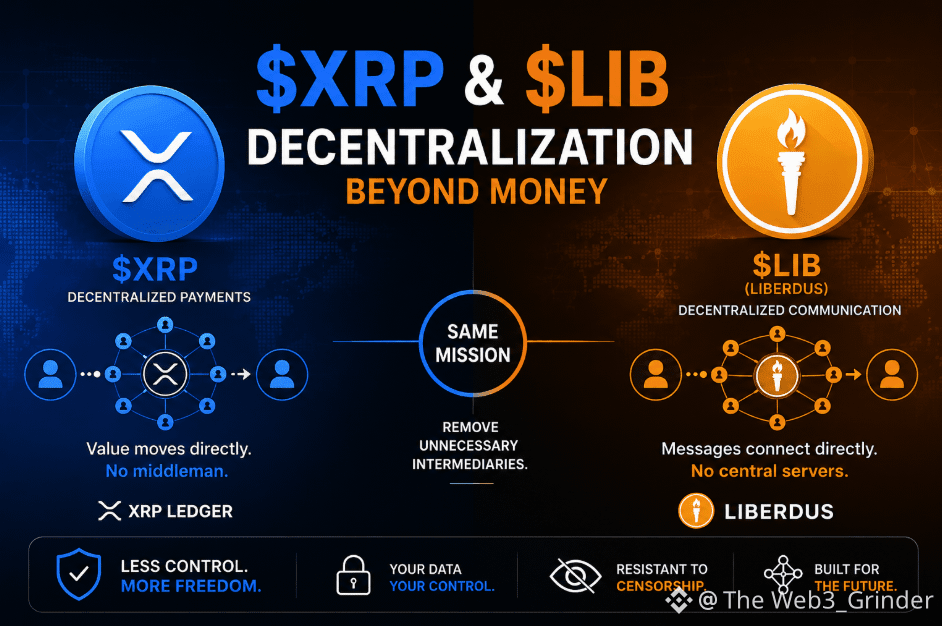
Solana has built its reputation around performance: high throughput, low latency and a network designed to process transactions quickly.
But performance and decentralization measure two different things.
A blockchain can be extremely efficient while still raising questions about how control is distributed across its validator set, stake, infrastructure and software clients.
Solana itself tracks decentralization through metrics such as the Nakamoto Coefficient, which measures the minimum number of independent entities that could collectively disrupt the network.
And that’s the important distinction:
Performance asks:
“How much can the network process?”
Decentralization asks:
“How widely is control distributed?”
#Liberdus approaches this from a different architectural direction.
Its network operates without centralized servers, relying instead on a distributed set of validator nodes powered by the Shardus protocol. The architecture is designed around scalability, fault tolerance and censorship resistance.
This isn’t about saying “ $SOL is centralized.”
It’s about recognizing that:
Fast ≠ Decentralized.
Both matter when you’re building infrastructure people are supposed to trust.
#Solana
But performance and decentralization measure two different things.
A blockchain can be extremely efficient while still raising questions about how control is distributed across its validator set, stake, infrastructure and software clients.
Solana itself tracks decentralization through metrics such as the Nakamoto Coefficient, which measures the minimum number of independent entities that could collectively disrupt the network.
And that’s the important distinction:
Performance asks:
“How much can the network process?”
Decentralization asks:
“How widely is control distributed?”
#Liberdus approaches this from a different architectural direction.
Its network operates without centralized servers, relying instead on a distributed set of validator nodes powered by the Shardus protocol. The architecture is designed around scalability, fault tolerance and censorship resistance.
This isn’t about saying “ $SOL is centralized.”
It’s about recognizing that:
Fast ≠ Decentralized.
Both matter when you’re building infrastructure people are supposed to trust.
#Solana
🔥 X could be taking creator payments deeper into crypto.
The platform is reportedly considering $USDC and other stablecoins for creator payouts as it winds down its Revenue Sharing program and moves creators to Original Content Rewards.
If stablecoins become a standard payout option, creators could get paid faster and with fewer traditional payment rails involved.
X has been pushing toward becoming an everything app. Could crypto payouts be the next major piece? 👀
#USDC #stablecoin
The platform is reportedly considering $USDC and other stablecoins for creator payouts as it winds down its Revenue Sharing program and moves creators to Original Content Rewards.
If stablecoins become a standard payout option, creators could get paid faster and with fewer traditional payment rails involved.
X has been pushing toward becoming an everything app. Could crypto payouts be the next major piece? 👀
#USDC #stablecoin

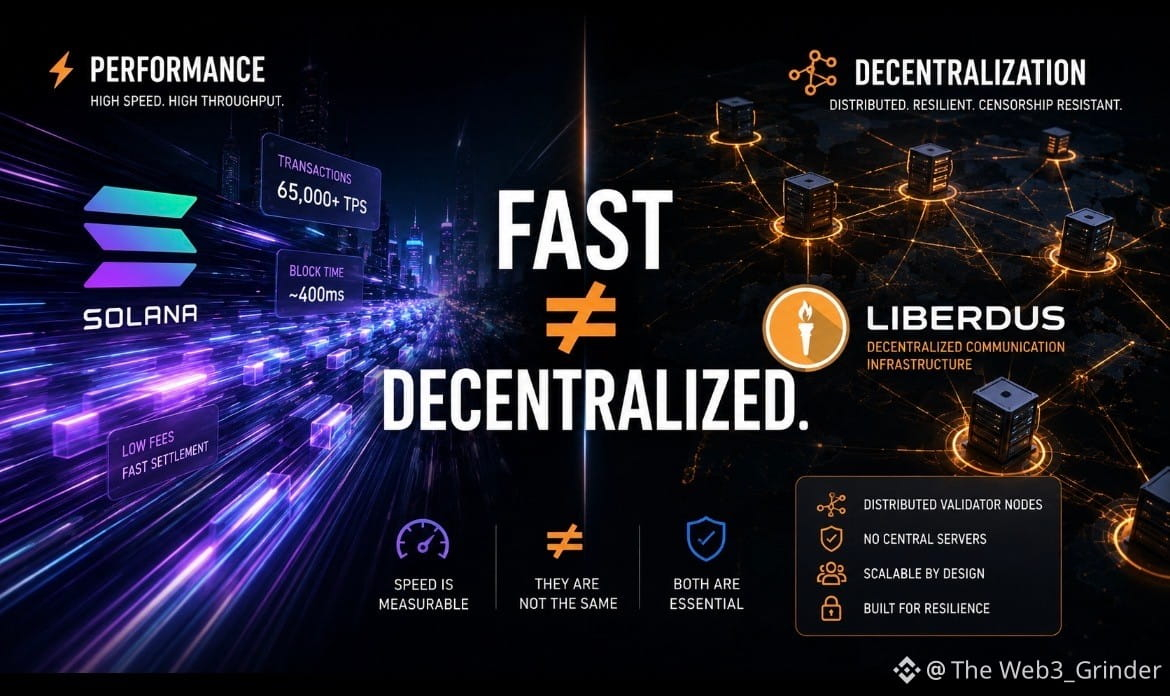
DECENTRALIZATION DOESN'T STOP AT THE BLOCKCHAIN
A blockchain doesn't live in isolation.
Imagine a smart contract that needs the current price of #bitcoin .
It needs reliable information from outside the blockchain.
That's where Chainlink ($LINK ) comes in.
Its decentralized oracle network helps blockchain applications access external data without relying on a single source.
And this highlights an important point:
Decentralization isn't only about the blockchain. It's about the infrastructure surrounding it.
Blockchains need data.
People need communication.
And that's where Liberdus takes a similar architectural approach.
Instead of relying on a single centralized server, Liberdus uses a distributed network powered by the Shardus framework.
Different technologies. Different problems.
Same principle: reduce dependence on a single point of control.
#Chainlink #LINK
A blockchain doesn't live in isolation.
Imagine a smart contract that needs the current price of #bitcoin .
It needs reliable information from outside the blockchain.
That's where Chainlink ($LINK ) comes in.
Its decentralized oracle network helps blockchain applications access external data without relying on a single source.
And this highlights an important point:
Decentralization isn't only about the blockchain. It's about the infrastructure surrounding it.
Blockchains need data.
People need communication.
And that's where Liberdus takes a similar architectural approach.
Instead of relying on a single centralized server, Liberdus uses a distributed network powered by the Shardus framework.
Different technologies. Different problems.
Same principle: reduce dependence on a single point of control.
#Chainlink #LINK
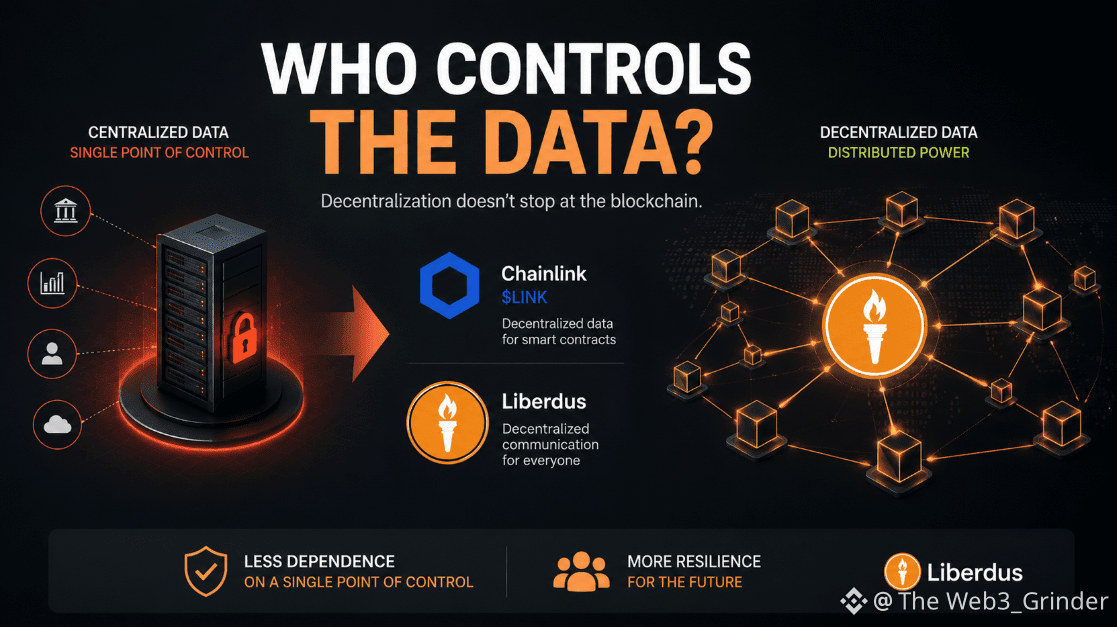
DECENTRALIZATION IS A DESIGN CHOICE
Decentralization doesn't happen just because you call a network decentralized.
It has to be built into the way the network works.
Take Cardano ( $ADA )
Instead of having one company decide who validates transactions, Cardano uses stake pools through its Ouroboros proof-of-stake protocol.
ADA holders can delegate their stake to different pools, while pool operators run the infrastructure that produces and validates blocks.
Cardano also uses a saturation mechanism that discourages too much stake from concentrating in a single pool, encouraging delegation across multiple pools.
That's the important part:
Decentralization isn't a feature you switch on.
It's a design choice.
And that's also why the architecture behind Liberdus matters.
Its network is designed around distributed validators rather than one central server.
Different networks. Different architectures.
But the same question remains:
How much control should one entity have?
#ADA #Cardano
Decentralization doesn't happen just because you call a network decentralized.
It has to be built into the way the network works.
Take Cardano ( $ADA )
Instead of having one company decide who validates transactions, Cardano uses stake pools through its Ouroboros proof-of-stake protocol.
ADA holders can delegate their stake to different pools, while pool operators run the infrastructure that produces and validates blocks.
Cardano also uses a saturation mechanism that discourages too much stake from concentrating in a single pool, encouraging delegation across multiple pools.
That's the important part:
Decentralization isn't a feature you switch on.
It's a design choice.
And that's also why the architecture behind Liberdus matters.
Its network is designed around distributed validators rather than one central server.
Different networks. Different architectures.
But the same question remains:
How much control should one entity have?
#ADA #Cardano
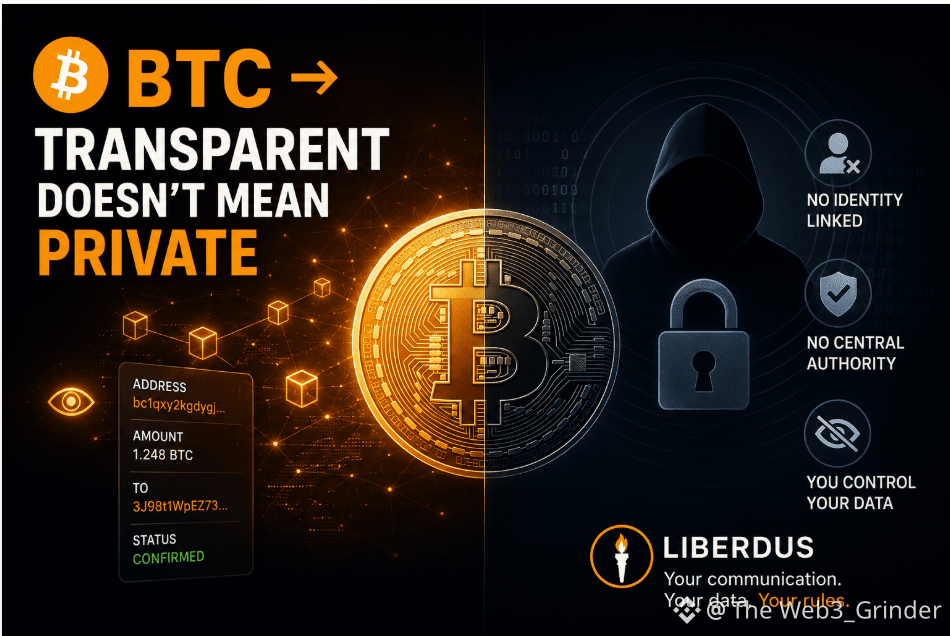
$BTC → TRANSPARENT DOESN'T MEAN PRIVATE
Bitcoin's transparency is one of its greatest strengths.
Every transaction is public, traceable and permanently stored on the network.
Your real name isn't written on the blockchain.
But if an address is ever linked to your identity, its transaction history can reveal a lot about your financial activity.
That's why Bitcoin is better described as pseudonymous, not anonymous.
Financial sovereignty ≠ financial privacy.
And that's a lesson that goes beyond crypto.
#Liberdus applies the same privacy-first thinking to communication by allowing users to create accounts without phone numbers, emails or personal identifiers.
Transparency can protect a network.
Privacy protects the people using it.
Bitcoin's transparency is one of its greatest strengths.
Every transaction is public, traceable and permanently stored on the network.
Your real name isn't written on the blockchain.
But if an address is ever linked to your identity, its transaction history can reveal a lot about your financial activity.
That's why Bitcoin is better described as pseudonymous, not anonymous.
Financial sovereignty ≠ financial privacy.
And that's a lesson that goes beyond crypto.
#Liberdus applies the same privacy-first thinking to communication by allowing users to create accounts without phone numbers, emails or personal identifiers.
Transparency can protect a network.
Privacy protects the people using it.
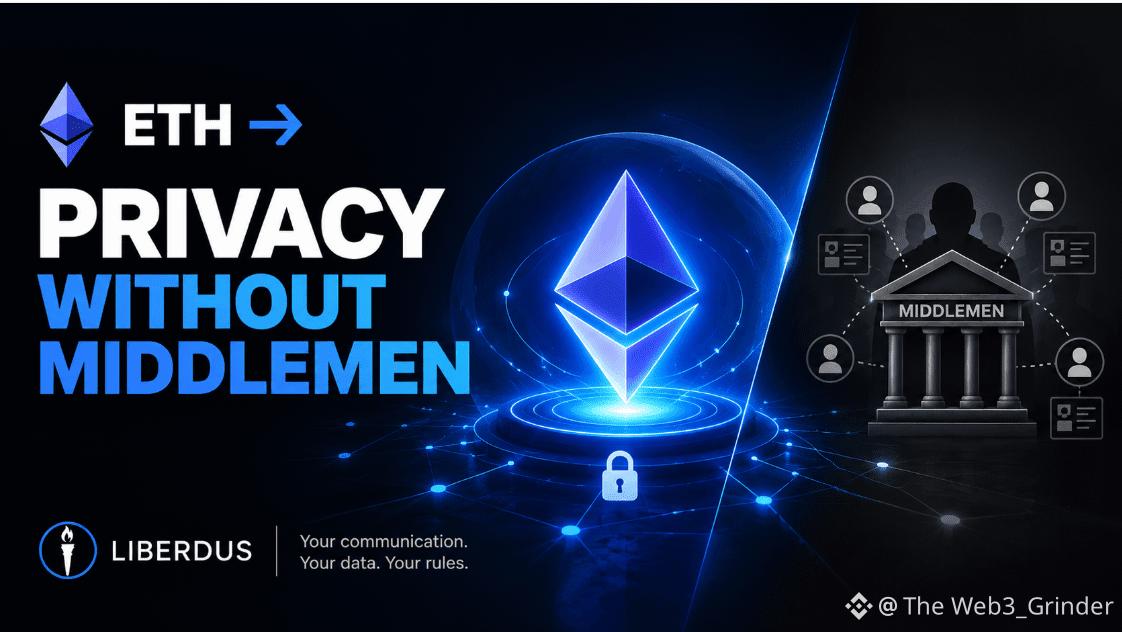
$ETH : PRIVACY WITHOUT MIDDLEMEN
Ethereum is exploring something important:
privacy directly at the protocol level.
One proposal, EIP-8182, would introduce a protocol-managed shielded pool for private ETH and ERC-20 transfers as part of the proposed Hegotá upgrade. It is still a proposal, not a feature already deployed.
That's the interesting part.
Instead of relying entirely on separate privacy services, privacy could become part of the underlying infrastructure.
#Liberdus follows a similar philosophy for communication: its network runs through distributed validator nodes rather than a centralized messaging server.
Privacy works best when it's built in not added later.
#ETH #Ethereum
Ethereum is exploring something important:
privacy directly at the protocol level.
One proposal, EIP-8182, would introduce a protocol-managed shielded pool for private ETH and ERC-20 transfers as part of the proposed Hegotá upgrade. It is still a proposal, not a feature already deployed.
That's the interesting part.
Instead of relying entirely on separate privacy services, privacy could become part of the underlying infrastructure.
#Liberdus follows a similar philosophy for communication: its network runs through distributed validator nodes rather than a centralized messaging server.
Privacy works best when it's built in not added later.
#ETH #Ethereum
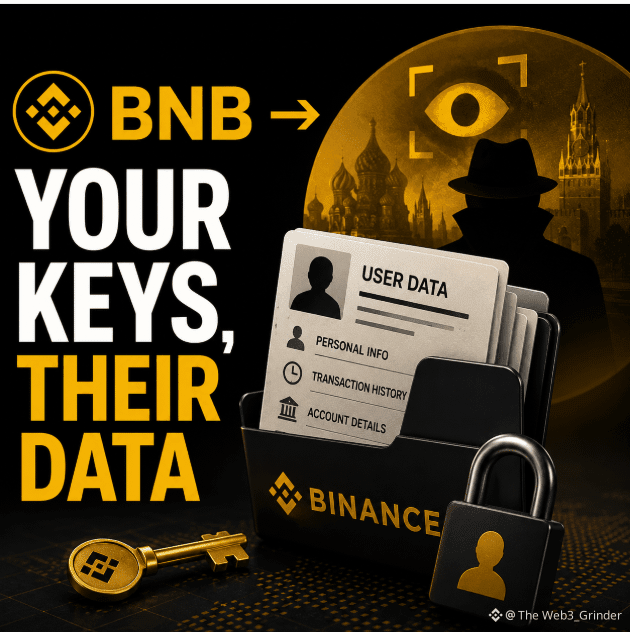
YOUR KEYS, THEIR DATA
Crypto gives you control over your assets.
But a centralized exchange can still hold the information connecting those assets to your identity.
Reuters reports that Binance provided Russian authorities with a customer's personal data and transaction history, which was later used in a criminal case. Binance says it responds to lawful requests.
That's the uncomfortable trade-off:
You can control your crypto without controlling the records surrounding it.
This is why privacy needs to start with data minimization.
#Liberdus takes that approach to communication: accounts can be created without a phone number, email or other personal identifier.
Control your assets.
Control your identity too.
#DollarHits3MonthLow 👍
Crypto gives you control over your assets.
But a centralized exchange can still hold the information connecting those assets to your identity.
Reuters reports that Binance provided Russian authorities with a customer's personal data and transaction history, which was later used in a criminal case. Binance says it responds to lawful requests.
That's the uncomfortable trade-off:
You can control your crypto without controlling the records surrounding it.
This is why privacy needs to start with data minimization.
#Liberdus takes that approach to communication: accounts can be created without a phone number, email or other personal identifier.
Control your assets.
Control your identity too.
#DollarHits3MonthLow 👍
Bitcoin has come a long way. 👀
On this day in 2017, $BTC broke above $4,400 for the first time.
Fast forward to exactly one year ago, and Bitcoin was breaking through $124,000.
From $4.4K to $124K the evolution of Bitcoin's price in just a few years is hard to ignore.
Where do you think the next historic milestone will be?
On this day in 2017, $BTC broke above $4,400 for the first time.
Fast forward to exactly one year ago, and Bitcoin was breaking through $124,000.
From $4.4K to $124K the evolution of Bitcoin's price in just a few years is hard to ignore.
Where do you think the next historic milestone will be?
YOUR TAX DATA ISN’T JUST DATA.
France's DGFiP confirmed an unauthorized access in late June after an identity impersonation.
Data concerning individuals and businesses was accessed and extracted. The investigation is still ongoing.
Attackers claim 678,438 records were taken, including names, addresses, tax IDs and financial information but the DGFiP has not confirmed these figures.
If even part of that data is real, this isn't just about spam.
Identity + address + financial information = a powerful tool for phishing, social engineering and identity theft.
France's DGFiP confirmed an unauthorized access in late June after an identity impersonation.
Data concerning individuals and businesses was accessed and extracted. The investigation is still ongoing.
Attackers claim 678,438 records were taken, including names, addresses, tax IDs and financial information but the DGFiP has not confirmed these figures.
If even part of that data is real, this isn't just about spam.
Identity + address + financial information = a powerful tool for phishing, social engineering and identity theft.

A HARDWARE WALLET CAN PROTECT YOUR CRYPTO. BUT WHO PROTECTS YOU?
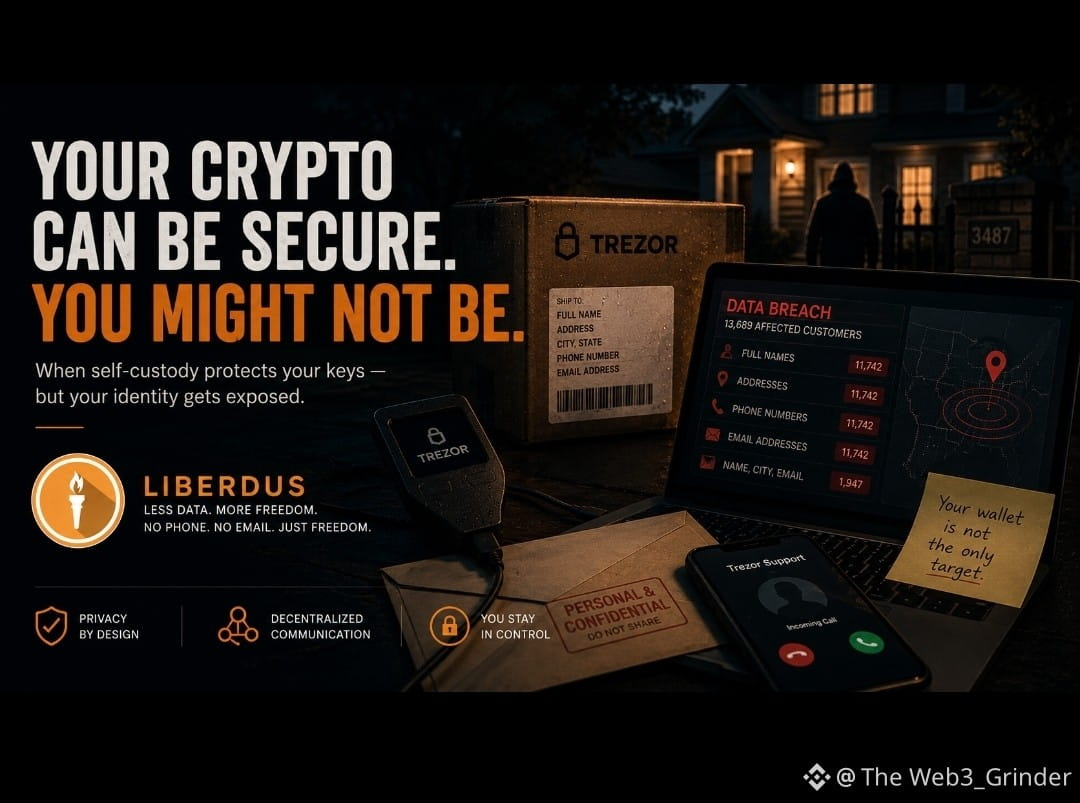
#Trezor has confirmed a breach at a shipping provider affecting 13,689 customers.
For 11,742 customers, the leaked information included their name, shipping address, phone number and email. Another 1,947 had their name, city and email exposed.
The important distinction: Trezor says the wallets, systems and private keys were not compromised.
But imagine an attacker having:
Name + home address + phone + email + proof that you bought a hardware wallet.
That's enough to turn a generic phishing attempt into a highly personalized attack.
And for someone holding significant crypto, knowing where that person lives can create a physical-security concern too.
This is why privacy needs to be considered beyond the wallet itself.
Liberdus approaches communication differently: users can create accounts without a phone number, email or other personal identifier.
Less personal data required means less personal data waiting to become a target.
Self-custody protects your assets.
Privacy helps protect the person behind them.
#Trezor has confirmed a breach at a shipping provider affecting 13,689 customers.
For 11,742 customers, the leaked information included their name, shipping address, phone number and email. Another 1,947 had their name, city and email exposed.
The important distinction: Trezor says the wallets, systems and private keys were not compromised.
But imagine an attacker having:
Name + home address + phone + email + proof that you bought a hardware wallet.
That's enough to turn a generic phishing attempt into a highly personalized attack.
And for someone holding significant crypto, knowing where that person lives can create a physical-security concern too.
This is why privacy needs to be considered beyond the wallet itself.
Liberdus approaches communication differently: users can create accounts without a phone number, email or other personal identifier.
Less personal data required means less personal data waiting to become a target.
Self-custody protects your assets.
Privacy helps protect the person behind them.
WHY SHOULD MONEY NEED A MIDDLEMAN?
$BTC challenged the idea that moving value requires a trusted financial intermediary.
Its answer was simple: a distributed network instead of a central authority.
So here's the next question:
What about communication?
Today, most messaging apps still rely on centralized infrastructure.
#Liberdus takes the decentralization principle further.
Its network is built on independent validator nodes, with validators rotating between active and standby roles instead of relying on one central server. Its Shardus-based architecture distributes processing across the network.
And this isn't just an architectural idea.
Liberdus already provides E2E encrypted messaging, phone-number-free accounts, and a LIB toll mechanism for unsolicited messages.
Bitcoin asked:
Why should money depend on a middleman?
Liberdus asks:
Why should private communication depend on one?
$BTC challenged the idea that moving value requires a trusted financial intermediary.
Its answer was simple: a distributed network instead of a central authority.
So here's the next question:
What about communication?
Today, most messaging apps still rely on centralized infrastructure.
#Liberdus takes the decentralization principle further.
Its network is built on independent validator nodes, with validators rotating between active and standby roles instead of relying on one central server. Its Shardus-based architecture distributes processing across the network.
And this isn't just an architectural idea.
Liberdus already provides E2E encrypted messaging, phone-number-free accounts, and a LIB toll mechanism for unsolicited messages.
Bitcoin asked:
Why should money depend on a middleman?
Liberdus asks:
Why should private communication depend on one?

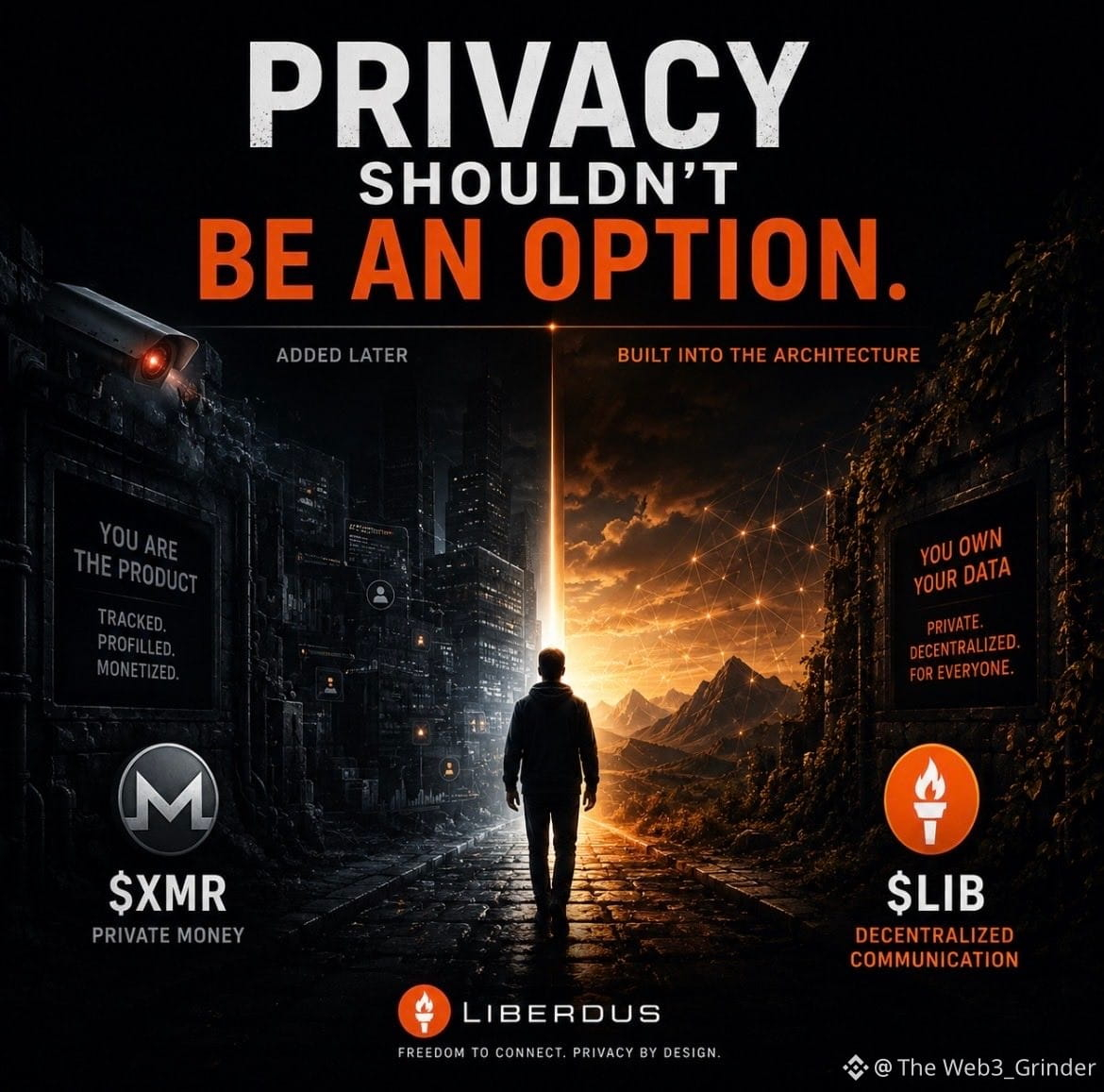
PRIVACY SHOULDN’T BE AN OPTION.
Privacy becomes much more powerful when it’s built into the system instead of offered as an optional feature.
That’s one reason Monero ($XMR ) stands out.
Privacy isn’t a setting you have to remember to activate.
It’s built into the protocol through mechanisms such as ring signatures, RingCT and stealth addresses.
Privacy is part of the architecture.
Now take that idea beyond payments.
What would privacy by design look like for communication?
That’s where liberdus gets interesting.
It combines end-to-end and quantum-resistant encryption with a decentralized network of validators, while allowing users to create accounts without requiring a phone number or email.
Different use cases.
Same philosophy:
Don’t add privacy as an afterthought.
Build it into the architecture.
$XMR → privacy-focused money.
LIB → decentralized communication.
Privacy becomes much more powerful when it’s built into the system instead of offered as an optional feature.
That’s one reason Monero ($XMR ) stands out.
Privacy isn’t a setting you have to remember to activate.
It’s built into the protocol through mechanisms such as ring signatures, RingCT and stealth addresses.
Privacy is part of the architecture.
Now take that idea beyond payments.
What would privacy by design look like for communication?
That’s where liberdus gets interesting.
It combines end-to-end and quantum-resistant encryption with a decentralized network of validators, while allowing users to create accounts without requiring a phone number or email.
Different use cases.
Same philosophy:
Don’t add privacy as an afterthought.
Build it into the architecture.
$XMR → privacy-focused money.
LIB → decentralized communication.
ENCRYPTED ≠ PRIVATE
We often hear:
“Don't worry, the messages are encrypted.”
That's important. But it's not the whole privacy story.
Imagine messaging your doctor every Tuesday.
Nobody can read your messages, but someone could still know:
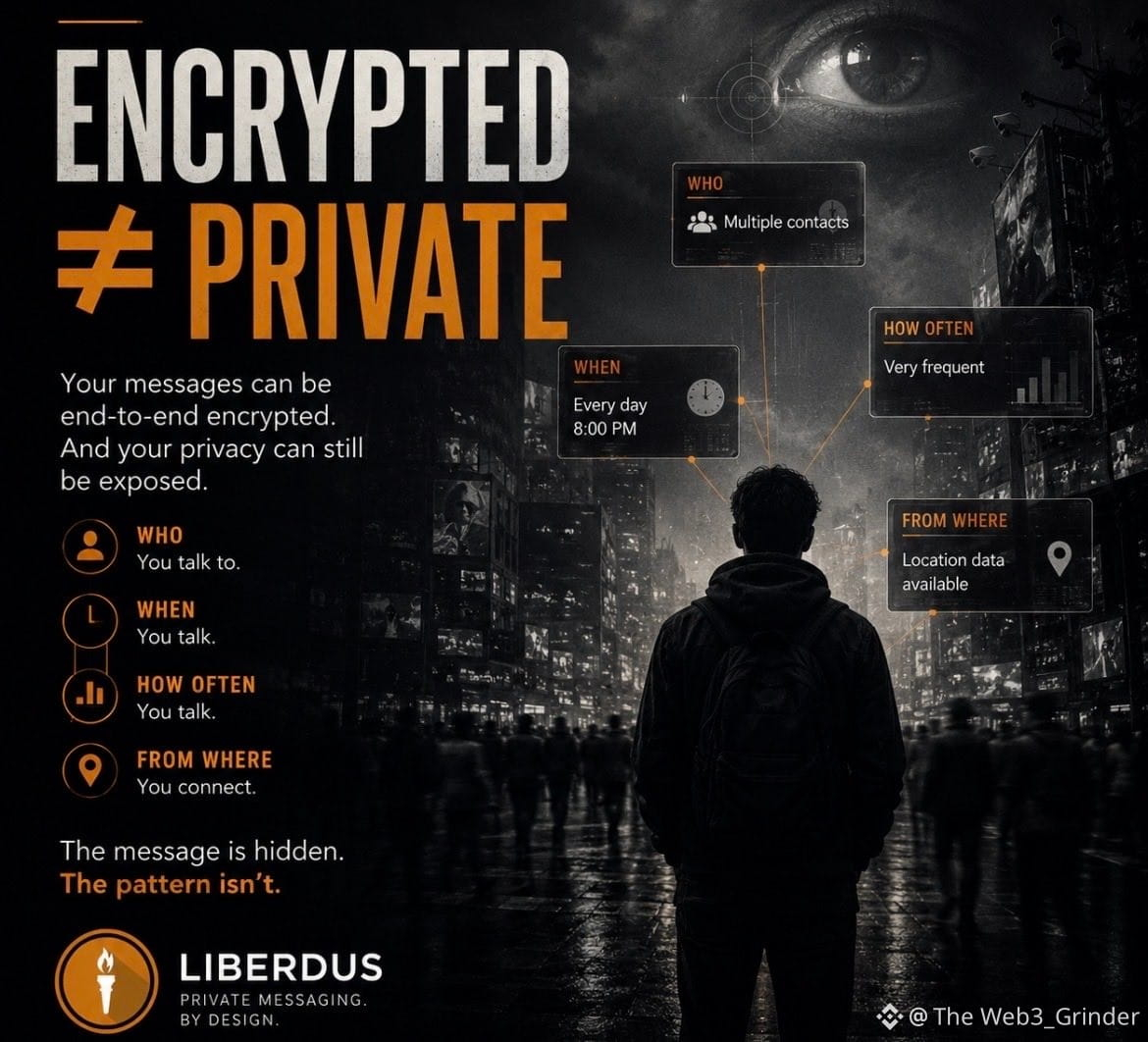
Who → When → How often → From where
Do that for months and the pattern itself starts revealing information about your life.
That's the difference between content privacy and metadata privacy.
The next generation of private messaging shouldn't only ask:
“Can anyone read this message?”
It should also ask:
“What can they learn without reading it?”
That's where approaches like #liberdus become interesting: reducing dependence on centralized infrastructure and unnecessary personal identifiers.
The message can be encrypted.
The pattern shouldn't become your digital fingerprint.
We often hear:
“Don't worry, the messages are encrypted.”
That's important. But it's not the whole privacy story.
Imagine messaging your doctor every Tuesday.
Nobody can read your messages, but someone could still know:
Who → When → How often → From where
Do that for months and the pattern itself starts revealing information about your life.
That's the difference between content privacy and metadata privacy.
The next generation of private messaging shouldn't only ask:
“Can anyone read this message?”
It should also ask:
“What can they learn without reading it?”
That's where approaches like #liberdus become interesting: reducing dependence on centralized infrastructure and unnecessary personal identifiers.
The message can be encrypted.
The pattern shouldn't become your digital fingerprint.
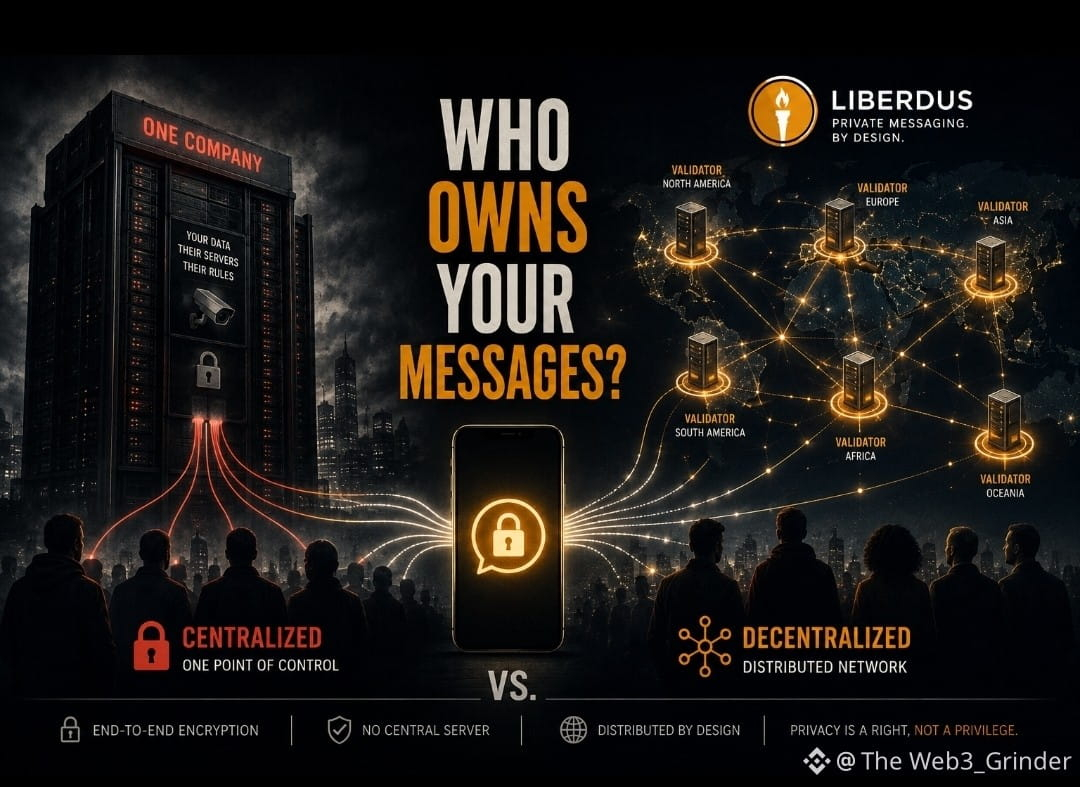
WHO OWNS YOUR MESSAGES?
When you use a centralized messenger, you don't just trust the encryption.
You trust the company running the infrastructure. You trust its policies, its jurisdiction, and its ability to keep the service available.
Even if your messages are end-to-end encrypted, you're still depending on a centralized system to deliver them.
#bitcoin showed us that money could operate without a central authority.
So why shouldn't communication explore the same idea?
#Liberdus takes a decentralized approach to messaging, using a distributed network of validators instead of relying on a single centralized messaging server.
The important part isn't simply saying “decentralized.”
It's changing where the power sits.
Instead of:
You → Company → Infrastructure
the model becomes:
You → Distributed Network
Decentralization doesn't magically solve every privacy problem. But it can reduce the amount of trust and control concentrated in one organization.
And that's one of the ideas that makes Web3 interesting to me.
Bitcoin challenged centralized money.
Liberdus is challenging centralized messaging.
When you use a centralized messenger, you don't just trust the encryption.
You trust the company running the infrastructure. You trust its policies, its jurisdiction, and its ability to keep the service available.
Even if your messages are end-to-end encrypted, you're still depending on a centralized system to deliver them.
#bitcoin showed us that money could operate without a central authority.
So why shouldn't communication explore the same idea?
#Liberdus takes a decentralized approach to messaging, using a distributed network of validators instead of relying on a single centralized messaging server.
The important part isn't simply saying “decentralized.”
It's changing where the power sits.
Instead of:
You → Company → Infrastructure
the model becomes:
You → Distributed Network
Decentralization doesn't magically solve every privacy problem. But it can reduce the amount of trust and control concentrated in one organization.
And that's one of the ideas that makes Web3 interesting to me.
Bitcoin challenged centralized money.
Liberdus is challenging centralized messaging.
سجّل الدخول لاستكشاف المزيد من المُحتوى