
Hemon Dash
46 貼文

Hemon Dash
舉報
封鎖用戶
實盤交易
23 天
0 關注
0 粉絲
2 點讚數
貼文
投資組合
全部
引用
·
--
查看翻譯
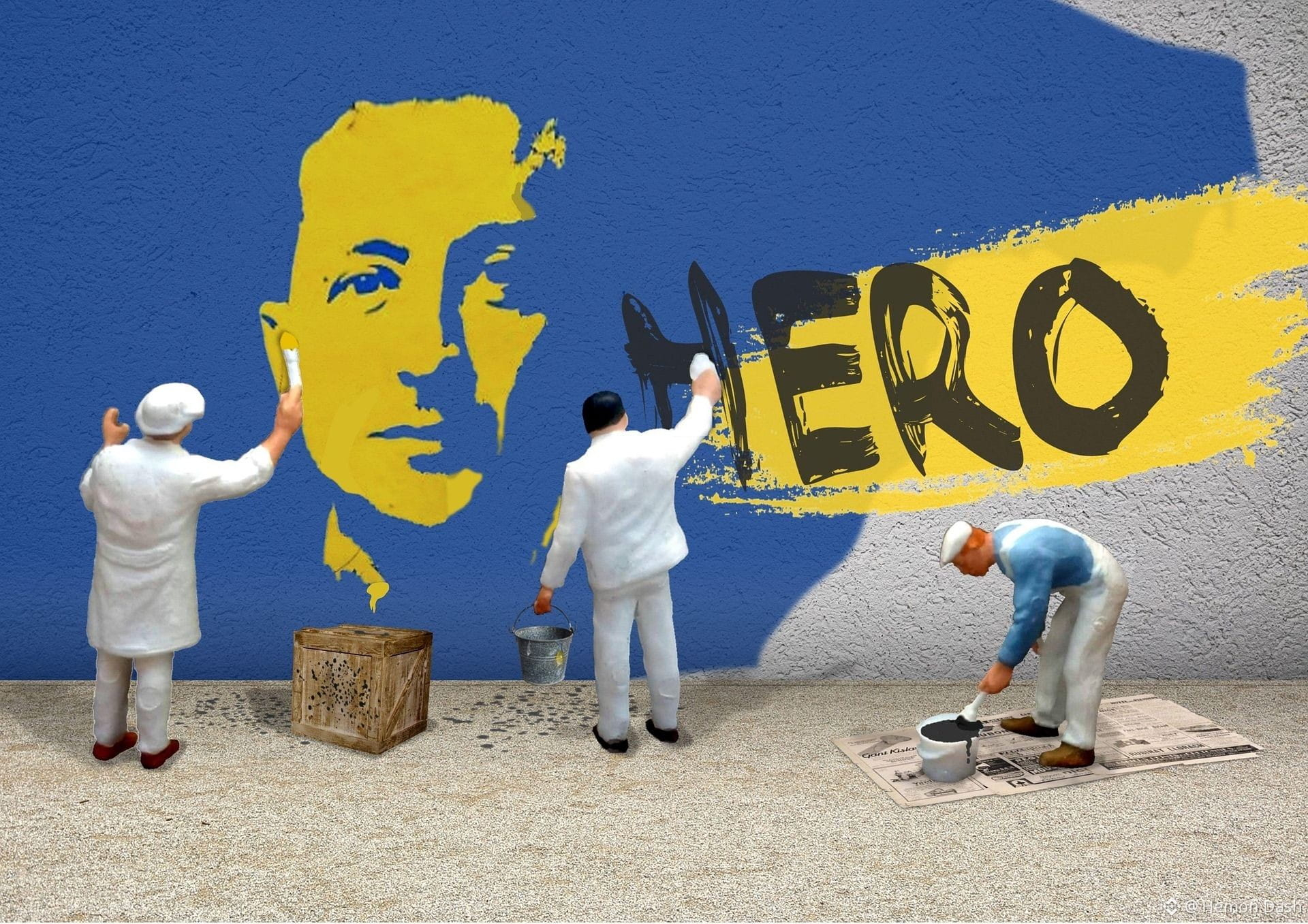
🇺🇦 Ukraine Signals Temporary Pause in Strikes as Peace Talks Resume
Ukrainian President Volodymyr Zelenskyy has said Ukraine is ready to temporarily halt strikes on Moscow through Monday, September 7, as diplomatic efforts to end the Russia-Ukraine war intensify.
Zelenskyy said he had spoken with representatives of U.S. President Donald Trump’s team and confirmed that Ukraine was prepared to refrain from strikes on Moscow during the negotiation period. He also expressed hope that Russia would take reciprocal action and avoid strikes on Kyiv.
The announcement comes as U.S. special envoys Steve Witkoff and Jared Kushner arrived in Kyiv on September 6 for talks with Zelenskyy. Their visit followed a meeting with Russian President Vladimir Putin in Moscow, as Washington attempts to restart stalled peace negotiations.
The temporary pause is intended to create space for diplomacy while the U.S. team engages with both sides. Zelenskyy said Ukraine is prepared for substantive discussions and has proposals aimed at achieving a lasting and dignified peace.
However, this development should not be viewed as a full ceasefire or a peace agreement. Military operations and attacks continue in other areas, while major disagreements remain between Russia and Ukraine, particularly over territory and security guarantees.
Still, the temporary restraint around Moscow and Kyiv could provide an important window for negotiations.
Key takeaway: Ukraine has signaled a limited pause in strikes through Monday, while U.S. envoys are working directly with Kyiv and Moscow to push the peace process forward.
#Ukraine #Russia #Zelenskyy #Trump #Witkoff #Kushner #Kyiv #Moscow #PeaceTalks #Geopolitics
🇺🇦 Ukraine Signals Temporary Pause in Strikes as Peace Talks Resume
Ukrainian President Volodymyr Zelenskyy has said Ukraine is ready to temporarily halt strikes on Moscow through Monday, September 7, as diplomatic efforts to end the Russia-Ukraine war intensify.
Zelenskyy said he had spoken with representatives of U.S. President Donald Trump’s team and confirmed that Ukraine was prepared to refrain from strikes on Moscow during the negotiation period. He also expressed hope that Russia would take reciprocal action and avoid strikes on Kyiv.
The announcement comes as U.S. special envoys Steve Witkoff and Jared Kushner arrived in Kyiv on September 6 for talks with Zelenskyy. Their visit followed a meeting with Russian President Vladimir Putin in Moscow, as Washington attempts to restart stalled peace negotiations.
The temporary pause is intended to create space for diplomacy while the U.S. team engages with both sides. Zelenskyy said Ukraine is prepared for substantive discussions and has proposals aimed at achieving a lasting and dignified peace.
However, this development should not be viewed as a full ceasefire or a peace agreement. Military operations and attacks continue in other areas, while major disagreements remain between Russia and Ukraine, particularly over territory and security guarantees.
Still, the temporary restraint around Moscow and Kyiv could provide an important window for negotiations.
Key takeaway: Ukraine has signaled a limited pause in strikes through Monday, while U.S. envoys are working directly with Kyiv and Moscow to push the peace process forward.
#Ukraine #Russia #Zelenskyy #Trump #Witkoff #Kushner #Kyiv #Moscow #PeaceTalks #Geopolitics
Ukrainian President Volodymyr Zelenskyy has said Ukraine is ready to temporarily halt strikes on Moscow through Monday, September 7, as diplomatic efforts to end the Russia-Ukraine war intensify.
Zelenskyy said he had spoken with representatives of U.S. President Donald Trump’s team and confirmed that Ukraine was prepared to refrain from strikes on Moscow during the negotiation period. He also expressed hope that Russia would take reciprocal action and avoid strikes on Kyiv.
The announcement comes as U.S. special envoys Steve Witkoff and Jared Kushner arrived in Kyiv on September 6 for talks with Zelenskyy. Their visit followed a meeting with Russian President Vladimir Putin in Moscow, as Washington attempts to restart stalled peace negotiations.
The temporary pause is intended to create space for diplomacy while the U.S. team engages with both sides. Zelenskyy said Ukraine is prepared for substantive discussions and has proposals aimed at achieving a lasting and dignified peace.
However, this development should not be viewed as a full ceasefire or a peace agreement. Military operations and attacks continue in other areas, while major disagreements remain between Russia and Ukraine, particularly over territory and security guarantees.
Still, the temporary restraint around Moscow and Kyiv could provide an important window for negotiations.
Key takeaway: Ukraine has signaled a limited pause in strikes through Monday, while U.S. envoys are working directly with Kyiv and Moscow to push the peace process forward.
#Ukraine #Russia #Zelenskyy #Trump #Witkoff #Kushner #Kyiv #Moscow #PeaceTalks #Geopolitics
·
--
查看翻譯
🇺🇸 JUST IN: Trump says he'll "probably" release more Trump coins after the first $TRUMP coins sold out in hours.
🇺🇸 JUST IN: Trump says he'll "probably" release more Trump coins after the first $TRUMP coins sold out in hours.

5
·
--
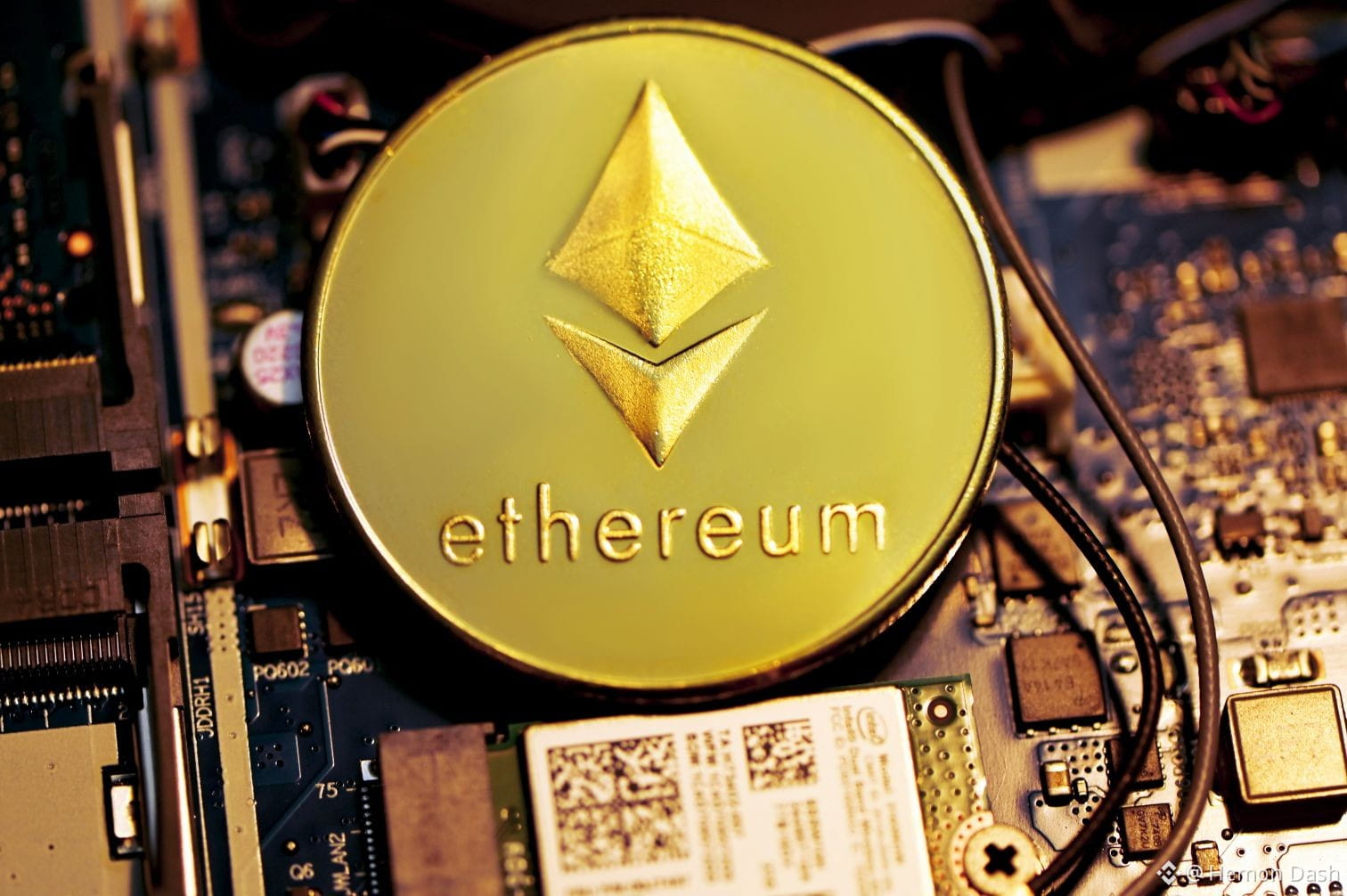
💎 以太坊不僅僅是“ETH”。
當人們談論以太坊時,往往只關注 ETH 的價格。
但以太坊遠不止一張價格圖表。
它已經成爲加密經濟的重要基礎設施層——爲智能合約、DeFi、NFT、通證化資產以及無數應用提供動力。
想一想這一點:
🌐 可編程區塊鏈
⚙️ 智能合約基礎設施
💰 DeFi 生態系統
🎨 數字所有權
🏦 通證化
🚀 Web3 創新的基礎
以太坊最大的優勢,可能不是某一個具體應用或敘事。
而是它的生態系統。
開發者在其上構建。
協議與其交互。
用戶圍繞它創造新的金融和數字體驗。
當然,以太坊也並非沒有風險。競爭激烈,技術快速演進,而加密市場依然高度波動。
但這也正是以太坊故事如此有趣的原因。
加密貨幣的未來,或許並不是在比特幣和以太坊之間二選一。
也許兩者會扮演完全不同的角色。
🟠 比特幣 = 數字稀缺性
🔵 以太坊 = 可編程基礎設施
你怎麼看?
在未來十年裏,以太坊會繼續成爲 Web3 中最重要的網絡之一嗎?👇
#Ethereum #ETH #Binance #Crypto #DeFi #Web3 #Blockchain #CryptoCommunityLove
💎 以太坊不僅僅是“ETH”。
當人們談論以太坊時,往往只關注 ETH 的價格。
但以太坊遠不止一張價格圖表。
它已經成爲加密經濟的重要基礎設施層——爲智能合約、DeFi、NFT、通證化資產以及無數應用提供動力。
想一想這一點:
🌐 可編程區塊鏈
⚙️ 智能合約基礎設施
💰 DeFi 生態系統
🎨 數字所有權
🏦 通證化
🚀 Web3 創新的基礎
以太坊最大的優勢,可能不是某一個具體應用或敘事。
而是它的生態系統。
開發者在其上構建。
協議與其交互。
用戶圍繞它創造新的金融和數字體驗。
當然,以太坊也並非沒有風險。競爭激烈,技術快速演進,而加密市場依然高度波動。
但這也正是以太坊故事如此有趣的原因。
加密貨幣的未來,或許並不是在比特幣和以太坊之間二選一。
也許兩者會扮演完全不同的角色。
🟠 比特幣 = 數字稀缺性
🔵 以太坊 = 可編程基礎設施
你怎麼看?
在未來十年裏,以太坊會繼續成爲 Web3 中最重要的網絡之一嗎?👇
#Ethereum #ETH #Binance #Crypto #DeFi #Web3 #Blockchain #CryptoCommunityLove
當人們談論以太坊時,往往只關注 ETH 的價格。
但以太坊遠不止一張價格圖表。
它已經成爲加密經濟的重要基礎設施層——爲智能合約、DeFi、NFT、通證化資產以及無數應用提供動力。
想一想這一點:
🌐 可編程區塊鏈
⚙️ 智能合約基礎設施
💰 DeFi 生態系統
🎨 數字所有權
🏦 通證化
🚀 Web3 創新的基礎
以太坊最大的優勢,可能不是某一個具體應用或敘事。
而是它的生態系統。
開發者在其上構建。
協議與其交互。
用戶圍繞它創造新的金融和數字體驗。
當然,以太坊也並非沒有風險。競爭激烈,技術快速演進,而加密市場依然高度波動。
但這也正是以太坊故事如此有趣的原因。
加密貨幣的未來,或許並不是在比特幣和以太坊之間二選一。
也許兩者會扮演完全不同的角色。
🟠 比特幣 = 數字稀缺性
🔵 以太坊 = 可編程基礎設施
你怎麼看?
在未來十年裏,以太坊會繼續成爲 Web3 中最重要的網絡之一嗎?👇
#Ethereum #ETH #Binance #Crypto #DeFi #Web3 #Blockchain #CryptoCommunityLove
·
--
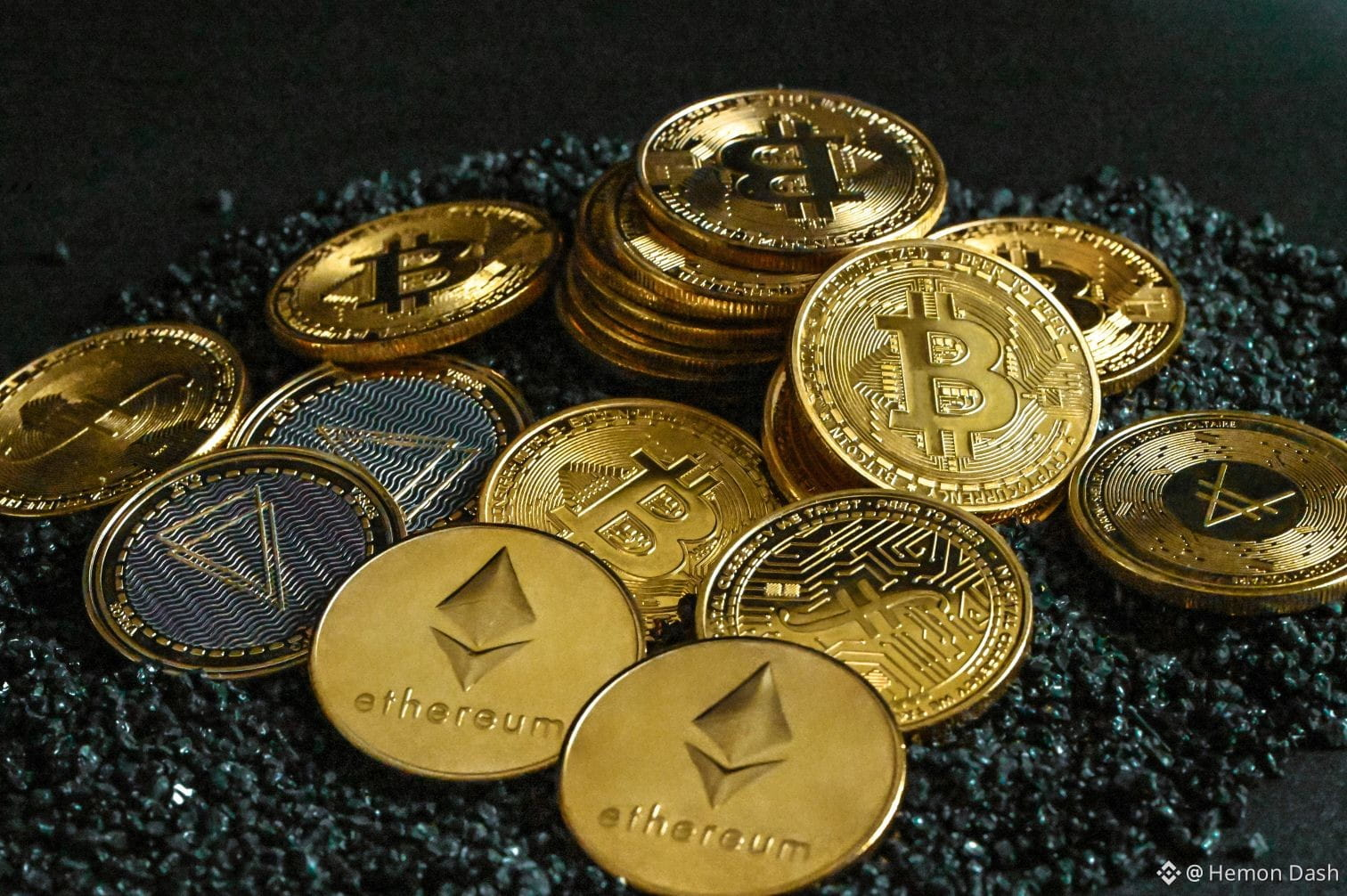
🔥 山寨幣季節,還是又一個加密週期?
每個人都想找到“下一個 100 倍”。
但事實是:
不是每一種山寨幣都能存活。不是每一種敘事都會奏效。而且並不是每一根綠色蠟燭都意味着一個項目有強勁的基本面。
最聰明的方法?
看穿炒作。👀
在接觸任何山寨幣之前,先問:
🔹 這個項目是否解決了真實問題?
🔹 是否有真正的用戶活動?
🔹 這個代幣到底是用來做什麼的?
🔹 開發團隊有多強?
🔹 代幣供應量和解鎖時間表是什麼?
🔹 社區是否在自然增長?
加密市場會獎勵耐心,但也會懲罰追漲情緒。
最大的機會,也許不是今天大家都在談論的那枚幣。它可能是那個在沒人關注時,默默建設的項目。
記住:
📈 炒作會吸引注意力。
🏗️ 基本面纔會帶來持久力。
請做好自己的研究,管理風險,並且永遠不要投入超過你承受得起損失的資金。
現在我很好奇 👇
你認爲哪個山寨幣賽道擁有最強的未來——AI、DeFi、RWA、GameFi,還是完全不同的方向?
#Altcoins #Crypto #Binance #DeFi #AI #RWA #Web3 #CryptoCommunity
🔥 山寨幣季節,還是又一個加密週期?
每個人都想找到“下一個 100 倍”。
但事實是:
不是每一種山寨幣都能存活。不是每一種敘事都會奏效。而且並不是每一根綠色蠟燭都意味着一個項目有強勁的基本面。
最聰明的方法?
看穿炒作。👀
在接觸任何山寨幣之前,先問:
🔹 這個項目是否解決了真實問題?
🔹 是否有真正的用戶活動?
🔹 這個代幣到底是用來做什麼的?
🔹 開發團隊有多強?
🔹 代幣供應量和解鎖時間表是什麼?
🔹 社區是否在自然增長?
加密市場會獎勵耐心,但也會懲罰追漲情緒。
最大的機會,也許不是今天大家都在談論的那枚幣。它可能是那個在沒人關注時,默默建設的項目。
記住:
📈 炒作會吸引注意力。
🏗️ 基本面纔會帶來持久力。
請做好自己的研究,管理風險,並且永遠不要投入超過你承受得起損失的資金。
現在我很好奇 👇
你認爲哪個山寨幣賽道擁有最強的未來——AI、DeFi、RWA、GameFi,還是完全不同的方向?
#Altcoins #Crypto #Binance #DeFi #AI #RWA #Web3 #CryptoCommunity
每個人都想找到“下一個 100 倍”。
但事實是:
不是每一種山寨幣都能存活。不是每一種敘事都會奏效。而且並不是每一根綠色蠟燭都意味着一個項目有強勁的基本面。
最聰明的方法?
看穿炒作。👀
在接觸任何山寨幣之前,先問:
🔹 這個項目是否解決了真實問題?
🔹 是否有真正的用戶活動?
🔹 這個代幣到底是用來做什麼的?
🔹 開發團隊有多強?
🔹 代幣供應量和解鎖時間表是什麼?
🔹 社區是否在自然增長?
加密市場會獎勵耐心,但也會懲罰追漲情緒。
最大的機會,也許不是今天大家都在談論的那枚幣。它可能是那個在沒人關注時,默默建設的項目。
記住:
📈 炒作會吸引注意力。
🏗️ 基本面纔會帶來持久力。
請做好自己的研究,管理風險,並且永遠不要投入超過你承受得起損失的資金。
現在我很好奇 👇
你認爲哪個山寨幣賽道擁有最強的未來——AI、DeFi、RWA、GameFi,還是完全不同的方向?
#Altcoins #Crypto #Binance #DeFi #AI #RWA #Web3 #CryptoCommunity
11
·
--
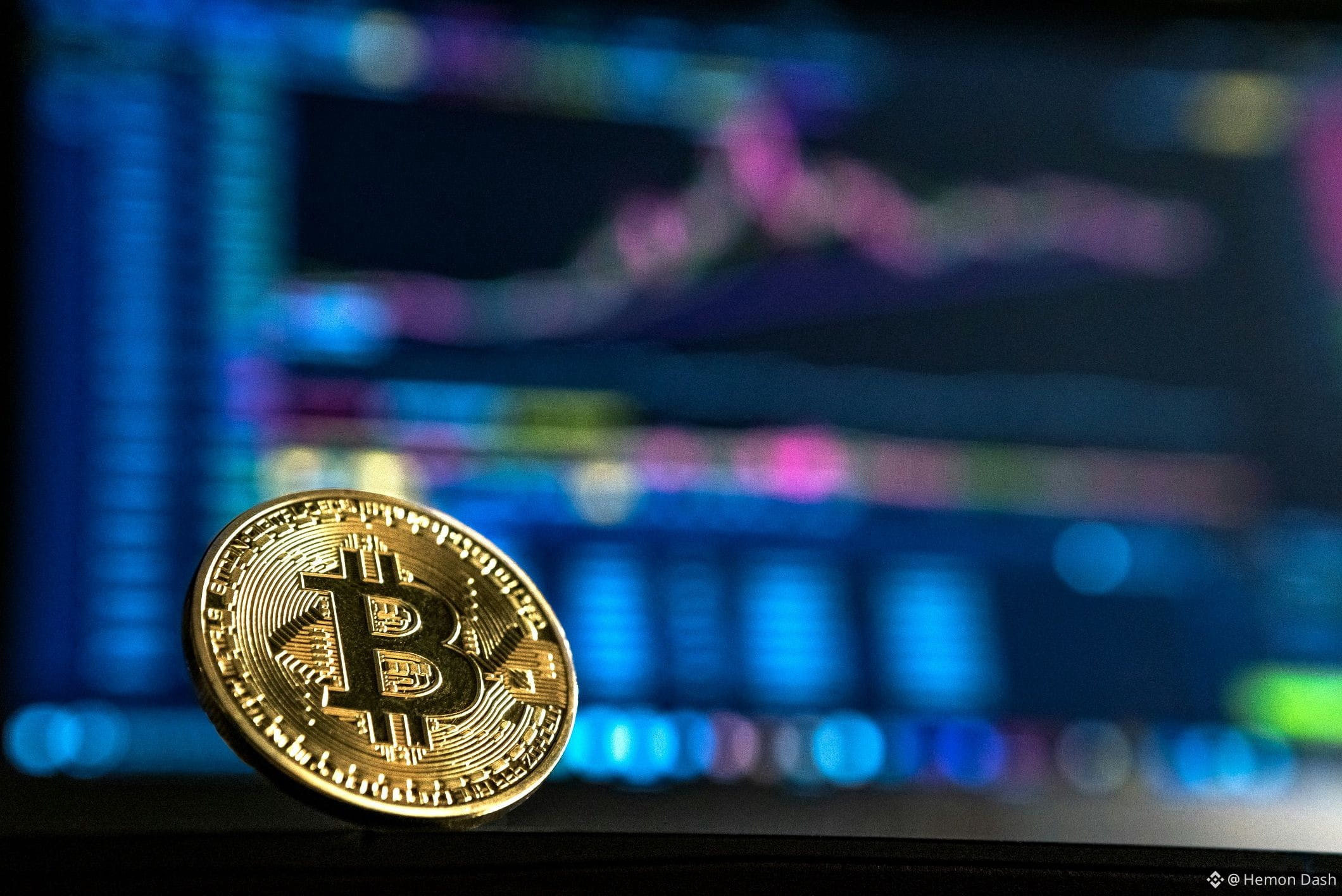
🚨 比特幣不只是一枚幣——它更是一種信念。
當市場忙着追逐下一個 100x 山寨幣時,比特幣不斷提醒我們,爲什麼它會成爲加密世界中的第一個名字。🟠
比特幣代表的遠不止短期價格波動:
🔸 稀缺性
🔸 去中心化
🔸 自我託管
🔸 長期信念
🔸 金融創新
每一個市場週期都會教會我們同樣的道理:炒作來來去去,但強大的基本面纔是關鍵。
真正的問題不是:
“比特幣明天會拉盤嗎?”
更好的問題是:
“爲什麼比特幣能長時間處於加密生態系統的中心?”
市場永遠都會波動。綠色蠟燭帶來興奮,紅色蠟燭帶來恐懼。但真正理解自己持有的資產,能讓這段旅程輕鬆得多。
不要被情緒左右交易。
不要追隨每一條頭條新聞。
做好你自己的研究。📚
比特幣或許開啓了加密革命,但故事遠未結束。
你怎麼看——比特幣仍然是終極的長期加密資產嗎?👇
#Bitcoin #BTC #Crypto #Binance #CryptoCommunity #Blockchain #Web3 #Investing
🚨 比特幣不只是一枚幣——它更是一種信念。
當市場忙着追逐下一個 100x 山寨幣時,比特幣不斷提醒我們,爲什麼它會成爲加密世界中的第一個名字。🟠
比特幣代表的遠不止短期價格波動:
🔸 稀缺性
🔸 去中心化
🔸 自我託管
🔸 長期信念
🔸 金融創新
每一個市場週期都會教會我們同樣的道理:炒作來來去去,但強大的基本面纔是關鍵。
真正的問題不是:
“比特幣明天會拉盤嗎?”
更好的問題是:
“爲什麼比特幣能長時間處於加密生態系統的中心?”
市場永遠都會波動。綠色蠟燭帶來興奮,紅色蠟燭帶來恐懼。但真正理解自己持有的資產,能讓這段旅程輕鬆得多。
不要被情緒左右交易。
不要追隨每一條頭條新聞。
做好你自己的研究。📚
比特幣或許開啓了加密革命,但故事遠未結束。
你怎麼看——比特幣仍然是終極的長期加密資產嗎?👇
#Bitcoin #BTC #Crypto #Binance #CryptoCommunity #Blockchain #Web3 #Investing
當市場忙着追逐下一個 100x 山寨幣時,比特幣不斷提醒我們,爲什麼它會成爲加密世界中的第一個名字。🟠
比特幣代表的遠不止短期價格波動:
🔸 稀缺性
🔸 去中心化
🔸 自我託管
🔸 長期信念
🔸 金融創新
每一個市場週期都會教會我們同樣的道理:炒作來來去去,但強大的基本面纔是關鍵。
真正的問題不是:
“比特幣明天會拉盤嗎?”
更好的問題是:
“爲什麼比特幣能長時間處於加密生態系統的中心?”
市場永遠都會波動。綠色蠟燭帶來興奮,紅色蠟燭帶來恐懼。但真正理解自己持有的資產,能讓這段旅程輕鬆得多。
不要被情緒左右交易。
不要追隨每一條頭條新聞。
做好你自己的研究。📚
比特幣或許開啓了加密革命,但故事遠未結束。
你怎麼看——比特幣仍然是終極的長期加密資產嗎?👇
#Bitcoin #BTC #Crypto #Binance #CryptoCommunity #Blockchain #Web3 #Investing
35
·
--
文章
查看翻譯
My Biggest Crypto Lesson From This WeekI started this week thinking I understood the market.
I ended it realizing how much I still don't know.
And honestly, I think that's one of the most valuable lessons anyone in crypto can learn.
The crypto market has a strange way of challenging your confidence.
One day, everything looks obvious.
The next day, the same market reminds you:
Nothing is as simple as it looks.
This week changed the way I think about Bitcoin, altcoins, market sentiment and—most importantly—my own assumptions.
Here is the biggest lesson I am taking away.
🧠 Lesson #1: A Strong Opinion Is Not the Same as Strong Analysis
One of the easiest mistakes in crypto is becoming emotionally attached to an opinion.
You see Bitcoin moving.
You read a few bullish posts.
You watch people discussing the next major target.
Suddenly, you start thinking:
“I know where this market is going.”
But markets don't care about our confidence.
This week reminded me that:
Confidence should come from evidence—not emotion.
I can have a thesis.
I can have a view.
I can believe Bitcoin has strong long-term fundamentals.
But I still need to remain open to being wrong.
That distinction has become much more important to me.
📊 Lesson #2: Price Is Only One Piece of the Story
Earlier, it was easy to focus heavily on price.
Bitcoin is up?
Bullish.
Bitcoin is down?
Bearish.
But the more I study crypto, the less satisfying that explanation becomes.
Now I want to understand:
Why did price move?
Who was buying?
Who was selling?
What happened to volume?
What happened to liquidity?
What happened to Bitcoin's market share?
What were miners doing?
What were long-term holders doing?
What was happening in the broader economy?
The chart shows the result.
It doesn't always explain the cause.
That changed how I look at Bitcoin.
🪙 Lesson #3: Scarcity Doesn't Automatically Create Value
This was another important realization.
Bitcoin has a highly constrained supply.
That is one of its most important characteristics.
But scarcity alone isn't enough.
Think about it.
Something can be extremely rare and still have very little demand.
For scarcity to matter economically, people need to value what is scarce.
That means Bitcoin's long-term story isn't simply:
Limited Supply
It is:
Limited Supply + Demand + Utility + Trust + Network Effects
This is a much more complete way of thinking about Bitcoin.
And it prevents a dangerous oversimplification:
“Bitcoin is scarce, therefore the price must always rise.”
That's not analysis.
That's a guarantee—and markets don't provide guarantees.
🔥 Lesson #4: The Market Doesn't Need to Agree With Me
This may sound obvious.
But it's surprisingly difficult to practice.
If you become bullish on Bitcoin, you naturally notice bullish information.
If you become bearish, you notice bearish information.
This is called confirmation bias.
And crypto social media can make it worse.
You can find thousands of people agreeing with almost any opinion.
Want to believe Bitcoin is going to explode?
You'll find people saying exactly that.
Want to believe Bitcoin is finished?
You'll find those people too.
This week reminded me to deliberately search for the strongest argument against my own position.
That's uncomfortable.
But it is useful.
If my thesis cannot survive criticism, maybe it wasn't a strong thesis.
🧩 Lesson #5: Not Every Move Needs an Explanation
Crypto markets move constantly.
A large candle appears.
Immediately, everyone wants a reason.
“This happened because of X.”
But sometimes the truth is more complicated.
Markets contain millions of decisions.
Different traders have different information.
Some are hedging.
Some are taking profits.
Some are using leverage.
Some are reacting to news.
Some are simply following momentum.
Sometimes several factors happen simultaneously.
So I've become more comfortable saying:
“I don't know.”
That may sound weak.
I actually think it's intellectual strength.
Pretending to know something you don't know is far more dangerous.
🏦 Lesson #6: Institutional Interest Is Important—but Don't Worship It
Institutional participation is one of the biggest developments in Bitcoin's evolution.
But I don't want to automatically interpret every institutional headline as bullish.
Institutions are businesses and professional investors.
They manage:
Risk
Liquidity
Portfolio allocation
Regulatory requirements
Client expectations
They don't buy assets because they love them.
They buy when an asset fits their objectives.
That's an important distinction.
Institutional interest matters.
But institutional behavior matters more than institutional headlines.
🧠 Lesson #7: The Best Investors May Be the Best Question-Askers
This week's biggest shift may actually be in the questions I ask.
Instead of:
“Will Bitcoin go up?”
I'm increasingly asking:
“What would make my thesis wrong?”
Instead of:
“Is this bullish?”
I ask:
“What evidence supports the bullish case—and what evidence contradicts it?”
Instead of:
“Why is everyone buying?”
I ask:
“Who is buying, and what is their time horizon?”
Instead of:
“Is this the next big crypto?”
I ask:
“What problem does it solve, and why does its token need to exist?”
Better questions produce better research.
⚠️ Lesson #8: Risk Management Is More Important Than Being Right
Here's something I've started appreciating more.
You don't need to predict every market move correctly.
You need to survive being wrong.
That's a completely different mindset.
Anyone can make a bullish prediction.
Anyone can make a bearish prediction.
The harder question is:
What happens if you're wrong?
If your entire financial plan depends on one prediction being correct, the problem isn't just the prediction.
It's the risk management.
Crypto can be extremely volatile.
So understanding position size, time horizon, diversification and personal risk tolerance can matter more than having the perfect market prediction.
🌍 Lesson #9: Bitcoin Is Bigger Than a Price Chart
This may be the lesson that changed my perspective the most.
Bitcoin isn't simply:
BTC/USD
It's also:
Mining
Cryptography
Monetary economics
Network effects
Market psychology
Regulation
Technology
Human behavior
Global finance
Once you start looking at Bitcoin through all of these lenses, the asset becomes much more interesting.
You stop seeing only a number moving on a screen.
You start seeing an economic system being tested in real time.
🚀 The Biggest Change in My Thinking
If I had to summarize this entire week in one sentence, it would be:
I would rather understand the market than predict it.
Prediction is exciting.
Understanding is powerful.
Prediction asks:
“What happens next?”
Understanding asks:
“Why is this happening?”
Prediction can make you right once.
Understanding can help you think better repeatedly.
That's the mindset I want to develop.
🧠 My New Crypto Checklist
Going forward, before forming a strong opinion about Bitcoin or any crypto asset, I want to ask:
1. What is actually happening?
Not what social media says.
What is the evidence?
2. Why might it be happening?
What are the possible drivers?
3. What could invalidate my thesis?
What am I missing?
4. Who benefits?
Who is buying, selling or participating?
5. What are the risks?
Not just the potential reward.
6. Is this short-term noise or a long-term change?
Time horizon matters.
7. Am I analyzing—or hoping?
This may be the most important question of all.
🔥 My Biggest Takeaway
Crypto doesn't reward certainty.
It rewards preparation.
The market will always surprise us.
There will always be unexpected news.
There will always be new narratives.
There will always be people predicting the next huge move.
But I don't want to become the person who is constantly trying to sound certain.
I want to become the person who understands:
What I know.
What I don't know.
What could change my mind.
And:
What evidence I need to watch next.
That's a much healthier way to approach crypto.
💬 Now I Want to Hear From You
What is the biggest crypto lesson YOU learned this week?
Not your prediction.
Not your favorite coin.
Not a price target.
Your lesson.
Maybe you learned:
Patience.
Risk management.
Don't chase FOMO.
Don't trust every headline.
Do your own research.
Don't confuse a bull market with genius.
Or maybe something completely different.
👇 Write your biggest lesson in the comments.
I want to collect the best lessons from this community.
Because one person's mistake can become another person's education.
And if you think someone in your network needs to hear this message, share this article with them.
Follow me for more honest discussions about Bitcoin, crypto economics, market psychology and the lessons hidden behind the charts.
The goal isn't to predict everything.
The goal is to keep learning.
Educational content only. Not financial advice.
#Bitcoin #BTC #Crypto #CryptoEducation #BitcoinAnalysis #TradingPsychology #Investing #MarketPsychology #BinanceSquare
My Biggest Crypto Lesson From This Week
I started this week thinking I understood the market.
I ended it realizing how much I still don't know.
And honestly, I think that's one of the most valuable lessons anyone in crypto can learn.
The crypto market has a strange way of challenging your confidence.
One day, everything looks obvious.
The next day, the same market reminds you:
Nothing is as simple as it looks.
This week changed the way I think about Bitcoin, altcoins, market sentiment and—most importantly—my own assumptions.
Here is the biggest lesson I am taking away.
🧠 Lesson #1: A Strong Opinion Is Not the Same as Strong Analysis
One of the easiest mistakes in crypto is becoming emotionally attached to an opinion.
You see Bitcoin moving.
You read a few bullish posts.
You watch people discussing the next major target.
Suddenly, you start thinking:
“I know where this market is going.”
But markets don't care about our confidence.
This week reminded me that:
Confidence should come from evidence—not emotion.
I can have a thesis.
I can have a view.
I can believe Bitcoin has strong long-term fundamentals.
But I still need to remain open to being wrong.
That distinction has become much more important to me.
📊 Lesson #2: Price Is Only One Piece of the Story
Earlier, it was easy to focus heavily on price.
Bitcoin is up?
Bullish.
Bitcoin is down?
Bearish.
But the more I study crypto, the less satisfying that explanation becomes.
Now I want to understand:
Why did price move?
Who was buying?
Who was selling?
What happened to volume?
What happened to liquidity?
What happened to Bitcoin's market share?
What were miners doing?
What were long-term holders doing?
What was happening in the broader economy?
The chart shows the result.
It doesn't always explain the cause.
That changed how I look at Bitcoin.
🪙 Lesson #3: Scarcity Doesn't Automatically Create Value
This was another important realization.
Bitcoin has a highly constrained supply.
That is one of its most important characteristics.
But scarcity alone isn't enough.
Think about it.
Something can be extremely rare and still have very little demand.
For scarcity to matter economically, people need to value what is scarce.
That means Bitcoin's long-term story isn't simply:
Limited Supply
It is:
Limited Supply + Demand + Utility + Trust + Network Effects
This is a much more complete way of thinking about Bitcoin.
And it prevents a dangerous oversimplification:
“Bitcoin is scarce, therefore the price must always rise.”
That's not analysis.
That's a guarantee—and markets don't provide guarantees.
🔥 Lesson #4: The Market Doesn't Need to Agree With Me
This may sound obvious.
But it's surprisingly difficult to practice.
If you become bullish on Bitcoin, you naturally notice bullish information.
If you become bearish, you notice bearish information.
This is called confirmation bias.
And crypto social media can make it worse.
You can find thousands of people agreeing with almost any opinion.
Want to believe Bitcoin is going to explode?
You'll find people saying exactly that.
Want to believe Bitcoin is finished?
You'll find those people too.
This week reminded me to deliberately search for the strongest argument against my own position.
That's uncomfortable.
But it is useful.
If my thesis cannot survive criticism, maybe it wasn't a strong thesis.
🧩 Lesson #5: Not Every Move Needs an Explanation
Crypto markets move constantly.
A large candle appears.
Immediately, everyone wants a reason.
“This happened because of X.”
But sometimes the truth is more complicated.
Markets contain millions of decisions.
Different traders have different information.
Some are hedging.
Some are taking profits.
Some are using leverage.
Some are reacting to news.
Some are simply following momentum.
Sometimes several factors happen simultaneously.
So I've become more comfortable saying:
“I don't know.”
That may sound weak.
I actually think it's intellectual strength.
Pretending to know something you don't know is far more dangerous.
🏦 Lesson #6: Institutional Interest Is Important—but Don't Worship It
Institutional participation is one of the biggest developments in Bitcoin's evolution.
But I don't want to automatically interpret every institutional headline as bullish.
Institutions are businesses and professional investors.
They manage:
Risk
Liquidity
Portfolio allocation
Regulatory requirements
Client expectations
They don't buy assets because they love them.
They buy when an asset fits their objectives.
That's an important distinction.
Institutional interest matters.
But institutional behavior matters more than institutional headlines.
🧠 Lesson #7: The Best Investors May Be the Best Question-Askers
This week's biggest shift may actually be in the questions I ask.
Instead of:
“Will Bitcoin go up?”
I'm increasingly asking:
“What would make my thesis wrong?”
Instead of:
“Is this bullish?”
I ask:
“What evidence supports the bullish case—and what evidence contradicts it?”
Instead of:
“Why is everyone buying?”
I ask:
“Who is buying, and what is their time horizon?”
Instead of:
“Is this the next big crypto?”
I ask:
“What problem does it solve, and why does its token need to exist?”
Better questions produce better research.
⚠️ Lesson #8: Risk Management Is More Important Than Being Right
Here's something I've started appreciating more.
You don't need to predict every market move correctly.
You need to survive being wrong.
That's a completely different mindset.
Anyone can make a bullish prediction.
Anyone can make a bearish prediction.
The harder question is:
What happens if you're wrong?
If your entire financial plan depends on one prediction being correct, the problem isn't just the prediction.
It's the risk management.
Crypto can be extremely volatile.
So understanding position size, time horizon, diversification and personal risk tolerance can matter more than having the perfect market prediction.
🌍 Lesson #9: Bitcoin Is Bigger Than a Price Chart
This may be the lesson that changed my perspective the most.
Bitcoin isn't simply:
BTC/USD
It's also:
Mining
Cryptography
Monetary economics
Network effects
Market psychology
Regulation
Technology
Human behavior
Global finance
Once you start looking at Bitcoin through all of these lenses, the asset becomes much more interesting.
You stop seeing only a number moving on a screen.
You start seeing an economic system being tested in real time.
🚀 The Biggest Change in My Thinking
If I had to summarize this entire week in one sentence, it would be:
I would rather understand the market than predict it.
Prediction is exciting.
Understanding is powerful.
Prediction asks:
“What happens next?”
Understanding asks:
“Why is this happening?”
Prediction can make you right once.
Understanding can help you think better repeatedly.
That's the mindset I want to develop.
🧠 My New Crypto Checklist
Going forward, before forming a strong opinion about Bitcoin or any crypto asset, I want to ask:
1. What is actually happening?
Not what social media says.
What is the evidence?
2. Why might it be happening?
What are the possible drivers?
3. What could invalidate my thesis?
What am I missing?
4. Who benefits?
Who is buying, selling or participating?
5. What are the risks?
Not just the potential reward.
6. Is this short-term noise or a long-term change?
Time horizon matters.
7. Am I analyzing—or hoping?
This may be the most important question of all.
🔥 My Biggest Takeaway
Crypto doesn't reward certainty.
It rewards preparation.
The market will always surprise us.
There will always be unexpected news.
There will always be new narratives.
There will always be people predicting the next huge move.
But I don't want to become the person who is constantly trying to sound certain.
I want to become the person who understands:
What I know.
What I don't know.
What could change my mind.
And:
What evidence I need to watch next.
That's a much healthier way to approach crypto.
💬 Now I Want to Hear From You
What is the biggest crypto lesson YOU learned this week?
Not your prediction.
Not your favorite coin.
Not a price target.
Your lesson.
Maybe you learned:
Patience.
Risk management.
Don't chase FOMO.
Don't trust every headline.
Do your own research.
Don't confuse a bull market with genius.
Or maybe something completely different.
👇 Write your biggest lesson in the comments.
I want to collect the best lessons from this community.
Because one person's mistake can become another person's education.
And if you think someone in your network needs to hear this message, share this article with them.
Follow me for more honest discussions about Bitcoin, crypto economics, market psychology and the lessons hidden behind the charts.
The goal isn't to predict everything.
The goal is to keep learning.
Educational content only. Not financial advice.
#Bitcoin #BTC #Crypto #CryptoEducation #BitcoinAnalysis #TradingPsychology #Investing #MarketPsychology #BinanceSquare
I ended it realizing how much I still don't know.
And honestly, I think that's one of the most valuable lessons anyone in crypto can learn.
The crypto market has a strange way of challenging your confidence.
One day, everything looks obvious.
The next day, the same market reminds you:
Nothing is as simple as it looks.
This week changed the way I think about Bitcoin, altcoins, market sentiment and—most importantly—my own assumptions.
Here is the biggest lesson I am taking away.
🧠 Lesson #1: A Strong Opinion Is Not the Same as Strong Analysis
One of the easiest mistakes in crypto is becoming emotionally attached to an opinion.
You see Bitcoin moving.
You read a few bullish posts.
You watch people discussing the next major target.
Suddenly, you start thinking:
“I know where this market is going.”
But markets don't care about our confidence.
This week reminded me that:
Confidence should come from evidence—not emotion.
I can have a thesis.
I can have a view.
I can believe Bitcoin has strong long-term fundamentals.
But I still need to remain open to being wrong.
That distinction has become much more important to me.
📊 Lesson #2: Price Is Only One Piece of the Story
Earlier, it was easy to focus heavily on price.
Bitcoin is up?
Bullish.
Bitcoin is down?
Bearish.
But the more I study crypto, the less satisfying that explanation becomes.
Now I want to understand:
Why did price move?
Who was buying?
Who was selling?
What happened to volume?
What happened to liquidity?
What happened to Bitcoin's market share?
What were miners doing?
What were long-term holders doing?
What was happening in the broader economy?
The chart shows the result.
It doesn't always explain the cause.
That changed how I look at Bitcoin.
🪙 Lesson #3: Scarcity Doesn't Automatically Create Value
This was another important realization.
Bitcoin has a highly constrained supply.
That is one of its most important characteristics.
But scarcity alone isn't enough.
Think about it.
Something can be extremely rare and still have very little demand.
For scarcity to matter economically, people need to value what is scarce.
That means Bitcoin's long-term story isn't simply:
Limited Supply
It is:
Limited Supply + Demand + Utility + Trust + Network Effects
This is a much more complete way of thinking about Bitcoin.
And it prevents a dangerous oversimplification:
“Bitcoin is scarce, therefore the price must always rise.”
That's not analysis.
That's a guarantee—and markets don't provide guarantees.
🔥 Lesson #4: The Market Doesn't Need to Agree With Me
This may sound obvious.
But it's surprisingly difficult to practice.
If you become bullish on Bitcoin, you naturally notice bullish information.
If you become bearish, you notice bearish information.
This is called confirmation bias.
And crypto social media can make it worse.
You can find thousands of people agreeing with almost any opinion.
Want to believe Bitcoin is going to explode?
You'll find people saying exactly that.
Want to believe Bitcoin is finished?
You'll find those people too.
This week reminded me to deliberately search for the strongest argument against my own position.
That's uncomfortable.
But it is useful.
If my thesis cannot survive criticism, maybe it wasn't a strong thesis.
🧩 Lesson #5: Not Every Move Needs an Explanation
Crypto markets move constantly.
A large candle appears.
Immediately, everyone wants a reason.
“This happened because of X.”
But sometimes the truth is more complicated.
Markets contain millions of decisions.
Different traders have different information.
Some are hedging.
Some are taking profits.
Some are using leverage.
Some are reacting to news.
Some are simply following momentum.
Sometimes several factors happen simultaneously.
So I've become more comfortable saying:
“I don't know.”
That may sound weak.
I actually think it's intellectual strength.
Pretending to know something you don't know is far more dangerous.
🏦 Lesson #6: Institutional Interest Is Important—but Don't Worship It
Institutional participation is one of the biggest developments in Bitcoin's evolution.
But I don't want to automatically interpret every institutional headline as bullish.
Institutions are businesses and professional investors.
They manage:
Risk
Liquidity
Portfolio allocation
Regulatory requirements
Client expectations
They don't buy assets because they love them.
They buy when an asset fits their objectives.
That's an important distinction.
Institutional interest matters.
But institutional behavior matters more than institutional headlines.
🧠 Lesson #7: The Best Investors May Be the Best Question-Askers
This week's biggest shift may actually be in the questions I ask.
Instead of:
“Will Bitcoin go up?”
I'm increasingly asking:
“What would make my thesis wrong?”
Instead of:
“Is this bullish?”
I ask:
“What evidence supports the bullish case—and what evidence contradicts it?”
Instead of:
“Why is everyone buying?”
I ask:
“Who is buying, and what is their time horizon?”
Instead of:
“Is this the next big crypto?”
I ask:
“What problem does it solve, and why does its token need to exist?”
Better questions produce better research.
⚠️ Lesson #8: Risk Management Is More Important Than Being Right
Here's something I've started appreciating more.
You don't need to predict every market move correctly.
You need to survive being wrong.
That's a completely different mindset.
Anyone can make a bullish prediction.
Anyone can make a bearish prediction.
The harder question is:
What happens if you're wrong?
If your entire financial plan depends on one prediction being correct, the problem isn't just the prediction.
It's the risk management.
Crypto can be extremely volatile.
So understanding position size, time horizon, diversification and personal risk tolerance can matter more than having the perfect market prediction.
🌍 Lesson #9: Bitcoin Is Bigger Than a Price Chart
This may be the lesson that changed my perspective the most.
Bitcoin isn't simply:
BTC/USD
It's also:
Mining
Cryptography
Monetary economics
Network effects
Market psychology
Regulation
Technology
Human behavior
Global finance
Once you start looking at Bitcoin through all of these lenses, the asset becomes much more interesting.
You stop seeing only a number moving on a screen.
You start seeing an economic system being tested in real time.
🚀 The Biggest Change in My Thinking
If I had to summarize this entire week in one sentence, it would be:
I would rather understand the market than predict it.
Prediction is exciting.
Understanding is powerful.
Prediction asks:
“What happens next?”
Understanding asks:
“Why is this happening?”
Prediction can make you right once.
Understanding can help you think better repeatedly.
That's the mindset I want to develop.
🧠 My New Crypto Checklist
Going forward, before forming a strong opinion about Bitcoin or any crypto asset, I want to ask:
1. What is actually happening?
Not what social media says.
What is the evidence?
2. Why might it be happening?
What are the possible drivers?
3. What could invalidate my thesis?
What am I missing?
4. Who benefits?
Who is buying, selling or participating?
5. What are the risks?
Not just the potential reward.
6. Is this short-term noise or a long-term change?
Time horizon matters.
7. Am I analyzing—or hoping?
This may be the most important question of all.
🔥 My Biggest Takeaway
Crypto doesn't reward certainty.
It rewards preparation.
The market will always surprise us.
There will always be unexpected news.
There will always be new narratives.
There will always be people predicting the next huge move.
But I don't want to become the person who is constantly trying to sound certain.
I want to become the person who understands:
What I know.
What I don't know.
What could change my mind.
And:
What evidence I need to watch next.
That's a much healthier way to approach crypto.
💬 Now I Want to Hear From You
What is the biggest crypto lesson YOU learned this week?
Not your prediction.
Not your favorite coin.
Not a price target.
Your lesson.
Maybe you learned:
Patience.
Risk management.
Don't chase FOMO.
Don't trust every headline.
Do your own research.
Don't confuse a bull market with genius.
Or maybe something completely different.
👇 Write your biggest lesson in the comments.
I want to collect the best lessons from this community.
Because one person's mistake can become another person's education.
And if you think someone in your network needs to hear this message, share this article with them.
Follow me for more honest discussions about Bitcoin, crypto economics, market psychology and the lessons hidden behind the charts.
The goal isn't to predict everything.
The goal is to keep learning.
Educational content only. Not financial advice.
#Bitcoin #BTC #Crypto #CryptoEducation #BitcoinAnalysis #TradingPsychology #Investing #MarketPsychology #BinanceSquare
31
·
--
文章
比特幣每週情報:我正在關注的10件事一個每週框架,用於理解比特幣,而不僅僅是價格圖表。
歡迎來到一個新的定期系列:
比特幣每週情報
每週,我們不只是問:
“比特幣是上漲還是下跌?”
我將關注市場之下的信號。
因爲比特幣不只是一個價格。
它是一個網絡。
一種貨幣體系。
一項技術。
一個全球市場。
而且正越來越成爲一種機構資產類別。
這個系列的目標很簡單:
比特幣每週情報:我正在關注的10件事
一個每週框架,用於理解比特幣,而不僅僅是價格圖表。
歡迎來到一個新的定期系列:
比特幣每週情報
每週,我們不只是問:
“比特幣是上漲還是下跌?”
我將關注市場之下的信號。
因爲比特幣不只是一個價格。
它是一個網絡。
一種貨幣體系。
一項技術。
一個全球市場。
而且正越來越成爲一種機構資產類別。
這個系列的目標很簡單:
歡迎來到一個新的定期系列:
比特幣每週情報
每週,我們不只是問:
“比特幣是上漲還是下跌?”
我將關注市場之下的信號。
因爲比特幣不只是一個價格。
它是一個網絡。
一種貨幣體系。
一項技術。
一個全球市場。
而且正越來越成爲一種機構資產類別。
這個系列的目標很簡單:
42
·
--
文章
爲什麼在比特幣已經存在的情況下,山寨幣還會存在?如果比特幣已經存在,爲什麼我們還需要成千上萬種其他加密貨幣?
這是加密貨幣領域最簡單、但也最容易被誤解的問題之一。
比特幣被創建爲一個去中心化的數字貨幣網絡。
它的供應量有限。
它沒有傳統意義上的 CEO。
它通過一個分佈式網絡運行。
那麼,爲什麼加密貨幣沒有止步於比特幣呢?
爲什麼我們會有以太坊、Solana、BNB、穩定幣、DeFi 代幣、治理代幣、實用代幣,以及成千上萬種其他數字資產?
爲什麼在比特幣已經存在的情況下,山寨幣還會存在?
如果比特幣已經存在,爲什麼我們還需要成千上萬種其他加密貨幣?
這是加密貨幣領域最簡單、但也最容易被誤解的問題之一。
比特幣被創建爲一個去中心化的數字貨幣網絡。
它的供應量有限。
它沒有傳統意義上的 CEO。
它通過一個分佈式網絡運行。
那麼,爲什麼加密貨幣沒有止步於比特幣呢?
爲什麼我們會有以太坊、Solana、BNB、穩定幣、DeFi 代幣、治理代幣、實用代幣,以及成千上萬種其他數字資產?
這是加密貨幣領域最簡單、但也最容易被誤解的問題之一。
比特幣被創建爲一個去中心化的數字貨幣網絡。
它的供應量有限。
它沒有傳統意義上的 CEO。
它通過一個分佈式網絡運行。
那麼,爲什麼加密貨幣沒有止步於比特幣呢?
爲什麼我們會有以太坊、Solana、BNB、穩定幣、DeFi 代幣、治理代幣、實用代幣,以及成千上萬種其他數字資產?
94
·
--
文章
什麼是 BTC 主導地位——爲什麼你應該關心它?比特幣的價格告訴你比特幣將往哪裏走。BTC 主導地位則告訴你另一件事:加密資本正在集中到哪裏。
如果你關注加密市場,你可能已經見過這樣的數字:
BTC 主導地位:55%
但這實際上是什麼意思?
這是否意味着所有加密貨幣投資者中有55%持有比特幣?
不。
這是否意味着所有加密貨幣交易量的55%是比特幣?
不。
那麼,BTC 主導地位到底是什麼——爲什麼交易者、投資者和分析師會關注它?
什麼是 BTC 主導地位——爲什麼你應該關心它?
比特幣的價格告訴你比特幣將往哪裏走。BTC 主導地位則告訴你另一件事:加密資本正在集中到哪裏。
如果你關注加密市場,你可能已經見過這樣的數字:
BTC 主導地位:55%
但這實際上是什麼意思?
這是否意味着所有加密貨幣投資者中有55%持有比特幣?
不。
這是否意味着所有加密貨幣交易量的55%是比特幣?
不。
那麼,BTC 主導地位到底是什麼——爲什麼交易者、投資者和分析師會關注它?
如果你關注加密市場,你可能已經見過這樣的數字:
BTC 主導地位:55%
但這實際上是什麼意思?
這是否意味着所有加密貨幣投資者中有55%持有比特幣?
不。
這是否意味着所有加密貨幣交易量的55%是比特幣?
不。
那麼,BTC 主導地位到底是什麼——爲什麼交易者、投資者和分析師會關注它?
99
·
--

文章
查看翻譯
Bitcoin’s Biggest Strength May Also Be Its Biggest WeaknessWhat if the thing that makes Bitcoin powerful is also the thing that makes it vulnerable?
Bitcoin has many characteristics that make it unique:
Decentralization.
Fixed monetary rules.
Censorship resistance.
Self-custody.
Global accessibility.
No central authority.
These are often described as Bitcoin's greatest strengths.
But every strength can have a trade-off.
A system designed to minimize centralized control may also become harder to change.
A system designed around self-custody gives users freedom—but also responsibility.
A system with a predictable supply cannot simply increase issuance when circumstances change.
So let's examine both sides.
1. Decentralization: Strength or Coordination Problem?
The Strength
Bitcoin does not depend on one central company, bank or government to operate.
Its network is maintained by participants distributed across the world.
This can make the system more resistant to:
Single points of failure
Centralized control
Censorship
Political intervention
If one participant disappears, the entire Bitcoin network doesn't automatically disappear with it.
That's powerful.
The Weakness
Decentralization can make coordination more difficult.
Imagine a traditional company wants to change its software.
Management can make a decision.
Developers implement it.
Users receive the update.
Bitcoin doesn't have that simple chain of command.
Major changes require coordination across developers, miners, businesses, users and other ecosystem participants.
This can make Bitcoin deliberately slow to change.
The trade-off:
Less centralized control → More resilience
but potentially:
Less centralized control → More difficult coordination 2. Fixed Supply: Monetary Discipline or Rigidity?
The Strength
Bitcoin's supply rules are one of its defining characteristics.
Under the current protocol rules, Bitcoin has a maximum supply of approximately 21 million BTC.
New issuance follows a predictable schedule and declines over time.
Supporters argue that this creates monetary predictability.
No single institution can simply decide to create millions of additional Bitcoin whenever it wants.
For people concerned about monetary expansion, this can be extremely attractive.
The Weakness
A fixed or highly constrained supply also means monetary policy cannot easily respond to changing economic conditions.
Traditional monetary systems have flexibility.
Central banks can adjust policy in response to recessions, financial crises and other economic conditions.
Bitcoin doesn't operate that way.
Its rules are intentionally restrictive.
So the same characteristic can be viewed in two completely different ways:
Predictability
or
Rigidity
The trade-off:
Monetary discipline → Less flexibility
3. Self-Custody: Freedom or Responsibility?
The Strength
Bitcoin can allow individuals to control their own assets.
With proper self-custody, users don't necessarily need to rely on a bank or other institution to hold their Bitcoin.
This creates a powerful principle:
You can be your own custodian.
For people who value financial independence, this is revolutionary.
The Weakness
Freedom comes with responsibility.
If someone loses access to their private keys, recovery can be extremely difficult or impossible.
A bank may have procedures for:
Forgotten passwords
Account recovery
Fraud investigations
Self-custody doesn't necessarily provide the same safety net.
One mistake can potentially become permanent.
This creates a fascinating paradox:
The more control you have, the more responsibility you have.
The trade-off:
Maximum control → Maximum personal responsibility
4. Global Accessibility: Opportunity or Regulatory Challenge?
The Strength
Bitcoin is global by design.
Someone with internet access and the necessary tools can potentially interact with the network regardless of national borders.
This can be especially interesting for people living in regions with limited access to traditional financial infrastructure.
Bitcoin doesn't need to establish a branch in every city.
The network is globally accessible.
The Weakness
Global accessibility creates regulatory complexity.
Different countries have different approaches to digital assets.
Some encourage innovation.
Some impose strict restrictions.
Others are still developing their frameworks.
A global network operating across many legal systems creates difficult questions around:
Taxation
Compliance
Consumer protection
Financial crime prevention
Custody
Market regulation
The trade-off:
Global accessibility → Global regulatory complexity
5. Security Through Proof of Work: Strong Security, Real Costs
The Strength
Bitcoin uses proof-of-work mining to secure its network.
Miners spend real-world resources to participate.
This creates an economic cost associated with attacking the network.
The enormous global mining ecosystem is one of Bitcoin's most important security characteristics.
The Weakness
That security isn't free.
Mining consumes electricity and requires specialized hardware.
This creates ongoing debates around:
Energy consumption
Environmental impact
Mining concentration
Electricity sources
Hardware economics
Supporters argue that the energy expenditure provides valuable network security.
Critics question whether the cost is justified.
The important point is that both perspectives can be discussed seriously.
The trade-off:
Physical security cost → Energy and infrastructure requirements
6. Immutability: Protection or Inflexibility?
The Strength
Bitcoin transactions are designed to be extremely difficult to reverse once sufficiently confirmed.
This can reduce reliance on centralized intermediaries.
If you send Bitcoin to the wrong address, however, there may be no customer-service department capable of simply reversing the transaction.
That's both the feature and the problem.
The Weakness
Traditional payment systems often provide mechanisms for:
Chargebacks
Dispute resolution
Fraud investigations
Reversals
Bitcoin's irreversible nature provides finality.
But finality means mistakes can be expensive.
The trade-off:
Transaction finality → Limited ability to reverse mistakes7. Open Source: Transparency or Complexity?
The Strength
Bitcoin's software is publicly inspectable.
Developers around the world can examine, review and contribute to the code.
This reduces dependence on a secret proprietary system controlled by one company.
Open development can increase transparency and encourage independent verification.
The Weakness
Open source doesn't automatically mean everyone understands it.
Bitcoin's technical architecture can be extremely complex.
The average user doesn't personally verify cryptographic algorithms or review protocol code.
So although the system is open, understanding it still requires expertise.
The trade-off:
Open verification → High technical complexity
8. Volatility: Opportunity or Vulnerability?
The Strength
Bitcoin's large and active market can create opportunities for traders and investors.
High volatility can attract market participants seeking significant returns.
It also makes Bitcoin one of the most closely watched digital assets in the world.
The Weakness
The same volatility can make Bitcoin difficult to use as a stable medium of exchange.
If the purchasing power of an asset changes dramatically over short periods, businesses and consumers may hesitate to price everyday goods directly in it.
Volatility can also cause severe losses.
The trade-off:
High volatility → Potential opportunity and significant risk
9. Network Effects: Moat or Dependency?
The Strength
Bitcoin's network effect is enormous.
More users can attract:
More liquidity
More infrastructure
More developers
More businesses
More market participants
This can make the network increasingly difficult to replace.
The Weakness
Network effects can become a dependency.
If users, developers, businesses and institutions gradually move toward competing systems, the value of the network effect can weaken.
A network is powerful because people use it.
That means continued adoption matters.
The trade-off:
Strong network effect → Dependence on continued participation
10. Bitcoin's Biggest Paradox
This may be the most important point.
Many of Bitcoin's characteristics exist because Bitcoin intentionally rejects centralized control.
But centralized systems can sometimes be:
Faster
Easier to manage
Easier to upgrade
Easier to recover
Easier to regulate
Bitcoin sacrifices some of those conveniences to achieve other goals.
That's not necessarily a flaw.
It's a design choice.
The real question is:
Which trade-offs do you prefer?
⚖️ The Bitcoin Trade-Off Table
Bitcoin StrengthPotential Weakness
DecentralizationHarder coordination
Fixed supplyLess monetary flexibility
Self-custodyGreater personal responsibility
Global accessRegulatory complexity
Proof-of-work securityEnergy and infrastructure costs
Transaction finalityDifficult recovery from mistakes
Open-source developmentTechnical complexity
High liquidityHigh volatility
Network effectsDependence on continued adoption
This is why simplistic Bitcoin debates often fail.
One side says:
“Bitcoin is revolutionary.”
The other says:
“Bitcoin has serious problems.”
Both can be correct.
The Bigger Lesson
Bitcoin isn't designed to maximize every possible feature.
It prioritizes certain principles:
Decentralization
Predictability
Permissionless access
Censorship resistance
Self-sovereignty
Those priorities create benefits.
But they also create costs.
And that's what makes Bitcoin so interesting.
Every major design decision involves a trade-off.
If you increase control, you may reduce decentralization.
If you increase flexibility, you may reduce predictability.
If you increase convenience, you may reduce personal sovereignty.
Bitcoin chooses one side of many of these trade-offs.
Whether those choices are ultimately superior depends on what you value.
My Take
I don't think Bitcoin's biggest strength is necessarily one specific technology.
Its biggest strength may be the coherence of its economic and technological design.
The network's:
Scarcity
Decentralization
Security
Transparency
Self-custody
and
Global accessibility
all reinforce a particular philosophy.
But that philosophy comes with costs.
And understanding those costs doesn't make someone “anti-Bitcoin.”
In fact, I believe the strongest Bitcoin investors are not the people who ignore its weaknesses.
They are the people who understand both sides of the trade-off.
You don't need to believe Bitcoin is perfect to understand why it matters.
Your Turn
Here's the question:
Which Bitcoin strength do you think creates the biggest weakness?
A — Decentralization → Coordination
B — Fixed Supply → Rigidity
C — Self-Custody → Responsibility
D — Global Access → Regulation
E — Proof of Work → Energy Costs
F — Immutability → No Easy Recovery
G — Network Effects → Adoption Dependency
👇 Comment your choice and explain WHY.
I want to hear both sides—not just Bitcoin supporters.
If this article gave you a different perspective, share it with someone who thinks Bitcoin has either “no weaknesses” or “no strengths.”
Follow me for more balanced deep dives into Bitcoin economics, technology, psychology and the future of crypto.
Educational content only. Not financial advice.
#Bitcoin #BTC #Crypto #BitcoinAnalysis #Blockchain #Decentralization #BitcoinEconomics #CryptoEducation #BinanceSquare
Bitcoin’s Biggest Strength May Also Be Its Biggest Weakness
What if the thing that makes Bitcoin powerful is also the thing that makes it vulnerable?
Bitcoin has many characteristics that make it unique:
Decentralization.
Fixed monetary rules.
Censorship resistance.
Self-custody.
Global accessibility.
No central authority.
These are often described as Bitcoin's greatest strengths.
But every strength can have a trade-off.
A system designed to minimize centralized control may also become harder to change.
A system designed around self-custody gives users freedom—but also responsibility.
A system with a predictable supply cannot simply increase issuance when circumstances change.
So let's examine both sides.
1. Decentralization: Strength or Coordination Problem?
The Strength
Bitcoin does not depend on one central company, bank or government to operate.
Its network is maintained by participants distributed across the world.
This can make the system more resistant to:
Single points of failure
Centralized control
Censorship
Political intervention
If one participant disappears, the entire Bitcoin network doesn't automatically disappear with it.
That's powerful.
The Weakness
Decentralization can make coordination more difficult.
Imagine a traditional company wants to change its software.
Management can make a decision.
Developers implement it.
Users receive the update.
Bitcoin doesn't have that simple chain of command.
Major changes require coordination across developers, miners, businesses, users and other ecosystem participants.
This can make Bitcoin deliberately slow to change.
The trade-off:
Less centralized control → More resilience
but potentially:
Less centralized control → More difficult coordination 2. Fixed Supply: Monetary Discipline or Rigidity?
The Strength
Bitcoin's supply rules are one of its defining characteristics.
Under the current protocol rules, Bitcoin has a maximum supply of approximately 21 million BTC.
New issuance follows a predictable schedule and declines over time.
Supporters argue that this creates monetary predictability.
No single institution can simply decide to create millions of additional Bitcoin whenever it wants.
For people concerned about monetary expansion, this can be extremely attractive.
The Weakness
A fixed or highly constrained supply also means monetary policy cannot easily respond to changing economic conditions.
Traditional monetary systems have flexibility.
Central banks can adjust policy in response to recessions, financial crises and other economic conditions.
Bitcoin doesn't operate that way.
Its rules are intentionally restrictive.
So the same characteristic can be viewed in two completely different ways:
Predictability
or
Rigidity
The trade-off:
Monetary discipline → Less flexibility
3. Self-Custody: Freedom or Responsibility?
The Strength
Bitcoin can allow individuals to control their own assets.
With proper self-custody, users don't necessarily need to rely on a bank or other institution to hold their Bitcoin.
This creates a powerful principle:
You can be your own custodian.
For people who value financial independence, this is revolutionary.
The Weakness
Freedom comes with responsibility.
If someone loses access to their private keys, recovery can be extremely difficult or impossible.
A bank may have procedures for:
Forgotten passwords
Account recovery
Fraud investigations
Self-custody doesn't necessarily provide the same safety net.
One mistake can potentially become permanent.
This creates a fascinating paradox:
The more control you have, the more responsibility you have.
The trade-off:
Maximum control → Maximum personal responsibility
4. Global Accessibility: Opportunity or Regulatory Challenge?
The Strength
Bitcoin is global by design.
Someone with internet access and the necessary tools can potentially interact with the network regardless of national borders.
This can be especially interesting for people living in regions with limited access to traditional financial infrastructure.
Bitcoin doesn't need to establish a branch in every city.
The network is globally accessible.
The Weakness
Global accessibility creates regulatory complexity.
Different countries have different approaches to digital assets.
Some encourage innovation.
Some impose strict restrictions.
Others are still developing their frameworks.
A global network operating across many legal systems creates difficult questions around:
Taxation
Compliance
Consumer protection
Financial crime prevention
Custody
Market regulation
The trade-off:
Global accessibility → Global regulatory complexity
5. Security Through Proof of Work: Strong Security, Real Costs
The Strength
Bitcoin uses proof-of-work mining to secure its network.
Miners spend real-world resources to participate.
This creates an economic cost associated with attacking the network.
The enormous global mining ecosystem is one of Bitcoin's most important security characteristics.
The Weakness
That security isn't free.
Mining consumes electricity and requires specialized hardware.
This creates ongoing debates around:
Energy consumption
Environmental impact
Mining concentration
Electricity sources
Hardware economics
Supporters argue that the energy expenditure provides valuable network security.
Critics question whether the cost is justified.
The important point is that both perspectives can be discussed seriously.
The trade-off:
Physical security cost → Energy and infrastructure requirements
6. Immutability: Protection or Inflexibility?
The Strength
Bitcoin transactions are designed to be extremely difficult to reverse once sufficiently confirmed.
This can reduce reliance on centralized intermediaries.
If you send Bitcoin to the wrong address, however, there may be no customer-service department capable of simply reversing the transaction.
That's both the feature and the problem.
The Weakness
Traditional payment systems often provide mechanisms for:
Chargebacks
Dispute resolution
Fraud investigations
Reversals
Bitcoin's irreversible nature provides finality.
But finality means mistakes can be expensive.
The trade-off:
Transaction finality → Limited ability to reverse mistakes7. Open Source: Transparency or Complexity?
The Strength
Bitcoin's software is publicly inspectable.
Developers around the world can examine, review and contribute to the code.
This reduces dependence on a secret proprietary system controlled by one company.
Open development can increase transparency and encourage independent verification.
The Weakness
Open source doesn't automatically mean everyone understands it.
Bitcoin's technical architecture can be extremely complex.
The average user doesn't personally verify cryptographic algorithms or review protocol code.
So although the system is open, understanding it still requires expertise.
The trade-off:
Open verification → High technical complexity
8. Volatility: Opportunity or Vulnerability?
The Strength
Bitcoin's large and active market can create opportunities for traders and investors.
High volatility can attract market participants seeking significant returns.
It also makes Bitcoin one of the most closely watched digital assets in the world.
The Weakness
The same volatility can make Bitcoin difficult to use as a stable medium of exchange.
If the purchasing power of an asset changes dramatically over short periods, businesses and consumers may hesitate to price everyday goods directly in it.
Volatility can also cause severe losses.
The trade-off:
High volatility → Potential opportunity and significant risk
9. Network Effects: Moat or Dependency?
The Strength
Bitcoin's network effect is enormous.
More users can attract:
More liquidity
More infrastructure
More developers
More businesses
More market participants
This can make the network increasingly difficult to replace.
The Weakness
Network effects can become a dependency.
If users, developers, businesses and institutions gradually move toward competing systems, the value of the network effect can weaken.
A network is powerful because people use it.
That means continued adoption matters.
The trade-off:
Strong network effect → Dependence on continued participation
10. Bitcoin's Biggest Paradox
This may be the most important point.
Many of Bitcoin's characteristics exist because Bitcoin intentionally rejects centralized control.
But centralized systems can sometimes be:
Faster
Easier to manage
Easier to upgrade
Easier to recover
Easier to regulate
Bitcoin sacrifices some of those conveniences to achieve other goals.
That's not necessarily a flaw.
It's a design choice.
The real question is:
Which trade-offs do you prefer?
⚖️ The Bitcoin Trade-Off Table
Bitcoin StrengthPotential Weakness
DecentralizationHarder coordination
Fixed supplyLess monetary flexibility
Self-custodyGreater personal responsibility
Global accessRegulatory complexity
Proof-of-work securityEnergy and infrastructure costs
Transaction finalityDifficult recovery from mistakes
Open-source developmentTechnical complexity
High liquidityHigh volatility
Network effectsDependence on continued adoption
This is why simplistic Bitcoin debates often fail.
One side says:
“Bitcoin is revolutionary.”
The other says:
“Bitcoin has serious problems.”
Both can be correct.
The Bigger Lesson
Bitcoin isn't designed to maximize every possible feature.
It prioritizes certain principles:
Decentralization
Predictability
Permissionless access
Censorship resistance
Self-sovereignty
Those priorities create benefits.
But they also create costs.
And that's what makes Bitcoin so interesting.
Every major design decision involves a trade-off.
If you increase control, you may reduce decentralization.
If you increase flexibility, you may reduce predictability.
If you increase convenience, you may reduce personal sovereignty.
Bitcoin chooses one side of many of these trade-offs.
Whether those choices are ultimately superior depends on what you value.
My Take
I don't think Bitcoin's biggest strength is necessarily one specific technology.
Its biggest strength may be the coherence of its economic and technological design.
The network's:
Scarcity
Decentralization
Security
Transparency
Self-custody
and
Global accessibility
all reinforce a particular philosophy.
But that philosophy comes with costs.
And understanding those costs doesn't make someone “anti-Bitcoin.”
In fact, I believe the strongest Bitcoin investors are not the people who ignore its weaknesses.
They are the people who understand both sides of the trade-off.
You don't need to believe Bitcoin is perfect to understand why it matters.
Your Turn
Here's the question:
Which Bitcoin strength do you think creates the biggest weakness?
A — Decentralization → Coordination
B — Fixed Supply → Rigidity
C — Self-Custody → Responsibility
D — Global Access → Regulation
E — Proof of Work → Energy Costs
F — Immutability → No Easy Recovery
G — Network Effects → Adoption Dependency
👇 Comment your choice and explain WHY.
I want to hear both sides—not just Bitcoin supporters.
If this article gave you a different perspective, share it with someone who thinks Bitcoin has either “no weaknesses” or “no strengths.”
Follow me for more balanced deep dives into Bitcoin economics, technology, psychology and the future of crypto.
Educational content only. Not financial advice.
#Bitcoin #BTC #Crypto #BitcoinAnalysis #Blockchain #Decentralization #BitcoinEconomics #CryptoEducation #BinanceSquare
Bitcoin has many characteristics that make it unique:
Decentralization.
Fixed monetary rules.
Censorship resistance.
Self-custody.
Global accessibility.
No central authority.
These are often described as Bitcoin's greatest strengths.
But every strength can have a trade-off.
A system designed to minimize centralized control may also become harder to change.
A system designed around self-custody gives users freedom—but also responsibility.
A system with a predictable supply cannot simply increase issuance when circumstances change.
So let's examine both sides.
1. Decentralization: Strength or Coordination Problem?
The Strength
Bitcoin does not depend on one central company, bank or government to operate.
Its network is maintained by participants distributed across the world.
This can make the system more resistant to:
Single points of failure
Centralized control
Censorship
Political intervention
If one participant disappears, the entire Bitcoin network doesn't automatically disappear with it.
That's powerful.
The Weakness
Decentralization can make coordination more difficult.
Imagine a traditional company wants to change its software.
Management can make a decision.
Developers implement it.
Users receive the update.
Bitcoin doesn't have that simple chain of command.
Major changes require coordination across developers, miners, businesses, users and other ecosystem participants.
This can make Bitcoin deliberately slow to change.
The trade-off:
Less centralized control → More resilience
but potentially:
Less centralized control → More difficult coordination 2. Fixed Supply: Monetary Discipline or Rigidity?
The Strength
Bitcoin's supply rules are one of its defining characteristics.
Under the current protocol rules, Bitcoin has a maximum supply of approximately 21 million BTC.
New issuance follows a predictable schedule and declines over time.
Supporters argue that this creates monetary predictability.
No single institution can simply decide to create millions of additional Bitcoin whenever it wants.
For people concerned about monetary expansion, this can be extremely attractive.
The Weakness
A fixed or highly constrained supply also means monetary policy cannot easily respond to changing economic conditions.
Traditional monetary systems have flexibility.
Central banks can adjust policy in response to recessions, financial crises and other economic conditions.
Bitcoin doesn't operate that way.
Its rules are intentionally restrictive.
So the same characteristic can be viewed in two completely different ways:
Predictability
or
Rigidity
The trade-off:
Monetary discipline → Less flexibility
3. Self-Custody: Freedom or Responsibility?
The Strength
Bitcoin can allow individuals to control their own assets.
With proper self-custody, users don't necessarily need to rely on a bank or other institution to hold their Bitcoin.
This creates a powerful principle:
You can be your own custodian.
For people who value financial independence, this is revolutionary.
The Weakness
Freedom comes with responsibility.
If someone loses access to their private keys, recovery can be extremely difficult or impossible.
A bank may have procedures for:
Forgotten passwords
Account recovery
Fraud investigations
Self-custody doesn't necessarily provide the same safety net.
One mistake can potentially become permanent.
This creates a fascinating paradox:
The more control you have, the more responsibility you have.
The trade-off:
Maximum control → Maximum personal responsibility
4. Global Accessibility: Opportunity or Regulatory Challenge?
The Strength
Bitcoin is global by design.
Someone with internet access and the necessary tools can potentially interact with the network regardless of national borders.
This can be especially interesting for people living in regions with limited access to traditional financial infrastructure.
Bitcoin doesn't need to establish a branch in every city.
The network is globally accessible.
The Weakness
Global accessibility creates regulatory complexity.
Different countries have different approaches to digital assets.
Some encourage innovation.
Some impose strict restrictions.
Others are still developing their frameworks.
A global network operating across many legal systems creates difficult questions around:
Taxation
Compliance
Consumer protection
Financial crime prevention
Custody
Market regulation
The trade-off:
Global accessibility → Global regulatory complexity
5. Security Through Proof of Work: Strong Security, Real Costs
The Strength
Bitcoin uses proof-of-work mining to secure its network.
Miners spend real-world resources to participate.
This creates an economic cost associated with attacking the network.
The enormous global mining ecosystem is one of Bitcoin's most important security characteristics.
The Weakness
That security isn't free.
Mining consumes electricity and requires specialized hardware.
This creates ongoing debates around:
Energy consumption
Environmental impact
Mining concentration
Electricity sources
Hardware economics
Supporters argue that the energy expenditure provides valuable network security.
Critics question whether the cost is justified.
The important point is that both perspectives can be discussed seriously.
The trade-off:
Physical security cost → Energy and infrastructure requirements
6. Immutability: Protection or Inflexibility?
The Strength
Bitcoin transactions are designed to be extremely difficult to reverse once sufficiently confirmed.
This can reduce reliance on centralized intermediaries.
If you send Bitcoin to the wrong address, however, there may be no customer-service department capable of simply reversing the transaction.
That's both the feature and the problem.
The Weakness
Traditional payment systems often provide mechanisms for:
Chargebacks
Dispute resolution
Fraud investigations
Reversals
Bitcoin's irreversible nature provides finality.
But finality means mistakes can be expensive.
The trade-off:
Transaction finality → Limited ability to reverse mistakes7. Open Source: Transparency or Complexity?
The Strength
Bitcoin's software is publicly inspectable.
Developers around the world can examine, review and contribute to the code.
This reduces dependence on a secret proprietary system controlled by one company.
Open development can increase transparency and encourage independent verification.
The Weakness
Open source doesn't automatically mean everyone understands it.
Bitcoin's technical architecture can be extremely complex.
The average user doesn't personally verify cryptographic algorithms or review protocol code.
So although the system is open, understanding it still requires expertise.
The trade-off:
Open verification → High technical complexity
8. Volatility: Opportunity or Vulnerability?
The Strength
Bitcoin's large and active market can create opportunities for traders and investors.
High volatility can attract market participants seeking significant returns.
It also makes Bitcoin one of the most closely watched digital assets in the world.
The Weakness
The same volatility can make Bitcoin difficult to use as a stable medium of exchange.
If the purchasing power of an asset changes dramatically over short periods, businesses and consumers may hesitate to price everyday goods directly in it.
Volatility can also cause severe losses.
The trade-off:
High volatility → Potential opportunity and significant risk
9. Network Effects: Moat or Dependency?
The Strength
Bitcoin's network effect is enormous.
More users can attract:
More liquidity
More infrastructure
More developers
More businesses
More market participants
This can make the network increasingly difficult to replace.
The Weakness
Network effects can become a dependency.
If users, developers, businesses and institutions gradually move toward competing systems, the value of the network effect can weaken.
A network is powerful because people use it.
That means continued adoption matters.
The trade-off:
Strong network effect → Dependence on continued participation
10. Bitcoin's Biggest Paradox
This may be the most important point.
Many of Bitcoin's characteristics exist because Bitcoin intentionally rejects centralized control.
But centralized systems can sometimes be:
Faster
Easier to manage
Easier to upgrade
Easier to recover
Easier to regulate
Bitcoin sacrifices some of those conveniences to achieve other goals.
That's not necessarily a flaw.
It's a design choice.
The real question is:
Which trade-offs do you prefer?
⚖️ The Bitcoin Trade-Off Table
Bitcoin StrengthPotential Weakness
DecentralizationHarder coordination
Fixed supplyLess monetary flexibility
Self-custodyGreater personal responsibility
Global accessRegulatory complexity
Proof-of-work securityEnergy and infrastructure costs
Transaction finalityDifficult recovery from mistakes
Open-source developmentTechnical complexity
High liquidityHigh volatility
Network effectsDependence on continued adoption
This is why simplistic Bitcoin debates often fail.
One side says:
“Bitcoin is revolutionary.”
The other says:
“Bitcoin has serious problems.”
Both can be correct.
The Bigger Lesson
Bitcoin isn't designed to maximize every possible feature.
It prioritizes certain principles:
Decentralization
Predictability
Permissionless access
Censorship resistance
Self-sovereignty
Those priorities create benefits.
But they also create costs.
And that's what makes Bitcoin so interesting.
Every major design decision involves a trade-off.
If you increase control, you may reduce decentralization.
If you increase flexibility, you may reduce predictability.
If you increase convenience, you may reduce personal sovereignty.
Bitcoin chooses one side of many of these trade-offs.
Whether those choices are ultimately superior depends on what you value.
My Take
I don't think Bitcoin's biggest strength is necessarily one specific technology.
Its biggest strength may be the coherence of its economic and technological design.
The network's:
Scarcity
Decentralization
Security
Transparency
Self-custody
and
Global accessibility
all reinforce a particular philosophy.
But that philosophy comes with costs.
And understanding those costs doesn't make someone “anti-Bitcoin.”
In fact, I believe the strongest Bitcoin investors are not the people who ignore its weaknesses.
They are the people who understand both sides of the trade-off.
You don't need to believe Bitcoin is perfect to understand why it matters.
Your Turn
Here's the question:
Which Bitcoin strength do you think creates the biggest weakness?
A — Decentralization → Coordination
B — Fixed Supply → Rigidity
C — Self-Custody → Responsibility
D — Global Access → Regulation
E — Proof of Work → Energy Costs
F — Immutability → No Easy Recovery
G — Network Effects → Adoption Dependency
👇 Comment your choice and explain WHY.
I want to hear both sides—not just Bitcoin supporters.
If this article gave you a different perspective, share it with someone who thinks Bitcoin has either “no weaknesses” or “no strengths.”
Follow me for more balanced deep dives into Bitcoin economics, technology, psychology and the future of crypto.
Educational content only. Not financial advice.
#Bitcoin #BTC #Crypto #BitcoinAnalysis #Blockchain #Decentralization #BitcoinEconomics #CryptoEducation #BinanceSquare
34
·
--

文章
當比特幣需求上升但供應不增加時會發生什麼?當越來越多的人想要某樣東西時——但可用的數量卻沒有增加,會發生什麼?
這是經濟學裏最簡單的問題之一。
這也有助於解釋比特幣背後最重要的理念之一。
想象一個市場,其中:
10,000 個單位可用
但突然間:
20,000 人想要買它們。
會發生什麼?
市場有一個問題:
需求增加。供應有限。
比特幣把這個概念提升到了另一個層級,因爲它的供應由預先設定的協議規則來決定。
當比特幣需求上升但供應不增加時會發生什麼?
當越來越多的人想要某樣東西時——但可用的數量卻沒有增加,會發生什麼?
這是經濟學裏最簡單的問題之一。
這也有助於解釋比特幣背後最重要的理念之一。
想象一個市場,其中:
10,000 個單位可用
但突然間:
20,000 人想要買它們。
會發生什麼?
市場有一個問題:
需求增加。供應有限。
比特幣把這個概念提升到了另一個層級,因爲它的供應由預先設定的協議規則來決定。
這是經濟學裏最簡單的問題之一。
這也有助於解釋比特幣背後最重要的理念之一。
想象一個市場,其中:
10,000 個單位可用
但突然間:
20,000 人想要買它們。
會發生什麼?
市場有一個問題:
需求增加。供應有限。
比特幣把這個概念提升到了另一個層級,因爲它的供應由預先設定的協議規則來決定。
45
·
--
文章
查看翻譯
Why Do People Trust Bitcoin?Bitcoin has no CEO. No headquarters. No government guarantees it. So why do millions of people trust it?
This may be one of the most fascinating questions in the entire crypto industry.
We often hear:
“Bitcoin is trusted because it is decentralized.”
But that's only part of the story.
Trust in Bitcoin comes from a much bigger combination of:
Psychology + Scarcity + Decentralization + Transparency + Network Effects
And perhaps the most interesting part is this:
Bitcoin doesn't ask you to trust one person.
It asks you to trust a system of rules, technology, incentives and a global network.
Let's understand why.
1. Psychology: Humans Trust What They Understand
Trust begins with perception.
People don't trust something simply because it exists.
They trust things when they believe:
It works
It is predictable
Other people use it
The rules are understandable
The system has survived challenges
Bitcoin has been operating since 2009.
Over time, millions of people have interacted with it.
Every successful transaction reinforces the perception that the network works.
This creates a psychological feedback loop:
Usage → Experience → Confidence → More Usage
The more people interact with Bitcoin successfully, the stronger the belief can become that the system is durable.
But there is another psychological force at work.
Scarcity.
2. Scarcity: Why Limited Supply Feels Valuable
Humans naturally pay attention to scarce things.
Imagine two objects.
Object A:
Unlimited supply
Object B:
Extremely limited supply
If both have similar usefulness, people may perceive the scarce object as more valuable.
Bitcoin's maximum supply is approximately 21 million BTC under its current protocol rules.
That number has become a powerful part of Bitcoin's identity.
People know that new Bitcoin cannot simply be created at will according to the preferences of a single organization.
This creates a psychological idea:
“If I want Bitcoin, I must compete for a limited supply.”
Scarcity alone does not guarantee value.
But scarcity combined with demand can become extremely powerful.
3. Decentralization: Trust the Rules, Not the Ruler
Traditional financial systems often depend on institutions.
You trust:
Banks
Governments
Payment processors
Centralized companies
These institutions can be extremely useful.
But they also have the power to change policies, restrict access, reverse decisions or modify rules within their authority.
Bitcoin attempts something different.
Instead of putting the entire system under one organization, it distributes participation across a global network.
No single individual owns Bitcoin.
There is no Bitcoin CEO who can wake up tomorrow and say:
“Let's create 10 million more BTC.”
The protocol's rules are enforced by the network.
This creates a fundamentally different type of trust:
Trust through verification.
Instead of:
“Trust me.”
Bitcoin's philosophy is closer to:
“Verify it yourself.”
That idea is incredibly powerful.
4. Network Effects: More Users Can Mean More Trust
Now we reach one of the strongest forces behind Bitcoin.
Network effects.
Imagine a communication network with only 10 users.
It's useful.
Now imagine the same network has 100 million users.
Its usefulness can become dramatically greater.
Bitcoin operates similarly.
More users can mean:
More liquidity
More transactions
More businesses
More developers
More infrastructure
More exchanges
More institutional participation
More market attention
This creates a flywheel:
More Users
↓
More Liquidity
↓
More Infrastructure
↓
More Utility
↓
More Visibility
↓
More Users
This doesn't guarantee success.
But it helps explain why established networks can be difficult to replace.
🔎 5. Transparency Creates a Different Kind of Trust
One of Bitcoin's unusual characteristics is that much of its activity can be publicly verified on the blockchain.
You don't have to rely entirely on a company's internal database to know that transactions exist.
The network provides a transparent public ledger.
This creates a powerful concept:
Don't trust the institution. Verify the network.
Of course, blockchain transparency doesn't mean everything about Bitcoin is automatically easy to understand.
Users still need to understand:
Wallet security
Private keys
Exchanges
Smart contracts on other networks
Scams
Market risks
Transparency reduces certain forms of uncertainty.
It does not eliminate risk.
6. Time Builds Trust
This is one factor that is often ignored.
Bitcoin didn't become globally recognized overnight.
It survived:
Major market crashes
Exchange failures
Regulatory uncertainty
Technological debates
Extreme volatility
Massive criticism
Multiple speculative bubbles
Every major stress event becomes another test.
And survival can strengthen confidence.
Think about a bridge.
You don't trust a bridge because someone says:
“This bridge is strong.”
You trust it more after thousands of vehicles cross it safely for years.
Bitcoin's history creates a similar psychological effect.
Time is a form of evidence.
Not proof of future success.
But evidence of resilience.
💎 7. Bitcoin's Brand Is Becoming a Social Asset
Bitcoin isn't only technology anymore.
It has become a cultural and financial idea.
For some people, Bitcoin represents:
Financial freedom
For others:
Digital gold
For others:
A hedge against monetary uncertainty
For others:
A decentralized payment network
And for some:
A speculative investment
These different interpretations can coexist.
That's important because strong financial networks often develop something beyond utility:
A shared narrative.
The Bitcoin story itself has become part of its network effect.
🏦 8. Institutional Participation Changes Perception
When a small group of individuals uses an asset, society may treat it as an experiment.
When large institutions begin studying, holding, trading or building products around an asset, public perception can change.
Institutional participation can potentially contribute to:
Greater liquidity
Professional market infrastructure
More research
Broader exposure
Increased legitimacy
But institutional involvement doesn't automatically prove that Bitcoin is safe or guaranteed to succeed.
It simply means another category of market participant is taking the asset seriously.
And psychology matters here.
People often become more comfortable with something when respected institutions also recognize it.9. But Should You Trust Bitcoin Completely?
Absolutely not.
Trust does not mean blind faith.
Bitcoin has real risks.
For example:
Price volatility
Private-key loss
Cybersecurity threats
Regulatory changes
Market manipulation
Technological risks
Competition
User mistakes
A person can believe in Bitcoin's long-term architecture and still recognize these risks.
In fact, healthy skepticism can make an investor stronger.
The goal isn't blind belief.
The goal is informed confidence 10. The Bitcoin Trust Equation
If I had to summarize why people trust Bitcoin, I would use this simple framework:
Trust =
Predictable Rules
Scarcity
Decentralization
Transparency
Security
Network Effects
Time
No single factor explains Bitcoin's trust.
It's the combination that makes the system powerful.
🧠 The Deeper Idea
Perhaps Bitcoin's biggest innovation isn't simply blockchain technology.
It is the possibility of creating economic trust without requiring everyone to trust the same central institution.
Think about that.
Two strangers living on opposite sides of the planet can interact with the same monetary network without personally knowing each other.
They don't need to trust each other's character.
They rely on:
Rules
Cryptography
Consensus
Economic incentives
Network participants
That's a completely different model of trust.
Why Bitcoin Can Still Fail
A serious Bitcoin analysis must also consider the opposite possibility.
Bitcoin's network effect could weaken.
Users could move elsewhere.
Regulation could become more restrictive.
Technological changes could alter the competitive landscape.
Demand could decline.
Investor confidence could collapse.
A monetary asset survives only as long as enough people continue to believe that it is useful and valuable.
So Bitcoin's strongest asset may also be its greatest vulnerability:
Collective belief.
If enough people stop believing in the system, network effects can weaken.
But if adoption continues to grow, those same network effects can become increasingly powerful.
My Take
I don't think people trust Bitcoin because of one magic feature.
They trust it because multiple forces reinforce each other.
Scarcity gives it monetary uniqueness.
Decentralization reduces dependence on a single authority.
Transparency makes many rules and transactions verifiable.
Network effects create utility and liquidity.
Time creates a track record.
Psychology turns all of these factors into confidence.
That's why Bitcoin is more than a piece of software.
It is a social, technological and economic network.
And networks become powerful when people collectively decide:
“I believe this system will continue to work.”
Your Turn
Here's the question I really want to discuss:
Why do YOU trust Bitcoin?
Choose the biggest reason:
A — Scarcity
B — Decentralization
C — Network Effects
D — Transparency
E — Bitcoin's Track Record
F — I DON'T Trust Bitcoin
👇 Comment your answer—and explain your reasoning.
I especially want to hear from people who don't trust Bitcoin.
A strong argument against Bitcoin can be just as valuable as a strong argument for it.
If this article made you think differently about Bitcoin, share it with someone who believes Bitcoin is trusted only because of hype.
Follow me for more deep dives into Bitcoin economics, psychology, business and the future of crypto.
Educational content only. Not financial advice.
#Bitcoin #BTC #Crypto #BitcoinPsychology #Blockchain #BitcoinEconomics #CryptoEducation #Decentralization #BinanceSquare
Why Do People Trust Bitcoin?
Bitcoin has no CEO. No headquarters. No government guarantees it. So why do millions of people trust it?
This may be one of the most fascinating questions in the entire crypto industry.
We often hear:
“Bitcoin is trusted because it is decentralized.”
But that's only part of the story.
Trust in Bitcoin comes from a much bigger combination of:
Psychology + Scarcity + Decentralization + Transparency + Network Effects
And perhaps the most interesting part is this:
Bitcoin doesn't ask you to trust one person.
It asks you to trust a system of rules, technology, incentives and a global network.
Let's understand why.
1. Psychology: Humans Trust What They Understand
Trust begins with perception.
People don't trust something simply because it exists.
They trust things when they believe:
It works
It is predictable
Other people use it
The rules are understandable
The system has survived challenges
Bitcoin has been operating since 2009.
Over time, millions of people have interacted with it.
Every successful transaction reinforces the perception that the network works.
This creates a psychological feedback loop:
Usage → Experience → Confidence → More Usage
The more people interact with Bitcoin successfully, the stronger the belief can become that the system is durable.
But there is another psychological force at work.
Scarcity.
2. Scarcity: Why Limited Supply Feels Valuable
Humans naturally pay attention to scarce things.
Imagine two objects.
Object A:
Unlimited supply
Object B:
Extremely limited supply
If both have similar usefulness, people may perceive the scarce object as more valuable.
Bitcoin's maximum supply is approximately 21 million BTC under its current protocol rules.
That number has become a powerful part of Bitcoin's identity.
People know that new Bitcoin cannot simply be created at will according to the preferences of a single organization.
This creates a psychological idea:
“If I want Bitcoin, I must compete for a limited supply.”
Scarcity alone does not guarantee value.
But scarcity combined with demand can become extremely powerful.
3. Decentralization: Trust the Rules, Not the Ruler
Traditional financial systems often depend on institutions.
You trust:
Banks
Governments
Payment processors
Centralized companies
These institutions can be extremely useful.
But they also have the power to change policies, restrict access, reverse decisions or modify rules within their authority.
Bitcoin attempts something different.
Instead of putting the entire system under one organization, it distributes participation across a global network.
No single individual owns Bitcoin.
There is no Bitcoin CEO who can wake up tomorrow and say:
“Let's create 10 million more BTC.”
The protocol's rules are enforced by the network.
This creates a fundamentally different type of trust:
Trust through verification.
Instead of:
“Trust me.”
Bitcoin's philosophy is closer to:
“Verify it yourself.”
That idea is incredibly powerful.
4. Network Effects: More Users Can Mean More Trust
Now we reach one of the strongest forces behind Bitcoin.
Network effects.
Imagine a communication network with only 10 users.
It's useful.
Now imagine the same network has 100 million users.
Its usefulness can become dramatically greater.
Bitcoin operates similarly.
More users can mean:
More liquidity
More transactions
More businesses
More developers
More infrastructure
More exchanges
More institutional participation
More market attention
This creates a flywheel:
More Users
↓
More Liquidity
↓
More Infrastructure
↓
More Utility
↓
More Visibility
↓
More Users
This doesn't guarantee success.
But it helps explain why established networks can be difficult to replace.
🔎 5. Transparency Creates a Different Kind of Trust
One of Bitcoin's unusual characteristics is that much of its activity can be publicly verified on the blockchain.
You don't have to rely entirely on a company's internal database to know that transactions exist.
The network provides a transparent public ledger.
This creates a powerful concept:
Don't trust the institution. Verify the network.
Of course, blockchain transparency doesn't mean everything about Bitcoin is automatically easy to understand.
Users still need to understand:
Wallet security
Private keys
Exchanges
Smart contracts on other networks
Scams
Market risks
Transparency reduces certain forms of uncertainty.
It does not eliminate risk.
6. Time Builds Trust
This is one factor that is often ignored.
Bitcoin didn't become globally recognized overnight.
It survived:
Major market crashes
Exchange failures
Regulatory uncertainty
Technological debates
Extreme volatility
Massive criticism
Multiple speculative bubbles
Every major stress event becomes another test.
And survival can strengthen confidence.
Think about a bridge.
You don't trust a bridge because someone says:
“This bridge is strong.”
You trust it more after thousands of vehicles cross it safely for years.
Bitcoin's history creates a similar psychological effect.
Time is a form of evidence.
Not proof of future success.
But evidence of resilience.
💎 7. Bitcoin's Brand Is Becoming a Social Asset
Bitcoin isn't only technology anymore.
It has become a cultural and financial idea.
For some people, Bitcoin represents:
Financial freedom
For others:
Digital gold
For others:
A hedge against monetary uncertainty
For others:
A decentralized payment network
And for some:
A speculative investment
These different interpretations can coexist.
That's important because strong financial networks often develop something beyond utility:
A shared narrative.
The Bitcoin story itself has become part of its network effect.
🏦 8. Institutional Participation Changes Perception
When a small group of individuals uses an asset, society may treat it as an experiment.
When large institutions begin studying, holding, trading or building products around an asset, public perception can change.
Institutional participation can potentially contribute to:
Greater liquidity
Professional market infrastructure
More research
Broader exposure
Increased legitimacy
But institutional involvement doesn't automatically prove that Bitcoin is safe or guaranteed to succeed.
It simply means another category of market participant is taking the asset seriously.
And psychology matters here.
People often become more comfortable with something when respected institutions also recognize it.9. But Should You Trust Bitcoin Completely?
Absolutely not.
Trust does not mean blind faith.
Bitcoin has real risks.
For example:
Price volatility
Private-key loss
Cybersecurity threats
Regulatory changes
Market manipulation
Technological risks
Competition
User mistakes
A person can believe in Bitcoin's long-term architecture and still recognize these risks.
In fact, healthy skepticism can make an investor stronger.
The goal isn't blind belief.
The goal is informed confidence 10. The Bitcoin Trust Equation
If I had to summarize why people trust Bitcoin, I would use this simple framework:
Trust =
Predictable Rules
Scarcity
Decentralization
Transparency
Security
Network Effects
Time
No single factor explains Bitcoin's trust.
It's the combination that makes the system powerful.
🧠 The Deeper Idea
Perhaps Bitcoin's biggest innovation isn't simply blockchain technology.
It is the possibility of creating economic trust without requiring everyone to trust the same central institution.
Think about that.
Two strangers living on opposite sides of the planet can interact with the same monetary network without personally knowing each other.
They don't need to trust each other's character.
They rely on:
Rules
Cryptography
Consensus
Economic incentives
Network participants
That's a completely different model of trust.
Why Bitcoin Can Still Fail
A serious Bitcoin analysis must also consider the opposite possibility.
Bitcoin's network effect could weaken.
Users could move elsewhere.
Regulation could become more restrictive.
Technological changes could alter the competitive landscape.
Demand could decline.
Investor confidence could collapse.
A monetary asset survives only as long as enough people continue to believe that it is useful and valuable.
So Bitcoin's strongest asset may also be its greatest vulnerability:
Collective belief.
If enough people stop believing in the system, network effects can weaken.
But if adoption continues to grow, those same network effects can become increasingly powerful.
My Take
I don't think people trust Bitcoin because of one magic feature.
They trust it because multiple forces reinforce each other.
Scarcity gives it monetary uniqueness.
Decentralization reduces dependence on a single authority.
Transparency makes many rules and transactions verifiable.
Network effects create utility and liquidity.
Time creates a track record.
Psychology turns all of these factors into confidence.
That's why Bitcoin is more than a piece of software.
It is a social, technological and economic network.
And networks become powerful when people collectively decide:
“I believe this system will continue to work.”
Your Turn
Here's the question I really want to discuss:
Why do YOU trust Bitcoin?
Choose the biggest reason:
A — Scarcity
B — Decentralization
C — Network Effects
D — Transparency
E — Bitcoin's Track Record
F — I DON'T Trust Bitcoin
👇 Comment your answer—and explain your reasoning.
I especially want to hear from people who don't trust Bitcoin.
A strong argument against Bitcoin can be just as valuable as a strong argument for it.
If this article made you think differently about Bitcoin, share it with someone who believes Bitcoin is trusted only because of hype.
Follow me for more deep dives into Bitcoin economics, psychology, business and the future of crypto.
Educational content only. Not financial advice.
#Bitcoin #BTC #Crypto #BitcoinPsychology #Blockchain #BitcoinEconomics #CryptoEducation #Decentralization #BinanceSquare
This may be one of the most fascinating questions in the entire crypto industry.
We often hear:
“Bitcoin is trusted because it is decentralized.”
But that's only part of the story.
Trust in Bitcoin comes from a much bigger combination of:
Psychology + Scarcity + Decentralization + Transparency + Network Effects
And perhaps the most interesting part is this:
Bitcoin doesn't ask you to trust one person.
It asks you to trust a system of rules, technology, incentives and a global network.
Let's understand why.
1. Psychology: Humans Trust What They Understand
Trust begins with perception.
People don't trust something simply because it exists.
They trust things when they believe:
It works
It is predictable
Other people use it
The rules are understandable
The system has survived challenges
Bitcoin has been operating since 2009.
Over time, millions of people have interacted with it.
Every successful transaction reinforces the perception that the network works.
This creates a psychological feedback loop:
Usage → Experience → Confidence → More Usage
The more people interact with Bitcoin successfully, the stronger the belief can become that the system is durable.
But there is another psychological force at work.
Scarcity.
2. Scarcity: Why Limited Supply Feels Valuable
Humans naturally pay attention to scarce things.
Imagine two objects.
Object A:
Unlimited supply
Object B:
Extremely limited supply
If both have similar usefulness, people may perceive the scarce object as more valuable.
Bitcoin's maximum supply is approximately 21 million BTC under its current protocol rules.
That number has become a powerful part of Bitcoin's identity.
People know that new Bitcoin cannot simply be created at will according to the preferences of a single organization.
This creates a psychological idea:
“If I want Bitcoin, I must compete for a limited supply.”
Scarcity alone does not guarantee value.
But scarcity combined with demand can become extremely powerful.
3. Decentralization: Trust the Rules, Not the Ruler
Traditional financial systems often depend on institutions.
You trust:
Banks
Governments
Payment processors
Centralized companies
These institutions can be extremely useful.
But they also have the power to change policies, restrict access, reverse decisions or modify rules within their authority.
Bitcoin attempts something different.
Instead of putting the entire system under one organization, it distributes participation across a global network.
No single individual owns Bitcoin.
There is no Bitcoin CEO who can wake up tomorrow and say:
“Let's create 10 million more BTC.”
The protocol's rules are enforced by the network.
This creates a fundamentally different type of trust:
Trust through verification.
Instead of:
“Trust me.”
Bitcoin's philosophy is closer to:
“Verify it yourself.”
That idea is incredibly powerful.
4. Network Effects: More Users Can Mean More Trust
Now we reach one of the strongest forces behind Bitcoin.
Network effects.
Imagine a communication network with only 10 users.
It's useful.
Now imagine the same network has 100 million users.
Its usefulness can become dramatically greater.
Bitcoin operates similarly.
More users can mean:
More liquidity
More transactions
More businesses
More developers
More infrastructure
More exchanges
More institutional participation
More market attention
This creates a flywheel:
More Users
↓
More Liquidity
↓
More Infrastructure
↓
More Utility
↓
More Visibility
↓
More Users
This doesn't guarantee success.
But it helps explain why established networks can be difficult to replace.
🔎 5. Transparency Creates a Different Kind of Trust
One of Bitcoin's unusual characteristics is that much of its activity can be publicly verified on the blockchain.
You don't have to rely entirely on a company's internal database to know that transactions exist.
The network provides a transparent public ledger.
This creates a powerful concept:
Don't trust the institution. Verify the network.
Of course, blockchain transparency doesn't mean everything about Bitcoin is automatically easy to understand.
Users still need to understand:
Wallet security
Private keys
Exchanges
Smart contracts on other networks
Scams
Market risks
Transparency reduces certain forms of uncertainty.
It does not eliminate risk.
6. Time Builds Trust
This is one factor that is often ignored.
Bitcoin didn't become globally recognized overnight.
It survived:
Major market crashes
Exchange failures
Regulatory uncertainty
Technological debates
Extreme volatility
Massive criticism
Multiple speculative bubbles
Every major stress event becomes another test.
And survival can strengthen confidence.
Think about a bridge.
You don't trust a bridge because someone says:
“This bridge is strong.”
You trust it more after thousands of vehicles cross it safely for years.
Bitcoin's history creates a similar psychological effect.
Time is a form of evidence.
Not proof of future success.
But evidence of resilience.
💎 7. Bitcoin's Brand Is Becoming a Social Asset
Bitcoin isn't only technology anymore.
It has become a cultural and financial idea.
For some people, Bitcoin represents:
Financial freedom
For others:
Digital gold
For others:
A hedge against monetary uncertainty
For others:
A decentralized payment network
And for some:
A speculative investment
These different interpretations can coexist.
That's important because strong financial networks often develop something beyond utility:
A shared narrative.
The Bitcoin story itself has become part of its network effect.
🏦 8. Institutional Participation Changes Perception
When a small group of individuals uses an asset, society may treat it as an experiment.
When large institutions begin studying, holding, trading or building products around an asset, public perception can change.
Institutional participation can potentially contribute to:
Greater liquidity
Professional market infrastructure
More research
Broader exposure
Increased legitimacy
But institutional involvement doesn't automatically prove that Bitcoin is safe or guaranteed to succeed.
It simply means another category of market participant is taking the asset seriously.
And psychology matters here.
People often become more comfortable with something when respected institutions also recognize it.9. But Should You Trust Bitcoin Completely?
Absolutely not.
Trust does not mean blind faith.
Bitcoin has real risks.
For example:
Price volatility
Private-key loss
Cybersecurity threats
Regulatory changes
Market manipulation
Technological risks
Competition
User mistakes
A person can believe in Bitcoin's long-term architecture and still recognize these risks.
In fact, healthy skepticism can make an investor stronger.
The goal isn't blind belief.
The goal is informed confidence 10. The Bitcoin Trust Equation
If I had to summarize why people trust Bitcoin, I would use this simple framework:
Trust =
Predictable Rules
Scarcity
Decentralization
Transparency
Security
Network Effects
Time
No single factor explains Bitcoin's trust.
It's the combination that makes the system powerful.
🧠 The Deeper Idea
Perhaps Bitcoin's biggest innovation isn't simply blockchain technology.
It is the possibility of creating economic trust without requiring everyone to trust the same central institution.
Think about that.
Two strangers living on opposite sides of the planet can interact with the same monetary network without personally knowing each other.
They don't need to trust each other's character.
They rely on:
Rules
Cryptography
Consensus
Economic incentives
Network participants
That's a completely different model of trust.
Why Bitcoin Can Still Fail
A serious Bitcoin analysis must also consider the opposite possibility.
Bitcoin's network effect could weaken.
Users could move elsewhere.
Regulation could become more restrictive.
Technological changes could alter the competitive landscape.
Demand could decline.
Investor confidence could collapse.
A monetary asset survives only as long as enough people continue to believe that it is useful and valuable.
So Bitcoin's strongest asset may also be its greatest vulnerability:
Collective belief.
If enough people stop believing in the system, network effects can weaken.
But if adoption continues to grow, those same network effects can become increasingly powerful.
My Take
I don't think people trust Bitcoin because of one magic feature.
They trust it because multiple forces reinforce each other.
Scarcity gives it monetary uniqueness.
Decentralization reduces dependence on a single authority.
Transparency makes many rules and transactions verifiable.
Network effects create utility and liquidity.
Time creates a track record.
Psychology turns all of these factors into confidence.
That's why Bitcoin is more than a piece of software.
It is a social, technological and economic network.
And networks become powerful when people collectively decide:
“I believe this system will continue to work.”
Your Turn
Here's the question I really want to discuss:
Why do YOU trust Bitcoin?
Choose the biggest reason:
A — Scarcity
B — Decentralization
C — Network Effects
D — Transparency
E — Bitcoin's Track Record
F — I DON'T Trust Bitcoin
👇 Comment your answer—and explain your reasoning.
I especially want to hear from people who don't trust Bitcoin.
A strong argument against Bitcoin can be just as valuable as a strong argument for it.
If this article made you think differently about Bitcoin, share it with someone who believes Bitcoin is trusted only because of hype.
Follow me for more deep dives into Bitcoin economics, psychology, business and the future of crypto.
Educational content only. Not financial advice.
#Bitcoin #BTC #Crypto #BitcoinPsychology #Blockchain #BitcoinEconomics #CryptoEducation #Decentralization #BinanceSquare
67
·
--
文章
比特幣 vs 黃金:哪個擁有更強的貨幣模型?兩種稀缺資產。兩個完全不同的體系。一個引人入勝的問題。
數千年來,人類一直在尋找某種能夠保值的東西。
黃金成爲人類歷史上最成功的貨幣資產之一。
然後比特幣帶來了一個完全不同的理念:
稀缺性能否被數字化地製造出來?
如今,比特幣和黃金常常被拿來比較,作爲潛在的價值儲存手段。
但問“哪一個會贏?”也許是個錯誤的問題。
更好的問題是:
比特幣 vs 黃金:哪個擁有更強的貨幣模型?
兩種稀缺資產。兩個完全不同的體系。一個引人入勝的問題。
數千年來,人類一直在尋找某種能夠保值的東西。
黃金成爲人類歷史上最成功的貨幣資產之一。
然後比特幣帶來了一個完全不同的理念:
稀缺性能否被數字化地製造出來?
如今,比特幣和黃金常常被拿來比較,作爲潛在的價值儲存手段。
但問“哪一個會贏?”也許是個錯誤的問題。
更好的問題是:
數千年來,人類一直在尋找某種能夠保值的東西。
黃金成爲人類歷史上最成功的貨幣資產之一。
然後比特幣帶來了一個完全不同的理念:
稀缺性能否被數字化地製造出來?
如今,比特幣和黃金常常被拿來比較,作爲潛在的價值儲存手段。
但問“哪一個會贏?”也許是個錯誤的問題。
更好的問題是:
194
·
--
文章
查看翻譯
Why Bitcoin Has a Maximum SupplyWould Bitcoin be as valuable if its supply could increase indefinitely?
This may be one of the most important questions in Bitcoin.
Most people know one fact:
Bitcoin has a maximum supply of 21 million BTC.
But very few stop to ask:
Why 21 million?
Why not 100 million?
Why not 1 billion?
And more importantly:
What would happen to Bitcoin if its supply could increase indefinitely?
To understand Bitcoin, we need to understand the economic idea behind its limited supply.
🪙 1. Scarcity Is the Foundation
Think about things that humans consider valuable.
Gold is scarce.
Land in desirable locations is scarce.
Rare artwork is scarce.
Limited-edition collectibles are scarce.
Scarcity doesn't automatically create value—but when something is scarce and people want it, scarcity can become economically important.
Bitcoin takes this idea into the digital world.
Digital information can normally be copied almost infinitely.
You can copy a photo.
You can copy a video.
You can copy a document.
But Bitcoin introduced something different:
A digitally scarce asset with rules that limit its supply.
That was a fundamental innovation.
🔢 2. Why 21 Million?
The number 21 million is not a magical economic constant.
It is a parameter built into Bitcoin's protocol.
New BTC enters circulation through the mining process.
The amount issued per block decreases over time through programmed halvings.
This creates a predictable issuance schedule.
Eventually, the creation of new Bitcoin will approach zero, while the total supply approaches the protocol's 21-million limit.
The important idea isn't necessarily the exact number 21 million.
The important idea is:
The supply rules are predictable and difficult to change.
That predictability is what makes Bitcoin fundamentally different from assets whose supply can be expanded at the discretion of a central authority.
🏦 3. Compare Bitcoin With Traditional Money
Imagine a currency whose supply could be increased whenever policymakers decided it was necessary.
That flexibility can be useful.
Governments and central banks can use monetary policy to respond to economic crises, financial instability and changing economic conditions.
But increased monetary supply can also affect purchasing power and asset prices.
Bitcoin takes a completely different approach.
Its monetary policy is embedded in its protocol.
Instead of asking:
“How much Bitcoin should be created this year?”
the network follows predetermined rules.
This creates a very different monetary philosophy:
Predictability over discretion.
Whether that is better depends on what you value in a monetary system.
📉 4. What If Bitcoin Had Unlimited Supply?
Now imagine an alternative Bitcoin.
Suppose its supply could increase indefinitely.
Demand could still exist.
The network could still be useful.
People could still trade it.
But one important part of Bitcoin's narrative would change:
Scarcity would no longer be the same.
If new units could be created without a meaningful upper limit, existing holders would need to think about the potential dilution of their ownership.
For example:
Imagine a digital network has 10 million units.
You own 100,000.
Your share is:
1% of the supply.
Now imagine the supply increases to 100 million.
Your 100,000 units now represent:
0.1% of the supply.
Your number of coins hasn't changed.
But your percentage ownership has.
This is why supply matters.
⚖️ 5. Scarcity Alone Doesn't Make Bitcoin Valuable
This is where many discussions become too simplistic.
People often say:
“Bitcoin is valuable because there are only 21 million.”
That's incomplete.
There are many things that are scarce but have almost no economic value.
A rock can be scarce.
An obscure collectible can be scarce.
A random digital token can be scarce.
Scarcity + Demand + Utility + Trust = Potential Value
Bitcoin's value proposition depends on much more than its supply limit.
It also involves:
Network effects
Security
Liquidity
Decentralization
Global accessibility
Brand recognition
Market infrastructure
User adoption
Investor demand
The 21-million limit is one part of a much larger system.
🔥 6. The Psychology of Scarcity
Human psychology matters.
When something is perceived as limited, people often assign greater importance to obtaining it.
Consider a limited-edition product.
If a company announces:
“Only 1,000 will ever be produced.”
the product may become more desirable to collectors.
Bitcoin applies a similar psychological concept to a digital asset—but with something much more powerful:
The scarcity is enforced by a transparent protocol.
Everyone can independently verify the rules.
This creates a unique combination:
Digital + Scarce + Verifiable
That combination is a major part of Bitcoin's identity.
⛏️ 7. The Halving Makes Supply Growth Slower
Bitcoin doesn't simply stop creating new BTC tomorrow.
New Bitcoin continues to enter circulation through mining.
But the block subsidy decreases over time.
This process is called the halving.
Each halving reduces the rate at which new Bitcoin enters the market.
That means Bitcoin's monetary inflation rate declines over time.
This creates a predictable path:
More BTC → slower issuance → even slower issuance → approaching maximum supply
For investors, this makes Bitcoin's future supply significantly easier to model than assets with discretionary monetary issuance.
🧠 8. Scarcity Changes the Investor Mindset
Unlimited supply encourages a different question:
“How much more will be created?”
Bitcoin encourages another question:
“How much of the limited supply do I want to own?”
That psychological difference can be powerful.
If more people want exposure to a scarce asset while its supply growth remains constrained, competition for existing units can increase.
But again:
This does NOT guarantee that Bitcoin's price will rise.
Demand can fall.
Investor sentiment can change.
Regulation can change.
Technology can evolve.
Markets can crash.
Scarcity is not a price guarantee.
🌍 9. Why the 21 Million Limit Matters Globally
Bitcoin is designed to operate globally.
It doesn't matter whether someone lives in:
Asia
Europe
Africa
North America
South America
The protocol's supply rules remain the same.
This creates an unusual monetary property:
The supply schedule doesn't change because one country's economy changes.
A global economic system is interacting with a fixed-supply digital asset.
That is one reason Bitcoin has attracted attention as a possible form of digital scarcity.
⚠️ 10. Could the 21 Million Limit Ever Change?
This is a fascinating question.
Bitcoin is software.
Software can theoretically be changed.
But changing Bitcoin's monetary rules would require broad agreement across the ecosystem and would face enormous economic and social resistance.
The important distinction is:
Technically possible does not mean economically or socially easy.
The 21-million limit is one of the core expectations built into Bitcoin's monetary design.
Any attempt to fundamentally change it would be an enormous event.
💡 11. The Bigger Question
So let's return to the original question:
Would Bitcoin be as valuable if its supply could increase indefinitely?
My answer:
Probably not in the same way.
Unlimited supply wouldn't necessarily make Bitcoin worthless.
The network could still have utility.
The technology could still be valuable.
People could still use it.
But the economic narrative would be fundamentally different.
Bitcoin's appeal comes partly from the combination of:
Scarcity + Predictable Issuance + Decentralized Verification + Network Effects
Remove scarcity, and you remove one of the most important pillars of the Bitcoin thesis.
🔥 My Bitcoin Thesis
I don't believe the most interesting thing about Bitcoin is simply that there are 21 million coins.
The more interesting idea is this:
For the first time, a globally accessible digital asset can have a supply rule that is transparent, predictable and not controlled by a single institution.
Whether that ultimately makes Bitcoin a superior form of money, digital gold, or simply an important financial technology remains a question for the market and for history.
But the experiment is already underway.
And that's what makes Bitcoin fascinating.
💬 Your Turn
Now I want your honest opinion:
Would Bitcoin be as valuable if its supply could increase indefinitely?
YES — because utility matters more than scarcity.
or
NO — because scarcity is fundamental to Bitcoin's value proposition.
👇 Comment YES or NO—and explain your reasoning.
Don't just give me an answer.
Give me your strongest argument.
If you found this useful, share it with someone who thinks Bitcoin's 21-million supply is just a random number.
Follow me for more deep dives into Bitcoin economics, crypto business and market intelligence.
Educational content only. Not financial advice.
#Bitcoin #BTC #BitcoinEconomics #Crypto #Blockchain #BitcoinMining #CryptoEducation #BitcoinAnalysis #BinanceSquare
Why Bitcoin Has a Maximum Supply
Would Bitcoin be as valuable if its supply could increase indefinitely?
This may be one of the most important questions in Bitcoin.
Most people know one fact:
Bitcoin has a maximum supply of 21 million BTC.
But very few stop to ask:
Why 21 million?
Why not 100 million?
Why not 1 billion?
And more importantly:
What would happen to Bitcoin if its supply could increase indefinitely?
To understand Bitcoin, we need to understand the economic idea behind its limited supply.
🪙 1. Scarcity Is the Foundation
Think about things that humans consider valuable.
Gold is scarce.
Land in desirable locations is scarce.
Rare artwork is scarce.
Limited-edition collectibles are scarce.
Scarcity doesn't automatically create value—but when something is scarce and people want it, scarcity can become economically important.
Bitcoin takes this idea into the digital world.
Digital information can normally be copied almost infinitely.
You can copy a photo.
You can copy a video.
You can copy a document.
But Bitcoin introduced something different:
A digitally scarce asset with rules that limit its supply.
That was a fundamental innovation.
🔢 2. Why 21 Million?
The number 21 million is not a magical economic constant.
It is a parameter built into Bitcoin's protocol.
New BTC enters circulation through the mining process.
The amount issued per block decreases over time through programmed halvings.
This creates a predictable issuance schedule.
Eventually, the creation of new Bitcoin will approach zero, while the total supply approaches the protocol's 21-million limit.
The important idea isn't necessarily the exact number 21 million.
The important idea is:
The supply rules are predictable and difficult to change.
That predictability is what makes Bitcoin fundamentally different from assets whose supply can be expanded at the discretion of a central authority.
🏦 3. Compare Bitcoin With Traditional Money
Imagine a currency whose supply could be increased whenever policymakers decided it was necessary.
That flexibility can be useful.
Governments and central banks can use monetary policy to respond to economic crises, financial instability and changing economic conditions.
But increased monetary supply can also affect purchasing power and asset prices.
Bitcoin takes a completely different approach.
Its monetary policy is embedded in its protocol.
Instead of asking:
“How much Bitcoin should be created this year?”
the network follows predetermined rules.
This creates a very different monetary philosophy:
Predictability over discretion.
Whether that is better depends on what you value in a monetary system.
📉 4. What If Bitcoin Had Unlimited Supply?
Now imagine an alternative Bitcoin.
Suppose its supply could increase indefinitely.
Demand could still exist.
The network could still be useful.
People could still trade it.
But one important part of Bitcoin's narrative would change:
Scarcity would no longer be the same.
If new units could be created without a meaningful upper limit, existing holders would need to think about the potential dilution of their ownership.
For example:
Imagine a digital network has 10 million units.
You own 100,000.
Your share is:
1% of the supply.
Now imagine the supply increases to 100 million.
Your 100,000 units now represent:
0.1% of the supply.
Your number of coins hasn't changed.
But your percentage ownership has.
This is why supply matters.
⚖️ 5. Scarcity Alone Doesn't Make Bitcoin Valuable
This is where many discussions become too simplistic.
People often say:
“Bitcoin is valuable because there are only 21 million.”
That's incomplete.
There are many things that are scarce but have almost no economic value.
A rock can be scarce.
An obscure collectible can be scarce.
A random digital token can be scarce.
Scarcity + Demand + Utility + Trust = Potential Value
Bitcoin's value proposition depends on much more than its supply limit.
It also involves:
Network effects
Security
Liquidity
Decentralization
Global accessibility
Brand recognition
Market infrastructure
User adoption
Investor demand
The 21-million limit is one part of a much larger system.
🔥 6. The Psychology of Scarcity
Human psychology matters.
When something is perceived as limited, people often assign greater importance to obtaining it.
Consider a limited-edition product.
If a company announces:
“Only 1,000 will ever be produced.”
the product may become more desirable to collectors.
Bitcoin applies a similar psychological concept to a digital asset—but with something much more powerful:
The scarcity is enforced by a transparent protocol.
Everyone can independently verify the rules.
This creates a unique combination:
Digital + Scarce + Verifiable
That combination is a major part of Bitcoin's identity.
⛏️ 7. The Halving Makes Supply Growth Slower
Bitcoin doesn't simply stop creating new BTC tomorrow.
New Bitcoin continues to enter circulation through mining.
But the block subsidy decreases over time.
This process is called the halving.
Each halving reduces the rate at which new Bitcoin enters the market.
That means Bitcoin's monetary inflation rate declines over time.
This creates a predictable path:
More BTC → slower issuance → even slower issuance → approaching maximum supply
For investors, this makes Bitcoin's future supply significantly easier to model than assets with discretionary monetary issuance.
🧠 8. Scarcity Changes the Investor Mindset
Unlimited supply encourages a different question:
“How much more will be created?”
Bitcoin encourages another question:
“How much of the limited supply do I want to own?”
That psychological difference can be powerful.
If more people want exposure to a scarce asset while its supply growth remains constrained, competition for existing units can increase.
But again:
This does NOT guarantee that Bitcoin's price will rise.
Demand can fall.
Investor sentiment can change.
Regulation can change.
Technology can evolve.
Markets can crash.
Scarcity is not a price guarantee.
🌍 9. Why the 21 Million Limit Matters Globally
Bitcoin is designed to operate globally.
It doesn't matter whether someone lives in:
Asia
Europe
Africa
North America
South America
The protocol's supply rules remain the same.
This creates an unusual monetary property:
The supply schedule doesn't change because one country's economy changes.
A global economic system is interacting with a fixed-supply digital asset.
That is one reason Bitcoin has attracted attention as a possible form of digital scarcity.
⚠️ 10. Could the 21 Million Limit Ever Change?
This is a fascinating question.
Bitcoin is software.
Software can theoretically be changed.
But changing Bitcoin's monetary rules would require broad agreement across the ecosystem and would face enormous economic and social resistance.
The important distinction is:
Technically possible does not mean economically or socially easy.
The 21-million limit is one of the core expectations built into Bitcoin's monetary design.
Any attempt to fundamentally change it would be an enormous event.
💡 11. The Bigger Question
So let's return to the original question:
Would Bitcoin be as valuable if its supply could increase indefinitely?
My answer:
Probably not in the same way.
Unlimited supply wouldn't necessarily make Bitcoin worthless.
The network could still have utility.
The technology could still be valuable.
People could still use it.
But the economic narrative would be fundamentally different.
Bitcoin's appeal comes partly from the combination of:
Scarcity + Predictable Issuance + Decentralized Verification + Network Effects
Remove scarcity, and you remove one of the most important pillars of the Bitcoin thesis.
🔥 My Bitcoin Thesis
I don't believe the most interesting thing about Bitcoin is simply that there are 21 million coins.
The more interesting idea is this:
For the first time, a globally accessible digital asset can have a supply rule that is transparent, predictable and not controlled by a single institution.
Whether that ultimately makes Bitcoin a superior form of money, digital gold, or simply an important financial technology remains a question for the market and for history.
But the experiment is already underway.
And that's what makes Bitcoin fascinating.
💬 Your Turn
Now I want your honest opinion:
Would Bitcoin be as valuable if its supply could increase indefinitely?
YES — because utility matters more than scarcity.
or
NO — because scarcity is fundamental to Bitcoin's value proposition.
👇 Comment YES or NO—and explain your reasoning.
Don't just give me an answer.
Give me your strongest argument.
If you found this useful, share it with someone who thinks Bitcoin's 21-million supply is just a random number.
Follow me for more deep dives into Bitcoin economics, crypto business and market intelligence.
Educational content only. Not financial advice.
#Bitcoin #BTC #BitcoinEconomics #Crypto #Blockchain #BitcoinMining #CryptoEducation #BitcoinAnalysis #BinanceSquare
This may be one of the most important questions in Bitcoin.
Most people know one fact:
Bitcoin has a maximum supply of 21 million BTC.
But very few stop to ask:
Why 21 million?
Why not 100 million?
Why not 1 billion?
And more importantly:
What would happen to Bitcoin if its supply could increase indefinitely?
To understand Bitcoin, we need to understand the economic idea behind its limited supply.
🪙 1. Scarcity Is the Foundation
Think about things that humans consider valuable.
Gold is scarce.
Land in desirable locations is scarce.
Rare artwork is scarce.
Limited-edition collectibles are scarce.
Scarcity doesn't automatically create value—but when something is scarce and people want it, scarcity can become economically important.
Bitcoin takes this idea into the digital world.
Digital information can normally be copied almost infinitely.
You can copy a photo.
You can copy a video.
You can copy a document.
But Bitcoin introduced something different:
A digitally scarce asset with rules that limit its supply.
That was a fundamental innovation.
🔢 2. Why 21 Million?
The number 21 million is not a magical economic constant.
It is a parameter built into Bitcoin's protocol.
New BTC enters circulation through the mining process.
The amount issued per block decreases over time through programmed halvings.
This creates a predictable issuance schedule.
Eventually, the creation of new Bitcoin will approach zero, while the total supply approaches the protocol's 21-million limit.
The important idea isn't necessarily the exact number 21 million.
The important idea is:
The supply rules are predictable and difficult to change.
That predictability is what makes Bitcoin fundamentally different from assets whose supply can be expanded at the discretion of a central authority.
🏦 3. Compare Bitcoin With Traditional Money
Imagine a currency whose supply could be increased whenever policymakers decided it was necessary.
That flexibility can be useful.
Governments and central banks can use monetary policy to respond to economic crises, financial instability and changing economic conditions.
But increased monetary supply can also affect purchasing power and asset prices.
Bitcoin takes a completely different approach.
Its monetary policy is embedded in its protocol.
Instead of asking:
“How much Bitcoin should be created this year?”
the network follows predetermined rules.
This creates a very different monetary philosophy:
Predictability over discretion.
Whether that is better depends on what you value in a monetary system.
📉 4. What If Bitcoin Had Unlimited Supply?
Now imagine an alternative Bitcoin.
Suppose its supply could increase indefinitely.
Demand could still exist.
The network could still be useful.
People could still trade it.
But one important part of Bitcoin's narrative would change:
Scarcity would no longer be the same.
If new units could be created without a meaningful upper limit, existing holders would need to think about the potential dilution of their ownership.
For example:
Imagine a digital network has 10 million units.
You own 100,000.
Your share is:
1% of the supply.
Now imagine the supply increases to 100 million.
Your 100,000 units now represent:
0.1% of the supply.
Your number of coins hasn't changed.
But your percentage ownership has.
This is why supply matters.
⚖️ 5. Scarcity Alone Doesn't Make Bitcoin Valuable
This is where many discussions become too simplistic.
People often say:
“Bitcoin is valuable because there are only 21 million.”
That's incomplete.
There are many things that are scarce but have almost no economic value.
A rock can be scarce.
An obscure collectible can be scarce.
A random digital token can be scarce.
Scarcity + Demand + Utility + Trust = Potential Value
Bitcoin's value proposition depends on much more than its supply limit.
It also involves:
Network effects
Security
Liquidity
Decentralization
Global accessibility
Brand recognition
Market infrastructure
User adoption
Investor demand
The 21-million limit is one part of a much larger system.
🔥 6. The Psychology of Scarcity
Human psychology matters.
When something is perceived as limited, people often assign greater importance to obtaining it.
Consider a limited-edition product.
If a company announces:
“Only 1,000 will ever be produced.”
the product may become more desirable to collectors.
Bitcoin applies a similar psychological concept to a digital asset—but with something much more powerful:
The scarcity is enforced by a transparent protocol.
Everyone can independently verify the rules.
This creates a unique combination:
Digital + Scarce + Verifiable
That combination is a major part of Bitcoin's identity.
⛏️ 7. The Halving Makes Supply Growth Slower
Bitcoin doesn't simply stop creating new BTC tomorrow.
New Bitcoin continues to enter circulation through mining.
But the block subsidy decreases over time.
This process is called the halving.
Each halving reduces the rate at which new Bitcoin enters the market.
That means Bitcoin's monetary inflation rate declines over time.
This creates a predictable path:
More BTC → slower issuance → even slower issuance → approaching maximum supply
For investors, this makes Bitcoin's future supply significantly easier to model than assets with discretionary monetary issuance.
🧠 8. Scarcity Changes the Investor Mindset
Unlimited supply encourages a different question:
“How much more will be created?”
Bitcoin encourages another question:
“How much of the limited supply do I want to own?”
That psychological difference can be powerful.
If more people want exposure to a scarce asset while its supply growth remains constrained, competition for existing units can increase.
But again:
This does NOT guarantee that Bitcoin's price will rise.
Demand can fall.
Investor sentiment can change.
Regulation can change.
Technology can evolve.
Markets can crash.
Scarcity is not a price guarantee.
🌍 9. Why the 21 Million Limit Matters Globally
Bitcoin is designed to operate globally.
It doesn't matter whether someone lives in:
Asia
Europe
Africa
North America
South America
The protocol's supply rules remain the same.
This creates an unusual monetary property:
The supply schedule doesn't change because one country's economy changes.
A global economic system is interacting with a fixed-supply digital asset.
That is one reason Bitcoin has attracted attention as a possible form of digital scarcity.
⚠️ 10. Could the 21 Million Limit Ever Change?
This is a fascinating question.
Bitcoin is software.
Software can theoretically be changed.
But changing Bitcoin's monetary rules would require broad agreement across the ecosystem and would face enormous economic and social resistance.
The important distinction is:
Technically possible does not mean economically or socially easy.
The 21-million limit is one of the core expectations built into Bitcoin's monetary design.
Any attempt to fundamentally change it would be an enormous event.
💡 11. The Bigger Question
So let's return to the original question:
Would Bitcoin be as valuable if its supply could increase indefinitely?
My answer:
Probably not in the same way.
Unlimited supply wouldn't necessarily make Bitcoin worthless.
The network could still have utility.
The technology could still be valuable.
People could still use it.
But the economic narrative would be fundamentally different.
Bitcoin's appeal comes partly from the combination of:
Scarcity + Predictable Issuance + Decentralized Verification + Network Effects
Remove scarcity, and you remove one of the most important pillars of the Bitcoin thesis.
🔥 My Bitcoin Thesis
I don't believe the most interesting thing about Bitcoin is simply that there are 21 million coins.
The more interesting idea is this:
For the first time, a globally accessible digital asset can have a supply rule that is transparent, predictable and not controlled by a single institution.
Whether that ultimately makes Bitcoin a superior form of money, digital gold, or simply an important financial technology remains a question for the market and for history.
But the experiment is already underway.
And that's what makes Bitcoin fascinating.
💬 Your Turn
Now I want your honest opinion:
Would Bitcoin be as valuable if its supply could increase indefinitely?
YES — because utility matters more than scarcity.
or
NO — because scarcity is fundamental to Bitcoin's value proposition.
👇 Comment YES or NO—and explain your reasoning.
Don't just give me an answer.
Give me your strongest argument.
If you found this useful, share it with someone who thinks Bitcoin's 21-million supply is just a random number.
Follow me for more deep dives into Bitcoin economics, crypto business and market intelligence.
Educational content only. Not financial advice.
#Bitcoin #BTC #BitcoinEconomics #Crypto #Blockchain #BitcoinMining #CryptoEducation #BitcoinAnalysis #BinanceSquare
55
·
--
查看翻譯
BITCOIN IS HOLDING STRONG — BUT THE DOLLAR COULD BE THE REAL TEST
Bitcoin is showing surprising resilience while several major macro indicators are flashing warning signs.
Oil above $90
U.S. 10-Year Yield near 4.81%
Stocks under pressure
Gold dropping sharply
Dollar Index (DXY) strengthening
Yet BTC is still holding roughly within the $76K–$80K range.
That matters.
Normally, rising oil prices, higher bond yields and a stronger dollar create serious headwinds for risk assets. Gold has already reacted sharply, falling from around $4,700 to $4,300 in less than a week.
But Bitcoin?
It’s refusing to break down decisively.
This relative strength could be an important signal for BTC bulls. One possible interpretation is that investors are viewing rising yields as a result of fiscal concerns rather than strong economic growth, potentially increasing interest in scarce, non-sovereign assets like Bitcoin.
But there’s a major risk to watch: DXY.
The Dollar Index has strengthened toward 99.67 and is approaching a long-term technical trendline. If DXY gets a strong bounce from this area, Bitcoin could face additional selling pressure because BTC has historically shown an inverse relationship with the dollar.
So the big question is:
Can Bitcoin stay above $76K while the dollar strengthens?
If BTC continues absorbing macro pressure without breaking lower, that could become a very interesting signal for the next major move.
What do you think?
BTC breaks above $80K next?
BTC loses $76K?
Or does DXY decide the next move?
Drop your prediction below
And if you found this analysis useful, Like ❤️ | Comment 💬 | Share 🔄
#Bitcoin #BTC #Crypto #BitcoinNews #CryptoMarket #DXY #Gold #Oil #FederalReserve #Trading #Investing #Binance
BITCOIN IS HOLDING STRONG — BUT THE DOLLAR COULD BE THE REAL TEST
Bitcoin is showing surprising resilience while several major macro indicators are flashing warning signs.
Oil above $90
U.S. 10-Year Yield near 4.81%
Stocks under pressure
Gold dropping sharply
Dollar Index (DXY) strengthening
Yet BTC is still holding roughly within the $76K–$80K range.
That matters.
Normally, rising oil prices, higher bond yields and a stronger dollar create serious headwinds for risk assets. Gold has already reacted sharply, falling from around $4,700 to $4,300 in less than a week.
But Bitcoin?
It’s refusing to break down decisively.
This relative strength could be an important signal for BTC bulls. One possible interpretation is that investors are viewing rising yields as a result of fiscal concerns rather than strong economic growth, potentially increasing interest in scarce, non-sovereign assets like Bitcoin.
But there’s a major risk to watch: DXY.
The Dollar Index has strengthened toward 99.67 and is approaching a long-term technical trendline. If DXY gets a strong bounce from this area, Bitcoin could face additional selling pressure because BTC has historically shown an inverse relationship with the dollar.
So the big question is:
Can Bitcoin stay above $76K while the dollar strengthens?
If BTC continues absorbing macro pressure without breaking lower, that could become a very interesting signal for the next major move.
What do you think?
BTC breaks above $80K next?
BTC loses $76K?
Or does DXY decide the next move?
Drop your prediction below
And if you found this analysis useful, Like ❤️ | Comment 💬 | Share 🔄
#Bitcoin #BTC #Crypto #BitcoinNews #CryptoMarket #DXY #Gold #Oil #FederalReserve #Trading #Investing #Binance
Bitcoin is showing surprising resilience while several major macro indicators are flashing warning signs.
Oil above $90
U.S. 10-Year Yield near 4.81%
Stocks under pressure
Gold dropping sharply
Dollar Index (DXY) strengthening
Yet BTC is still holding roughly within the $76K–$80K range.
That matters.
Normally, rising oil prices, higher bond yields and a stronger dollar create serious headwinds for risk assets. Gold has already reacted sharply, falling from around $4,700 to $4,300 in less than a week.
But Bitcoin?
It’s refusing to break down decisively.
This relative strength could be an important signal for BTC bulls. One possible interpretation is that investors are viewing rising yields as a result of fiscal concerns rather than strong economic growth, potentially increasing interest in scarce, non-sovereign assets like Bitcoin.
But there’s a major risk to watch: DXY.
The Dollar Index has strengthened toward 99.67 and is approaching a long-term technical trendline. If DXY gets a strong bounce from this area, Bitcoin could face additional selling pressure because BTC has historically shown an inverse relationship with the dollar.
So the big question is:
Can Bitcoin stay above $76K while the dollar strengthens?
If BTC continues absorbing macro pressure without breaking lower, that could become a very interesting signal for the next major move.
What do you think?
BTC breaks above $80K next?
BTC loses $76K?
Or does DXY decide the next move?
Drop your prediction below
And if you found this analysis useful, Like ❤️ | Comment 💬 | Share 🔄
#Bitcoin #BTC #Crypto #BitcoinNews #CryptoMarket #DXY #Gold #Oil #FederalReserve #Trading #Investing #Binance
66
·
--
文章
查看翻譯
7 Numbers Every Bitcoin Investor Should UnderstandMost people watch one number: the Bitcoin price.
But if you want to understand Bitcoin like an analyst—not just a spectator—you need to look beyond the chart.
The price tells you what the market is paying right now.
These 7 numbers can help you understand what is happening underneath the market.
Today, let's break down:
1. Market Cap
2. Circulating Supply
3. Trading Volume
4. BTC Dominance
5. Hash Rate
6. Exchange Balance
7. Realized Price
Let's begin.
1️⃣ Market Cap — How Big Is Bitcoin?
Market capitalization is one of the simplest ways to estimate the total market value of Bitcoin.
The basic formula is:
Market Cap = Bitcoin Price × Circulating Supply
For example, if Bitcoin were trading at $100,000 and there were approximately 20 million BTC in circulation:
$100,000 × 20,000,000 = $2 trillion
But here's the important part:
Market cap is NOT the amount of money invested in Bitcoin.
A relatively small amount of buying or selling can sometimes cause a much larger change in market capitalization because the market price changes.
So don't think:
“Bitcoin has a $2 trillion market cap, therefore $2 trillion of cash entered Bitcoin.”
That's not how market capitalization works.
Why should you care?
Market cap helps you compare Bitcoin with:
Gold
Stocks
Other cryptocurrencies
Traditional assets
It gives you a sense of Bitcoin's scale.
2️⃣ Circulating Supply — How Many BTC Are Available?
Bitcoin has a maximum supply of 21 million BTC under its current protocol rules.
But not all 21 million exist today.
The circulating supply represents the approximate amount of Bitcoin that has already been issued and is considered to be in circulation.
This number matters because supply is one side of the market equation.
Think about it this way:
Limited Supply + Changing Demand = Changing Price
But there's a deeper question.
Not every Bitcoin that has been mined necessarily moves frequently.
Some BTC may be held for years.
Some may be lost.
Some may be actively traded.
Therefore, simply knowing the supply isn't enough.
You also need to understand how much of that supply is actually available for trading.
Key lesson:
Don't only ask:
“How much Bitcoin exists?”
Ask:
“How much Bitcoin is realistically available to the market?”
3️⃣ Trading Volume — How Much Activity Is Happening?
Trading volume measures how much buying and selling activity occurs during a specific period.
For example:
If an exchange reports $1 billion of BTC trading volume over a day, it means a very large amount of trading activity occurred.
But volume alone doesn't tell you whether Bitcoin is bullish or bearish.
High volume can happen during:
📈 Strong buying
📉 Heavy selling
Panic
Breakouts
Liquidations
So volume needs context.
Imagine Bitcoin breaks above an important resistance level.
If the breakout happens with strong volume, it may indicate significant market participation.
If price breaks out on extremely weak volume, traders may question whether the move has enough conviction.
The lesson:
Price tells you what happened.
Volume helps tell you how much participation was behind it.
Never analyze one without considering the other.
4️⃣ BTC Dominance — Who Is Winning the Crypto Capital Battle?
BTC Dominance measures Bitcoin's market capitalization as a percentage of the total cryptocurrency market capitalization.
The simplified formula is:
BTC Dominance = Bitcoin Market Cap ÷ Total Crypto Market Cap × 100
Why does this matter?
Because crypto capital constantly moves between different assets.
During periods of uncertainty, investors may prefer Bitcoin over smaller and riskier tokens.
During strong altcoin speculation, money can flow toward Ethereum and other crypto assets.
This can cause Bitcoin dominance to rise or fall.
For example:
BTC price rises + BTC dominance rises
This can indicate Bitcoin is outperforming much of the broader crypto market.
BTC price rises + BTC dominance falls
This may indicate altcoins are gaining even more strongly.
But remember:
BTC dominance is a market-structure indicator, not a buy/sell signal by itself.
It should be combined with price, liquidity, volume and broader market conditions.
5️⃣ Hash Rate — How Much Computing Power Secures Bitcoin?
Now we move from market data to network data.
Hash rate represents the amount of computational power being used by miners to participate in securing the Bitcoin network.
You can think of it as a rough indicator of the amount of computing power competing to mine Bitcoin.
Why does it matter?
Because Bitcoin's security depends heavily on its decentralized mining ecosystem.
A strong mining network can contribute to network security and resilience.
But hash rate should not be interpreted as:
“Higher hash rate automatically means BTC price will go up.”
That's too simplistic.
Hash rate is primarily a network-security and mining-economics metric.
It can help us understand:
Mining competition
Network security
Miner participation
Mining economics
Changes in the mining environment
My view:
Price tells you about market demand.
Hash rate tells you something about the security infrastructure underneath the asset.
That's why both deserve attention.
6️⃣ Exchange Balance — How Much BTC Is Sitting on Exchanges?
This is one of the most interesting metrics for Bitcoin investors.
Exchange balance refers to the amount of BTC held in wallets associated with cryptocurrency exchanges.
Why should we care?
Because exchange-held BTC can potentially be more readily available for trading than BTC stored in long-term self-custody.
Suppose exchange balances decline significantly over a long period.
Some investors may interpret this as a sign that more Bitcoin is moving away from exchanges and potentially into longer-term storage.
But there is an important warning:
Exchange outflows do NOT automatically mean “Bitcoin will pump.”
Bitcoin can move for many reasons:
Custody changes
Institutional transfers
Wallet restructuring
Security practices
Internal exchange movements
Long-term holding
So exchange balance is best viewed as one piece of evidence, not a guaranteed prediction tool.
The better question is:
What is happening to exchange balances while price, demand and other on-chain metrics are also changing?
Context is everything.
7️⃣ Realized Price — What Did the Market Actually Pay?
Now we reach one of the most interesting Bitcoin metrics.
Realized price attempts to estimate the average price at which the Bitcoin supply last moved on-chain, rather than simply using today's market price.
This makes it very different from the normal Bitcoin price you see on an exchange.
Think of it as a way of looking at the aggregate cost basis of Bitcoin's on-chain supply.
Why is that useful?
Because it can provide insight into the broader market's unrealized profit or loss.
If:
Market Price > Realized Price
a large portion of the market may be sitting above its aggregate on-chain cost basis.
If:
Market Price < Realized Price
the opposite may be true.
Historically, realized-price-based metrics have been used by analysts to study Bitcoin market cycles.
But again:
It is an analytical tool—not a crystal ball. The Real Power Comes From Combining the 7 Numbers
Here's where things get interesting.
Looking at one metric can be misleading.
But combining several metrics can give you a much richer picture.
Imagine:
BTC price ↑
Trading volume ↑
BTC dominance ↑
Hash rate ↑
Exchange balance ↓
Market price > realized price
Now you have a much more interesting market story than simply:
“BTC is going up.”
You can begin asking:
Is demand increasing?
Is participation increasing?
Is Bitcoin outperforming altcoins?
Is network security strengthening?
Is available exchange liquidity changing?
Are holders sitting on unrealized gains?
That's the difference between watching Bitcoin and studying Bitcoin.
My 7-Number Bitcoin Dashboard
If I had to monitor only seven Bitcoin metrics, these would be on my dashboard:
Market Cap
How large is the Bitcoin market?
Circulating Supply
How much BTC has been issued?
Trading Volume
How much market activity is happening?
₿ BTC Dominance
How is Bitcoin performing relative to the broader crypto market?
Hash Rate
How much computational power is securing the network?
Exchange Balance
How much BTC is held in exchange-associated wallets?
Realized Price
What does the on-chain cost basis tell us about the market?
Together, these seven numbers tell a much deeper story.
One Important Rule
Never let a single metric make your investment decision.
If someone says:
“Exchange balances are falling, therefore BTC must go up.”
Be careful.
If someone says:
“Hash rate is rising, therefore Bitcoin will reach a new all-time high.”
Be careful.
If someone says:
“Realized price is below market price, therefore the bull market is guaranteed.”
Be careful.
There are no magic numbers in Bitcoin.
The real edge comes from combining data, understanding context, and thinking independently.
Your Turn
If you could monitor ONLY ONE Bitcoin metric besides price, which one would you choose?
1️⃣ Market Cap
2️⃣ Circulating Supply
3️⃣ Trading Volume
4️⃣ BTC Dominance
5️⃣ Hash Rate
6️⃣ Exchange Balance
7️⃣ Realized Price
👇 Comment your number and explain WHY.
I want to see which metric the Binance community trusts most.
If this article helped you understand Bitcoin beyond the price chart, share it with one person who only watches BTC price.
Follow me for more data-driven Bitcoin, crypto business and market intelligence.
Educational content only. Not financial advice.
#Bitcoin #BTC #Crypto #BitcoinAnalysis #OnChain #CryptoEducation #BitcoinInvesting #BinanceSquare
7 Numbers Every Bitcoin Investor Should Understand
Most people watch one number: the Bitcoin price.
But if you want to understand Bitcoin like an analyst—not just a spectator—you need to look beyond the chart.
The price tells you what the market is paying right now.
These 7 numbers can help you understand what is happening underneath the market.
Today, let's break down:
1. Market Cap
2. Circulating Supply
3. Trading Volume
4. BTC Dominance
5. Hash Rate
6. Exchange Balance
7. Realized Price
Let's begin.
1️⃣ Market Cap — How Big Is Bitcoin?
Market capitalization is one of the simplest ways to estimate the total market value of Bitcoin.
The basic formula is:
Market Cap = Bitcoin Price × Circulating Supply
For example, if Bitcoin were trading at $100,000 and there were approximately 20 million BTC in circulation:
$100,000 × 20,000,000 = $2 trillion
But here's the important part:
Market cap is NOT the amount of money invested in Bitcoin.
A relatively small amount of buying or selling can sometimes cause a much larger change in market capitalization because the market price changes.
So don't think:
“Bitcoin has a $2 trillion market cap, therefore $2 trillion of cash entered Bitcoin.”
That's not how market capitalization works.
Why should you care?
Market cap helps you compare Bitcoin with:
Gold
Stocks
Other cryptocurrencies
Traditional assets
It gives you a sense of Bitcoin's scale.
2️⃣ Circulating Supply — How Many BTC Are Available?
Bitcoin has a maximum supply of 21 million BTC under its current protocol rules.
But not all 21 million exist today.
The circulating supply represents the approximate amount of Bitcoin that has already been issued and is considered to be in circulation.
This number matters because supply is one side of the market equation.
Think about it this way:
Limited Supply + Changing Demand = Changing Price
But there's a deeper question.
Not every Bitcoin that has been mined necessarily moves frequently.
Some BTC may be held for years.
Some may be lost.
Some may be actively traded.
Therefore, simply knowing the supply isn't enough.
You also need to understand how much of that supply is actually available for trading.
Key lesson:
Don't only ask:
“How much Bitcoin exists?”
Ask:
“How much Bitcoin is realistically available to the market?”
3️⃣ Trading Volume — How Much Activity Is Happening?
Trading volume measures how much buying and selling activity occurs during a specific period.
For example:
If an exchange reports $1 billion of BTC trading volume over a day, it means a very large amount of trading activity occurred.
But volume alone doesn't tell you whether Bitcoin is bullish or bearish.
High volume can happen during:
📈 Strong buying
📉 Heavy selling
Panic
Breakouts
Liquidations
So volume needs context.
Imagine Bitcoin breaks above an important resistance level.
If the breakout happens with strong volume, it may indicate significant market participation.
If price breaks out on extremely weak volume, traders may question whether the move has enough conviction.
The lesson:
Price tells you what happened.
Volume helps tell you how much participation was behind it.
Never analyze one without considering the other.
4️⃣ BTC Dominance — Who Is Winning the Crypto Capital Battle?
BTC Dominance measures Bitcoin's market capitalization as a percentage of the total cryptocurrency market capitalization.
The simplified formula is:
BTC Dominance = Bitcoin Market Cap ÷ Total Crypto Market Cap × 100
Why does this matter?
Because crypto capital constantly moves between different assets.
During periods of uncertainty, investors may prefer Bitcoin over smaller and riskier tokens.
During strong altcoin speculation, money can flow toward Ethereum and other crypto assets.
This can cause Bitcoin dominance to rise or fall.
For example:
BTC price rises + BTC dominance rises
This can indicate Bitcoin is outperforming much of the broader crypto market.
BTC price rises + BTC dominance falls
This may indicate altcoins are gaining even more strongly.
But remember:
BTC dominance is a market-structure indicator, not a buy/sell signal by itself.
It should be combined with price, liquidity, volume and broader market conditions.
5️⃣ Hash Rate — How Much Computing Power Secures Bitcoin?
Now we move from market data to network data.
Hash rate represents the amount of computational power being used by miners to participate in securing the Bitcoin network.
You can think of it as a rough indicator of the amount of computing power competing to mine Bitcoin.
Why does it matter?
Because Bitcoin's security depends heavily on its decentralized mining ecosystem.
A strong mining network can contribute to network security and resilience.
But hash rate should not be interpreted as:
“Higher hash rate automatically means BTC price will go up.”
That's too simplistic.
Hash rate is primarily a network-security and mining-economics metric.
It can help us understand:
Mining competition
Network security
Miner participation
Mining economics
Changes in the mining environment
My view:
Price tells you about market demand.
Hash rate tells you something about the security infrastructure underneath the asset.
That's why both deserve attention.
6️⃣ Exchange Balance — How Much BTC Is Sitting on Exchanges?
This is one of the most interesting metrics for Bitcoin investors.
Exchange balance refers to the amount of BTC held in wallets associated with cryptocurrency exchanges.
Why should we care?
Because exchange-held BTC can potentially be more readily available for trading than BTC stored in long-term self-custody.
Suppose exchange balances decline significantly over a long period.
Some investors may interpret this as a sign that more Bitcoin is moving away from exchanges and potentially into longer-term storage.
But there is an important warning:
Exchange outflows do NOT automatically mean “Bitcoin will pump.”
Bitcoin can move for many reasons:
Custody changes
Institutional transfers
Wallet restructuring
Security practices
Internal exchange movements
Long-term holding
So exchange balance is best viewed as one piece of evidence, not a guaranteed prediction tool.
The better question is:
What is happening to exchange balances while price, demand and other on-chain metrics are also changing?
Context is everything.
7️⃣ Realized Price — What Did the Market Actually Pay?
Now we reach one of the most interesting Bitcoin metrics.
Realized price attempts to estimate the average price at which the Bitcoin supply last moved on-chain, rather than simply using today's market price.
This makes it very different from the normal Bitcoin price you see on an exchange.
Think of it as a way of looking at the aggregate cost basis of Bitcoin's on-chain supply.
Why is that useful?
Because it can provide insight into the broader market's unrealized profit or loss.
If:
Market Price > Realized Price
a large portion of the market may be sitting above its aggregate on-chain cost basis.
If:
Market Price < Realized Price
the opposite may be true.
Historically, realized-price-based metrics have been used by analysts to study Bitcoin market cycles.
But again:
It is an analytical tool—not a crystal ball. The Real Power Comes From Combining the 7 Numbers
Here's where things get interesting.
Looking at one metric can be misleading.
But combining several metrics can give you a much richer picture.
Imagine:
BTC price ↑
Trading volume ↑
BTC dominance ↑
Hash rate ↑
Exchange balance ↓
Market price > realized price
Now you have a much more interesting market story than simply:
“BTC is going up.”
You can begin asking:
Is demand increasing?
Is participation increasing?
Is Bitcoin outperforming altcoins?
Is network security strengthening?
Is available exchange liquidity changing?
Are holders sitting on unrealized gains?
That's the difference between watching Bitcoin and studying Bitcoin.
My 7-Number Bitcoin Dashboard
If I had to monitor only seven Bitcoin metrics, these would be on my dashboard:
Market Cap
How large is the Bitcoin market?
Circulating Supply
How much BTC has been issued?
Trading Volume
How much market activity is happening?
₿ BTC Dominance
How is Bitcoin performing relative to the broader crypto market?
Hash Rate
How much computational power is securing the network?
Exchange Balance
How much BTC is held in exchange-associated wallets?
Realized Price
What does the on-chain cost basis tell us about the market?
Together, these seven numbers tell a much deeper story.
One Important Rule
Never let a single metric make your investment decision.
If someone says:
“Exchange balances are falling, therefore BTC must go up.”
Be careful.
If someone says:
“Hash rate is rising, therefore Bitcoin will reach a new all-time high.”
Be careful.
If someone says:
“Realized price is below market price, therefore the bull market is guaranteed.”
Be careful.
There are no magic numbers in Bitcoin.
The real edge comes from combining data, understanding context, and thinking independently.
Your Turn
If you could monitor ONLY ONE Bitcoin metric besides price, which one would you choose?
1️⃣ Market Cap
2️⃣ Circulating Supply
3️⃣ Trading Volume
4️⃣ BTC Dominance
5️⃣ Hash Rate
6️⃣ Exchange Balance
7️⃣ Realized Price
👇 Comment your number and explain WHY.
I want to see which metric the Binance community trusts most.
If this article helped you understand Bitcoin beyond the price chart, share it with one person who only watches BTC price.
Follow me for more data-driven Bitcoin, crypto business and market intelligence.
Educational content only. Not financial advice.
#Bitcoin #BTC #Crypto #BitcoinAnalysis #OnChain #CryptoEducation #BitcoinInvesting #BinanceSquare
But if you want to understand Bitcoin like an analyst—not just a spectator—you need to look beyond the chart.
The price tells you what the market is paying right now.
These 7 numbers can help you understand what is happening underneath the market.
Today, let's break down:
1. Market Cap
2. Circulating Supply
3. Trading Volume
4. BTC Dominance
5. Hash Rate
6. Exchange Balance
7. Realized Price
Let's begin.
1️⃣ Market Cap — How Big Is Bitcoin?
Market capitalization is one of the simplest ways to estimate the total market value of Bitcoin.
The basic formula is:
Market Cap = Bitcoin Price × Circulating Supply
For example, if Bitcoin were trading at $100,000 and there were approximately 20 million BTC in circulation:
$100,000 × 20,000,000 = $2 trillion
But here's the important part:
Market cap is NOT the amount of money invested in Bitcoin.
A relatively small amount of buying or selling can sometimes cause a much larger change in market capitalization because the market price changes.
So don't think:
“Bitcoin has a $2 trillion market cap, therefore $2 trillion of cash entered Bitcoin.”
That's not how market capitalization works.
Why should you care?
Market cap helps you compare Bitcoin with:
Gold
Stocks
Other cryptocurrencies
Traditional assets
It gives you a sense of Bitcoin's scale.
2️⃣ Circulating Supply — How Many BTC Are Available?
Bitcoin has a maximum supply of 21 million BTC under its current protocol rules.
But not all 21 million exist today.
The circulating supply represents the approximate amount of Bitcoin that has already been issued and is considered to be in circulation.
This number matters because supply is one side of the market equation.
Think about it this way:
Limited Supply + Changing Demand = Changing Price
But there's a deeper question.
Not every Bitcoin that has been mined necessarily moves frequently.
Some BTC may be held for years.
Some may be lost.
Some may be actively traded.
Therefore, simply knowing the supply isn't enough.
You also need to understand how much of that supply is actually available for trading.
Key lesson:
Don't only ask:
“How much Bitcoin exists?”
Ask:
“How much Bitcoin is realistically available to the market?”
3️⃣ Trading Volume — How Much Activity Is Happening?
Trading volume measures how much buying and selling activity occurs during a specific period.
For example:
If an exchange reports $1 billion of BTC trading volume over a day, it means a very large amount of trading activity occurred.
But volume alone doesn't tell you whether Bitcoin is bullish or bearish.
High volume can happen during:
📈 Strong buying
📉 Heavy selling
Panic
Breakouts
Liquidations
So volume needs context.
Imagine Bitcoin breaks above an important resistance level.
If the breakout happens with strong volume, it may indicate significant market participation.
If price breaks out on extremely weak volume, traders may question whether the move has enough conviction.
The lesson:
Price tells you what happened.
Volume helps tell you how much participation was behind it.
Never analyze one without considering the other.
4️⃣ BTC Dominance — Who Is Winning the Crypto Capital Battle?
BTC Dominance measures Bitcoin's market capitalization as a percentage of the total cryptocurrency market capitalization.
The simplified formula is:
BTC Dominance = Bitcoin Market Cap ÷ Total Crypto Market Cap × 100
Why does this matter?
Because crypto capital constantly moves between different assets.
During periods of uncertainty, investors may prefer Bitcoin over smaller and riskier tokens.
During strong altcoin speculation, money can flow toward Ethereum and other crypto assets.
This can cause Bitcoin dominance to rise or fall.
For example:
BTC price rises + BTC dominance rises
This can indicate Bitcoin is outperforming much of the broader crypto market.
BTC price rises + BTC dominance falls
This may indicate altcoins are gaining even more strongly.
But remember:
BTC dominance is a market-structure indicator, not a buy/sell signal by itself.
It should be combined with price, liquidity, volume and broader market conditions.
5️⃣ Hash Rate — How Much Computing Power Secures Bitcoin?
Now we move from market data to network data.
Hash rate represents the amount of computational power being used by miners to participate in securing the Bitcoin network.
You can think of it as a rough indicator of the amount of computing power competing to mine Bitcoin.
Why does it matter?
Because Bitcoin's security depends heavily on its decentralized mining ecosystem.
A strong mining network can contribute to network security and resilience.
But hash rate should not be interpreted as:
“Higher hash rate automatically means BTC price will go up.”
That's too simplistic.
Hash rate is primarily a network-security and mining-economics metric.
It can help us understand:
Mining competition
Network security
Miner participation
Mining economics
Changes in the mining environment
My view:
Price tells you about market demand.
Hash rate tells you something about the security infrastructure underneath the asset.
That's why both deserve attention.
6️⃣ Exchange Balance — How Much BTC Is Sitting on Exchanges?
This is one of the most interesting metrics for Bitcoin investors.
Exchange balance refers to the amount of BTC held in wallets associated with cryptocurrency exchanges.
Why should we care?
Because exchange-held BTC can potentially be more readily available for trading than BTC stored in long-term self-custody.
Suppose exchange balances decline significantly over a long period.
Some investors may interpret this as a sign that more Bitcoin is moving away from exchanges and potentially into longer-term storage.
But there is an important warning:
Exchange outflows do NOT automatically mean “Bitcoin will pump.”
Bitcoin can move for many reasons:
Custody changes
Institutional transfers
Wallet restructuring
Security practices
Internal exchange movements
Long-term holding
So exchange balance is best viewed as one piece of evidence, not a guaranteed prediction tool.
The better question is:
What is happening to exchange balances while price, demand and other on-chain metrics are also changing?
Context is everything.
7️⃣ Realized Price — What Did the Market Actually Pay?
Now we reach one of the most interesting Bitcoin metrics.
Realized price attempts to estimate the average price at which the Bitcoin supply last moved on-chain, rather than simply using today's market price.
This makes it very different from the normal Bitcoin price you see on an exchange.
Think of it as a way of looking at the aggregate cost basis of Bitcoin's on-chain supply.
Why is that useful?
Because it can provide insight into the broader market's unrealized profit or loss.
If:
Market Price > Realized Price
a large portion of the market may be sitting above its aggregate on-chain cost basis.
If:
Market Price < Realized Price
the opposite may be true.
Historically, realized-price-based metrics have been used by analysts to study Bitcoin market cycles.
But again:
It is an analytical tool—not a crystal ball. The Real Power Comes From Combining the 7 Numbers
Here's where things get interesting.
Looking at one metric can be misleading.
But combining several metrics can give you a much richer picture.
Imagine:
BTC price ↑
Trading volume ↑
BTC dominance ↑
Hash rate ↑
Exchange balance ↓
Market price > realized price
Now you have a much more interesting market story than simply:
“BTC is going up.”
You can begin asking:
Is demand increasing?
Is participation increasing?
Is Bitcoin outperforming altcoins?
Is network security strengthening?
Is available exchange liquidity changing?
Are holders sitting on unrealized gains?
That's the difference between watching Bitcoin and studying Bitcoin.
My 7-Number Bitcoin Dashboard
If I had to monitor only seven Bitcoin metrics, these would be on my dashboard:
Market Cap
How large is the Bitcoin market?
Circulating Supply
How much BTC has been issued?
Trading Volume
How much market activity is happening?
₿ BTC Dominance
How is Bitcoin performing relative to the broader crypto market?
Hash Rate
How much computational power is securing the network?
Exchange Balance
How much BTC is held in exchange-associated wallets?
Realized Price
What does the on-chain cost basis tell us about the market?
Together, these seven numbers tell a much deeper story.
One Important Rule
Never let a single metric make your investment decision.
If someone says:
“Exchange balances are falling, therefore BTC must go up.”
Be careful.
If someone says:
“Hash rate is rising, therefore Bitcoin will reach a new all-time high.”
Be careful.
If someone says:
“Realized price is below market price, therefore the bull market is guaranteed.”
Be careful.
There are no magic numbers in Bitcoin.
The real edge comes from combining data, understanding context, and thinking independently.
Your Turn
If you could monitor ONLY ONE Bitcoin metric besides price, which one would you choose?
1️⃣ Market Cap
2️⃣ Circulating Supply
3️⃣ Trading Volume
4️⃣ BTC Dominance
5️⃣ Hash Rate
6️⃣ Exchange Balance
7️⃣ Realized Price
👇 Comment your number and explain WHY.
I want to see which metric the Binance community trusts most.
If this article helped you understand Bitcoin beyond the price chart, share it with one person who only watches BTC price.
Follow me for more data-driven Bitcoin, crypto business and market intelligence.
Educational content only. Not financial advice.
#Bitcoin #BTC #Crypto #BitcoinAnalysis #OnChain #CryptoEducation #BitcoinInvesting #BinanceSquare
85
·
--
查看翻譯
Why Do Traders Lose Money?
Most traders think they lose money because they picked the wrong coin.
That’s not the real problem.
The biggest reason is poor decision-making under emotion.
Fear makes you exit too early.
Greed makes you enter too late.
FOMO makes you chase pumps.
Revenge trading makes one loss turn into five.
And the most dangerous mistake?
Risking money you cannot afford to lose.
A successful trader understands one simple truth:
You don’t need to win every trade.
You need to survive the losing trades.
Before entering any position, ask yourself:
• Where is my entry?
• Where will I accept that I’m wrong?
• How much can I lose?
• Why am I taking this trade?
• Is this a setup—or simply FOMO?
Never enter a trade just because everyone else is talking about it.
Use a clear strategy.
Set your risk before your entry.
Keep position sizes under control.
Avoid excessive leverage.
Don’t revenge trade after a loss.
And never let one trade decide your future.
There is no method that guarantees zero losses in trading.
But you can dramatically reduce unnecessary losses by controlling risk, leverage, and emotions.
The market will always offer another opportunity.
Your first job is not to make money.
Your first job is to stay in the game.
Why Do Traders Lose Money?
Most traders think they lose money because they picked the wrong coin.
That’s not the real problem.
The biggest reason is poor decision-making under emotion.
Fear makes you exit too early.
Greed makes you enter too late.
FOMO makes you chase pumps.
Revenge trading makes one loss turn into five.
And the most dangerous mistake?
Risking money you cannot afford to lose.
A successful trader understands one simple truth:
You don’t need to win every trade.
You need to survive the losing trades.
Before entering any position, ask yourself:
• Where is my entry?
• Where will I accept that I’m wrong?
• How much can I lose?
• Why am I taking this trade?
• Is this a setup—or simply FOMO?
Never enter a trade just because everyone else is talking about it.
Use a clear strategy.
Set your risk before your entry.
Keep position sizes under control.
Avoid excessive leverage.
Don’t revenge trade after a loss.
And never let one trade decide your future.
There is no method that guarantees zero losses in trading.
But you can dramatically reduce unnecessary losses by controlling risk, leverage, and emotions.
The market will always offer another opportunity.
Your first job is not to make money.
Your first job is to stay in the game.
Most traders think they lose money because they picked the wrong coin.
That’s not the real problem.
The biggest reason is poor decision-making under emotion.
Fear makes you exit too early.
Greed makes you enter too late.
FOMO makes you chase pumps.
Revenge trading makes one loss turn into five.
And the most dangerous mistake?
Risking money you cannot afford to lose.
A successful trader understands one simple truth:
You don’t need to win every trade.
You need to survive the losing trades.
Before entering any position, ask yourself:
• Where is my entry?
• Where will I accept that I’m wrong?
• How much can I lose?
• Why am I taking this trade?
• Is this a setup—or simply FOMO?
Never enter a trade just because everyone else is talking about it.
Use a clear strategy.
Set your risk before your entry.
Keep position sizes under control.
Avoid excessive leverage.
Don’t revenge trade after a loss.
And never let one trade decide your future.
There is no method that guarantees zero losses in trading.
But you can dramatically reduce unnecessary losses by controlling risk, leverage, and emotions.
The market will always offer another opportunity.
Your first job is not to make money.
Your first job is to stay in the game.

1
·
--
查看翻譯
Why People Ignore You
The hardest truth in life?
People don’t always ignore you because you are wrong.
Sometimes, they ignore you because you haven’t become valuable enough to be heard.
Think about trading.
The market doesn’t care about your emotions. It rewards patience, discipline, and timing.
Human behavior is surprisingly similar.
If you constantly seek approval, people feel your desperation.
If you react to everything, they learn your weaknesses.
If you talk more than you deliver, your words become cheap.
But when you become calm, consistent, and useful, something changes.
You stop chasing attention.
Attention starts finding you.
A smart businessman doesn’t beg everyone to buy. He creates something people genuinely need.
A smart trader doesn’t enter every trade. He waits for opportunity.
And a strong person doesn’t explain themselves to everyone. They let their actions build the reputation their words never could.
So, if people are ignoring you, don't immediately blame them.
Ask yourself:
“What am I giving them a reason to notice?”
Build your skills.
Control your emotions.
Protect your energy.
Create real value.
Because the goal isn’t to make everyone notice you.
The goal is to become someone worth noticing.
Why People Ignore You
The hardest truth in life?
People don’t always ignore you because you are wrong.
Sometimes, they ignore you because you haven’t become valuable enough to be heard.
Think about trading.
The market doesn’t care about your emotions. It rewards patience, discipline, and timing.
Human behavior is surprisingly similar.
If you constantly seek approval, people feel your desperation.
If you react to everything, they learn your weaknesses.
If you talk more than you deliver, your words become cheap.
But when you become calm, consistent, and useful, something changes.
You stop chasing attention.
Attention starts finding you.
A smart businessman doesn’t beg everyone to buy. He creates something people genuinely need.
A smart trader doesn’t enter every trade. He waits for opportunity.
And a strong person doesn’t explain themselves to everyone. They let their actions build the reputation their words never could.
So, if people are ignoring you, don't immediately blame them.
Ask yourself:
“What am I giving them a reason to notice?”
Build your skills.
Control your emotions.
Protect your energy.
Create real value.
Because the goal isn’t to make everyone notice you.
The goal is to become someone worth noticing.
The hardest truth in life?
People don’t always ignore you because you are wrong.
Sometimes, they ignore you because you haven’t become valuable enough to be heard.
Think about trading.
The market doesn’t care about your emotions. It rewards patience, discipline, and timing.
Human behavior is surprisingly similar.
If you constantly seek approval, people feel your desperation.
If you react to everything, they learn your weaknesses.
If you talk more than you deliver, your words become cheap.
But when you become calm, consistent, and useful, something changes.
You stop chasing attention.
Attention starts finding you.
A smart businessman doesn’t beg everyone to buy. He creates something people genuinely need.
A smart trader doesn’t enter every trade. He waits for opportunity.
And a strong person doesn’t explain themselves to everyone. They let their actions build the reputation their words never could.
So, if people are ignoring you, don't immediately blame them.
Ask yourself:
“What am I giving them a reason to notice?”
Build your skills.
Control your emotions.
Protect your energy.
Create real value.
Because the goal isn’t to make everyone notice you.
The goal is to become someone worth noticing.

48
·
--
比特幣守在 78,000 美元上方——但美聯儲可能決定接下來會發生什麼
在8月大幅上漲24%之後,比特幣展現出令人印象深刻的韌性,這是自2024年11月以來最強的月度表現。BTC目前仍守在78,000美元上方,而大多數主要山寨幣承壓。
市場概覽:
₿ 比特幣:約 78,400 美元——過去24小時基本持平
Ξ 以太坊:約 2,440 美元——下跌約 1%
Solana:約 104 美元——下跌約 1%
XRP:約 1.40 美元
BNB:約 693 美元
HYPE:約 84 美元——上漲約 4%
TRX & DOGE:下跌約 2%
有一個有趣的因素:Strategy近期買入了約3.70億美元的比特幣,這是其大約兩個月以來的首次購買。與此同時,美國現貨比特幣ETF錄得自2025年10月以來最強的需求一週。
但接下來有一項重大風險。📉
油價正在上行,推動美國國債收益率走高;與此同時,交易員越來越傾向於在9月16日的會議上計入美聯儲可能加息的預期。即將公佈的美國就業報告,可能成爲加密市場的下一個重要催化劑。
如果就業數據不及預期、反而更熱於預期,收益率可能進一步上升,而比特幣可能重新測試77,200美元附近。
另一方面,若ETF持續流入+現貨需求強勁,也可能爲BTC提供必要的動力,去挑戰82,000美元乃至更高位置。
你怎麼看?
BTC 突破 82K
BTC 回測 77K
BTC 維持區間震盪
👇 在評論區寫下你的預測!
❤️ 若看多就點個贊
與您的加密社區分享
關注以獲取更多每日加密市場動態。
#bitcoin.” coin #BTC #Crypto #Ethereum #Solana #Binance news
比特幣守在 78,000 美元上方——但美聯儲可能決定接下來會發生什麼
在8月大幅上漲24%之後,比特幣展現出令人印象深刻的韌性,這是自2024年11月以來最強的月度表現。BTC目前仍守在78,000美元上方,而大多數主要山寨幣承壓。
市場概覽:
₿ 比特幣:約 78,400 美元——過去24小時基本持平
Ξ 以太坊:約 2,440 美元——下跌約 1%
Solana:約 104 美元——下跌約 1%
XRP:約 1.40 美元
BNB:約 693 美元
HYPE:約 84 美元——上漲約 4%
TRX & DOGE:下跌約 2%
有一個有趣的因素:Strategy近期買入了約3.70億美元的比特幣,這是其大約兩個月以來的首次購買。與此同時,美國現貨比特幣ETF錄得自2025年10月以來最強的需求一週。
但接下來有一項重大風險。📉
油價正在上行,推動美國國債收益率走高;與此同時,交易員越來越傾向於在9月16日的會議上計入美聯儲可能加息的預期。即將公佈的美國就業報告,可能成爲加密市場的下一個重要催化劑。
如果就業數據不及預期、反而更熱於預期,收益率可能進一步上升,而比特幣可能重新測試77,200美元附近。
另一方面,若ETF持續流入+現貨需求強勁,也可能爲BTC提供必要的動力,去挑戰82,000美元乃至更高位置。
你怎麼看?
BTC 突破 82K
BTC 回測 77K
BTC 維持區間震盪
👇 在評論區寫下你的預測!
❤️ 若看多就點個贊
與您的加密社區分享
關注以獲取更多每日加密市場動態。
#bitcoin.” coin #BTC #Crypto #Ethereum #Solana #Binance news
在8月大幅上漲24%之後,比特幣展現出令人印象深刻的韌性,這是自2024年11月以來最強的月度表現。BTC目前仍守在78,000美元上方,而大多數主要山寨幣承壓。
市場概覽:
₿ 比特幣:約 78,400 美元——過去24小時基本持平
Ξ 以太坊:約 2,440 美元——下跌約 1%
Solana:約 104 美元——下跌約 1%
XRP:約 1.40 美元
BNB:約 693 美元
HYPE:約 84 美元——上漲約 4%
TRX & DOGE:下跌約 2%
有一個有趣的因素:Strategy近期買入了約3.70億美元的比特幣,這是其大約兩個月以來的首次購買。與此同時,美國現貨比特幣ETF錄得自2025年10月以來最強的需求一週。
但接下來有一項重大風險。📉
油價正在上行,推動美國國債收益率走高;與此同時,交易員越來越傾向於在9月16日的會議上計入美聯儲可能加息的預期。即將公佈的美國就業報告,可能成爲加密市場的下一個重要催化劑。
如果就業數據不及預期、反而更熱於預期,收益率可能進一步上升,而比特幣可能重新測試77,200美元附近。
另一方面,若ETF持續流入+現貨需求強勁,也可能爲BTC提供必要的動力,去挑戰82,000美元乃至更高位置。
你怎麼看?
BTC 突破 82K
BTC 回測 77K
BTC 維持區間震盪
👇 在評論區寫下你的預測!
❤️ 若看多就點個贊
與您的加密社區分享
關注以獲取更多每日加密市場動態。
#bitcoin.” coin #BTC #Crypto #Ethereum #Solana #Binance news
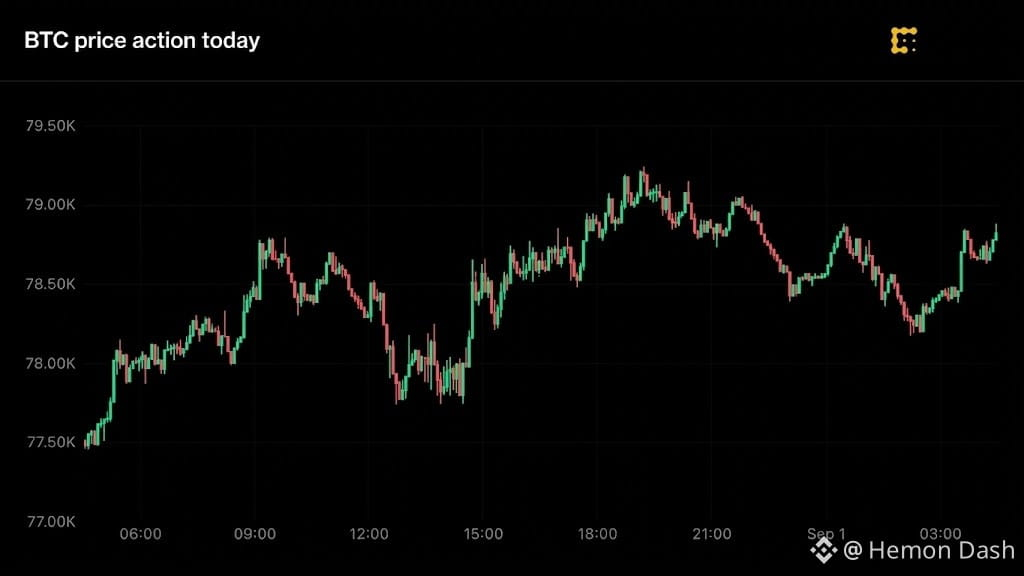
76
·
--
文章
比特幣不只是一個幣:理解 $BTC 的經濟體系
大多數人看的是比特幣的價格。很少有人去研究支撐它的經濟“機器”。
當比特幣在一天內上漲或下跌 5%,大多數人首先會問的問題是:
“接下來價格會去往哪裏?”
但我認爲,還有一個更重要的問題:
“是什麼讓比特幣的經濟體系運轉起來?”
比特幣不僅僅是一種在圖表上上下波動的數字幣。
在 $BTC 背後,是一個完整的經濟系統:包含礦工、使用者、投資者、交易所、企業、開發者、流動性提供者,以及一個由全球參與者構成的網絡。
比特幣不只是一個幣:理解 $BTC 的經濟體系
大多數人看的是比特幣的價格。很少有人去研究支撐它的經濟“機器”。
當比特幣在一天內上漲或下跌 5%,大多數人首先會問的問題是:
“接下來價格會去往哪裏?”
但我認爲,還有一個更重要的問題:
“是什麼讓比特幣的經濟體系運轉起來?”
比特幣不僅僅是一種在圖表上上下波動的數字幣。
在 $BTC 背後,是一個完整的經濟系統:包含礦工、使用者、投資者、交易所、企業、開發者、流動性提供者,以及一個由全球參與者構成的網絡。
大多數人看的是比特幣的價格。很少有人去研究支撐它的經濟“機器”。
當比特幣在一天內上漲或下跌 5%,大多數人首先會問的問題是:
“接下來價格會去往哪裏?”
但我認爲,還有一個更重要的問題:
“是什麼讓比特幣的經濟體系運轉起來?”
比特幣不僅僅是一種在圖表上上下波動的數字幣。
在 $BTC 背後,是一個完整的經濟系統:包含礦工、使用者、投資者、交易所、企業、開發者、流動性提供者,以及一個由全球參與者構成的網絡。
78
登入以探索更多內容
加入幣安廣場中的全球加密貨幣用戶
⚡️ 獲取加密貨幣的最新和實用資訊。
💬 受到全球最大加密貨幣交易所的信任。
👍 發掘來自經過驗證創作者的真實見解。
電子郵件 / 電話號碼
熱門話題
俄乌同时宣布停火3天
123,001 次瀏覽
403 討論中
莫斯科深夜這場長達三個小時的密談,把大國博弈裏最殘酷也最真實的“籌碼邏輯”擺上了檯面。
表面上看是特朗普的特使威特科夫和女婿庫什納穿梭外交,撮合了一場爲期三天的“基輔-莫斯科雙向停火”。但這絕不是什麼和平的曙光,而是典型以退爲進的政治表演與試探。
普京選擇在這個節點給美方特使面子,宣佈對基輔暫停空襲,成本極低卻精準抓住了主動權。俄軍在正面戰場的推進是硬實力,也是俄羅斯坐在談判桌前的最大底氣。所謂的“停止空襲基輔三天”,實質上是用最容易隨時重啓的戰術動作,換取了美方在政治調解中的信任紅利,順手把“拒絕更廣泛停火”的冷水澆在烏克蘭頭上,再次向外界傳遞出信號:節奏依然掌握在莫斯科手裏,任何脫離戰場現實的寬泛方案都是空談。
烏克蘭方面的應對則凸顯出極度的被動。澤連斯基同步宣佈暫停對莫斯科的打擊,看似是在爭取平等的互動空間,但這種對等本身就是受美方壓力驅動的被動跟進。面對即將在6日抵達基輔的美方代表,烏克蘭必須靠這種姿態來維持來自華盛頓的注意力與政治支持。
美方穿梭外交的真正核心,其實是特朗普團隊急於在接下來的基輔之行前拿到可落地的政治籌碼。庫什納和威特科夫要的不是頓巴斯的一草一木,而是能向美國國內輿論展示的“斡旋成果”。俄美雙方確認維持總統直接聯繫,意味着未來很長一段時間內,決定戰爭走向的博弈層級已經進一步向莫斯科和華盛頓傾斜,而基輔的戰術選擇空間正在被壓縮得越來越窄。
這種短暫停火極易隨時破裂。對真正盯緊地緣局勢的觀察者來說,這三天裏誰在談判桌上拋出什麼底牌,遠比戰線上暫時的安靜要致命得多。$BTC
#俄乌同时宣布停火3天
周东野
·3 人按讚
·3.6k 次瀏覽
BinanceAlpha将上线CNPY并开放空投
19,051 次瀏覽
75 討論中
ZEC市值超越DOGE
53,530 次瀏覽
20 討論中