

TamaraSolovei
34 貼文

TamaraSolovei
舉報
封鎖用戶
7 關注
2 粉絲
5 點讚數
貼文
#dusk $DUSK @Dusk_Foundation
機構金融中最重要的事情之一,是準確瞭解一筆交易完成時到底會發生什麼。
這就是爲什麼我對 Dusk 的交割方式產生了興趣。
在傳統金融市場中,交割可能涉及多個系統和中介。
鏈上基礎設施則有可能讓流程更直接、更具可編程性。
@Dusk_Foundation 正在圍繞確定性交割進行構建,並將其與監管資產所需的隱私與合規功能結合。
這很關鍵,因爲代幣化證券的價值並不只是“存在於某條區塊鏈上”這麼簡單。
基礎設施還必須能夠回答:
🔹 誰被允許持有它?
🔹 它能被轉讓嗎?
🔹 必須驗證哪些信息?
🔹 交易在何時算最終完成?
Dusk 正試圖把這些規則直接變成網絡本身的一部分。
對我而言,這也是更有吸引力的 RWA 論點:不僅是把資產代幣化,而是讓整個金融交易生命週期都變得可編程且可驗證。
#dusk $DUSK @Dusk
機構金融中最重要的事情之一,是準確瞭解一筆交易完成時到底會發生什麼。
這就是爲什麼我對 Dusk 的交割方式產生了興趣。
在傳統金融市場中,交割可能涉及多個系統和中介。
鏈上基礎設施則有可能讓流程更直接、更具可編程性。
@Dusk 正在圍繞確定性交割進行構建,並將其與監管資產所需的隱私與合規功能結合。
這很關鍵,因爲代幣化證券的價值並不只是“存在於某條區塊鏈上”這麼簡單。
基礎設施還必須能夠回答:
🔹 誰被允許持有它?
🔹 它能被轉讓嗎?
🔹 必須驗證哪些信息?
🔹 交易在何時算最終完成?
Dusk 正試圖把這些規則直接變成網絡本身的一部分。
對我而言,這也是更有吸引力的 RWA 論點:不僅是把資產代幣化,而是讓整個金融交易生命週期都變得可編程且可驗證。
機構金融中最重要的事情之一,是準確瞭解一筆交易完成時到底會發生什麼。
這就是爲什麼我對 Dusk 的交割方式產生了興趣。
在傳統金融市場中,交割可能涉及多個系統和中介。
鏈上基礎設施則有可能讓流程更直接、更具可編程性。
@Dusk 正在圍繞確定性交割進行構建,並將其與監管資產所需的隱私與合規功能結合。
這很關鍵,因爲代幣化證券的價值並不只是“存在於某條區塊鏈上”這麼簡單。
基礎設施還必須能夠回答:
🔹 誰被允許持有它?
🔹 它能被轉讓嗎?
🔹 必須驗證哪些信息?
🔹 交易在何時算最終完成?
Dusk 正試圖把這些規則直接變成網絡本身的一部分。
對我而言,這也是更有吸引力的 RWA 論點:不僅是把資產代幣化,而是讓整個金融交易生命週期都變得可編程且可驗證。
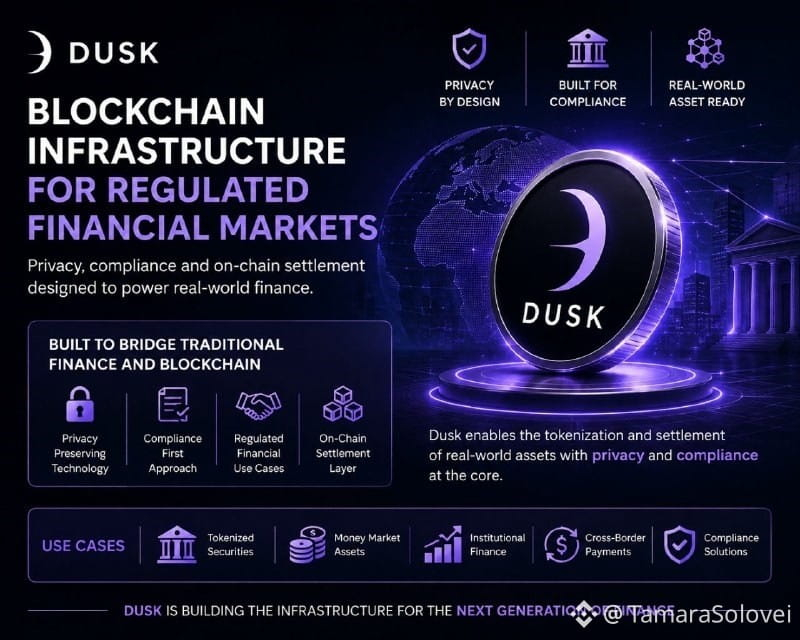
103
#dusk $DUSK @Dusk_Foundation 關注 Dusk 一段時間後,我最在意的一個部分是:網絡是如何被明確地圍繞金融市場來構建的。
Dusk 並不是試圖解決所有可能的區塊鏈用例。
它的基礎設施聚焦於一個更狹窄——但可能非常重要——的問題:讓受監管的金融資產在鏈上運行。
這意味着要處理傳統金融一開始就讓人頭疼的那些事:
🔹 投資者資格
🔹 資產轉移
🔹 隱私與選擇性披露
🔹 合規要求
🔹 確定性結算
🔹 爲開發者提供不同的執行環境
我認爲,這纔是切入 RWA 市場的正確方式。
將資產代幣化只是起點。真正的挑戰是打造一種基礎設施:讓該資產能夠被實際發行、轉移、交易並完成結算,同時確保其周邊規則仍可被執行。
這也是我認爲最令人信服的 Dusk 觀點。
而不是“爲一切打造區塊鏈”。
面向金融市場、專門設計的區塊鏈基礎設施。
至於 Dusk 能否把這種架構轉化爲重大的現實採用,這仍是最大的問題。
但隨着 RWA 領域繼續發展,我認爲那些在解決基礎設施問題的項目值得更多關注。
目前,$DUSK 仍在我的觀察清單上。
#dusk $DUSK @Dusk 關注 Dusk 一段時間後,我最在意的一個部分是:網絡是如何被明確地圍繞金融市場來構建的。
Dusk 並不是試圖解決所有可能的區塊鏈用例。
它的基礎設施聚焦於一個更狹窄——但可能非常重要——的問題:讓受監管的金融資產在鏈上運行。
這意味着要處理傳統金融一開始就讓人頭疼的那些事:
🔹 投資者資格
🔹 資產轉移
🔹 隱私與選擇性披露
🔹 合規要求
🔹 確定性結算
🔹 爲開發者提供不同的執行環境
我認爲,這纔是切入 RWA 市場的正確方式。
將資產代幣化只是起點。真正的挑戰是打造一種基礎設施:讓該資產能夠被實際發行、轉移、交易並完成結算,同時確保其周邊規則仍可被執行。
這也是我認爲最令人信服的 Dusk 觀點。
而不是“爲一切打造區塊鏈”。
面向金融市場、專門設計的區塊鏈基礎設施。
至於 Dusk 能否把這種架構轉化爲重大的現實採用,這仍是最大的問題。
但隨着 RWA 領域繼續發展,我認爲那些在解決基礎設施問題的項目值得更多關注。
目前,$DUSK 仍在我的觀察清單上。
Dusk 並不是試圖解決所有可能的區塊鏈用例。
它的基礎設施聚焦於一個更狹窄——但可能非常重要——的問題:讓受監管的金融資產在鏈上運行。
這意味着要處理傳統金融一開始就讓人頭疼的那些事:
🔹 投資者資格
🔹 資產轉移
🔹 隱私與選擇性披露
🔹 合規要求
🔹 確定性結算
🔹 爲開發者提供不同的執行環境
我認爲,這纔是切入 RWA 市場的正確方式。
將資產代幣化只是起點。真正的挑戰是打造一種基礎設施:讓該資產能夠被實際發行、轉移、交易並完成結算,同時確保其周邊規則仍可被執行。
這也是我認爲最令人信服的 Dusk 觀點。
而不是“爲一切打造區塊鏈”。
面向金融市場、專門設計的區塊鏈基礎設施。
至於 Dusk 能否把這種架構轉化爲重大的現實採用,這仍是最大的問題。
但隨着 RWA 領域繼續發展,我認爲那些在解決基礎設施問題的項目值得更多關注。
目前,$DUSK 仍在我的觀察清單上。
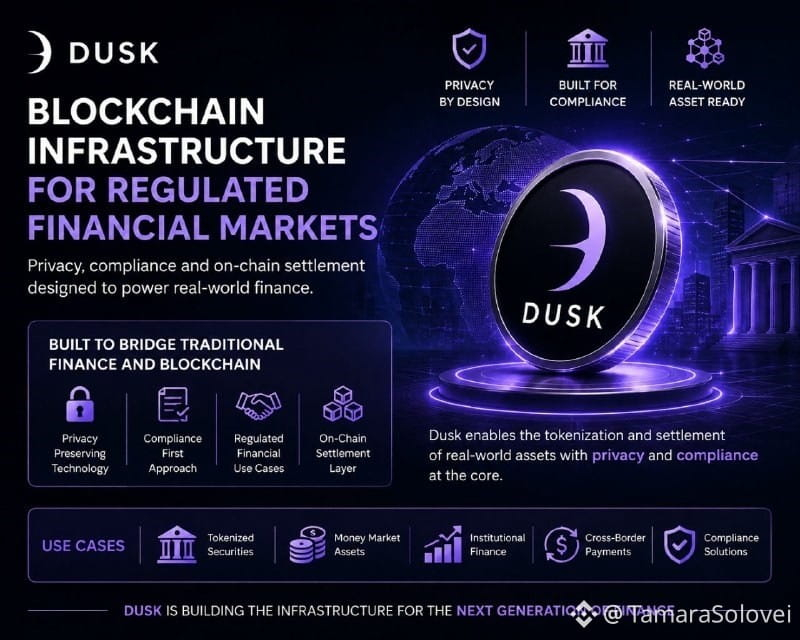
83
#dusk $DUSK @Dusk_Foundation
《暮光》(Dusk)最有趣的部分,也許在於:一項資產被髮行的那一刻,到它真正抵達投資者之間,會發生什麼。
受監管的金融領域有許多條件,需要在資產實際流轉之前被嚴格執行:投資者資質、轉讓限制、合規審查以及結算。
@Dusk_Foundation 正是在區塊鏈基礎設施本身中構建這些要求。
這意味着網絡並不是把合規當作一個必須“額外外掛”的獨立層加在每個應用上。相反,受監管資產的工作流可以圍繞原生的訪問控制、具備隱私保護能力的交易以及確定性結算來構建。
我認爲這種做法很符合機構級市場的需求。
公有區塊鏈可以提供透明度,但金融機構也同樣需要可控的訪問以及可預測的執行。
《暮光》(Dusk)正在嘗試將兩者結合:
在需要透明的地方提供透明的基礎設施。
在有必要時提供隱私。
在監管要求時提供可驗證性。
如果代幣化證券最終成爲重要市場,這些細節可能比“擁有另一個能夠發行代幣的區塊鏈”本身更爲關鍵。
真正的考驗在於:金融機構能否在該網絡上真正開展業務。
這也正是我會用 $DUSK 來持續關注的。
#dusk $DUSK @Dusk
《暮光》(Dusk)最有趣的部分,也許在於:一項資產被髮行的那一刻,到它真正抵達投資者之間,會發生什麼。
受監管的金融領域有許多條件,需要在資產實際流轉之前被嚴格執行:投資者資質、轉讓限制、合規審查以及結算。
@Dusk 正是在區塊鏈基礎設施本身中構建這些要求。
這意味着網絡並不是把合規當作一個必須“額外外掛”的獨立層加在每個應用上。相反,受監管資產的工作流可以圍繞原生的訪問控制、具備隱私保護能力的交易以及確定性結算來構建。
我認爲這種做法很符合機構級市場的需求。
公有區塊鏈可以提供透明度,但金融機構也同樣需要可控的訪問以及可預測的執行。
《暮光》(Dusk)正在嘗試將兩者結合:
在需要透明的地方提供透明的基礎設施。
在有必要時提供隱私。
在監管要求時提供可驗證性。
如果代幣化證券最終成爲重要市場,這些細節可能比“擁有另一個能夠發行代幣的區塊鏈”本身更爲關鍵。
真正的考驗在於:金融機構能否在該網絡上真正開展業務。
這也正是我會用 $DUSK 來持續關注的。
《暮光》(Dusk)最有趣的部分,也許在於:一項資產被髮行的那一刻,到它真正抵達投資者之間,會發生什麼。
受監管的金融領域有許多條件,需要在資產實際流轉之前被嚴格執行:投資者資質、轉讓限制、合規審查以及結算。
@Dusk 正是在區塊鏈基礎設施本身中構建這些要求。
這意味着網絡並不是把合規當作一個必須“額外外掛”的獨立層加在每個應用上。相反,受監管資產的工作流可以圍繞原生的訪問控制、具備隱私保護能力的交易以及確定性結算來構建。
我認爲這種做法很符合機構級市場的需求。
公有區塊鏈可以提供透明度,但金融機構也同樣需要可控的訪問以及可預測的執行。
《暮光》(Dusk)正在嘗試將兩者結合:
在需要透明的地方提供透明的基礎設施。
在有必要時提供隱私。
在監管要求時提供可驗證性。
如果代幣化證券最終成爲重要市場,這些細節可能比“擁有另一個能夠發行代幣的區塊鏈”本身更爲關鍵。
真正的考驗在於:金融機構能否在該網絡上真正開展業務。
這也正是我會用 $DUSK 來持續關注的。
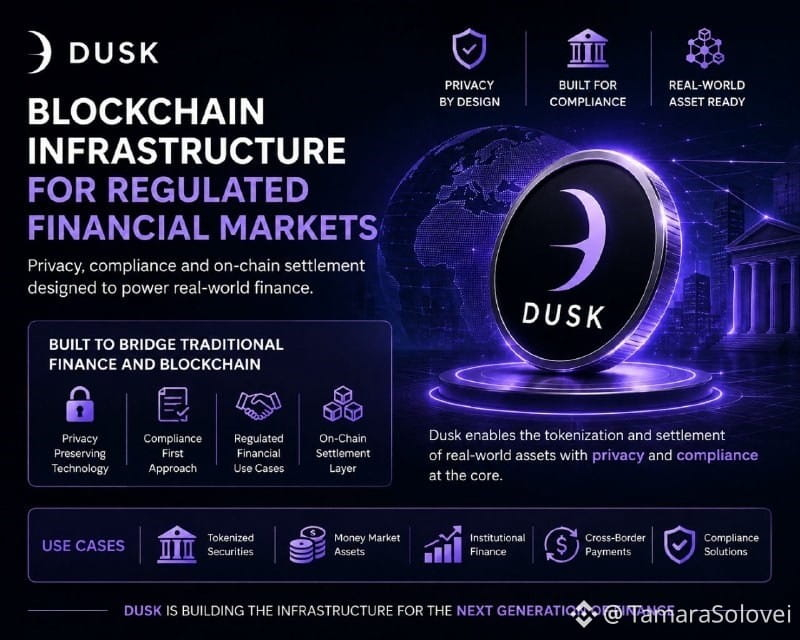
80
#dusk $DUSK @Dusk_Foundation
大多數人聽到“RWA”就會立刻想到把政府債券代幣化,或把不動產上鍊。
但我認爲更有意思的機會要廣泛得多。
私募市場。
大量的經濟活動發生在公共市場之外。
私營公司需要融資。
投資者需要獲得機會。
所有權需要被記錄。
轉讓需要被管控。
支付與結算需要能夠完成。
並且每個參與者都需要知道,究竟誰被實際授權可以做什麼。
今天,這類基礎設施在發行方、銀行、託管機構、管理員、經紀商以及其他中介之間往往是割裂的。
代幣化並不會自動解決這些問題。
把某個資產放到區塊鏈上,並不會憑空創造流動性、需求或法律確定性。
真正有趣的是:當資產的完整生命週期都可以被數字化呈現時,會發生什麼。
發行。
投資者資質。
所有權。
轉讓。
股息。
投票。
結算。
這就是 @Dusk_Foundation _Foundation 正在採取一種有意思的做法。
Dusk 並不是只是說“讓我們把更多資產上鍊”。
它試圖構建基礎設施:讓受監管的資產能夠存在於鏈上,同時仍然能夠滿足金融市場絕不能忽視的要求。
隱私。
選擇性披露。
訪問控制。
合規。
確定性結算。
而這對私募市場尤其重要。
公鏈默認給你透明性。
但金融市場往往需要相反的東西:受控的可見性。
投資者可能需要證明自己具備資格,而不必暴露每一項個人信息。
公司可能需要把敏感的持倉保密。
受監管的交易場所可能需要準確知道誰可以持有或轉讓某個資產。
這並不意味着區塊鏈必須在透明性和隱私之間二選一。
這意味着基礎設施需要同時爲兩者而設計。
這也是爲什麼我在關注 Dusk。
有趣的問題不在於我們能不能把另一個資產代幣化。
#dusk $DUSK @Dusk
大多數人聽到“RWA”就會立刻想到把政府債券代幣化,或把不動產上鍊。
但我認爲更有意思的機會要廣泛得多。
私募市場。
大量的經濟活動發生在公共市場之外。
私營公司需要融資。
投資者需要獲得機會。
所有權需要被記錄。
轉讓需要被管控。
支付與結算需要能夠完成。
並且每個參與者都需要知道,究竟誰被實際授權可以做什麼。
今天,這類基礎設施在發行方、銀行、託管機構、管理員、經紀商以及其他中介之間往往是割裂的。
代幣化並不會自動解決這些問題。
把某個資產放到區塊鏈上,並不會憑空創造流動性、需求或法律確定性。
真正有趣的是:當資產的完整生命週期都可以被數字化呈現時,會發生什麼。
發行。
投資者資質。
所有權。
轉讓。
股息。
投票。
結算。
這就是 @Dusk _Foundation 正在採取一種有意思的做法。
Dusk 並不是只是說“讓我們把更多資產上鍊”。
它試圖構建基礎設施:讓受監管的資產能夠存在於鏈上,同時仍然能夠滿足金融市場絕不能忽視的要求。
隱私。
選擇性披露。
訪問控制。
合規。
確定性結算。
而這對私募市場尤其重要。
公鏈默認給你透明性。
但金融市場往往需要相反的東西:受控的可見性。
投資者可能需要證明自己具備資格,而不必暴露每一項個人信息。
公司可能需要把敏感的持倉保密。
受監管的交易場所可能需要準確知道誰可以持有或轉讓某個資產。
這並不意味着區塊鏈必須在透明性和隱私之間二選一。
這意味着基礎設施需要同時爲兩者而設計。
這也是爲什麼我在關注 Dusk。
有趣的問題不在於我們能不能把另一個資產代幣化。
大多數人聽到“RWA”就會立刻想到把政府債券代幣化,或把不動產上鍊。
但我認爲更有意思的機會要廣泛得多。
私募市場。
大量的經濟活動發生在公共市場之外。
私營公司需要融資。
投資者需要獲得機會。
所有權需要被記錄。
轉讓需要被管控。
支付與結算需要能夠完成。
並且每個參與者都需要知道,究竟誰被實際授權可以做什麼。
今天,這類基礎設施在發行方、銀行、託管機構、管理員、經紀商以及其他中介之間往往是割裂的。
代幣化並不會自動解決這些問題。
把某個資產放到區塊鏈上,並不會憑空創造流動性、需求或法律確定性。
真正有趣的是:當資產的完整生命週期都可以被數字化呈現時,會發生什麼。
發行。
投資者資質。
所有權。
轉讓。
股息。
投票。
結算。
這就是 @Dusk _Foundation 正在採取一種有意思的做法。
Dusk 並不是只是說“讓我們把更多資產上鍊”。
它試圖構建基礎設施:讓受監管的資產能夠存在於鏈上,同時仍然能夠滿足金融市場絕不能忽視的要求。
隱私。
選擇性披露。
訪問控制。
合規。
確定性結算。
而這對私募市場尤其重要。
公鏈默認給你透明性。
但金融市場往往需要相反的東西:受控的可見性。
投資者可能需要證明自己具備資格,而不必暴露每一項個人信息。
公司可能需要把敏感的持倉保密。
受監管的交易場所可能需要準確知道誰可以持有或轉讓某個資產。
這並不意味着區塊鏈必須在透明性和隱私之間二選一。
這意味着基礎設施需要同時爲兩者而設計。
這也是爲什麼我在關注 Dusk。
有趣的問題不在於我們能不能把另一個資產代幣化。
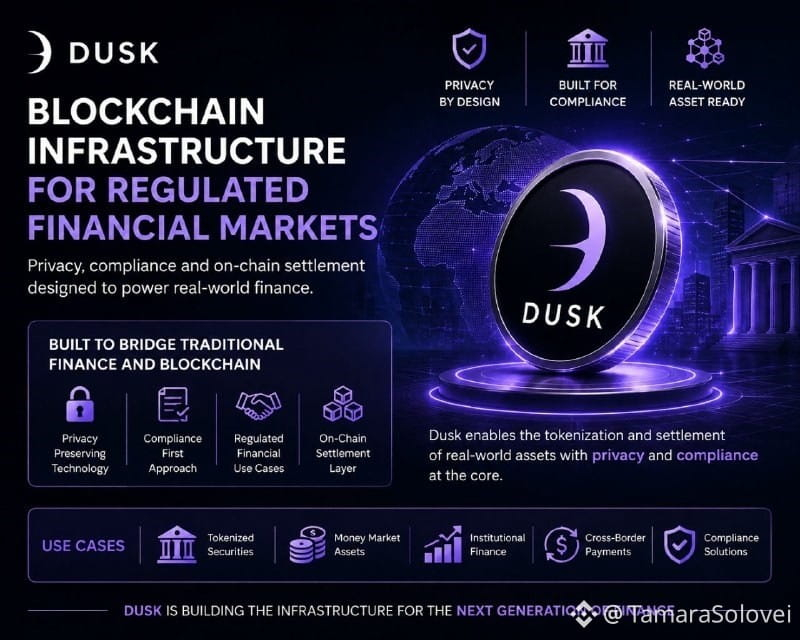
71
#dusk $DUSK @Dusk_Foundation
大多數人聽到 “RWA” 就會立刻想到把政府債券代幣化,或是把房地產上鍊。
但我覺得更有趣的機會要廣得多。
私募市場。
大量的經濟活動發生在公開市場之外。
私營公司需要融資。
投資者需要接觸機會。
所有權需要被記錄。
轉讓需要被管控。
支付與結算需要完成。
並且每個參與者都需要知道:究竟誰被真正允許做什麼。
今天,這套基礎設施在發行方、銀行、託管機構、管理人、經紀商以及其他中介之間高度分散。
代幣化並不會自動解決這些問題。
把資產放到區塊鏈上,並不會憑空創造流動性、需求或法律確定性。
真正有意思的是:當資產的整個生命週期都可以被數字化地呈現時,會發生什麼。
發行。
投資者資格。
所有權。
轉讓。
分紅。
投票。
結算。
這就是 @Dusk_Foundation _Foundation 正在採取的一種有趣方法。
Dusk 並不只是說 “讓我們把更多資產上鍊”。
它試圖構建基礎設施,讓受監管的資產能夠在鏈上存在,同時仍然滿足金融市場無法忽視的那些要求。
隱私。
選擇性披露。
訪問控制。
合規。
確定性結算。
而這對私募市場尤其重要。
公鏈默認給你透明度。
金融市場往往需要相反的東西:可控的可視性。
投資者可能需要證明自己具備資格,但又不能暴露所有個人信息。
公司可能需要把敏感持倉保密。
受監管的平臺可能需要確切知道誰可以持有或轉讓某項資產。
這並不意味着區塊鏈必須在透明和隱私之間二選一。
這意味着基礎設施需要爲兩者都進行設計。
這就是爲什麼我在關注 Dusk。
有趣的問題並不在於我們能不能對另一項資產進行代幣化。
#dusk $DUSK @Dusk
大多數人聽到 “RWA” 就會立刻想到把政府債券代幣化,或是把房地產上鍊。
但我覺得更有趣的機會要廣得多。
私募市場。
大量的經濟活動發生在公開市場之外。
私營公司需要融資。
投資者需要接觸機會。
所有權需要被記錄。
轉讓需要被管控。
支付與結算需要完成。
並且每個參與者都需要知道:究竟誰被真正允許做什麼。
今天,這套基礎設施在發行方、銀行、託管機構、管理人、經紀商以及其他中介之間高度分散。
代幣化並不會自動解決這些問題。
把資產放到區塊鏈上,並不會憑空創造流動性、需求或法律確定性。
真正有意思的是:當資產的整個生命週期都可以被數字化地呈現時,會發生什麼。
發行。
投資者資格。
所有權。
轉讓。
分紅。
投票。
結算。
這就是 @Dusk _Foundation 正在採取的一種有趣方法。
Dusk 並不只是說 “讓我們把更多資產上鍊”。
它試圖構建基礎設施,讓受監管的資產能夠在鏈上存在,同時仍然滿足金融市場無法忽視的那些要求。
隱私。
選擇性披露。
訪問控制。
合規。
確定性結算。
而這對私募市場尤其重要。
公鏈默認給你透明度。
金融市場往往需要相反的東西:可控的可視性。
投資者可能需要證明自己具備資格,但又不能暴露所有個人信息。
公司可能需要把敏感持倉保密。
受監管的平臺可能需要確切知道誰可以持有或轉讓某項資產。
這並不意味着區塊鏈必須在透明和隱私之間二選一。
這意味着基礎設施需要爲兩者都進行設計。
這就是爲什麼我在關注 Dusk。
有趣的問題並不在於我們能不能對另一項資產進行代幣化。
大多數人聽到 “RWA” 就會立刻想到把政府債券代幣化,或是把房地產上鍊。
但我覺得更有趣的機會要廣得多。
私募市場。
大量的經濟活動發生在公開市場之外。
私營公司需要融資。
投資者需要接觸機會。
所有權需要被記錄。
轉讓需要被管控。
支付與結算需要完成。
並且每個參與者都需要知道:究竟誰被真正允許做什麼。
今天,這套基礎設施在發行方、銀行、託管機構、管理人、經紀商以及其他中介之間高度分散。
代幣化並不會自動解決這些問題。
把資產放到區塊鏈上,並不會憑空創造流動性、需求或法律確定性。
真正有意思的是:當資產的整個生命週期都可以被數字化地呈現時,會發生什麼。
發行。
投資者資格。
所有權。
轉讓。
分紅。
投票。
結算。
這就是 @Dusk _Foundation 正在採取的一種有趣方法。
Dusk 並不只是說 “讓我們把更多資產上鍊”。
它試圖構建基礎設施,讓受監管的資產能夠在鏈上存在,同時仍然滿足金融市場無法忽視的那些要求。
隱私。
選擇性披露。
訪問控制。
合規。
確定性結算。
而這對私募市場尤其重要。
公鏈默認給你透明度。
金融市場往往需要相反的東西:可控的可視性。
投資者可能需要證明自己具備資格,但又不能暴露所有個人信息。
公司可能需要把敏感持倉保密。
受監管的平臺可能需要確切知道誰可以持有或轉讓某項資產。
這並不意味着區塊鏈必須在透明和隱私之間二選一。
這意味着基礎設施需要爲兩者都進行設計。
這就是爲什麼我在關注 Dusk。
有趣的問題並不在於我們能不能對另一項資產進行代幣化。
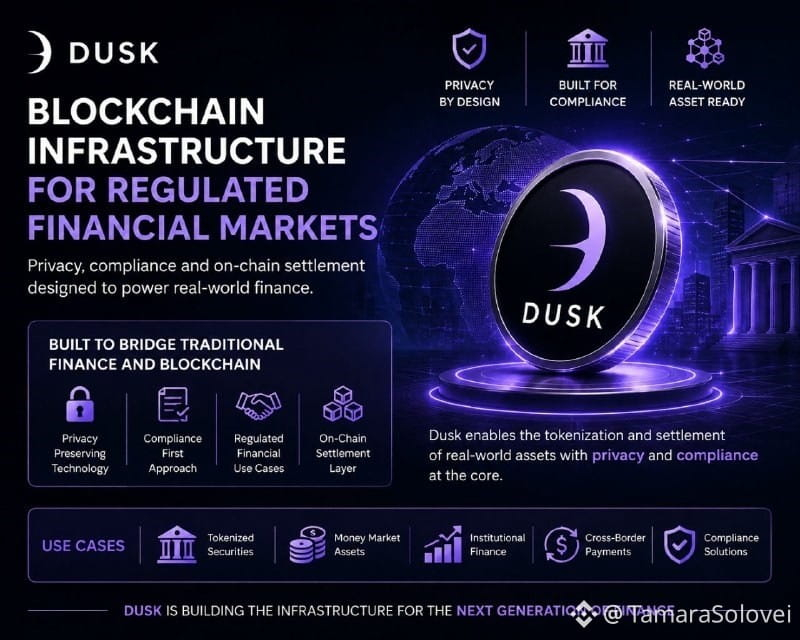
64
查看翻譯
#termmax @termmax DeFi becomes much more interesting when financial positions can be built like Lego blocks.
That’s one reason I’m watching TermMax.
The protocol is focused on fixed-rate lending and borrowing with defined maturities, but the bigger idea is what these predictable positions can enable on top of them.
A fixed-rate position can become a building block for:
🔹 Hedging interest-rate exposure
🔹 More predictable leverage
🔹 Fixed-income strategies
🔹 Vaults and structured products
🔹 More precise capital management
Instead of every strategy depending on whatever the floating market rate happens to be at a particular moment, users can build around a known rate and a defined time horizon.
That's important because sophisticated financial strategies usually need more than liquidity. They need predictability.
TermMax is essentially bringing another primitive from traditional fixed-income markets into DeFi and making it composable with on-chain infrastructure.
The interesting question is how far fixed-rate markets can go once they become programmable.
$TMX is one token I'll be watching as this sector develops.
#termmax @TermMax DeFi becomes much more interesting when financial positions can be built like Lego blocks.
That’s one reason I’m watching TermMax.
The protocol is focused on fixed-rate lending and borrowing with defined maturities, but the bigger idea is what these predictable positions can enable on top of them.
A fixed-rate position can become a building block for:
🔹 Hedging interest-rate exposure
🔹 More predictable leverage
🔹 Fixed-income strategies
🔹 Vaults and structured products
🔹 More precise capital management
Instead of every strategy depending on whatever the floating market rate happens to be at a particular moment, users can build around a known rate and a defined time horizon.
That's important because sophisticated financial strategies usually need more than liquidity. They need predictability.
TermMax is essentially bringing another primitive from traditional fixed-income markets into DeFi and making it composable with on-chain infrastructure.
The interesting question is how far fixed-rate markets can go once they become programmable.
$TMX is one token I'll be watching as this sector develops.
That’s one reason I’m watching TermMax.
The protocol is focused on fixed-rate lending and borrowing with defined maturities, but the bigger idea is what these predictable positions can enable on top of them.
A fixed-rate position can become a building block for:
🔹 Hedging interest-rate exposure
🔹 More predictable leverage
🔹 Fixed-income strategies
🔹 Vaults and structured products
🔹 More precise capital management
Instead of every strategy depending on whatever the floating market rate happens to be at a particular moment, users can build around a known rate and a defined time horizon.
That's important because sophisticated financial strategies usually need more than liquidity. They need predictability.
TermMax is essentially bringing another primitive from traditional fixed-income markets into DeFi and making it composable with on-chain infrastructure.
The interesting question is how far fixed-rate markets can go once they become programmable.
$TMX is one token I'll be watching as this sector develops.
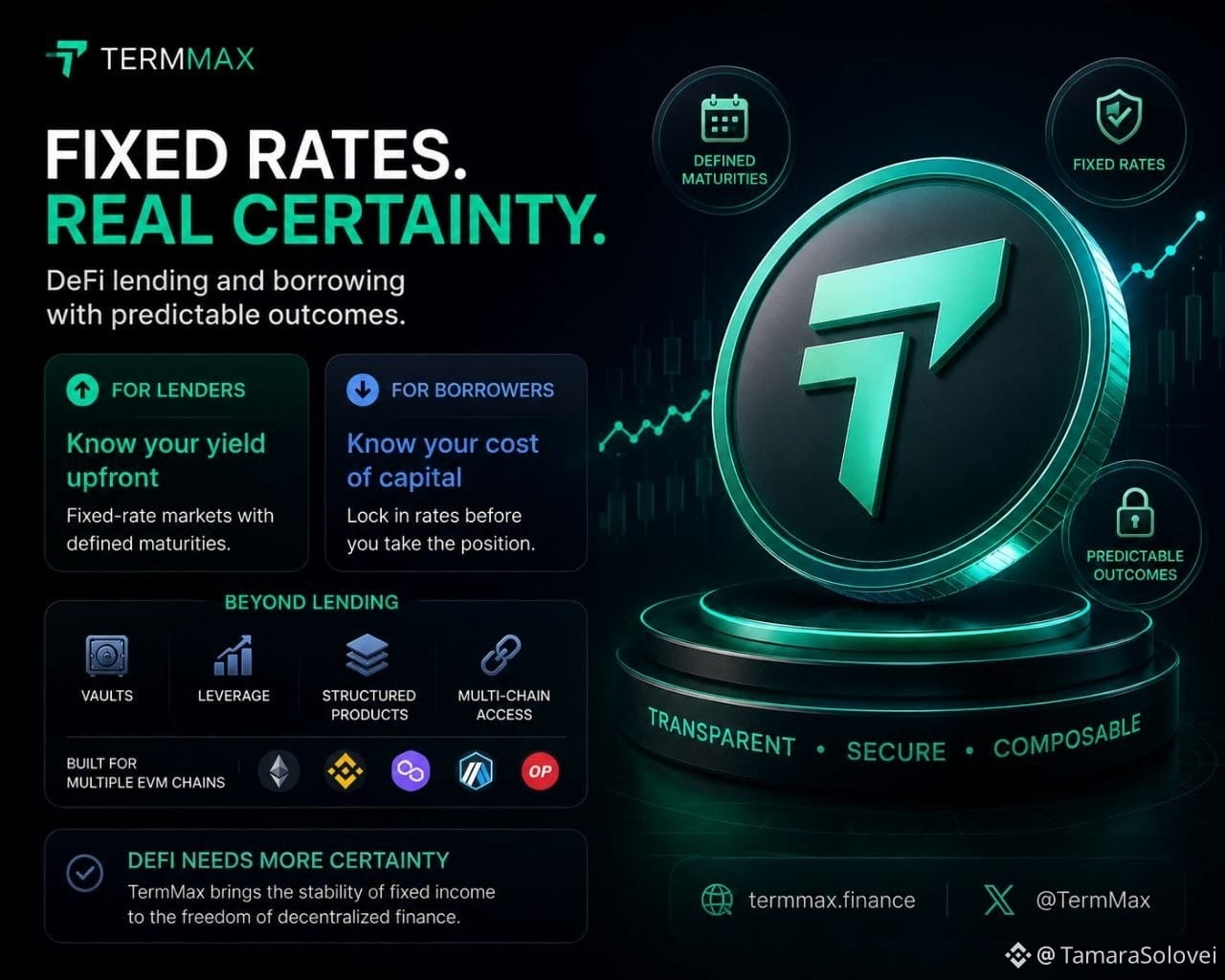
57
#dusk $DUSK @Dusk_Foundation
我覺得關於 Dusk 有趣的一點是,它並沒有試圖把每一個金融應用都強行塞進同一種執行模型。
網絡爲原生的 Rust/WASM 應用提供 DuskVM,爲希望在以太坊兼容環境中開發的開發者提供 DuskEVM。
這就形成了一種很有意思的平衡。
開發者可以使用熟悉的 EVM 工具和智能合約語言;而那些需要更深入訪問 Dusk 原生能力的應用,則可以直接構建在 DuskVM 之上。
在這兩個環境之下,是 DuskDS,負責提供結算與數據可用性層。
這種架構對於一個專注於金融應用的網絡來說是有道理的。不同產品可以有不同的技術需求,而不必一定要拆成完全獨立的鏈。
而原生的 $DUSK 代幣則通過交易費用和網絡質押把整個生態串聯在一起。
對我而言,真正有趣的問題並不是 Dusk 能不能吸引開發者——而是這種架構能否轉化爲鏈上真實的金融活動。
如果能夠做到,那麼 $DUSK 就不只是一個掛在 RWA 敘事上的代幣。它將成爲支撐在 Dusk 上構建的各類應用的基礎設施的一部分。
#dusk $DUSK @Dusk
我覺得關於 Dusk 有趣的一點是,它並沒有試圖把每一個金融應用都強行塞進同一種執行模型。
網絡爲原生的 Rust/WASM 應用提供 DuskVM,爲希望在以太坊兼容環境中開發的開發者提供 DuskEVM。
這就形成了一種很有意思的平衡。
開發者可以使用熟悉的 EVM 工具和智能合約語言;而那些需要更深入訪問 Dusk 原生能力的應用,則可以直接構建在 DuskVM 之上。
在這兩個環境之下,是 DuskDS,負責提供結算與數據可用性層。
這種架構對於一個專注於金融應用的網絡來說是有道理的。不同產品可以有不同的技術需求,而不必一定要拆成完全獨立的鏈。
而原生的 $DUSK 代幣則通過交易費用和網絡質押把整個生態串聯在一起。
對我而言,真正有趣的問題並不是 Dusk 能不能吸引開發者——而是這種架構能否轉化爲鏈上真實的金融活動。
如果能夠做到,那麼 $DUSK 就不只是一個掛在 RWA 敘事上的代幣。它將成爲支撐在 Dusk 上構建的各類應用的基礎設施的一部分。
我覺得關於 Dusk 有趣的一點是,它並沒有試圖把每一個金融應用都強行塞進同一種執行模型。
網絡爲原生的 Rust/WASM 應用提供 DuskVM,爲希望在以太坊兼容環境中開發的開發者提供 DuskEVM。
這就形成了一種很有意思的平衡。
開發者可以使用熟悉的 EVM 工具和智能合約語言;而那些需要更深入訪問 Dusk 原生能力的應用,則可以直接構建在 DuskVM 之上。
在這兩個環境之下,是 DuskDS,負責提供結算與數據可用性層。
這種架構對於一個專注於金融應用的網絡來說是有道理的。不同產品可以有不同的技術需求,而不必一定要拆成完全獨立的鏈。
而原生的 $DUSK 代幣則通過交易費用和網絡質押把整個生態串聯在一起。
對我而言,真正有趣的問題並不是 Dusk 能不能吸引開發者——而是這種架構能否轉化爲鏈上真實的金融活動。
如果能夠做到,那麼 $DUSK 就不只是一個掛在 RWA 敘事上的代幣。它將成爲支撐在 Dusk 上構建的各類應用的基礎設施的一部分。
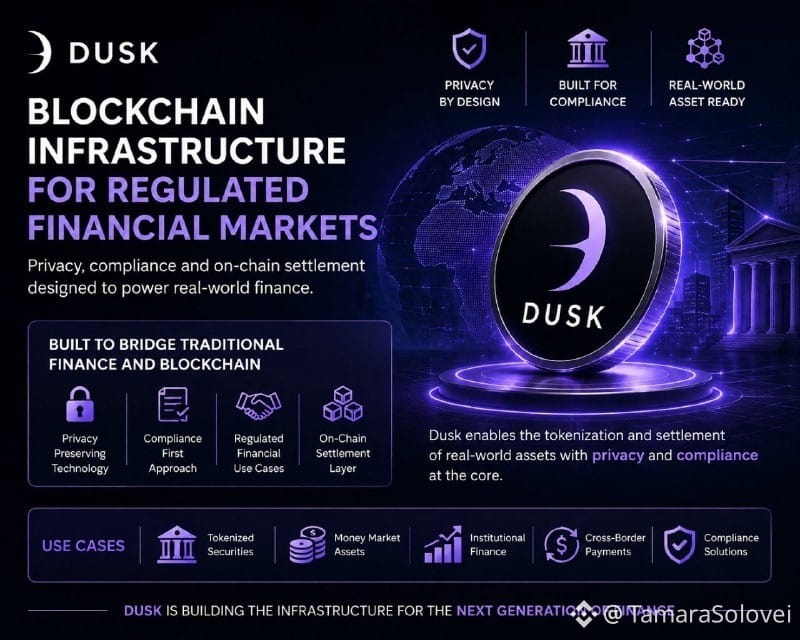
79
#dusk $DUSK @Dusk_Foundation
Dusk 正在採取一種應對鏈上金融最大問題之一的有趣方式:讓市場的不同部分能夠協同運作。
代幣化證券需要的不止是一個區塊鏈地址。它需要關於誰可以持有它、它如何轉移、可以披露哪些信息以及如何最終完成清算的規則。
Dusk 正在將這些要求構建進其網絡中,而不是把它們當作彼此獨立的基礎設施來處理。
讓我印象深刻的是以下幾項的組合:
🔹 視需求而定的許可訪問
🔹 注重隱私保護的交易
🔹 選擇性披露
🔹 確定性結算
🔹 面向開發者的 EVM 兼容性
這種組合可能會讓 Dusk 適用於金融應用:既不適合完全公開的交易,也不能接受完全私有的系統。
Dusk 這一論點中有趣的部分,並不在於把金融“上鍊”。而在於讓區塊鏈基礎設施能貼合受監管金融實際運作的方式。
如果現實世界資產(RWA)繼續朝向機構採用邁進,那麼這是一個值得關注的細分領域。
#dusk $DUSK @Dusk
Dusk 正在採取一種應對鏈上金融最大問題之一的有趣方式:讓市場的不同部分能夠協同運作。
代幣化證券需要的不止是一個區塊鏈地址。它需要關於誰可以持有它、它如何轉移、可以披露哪些信息以及如何最終完成清算的規則。
Dusk 正在將這些要求構建進其網絡中,而不是把它們當作彼此獨立的基礎設施來處理。
讓我印象深刻的是以下幾項的組合:
🔹 視需求而定的許可訪問
🔹 注重隱私保護的交易
🔹 選擇性披露
🔹 確定性結算
🔹 面向開發者的 EVM 兼容性
這種組合可能會讓 Dusk 適用於金融應用:既不適合完全公開的交易,也不能接受完全私有的系統。
Dusk 這一論點中有趣的部分,並不在於把金融“上鍊”。而在於讓區塊鏈基礎設施能貼合受監管金融實際運作的方式。
如果現實世界資產(RWA)繼續朝向機構採用邁進,那麼這是一個值得關注的細分領域。
Dusk 正在採取一種應對鏈上金融最大問題之一的有趣方式:讓市場的不同部分能夠協同運作。
代幣化證券需要的不止是一個區塊鏈地址。它需要關於誰可以持有它、它如何轉移、可以披露哪些信息以及如何最終完成清算的規則。
Dusk 正在將這些要求構建進其網絡中,而不是把它們當作彼此獨立的基礎設施來處理。
讓我印象深刻的是以下幾項的組合:
🔹 視需求而定的許可訪問
🔹 注重隱私保護的交易
🔹 選擇性披露
🔹 確定性結算
🔹 面向開發者的 EVM 兼容性
這種組合可能會讓 Dusk 適用於金融應用:既不適合完全公開的交易,也不能接受完全私有的系統。
Dusk 這一論點中有趣的部分,並不在於把金融“上鍊”。而在於讓區塊鏈基礎設施能貼合受監管金融實際運作的方式。
如果現實世界資產(RWA)繼續朝向機構採用邁進,那麼這是一個值得關注的細分領域。
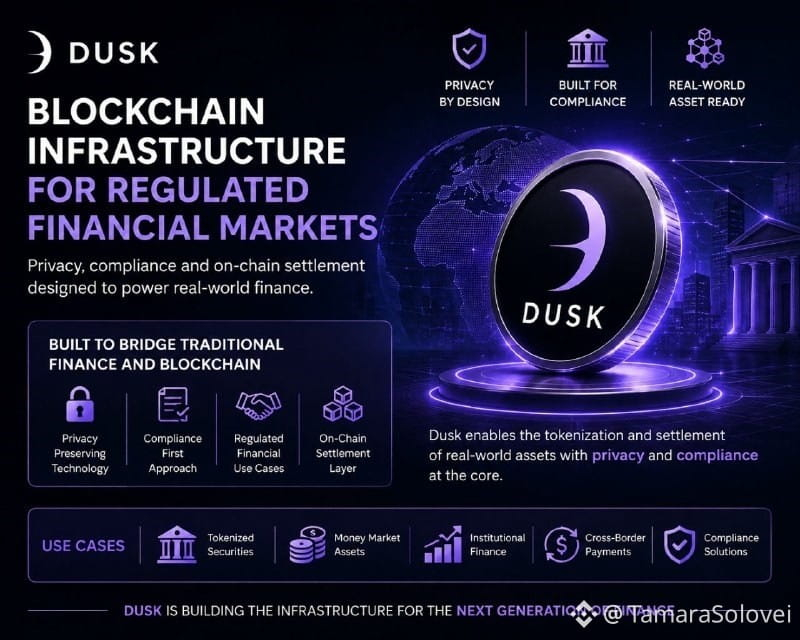
62
#termmax @termmax
在 DeFi 中,可預測性與收益率同樣有價值。
當借款利率不斷變化時,管理一個頭寸就像在移動的靶心上操作。今天看起來很划算的策略,明天可能就會因爲市場條件改變而變得昂貴。
TermMax 通過固定利率市場和明確到期時間來解決這一問題。
這也爲用戶提供了 DeFi 常常缺少的東西:更清晰的資金規劃框架。
借款人可以提前知道自己的融資成本,而出借人則可以在特定期間內評估預期回報,而不是完全依賴浮動利率。
這同時也帶來了更復雜策略的一些有趣可能性:
🔹 對衝利率風險
🔹 更精確地規劃槓桿
🔹 構建固定收益策略
🔹 將借貸與結構化產品結合
🔹 創建更可預測的金庫策略
我認爲,如果 DeFi 希望從短期投機走向更完整的金融生態系統,這是一個重要的步驟。
提前知道利率和到期時間聽起來很簡單——但在波動的市場中,可預測性本身就具有價值。
這就是爲什麼值得關注 TermMax 的做法。
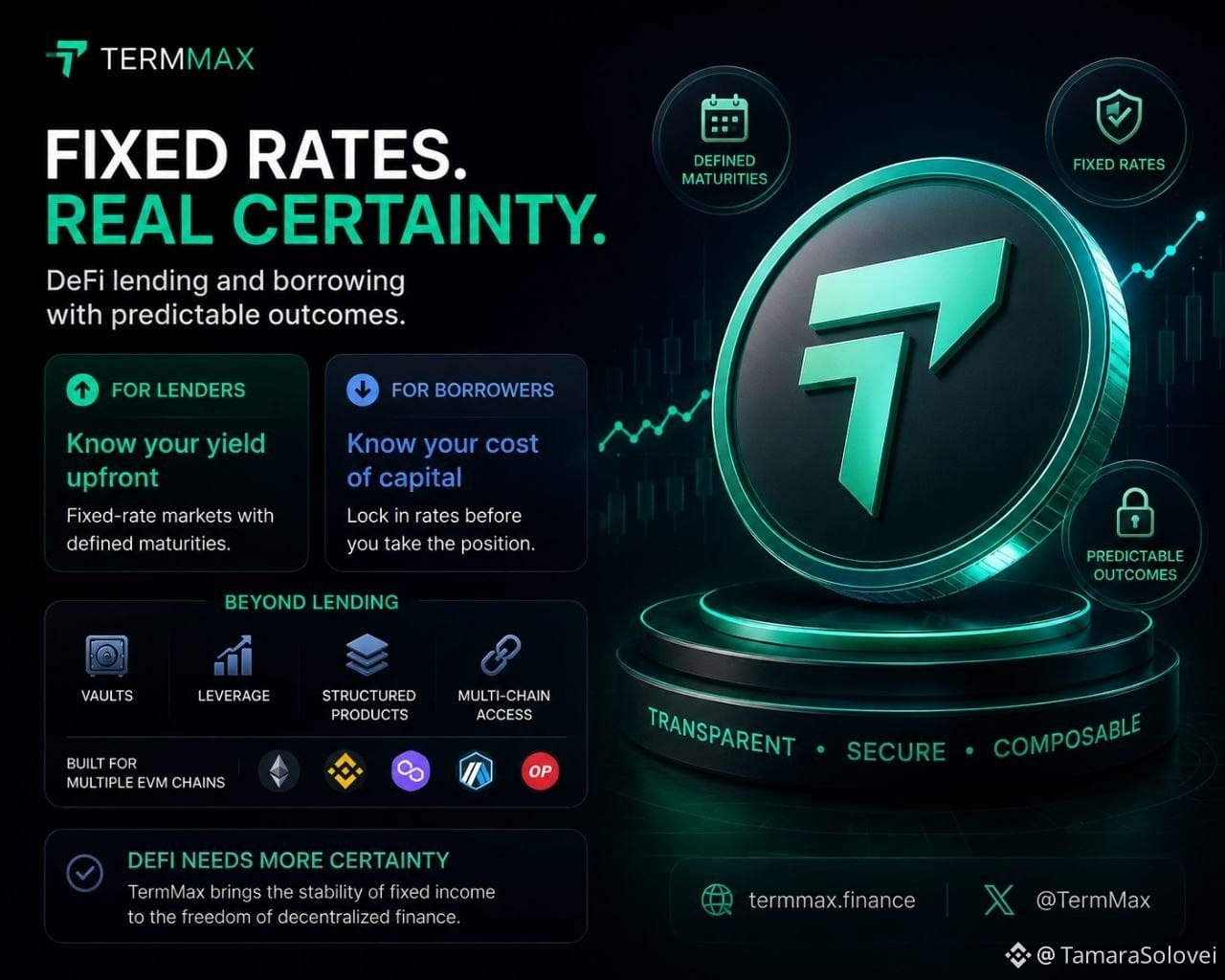
#termmax @TermMax
在 DeFi 中,可預測性與收益率同樣有價值。
當借款利率不斷變化時,管理一個頭寸就像在移動的靶心上操作。今天看起來很划算的策略,明天可能就會因爲市場條件改變而變得昂貴。
TermMax 通過固定利率市場和明確到期時間來解決這一問題。
這也爲用戶提供了 DeFi 常常缺少的東西:更清晰的資金規劃框架。
借款人可以提前知道自己的融資成本,而出借人則可以在特定期間內評估預期回報,而不是完全依賴浮動利率。
這同時也帶來了更復雜策略的一些有趣可能性:
🔹 對衝利率風險
🔹 更精確地規劃槓桿
🔹 構建固定收益策略
🔹 將借貸與結構化產品結合
🔹 創建更可預測的金庫策略
我認爲,如果 DeFi 希望從短期投機走向更完整的金融生態系統,這是一個重要的步驟。
提前知道利率和到期時間聽起來很簡單——但在波動的市場中,可預測性本身就具有價值。
這就是爲什麼值得關注 TermMax 的做法。
在 DeFi 中,可預測性與收益率同樣有價值。
當借款利率不斷變化時,管理一個頭寸就像在移動的靶心上操作。今天看起來很划算的策略,明天可能就會因爲市場條件改變而變得昂貴。
TermMax 通過固定利率市場和明確到期時間來解決這一問題。
這也爲用戶提供了 DeFi 常常缺少的東西:更清晰的資金規劃框架。
借款人可以提前知道自己的融資成本,而出借人則可以在特定期間內評估預期回報,而不是完全依賴浮動利率。
這同時也帶來了更復雜策略的一些有趣可能性:
🔹 對衝利率風險
🔹 更精確地規劃槓桿
🔹 構建固定收益策略
🔹 將借貸與結構化產品結合
🔹 創建更可預測的金庫策略
我認爲,如果 DeFi 希望從短期投機走向更完整的金融生態系統,這是一個重要的步驟。
提前知道利率和到期時間聽起來很簡單——但在波動的市場中,可預測性本身就具有價值。
這就是爲什麼值得關注 TermMax 的做法。
77
查看翻譯
#termmax @termmax
What makes TermMax interesting isn't only fixed-rate lending. It's the idea of turning predictable debt into a building block for DeFi.
Fixed-rate markets can give users something that is often missing from on-chain finance: a clear timeline for a position.
Instead of constantly reacting to changing borrowing costs, users can structure positions around a known rate and maturity.
This creates interesting possibilities for more advanced strategies:
🔹 Fixed-rate borrowing
🔹 Predictable lending returns
🔹 Leveraged strategies
🔹 Vault-based products
🔹 Structured positions
The goal isn't simply to copy traditional fixed-income products on-chain. It's to make these financial primitives composable with the rest of DeFi.
That's where I think $TMX becomes interesting as part of the bigger TermMax ecosystem.
If DeFi wants to attract more sophisticated capital, predictable rates and defined maturities could become just as important as liquidity.
The next evolution of DeFi might not be about more leverage. It might be about better control over risk.
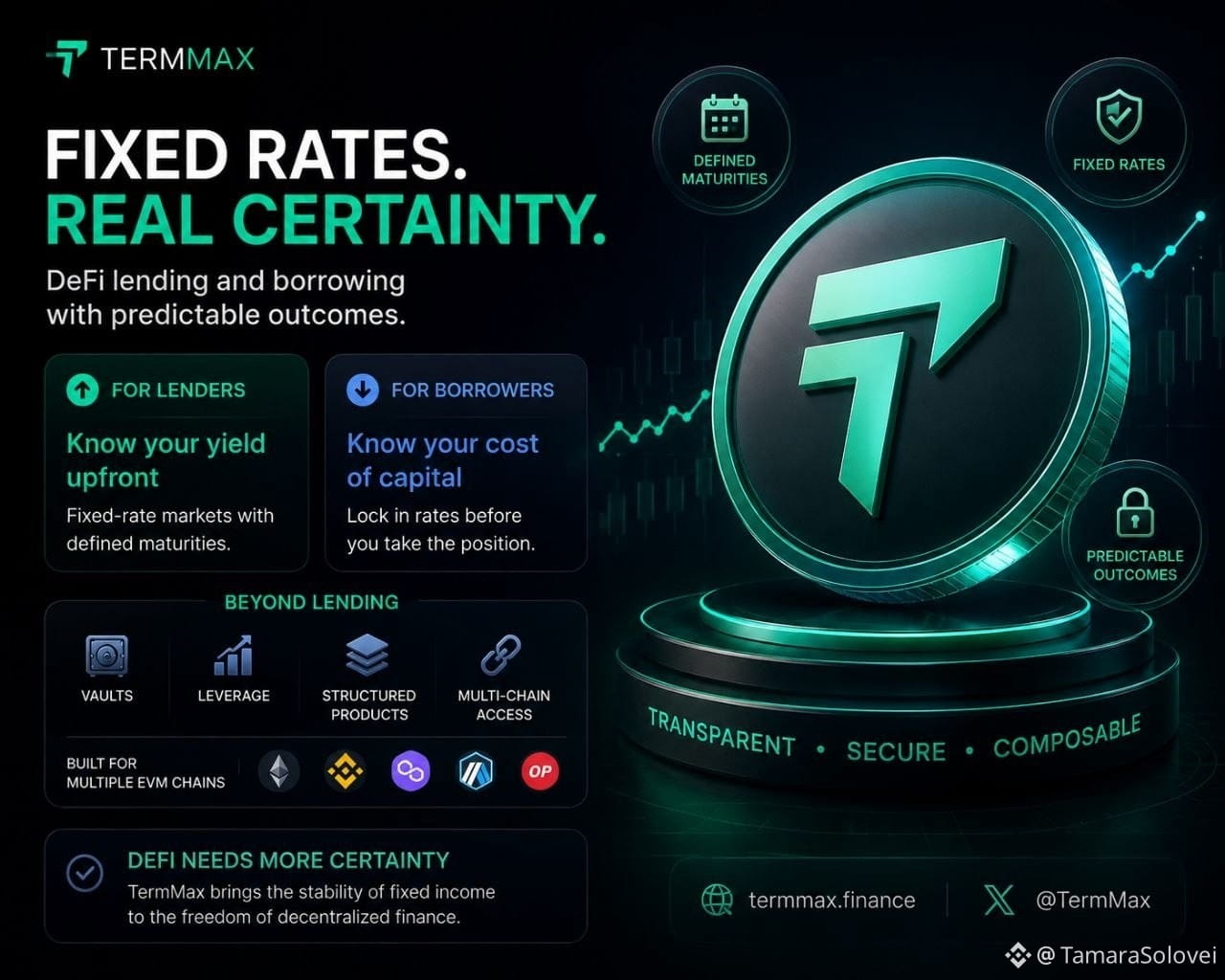
#termmax @TermMax
What makes TermMax interesting isn't only fixed-rate lending. It's the idea of turning predictable debt into a building block for DeFi.
Fixed-rate markets can give users something that is often missing from on-chain finance: a clear timeline for a position.
Instead of constantly reacting to changing borrowing costs, users can structure positions around a known rate and maturity.
This creates interesting possibilities for more advanced strategies:
🔹 Fixed-rate borrowing
🔹 Predictable lending returns
🔹 Leveraged strategies
🔹 Vault-based products
🔹 Structured positions
The goal isn't simply to copy traditional fixed-income products on-chain. It's to make these financial primitives composable with the rest of DeFi.
That's where I think $TMX becomes interesting as part of the bigger TermMax ecosystem.
If DeFi wants to attract more sophisticated capital, predictable rates and defined maturities could become just as important as liquidity.
The next evolution of DeFi might not be about more leverage. It might be about better control over risk.
What makes TermMax interesting isn't only fixed-rate lending. It's the idea of turning predictable debt into a building block for DeFi.
Fixed-rate markets can give users something that is often missing from on-chain finance: a clear timeline for a position.
Instead of constantly reacting to changing borrowing costs, users can structure positions around a known rate and maturity.
This creates interesting possibilities for more advanced strategies:
🔹 Fixed-rate borrowing
🔹 Predictable lending returns
🔹 Leveraged strategies
🔹 Vault-based products
🔹 Structured positions
The goal isn't simply to copy traditional fixed-income products on-chain. It's to make these financial primitives composable with the rest of DeFi.
That's where I think $TMX becomes interesting as part of the bigger TermMax ecosystem.
If DeFi wants to attract more sophisticated capital, predictable rates and defined maturities could become just as important as liquidity.
The next evolution of DeFi might not be about more leverage. It might be about better control over risk.
56
#dusk $DUSK @Dusk_Foundation
爲什麼受監管的金融需要自己專屬的區塊鏈基礎設施,而不是直接使用公共鏈?
隨着代幣化證券和現實世界資產逐步上鍊,這個問題變得愈發重要。
@Dusk_Foundation 的構想圍繞這樣一個觀點:金融市場對基礎設施的需求不同於普通加密應用。發行人、投資者、託管方和監管機構都需要在同一套基礎設施上協同工作,同時敏感的金融信息仍然保持受保護。
其中一個最有意思的概念是選擇性披露。
Dusk 並不是在“完全透明”與“完全隱私”之間二選一,而是讓獲得授權的各方能夠驗證他們所需要的信息,同時不向公衆暴露每一筆交易或投資組合的細節。再結合確定性結算與訪問控制,這就形成了面向受監管數字資產的基礎設施。
我認爲,正是這種差異讓人值得關注 Dusk。RWA 的未來也許不再那麼依賴於創建代幣,而更依賴於構建能夠承載其背後現實世界規則的網絡。
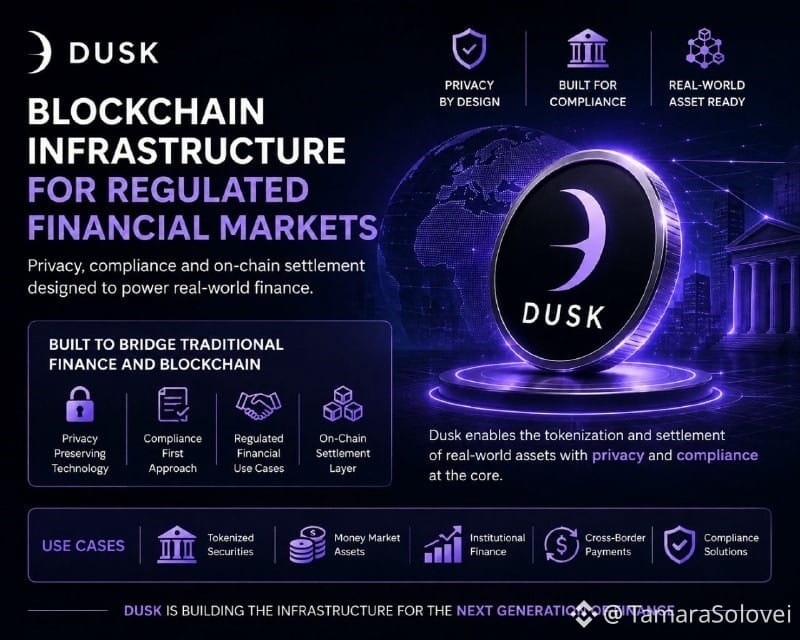
#dusk $DUSK @Dusk
爲什麼受監管的金融需要自己專屬的區塊鏈基礎設施,而不是直接使用公共鏈?
隨着代幣化證券和現實世界資產逐步上鍊,這個問題變得愈發重要。
@Dusk 的構想圍繞這樣一個觀點:金融市場對基礎設施的需求不同於普通加密應用。發行人、投資者、託管方和監管機構都需要在同一套基礎設施上協同工作,同時敏感的金融信息仍然保持受保護。
其中一個最有意思的概念是選擇性披露。
Dusk 並不是在“完全透明”與“完全隱私”之間二選一,而是讓獲得授權的各方能夠驗證他們所需要的信息,同時不向公衆暴露每一筆交易或投資組合的細節。再結合確定性結算與訪問控制,這就形成了面向受監管數字資產的基礎設施。
我認爲,正是這種差異讓人值得關注 Dusk。RWA 的未來也許不再那麼依賴於創建代幣,而更依賴於構建能夠承載其背後現實世界規則的網絡。
爲什麼受監管的金融需要自己專屬的區塊鏈基礎設施,而不是直接使用公共鏈?
隨着代幣化證券和現實世界資產逐步上鍊,這個問題變得愈發重要。
@Dusk 的構想圍繞這樣一個觀點:金融市場對基礎設施的需求不同於普通加密應用。發行人、投資者、託管方和監管機構都需要在同一套基礎設施上協同工作,同時敏感的金融信息仍然保持受保護。
其中一個最有意思的概念是選擇性披露。
Dusk 並不是在“完全透明”與“完全隱私”之間二選一,而是讓獲得授權的各方能夠驗證他們所需要的信息,同時不向公衆暴露每一筆交易或投資組合的細節。再結合確定性結算與訪問控制,這就形成了面向受監管數字資產的基礎設施。
我認爲,正是這種差異讓人值得關注 Dusk。RWA 的未來也許不再那麼依賴於創建代幣,而更依賴於構建能夠承載其背後現實世界規則的網絡。
78
查看翻譯
#termmax @termmax
DeFi is great at giving users flexibility, but flexibility often comes with uncertainty.
Interest rates can change quickly, making it difficult to plan the cost of borrowing or the return on lending.
@termmax approaches this problem with fixed-rate markets and defined maturities.
Instead of constantly watching the lending rate, users can know the key parameters of a position in advance.
For lenders, that can mean clearer expectations around yield. For borrowers, it can make the cost of capital easier to plan.
I think this is an important direction for DeFi because predictable financial products could make on-chain markets more useful beyond short-term speculation.
More certainty doesn't have to mean less flexibility. It can simply mean better tools for managing risk.
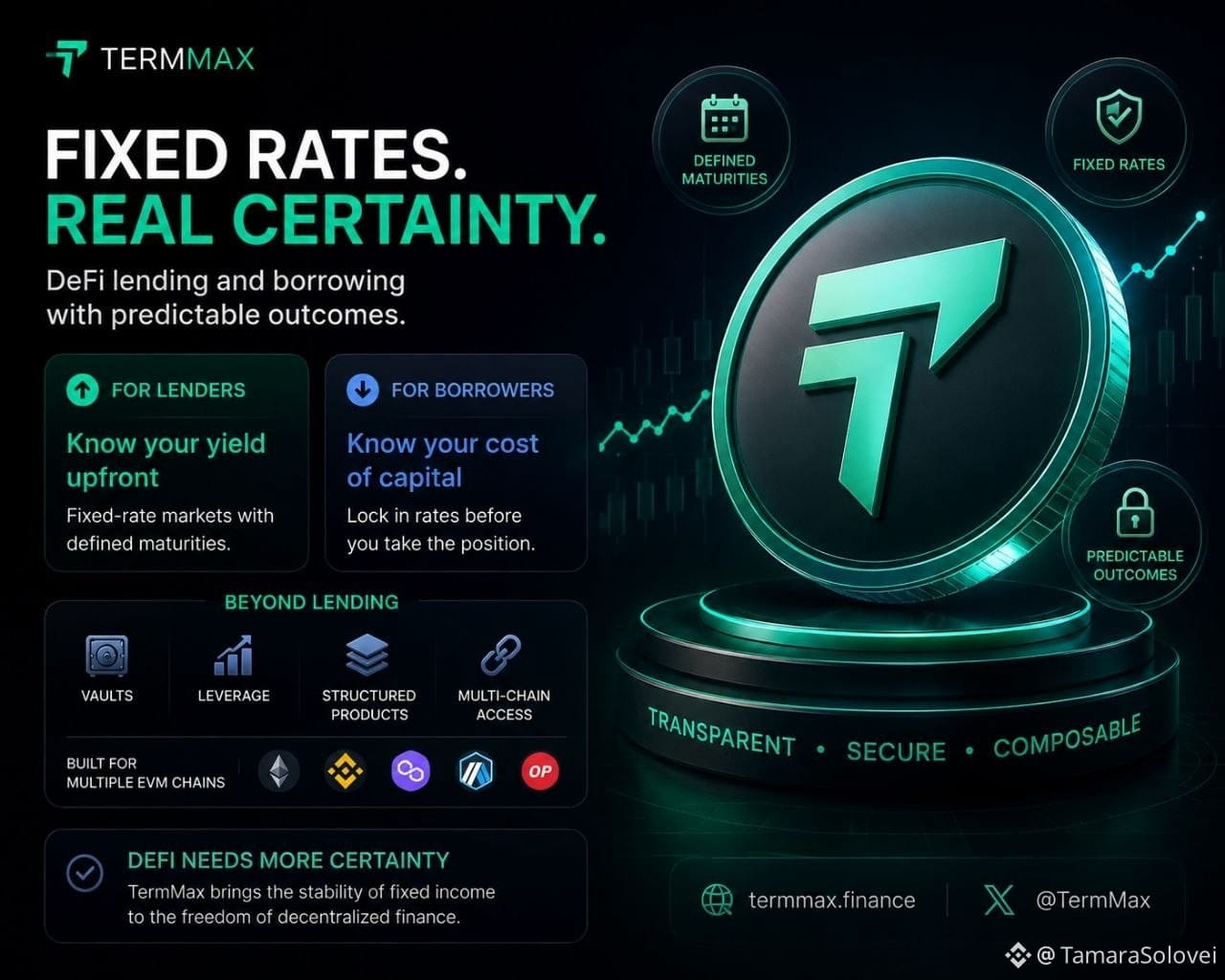
#termmax @TermMax
DeFi is great at giving users flexibility, but flexibility often comes with uncertainty.
Interest rates can change quickly, making it difficult to plan the cost of borrowing or the return on lending.
@TermMax approaches this problem with fixed-rate markets and defined maturities.
Instead of constantly watching the lending rate, users can know the key parameters of a position in advance.
For lenders, that can mean clearer expectations around yield. For borrowers, it can make the cost of capital easier to plan.
I think this is an important direction for DeFi because predictable financial products could make on-chain markets more useful beyond short-term speculation.
More certainty doesn't have to mean less flexibility. It can simply mean better tools for managing risk.
DeFi is great at giving users flexibility, but flexibility often comes with uncertainty.
Interest rates can change quickly, making it difficult to plan the cost of borrowing or the return on lending.
@TermMax approaches this problem with fixed-rate markets and defined maturities.
Instead of constantly watching the lending rate, users can know the key parameters of a position in advance.
For lenders, that can mean clearer expectations around yield. For borrowers, it can make the cost of capital easier to plan.
I think this is an important direction for DeFi because predictable financial products could make on-chain markets more useful beyond short-term speculation.
More certainty doesn't have to mean less flexibility. It can simply mean better tools for managing risk.
40
#dusk $DUSK @Dusk_Foundation
金融資產在交易完成時,並不會就此結束它的旅程。
因此,我認爲支撐代幣化資產的基礎設施比代幣本身更重要。
在傳統市場中,資產可能會經歷發行、交易、清算、分紅、報告、轉讓以及其他公司行動。每個階段都可能涉及不同的系統和中介。
@Dusk_Foundation 將其視爲一個完整的鏈上工作流程。
其基礎設施旨在在資產生命週期中處理諸如資格檢查、轉讓限制、隱私、清算、報告以及公司行動等事項。
同時,在“公開透明”和“私有財務信息”之間也存在一個有趣的區別。
Dusk 通過 Moonlight 支持透明交易,而 Phoenix 則藉助零知識證明實現隱蔽轉賬。信息在需要時也可以在經授權方的情況下進行有選擇地披露。
這很重要,因爲受監管的金融並不一定需要所有內容都公開。
它需要在恰當的時間,讓正確的信息對正確的參與者可見。
而這是一種與僅僅把現有金融資產放到公共區塊鏈上完全不同的設計理念。
如果代幣化證券將成爲 Web3 下一階段的重要組成部分,我認爲像這樣的基礎設施,其重要性將與資產本身同等。
Dusk 不只是試圖把金融上鍊。它想讓整個金融工作流程都在鏈上真正運轉起來。
#dusk $DUSK @Dusk
金融資產在交易完成時,並不會就此結束它的旅程。
因此,我認爲支撐代幣化資產的基礎設施比代幣本身更重要。
在傳統市場中,資產可能會經歷發行、交易、清算、分紅、報告、轉讓以及其他公司行動。每個階段都可能涉及不同的系統和中介。
@Dusk 將其視爲一個完整的鏈上工作流程。
其基礎設施旨在在資產生命週期中處理諸如資格檢查、轉讓限制、隱私、清算、報告以及公司行動等事項。
同時,在“公開透明”和“私有財務信息”之間也存在一個有趣的區別。
Dusk 通過 Moonlight 支持透明交易,而 Phoenix 則藉助零知識證明實現隱蔽轉賬。信息在需要時也可以在經授權方的情況下進行有選擇地披露。
這很重要,因爲受監管的金融並不一定需要所有內容都公開。
它需要在恰當的時間,讓正確的信息對正確的參與者可見。
而這是一種與僅僅把現有金融資產放到公共區塊鏈上完全不同的設計理念。
如果代幣化證券將成爲 Web3 下一階段的重要組成部分,我認爲像這樣的基礎設施,其重要性將與資產本身同等。
Dusk 不只是試圖把金融上鍊。它想讓整個金融工作流程都在鏈上真正運轉起來。
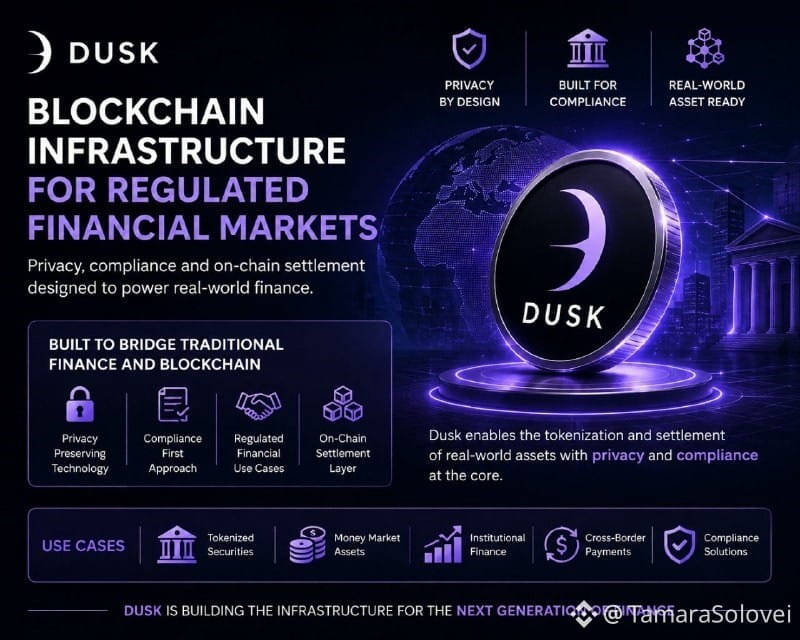
金融資產在交易完成時,並不會就此結束它的旅程。
因此,我認爲支撐代幣化資產的基礎設施比代幣本身更重要。
在傳統市場中,資產可能會經歷發行、交易、清算、分紅、報告、轉讓以及其他公司行動。每個階段都可能涉及不同的系統和中介。
@Dusk 將其視爲一個完整的鏈上工作流程。
其基礎設施旨在在資產生命週期中處理諸如資格檢查、轉讓限制、隱私、清算、報告以及公司行動等事項。
同時,在“公開透明”和“私有財務信息”之間也存在一個有趣的區別。
Dusk 通過 Moonlight 支持透明交易,而 Phoenix 則藉助零知識證明實現隱蔽轉賬。信息在需要時也可以在經授權方的情況下進行有選擇地披露。
這很重要,因爲受監管的金融並不一定需要所有內容都公開。
它需要在恰當的時間,讓正確的信息對正確的參與者可見。
而這是一種與僅僅把現有金融資產放到公共區塊鏈上完全不同的設計理念。
如果代幣化證券將成爲 Web3 下一階段的重要組成部分,我認爲像這樣的基礎設施,其重要性將與資產本身同等。
Dusk 不只是試圖把金融上鍊。它想讓整個金融工作流程都在鏈上真正運轉起來。
60
#bstockscis @BinanceCIS
讓代幣化股票有趣的不僅僅是能夠在鏈上買入它們。更重要的是在你擁有它們之後會發生什麼。
bStocks 將傳統股票的權益敞口帶入區塊鏈環境,從而打開了大門:一些功能在傳統券商賬戶中無法以相同方式實現。
由於 bStocks 作爲 BEP-20 代幣運行在 BNB Smart Chain 上,該資產可以成爲更廣泛的鏈上生態系統的一部分,而不是被鎖死在傳統金融平臺之內。
這帶來了一些頗有意思的可能性:
🔹
鏈上轉賬
🔹
7×24 小時訪問
🔹
基於區塊鏈的結算
🔹
與 Web3 基礎設施潛在的整合
🔹
能夠在兼容錢包中持有代幣化的股權
但對我來說,最重要的是連接兩個金融世界的“橋樑”。
傳統股票提供對成熟公司以及真實業務的敞口。區塊鏈基礎設施則帶來了可編程性、可攜帶性和持續結算。
把這兩點結合起來,代幣化權益就不再那麼像一個簡單的加密產品,而更像一種新的金融原語(financial primitive)。
RWA 市場仍在發展中,但我認爲這正是值得關注的那類基礎設施。
你最希望哪一種傳統資產能夠與鏈上金融實現全面整合?
#bstockscis @BinanceCIS
讓代幣化股票有趣的不僅僅是能夠在鏈上買入它們。更重要的是在你擁有它們之後會發生什麼。
bStocks 將傳統股票的權益敞口帶入區塊鏈環境,從而打開了大門:一些功能在傳統券商賬戶中無法以相同方式實現。
由於 bStocks 作爲 BEP-20 代幣運行在 BNB Smart Chain 上,該資產可以成爲更廣泛的鏈上生態系統的一部分,而不是被鎖死在傳統金融平臺之內。
這帶來了一些頗有意思的可能性:
🔹
鏈上轉賬
🔹
7×24 小時訪問
🔹
基於區塊鏈的結算
🔹
與 Web3 基礎設施潛在的整合
🔹
能夠在兼容錢包中持有代幣化的股權
但對我來說,最重要的是連接兩個金融世界的“橋樑”。
傳統股票提供對成熟公司以及真實業務的敞口。區塊鏈基礎設施則帶來了可編程性、可攜帶性和持續結算。
把這兩點結合起來,代幣化權益就不再那麼像一個簡單的加密產品,而更像一種新的金融原語(financial primitive)。
RWA 市場仍在發展中,但我認爲這正是值得關注的那類基礎設施。
你最希望哪一種傳統資產能夠與鏈上金融實現全面整合?
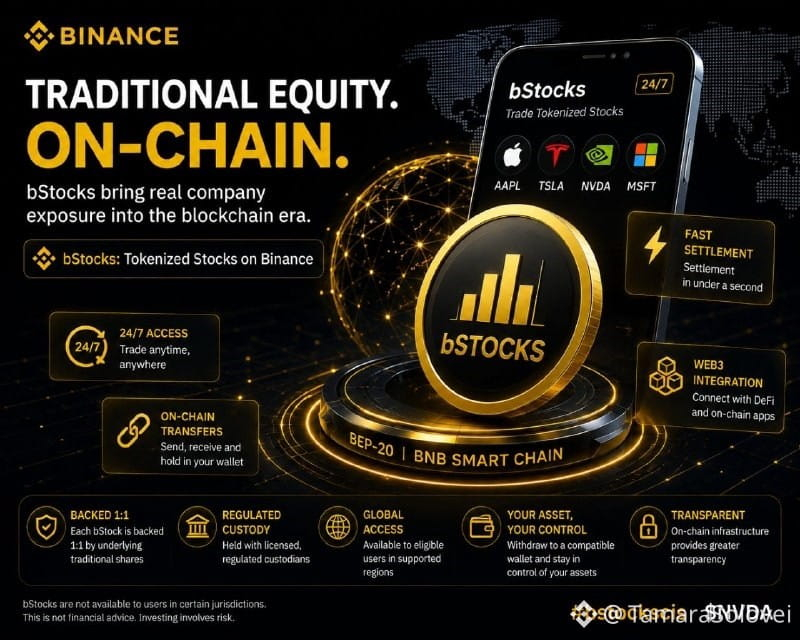
讓代幣化股票有趣的不僅僅是能夠在鏈上買入它們。更重要的是在你擁有它們之後會發生什麼。
bStocks 將傳統股票的權益敞口帶入區塊鏈環境,從而打開了大門:一些功能在傳統券商賬戶中無法以相同方式實現。
由於 bStocks 作爲 BEP-20 代幣運行在 BNB Smart Chain 上,該資產可以成爲更廣泛的鏈上生態系統的一部分,而不是被鎖死在傳統金融平臺之內。
這帶來了一些頗有意思的可能性:
🔹
鏈上轉賬
🔹
7×24 小時訪問
🔹
基於區塊鏈的結算
🔹
與 Web3 基礎設施潛在的整合
🔹
能夠在兼容錢包中持有代幣化的股權
但對我來說,最重要的是連接兩個金融世界的“橋樑”。
傳統股票提供對成熟公司以及真實業務的敞口。區塊鏈基礎設施則帶來了可編程性、可攜帶性和持續結算。
把這兩點結合起來,代幣化權益就不再那麼像一個簡單的加密產品,而更像一種新的金融原語(financial primitive)。
RWA 市場仍在發展中,但我認爲這正是值得關注的那類基礎設施。
你最希望哪一種傳統資產能夠與鏈上金融實現全面整合?
147
查看翻譯
#termmax @termmax
The maturity of the DeFi ecosystem is directly correlated with the introduction of primitive financial instruments capable of mitigating volatility risks. A significant gap in current credit markets is the lack of robust fixed-rate lending solutions. This is where @termmax introduces a crucial innovation.
By utilizing Zero-Coupon Bonds and Liquidity Pools, TermMax provides predictable yield curves for lenders and guaranteed capital costs for borrowers. This model dramatically reduces slippage and the uncertainty associated with variable interest rates. From my perspective, this approach is essential for attracting large-scale institutional liquidity, which requires accurate cash flow forecasting. Moving beyond variable-rate dependence is a critical step toward the long-term stabilization of capital markets on the blockchain.
#termmax @TermMax
The maturity of the DeFi ecosystem is directly correlated with the introduction of primitive financial instruments capable of mitigating volatility risks. A significant gap in current credit markets is the lack of robust fixed-rate lending solutions. This is where @TermMax introduces a crucial innovation.
By utilizing Zero-Coupon Bonds and Liquidity Pools, TermMax provides predictable yield curves for lenders and guaranteed capital costs for borrowers. This model dramatically reduces slippage and the uncertainty associated with variable interest rates. From my perspective, this approach is essential for attracting large-scale institutional liquidity, which requires accurate cash flow forecasting. Moving beyond variable-rate dependence is a critical step toward the long-term stabilization of capital markets on the blockchain.
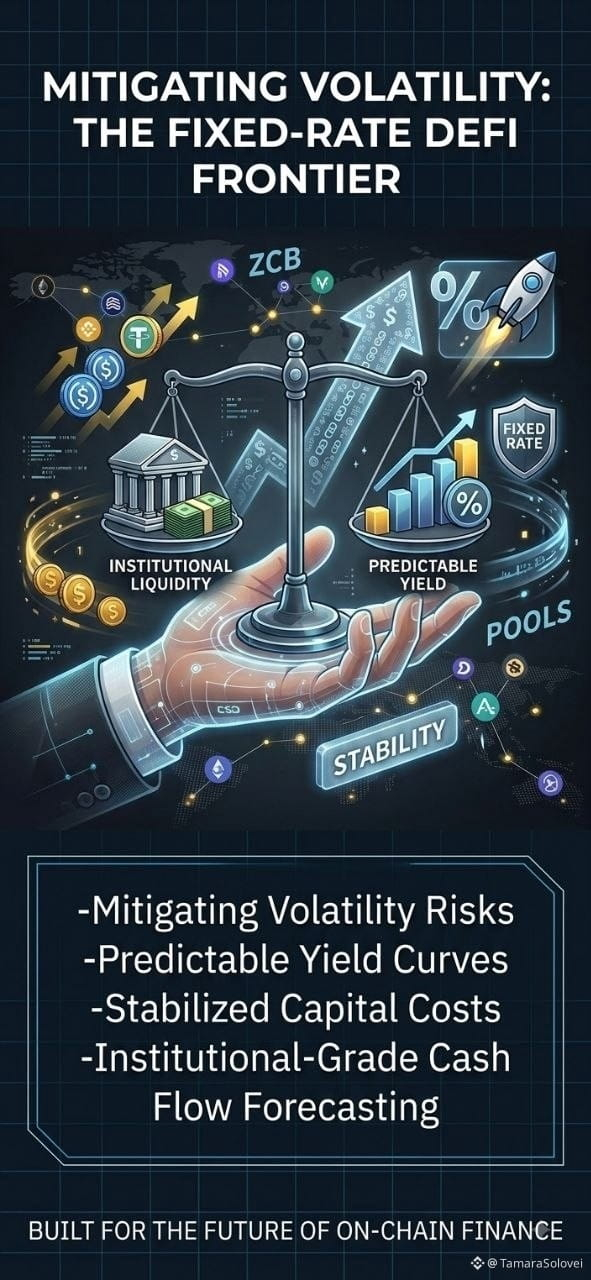
The maturity of the DeFi ecosystem is directly correlated with the introduction of primitive financial instruments capable of mitigating volatility risks. A significant gap in current credit markets is the lack of robust fixed-rate lending solutions. This is where @TermMax introduces a crucial innovation.
By utilizing Zero-Coupon Bonds and Liquidity Pools, TermMax provides predictable yield curves for lenders and guaranteed capital costs for borrowers. This model dramatically reduces slippage and the uncertainty associated with variable interest rates. From my perspective, this approach is essential for attracting large-scale institutional liquidity, which requires accurate cash flow forecasting. Moving beyond variable-rate dependence is a critical step toward the long-term stabilization of capital markets on the blockchain.
47
#dusk $DUSK @Dusk_Foundation
對某項資產進行代幣化只是第一步。真正的挑戰在於圍繞它建立市場。
這也是爲什麼我對 @Dusk_Foundation 正在打造的東西很感興趣。
Dusk Trade 被設計爲代幣化金融資產的應用層,覆蓋的不僅僅是買賣。工作流程可以包括投資者入駐、資格審覈、錢包連接、支付協調與結算。
在其下層,Dusk 爲受監管的工作流程提供基礎設施:訪問控制、隱私、選擇性披露以及確定性結算。
這種做法對我而言很有道理,因爲真實的金融市場不僅僅是代幣合約。它們涉及發行方、投資者、交易場所、託管方、合規與結算——所有這些都需要協同運作。
如果 RWAs 要實現規模化,基礎設施必須支持整個市場工作流程,而不僅僅是把另一項資產再上鍊。
我正在關注的就是 Dusk 朝着這個方向前進。
#dusk $DUSK @Dusk
對某項資產進行代幣化只是第一步。真正的挑戰在於圍繞它建立市場。
這也是爲什麼我對 @Dusk 正在打造的東西很感興趣。
Dusk Trade 被設計爲代幣化金融資產的應用層,覆蓋的不僅僅是買賣。工作流程可以包括投資者入駐、資格審覈、錢包連接、支付協調與結算。
在其下層,Dusk 爲受監管的工作流程提供基礎設施:訪問控制、隱私、選擇性披露以及確定性結算。
這種做法對我而言很有道理,因爲真實的金融市場不僅僅是代幣合約。它們涉及發行方、投資者、交易場所、託管方、合規與結算——所有這些都需要協同運作。
如果 RWAs 要實現規模化,基礎設施必須支持整個市場工作流程,而不僅僅是把另一項資產再上鍊。
我正在關注的就是 Dusk 朝着這個方向前進。
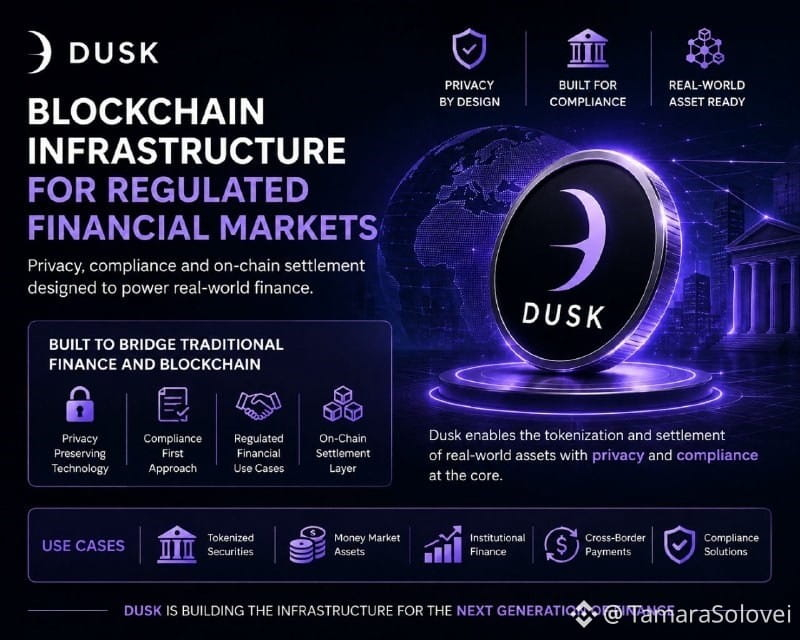
對某項資產進行代幣化只是第一步。真正的挑戰在於圍繞它建立市場。
這也是爲什麼我對 @Dusk 正在打造的東西很感興趣。
Dusk Trade 被設計爲代幣化金融資產的應用層,覆蓋的不僅僅是買賣。工作流程可以包括投資者入駐、資格審覈、錢包連接、支付協調與結算。
在其下層,Dusk 爲受監管的工作流程提供基礎設施:訪問控制、隱私、選擇性披露以及確定性結算。
這種做法對我而言很有道理,因爲真實的金融市場不僅僅是代幣合約。它們涉及發行方、投資者、交易場所、託管方、合規與結算——所有這些都需要協同運作。
如果 RWAs 要實現規模化,基礎設施必須支持整個市場工作流程,而不僅僅是把另一項資產再上鍊。
我正在關注的就是 Dusk 朝着這個方向前進。
61
#bstockscis @BinanceCIS
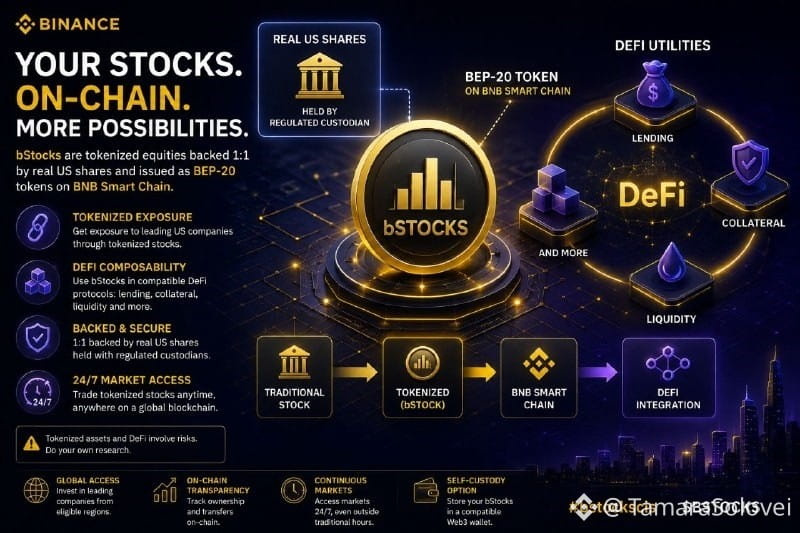
如果你的股票投資組合能成為你鏈上金融策略的一部分呢?
在這裡,代幣化股票開始變得更有趣。
股票不只是傳統股票的數位形式而已。因為它們作為 BEP-20 代幣存在於 BNB Smart Chain 上,所以它們有潛力能與支援其他數位資產的相同區塊鏈基礎設施互動。
這就創造出完全不同的設計空間。
想像你持有一家公司的曝險,並且能把這個代幣用於相容的 DeFi 應用程式,而不是將資產孤立地留在傳統券商帳戶裡。
這裡關鍵的詞是「可組合性(composability)」。
傳統股份通常存在於券商基礎設施之中。代幣化資產有潛力成為其他金融應用的基礎建塊——例如借貸、作為抵押、流動性以及其他鏈上策略,取決於特定的協議與資格要求。
Binance 目前的 bStocks 架構是建立在 1:1 的對應支持之上,也就是以受監管的託管機構所持有的對應美股做為支撐;而代幣本身則在 BNB Smart Chain 上運作。
這就形成了一個有趣的組合:
傳統資產 → 代幣化表示 → 區塊鏈基礎設施 → 潛在的 DeFi 用途。
因此我認為 RWA 的故事不只是在於讓市場能夠 24/7 交易。
真正的創新可能在於,讓先前彼此孤立的金融資產能夠與一整套全新的金融堆疊實現可組合。
當然,DeFi 的整合也會帶來額外的智慧合約、流動性與市場風險,所以「鏈上」並不會自動代表「更好」。
但光是這種可能性就令人著迷。
你會真的把代幣化股票拿來做抵押或用於 DeFi 嗎?還是你會把它純粹當作一種投資來持有?
#bstockscis @BinanceCIS
如果你的股票投資組合能成為你鏈上金融策略的一部分呢?
在這裡,代幣化股票開始變得更有趣。
股票不只是傳統股票的數位形式而已。因為它們作為 BEP-20 代幣存在於 BNB Smart Chain 上,所以它們有潛力能與支援其他數位資產的相同區塊鏈基礎設施互動。
這就創造出完全不同的設計空間。
想像你持有一家公司的曝險,並且能把這個代幣用於相容的 DeFi 應用程式,而不是將資產孤立地留在傳統券商帳戶裡。
這裡關鍵的詞是「可組合性(composability)」。
傳統股份通常存在於券商基礎設施之中。代幣化資產有潛力成為其他金融應用的基礎建塊——例如借貸、作為抵押、流動性以及其他鏈上策略,取決於特定的協議與資格要求。
Binance 目前的 bStocks 架構是建立在 1:1 的對應支持之上,也就是以受監管的託管機構所持有的對應美股做為支撐;而代幣本身則在 BNB Smart Chain 上運作。
這就形成了一個有趣的組合:
傳統資產 → 代幣化表示 → 區塊鏈基礎設施 → 潛在的 DeFi 用途。
因此我認為 RWA 的故事不只是在於讓市場能夠 24/7 交易。
真正的創新可能在於,讓先前彼此孤立的金融資產能夠與一整套全新的金融堆疊實現可組合。
當然,DeFi 的整合也會帶來額外的智慧合約、流動性與市場風險,所以「鏈上」並不會自動代表「更好」。
但光是這種可能性就令人著迷。
你會真的把代幣化股票拿來做抵押或用於 DeFi 嗎?還是你會把它純粹當作一種投資來持有?
如果你的股票投資組合能成為你鏈上金融策略的一部分呢?
在這裡,代幣化股票開始變得更有趣。
股票不只是傳統股票的數位形式而已。因為它們作為 BEP-20 代幣存在於 BNB Smart Chain 上,所以它們有潛力能與支援其他數位資產的相同區塊鏈基礎設施互動。
這就創造出完全不同的設計空間。
想像你持有一家公司的曝險,並且能把這個代幣用於相容的 DeFi 應用程式,而不是將資產孤立地留在傳統券商帳戶裡。
這裡關鍵的詞是「可組合性(composability)」。
傳統股份通常存在於券商基礎設施之中。代幣化資產有潛力成為其他金融應用的基礎建塊——例如借貸、作為抵押、流動性以及其他鏈上策略,取決於特定的協議與資格要求。
Binance 目前的 bStocks 架構是建立在 1:1 的對應支持之上,也就是以受監管的託管機構所持有的對應美股做為支撐;而代幣本身則在 BNB Smart Chain 上運作。
這就形成了一個有趣的組合:
傳統資產 → 代幣化表示 → 區塊鏈基礎設施 → 潛在的 DeFi 用途。
因此我認為 RWA 的故事不只是在於讓市場能夠 24/7 交易。
真正的創新可能在於,讓先前彼此孤立的金融資產能夠與一整套全新的金融堆疊實現可組合。
當然,DeFi 的整合也會帶來額外的智慧合約、流動性與市場風險,所以「鏈上」並不會自動代表「更好」。
但光是這種可能性就令人著迷。
你會真的把代幣化股票拿來做抵押或用於 DeFi 嗎?還是你會把它純粹當作一種投資來持有?
69
#dusk $DUSK @Dusk_Foundation
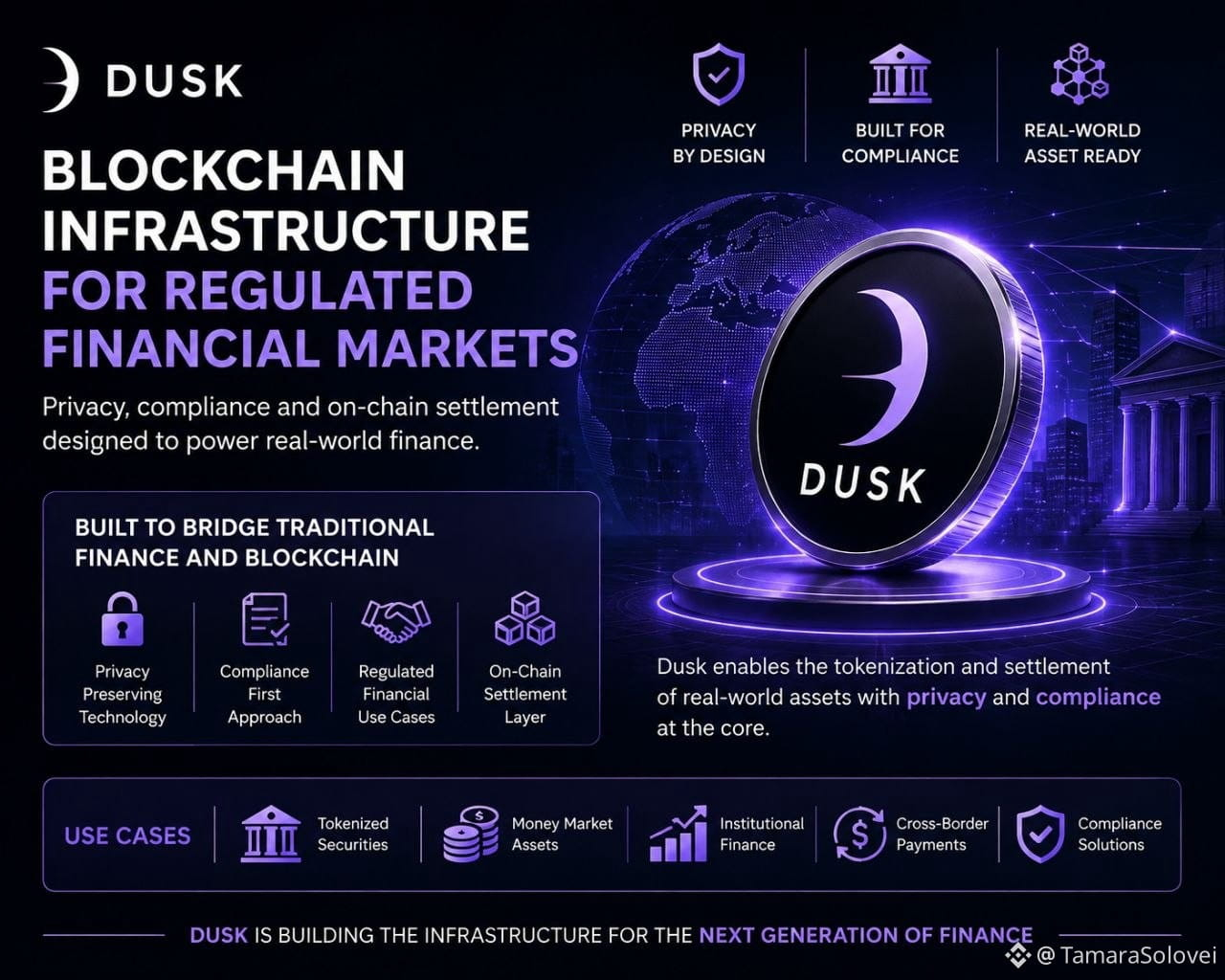
RWAs需要的不僅是代幣化。它們需要爲真實金融市場構建的基礎設施。
這也是爲什麼@Dusk_Foundation 對我來說很有意思。
Dusk圍繞受監管資產設計,將隱私、合規與鏈上結算結合在一起。它不是讓每一筆交易都完全公開,而是通過其架構支持選擇性披露——在不向所有人暴露全部信息的情況下,讓相關信息可以被驗證。
這在證券、債券以及其他受監管資產方面可能尤其有用:投資者隱私與監管要求必須共存。
Dusk的另一個有趣之處在於其EVM兼容性,這使得熟悉以太坊開發工具的開發者更容易在該網絡上構建應用。
如果RWAs要成爲Web3的重要組成部分,那麼支撐它們的基礎設施就需要處理的不只是簡單的代幣轉賬。
這就是Dusk試圖打造的細分領域。
#dusk $DUSK @Dusk
RWAs需要的不僅是代幣化。它們需要爲真實金融市場構建的基礎設施。
這也是爲什麼@Dusk 對我來說很有意思。
Dusk圍繞受監管資產設計,將隱私、合規與鏈上結算結合在一起。它不是讓每一筆交易都完全公開,而是通過其架構支持選擇性披露——在不向所有人暴露全部信息的情況下,讓相關信息可以被驗證。
這在證券、債券以及其他受監管資產方面可能尤其有用:投資者隱私與監管要求必須共存。
Dusk的另一個有趣之處在於其EVM兼容性,這使得熟悉以太坊開發工具的開發者更容易在該網絡上構建應用。
如果RWAs要成爲Web3的重要組成部分,那麼支撐它們的基礎設施就需要處理的不只是簡單的代幣轉賬。
這就是Dusk試圖打造的細分領域。
RWAs需要的不僅是代幣化。它們需要爲真實金融市場構建的基礎設施。
這也是爲什麼@Dusk 對我來說很有意思。
Dusk圍繞受監管資產設計,將隱私、合規與鏈上結算結合在一起。它不是讓每一筆交易都完全公開,而是通過其架構支持選擇性披露——在不向所有人暴露全部信息的情況下,讓相關信息可以被驗證。
這在證券、債券以及其他受監管資產方面可能尤其有用:投資者隱私與監管要求必須共存。
Dusk的另一個有趣之處在於其EVM兼容性,這使得熟悉以太坊開發工具的開發者更容易在該網絡上構建應用。
如果RWAs要成爲Web3的重要組成部分,那麼支撐它們的基礎設施就需要處理的不只是簡單的代幣轉賬。
這就是Dusk試圖打造的細分領域。
1
79
#bstockscis @BinanceCIS
當一隻股票不再被鎖定在經紀賬戶中,會發生什麼?
這也是 bStocks 背後更有意思的想法之一。
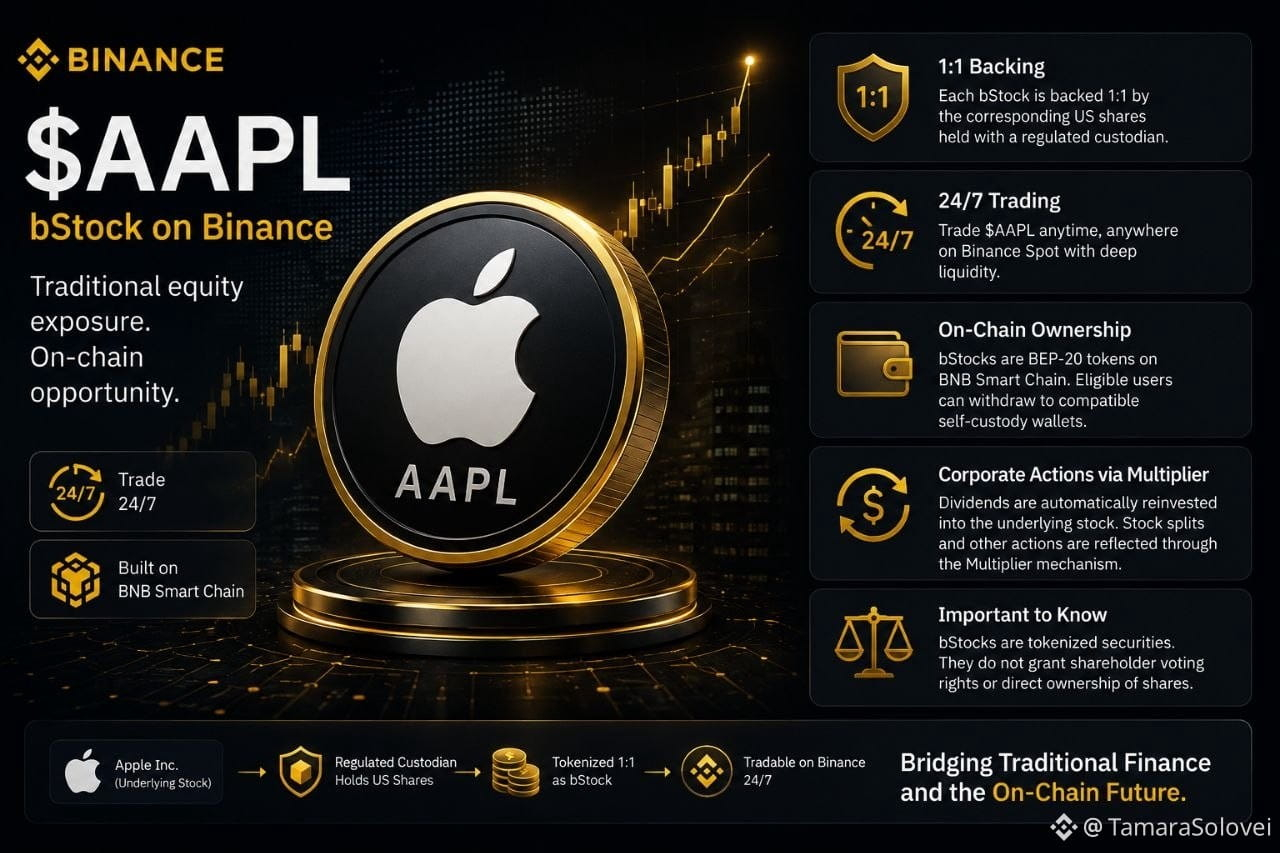
像 $AAPL 這樣的代幣化股票,並不只是交易所上顯示的一個股票代碼。bStocks 由與受監管託管方持有的對應美國股票 1:1 支撐;而該代幣本身則以 BEP-20 資產的形式存在於 BNB Smart Chain 上。
有趣的部分在於它能帶來什麼。
與其將你的敞口完全侷限在傳統經紀環境中,符合條件的用戶可以將代幣化資產提取到兼容的 Web3 錢包中。
這爲傳統股票難以輕易提供的事情打開了大門:
🔗 原生於區塊鏈的轉賬
🌐 鏈上可組合性
🔐 通過兼容錢包實現自我託管
🕐 7x24 的交易基礎設施
而這就是代幣化不僅僅是“更換資產格式”的地方。
底層的經濟敞口仍與傳統證券保持連接,但這種敞口的表示方式可以與區塊鏈基礎設施進行交互。
這也是我覺得代幣化股票最有意思的地方:把真實世界的金融資產帶入一個環境,讓“所有權”和區塊鏈應用終於能夠開始相互作用。
你會把代幣化股票留在 Binance 上,還是把它轉移到你自己的兼容錢包中?
#bstockscis @BinanceCIS
當一隻股票不再被鎖定在經紀賬戶中,會發生什麼?
這也是 bStocks 背後更有意思的想法之一。
像 $AAPL 這樣的代幣化股票,並不只是交易所上顯示的一個股票代碼。bStocks 由與受監管託管方持有的對應美國股票 1:1 支撐;而該代幣本身則以 BEP-20 資產的形式存在於 BNB Smart Chain 上。
有趣的部分在於它能帶來什麼。
與其將你的敞口完全侷限在傳統經紀環境中,符合條件的用戶可以將代幣化資產提取到兼容的 Web3 錢包中。
這爲傳統股票難以輕易提供的事情打開了大門:
🔗 原生於區塊鏈的轉賬
🌐 鏈上可組合性
🔐 通過兼容錢包實現自我託管
🕐 7x24 的交易基礎設施
而這就是代幣化不僅僅是“更換資產格式”的地方。
底層的經濟敞口仍與傳統證券保持連接,但這種敞口的表示方式可以與區塊鏈基礎設施進行交互。
這也是我覺得代幣化股票最有意思的地方:把真實世界的金融資產帶入一個環境,讓“所有權”和區塊鏈應用終於能夠開始相互作用。
你會把代幣化股票留在 Binance 上,還是把它轉移到你自己的兼容錢包中?
當一隻股票不再被鎖定在經紀賬戶中,會發生什麼?
這也是 bStocks 背後更有意思的想法之一。
像 $AAPL 這樣的代幣化股票,並不只是交易所上顯示的一個股票代碼。bStocks 由與受監管託管方持有的對應美國股票 1:1 支撐;而該代幣本身則以 BEP-20 資產的形式存在於 BNB Smart Chain 上。
有趣的部分在於它能帶來什麼。
與其將你的敞口完全侷限在傳統經紀環境中,符合條件的用戶可以將代幣化資產提取到兼容的 Web3 錢包中。
這爲傳統股票難以輕易提供的事情打開了大門:
🔗 原生於區塊鏈的轉賬
🌐 鏈上可組合性
🔐 通過兼容錢包實現自我託管
🕐 7x24 的交易基礎設施
而這就是代幣化不僅僅是“更換資產格式”的地方。
底層的經濟敞口仍與傳統證券保持連接,但這種敞口的表示方式可以與區塊鏈基礎設施進行交互。
這也是我覺得代幣化股票最有意思的地方:把真實世界的金融資產帶入一個環境,讓“所有權”和區塊鏈應用終於能夠開始相互作用。
你會把代幣化股票留在 Binance 上,還是把它轉移到你自己的兼容錢包中?
1
2
116
#dusk $DUSK @Dusk_Foundation
讓 Dusk 感興趣的一點在於,它不會強迫每個應用都以完全相同的方式使用區塊鏈基礎設施。
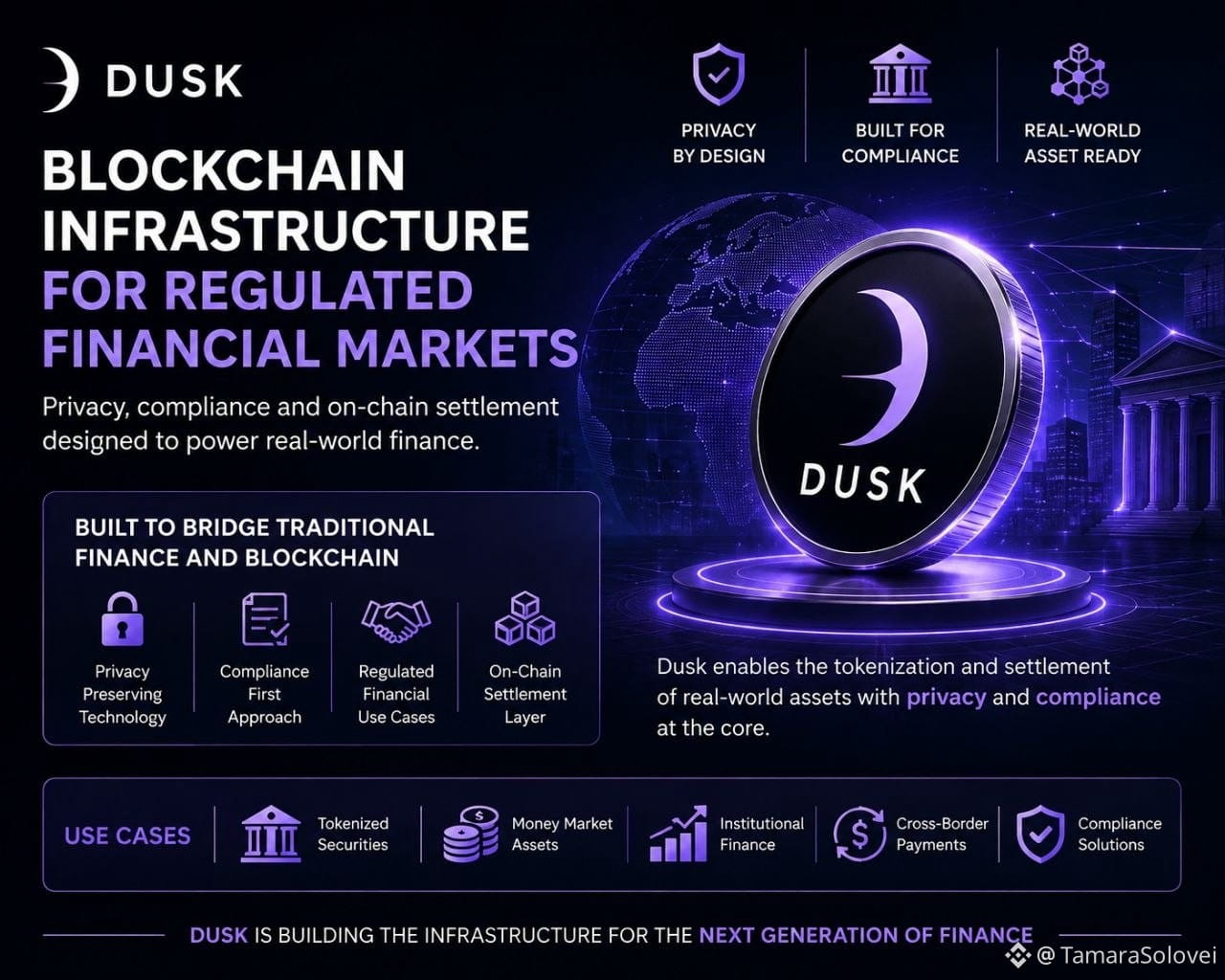
Dusk 通過其模塊化架構將結算與執行進行分離。
在底層是 DuskDS,負責共識、最終性和數據可用性。在此之上,開發者既可以使用 DuskVM 來實現原生的 Rust/WASM 智能合約,也可以在希望擁有兼容 EVM 的環境並使用熟悉的 Solidity 工具時,使用 DuskEVM。
爲什麼這對受監管的金融很重要?
不同的金融應用有不同的要求。某些原生資產工作流可能需要直接訪問 Dusk 的隱私與交易模型,而另一些應用則可能更受益於現有的以太坊工具和開發者基礎設施。
Dusk 本質上是在不放棄其底層結算層的前提下,同時提供這兩條路徑。
而這也是爲什麼它的架構比通常所說的“RWA 區塊鏈”敘事更有意思。
該網絡的設計圍繞諸如以下需求展開:
🔹 准入資格與訪問控制
🔹 對敏感信息的選擇性披露
🔹 機密交易
🔹 確定性結算
🔹 受監管資產的發行與託管服務
其文檔中明確描述了從代幣化股權與債務,到機構級 DeFi 以及交割與付款(Delivery-versus-Payment)結算等多種用例。
對我而言,關鍵問題並不是機構最終是否會使用區塊鏈。而是底層基礎設施是否足夠靈活,能夠滿足真實金融市場的需求。
這就是我正在觀察的 Dusk 論點的那一部分。
#dusk $DUSK @Dusk
讓 Dusk 感興趣的一點在於,它不會強迫每個應用都以完全相同的方式使用區塊鏈基礎設施。
Dusk 通過其模塊化架構將結算與執行進行分離。
在底層是 DuskDS,負責共識、最終性和數據可用性。在此之上,開發者既可以使用 DuskVM 來實現原生的 Rust/WASM 智能合約,也可以在希望擁有兼容 EVM 的環境並使用熟悉的 Solidity 工具時,使用 DuskEVM。
爲什麼這對受監管的金融很重要?
不同的金融應用有不同的要求。某些原生資產工作流可能需要直接訪問 Dusk 的隱私與交易模型,而另一些應用則可能更受益於現有的以太坊工具和開發者基礎設施。
Dusk 本質上是在不放棄其底層結算層的前提下,同時提供這兩條路徑。
而這也是爲什麼它的架構比通常所說的“RWA 區塊鏈”敘事更有意思。
該網絡的設計圍繞諸如以下需求展開:
🔹 准入資格與訪問控制
🔹 對敏感信息的選擇性披露
🔹 機密交易
🔹 確定性結算
🔹 受監管資產的發行與託管服務
其文檔中明確描述了從代幣化股權與債務,到機構級 DeFi 以及交割與付款(Delivery-versus-Payment)結算等多種用例。
對我而言,關鍵問題並不是機構最終是否會使用區塊鏈。而是底層基礎設施是否足夠靈活,能夠滿足真實金融市場的需求。
這就是我正在觀察的 Dusk 論點的那一部分。
讓 Dusk 感興趣的一點在於,它不會強迫每個應用都以完全相同的方式使用區塊鏈基礎設施。
Dusk 通過其模塊化架構將結算與執行進行分離。
在底層是 DuskDS,負責共識、最終性和數據可用性。在此之上,開發者既可以使用 DuskVM 來實現原生的 Rust/WASM 智能合約,也可以在希望擁有兼容 EVM 的環境並使用熟悉的 Solidity 工具時,使用 DuskEVM。
爲什麼這對受監管的金融很重要?
不同的金融應用有不同的要求。某些原生資產工作流可能需要直接訪問 Dusk 的隱私與交易模型,而另一些應用則可能更受益於現有的以太坊工具和開發者基礎設施。
Dusk 本質上是在不放棄其底層結算層的前提下,同時提供這兩條路徑。
而這也是爲什麼它的架構比通常所說的“RWA 區塊鏈”敘事更有意思。
該網絡的設計圍繞諸如以下需求展開:
🔹 准入資格與訪問控制
🔹 對敏感信息的選擇性披露
🔹 機密交易
🔹 確定性結算
🔹 受監管資產的發行與託管服務
其文檔中明確描述了從代幣化股權與債務,到機構級 DeFi 以及交割與付款(Delivery-versus-Payment)結算等多種用例。
對我而言,關鍵問題並不是機構最終是否會使用區塊鏈。而是底層基礎設施是否足夠靈活,能夠滿足真實金融市場的需求。
這就是我正在觀察的 Dusk 論點的那一部分。
2
1
57
登入以探索更多內容
加入幣安廣場中的全球加密貨幣用戶
⚡️ 獲取加密貨幣的最新和實用資訊。
💬 受到全球最大加密貨幣交易所的信任。
👍 發掘來自經過驗證創作者的真實見解。
電子郵件 / 電話號碼