Binance Square

N_S crypto

Nscrypto
中頻交易者
1.4 年
6 關注
21 粉絲
37 點讚數
1 分享數
貼文
·
--
查看翻譯
#VanarChain I was deep in a support call, ticket queue glowing, when an agent reassigned a VIP case on its own. Fast, yes. Correct, uncertain. That moment sums up the shift we’re living through. Speed alone is no longer the win. As agents move into finance, operations, and customer workflows, the real question is proof. What did it touch, why did it decide, and can a human intervene the instant something drifts? What stands out to me about Vanar Chain is the framing of trust as infrastructure rather than a feature. Neutron restructures chaotic data into compact AI readable Seeds designed for verification. Kayon reasons over that context in plain language with auditability in mind. The chain becomes the common ground where actions and outcomes can actually settle. If that model holds, milliseconds matter less than accountability. @Vanar $VANRY #vanar #vanar
#VanarChain I was deep in a support call, ticket queue glowing, when an agent reassigned a VIP case on its own. Fast, yes. Correct, uncertain. That moment sums up the shift we’re living through. Speed alone is no longer the win. As agents move into finance, operations, and customer workflows, the real question is proof. What did it touch, why did it decide, and can a human intervene the instant something drifts?

What stands out to me about Vanar Chain is the framing of trust as infrastructure rather than a feature. Neutron restructures chaotic data into compact AI readable Seeds designed for verification. Kayon reasons over that context in plain language with auditability in mind. The chain becomes the common ground where actions and outcomes can actually settle.

If that model holds, milliseconds matter less than accountability.
@Vanarchain $VANRY #vanar #vanar
查看翻譯
AI Era Differentiation Why Proof Becomes the Real ProductI once watched a polished AI demo captivate a room for twenty minutes before collapsing under the weight of ordinary data. Nothing dramatic, just small inconsistencies multiplying into unusable output. That experience keeps resurfacing whenever I hear confident claims about autonomous systems. The question is no longer whether an agent looks intelligent. The question is whether its decisions can survive scrutiny. AI has moved from novelty to infrastructure with surprising speed. Teams are wiring models into workflows that affect revenue, compliance, and customer experience. As adoption accelerates, tolerance for ambiguity shrinks. Leaders are discovering that performance metrics and glossy demos offer little comfort when something goes wrong. What they want instead is simple and unforgiving: evidence. This shift is redefining how technical credibility is judged. Roadmaps and visionary language still have their place, but they are secondary to verifiable behavior. If a system produces an output, stakeholders increasingly ask what informed it, which rules applied, and whether those conditions can be reconstructed later. In other words, intelligence without traceability is starting to feel incomplete. Regulatory pressure amplifies this dynamic. Frameworks like the EU AI Act are pushing organizations toward accountability structures that demand auditability rather than post hoc explanations. Even companies outside regulated regions feel the ripple effects because enterprise customers adopt similar expectations. Traceability is becoming a market requirement, not merely a legal one. Within this context, the philosophy behind Vanar Chain is notable. The project frames verifiability as a core design principle rather than a compliance accessory. Its architecture emphasizes persistent memory and reasoning layers intended to keep context durable and inspectable. The technical details will evolve, but the underlying premise is clear: systems should retain enough structured evidence to justify their actions. The idea of semantic memory, as described in Vanar’s materials, addresses a persistent weakness in many AI deployments. Context often fragments across tools, sessions, and data silos, leaving decisions difficult to interpret after the fact. A memory layer designed for programmability and verification attempts to turn context into something more stable than transient logs. Whether this approach becomes standard is an open question, yet the direction aligns with broader industry anxieties. Reasoning layers introduce another dimension to the proof conversation. If an AI component synthesizes information and triggers outcomes, especially those with financial or operational consequences, the ability to map conclusions back to sources becomes critical. Reviewability does not guarantee correctness, but it creates the conditions for accountability. In production environments, that distinction matters more than abstract claims of autonomy. None of this eliminates tradeoffs. Durable records raise legitimate concerns around privacy, cost, and the permanence of errors. Systems that preserve evidence must balance transparency with discretion, persistence with adaptability. These tensions are not flaws but structural realities of building trustworthy infrastructure. Payments and automated transactions illustrate the stakes. When an intelligent workflow can initiate value transfer, disputes quickly move from theoretical to material. In such scenarios, evidence is not an academic virtue; it is operational necessity. The capacity to demonstrate why an action occurred can determine whether automation reduces friction or amplifies risk. Stepping back, differentiation in the AI era appears less theatrical than many narratives suggest. The decisive factor may not be who claims the most advanced agentic behavior, but who makes system behavior legible under pressure. Proof, in this sense, becomes part of the product experience. Skepticism remains healthy. Every platform promising reliability must ultimately validate that promise through real world use. Yet the broader trajectory feels unmistakable. As AI systems entangle with consequential decisions, the market’s center of gravity shifts toward verifiability. In the end, trust in intelligent systems may depend less on how human they appear and more on how clearly they can show their work. #vanar #VanarChain $VANRY #vanar {spot}(VANRYUSDT)

AI Era Differentiation Why Proof Becomes the Real Product

I once watched a polished AI demo captivate a room for twenty minutes before collapsing under the weight of ordinary data. Nothing dramatic, just small inconsistencies multiplying into unusable output. That experience keeps resurfacing whenever I hear confident claims about autonomous systems. The question is no longer whether an agent looks intelligent. The question is whether its decisions can survive scrutiny.

AI has moved from novelty to infrastructure with surprising speed. Teams are wiring models into workflows that affect revenue, compliance, and customer experience. As adoption accelerates, tolerance for ambiguity shrinks. Leaders are discovering that performance metrics and glossy demos offer little comfort when something goes wrong. What they want instead is simple and unforgiving: evidence.

This shift is redefining how technical credibility is judged. Roadmaps and visionary language still have their place, but they are secondary to verifiable behavior. If a system produces an output, stakeholders increasingly ask what informed it, which rules applied, and whether those conditions can be reconstructed later. In other words, intelligence without traceability is starting to feel incomplete.

Regulatory pressure amplifies this dynamic. Frameworks like the EU AI Act are pushing organizations toward accountability structures that demand auditability rather than post hoc explanations. Even companies outside regulated regions feel the ripple effects because enterprise customers adopt similar expectations. Traceability is becoming a market requirement, not merely a legal one.

Within this context, the philosophy behind Vanar Chain is notable. The project frames verifiability as a core design principle rather than a compliance accessory. Its architecture emphasizes persistent memory and reasoning layers intended to keep context durable and inspectable. The technical details will evolve, but the underlying premise is clear: systems should retain enough structured evidence to justify their actions.

The idea of semantic memory, as described in Vanar’s materials, addresses a persistent weakness in many AI deployments. Context often fragments across tools, sessions, and data silos, leaving decisions difficult to interpret after the fact. A memory layer designed for programmability and verification attempts to turn context into something more stable than transient logs. Whether this approach becomes standard is an open question, yet the direction aligns with broader industry anxieties.

Reasoning layers introduce another dimension to the proof conversation. If an AI component synthesizes information and triggers outcomes, especially those with financial or operational consequences, the ability to map conclusions back to sources becomes critical. Reviewability does not guarantee correctness, but it creates the conditions for accountability. In production environments, that distinction matters more than abstract claims of autonomy.

None of this eliminates tradeoffs. Durable records raise legitimate concerns around privacy, cost, and the permanence of errors. Systems that preserve evidence must balance transparency with discretion, persistence with adaptability. These tensions are not flaws but structural realities of building trustworthy infrastructure.

Payments and automated transactions illustrate the stakes. When an intelligent workflow can initiate value transfer, disputes quickly move from theoretical to material. In such scenarios, evidence is not an academic virtue; it is operational necessity. The capacity to demonstrate why an action occurred can determine whether automation reduces friction or amplifies risk.

Stepping back, differentiation in the AI era appears less theatrical than many narratives suggest. The decisive factor may not be who claims the most advanced agentic behavior, but who makes system behavior legible under pressure. Proof, in this sense, becomes part of the product experience.

Skepticism remains healthy. Every platform promising reliability must ultimately validate that promise through real world use. Yet the broader trajectory feels unmistakable. As AI systems entangle with consequential decisions, the market’s center of gravity shifts toward verifiability.

In the end, trust in intelligent systems may depend less on how human they appear and more on how clearly they can show their work. #vanar #VanarChain $VANRY #vanar
Fogo 運行迅速,但真正的限制是狀態而非計算 高吞吐量鏈很少因爲指令緩慢而中斷,它們在狀態傳播和修復變得不穩定時中斷 Fogo 兼容 SVM,且仍在測試網中,使得這個階段比頭條指標更有趣 最近的驗證者更新指向了真實工作的發生地點 將 gossip 和修復流量轉移到 XDP 減少網絡開銷,在負載實際造成傷害的地方 強制在壓力期間使預期的分片版本成爲強制性要求,收緊一致性 在內存佈局更改後強制配置重新初始化,承認大頁碎片化是一個真實的失敗模式 用戶層的會話遵循相同的邏輯 減少重複簽名和交互摩擦,以便應用程序可以推送許多小的狀態更新,而不會使用戶體驗轉變爲成本 在最後一天沒有大聲宣佈,最新的博客引用仍追溯到 2026 年 1 月 15 日 現在的信號是穩定性工程,而非敘事工程 #fogo @fogo $FOGO
Fogo 運行迅速,但真正的限制是狀態而非計算
高吞吐量鏈很少因爲指令緩慢而中斷,它們在狀態傳播和修復變得不穩定時中斷
Fogo 兼容 SVM,且仍在測試網中,使得這個階段比頭條指標更有趣
最近的驗證者更新指向了真實工作的發生地點
將 gossip 和修復流量轉移到 XDP 減少網絡開銷,在負載實際造成傷害的地方
強制在壓力期間使預期的分片版本成爲強制性要求,收緊一致性
在內存佈局更改後強制配置重新初始化,承認大頁碎片化是一個真實的失敗模式
用戶層的會話遵循相同的邏輯
減少重複簽名和交互摩擦,以便應用程序可以推送許多小的狀態更新,而不會使用戶體驗轉變爲成本
在最後一天沒有大聲宣佈,最新的博客引用仍追溯到 2026 年 1 月 15 日
現在的信號是穩定性工程,而非敘事工程
#fogo @Fogo Official $FOGO
Fogo不是克隆,而是一種執行賭注,帶來不同的後果誤解Fogo的最簡單方法是將其簡化爲一個熟悉的標籤。又一個SVM鏈。又一個高性能的Layer 1。又一次試圖在一個已經被速度聲稱和吞吐量比較擠滿的市場中吸引注意力。這種框架錯過了更有趣的點。圍繞Solana虛擬機構建的決策不是一個表面的選擇,而是一個戰略性的起點,它改變了網絡的發展方式,構建者設計的方法,以及生態系統在真實壓力下如何形成。

Fogo不是克隆,而是一種執行賭注,帶來不同的後果

誤解Fogo的最簡單方法是將其簡化爲一個熟悉的標籤。又一個SVM鏈。又一個高性能的Layer 1。又一次試圖在一個已經被速度聲稱和吞吐量比較擠滿的市場中吸引注意力。這種框架錯過了更有趣的點。圍繞Solana虛擬機構建的決策不是一個表面的選擇,而是一個戰略性的起點,它改變了網絡的發展方式,構建者設計的方法,以及生態系統在真實壓力下如何形成。
對#fogo 的第一印象是直接的:基於Solana虛擬機構建的高性能第1層。熟悉的想法,擁擠的類別。單靠速度已經不再是區分因素。 突出的地方在於決定依賴經過驗證的SVM執行,而不是重新發明架構。並行性、低延遲、開發者熟悉度。實際優勢。 真正的考驗不是峯值吞吐量,而是在持續負載下的一致性。當執行保持可預測時,高性能鏈才能成功,而不是當基準看起來令人印象深刻時。 如果Fogo將原始速度轉化爲可靠性,那麼它的定位將變得更加有趣。 $FOGO @fogo #fogo
#fogo 的第一印象是直接的:基於Solana虛擬機構建的高性能第1層。熟悉的想法,擁擠的類別。單靠速度已經不再是區分因素。

突出的地方在於決定依賴經過驗證的SVM執行,而不是重新發明架構。並行性、低延遲、開發者熟悉度。實際優勢。

真正的考驗不是峯值吞吐量,而是在持續負載下的一致性。當執行保持可預測時,高性能鏈才能成功,而不是當基準看起來令人印象深刻時。

如果Fogo將原始速度轉化爲可靠性,那麼它的定位將變得更加有趣。

$FOGO @Fogo Official #fogo
$FOGO 更新:強大的基礎設施,耐心仍然是關鍵<c-10/>自主網以來,$FOGO 已成爲 SVM 領域中技術上更爲精煉的鏈之一。區塊時間約爲 40 毫秒,執行速度比典型的第 1 層更接近集中交易所的性能。交易迅速確認,交互感受靈敏,整體體驗突顯了高性能鏈上環境的表現。 生態系統活動再次復甦。Flames 第二季現已上線,分配 2 億 FOGO 用於旨在推動質押、借貸和更廣泛網絡參與的獎勵。結構良好的激勵措施通常作爲促進流動性和用戶參與的催化劑,特別是在市場條件改善時。

$FOGO 更新:強大的基礎設施,耐心仍然是關鍵

<c-10/>自主網以來,$FOGO 已成爲 SVM 領域中技術上更爲精煉的鏈之一。區塊時間約爲 40 毫秒,執行速度比典型的第 1 層更接近集中交易所的性能。交易迅速確認,交互感受靈敏,整體體驗突顯了高性能鏈上環境的表現。

生態系統活動再次復甦。Flames 第二季現已上線,分配 2 億 FOGO 用於旨在推動質押、借貸和更廣泛網絡參與的獎勵。結構良好的激勵措施通常作爲促進流動性和用戶參與的催化劑,特別是在市場條件改善時。
#plasma $XPL 等離子體像貨幣一樣對待穩定幣,而不是實驗 大多數區塊鏈首先是爲了實驗而設計,其次是爲了支付。等離子體顛倒了這個順序。它假設穩定幣將被用作真正的貨幣,並圍繞這一假設構建網絡。當某人發送穩定幣時,他們不應該擔心網絡擁堵、突發費用變化或延遲確認。等離子體的設計優先考慮順暢的結算而非複雜性。 通過將穩定幣流與投機活動分開,網絡爲用戶和企業創造了一個更可預測的環境。這對於薪資、匯款和財政運營至關重要,在這些場合,可靠性比功能更重要。一個支付系統在有效工作時應該感覺到是無形的,而不是令人緊張的。 $XPL 的存在是爲了保障這個以支付爲中心的基礎設施,並隨着使用的增長而調整激勵。它的角色支持長期的網絡健康,而不是短期的炒作。隨着穩定幣繼續融入日常金融活動,尊重貨幣實際使用方式的平臺可能最終會成爲最可信賴的。 @Plasma 以跟蹤穩定幣首個基礎設施的演變。 #Plasma $XPL
#plasma $XPL 等離子體像貨幣一樣對待穩定幣,而不是實驗
大多數區塊鏈首先是爲了實驗而設計,其次是爲了支付。等離子體顛倒了這個順序。它假設穩定幣將被用作真正的貨幣,並圍繞這一假設構建網絡。當某人發送穩定幣時,他們不應該擔心網絡擁堵、突發費用變化或延遲確認。等離子體的設計優先考慮順暢的結算而非複雜性。
通過將穩定幣流與投機活動分開,網絡爲用戶和企業創造了一個更可預測的環境。這對於薪資、匯款和財政運營至關重要,在這些場合,可靠性比功能更重要。一個支付系統在有效工作時應該感覺到是無形的,而不是令人緊張的。
$XPL 的存在是爲了保障這個以支付爲中心的基礎設施,並隨着使用的增長而調整激勵。它的角色支持長期的網絡健康,而不是短期的炒作。隨着穩定幣繼續融入日常金融活動,尊重貨幣實際使用方式的平臺可能最終會成爲最可信賴的。
@Plasma 以跟蹤穩定幣首個基礎設施的演變。
#Plasma $XPL
彌合燃氣費用、用戶體驗和真實支付之間的差距#plasma $XPL 當你嘗試在鏈上爲某些“小”東西支付時,費用、錢包提示和確認延遲成爲主要事件時,你會明白爲什麼加密支付仍然感覺像是一個演示而不是習慣。大多數用戶並不是因爲討厭區塊鏈而放棄。他們放棄是因爲第一次真正的互動感覺像是風險上疊加的摩擦:你需要“正確”的燃氣代幣,費用在你批准時變化,交易失敗,而你付款的那個人只是等待。這不是支付體驗。這是留存漏斗。

彌合燃氣費用、用戶體驗和真實支付之間的差距

#plasma $XPL
當你嘗試在鏈上爲某些“小”東西支付時,費用、錢包提示和確認延遲成爲主要事件時,你會明白爲什麼加密支付仍然感覺像是一個演示而不是習慣。大多數用戶並不是因爲討厭區塊鏈而放棄。他們放棄是因爲第一次真正的互動感覺像是風險上疊加的摩擦:你需要“正確”的燃氣代幣,費用在你批准時變化,交易失敗,而你付款的那個人只是等待。這不是支付體驗。這是留存漏斗。
查看翻譯
Ensuring Security: How Walrus Handles Byzantine FaultsIf you’ve ever watched a trading venue go down in the middle of a volatile session, you know the real risk isn’t the outage itself it’s the uncertainty that follows. Did my order hit? Did the counterparty see it? Did the record update? In markets, confidence is a product. Now stretch that same feeling across crypto infrastructure, where “storage” isn’t just a convenience layer it’s where NFTs live, where on chain games keep assets, where DeFi protocols store metadata, and where tokenized real world assets may eventually keep documents and proofs. If that storage can be manipulated, selectively withheld, or quietly corrupted, then everything above it inherits the same fragility. That is the security problem Walrus is trying to solve not just “will the data survive,” but “will the data stay trustworthy even when some participants behave maliciously.” In distributed systems, this threat model has a name Byzantine faults. It’s the worst case scenario where nodes don’t simply fail or disconnect; they lie, collude, send inconsistent responses, or try to sabotage recovery. For traders and investors evaluating infrastructure tokens like WAL, Byzantine fault tolerance is not academic. It’s the difference between storage that behaves like a durable settlement layer and storage that behaves like a fragile content server. Walrus is designed as a decentralized blob storage network (large, unstructured files), using Sui as its control plane for coordination, programmability, and proof-driven integrity checks. The core technical idea is to avoid full replication which is expensive and instead use erasure coding so that a file can be reconstructed even if many parts are missing. Walrus’ paper introduces “Red Stuff,” a two-dimensional erasure coding approach aimed at maintaining high resilience with relatively low overhead (around a ~4.5–5x storage factor rather than storing full copies everywhere). But erasure coding alone doesn’t solve Byzantine behavior. A malicious node can return garbage. It can claim it holds data that it doesn’t. It can serve different fragments to different requesters. It can try to break reconstruction by poisoning the process with incorrect pieces. Walrus approaches this by combining coding, cryptographic commitments, and blockchain-based accountability. Here’s the practical intuition: Walrus doesn’t ask the network to “trust nodes.” It asks nodes to produce evidence. The system is built so that a storage node’s job is not merely to hold a fragment, but to remain continuously provable as a reliable holder of that fragment over time. This is why Walrus emphasizes proof-of-availability mechanisms that can repeatedly verify whether storage nodes still possess the data they promised to store. In trader language, it’s like margin. The market doesn’t trust your promise it demands you keep collateral and remain verifiably solvent at all times. Walrus applies similar discipline to storage. The control plane matters here. Walrus integrates with Sui to manage node lifecycle, blob lifecycle, incentives, and certification processes so storage isn’t just “best effort,” it’s enforced behavior in an economic system. When a node is dishonest or underperforms, it can be penalized through protocol rules tied to staking and rewards, which is essential in Byzantine conditions because pure “goodwill decentralization” breaks down quickly under real money incentives. Another important Byzantine angle is churn: nodes leaving, committees changing, networks evolving. Walrus is built for epochs and committee reconfiguration, because storage networks can’t assume a stable set of participants forever. A storage protocol that can survive Byzantine faults for a week but fails during rotation events is not secure in any meaningful market sense. Walrus’ approach includes reconfiguration procedures that aim to preserve availability even as the node set changes. This matters more than it first appears. Most long-term failures in decentralized storage are not dramatic hacks they’re slow degradation events. Operators quietly leave. Incentives weaken. Hardware changes. Network partitions happen. If the protocol’s security assumes stable participation, you don’t get a single catastrophic “exploit day.” You get a gradual reliability collapse and by the time users notice, recovery is expensive or impossible. Now we get to the part investors should care about most: the retention problem. In crypto, people talk about “permanent storage” like it’s a slogan. But permanence isn’t a marketing claim it’s an economic promise across time. If storage rewards fall below operating costs, rational providers shut down. If governance changes emissions, retention changes. If demand collapses, the network becomes thinner. And in a Byzantine setting, thinning networks are dangerous because collusion becomes easier: fewer nodes means fewer independent actors standing between users and coordinated manipulation. Walrus is built with staking, governance, and rewards as a core pillar precisely because retention is the long game. Its architecture is not only about distributing coded fragments; it’s about sustaining a large and economically motivated provider set so that Byzantine actors never become the majority influence. This is why WAL is functionally tied to the “security budget” of storage: incentives attract honest capacity, and honest capacity is what makes the math of Byzantine tolerance work in practice. A grounded real life comparison: think about exchange order books. A liquid order book is naturally resilient one participant can’t easily distort prices. But when liquidity dries up, manipulation becomes cheap. Storage networks behave similarly. Retention is liquidity. Without it, Byzantine risk rises sharply. So what should traders and investors do with this? First, stop viewing storage tokens as “narrative trades” and start viewing them as infrastructure balance sheets. The questions that matter are: how strong are incentives relative to costs, how effectively are dishonest operators penalized, how does the network handle churn, and how robust are proof mechanisms over long time horizons. Walrus’ published technical design puts these issues front and center especially around erasure coding, proofs of availability, and control plane enforcement. Second, if you’re tracking WAL as an asset, track the retention story as closely as you track price action. Because if the retention engine fails, security fails. And if security fails, demand doesn’t decline slowly it breaks. If Web3 wants to be more than speculation, it needs durable infrastructure that holds up under worst case adversaries, not just normal network failures. Walrus is explicitly designed around that adversarial world. For investors, the call-to-action is simple: evaluate the protocol like you’d evaluate a market venue by its failure modes, not its best days. @WalrusProtocol #walrus

Ensuring Security: How Walrus Handles Byzantine Faults

If you’ve ever watched a trading venue go down in the middle of a volatile session, you know the real risk isn’t the outage itself it’s the uncertainty that follows. Did my order hit? Did the counterparty see it? Did the record update? In markets, confidence is a product. Now stretch that same feeling across crypto infrastructure, where “storage” isn’t just a convenience layer it’s where NFTs live, where on chain games keep assets, where DeFi protocols store metadata, and where tokenized real world assets may eventually keep documents and proofs. If that storage can be manipulated, selectively withheld, or quietly corrupted, then everything above it inherits the same fragility.
That is the security problem Walrus is trying to solve not just “will the data survive,” but “will the data stay trustworthy even when some participants behave maliciously.”
In distributed systems, this threat model has a name Byzantine faults. It’s the worst case scenario where nodes don’t simply fail or disconnect; they lie, collude, send inconsistent responses, or try to sabotage recovery. For traders and investors evaluating infrastructure tokens like WAL, Byzantine fault tolerance is not academic. It’s the difference between storage that behaves like a durable settlement layer and storage that behaves like a fragile content server.
Walrus is designed as a decentralized blob storage network (large, unstructured files), using Sui as its control plane for coordination, programmability, and proof-driven integrity checks. The core technical idea is to avoid full replication which is expensive and instead use erasure coding so that a file can be reconstructed even if many parts are missing. Walrus’ paper introduces “Red Stuff,” a two-dimensional erasure coding approach aimed at maintaining high resilience with relatively low overhead (around a ~4.5–5x storage factor rather than storing full copies everywhere).
But erasure coding alone doesn’t solve Byzantine behavior. A malicious node can return garbage. It can claim it holds data that it doesn’t. It can serve different fragments to different requesters. It can try to break reconstruction by poisoning the process with incorrect pieces. Walrus approaches this by combining coding, cryptographic commitments, and blockchain-based accountability.
Here’s the practical intuition: Walrus doesn’t ask the network to “trust nodes.” It asks nodes to produce evidence. The system is built so that a storage node’s job is not merely to hold a fragment, but to remain continuously provable as a reliable holder of that fragment over time. This is why Walrus emphasizes proof-of-availability mechanisms that can repeatedly verify whether storage nodes still possess the data they promised to store.
In trader language, it’s like margin. The market doesn’t trust your promise it demands you keep collateral and remain verifiably solvent at all times. Walrus applies similar discipline to storage.
The control plane matters here. Walrus integrates with Sui to manage node lifecycle, blob lifecycle, incentives, and certification processes so storage isn’t just “best effort,” it’s enforced behavior in an economic system. When a node is dishonest or underperforms, it can be penalized through protocol rules tied to staking and rewards, which is essential in Byzantine conditions because pure “goodwill decentralization” breaks down quickly under real money incentives.
Another important Byzantine angle is churn: nodes leaving, committees changing, networks evolving. Walrus is built for epochs and committee reconfiguration, because storage networks can’t assume a stable set of participants forever. A storage protocol that can survive Byzantine faults for a week but fails during rotation events is not secure in any meaningful market sense. Walrus’ approach includes reconfiguration procedures that aim to preserve availability even as the node set changes.
This matters more than it first appears. Most long-term failures in decentralized storage are not dramatic hacks they’re slow degradation events. Operators quietly leave. Incentives weaken. Hardware changes. Network partitions happen. If the protocol’s security assumes stable participation, you don’t get a single catastrophic “exploit day.” You get a gradual reliability collapse and by the time users notice, recovery is expensive or impossible.
Now we get to the part investors should care about most: the retention problem.
In crypto, people talk about “permanent storage” like it’s a slogan. But permanence isn’t a marketing claim it’s an economic promise across time. If storage rewards fall below operating costs, rational providers shut down. If governance changes emissions, retention changes. If demand collapses, the network becomes thinner. And in a Byzantine setting, thinning networks are dangerous because collusion becomes easier: fewer nodes means fewer independent actors standing between users and coordinated manipulation.
Walrus is built with staking, governance, and rewards as a core pillar precisely because retention is the long game. Its architecture is not only about distributing coded fragments; it’s about sustaining a large and economically motivated provider set so that Byzantine actors never become the majority influence. This is why WAL is functionally tied to the “security budget” of storage: incentives attract honest capacity, and honest capacity is what makes the math of Byzantine tolerance work in practice.
A grounded real life comparison: think about exchange order books. A liquid order book is naturally resilient one participant can’t easily distort prices. But when liquidity dries up, manipulation becomes cheap. Storage networks behave similarly. Retention is liquidity. Without it, Byzantine risk rises sharply.
So what should traders and investors do with this?
First, stop viewing storage tokens as “narrative trades” and start viewing them as infrastructure balance sheets. The questions that matter are: how strong are incentives relative to costs, how effectively are dishonest operators penalized, how does the network handle churn, and how robust are proof mechanisms over long time horizons. Walrus’ published technical design puts these issues front and center especially around erasure coding, proofs of availability, and control plane enforcement.
Second, if you’re tracking WAL as an asset, track the retention story as closely as you track price action. Because if the retention engine fails, security fails. And if security fails, demand doesn’t decline slowly it breaks.
If Web3 wants to be more than speculation, it needs durable infrastructure that holds up under worst case adversaries, not just normal network failures. Walrus is explicitly designed around that adversarial world. For investors, the call-to-action is simple: evaluate the protocol like you’d evaluate a market venue by its failure modes, not its best days.
@Walrus 🦭/acc #walrus
查看翻譯
#walrus $WAL Walrus (WAL) Is Storage You Don’t Have to Beg Permission For One of the weirdest parts of Web3 is this: people talk about freedom, but so many apps still depend on a single storage provider behind the scenes. That means your “decentralized” app can still be limited by someone’s rules. Content can be removed. Access can be blocked. Servers can go down. And suddenly the whole project feels fragile again. Walrus is built to remove that dependence. WAL is the token behind the Walrus protocol on Sui. The protocol supports secure and private blockchain interactions, but the bigger point is decentralized storage for large files. It uses blob storage to handle heavy data properly, then uses erasure coding to split files across a network so they can still be recovered even if some nodes go offline. WAL powers staking, governance, and incentives basically making sure storage providers keep showing up and the network stays reliable. The simple idea: your data shouldn’t depend on one company’s permission. @WalrusProtocol $WAL #walrus
#walrus $WAL Walrus (WAL) Is Storage You Don’t Have to Beg Permission For
One of the weirdest parts of Web3 is this: people talk about freedom, but so many apps still depend on a single storage provider behind the scenes. That means your “decentralized” app can still be limited by someone’s rules. Content can be removed. Access can be blocked. Servers can go down. And suddenly the whole project feels fragile again.
Walrus is built to remove that dependence. WAL is the token behind the Walrus protocol on Sui. The protocol supports secure and private blockchain interactions, but the bigger point is decentralized storage for large files. It uses blob storage to handle heavy data properly, then uses erasure coding to split files across a network so they can still be recovered even if some nodes go offline.
WAL powers staking, governance, and incentives basically making sure storage providers keep showing up and the network stays reliable. The simple idea: your data shouldn’t depend on one company’s permission.
@Walrus 🦭/acc $WAL #walrus
海象 (WAL) 解決了“一個服務器可以毀掉一切”的問題 大多數 Web3 應用仍然將數據存儲在一個地方。 如果那個服務器失敗,應用就會失敗。 海象解決了這個問題。 它在 Sui 上的去中心化網絡中分散文件。 數據使用消失編碼進行拆分,因此即使節點離線也能保持可恢復性。 WAL 驅動激勵、質押和治理。 簡單的想法:沒有單點故障。 @WalrusProtocol $WAL #walrus
海象 (WAL) 解決了“一個服務器可以毀掉一切”的問題

大多數 Web3 應用仍然將數據存儲在一個地方。
如果那個服務器失敗,應用就會失敗。

海象解決了這個問題。

它在 Sui 上的去中心化網絡中分散文件。
數據使用消失編碼進行拆分,因此即使節點離線也能保持可恢復性。

WAL 驅動激勵、質押和治理。

簡單的想法:沒有單點故障。

@Walrus 🦭/acc $WAL #walrus
查看翻譯
How Walrus Uses Erasure Coding to Keep Data Safe When Nodes Fail@WalrusProtocol The first time you trust the cloud with something that truly matters, you stop thinking about “storage” and start thinking about consequences. A missing audit record. A lost trade log. Client data you cannot reproduce. A dataset that took months to clean, suddenly corrupted. What makes these failures worse is that they rarely arrive with warning. Systems do not always collapse dramatically. Sometimes a few nodes quietly disappear, a region goes offline, or operators simply stop maintaining hardware. The damage only becomes visible when you urgently need the data. This is the real problem decentralized storage is trying to solve, and it explains why Walrus is gaining attention. Walrus is built around a simple promise: data should remain recoverable even when parts of the network fail. Not recoverable in ideal conditions, but recoverable by design. The foundation of that promise is erasure coding. You do not need to understand the mathematics to understand the value. Erasure coding is storage risk management. Instead of relying on one machine, one provider, or one region, the risk is distributed so that failure does not automatically mean loss. Traditional storage systems typically keep a full copy of a file in one location. If that location fails, the data is gone. To reduce risk, many systems use replication by storing multiple full copies of the same file. This works, but it is expensive. Three copies mean three times the storage cost. Erasure coding takes a more efficient approach. Files are broken into fragments, and additional recovery fragments are created. These fragments are then distributed across many independent nodes. The critical property is that not all fragments are required to reconstruct the original file. Even if several nodes fail or go offline, the data can still be rebuilt cleanly. Mysten Labs describes Walrus as encoding data blobs into “slivers” distributed across storage nodes. The original data can be reconstructed even if a large portion of those slivers is unavailable. Early documentation suggests recovery remains possible even when roughly two thirds of slivers are missing. Walrus extends this approach with its own two-dimensional erasure coding scheme called Red Stuff. This system is designed specifically for high-churn decentralized environments. Red Stuff is not only about surviving failures, but also about fast recovery and self-healing. Instead of reacting to node loss by aggressively copying entire datasets again, the network can efficiently rebuild only what is missing. This is where the discussion becomes relevant for investors rather than just engineers. In decentralized storage networks, node failure is not a rare event. It is normal. Operators shut down machines, lose connectivity, or exit when economics no longer make sense. This churn creates what is known as the retention problem, one of the most underestimated risks in decentralized infrastructure. Walrus is designed with the assumption that churn will occur. Erasure coding allows the network to tolerate churn without compromising data integrity. Cost efficiency is equally important because it determines whether a network can scale. Walrus documentation indicates that its erasure coding design targets roughly a five times storage overhead compared to raw data size. The Walrus research paper similarly describes Red Stuff achieving strong security with an effective replication factor of about 4.5 times. This places Walrus well below naive replication schemes while maintaining resilience. In practical terms, storing one terabyte of data may require approximately 4.5 to 5 terabytes of distributed fragments across the network. While that may sound high, it is significantly more efficient than full replication. In infrastructure economics, being less wasteful while remaining reliable often determines whether a network becomes essential infrastructure or remains an experiment. None of this matters if incentives fail. Walrus uses the WAL token as its payment and incentive mechanism. Users pay to store data for a fixed duration, and those payments are streamed over time to storage nodes and stakers. According to Walrus documentation, the pricing mechanism is designed to keep storage costs relatively stable in fiat terms, reducing volatility for users. This design choice matters. Developers may tolerate token price volatility, but they cannot tolerate unpredictable storage costs. Stable pricing is critical for adoption. As of January 22, 2026, WAL is trading around $0.126, with an intraday range of approximately $0.125 to $0.136. Market data shows around $14 million in 24-hour trading volume and a market capitalization near $199 million, with circulating supply at roughly 1.58 billion WAL. These numbers do not guarantee success, but they show that the token is liquid and that the market is already assigning value to the network narrative. The broader takeaway is simple. Erasure coding rarely generates hype, but it consistently wins over time because it addresses real risks. Data loss is one of the most expensive hidden risks in Web3 infrastructure, AI data markets, and on-chain applications that rely on reliable blob storage. The real question for investors is not whether erasure coding is impressive. It is whether Walrus can translate reliability into sustained demand and whether it can solve the node retention problem over long periods. If you are evaluating Walrus as an investment, treat it like infrastructure rather than a speculative trade. Read the documentation on encoding and recovery. Monitor node participation trends. Watch whether storage pricing remains predictable. Most importantly, track whether real applications continue storing real data month after month. If you are trading WAL, do not focus only on the price chart. Follow storage demand, node retention, and network reliability metrics. That is where the real signal will emerge. Short X (Twitter) Version Most cloud failures don’t explode. They fail quietly. Walrus is built for that reality. Instead of copying files endlessly, Walrus uses erasure coding to split data into fragments that can be reconstructed even if many nodes disappear. This makes churn survivable, not fatal. With Red Stuff encoding, Walrus targets strong resilience at ~4.5–5x overhead, far more efficient than naive replication. The real investment question isn’t hype. It’s whether reliability drives long-term storage demand and node retention. If you’re trading $WAL, watch usage, not just price. @WalrusProtocol #Walrus #WAL

How Walrus Uses Erasure Coding to Keep Data Safe When Nodes Fail

@Walrus 🦭/acc The first time you trust the cloud with something that truly matters, you stop thinking about “storage” and start thinking about consequences. A missing audit record. A lost trade log. Client data you cannot reproduce. A dataset that took months to clean, suddenly corrupted.
What makes these failures worse is that they rarely arrive with warning. Systems do not always collapse dramatically. Sometimes a few nodes quietly disappear, a region goes offline, or operators simply stop maintaining hardware. The damage only becomes visible when you urgently need the data.
This is the real problem decentralized storage is trying to solve, and it explains why Walrus is gaining attention.
Walrus is built around a simple promise: data should remain recoverable even when parts of the network fail. Not recoverable in ideal conditions, but recoverable by design. The foundation of that promise is erasure coding.
You do not need to understand the mathematics to understand the value. Erasure coding is storage risk management. Instead of relying on one machine, one provider, or one region, the risk is distributed so that failure does not automatically mean loss.
Traditional storage systems typically keep a full copy of a file in one location. If that location fails, the data is gone. To reduce risk, many systems use replication by storing multiple full copies of the same file. This works, but it is expensive. Three copies mean three times the storage cost.
Erasure coding takes a more efficient approach. Files are broken into fragments, and additional recovery fragments are created. These fragments are then distributed across many independent nodes. The critical property is that not all fragments are required to reconstruct the original file. Even if several nodes fail or go offline, the data can still be rebuilt cleanly.
Mysten Labs describes Walrus as encoding data blobs into “slivers” distributed across storage nodes. The original data can be reconstructed even if a large portion of those slivers is unavailable. Early documentation suggests recovery remains possible even when roughly two thirds of slivers are missing.
Walrus extends this approach with its own two-dimensional erasure coding scheme called Red Stuff. This system is designed specifically for high-churn decentralized environments. Red Stuff is not only about surviving failures, but also about fast recovery and self-healing. Instead of reacting to node loss by aggressively copying entire datasets again, the network can efficiently rebuild only what is missing.
This is where the discussion becomes relevant for investors rather than just engineers.
In decentralized storage networks, node failure is not a rare event. It is normal. Operators shut down machines, lose connectivity, or exit when economics no longer make sense. This churn creates what is known as the retention problem, one of the most underestimated risks in decentralized infrastructure.
Walrus is designed with the assumption that churn will occur. Erasure coding allows the network to tolerate churn without compromising data integrity.
Cost efficiency is equally important because it determines whether a network can scale.
Walrus documentation indicates that its erasure coding design targets roughly a five times storage overhead compared to raw data size. The Walrus research paper similarly describes Red Stuff achieving strong security with an effective replication factor of about 4.5 times. This places Walrus well below naive replication schemes while maintaining resilience.
In practical terms, storing one terabyte of data may require approximately 4.5 to 5 terabytes of distributed fragments across the network. While that may sound high, it is significantly more efficient than full replication. In infrastructure economics, being less wasteful while remaining reliable often determines whether a network becomes essential infrastructure or remains an experiment.
None of this matters if incentives fail.
Walrus uses the WAL token as its payment and incentive mechanism. Users pay to store data for a fixed duration, and those payments are streamed over time to storage nodes and stakers. According to Walrus documentation, the pricing mechanism is designed to keep storage costs relatively stable in fiat terms, reducing volatility for users.
This design choice matters. Developers may tolerate token price volatility, but they cannot tolerate unpredictable storage costs. Stable pricing is critical for adoption.
As of January 22, 2026, WAL is trading around $0.126, with an intraday range of approximately $0.125 to $0.136. Market data shows around $14 million in 24-hour trading volume and a market capitalization near $199 million, with circulating supply at roughly 1.58 billion WAL.
These numbers do not guarantee success, but they show that the token is liquid and that the market is already assigning value to the network narrative.
The broader takeaway is simple. Erasure coding rarely generates hype, but it consistently wins over time because it addresses real risks. Data loss is one of the most expensive hidden risks in Web3 infrastructure, AI data markets, and on-chain applications that rely on reliable blob storage.
The real question for investors is not whether erasure coding is impressive. It is whether Walrus can translate reliability into sustained demand and whether it can solve the node retention problem over long periods.
If you are evaluating Walrus as an investment, treat it like infrastructure rather than a speculative trade. Read the documentation on encoding and recovery. Monitor node participation trends. Watch whether storage pricing remains predictable. Most importantly, track whether real applications continue storing real data month after month.
If you are trading WAL, do not focus only on the price chart. Follow storage demand, node retention, and network reliability metrics. That is where the real signal will emerge.
Short X (Twitter) Version
Most cloud failures don’t explode. They fail quietly.
Walrus is built for that reality.
Instead of copying files endlessly, Walrus uses erasure coding to split data into fragments that can be reconstructed even if many nodes disappear.
This makes churn survivable, not fatal.
With Red Stuff encoding, Walrus targets strong resilience at ~4.5–5x overhead, far more efficient than naive replication.
The real investment question isn’t hype. It’s whether reliability drives long-term storage demand and node retention.
If you’re trading $WAL, watch usage, not just price.
@Walrus 🦭/acc
#Walrus #WAL
查看翻譯
$BTC Bitcoin: A Peer-to-Peer Electronic Cash System — Satoshi Nakamoto No banks. No intermediaries. Just a decentralized network where payments go directly from person-to-person using cryptographic proof. Blockchain timestamps, proof-of-work & consensus solve double-spending without trust in third parties. The vision that sparked global digital money. #Bitcoin #Whitepaper #Crypto #BTC100kNext?
$BTC Bitcoin: A Peer-to-Peer Electronic Cash System — Satoshi Nakamoto
No banks. No intermediaries. Just a decentralized network where payments go directly from person-to-person using cryptographic proof. Blockchain timestamps, proof-of-work & consensus solve double-spending without trust in third parties. The vision that sparked global digital money. #Bitcoin #Whitepaper #Crypto #BTC100kNext?
今日交易盈虧
+$0
+0.00%
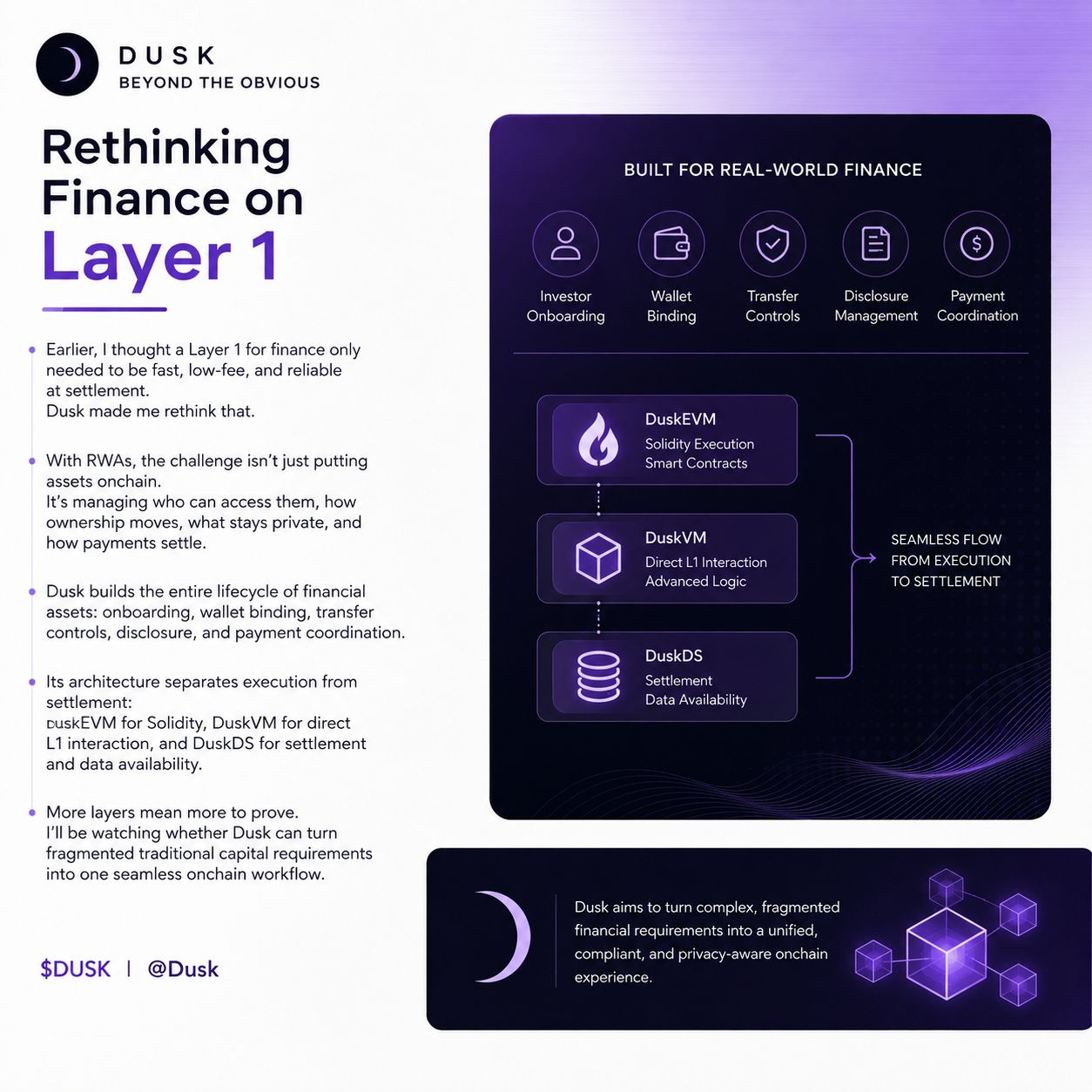
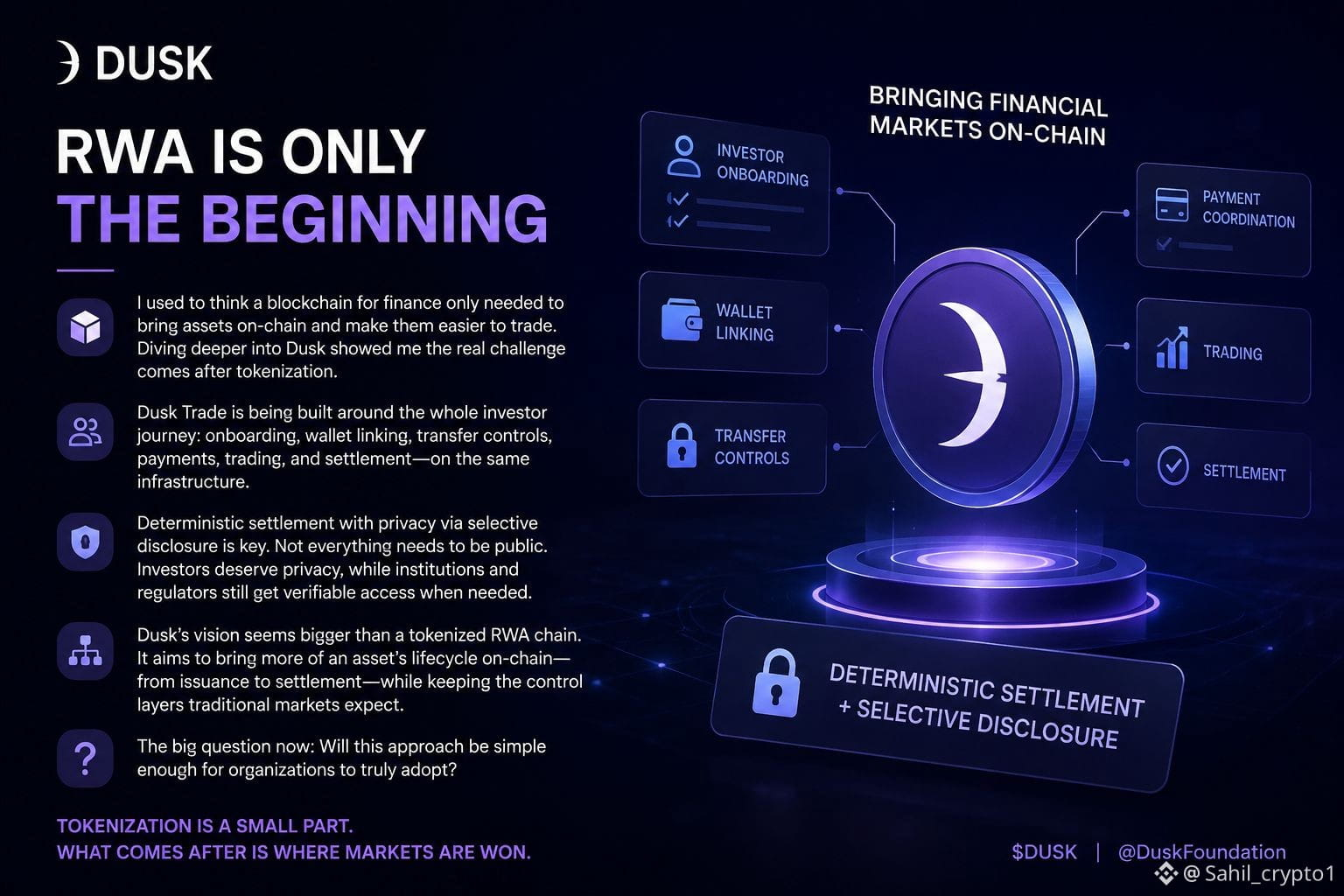
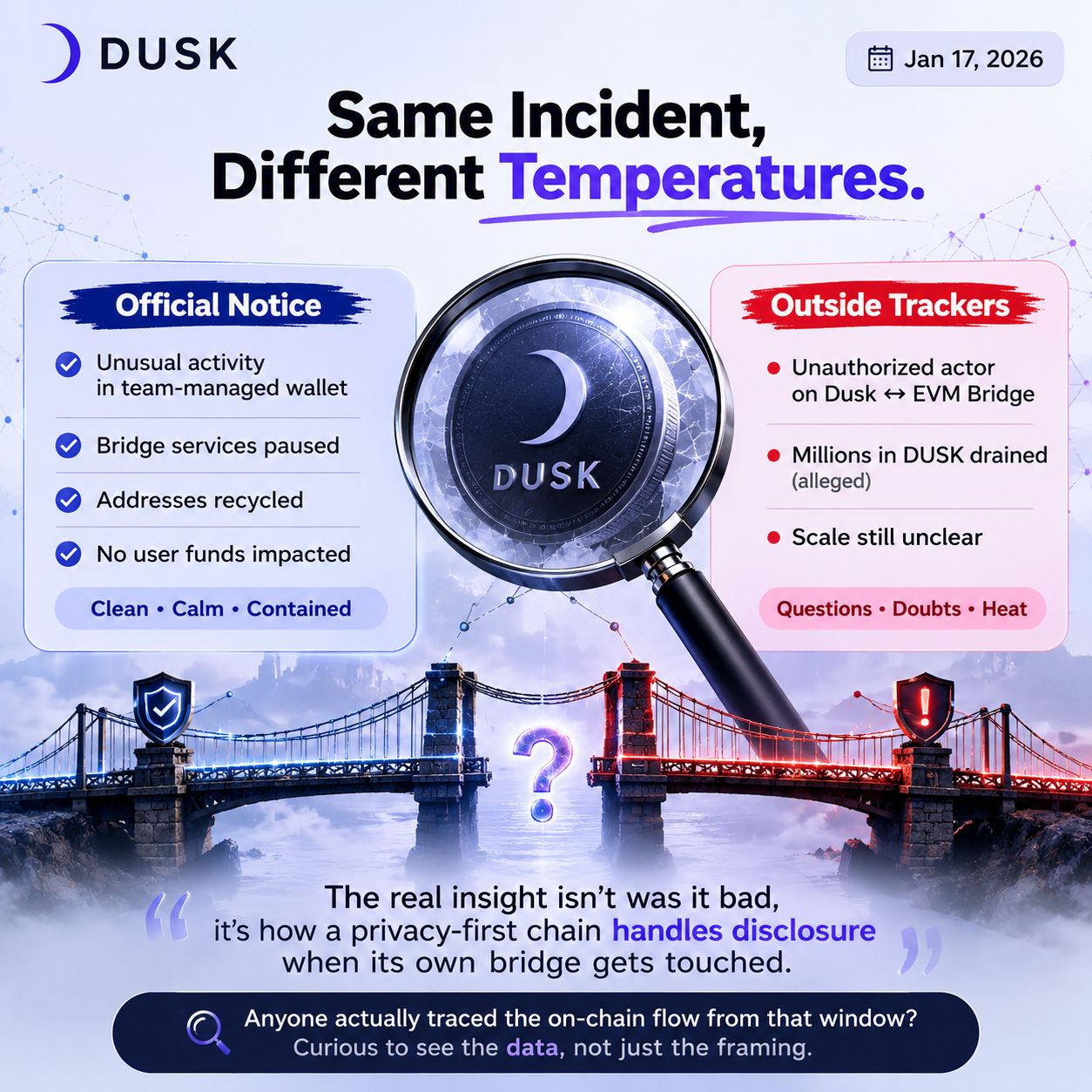
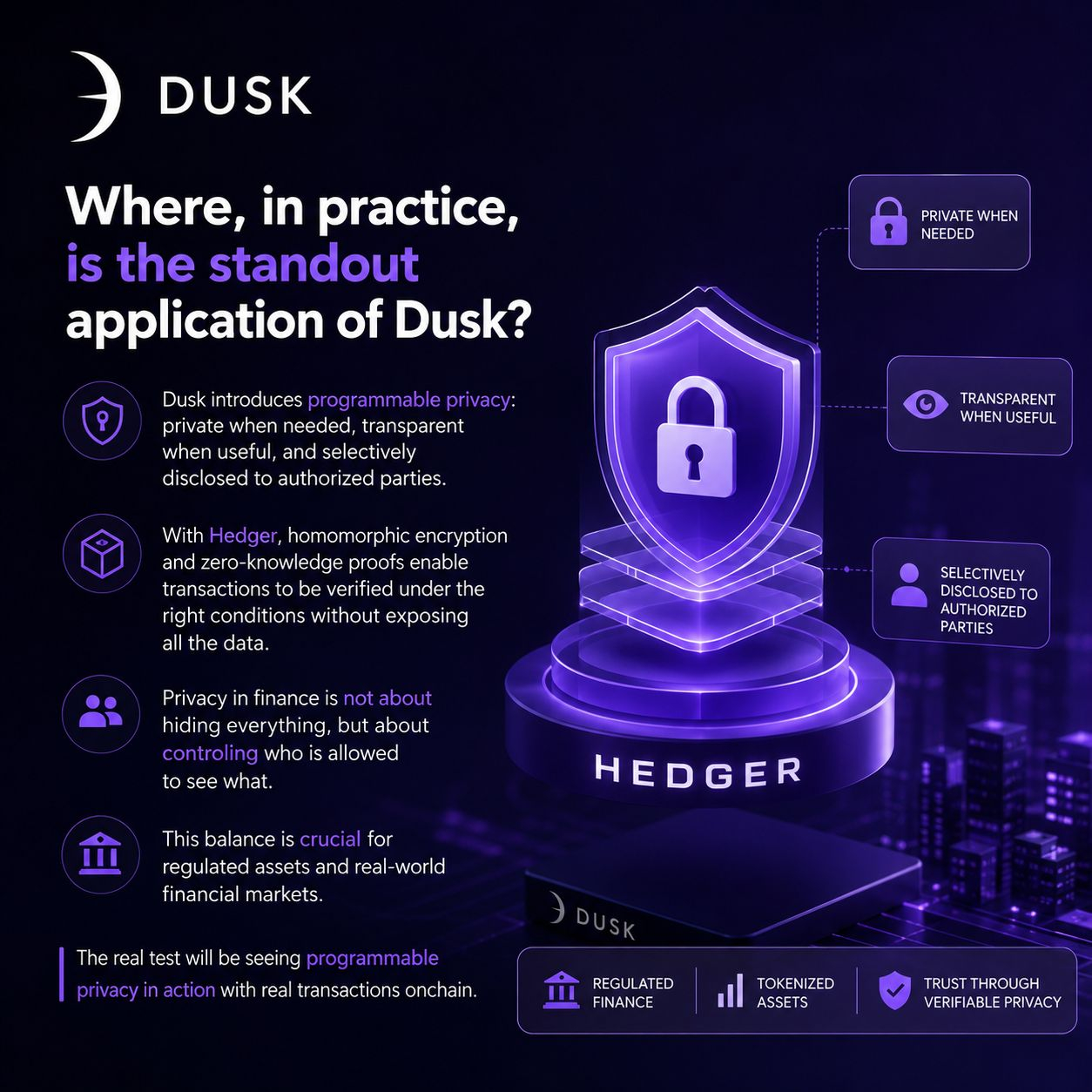
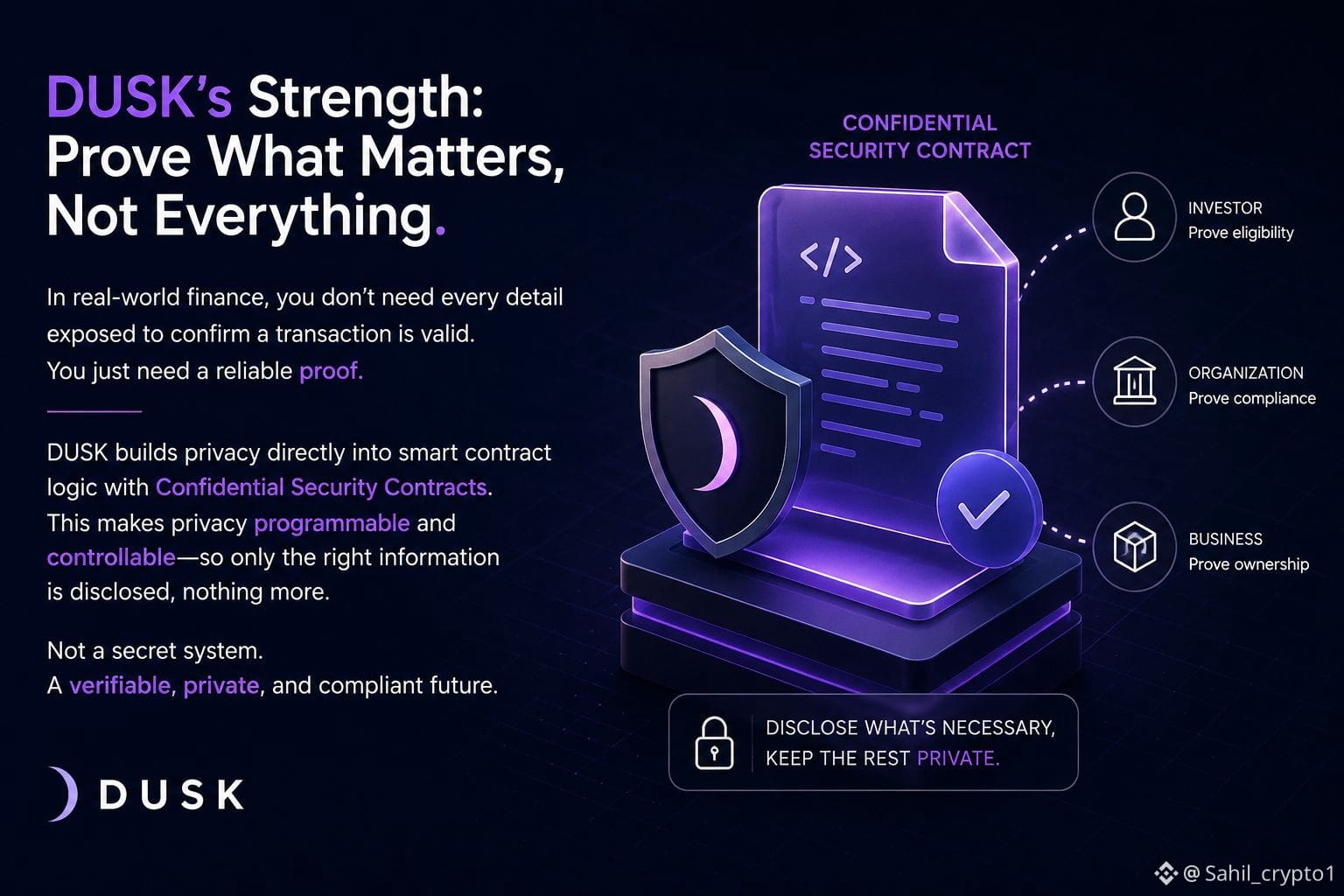
Dusk,近距離觀察:隱私感覺是爲真實人而建,而不是理想@Dusk_Foundation 當我第一次開始深入研究Dusk時,我並沒有將其視爲“另一個Layer 1”。我以我在現實世界中看待金融基礎設施的方式來接近它:通過詢問它是否表現得像專業人士實際可以接受的東西。不是投機,不是宣揚,而是使用。 大多數區塊鏈談論隱私的方式就像哲學家談論自由:作爲一種絕對狀態。要麼一切都是可見的,要麼一切都是隱藏的。但真正的金融並不在絕對中運作。在真實的市場中,隱私是實用和有條件的。你將敏感信息保持在公衆視線之外,但你仍然需要證明發生了什麼,給了誰,以及在什麼規則下。這就是Dusk立即感到不同的地方。它並不將隱私視爲對監管的反叛;它將隱私視爲一種正常的操作狀態,仍然允許問責。

Dusk,近距離觀察:隱私感覺是爲真實人而建,而不是理想

@Dusk 當我第一次開始深入研究Dusk時,我並沒有將其視爲“另一個Layer 1”。我以我在現實世界中看待金融基礎設施的方式來接近它:通過詢問它是否表現得像專業人士實際可以接受的東西。不是投機,不是宣揚,而是使用。
大多數區塊鏈談論隱私的方式就像哲學家談論自由:作爲一種絕對狀態。要麼一切都是可見的,要麼一切都是隱藏的。但真正的金融並不在絕對中運作。在真實的市場中,隱私是實用和有條件的。你將敏感信息保持在公衆視線之外,但你仍然需要證明發生了什麼,給了誰,以及在什麼規則下。這就是Dusk立即感到不同的地方。它並不將隱私視爲對監管的反叛;它將隱私視爲一種正常的操作狀態,仍然允許問責。
查看翻譯
$BTC Bitcoin: A Peer-to-Peer Electronic Cash System by Satoshi Nakamoto proposes a decentralized digital money that allows direct payments between users without banks. It solves the double-spending problem with a peer-to-peer network, proof-of-work, and a blockchain ledger. This system is secure, trustless, and lays the foundation for Bitcoin. 🚀 #Bitcoin #Crypto
登入探索更多內容
探索最新的加密貨幣新聞
⚡️ 參與加密貨幣領域的最新討論
💬 與您喜愛的創作者互動
👍 享受您感興趣的內容
電子郵件 / 電話號碼
網站地圖
Cookie 偏好設定
平台條款