

Orppa
43 貼文

Orppa
舉報
封鎖用戶
3 關注
7 粉絲
28 點讚數
貼文
置頂
·
--
我越看 TermMax,就越覺得它最大的挑戰並不在於創造市場。
而是確保這些市場真的有意義。
TermMax 能圍繞某個資產,憑藉它自身的:
— 抵押品
— 預言機
— LTV 參數
— 到期時間
— 利率
來搭建市場,這很強大,因爲一個新資產不必等待大型借貸協議來支持它。
但我認爲,另一個權衡點討論得還不夠。
相比之下,創造市場很容易,但要創造“雙方都有需求”的市場卻更難。
你需要真正想要這種特定到期時間和融資成本的借款人。
你需要願意站在對立面的出借人。
而且你還需要足夠的活躍度,讓市場在初始流動性到來之後仍然保持有用。
否則,你最終可能得到的東西看起來在儀表盤上很亮眼,但並不會帶來太多實際的經濟活動。
這也是我認爲值得關注 TermMax 費用模型的原因。
如果協議收入主要來自真實的市場活動,而不是僅僅因爲有資本被存入,那麼 TVL 單獨來看就會變成一個較弱的成功指標。
我更想看到的是:
資本 → 借款 → 交易 → 還款 → 手續費
不斷地循環發生。
因爲這纔是區分“有流動性”的協議與“真正有業務”的協議的關鍵。
而這也爲 TermMax 提供了一個有趣的檢驗:
無許可的市場創建,能創造出更有用的市場——
還是僅僅創造出更多市場?
我認爲,這個問題比另一張 TVL 截圖更能告訴我們 TermMax 的長期潛力。
#termmax @termmax
我越看 TermMax,就越覺得它最大的挑戰並不在於創造市場。
而是確保這些市場真的有意義。
TermMax 能圍繞某個資產,憑藉它自身的:
— 抵押品
— 預言機
— LTV 參數
— 到期時間
— 利率
來搭建市場,這很強大,因爲一個新資產不必等待大型借貸協議來支持它。
但我認爲,另一個權衡點討論得還不夠。
相比之下,創造市場很容易,但要創造“雙方都有需求”的市場卻更難。
你需要真正想要這種特定到期時間和融資成本的借款人。
你需要願意站在對立面的出借人。
而且你還需要足夠的活躍度,讓市場在初始流動性到來之後仍然保持有用。
否則,你最終可能得到的東西看起來在儀表盤上很亮眼,但並不會帶來太多實際的經濟活動。
這也是我認爲值得關注 TermMax 費用模型的原因。
如果協議收入主要來自真實的市場活動,而不是僅僅因爲有資本被存入,那麼 TVL 單獨來看就會變成一個較弱的成功指標。
我更想看到的是:
資本 → 借款 → 交易 → 還款 → 手續費
不斷地循環發生。
因爲這纔是區分“有流動性”的協議與“真正有業務”的協議的關鍵。
而這也爲 TermMax 提供了一個有趣的檢驗:
無許可的市場創建,能創造出更有用的市場——
還是僅僅創造出更多市場?
我認爲,這個問題比另一張 TVL 截圖更能告訴我們 TermMax 的長期潛力。
#termmax @TermMax
而是確保這些市場真的有意義。
TermMax 能圍繞某個資產,憑藉它自身的:
— 抵押品
— 預言機
— LTV 參數
— 到期時間
— 利率
來搭建市場,這很強大,因爲一個新資產不必等待大型借貸協議來支持它。
但我認爲,另一個權衡點討論得還不夠。
相比之下,創造市場很容易,但要創造“雙方都有需求”的市場卻更難。
你需要真正想要這種特定到期時間和融資成本的借款人。
你需要願意站在對立面的出借人。
而且你還需要足夠的活躍度,讓市場在初始流動性到來之後仍然保持有用。
否則,你最終可能得到的東西看起來在儀表盤上很亮眼,但並不會帶來太多實際的經濟活動。
這也是我認爲值得關注 TermMax 費用模型的原因。
如果協議收入主要來自真實的市場活動,而不是僅僅因爲有資本被存入,那麼 TVL 單獨來看就會變成一個較弱的成功指標。
我更想看到的是:
資本 → 借款 → 交易 → 還款 → 手續費
不斷地循環發生。
因爲這纔是區分“有流動性”的協議與“真正有業務”的協議的關鍵。
而這也爲 TermMax 提供了一個有趣的檢驗:
無許可的市場創建,能創造出更有用的市場——
還是僅僅創造出更多市場?
我認爲,這個問題比另一張 TVL 截圖更能告訴我們 TermMax 的長期潛力。
#termmax @TermMax

6
9
72
置頂
·
--
我暫時不再盯着 TermMax 的 TVL,改問了一個不同的問題:
到底是什麼讓這個協議賺錢?
答案比我預期的更有意思。
當前數據顯示,TVL 大約 3100 萬美元,活躍借款接近 2800 萬美元。
但真正吸引我的是費用構成。
清算費與正常的協議費用相比非常微小。
這說明了一個重要的點。
TermMax 的經濟模型似乎並不主要依賴於用戶被清算。
這門生意更依賴於人們真正使用這些市場。
借款。
出借。
開倉。
把資金在系統裏持續流動。
理論上,這是一種更健康的模型。
但它也帶來了不同的風險。
如果活躍度出現大幅下滑,協議底層並沒有一個巨大的“清算費引擎”在那兒託底,用來彌補有機使用走弱。
所以我開始用另一種方式思考 TermMax 的增長。
TVL 告訴我那裏有多少資本在待着。
活躍借款告訴我到底有多少資本正在被真正使用。
費用則告訴我這種使用是否在產生經濟引擎。
而這三組數據其實是非常不同的。
評估 TermMax 的有趣之處,並不在於它能否吸引資本。
關鍵在於:在激勵措施和圍繞 TMX 的關注逐漸淡去之後,那些資本能否繼續持續地產生足夠真實的活動。
因爲一個協議就算有很可觀的 TVL,也可能擁有很弱的經濟“飛輪”。
對我而言,下一個值得盯的指標是:
TermMax 能爲自己吸引來的每 1 美元資本,持續產生多少費用層面的活動?
如果這個數字不斷變好,TVL 就會開始變得更有意義——意義會完全不同。
#termmax @termmax
我暫時不再盯着 TermMax 的 TVL,改問了一個不同的問題:
到底是什麼讓這個協議賺錢?
答案比我預期的更有意思。
當前數據顯示,TVL 大約 3100 萬美元,活躍借款接近 2800 萬美元。
但真正吸引我的是費用構成。
清算費與正常的協議費用相比非常微小。
這說明了一個重要的點。
TermMax 的經濟模型似乎並不主要依賴於用戶被清算。
這門生意更依賴於人們真正使用這些市場。
借款。
出借。
開倉。
把資金在系統裏持續流動。
理論上,這是一種更健康的模型。
但它也帶來了不同的風險。
如果活躍度出現大幅下滑,協議底層並沒有一個巨大的“清算費引擎”在那兒託底,用來彌補有機使用走弱。
所以我開始用另一種方式思考 TermMax 的增長。
TVL 告訴我那裏有多少資本在待着。
活躍借款告訴我到底有多少資本正在被真正使用。
費用則告訴我這種使用是否在產生經濟引擎。
而這三組數據其實是非常不同的。
評估 TermMax 的有趣之處,並不在於它能否吸引資本。
關鍵在於:在激勵措施和圍繞 TMX 的關注逐漸淡去之後,那些資本能否繼續持續地產生足夠真實的活動。
因爲一個協議就算有很可觀的 TVL,也可能擁有很弱的經濟“飛輪”。
對我而言,下一個值得盯的指標是:
TermMax 能爲自己吸引來的每 1 美元資本,持續產生多少費用層面的活動?
如果這個數字不斷變好,TVL 就會開始變得更有意義——意義會完全不同。
#termmax @TermMax
到底是什麼讓這個協議賺錢?
答案比我預期的更有意思。
當前數據顯示,TVL 大約 3100 萬美元,活躍借款接近 2800 萬美元。
但真正吸引我的是費用構成。
清算費與正常的協議費用相比非常微小。
這說明了一個重要的點。
TermMax 的經濟模型似乎並不主要依賴於用戶被清算。
這門生意更依賴於人們真正使用這些市場。
借款。
出借。
開倉。
把資金在系統裏持續流動。
理論上,這是一種更健康的模型。
但它也帶來了不同的風險。
如果活躍度出現大幅下滑,協議底層並沒有一個巨大的“清算費引擎”在那兒託底,用來彌補有機使用走弱。
所以我開始用另一種方式思考 TermMax 的增長。
TVL 告訴我那裏有多少資本在待着。
活躍借款告訴我到底有多少資本正在被真正使用。
費用則告訴我這種使用是否在產生經濟引擎。
而這三組數據其實是非常不同的。
評估 TermMax 的有趣之處,並不在於它能否吸引資本。
關鍵在於:在激勵措施和圍繞 TMX 的關注逐漸淡去之後,那些資本能否繼續持續地產生足夠真實的活動。
因爲一個協議就算有很可觀的 TVL,也可能擁有很弱的經濟“飛輪”。
對我而言,下一個值得盯的指標是:
TermMax 能爲自己吸引來的每 1 美元資本,持續產生多少費用層面的活動?
如果這個數字不斷變好,TVL 就會開始變得更有意義——意義會完全不同。
#termmax @TermMax

10
11
78
·
--
#termmax @termmax
我一直在思考:在某項資產變得足夠重要、從而進入傳統 DeFi 市場之前,會發生什麼。
通常會有一段空檔。新的代幣出現。人們想借用它。出借方想要收益。
但沒有人願意成爲第一個承擔風險的協議。所以市場規模會一直很小。
這就是爲什麼 @termmax Alpha Zone 引起了我的注意。
有趣的地方不只是它創建了更多市場。
更在於:市場本身可以在一套自有假設條件下被建立。
一項資產、一個債務代幣、一個預言機、一個到期時間,以及一個 L-LTV。
這些參數實際上定義了這次實驗的規則。
從而爲新的資產開啓了另一條路徑。
而不是等待一個大型借貸協議來決定:
“這項資產已經足夠成熟。”
一個無需許可的市場可以讓市場自行驗證:它是否真的存在需求。
不過,這個想法有一面讓人不安的地方。無需許可並不意味着無風險。
如果有人爲高度波動或流動性很薄、交易量很小的資產創建市場,那麼參數就會變得極其關鍵。
風險設得太激進,出借方可能會暴露在虧損之中。風險設得太保守,沒人會使用這個市場。
所以 Alpha Zone 不只是一個交易市場。它幾乎像是一個風險定價實驗室。
不同資產可能會以不同的到期時間、抵押假設和風險溢價到來。
然後市場必須回答一個問題:
“要承擔這種風險,需要怎樣的回報纔算足夠作爲補償?”
對我來說,這比單純再增加一組借貸配對要有趣得多。
因爲如果它行得通,TermMax 可能會成爲一個場所:讓新興資產在成爲主流抵押品之前,先發現它們最初的真實信用市場。
而如果它行不通,這種失敗模式同樣值得關注:
無需許可的市場創建究竟會把多少風險實際推給出借方?
這就是我將持續關注的實驗。
#termmax @TermMax
我一直在思考:在某項資產變得足夠重要、從而進入傳統 DeFi 市場之前,會發生什麼。
通常會有一段空檔。新的代幣出現。人們想借用它。出借方想要收益。
但沒有人願意成爲第一個承擔風險的協議。所以市場規模會一直很小。
這就是爲什麼 @TermMax Alpha Zone 引起了我的注意。
有趣的地方不只是它創建了更多市場。
更在於:市場本身可以在一套自有假設條件下被建立。
一項資產、一個債務代幣、一個預言機、一個到期時間,以及一個 L-LTV。
這些參數實際上定義了這次實驗的規則。
從而爲新的資產開啓了另一條路徑。
而不是等待一個大型借貸協議來決定:
“這項資產已經足夠成熟。”
一個無需許可的市場可以讓市場自行驗證:它是否真的存在需求。
不過,這個想法有一面讓人不安的地方。無需許可並不意味着無風險。
如果有人爲高度波動或流動性很薄、交易量很小的資產創建市場,那麼參數就會變得極其關鍵。
風險設得太激進,出借方可能會暴露在虧損之中。風險設得太保守,沒人會使用這個市場。
所以 Alpha Zone 不只是一個交易市場。它幾乎像是一個風險定價實驗室。
不同資產可能會以不同的到期時間、抵押假設和風險溢價到來。
然後市場必須回答一個問題:
“要承擔這種風險,需要怎樣的回報纔算足夠作爲補償?”
對我來說,這比單純再增加一組借貸配對要有趣得多。
因爲如果它行得通,TermMax 可能會成爲一個場所:讓新興資產在成爲主流抵押品之前,先發現它們最初的真實信用市場。
而如果它行不通,這種失敗模式同樣值得關注:
無需許可的市場創建究竟會把多少風險實際推給出借方?
這就是我將持續關注的實驗。
我一直在思考:在某項資產變得足夠重要、從而進入傳統 DeFi 市場之前,會發生什麼。
通常會有一段空檔。新的代幣出現。人們想借用它。出借方想要收益。
但沒有人願意成爲第一個承擔風險的協議。所以市場規模會一直很小。
這就是爲什麼 @TermMax Alpha Zone 引起了我的注意。
有趣的地方不只是它創建了更多市場。
更在於:市場本身可以在一套自有假設條件下被建立。
一項資產、一個債務代幣、一個預言機、一個到期時間,以及一個 L-LTV。
這些參數實際上定義了這次實驗的規則。
從而爲新的資產開啓了另一條路徑。
而不是等待一個大型借貸協議來決定:
“這項資產已經足夠成熟。”
一個無需許可的市場可以讓市場自行驗證:它是否真的存在需求。
不過,這個想法有一面讓人不安的地方。無需許可並不意味着無風險。
如果有人爲高度波動或流動性很薄、交易量很小的資產創建市場,那麼參數就會變得極其關鍵。
風險設得太激進,出借方可能會暴露在虧損之中。風險設得太保守,沒人會使用這個市場。
所以 Alpha Zone 不只是一個交易市場。它幾乎像是一個風險定價實驗室。
不同資產可能會以不同的到期時間、抵押假設和風險溢價到來。
然後市場必須回答一個問題:
“要承擔這種風險,需要怎樣的回報纔算足夠作爲補償?”
對我來說,這比單純再增加一組借貸配對要有趣得多。
因爲如果它行得通,TermMax 可能會成爲一個場所:讓新興資產在成爲主流抵押品之前,先發現它們最初的真實信用市場。
而如果它行不通,這種失敗模式同樣值得關注:
無需許可的市場創建究竟會把多少風險實際推給出借方?
這就是我將持續關注的實驗。

1
1
86
·
--
部分真實
我一直在努力找出 TermMax 裏讓我最不舒服的一部分。
我想我找到了:
固定利率市場能讓產品更容易理解,但同時會讓流動性問題更難被忽視。
在浮動利率借貸中,流動性相對是連續的。
你通常可以進入或退出某個資金池,而不必在意某一個特定到期日。
TermMax 不一樣。
固定期限的頭寸有一個終點。
如果你確切知道自己希望把資本部署多久,那當然很好。
但當你的計劃改變時會怎樣?
你可能在進入時看起來很有吸引力,但突然在到期前就需要這筆資本。
這就是協議的二級機制變得極其重要的地方。
TermMax 已經內建了諸如 Smart Unwind 之類的功能來解決這個問題,但這並不會讓底層的經濟問題消失。
仍然需要有人在退出時提供流動性。
這就帶來了一個我認爲討論得還不夠的話題:
利率確定性可能以犧牲流動性靈活性爲代價。
還有一件我正在關注的事。
TermMax 目前的活躍度仍然高度集中在以太坊。DefiLlama 目前顯示大約 3400 萬美元 TVL,其中大約 3200 萬美元在以太坊,而活躍貸款規模約爲 3400 萬美元。
這未必是問題。
但這意味着我不會把“多鏈可用性”誤認爲是每個市場都具備真正深厚的流動性。
在此之後還有一個更大的問題:
當市場變得稀薄、波動劇烈,或者在不同到期日與抵押品類型之間高度碎片化時,TermMax 能否維持高效定價?
因爲固定利率的基礎設施並不會自動帶來流動性。
流動性必須被“賺取/獲得”。
這可能就是我將重點關注的最大事情。
我並不是在看 TermMax 是否能提供固定利率。
我們已經知道它做得到。
更難的問題在於:當用戶確實需要退出時,這些固定利率市場能否保持流動、具有競爭力並且可靠。
這就是我想看到的檢驗。
#termmax @termmax
我一直在努力找出 TermMax 裏讓我最不舒服的一部分。
我想我找到了:
固定利率市場能讓產品更容易理解,但同時會讓流動性問題更難被忽視。
在浮動利率借貸中,流動性相對是連續的。
你通常可以進入或退出某個資金池,而不必在意某一個特定到期日。
TermMax 不一樣。
固定期限的頭寸有一個終點。
如果你確切知道自己希望把資本部署多久,那當然很好。
但當你的計劃改變時會怎樣?
你可能在進入時看起來很有吸引力,但突然在到期前就需要這筆資本。
這就是協議的二級機制變得極其重要的地方。
TermMax 已經內建了諸如 Smart Unwind 之類的功能來解決這個問題,但這並不會讓底層的經濟問題消失。
仍然需要有人在退出時提供流動性。
這就帶來了一個我認爲討論得還不夠的話題:
利率確定性可能以犧牲流動性靈活性爲代價。
還有一件我正在關注的事。
TermMax 目前的活躍度仍然高度集中在以太坊。DefiLlama 目前顯示大約 3400 萬美元 TVL,其中大約 3200 萬美元在以太坊,而活躍貸款規模約爲 3400 萬美元。
這未必是問題。
但這意味着我不會把“多鏈可用性”誤認爲是每個市場都具備真正深厚的流動性。
在此之後還有一個更大的問題:
當市場變得稀薄、波動劇烈,或者在不同到期日與抵押品類型之間高度碎片化時,TermMax 能否維持高效定價?
因爲固定利率的基礎設施並不會自動帶來流動性。
流動性必須被“賺取/獲得”。
這可能就是我將重點關注的最大事情。
我並不是在看 TermMax 是否能提供固定利率。
我們已經知道它做得到。
更難的問題在於:當用戶確實需要退出時,這些固定利率市場能否保持流動、具有競爭力並且可靠。
這就是我想看到的檢驗。
#termmax @TermMax
我想我找到了:
固定利率市場能讓產品更容易理解,但同時會讓流動性問題更難被忽視。
在浮動利率借貸中,流動性相對是連續的。
你通常可以進入或退出某個資金池,而不必在意某一個特定到期日。
TermMax 不一樣。
固定期限的頭寸有一個終點。
如果你確切知道自己希望把資本部署多久,那當然很好。
但當你的計劃改變時會怎樣?
你可能在進入時看起來很有吸引力,但突然在到期前就需要這筆資本。
這就是協議的二級機制變得極其重要的地方。
TermMax 已經內建了諸如 Smart Unwind 之類的功能來解決這個問題,但這並不會讓底層的經濟問題消失。
仍然需要有人在退出時提供流動性。
這就帶來了一個我認爲討論得還不夠的話題:
利率確定性可能以犧牲流動性靈活性爲代價。
還有一件我正在關注的事。
TermMax 目前的活躍度仍然高度集中在以太坊。DefiLlama 目前顯示大約 3400 萬美元 TVL,其中大約 3200 萬美元在以太坊,而活躍貸款規模約爲 3400 萬美元。
這未必是問題。
但這意味着我不會把“多鏈可用性”誤認爲是每個市場都具備真正深厚的流動性。
在此之後還有一個更大的問題:
當市場變得稀薄、波動劇烈,或者在不同到期日與抵押品類型之間高度碎片化時,TermMax 能否維持高效定價?
因爲固定利率的基礎設施並不會自動帶來流動性。
流動性必須被“賺取/獲得”。
這可能就是我將重點關注的最大事情。
我並不是在看 TermMax 是否能提供固定利率。
我們已經知道它做得到。
更難的問題在於:當用戶確實需要退出時,這些固定利率市場能否保持流動、具有競爭力並且可靠。
這就是我想看到的檢驗。
#termmax @TermMax

1
2
85
·
--
我一開始可能誤解了什麼讓 TermMax 變得有趣。
「固定利率借款」聽起來就像是對浮動利率放貸的一個簡單替代方案。但我看得越多,越覺得真正帶來的變化在於你是否知道資金成本。
在浮動利率下,當頭寸已經開立時,負債的成本仍可能改變。
你也許知道自己正在借多少,但你不一定知道之後這筆融資的成本會是多少。
TermMax 採取的是不同的做法:使用固定利率、固定期限的頭寸。
這意味著在頭寸開始之前,兩個關鍵輸入就已經確定:
借款成本 + 到期日。
對於要配置資本的人來說,這會改變計算方式。
你不必再用「對未來資金成本的估計」來建立策略,而是可以用一個明確定義的融資費用來評估該頭寸。
但這裡有一個我覺得討論得不夠的重要權衡。
利率確定性並不能消除風險。
它只是把不確定性的一部分移到別的地方。
如果期限結束時策略仍需要融資,展期(rollover)就變得很重要。而如果在到期前市場條件發生變化,固定期限頭寸的彈性,可能同樣重要,甚至不亞於其利率的確定性。
所以我不認為真正的問題是:
「固定利率比浮動利率更好嗎?」
可能更應該是:
對哪些策略而言,事先知道融資成本,值得你為了確定性而放棄部分靈活性?
這就是我覺得 TermMax 的固定利率基礎設施變得有趣的地方。
#termmax @termmax
我一開始可能誤解了什麼讓 TermMax 變得有趣。
「固定利率借款」聽起來就像是對浮動利率放貸的一個簡單替代方案。但我看得越多,越覺得真正帶來的變化在於你是否知道資金成本。
在浮動利率下,當頭寸已經開立時,負債的成本仍可能改變。
你也許知道自己正在借多少,但你不一定知道之後這筆融資的成本會是多少。
TermMax 採取的是不同的做法:使用固定利率、固定期限的頭寸。
這意味著在頭寸開始之前,兩個關鍵輸入就已經確定:
借款成本 + 到期日。
對於要配置資本的人來說,這會改變計算方式。
你不必再用「對未來資金成本的估計」來建立策略,而是可以用一個明確定義的融資費用來評估該頭寸。
但這裡有一個我覺得討論得不夠的重要權衡。
利率確定性並不能消除風險。
它只是把不確定性的一部分移到別的地方。
如果期限結束時策略仍需要融資,展期(rollover)就變得很重要。而如果在到期前市場條件發生變化,固定期限頭寸的彈性,可能同樣重要,甚至不亞於其利率的確定性。
所以我不認為真正的問題是:
「固定利率比浮動利率更好嗎?」
可能更應該是:
對哪些策略而言,事先知道融資成本,值得你為了確定性而放棄部分靈活性?
這就是我覺得 TermMax 的固定利率基礎設施變得有趣的地方。
#termmax @TermMax
「固定利率借款」聽起來就像是對浮動利率放貸的一個簡單替代方案。但我看得越多,越覺得真正帶來的變化在於你是否知道資金成本。
在浮動利率下,當頭寸已經開立時,負債的成本仍可能改變。
你也許知道自己正在借多少,但你不一定知道之後這筆融資的成本會是多少。
TermMax 採取的是不同的做法:使用固定利率、固定期限的頭寸。
這意味著在頭寸開始之前,兩個關鍵輸入就已經確定:
借款成本 + 到期日。
對於要配置資本的人來說,這會改變計算方式。
你不必再用「對未來資金成本的估計」來建立策略,而是可以用一個明確定義的融資費用來評估該頭寸。
但這裡有一個我覺得討論得不夠的重要權衡。
利率確定性並不能消除風險。
它只是把不確定性的一部分移到別的地方。
如果期限結束時策略仍需要融資,展期(rollover)就變得很重要。而如果在到期前市場條件發生變化,固定期限頭寸的彈性,可能同樣重要,甚至不亞於其利率的確定性。
所以我不認為真正的問題是:
「固定利率比浮動利率更好嗎?」
可能更應該是:
對哪些策略而言,事先知道融資成本,值得你為了確定性而放棄部分靈活性?
這就是我覺得 TermMax 的固定利率基礎設施變得有趣的地方。
#termmax @TermMax

1
87
·
--
加入幣安全新活動:抽獎贏好禮。
最高可贏 1 BNB。現在就試試
#BinancePickAndWin
https://www.binance.com/activity/pick-and-win/2026-football-challenge?ref=1254230398
加入幣安全新活動:抽獎贏好禮。
最高可贏 1 BNB。現在就試試
#BinancePickAndWin
https://www.binance.com/activity/pick-and-win/2026-football-challenge?ref=1254230398
最高可贏 1 BNB。現在就試試
#BinancePickAndWin
https://www.binance.com/activity/pick-and-win/2026-football-challenge?ref=1254230398
16
·
--
加入幣安全新活動“Pick and Win”。
贏取最高 1 個 BNB。立即嘗試
#BinancePickAndWin
https://www.binance.com/activity/pick-and-win/2026-football-challenge?ref=1254230398
加入幣安全新活動“Pick and Win”。
贏取最高 1 個 BNB。立即嘗試
#BinancePickAndWin
https://www.binance.com/activity/pick-and-win/2026-football-challenge?ref=1254230398
贏取最高 1 個 BNB。立即嘗試
#BinancePickAndWin
https://www.binance.com/activity/pick-and-win/2026-football-challenge?ref=1254230398
23
·
--
加入幣安全新活動“參與即贏”。
最高可贏 1 BNB。現在就試試
#BinancePickAndWin
https://www.binance.com/activity/pick-and-win/2026-football-challenge?ref=1254230398
加入幣安全新活動“參與即贏”。
最高可贏 1 BNB。現在就試試
#BinancePickAndWin
https://www.binance.com/activity/pick-and-win/2026-football-challenge?ref=1254230398
最高可贏 1 BNB。現在就試試
#BinancePickAndWin
https://www.binance.com/activity/pick-and-win/2026-football-challenge?ref=1254230398
17
·
--
加入 Binance 新活動“抽獎贏獎”。贏取最高 1 BNB。立即參與
#BinancePickAndWin
https://www.binance.com/activity/pick-and-win/2026-football-challenge?ref=1254230398
加入 Binance 新活動“抽獎贏獎”。贏取最高 1 BNB。立即參與
#BinancePickAndWin
https://www.binance.com/activity/pick-and-win/2026-football-challenge?ref=1254230398
#BinancePickAndWin
https://www.binance.com/activity/pick-and-win/2026-football-challenge?ref=1254230398
17
·
--
加入幣安全新活動:參與抽獎贏取!
最高可贏 1 BNB。現在就試試
#BinancePickAndWin
https://www.binance.com/activity/pick-and-win/2026-football-challenge?ref=1254230398
加入幣安全新活動:參與抽獎贏取!
最高可贏 1 BNB。現在就試試
#BinancePickAndWin
https://www.binance.com/activity/pick-and-win/2026-football-challenge?ref=1254230398
最高可贏 1 BNB。現在就試試
#BinancePickAndWin
https://www.binance.com/activity/pick-and-win/2026-football-challenge?ref=1254230398
15
·
--
@grvt_io 是我正在通過 Binance Web3 Booster 活動考察的一個項目。我覺得值得了解。
GRVT 的核心想法是:把人們想要的快速交易體驗與 Web3 的優勢結合起來。你的資產由你自己掌控,而不是交給第三方。
關於 GRVT 的一些要點:
* 你將資金保留在非託管交易中。
* 它是爲快速衍生品交易而構建的。
* GRVT 希望讓去中心化交易變得易於使用。
* 它面向交易而設計,同時仍然使用 Web3。
當前的 Binance Web3 活動,是一個機會:通過完成任務來試用該平臺,並看看一切是如何運作的。
我仍在瞭解 GRVT。看起來他們正試圖解決一個真實問題:讓去中心化交易能夠爲普通交易者真正可用。如果他們成功了,GRVT 可能會是一個值得關注的項目。
#grvt #BinanceSquareTalks @grvt_io
@grvt_io 是我正在通過 Binance Web3 Booster 活動考察的一個項目。我覺得值得了解。
GRVT 的核心想法是:把人們想要的快速交易體驗與 Web3 的優勢結合起來。你的資產由你自己掌控,而不是交給第三方。
關於 GRVT 的一些要點:
* 你將資金保留在非託管交易中。
* 它是爲快速衍生品交易而構建的。
* GRVT 希望讓去中心化交易變得易於使用。
* 它面向交易而設計,同時仍然使用 Web3。
當前的 Binance Web3 活動,是一個機會:通過完成任務來試用該平臺,並看看一切是如何運作的。
我仍在瞭解 GRVT。看起來他們正試圖解決一個真實問題:讓去中心化交易能夠爲普通交易者真正可用。如果他們成功了,GRVT 可能會是一個值得關注的項目。
#grvt #BinanceSquareTalks @grvt_io
GRVT 的核心想法是:把人們想要的快速交易體驗與 Web3 的優勢結合起來。你的資產由你自己掌控,而不是交給第三方。
關於 GRVT 的一些要點:
* 你將資金保留在非託管交易中。
* 它是爲快速衍生品交易而構建的。
* GRVT 希望讓去中心化交易變得易於使用。
* 它面向交易而設計,同時仍然使用 Web3。
當前的 Binance Web3 活動,是一個機會:通過完成任務來試用該平臺,並看看一切是如何運作的。
我仍在瞭解 GRVT。看起來他們正試圖解決一個真實問題:讓去中心化交易能夠爲普通交易者真正可用。如果他們成功了,GRVT 可能會是一個值得關注的項目。
#grvt #BinanceSquareTalks @grvt_io
1
75
·
--
加入幣安全新活動“立即參與,贏取獎勵”。
最高可贏 1 BNB。現在就試試
#BinancePickAndWin
https://www.binance.com/activity/pick-and-win/2026-football-challenge?ref=1254230398
加入幣安全新活動“立即參與,贏取獎勵”。
最高可贏 1 BNB。現在就試試
#BinancePickAndWin
https://www.binance.com/activity/pick-and-win/2026-football-challenge?ref=1254230398
最高可贏 1 BNB。現在就試試
#BinancePickAndWin
https://www.binance.com/activity/pick-and-win/2026-football-challenge?ref=1254230398
18
·
--
4.5M$ 這太驚人了!僅適用於#BinanceTurns9 這一個活動。這是用戶抓住4.5m獎勵投票份額的最佳機會。
4.5M$ 這太驚人了!僅適用於#BinanceTurns9 這一個活動。這是用戶抓住4.5m獎勵投票份額的最佳機會。

16
·
--
加密領域下一場“戰鬥”並不是 CEX 對比 DEX——而是關於用戶體驗。
多年來,加密用戶一直在爭論一個問題:
“我應該在中心化交易所交易,還是在去中心化交易所交易?”
但我覺得我們問錯了問題。
今天真正的競爭在於:誰能在不要求用戶放棄資產所有權的前提下,提供最好的交易體驗。
這也是爲什麼像 GRVT 這樣的項目引起了我的注意。
爲什麼很多交易者仍選擇中心化交易所
說實話。
中心化交易所之所以受歡迎,是因爲它們:
✅ 速度快
✅ 使用簡單
✅ 配備先進的交易工具
✅ 流動性高
缺點呢?
你需要把資產交給第三方託管。
我們都見過這其中的風險可能有多大。
───
爲什麼很多交易者猶豫要切換到 DeFi
去中心化交易解決了託管問題——但它往往也會帶來新的挑戰:
• 錢包交互更復雜
• 用戶體驗更慢
• 新用戶需要學習成本
• 不同協議之間界面各不相同
對許多新手來說,這些障礙就足以讓他們繼續留在中心化平臺上。
───
GRVT 的願景
GRVT 並不是要逼迫交易者在“便利”和“所有權”之間二選一,而是朝着一個用戶兩者都能擁有的未來在構建。
它的願景聚焦於:
🔹 自我託管
🔹 高性能基礎設施
🔹 注重隱私的設計
🔹 原生 Web3 交易
🔹 專業級交易工具
這個想法並不是要在一夜之間取代所有現有平臺——而是要減少那些拖慢 DeFi 普及的摩擦感。
───
爲什麼這很重要
下一波加密採用浪潮,大概率不會因爲又有某條新公鏈上線而發生。
當去中心化產品足夠容易、讓用戶不再覺得自己在“做取捨”時,採用纔會真正發生。
如果有人能享受熟悉的交易體驗,同時又能掌握自己資產的控制權——這對 Web3 來說就是向前邁出了一步。
───
👇 我很想聽聽你的想法。
#grvt @grvt_io
加密領域下一場“戰鬥”並不是 CEX 對比 DEX——而是關於用戶體驗。
多年來,加密用戶一直在爭論一個問題:
“我應該在中心化交易所交易,還是在去中心化交易所交易?”
但我覺得我們問錯了問題。
今天真正的競爭在於:誰能在不要求用戶放棄資產所有權的前提下,提供最好的交易體驗。
這也是爲什麼像 GRVT 這樣的項目引起了我的注意。
爲什麼很多交易者仍選擇中心化交易所
說實話。
中心化交易所之所以受歡迎,是因爲它們:
✅ 速度快
✅ 使用簡單
✅ 配備先進的交易工具
✅ 流動性高
缺點呢?
你需要把資產交給第三方託管。
我們都見過這其中的風險可能有多大。
───
爲什麼很多交易者猶豫要切換到 DeFi
去中心化交易解決了託管問題——但它往往也會帶來新的挑戰:
• 錢包交互更復雜
• 用戶體驗更慢
• 新用戶需要學習成本
• 不同協議之間界面各不相同
對許多新手來說,這些障礙就足以讓他們繼續留在中心化平臺上。
───
GRVT 的願景
GRVT 並不是要逼迫交易者在“便利”和“所有權”之間二選一,而是朝着一個用戶兩者都能擁有的未來在構建。
它的願景聚焦於:
🔹 自我託管
🔹 高性能基礎設施
🔹 注重隱私的設計
🔹 原生 Web3 交易
🔹 專業級交易工具
這個想法並不是要在一夜之間取代所有現有平臺——而是要減少那些拖慢 DeFi 普及的摩擦感。
───
爲什麼這很重要
下一波加密採用浪潮,大概率不會因爲又有某條新公鏈上線而發生。
當去中心化產品足夠容易、讓用戶不再覺得自己在“做取捨”時,採用纔會真正發生。
如果有人能享受熟悉的交易體驗,同時又能掌握自己資產的控制權——這對 Web3 來說就是向前邁出了一步。
───
👇 我很想聽聽你的想法。
#grvt @grvt_io
多年來,加密用戶一直在爭論一個問題:
“我應該在中心化交易所交易,還是在去中心化交易所交易?”
但我覺得我們問錯了問題。
今天真正的競爭在於:誰能在不要求用戶放棄資產所有權的前提下,提供最好的交易體驗。
這也是爲什麼像 GRVT 這樣的項目引起了我的注意。
爲什麼很多交易者仍選擇中心化交易所
說實話。
中心化交易所之所以受歡迎,是因爲它們:
✅ 速度快
✅ 使用簡單
✅ 配備先進的交易工具
✅ 流動性高
缺點呢?
你需要把資產交給第三方託管。
我們都見過這其中的風險可能有多大。
───
爲什麼很多交易者猶豫要切換到 DeFi
去中心化交易解決了託管問題——但它往往也會帶來新的挑戰:
• 錢包交互更復雜
• 用戶體驗更慢
• 新用戶需要學習成本
• 不同協議之間界面各不相同
對許多新手來說,這些障礙就足以讓他們繼續留在中心化平臺上。
───
GRVT 的願景
GRVT 並不是要逼迫交易者在“便利”和“所有權”之間二選一,而是朝着一個用戶兩者都能擁有的未來在構建。
它的願景聚焦於:
🔹 自我託管
🔹 高性能基礎設施
🔹 注重隱私的設計
🔹 原生 Web3 交易
🔹 專業級交易工具
這個想法並不是要在一夜之間取代所有現有平臺——而是要減少那些拖慢 DeFi 普及的摩擦感。
───
爲什麼這很重要
下一波加密採用浪潮,大概率不會因爲又有某條新公鏈上線而發生。
當去中心化產品足夠容易、讓用戶不再覺得自己在“做取捨”時,採用纔會真正發生。
如果有人能享受熟悉的交易體驗,同時又能掌握自己資產的控制權——這對 Web3 來說就是向前邁出了一步。
───
👇 我很想聽聽你的想法。
#grvt @grvt_io

1
100
·
--
加入幣安全新活動:參與抽獎贏取好禮。
最高可贏 1 BNB。立即參與
#BinancePickAndWin
https://www.binance.com/activity/pick-and-win/2026-football-challenge?ref=1254230398
加入幣安全新活動:參與抽獎贏取好禮。
最高可贏 1 BNB。立即參與
#BinancePickAndWin
https://www.binance.com/activity/pick-and-win/2026-football-challenge?ref=1254230398
最高可贏 1 BNB。立即參與
#BinancePickAndWin
https://www.binance.com/activity/pick-and-win/2026-football-challenge?ref=1254230398
22
·
--
參加幣安全新活動:參與“Pick and Win(抽獎贏取)”。
最高可贏 1 BNB。現在就試試
#BinancePickAndWin
https://www.binance.com/activity/pick-and-win/2026-football-challenge?ref=1254230398
參加幣安全新活動:參與“Pick and Win(抽獎贏取)”。
最高可贏 1 BNB。現在就試試
#BinancePickAndWin
https://www.binance.com/activity/pick-and-win/2026-football-challenge?ref=1254230398
最高可贏 1 BNB。現在就試試
#BinancePickAndWin
https://www.binance.com/activity/pick-and-win/2026-football-challenge?ref=1254230398
22
·
--
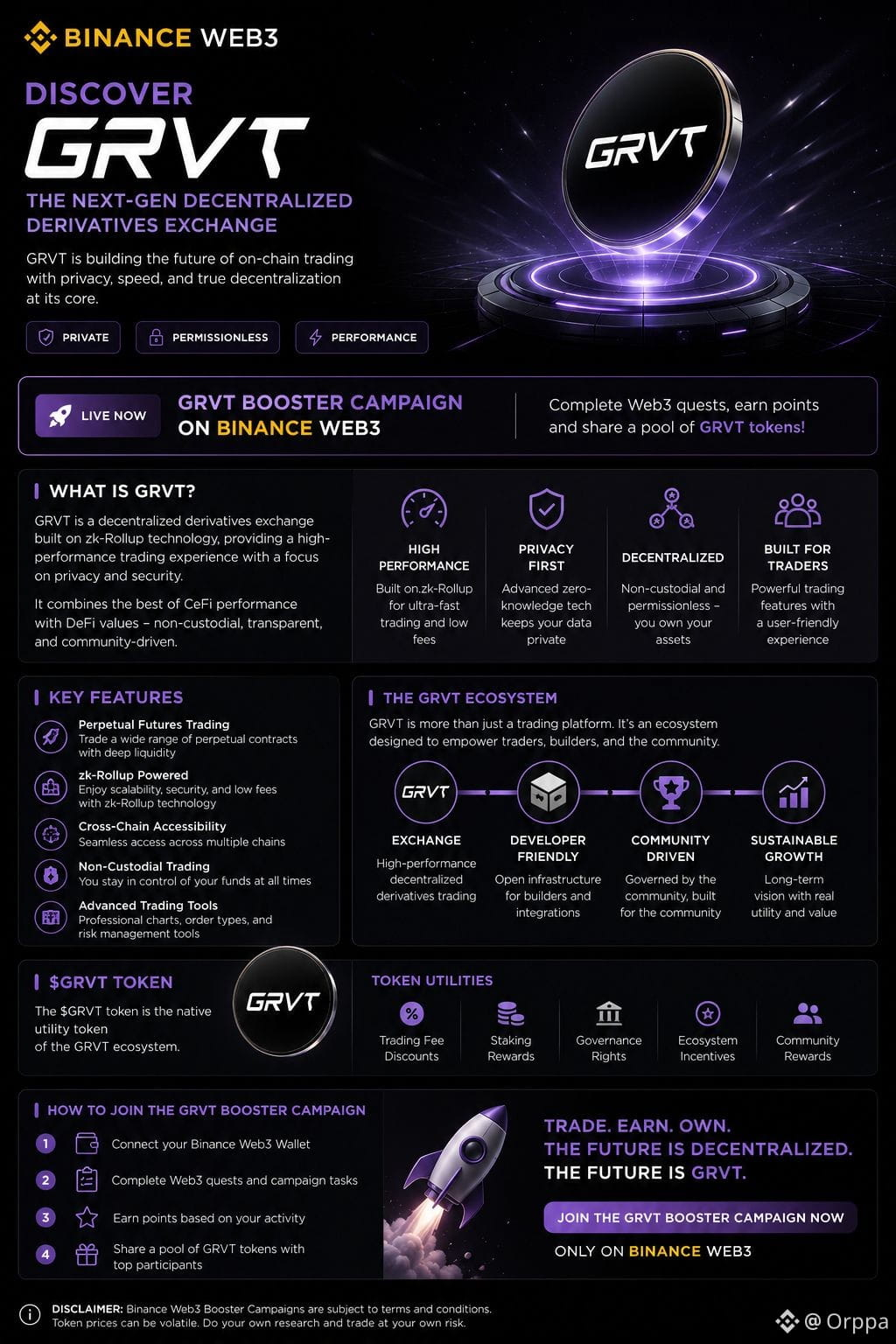
探索 GRVT —— 新一代去中心化交易
區塊鏈行業仍在不斷髮展,而引起關注的項目之一是 @grvt_io ——一個旨在結合中心化交易所性能與去中心化金融透明性和安全性的去中心化衍生品交易所。
與傳統交易所不同,在傳統交易中用戶往往需要交出資產託管權;GRVT 專注於提供非託管的交易體驗,讓交易者能夠在保持對資金更大掌控的同時,享受現代化的交易平臺。
🔹 GRVT 有什麼讓人感興趣的?
✅ 高性能交易
GRVT 旨在提供快速高效的交易體驗,能夠支持活躍交易者,並減少不必要的摩擦。
✅ 隱私與安全
該項目藉助先進的區塊鏈技術來提升用戶隱私,並加強安全性,同時不犧牲易用性。
✅ 去中心化基礎設施
GRVT 在去中心化理念的指導下構建,正努力打造一個生態系統,讓用戶能夠使用專業的交易工具,而不必完全依賴中心化的託管方。
✅ 面向 Web3 設計
GRVT 通過賦予用戶對數字資產更大的所有權來踐行 Web3 的理念,並鼓勵社區參與與生態增長。
🌐 Binance Web3 上的 GRVT
目前在 Binance Web3 上的 GRVT Booster 活動爲用戶提供了通過互動任務探索生態的機會。完成符合條件的任務後,參與者可以獲得活動積分,並根據活動規則競爭可用獎勵池中的份額。
該活動也是新手以簡單、引導式方式體驗 Web3 錢包、去中心化應用以及 GRVT 生態的絕佳途徑。
💡 爲什麼我在關注這個項目
我喜歡發現那些致力於改善去中心化交易體驗的項目,而 GRVT 是我目前正在探索的一個平臺。
一如既往,在參與任何區塊鏈項目或活動之前,請務必自行研究(DYOR)。
#grvt @grvt_io
探索 GRVT —— 新一代去中心化交易
區塊鏈行業仍在不斷髮展,而引起關注的項目之一是 @grvt_io ——一個旨在結合中心化交易所性能與去中心化金融透明性和安全性的去中心化衍生品交易所。
與傳統交易所不同,在傳統交易中用戶往往需要交出資產託管權;GRVT 專注於提供非託管的交易體驗,讓交易者能夠在保持對資金更大掌控的同時,享受現代化的交易平臺。
🔹 GRVT 有什麼讓人感興趣的?
✅ 高性能交易
GRVT 旨在提供快速高效的交易體驗,能夠支持活躍交易者,並減少不必要的摩擦。
✅ 隱私與安全
該項目藉助先進的區塊鏈技術來提升用戶隱私,並加強安全性,同時不犧牲易用性。
✅ 去中心化基礎設施
GRVT 在去中心化理念的指導下構建,正努力打造一個生態系統,讓用戶能夠使用專業的交易工具,而不必完全依賴中心化的託管方。
✅ 面向 Web3 設計
GRVT 通過賦予用戶對數字資產更大的所有權來踐行 Web3 的理念,並鼓勵社區參與與生態增長。
🌐 Binance Web3 上的 GRVT
目前在 Binance Web3 上的 GRVT Booster 活動爲用戶提供了通過互動任務探索生態的機會。完成符合條件的任務後,參與者可以獲得活動積分,並根據活動規則競爭可用獎勵池中的份額。
該活動也是新手以簡單、引導式方式體驗 Web3 錢包、去中心化應用以及 GRVT 生態的絕佳途徑。
💡 爲什麼我在關注這個項目
我喜歡發現那些致力於改善去中心化交易體驗的項目,而 GRVT 是我目前正在探索的一個平臺。
一如既往,在參與任何區塊鏈項目或活動之前,請務必自行研究(DYOR)。
#grvt @grvt_io
區塊鏈行業仍在不斷髮展,而引起關注的項目之一是 @grvt_io ——一個旨在結合中心化交易所性能與去中心化金融透明性和安全性的去中心化衍生品交易所。
與傳統交易所不同,在傳統交易中用戶往往需要交出資產託管權;GRVT 專注於提供非託管的交易體驗,讓交易者能夠在保持對資金更大掌控的同時,享受現代化的交易平臺。
🔹 GRVT 有什麼讓人感興趣的?
✅ 高性能交易
GRVT 旨在提供快速高效的交易體驗,能夠支持活躍交易者,並減少不必要的摩擦。
✅ 隱私與安全
該項目藉助先進的區塊鏈技術來提升用戶隱私,並加強安全性,同時不犧牲易用性。
✅ 去中心化基礎設施
GRVT 在去中心化理念的指導下構建,正努力打造一個生態系統,讓用戶能夠使用專業的交易工具,而不必完全依賴中心化的託管方。
✅ 面向 Web3 設計
GRVT 通過賦予用戶對數字資產更大的所有權來踐行 Web3 的理念,並鼓勵社區參與與生態增長。
🌐 Binance Web3 上的 GRVT
目前在 Binance Web3 上的 GRVT Booster 活動爲用戶提供了通過互動任務探索生態的機會。完成符合條件的任務後,參與者可以獲得活動積分,並根據活動規則競爭可用獎勵池中的份額。
該活動也是新手以簡單、引導式方式體驗 Web3 錢包、去中心化應用以及 GRVT 生態的絕佳途徑。
💡 爲什麼我在關注這個項目
我喜歡發現那些致力於改善去中心化交易體驗的項目,而 GRVT 是我目前正在探索的一個平臺。
一如既往,在參與任何區塊鏈項目或活動之前,請務必自行研究(DYOR)。
#grvt @grvt_io
73
·
--
加入幣安全新活動「抽獎即贏」。
最高可贏到 1 枚 BNB。現在就試試
#BinancePickAndWin
https://www.binance.com/activity/pick-and-win/2026-football-challenge?ref=1254230398
加入幣安全新活動「抽獎即贏」。
最高可贏到 1 枚 BNB。現在就試試
#BinancePickAndWin
https://www.binance.com/activity/pick-and-win/2026-football-challenge?ref=1254230398
最高可贏到 1 枚 BNB。現在就試試
#BinancePickAndWin
https://www.binance.com/activity/pick-and-win/2026-football-challenge?ref=1254230398
13
·
--
GRVT Booster 活動已正式登陸 Binance Web3!🚀
這是探索 GRVT 生態系的絕佳機會:在完成簡單的 Web3 任務的同時,收集寶貴的獎勵積分。無論你是 Binance Web3 的老用戶,還是剛剛開始使用,及早加入都可能在活動結束前幫助你最大化獎勵。
別錯過這個機會——連接你的錢包、完成任務,從今天開始賺取獎勵!
#BinanceWeb3 #grvt @grvt_io
GRVT Booster 活動已正式登陸 Binance Web3!🚀
這是探索 GRVT 生態系的絕佳機會:在完成簡單的 Web3 任務的同時,收集寶貴的獎勵積分。無論你是 Binance Web3 的老用戶,還是剛剛開始使用,及早加入都可能在活動結束前幫助你最大化獎勵。
別錯過這個機會——連接你的錢包、完成任務,從今天開始賺取獎勵!
#BinanceWeb3 #grvt @grvt_io
這是探索 GRVT 生態系的絕佳機會:在完成簡單的 Web3 任務的同時,收集寶貴的獎勵積分。無論你是 Binance Web3 的老用戶,還是剛剛開始使用,及早加入都可能在活動結束前幫助你最大化獎勵。
別錯過這個機會——連接你的錢包、完成任務,從今天開始賺取獎勵!
#BinanceWeb3 #grvt @grvt_io

1
85
·
--
加入幣安全新活動「參與抽獎贏獎」。
贏取最高 1 BNB。立即參加
#BinancePickAndWin
https://www.binance.com/activity/pick-and-win/2026-football-challenge?ref=1254230398
加入幣安全新活動「參與抽獎贏獎」。
贏取最高 1 BNB。立即參加
#BinancePickAndWin
https://www.binance.com/activity/pick-and-win/2026-football-challenge?ref=1254230398
贏取最高 1 BNB。立即參加
#BinancePickAndWin
https://www.binance.com/activity/pick-and-win/2026-football-challenge?ref=1254230398
12
登入以探索更多內容
加入幣安廣場中的全球加密貨幣用戶
⚡️ 獲取加密貨幣的最新和實用資訊。
💬 受到全球最大加密貨幣交易所的信任。
👍 發掘來自經過驗證創作者的真實見解。
電子郵件 / 電話號碼