

MAH N00R-01
12.6k 貼文

MAH N00R-01
 達人認證+
達人認證+舉報
封鎖用戶
crypto Enthausist .trader lover .KOL GEN
1.8K+ 關注
31.9K+ 粉絲
16.1K+ 點讚數
貼文
全部
直播
·
--
看跌
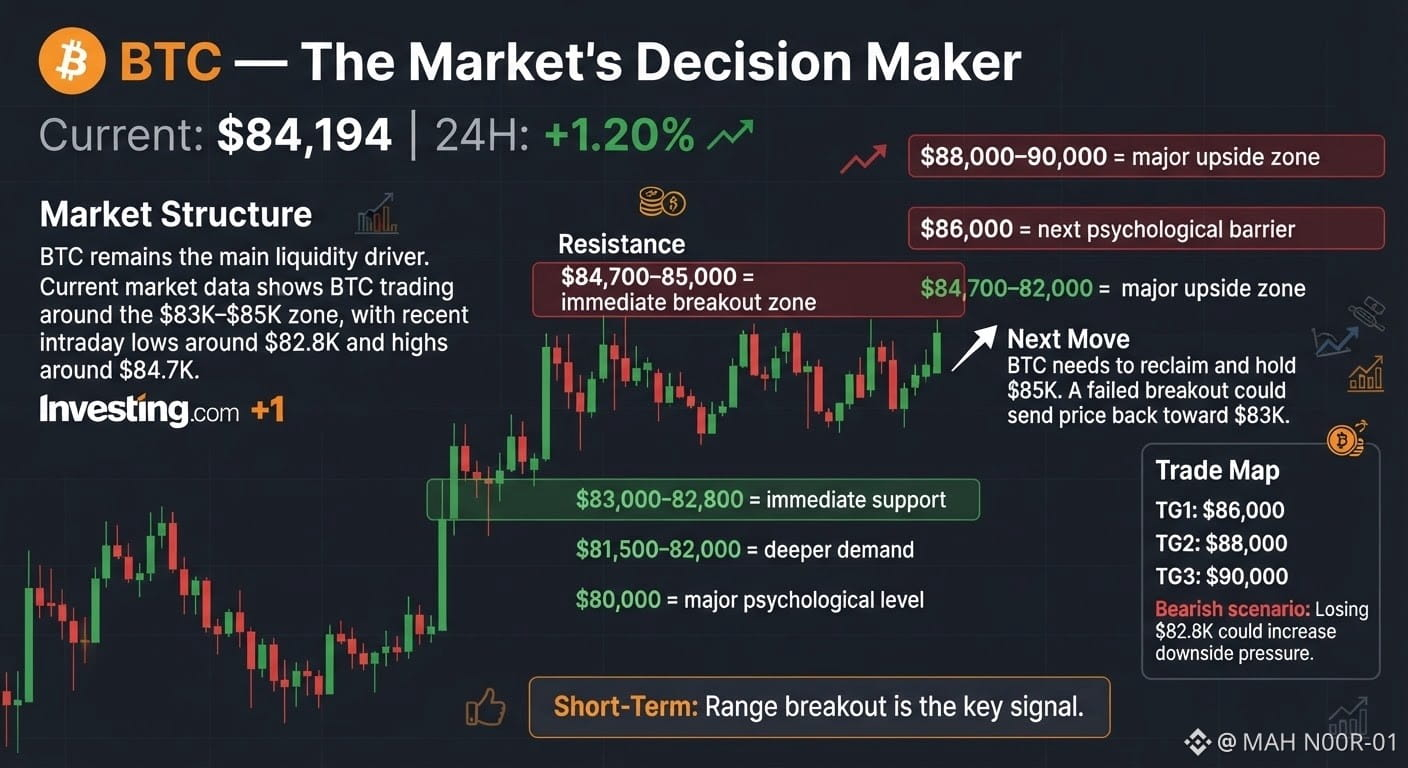
🟠 $BTC — 市場的決策者
當前:84,194 美元 | 24小時:+1.20%
市場結構
BTC 仍是主要的流動性驅動。當前市場數據表明,BTC 交易價格位於 83K–85K 區間附近,近期盤中低點約爲 82.8K,高點約爲 84.7K。 �
Investing.com +1
支撐位
83,000–82,800 = 直接支撐
81,500–82,000 = 更深層需求
80,000 = 重要心理關口
阻力位
84,700–85,000 = 直接突破區
86,000 = 下一道心理屏障
88,000–90,000 = 重要上行區
下一步
BTC 需要重新奪回並守住 85K。若突破失敗,價格可能回落至約 83K 附近。
交易圖
TG1:86,000
TG2:88,000
TG3:90,000
看空情景:跌破 82.8K 可能會增加下行壓力。
短線
區間突破是關鍵信號。
#QNTRises287%
{future}(BTCUSDT)
🟠 $BTC — 市場的決策者
當前:84,194 美元 | 24小時:+1.20%
市場結構
BTC 仍是主要的流動性驅動。當前市場數據表明,BTC 交易價格位於 83K–85K 區間附近,近期盤中低點約爲 82.8K,高點約爲 84.7K。 �
Investing.com +1
支撐位
83,000–82,800 = 直接支撐
81,500–82,000 = 更深層需求
80,000 = 重要心理關口
阻力位
84,700–85,000 = 直接突破區
86,000 = 下一道心理屏障
88,000–90,000 = 重要上行區
下一步
BTC 需要重新奪回並守住 85K。若突破失敗,價格可能回落至約 83K 附近。
交易圖
TG1:86,000
TG2:88,000
TG3:90,000
看空情景:跌破 82.8K 可能會增加下行壓力。
短線
區間突破是關鍵信號。
#QNTRises287%
當前:84,194 美元 | 24小時:+1.20%
市場結構
BTC 仍是主要的流動性驅動。當前市場數據表明,BTC 交易價格位於 83K–85K 區間附近,近期盤中低點約爲 82.8K,高點約爲 84.7K。 �
Investing.com +1
支撐位
83,000–82,800 = 直接支撐
81,500–82,000 = 更深層需求
80,000 = 重要心理關口
阻力位
84,700–85,000 = 直接突破區
86,000 = 下一道心理屏障
88,000–90,000 = 重要上行區
下一步
BTC 需要重新奪回並守住 85K。若突破失敗,價格可能回落至約 83K 附近。
交易圖
TG1:86,000
TG2:88,000
TG3:90,000
看空情景:跌破 82.8K 可能會增加下行壓力。
短線
區間突破是關鍵信號。
#QNTRises287%
213
·
--
看漲
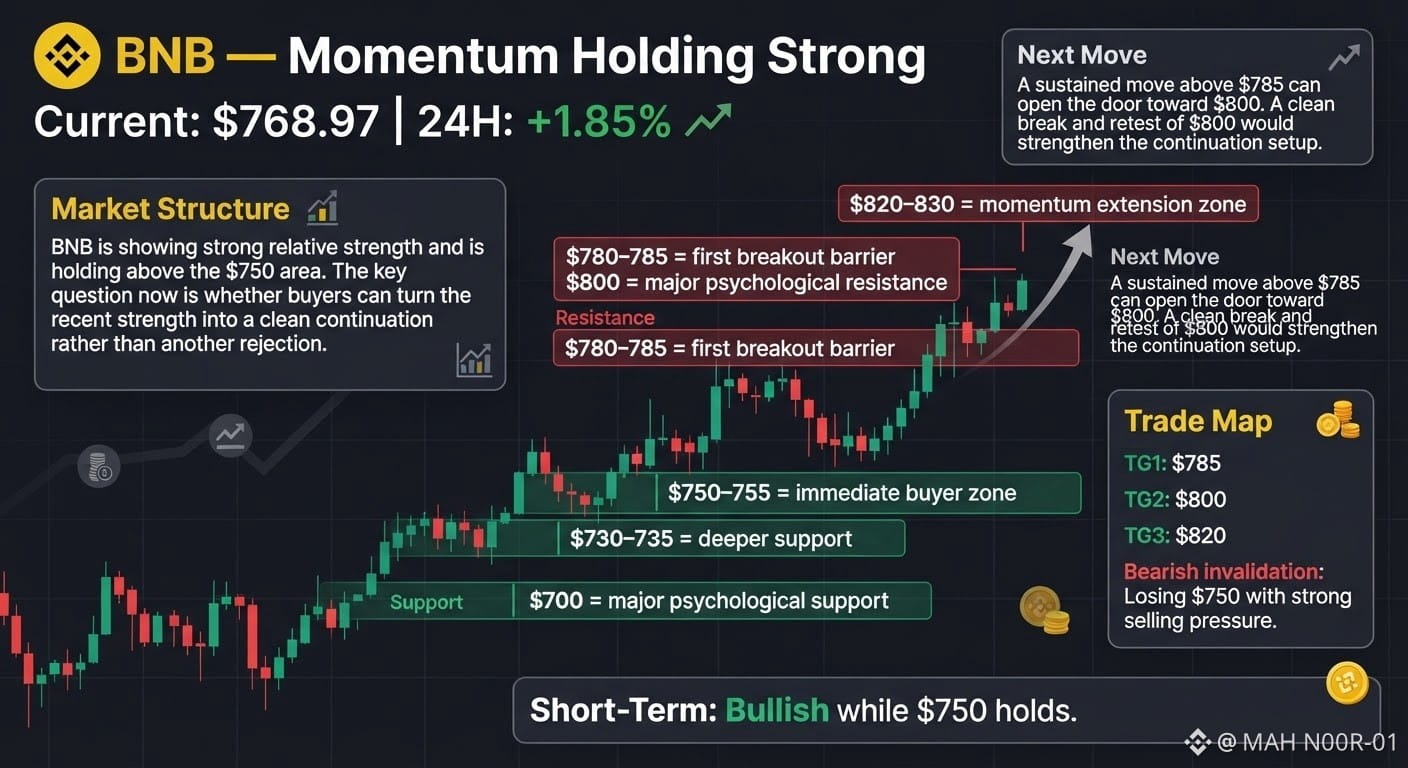
🟡 $BNB — 動能持久強勢
當前:$768.97 | 24H:+1.85%
市場結構
BNB 展現出強勁的相對強勢,並維持在 $750 之上。關鍵問題在於,買方能否將近期的強勢轉化爲順暢的延續,而不是再次遭到回落拒絕。
支撐位
$750–755 = 直接買盤區域
$730–735 = 更深層支撐
$700 = 重要心理支撐
阻力位
$780–785 = 首個突破障礙
$800 = 重要心理阻力
$820–830 = 動能延伸區
下一步
若能持續站上 $785,可能打開通往 $800 的道路。出現乾淨的突破並回踩驗證 $800,將進一步強化延續形態。
交易路徑
TG1:$785
TG2:$800
TG3:$820
看空失效條件:在強勁的賣壓下跌破 $750。
短線
只要 $750 守住,偏多。
#TrumpRejectsAIRulesForVoluntaryAudits
{future}(BNBUSDT)
🟡 $BNB — 動能持久強勢
當前:$768.97 | 24H:+1.85%
市場結構
BNB 展現出強勁的相對強勢,並維持在 $750 之上。關鍵問題在於,買方能否將近期的強勢轉化爲順暢的延續,而不是再次遭到回落拒絕。
支撐位
$750–755 = 直接買盤區域
$730–735 = 更深層支撐
$700 = 重要心理支撐
阻力位
$780–785 = 首個突破障礙
$800 = 重要心理阻力
$820–830 = 動能延伸區
下一步
若能持續站上 $785,可能打開通往 $800 的道路。出現乾淨的突破並回踩驗證 $800,將進一步強化延續形態。
交易路徑
TG1:$785
TG2:$800
TG3:$820
看空失效條件:在強勁的賣壓下跌破 $750。
短線
只要 $750 守住,偏多。
#TrumpRejectsAIRulesForVoluntaryAudits
當前:$768.97 | 24H:+1.85%
市場結構
BNB 展現出強勁的相對強勢,並維持在 $750 之上。關鍵問題在於,買方能否將近期的強勢轉化爲順暢的延續,而不是再次遭到回落拒絕。
支撐位
$750–755 = 直接買盤區域
$730–735 = 更深層支撐
$700 = 重要心理支撐
阻力位
$780–785 = 首個突破障礙
$800 = 重要心理阻力
$820–830 = 動能延伸區
下一步
若能持續站上 $785,可能打開通往 $800 的道路。出現乾淨的突破並回踩驗證 $800,將進一步強化延續形態。
交易路徑
TG1:$785
TG2:$800
TG3:$820
看空失效條件:在強勁的賣壓下跌破 $750。
短線
只要 $750 守住,偏多。
#TrumpRejectsAIRulesForVoluntaryAudits
253
·
--
看跌
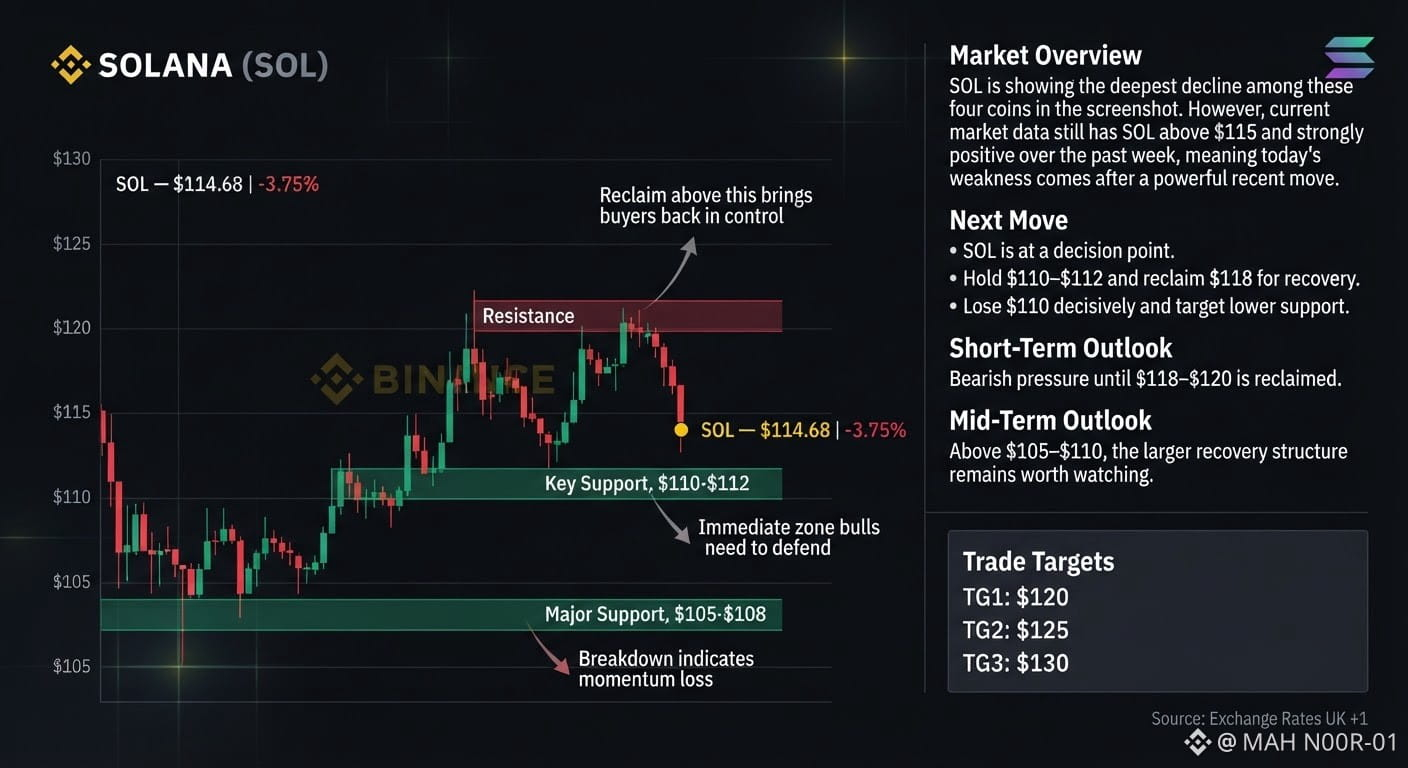
🟣 $SOL — $114.68 | -3.75%
市場概覽:
從截圖中的這四種幣來看,SOL 的跌幅最深。然而,當前市場數據仍顯示 SOL 在 $115 以上,並且近一週表現強勁爲正,這意味着今天的走弱發生在一次強勢近期行情之後。 �
匯率:英國 +1
關鍵支撐:$110–$112
這是多頭需要立刻守住的區域。
主要支撐:$105–$108
如果在此處跌破,將表明近期動能正在減弱。
阻力:$118–$120
重新站回該區間之上,可能會讓買盤重新掌控。
下一步:
SOL 正處於關鍵決策點。守住 $110–$112,並收復 $118,反彈結構有望繼續。若 $110 被果斷跌破,市場可能開始下探至下方支撐區。
交易目標:
TG1:$120
TG2:$125
TG3:$130
短期:在 $118–$120 被重新收復之前,偏空壓力仍將存在。
中期:只要在 $105–$110 之上,更大的反彈結構仍值得關注。
#21SharesLaunchesEuropesFirstZcashETP
{future}(SOLUSDT)
🟣 $SOL — $114.68 | -3.75%
市場概覽:
從截圖中的這四種幣來看,SOL 的跌幅最深。然而,當前市場數據仍顯示 SOL 在 $115 以上,並且近一週表現強勁爲正,這意味着今天的走弱發生在一次強勢近期行情之後。 �
匯率:英國 +1
關鍵支撐:$110–$112
這是多頭需要立刻守住的區域。
主要支撐:$105–$108
如果在此處跌破,將表明近期動能正在減弱。
阻力:$118–$120
重新站回該區間之上,可能會讓買盤重新掌控。
下一步:
SOL 正處於關鍵決策點。守住 $110–$112,並收復 $118,反彈結構有望繼續。若 $110 被果斷跌破,市場可能開始下探至下方支撐區。
交易目標:
TG1:$120
TG2:$125
TG3:$130
短期:在 $118–$120 被重新收復之前,偏空壓力仍將存在。
中期:只要在 $105–$110 之上,更大的反彈結構仍值得關注。
#21SharesLaunchesEuropesFirstZcashETP
市場概覽:
從截圖中的這四種幣來看,SOL 的跌幅最深。然而,當前市場數據仍顯示 SOL 在 $115 以上,並且近一週表現強勁爲正,這意味着今天的走弱發生在一次強勢近期行情之後。 �
匯率:英國 +1
關鍵支撐:$110–$112
這是多頭需要立刻守住的區域。
主要支撐:$105–$108
如果在此處跌破,將表明近期動能正在減弱。
阻力:$118–$120
重新站回該區間之上,可能會讓買盤重新掌控。
下一步:
SOL 正處於關鍵決策點。守住 $110–$112,並收復 $118,反彈結構有望繼續。若 $110 被果斷跌破,市場可能開始下探至下方支撐區。
交易目標:
TG1:$120
TG2:$125
TG3:$130
短期:在 $118–$120 被重新收復之前,偏空壓力仍將存在。
中期:只要在 $105–$110 之上,更大的反彈結構仍值得關注。
#21SharesLaunchesEuropesFirstZcashETP
2
392
·
--
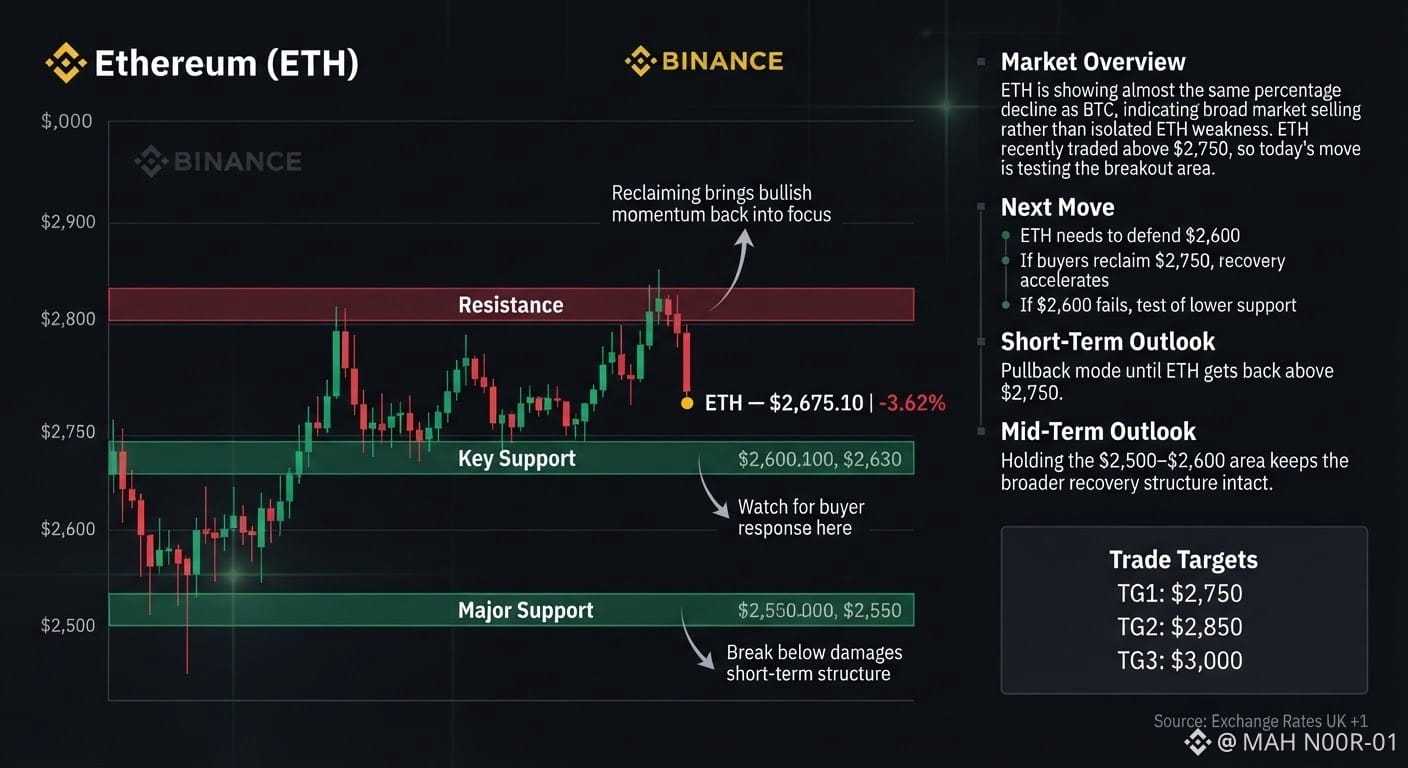
🔵 $ETH — $2,675.10 | -3.62%
市場概覽:
ETH顯示出與BTC幾乎相同的跌幅百分比,這表明是廣泛的市場拋售,而非ETH自身的單獨走弱。ETH近期曾在$2,750上方交易,因此今天的走勢是在測試突破區域。 �
英鎊/英匯交易所匯率:+1
關鍵支撐:$2,600–$2,630
這是我會重點關注買盤是否會作出迴應的第一個區域。
主要支撐:$2,500–$2,550
如果在該區域下方出現持續跌破,將會破壞短期結構。
阻力:$2,750–$2,800
重新奪回該區域將使看漲動能重新回到視野中。
下一步:
ETH需要守住$2,600。若買方重新收復$2,750,反彈可能會加速。若$2,600無法果斷守住,則預計賣方會測試下一個支撐區。
交易目標:
TG1:$2,750
TG2:$2,850
TG3:$3,000
短期:回調模式,直到ETH重新站上$2,750。
中期:守住$2,500–$2,600區域,才能維持更大範圍的復甦結構完整。
#21SharesLaunchesEuropesFirstZcashETP
{future}(ETHUSDT)
🔵 $ETH — $2,675.10 | -3.62%
市場概覽:
ETH顯示出與BTC幾乎相同的跌幅百分比,這表明是廣泛的市場拋售,而非ETH自身的單獨走弱。ETH近期曾在$2,750上方交易,因此今天的走勢是在測試突破區域。 �
英鎊/英匯交易所匯率:+1
關鍵支撐:$2,600–$2,630
這是我會重點關注買盤是否會作出迴應的第一個區域。
主要支撐:$2,500–$2,550
如果在該區域下方出現持續跌破,將會破壞短期結構。
阻力:$2,750–$2,800
重新奪回該區域將使看漲動能重新回到視野中。
下一步:
ETH需要守住$2,600。若買方重新收復$2,750,反彈可能會加速。若$2,600無法果斷守住,則預計賣方會測試下一個支撐區。
交易目標:
TG1:$2,750
TG2:$2,850
TG3:$3,000
短期:回調模式,直到ETH重新站上$2,750。
中期:守住$2,500–$2,600區域,才能維持更大範圍的復甦結構完整。
#21SharesLaunchesEuropesFirstZcashETP
市場概覽:
ETH顯示出與BTC幾乎相同的跌幅百分比,這表明是廣泛的市場拋售,而非ETH自身的單獨走弱。ETH近期曾在$2,750上方交易,因此今天的走勢是在測試突破區域。 �
英鎊/英匯交易所匯率:+1
關鍵支撐:$2,600–$2,630
這是我會重點關注買盤是否會作出迴應的第一個區域。
主要支撐:$2,500–$2,550
如果在該區域下方出現持續跌破,將會破壞短期結構。
阻力:$2,750–$2,800
重新奪回該區域將使看漲動能重新回到視野中。
下一步:
ETH需要守住$2,600。若買方重新收復$2,750,反彈可能會加速。若$2,600無法果斷守住,則預計賣方會測試下一個支撐區。
交易目標:
TG1:$2,750
TG2:$2,850
TG3:$3,000
短期:回調模式,直到ETH重新站上$2,750。
中期:守住$2,500–$2,600區域,才能維持更大範圍的復甦結構完整。
#21SharesLaunchesEuropesFirstZcashETP
122
·
--
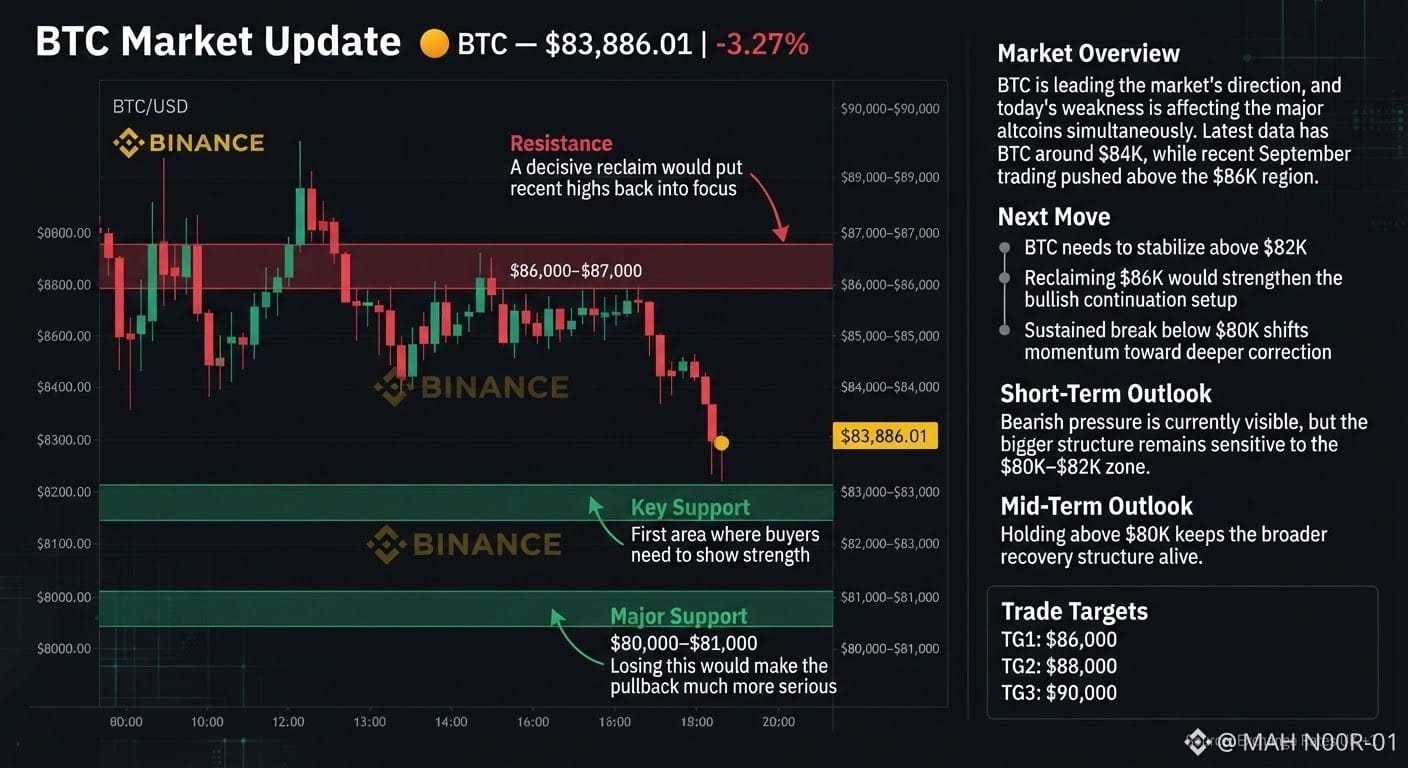
🟠 $BTC — $83,886.01 | -3.27%
市場概況:
BTC 引領市場走向,而今日的走弱同時影響多數主流山寨幣。最新數據顯示 BTC 約在 $84K 附近,而近期 9 月交易則一度推升至 $86K 區域上方。 �
匯率:英國 +1
關鍵支撐:$82,000–$83,000
這是買方必須展現強勢的第一個區域。
主要支撐:$80,000–$81,000
若失守該區間,將使目前的回撤變得更為嚴重。
阻力:$86,000–$87,000
若能果斷重新站回,近期高點將重新回到關注焦點。
下一步:
BTC 需要在 $82K 上方企穩。重新收復 $86K 將增強看多延續的設定;而若持續跌破 $80K,則勢頭會轉向更深的修正。
交易目標:
TG1:$86,000
TG2:$88,000
TG3:$90,000
短期:目前已可見看跌壓力,但更大的結構仍對 $80K–$82K 區域保持敏感。
中期:只要站穩 $80K 之上,就能維持更廣泛的復甦結構仍在。
#21SharesLaunchesEuropesFirstZcashETP
{future}(BTCUSDT)
🟠 $BTC — $83,886.01 | -3.27%
市場概況:
BTC 引領市場走向,而今日的走弱同時影響多數主流山寨幣。最新數據顯示 BTC 約在 $84K 附近,而近期 9 月交易則一度推升至 $86K 區域上方。 �
匯率:英國 +1
關鍵支撐:$82,000–$83,000
這是買方必須展現強勢的第一個區域。
主要支撐:$80,000–$81,000
若失守該區間,將使目前的回撤變得更為嚴重。
阻力:$86,000–$87,000
若能果斷重新站回,近期高點將重新回到關注焦點。
下一步:
BTC 需要在 $82K 上方企穩。重新收復 $86K 將增強看多延續的設定;而若持續跌破 $80K,則勢頭會轉向更深的修正。
交易目標:
TG1:$86,000
TG2:$88,000
TG3:$90,000
短期:目前已可見看跌壓力,但更大的結構仍對 $80K–$82K 區域保持敏感。
中期:只要站穩 $80K 之上,就能維持更廣泛的復甦結構仍在。
#21SharesLaunchesEuropesFirstZcashETP
市場概況:
BTC 引領市場走向,而今日的走弱同時影響多數主流山寨幣。最新數據顯示 BTC 約在 $84K 附近,而近期 9 月交易則一度推升至 $86K 區域上方。 �
匯率:英國 +1
關鍵支撐:$82,000–$83,000
這是買方必須展現強勢的第一個區域。
主要支撐:$80,000–$81,000
若失守該區間,將使目前的回撤變得更為嚴重。
阻力:$86,000–$87,000
若能果斷重新站回,近期高點將重新回到關注焦點。
下一步:
BTC 需要在 $82K 上方企穩。重新收復 $86K 將增強看多延續的設定;而若持續跌破 $80K,則勢頭會轉向更深的修正。
交易目標:
TG1:$86,000
TG2:$88,000
TG3:$90,000
短期:目前已可見看跌壓力,但更大的結構仍對 $80K–$82K 區域保持敏感。
中期:只要站穩 $80K 之上,就能維持更廣泛的復甦結構仍在。
#21SharesLaunchesEuropesFirstZcashETP
115
·
--
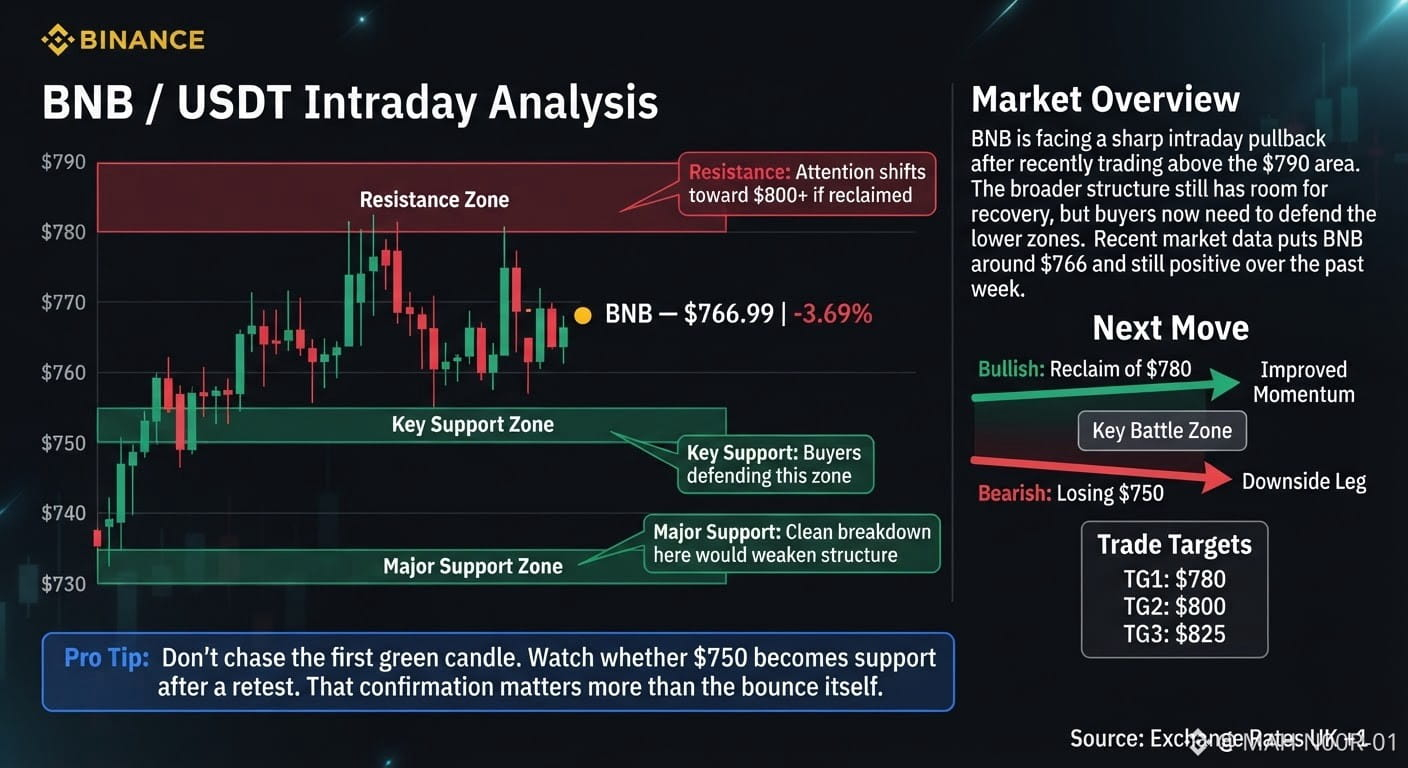
🟡 $BNB — $766.99 | -3.69%
市場概覽:
BNB在近期價格重回並高於$790關口之後,目前面臨一次明顯的日內回撤。整體結構仍有一定的修復空間,但買盤現在需要守住更低的區間。近期市場數據表明,BNB當前約爲$766,且過去一週仍保持上漲態勢。�
匯率:英國 +1
關鍵支撐:$750–$755
如果該區間守住,且買家重新入場,BNB可嘗試再一次反彈。
主要支撐:$730–$735
若在此處出現乾淨的跌破,將會顯著削弱短期結構。
阻力:$780–$790
站上該區間後,關注點將轉向$800+。
下一步:
接下來關鍵的戰場在$750–$780附近。若能強勢奪回$780,將提升動能;跌破並失守$750可能開啓另一段下行走勢。
交易目標:
TG1: $780
TG2: $800
TG3: $825
短期:在$780之下偏中性到偏空,但如果$750能被強力防守,可能引發反彈。
中期:若BNB能夠維持更高的支撐區間,並最終收復$800,結構仍偏建設。
專業提示:不要追第一根轉綠的K線。觀察在回測之後,$750是否會成爲支撐。這種確認比單純的反彈本身更重要。
#AIStocksWhatNext
{future}(BNBUSDT)
🟡 $BNB — $766.99 | -3.69%
市場概覽:
BNB在近期價格重回並高於$790關口之後,目前面臨一次明顯的日內回撤。整體結構仍有一定的修復空間,但買盤現在需要守住更低的區間。近期市場數據表明,BNB當前約爲$766,且過去一週仍保持上漲態勢。�
匯率:英國 +1
關鍵支撐:$750–$755
如果該區間守住,且買家重新入場,BNB可嘗試再一次反彈。
主要支撐:$730–$735
若在此處出現乾淨的跌破,將會顯著削弱短期結構。
阻力:$780–$790
站上該區間後,關注點將轉向$800+。
下一步:
接下來關鍵的戰場在$750–$780附近。若能強勢奪回$780,將提升動能;跌破並失守$750可能開啓另一段下行走勢。
交易目標:
TG1: $780
TG2: $800
TG3: $825
短期:在$780之下偏中性到偏空,但如果$750能被強力防守,可能引發反彈。
中期:若BNB能夠維持更高的支撐區間,並最終收復$800,結構仍偏建設。
專業提示:不要追第一根轉綠的K線。觀察在回測之後,$750是否會成爲支撐。這種確認比單純的反彈本身更重要。
#AIStocksWhatNext
市場概覽:
BNB在近期價格重回並高於$790關口之後,目前面臨一次明顯的日內回撤。整體結構仍有一定的修復空間,但買盤現在需要守住更低的區間。近期市場數據表明,BNB當前約爲$766,且過去一週仍保持上漲態勢。�
匯率:英國 +1
關鍵支撐:$750–$755
如果該區間守住,且買家重新入場,BNB可嘗試再一次反彈。
主要支撐:$730–$735
若在此處出現乾淨的跌破,將會顯著削弱短期結構。
阻力:$780–$790
站上該區間後,關注點將轉向$800+。
下一步:
接下來關鍵的戰場在$750–$780附近。若能強勢奪回$780,將提升動能;跌破並失守$750可能開啓另一段下行走勢。
交易目標:
TG1: $780
TG2: $800
TG3: $825
短期:在$780之下偏中性到偏空,但如果$750能被強力防守,可能引發反彈。
中期:若BNB能夠維持更高的支撐區間,並最終收復$800,結構仍偏建設。
專業提示:不要追第一根轉綠的K線。觀察在回測之後,$750是否會成爲支撐。這種確認比單純的反彈本身更重要。
#AIStocksWhatNext
136
·
--
看跌
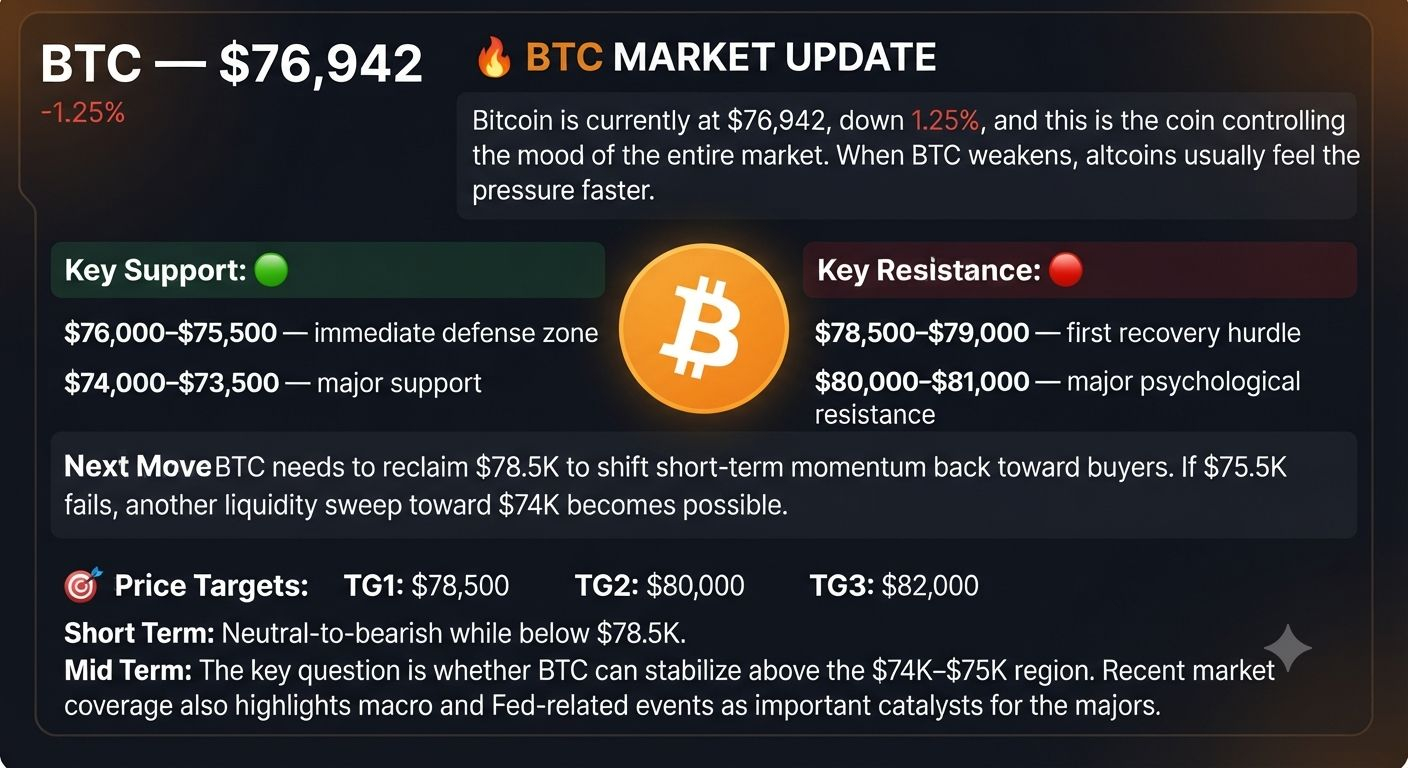
$BTC — $76,942 | -1.25%
🔥 BTC 市場快報
比特幣目前價格爲 $76,942,跌幅 1.25%,它正在主導整個市場的情緒。 當 BTC 走弱時,山寨幣通常會更快承壓。
關鍵支撐:
🟢 $76,000–$75,500 — 直接防守區
🟢 $74,000–$73,500 — 主要支撐
關鍵阻力:
🔴 $78,500–$79,000 — 首個反彈關口
🔴 $80,000–$81,000 — 重大心理阻力
下一步:
BTC 需要重新站上 $78.5K,才能把短期動能重新拉回買方。 如果 $75.5K 失守,則可能出現對 $74K 的另一輪流動性掃蕩。
🎯 TG1: $78,500
🎯 TG2: $80,000
🎯 TG3: $82,000
短線:在 $78.5K 下方時,中性偏空。
中線:關鍵問題在於 BTC 是否能在 $74K–$75K 區域上方企穩。近期市場報道也強調,宏觀與美聯儲相關事件是影響主流幣的重要催化因素。
#GrayscalePutsXRPAt26.11%InAdvisorPortfolio
{future}(BTCUSDT)
$BTC — $76,942 | -1.25%
🔥 BTC 市場快報
比特幣目前價格爲 $76,942,跌幅 1.25%,它正在主導整個市場的情緒。 當 BTC 走弱時,山寨幣通常會更快承壓。
關鍵支撐:
🟢 $76,000–$75,500 — 直接防守區
🟢 $74,000–$73,500 — 主要支撐
關鍵阻力:
🔴 $78,500–$79,000 — 首個反彈關口
🔴 $80,000–$81,000 — 重大心理阻力
下一步:
BTC 需要重新站上 $78.5K,才能把短期動能重新拉回買方。 如果 $75.5K 失守,則可能出現對 $74K 的另一輪流動性掃蕩。
🎯 TG1: $78,500
🎯 TG2: $80,000
🎯 TG3: $82,000
短線:在 $78.5K 下方時,中性偏空。
中線:關鍵問題在於 BTC 是否能在 $74K–$75K 區域上方企穩。近期市場報道也強調,宏觀與美聯儲相關事件是影響主流幣的重要催化因素。
#GrayscalePutsXRPAt26.11%InAdvisorPortfolio
🔥 BTC 市場快報
比特幣目前價格爲 $76,942,跌幅 1.25%,它正在主導整個市場的情緒。 當 BTC 走弱時,山寨幣通常會更快承壓。
關鍵支撐:
🟢 $76,000–$75,500 — 直接防守區
🟢 $74,000–$73,500 — 主要支撐
關鍵阻力:
🔴 $78,500–$79,000 — 首個反彈關口
🔴 $80,000–$81,000 — 重大心理阻力
下一步:
BTC 需要重新站上 $78.5K,才能把短期動能重新拉回買方。 如果 $75.5K 失守,則可能出現對 $74K 的另一輪流動性掃蕩。
🎯 TG1: $78,500
🎯 TG2: $80,000
🎯 TG3: $82,000
短線:在 $78.5K 下方時,中性偏空。
中線:關鍵問題在於 BTC 是否能在 $74K–$75K 區域上方企穩。近期市場報道也強調,宏觀與美聯儲相關事件是影響主流幣的重要催化因素。
#GrayscalePutsXRPAt26.11%InAdvisorPortfolio
138
·
--
看漲
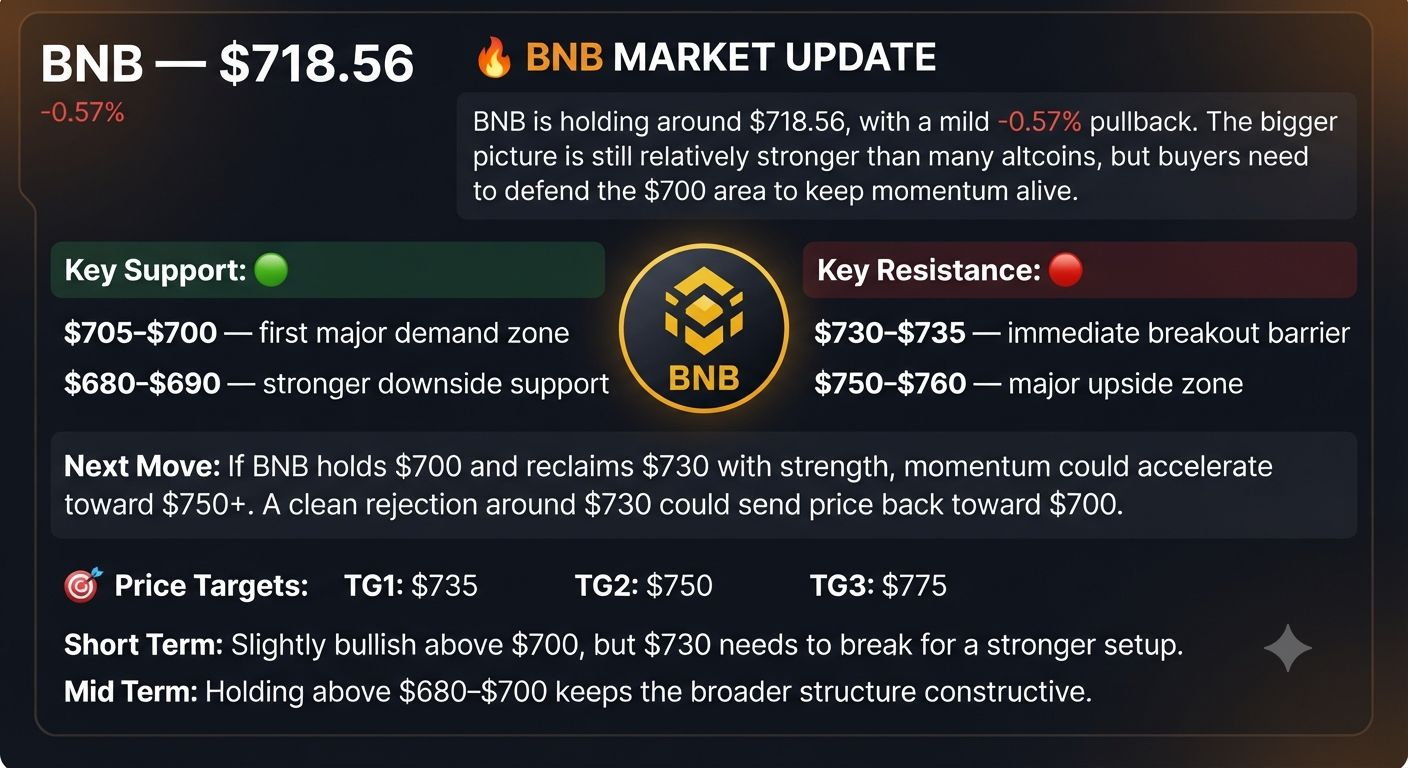
$BNB — $718.56 | -0.57%
🔥 BNB 行情更新
BNB 目前在約 $718.56 附近徘徊,輕微下跌 -0.57%。整體格局仍相對強於許多山寨幣,但買方需要守住 $700 一帶,才能維持上漲動能。
關鍵支撐:
🟢 $705–$700 — 首個主要需求區
🟢 $680–$690 — 更強的下行支撐
關鍵阻力:
🔴 $730–$735 — 直接突破的障礙
🔴 $750–$760 — 重要上行區域
下一步:
如果 BNB 守住 $700,並且以強勢重新站上 $730,動能可能會加速指向 $750+。在 $730 附近出現乾淨的回絕/拒絕走勢,價格可能會回到 $700 附近。
🎯 TG1: $735
🎯 TG2: $750
🎯 TG3: $775
短期:站穩 $700 之上略偏看漲,但要形成更強的 setup,$730 需要被有效突破。
中期:只要保持在 $680–$700 之上,整體結構仍然偏建設性。
#GrayscalePutsXRPAt26.11%InAdvisorPortfolio
{future}(BNBUSDT)
$BNB — $718.56 | -0.57%
🔥 BNB 行情更新
BNB 目前在約 $718.56 附近徘徊,輕微下跌 -0.57%。整體格局仍相對強於許多山寨幣,但買方需要守住 $700 一帶,才能維持上漲動能。
關鍵支撐:
🟢 $705–$700 — 首個主要需求區
🟢 $680–$690 — 更強的下行支撐
關鍵阻力:
🔴 $730–$735 — 直接突破的障礙
🔴 $750–$760 — 重要上行區域
下一步:
如果 BNB 守住 $700,並且以強勢重新站上 $730,動能可能會加速指向 $750+。在 $730 附近出現乾淨的回絕/拒絕走勢,價格可能會回到 $700 附近。
🎯 TG1: $735
🎯 TG2: $750
🎯 TG3: $775
短期:站穩 $700 之上略偏看漲,但要形成更強的 setup,$730 需要被有效突破。
中期:只要保持在 $680–$700 之上,整體結構仍然偏建設性。
#GrayscalePutsXRPAt26.11%InAdvisorPortfolio
🔥 BNB 行情更新
BNB 目前在約 $718.56 附近徘徊,輕微下跌 -0.57%。整體格局仍相對強於許多山寨幣,但買方需要守住 $700 一帶,才能維持上漲動能。
關鍵支撐:
🟢 $705–$700 — 首個主要需求區
🟢 $680–$690 — 更強的下行支撐
關鍵阻力:
🔴 $730–$735 — 直接突破的障礙
🔴 $750–$760 — 重要上行區域
下一步:
如果 BNB 守住 $700,並且以強勢重新站上 $730,動能可能會加速指向 $750+。在 $730 附近出現乾淨的回絕/拒絕走勢,價格可能會回到 $700 附近。
🎯 TG1: $735
🎯 TG2: $750
🎯 TG3: $775
短期:站穩 $700 之上略偏看漲,但要形成更強的 setup,$730 需要被有效突破。
中期:只要保持在 $680–$700 之上,整體結構仍然偏建設性。
#GrayscalePutsXRPAt26.11%InAdvisorPortfolio
530
·
--
看漲
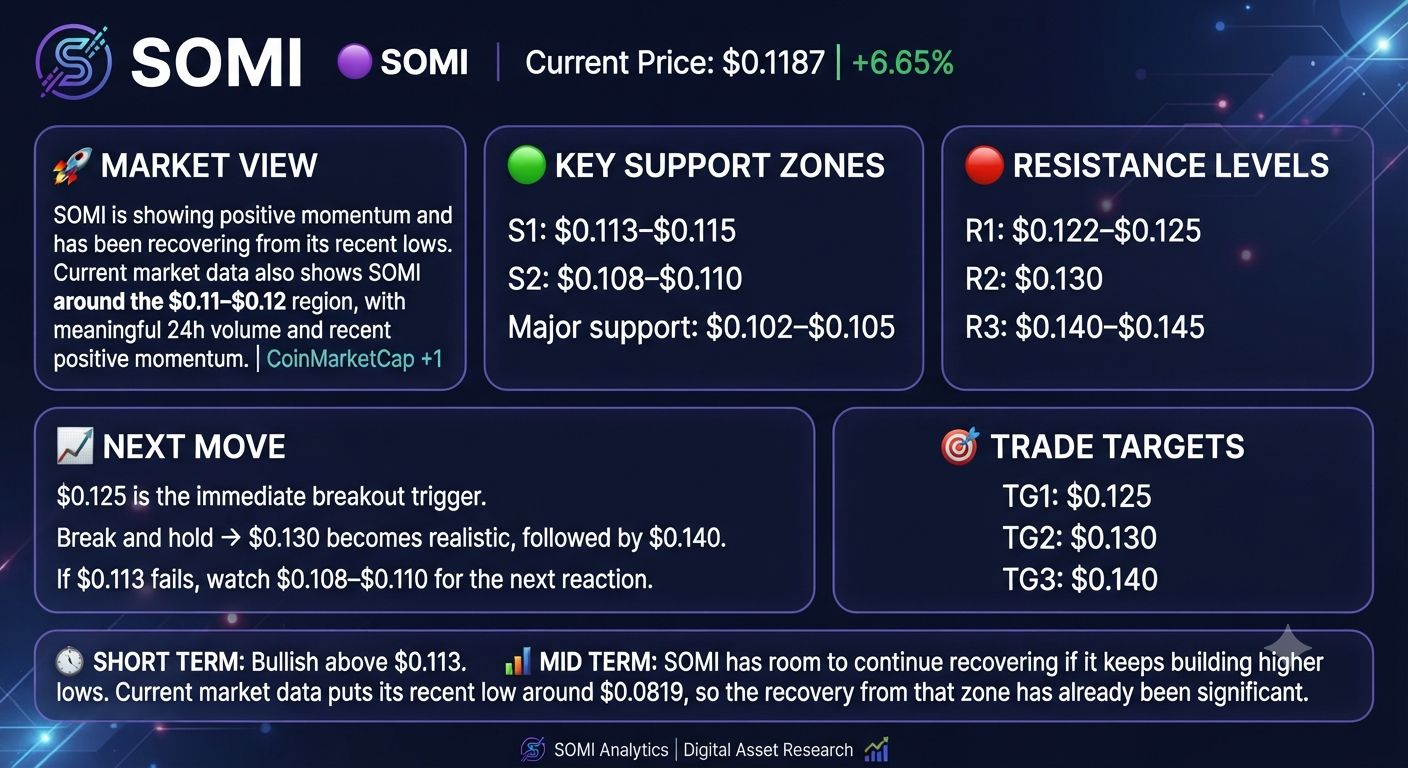
🟣 $SOMI — $0.1187 | +6.65%
🚀 市場展望
SOMI呈現正向動能,並從近期低點開始反彈。
當前市場數據也顯示SOMI在$0.11–$0.12區間附近,伴隨可觀的24小時成交量和近期正向動能。
CoinMarketCap +1
🟢 關鍵支撐
S1: $0.113–$0.115
S2: $0.108–$0.110
主要支撐: $0.102–$0.105
🔴 阻力位
R1: $0.122–$0.125
R2: $0.130
R3: $0.140–$0.145
🎯 交易目標
TG1: $0.125
TG2: $0.130
TG3: $0.140
📈 下一步
$0.125是直接的突破觸發點。
突破並站穩→$0.130將變得更可實現,隨後指向$0.140。
如果$0.113未能守住,請關注$0.108–$0.110的下一輪反應。
⏱️ 短期
站上$0.113偏多。
📊 中期
如果SOMI持續擡高低點,就還有空間繼續反彈。當前市場數據表明其近期低點約爲$0.0819,因此從該區間的反彈已經相當顯著。
#GoldRisesAbout14%InAugust
{future}(SOMIUSDT)
🟣 $SOMI — $0.1187 | +6.65%
🚀 市場展望
SOMI呈現正向動能,並從近期低點開始反彈。
當前市場數據也顯示SOMI在$0.11–$0.12區間附近,伴隨可觀的24小時成交量和近期正向動能。
CoinMarketCap +1
🟢 關鍵支撐
S1: $0.113–$0.115
S2: $0.108–$0.110
主要支撐: $0.102–$0.105
🔴 阻力位
R1: $0.122–$0.125
R2: $0.130
R3: $0.140–$0.145
🎯 交易目標
TG1: $0.125
TG2: $0.130
TG3: $0.140
📈 下一步
$0.125是直接的突破觸發點。
突破並站穩→$0.130將變得更可實現,隨後指向$0.140。
如果$0.113未能守住,請關注$0.108–$0.110的下一輪反應。
⏱️ 短期
站上$0.113偏多。
📊 中期
如果SOMI持續擡高低點,就還有空間繼續反彈。當前市場數據表明其近期低點約爲$0.0819,因此從該區間的反彈已經相當顯著。
#GoldRisesAbout14%InAugust
🚀 市場展望
SOMI呈現正向動能,並從近期低點開始反彈。
當前市場數據也顯示SOMI在$0.11–$0.12區間附近,伴隨可觀的24小時成交量和近期正向動能。
CoinMarketCap +1
🟢 關鍵支撐
S1: $0.113–$0.115
S2: $0.108–$0.110
主要支撐: $0.102–$0.105
🔴 阻力位
R1: $0.122–$0.125
R2: $0.130
R3: $0.140–$0.145
🎯 交易目標
TG1: $0.125
TG2: $0.130
TG3: $0.140
📈 下一步
$0.125是直接的突破觸發點。
突破並站穩→$0.130將變得更可實現,隨後指向$0.140。
如果$0.113未能守住,請關注$0.108–$0.110的下一輪反應。
⏱️ 短期
站上$0.113偏多。
📊 中期
如果SOMI持續擡高低點,就還有空間繼續反彈。當前市場數據表明其近期低點約爲$0.0819,因此從該區間的反彈已經相當顯著。
#GoldRisesAbout14%InAugust
434
·
--
看漲
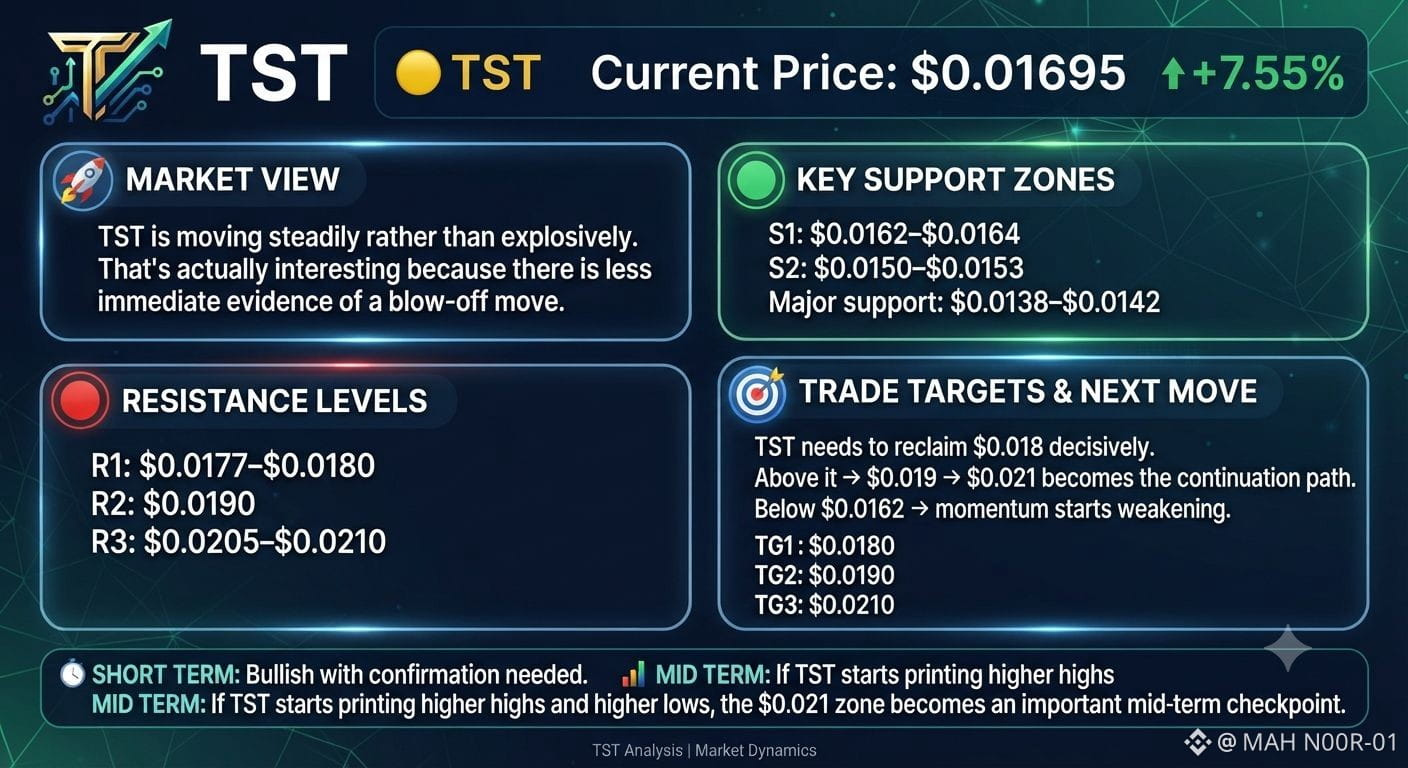
🟡 $TST — 0.01695 美元 | +7.55%
🚀 市場觀點
TST 正在穩步推進,而不是爆發式上衝。這其實很有意思,因爲目前缺少“衝頂拉爆式”走勢的直接證據。
🟢 關鍵支撐
S1: 0.0162–0.0164 美元
S2: 0.0150–0.0153 美元
主要支撐:0.0138–0.0142 美元
🔴 阻力位
R1: 0.0177–0.0180 美元
R2: 0.0190 美元
R3: 0.0205–0.0210 美元
🎯 交易目標
TG1: 0.0180 美元
TG2: 0.0190 美元
TG3: 0.0210 美元
📈 下一步
TST 需要果斷收回 0.018 美元。
站上其上 → 0.019 → 0.021 將成爲延續路徑。
跌破 0.0162 美元 → 動能開始走弱。
⏱️ 短期
偏多,但需要確認信號。
📊 中期
如果 TST 開始出現更高的高點和更高的低點,0.021 區域將成爲重要的中期里程碑。
#GoldRisesAbout14%InAugust
{future}(TSTUSDT)
🟡 $TST — 0.01695 美元 | +7.55%
🚀 市場觀點
TST 正在穩步推進,而不是爆發式上衝。這其實很有意思,因爲目前缺少“衝頂拉爆式”走勢的直接證據。
🟢 關鍵支撐
S1: 0.0162–0.0164 美元
S2: 0.0150–0.0153 美元
主要支撐:0.0138–0.0142 美元
🔴 阻力位
R1: 0.0177–0.0180 美元
R2: 0.0190 美元
R3: 0.0205–0.0210 美元
🎯 交易目標
TG1: 0.0180 美元
TG2: 0.0190 美元
TG3: 0.0210 美元
📈 下一步
TST 需要果斷收回 0.018 美元。
站上其上 → 0.019 → 0.021 將成爲延續路徑。
跌破 0.0162 美元 → 動能開始走弱。
⏱️ 短期
偏多,但需要確認信號。
📊 中期
如果 TST 開始出現更高的高點和更高的低點,0.021 區域將成爲重要的中期里程碑。
#GoldRisesAbout14%InAugust
🚀 市場觀點
TST 正在穩步推進,而不是爆發式上衝。這其實很有意思,因爲目前缺少“衝頂拉爆式”走勢的直接證據。
🟢 關鍵支撐
S1: 0.0162–0.0164 美元
S2: 0.0150–0.0153 美元
主要支撐:0.0138–0.0142 美元
🔴 阻力位
R1: 0.0177–0.0180 美元
R2: 0.0190 美元
R3: 0.0205–0.0210 美元
🎯 交易目標
TG1: 0.0180 美元
TG2: 0.0190 美元
TG3: 0.0210 美元
📈 下一步
TST 需要果斷收回 0.018 美元。
站上其上 → 0.019 → 0.021 將成爲延續路徑。
跌破 0.0162 美元 → 動能開始走弱。
⏱️ 短期
偏多,但需要確認信號。
📊 中期
如果 TST 開始出現更高的高點和更高的低點,0.021 區域將成爲重要的中期里程碑。
#GoldRisesAbout14%InAugust
219
·
--
看漲
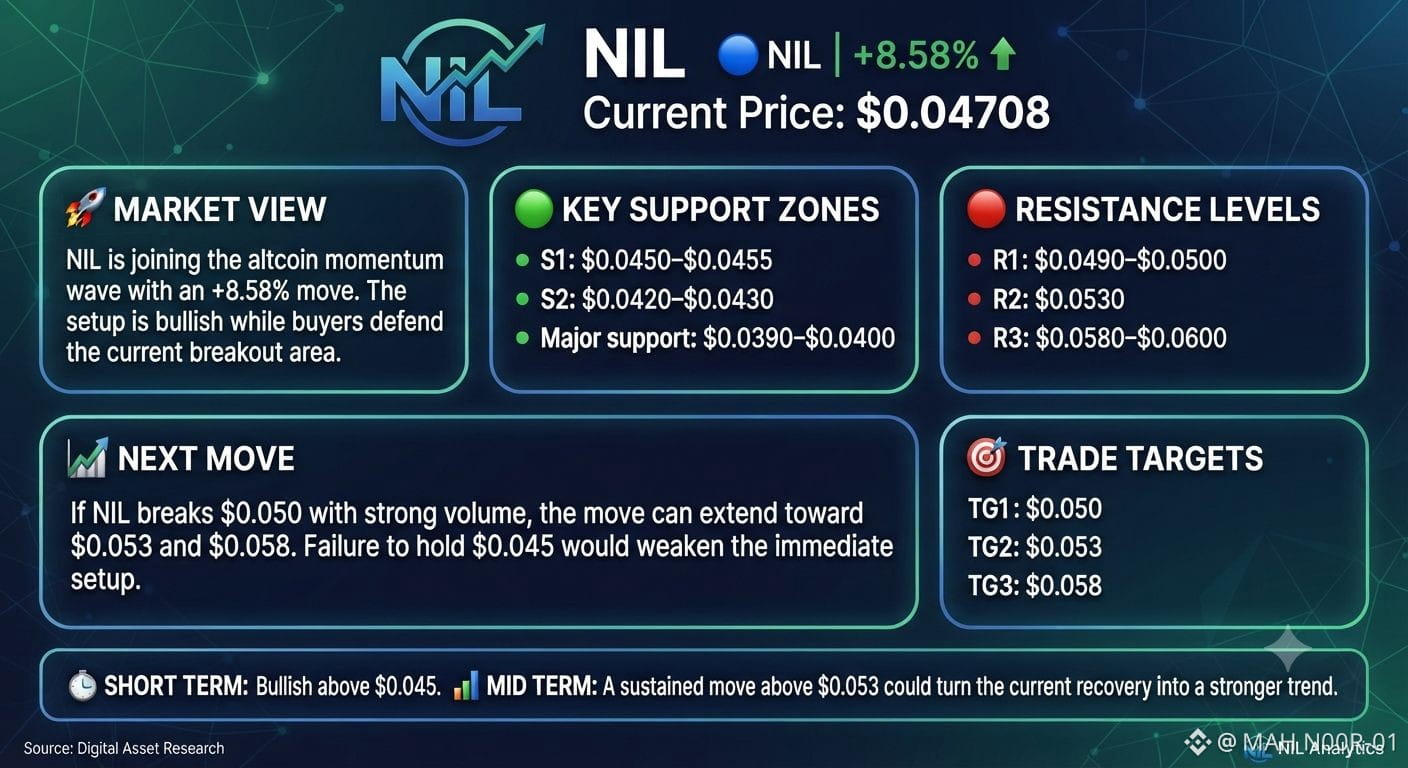
🔵 $NIL — $0.04708 | +8.58%
🚀 市場觀點
NIL 正加入山寨幣動能浪潮,漲幅 +8.58%。
只要買家守住當前突破區域,形態仍偏多。
🟢 關鍵支撐
S1: $0.0450–$0.0455
S2: $0.0420–$0.0430
主要支撐: $0.0390–$0.0400
🔴 阻力位
R1: $0.0490–$0.0500
R2: $0.0530
R3: $0.0580–$0.0600
🎯 交易目標
TG1: $0.050
TG2: $0.053
TG3: $0.058
📈 下一步
如果 NIL 能在強勁成交量下突破 $0.050,行情可能延伸至 $0.053 與 $0.058。
若無法守住 $0.045,短期形態將走弱。
⏱️ 短期
站上 $0.045 偏多。
📊 中期
只要能持續上穿 $0.053,就可能把當前反彈轉化爲更強的趨勢。
#GoldRisesAbout14%InAugust
{future}(NILUSDT)
🔵 $NIL — $0.04708 | +8.58%
🚀 市場觀點
NIL 正加入山寨幣動能浪潮,漲幅 +8.58%。
只要買家守住當前突破區域,形態仍偏多。
🟢 關鍵支撐
S1: $0.0450–$0.0455
S2: $0.0420–$0.0430
主要支撐: $0.0390–$0.0400
🔴 阻力位
R1: $0.0490–$0.0500
R2: $0.0530
R3: $0.0580–$0.0600
🎯 交易目標
TG1: $0.050
TG2: $0.053
TG3: $0.058
📈 下一步
如果 NIL 能在強勁成交量下突破 $0.050,行情可能延伸至 $0.053 與 $0.058。
若無法守住 $0.045,短期形態將走弱。
⏱️ 短期
站上 $0.045 偏多。
📊 中期
只要能持續上穿 $0.053,就可能把當前反彈轉化爲更強的趨勢。
#GoldRisesAbout14%InAugust
🚀 市場觀點
NIL 正加入山寨幣動能浪潮,漲幅 +8.58%。
只要買家守住當前突破區域,形態仍偏多。
🟢 關鍵支撐
S1: $0.0450–$0.0455
S2: $0.0420–$0.0430
主要支撐: $0.0390–$0.0400
🔴 阻力位
R1: $0.0490–$0.0500
R2: $0.0530
R3: $0.0580–$0.0600
🎯 交易目標
TG1: $0.050
TG2: $0.053
TG3: $0.058
📈 下一步
如果 NIL 能在強勁成交量下突破 $0.050,行情可能延伸至 $0.053 與 $0.058。
若無法守住 $0.045,短期形態將走弱。
⏱️ 短期
站上 $0.045 偏多。
📊 中期
只要能持續上穿 $0.053,就可能把當前反彈轉化爲更強的趨勢。
#GoldRisesAbout14%InAugust
323
·
--
看漲
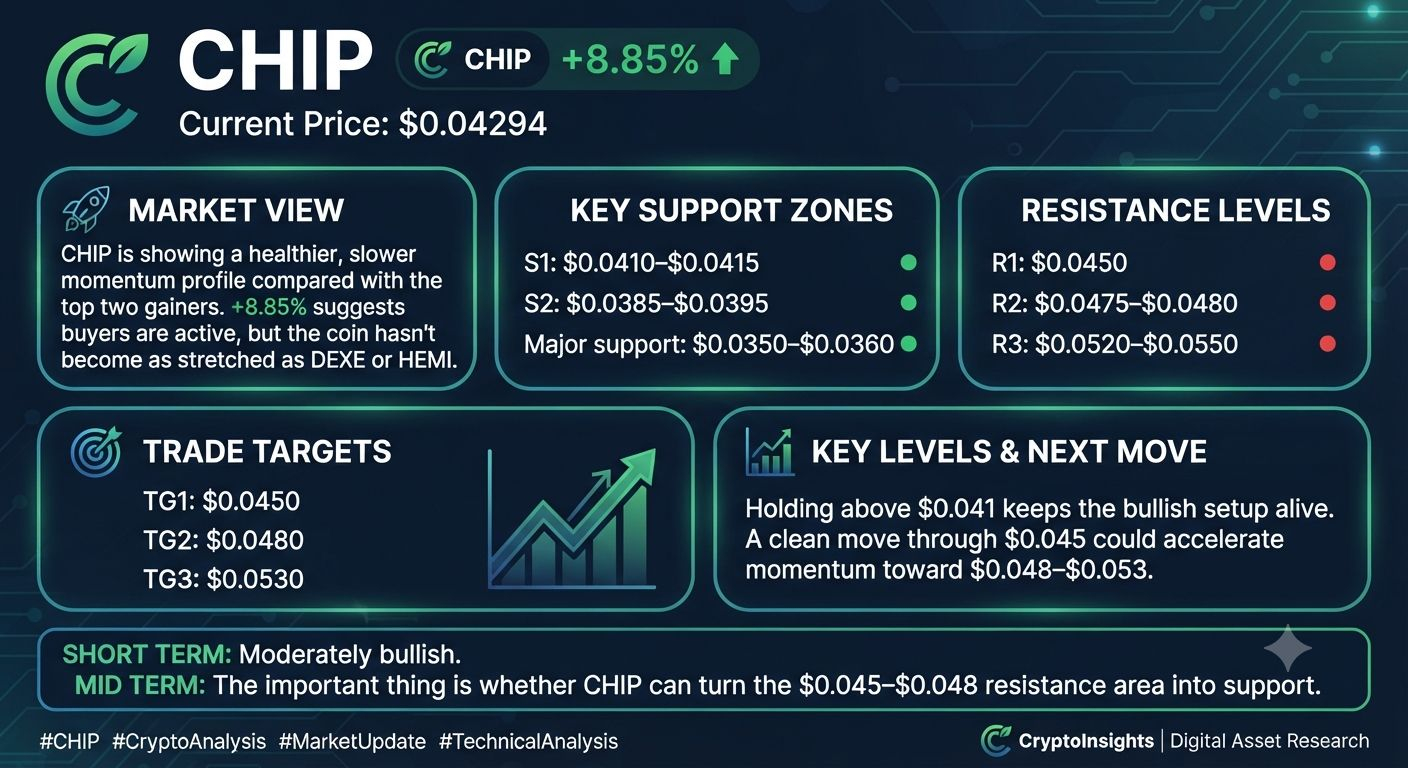
⚡ $CHIP — $0.04294 | +8.85%
🚀 市場觀點
CHIP 的動能曲線比前兩大漲幅幣表現得更健康、更緩和。
+8.85% 表明買盤活躍,但該幣尚未像 DEXE 或 HEMI 那樣被拉得過度。
🟢 關鍵支撐
S1: $0.0410–$0.0415
S2: $0.0385–$0.0395
主要支撐: $0.0350–$0.0360
🔴 阻力位
R1: $0.0450
R2: $0.0475–$0.0480
R3: $0.0520–$0.0550
🎯 交易目標
TG1: $0.0450
TG2: $0.0480
TG3: $0.0530
📈 下一步
站穩在 $0.041 上方,有助於維持看漲格局。
若出現乾淨地突破 $0.045,動能可能進一步指向 $0.048–$0.053。
⏱️ 短期
偏多。
📊 中期
關鍵在於 CHIP 能否將 $0.045–$0.048 的阻力區轉化爲支撐。
#GoldRisesAbout14%InAugust
{future}(CHIPUSDT)
⚡ $CHIP — $0.04294 | +8.85%
🚀 市場觀點
CHIP 的動能曲線比前兩大漲幅幣表現得更健康、更緩和。
+8.85% 表明買盤活躍,但該幣尚未像 DEXE 或 HEMI 那樣被拉得過度。
🟢 關鍵支撐
S1: $0.0410–$0.0415
S2: $0.0385–$0.0395
主要支撐: $0.0350–$0.0360
🔴 阻力位
R1: $0.0450
R2: $0.0475–$0.0480
R3: $0.0520–$0.0550
🎯 交易目標
TG1: $0.0450
TG2: $0.0480
TG3: $0.0530
📈 下一步
站穩在 $0.041 上方,有助於維持看漲格局。
若出現乾淨地突破 $0.045,動能可能進一步指向 $0.048–$0.053。
⏱️ 短期
偏多。
📊 中期
關鍵在於 CHIP 能否將 $0.045–$0.048 的阻力區轉化爲支撐。
#GoldRisesAbout14%InAugust
🚀 市場觀點
CHIP 的動能曲線比前兩大漲幅幣表現得更健康、更緩和。
+8.85% 表明買盤活躍,但該幣尚未像 DEXE 或 HEMI 那樣被拉得過度。
🟢 關鍵支撐
S1: $0.0410–$0.0415
S2: $0.0385–$0.0395
主要支撐: $0.0350–$0.0360
🔴 阻力位
R1: $0.0450
R2: $0.0475–$0.0480
R3: $0.0520–$0.0550
🎯 交易目標
TG1: $0.0450
TG2: $0.0480
TG3: $0.0530
📈 下一步
站穩在 $0.041 上方,有助於維持看漲格局。
若出現乾淨地突破 $0.045,動能可能進一步指向 $0.048–$0.053。
⏱️ 短期
偏多。
📊 中期
關鍵在於 CHIP 能否將 $0.045–$0.048 的阻力區轉化爲支撐。
#GoldRisesAbout14%InAugust
400
·
--
看漲
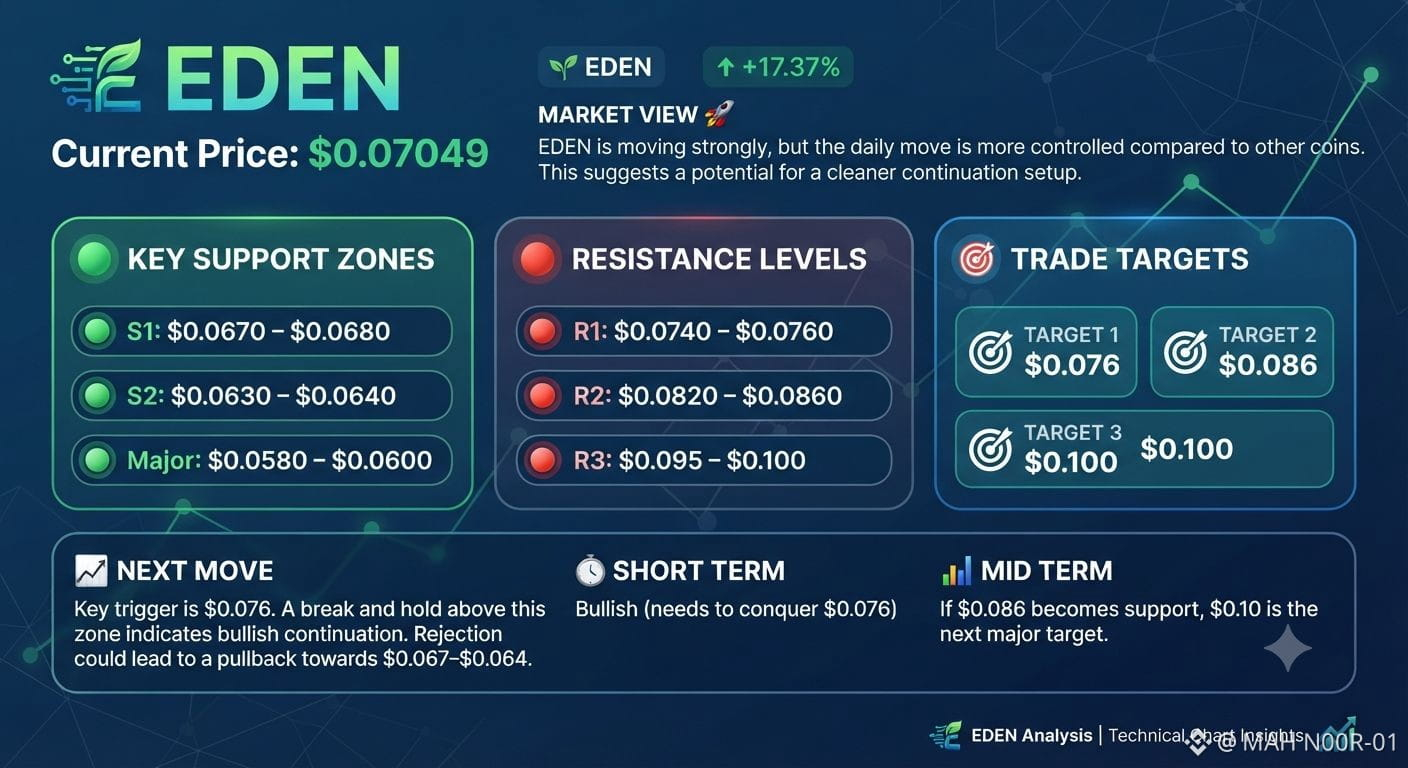
🌱 $EDEN — $0.07049 | +17.37%
🚀 市場觀點
EDEN 正在強勁走勢,但與 DEXE/HEMI 不同的是,日內漲幅更爲可控。
這可能很有意思,因爲較少的垂直動能有時會帶來更清晰的延續結構。
🟢 關鍵支撐
S1: $0.0670–$0.0680
S2: $0.0630–$0.0640
主要支撐: $0.0580–$0.0600
🔴 阻力位
R1: $0.0740–$0.0760
R2: $0.0820–$0.0860
R3: $0.095–$0.100
🎯 交易目標
TG1: $0.076
TG2: $0.086
TG3: $0.100
📈 下一步
$0.076 是關鍵觸發點。
向上突破並站穩該區域 → 看漲延續。
若被回落拒絕 → 可能在下一次嘗試前回調至 $0.067–$0.064。
⏱️ 短期
偏多,但需要攻克 $0.076。
📊 中期
如果 EDEN 將 $0.086 建立爲支撐位,那麼心理關口 $0.10 將成爲下一個主要上行吸引目標。
#GoldRisesAbout14%InAugust
{future}(EDENUSDT)
🌱 $EDEN — $0.07049 | +17.37%
🚀 市場觀點
EDEN 正在強勁走勢,但與 DEXE/HEMI 不同的是,日內漲幅更爲可控。
這可能很有意思,因爲較少的垂直動能有時會帶來更清晰的延續結構。
🟢 關鍵支撐
S1: $0.0670–$0.0680
S2: $0.0630–$0.0640
主要支撐: $0.0580–$0.0600
🔴 阻力位
R1: $0.0740–$0.0760
R2: $0.0820–$0.0860
R3: $0.095–$0.100
🎯 交易目標
TG1: $0.076
TG2: $0.086
TG3: $0.100
📈 下一步
$0.076 是關鍵觸發點。
向上突破並站穩該區域 → 看漲延續。
若被回落拒絕 → 可能在下一次嘗試前回調至 $0.067–$0.064。
⏱️ 短期
偏多,但需要攻克 $0.076。
📊 中期
如果 EDEN 將 $0.086 建立爲支撐位,那麼心理關口 $0.10 將成爲下一個主要上行吸引目標。
#GoldRisesAbout14%InAugust
🚀 市場觀點
EDEN 正在強勁走勢,但與 DEXE/HEMI 不同的是,日內漲幅更爲可控。
這可能很有意思,因爲較少的垂直動能有時會帶來更清晰的延續結構。
🟢 關鍵支撐
S1: $0.0670–$0.0680
S2: $0.0630–$0.0640
主要支撐: $0.0580–$0.0600
🔴 阻力位
R1: $0.0740–$0.0760
R2: $0.0820–$0.0860
R3: $0.095–$0.100
🎯 交易目標
TG1: $0.076
TG2: $0.086
TG3: $0.100
📈 下一步
$0.076 是關鍵觸發點。
向上突破並站穩該區域 → 看漲延續。
若被回落拒絕 → 可能在下一次嘗試前回調至 $0.067–$0.064。
⏱️ 短期
偏多,但需要攻克 $0.076。
📊 中期
如果 EDEN 將 $0.086 建立爲支撐位,那麼心理關口 $0.10 將成爲下一個主要上行吸引目標。
#GoldRisesAbout14%InAugust
273
·
--
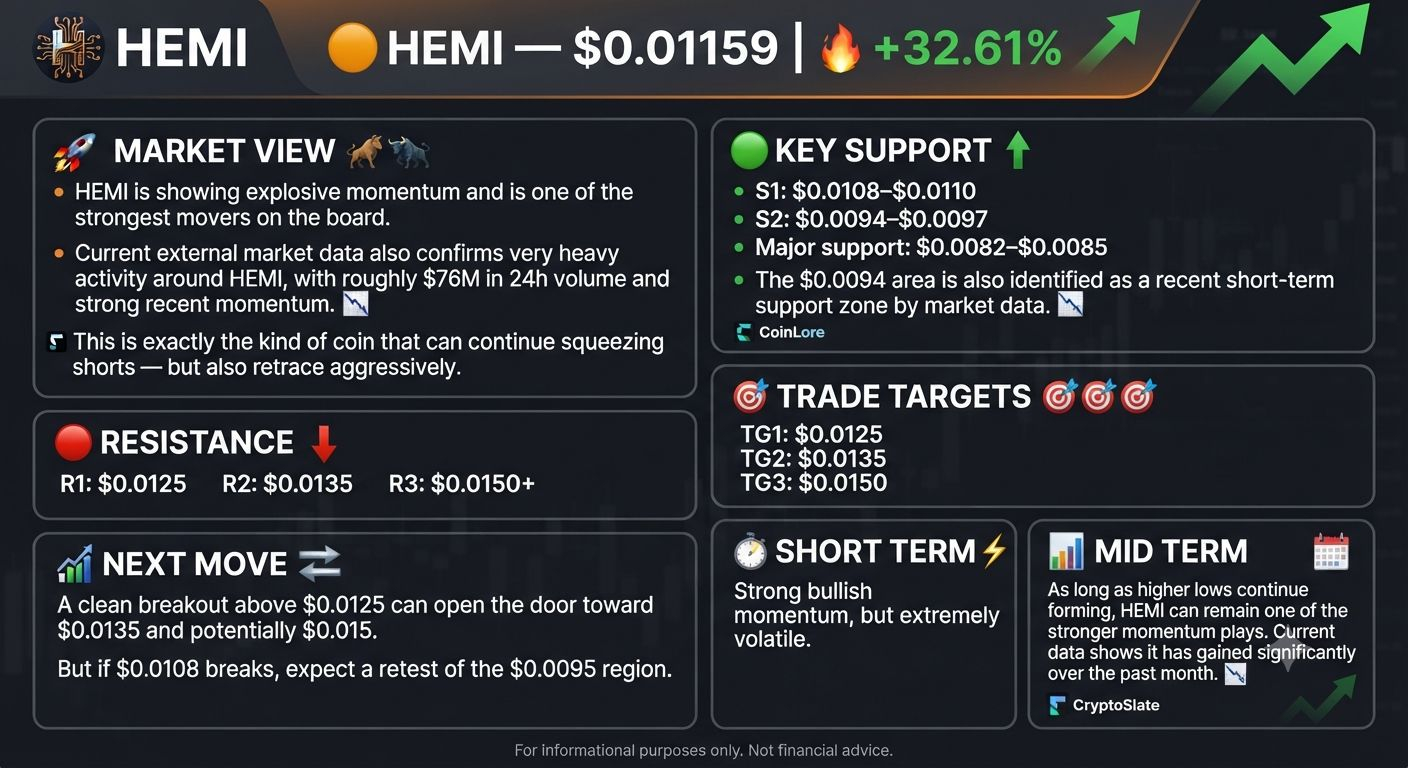
🟠 $HEMI — 0.01159 美元 | +32.61%
🚀 市場展望
HEMI展現出爆發式動能,是板塊中最強勢的領漲者之一。
當前的外部市場數據也證實了圍繞HEMI的極高活躍度,24小時成交量約7600萬美元,且近期動能強勁。
CryptoSlate
這正是那種可能繼續擠壓空頭的幣——但也可能出現非常劇烈的回撤。
🟢 關鍵支撐
S1: 0.0108–0.0110
S2: 0.0094–0.0097
主要支撐: 0.0082–0.0085
0.0094 這一帶也被市場數據標記爲近期短期支撐區域。
CoinLore
🔴 阻力位
R1: 0.0125
R2: 0.0135
R3: 0.0150+
🎯 交易目標
TG1: 0.0125
TG2: 0.0135
TG3: 0.0150
📈 下一步
只要有效突破 0.0125,就可能打開通往 0.0135 以及潛在 0.015 的空間。
但如果 0.0108 跌破,預期將回測 0.0095 區域。
⏱️ 短期
強勁看漲動能,但波動極大。
📊 中期
只要更高的低點繼續形成,HEMI 仍可能是最強動能標的之一。當前數據表明,它在過去一個月內漲幅顯著。
CryptoSlate
#GoldRisesAbout14%InAugust
{future}(HEMIUSDT)
🟠 $HEMI — 0.01159 美元 | +32.61%
🚀 市場展望
HEMI展現出爆發式動能,是板塊中最強勢的領漲者之一。
當前的外部市場數據也證實了圍繞HEMI的極高活躍度,24小時成交量約7600萬美元,且近期動能強勁。
CryptoSlate
這正是那種可能繼續擠壓空頭的幣——但也可能出現非常劇烈的回撤。
🟢 關鍵支撐
S1: 0.0108–0.0110
S2: 0.0094–0.0097
主要支撐: 0.0082–0.0085
0.0094 這一帶也被市場數據標記爲近期短期支撐區域。
CoinLore
🔴 阻力位
R1: 0.0125
R2: 0.0135
R3: 0.0150+
🎯 交易目標
TG1: 0.0125
TG2: 0.0135
TG3: 0.0150
📈 下一步
只要有效突破 0.0125,就可能打開通往 0.0135 以及潛在 0.015 的空間。
但如果 0.0108 跌破,預期將回測 0.0095 區域。
⏱️ 短期
強勁看漲動能,但波動極大。
📊 中期
只要更高的低點繼續形成,HEMI 仍可能是最強動能標的之一。當前數據表明,它在過去一個月內漲幅顯著。
CryptoSlate
#GoldRisesAbout14%InAugust
🚀 市場展望
HEMI展現出爆發式動能,是板塊中最強勢的領漲者之一。
當前的外部市場數據也證實了圍繞HEMI的極高活躍度,24小時成交量約7600萬美元,且近期動能強勁。
CryptoSlate
這正是那種可能繼續擠壓空頭的幣——但也可能出現非常劇烈的回撤。
🟢 關鍵支撐
S1: 0.0108–0.0110
S2: 0.0094–0.0097
主要支撐: 0.0082–0.0085
0.0094 這一帶也被市場數據標記爲近期短期支撐區域。
CoinLore
🔴 阻力位
R1: 0.0125
R2: 0.0135
R3: 0.0150+
🎯 交易目標
TG1: 0.0125
TG2: 0.0135
TG3: 0.0150
📈 下一步
只要有效突破 0.0125,就可能打開通往 0.0135 以及潛在 0.015 的空間。
但如果 0.0108 跌破,預期將回測 0.0095 區域。
⏱️ 短期
強勁看漲動能,但波動極大。
📊 中期
只要更高的低點繼續形成,HEMI 仍可能是最強動能標的之一。當前數據表明,它在過去一個月內漲幅顯著。
CryptoSlate
#GoldRisesAbout14%InAugust
302
·
--
看漲
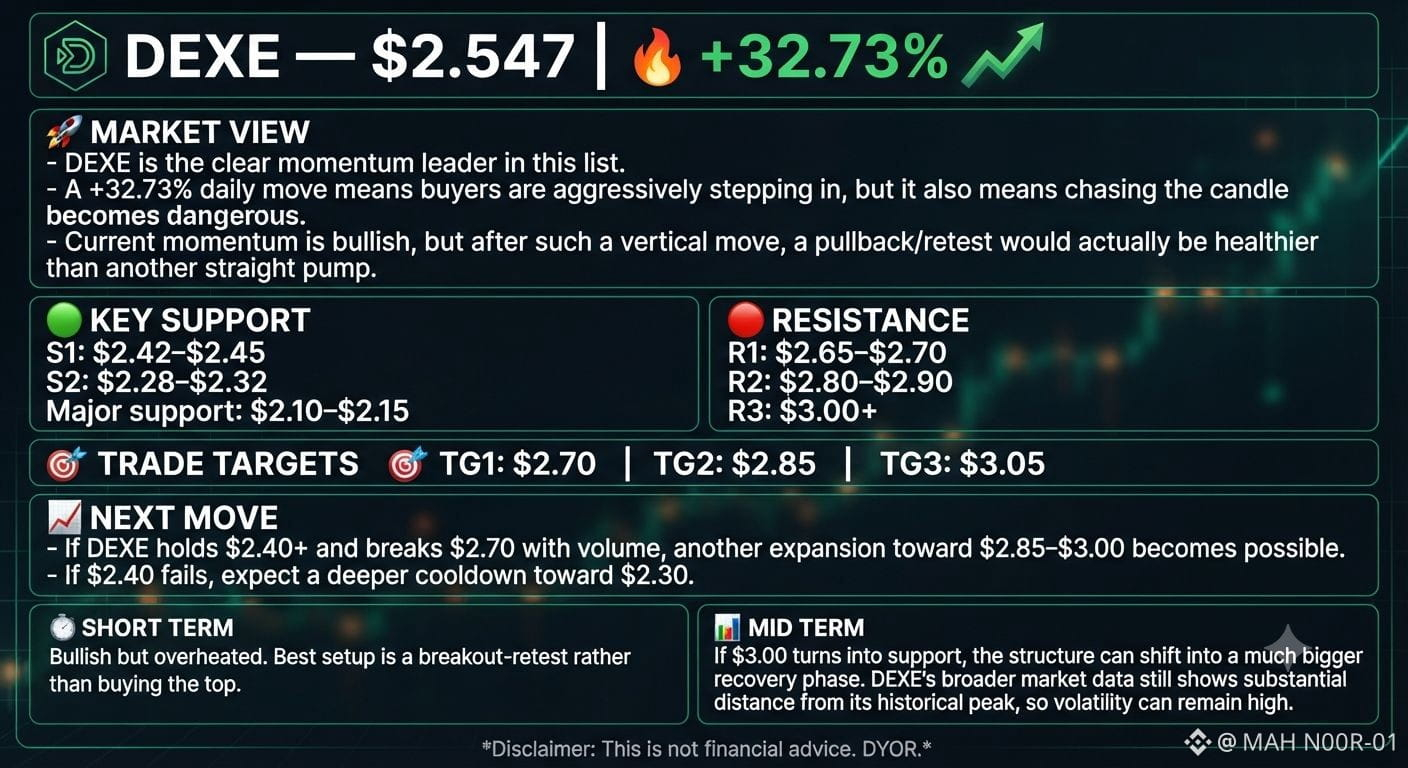
🔥 $DEXE — $2.547 | +32.73%
🚀 市場觀點
DEXE 是該榜單中明確的動能領跑者。+32.73% 的日漲幅意味着買家正在積極入場,但也意味着追着K線衝進去會變得危險。
當前動能偏多,但經過如此直線拉昇之後,回調/二次測試其實會比再次直接衝高更健康。
🟢 關鍵支撐
S1: $2.42–$2.45
S2: $2.28–$2.32
主要支撐: $2.10–$2.15
🔴 阻力位
R1: $2.65–$2.70
R2: $2.80–$2.90
R3: $3.00+
🎯 交易目標
TG1: $2.70
TG2: $2.85
TG3: $3.05
📈 下一步
如果 DEXE 能守住 $2.40+ 並放量突破 $2.70,則可能出現另一輪擴張,目標指向 $2.85–$3.00。
如果 $2.40 失敗,則預計會有更深的降溫,回落至 $2.30 附近。
⏱️ 短線
偏多但過熱。最佳的形態是突破-回踩,而不是直接買在高位。
📊 中線
如果 $3.00 變成支撐,結構可能會轉向更大級別的反彈階段。DEXE 的更廣泛市場數據仍顯示其距離歷史高點還有明顯空間,因此波動可能持續較高。
#GoldRisesAbout14%InAugust
{future}(DEXEUSDT)
🔥 $DEXE — $2.547 | +32.73%
🚀 市場觀點
DEXE 是該榜單中明確的動能領跑者。+32.73% 的日漲幅意味着買家正在積極入場,但也意味着追着K線衝進去會變得危險。
當前動能偏多,但經過如此直線拉昇之後,回調/二次測試其實會比再次直接衝高更健康。
🟢 關鍵支撐
S1: $2.42–$2.45
S2: $2.28–$2.32
主要支撐: $2.10–$2.15
🔴 阻力位
R1: $2.65–$2.70
R2: $2.80–$2.90
R3: $3.00+
🎯 交易目標
TG1: $2.70
TG2: $2.85
TG3: $3.05
📈 下一步
如果 DEXE 能守住 $2.40+ 並放量突破 $2.70,則可能出現另一輪擴張,目標指向 $2.85–$3.00。
如果 $2.40 失敗,則預計會有更深的降溫,回落至 $2.30 附近。
⏱️ 短線
偏多但過熱。最佳的形態是突破-回踩,而不是直接買在高位。
📊 中線
如果 $3.00 變成支撐,結構可能會轉向更大級別的反彈階段。DEXE 的更廣泛市場數據仍顯示其距離歷史高點還有明顯空間,因此波動可能持續較高。
#GoldRisesAbout14%InAugust
🚀 市場觀點
DEXE 是該榜單中明確的動能領跑者。+32.73% 的日漲幅意味着買家正在積極入場,但也意味着追着K線衝進去會變得危險。
當前動能偏多,但經過如此直線拉昇之後,回調/二次測試其實會比再次直接衝高更健康。
🟢 關鍵支撐
S1: $2.42–$2.45
S2: $2.28–$2.32
主要支撐: $2.10–$2.15
🔴 阻力位
R1: $2.65–$2.70
R2: $2.80–$2.90
R3: $3.00+
🎯 交易目標
TG1: $2.70
TG2: $2.85
TG3: $3.05
📈 下一步
如果 DEXE 能守住 $2.40+ 並放量突破 $2.70,則可能出現另一輪擴張,目標指向 $2.85–$3.00。
如果 $2.40 失敗,則預計會有更深的降溫,回落至 $2.30 附近。
⏱️ 短線
偏多但過熱。最佳的形態是突破-回踩,而不是直接買在高位。
📊 中線
如果 $3.00 變成支撐,結構可能會轉向更大級別的反彈階段。DEXE 的更廣泛市場數據仍顯示其距離歷史高點還有明顯空間,因此波動可能持續較高。
#GoldRisesAbout14%InAugust
1
2
1.1k
·
--
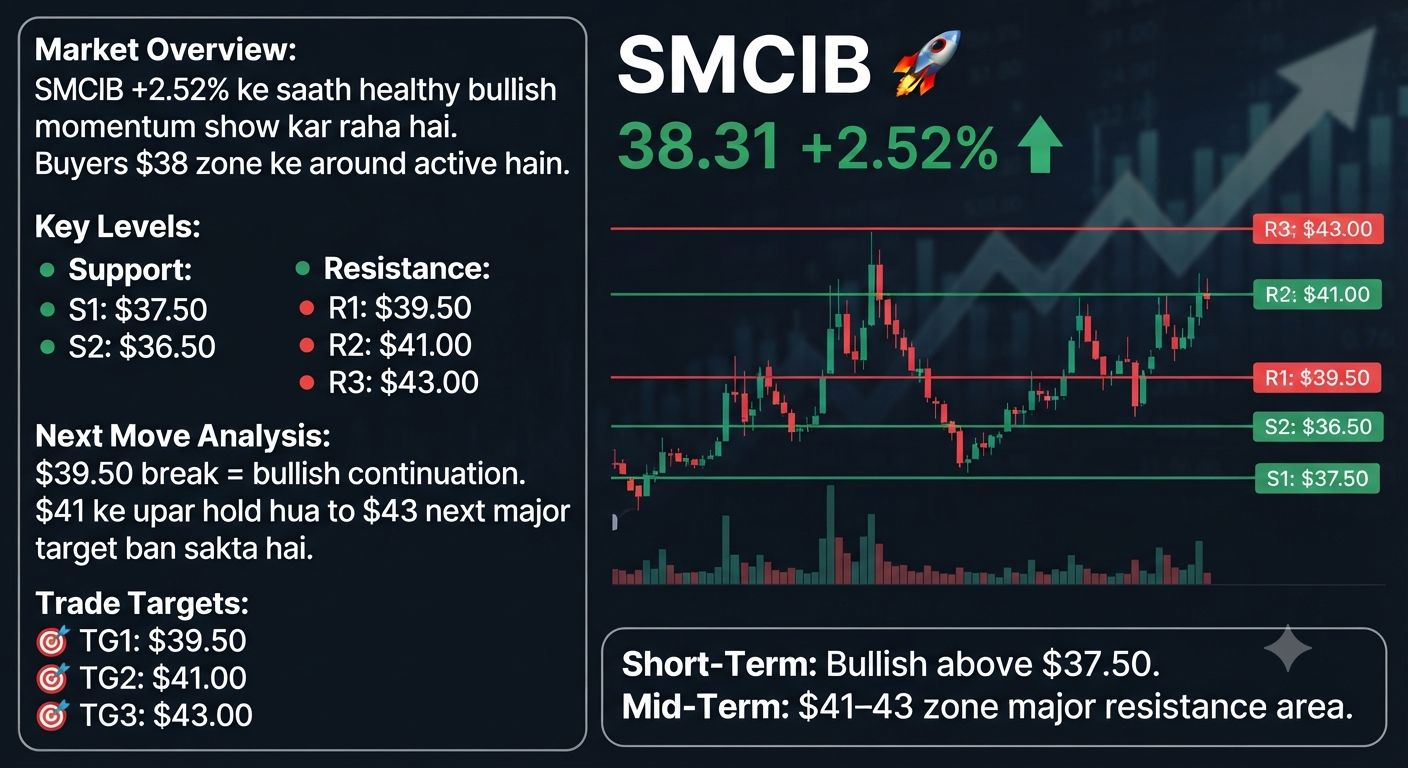
🚀 $SMCIB — 38.31 美元 | +2.52%
市場概覽:
SMCIB 正以健康的看漲勢頭上漲 +2.52%。買家在 38 美元附近活躍。
支撐位:
🟢 S1: $37.50
🟢 S2: $36.50
阻力位:
🔴 R1: $39.50
🔴 R2: $41.00
🔴 R3: $43.00
下一步:
突破 39.50 美元 = 看漲延續。若能站穩在 41 美元上方,則 43 美元可能成爲下一個主要目標。
目標:
🎯 TG1: $39.50
🎯 TG2: $41.00
🎯 TG3: $43.00
短期:站上 37.50 美元看漲。
中期:41–43 區域爲主要阻力區域。
#XRPLeadsCryptoPullbackDropsNearly7%
🚀 $SMCIB — 38.31 美元 | +2.52%
市場概覽:
SMCIB 正以健康的看漲勢頭上漲 +2.52%。買家在 38 美元附近活躍。
支撐位:
🟢 S1: $37.50
🟢 S2: $36.50
阻力位:
🔴 R1: $39.50
🔴 R2: $41.00
🔴 R3: $43.00
下一步:
突破 39.50 美元 = 看漲延續。若能站穩在 41 美元上方,則 43 美元可能成爲下一個主要目標。
目標:
🎯 TG1: $39.50
🎯 TG2: $41.00
🎯 TG3: $43.00
短期:站上 37.50 美元看漲。
中期:41–43 區域爲主要阻力區域。
#XRPLeadsCryptoPullbackDropsNearly7%
市場概覽:
SMCIB 正以健康的看漲勢頭上漲 +2.52%。買家在 38 美元附近活躍。
支撐位:
🟢 S1: $37.50
🟢 S2: $36.50
阻力位:
🔴 R1: $39.50
🔴 R2: $41.00
🔴 R3: $43.00
下一步:
突破 39.50 美元 = 看漲延續。若能站穩在 41 美元上方,則 43 美元可能成爲下一個主要目標。
目標:
🎯 TG1: $39.50
🎯 TG2: $41.00
🎯 TG3: $43.00
短期:站上 37.50 美元看漲。
中期:41–43 區域爲主要阻力區域。
#XRPLeadsCryptoPullbackDropsNearly7%
481
·
--
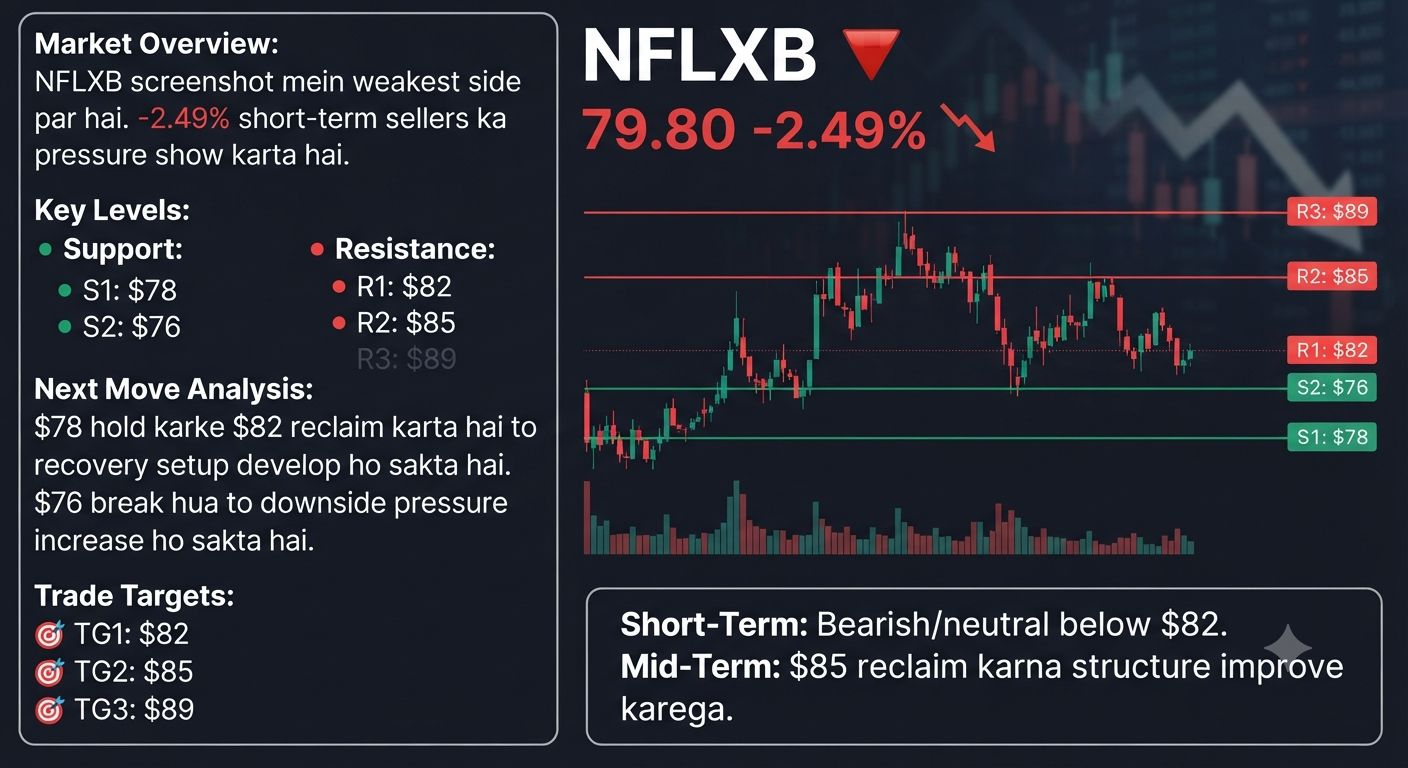
🔻 $NFLXB — $79.80 | -2.49%
市場概況:
NFLXB 截圖在最弱的一側上。-2.49% 顯示短期賣壓壓力。
支撐:
🟢 S1: $78
🟢 S2: $76
阻力:
🔴 R1: $82
🔴 R2: $85
🔴 R3: $89
下一步:
如果能守住 $78 並重新奪回 $82,可能會形成一套反彈走勢;如果 $76 被跌破,向下壓力可能會增強。
目標:
🎯 TG1: $82
🎯 TG2: $85
🎯 TG3: $89
短期:在 $82 下方偏空/中性。
中期:收復 $85 將改善結構。
#XRPLeadsCryptoPullbackDropsNearly7%
🔻 $NFLXB — $79.80 | -2.49%
市場概況:
NFLXB 截圖在最弱的一側上。-2.49% 顯示短期賣壓壓力。
支撐:
🟢 S1: $78
🟢 S2: $76
阻力:
🔴 R1: $82
🔴 R2: $85
🔴 R3: $89
下一步:
如果能守住 $78 並重新奪回 $82,可能會形成一套反彈走勢;如果 $76 被跌破,向下壓力可能會增強。
目標:
🎯 TG1: $82
🎯 TG2: $85
🎯 TG3: $89
短期:在 $82 下方偏空/中性。
中期:收復 $85 將改善結構。
#XRPLeadsCryptoPullbackDropsNearly7%
市場概況:
NFLXB 截圖在最弱的一側上。-2.49% 顯示短期賣壓壓力。
支撐:
🟢 S1: $78
🟢 S2: $76
阻力:
🔴 R1: $82
🔴 R2: $85
🔴 R3: $89
下一步:
如果能守住 $78 並重新奪回 $82,可能會形成一套反彈走勢;如果 $76 被跌破,向下壓力可能會增強。
目標:
🎯 TG1: $82
🎯 TG2: $85
🎯 TG3: $89
短期:在 $82 下方偏空/中性。
中期:收復 $85 將改善結構。
#XRPLeadsCryptoPullbackDropsNearly7%
496
·
--
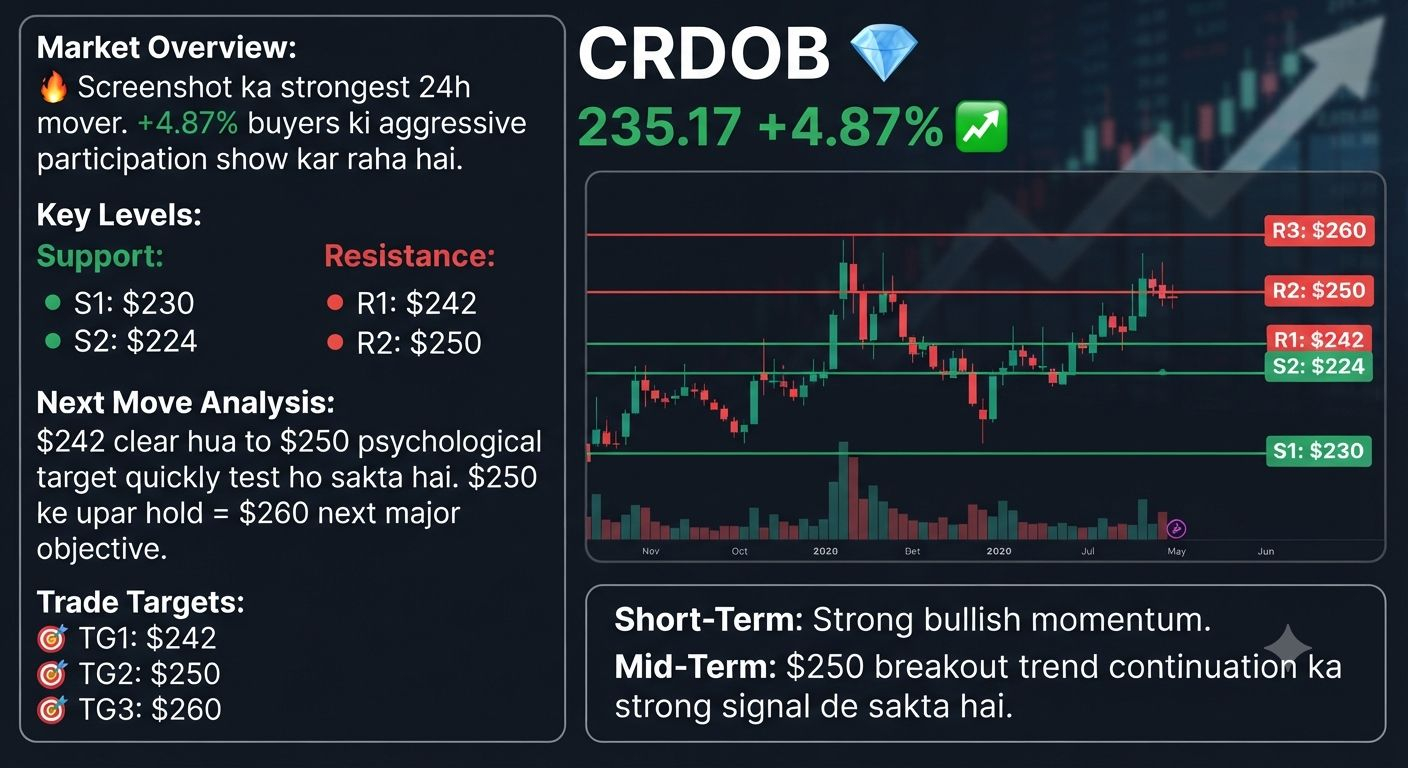
⚡ $IRENB — $40.96 | +2.94%
市場概況:
IRENB 以 +2.94% 的強勢表現站在多方一側。買家在 $40 這個心理關口上方維持價格。
支撐位:
🟢 S1: $40.00
🟢 S2: $39.00
阻力位:
🔴 R1: $42.00
🔴 R2: $44.00
🔴 R3: $47.00
下一步:
突破 $42 之後,下一個可能的戰場會是 $44。若重新奪回 $44,則 $47 有望出現。
目標位:
🎯 TG1: $42
🎯 TG2: $44
🎯 TG3: $47
短期:在 $40 上方偏多。
中期:$47 的突破可能帶來更大的動能擴張。
#XRPLeadsCryptoPullbackDropsNearly7%
⚡ $IRENB — $40.96 | +2.94%
市場概況:
IRENB 以 +2.94% 的強勢表現站在多方一側。買家在 $40 這個心理關口上方維持價格。
支撐位:
🟢 S1: $40.00
🟢 S2: $39.00
阻力位:
🔴 R1: $42.00
🔴 R2: $44.00
🔴 R3: $47.00
下一步:
突破 $42 之後,下一個可能的戰場會是 $44。若重新奪回 $44,則 $47 有望出現。
目標位:
🎯 TG1: $42
🎯 TG2: $44
🎯 TG3: $47
短期:在 $40 上方偏多。
中期:$47 的突破可能帶來更大的動能擴張。
#XRPLeadsCryptoPullbackDropsNearly7%
市場概況:
IRENB 以 +2.94% 的強勢表現站在多方一側。買家在 $40 這個心理關口上方維持價格。
支撐位:
🟢 S1: $40.00
🟢 S2: $39.00
阻力位:
🔴 R1: $42.00
🔴 R2: $44.00
🔴 R3: $47.00
下一步:
突破 $42 之後,下一個可能的戰場會是 $44。若重新奪回 $44,則 $47 有望出現。
目標位:
🎯 TG1: $42
🎯 TG2: $44
🎯 TG3: $47
短期:在 $40 上方偏多。
中期:$47 的突破可能帶來更大的動能擴張。
#XRPLeadsCryptoPullbackDropsNearly7%
2
933
·
--
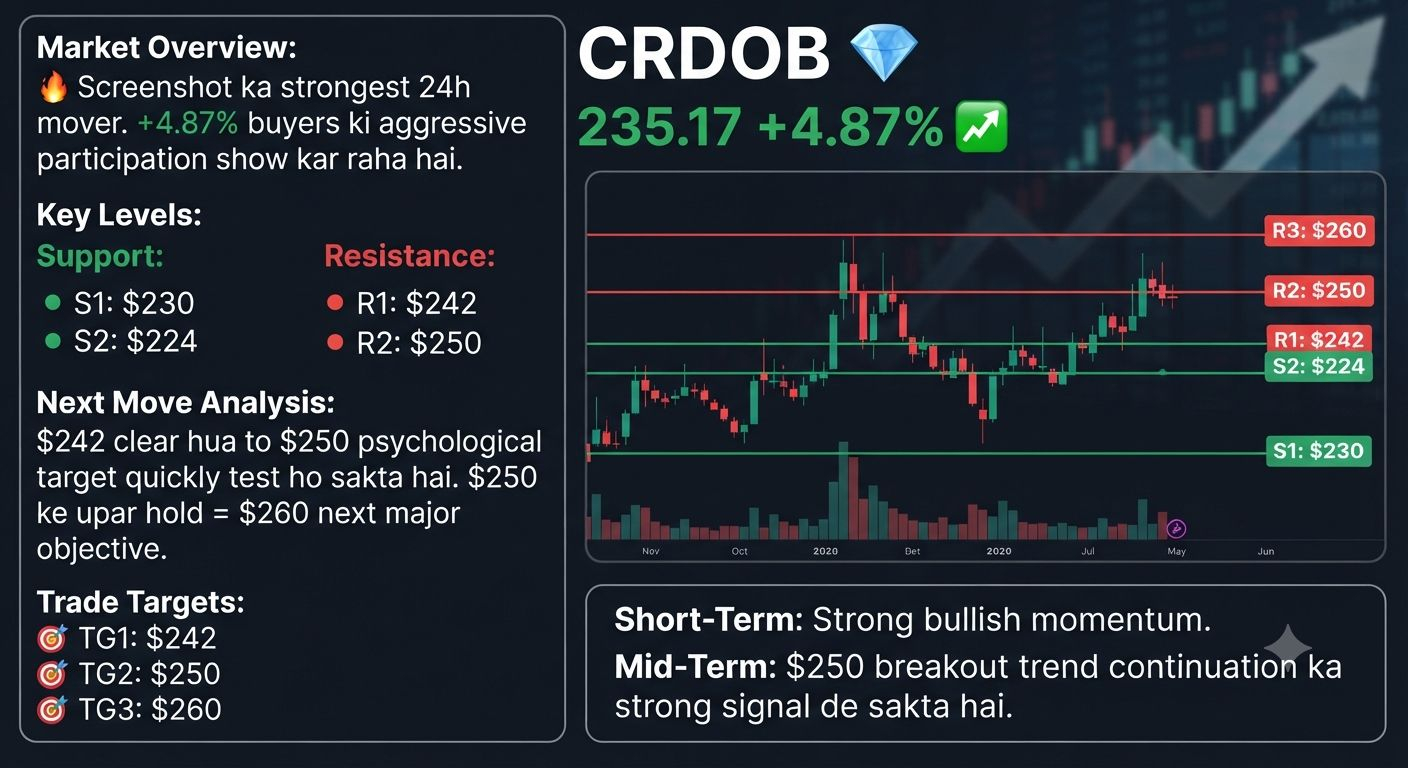
💎 $CRDOB — $235.17 | +4.87%
市場概覽:
🔥 截圖是過去24小時漲幅最強者。+4.87%的買家更積極參與,表現出強烈的搶購情緒。
支撐位:
🟢 S1: $230
🟢 S2: $224
阻力位:
🔴 R1: $242
🔴 R2: $250
🔴 R3: $260
下一步:
如果$242順利突破,則可能很快測試$250這一心理關口。站穩$250之上=接下來可能指向$260這一下一個主要目標。
目標位:
🎯 TG1: $242
🎯 TG2: $250
🎯 TG3: $260
短期:強勁看漲動能。
中期:$250突破並延續趨勢,可能釋放出強烈信號。
#XRPLeadsCryptoPullbackDropsNearly7%
💎 $CRDOB — $235.17 | +4.87%
市場概覽:
🔥 截圖是過去24小時漲幅最強者。+4.87%的買家更積極參與,表現出強烈的搶購情緒。
支撐位:
🟢 S1: $230
🟢 S2: $224
阻力位:
🔴 R1: $242
🔴 R2: $250
🔴 R3: $260
下一步:
如果$242順利突破,則可能很快測試$250這一心理關口。站穩$250之上=接下來可能指向$260這一下一個主要目標。
目標位:
🎯 TG1: $242
🎯 TG2: $250
🎯 TG3: $260
短期:強勁看漲動能。
中期:$250突破並延續趨勢,可能釋放出強烈信號。
#XRPLeadsCryptoPullbackDropsNearly7%
市場概覽:
🔥 截圖是過去24小時漲幅最強者。+4.87%的買家更積極參與,表現出強烈的搶購情緒。
支撐位:
🟢 S1: $230
🟢 S2: $224
阻力位:
🔴 R1: $242
🔴 R2: $250
🔴 R3: $260
下一步:
如果$242順利突破,則可能很快測試$250這一心理關口。站穩$250之上=接下來可能指向$260這一下一個主要目標。
目標位:
🎯 TG1: $242
🎯 TG2: $250
🎯 TG3: $260
短期:強勁看漲動能。
中期:$250突破並延續趨勢,可能釋放出強烈信號。
#XRPLeadsCryptoPullbackDropsNearly7%
1
431
·
--
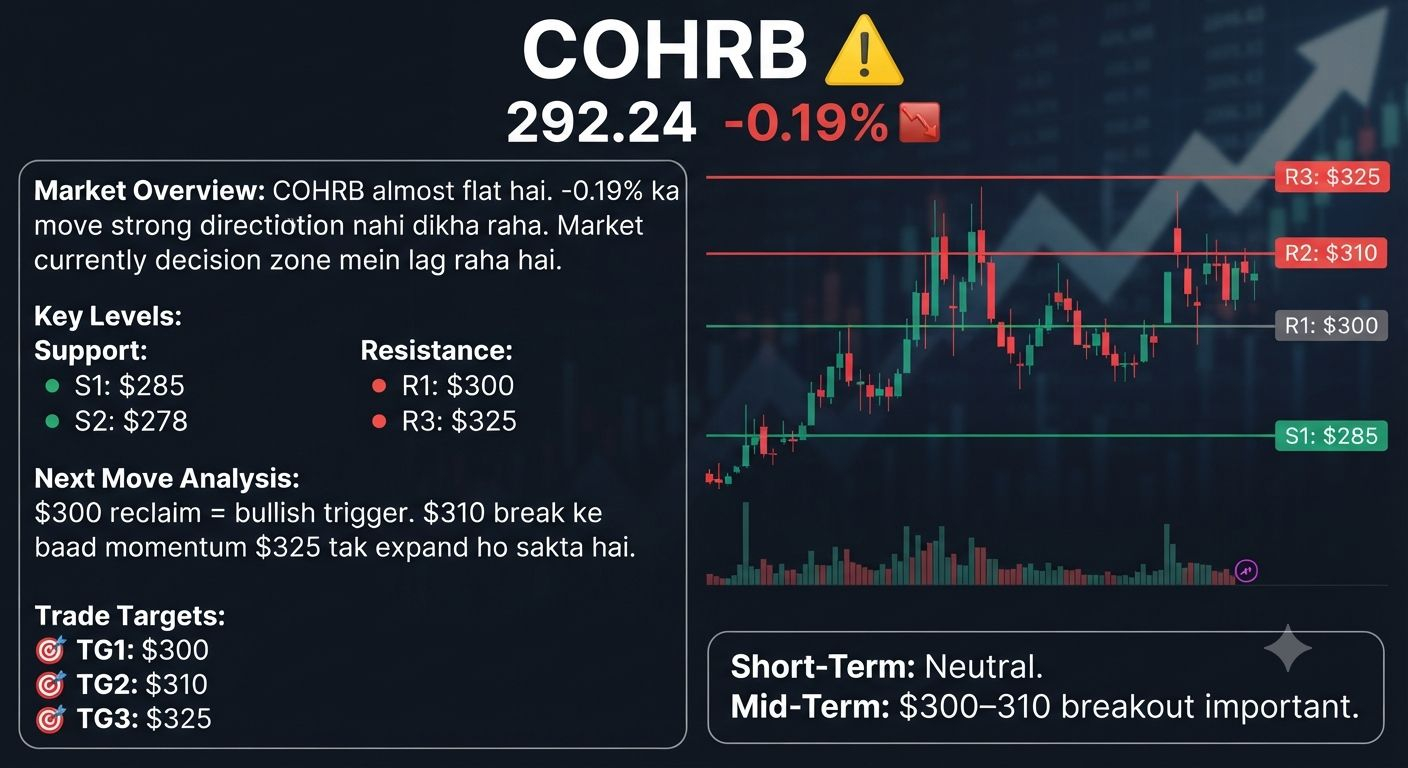
⚠️ $COHRB — $292.24 | -0.19%
市場概況:
COHRB 幾乎持平,-0.19%。此次變動顯示不出強烈的方向性信心。市場目前看起來正處於決策區。
支撐:
🟢 S1: $285
🟢 S2: $278
阻力:
🔴 R1: $300
🔴 R2: $310
🔴 R3: $325
下一步:
重新站上 $300 = 偏多觸發。突破 $310 後,動能可能擴展至 $325。
目標:
🎯 TG1: $300
🎯 TG2: $310
🎯 TG3: $325
短期:中性。
中期:$300–310 的突破很重要。
#XRPLeadsCryptoPullbackDropsNearly7%
⚠️ $COHRB — $292.24 | -0.19%
市場概況:
COHRB 幾乎持平,-0.19%。此次變動顯示不出強烈的方向性信心。市場目前看起來正處於決策區。
支撐:
🟢 S1: $285
🟢 S2: $278
阻力:
🔴 R1: $300
🔴 R2: $310
🔴 R3: $325
下一步:
重新站上 $300 = 偏多觸發。突破 $310 後,動能可能擴展至 $325。
目標:
🎯 TG1: $300
🎯 TG2: $310
🎯 TG3: $325
短期:中性。
中期:$300–310 的突破很重要。
#XRPLeadsCryptoPullbackDropsNearly7%
市場概況:
COHRB 幾乎持平,-0.19%。此次變動顯示不出強烈的方向性信心。市場目前看起來正處於決策區。
支撐:
🟢 S1: $285
🟢 S2: $278
阻力:
🔴 R1: $300
🔴 R2: $310
🔴 R3: $325
下一步:
重新站上 $300 = 偏多觸發。突破 $310 後,動能可能擴展至 $325。
目標:
🎯 TG1: $300
🎯 TG2: $310
🎯 TG3: $325
短期:中性。
中期:$300–310 的突破很重要。
#XRPLeadsCryptoPullbackDropsNearly7%
379
登入以探索更多內容
加入幣安廣場中的全球加密貨幣用戶
⚡️ 獲取加密貨幣的最新和實用資訊。
💬 受到全球最大加密貨幣交易所的信任。
👍 發掘來自經過驗證創作者的真實見解。
電子郵件 / 電話號碼
熱門話題
比特币再度跌破8万美元
0 次瀏覽
41 討論中
$BTC 這是個好事啊:三大主流加密貨幣日線都收了一根“十字星”K線。
衆所周知,連續下跌之後收十字星往往是變盤上漲的信號之一!
以史爲鑑,美聯儲議息會議大跌之前往往會先爆一波空頭。
今天就是週二了,今明後三天大概率會反彈一波爆空頭,週四深夜再猛砸一波爆多頭完成最後一跌,隨後猛烈上漲!漲破9萬!
比特幣極限下跌到7.5萬,防止踏空,比特幣8萬以下無腦買入做多,11月絕對能看到9字開頭的比特幣!
加密牛市已來,做多性價比遠高於做空!!
币圈情报局局长
·5 人按讚
·5k 次瀏覽
Strategy未购比特币斥资2.05亿美元回购STRC
117,237 次瀏覽
502 討論中
BitMine增持10452枚ETH
142,234 次瀏覽
729 討論中