
las newr
27 貼文

las newr
舉報
封鎖用戶
3 關注
2 粉絲
8 點讚數
貼文
·
--
以前,當我聽到有人談投資股票時,我腦海裏會想象一個獨立的經紀人、堆滿的文件,以及另一個需要你去弄明白的應用 😅
而在這裏,我喜歡的是 bStocks 這種思路——通過熟悉的 Binance 生態來接入傳統股票。
對我來說最大的優點就是:簡單。
如果我已經在用 Binance 做加密貨幣,那至少弄清楚在平臺內部還能做什麼是很合理的。
不過有個很重要的點:我不會把它當作“股票 = 保證收益”。
特斯拉、NVIDIA、蘋果和其他大型公司同樣也可能下跌。有時候會很不舒服 😄
所以對我來說,bStocks 不是加密貨幣的替代品,而是可以和其他工具一起使用的又一個工具。
#bStocks #Binance #акції #TradF #крипта
以前,當我聽到有人談投資股票時,我腦海裏會想象一個獨立的經紀人、堆滿的文件,以及另一個需要你去弄明白的應用 😅
而在這裏,我喜歡的是 bStocks 這種思路——通過熟悉的 Binance 生態來接入傳統股票。
對我來說最大的優點就是:簡單。
如果我已經在用 Binance 做加密貨幣,那至少弄清楚在平臺內部還能做什麼是很合理的。
不過有個很重要的點:我不會把它當作“股票 = 保證收益”。
特斯拉、NVIDIA、蘋果和其他大型公司同樣也可能下跌。有時候會很不舒服 😄
所以對我來說,bStocks 不是加密貨幣的替代品,而是可以和其他工具一起使用的又一個工具。
#bStocks #Binance #акції #TradF #крипта
而在這裏,我喜歡的是 bStocks 這種思路——通過熟悉的 Binance 生態來接入傳統股票。
對我來說最大的優點就是:簡單。
如果我已經在用 Binance 做加密貨幣,那至少弄清楚在平臺內部還能做什麼是很合理的。
不過有個很重要的點:我不會把它當作“股票 = 保證收益”。
特斯拉、NVIDIA、蘋果和其他大型公司同樣也可能下跌。有時候會很不舒服 😄
所以對我來說,bStocks 不是加密貨幣的替代品,而是可以和其他工具一起使用的又一個工具。
#bStocks #Binance #акції #TradF #крипта

82
·
--
查看翻譯
#termmax @termmax
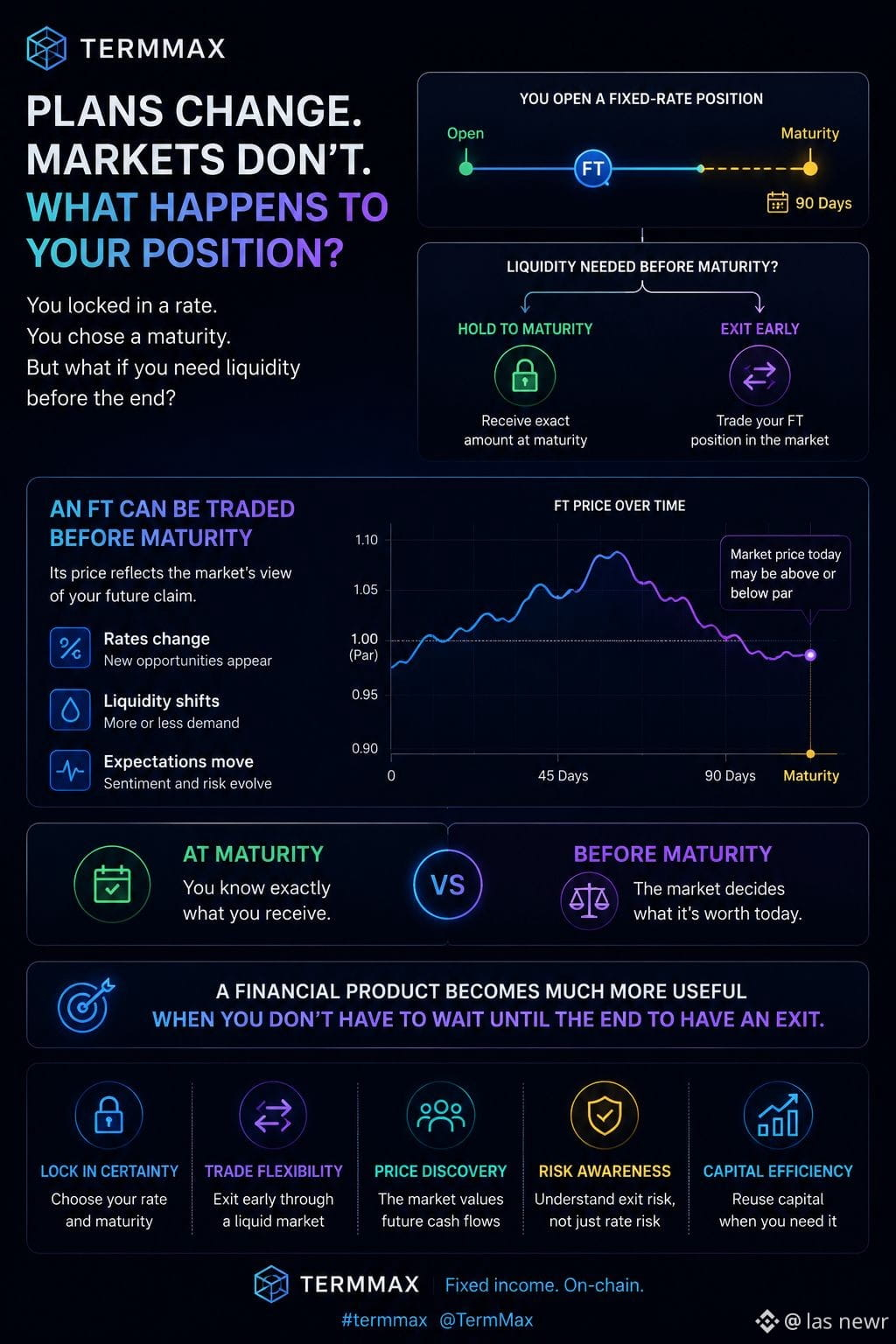
The part of fixed-rate DeFi I find hardest to ignore is what happens when plans change.
Entering a position is easy when everything goes according to plan.
You choose a rate.
You choose a maturity.
You deploy capital.
But markets rarely care about your original plan.
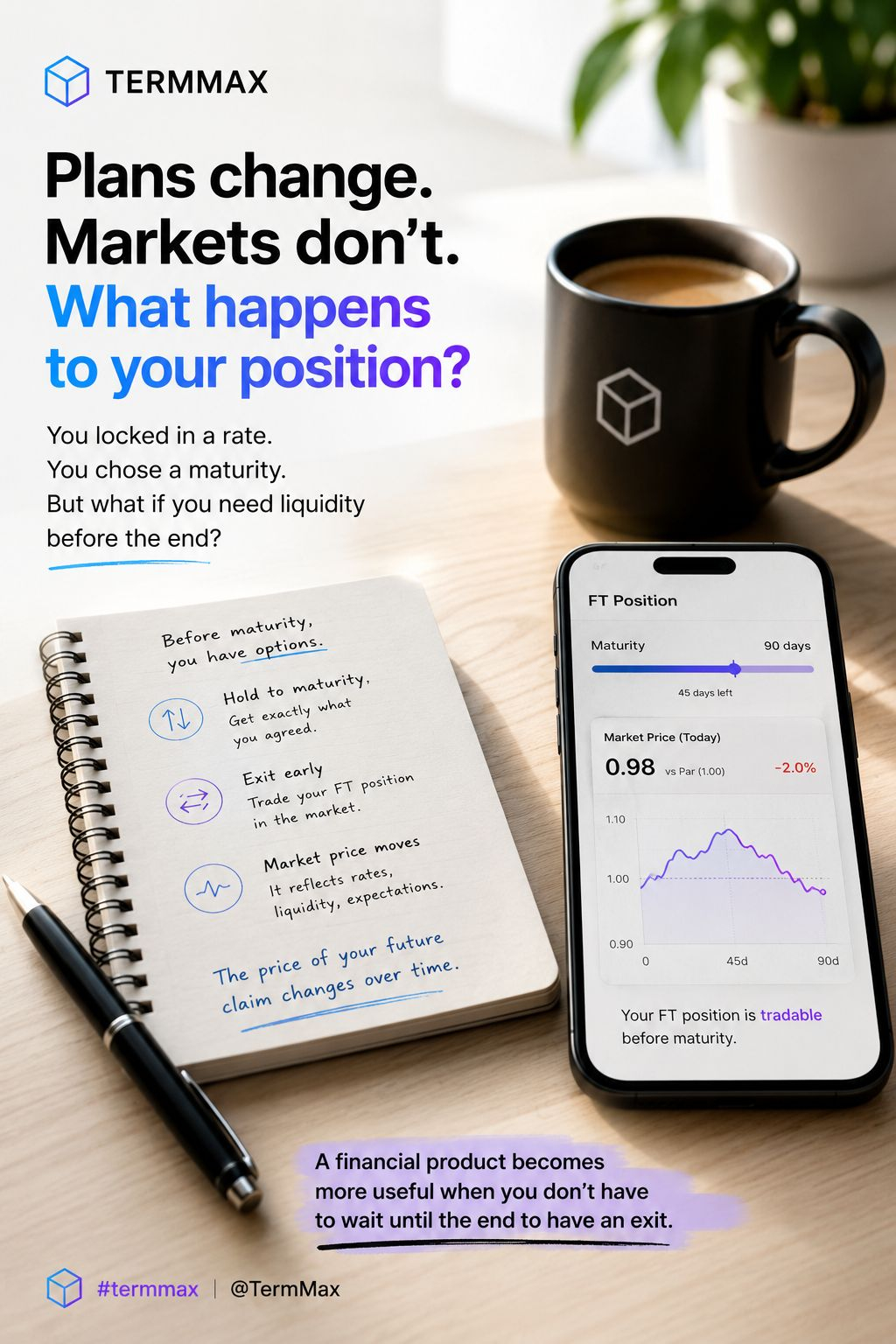
What if you suddenly need liquidity three weeks before maturity?
This is where I think the real test for TermMax begins.
A fixed-term position shouldn't only be attractive when you hold it until the end.
There needs to be a meaningful market for the position itself.
Because once an FT can be traded before maturity, its price starts telling a story.
The market is constantly asking:
How much is this future claim worth today?
And that price can move.
Rates can change.
Liquidity can disappear.
Expectations can shift.
So the FT becomes more than a way to lock in yield.
It becomes something whose value can be discovered in the market before its final settlement.
That's a much more interesting design to me.
It introduces a second layer of risk that isn't obvious from the headline APR:
exit risk.
You might know exactly what you receive at maturity.
But do you know what someone will be willing to pay for your position tomorrow?
That's where I think fixed-income DeFi gets genuinely interesting.
The next question isn't just whether TermMax can create fixed-rate products.
It's whether a healthy secondary market can form around them.
Because a financial product becomes much more useful when you don't have to wait until the end to have an exit.
#termmax @TermMax
The part of fixed-rate DeFi I find hardest to ignore is what happens when plans change.
Entering a position is easy when everything goes according to plan.
You choose a rate.
You choose a maturity.
You deploy capital.
But markets rarely care about your original plan.
What if you suddenly need liquidity three weeks before maturity?
This is where I think the real test for TermMax begins.
A fixed-term position shouldn't only be attractive when you hold it until the end.
There needs to be a meaningful market for the position itself.
Because once an FT can be traded before maturity, its price starts telling a story.
The market is constantly asking:
How much is this future claim worth today?
And that price can move.
Rates can change.
Liquidity can disappear.
Expectations can shift.
So the FT becomes more than a way to lock in yield.
It becomes something whose value can be discovered in the market before its final settlement.
That's a much more interesting design to me.
It introduces a second layer of risk that isn't obvious from the headline APR:
exit risk.
You might know exactly what you receive at maturity.
But do you know what someone will be willing to pay for your position tomorrow?
That's where I think fixed-income DeFi gets genuinely interesting.
The next question isn't just whether TermMax can create fixed-rate products.
It's whether a healthy secondary market can form around them.
Because a financial product becomes much more useful when you don't have to wait until the end to have an exit.
The part of fixed-rate DeFi I find hardest to ignore is what happens when plans change.
Entering a position is easy when everything goes according to plan.
You choose a rate.
You choose a maturity.
You deploy capital.
But markets rarely care about your original plan.
What if you suddenly need liquidity three weeks before maturity?
This is where I think the real test for TermMax begins.
A fixed-term position shouldn't only be attractive when you hold it until the end.
There needs to be a meaningful market for the position itself.
Because once an FT can be traded before maturity, its price starts telling a story.
The market is constantly asking:
How much is this future claim worth today?
And that price can move.
Rates can change.
Liquidity can disappear.
Expectations can shift.
So the FT becomes more than a way to lock in yield.
It becomes something whose value can be discovered in the market before its final settlement.
That's a much more interesting design to me.
It introduces a second layer of risk that isn't obvious from the headline APR:
exit risk.
You might know exactly what you receive at maturity.
But do you know what someone will be willing to pay for your position tomorrow?
That's where I think fixed-income DeFi gets genuinely interesting.
The next question isn't just whether TermMax can create fixed-rate products.
It's whether a healthy secondary market can form around them.
Because a financial product becomes much more useful when you don't have to wait until the end to have an exit.
92
·
--
#termmax @termmax 我很久以前一直在看 TermMax,才明白一件有趣的事。
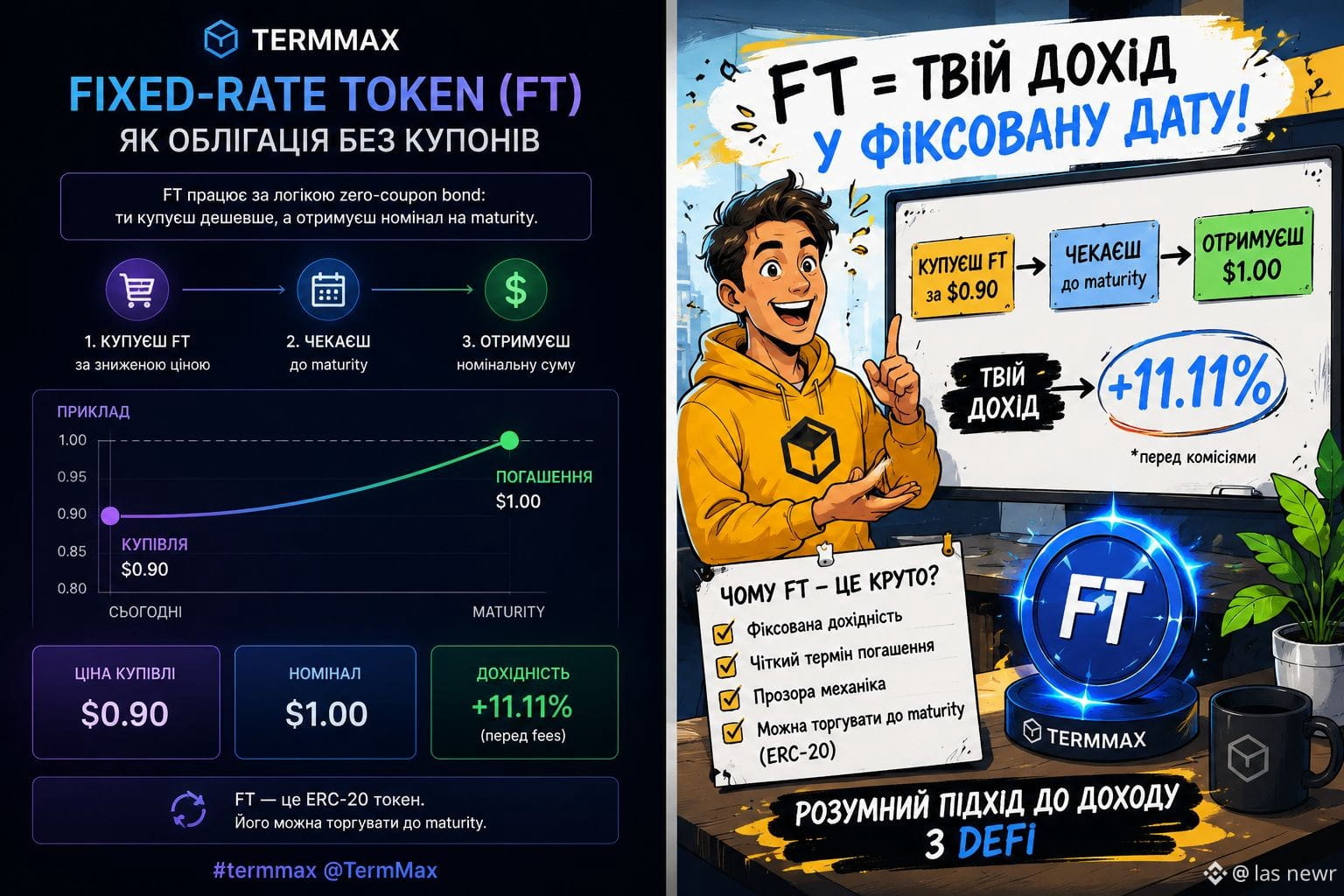
它的固定利率代幣(FT)幾乎可以被視爲一張沒有票息支付的債券。
機制很簡單:
你以低於其未來面值的價格購買 FT。
然後等待到期(maturity)。
到達贖回時刻,你會收到全部面值金額。
例如:
今天 FT 的價格是 0.90 美元。
到期時它以 1 美元贖回。
購買價格與面值之間的差額,就是你的收益。
而這裏我喜歡的是這個想法本身。
在 DeFi 裏,我們習慣於思考:
“我能拿到多少 APY?”
但 TermMax 讓你換一種方式來看:
“我今天要付多少錢,以及在某個具體日期我會拿到多少錢?”
這已經非常類似於傳統固定收益工具的邏輯,只不過它是鏈上實現的。
而且 FT 是 ERC-20,因此你可以在到期前進行交易。
也就是說,你不一定非要買了就一直持有到贖回日期。
在我看來,正是這類原語(primitives)可能會逐步讓 DeFi 更像一個完整的金融市場。
不是又一次“更高的 APY”。
而是一種新的、用來構建收益的方式。
#termmax @TermMax 我很久以前一直在看 TermMax,才明白一件有趣的事。
它的固定利率代幣(FT)幾乎可以被視爲一張沒有票息支付的債券。
機制很簡單:
你以低於其未來面值的價格購買 FT。
然後等待到期(maturity)。
到達贖回時刻,你會收到全部面值金額。
例如:
今天 FT 的價格是 0.90 美元。
到期時它以 1 美元贖回。
購買價格與面值之間的差額,就是你的收益。
而這裏我喜歡的是這個想法本身。
在 DeFi 裏,我們習慣於思考:
“我能拿到多少 APY?”
但 TermMax 讓你換一種方式來看:
“我今天要付多少錢,以及在某個具體日期我會拿到多少錢?”
這已經非常類似於傳統固定收益工具的邏輯,只不過它是鏈上實現的。
而且 FT 是 ERC-20,因此你可以在到期前進行交易。
也就是說,你不一定非要買了就一直持有到贖回日期。
在我看來,正是這類原語(primitives)可能會逐步讓 DeFi 更像一個完整的金融市場。
不是又一次“更高的 APY”。
而是一種新的、用來構建收益的方式。
它的固定利率代幣(FT)幾乎可以被視爲一張沒有票息支付的債券。
機制很簡單:
你以低於其未來面值的價格購買 FT。
然後等待到期(maturity)。
到達贖回時刻,你會收到全部面值金額。
例如:
今天 FT 的價格是 0.90 美元。
到期時它以 1 美元贖回。
購買價格與面值之間的差額,就是你的收益。
而這裏我喜歡的是這個想法本身。
在 DeFi 裏,我們習慣於思考:
“我能拿到多少 APY?”
但 TermMax 讓你換一種方式來看:
“我今天要付多少錢,以及在某個具體日期我會拿到多少錢?”
這已經非常類似於傳統固定收益工具的邏輯,只不過它是鏈上實現的。
而且 FT 是 ERC-20,因此你可以在到期前進行交易。
也就是說,你不一定非要買了就一直持有到贖回日期。
在我看來,正是這類原語(primitives)可能會逐步讓 DeFi 更像一個完整的金融市場。
不是又一次“更高的 APY”。
而是一種新的、用來構建收益的方式。
87
·
--
查看翻譯
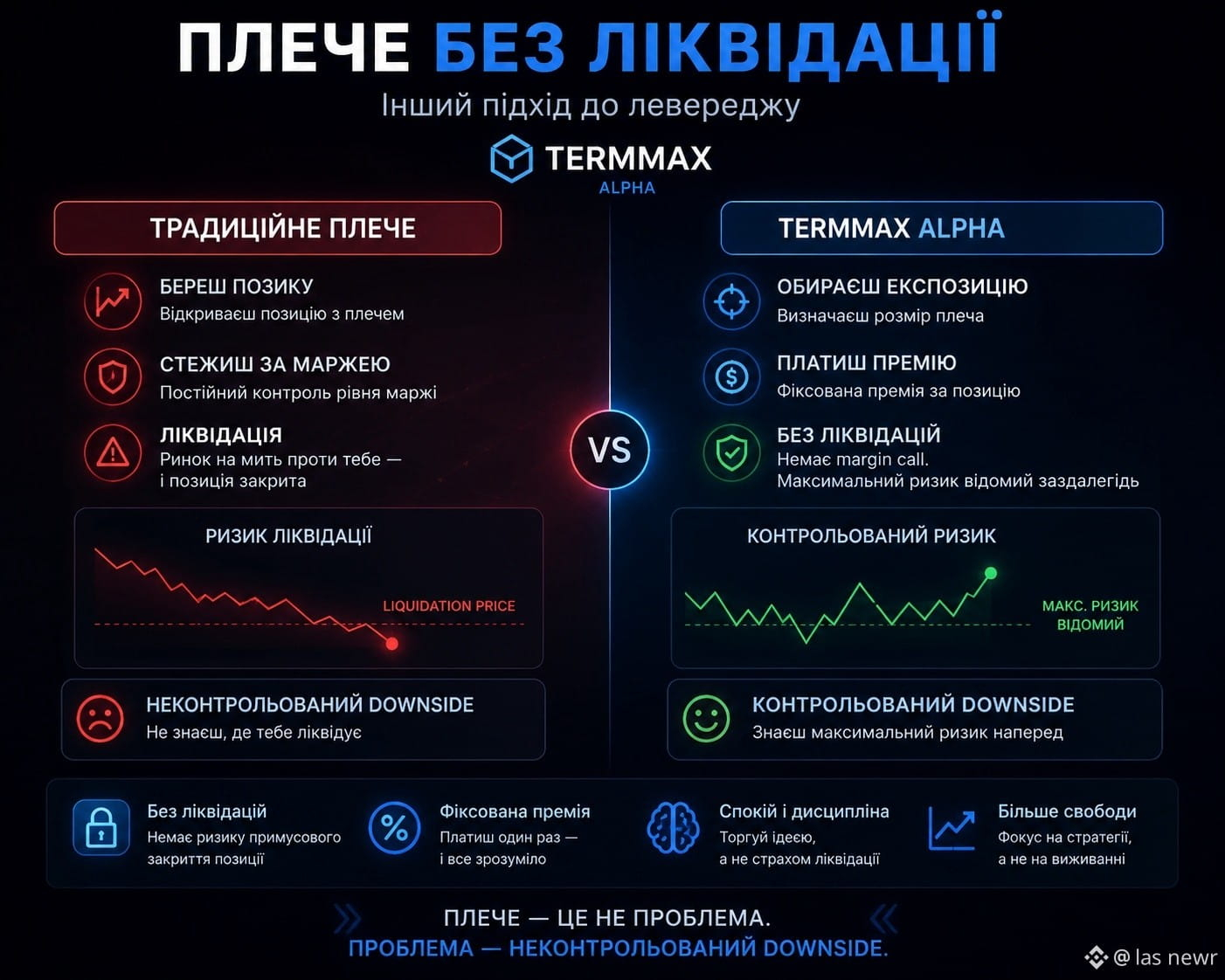
Є одна цифра, яку трейдери з плечем точно не хочуть бачити.
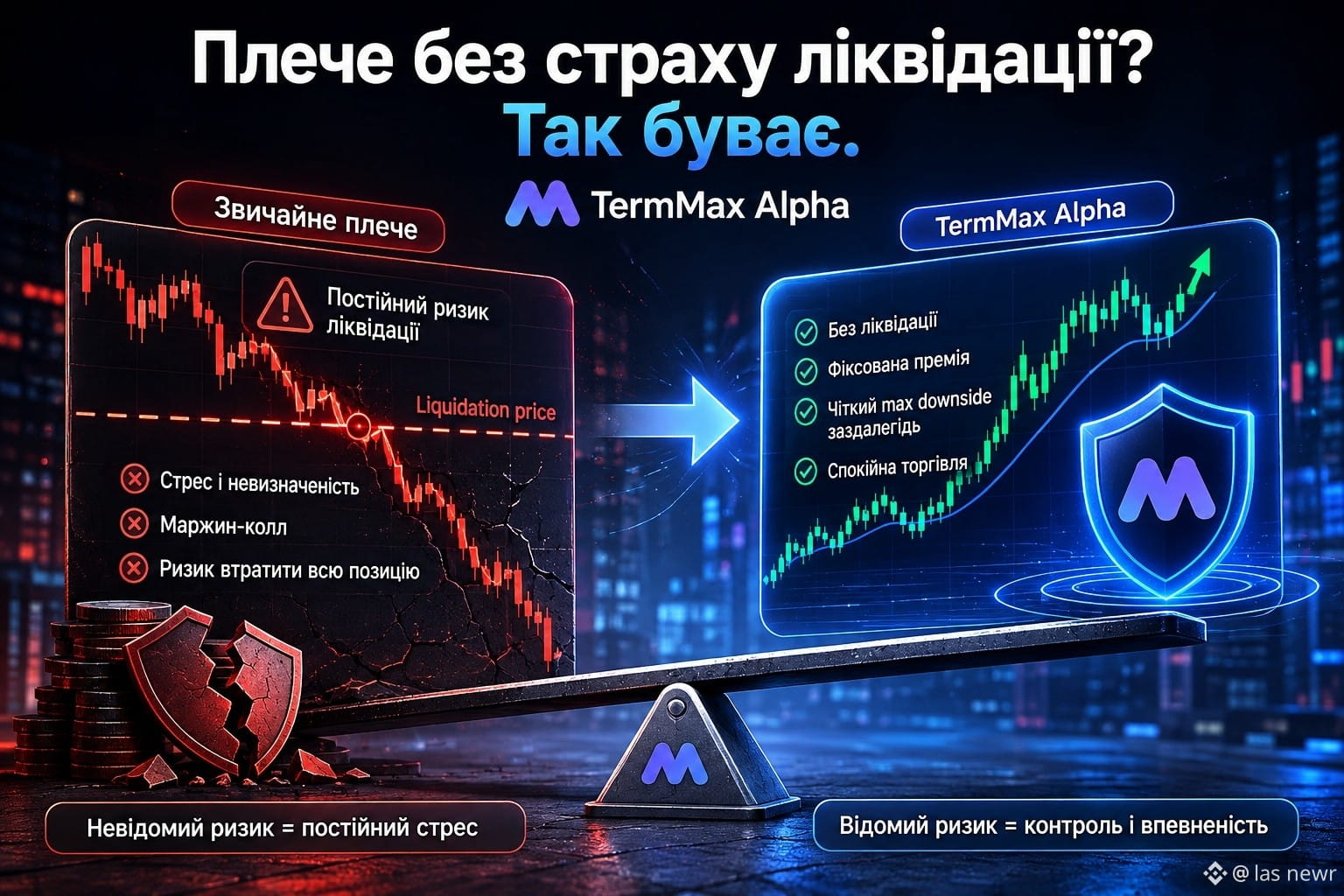
Liquidation price.
Ти можеш правильно спрогнозувати рух ETH, але короткий рух проти позиції — і вся угода закривається.
Саме тому мені цікавий підхід TermMax Alpha.
Тут ідея інша: замість постійного контролю маржі та ризику ліквідації ти заздалегідь платиш премію за плече.
Тобто логіка змінюється:
Звичайне плече: → відкрив позицію
→ стежиш за margin
→ переживаєш за liquidation price
TermMax Alpha: → обираєш експозицію
→ платиш премію
→ заздалегідь знаєш максимальний downside
І це змінює головне питання.
Не:
«Де мене ліквідує?»
А:
«Чи варта ця угода тієї премії, яку я плачу?»
Для волатильного ринку це, на мій погляд, набагато цікавіший підхід.
Проблема плеча не завжди в самому плечі.
Проблема — у неконтрольованому downside.
#termmax @termmax
{spot}(ETHUSDT)
Є одна цифра, яку трейдери з плечем точно не хочуть бачити.
Liquidation price.
Ти можеш правильно спрогнозувати рух ETH, але короткий рух проти позиції — і вся угода закривається.
Саме тому мені цікавий підхід TermMax Alpha.
Тут ідея інша: замість постійного контролю маржі та ризику ліквідації ти заздалегідь платиш премію за плече.
Тобто логіка змінюється:
Звичайне плече: → відкрив позицію
→ стежиш за margin
→ переживаєш за liquidation price
TermMax Alpha: → обираєш експозицію
→ платиш премію
→ заздалегідь знаєш максимальний downside
І це змінює головне питання.
Не:
«Де мене ліквідує?»
А:
«Чи варта ця угода тієї премії, яку я плачу?»
Для волатильного ринку це, на мій погляд, набагато цікавіший підхід.
Проблема плеча не завжди в самому плечі.
Проблема — у неконтрольованому downside.
#termmax @TermMax
Liquidation price.
Ти можеш правильно спрогнозувати рух ETH, але короткий рух проти позиції — і вся угода закривається.
Саме тому мені цікавий підхід TermMax Alpha.
Тут ідея інша: замість постійного контролю маржі та ризику ліквідації ти заздалегідь платиш премію за плече.
Тобто логіка змінюється:
Звичайне плече: → відкрив позицію
→ стежиш за margin
→ переживаєш за liquidation price
TermMax Alpha: → обираєш експозицію
→ платиш премію
→ заздалегідь знаєш максимальний downside
І це змінює головне питання.
Не:
«Де мене ліквідує?»
А:
«Чи варта ця угода тієї премії, яку я плачу?»
Для волатильного ринку це, на мій погляд, набагато цікавіший підхід.
Проблема плеча не завжди в самому плечі.
Проблема — у неконтрольованому downside.
#termmax @TermMax
282
·
--
大多數 DeFi 借貸都從一個前提開始:
你的抵押品纔是有趣的部分。
但我覺得,更有趣的部分其實是借款本身。
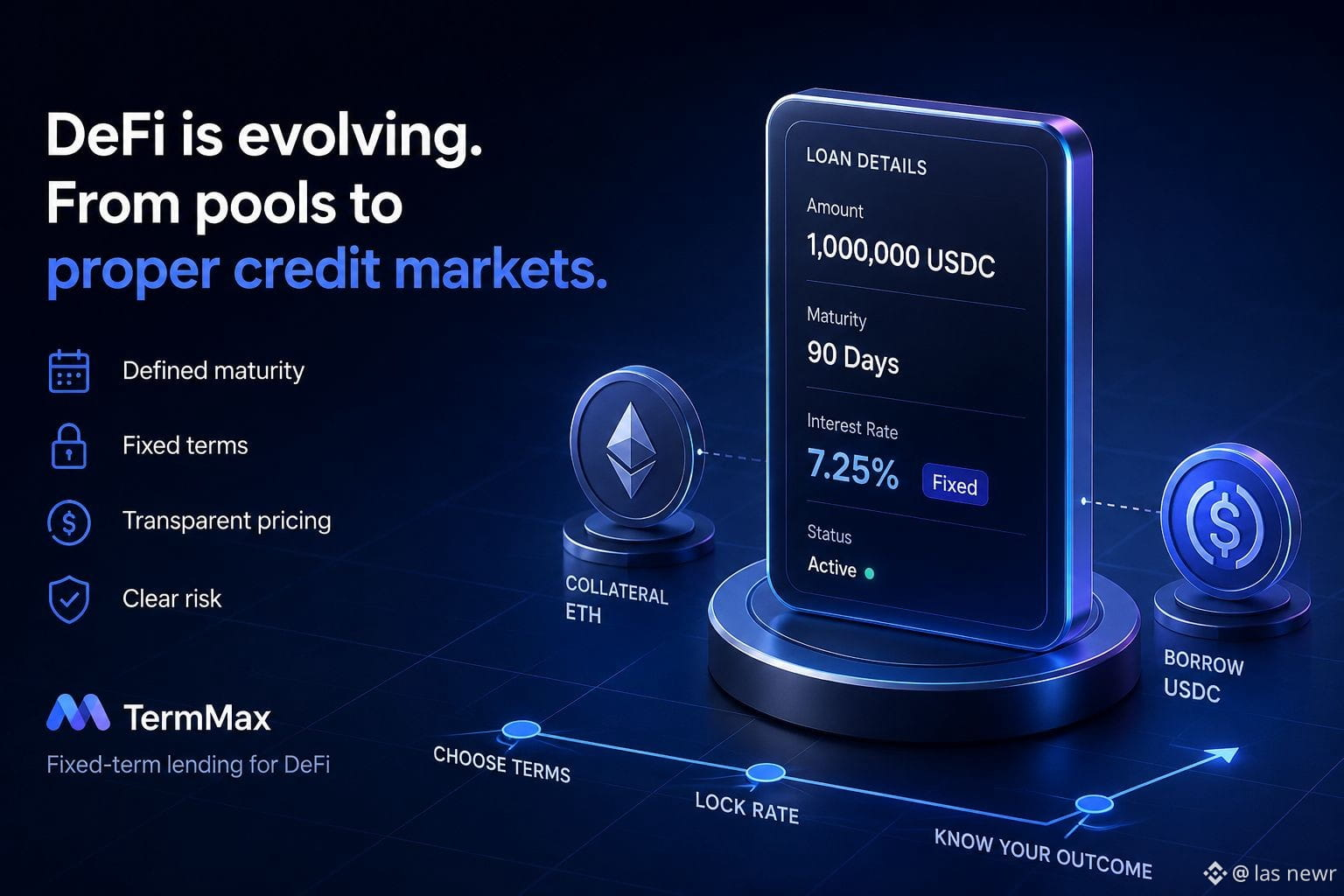
一筆貸款有規模。有期限。有價格。有風險畫像。
傳統金融花了幾十年時間圍繞這些參數構建市場。
而 DeFi 仍在對它們進行嘗試。
這就是爲什麼 TermMax 引起了我的注意。
TermMax 並不是把借貸當作一種無盡的持倉——利率會不斷變化——而是圍繞特定到期時間和固定條款來構建貸款。
這爲理解鏈上信貸打開了另一種思路。
你可以對融資成本進行比較。
你可以圍繞一個已知的到期時間來制定策略。
並且,出借方可以基於明確的期限來選擇敞口,而不是僅僅把資金存入一個開放式的池子。
真正有趣的問題並不是:
“DeFi 能不能借出資金?”
我們已經知道答案了。
更大的問題是:
“DeFi 能否建立一個完善的信用市場?”
TermMax 是試圖回答這個問題的項目之一。
說實話,我認爲這一部分的 DeFi 值得獲得更多關注。
#termmax @termmax
大多數 DeFi 借貸都從一個前提開始:
你的抵押品纔是有趣的部分。
但我覺得,更有趣的部分其實是借款本身。
一筆貸款有規模。有期限。有價格。有風險畫像。
傳統金融花了幾十年時間圍繞這些參數構建市場。
而 DeFi 仍在對它們進行嘗試。
這就是爲什麼 TermMax 引起了我的注意。
TermMax 並不是把借貸當作一種無盡的持倉——利率會不斷變化——而是圍繞特定到期時間和固定條款來構建貸款。
這爲理解鏈上信貸打開了另一種思路。
你可以對融資成本進行比較。
你可以圍繞一個已知的到期時間來制定策略。
並且,出借方可以基於明確的期限來選擇敞口,而不是僅僅把資金存入一個開放式的池子。
真正有趣的問題並不是:
“DeFi 能不能借出資金?”
我們已經知道答案了。
更大的問題是:
“DeFi 能否建立一個完善的信用市場?”
TermMax 是試圖回答這個問題的項目之一。
說實話,我認爲這一部分的 DeFi 值得獲得更多關注。
#termmax @TermMax
你的抵押品纔是有趣的部分。
但我覺得,更有趣的部分其實是借款本身。
一筆貸款有規模。有期限。有價格。有風險畫像。
傳統金融花了幾十年時間圍繞這些參數構建市場。
而 DeFi 仍在對它們進行嘗試。
這就是爲什麼 TermMax 引起了我的注意。
TermMax 並不是把借貸當作一種無盡的持倉——利率會不斷變化——而是圍繞特定到期時間和固定條款來構建貸款。
這爲理解鏈上信貸打開了另一種思路。
你可以對融資成本進行比較。
你可以圍繞一個已知的到期時間來制定策略。
並且,出借方可以基於明確的期限來選擇敞口,而不是僅僅把資金存入一個開放式的池子。
真正有趣的問題並不是:
“DeFi 能不能借出資金?”
我們已經知道答案了。
更大的問題是:
“DeFi 能否建立一個完善的信用市場?”
TermMax 是試圖回答這個問題的項目之一。
說實話,我認爲這一部分的 DeFi 值得獲得更多關注。
#termmax @TermMax
62
·
--
我發現關於bStocks有件有趣的事。
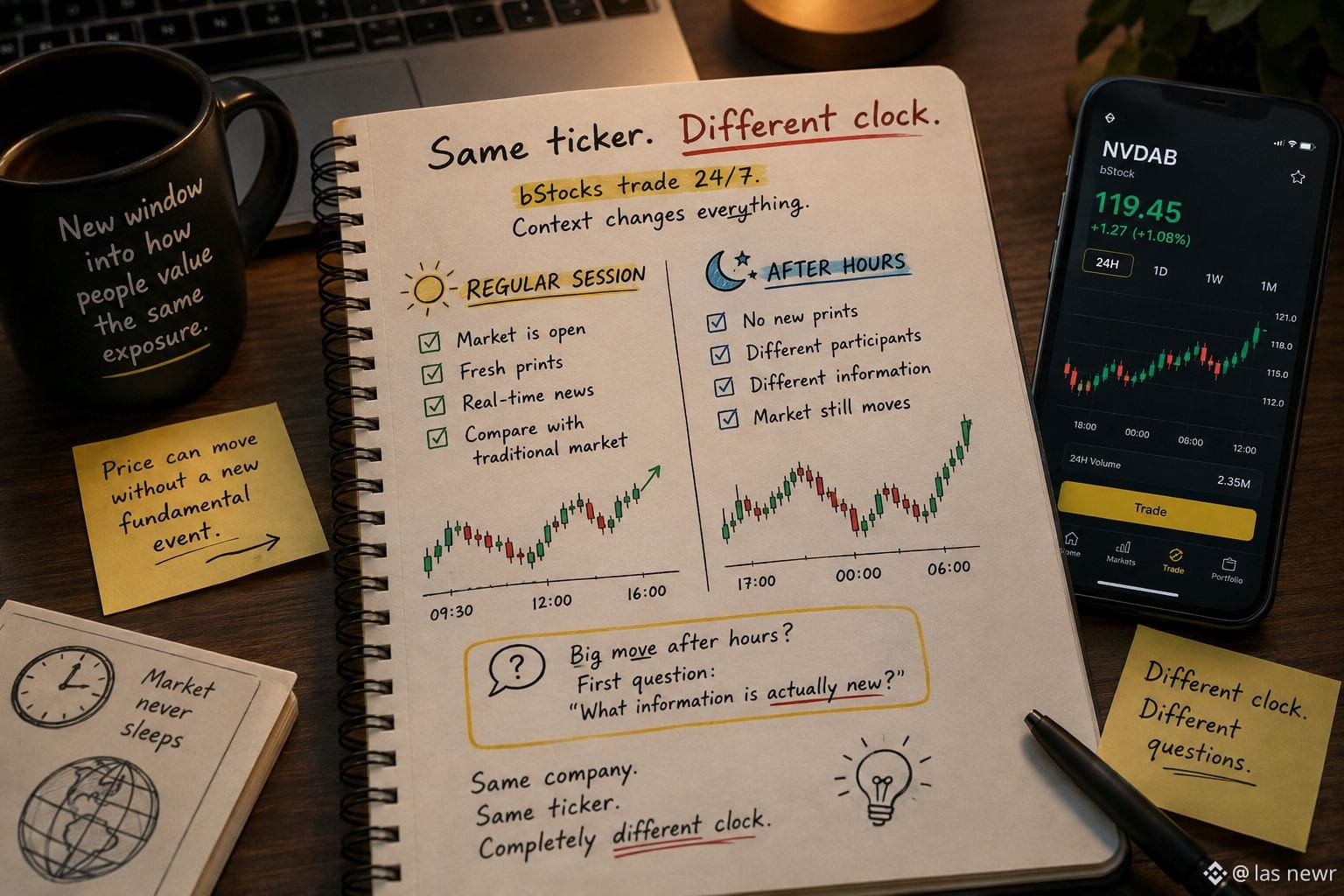
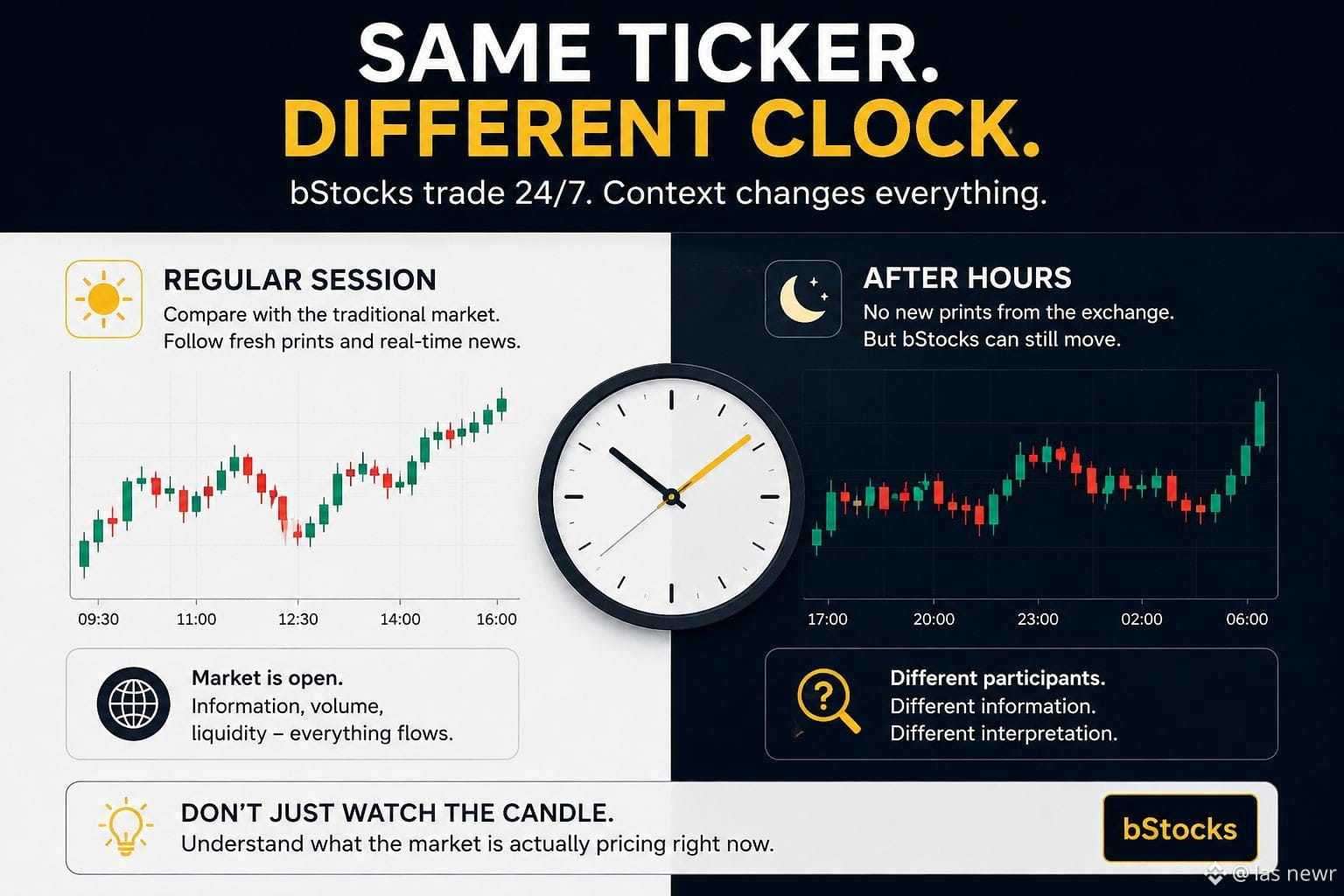
股票代碼可以保持完全不變,但我看待持倉的方式會隨着一天中不同的時間而徹底改變。
在常規交易時段,我自然會把價格和我在傳統市場上看到的內容進行對比。
後來,問題就變了。
底層交易所可能沒有新的成交打印,但bStock市場仍在運行。
那我究竟在看什麼?
不一定是“股票又在動”。
有時,我看到的是一個市場,正試圖用一套不同的參與者來給最新可用的信息定價。
這讓我不再把這張圖表當成普通的股票圖表來看。
現在,當我在常規交易時間之外看到異常的走勢時,我第一反應不再是:
“公司發生了什麼。”
而是:
“到底有哪些信息是新的?”
如果答案是“什麼都沒有”,我就會更加謹慎,不會輕易把故事附會到那根K線上。
價格可以在沒有新的基本面事件的情況下波動。
而一張平靜的圖表,並不代表市場已經停止思考。
這大概也是把傳統資產映射到一個不會“睡覺”的市場裏時,最奇怪的事情之一。
同一家公司。
同一個代碼。
時鐘完全不同。
當你看到一筆大的bStock波動時,你會關注你看到它的時間嗎?$
$NVDAB
#bstockscis @BinanceCIS
{spot}(NVDABUSDT)
我發現關於bStocks有件有趣的事。
股票代碼可以保持完全不變,但我看待持倉的方式會隨着一天中不同的時間而徹底改變。
在常規交易時段,我自然會把價格和我在傳統市場上看到的內容進行對比。
後來,問題就變了。
底層交易所可能沒有新的成交打印,但bStock市場仍在運行。
那我究竟在看什麼?
不一定是“股票又在動”。
有時,我看到的是一個市場,正試圖用一套不同的參與者來給最新可用的信息定價。
這讓我不再把這張圖表當成普通的股票圖表來看。
現在,當我在常規交易時間之外看到異常的走勢時,我第一反應不再是:
“公司發生了什麼。”
而是:
“到底有哪些信息是新的?”
如果答案是“什麼都沒有”,我就會更加謹慎,不會輕易把故事附會到那根K線上。
價格可以在沒有新的基本面事件的情況下波動。
而一張平靜的圖表,並不代表市場已經停止思考。
這大概也是把傳統資產映射到一個不會“睡覺”的市場裏時,最奇怪的事情之一。
同一家公司。
同一個代碼。
時鐘完全不同。
當你看到一筆大的bStock波動時,你會關注你看到它的時間嗎?$
$NVDAB
#bstockscis @BinanceCIS
股票代碼可以保持完全不變,但我看待持倉的方式會隨着一天中不同的時間而徹底改變。
在常規交易時段,我自然會把價格和我在傳統市場上看到的內容進行對比。
後來,問題就變了。
底層交易所可能沒有新的成交打印,但bStock市場仍在運行。
那我究竟在看什麼?
不一定是“股票又在動”。
有時,我看到的是一個市場,正試圖用一套不同的參與者來給最新可用的信息定價。
這讓我不再把這張圖表當成普通的股票圖表來看。
現在,當我在常規交易時間之外看到異常的走勢時,我第一反應不再是:
“公司發生了什麼。”
而是:
“到底有哪些信息是新的?”
如果答案是“什麼都沒有”,我就會更加謹慎,不會輕易把故事附會到那根K線上。
價格可以在沒有新的基本面事件的情況下波動。
而一張平靜的圖表,並不代表市場已經停止思考。
這大概也是把傳統資產映射到一個不會“睡覺”的市場裏時,最奇怪的事情之一。
同一家公司。
同一個代碼。
時鐘完全不同。
當你看到一筆大的bStock波動時,你會關注你看到它的時間嗎?$
$NVDAB
#bstockscis @BinanceCIS
1
1
88
·
--
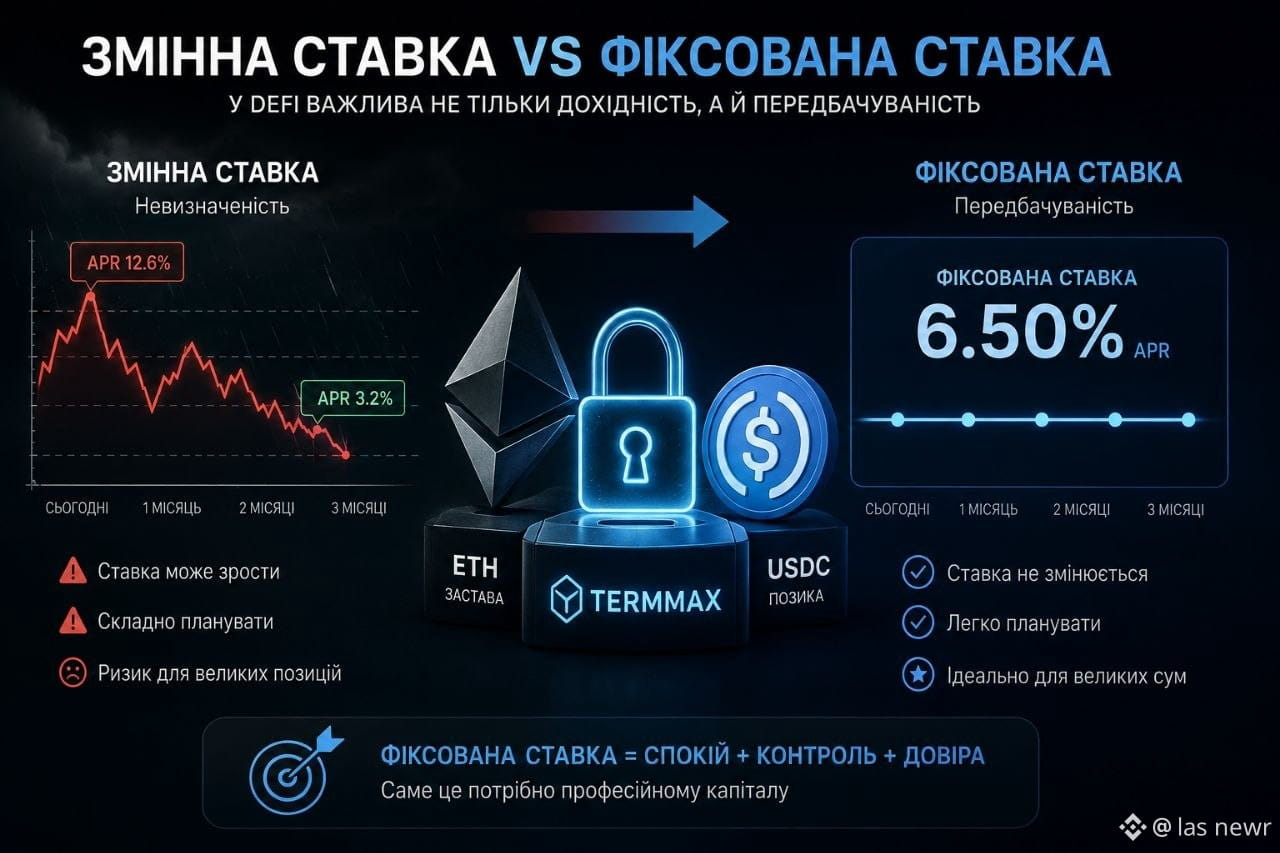
DeFi 有一個奇怪的問題。
我們已經學會了尋找收益率,但到現在仍不總是能正確規劃風險。
例如,你想用 ETH 作爲抵押,借入 USDC,爲期 3 個月。
浮動利率今天看起來可能不錯。
但一個月後會怎樣?
利率可能會隨着借款需求和流動性而改變。
正因如此,我對 TermMax 的方案很感興趣。
在這裏,借款有到期時間和固定利率。
也就是說,你不僅僅是在看現在的 APY 數字——你還能提前理解整個倉位的經濟情況。
而且這對大額倉位尤其有意思。
金額越大,利率預測的錯誤可能會帶來更高的成本。
我覺得,當更多專業資本進入協議時,固定利率 DeFi 會變得更加重要。
因爲專業玩家不僅需要 yield。
他們需要可預測性。
而 TermMax 恰恰很有看點。
你會使用固定利率的 DeFi 借貸嗎?
#termmax @termmax
DeFi 有一個奇怪的問題。
我們已經學會了尋找收益率,但到現在仍不總是能正確規劃風險。
例如,你想用 ETH 作爲抵押,借入 USDC,爲期 3 個月。
浮動利率今天看起來可能不錯。
但一個月後會怎樣?
利率可能會隨着借款需求和流動性而改變。
正因如此,我對 TermMax 的方案很感興趣。
在這裏,借款有到期時間和固定利率。
也就是說,你不僅僅是在看現在的 APY 數字——你還能提前理解整個倉位的經濟情況。
而且這對大額倉位尤其有意思。
金額越大,利率預測的錯誤可能會帶來更高的成本。
我覺得,當更多專業資本進入協議時,固定利率 DeFi 會變得更加重要。
因爲專業玩家不僅需要 yield。
他們需要可預測性。
而 TermMax 恰恰很有看點。
你會使用固定利率的 DeFi 借貸嗎?
#termmax @TermMax
我們已經學會了尋找收益率,但到現在仍不總是能正確規劃風險。
例如,你想用 ETH 作爲抵押,借入 USDC,爲期 3 個月。
浮動利率今天看起來可能不錯。
但一個月後會怎樣?
利率可能會隨着借款需求和流動性而改變。
正因如此,我對 TermMax 的方案很感興趣。
在這裏,借款有到期時間和固定利率。
也就是說,你不僅僅是在看現在的 APY 數字——你還能提前理解整個倉位的經濟情況。
而且這對大額倉位尤其有意思。
金額越大,利率預測的錯誤可能會帶來更高的成本。
我覺得,當更多專業資本進入協議時,固定利率 DeFi 會變得更加重要。
因爲專業玩家不僅需要 yield。
他們需要可預測性。
而 TermMax 恰恰很有看點。
你會使用固定利率的 DeFi 借貸嗎?
#termmax @TermMax
72
·
--
看漲
我以前認爲,使用代幣化股票時,最重要的問題只是:
“該代幣是否跟隨該股票?”
現在我覺得有一個更好的問題。
“當標的股票改變其結構時,究竟會發生什麼?”
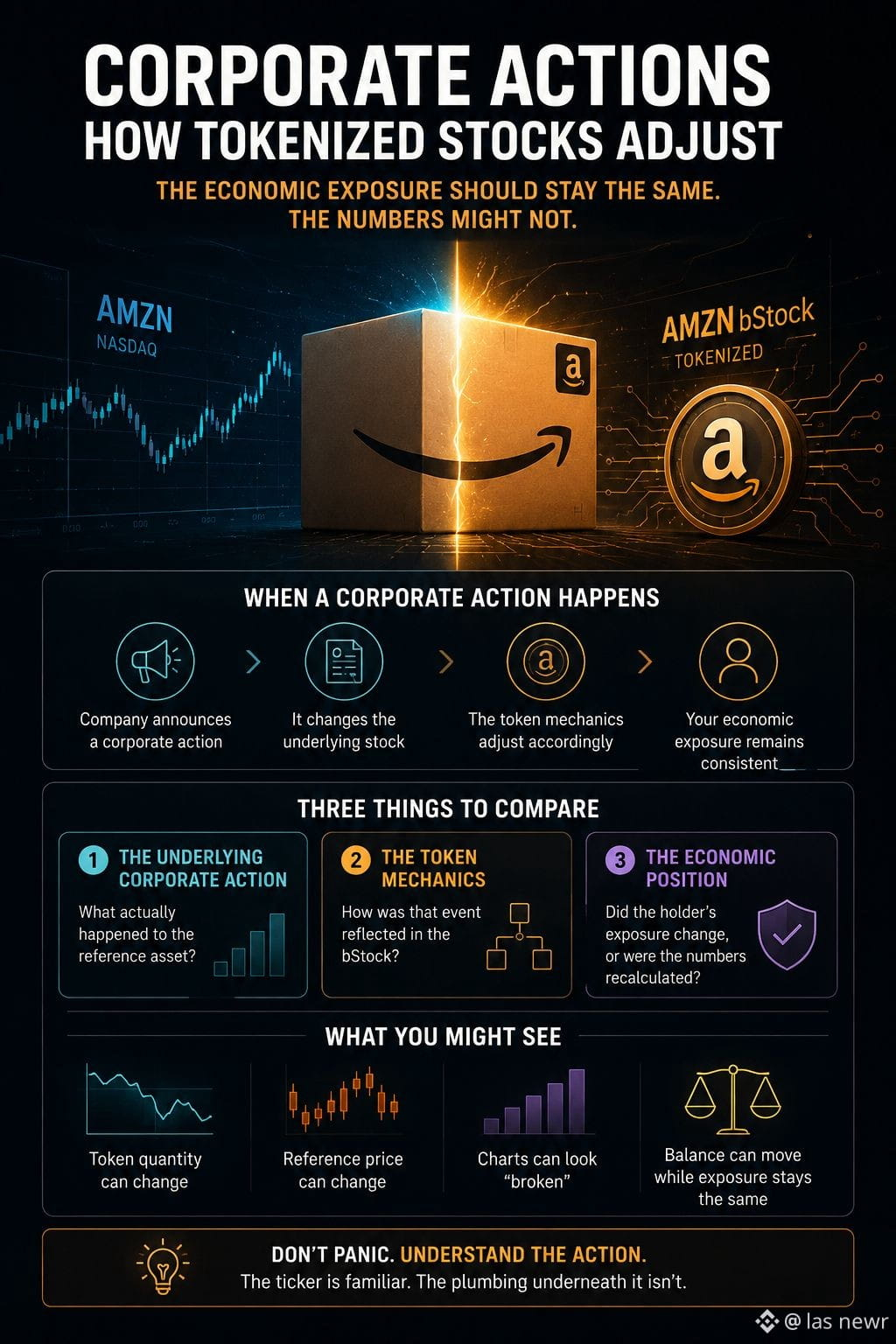
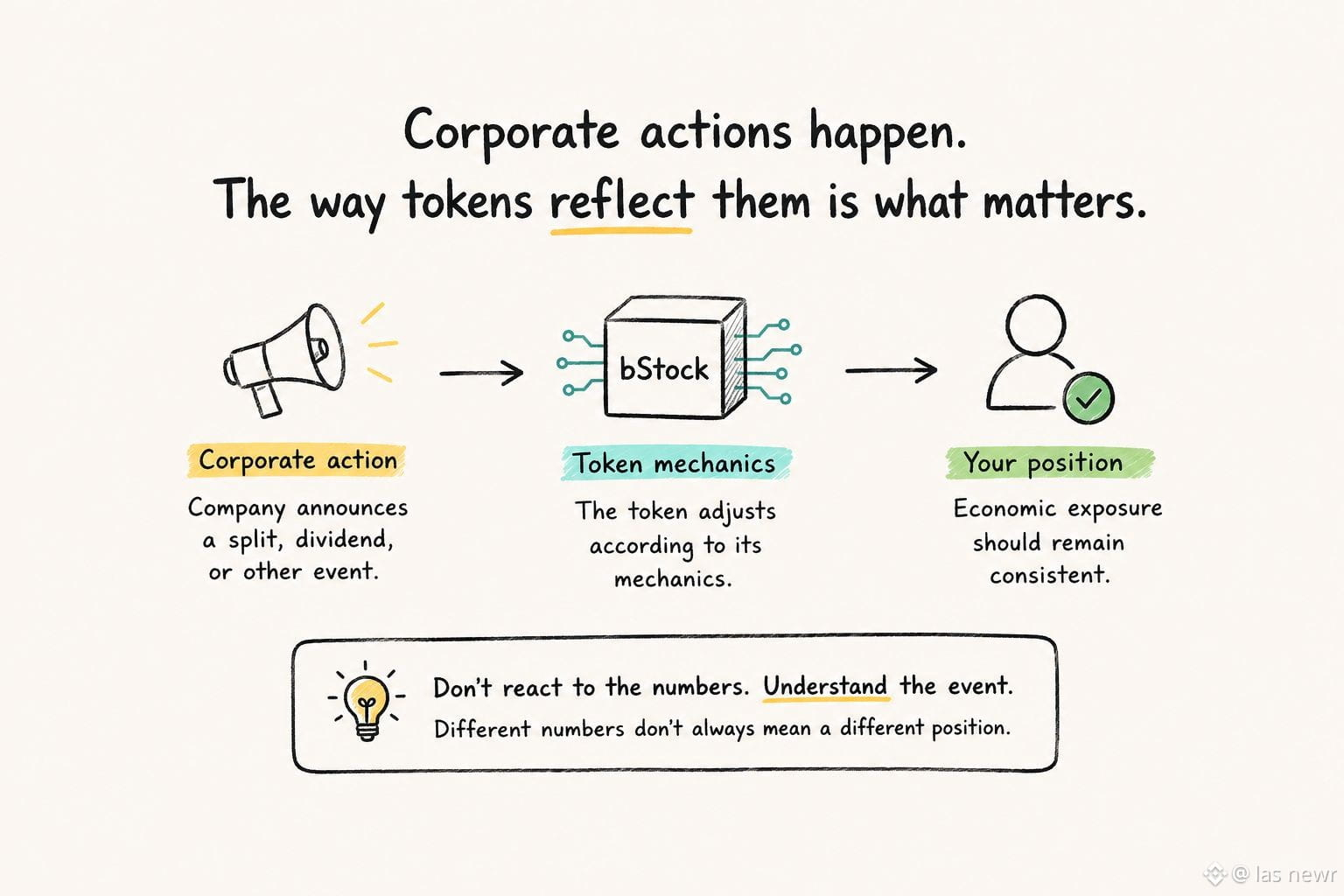
以 #AMZN 爲例。
想象亞馬遜宣佈一項公司行動,它會改變股份數量、每股的經濟價值,或標的證券的表示方式。
在普通股票頭寸中,券商會在後臺完成相應調整。
但在 bStock 裏,我會想弄清楚:這種調整在代幣側如何呈現。
並不是因爲某些地方一定出了問題。
恰恰相反。
一次乾淨的調整,可能會讓代幣在短時間內看起來有些“怪”:
代幣數量可能會變化;
參考價格可能會變化;
歷史圖表可能會突然看起來“壞掉”;
即使原本希望經濟敞口保持一致,顯示的餘額也可能發生移動。
因此,我不會通過對比一次公司行動前後某一個數字,來判斷一個代幣化股票。
我會比較三件事:
1. 標的公司的行動
參考資產究竟發生了什麼?
2. 代幣機制
那一事件是如何在 bStock 中被反映的?
3. 經濟頭寸
持有人的敞口是否發生了變化,還是隻是數字被重新計算了?
這種區分很容易被忽略。
圖表可能會顯示出劇烈的波動,但經濟頭寸幾乎沒有變化。
反過來也可能發生:展示的價格看起來很正常,但底層機制值得更仔細地審視。
這大概就是我覺得代幣化市場最有意思的部分。
股票代碼很熟悉。
它下面的“管道”卻並不那麼直觀。
所以,當我看到 #AMZN 附近有些異常時,我第一反應不會是“代幣壞了”。
我會問:
“標的資產到底變了什麼?而代幣化這一層又是如何把它翻譯/映射過去的?”$MSFTB
#bstockscis @BinanceCIS
我以前認爲,使用代幣化股票時,最重要的問題只是:
“該代幣是否跟隨該股票?”
現在我覺得有一個更好的問題。
“當標的股票改變其結構時,究竟會發生什麼?”
以 #AMZN 爲例。
想象亞馬遜宣佈一項公司行動,它會改變股份數量、每股的經濟價值,或標的證券的表示方式。
在普通股票頭寸中,券商會在後臺完成相應調整。
但在 bStock 裏,我會想弄清楚:這種調整在代幣側如何呈現。
並不是因爲某些地方一定出了問題。
恰恰相反。
一次乾淨的調整,可能會讓代幣在短時間內看起來有些“怪”:
代幣數量可能會變化;
參考價格可能會變化;
歷史圖表可能會突然看起來“壞掉”;
即使原本希望經濟敞口保持一致,顯示的餘額也可能發生移動。
因此,我不會通過對比一次公司行動前後某一個數字,來判斷一個代幣化股票。
我會比較三件事:
1. 標的公司的行動
參考資產究竟發生了什麼?
2. 代幣機制
那一事件是如何在 bStock 中被反映的?
3. 經濟頭寸
持有人的敞口是否發生了變化,還是隻是數字被重新計算了?
這種區分很容易被忽略。
圖表可能會顯示出劇烈的波動,但經濟頭寸幾乎沒有變化。
反過來也可能發生:展示的價格看起來很正常,但底層機制值得更仔細地審視。
這大概就是我覺得代幣化市場最有意思的部分。
股票代碼很熟悉。
它下面的“管道”卻並不那麼直觀。
所以,當我看到 #AMZN 附近有些異常時,我第一反應不會是“代幣壞了”。
我會問:
“標的資產到底變了什麼?而代幣化這一層又是如何把它翻譯/映射過去的?”$MSFTB
#bstockscis @BinanceCIS
“該代幣是否跟隨該股票?”
現在我覺得有一個更好的問題。
“當標的股票改變其結構時,究竟會發生什麼?”
以 #AMZN 爲例。
想象亞馬遜宣佈一項公司行動,它會改變股份數量、每股的經濟價值,或標的證券的表示方式。
在普通股票頭寸中,券商會在後臺完成相應調整。
但在 bStock 裏,我會想弄清楚:這種調整在代幣側如何呈現。
並不是因爲某些地方一定出了問題。
恰恰相反。
一次乾淨的調整,可能會讓代幣在短時間內看起來有些“怪”:
代幣數量可能會變化;
參考價格可能會變化;
歷史圖表可能會突然看起來“壞掉”;
即使原本希望經濟敞口保持一致,顯示的餘額也可能發生移動。
因此,我不會通過對比一次公司行動前後某一個數字,來判斷一個代幣化股票。
我會比較三件事:
1. 標的公司的行動
參考資產究竟發生了什麼?
2. 代幣機制
那一事件是如何在 bStock 中被反映的?
3. 經濟頭寸
持有人的敞口是否發生了變化,還是隻是數字被重新計算了?
這種區分很容易被忽略。
圖表可能會顯示出劇烈的波動,但經濟頭寸幾乎沒有變化。
反過來也可能發生:展示的價格看起來很正常,但底層機制值得更仔細地審視。
這大概就是我覺得代幣化市場最有意思的部分。
股票代碼很熟悉。
它下面的“管道”卻並不那麼直觀。
所以,當我看到 #AMZN 附近有些異常時,我第一反應不會是“代幣壞了”。
我會問:
“標的資產到底變了什麼?而代幣化這一層又是如何把它翻譯/映射過去的?”$MSFTB
#bstockscis @BinanceCIS
1
1
73
·
--
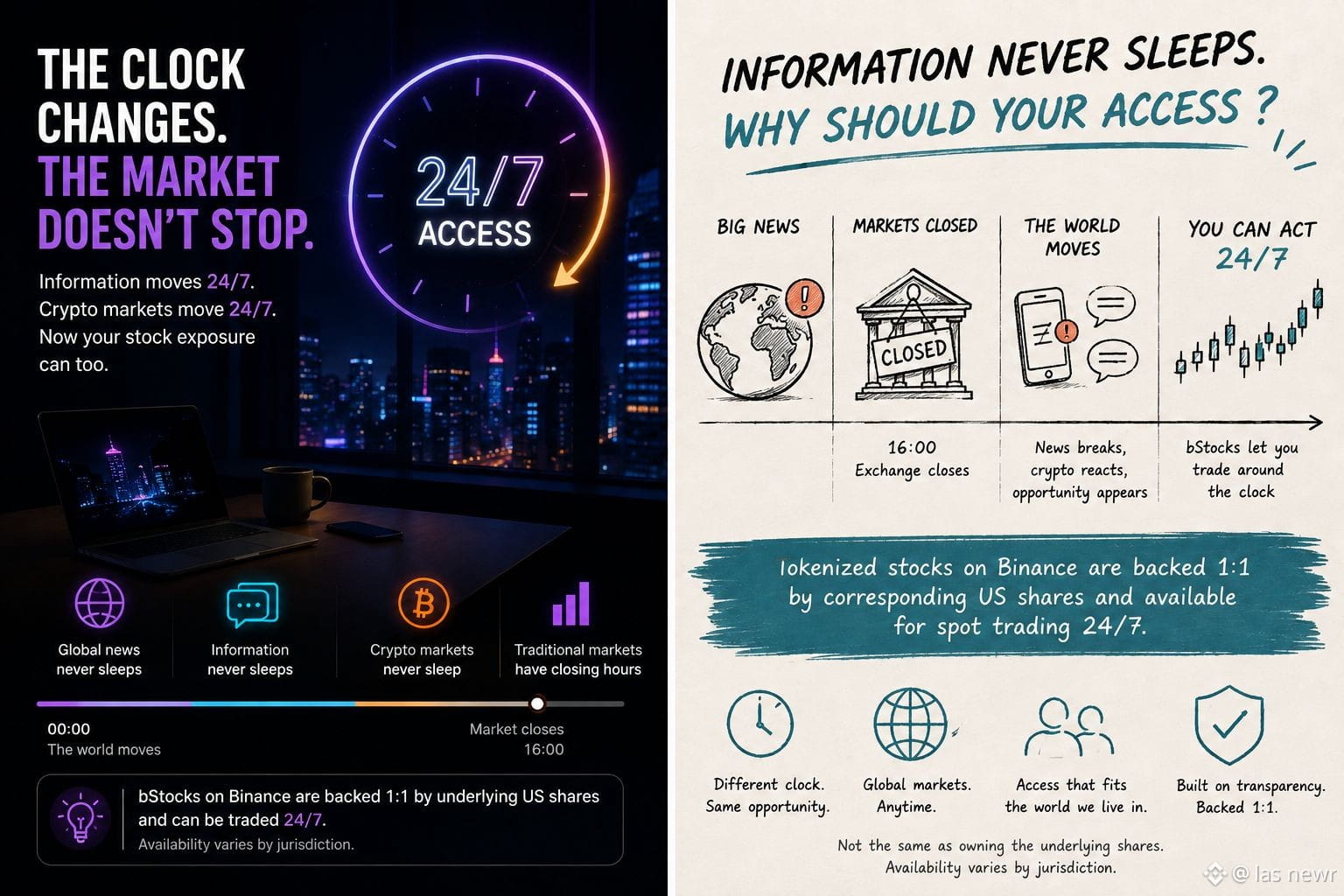
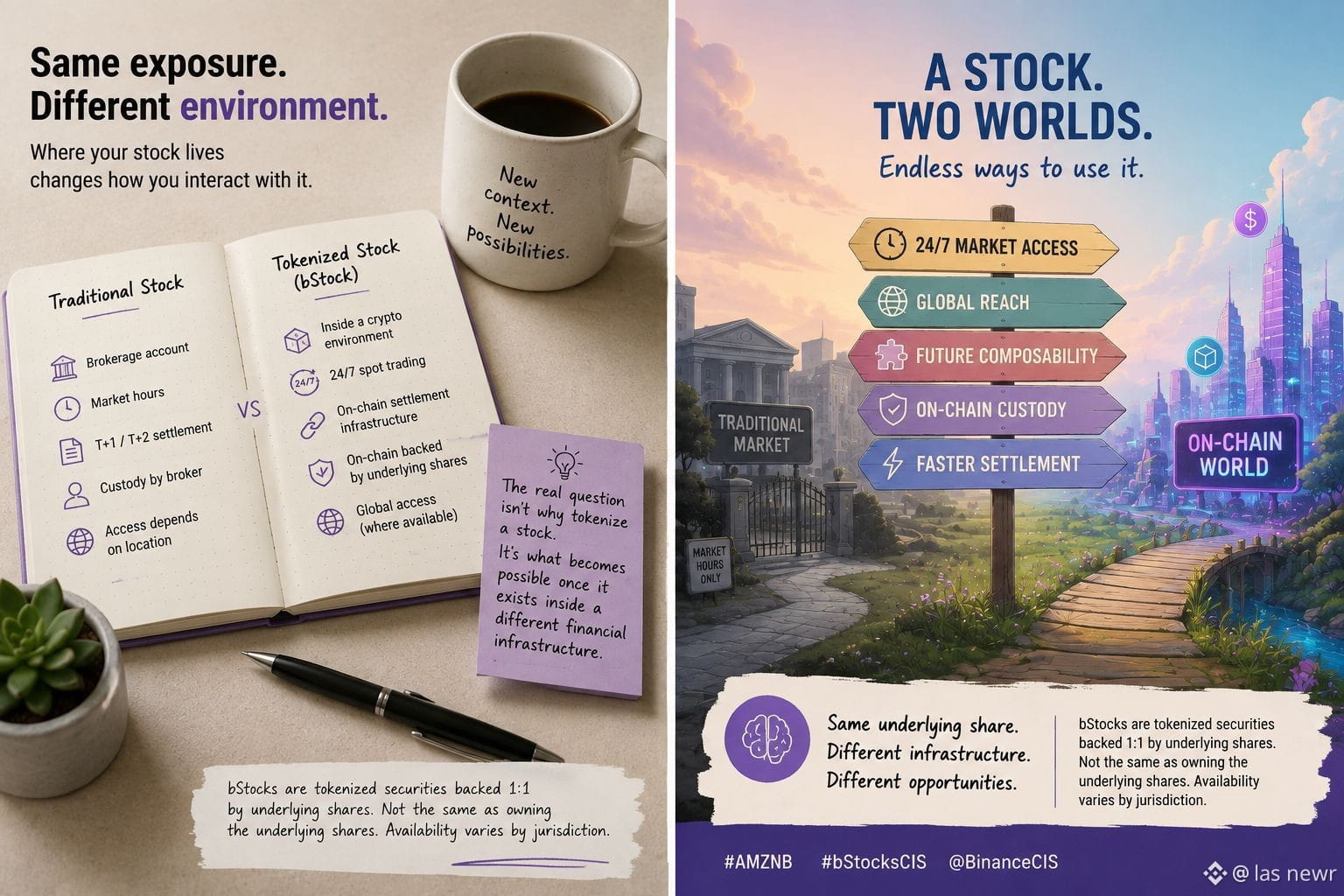
我以前以爲,把代幣化股票“有趣”的地方,僅僅在於能夠在傳統交易時段之外進行交易。
後來我從另一個角度開始看。
更大的變化也許在於:該資產在投資者的工作流中所處的位置。
傳統股票通常存在於券商賬戶之中。
而 bStock 存在於加密貨幣環境裏。
聽起來只是一個小小的技術差異。
但並不是。
對於代幣化證券,同一個已經在管理 USDT、BNB 或其他數字資產的市場參與者,可以在不徹底切換金融環境的情況下,接觸與股票掛鉤的金融工具。
這會改變資產可被使用的語境。
我認爲,這也是代幣化變得更有趣的地方。
不是:
“在區塊鏈上的股票。”
更像是:
“當一種與股票相關的資產成爲鏈上金融生態的一部分時,會發生什麼?”
這就引出了一個更大的討論:關於清算、託管、可攜帶性,最終還有可組合性。
當然,bStock 並不等同於直接擁有標的公司的股份。它是一種由底層股票按 1:1 支持的代幣化證券,且可用性取決於司法轄區。 �
Binance Academy +1
對我來說,重要的問題已經變了。
我不再追問:
“爲什麼有人要把一隻股票代幣化?”
我會問:
“當這隻股票可以存在於另一種金融基礎設施之中時,會變得可能的是什麼?”
這纔是一個更有意思的問題。
#bstockscis @BinanceCIS #AMZNB
{spot}(AMZNBUSDT)
我以前以爲,把代幣化股票“有趣”的地方,僅僅在於能夠在傳統交易時段之外進行交易。
後來我從另一個角度開始看。
更大的變化也許在於:該資產在投資者的工作流中所處的位置。
傳統股票通常存在於券商賬戶之中。
而 bStock 存在於加密貨幣環境裏。
聽起來只是一個小小的技術差異。
但並不是。
對於代幣化證券,同一個已經在管理 USDT、BNB 或其他數字資產的市場參與者,可以在不徹底切換金融環境的情況下,接觸與股票掛鉤的金融工具。
這會改變資產可被使用的語境。
我認爲,這也是代幣化變得更有趣的地方。
不是:
“在區塊鏈上的股票。”
更像是:
“當一種與股票相關的資產成爲鏈上金融生態的一部分時,會發生什麼?”
這就引出了一個更大的討論:關於清算、託管、可攜帶性,最終還有可組合性。
當然,bStock 並不等同於直接擁有標的公司的股份。它是一種由底層股票按 1:1 支持的代幣化證券,且可用性取決於司法轄區。 �
Binance Academy +1
對我來說,重要的問題已經變了。
我不再追問:
“爲什麼有人要把一隻股票代幣化?”
我會問:
“當這隻股票可以存在於另一種金融基礎設施之中時,會變得可能的是什麼?”
這纔是一個更有意思的問題。
#bstockscis @BinanceCIS #AMZNB
後來我從另一個角度開始看。
更大的變化也許在於:該資產在投資者的工作流中所處的位置。
傳統股票通常存在於券商賬戶之中。
而 bStock 存在於加密貨幣環境裏。
聽起來只是一個小小的技術差異。
但並不是。
對於代幣化證券,同一個已經在管理 USDT、BNB 或其他數字資產的市場參與者,可以在不徹底切換金融環境的情況下,接觸與股票掛鉤的金融工具。
這會改變資產可被使用的語境。
我認爲,這也是代幣化變得更有趣的地方。
不是:
“在區塊鏈上的股票。”
更像是:
“當一種與股票相關的資產成爲鏈上金融生態的一部分時,會發生什麼?”
這就引出了一個更大的討論:關於清算、託管、可攜帶性,最終還有可組合性。
當然,bStock 並不等同於直接擁有標的公司的股份。它是一種由底層股票按 1:1 支持的代幣化證券,且可用性取決於司法轄區。 �
Binance Academy +1
對我來說,重要的問題已經變了。
我不再追問:
“爲什麼有人要把一隻股票代幣化?”
我會問:
“當這隻股票可以存在於另一種金融基礎設施之中時,會變得可能的是什麼?”
這纔是一個更有意思的問題。
#bstockscis @BinanceCIS #AMZNB
78
·
--
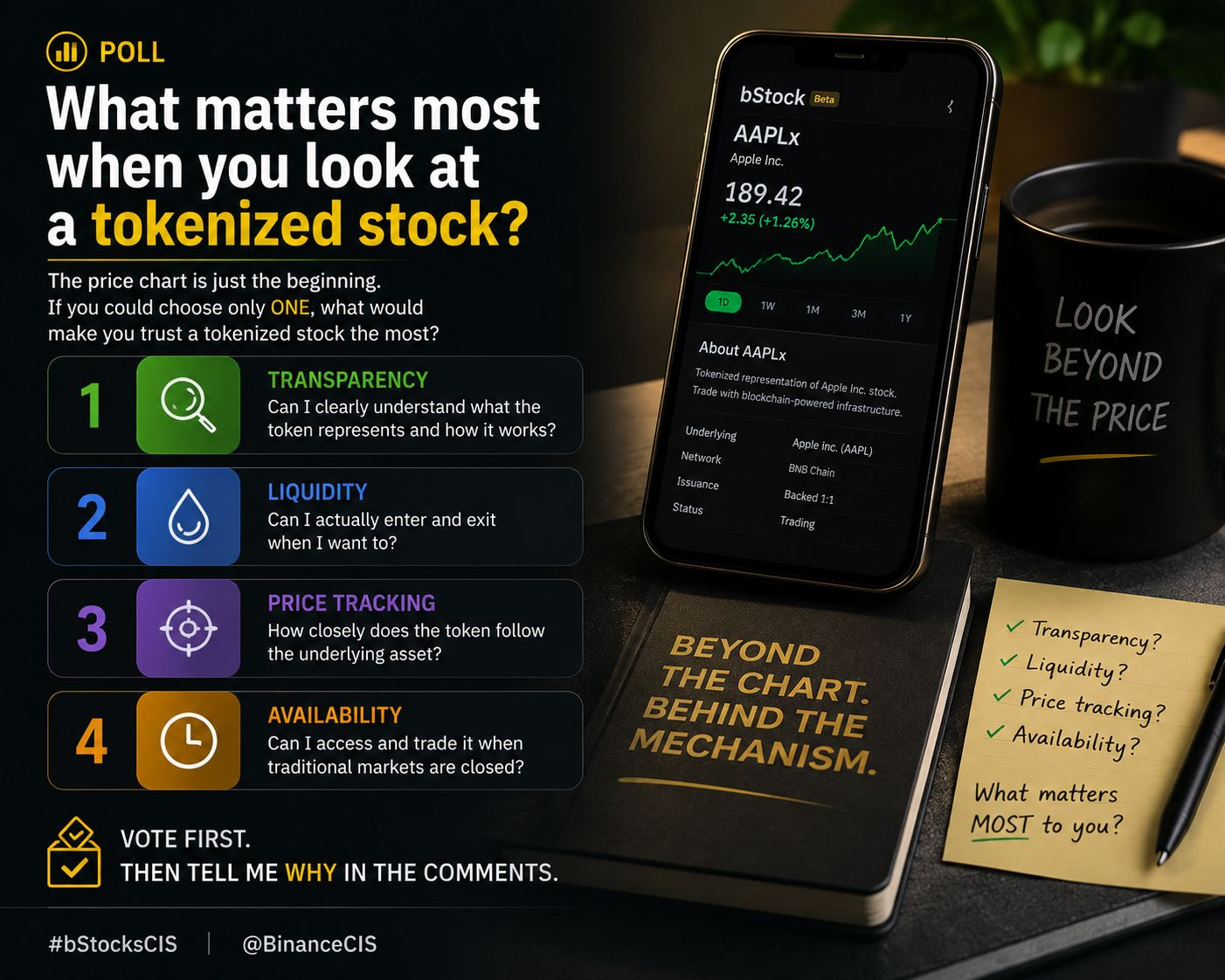
當你看一個被代幣化的股票時,什麼會讓你更信任它?
對我來說,價格走勢只是起點。
一個代幣即使能夠緊密跟隨其底層資產,仍可能留下其他問題未解。
所以我會把決策拆成四點:
1️⃣ 透明度
我能否清楚理解該代幣代表什麼,以及其結構如何運作?
2️⃣ 流動性
我是否能在我想要的時候實際進出?
3️⃣ 價格追蹤
代幣對底層資產的跟隨程度有多接近?
4️⃣ 可得性
傳統市場關閉時,我是否仍能存取並交易它?
我認為,人們會依照他們實際用代幣化股票做什麼,對這些項目給出截然不同的優先順序。
所以我們來測試一下。
如果只能選擇一個,對你來說最重要的是什麼?
🟢 透明度
🔵 流動性
🟣 價格追蹤
🟠 可得性
先投票。
然後在留言告訴我原因。
#bstockscis @BinanceCIS
當你看一個被代幣化的股票時,什麼會讓你更信任它?
對我來說,價格走勢只是起點。
一個代幣即使能夠緊密跟隨其底層資產,仍可能留下其他問題未解。
所以我會把決策拆成四點:
1️⃣ 透明度
我能否清楚理解該代幣代表什麼,以及其結構如何運作?
2️⃣ 流動性
我是否能在我想要的時候實際進出?
3️⃣ 價格追蹤
代幣對底層資產的跟隨程度有多接近?
4️⃣ 可得性
傳統市場關閉時,我是否仍能存取並交易它?
我認為,人們會依照他們實際用代幣化股票做什麼,對這些項目給出截然不同的優先順序。
所以我們來測試一下。
如果只能選擇一個,對你來說最重要的是什麼?
🟢 透明度
🔵 流動性
🟣 價格追蹤
🟠 可得性
先投票。
然後在留言告訴我原因。
#bstockscis @BinanceCIS
對我來說,價格走勢只是起點。
一個代幣即使能夠緊密跟隨其底層資產,仍可能留下其他問題未解。
所以我會把決策拆成四點:
1️⃣ 透明度
我能否清楚理解該代幣代表什麼,以及其結構如何運作?
2️⃣ 流動性
我是否能在我想要的時候實際進出?
3️⃣ 價格追蹤
代幣對底層資產的跟隨程度有多接近?
4️⃣ 可得性
傳統市場關閉時,我是否仍能存取並交易它?
我認為,人們會依照他們實際用代幣化股票做什麼,對這些項目給出截然不同的優先順序。
所以我們來測試一下。
如果只能選擇一個,對你來說最重要的是什麼?
🟢 透明度
🔵 流動性
🟣 價格追蹤
🟠 可得性
先投票。
然後在留言告訴我原因。
#bstockscis @BinanceCIS
107
·
--
看漲
查看翻譯
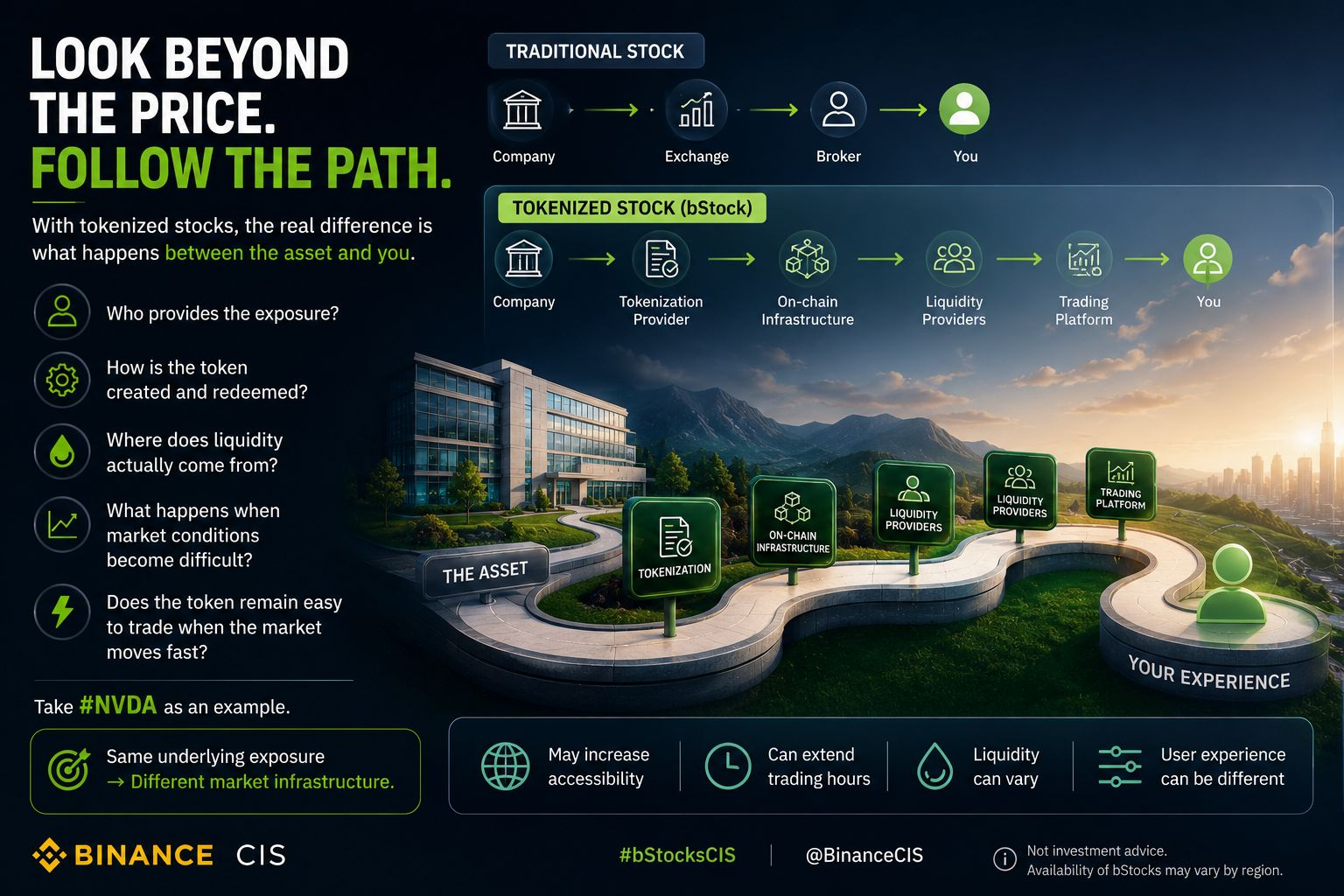
One thing I would watch with tokenized stocks is not the headline price.
It is the path between the asset and the person trading it.
With a traditional stock, most of the infrastructure is familiar.
With a tokenized version, there can be another layer between the underlying asset and the trading experience.
That makes me ask a different set of questions:
Who provides the exposure?
How is the token created and redeemed?
Where does liquidity actually come from?
What happens when market conditions become difficult?
And perhaps the most important one:
Does the token remain easy to trade when the market moves fast?
Take #NVDA as an example.
The interesting comparison isn't simply:
stock vs token.
It is:
same underlying exposure → different market infrastructure.
That difference can affect accessibility, trading hours, liquidity, and the overall user experience.
So when I look at a bStock, I don't want to stop at the chart.
I want to understand what is happening behind the chart.
#bstockscis @BinanceCIS
One thing I would watch with tokenized stocks is not the headline price.
It is the path between the asset and the person trading it.
With a traditional stock, most of the infrastructure is familiar.
With a tokenized version, there can be another layer between the underlying asset and the trading experience.
That makes me ask a different set of questions:
Who provides the exposure?
How is the token created and redeemed?
Where does liquidity actually come from?
What happens when market conditions become difficult?
And perhaps the most important one:
Does the token remain easy to trade when the market moves fast?
Take #NVDA as an example.
The interesting comparison isn't simply:
stock vs token.
It is:
same underlying exposure → different market infrastructure.
That difference can affect accessibility, trading hours, liquidity, and the overall user experience.
So when I look at a bStock, I don't want to stop at the chart.
I want to understand what is happening behind the chart.
#bstockscis @BinanceCIS
It is the path between the asset and the person trading it.
With a traditional stock, most of the infrastructure is familiar.
With a tokenized version, there can be another layer between the underlying asset and the trading experience.
That makes me ask a different set of questions:
Who provides the exposure?
How is the token created and redeemed?
Where does liquidity actually come from?
What happens when market conditions become difficult?
And perhaps the most important one:
Does the token remain easy to trade when the market moves fast?
Take #NVDA as an example.
The interesting comparison isn't simply:
stock vs token.
It is:
same underlying exposure → different market infrastructure.
That difference can affect accessibility, trading hours, liquidity, and the overall user experience.
So when I look at a bStock, I don't want to stop at the chart.
I want to understand what is happening behind the chart.
#bstockscis @BinanceCIS
1
89
·
--
查看翻譯
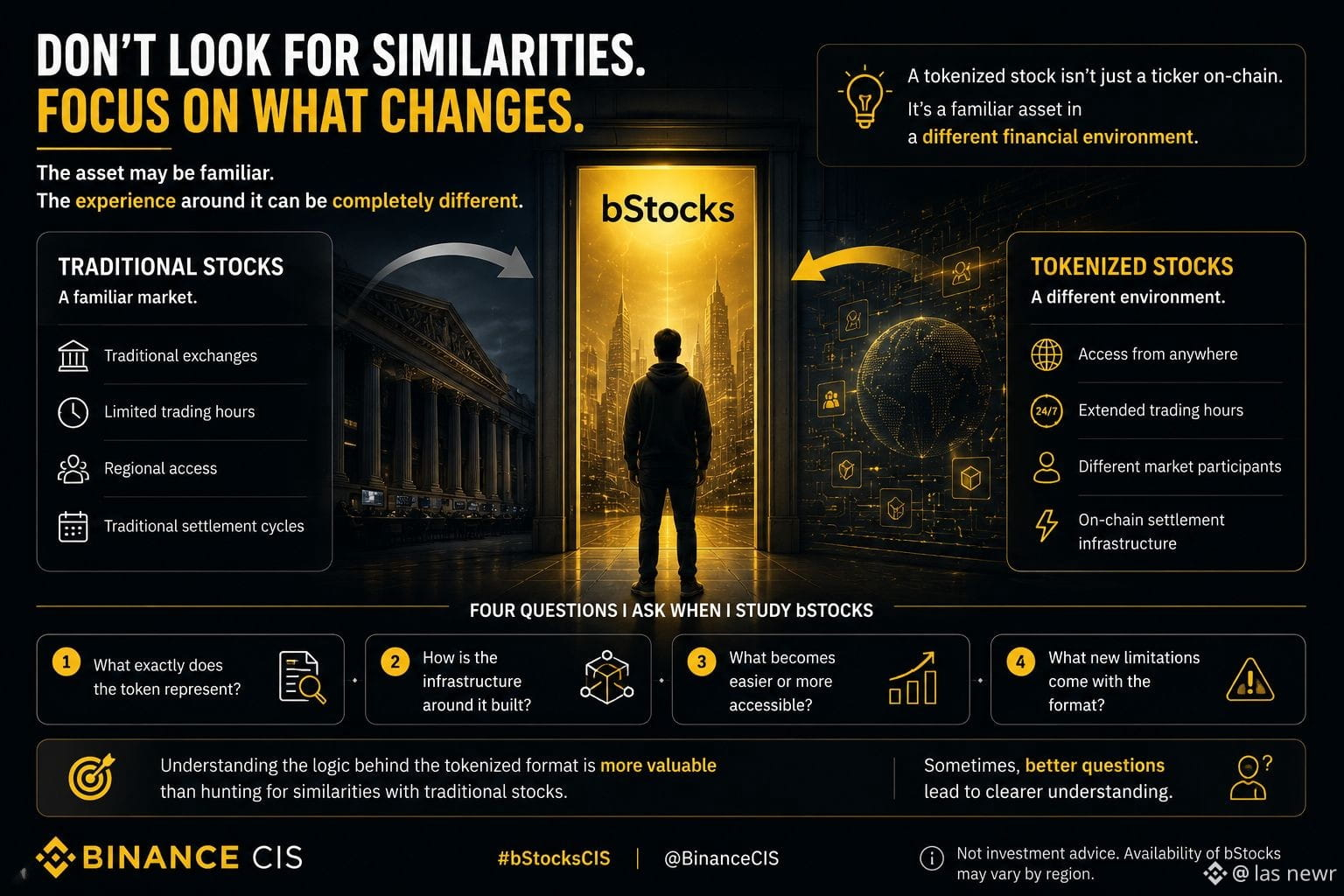
The more I learn about bStocks, the less useful I find one particular question:
“How similar are they to traditional stocks?”
It sounds reasonable, but it can lead you in the wrong direction.
A more interesting question is:
What changes for the user when a familiar market asset appears in a tokenized form?
Because the point isn't simply to take a ticker and add the word “token.”
The asset enters a different infrastructure — with a different interface, different ways of moving capital, and different possibilities for interacting with it.
And I don't think the goal should be to immediately decide which format is “better.”
It's more useful to understand what each format is designed to do.
So when I look at bStocks, I try to ask four things:
— What exactly does the token represent?
— How is the infrastructure around it built?
— What becomes easier or more accessible?
— What new limitations come with the format?
That last question matters just as much.
Every new financial structure adds something, but it also introduces its own rules.
That's why I'm less interested in finding similarities between bStocks and traditional stocks, and more interested in understanding the logic behind the tokenized format.
Sometimes a product becomes easier to understand not when you find more answers.
But when you finally start asking better questions.
@BinanceCIS #bstockscis
The more I learn about bStocks, the less useful I find one particular question:
“How similar are they to traditional stocks?”
It sounds reasonable, but it can lead you in the wrong direction.
A more interesting question is:
What changes for the user when a familiar market asset appears in a tokenized form?
Because the point isn't simply to take a ticker and add the word “token.”
The asset enters a different infrastructure — with a different interface, different ways of moving capital, and different possibilities for interacting with it.
And I don't think the goal should be to immediately decide which format is “better.”
It's more useful to understand what each format is designed to do.
So when I look at bStocks, I try to ask four things:
— What exactly does the token represent?
— How is the infrastructure around it built?
— What becomes easier or more accessible?
— What new limitations come with the format?
That last question matters just as much.
Every new financial structure adds something, but it also introduces its own rules.
That's why I'm less interested in finding similarities between bStocks and traditional stocks, and more interested in understanding the logic behind the tokenized format.
Sometimes a product becomes easier to understand not when you find more answers.
But when you finally start asking better questions.
@BinanceCIS #bstockscis
“How similar are they to traditional stocks?”
It sounds reasonable, but it can lead you in the wrong direction.
A more interesting question is:
What changes for the user when a familiar market asset appears in a tokenized form?
Because the point isn't simply to take a ticker and add the word “token.”
The asset enters a different infrastructure — with a different interface, different ways of moving capital, and different possibilities for interacting with it.
And I don't think the goal should be to immediately decide which format is “better.”
It's more useful to understand what each format is designed to do.
So when I look at bStocks, I try to ask four things:
— What exactly does the token represent?
— How is the infrastructure around it built?
— What becomes easier or more accessible?
— What new limitations come with the format?
That last question matters just as much.
Every new financial structure adds something, but it also introduces its own rules.
That's why I'm less interested in finding similarities between bStocks and traditional stocks, and more interested in understanding the logic behind the tokenized format.
Sometimes a product becomes easier to understand not when you find more answers.
But when you finally start asking better questions.
@BinanceCIS #bstockscis
82
·
--
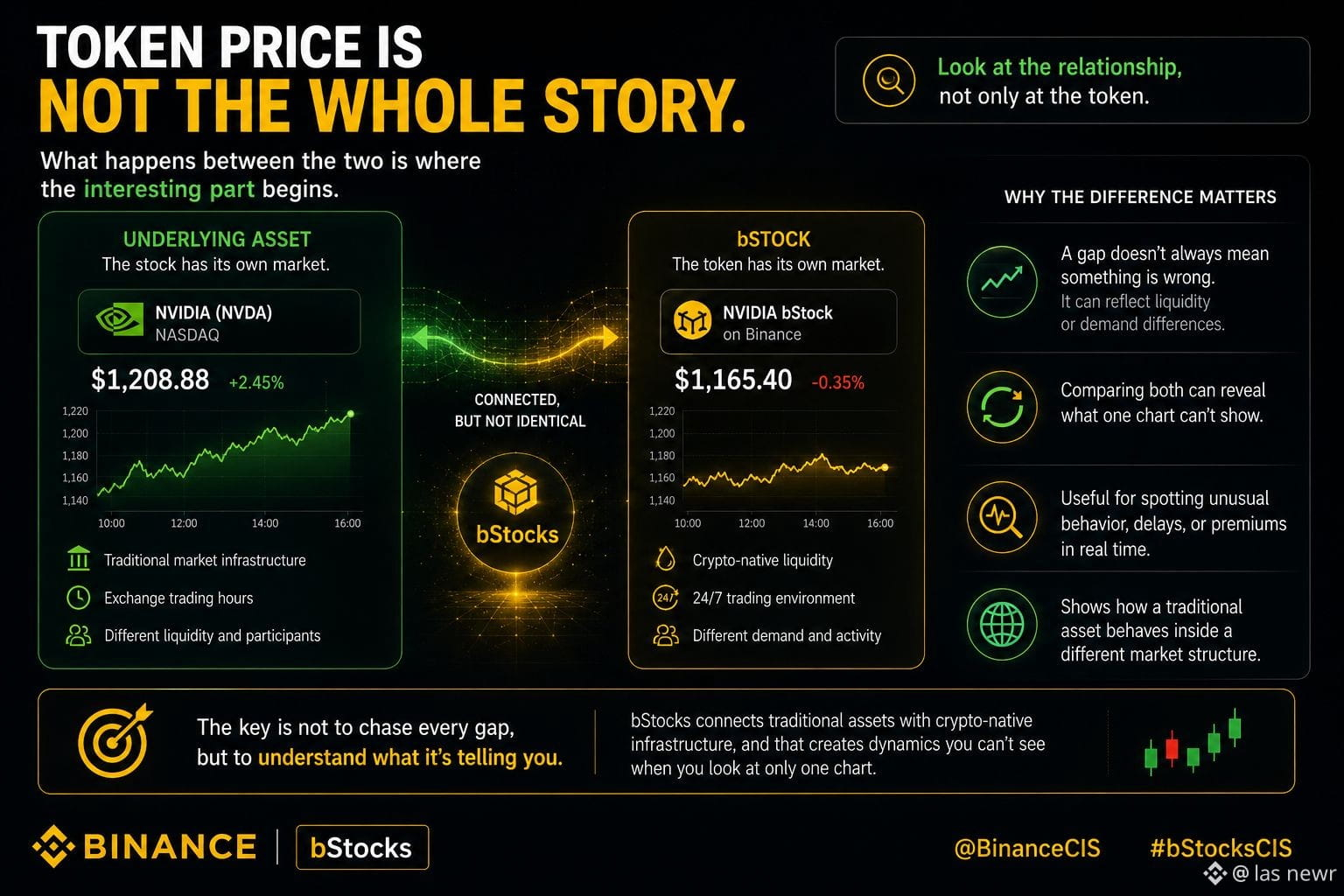
我覺得關於 bStocks 有趣的一點是:代幣價格並不是全部。
起初,我看着價格想:
“好吧,它跟隨標的股票。簡單。”
但後來我開始思考兩者之間會發生什麼。
標的資產有它自己的市場。
bStock 也有自己對應的流動性、交易活動以及市場參與者。
所以即使它們是關聯的,兩種價格在每一刻也不一定非要以完全相同的方式變動。
而這種差異,恰恰是我最會密切關注的東西之一。
並不是因爲每一個價差都意味着一定有問題。
有時候,它只是表明流動性或需求存在差別。
對我來說,這讓 bStocks 的分析比只盯着價格圖表更有意思。
你需要看代幣與資產之間的關係,而不僅僅是看代幣本身。👀
這大概也是我會在長期中投入最多注意力的部分。📊
@BinanceCIS #bstockscis
我覺得關於 bStocks 有趣的一點是:代幣價格並不是全部。
起初,我看着價格想:
“好吧,它跟隨標的股票。簡單。”
但後來我開始思考兩者之間會發生什麼。
標的資產有它自己的市場。
bStock 也有自己對應的流動性、交易活動以及市場參與者。
所以即使它們是關聯的,兩種價格在每一刻也不一定非要以完全相同的方式變動。
而這種差異,恰恰是我最會密切關注的東西之一。
並不是因爲每一個價差都意味着一定有問題。
有時候,它只是表明流動性或需求存在差別。
對我來說,這讓 bStocks 的分析比只盯着價格圖表更有意思。
你需要看代幣與資產之間的關係,而不僅僅是看代幣本身。👀
這大概也是我會在長期中投入最多注意力的部分。📊
@BinanceCIS #bstockscis
起初,我看着價格想:
“好吧,它跟隨標的股票。簡單。”
但後來我開始思考兩者之間會發生什麼。
標的資產有它自己的市場。
bStock 也有自己對應的流動性、交易活動以及市場參與者。
所以即使它們是關聯的,兩種價格在每一刻也不一定非要以完全相同的方式變動。
而這種差異,恰恰是我最會密切關注的東西之一。
並不是因爲每一個價差都意味着一定有問題。
有時候,它只是表明流動性或需求存在差別。
對我來說,這讓 bStocks 的分析比只盯着價格圖表更有意思。
你需要看代幣與資產之間的關係,而不僅僅是看代幣本身。👀
這大概也是我會在長期中投入最多注意力的部分。📊
@BinanceCIS #bstockscis
83
·
--
查看翻譯
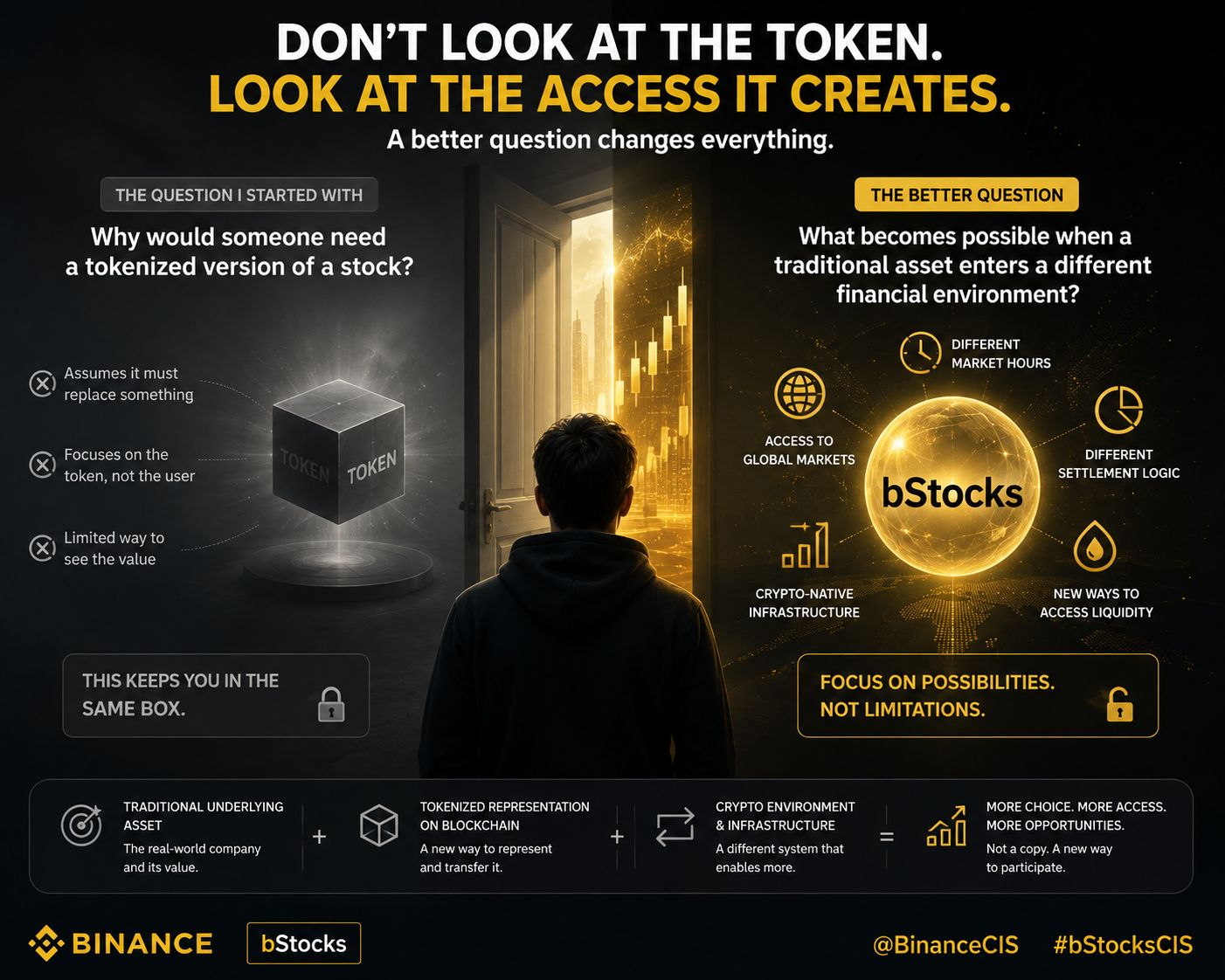
One thing I started noticing while learning about bStocks:
I was looking at the token first, instead of looking at the access it creates.
At first, I kept asking:
“Why would someone need a tokenized version of a stock?”
But that question already assumes the token has to replace something.
A better question is:
“What becomes possible when a traditional asset enters a different financial environment?”
That changed how I look at bStocks.
The interesting part isn't simply putting a familiar name on-chain.
It's the combination of a traditional underlying asset with crypto-native infrastructure.
Different market hours.
Different settlement logic.
Different ways of accessing liquidity.
So now I try not to ask whether tokenized stocks are “better” than traditional stocks.
I ask what they allow users to do that wasn't as simple before.
For me, that's a much more interesting way to understand RWA. 👀
@BinanceCIS #bstockscis
One thing I started noticing while learning about bStocks:
I was looking at the token first, instead of looking at the access it creates.
At first, I kept asking:
“Why would someone need a tokenized version of a stock?”
But that question already assumes the token has to replace something.
A better question is:
“What becomes possible when a traditional asset enters a different financial environment?”
That changed how I look at bStocks.
The interesting part isn't simply putting a familiar name on-chain.
It's the combination of a traditional underlying asset with crypto-native infrastructure.
Different market hours.
Different settlement logic.
Different ways of accessing liquidity.
So now I try not to ask whether tokenized stocks are “better” than traditional stocks.
I ask what they allow users to do that wasn't as simple before.
For me, that's a much more interesting way to understand RWA. 👀
@BinanceCIS #bstockscis
I was looking at the token first, instead of looking at the access it creates.
At first, I kept asking:
“Why would someone need a tokenized version of a stock?”
But that question already assumes the token has to replace something.
A better question is:
“What becomes possible when a traditional asset enters a different financial environment?”
That changed how I look at bStocks.
The interesting part isn't simply putting a familiar name on-chain.
It's the combination of a traditional underlying asset with crypto-native infrastructure.
Different market hours.
Different settlement logic.
Different ways of accessing liquidity.
So now I try not to ask whether tokenized stocks are “better” than traditional stocks.
I ask what they allow users to do that wasn't as simple before.
For me, that's a much more interesting way to understand RWA. 👀
@BinanceCIS #bstockscis
73
·
--
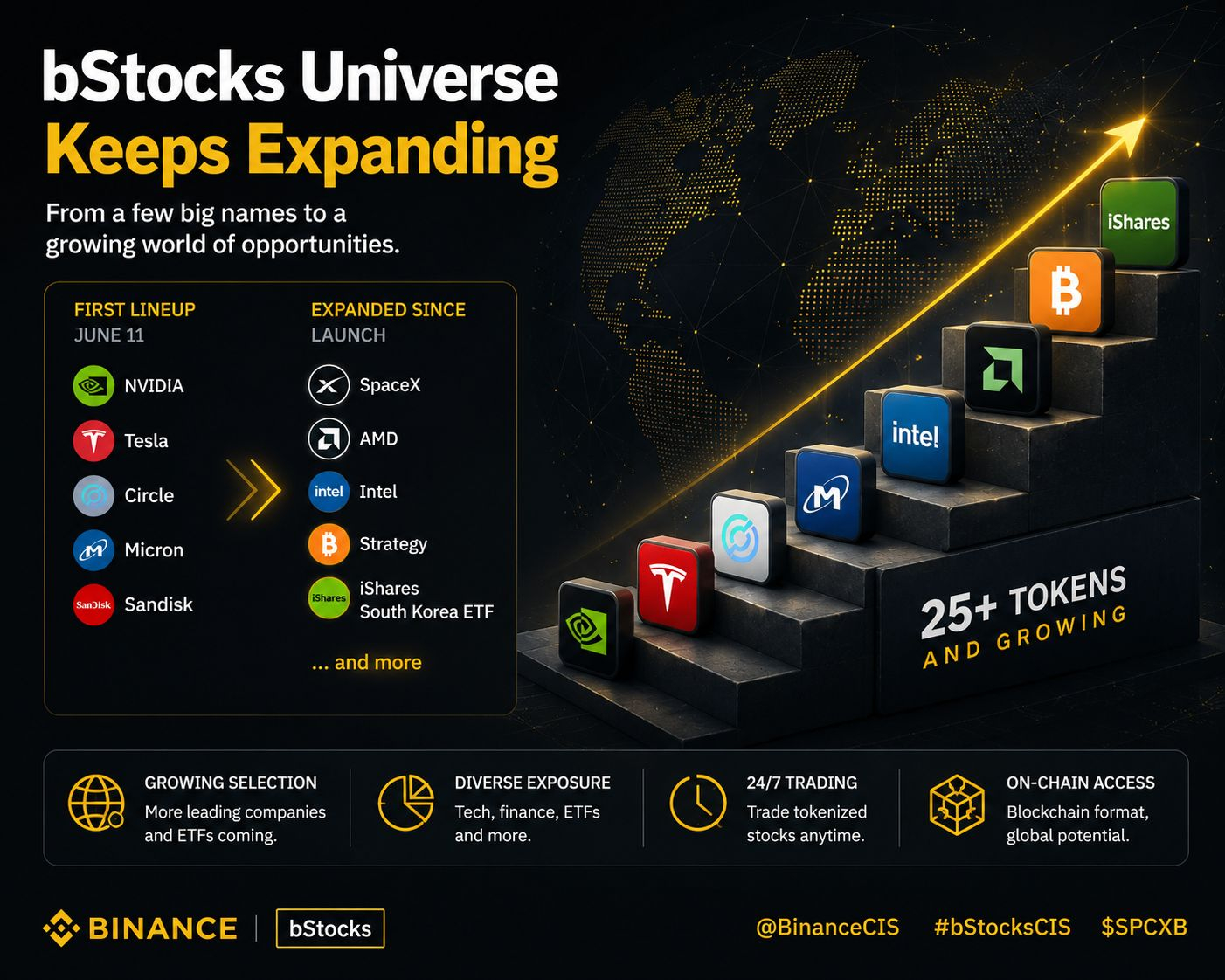
我喜歡 bStocks 的一點是:這個故事不僅僅關於前幾個 token。
有趣之處在於,選項擴展的速度非常快。你可以從熟悉的名字開始,然後突然在同一種 token 化格式裏看到完全不同的行業和公司。
對我來說,這讓 bStocks 比在列表裏簡單放着“股票 token”更有意思。
它感覺更像是一個正在成長的市場:傳統資產的選擇正在逐步被帶入一個基於區塊鏈的交易環境。
與其猜測下一個會漲(或動)的 token,我更想看看這個生態系統如何發展。👀
@BinanceCIS $SPCXB #bstockscis
我喜歡 bStocks 的一點是:這個故事不僅僅關於前幾個 token。
有趣之處在於,選項擴展的速度非常快。你可以從熟悉的名字開始,然後突然在同一種 token 化格式裏看到完全不同的行業和公司。
對我來說,這讓 bStocks 比在列表裏簡單放着“股票 token”更有意思。
它感覺更像是一個正在成長的市場:傳統資產的選擇正在逐步被帶入一個基於區塊鏈的交易環境。
與其猜測下一個會漲(或動)的 token,我更想看看這個生態系統如何發展。👀
@BinanceCIS $SPCXB #bstockscis
有趣之處在於,選項擴展的速度非常快。你可以從熟悉的名字開始,然後突然在同一種 token 化格式裏看到完全不同的行業和公司。
對我來說,這讓 bStocks 比在列表裏簡單放着“股票 token”更有意思。
它感覺更像是一個正在成長的市場:傳統資產的選擇正在逐步被帶入一個基於區塊鏈的交易環境。
與其猜測下一個會漲(或動)的 token,我更想看看這個生態系統如何發展。👀
@BinanceCIS $SPCXB #bstockscis
107
·
--
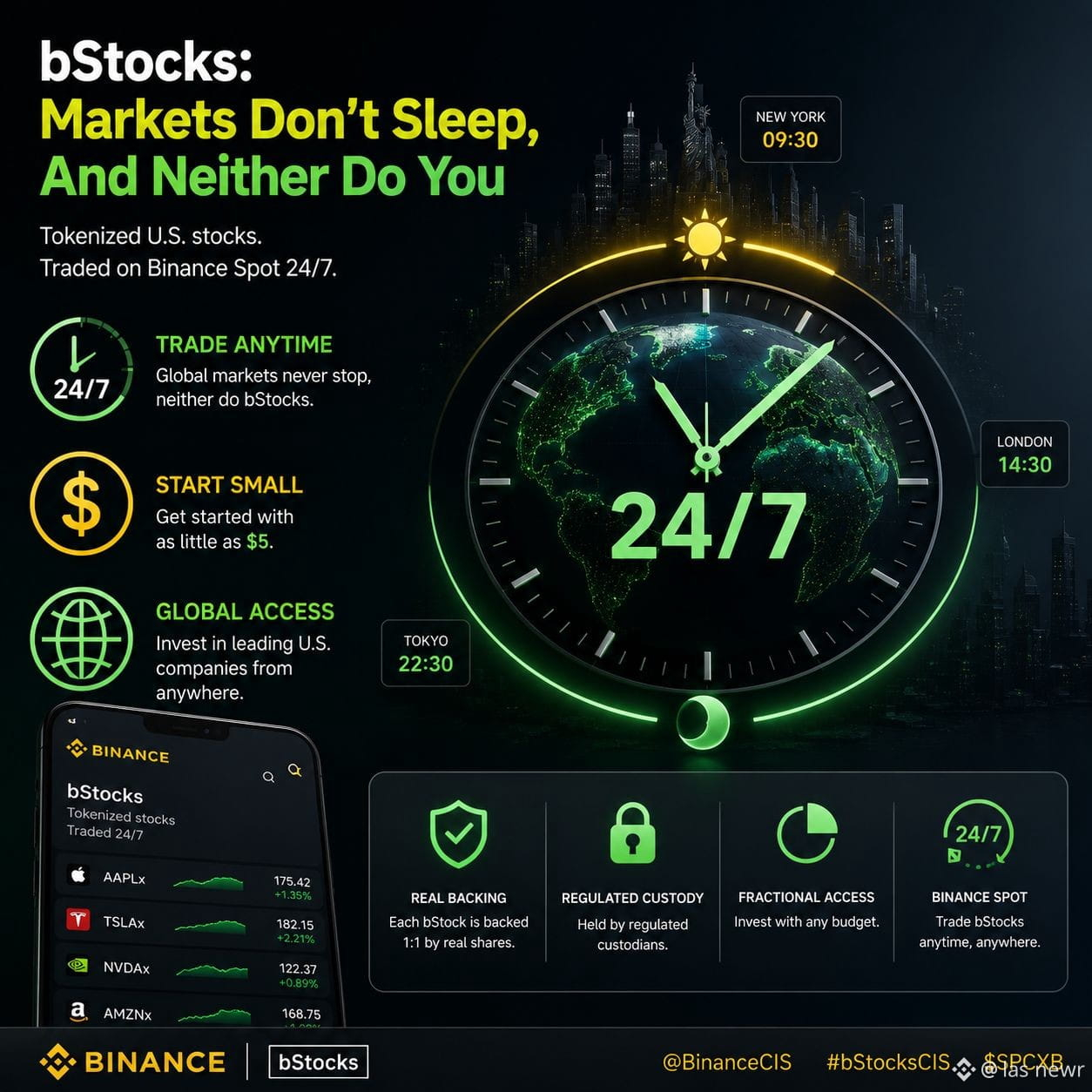
我一直在想一個和 bStocks 有關、很容易被忽略的點。
有趣的不僅是股票可以被表示在鏈上。更在於你與它們互動的方式發生了改變。
傳統市場有自己的交易時間。bStocks 可以在幣安現貨市場 24/7 交易,這讓整個體驗感覺更貼近加密貨幣市場。
而且分數化(fractional)形式也是我喜歡的另一個細節。你並不一定需要很大一筆資金才能開始並瞭解它是如何運作的。
對我來說,傳統資產 + 區塊鏈訪問的組合,正是值得關注的部分。👀📈
@BinanceCIS $SPCXB #bstockscis
我一直在想一個和 bStocks 有關、很容易被忽略的點。
有趣的不僅是股票可以被表示在鏈上。更在於你與它們互動的方式發生了改變。
傳統市場有自己的交易時間。bStocks 可以在幣安現貨市場 24/7 交易,這讓整個體驗感覺更貼近加密貨幣市場。
而且分數化(fractional)形式也是我喜歡的另一個細節。你並不一定需要很大一筆資金才能開始並瞭解它是如何運作的。
對我來說,傳統資產 + 區塊鏈訪問的組合,正是值得關注的部分。👀📈
@BinanceCIS $SPCXB #bstockscis
有趣的不僅是股票可以被表示在鏈上。更在於你與它們互動的方式發生了改變。
傳統市場有自己的交易時間。bStocks 可以在幣安現貨市場 24/7 交易,這讓整個體驗感覺更貼近加密貨幣市場。
而且分數化(fractional)形式也是我喜歡的另一個細節。你並不一定需要很大一筆資金才能開始並瞭解它是如何運作的。
對我來說,傳統資產 + 區塊鏈訪問的組合,正是值得關注的部分。👀📈
@BinanceCIS $SPCXB #bstockscis
106
·
--
查看翻譯
I've been reading more about bStocks lately, and one thing stands out to me.
People often focus on price first, but I think understanding how a product works is much more important. Tokenization isn't about replacing traditional finance — it's about connecting it with blockchain technology.
For me, that's the most interesting part of bStocks.
Do you usually learn about a product before trading it, or do you explore it afterwards? 🤔📚
@BinanceCIS
#bstockscis
I've been reading more about bStocks lately, and one thing stands out to me.
People often focus on price first, but I think understanding how a product works is much more important. Tokenization isn't about replacing traditional finance — it's about connecting it with blockchain technology.
For me, that's the most interesting part of bStocks.
Do you usually learn about a product before trading it, or do you explore it afterwards? 🤔📚
@BinanceCIS
#bstockscis
People often focus on price first, but I think understanding how a product works is much more important. Tokenization isn't about replacing traditional finance — it's about connecting it with blockchain technology.
For me, that's the most interesting part of bStocks.
Do you usually learn about a product before trading it, or do you explore it afterwards? 🤔📚
@BinanceCIS
#bstockscis

1
1
·
--
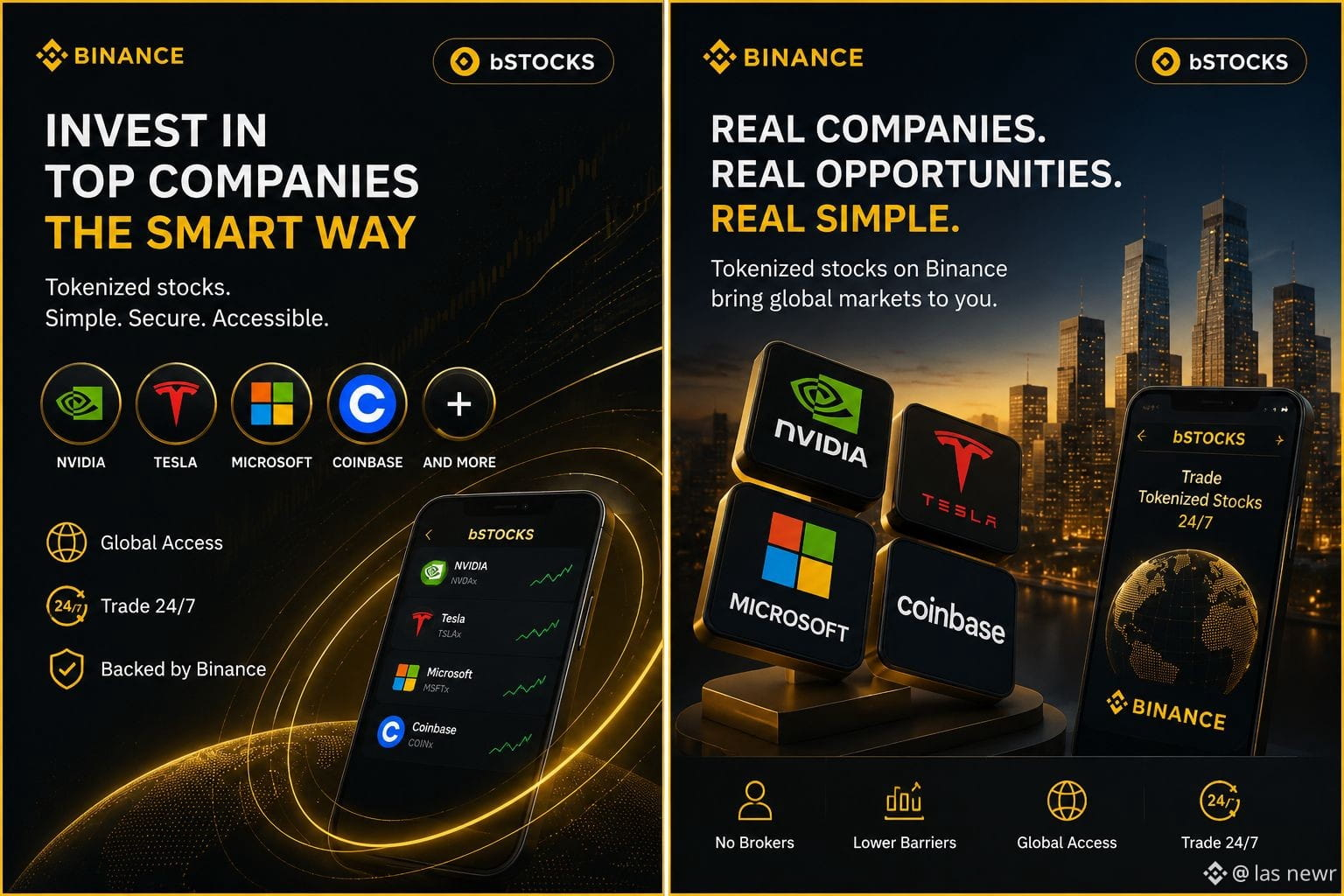
bStocks背後的理念非常有意思。
代幣化股票讓你更容易在單一平臺上追蹤並訪問全球一些最大的公司。對許多用戶來說,與使用多個服務相比,這會帶來更順暢的體驗。
技術讓投資變得越來越容易。
@BinanceCIS #bStocksCIS #Binance
bStocks背後的理念非常有意思。
代幣化股票讓你更容易在單一平臺上追蹤並訪問全球一些最大的公司。對許多用戶來說,與使用多個服務相比,這會帶來更順暢的體驗。
技術讓投資變得越來越容易。
@BinanceCIS #bStocksCIS #Binance
代幣化股票讓你更容易在單一平臺上追蹤並訪問全球一些最大的公司。對許多用戶來說,與使用多個服務相比,這會帶來更順暢的體驗。
技術讓投資變得越來越容易。
@BinanceCIS #bStocksCIS #Binance
1
85
·
--
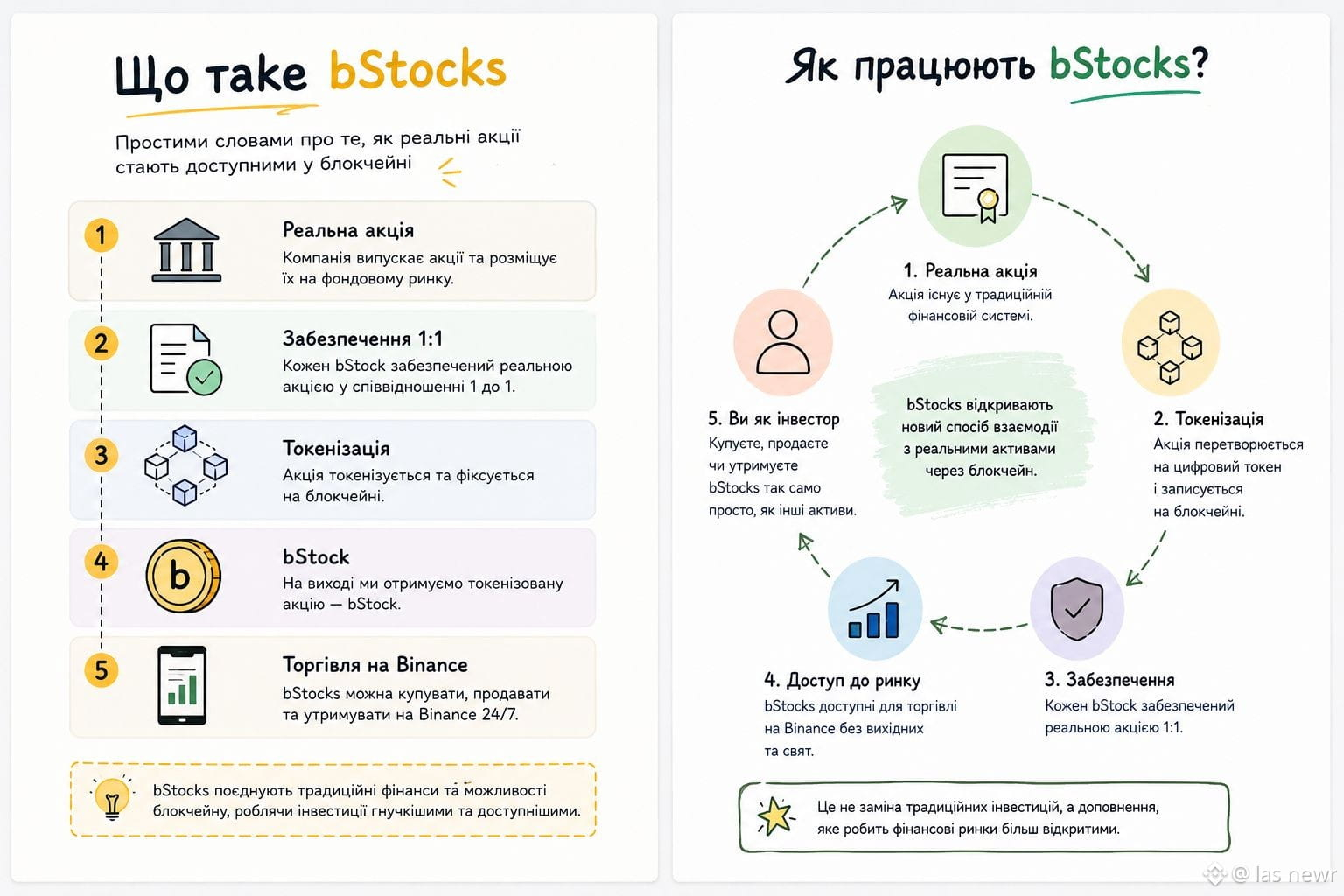
今天我在想,爲什麼代幣化(tokenization)這一主題變得越來越受歡迎。
我覺得其中一個原因,是試圖把熟悉的金融工具與區塊鏈的可能性結合起來。bStocks 正是以這種思路來實現:真實的股票以代幣形式呈現,從而可以通過 Binance 生態系統與它們進行交互。
對我來說,這並不是對傳統股票市場的替代,而是獲取資產的另一種形式。觀察這一方向如何發展,確實很有意思。
你們怎麼看待真實資產的代幣化?
@BinanceCIS $SPCXB #bStocks #bstockscis
今天我在想,爲什麼代幣化(tokenization)這一主題變得越來越受歡迎。
我覺得其中一個原因,是試圖把熟悉的金融工具與區塊鏈的可能性結合起來。bStocks 正是以這種思路來實現:真實的股票以代幣形式呈現,從而可以通過 Binance 生態系統與它們進行交互。
對我來說,這並不是對傳統股票市場的替代,而是獲取資產的另一種形式。觀察這一方向如何發展,確實很有意思。
你們怎麼看待真實資產的代幣化?
@BinanceCIS $SPCXB #bStocks #bstockscis
我覺得其中一個原因,是試圖把熟悉的金融工具與區塊鏈的可能性結合起來。bStocks 正是以這種思路來實現:真實的股票以代幣形式呈現,從而可以通過 Binance 生態系統與它們進行交互。
對我來說,這並不是對傳統股票市場的替代,而是獲取資產的另一種形式。觀察這一方向如何發展,確實很有意思。
你們怎麼看待真實資產的代幣化?
@BinanceCIS $SPCXB #bStocks #bstockscis
1
66
·
--
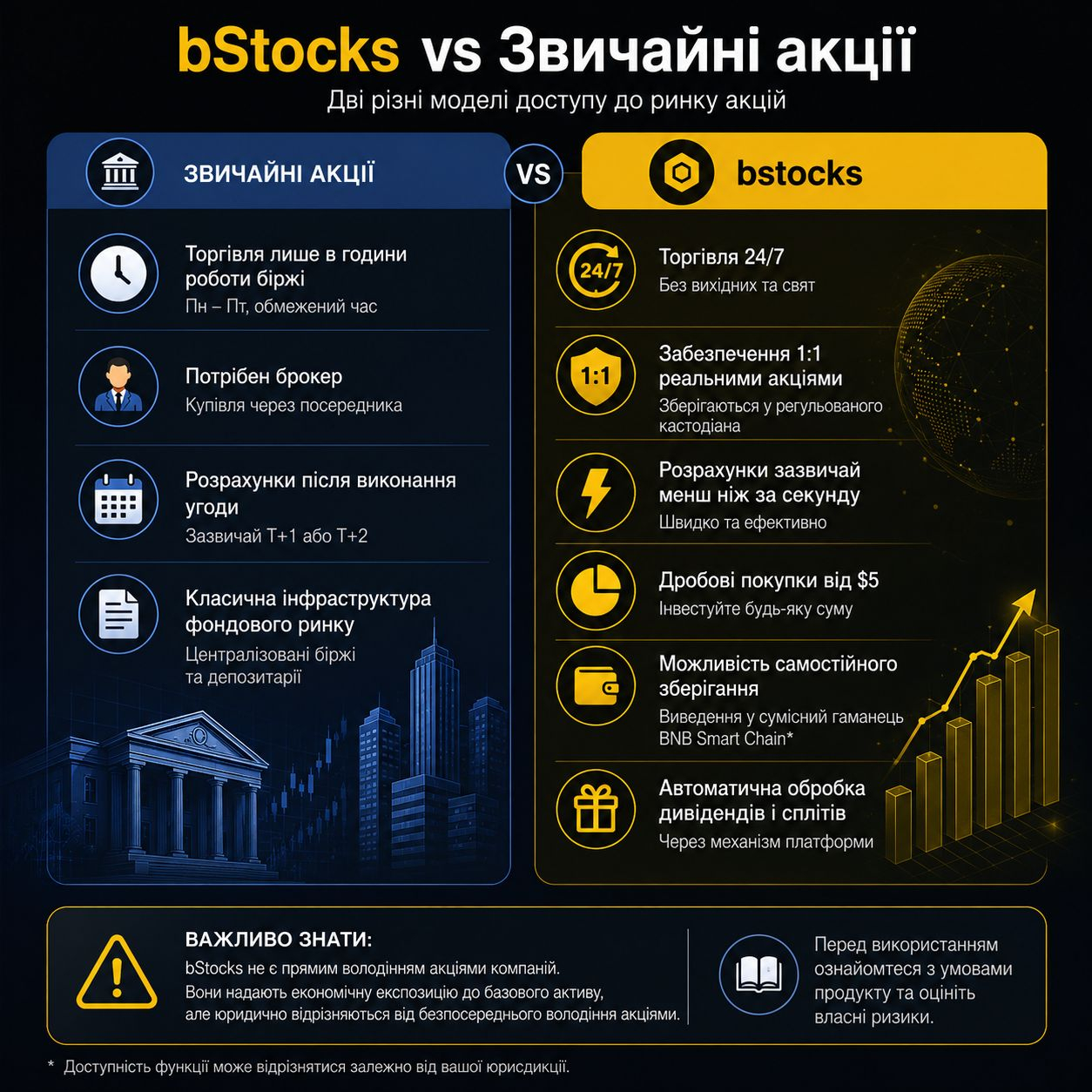
bStocks 與普通股票有何不同?簡單對比 👇
當我第一次聽說 bStocks 時,我以爲這只是“區塊鏈上的股票”。但實際上有一些重要的區別。
📊 普通股票 • 通過經紀商購買。 • 交易僅在證券交易所的營業時間內進行。 • 交易完成後,結算需要一定時間。 • 通過經紀商或託管機構的基礎設施進行保管。
🟡 bStocks • 這是代幣化的證券,由與之對應的股票 1:1 支持並由受監管的託管方持有。 • 交易可在 Binance 上 24/7 進行。 • 支持分割購買——可從較小金額開始。 • 代幣可在兼容的 BNB Smart Chain 錢包中提取(適用於支持的司法轄區)。 • 股票拆分和股息等公司行爲會根據平臺機制自動處理。
⚠️ 重要細節:bStocks 並不等同於直接持有公司股票。它們提供對基礎資產的經濟敞口,但在法律上與直接持有股票有所不同。
@BinanceCIS #bStocksCIS #SPCXB #bnb
bStocks 與普通股票有何不同?簡單對比 👇
當我第一次聽說 bStocks 時,我以爲這只是“區塊鏈上的股票”。但實際上有一些重要的區別。
📊 普通股票 • 通過經紀商購買。 • 交易僅在證券交易所的營業時間內進行。 • 交易完成後,結算需要一定時間。 • 通過經紀商或託管機構的基礎設施進行保管。
🟡 bStocks • 這是代幣化的證券,由與之對應的股票 1:1 支持並由受監管的託管方持有。 • 交易可在 Binance 上 24/7 進行。 • 支持分割購買——可從較小金額開始。 • 代幣可在兼容的 BNB Smart Chain 錢包中提取(適用於支持的司法轄區)。 • 股票拆分和股息等公司行爲會根據平臺機制自動處理。
⚠️ 重要細節:bStocks 並不等同於直接持有公司股票。它們提供對基礎資產的經濟敞口,但在法律上與直接持有股票有所不同。
@BinanceCIS #bStocksCIS #SPCXB #bnb
當我第一次聽說 bStocks 時,我以爲這只是“區塊鏈上的股票”。但實際上有一些重要的區別。
📊 普通股票 • 通過經紀商購買。 • 交易僅在證券交易所的營業時間內進行。 • 交易完成後,結算需要一定時間。 • 通過經紀商或託管機構的基礎設施進行保管。
🟡 bStocks • 這是代幣化的證券,由與之對應的股票 1:1 支持並由受監管的託管方持有。 • 交易可在 Binance 上 24/7 進行。 • 支持分割購買——可從較小金額開始。 • 代幣可在兼容的 BNB Smart Chain 錢包中提取(適用於支持的司法轄區)。 • 股票拆分和股息等公司行爲會根據平臺機制自動處理。
⚠️ 重要細節:bStocks 並不等同於直接持有公司股票。它們提供對基礎資產的經濟敞口,但在法律上與直接持有股票有所不同。
@BinanceCIS #bStocksCIS #SPCXB #bnb
1
68
登入以探索更多內容
加入幣安廣場中的全球加密貨幣用戶
⚡️ 獲取加密貨幣的最新和實用資訊。
💬 受到全球最大加密貨幣交易所的信任。
👍 發掘來自經過驗證創作者的真實見解。
電子郵件 / 電話號碼
熱門話題
亚马逊获Generac认股权证
85 次瀏覽
23 討論中
美聯儲加息那一晚,盤後跳得最猛的是一家做備用發電機的公司。亞馬遜跟 Generac 簽了長期供應協議,給它數據中心供應備用發電機組,2027、2028 年首批交付合計 24 億美元,消息一出股價盤後一度漲超四成。
真正有看頭的是這筆單子怎麼捆的。亞馬遜沒談折扣,直接拿了認股權證,行權價兩百美元出頭,比消息前的收盤價高出一截;股份按採購付款進度分批歸屬,掛鉤的採購總額上限 80 億美元。買得越多拿到的股越多,供應商擴產的節奏就跟亞馬遜機房擴建綁在了一塊。這種盤後暴漲最難受,白天掛的價根本喫不到,等隔夜跳空開盤再追,四成的肉還剩多少全看運氣。
備用電組交期本來就長,這批貨排到 2028 年,按期交付纔是後面要盯的事。
Cruise橘子哥
·0 人按讚
·93 次瀏覽
点阵图预示2026年再加息一次
62,709 次瀏覽
332 討論中
Robinhood将支持Circle的Arc网络
8,961 次瀏覽
48 討論中