

Flux I Decentralized Cloud Re-poster
349 貼文

Flux I Decentralized Cloud Re-poster
舉報
封鎖用戶
Empowering innovation through secure, decentralized cloud solutions, fostering a future of limitless connectivity and data freedom: https://t.co/oY3uehWW2d
0 關注
95 粉絲
57 點讚數
貼文
全部
影片
查看翻譯
FluxOS version 8.24 has officially rolled out. With this release, incoming applications on Flux gain a dedicated gateway, ensuring that all app registrations as well as modifications proceed through authenticated connections between ArcaneOS nodes. Before any application is registered, a quorum must give its approval. In addition, each node now compiles its chain index using an accelerated process. This milestone arrives just one week after version 8.23 introduced on-chain recording for node migrations.
FluxOS version 8.24 has officially rolled out. With this release, incoming applications on Flux gain a dedicated gateway, ensuring that all app registrations as well as modifications proceed through authenticated connections between ArcaneOS nodes. Before any application is registered, a quorum must give its approval. In addition, each node now compiles its chain index using an accelerated process. This milestone arrives just one week after version 8.23 introduced on-chain recording for node migrations.
70
查看翻譯
Release notes for each individual version are openly accessible to the public. Beginning with FluxOS v8.23.1, enterprise application specifications are stored in an encrypted state and unlock exclusively for their verified owner. Even though your operations run across hardware that belongs to others, the hosting and processing nodes are unable to open the files, ensuring the underlying description of your workload remains strictly in your hands.
Release notes for each individual version are openly accessible to the public. Beginning with FluxOS v8.23.1, enterprise application specifications are stored in an encrypted state and unlock exclusively for their verified owner. Even though your operations run across hardware that belongs to others, the hosting and processing nodes are unable to open the files, ensuring the underlying description of your workload remains strictly in your hands.

64
查看翻譯
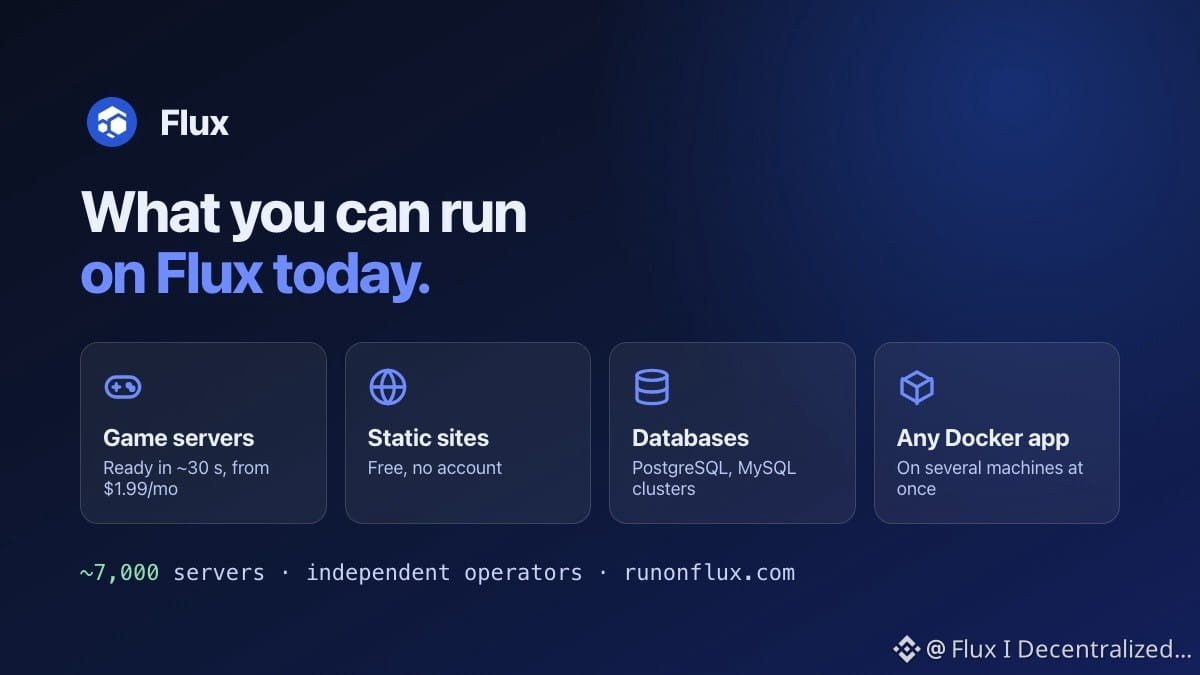
Powered by a global network of nearly 7,000 servers managed by independent operators, Flux offers a versatile environment for your hosting needs today. You can quickly launch a game server in roughly 30 seconds with pricing beginning at $1.99 per month. If you are looking to publish a static website without creating an account, you can do so completely free at http://drop.app.runonflux.io. Additionally, the network easily handles MySQL or PostgreSQL clusters, alongside any Docker application deployed redundantly across multiple machines at the same time to ensure constant uptime. Discover the possibilities at http://runonflux.com
Powered by a global network of nearly 7,000 servers managed by independent operators, Flux offers a versatile environment for your hosting needs today. You can quickly launch a game server in roughly 30 seconds with pricing beginning at $1.99 per month. If you are looking to publish a static website without creating an account, you can do so completely free at http://drop.app.runonflux.io. Additionally, the network easily handles MySQL or PostgreSQL clusters, alongside any Docker application deployed redundantly across multiple machines at the same time to ensure constant uptime. Discover the possibilities at http://runonflux.com
70
查看翻譯
FluxOS v8.23.0 officially launched on November 6, introducing several practical updates that node operators will want to note.
To start, tracking node relocations now relies directly on the blockchain's own ledger, with block height serving as the benchmark for evaluating any holds related to IP modifications. Resource management has also been strengthened, as component CPU restrictions are now strictly mandated instead of just requested. Alongside this, application storage volumes leverage direct I/O, ensuring that a single app cannot overwhelm the entire disk with traffic. Transparency sees an upgrade as well, with kernel taint flags being actively recorded so that an affected kernel cannot be mistaken for an untainted one. Finally, the software handles Bitcoin message signing without relying on bitcoinjs-message, removing an unnecessary dependency from the architecture.
You can explore the remaining details and technical documentation directly on the official release tag.
91
查看翻譯
Even on a standard Tuesday, over 6,900 active game servers operate smoothly across 56 countries, ensuring thousands of virtual worlds stay live while their owners attend to their daily work.
This milestone comes just twelve days after the previous update, marking continued growth for the games hub. The catalog now stands at 37 titles, featuring comprehensive sections dedicated to Killing Floor 2 and Icarus.
Every single server is powered by independent nodes and provides convenient in-browser management, including direct file access, backups, system restarts, and an integrated terminal.
63
在十月完成安全審查後,最新版本現已上線,適用於移動設備和網頁瀏覽器。
從本質上說,真正的審批意味着能夠清楚地閱讀屏幕上顯示的內容,因爲僅接受一個哈希值,就等於盲目簽名。SSP 2.2 通過在簽名前完整呈現請求,解決了這一問題。使用 @SSPWallet_io 推出的 Wallet 2.2 和 Key 2.2,錢包和密鑰的屏幕都會完整顯示類型化數據。這樣一來,你就可以直接使用個人密鑰覈對每筆交易,並通過六個單詞完成配對認證。
此外,現在所有轉出的 Zcash 交易都採用 v5 格式,滿足了 NU7 於 11 月 5 日提出的要求。
在十月完成安全審查後,最新版本現已上線,適用於移動設備和網頁瀏覽器。
從本質上說,真正的審批意味着能夠清楚地閱讀屏幕上顯示的內容,因爲僅接受一個哈希值,就等於盲目簽名。SSP 2.2 通過在簽名前完整呈現請求,解決了這一問題。使用 @SSPWallet_io 推出的 Wallet 2.2 和 Key 2.2,錢包和密鑰的屏幕都會完整顯示類型化數據。這樣一來,你就可以直接使用個人密鑰覈對每筆交易,並通過六個單詞完成配對認證。
此外,現在所有轉出的 Zcash 交易都採用 v5 格式,滿足了 NU7 於 11 月 5 日提出的要求。
從本質上說,真正的審批意味着能夠清楚地閱讀屏幕上顯示的內容,因爲僅接受一個哈希值,就等於盲目簽名。SSP 2.2 通過在簽名前完整呈現請求,解決了這一問題。使用 @SSPWallet_io 推出的 Wallet 2.2 和 Key 2.2,錢包和密鑰的屏幕都會完整顯示類型化數據。這樣一來,你就可以直接使用個人密鑰覈對每筆交易,並通過六個單詞完成配對認證。
此外,現在所有轉出的 Zcash 交易都採用 v5 格式,滿足了 NU7 於 11 月 5 日提出的要求。
78
FluxOS 8.23.1 版本帶來了節點維護和數據隱私方面的重要更新。由於未加密的純文本在傳輸過程中的任何環節都容易泄露,此版本中的企業應用規範徹底杜絕了純文本傳輸。此外,舊版節點的日常清理流程也得到了簡化。如果某個節點當前託管了尚未註冊的企業應用,系統將自動將其清除。操作人員只需應用更新,無需進行任何手動干預,清理過程便會自動執行。
FluxOS 8.23.1 版本帶來了節點維護和數據隱私方面的重要更新。由於未加密的純文本在傳輸過程中的任何環節都容易泄露,此版本中的企業應用規範徹底杜絕了純文本傳輸。此外,舊版節點的日常清理流程也得到了簡化。如果某個節點當前託管了尚未註冊的企業應用,系統將自動將其清除。操作人員只需應用更新,無需進行任何手動干預,清理過程便會自動執行。
67
查看翻譯
If you manage Flux nodes, please upgrade directly to version 8.23.1.
Following the initial release of FluxOS v8.23.0 on Nov 6, version 8.23.1 was delivered just hours afterward. In the 8.23.1 build, enterprise application specifications contain zero plain text, ensuring these specifications remain completely unreadable when at rest. Furthermore, legacy nodes will no longer maintain unregistered enterprise applications.
Following the initial release of FluxOS v8.23.0 on Nov 6, version 8.23.1 was delivered just hours afterward. In the 8.23.1 build, enterprise application specifications contain zero plain text, ensuring these specifications remain completely unreadable when at rest. Furthermore, legacy nodes will no longer maintain unregistered enterprise applications.
1
94
Flux Games 很高興地宣佈,《Killing Floor 2》的專用服務器託管服務現已正式上線。玩家羣組可以體驗專爲六人小隊打造的激烈合作生存戰,也可以在對抗生存模式中將戰場擴展至十二名玩家。
管理遊戲環境輕鬆無憂,無需使用任何 SSH 命令。所有配置選項都可通過簡潔的數字表單進行設置,並配有專用地圖循環編輯器、實時控制檯監控、自動備份,以及一鍵踢出或封禁玩家的工具。
服務器會持續在線,即使主要主機退出登錄,你們的羣組也能夜夜暢玩,體驗始終如一。服務器會可靠地保留你們偏好的難度、精心安排的地圖輪換,以及隊伍已下載的所有 Steam 創意工坊地圖。需要維護時,更新會推遲到服務器內沒有任何玩家爲止。由於《Killing Floor 2》不使用存檔文件,必要的重啓只會讓你們失去當前正在進行的這一波進度。
訂閱套餐每月 5.49 美元起,新用戶可免費體驗第一週。
管理遊戲環境輕鬆無憂,無需使用任何 SSH 命令。所有配置選項都可通過簡潔的數字表單進行設置,並配有專用地圖循環編輯器、實時控制檯監控、自動備份,以及一鍵踢出或封禁玩家的工具。
服務器會持續在線,即使主要主機退出登錄,你們的羣組也能夜夜暢玩,體驗始終如一。服務器會可靠地保留你們偏好的難度、精心安排的地圖輪換,以及隊伍已下載的所有 Steam 創意工坊地圖。需要維護時,更新會推遲到服務器內沒有任何玩家爲止。由於《Killing Floor 2》不使用存檔文件,必要的重啓只會讓你們失去當前正在進行的這一波進度。
訂閱套餐每月 5.49 美元起,新用戶可免費體驗第一週。
78
FluxOS v8.23.0 現已正式發佈,爲運營者帶來四項重要改進。
應用程序卷現在採用直接 I/O,顯著提升了存儲性能。通過將讀寫操作直接發送到物理磁盤,即使在高負載下,操作也能保持穩定、響應迅速。
網絡穩定性也有所提升,這意味着路由器上的 UPnP 租約續訂將不再中斷節點連接。
爲確保整個網絡的時間保持一致,現在直接根據區塊高度確定 IP 變更等待時間。區塊高度爲所有節點提供了統一的去中心化時鐘。
此外,硬件轉移現在會在鏈上進行認證,確保物理設備遷移時驗證信息依然安全可靠。
我們鼓勵您今天就更新節點。
FluxOS v8.23.0 現已正式發佈,爲運營者帶來四項重要改進。
應用程序卷現在採用直接 I/O,顯著提升了存儲性能。通過將讀寫操作直接發送到物理磁盤,即使在高負載下,操作也能保持穩定、響應迅速。
網絡穩定性也有所提升,這意味着路由器上的 UPnP 租約續訂將不再中斷節點連接。
爲確保整個網絡的時間保持一致,現在直接根據區塊高度確定 IP 變更等待時間。區塊高度爲所有節點提供了統一的去中心化時鐘。
此外,硬件轉移現在會在鏈上進行認證,確保物理設備遷移時驗證信息依然安全可靠。
我們鼓勵您今天就更新節點。
應用程序卷現在採用直接 I/O,顯著提升了存儲性能。通過將讀寫操作直接發送到物理磁盤,即使在高負載下,操作也能保持穩定、響應迅速。
網絡穩定性也有所提升,這意味着路由器上的 UPnP 租約續訂將不再中斷節點連接。
爲確保整個網絡的時間保持一致,現在直接根據區塊高度確定 IP 變更等待時間。區塊高度爲所有節點提供了統一的去中心化時鐘。
此外,硬件轉移現在會在鏈上進行認證,確保物理設備遷移時驗證信息依然安全可靠。
我們鼓勵您今天就更新節點。
113
新增三款生存遊戲後,Flux 遊戲中心現已收錄 35 款遊戲。玩家可以直接在統一儀表板中輕鬆管理備份、重啓服務器和配置。
在這些更新中,Flux 將 SCUM 的全部 437 項服務器設置整合到一個表單中,方便你直接通過瀏覽器訪問。對於《森林》,現已提供五個獨立的存檔位,讓你在完整保留原有世界的同時,開啓全新的冒險。與此同時,《Abiotic Factor》支持 PC、PlayStation 和 Xbox 跨平臺遊玩。
新增三款生存遊戲後,Flux 遊戲中心現已收錄 35 款遊戲。玩家可以直接在統一儀表板中輕鬆管理備份、重啓服務器和配置。
在這些更新中,Flux 將 SCUM 的全部 437 項服務器設置整合到一個表單中,方便你直接通過瀏覽器訪問。對於《森林》,現已提供五個獨立的存檔位,讓你在完整保留原有世界的同時,開啓全新的冒險。與此同時,《Abiotic Factor》支持 PC、PlayStation 和 Xbox 跨平臺遊玩。
在這些更新中,Flux 將 SCUM 的全部 437 項服務器設置整合到一個表單中,方便你直接通過瀏覽器訪問。對於《森林》,現已提供五個獨立的存檔位,讓你在完整保留原有世界的同時,開啓全新的冒險。與此同時,《Abiotic Factor》支持 PC、PlayStation 和 Xbox 跨平臺遊玩。
45
一份簡單的文本文件如今正在塑造一項適用於整個網絡的新授權標準。網站管理者可以在 robots.txt 中使用 IETF 策略令牌,在一個統一的標準位置聲明他們對數據採集的偏好;OpenAI、Anthropic、Google 和 Microsoft 已同意遵守這一標準。不過,這套同意機制出臺時,自動化抓取早已興起,尤其值得注意的是,Microsoft 和 Google 要到 2027 年纔會採用它。
基於許可構建的系統,只有在參與完全出於自願時才能發揮最佳效果。Flux 從第一天起就貫徹了這一原則,參與者必須主動選擇加入。其去中心化基礎設施依託分佈在 50 多個國家的獨立節點,每個系統都是由其所有者主動且有意連接的。
基於許可構建的系統,只有在參與完全出於自願時才能發揮最佳效果。Flux 從第一天起就貫徹了這一原則,參與者必須主動選擇加入。其去中心化基礎設施依託分佈在 50 多個國家的獨立節點,每個系統都是由其所有者主動且有意連接的。
67
如果你對改進 Flux、FluxCloud、@zelcore_io 或 @SSPWallet_io 有任何建議,只要這些建議最終得以實現,你就可以通過與我們分享來獲得獎勵。
如需參與,請前往 Flux Discord,並在 #feature-requests 頻道提交你的想法。每篇帖子請只提出一項建議,並詳細說明你希望達成的目標以及目前遇到的障礙。社區成員可以爲自己支持的提案投票,我們的團隊會每月評估得票最高的創意。
每當某項建議的功能正式上線,原始提案者將獲得“Idea Shipped”角色、在正式發佈公告中受到表彰,並於次月月初獲贈 25 FLUX。請注意,每人每月獲得的獎勵最多爲 500 FLUX。此外,內部員工和承包商不符合領取獎勵的資格。
你會選擇立即着手解決哪一項具體改進?
如需參與,請前往 Flux Discord,並在 #feature-requests 頻道提交你的想法。每篇帖子請只提出一項建議,並詳細說明你希望達成的目標以及目前遇到的障礙。社區成員可以爲自己支持的提案投票,我們的團隊會每月評估得票最高的創意。
每當某項建議的功能正式上線,原始提案者將獲得“Idea Shipped”角色、在正式發佈公告中受到表彰,並於次月月初獲贈 25 FLUX。請注意,每人每月獲得的獎勵最多爲 500 FLUX。此外,內部員工和承包商不符合領取獎勵的資格。
你會選擇立即着手解決哪一項具體改進?

105
過去兩天,我們已推出三項獨立的軟體更新,實施了十月份安全性審查中確認的解決方案。
在行動裝置與桌面平台上,@zelcore_io 的 Zelcore 8.40.1 現在會將每筆兌換與傳送交易統一為單一的網路確認狀態。
為了提供裝置層級的保護,SSP Key v2.2.1 會在執行簽章前,於硬體上獨立重新計算摘要。
此外,@SSPWallet_io 的 2.2.1 版現在會依序處理 dApp 請求,一次處理一項,並對任何後續嘗試回覆 BUSY,以避免與正在進行中的簽章重疊。
版本資訊:
過去兩天,我們已推出三項獨立的軟體更新,實施了十月份安全性審查中確認的解決方案。
在行動裝置與桌面平台上,@zelcore_io 的 Zelcore 8.40.1 現在會將每筆兌換與傳送交易統一為單一的網路確認狀態。
為了提供裝置層級的保護,SSP Key v2.2.1 會在執行簽章前,於硬體上獨立重新計算摘要。
此外,@SSPWallet_io 的 2.2.1 版現在會依序處理 dApp 請求,一次處理一項,並對任何後續嘗試回覆 BUSY,以避免與正在進行中的簽章重疊。
版本資訊:
在行動裝置與桌面平台上,@zelcore_io 的 Zelcore 8.40.1 現在會將每筆兌換與傳送交易統一為單一的網路確認狀態。
為了提供裝置層級的保護,SSP Key v2.2.1 會在執行簽章前,於硬體上獨立重新計算摘要。
此外,@SSPWallet_io 的 2.2.1 版現在會依序處理 dApp 請求,一次處理一項,並對任何後續嘗試回覆 BUSY,以避免與正在進行中的簽章重疊。
版本資訊:
52
Flux Games 很高興宣布推出 Icarus 主機託管服務。
建立一個勘探據點是一項艱鉅的工程,從設立前哨站、開闢採礦路線,到建造能抵禦猛烈風暴的基地,無一不需要投入心力。在傳統的點對點遊玩模式中,遊戲世界由一台電腦在本機託管,玩家一登出,世界就會隨之關閉。使用專屬 Icarus 伺服器,遊戲連線便能全天候保持運作,最多可容納 8 位勘探者,讓團隊中的任何人都能在方便時加入。
無須使用 SSH 或 SteamCMD,就能在約 30 秒內啟用你的遊戲環境。管理員可透過簡單明瞭的表單管理所有伺服器參數、自由切換勘探任務並完整支援上傳與下載、透過 SteamID 授予管理員權限,還能享有全自動備份與遊戲更新服務。
服務遍及 50 多個國家,每月訂閱費用最低只要 8.49 美元。此外,新用戶可免費體驗第一週。
立即取得:

40
代理程式的運作位置,最終決定了誰能保管它的提示詞、日誌和重要金鑰。即使人工智慧排名不斷變動,這個底層環境依然至關重要。就在上週,兩款主要的前沿模型在兩天內相繼推出:Gemini 4 Carbon 在 Artificial Analysis Intelligence Index 中名列第一,而 Mistral 的 Le Chonk 則在開放權重模型中排名第五。這些排名很快肯定又會改變。你可以自由選用本週最符合需求的模型,並在有新版本推出時隨時切換,同時讓你的核心代理程式留在原本部署的位置。
去中心化託管已逐漸受到採用。11 月的普查記錄到 200 多個在 Flux 節點上運行的自架代理程式,其中包括 179 個 OpenClaw 執行個體和 31 個 Hermes 執行個體。
部署自己的環境很簡單:
將代理程式封裝成應用程式,並完成網路註冊。
FluxOS 會負責將應用程式部署到遍布 50 多個國家的自主節點上。
透過 FluxOS v8.18 提供的即時應用程式日誌,查看運作狀況。
妥善保護憑證的隱私,因為模型金鑰只會留在你自己的應用程式設定中。
今天選擇你偏好的引擎,等有其他選項出現時再換用,而你的代理程式會持續穩定地留在你指定的位置。
去中心化託管已逐漸受到採用。11 月的普查記錄到 200 多個在 Flux 節點上運行的自架代理程式,其中包括 179 個 OpenClaw 執行個體和 31 個 Hermes 執行個體。
部署自己的環境很簡單:
將代理程式封裝成應用程式,並完成網路註冊。
FluxOS 會負責將應用程式部署到遍布 50 多個國家的自主節點上。
透過 FluxOS v8.18 提供的即時應用程式日誌,查看運作狀況。
妥善保護憑證的隱私,因為模型金鑰只會留在你自己的應用程式設定中。
今天選擇你偏好的引擎,等有其他選項出現時再換用,而你的代理程式會持續穩定地留在你指定的位置。
協助我們找出 Flux 生態系中的問題,即可賺取 FLUX 獎勵。範圍包括 Zelcore @zelcore_io、SSP @SSPWallet_io、FluxCloud,以及其他任何 Flux 服務。您提交的問題經修復後,即可獲得 FLUX 作為獎勵。
如要參加,請前往 Flux 官方 Discord 的 bug-reports 頻道,並為每個問題分別建立專屬貼文。提交內容必須詳細說明問題所在的產品及其版本、使用的硬體裝置、執行操作的確切順序、預期結果與實際行為的差異,並附上螢幕截圖。為保護隱私,請務必模糊處理圖片中的任何錢包地址和帳戶餘額。
獎勵與 Bug Hunter 身分僅授予最先提交某項錯誤、且該錯誤之後經由我們團隊修復的人。獎勵金額依嚴重程度而定:輕微問題可獲得 10 FLUX,一般問題可獲得 25 FLUX,重大問題則可獲得 100 FLUX。所有獎勵都會在修復程式部署後的次月發放。請注意,每位參與者每月的獎勵上限為 500 FLUX;官方團隊成員和承包商不適用此計畫。
如發現任何與安全性相關的漏洞,請勿在公開頻道分享詳情。請直接寄送電子郵件至 security@runonflux.com,交由我們依照另一項安全漏洞懸賞計畫進行評估;該計畫提供最高 10,000 FLUX 的獎勵。
重要的安全提醒:Flux 團隊成員絕不會向您索取密碼、私鑰或助記詞。
84
就在首次區塊獎勵減半的當月,Flux 生態系在各方面都締造了亮眼的營運里程碑。根據 11 月普查,目前有 2,298 個活躍應用程式在 Flux 上運作,較 10 月增加 20%,總數也約為 9 月白皮書所記錄的兩倍。
基礎設施同樣穩健成長,節點數達到 6,912 個,所有層級的數量皆有所增加。此外,私人基礎設施目前占整個網路的 58%。
網路活動有很大一部分來自遊戲,1,219 個遊戲伺服器占所有上線應用程式的 53%。其中,Dragonwilds 單獨就有 692 個伺服器。平台上的去中心化智慧也日益普及,目前託管超過 200 個自架 AI 代理,包括 179 個 OpenClaw 執行個體,以及 31 個 Hermes 部署。
基礎設施同樣穩健成長,節點數達到 6,912 個,所有層級的數量皆有所增加。此外,私人基礎設施目前占整個網路的 58%。
網路活動有很大一部分來自遊戲,1,219 個遊戲伺服器占所有上線應用程式的 53%。其中,Dragonwilds 單獨就有 692 個伺服器。平台上的去中心化智慧也日益普及,目前託管超過 200 個自架 AI 代理,包括 179 個 OpenClaw 執行個體,以及 31 個 Hermes 部署。

Flux Games 現已正式提供《森林》的伺服器託管服務。在一般合作模式中,遊戲世界會存放在主機玩家的電腦上,一旦該玩家登出,遊戲就會完全停止。不過,使用專用伺服器便能讓島嶼持續運作,並供整個團隊隨時連線,不受誰在線上的影響。
價格從每月 $6.49 起,可容納 4 至 8 名玩家,您也可以隨時提高人數上限。此外,新用戶可享首週完全免費。伺服器部署速度極快,約 30 秒即可完成。
您可以使用五個存檔欄位管理冒險進度,建立不同難度的新世界,或順暢地上傳現有的合作遊戲進度。伺服器管理介面十分易於使用,所有設定都能直接透過網頁表單完成,完全不必使用 SSH 或 SteamCMD。
使用管理員密碼即可執行 /kick、/ban 和 /save 等重要指令。服務也提供自動備份、每日重新啟動、全面的 DDoS 防護,以及遍布 50 多個國家的全球節點。為確保遊戲始終保持最新版本,系統每 30 分鐘便會檢查 Steam,並在伺服器空無玩家時自動重新啟動,以套用新版遊戲。
44
Drop 現已正式向大眾開放。您可以享受由 Flux 提供支援的免費靜態網站代管服務,無需註冊帳戶或提供電子郵件地址。
您的代管內容會完全隔離,並安全地複製到多個 Flux 節點,以確保服務可靠。平台支援上傳最大 50 MiB 的檔案,或最多 5,000 個個別檔案。如果您希望將特定網頁設為私人頁面,只要設定密碼即可輕鬆限制存取。
讓您的網站上線非常簡單。只要將 ZIP 壓縮檔、完整資料夾或單一 HTML 檔案直接拖曳到頁面上,系統就會立即提供一個位於 http://drop.app.runonflux.io 的有效連結。
新建立的連結一開始會維持有效 7 天。若要確保您的頁面持續開放,只要認領該連結即可。
您的代管內容會完全隔離,並安全地複製到多個 Flux 節點,以確保服務可靠。平台支援上傳最大 50 MiB 的檔案,或最多 5,000 個個別檔案。如果您希望將特定網頁設為私人頁面,只要設定密碼即可輕鬆限制存取。
讓您的網站上線非常簡單。只要將 ZIP 壓縮檔、完整資料夾或單一 HTML 檔案直接拖曳到頁面上,系統就會立即提供一個位於 http://drop.app.runonflux.io 的有效連結。
新建立的連結一開始會維持有效 7 天。若要確保您的頁面持續開放,只要認領該連結即可。

76
登入以探索更多內容
加入幣安廣場中的全球加密貨幣用戶
⚡️ 獲取加密貨幣的最新和實用資訊。
💬 受到全球最大加密貨幣交易所的信任。
👍 發掘來自經過驗證創作者的真實見解。
電子郵件 / 電話號碼