

Zarrar_X 1
877 貼文

Zarrar_X 1
舉報
封鎖用戶
DeFi Researcher || Crypto Analyst || Web3 explorer || one chart at a time.
0 關注
60 粉絲
121 點讚數
貼文
·
--
查看翻譯
U.S. Pension Funds Could Sell $33B in Stocks.
Goldman Sachs estimates U.S. pension funds could sell roughly $33 billion in equities as September comes to an end. The projected flow ranks in the 98th percentile of Goldman’s data going back to 2000, making it an unusually large expected rebalancing flow.
The figure is a projection, not a confirmed $33 billion sell-off, and the selling is tied to month-end portfolio rebalancing. Goldman also estimates commodity trading advisors could buy about $11.5 billion in global stocks if markets remain broadly flat.
$BTC $BNB #BNBChain# #BTC Price Analysis# #Macro Insights#
U.S. Pension Funds Could Sell $33B in Stocks.
Goldman Sachs estimates U.S. pension funds could sell roughly $33 billion in equities as September comes to an end. The projected flow ranks in the 98th percentile of Goldman’s data going back to 2000, making it an unusually large expected rebalancing flow.
The figure is a projection, not a confirmed $33 billion sell-off, and the selling is tied to month-end portfolio rebalancing. Goldman also estimates commodity trading advisors could buy about $11.5 billion in global stocks if markets remain broadly flat.
$BTC $BNB #BNBChain# #BTC Price Analysis# #Macro Insights#
Goldman Sachs estimates U.S. pension funds could sell roughly $33 billion in equities as September comes to an end. The projected flow ranks in the 98th percentile of Goldman’s data going back to 2000, making it an unusually large expected rebalancing flow.
The figure is a projection, not a confirmed $33 billion sell-off, and the selling is tied to month-end portfolio rebalancing. Goldman also estimates commodity trading advisors could buy about $11.5 billion in global stocks if markets remain broadly flat.
$BTC $BNB #BNBChain# #BTC Price Analysis# #Macro Insights#

·
--
查看翻譯
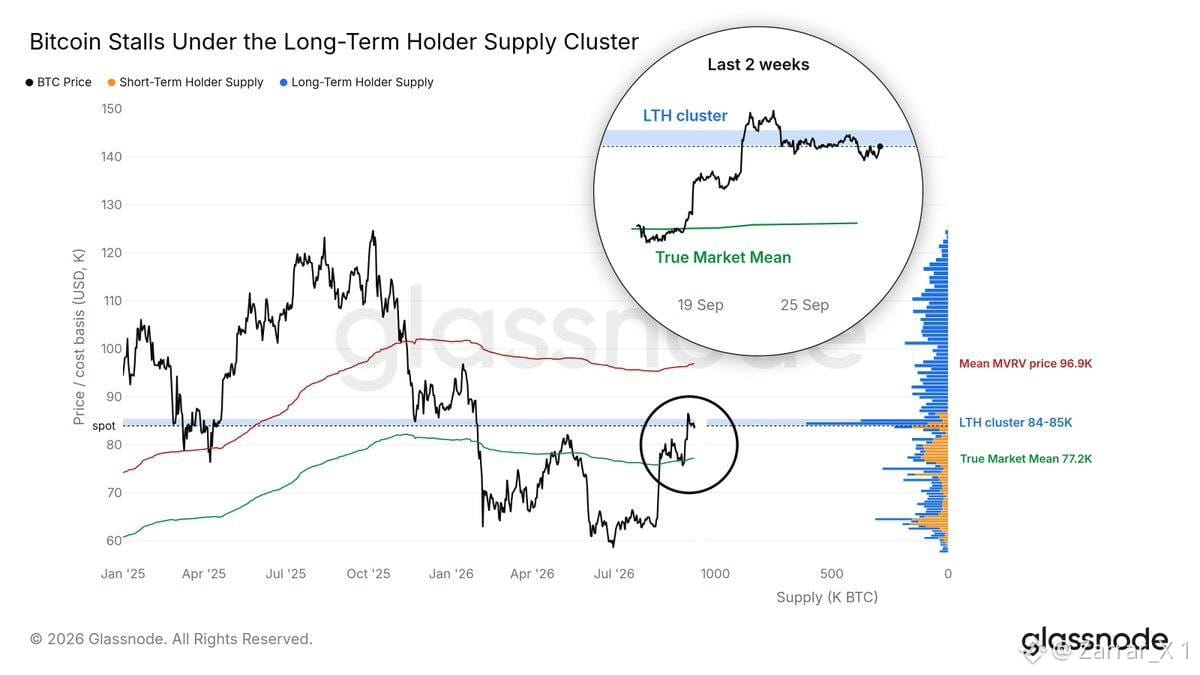
$BTC Faces Heavy Supply at $84K–$85K.
Bitcoin is currently stalled beneath its strongest supply cluster, with a large concentration of long-term holder coins positioned around the $84,000–$85,000 range. This area represents the largest concentration of long-term holder cost basis currently sitting above price.
A clean breakout alone may not be enough. BTC would need to break and hold above $84K–$85K to confirm that this supply is being absorbed and give the current rally room to extend higher. A rejection from the zone would keep the market trapped below the key overhead resistance.
#BTC Price Analysis# #Macro Insights# #BTC
$BTC Faces Heavy Supply at $84K–$85K.
Bitcoin is currently stalled beneath its strongest supply cluster, with a large concentration of long-term holder coins positioned around the $84,000–$85,000 range. This area represents the largest concentration of long-term holder cost basis currently sitting above price.
A clean breakout alone may not be enough. BTC would need to break and hold above $84K–$85K to confirm that this supply is being absorbed and give the current rally room to extend higher. A rejection from the zone would keep the market trapped below the key overhead resistance.
#BTC Price Analysis# #Macro Insights# #BTC
Bitcoin is currently stalled beneath its strongest supply cluster, with a large concentration of long-term holder coins positioned around the $84,000–$85,000 range. This area represents the largest concentration of long-term holder cost basis currently sitting above price.
A clean breakout alone may not be enough. BTC would need to break and hold above $84K–$85K to confirm that this supply is being absorbed and give the current rally room to extend higher. A rejection from the zone would keep the market trapped below the key overhead resistance.
#BTC Price Analysis# #Macro Insights# #BTC
8
·
--
查看翻譯
The Path to SafePal X1 Just Got a Lot Simpler.
Good news for everyone eyeing the SafePal X1 in Flight Deals.
The $200 eligible cross-chain swap volume requirement has been removed. Now all you need is one eligible cross-chain swap, 2,000 Spendable Miles, and the SafePal crew mission completed.
Why SafePal X1 is worth going for
SafePal X1 is a hardware wallet built for serious crypto storage. Private keys stay offline, transactions are signed through the hardware device, and users can manage assets across 200 plus blockchains through the SafePal app. Non-custodial, stylish, and built to keep you in full control of your assets.
How to unlock it:
– Complete the SafePal crew mission
– Make at least one eligible cross-chain swap
– Hold 2,000 Spendable Miles
The hardware wallet ships after the campaign ends.
Flight Deals refresh every Tuesday, check the board before this week's lineup changes.
– Join the Campaign and Claim SafePal X1 : https://cross-chain.ston.fi/
$ASTER $ETH #Macro Insights# #Altcoin Season# #Bullish
The Path to SafePal X1 Just Got a Lot Simpler.
Good news for everyone eyeing the SafePal X1 in Flight Deals.
The $200 eligible cross-chain swap volume requirement has been removed. Now all you need is one eligible cross-chain swap, 2,000 Spendable Miles, and the SafePal crew mission completed.
Why SafePal X1 is worth going for
SafePal X1 is a hardware wallet built for serious crypto storage. Private keys stay offline, transactions are signed through the hardware device, and users can manage assets across 200 plus blockchains through the SafePal app. Non-custodial, stylish, and built to keep you in full control of your assets.
How to unlock it:
– Complete the SafePal crew mission
– Make at least one eligible cross-chain swap
– Hold 2,000 Spendable Miles
The hardware wallet ships after the campaign ends.
Flight Deals refresh every Tuesday, check the board before this week's lineup changes.
– Join the Campaign and Claim SafePal X1 : https://cross-chain.ston.fi/
$ASTER $ETH #Macro Insights# #Altcoin Season# #Bullish
Good news for everyone eyeing the SafePal X1 in Flight Deals.
The $200 eligible cross-chain swap volume requirement has been removed. Now all you need is one eligible cross-chain swap, 2,000 Spendable Miles, and the SafePal crew mission completed.
Why SafePal X1 is worth going for
SafePal X1 is a hardware wallet built for serious crypto storage. Private keys stay offline, transactions are signed through the hardware device, and users can manage assets across 200 plus blockchains through the SafePal app. Non-custodial, stylish, and built to keep you in full control of your assets.
How to unlock it:
– Complete the SafePal crew mission
– Make at least one eligible cross-chain swap
– Hold 2,000 Spendable Miles
The hardware wallet ships after the campaign ends.
Flight Deals refresh every Tuesday, check the board before this week's lineup changes.
– Join the Campaign and Claim SafePal X1 : https://cross-chain.ston.fi/
$ASTER $ETH #Macro Insights# #Altcoin Season# #Bullish
24
·
--
查看翻譯
New Missions Are Live | Check In and Stack More Miles.
Another week of "One Swap. Across Chains" is here and fresh missions are waiting on board. Here is what is new this week.
New missions to complete:
– Pass the "What Is DEX?" quiz — visit the website, learn what DEXs are, and complete the short quiz
– Complete the Cybersecurity Guide — review key crypto security basics and finish the task
– Complete the GeckoTerminal mission — install the app, open it on your phone, and upload a screenshot
– Check your Mile Retrodrop — eligible long-time STONfi users can receive up to 3,500 miles for past activity including holdings, swaps, staking, liquidity, and eligible NFTs
If you have been using STONfi for a while, that retrodrop is worth checking before the week is out.
New Flight Deals are also live on the board from SafePal, Keeper, and XPocket. Check which rewards you are already eligible for and claim before the 7-day window closes.
– Join the Campaign and Enjoy Your Flight : https://cross-chain.ston.fi/
$BTC $XDP #BTC Price Analysis# #Macro Insights# #Meme Alpha#
New Missions Are Live | Check In and Stack More Miles.
Another week of "One Swap. Across Chains" is here and fresh missions are waiting on board. Here is what is new this week.
New missions to complete:
– Pass the "What Is DEX?" quiz — visit the website, learn what DEXs are, and complete the short quiz
– Complete the Cybersecurity Guide — review key crypto security basics and finish the task
– Complete the GeckoTerminal mission — install the app, open it on your phone, and upload a screenshot
– Check your Mile Retrodrop — eligible long-time STONfi users can receive up to 3,500 miles for past activity including holdings, swaps, staking, liquidity, and eligible NFTs
If you have been using STONfi for a while, that retrodrop is worth checking before the week is out.
New Flight Deals are also live on the board from SafePal, Keeper, and XPocket. Check which rewards you are already eligible for and claim before the 7-day window closes.
– Join the Campaign and Enjoy Your Flight : https://cross-chain.ston.fi/
$BTC $XDP #BTC Price Analysis# #Macro Insights# #Meme Alpha#
Another week of "One Swap. Across Chains" is here and fresh missions are waiting on board. Here is what is new this week.
New missions to complete:
– Pass the "What Is DEX?" quiz — visit the website, learn what DEXs are, and complete the short quiz
– Complete the Cybersecurity Guide — review key crypto security basics and finish the task
– Complete the GeckoTerminal mission — install the app, open it on your phone, and upload a screenshot
– Check your Mile Retrodrop — eligible long-time STONfi users can receive up to 3,500 miles for past activity including holdings, swaps, staking, liquidity, and eligible NFTs
If you have been using STONfi for a while, that retrodrop is worth checking before the week is out.
New Flight Deals are also live on the board from SafePal, Keeper, and XPocket. Check which rewards you are already eligible for and claim before the 7-day window closes.
– Join the Campaign and Enjoy Your Flight : https://cross-chain.ston.fi/
$BTC $XDP #BTC Price Analysis# #Macro Insights# #Meme Alpha#
28
·
--
查看翻譯
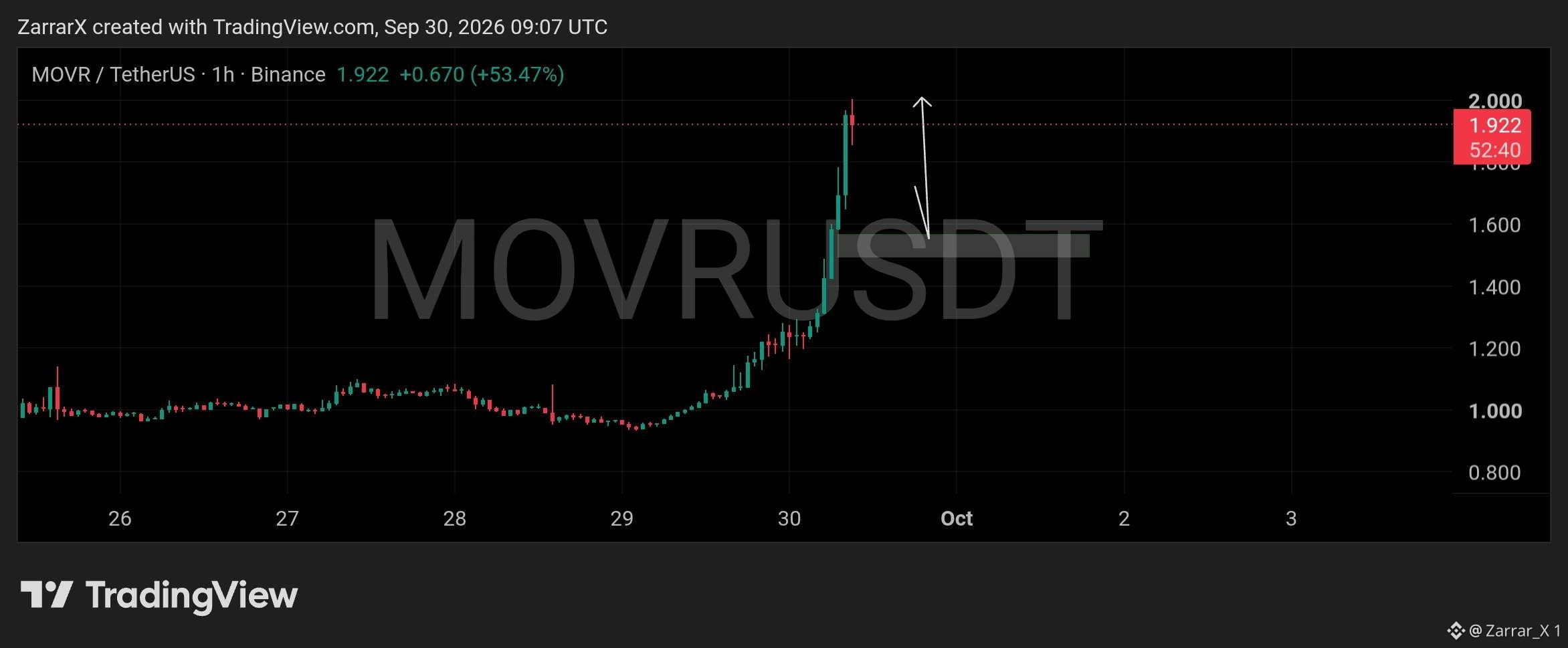
$MOVR underwent a strong vertical expansion wave on the 1-hour timeframe, surging from its consolidation base near $1.000 to peak around $2.000 before pulling back to $1.922.
Price is approaching a key horizontal demand shelf situated around the $1.500 – $1.600 region, which serves as primary support where buyers previously initiated the breakout.
The technical roadmap projects a corrective downswing back toward the lower demand floor to retest support and capture liquidity before triggering a secondary expansion wave toward overhead highs.
#Altcoin Season# #Meme Alpha# #Bullish
$MOVR underwent a strong vertical expansion wave on the 1-hour timeframe, surging from its consolidation base near $1.000 to peak around $2.000 before pulling back to $1.922.
Price is approaching a key horizontal demand shelf situated around the $1.500 – $1.600 region, which serves as primary support where buyers previously initiated the breakout.
The technical roadmap projects a corrective downswing back toward the lower demand floor to retest support and capture liquidity before triggering a secondary expansion wave toward overhead highs.
#Altcoin Season# #Meme Alpha# #Bullish
Price is approaching a key horizontal demand shelf situated around the $1.500 – $1.600 region, which serves as primary support where buyers previously initiated the breakout.
The technical roadmap projects a corrective downswing back toward the lower demand floor to retest support and capture liquidity before triggering a secondary expansion wave toward overhead highs.
#Altcoin Season# #Meme Alpha# #Bullish
42
·
--
匯豐爲其香港穩定幣命名“HSBC RedCoin”。
匯豐已爲其即將推出的香港美元穩定幣命名爲 HSBC RedCoin,初期推出重點在點對點(P2P)轉賬以及點對商戶(P2M)支付。該行計劃隨着時間推移擴展其使用場景,包括企業和商業應用。
匯豐在 4 月獲得香港金融管理局頒發的穩定幣發行人牌照,並計劃在 2026 年下半年推出以港元計價的代幣。預計該穩定幣將集成到 PayMe 和 HSBC 香港 App 中。匯豐表示,這些代幣將由託管於隔離賬戶中的高質量流動資產實現完全備付。
$LIT #Macro Insights# #Crypto #StableCoin $BTC
匯豐爲其香港穩定幣命名“HSBC RedCoin”。
匯豐已爲其即將推出的香港美元穩定幣命名爲 HSBC RedCoin,初期推出重點在點對點(P2P)轉賬以及點對商戶(P2M)支付。該行計劃隨着時間推移擴展其使用場景,包括企業和商業應用。
匯豐在 4 月獲得香港金融管理局頒發的穩定幣發行人牌照,並計劃在 2026 年下半年推出以港元計價的代幣。預計該穩定幣將集成到 PayMe 和 HSBC 香港 App 中。匯豐表示,這些代幣將由託管於隔離賬戶中的高質量流動資產實現完全備付。
$LIT #Macro Insights# #Crypto #StableCoin $BTC
匯豐已爲其即將推出的香港美元穩定幣命名爲 HSBC RedCoin,初期推出重點在點對點(P2P)轉賬以及點對商戶(P2M)支付。該行計劃隨着時間推移擴展其使用場景,包括企業和商業應用。
匯豐在 4 月獲得香港金融管理局頒發的穩定幣發行人牌照,並計劃在 2026 年下半年推出以港元計價的代幣。預計該穩定幣將集成到 PayMe 和 HSBC 香港 App 中。匯豐表示,這些代幣將由託管於隔離賬戶中的高質量流動資產實現完全備付。
$LIT #Macro Insights# #Crypto #StableCoin $BTC
60
·
--
XRP 賬本進入巴西的基金系統。
巴西市場基礎設施提供商 CSD BR 已開始測試 $XRP Ledger(XRPL),作爲由 BTG Pactual 管理的、部分投資基金的並行記賬層。該試點使 CSD BR 能夠在區塊鏈上同步並對比基金份額信息,同時其現有系統仍作爲登記、結算與所有權的官方記錄。
初始階段僅限於經批准的巴西銀行與企業參與者,並需滿足 KYC(瞭解你的客戶)和 AML(反洗錢)要求。這並不會創建面向零售的 XRPL 基金市場,也不意味着投資者目前可以通過個人錢包直接購買、轉移或交易 BTG Pactual 的基金份額。
CSD BR 表示,試點未來可能擴展至代幣化基金份額的原生髮行與交易,以及其他巴西金融資產。就目前而言,重點在於測試 XRPL 如何與既有的受監管基礎設施協同運作,而不替代負責識別合法所有權的系統。
#XRP #Ledger #Macro Insights#
XRP 賬本進入巴西的基金系統。
巴西市場基礎設施提供商 CSD BR 已開始測試 $XRP Ledger(XRPL),作爲由 BTG Pactual 管理的、部分投資基金的並行記賬層。該試點使 CSD BR 能夠在區塊鏈上同步並對比基金份額信息,同時其現有系統仍作爲登記、結算與所有權的官方記錄。
初始階段僅限於經批准的巴西銀行與企業參與者,並需滿足 KYC(瞭解你的客戶)和 AML(反洗錢)要求。這並不會創建面向零售的 XRPL 基金市場,也不意味着投資者目前可以通過個人錢包直接購買、轉移或交易 BTG Pactual 的基金份額。
CSD BR 表示,試點未來可能擴展至代幣化基金份額的原生髮行與交易,以及其他巴西金融資產。就目前而言,重點在於測試 XRPL 如何與既有的受監管基礎設施協同運作,而不替代負責識別合法所有權的系統。
#XRP #Ledger #Macro Insights#
巴西市場基礎設施提供商 CSD BR 已開始測試 $XRP Ledger(XRPL),作爲由 BTG Pactual 管理的、部分投資基金的並行記賬層。該試點使 CSD BR 能夠在區塊鏈上同步並對比基金份額信息,同時其現有系統仍作爲登記、結算與所有權的官方記錄。
初始階段僅限於經批准的巴西銀行與企業參與者,並需滿足 KYC(瞭解你的客戶)和 AML(反洗錢)要求。這並不會創建面向零售的 XRPL 基金市場,也不意味着投資者目前可以通過個人錢包直接購買、轉移或交易 BTG Pactual 的基金份額。
CSD BR 表示,試點未來可能擴展至代幣化基金份額的原生髮行與交易,以及其他巴西金融資產。就目前而言,重點在於測試 XRPL 如何與既有的受監管基礎設施協同運作,而不替代負責識別合法所有權的系統。
#XRP #Ledger #Macro Insights#
72
·
--
查看翻譯
Introducing "What Is DEX" | Learn How Decentralized Exchanges Work
If you have ever wanted to understand how DEXs actually work without getting lost in technical jargon, this one is for you.
STONfi just launched "What Is DEX" - a new educational project covering everything from the basics of decentralized exchanges to how cross-chain swaps work, what liquidity providers do, and which risks actually matter. One clean place to build your DeFi foundation.
Here is what is waiting inside:
– The basics of DEXs and the benefits they offer users
– Key features and the difference between multi-chain and cross-chain DEXs
– How to read APY, impermanent loss, and price impact, with live calculators to practice estimating rewards and risks yourself
There is also a short quiz at the end and your answers may come in handy for your miles balance in the "One Swap. Across Chains" campaign. Worth taking.
Whether you are new to DeFi or just want to refresh the fundamentals, this is a simple place to start.
– Explore "What Is DEX" and Take the Quiz : https://whatisdex.com/?task=dex-quiz
$AVAX $ICP #Macro Insights# #Meme Alpha# #Bullish
Introducing "What Is DEX" | Learn How Decentralized Exchanges Work
If you have ever wanted to understand how DEXs actually work without getting lost in technical jargon, this one is for you.
STONfi just launched "What Is DEX" - a new educational project covering everything from the basics of decentralized exchanges to how cross-chain swaps work, what liquidity providers do, and which risks actually matter. One clean place to build your DeFi foundation.
Here is what is waiting inside:
– The basics of DEXs and the benefits they offer users
– Key features and the difference between multi-chain and cross-chain DEXs
– How to read APY, impermanent loss, and price impact, with live calculators to practice estimating rewards and risks yourself
There is also a short quiz at the end and your answers may come in handy for your miles balance in the "One Swap. Across Chains" campaign. Worth taking.
Whether you are new to DeFi or just want to refresh the fundamentals, this is a simple place to start.
– Explore "What Is DEX" and Take the Quiz : https://whatisdex.com/?task=dex-quiz
$AVAX $ICP #Macro Insights# #Meme Alpha# #Bullish
If you have ever wanted to understand how DEXs actually work without getting lost in technical jargon, this one is for you.
STONfi just launched "What Is DEX" - a new educational project covering everything from the basics of decentralized exchanges to how cross-chain swaps work, what liquidity providers do, and which risks actually matter. One clean place to build your DeFi foundation.
Here is what is waiting inside:
– The basics of DEXs and the benefits they offer users
– Key features and the difference between multi-chain and cross-chain DEXs
– How to read APY, impermanent loss, and price impact, with live calculators to practice estimating rewards and risks yourself
There is also a short quiz at the end and your answers may come in handy for your miles balance in the "One Swap. Across Chains" campaign. Worth taking.
Whether you are new to DeFi or just want to refresh the fundamentals, this is a simple place to start.
– Explore "What Is DEX" and Take the Quiz : https://whatisdex.com/?task=dex-quiz
$AVAX $ICP #Macro Insights# #Meme Alpha# #Bullish
2
·
--
查看翻譯
Spot Crypto ETFs See Net Inflows Across BTC, ETH, SOL and XRP
Spot ETFs for Bitcoin, Ethereum, Solana and XRP all recorded net inflows on Sept. 28, showing fresh capital entering the four crypto markets.
- BTC: $31.07M
- ETH: $17.1M
- SOL: $12.7M
- XRP: $3.96M
Together, the four ETFs attracted roughly $64.83 million in net inflows during the session.
$BTC $ETH #BTC Price Analysis# #Macro Insights# #Altcoin Season#
Spot Crypto ETFs See Net Inflows Across BTC, ETH, SOL and XRP
Spot ETFs for Bitcoin, Ethereum, Solana and XRP all recorded net inflows on Sept. 28, showing fresh capital entering the four crypto markets.
- BTC: $31.07M
- ETH: $17.1M
- SOL: $12.7M
- XRP: $3.96M
Together, the four ETFs attracted roughly $64.83 million in net inflows during the session.
$BTC $ETH #BTC Price Analysis# #Macro Insights# #Altcoin Season#
Spot ETFs for Bitcoin, Ethereum, Solana and XRP all recorded net inflows on Sept. 28, showing fresh capital entering the four crypto markets.
- BTC: $31.07M
- ETH: $17.1M
- SOL: $12.7M
- XRP: $3.96M
Together, the four ETFs attracted roughly $64.83 million in net inflows during the session.
$BTC $ETH #BTC Price Analysis# #Macro Insights# #Altcoin Season#
·
--
查看翻譯
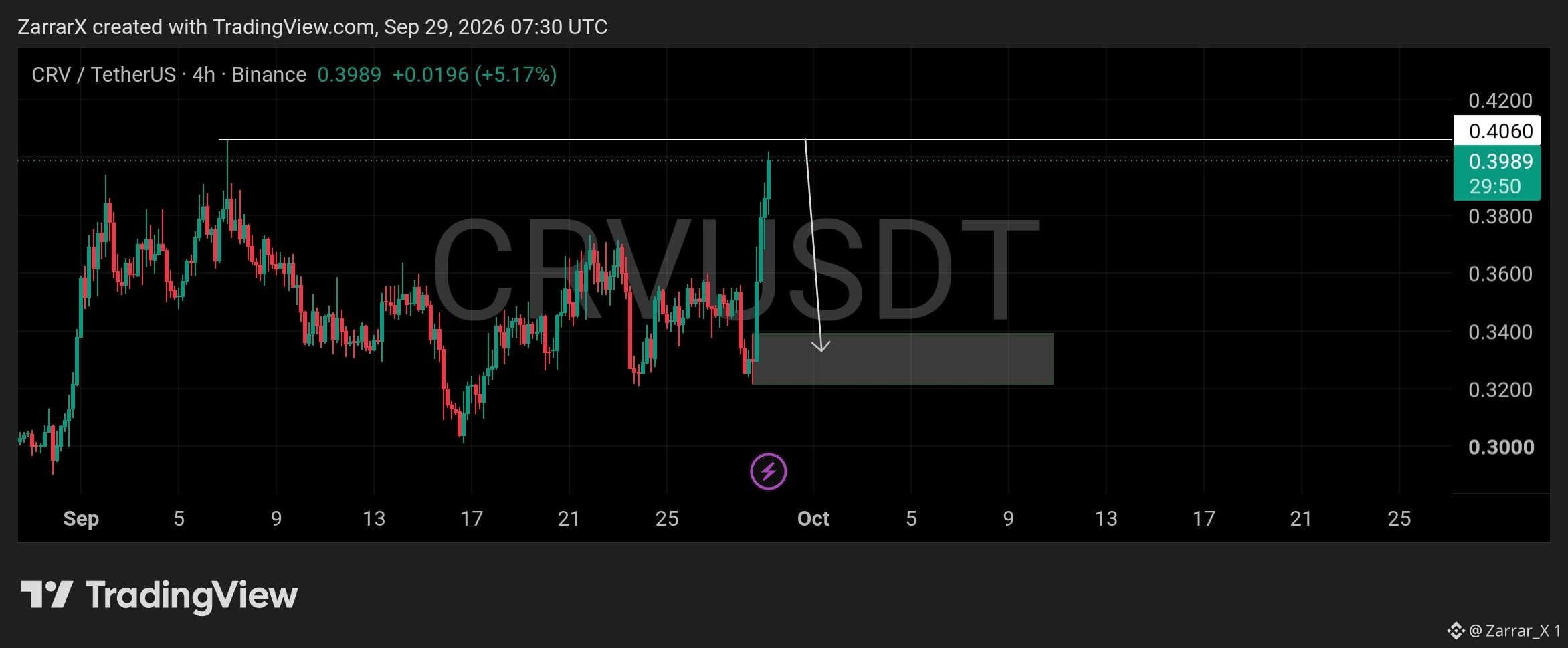
$CRV rallied strongly on the 4-hour timeframe, rising from $0.3300 to test key horizontal resistance at $0.4060.
Price is confronting supply at $0.4060 – $0.4100, favoring a rejection back toward demand at $0.3200 – $0.3400.
Buying into supply is risky; patience for lower support offers a better risk-to-reward setup.
#CRV #Macro Insights# #Altcoin Season#
$CRV rallied strongly on the 4-hour timeframe, rising from $0.3300 to test key horizontal resistance at $0.4060.
Price is confronting supply at $0.4060 – $0.4100, favoring a rejection back toward demand at $0.3200 – $0.3400.
Buying into supply is risky; patience for lower support offers a better risk-to-reward setup.
#CRV #Macro Insights# #Altcoin Season#
Price is confronting supply at $0.4060 – $0.4100, favoring a rejection back toward demand at $0.3200 – $0.3400.
Buying into supply is risky; patience for lower support offers a better risk-to-reward setup.
#CRV #Macro Insights# #Altcoin Season#
5
·
--
查看翻譯
Bitget Exploiter’s Attempt to Route Stolen Funds Through Chainflip Fails.
The exploiter behind the Bitget incident reportedly attempted to move stolen funds through Chainflip, but the deposit was rejected at the broker interface, according to MistTrack.
Chainflip reportedly returned the funds directly to the sender after rejecting the deposit, preventing the attacker from routing the stolen assets through the network.
The failed transfer adds another barrier to the movement of the stolen funds, as blockchain monitoring firms continue tracking the exploiter’s wallets and transaction activity.
$TEL #Macro Insights# #Crypto #Bitget
Bitget Exploiter’s Attempt to Route Stolen Funds Through Chainflip Fails.
The exploiter behind the Bitget incident reportedly attempted to move stolen funds through Chainflip, but the deposit was rejected at the broker interface, according to MistTrack.
Chainflip reportedly returned the funds directly to the sender after rejecting the deposit, preventing the attacker from routing the stolen assets through the network.
The failed transfer adds another barrier to the movement of the stolen funds, as blockchain monitoring firms continue tracking the exploiter’s wallets and transaction activity.
$TEL #Macro Insights# #Crypto #Bitget
The exploiter behind the Bitget incident reportedly attempted to move stolen funds through Chainflip, but the deposit was rejected at the broker interface, according to MistTrack.
Chainflip reportedly returned the funds directly to the sender after rejecting the deposit, preventing the attacker from routing the stolen assets through the network.
The failed transfer adds another barrier to the movement of the stolen funds, as blockchain monitoring firms continue tracking the exploiter’s wallets and transaction activity.
$TEL #Macro Insights# #Crypto #Bitget
3
·
--
查看翻譯
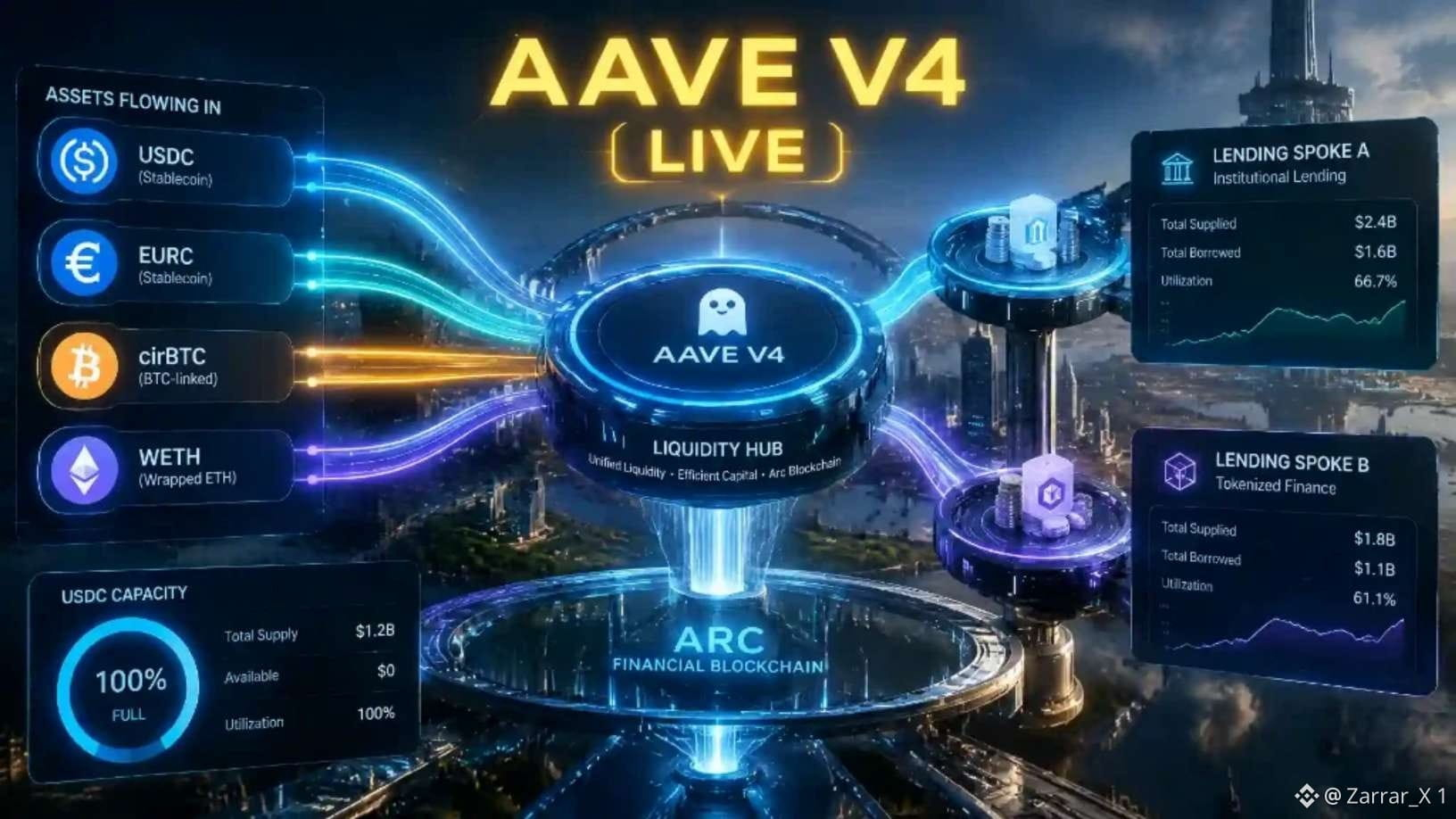
Aave V4 Goes Live on Circle’s Arc as Initial USDC Capacity Fills.
Aave V4 has launched on Circle’s Arc blockchain with USDC, EURC, cirBTC and WETH as its initial assets. The deployment went live alongside Arc’s public mainnet launch, with the first USDC capacity on the Core Hub reportedly reaching its limit within hours as around $56 million flowed into the market.
The Arc deployment uses Aave V4’s new hub-and-spoke architecture, allowing multiple lending markets to share liquidity while maintaining separate risk settings. The initial setup includes a Main Spoke for broader lending activity and a Forex Spoke focused on USDC and EURC.
The early demand has already prompted a proposal to add roughly $94 million in additional $USDC capacity. Aave is keeping initial limits conservative while more liquidity and risk data develop, with future governance potentially allowing additional spokes and tokenized real-world assets.
The bigger test now is whether the strong initial deposits translate into sustained borrowing, higher utilization and meaningful protocol revenue. Aave DAO is expected to receive at least $2 million annually from the Arc deployment under the approved arrangement, giving the launch an early commercial incentive as Circle works to build Arc around stablecoins, payments and institutional financial applications. $AAVE
#Macro Insights# #AAVE #USDC
Aave V4 Goes Live on Circle’s Arc as Initial USDC Capacity Fills.
Aave V4 has launched on Circle’s Arc blockchain with USDC, EURC, cirBTC and WETH as its initial assets. The deployment went live alongside Arc’s public mainnet launch, with the first USDC capacity on the Core Hub reportedly reaching its limit within hours as around $56 million flowed into the market.
The Arc deployment uses Aave V4’s new hub-and-spoke architecture, allowing multiple lending markets to share liquidity while maintaining separate risk settings. The initial setup includes a Main Spoke for broader lending activity and a Forex Spoke focused on USDC and EURC.
The early demand has already prompted a proposal to add roughly $94 million in additional $USDC capacity. Aave is keeping initial limits conservative while more liquidity and risk data develop, with future governance potentially allowing additional spokes and tokenized real-world assets.
The bigger test now is whether the strong initial deposits translate into sustained borrowing, higher utilization and meaningful protocol revenue. Aave DAO is expected to receive at least $2 million annually from the Arc deployment under the approved arrangement, giving the launch an early commercial incentive as Circle works to build Arc around stablecoins, payments and institutional financial applications. $AAVE
#Macro Insights# #AAVE #USDC
Aave V4 has launched on Circle’s Arc blockchain with USDC, EURC, cirBTC and WETH as its initial assets. The deployment went live alongside Arc’s public mainnet launch, with the first USDC capacity on the Core Hub reportedly reaching its limit within hours as around $56 million flowed into the market.
The Arc deployment uses Aave V4’s new hub-and-spoke architecture, allowing multiple lending markets to share liquidity while maintaining separate risk settings. The initial setup includes a Main Spoke for broader lending activity and a Forex Spoke focused on USDC and EURC.
The early demand has already prompted a proposal to add roughly $94 million in additional $USDC capacity. Aave is keeping initial limits conservative while more liquidity and risk data develop, with future governance potentially allowing additional spokes and tokenized real-world assets.
The bigger test now is whether the strong initial deposits translate into sustained borrowing, higher utilization and meaningful protocol revenue. Aave DAO is expected to receive at least $2 million annually from the Arc deployment under the approved arrangement, giving the launch an early commercial incentive as Circle works to build Arc around stablecoins, payments and institutional financial applications. $AAVE
#Macro Insights# #AAVE #USDC
50
·
--
查看翻譯
Your First xStocks Swap in Under 5 Minutes | No Broker Account Needed.
xStocks give you exposure to familiar assets like Apple, Tesla, Amazon, and the S&P 500 - all from your TON wallet, without opening a brokerage account or filling out a single form. Here is how to get your first position in minutes.
xStocks are tokenized representations of traditional securities issued by Backed Finance, backed 1:1 by real underlying assets held with regulated custodians. On TON they exist as standard jettons - your wallet recognizes them automatically, no manual configuration needed.
Why TON and STONfi make sense for this
Swaps confirm in seconds with tiny network fees. Traditional stock exchanges close for evenings, weekends, and holidays - STONfi does not. You can rebalance at 3am on Sunday if you want to. And if a transaction ever fails, it simply reverts - nothing half-settles and your tokens stay in your wallet.
Your first xStocks swap - step by step
Open the xStocks page on STONfi → choose the xStock you want (AAPLx, TSLAx, SPYx, NVDAx, GOOGLx, AMZNx and more) → click through to the Swap page → enter your amount → connect your wallet and confirm.
That is it. Your first xStock lands in your wallet in seconds.
A few things worth knowing before you swap. Always verify the contract address against official STONfi or issuer documentation. Explorer verification is the fastest safety check before interacting with any contract. And keep a small TON balance for network fees.
– Explore xStocks on STONfi : https://ston.fi/xstocks
⚠️ xStocks are not available to citizens or residents of the US, EU/EEA, UK, Canada, Australia, Belgium, or any jurisdiction where tokenized securities are restricted.
$LINK $BTC #Macro Insights# #BTC Price Analysis# #DeFi
Your First xStocks Swap in Under 5 Minutes | No Broker Account Needed.
xStocks give you exposure to familiar assets like Apple, Tesla, Amazon, and the S&P 500 - all from your TON wallet, without opening a brokerage account or filling out a single form. Here is how to get your first position in minutes.
xStocks are tokenized representations of traditional securities issued by Backed Finance, backed 1:1 by real underlying assets held with regulated custodians. On TON they exist as standard jettons - your wallet recognizes them automatically, no manual configuration needed.
Why TON and STONfi make sense for this
Swaps confirm in seconds with tiny network fees. Traditional stock exchanges close for evenings, weekends, and holidays - STONfi does not. You can rebalance at 3am on Sunday if you want to. And if a transaction ever fails, it simply reverts - nothing half-settles and your tokens stay in your wallet.
Your first xStocks swap - step by step
Open the xStocks page on STONfi → choose the xStock you want (AAPLx, TSLAx, SPYx, NVDAx, GOOGLx, AMZNx and more) → click through to the Swap page → enter your amount → connect your wallet and confirm.
That is it. Your first xStock lands in your wallet in seconds.
A few things worth knowing before you swap. Always verify the contract address against official STONfi or issuer documentation. Explorer verification is the fastest safety check before interacting with any contract. And keep a small TON balance for network fees.
– Explore xStocks on STONfi : https://ston.fi/xstocks
⚠️ xStocks are not available to citizens or residents of the US, EU/EEA, UK, Canada, Australia, Belgium, or any jurisdiction where tokenized securities are restricted.
$LINK $BTC #Macro Insights# #BTC Price Analysis# #DeFi
xStocks give you exposure to familiar assets like Apple, Tesla, Amazon, and the S&P 500 - all from your TON wallet, without opening a brokerage account or filling out a single form. Here is how to get your first position in minutes.
xStocks are tokenized representations of traditional securities issued by Backed Finance, backed 1:1 by real underlying assets held with regulated custodians. On TON they exist as standard jettons - your wallet recognizes them automatically, no manual configuration needed.
Why TON and STONfi make sense for this
Swaps confirm in seconds with tiny network fees. Traditional stock exchanges close for evenings, weekends, and holidays - STONfi does not. You can rebalance at 3am on Sunday if you want to. And if a transaction ever fails, it simply reverts - nothing half-settles and your tokens stay in your wallet.
Your first xStocks swap - step by step
Open the xStocks page on STONfi → choose the xStock you want (AAPLx, TSLAx, SPYx, NVDAx, GOOGLx, AMZNx and more) → click through to the Swap page → enter your amount → connect your wallet and confirm.
That is it. Your first xStock lands in your wallet in seconds.
A few things worth knowing before you swap. Always verify the contract address against official STONfi or issuer documentation. Explorer verification is the fastest safety check before interacting with any contract. And keep a small TON balance for network fees.
– Explore xStocks on STONfi : https://ston.fi/xstocks
⚠️ xStocks are not available to citizens or residents of the US, EU/EEA, UK, Canada, Australia, Belgium, or any jurisdiction where tokenized securities are restricted.
$LINK $BTC #Macro Insights# #BTC Price Analysis# #DeFi
·
--
查看翻譯
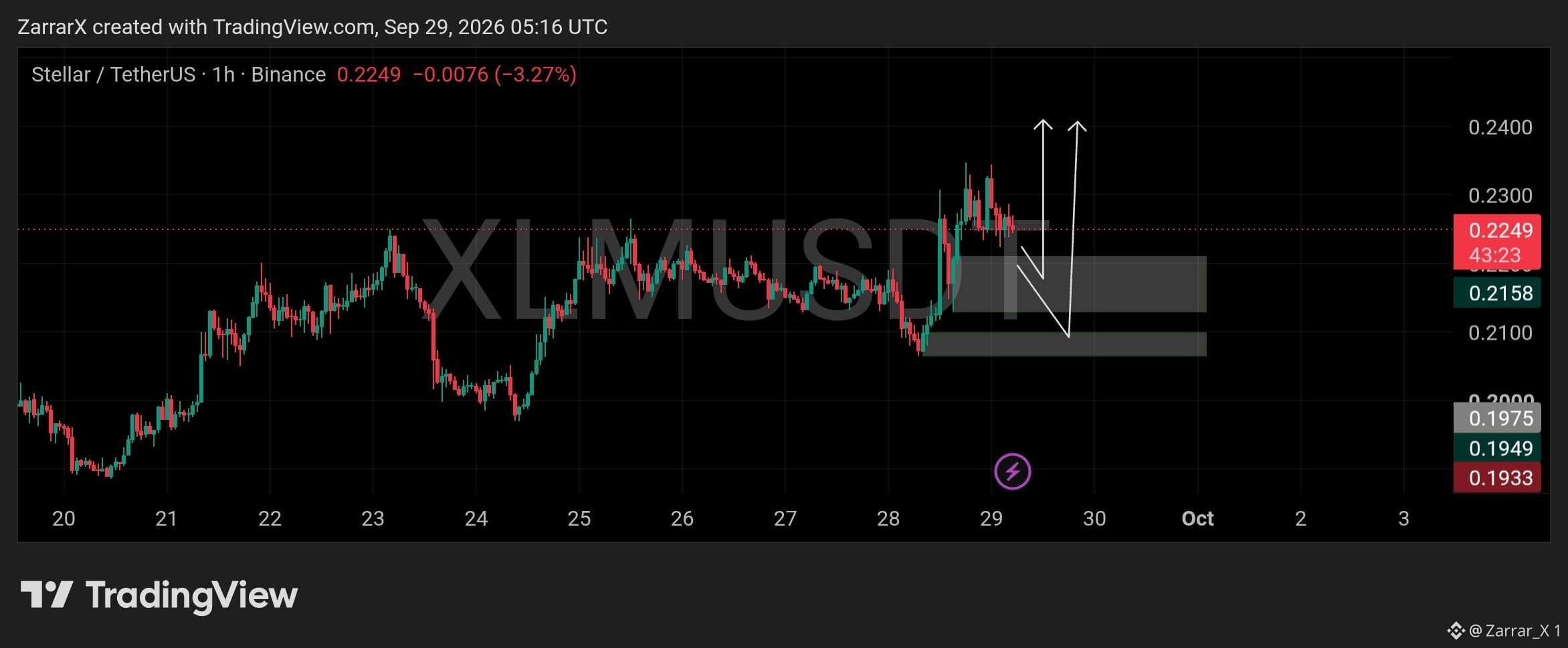
$XLM pushed into a local breakout attempt on the 1-hour chart before pulling back slightly to trade around $0.2249.
The price is nearing a key horizontal demand shelf situated around the $0.2100 – $0.2200 region, which serves as the primary support floor where buyers previously stepped in to fuel the upward momentum.
The technical roadmap projects a corrective downswing into this lower demand floor to retest support and capture liquidity before launching a secondary expansion wave toward upper targets near $0.2400.
Buying directly into the active pullback carries an unfavorable risk-to-reward ratio, making a patient entry off the lower support floor the cleaner play.
#XLM #Crypto #Altcoin Season#
$XLM pushed into a local breakout attempt on the 1-hour chart before pulling back slightly to trade around $0.2249.
The price is nearing a key horizontal demand shelf situated around the $0.2100 – $0.2200 region, which serves as the primary support floor where buyers previously stepped in to fuel the upward momentum.
The technical roadmap projects a corrective downswing into this lower demand floor to retest support and capture liquidity before launching a secondary expansion wave toward upper targets near $0.2400.
Buying directly into the active pullback carries an unfavorable risk-to-reward ratio, making a patient entry off the lower support floor the cleaner play.
#XLM #Crypto #Altcoin Season#
The price is nearing a key horizontal demand shelf situated around the $0.2100 – $0.2200 region, which serves as the primary support floor where buyers previously stepped in to fuel the upward momentum.
The technical roadmap projects a corrective downswing into this lower demand floor to retest support and capture liquidity before launching a secondary expansion wave toward upper targets near $0.2400.
Buying directly into the active pullback carries an unfavorable risk-to-reward ratio, making a patient entry off the lower support floor the cleaner play.
#XLM #Crypto #Altcoin Season#
31
·
--
查看翻譯
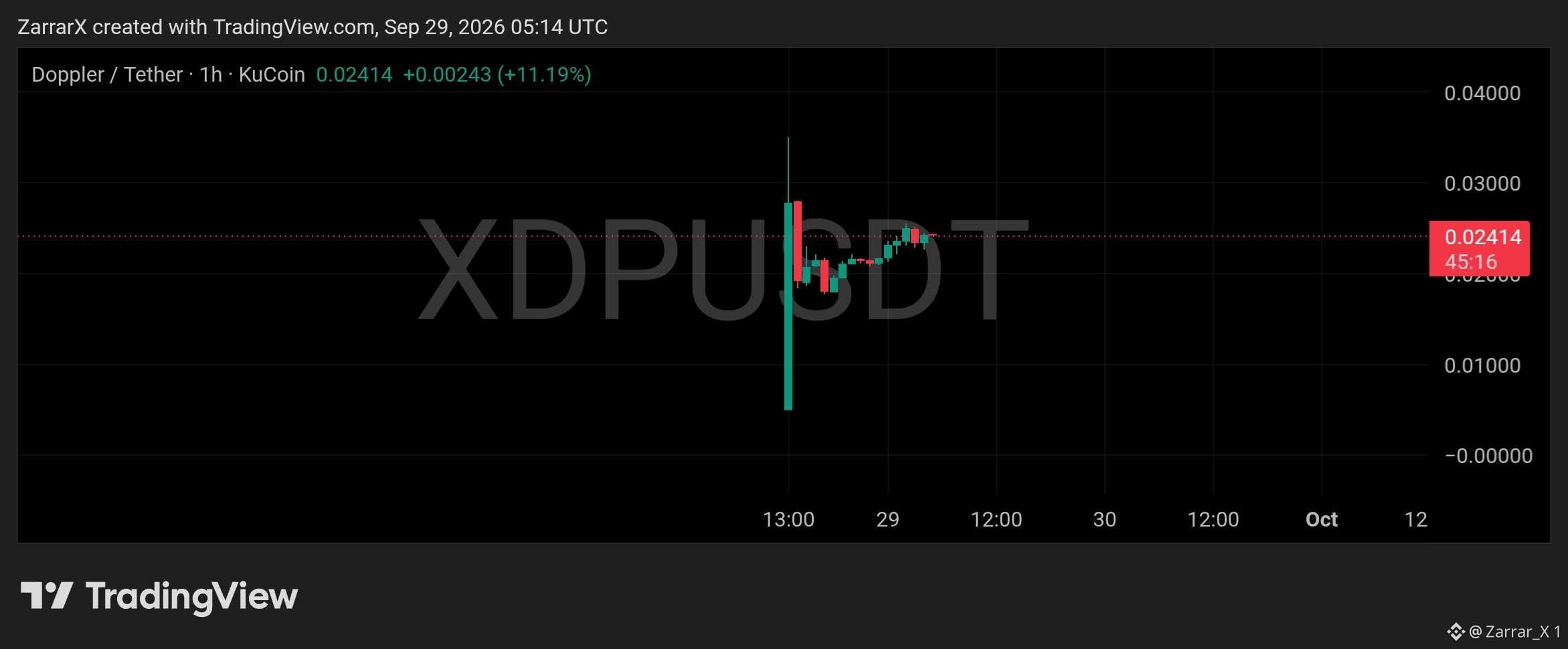
$XDP made a sharp initial launch move on the 1H chart before settling into a tight range around $0.0241. With price still close to its listing area, the market is yet to establish a clear trend.
There is very limited price history here, so meaningful support, resistance, and broader liquidity zones have not had enough time to form. For now, short-term momentum and trading volume are the main things driving the chart.
A period of sideways consolidation could help build the structure needed for the next move. A sustained break above the current range would signal renewed upside momentum, while losing the launch lows would put sellers back in control.
Given how new $XDP is, volatility can remain extreme. Waiting for a clearer 1H structure to develop would provide a cleaner basis for any entry.
#Altcoin Season# #Crypto #BNBChain#
$XDP made a sharp initial launch move on the 1H chart before settling into a tight range around $0.0241. With price still close to its listing area, the market is yet to establish a clear trend.
There is very limited price history here, so meaningful support, resistance, and broader liquidity zones have not had enough time to form. For now, short-term momentum and trading volume are the main things driving the chart.
A period of sideways consolidation could help build the structure needed for the next move. A sustained break above the current range would signal renewed upside momentum, while losing the launch lows would put sellers back in control.
Given how new $XDP is, volatility can remain extreme. Waiting for a clearer 1H structure to develop would provide a cleaner basis for any entry.
#Altcoin Season# #Crypto #BNBChain#
There is very limited price history here, so meaningful support, resistance, and broader liquidity zones have not had enough time to form. For now, short-term momentum and trading volume are the main things driving the chart.
A period of sideways consolidation could help build the structure needed for the next move. A sustained break above the current range would signal renewed upside momentum, while losing the launch lows would put sellers back in control.
Given how new $XDP is, volatility can remain extreme. Waiting for a clearer 1H structure to develop would provide a cleaner basis for any entry.
#Altcoin Season# #Crypto #BNBChain#
45
·
--
查看翻譯
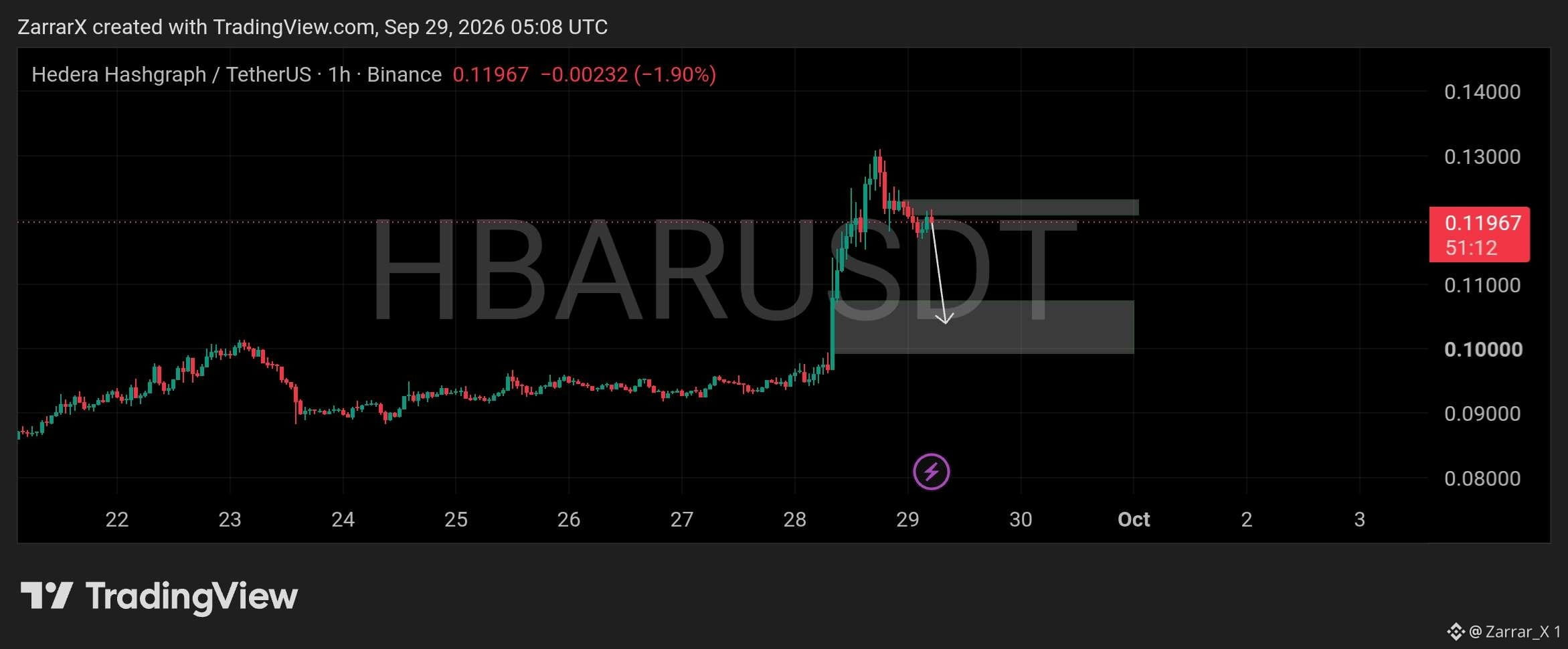
$HBAR is cooling off after the sharp breakout from the $0.09 area, with the 1H chart now showing some hesitation around the recent highs. Price is currently near $0.120, holding just below the marked resistance.
The key area to watch above is around $0.121–$0.123, where sellers have started to appear. A clean break and hold above this zone would give $HBAR room to continue the current bullish structure.
If the rejection deepens, the marked demand zone around $0.099–$0.108 becomes the main area to watch for a reaction. A pullback into this region could provide a stronger base for another move higher.
#HBAR #Hedera #Altcoin Season#
For now, the chart is sitting between resistance and demand, so the reaction at either zone should give a clearer direction for the next move.
$HBAR is cooling off after the sharp breakout from the $0.09 area, with the 1H chart now showing some hesitation around the recent highs. Price is currently near $0.120, holding just below the marked resistance.
The key area to watch above is around $0.121–$0.123, where sellers have started to appear. A clean break and hold above this zone would give $HBAR room to continue the current bullish structure.
If the rejection deepens, the marked demand zone around $0.099–$0.108 becomes the main area to watch for a reaction. A pullback into this region could provide a stronger base for another move higher.
#HBAR #Hedera #Altcoin Season#
For now, the chart is sitting between resistance and demand, so the reaction at either zone should give a clearer direction for the next move.
The key area to watch above is around $0.121–$0.123, where sellers have started to appear. A clean break and hold above this zone would give $HBAR room to continue the current bullish structure.
If the rejection deepens, the marked demand zone around $0.099–$0.108 becomes the main area to watch for a reaction. A pullback into this region could provide a stronger base for another move higher.
#HBAR #Hedera #Altcoin Season#
For now, the chart is sitting between resistance and demand, so the reaction at either zone should give a clearer direction for the next move.
52
·
--
查看翻譯
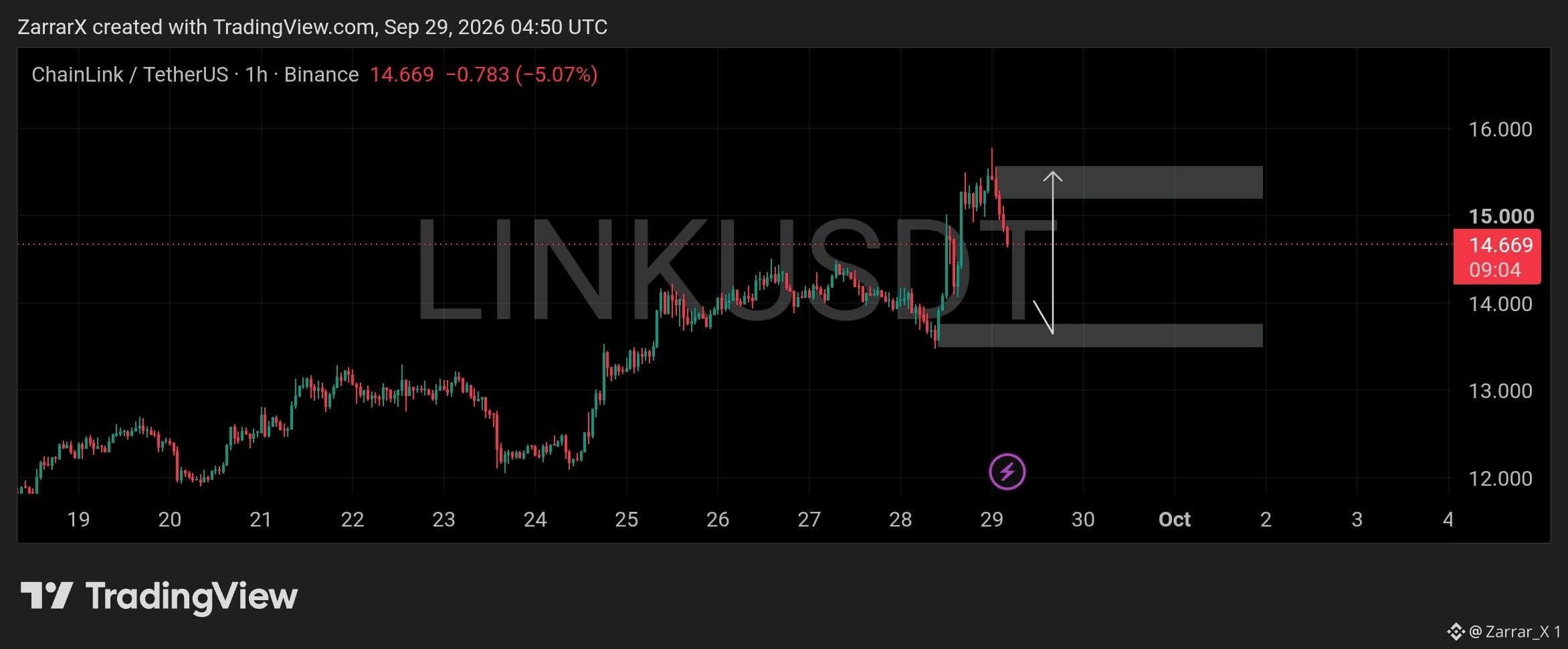
$LINK has started pulling back after a strong push into the $15.50 area, with the 1H structure now showing some short-term weakness. Price is currently around $14.67 after rejecting the recent high.
The key area to watch below is the marked demand zone around $13.50–$13.70. A deeper retracement into this region could provide the reaction needed for the next move higher, especially if buyers defend it clearly.
On the upside, the main supply sits around $15.20–$15.60. A strong recovery back through this area would put the recent high back in focus, while rejection there could keep LINK ranging between the marked zones.
The cleaner approach is to let price react at the marked demand rather than chase the current pullback. A sustained loss of $13.50 would weaken this bullish roadmap and call for a reassessment.
#LINK #Altcoin Season# #Chainlink
$LINK has started pulling back after a strong push into the $15.50 area, with the 1H structure now showing some short-term weakness. Price is currently around $14.67 after rejecting the recent high.
The key area to watch below is the marked demand zone around $13.50–$13.70. A deeper retracement into this region could provide the reaction needed for the next move higher, especially if buyers defend it clearly.
On the upside, the main supply sits around $15.20–$15.60. A strong recovery back through this area would put the recent high back in focus, while rejection there could keep LINK ranging between the marked zones.
The cleaner approach is to let price react at the marked demand rather than chase the current pullback. A sustained loss of $13.50 would weaken this bullish roadmap and call for a reassessment.
#LINK #Altcoin Season# #Chainlink
The key area to watch below is the marked demand zone around $13.50–$13.70. A deeper retracement into this region could provide the reaction needed for the next move higher, especially if buyers defend it clearly.
On the upside, the main supply sits around $15.20–$15.60. A strong recovery back through this area would put the recent high back in focus, while rejection there could keep LINK ranging between the marked zones.
The cleaner approach is to let price react at the marked demand rather than chase the current pullback. A sustained loss of $13.50 would weaken this bullish roadmap and call for a reassessment.
#LINK #Altcoin Season# #Chainlink
74
·
--
查看翻譯
STONfi Dev Team Is Heading to Seoul and Singapore | See You There.
Two major global crypto events are coming up and the STONfi Dev team will be at both.
KBW2026 | Seoul | September 30 to October 1
Korea Blockchain Week is Asia's premier annual blockchain and crypto conference. Andrey Fedorov, CMO and CBDO at STONfi Dev, will be in Seoul for networking and conversations around DeFi, cross-chain infrastructure, and the future of on-chain finance.
Catch his keynote at HSC Conference Seoul on October 1 - "Beyond Chain Boundaries: The Next Layer of DeFi."
– Register for HSC Conference Seoul : https://luma.com/HSC_Seoul
TOKEN2049 | Singapore | October 7 to October 8
Next stop is TOKEN2049 Singapore, the world's largest annual crypto and Web3 event series. Andrey Fedorov and Ethan Clime, Head of DevRel at STONfi Dev, will both be there for deep conversations, new connections, and discussions about the future of DeFi and cross-chain products.
Not making it to Seoul or Singapore? Follow STONfi on X and Instagram for updates and photos from both events.
$BTC $HBAR #BTC Price Analysis# #Macro Insights# #TOKEN2049
STONfi Dev Team Is Heading to Seoul and Singapore | See You There.
Two major global crypto events are coming up and the STONfi Dev team will be at both.
KBW2026 | Seoul | September 30 to October 1
Korea Blockchain Week is Asia's premier annual blockchain and crypto conference. Andrey Fedorov, CMO and CBDO at STONfi Dev, will be in Seoul for networking and conversations around DeFi, cross-chain infrastructure, and the future of on-chain finance.
Catch his keynote at HSC Conference Seoul on October 1 - "Beyond Chain Boundaries: The Next Layer of DeFi."
– Register for HSC Conference Seoul : https://luma.com/HSC_Seoul
TOKEN2049 | Singapore | October 7 to October 8
Next stop is TOKEN2049 Singapore, the world's largest annual crypto and Web3 event series. Andrey Fedorov and Ethan Clime, Head of DevRel at STONfi Dev, will both be there for deep conversations, new connections, and discussions about the future of DeFi and cross-chain products.
Not making it to Seoul or Singapore? Follow STONfi on X and Instagram for updates and photos from both events.
$BTC $HBAR #BTC Price Analysis# #Macro Insights# #TOKEN2049
Two major global crypto events are coming up and the STONfi Dev team will be at both.
KBW2026 | Seoul | September 30 to October 1
Korea Blockchain Week is Asia's premier annual blockchain and crypto conference. Andrey Fedorov, CMO and CBDO at STONfi Dev, will be in Seoul for networking and conversations around DeFi, cross-chain infrastructure, and the future of on-chain finance.
Catch his keynote at HSC Conference Seoul on October 1 - "Beyond Chain Boundaries: The Next Layer of DeFi."
– Register for HSC Conference Seoul : https://luma.com/HSC_Seoul
TOKEN2049 | Singapore | October 7 to October 8
Next stop is TOKEN2049 Singapore, the world's largest annual crypto and Web3 event series. Andrey Fedorov and Ethan Clime, Head of DevRel at STONfi Dev, will both be there for deep conversations, new connections, and discussions about the future of DeFi and cross-chain products.
Not making it to Seoul or Singapore? Follow STONfi on X and Instagram for updates and photos from both events.
$BTC $HBAR #BTC Price Analysis# #Macro Insights# #TOKEN2049

45
·
--
查看翻譯
South Korea Considers Legalizing Crypto Market Makers.
South Korea’s Financial Services Commission (FSC) is considering a formal market-making system for digital assets to improve liquidity and reduce extreme price swings. Crypto market making is currently restricted under market-manipulation rules, leaving firms that provide liquidity exposed to regulatory risks.
The review follows a sharp JPYC stablecoin price spike on Upbit earlier this month, when the token jumped from 12 won to 37.6 won within about an hour because of limited liquidity. Any new framework would likely be considered alongside South Korea’s broader Digital Asset Basic Act and could establish clearer rules for legitimate liquidity providers.
$BTC #Macro Insights# #Crypto #BTC Price Analysis#
South Korea Considers Legalizing Crypto Market Makers.
South Korea’s Financial Services Commission (FSC) is considering a formal market-making system for digital assets to improve liquidity and reduce extreme price swings. Crypto market making is currently restricted under market-manipulation rules, leaving firms that provide liquidity exposed to regulatory risks.
The review follows a sharp JPYC stablecoin price spike on Upbit earlier this month, when the token jumped from 12 won to 37.6 won within about an hour because of limited liquidity. Any new framework would likely be considered alongside South Korea’s broader Digital Asset Basic Act and could establish clearer rules for legitimate liquidity providers.
$BTC #Macro Insights# #Crypto #BTC Price Analysis#
South Korea’s Financial Services Commission (FSC) is considering a formal market-making system for digital assets to improve liquidity and reduce extreme price swings. Crypto market making is currently restricted under market-manipulation rules, leaving firms that provide liquidity exposed to regulatory risks.
The review follows a sharp JPYC stablecoin price spike on Upbit earlier this month, when the token jumped from 12 won to 37.6 won within about an hour because of limited liquidity. Any new framework would likely be considered alongside South Korea’s broader Digital Asset Basic Act and could establish clearer rules for legitimate liquidity providers.
$BTC #Macro Insights# #Crypto #BTC Price Analysis#

55
·
--
查看翻譯
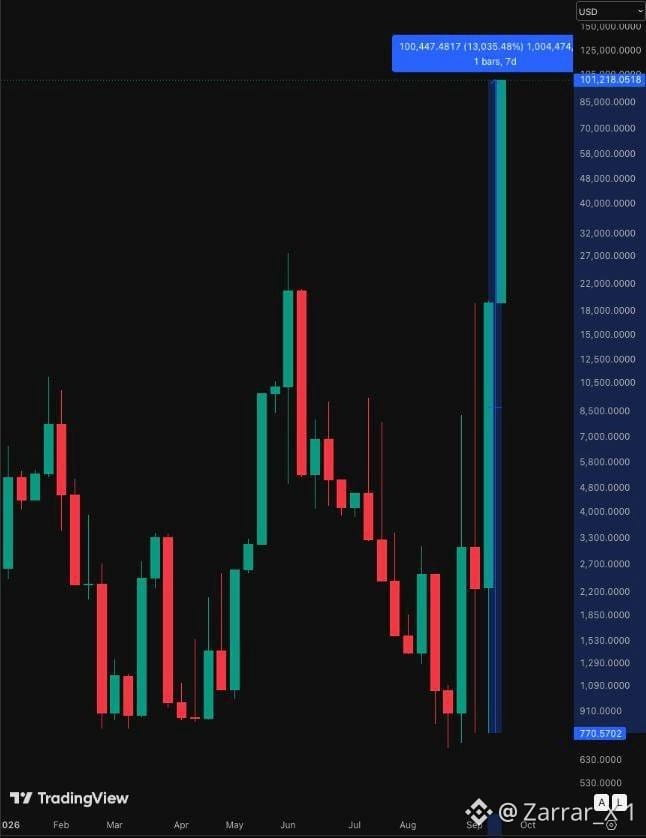
Ethereum Short Positions on Bitfinex Surge Over 13,000% in Two Weeks.
ETH short positions tracked on Bitfinex-linked data have exploded from roughly 771 $ETH to more than 101,000 ETH, representing an increase of about 13,000% in just two weeks. The surge marks a sharp buildup in short exposure around Ethereum.
However, the data does not necessarily mean traders are outright betting against ETH. Bitfinex margin positions can also be used as hedges against spot holdings, so the positioning alone does not reveal the traders' exact strategy.
Still, such a large concentration of short exposure can become significant if ETH moves sharply higher, as losing short positions may face forced closures or liquidations, creating additional buying pressure.
#ETH #Macro Insights# #Crypto
Ethereum Short Positions on Bitfinex Surge Over 13,000% in Two Weeks.
ETH short positions tracked on Bitfinex-linked data have exploded from roughly 771 $ETH to more than 101,000 ETH, representing an increase of about 13,000% in just two weeks. The surge marks a sharp buildup in short exposure around Ethereum.
However, the data does not necessarily mean traders are outright betting against ETH. Bitfinex margin positions can also be used as hedges against spot holdings, so the positioning alone does not reveal the traders' exact strategy.
Still, such a large concentration of short exposure can become significant if ETH moves sharply higher, as losing short positions may face forced closures or liquidations, creating additional buying pressure.
#ETH #Macro Insights# #Crypto
ETH short positions tracked on Bitfinex-linked data have exploded from roughly 771 $ETH to more than 101,000 ETH, representing an increase of about 13,000% in just two weeks. The surge marks a sharp buildup in short exposure around Ethereum.
However, the data does not necessarily mean traders are outright betting against ETH. Bitfinex margin positions can also be used as hedges against spot holdings, so the positioning alone does not reveal the traders' exact strategy.
Still, such a large concentration of short exposure can become significant if ETH moves sharply higher, as losing short positions may face forced closures or liquidations, creating additional buying pressure.
#ETH #Macro Insights# #Crypto
62
登入以探索更多內容
加入幣安廣場中的全球加密貨幣用戶
⚡️ 獲取加密貨幣的最新和實用資訊。
💬 受到全球最大加密貨幣交易所的信任。
👍 發掘來自經過驗證創作者的真實見解。
電子郵件 / 電話號碼