
Crypto_juju
232 貼文

Crypto_juju
舉報
封鎖用戶
Uniquely me, but crypto has my heart, ohh am in love with defi and am here to let everyone know about it
0 關注
9 粉絲
53 點讚數
貼文
·
--
查看翻譯
$HYPE has been pretty quiet for a while, while $ZEC is still gaining momentum. 👀 On the other hand, I’ve been thinking about **GEMSTON** for a while. When I first came across it, I honestly wondered what the real use case would be when **STON** already exists. But the more I look at **Stoncat**, the more it starts to make sense. GEMSTON isn’t trying to replace STON. It has a different role inside the @ston_fi ecosystem, especially around Stoncat and its utility. You can use GEMSTON to feed your Stoncat, unlock Purrks, customize it and level it up. That made me see GEMSTON a little differently. It’s one thing to have a token sitting in an ecosystem. It’s another when there’s an actual reason to use it. Still early, but I’ll be watching how this develops from here.
$HYPE has been pretty quiet for a while, while $ZEC is still gaining momentum. 👀 On the other hand, I’ve been thinking about **GEMSTON** for a while. When I first came across it, I honestly wondered what the real use case would be when **STON** already exists. But the more I look at **Stoncat**, the more it starts to make sense. GEMSTON isn’t trying to replace STON. It has a different role inside the @ston_fi ecosystem, especially around Stoncat and its utility. You can use GEMSTON to feed your Stoncat, unlock Purrks, customize it and level it up. That made me see GEMSTON a little differently. It’s one thing to have a token sitting in an ecosystem. It’s another when there’s an actual reason to use it. Still early, but I’ll be watching how this develops from here.
19
·
--
查看翻譯
Robinhood Chain is now live on @stonfi. I’ve been watching @ston_fi push further into cross-chain swaps, and this one caught my attention. You can now access **USDG on Robinhood Chain** from TON, TRON and supported EVM networks through Stonfi cross-chain flow. What I find interesting isn’t just another chain being added. It’s the direction Stonfi is taking. Instead of thinking about DeFi as separate ecosystems where you constantly have to figure out bridges, networks and where to move your assets first, the goal is starting to look more like: **I have an asset here. I want an asset there. Just give me a route. That’s where Omniston comes in, handling the routing and atomic execution behind the cross-chain swap. Robinhood Chain being added is another small step toward that more connected DeFi experience. More chains, more liquidity sources, fewer walls between ecosystems. That’s the part I’m watching. $AVAAI $XRP
Robinhood Chain is now live on @stonfi. I’ve been watching @ston_fi push further into cross-chain swaps, and this one caught my attention. You can now access **USDG on Robinhood Chain** from TON, TRON and supported EVM networks through Stonfi cross-chain flow. What I find interesting isn’t just another chain being added. It’s the direction Stonfi is taking. Instead of thinking about DeFi as separate ecosystems where you constantly have to figure out bridges, networks and where to move your assets first, the goal is starting to look more like: **I have an asset here. I want an asset there. Just give me a route. That’s where Omniston comes in, handling the routing and atomic execution behind the cross-chain swap. Robinhood Chain being added is another small step toward that more connected DeFi experience. More chains, more liquidity sources, fewer walls between ecosystems. That’s the part I’m watching. $AVAAI $XRP
23
·
--
查看翻譯
$XRP is heating up. Always a delight to see a token I like start making its moves. $STONK is also putting in some work, so the market has been giving me a few things to watch. Meanwhile, I came across something interesting from @ston_fi . They’re running a campaign called “One Swap. Across Chains.” The idea is pretty simple: learn how moving crypto between different networks works, including TON, TRON and other major chains, while completing a few simple tasks along the way. If you join the waitlist before it closes on September 15 at 00:00 UTC, you get **1,000 bonus miles right away. I actually like the educational angle here. Cross-chain swaps can still feel confusing when you’re dealing with different networks, tokens and routes, so anything that makes that process easier to understand is worth checking out. And with stonfi already working on cross-chain swaps through Omniston, this feels like a good way to get familiar with the idea before the bigger missions start. If you’ve been meaning to understand cross-chain swaps better, this might be worth a look.
$XRP is heating up. Always a delight to see a token I like start making its moves. $STONK is also putting in some work, so the market has been giving me a few things to watch. Meanwhile, I came across something interesting from @ston_fi . They’re running a campaign called “One Swap. Across Chains.” The idea is pretty simple: learn how moving crypto between different networks works, including TON, TRON and other major chains, while completing a few simple tasks along the way. If you join the waitlist before it closes on September 15 at 00:00 UTC, you get **1,000 bonus miles right away. I actually like the educational angle here. Cross-chain swaps can still feel confusing when you’re dealing with different networks, tokens and routes, so anything that makes that process easier to understand is worth checking out. And with stonfi already working on cross-chain swaps through Omniston, this feels like a good way to get familiar with the idea before the bigger missions start. If you’ve been meaning to understand cross-chain swaps better, this might be worth a look.

30
·
--
查看翻譯
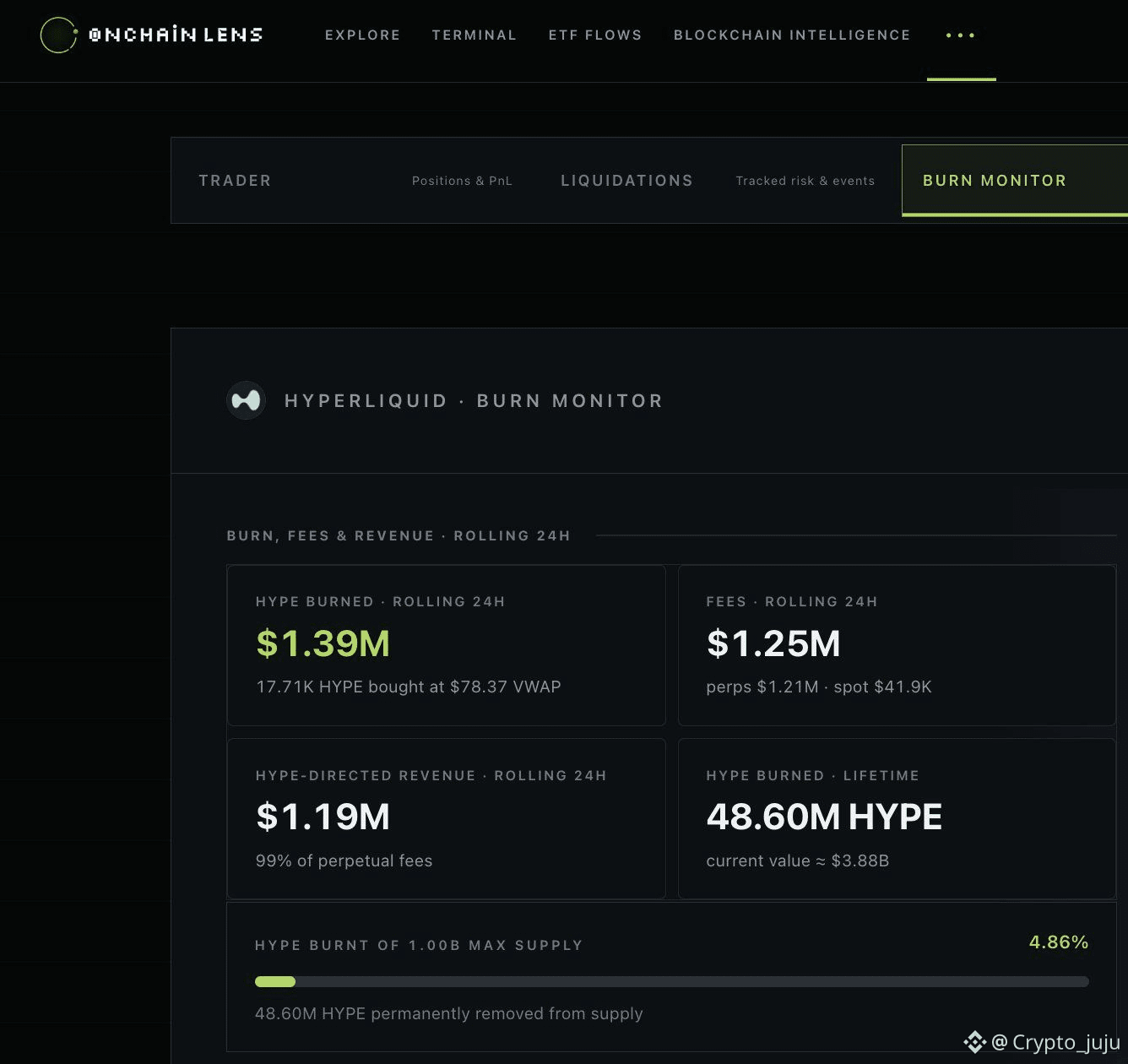
$HYPE is starting to catch my attention again Hyperliquid just bought and burned another 17.7K HYPE, worth around $1.39M, pushing total burned supply to roughly 48.6M HYPE. That’s almost 4.9% of the original 1B max supply permanently gone. What I find interesting is the FOMO side of this. We’ve already seen traders rotate into names like $PUMP when momentum starts picking up. If HYPE keeps getting this kind of supply pressure alongside strong sentiment, I wouldn’t be surprised to see more attention rotate here too. Not saying it’s guaranteed to pump, but this is definitely one I’m watching closely.
$HYPE is starting to catch my attention again Hyperliquid just bought and burned another 17.7K HYPE, worth around $1.39M, pushing total burned supply to roughly 48.6M HYPE. That’s almost 4.9% of the original 1B max supply permanently gone. What I find interesting is the FOMO side of this. We’ve already seen traders rotate into names like $PUMP when momentum starts picking up. If HYPE keeps getting this kind of supply pressure alongside strong sentiment, I wouldn’t be surprised to see more attention rotate here too. Not saying it’s guaranteed to pump, but this is definitely one I’m watching closely.
50
·
--
查看翻譯
Interesting growth happening on the $XRP Ledger It’s now the **11th-largest stablecoin chain**, with stablecoin supply continuing to grow. $RLUSD just hit a new ATH of $2.44B**, while native stablecoins on the XRP Ledger reached around $1.15B. That’s a pretty interesting signal for stablecoin activity and liquidity building around the XRP ecosystem.
Interesting growth happening on the $XRP Ledger It’s now the **11th-largest stablecoin chain**, with stablecoin supply continuing to grow. $RLUSD just hit a new ATH of $2.44B**, while native stablecoins on the XRP Ledger reached around $1.15B. That’s a pretty interesting signal for stablecoin activity and liquidity building around the XRP ecosystem.
64
·
--
查看翻譯
$PUMP still looks good, and $ZEC is holding up nicely too. Right now, there are just some tokens you want to have a little exposure to and keep watching. Meanwhile, I’ve been checking out the Stoncat mint on @ston_fi You probably already know Stoncat from the stickers, visuals and memes, but now you can actually mint your own. The fun part is that it doesn’t just sit there as an NFT. You can feed your Stoncat with GEMSTON, unlock Purrks and use them to change how your cat looks and improve its rarity as it levels up. The rarer the Purrks, the rarer your Stoncat can become, and you can even climb the rarity leaderboard. I’ve already minted a few, so now I’m just seeing how far I can take them. Market is moving, Stoncat is evolving… Let’s see which one surprises me first.
$PUMP still looks good, and $ZEC is holding up nicely too. Right now, there are just some tokens you want to have a little exposure to and keep watching. Meanwhile, I’ve been checking out the Stoncat mint on @ston_fi You probably already know Stoncat from the stickers, visuals and memes, but now you can actually mint your own. The fun part is that it doesn’t just sit there as an NFT. You can feed your Stoncat with GEMSTON, unlock Purrks and use them to change how your cat looks and improve its rarity as it levels up. The rarer the Purrks, the rarer your Stoncat can become, and you can even climb the rarity leaderboard. I’ve already minted a few, so now I’m just seeing how far I can take them. Market is moving, Stoncat is evolving… Let’s see which one surprises me first.
50
·
--
查看翻譯
$LSK was the talk yesterday. A few weeks ago, it was $USELESS . Now it has me wondering… what token is going to be next? 👀 Feels like liquidity is slowly finding its way back into alts, and when that starts happening, I like paying attention to where the activity is moving rather than chasing whatever already pumped. That’s what got me checking the farming side of @ston_fi this week. A few pools caught my attention: STON/USDT 10,000 STON/month, ongoing with no LP lock, with up to 2× APR boost until Sept 30. JETTON/USDT + JETTON/GRAM 200,000 JETTON/month across either pool, running until Dec 31 with no LP lock. STORM/GRAM 30,000 STORM/day, ongoing with no LP lock. Not saying every farm is worth jumping into there’s still token volatility, impermanent loss and incentive risk to consider. For me, it’s more about keeping an eye on where liquidity is going. LSK yesterday, USELESS before that… Let’s see who gets the spotlight next.
$LSK was the talk yesterday. A few weeks ago, it was $USELESS . Now it has me wondering… what token is going to be next? 👀 Feels like liquidity is slowly finding its way back into alts, and when that starts happening, I like paying attention to where the activity is moving rather than chasing whatever already pumped. That’s what got me checking the farming side of @ston_fi this week. A few pools caught my attention: STON/USDT 10,000 STON/month, ongoing with no LP lock, with up to 2× APR boost until Sept 30. JETTON/USDT + JETTON/GRAM 200,000 JETTON/month across either pool, running until Dec 31 with no LP lock. STORM/GRAM 30,000 STORM/day, ongoing with no LP lock. Not saying every farm is worth jumping into there’s still token volatility, impermanent loss and incentive risk to consider. For me, it’s more about keeping an eye on where liquidity is going. LSK yesterday, USELESS before that… Let’s see who gets the spotlight next.
71
·
--
查看翻譯
$STONK is now integrated with @ston_fi , and I actually like what this adds to the TON DeFi ecosystem. For context, Stonks is an AI-powered launch ecosystem where projects can launch tokens, use custom bonding curves, seed liquidity or run presales. The interesting part for me is what happens after a token starts getting traction. Instead of liquidity becoming a separate problem later, tokens can move from the bonding curve into a Stonfi pool, while users can also swap Stonfi tokens directly through the Stonks terminal and Telegram bot. And before migration, Omniston can help route swaps across available liquidity sources to find better execution. So you basically have a path from: **Launch → Bonding Curve → Liquidity → Stonfi→ Swaps That kind of continuity is important for TON. As someone who spends a lot of time watching how liquidity moves around the ecosystem, I like seeing different pieces start working together instead of every project building its own isolated setup. Still early, but integrations like this are the kind of infrastructure I like seeing more of on TON. $USELESS #Altcoin Season#
$STONK is now integrated with @ston_fi , and I actually like what this adds to the TON DeFi ecosystem. For context, Stonks is an AI-powered launch ecosystem where projects can launch tokens, use custom bonding curves, seed liquidity or run presales. The interesting part for me is what happens after a token starts getting traction. Instead of liquidity becoming a separate problem later, tokens can move from the bonding curve into a Stonfi pool, while users can also swap Stonfi tokens directly through the Stonks terminal and Telegram bot. And before migration, Omniston can help route swaps across available liquidity sources to find better execution. So you basically have a path from: **Launch → Bonding Curve → Liquidity → Stonfi→ Swaps That kind of continuity is important for TON. As someone who spends a lot of time watching how liquidity moves around the ecosystem, I like seeing different pieces start working together instead of every project building its own isolated setup. Still early, but integrations like this are the kind of infrastructure I like seeing more of on TON. $USELESS #Altcoin Season#
38
·
--
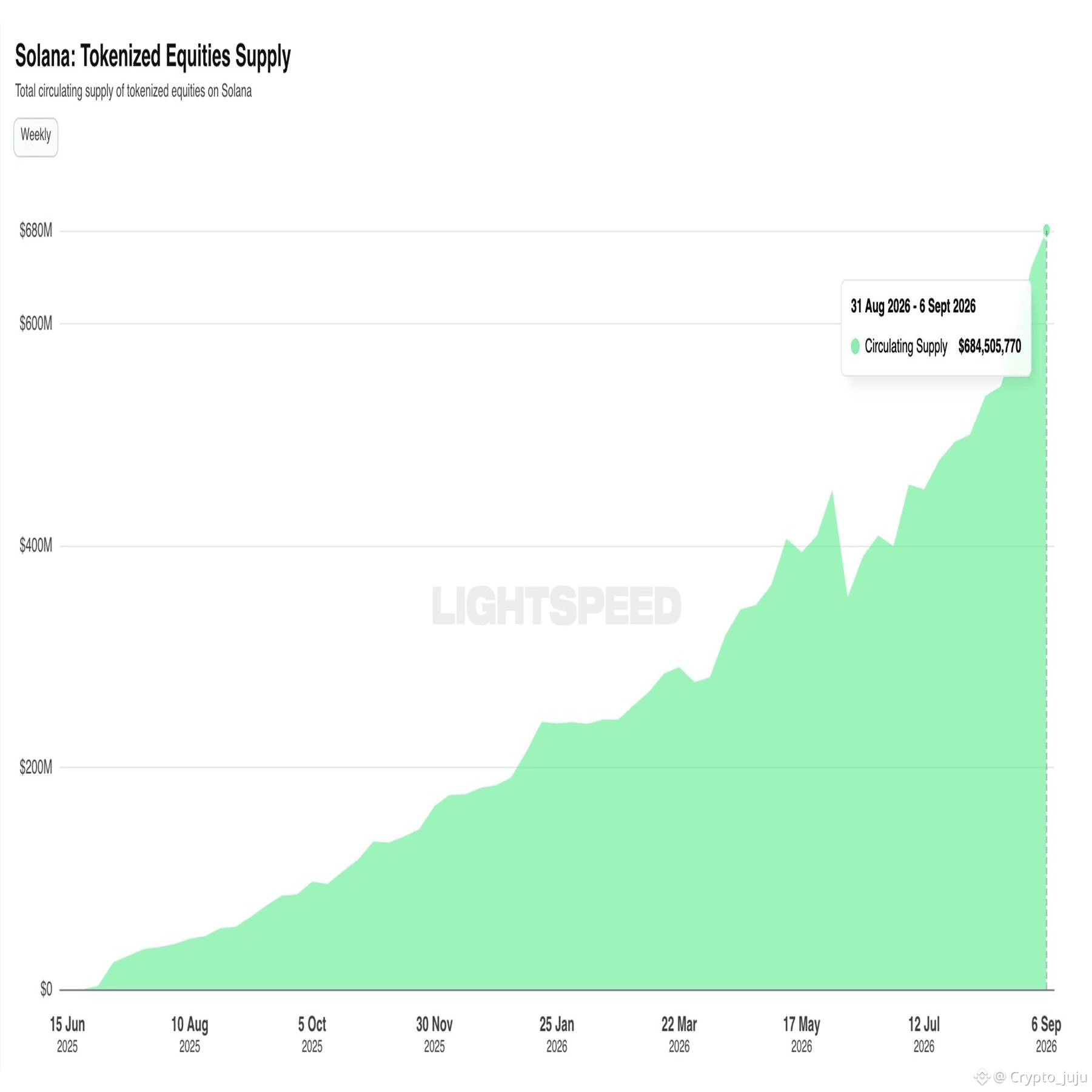
$SOL 上的代幣化股票剛剛創下了新的紀錄 $684M。這在短短三週內上漲了 47%。我看到這類數字越多,就越覺得代幣化才剛剛開始。把股票、債券、基金、RWAs 等傳統資產上鏈,正從「會不會有可能」變成「何時會發生」。老實說,我也一直很好奇這個未來可能會長什麼樣,所以我最近在一旁研究了 @ston_fi 上的一些 xStocks。能在鏈上看到像這樣的資產,並透過 DeFi 介面與它們互動,至今仍有點不一樣。現在想像一下,代幣化股票在 10 年後會變成什麼樣**。這才是我真正感興趣的部分。我們現在可能只是在看,最終會成形的鏈上金融市場早期版本而已。$HBAR #Altcoin Season#
$SOL 上的代幣化股票剛剛創下了新的紀錄 $684M。這在短短三週內上漲了 47%。我看到這類數字越多,就越覺得代幣化才剛剛開始。把股票、債券、基金、RWAs 等傳統資產上鏈,正從「會不會有可能」變成「何時會發生」。老實說,我也一直很好奇這個未來可能會長什麼樣,所以我最近在一旁研究了 @ston_fi 上的一些 xStocks。能在鏈上看到像這樣的資產,並透過 DeFi 介面與它們互動,至今仍有點不一樣。現在想像一下,代幣化股票在 10 年後會變成什麼樣**。這才是我真正感興趣的部分。我們現在可能只是在看,最終會成形的鏈上金融市場早期版本而已。$HBAR #Altcoin Season#
65
·
--
查看翻譯
On a normal day, you’ll probably see XRP somewhere in the crypto news. I actually love how Ripple keeps finding ways to stay relevant. Now the SEC has cleared $XRP for the Nasdaq Texas Commodity Trusts, with the filing listing XRP alongside Bitcoin, Ethereum, and Solana. The proposed rules also allow up to 15% of a trust’s assets to fall outside the standard eligibility criteria. XRP always seems to find its way back into the conversation. And speaking of things quietly building in the background, there’s been some movement on the $GRAM side too. On August 25, Omniston processed around $150K in cross-chain swap volume in a single day.** 150,000 kilometers is enough to travel around Earth roughly 3.5 times. It’s still early, but these are the milestones I like watching volume building, more routes being used, and more people experimenting with cross-chain swaps. Big thanks to everyone swapping, testing routes, and pushing the volume higher. You’re part of the reason this keeps moving. #Ripple
On a normal day, you’ll probably see XRP somewhere in the crypto news. I actually love how Ripple keeps finding ways to stay relevant. Now the SEC has cleared $XRP for the Nasdaq Texas Commodity Trusts, with the filing listing XRP alongside Bitcoin, Ethereum, and Solana. The proposed rules also allow up to 15% of a trust’s assets to fall outside the standard eligibility criteria. XRP always seems to find its way back into the conversation. And speaking of things quietly building in the background, there’s been some movement on the $GRAM side too. On August 25, Omniston processed around $150K in cross-chain swap volume in a single day.** 150,000 kilometers is enough to travel around Earth roughly 3.5 times. It’s still early, but these are the milestones I like watching volume building, more routes being used, and more people experimenting with cross-chain swaps. Big thanks to everyone swapping, testing routes, and pushing the volume higher. You’re part of the reason this keeps moving. #Ripple
52
·
--
查看翻譯
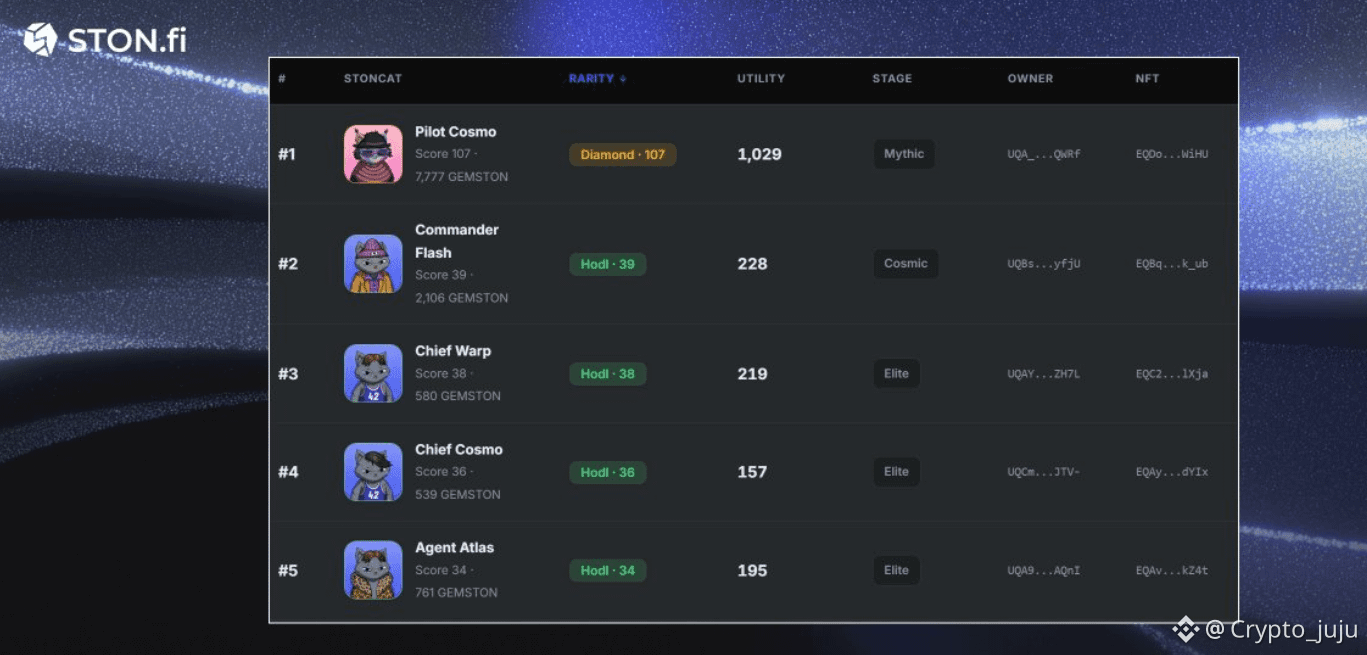
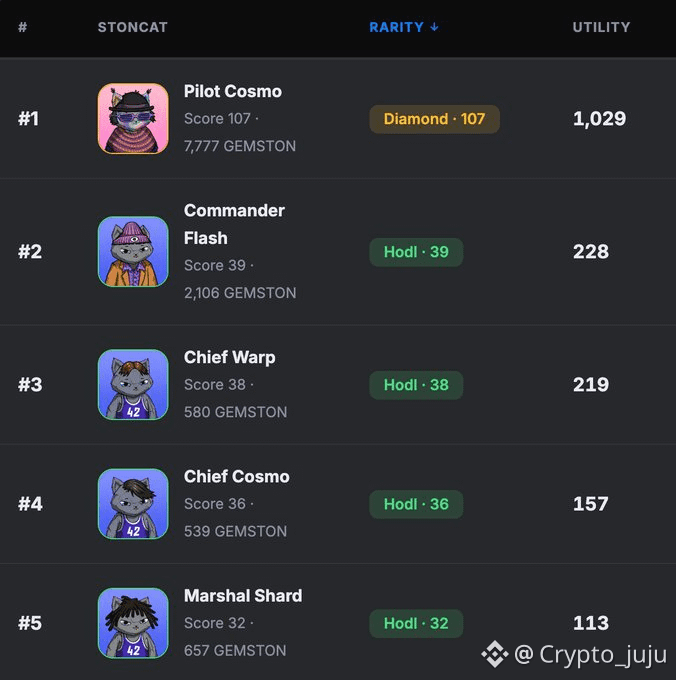
$SOL and $HYPE are giving me the feeling that a pump might be coming Not jumping into anything yet, just keeping both on the radar and watching how they play out. While checking the market, I also noticed a Diamond STONCAT holder sitting at the top of the leaderboard And honestly, I like seeing the competition getting serious The @ston_fi Collection is making GEMSTON a bit more interesting too. Instead of GEMSTON just being something you earn from staking, you can now actually use it to dress up and upgrade your STONCAT. The higher your STONCAT gets, the more you can work toward different traits and rarer looks, which is what makes that leaderboard fun to watch. Apparently, it takes around $801 worth of GEMSTON to reach Diamond level. That’s a decent amount of GEMSTON sitting on one STONCAT. Seeing someone already at the top has me thinking I need to step up my own STONCAT game. Time to go dress mine up too. #Altcoin Season#
$SOL and $HYPE are giving me the feeling that a pump might be coming Not jumping into anything yet, just keeping both on the radar and watching how they play out. While checking the market, I also noticed a Diamond STONCAT holder sitting at the top of the leaderboard And honestly, I like seeing the competition getting serious The @ston_fi Collection is making GEMSTON a bit more interesting too. Instead of GEMSTON just being something you earn from staking, you can now actually use it to dress up and upgrade your STONCAT. The higher your STONCAT gets, the more you can work toward different traits and rarer looks, which is what makes that leaderboard fun to watch. Apparently, it takes around $801 worth of GEMSTON to reach Diamond level. That’s a decent amount of GEMSTON sitting on one STONCAT. Seeing someone already at the top has me thinking I need to step up my own STONCAT game. Time to go dress mine up too. #Altcoin Season#
61
·
--
查看翻譯
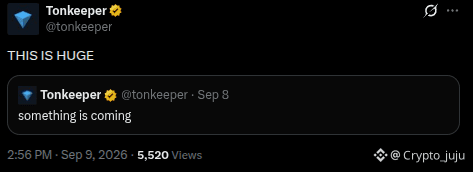
$GRAM has been kinda quiet lately, but Ton keeper a wallet on Ton has been teasing that something big is coming. With the market starting to pick up again, I’m definitely curious to see what this update turns out to be and, more importantly, what impact it could have across the TON ecosystem. There’s already been a lot happening on the @ston_fi side too, so the timing is pretty interesting. Between the recent infrastructure improvements and campaigns like **“One Swap. Across Chains”**, where joining the waitlist gets you **1,000 bonus points**, there’s been quite a bit to keep an eye on. Feels like TON is slowly building toward something. Now I’m just waiting to see what the big announcement is. $HYPE
$GRAM has been kinda quiet lately, but Ton keeper a wallet on Ton has been teasing that something big is coming. With the market starting to pick up again, I’m definitely curious to see what this update turns out to be and, more importantly, what impact it could have across the TON ecosystem. There’s already been a lot happening on the @ston_fi side too, so the timing is pretty interesting. Between the recent infrastructure improvements and campaigns like **“One Swap. Across Chains”**, where joining the waitlist gets you **1,000 bonus points**, there’s been quite a bit to keep an eye on. Feels like TON is slowly building toward something. Now I’m just waiting to see what the big announcement is. $HYPE
27
·
--
查看翻譯
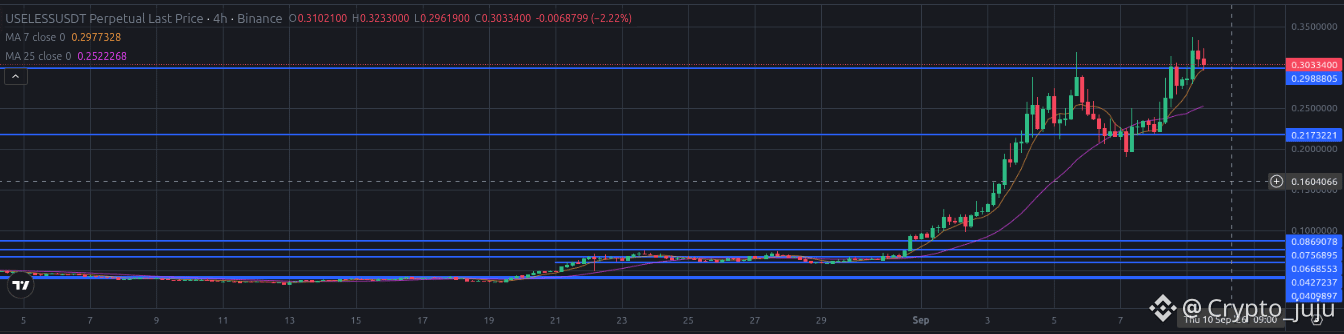
Imagine selling your $USELESS bags to buy $LAPTOP , only for Hunter to dump his bags right after. Man, that’s rough. Meanwhile, I’ve been paying more attention to what’s happening with GEMSTON on @ston_fi With the Stonfi Collection now out, GEMSTON is starting to get another interesting use case, and honestly, that’s pretty dope to see. I’m still staking more Ston and building up my GEMSTON. Hopefully, we see some good things come out of it.
Imagine selling your $USELESS bags to buy $LAPTOP , only for Hunter to dump his bags right after. Man, that’s rough. Meanwhile, I’ve been paying more attention to what’s happening with GEMSTON on @ston_fi With the Stonfi Collection now out, GEMSTON is starting to get another interesting use case, and honestly, that’s pretty dope to see. I’m still staking more Ston and building up my GEMSTON. Hopefully, we see some good things come out of it.
45
·
--
查看翻譯
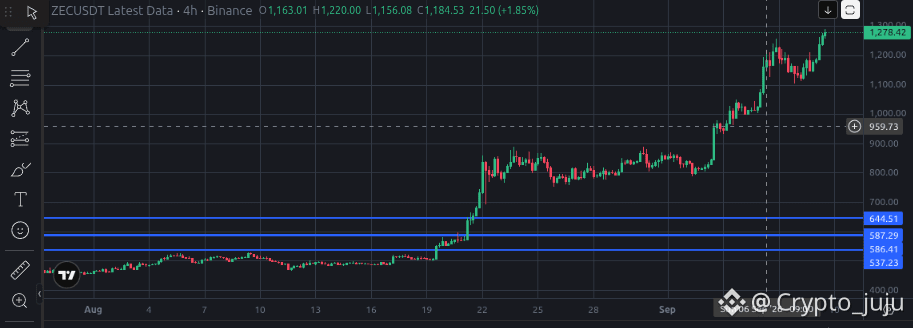
$ZEC is on a fast track toward $1,500 Hopefully we get there soon. Meanwhile, $XRP has been gaining some of that liquidity too, so I’ve been keeping an eye on both. And this is actually a good example of what improvement looks like on the infrastructure side. Omniston now scans DeDust v2 and Tonco v2 pools, meaning the latest pool versions from both protocols are now supported. More liquidity sources for Omniston to compare means better routes can be found for swaps on TON, without users having to manually jump between different pools. Nothing too flashy, but these are the kinds of improvements that matter as liquidity keeps growing. This is what improvement looks like. Swap on @ston_fi
$ZEC is on a fast track toward $1,500 Hopefully we get there soon. Meanwhile, $XRP has been gaining some of that liquidity too, so I’ve been keeping an eye on both. And this is actually a good example of what improvement looks like on the infrastructure side. Omniston now scans DeDust v2 and Tonco v2 pools, meaning the latest pool versions from both protocols are now supported. More liquidity sources for Omniston to compare means better routes can be found for swaps on TON, without users having to manually jump between different pools. Nothing too flashy, but these are the kinds of improvements that matter as liquidity keeps growing. This is what improvement looks like. Swap on @ston_fi
49
·
--
查看翻譯
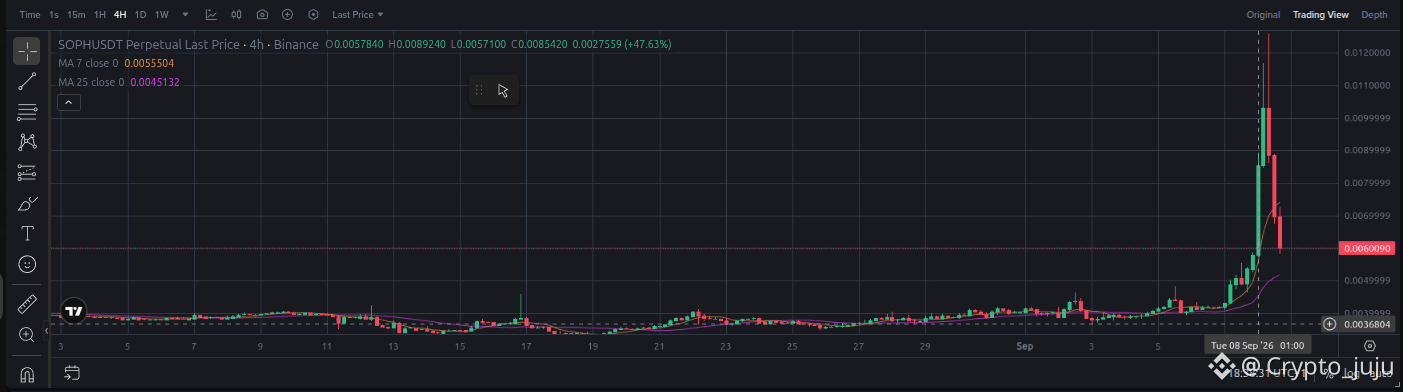
Interesting… the market is on fire right now. Sleeping is starting to feel like a crime $BNB is making some serious moves, and $SOPH on one hand just got a massive deep man . Definitely one of those moments where you want to keep an eye on the charts. Meanwhile, there’s some interesting progress happening on the @ston_fi side too. **Omniston just passed $3M+ in all-time cross-chain swap volume. Not a bad milestone at all. What I like about the bigger picture is that cross-chain liquidity is slowly becoming easier to access. Instead of having assets and liquidity completely isolated on different networks, infrastructure like Omniston is helping connect those ecosystems. And now there’s also **“One Swap. Across Chains”**, a Sronfi guided exploration campaign around cross-chain swaps. So while the market is keeping us awake, might as well see what’s happening on the infrastructure side too 😂 BNB , SOPH and cross-chain DeFi plenty to watch tonight
Interesting… the market is on fire right now. Sleeping is starting to feel like a crime $BNB is making some serious moves, and $SOPH on one hand just got a massive deep man . Definitely one of those moments where you want to keep an eye on the charts. Meanwhile, there’s some interesting progress happening on the @ston_fi side too. **Omniston just passed $3M+ in all-time cross-chain swap volume. Not a bad milestone at all. What I like about the bigger picture is that cross-chain liquidity is slowly becoming easier to access. Instead of having assets and liquidity completely isolated on different networks, infrastructure like Omniston is helping connect those ecosystems. And now there’s also **“One Swap. Across Chains”**, a Sronfi guided exploration campaign around cross-chain swaps. So while the market is keeping us awake, might as well see what’s happening on the infrastructure side too 😂 BNB , SOPH and cross-chain DeFi plenty to watch tonight
41
·
--
查看翻譯
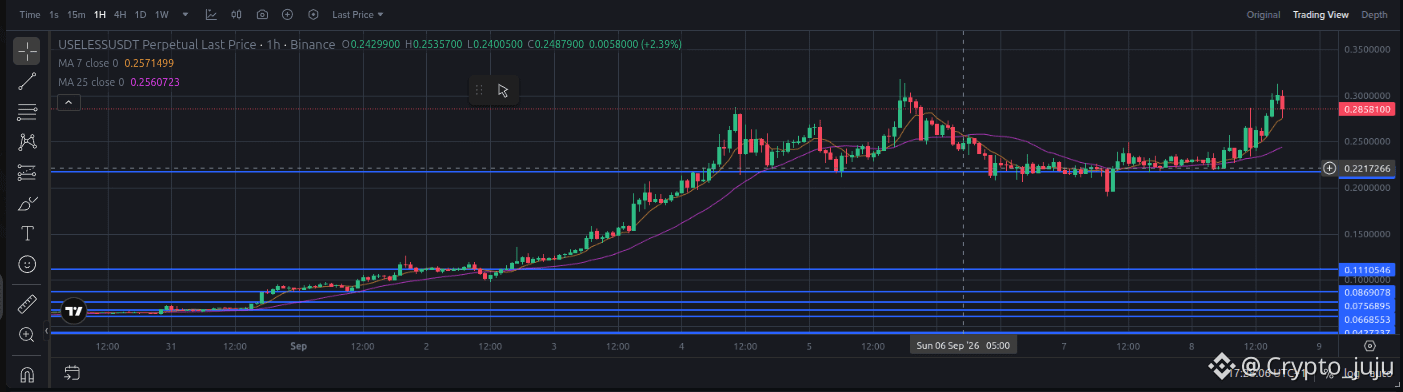
Just when you think $USELESS momentum is starting to slow down, an $HYPE Liquid listing drops This thing really doesn’t want to cool off. Definitely keeping an eye on the chart to see how far this momentum can actually run. Meanwhile, on the TON side, here’s my @ston_fi farm watch for the week 🔥 USD₮/JETTON — ~93% APR 🔥 GRAM/JETTON — ~54% APR 🔥 STON/USD₮ — ~14% APR ⚡ STON/USD₮ Boost Farm — ~27% APR Some pretty interesting numbers, especially the JETTON pools. Of course, APRs can change, and a high APR doesn’t automatically mean a good trade. Token price movement, liquidity and impermanent loss are still things I’d keep in mind before jumping into any farm. Just sharing what’s on my radar this week. Crypto really gives you something new to watch every few hours #Hypeliquid
Just when you think $USELESS momentum is starting to slow down, an $HYPE Liquid listing drops This thing really doesn’t want to cool off. Definitely keeping an eye on the chart to see how far this momentum can actually run. Meanwhile, on the TON side, here’s my @ston_fi farm watch for the week 🔥 USD₮/JETTON — ~93% APR 🔥 GRAM/JETTON — ~54% APR 🔥 STON/USD₮ — ~14% APR ⚡ STON/USD₮ Boost Farm — ~27% APR Some pretty interesting numbers, especially the JETTON pools. Of course, APRs can change, and a high APR doesn’t automatically mean a good trade. Token price movement, liquidity and impermanent loss are still things I’d keep in mind before jumping into any farm. Just sharing what’s on my radar this week. Crypto really gives you something new to watch every few hours #Hypeliquid
36
·
--
查看翻譯
the Word is $BTC buttom is already in I guess time to put my eyes in the right places $XRP HYPE and ZEC
the Word is $BTC buttom is already in I guess time to put my eyes in the right places $XRP HYPE and ZEC
43
·
--
查看翻譯
$INJ just hit a new all-time high in staked tokens. More than 58.8M INJ are now locked on-chain. That’s a pretty strong signal of growing commitment to the Injective ecosystem. $HYPE
$INJ just hit a new all-time high in staked tokens. More than 58.8M INJ are now locked on-chain. That’s a pretty strong signal of growing commitment to the Injective ecosystem. $HYPE
43
·
--
70
登入以探索更多內容
加入幣安廣場中的全球加密貨幣用戶
⚡️ 獲取加密貨幣的最新和實用資訊。
💬 受到全球最大加密貨幣交易所的信任。
👍 發掘來自經過驗證創作者的真實見解。
電子郵件 / 電話號碼
熱門話題
比特币守稳77000美元上方
4,659 次瀏覽
150 討論中
這周真正的雷,不是跌不跌,而是加息預期突然被重新定價。
現在市場已經提前把加息預期交易了一遍,最近BTC卻沒有直接崩
反而還能在高位反覆磨,說明資金並沒有徹底撤。
我的判斷很簡單:
真加息≠一定大跌。
如果後面符合預期,市場反而可能出現“利空落地”,短線先殺一輪,再重新找方向;
但如果措辭比預期更鷹,收益率和美元繼續走高,BTC就要防一波快速回撤。
目前大餅重點看 77000-77500支撐,上方 79000-80000壓力。
站穩80000,行情還有機會繼續衝;
跌破77000,先看75000-76000。
交易9年,我最怕的從來不是消息,而是有人在消息出來後纔開始思考。
真正的大波動,往往提前給信號。看懂預期,盯住位置,剩下的就是等市場自己揭牌。$BTC #BTC走势分析
叶问控饼YynOne11
·1 人按讚
·2.9k 次瀏覽
美联储加息概率升至89%
0 次瀏覽
23 討論中
比特币涨1.64%突破78000美元
87,272 次瀏覽
514 討論中